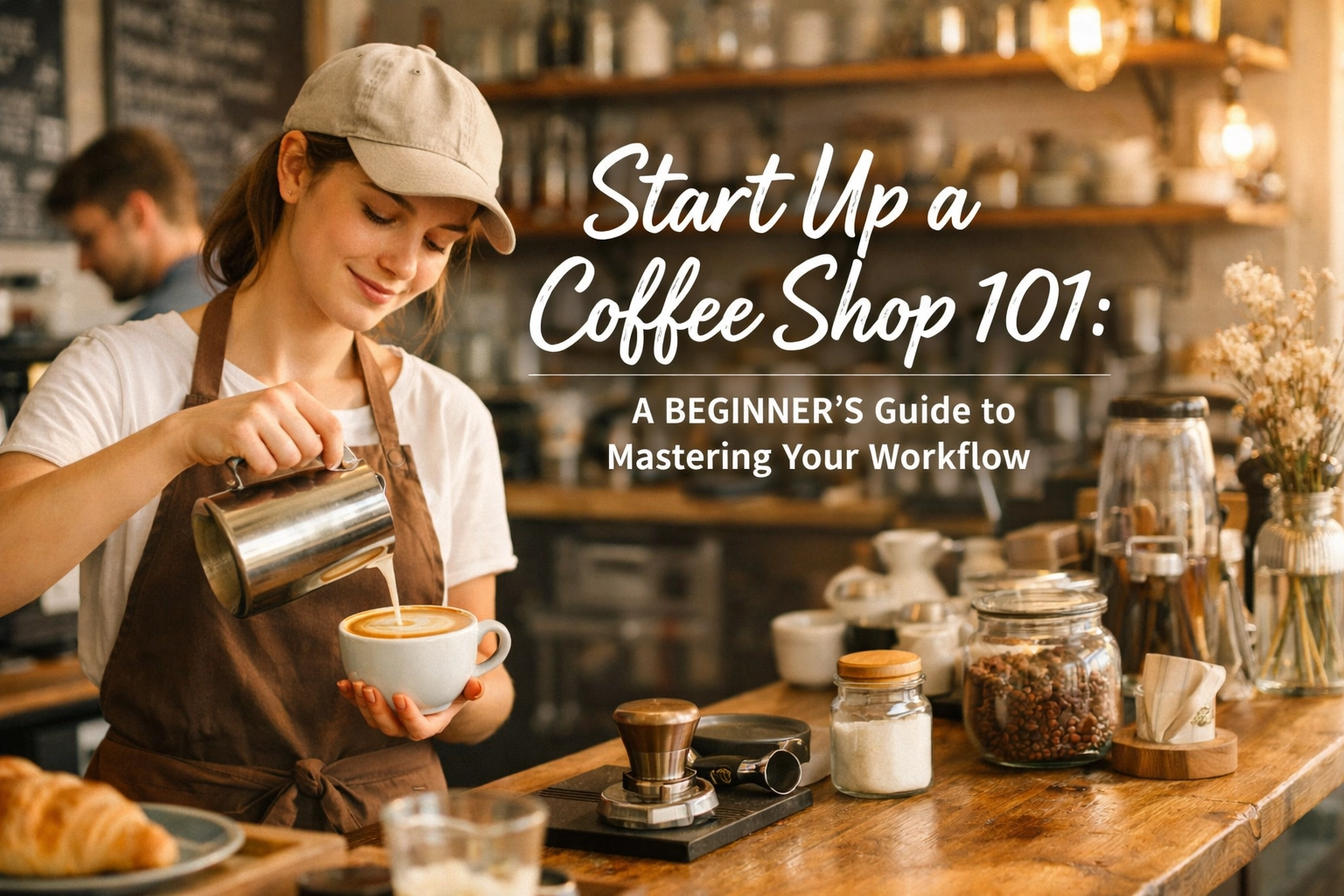
So, you want to open a coffee shop? It’s a beautiful dream, isn’t it? The smell of freshly ground beans, the hiss of the steam wand, and a community of regulars who can’t start their day without you.
But let’s be honest for a second. Between the Pinterest boards of exposed brick and the perfect latte art, there is a reality involving 8:00 AM rushes, complex plumbing, and the desperate need for a workflow that doesn't crumble the moment three people walk through the door at once.
At Limini Coffee, we’ve seen it all. We’ve helped hundreds of new shops go from an empty shell to a thriving business. The secret isn't just having the best coffee (though that’s non-negotiable); it’s about how you move behind the bar.
Efficiency is the difference between a profitable, happy cafe and a stressed-out owner who hasn't sat down in six months. Let’s dive into how you can master your workflow from day one.
The Concept: More Than Just "Cool Vibes"
Before you even touch an espresso machine, you need to know who you are. Are you a high-volume "grab-and-go" spot near a train station, or a slow-paced specialty nook where people linger over a V60?
Your concept dictates your workflow.
If you’re focused on volume, your bar needs to be a well-oiled machine where the barista barely has to move their feet. If you’re focused on the "theatre" of coffee, you might prioritize a layout that allows for more customer interaction. We actually think the theatre of coffee is a huge part of why people choose independent shops over big chains, so don't hide your baristas away!
Designing Your Layout: The Golden Triangle
In kitchen design, they talk about the "work triangle." In a coffee shop, we have something similar. Your workflow should follow a logical path: Order -> Grinding -> Extraction -> Milk/Finishing -> Serving.
Imagine a barista standing at the machine. They shouldn't have to walk three steps to get a jug, or turn around completely to find the fridge. Everything needs to be within arm’s reach.
1. The Grinder and Machine Placement
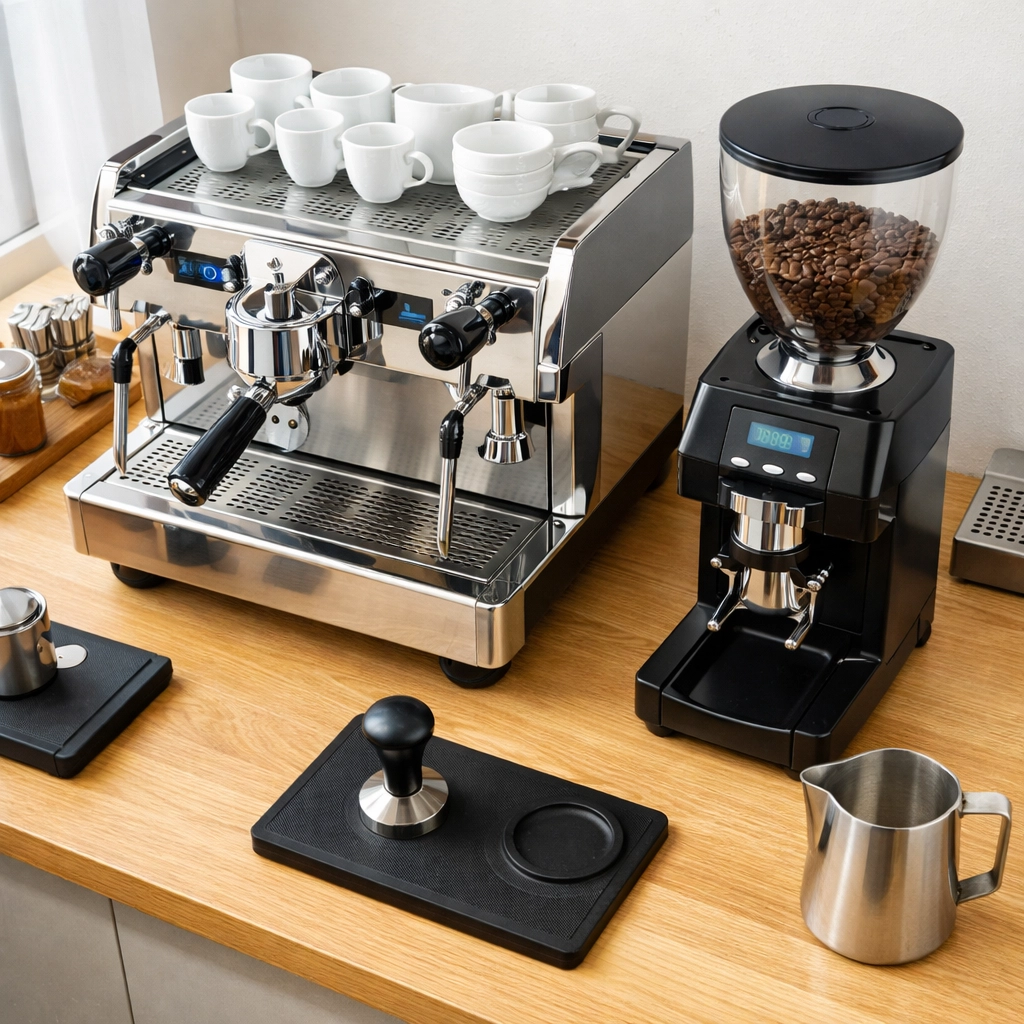
Your grinder should be right next to your espresso machine. Sounds obvious, right? You’d be surprised how many shops put them on separate counters. You want to minimize the "travel distance" of the portafilter.
2. The Milk Station
The fridge should be directly under or right next to the steam wand. If your barista has to walk across the floor to get a fresh carton of oat milk, you’ve already lost 10 seconds. In a rush, those 10 seconds are an eternity.
3. The Knockbox and Bin
Ideally, your knockbox should be cut into the counter (a "knock-through") so the pucks drop directly into a bin below. It’s cleaner, faster, and saves your wrists from the repetitive strain of hitting a drawer-style knockbox.
If you’re still in the planning phase, we highly recommend reading our guide on building a coffee shop and shop fitting. It’s worth getting the plumbing and electrics right the first time!
Choosing Your Engine: Equipment That Works for You
You wouldn't buy a race car to deliver milk, and you shouldn't buy a domestic espresso machine for a busy cafe.
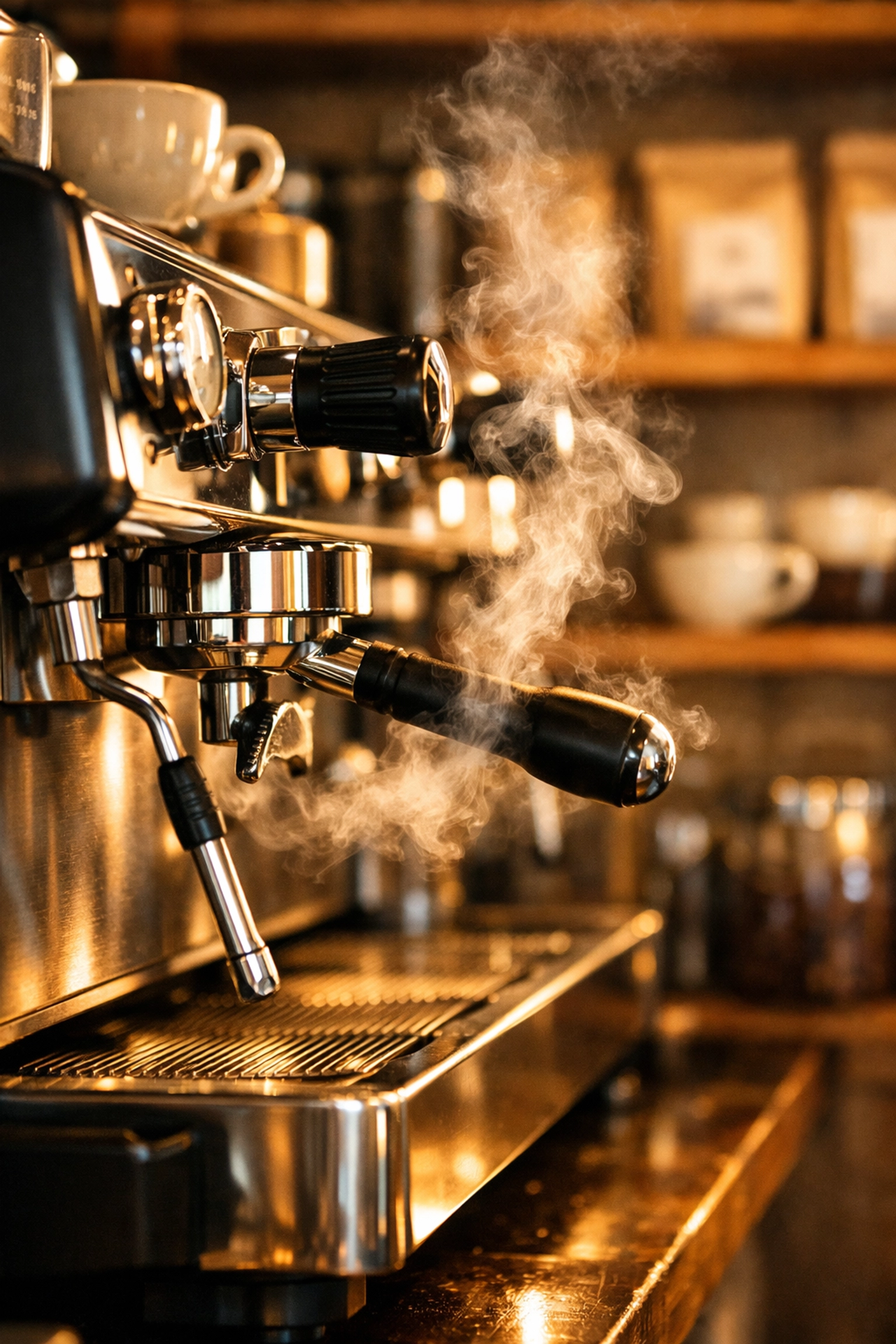
When you’re starting out, you need reliability. We are huge fans of La Spaziale machines. Why? Because they are workhorses. They use a unique heat exchange system that provides incredible thermal stability, which is a fancy way of saying your coffee will taste the same at 8:00 AM as it does at 2:00 PM.
Whether you prefer a lever or automatic machine depends on your skill level and the "vibe" of your shop, but for most beginners, an automatic volumetric machine is a lifesaver. It allows the barista to start the shot and then focus on steaming the milk, rather than staring at a timer.
And don't forget the grinder! We often say the grinder is more important than the machine. If your grinds are inconsistent, your espresso will be too. Look for "on-demand" grinders that grind straight into the portafilter to keep things fresh.
If you’re feeling overwhelmed by the options, our wholesale partnership includes expert advice on choosing the right equipment for your specific needs.
The Technical Workflow: Precision is Speed
Many people think that being "precise" (weighing shots, using timers) slows you down. We believe the exact opposite.
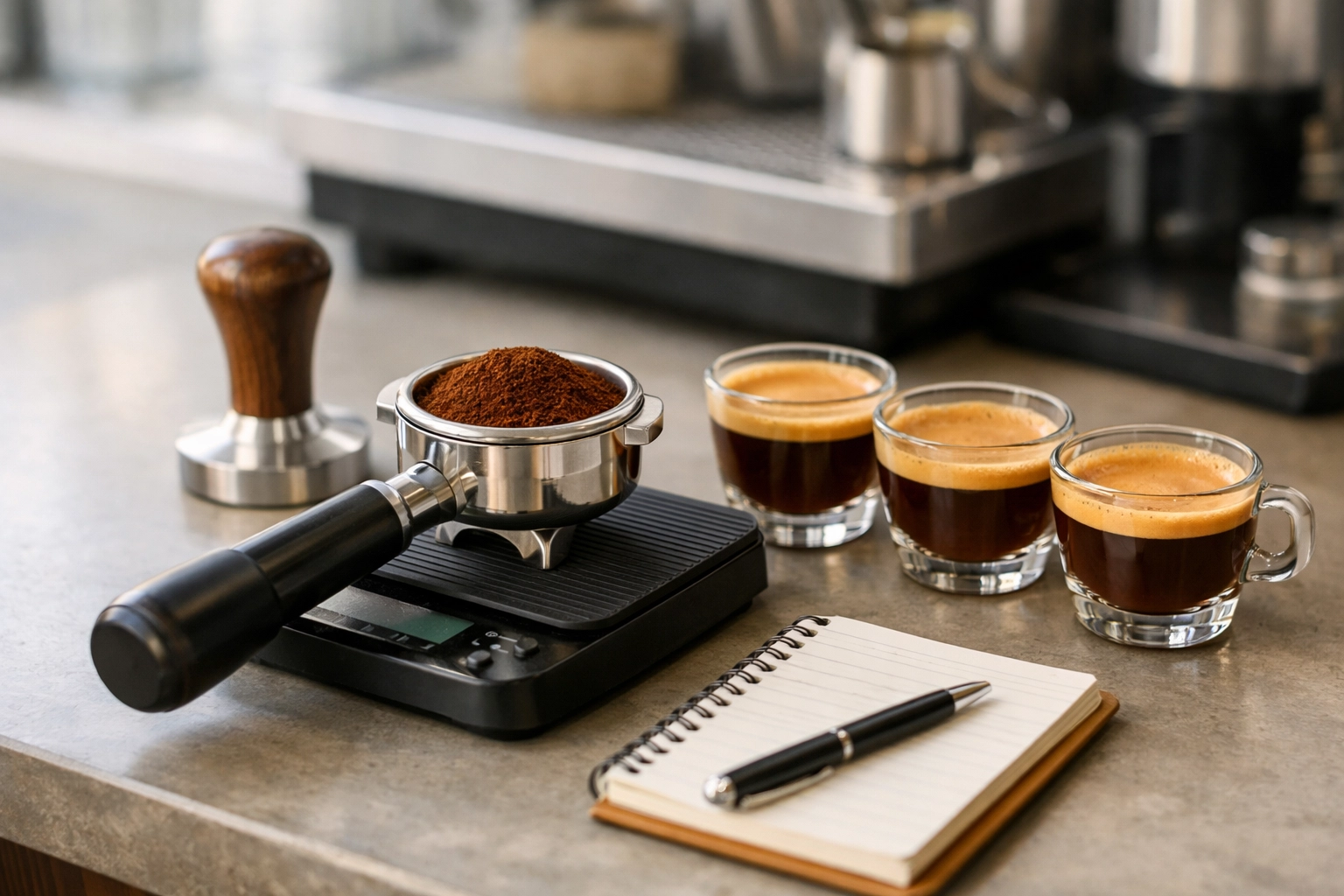
When you have a set "recipe," you don't have to guess. You aren't standing there wondering why the coffee tastes sour; you know exactly what’s happening because you’ve measured it.
The Standard Espresso Shot
- Dose: 18g to 21g (depending on your basket)
- Yield: 36g to 42g of liquid espresso
- Time: 25 to 30 seconds
- Pressure: 9 BAR
- Temperature: 197 °F to 203 °F / 92 ºC to 95 ºC
If you want to dive deep into the math, check out our coffee brewing calculator. It’s an incredibly helpful tool for dialing in your beans every morning.
Tamping: The Often-Overlooked Step
Consistent tamping is vital. If one barista tamps like a bodybuilder and the other barely touches it, the coffee will be wildly inconsistent. We recommend using a calibrated tamper or, even better, an automatic tamper like a Puqpress if your budget allows.
Mastering Milk: The Science of Silk
In the UK, about 80% of the drinks you sell will be milk-based. This means your milk workflow is actually more important than your espresso workflow for total speed.
Understanding milk chemistry is key. You’re looking for "microfoam": that glossy, wet-paint look.
The Workflow Tip: Steam your milk while the espresso is pouring. By the time the shot finishes, your milk should be ready to pour. If you do them sequentially rather than simultaneously, you're doubling your service time per drink.
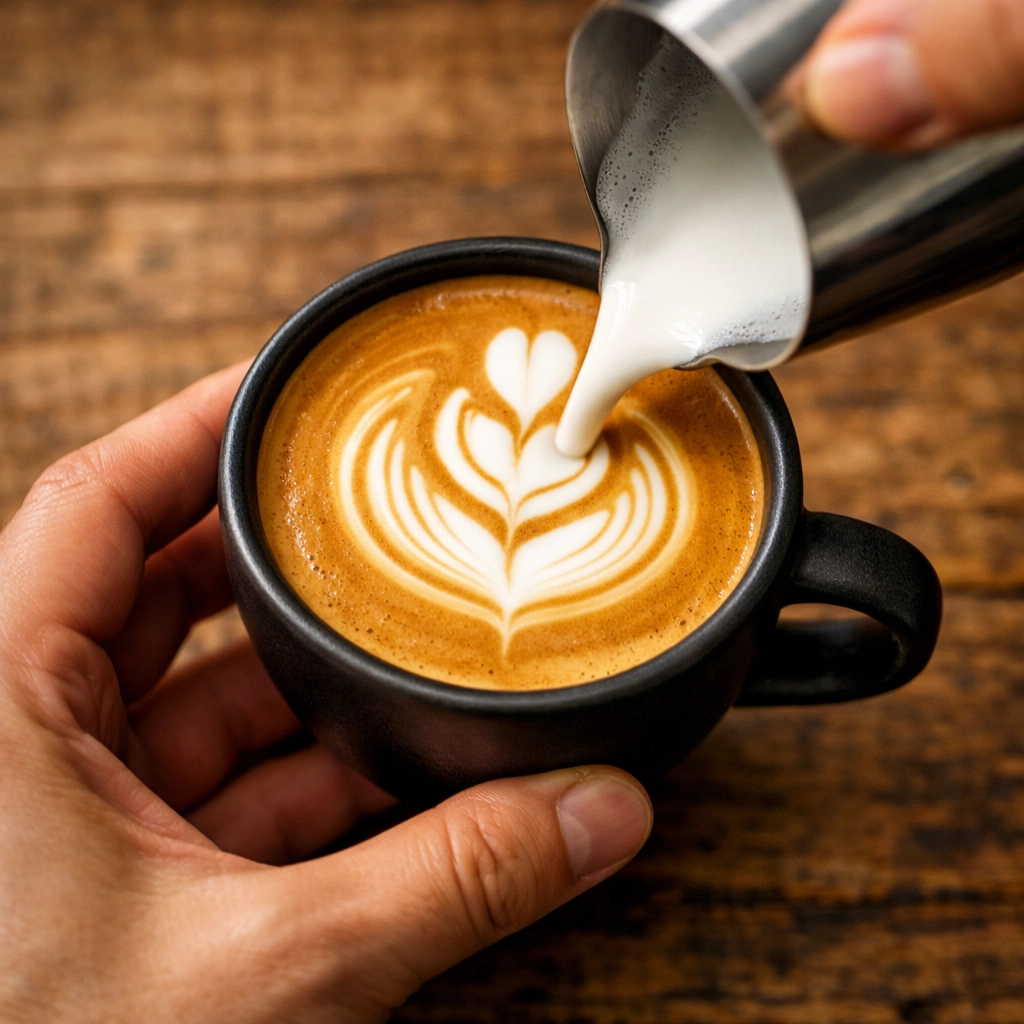
Do you know the difference between a latte, cappuccino, and flat white? It sounds basic, but having a clear standard for your shop ensures that customers get what they expect every single time.
Why Your Wholesale Partner is Your Best Friend
Starting a coffee shop is lonely work. You have a million decisions to make, and the stakes feel high. This is where your wholesale supplier comes in.
We don't just see ourselves as a speciality coffee roaster; we see ourselves as your consultant. When you join the Limini family through our wholesale program, you aren't just buying beans. You’re buying years of experience.
We help with:
- Sourcing: Finding the right ethical and delicious beans.
- Training: Proper barista training is the best investment you can make. A trained barista is a fast barista.
- Maintenance: Knowing how to look after your espresso machine so it doesn't break down on a Saturday morning.
The goal is to remove the guesswork. We want you to focus on your customers while we handle the technical heavy lifting.
Consistency: The Ultimate Workflow Goal
The best coffee shop in the world isn't the one that makes the best cup once; it’s the one that makes a great cup every single time, regardless of who is behind the bar.
This requires systems.
- Morning Dial-in: Every morning, the lead barista must taste the espresso and adjust the grinder.
- Cleaning Schedules: A dirty machine makes bad coffee. Learn the workings of your machine so you can keep it pristine.
- Checklists: Have a closing checklist so the morning crew isn't walking into a mess.
Final Thoughts for the Beginner
Opening a shop is a marathon, not a sprint. You will make mistakes. You will probably burn some milk, and you might even forget to put the portafilter in once or twice (we've all done it).
The key is to keep learning. Take advantage of training overviews and keep refining your processes.
If you’re ready to take the leap and want a partner who cares about your margins as much as your latte art, we’d love to chat. Our wholesale coffee is designed to help businesses like yours thrive from day one.
So… are you ready to start brewing? It’s a lot of work, but we think it’s the best job in the world. 🙂