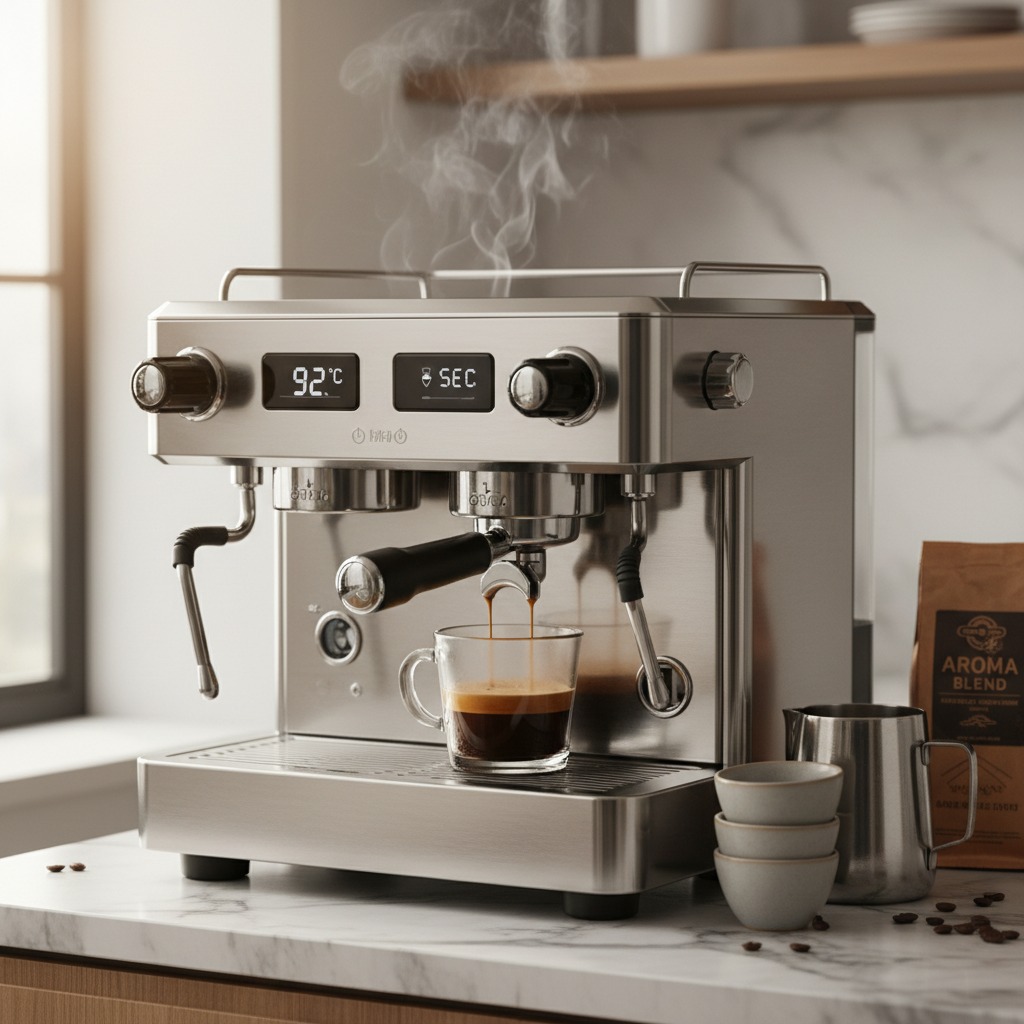
We’ve all been there. You wake up, stroll into the kitchen, and fire up your home espresso machine with visions of a syrupy, rich, cafe-quality latte dancing in your head. You go through the motions, pull the shot, and take that first sip, only to find it’s thin, sour, or perhaps tastes like a burnt rubber tyre.
Why does this happen? You’re using "espresso" beans, you’ve got the machine, and you’re wearing your favourite pyjamas. What gives?
The truth is, there’s a massive gap between a commercial setup and a home kitchen. But here’s the good news: that gap isn't impossible to bridge. We’ve spent years at Limini Coffee helping people transition from "okay" coffee to "wow" coffee, and it usually comes down to a few specific tweaks.
So, let’s dive into the ten reasons your home espresso is acting up and, more importantly, how you can fix it.
1. The Beans Aren't as Fresh as You Think
We’ll start with the most common culprit. If you’re buying coffee from a supermarket shelf, it’s likely already months old by the time it reaches your basket. Coffee is a fresh agricultural product. Once it’s roasted, it begins to degas (releasing CO2) and eventually goes stale.
In a speciality coffee shop, we use beans that were roasted recently: usually between 7 to 21 days ago. This is the "sweet spot" where the flavours are fully developed but the oils haven't gone rancid. If your beans are old, you won’t get that beautiful thick crema we all crave; you’ll just get a watery mess.
The Fix: Buy directly from a roaster. We recommend looking for a "roasted on" date rather than a "best before" date. If you want the real deal, check out our range of freshly roasted coffee beans that we ship out daily. Fresh is best. Period.
2. Your Grinder is Holding You Back
You might have a brilliant espresso machine, but if you’re using a cheap blade grinder (or worse, pre-ground coffee), you’re fighting a losing battle. Espresso requires an incredibly fine and, crucially, uniform grind.
Blade grinders "whack" the beans into uneven shards. This leads to uneven extraction: the tiny dust particles over-extract (bitter), while the big chunks under-extract (sour). You end up with a cup that manages to be both bitter and sour at the same time. Not a great way to start a Tuesday.
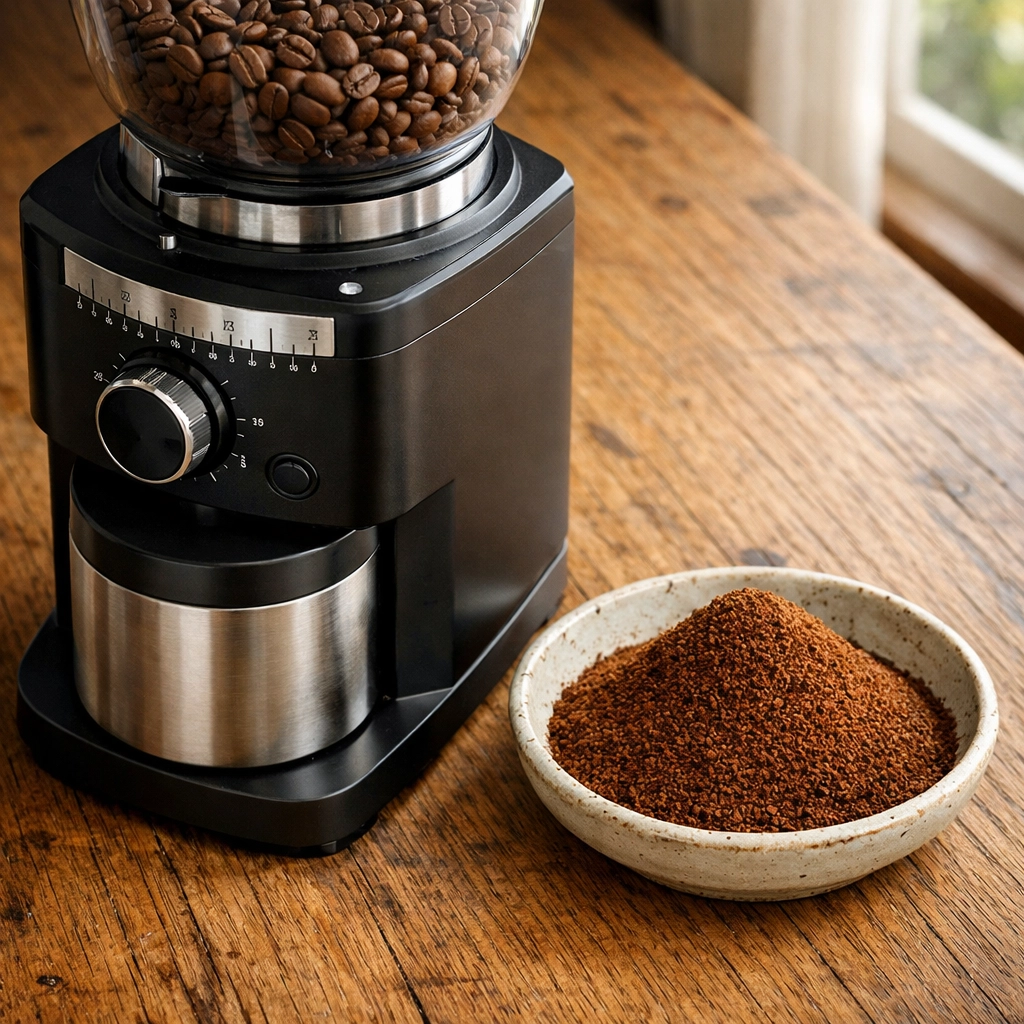
The Fix: Invest in a decent burr grinder. Burr grinders crush the beans to a specific, consistent size. When you’re choosing espresso equipment, we often suggest spending as much on the grinder as you do on the machine itself. It’s that important.
3. You’re Not Dialling In (Grind Size Matters)
So, you’ve got a burr grinder. Great! But are you "dialling it in"?
Espresso is all about resistance. The ground coffee acts as a puck that the water has to push through. If the grind is too coarse, the water rushes through in 10 seconds, and it tastes thin and acidic. If the grind is too fine, the machine struggles, and the coffee drips out like sludge, tasting ashy and bitter.
The Fix: Aim for a "brew time" of about 25 to 30 seconds. If your shot is too fast, move the grinder finer. If it’s too slow, move it coarser. Small adjustments make a huge difference here. We’re talking millimetres.
4. Temperature Instability
Commercial machines are massive beasts filled with copper and brass. They are designed to stay at a very specific temperature (usually between 90 °C to 95 °C) all day long. Many home machines, however, suffer from "temperature surfing." The water might be too hot at the start and too cold by the end of the shot.
If the water is too cold, you won't extract enough flavour (sour). Too hot? You’ll burn the delicate oils (bitter).
The Fix: Give your machine plenty of time to warm up. Even if the "ready" light comes on in 2 minutes, the actual metal of the group head is still cold. Give it 15-20 minutes. You can also run a "blank shot" (water only) through the portafilter to heat everything up before you put the coffee in.
5. The Water Problem
Espresso is roughly 98% water. If your tap water tastes a bit "chlorine-y" or is incredibly hard (common in many parts of the UK), your coffee will suffer. Hard water is also the number one killer of espresso machines due to limescale build-up.
The Fix: At the very least, use a basic water filter jug. If you want to get serious, look into bottled water with a low mineral content or specific "coffee water" packets. Your taste buds: and your machine: will thank you. You can learn more about espresso machine looking after to keep things running smoothly.
6. Inconsistent Tamping
Tamping is the act of compressing the coffee grounds into a level puck. If you tamp at an angle, the water will find the path of least resistance: a phenomenon we call "channelling." The water blasts through one side of the puck while leaving the other side dry.
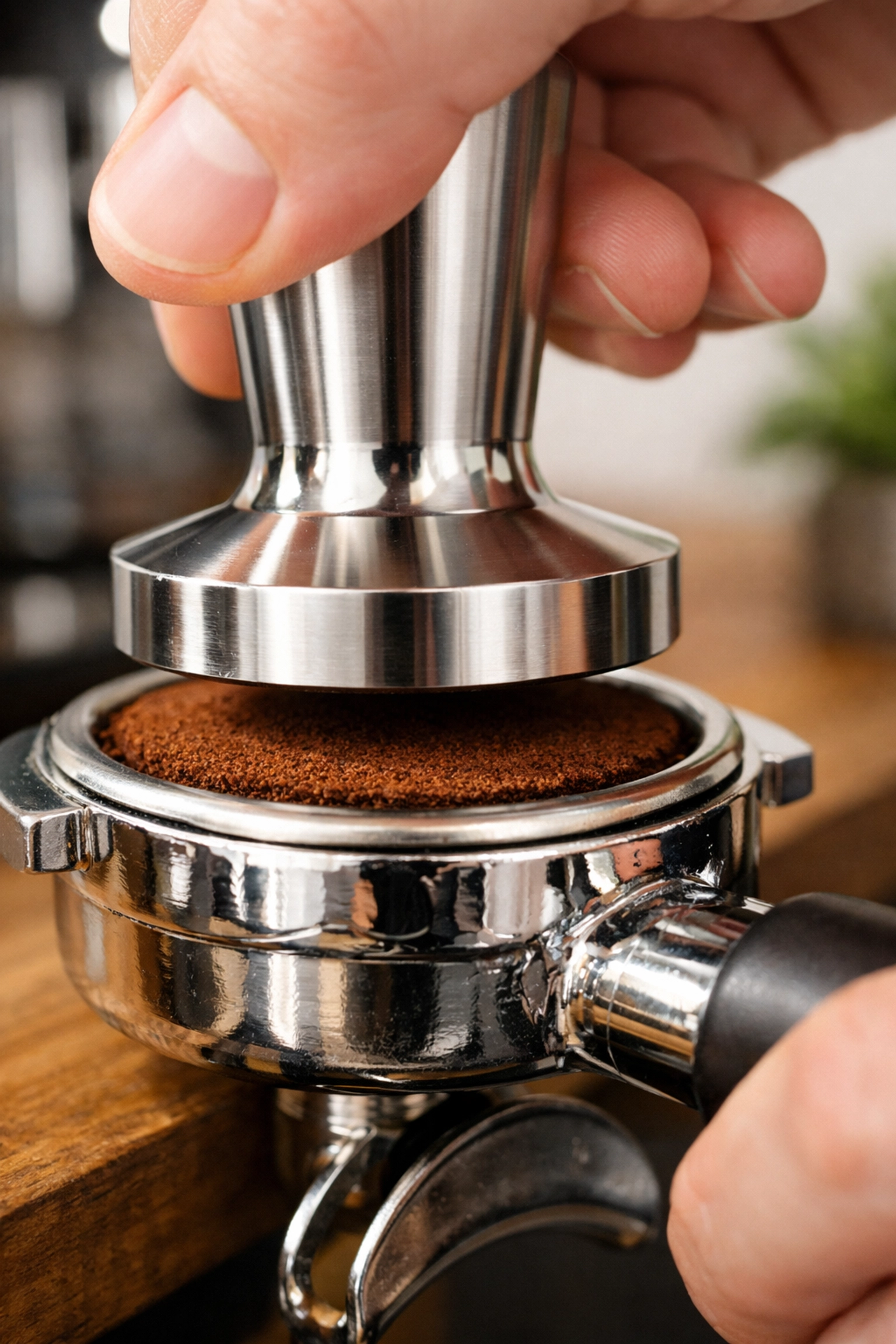
The Fix: Focus on a level tamp rather than a hard tamp. You don't need to be a bodybuilder; you just need to ensure the surface is flat. We’ve written a whole guide on the art of tamping if you want to master the technique.
7. You Aren't Weighing Your Coffee
In a speciality cafe, baristas weigh everything. We weigh the dry coffee going in and the liquid espresso coming out. This is called the "brew ratio." A common ratio is 1:2. For example, 18g of dry coffee in, 36g of liquid espresso out.
If you’re just "eyeballing" the volume in the cup, you’ll never get consistency. Crema takes up a lot of room but doesn't weigh much, so looking at the "line" on the glass is deceptive.
The Fix: Buy a cheap set of digital scales that fit under your portafilter. Use our coffee brewing calculator to help you find the perfect numbers for your setup. It takes the guesswork out of the equation.
8. Milk Texture: Microfoam vs. Sea Foam
If you’re making lattes or cappuccinos, the espresso is only half the battle. Most home machines have less steam pressure than commercial ones, leading to "big bubble" foam that looks like dish soap. Real cafe milk is "microfoam": silky, glossy, and pourable.
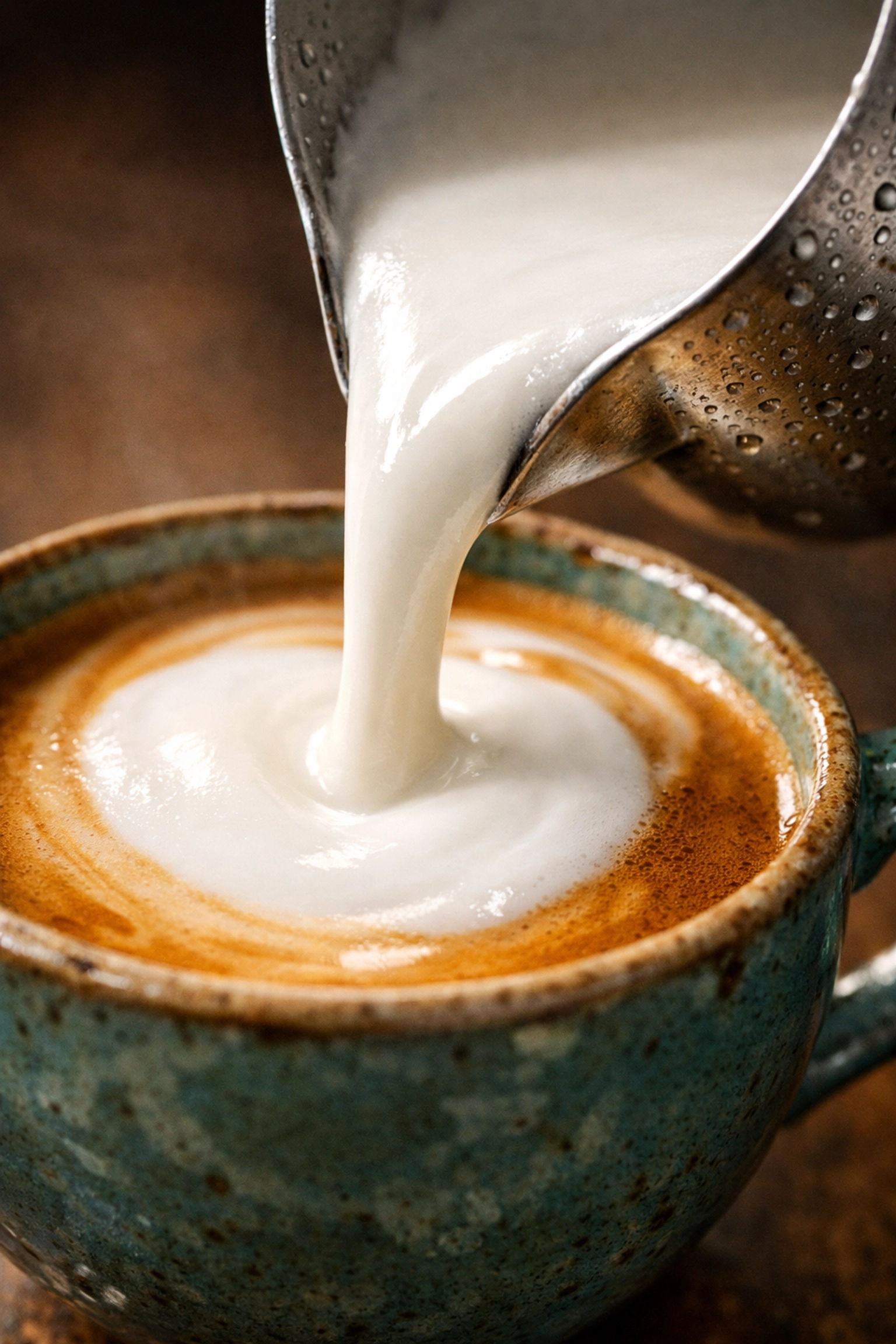
The Fix: It’s all about the "stretch" and the "roll." You want to introduce air only at the very beginning (the hissing sound), then plunge the wand deeper to create a vortex that incorporates those bubbles. For a deep dive, read our article on understanding milk.
9. Your Machine is Dirty
Old coffee oils are disgusting. They are literally rancid fats. If you don't clean your shower screen and backflush your machine regularly, every shot you pull is being filtered through a layer of bitter, old gunk.
The Fix: Backflush with water every day and use a dedicated espresso cleaner once a week. Wipe your steam wand immediately after every use. A clean machine makes happy coffee.
10. The Need for Practice
Let’s be honest: professional baristas pull hundreds of shots a day. They develop a "feel" for the machine, the beans, and the milk. It’s a skill, just like cooking or playing an instrument. You can’t expect to nail it every time without a bit of legwork.
The Fix: Don't get frustrated! Experiment with different beans from our online shop and keep a little notebook of what worked. Or, if you want to fast-track your skills, come see us for some coffee barista training. We love teaching people how to get the most out of their home setups.
Summary: How to Step Up Your Game
If you’re looking for that "lightbulb moment" where your home coffee finally tastes like the local shop, start with the basics. Get yourself some high-quality, fresh beans, buy a scale, and pay attention to your timing.
Making great espresso is a journey. There will be bad shots and messy counters along the way, but that’s all part of the fun. Once you nail that perfect, syrupy extraction, you’ll never want to go back to supermarket coffee again.
If you're ever feeling stuck, we’ve got plenty of resources on the workings of espresso machines and how to choose the right gear.
Happy brewing!