Search. Scroll. Filter.
Forget it.
We’ve officially entered the era where the magnifying glass icon feels as vintage as a rotary phone. In 2026, nobody wants to spend forty minutes clicking checkboxes for "pet-friendly," "rooftop bar," and "high-speed Wi-Fi."
Your guests are talking to their devices. And more importantly, their devices are talking back.
The shift from traditional search filters to "ask and book" interfaces is the biggest disruption to hospitality since the first OTA went live. It’s changing how people discover your property, how they perceive your brand, and how they hit that "confirm" button. If you're still relying on a static website with a clunky drop-down menu, you’re essentially invisible to the modern traveler.
Let’s look at why AI in hospitality is finally killing the search bar and what that means for your bottom line.
From Keywords to Conversations
Remember when search was just two or three words? "Hotel London Central." "Spa Paris Weekend."
That’s over.
Today, the average query has evolved into 10 or 11-word conversational prompts. People aren't searching; they’re briefing. They’re saying things like, "Find me a boutique hotel in Berlin with a gym that opens at 5 AM and a quiet corner for a four-hour Zoom call on Tuesday."
This isn't just a change in typing habits. It’s a fundamental shift in the discovery layer. Platforms like ChatGPT and Perplexity have become the default entry point for the consumer journey. They don’t provide a list of links; they provide a single, synthesized answer.

The Power of Intent
We believe the search bar was a necessary middleman we no longer need. In the old world, the guest did the work. They had to translate their needs into keywords, browse five different sites, and compare the results themselves.
In 2026, the AI does the heavy lifting. It understands intent.
- Contextual awareness: It knows if the guest is traveling for business or a messy breakup.
- Real-time synthesis: It pulls live availability and sentiment from across the web.
- Zero friction: It moves from "I’m thinking about…" to "Book it" in seconds.
The Rise of "Zero-Click" Discovery
The traditional SEO game was all about getting a click to your website. But we’ve hit the "zero-click" default.
AI-generated answers now sit at the top of every search result, summarizing everything a guest needs to know without them ever needing to visit your homepage. If your hotel isn't mentioned in that instant summary, you effectively don't exist.
This makes AI in hospitality a visibility game, not just a tech trend. To stay relevant, properties have to move away from basic specifications and toward intent-driven context. Your data needs to be structured in a way that AI can read, understand, and recommend.
"The AI just told me the vibe was 'industrial chic but cozy,' which was exactly what I was looking for," says one frequent traveler. "I didn't even see the hotel's actual website until the confirmation email arrived. I just asked and booked."
The "Ask and Book" Workflow
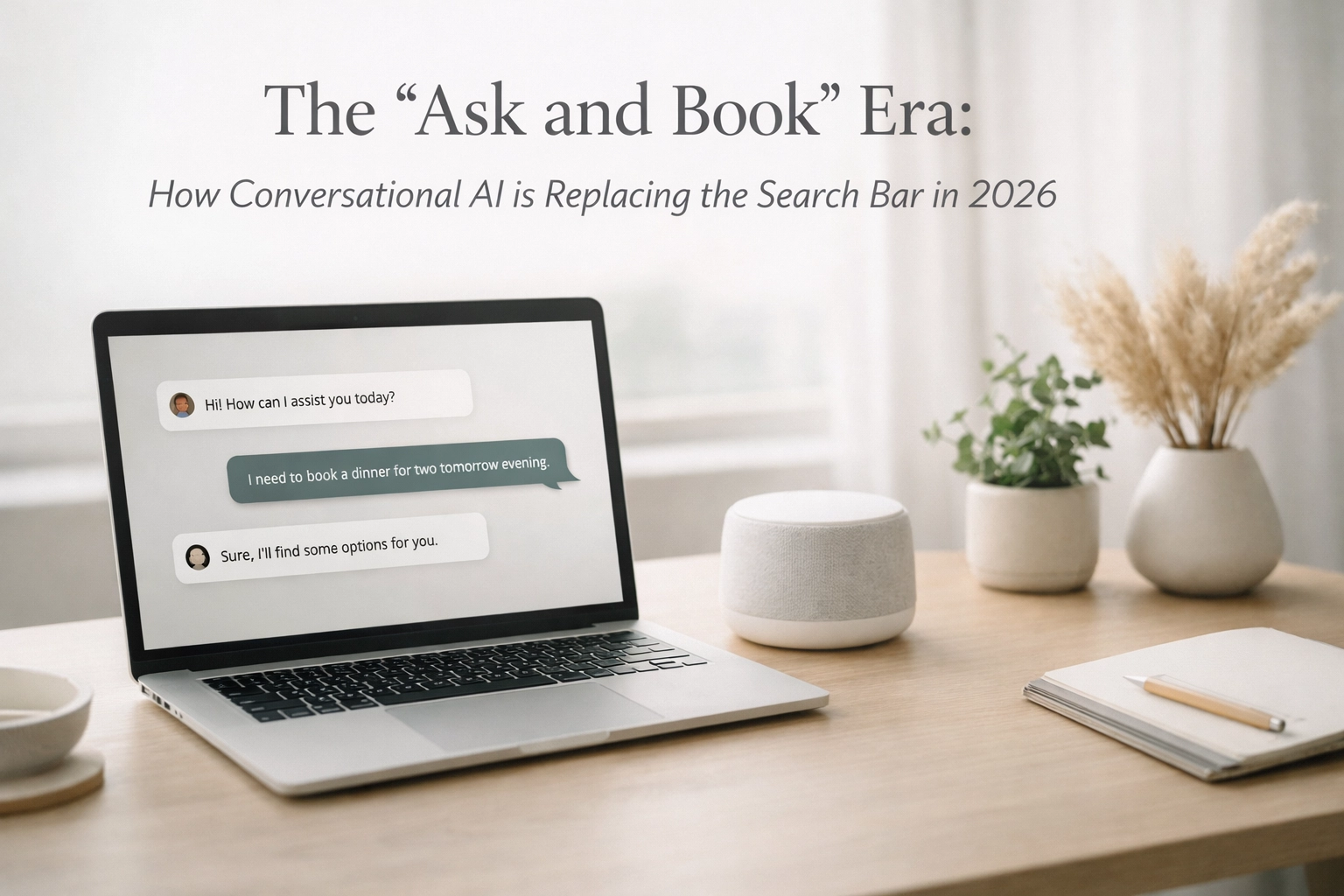
What does this look like in practice? It’s a seamless, voice-driven, or chat-based flow that removes every hurdle in the booking funnel.
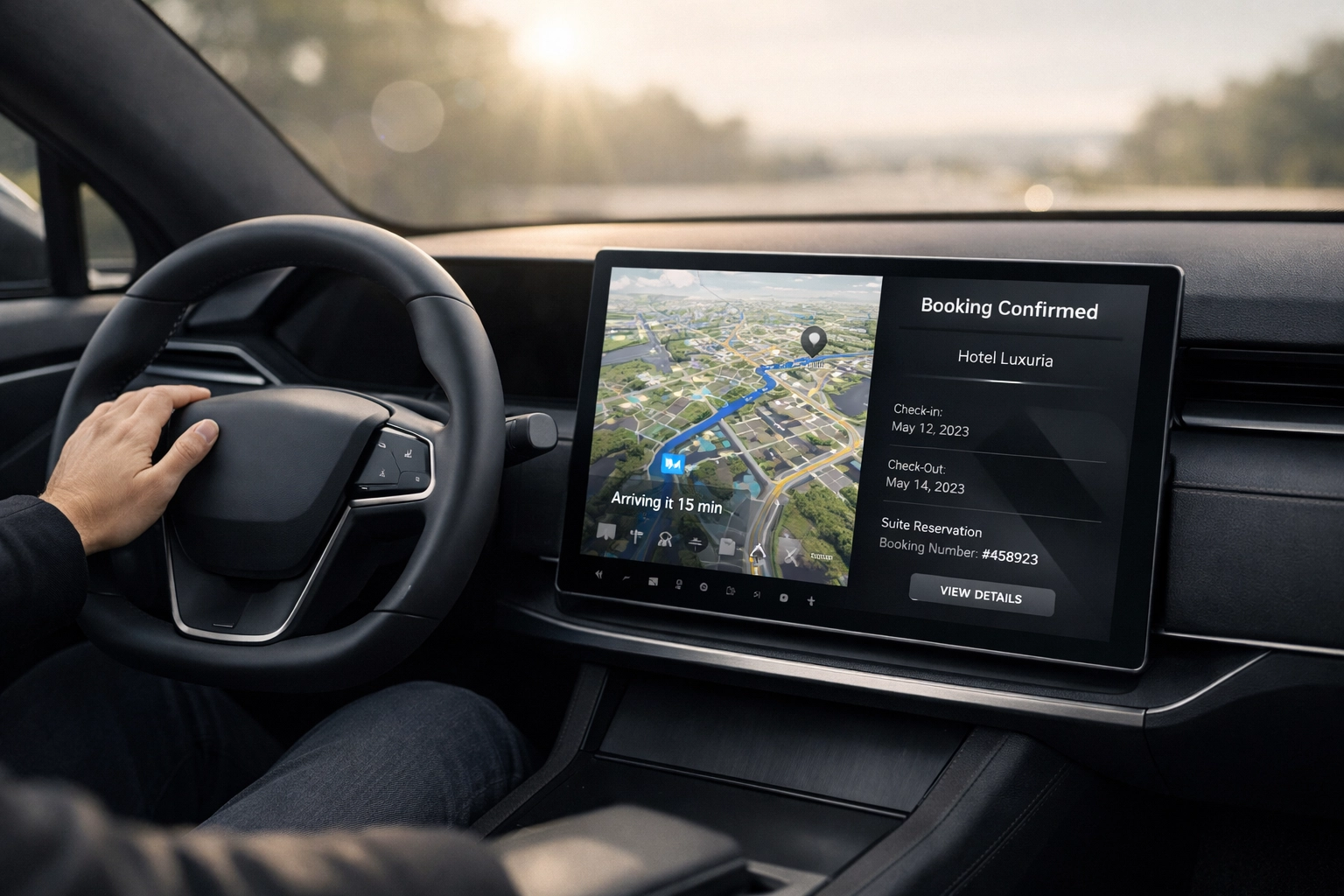
Imagine a guest driving to a conference.
- The Ask: "Hey, find me a hotel near the convention center with a great steakhouse and an EV charger. Book it for two nights using my preferred card."
- The AI Response: "I’ve found The Mews Collective. It has a 4.8-rating for its ribeye, three Superchargers, and it’s a 5-minute walk from your event. Total is $540. Should I confirm?"
- The Booking: "Yes, go for it."
Done. No tabs open. No password resets. No credit card entry.
This compression of the funnel, moving from discovery to purchase in minutes rather than days, is where the revenue is won in 2026. If you want to see how the modern back-end supports this kind of magic, check out what we're building at Mews.
Why Direct Bookings are Winning
You’d think this AI shift would favor the giant OTAs, but it’s actually leveled the playing field for independent brands and innovative groups.
Because conversational AI prioritizes direct answers and specific attributes, hotels that have their own data in order are seeing a surge in direct bookings. When an AI agent reaches out to a hotel’s API to check for a "quiet room on a high floor," the properties that can provide that granular data in real-time get the booking.
Three Ways to Win in the Ask and Book Era
- Structure your data. AI can’t recommend your "award-winning brunch" if that information is buried in a PDF menu.
- Prioritize APIs over UIs. The guest might never see your beautiful website UI, but the AI will definitely see your API.
- Embrace the platform. Use a management system that treats AI as a core component, not a bolt-on feature.
We think the best technology shouldn't feel like technology at all. It should feel like a conversation.
Operational Excellence Behind the Scenes
You can’t have a high-tech "Ask and Book" front-end if your back-end is stuck in 1998.
For a conversational AI to successfully book a room, it needs to know more than just "Available" or "Occupied." It needs to know which rooms are clean, which ones have the best view of the sunset, and whether the guest’s favorite sparkling water is in the fridge.
This is where AI in hospitality moves from the marketing department to the operations team.
"Since we shifted to an AI-first booking flow, our front desk spends 40% less time on the phone answering basic questions about parking and check-out times," says a Mews customer. "The guests arrive already knowing everything they need. It’s a different vibe."

The Human Element (Yes, it still exists)
With all this talk of bots and zero-click journeys, it’s easy to think the "hospitality" part of the industry is fading.
It’s actually the opposite.
By automating the "Search and Book" phase, we’re freeing up your staff to actually be hosts. When a guest doesn't have to spend their arrival time confirming their credit card and spelling their last name because the AI already handled it, you have time for a real conversation.
We believe that technology should give you more time for people, not less.
The Bottom Line
The search bar isn't coming back. In 2026, the brands that thrive are the ones that lean into the "Ask and Book" reality. They are the ones that make themselves discoverable to AI agents and make the transaction so effortless it feels like magic.
You don't need a massive team to get started. You just need the right platform to anchor your operations.
Ready to see how the most innovative hotels are staying ahead?
Get started with a 30-minute demo and see how we can get you earning revenue in the AI era in no time.
Your guests are already asking. Are you there to answer?

Key Takeaways for 2026:
- Keywords are dead: Long-form conversational prompts are the new standard.
- Visibility has changed: Being cited by an AI assistant is more important than a Google rank.
- Speed is everything: Zero-click journeys are compressing the booking funnel from days to minutes.
- Data is your edge: Granular, real-time data allows AI to recommend your property over the competition.
The era of "Ask and Book" is here. It’s fast, it’s conversational, and it’s incredibly profitable for those who are ready. Don't let your property get left behind in the old-school search results.