You've just spent three hours on a plane. Your back hurts. You're hungry. You want a shower and a nap, in that order.
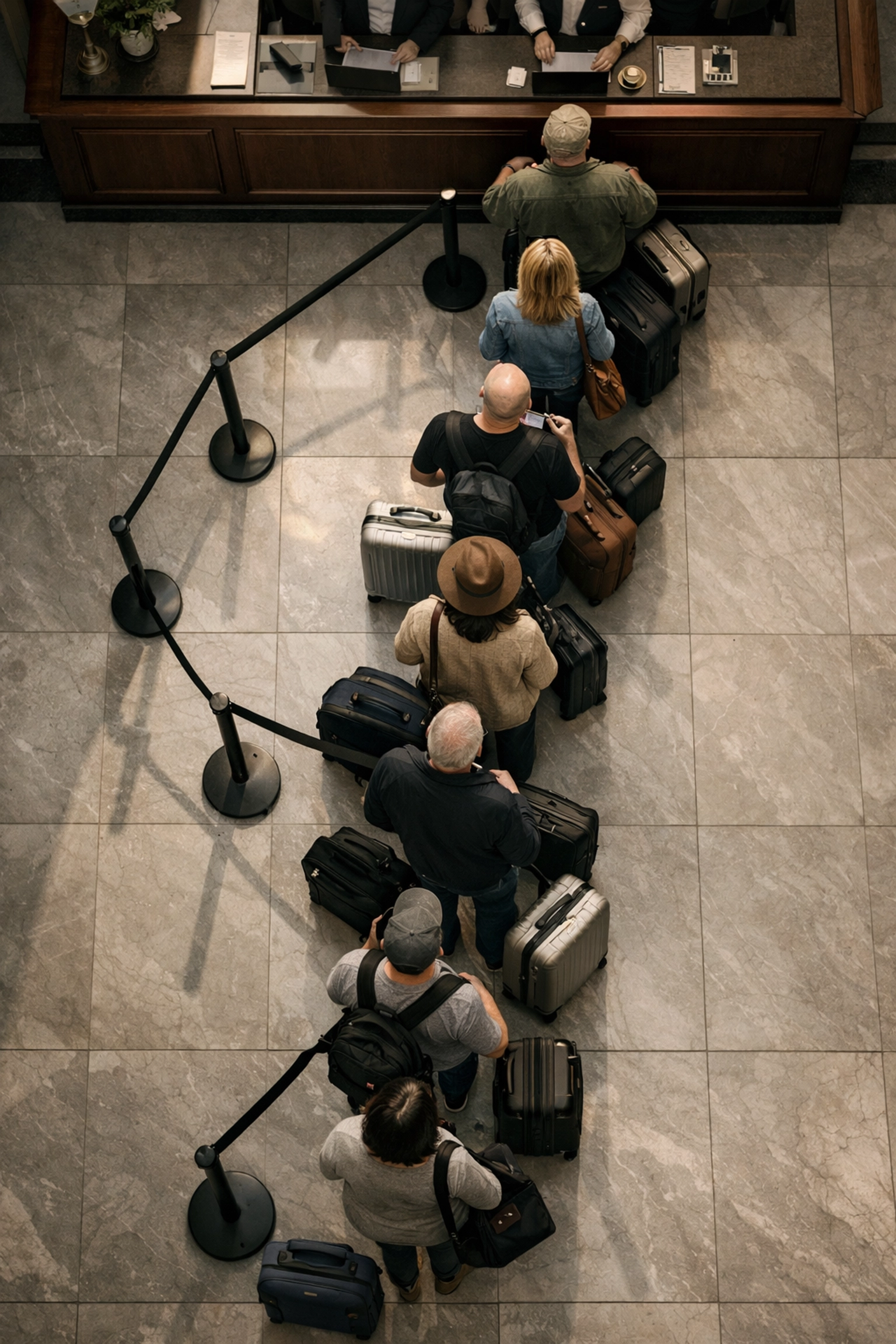
You walk into the hotel lobby and see it: a line. Seven people deep. One frazzled front desk agent clicking furiously at a computer that's clearly from 2014.
Your entire stay just got worse: and you haven't even gotten your room key yet.
The 60-Second Rule
Here's the thing about hotel check-ins: the first minute shapes everything that follows. Not the amenities. Not the thread count. Not the artisanal coffee in the lobby.
Those first 60 seconds.
It's called psychological anchoring, and it's wildly powerful. That initial impression: whether you feel welcomed or inconvenienced, valued or just another transaction: colors your perception of the entire stay. You could have the best room in the building, but if check-in sucked, you're already mentally writing a three-star review.
Research backs this up. Studies on guest experience show that the emotional tone set during arrival directly influences overall satisfaction scores. Even if everything else goes perfectly, a rocky start leaves a sour taste. Your brain latches onto that first experience and uses it as a reference point for everything else.
The Lobby Queue: Where Guest Experience Goes to Die
Let's talk about the elephant in the lobby: the queue.
Standing in line after traveling is psychological torture. You're tired. You're done. You just want to get to your room. But instead, you're watching someone argue about a booking made three months ago while the person behind the desk explains, for the fourth time, that breakfast ends at 10:30 AM.
This waiting period does two terrible things simultaneously.
First, it creates stress. Travel is already stressful. Adding a 15-minute wait before you can even begin to relax compounds that stress. Your cortisol levels are probably already elevated from navigating airports or highways. Now you're stuck in limbo, watching minutes tick by.
Second, it signals that your time isn't valuable. Whether intentional or not, a long queue sends a message: the hotel's operational convenience matters more than your comfort. You're a number in the system, not a guest.
The perceived value of your stay drops with every passing minute.
What Your Brain Actually Needs
Cognitive ease. That's the psychological term.
Humans prefer experiences that require minimal mental effort. We like things that flow. Straightforward processes. Clear communication. No friction points.
A perfect check-in provides exactly that. You arrive. You're acknowledged immediately. The process is smooth, efficient, maybe even personalized. Within 60 seconds, you feel welcomed and you're on your way.
The best part? When check-in is seamless, you barely remember it: and that's exactly the point. Great experiences fade into the background. Bad experiences stick in your memory like a splinter.
Enter the Tech That Actually Helps
This is where modern property management systems earn their keep.
Traditional check-in creates bottlenecks because everything funnels through one point: the front desk. One person. One computer. One queue. It's a design flaw masquerading as hospitality.
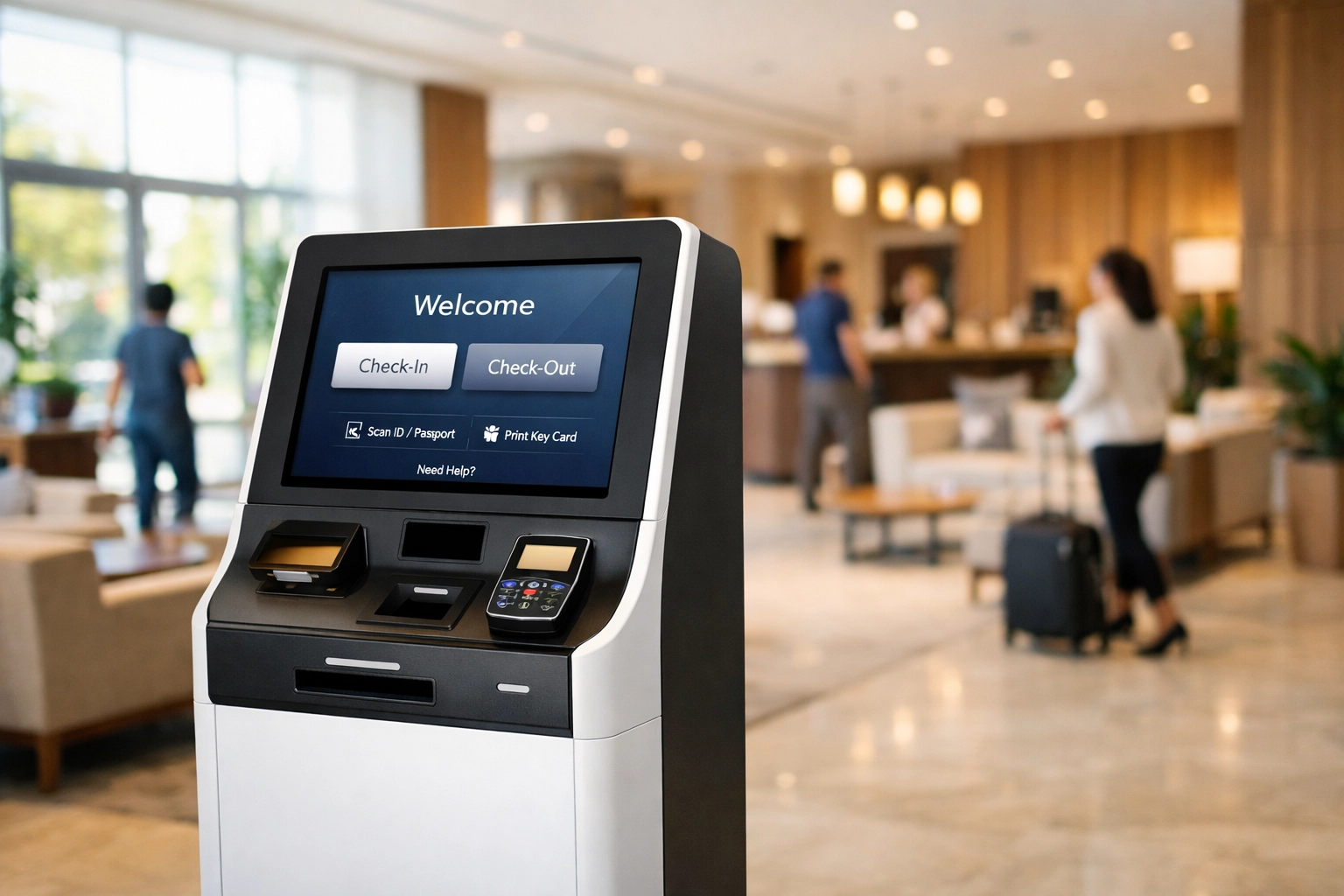
Modern solutions: mobile check-in, self-service kiosks, automated systems: remove the bottleneck entirely. They distribute the process. Suddenly, five guests can check in simultaneously instead of waiting for one overwhelmed agent.
Take Mews Kiosks, for example. Sleek, intuitive, designed specifically for the "I just want my room key" crowd. Guests can check in, get their key, and head upstairs in under a minute. No queue. No small talk about the weather. Just efficiency wrapped in a pleasant interface.
But here's the clever bit: these systems don't replace hospitality. They enhance it.
Your front desk team isn't stuck processing IDs and running credit cards. They're freed up to actually engage with guests who want that interaction. The travelers who need restaurant recommendations. The families checking in with questions. The VIPs who deserve personalized attention.
Technology handles the transactions. Humans handle the relationships.
The Rhythm of a Smooth Check-In
When check-in works properly, it follows a natural rhythm. No awkward pauses. No confusion. No "let me just check with my manager."
The process flows like this:
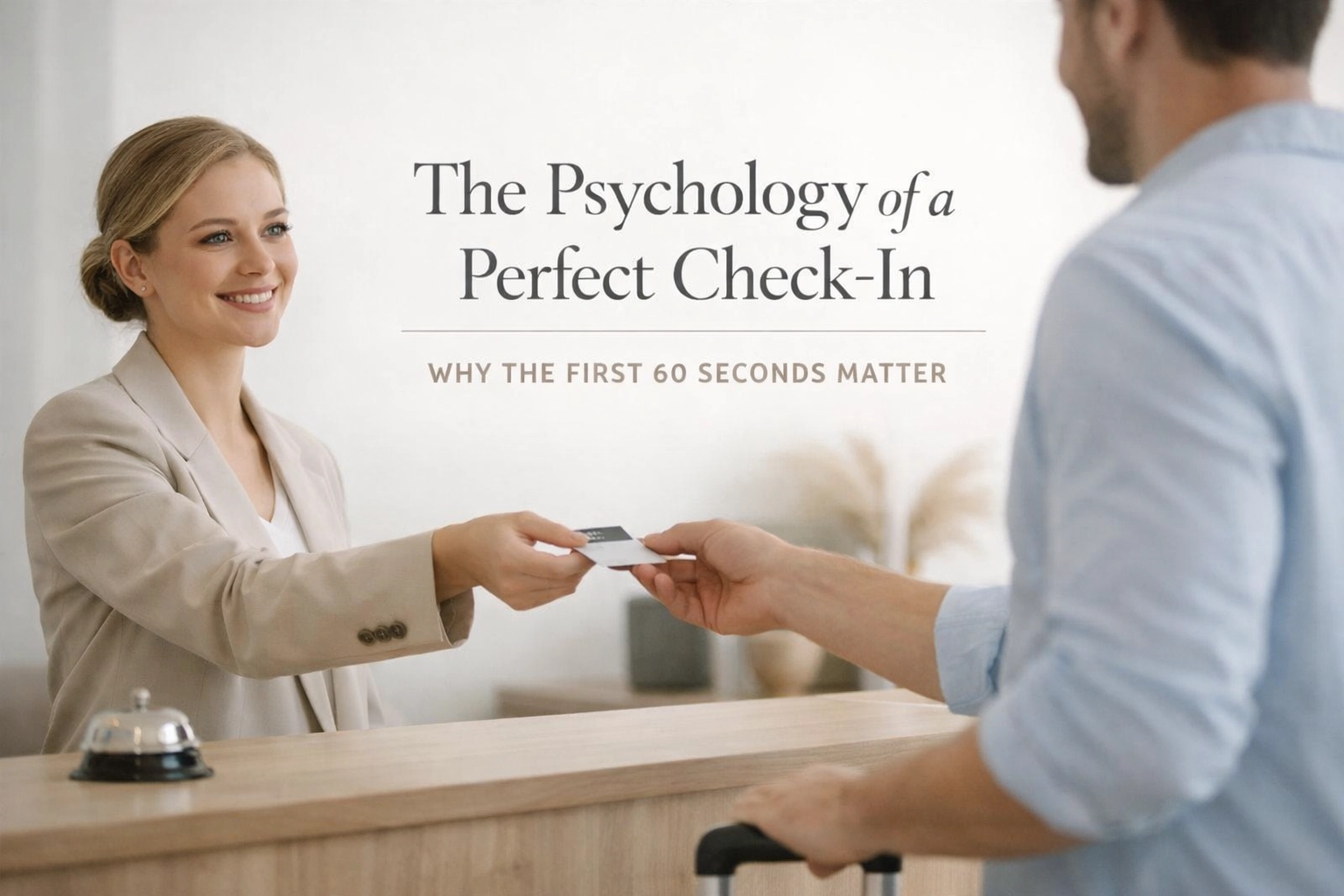
Arrival: You're acknowledged immediately. Eye contact. A smile. "Welcome to [Hotel Name]."
Verification: Your identity is confirmed quickly. ID scanned or tapped. No fumbling with photocopiers.
Personalization: The system already knows your preferences. Room type. Floor level. Any special requests you made when booking.
Key distribution: Physical or digital. Your choice. Either way, it happens in seconds.
Departure to room: You're given clear directions and sent on your way with genuine warmth.
Total elapsed time? Under 60 seconds for the efficient crowd. Maybe two minutes if you want to chat.
This rhythm creates psychological safety. You know what's happening. Nothing feels uncertain or unpredictable. You're in control of your experience.
The Power of Personalization
Here's where modern systems really shine: they remember.
Your previous stays. Your preferences. That time you requested extra pillows. Whether you prefer a high floor or low floor. The fact that you always book king beds.
When this information surfaces naturally during check-in: "Welcome back, we've put you in a corner room on the 8th floor like last time": it triggers something powerful in your brain. Recognition. Value. The sense that you matter.
It's the hospitality equivalent of a bartender remembering your drink order.
These moments don't require extra time or effort from staff. The system serves up the information automatically. But the psychological impact? Massive. You're not just another booking confirmation number. You're a returning guest with preferences that matter.
Why Hotels Are Finally Getting This Right
For years, the hospitality industry resisted technology at the front desk. The reasoning went something like: "But we're in the people business. Technology dehumanizes the experience."
Turns out, that's backwards.
Technology dehumanizes repetitive tasks. It automates the boring bits. ID verification. Payment processing. Key encoding. The stuff nobody enjoys anyway.
What technology enables is better human connection. Your best front desk agents aren't data entry specialists. They're problem solvers. Relationship builders. The people who turn a standard stay into a memorable one.
Modern PMS platforms and self-service options let these talented humans do what they do best while eliminating the friction points that frustrated both staff and guests.
The result? Better experiences on both sides of the desk.
The Bottom Line
The first 60 seconds of check-in aren't just operationally important: they're psychologically critical.
They set the tone. They establish expectations. They determine whether a guest feels welcomed or tolerated.
Smart hotels recognize this. They're investing in systems that remove friction, reduce wait times, and create space for genuine hospitality. Tools like Mews Kiosks and mobile check-in options that put control in guests' hands while freeing staff to focus on what actually matters: making people feel valued.
Because at the end of the day, nobody remembers a fast check-in. They remember feeling welcomed. Feeling important. Feeling like their time was respected.
And that all happens in the first 60 seconds.