So, you’ve decided to open a coffee shop? That is brilliant. It’s a dream many of us have: the smell of freshly ground beans, the hiss of the steam wand, and the hum of a happy community in your very own space. But let’s be honest for a second: the leap from "I love coffee" to "I run a successful coffee business" is a big one.
One of the most critical decisions you will ever make isn't actually the colour of your walls or the name on the door (though those are fun). It’s choosing your wholesale coffee roasters. Your roaster isn’t just a person who sends you boxes of beans; they are your mentor, your technical support, and your most important partner.
At Limini Coffee, we’ve helped countless startups go from a blank floor plan to a bustling café. If you're ready to start your journey, you can find our wholesale partnership details here.
Here is our five-step guide to finding the right partner and launching your dream.
1. Research and Create Your "Dream Team" Needs List
Before you even pick up the phone to call coffee suppliers, you need to know what you actually want. It is very easy to get swayed by a roaster who has a cool logo or a massive Instagram following, but will they be there when your espresso machine starts leaking at 8:00 AM on a Saturday?
Ask yourself some hard questions:
- Do I need help choosing equipment, or do I already have it?
- Do I know how to dial in a grinder, or do I need someone to show me?
- Am I looking for a "house blend" that everyone loves, or do I want rotating single-origin coffees that win awards?
- Do I need help with the actual shop fitting and layout?
We believe it is vital to work with someone who understands the B2B side of specialty coffee, not just the roasting side. You aren't just buying a product; you are buying a support system. If you are just starting out, we highly recommend looking for a partner that offers a comprehensive wholesale package.

2. The "Vibe Check": Have the Initial Conversation
Once you have a shortlist of potential wholesale coffee roasters, it’s time to reach out. This is where you find out if your business philosophies align.
When you speak to us, or any roaster, be open about your concept. Are you a high-volume takeaway spot near a train station? Or a slow-paced brew bar in a quiet village? The needs for these two businesses are worlds apart. A good roaster will ask you about your expected volume and your target demographic.
And don't be afraid to talk about the "boring" stuff. Ask about delivery schedules, minimum order quantities, and lead times. There is nothing worse than running out of beans on a Tuesday because your supplier only ships on Thursdays. We think transparency is the most important part of this initial stage. If a roaster is too busy to answer your basic questions now, they’ll definitely be too busy when you’re in a panic later.
3. Sample the Goods (The Fun Part)
You wouldn’t buy a car without driving it, right? So don't buy coffee without tasting it. Request samples, but don't just drink them at home in a French press if you plan on serving espresso.
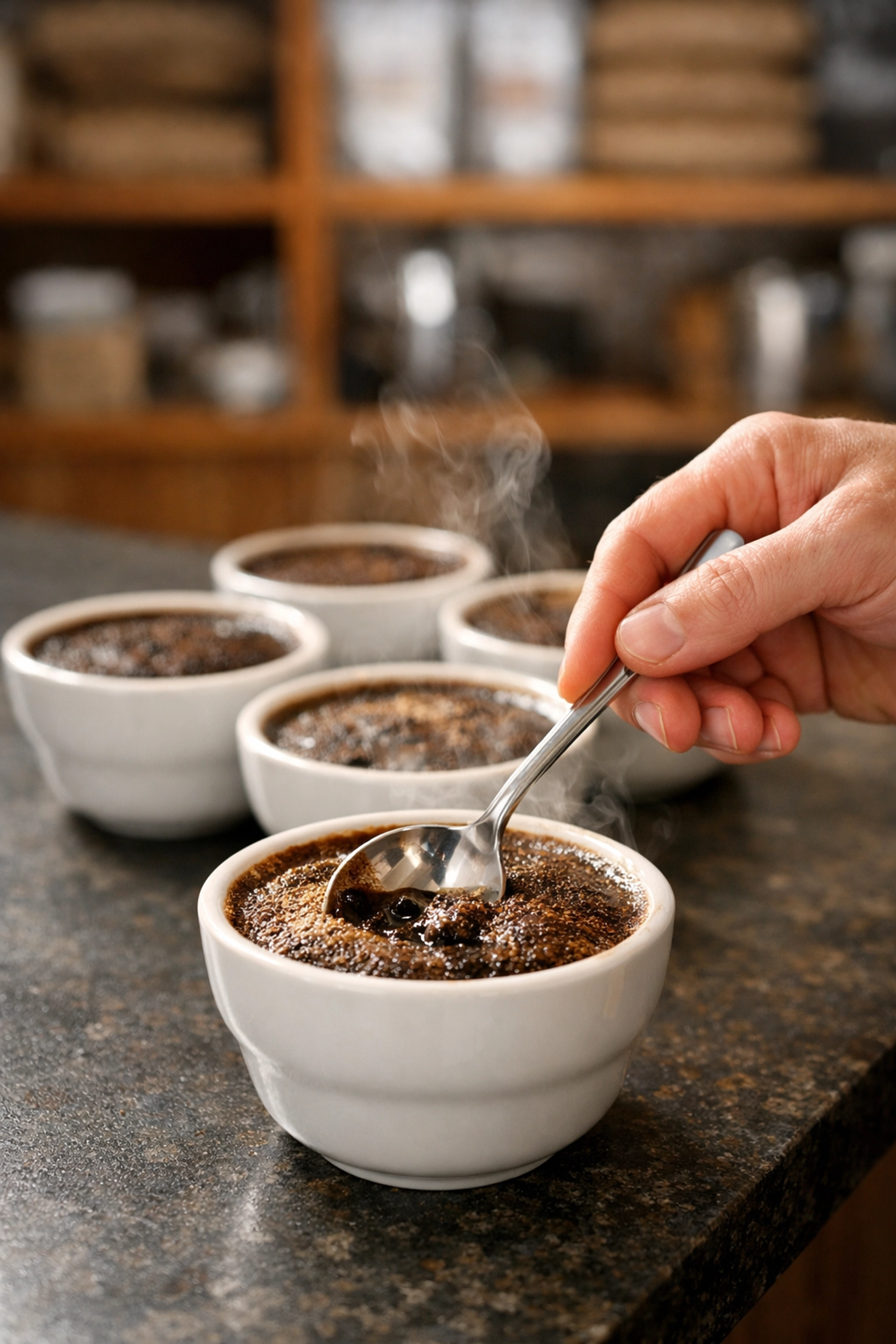
If possible, visit the roastery. This is where you can see the magic happen and participate in a "cupping" session. Cupping is the industry standard for evaluating coffee quality. It allows you to taste the nuances: is it chocolatey and nutty (great for milk drinks) or bright and acidic (lovely as a black coffee)?
When you’re tasting, think about your customers. While we love a complex, fermented natural process coffee with notes of "funk," your average morning commuter might just want something smooth and reliable.
4. Evaluate the "Hidden" Support
This is the step where most beginners trip up. They find a great coffee, they love the roaster, but they forget about the technical side. To run a great shop, you need more than just great beans; you need the right tools and the skills to use them.
Equipment Guidance
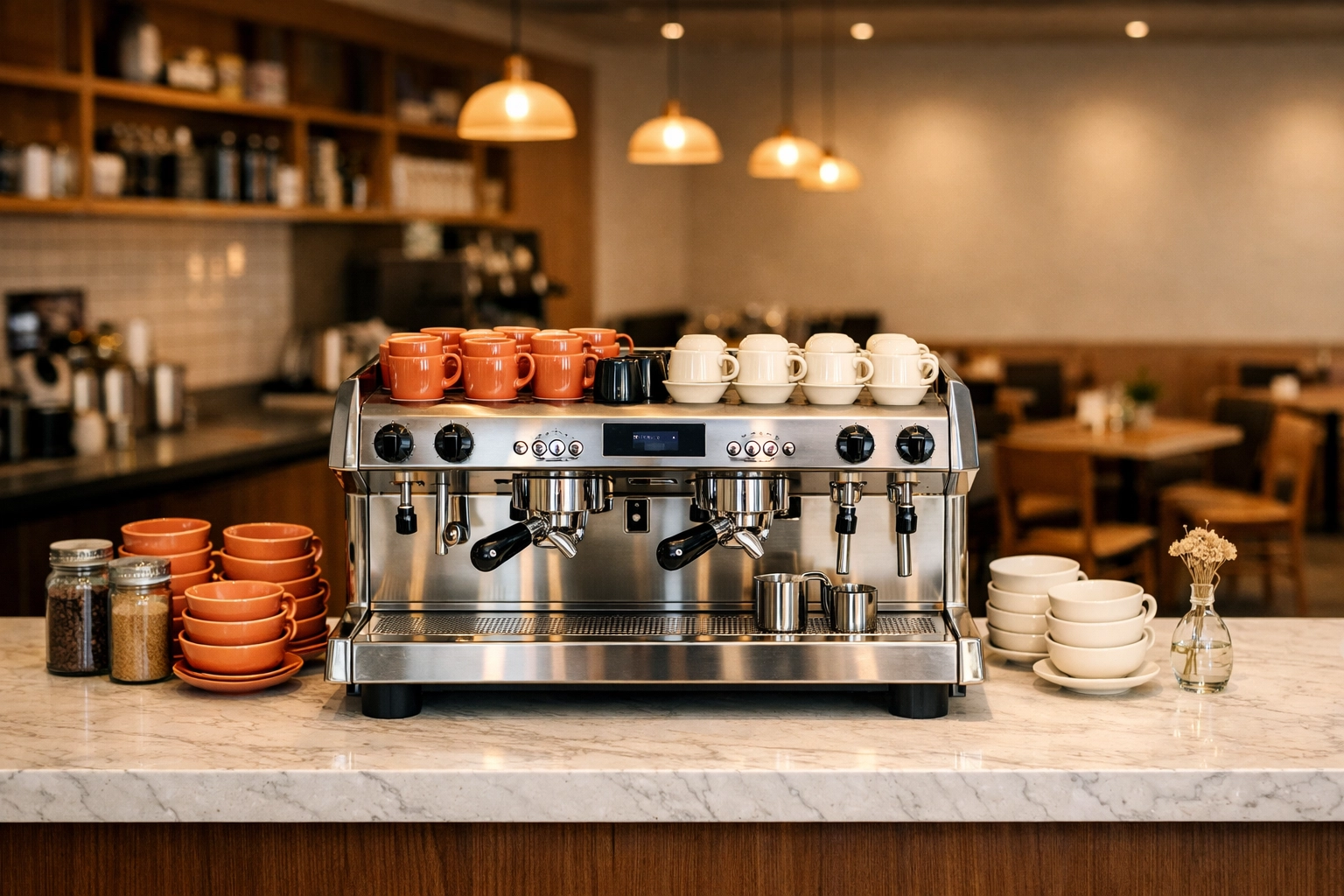
Choosing between a lever machine and an automatic can be daunting. We’ve spent a lot of time exploring the nuances of choosing espresso equipment, and your roaster should be able to guide you here. Do you want the theatre of a lever machine? Or the consistency of a La Spaziale?
Barista Training
You can buy the most expensive coffee in the world, but if your barista doesn't know how to tamp or how to steam milk correctly, it will taste terrible. Training is not a one-time thing; it's an ongoing process. Look for a roaster that offers comprehensive training.
We’re talking about the science:
- The 9 BAR Rule: Understanding that espresso needs exactly 9 BAR of pressure for that perfect extraction.
- Milk Temperature: Aiming for that sweet spot around 140 °F / 60 ºC. Any hotter and you destroy the sweetness; any cooler and the customer complains.
- Tamping: Consistency is key here. Understanding tamping is the difference between a watery mess and a syrupy delight.
If you want a partner who takes training as seriously as you do, Limini Coffee is the way to go.
5. Finalise Your Program and Launch
The final step is getting the logistics in place. This includes choosing your "house" blend, setting up your ordering portal, and potentially creating your own private label if that’s your style.
You’ll also want to look at the smaller details that make a big impact:
- Menu Curation: What is the difference between a Flat White and a Latte in your shop? (Check out our guide on latte vs cappuccino if you're unsure).
- Cup Selection: Believe it or not, the cups you choose change the perception of the coffee.
- Water Quality: This is huge. Coffee is 98% water. If your water is hard, your coffee will taste flat and your machine will scale up. Your roaster should help you with filtration.
Why Direct Relationships Matter
In the world of wholesale specialty coffee, you will see many "distributors." These are companies that buy from various roasters and sell to you. While this can seem convenient, we always recommend working directly with the roaster.
Why? Because a roaster knows their product intimately. They know the farmer, the roast profile, and exactly how that coffee should behave in your machine. When you work with us, you get a direct line to the people who actually made the product. It’s a partnership built on shared goals: we want your shop to succeed because if you sell more coffee, we roast more coffee. It’s that simple.
If you’re ready to take that first step and want to work with a team that is as passionate about your success as you are, come and have a chat with us at Limini Coffee.
Summary Table: What to Look for in a Roaster
| Feature | Why it matters |
|---|---|
| Training | Ensures your staff can actually deliver the quality you're paying for. |
| Equipment Support | Technical issues happen; you need a partner who can fix them. |
| Sourcing Transparency | Knowing where your coffee comes from is vital for modern consumers. |
| Customization | The ability to create a unique flavor profile for your brand. |
| Consistency | The coffee needs to taste the same on a Monday morning as it does on a Friday afternoon. |
Starting a coffee shop is a wild ride. There will be long days, burnt milk (at first!), and a lot of learning. But with the right wholesale coffee roasters by your side, you aren't doing it alone. You’re building a business on a foundation of expertise, quality, and a shared love for the perfect brew.
Imagine your first customer walking in, the smell of your signature blend filling the air, and serving them a cup that you are genuinely proud of. That is what this is all about.
Ready to start? Let's make it happen.