
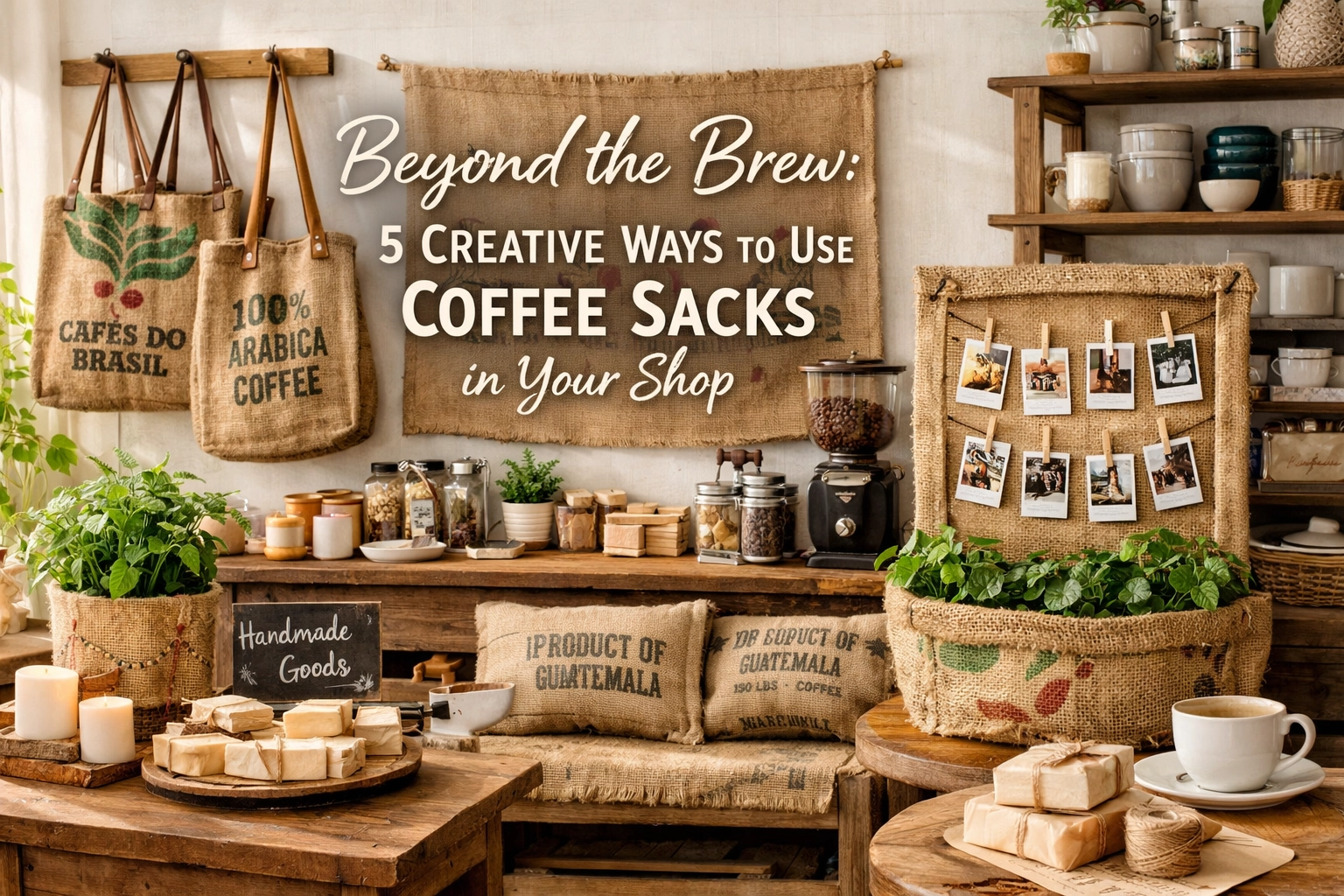
Let’s be honest: there is something undeniably romantic about a stack of burlap coffee sacks sitting in the corner of a roastery. They smell like earth, jute, and the promise of a truly spectacular morning. But once those green beans have been lovingly roasted here at Limini Coffee and moved into their valved bags, those beautiful, hand-stamped hessian sacks often end up forgotten in a storeroom or, worse, the bin.
What a waste of good "theatre," right?
In the world of specialty coffee, the "vibe" of your shop is almost as important as the TDS of your espresso. Customers aren't just buying a caffeine hit; they’re buying into a story. They want to feel the connection between the farm in Ethiopia and the ceramic cup in their hand. Upcycling your old coffee sacks is one of the easiest, cheapest, and most visually striking ways to tell that story.
So, before you toss those bags, let’s talk about how to turn "trash" into high-end cafe decor. Here are five creative ways to give your coffee sacks a second life.
1. The Gallery Wall: Statement Art with a Story
If you’ve ever looked closely at a coffee sack, you’ll know they are essentially giant pieces of graphic design. From the bold, black stencil work of Brazilian estates to the colourful, intricate crests found on Colombian exports, these bags are art in their own right.
Instead of hiding them, why not frame them?
Framing a section of a sack creates an instant focal point. It screams "Specialty Coffee" without you having to say a word. We recommend using FSC-certified wooden frames to keep that natural, earthy aesthetic going.
Pro Tip: Don’t just frame the whole bag. Look for the most interesting part, the "Product of Peru" stamp, the shipping marks, or the weight indicators.
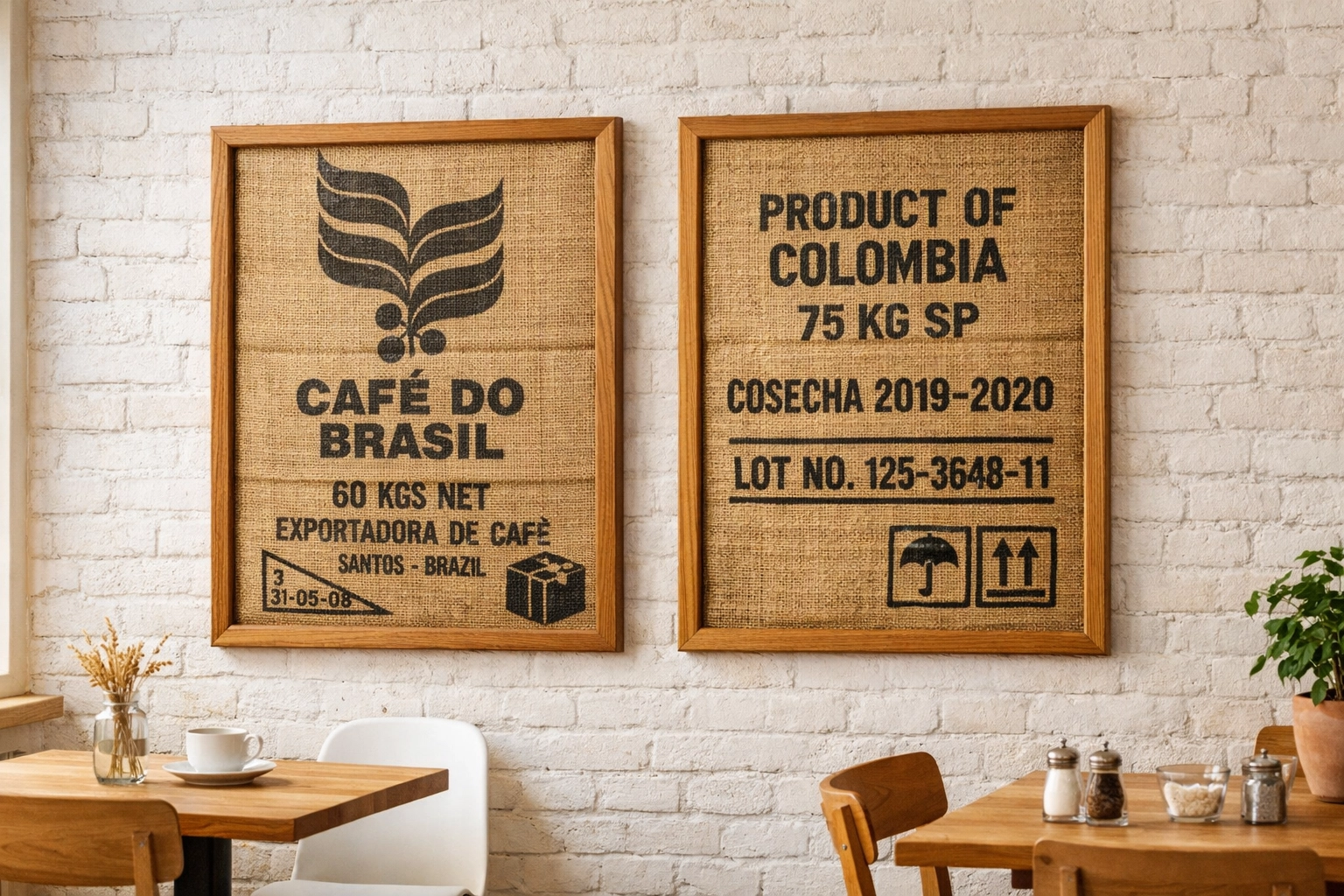
If you’re feeling extra brave, you can create a collage. Mix and match different origins to show off the global nature of your menu. It’s a great conversation starter for customers waiting for their flat white. While they wait, they might even ask about your sourcing, giving you the perfect opening to talk about the quality of the beans you’re using.
2. Industrial Chic: Burlap Cushion Covers
Let’s talk about the "cosy factor." If your shop has a seating area with benches or booths, you probably need cushions. But standard retail cushions can look a bit… well, boring. They don’t exactly scream "artisan roastery."
Enter the coffee sack cushion.
The rough, textured weave of the jute pairs beautifully with the industrial aesthetic that most modern cafes go for. Think exposed brick, hanging Edison bulbs, and reclaimed wood.
But wait, isn't burlap itchy?
Yes, it can be. If you’re worried about your customers' comfort, we suggest a "hybrid" approach. Use the coffee sack for the front of the cushion (where the cool branding is) and a soft cotton or canvas for the back. That way, it looks rugged but feels like a cloud.
This is also a fantastic way to reinforce your brand. If you use wholesale specialty coffee from us, you’ll likely have a steady supply of these bags. Using them for seating makes the whole shop feel cohesive. It says, "We know coffee, from the farm to the furniture."
3. Setting the Stage: Rustic Table Runners
When you’re building a coffee shop, the display area for your retail bags and equipment is crucial. You want your bags of beans to look enticing, but placing them on a cold, hard shelf can sometimes feel a bit clinical.
A coffee sack table runner adds immediate warmth and texture. It acts as a backdrop that makes your retail packaging pop.
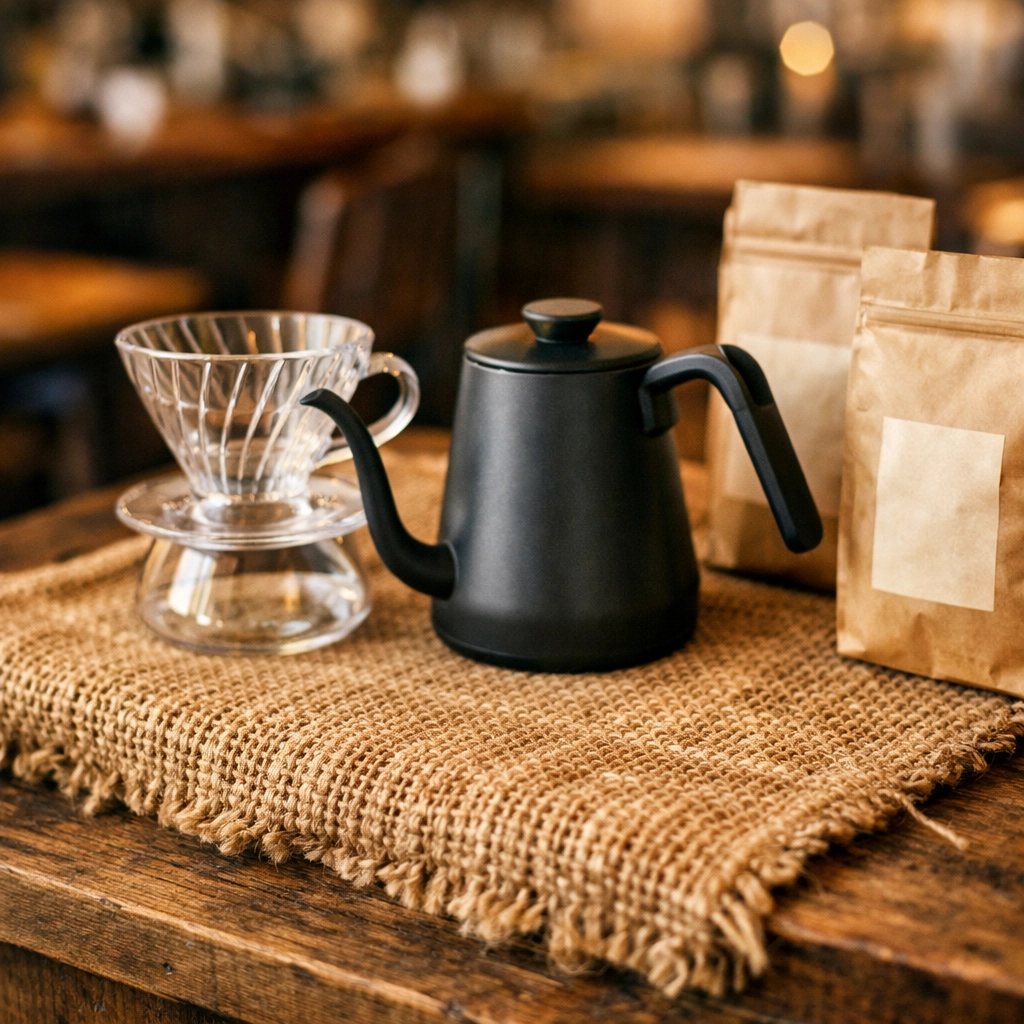
To do this, simply cut the sack along the side seams to create a long flat piece of fabric. Give it a quick hem (or leave it frayed if you’re going for that "shabby chic" look) and drape it over your merchandise table. It’s a subtle nod to the raw materials of the trade.
It works especially well if you’re displaying brewing gear like V60s or AeroPresses. It reminds people that coffee starts in the dirt and ends in the cup. If you need to brush up on how to explain that process to your customers, our training overview might be just what you need to get the staff on the same page.
4. Hiding the "Ugly" Bits: Cafe Curtains and Screens
Every shop has them. The area under the counter where you keep the backup jugs, the boiler area, or the storage cupboard that doesn't have a door.
Instead of expensive cabinetry, why not use coffee sacks?
Using clip-style curtain rings on a simple tension rod, you can create "cafe curtains" in minutes. They are incredibly functional for hiding clutter while maintaining the theme of the shop.
We’ve seen this used effectively to screen off the espresso machine maintenance area or to cover up stacks of coffee cups. It’s practical, it’s cheap, and it looks intentional rather than like a last-minute fix.
5. Functional Decor: Storage Baskets and Totes
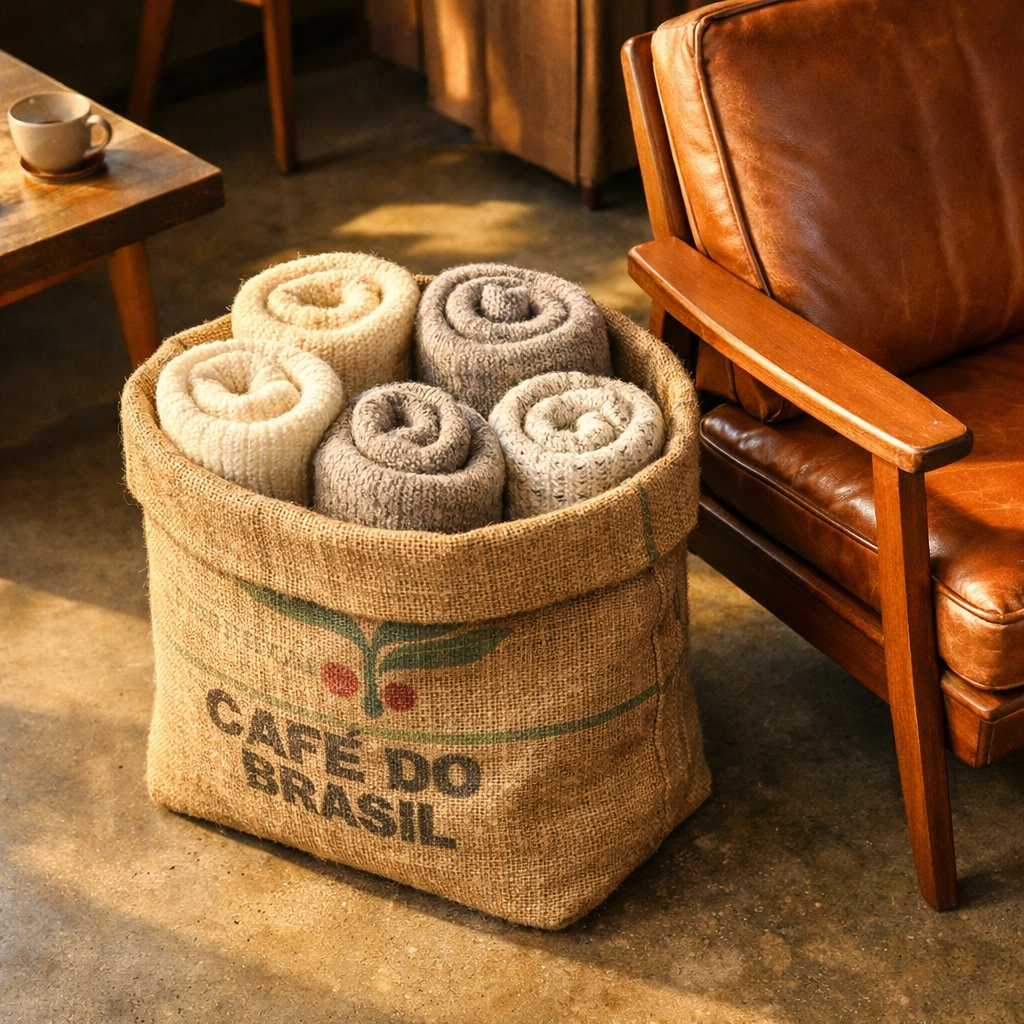
Coffee sacks are incredibly durable. They are designed to hold 60kg to 70kg of green beans, so they aren’t going to rip easily. This makes them perfect for creating storage baskets.
You can stiffen the fabric with a bit of interfacing or simply fold the tops down to create a "bucket" shape. These are great for:
- Holding rolled-up blankets for outdoor seating.
- Organising your retail bags of Limini Coffee.
- Creating "gift hampers" for your regulars.
Imagine a customer being able to buy a "Coffee Lover's Kit" that comes in a miniature, hand-sewn coffee sack. It’s the kind of detail that turns a one-time visitor into a loyal fan.
The "Dirty" Truth: How to Prep Your Sacks
Before you go grabbing the sewing machine, we need to talk about hygiene. Coffee sacks have travelled halfway across the world. They’ve been in shipping containers, on trucks, and on warehouse floors. They are dusty, and sometimes they smell a bit… well, like a warehouse.
Don't skip the prep work:
- Shake it out: Go outside and give the sack a vigorous shake. You’ll be surprised how much "origin dust" (and maybe a stray green bean or two) comes out.
- The Soak: We don't recommend putting these in a standard washing machine straight away: the jute fibres can clog up your filter and ruin the machine. Instead, soak them in a tub of lukewarm water with a mild detergent.
- The Vinegar Trick: Adding a splash of white vinegar to the rinse water helps neutralise that "hessian" smell.
- Air Dry: Never put burlap in the dryer. It will shrink, warp, and potentially catch fire if it gets too hot. Hang it out in the sun. The UV rays also help kill off any lingering bacteria.
- Ironing: If you want that crisp "art gallery" look, iron the sack while it’s still slightly damp. Use a high heat setting but put a thin cloth between the iron and the sack to prevent scorching the ink.
Why Bother? (The Bigger Picture)
You might be thinking, "Penny, I'm trying to run a business here, I don't have time to sew cushions." And we get it. Running a cafe is a marathon of tamping, steaming, and cleaning.
But here’s the thing: customers in 2026 care about sustainability. They care about where their products come from. When they see you upcycling coffee sacks, they see a business that cares about its footprint. They see a business that values the craft.
It’s all part of the theatre of coffee. When a customer walks in and sees the origin stories literally woven into the furniture, they are more likely to appreciate the nuances of that crema or the precision of your espresso equipment.
At Limini Coffee, we put a huge amount of effort into sourcing the best beans and roasting them to perfection. We think those beans deserve a home that looks as good as they taste.
So, next time you finish a bag of our Brazil Fazenda or Ethiopian Yirgacheffe, don't just chuck the sack. Grab a pair of scissors, a frame, or a needle and thread, and bring a bit of the farm into your shop.
Have you created something cool with your coffee sacks? We’d love to see it! Tag us in your photos or drop us a message. And if you’re looking to stock up on some fresh beans (and get some new sacks in the process), you know where to find us.
Happy upcycling! ☕️✨