
7:42 AM – The Lobby Café
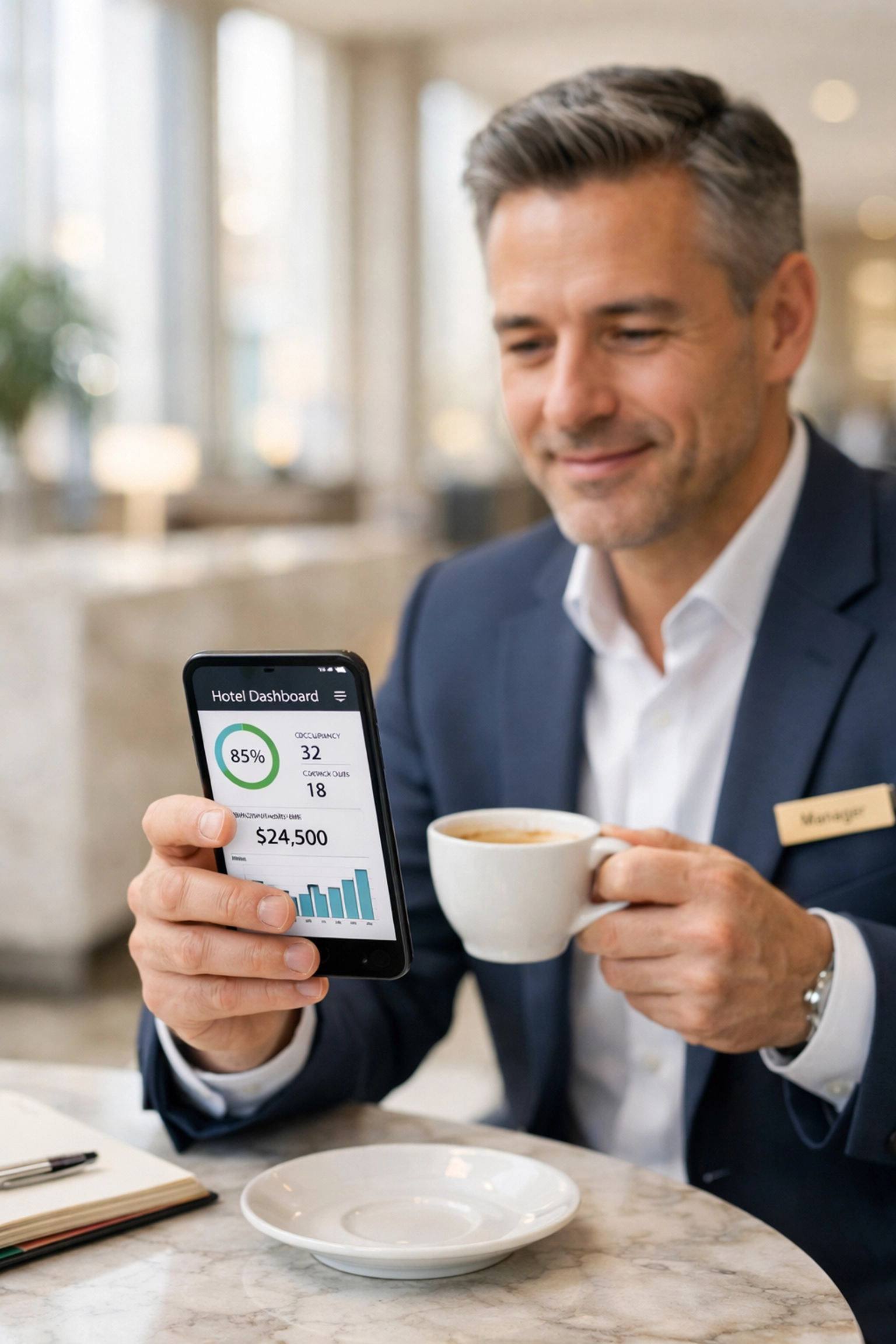
Jordan's not at a desk. She's at table six in the hotel's ground-floor café, laptop closed, phone in hand, double espresso cooling beside her. A couple approaches the front desk across the lobby. She watches.
The notification hits her screen before the guest even speaks. Room 304 – early check-in request, 11 AM arrival.
Two taps. Request approved. Room auto-assigned based on preference history. Housekeeping gets the alert.
The guest at the desk is already smiling. The receptionist just told them their room will be ready early. Jordan takes another sip. The whole transaction took eight seconds.
This is hotel management in 2026. No office. No being chained to a desktop. Just a smartphone, the right system, and the ability to be exactly where you need to be, which is usually anywhere but behind closed doors.
8:15 AM – The Morning Walk-Through
Jordan pockets her phone and does what she calls "the circuit", a casual walk through public spaces that looks like she's just stretching her legs. She's actually working.
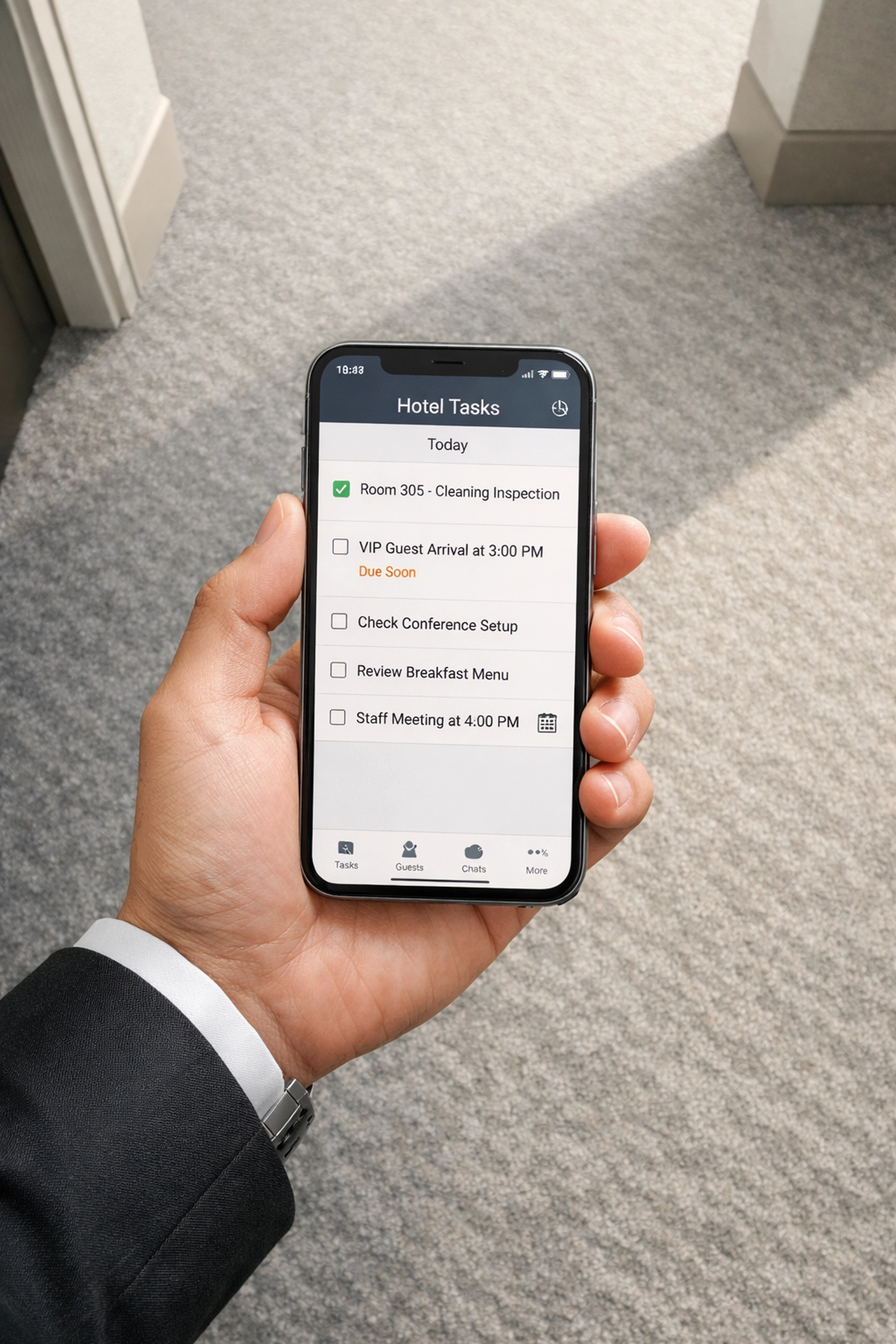
In the breakfast area, she notices the coffee station needs restocking. She could radio someone. Instead, she opens her app, taps the F&B checklist, marks "coffee station low," and assigns it to Luis with a three-minute priority flag.
Luis gets the notification in the kitchen. He's there in ninety seconds with fresh beans and milk.
Before mobile hotel management systems, this would've meant finding someone, telling them, hoping they remembered, maybe checking back later. Now it's instant. Accountable. Done.
She spots a regular guest, Mr. Chen, here every month for three years. Her phone already shows his profile. Prefers quiet rooms. Always orders room service around 8 PM. Left feedback last visit about wanting more vegetarian options.
"Mr. Chen! Good to see you again. We've added those plant-based options to the room service menu you mentioned."
His face lights up. He had no idea his feedback was even read, let alone acted on.
That's the thing about modern hotel management. The technology doesn't replace the human touch, it enables it. Jordan has information that makes her more present, not less.
10:30 AM – The Rooftop Meeting That Isn't a Meeting
She takes a video call on the rooftop terrace. Director of Sales wants to discuss next quarter's group bookings. Jordan pulls up real-time occupancy forecasts, rate comparisons, and revenue projections, all from her phone.
"We can offer the March 15th conference at the requested rate," she says, watching the numbers shift in real time as she adjusts the quote. "But April 3rd makes more sense financially. We're showing softer demand that week."
The entire negotiation happens in twelve minutes. No one needed to "get back to them" with information. No one printed reports or scheduled follow-up meetings.
Before she even ends the call, she's pushed the approved booking into the system. Revenue management adjusts rates automatically for surrounding dates. Marketing gets a notification to start the pre-arrival engagement campaign.
12:15 PM – Lunch Service Crisis (That Isn't Really a Crisis)
Her phone buzzes. Maintenance alert, ice machine down in the third-floor pantry.
In the old days, this could spiral. Guests complain to housekeeping. Housekeeping tells the desk. The desk calls maintenance. Maintenance doesn't know the full scope. Multiple guests are now annoyed.
Jordan pulls up the maintenance workflow. The sensor already logged the failure time, temperature readings, and usage patterns. She can see three other ice stations within fifty meters of affected rooms. She reassigns those rooms to priority service from working machines and schedules the repair for 2 PM when that corridor is typically quiet.
She drafts a quick message: "Hi! We're performing quick maintenance on your floor's ice station this afternoon. In the meantime, our team is happy to bring ice directly to your room, just call extension 0."
The message goes to the seven rooms that might be affected. Proactive. Transparent. Fixed before it becomes a problem.
She handles the entire situation from a barstool at lunch, fork in one hand, phone in the other. Total time invested: three minutes.
2:45 PM – The Guest Experience Moment
Jordan's in the lounge when she sees it, a booking just came in for tonight, special occasion flag attached. Anniversary. They booked last minute because their original hotel had a plumbing disaster.
Old approach: hope someone notices and maybe mentions it.
New approach: Jordan sends a message to the F&B team. "Room 512 arriving at 6 PM. Anniversary. Let's make it special."
By 5:30, there's champagne chilling in the room and a handwritten note. Cost to hotel: minimal. Impact on guests: they'll remember this hotel for years.
The booking came through an automated channel, but the experience is anything but automated. The technology just made sure the right person knew the right information at the right time.
4:00 PM – The Revenue Decision
Dashboard alert: tomorrow's occupancy is tracking below forecast. Jordan pulls up the dynamic pricing suggestions.
The system recommends dropping the rate by 8% for tomorrow's remaining inventory, targeting last-minute bookers. Expected pickup: four additional rooms. Net revenue impact: positive.
She could approve it with one tap. But she knows there's a regional festival this weekend she heard about from the concierge team. She checks social media, confirms it's bigger than expected, and instead makes a different call: hold rates steady, increase the minimum stay to two nights, and push weekend availability.
The AI gave her good data. Her local knowledge made it great.
The beauty of modern hotel management isn't that computers make all the decisions. It's that humans make better decisions because they have better information, faster.
Want to see how modern hotel management software can give you this kind of flexibility? Check out how Mews works for properties that refuse to be desk-bound.
6:20 PM – The Evening Circulation
Jordan's back in the lobby. A family is checking in, two kids, both under ten, both clearly tired from travel.
Her system already flagged them: late arrival, children in party, loyalty program members. She stops by the desk casually.
"The kids' activity packs are already in your room," she tells the parents. "And we've set up the connecting room exactly how you had it last time."
The mother looks genuinely surprised. "You remembered?"
Jordan smiles. "The system did. But yes, we remember."
This is the part that people misunderstand about hospitality technology. They think it makes hotels robotic. In reality, it makes them more human. Jordan can remember what matters because she doesn't have to remember everything else.
8:00 PM – The Problem That Solved Itself
Late alert: guest in 210 reported a noise complaint about the room above them.
Jordan checks the system. Room 310 checked in this afternoon. First-time guests. She pulls the noise monitoring data: nothing abnormal. Probably just unfamiliar hotel sounds, thin floors, or bad luck.
She could head up there. Knock on doors. Mediate.
Instead, she sends a thoughtful message to 210: "So sorry about the disruption. I've made a note and we're monitoring. If it continues, we have a lovely room on the fifth floor we'd be happy to move you to: no charge, completely our pleasure."
To 310, she sends nothing. No accusation. No confrontation. Just a system note to check in with them tomorrow if there are any other complaints.
By 8:15, room 210 responds: "Thank you for being so responsive. It's actually settled down. We appreciate you checking in."
Problem solved. Guest feels heard. No awkward confrontations. No escalation.
10:30 PM – The Metrics Review
Jordan's home now, but she still checks the day's snapshot on her phone. Occupancy hit 94%. RevPAR exceeded budget by 6%. Guest satisfaction scores posted that afternoon averaged 4.7 out of 5. Three positive reviews already posted online.
Tomorrow's forecast looks strong. Housekeeping is properly staffed. Two VIP arrivals are flagged with preferences loaded.
She closes the app.
Here's what didn't happen today: Jordan never sat at a desk for more than ten minutes. She never missed something important because she was in a back office. She never told a guest "I'll have to check and get back to you." She never felt disconnected from what was actually happening in her hotel.
The modern hotelier isn't desk-bound. They're everywhere they need to be, with everything they need to know, making decisions in real time that used to take hours or days.
That's not the future of hotel management. That's today. And it changes everything.
Leave a Reply