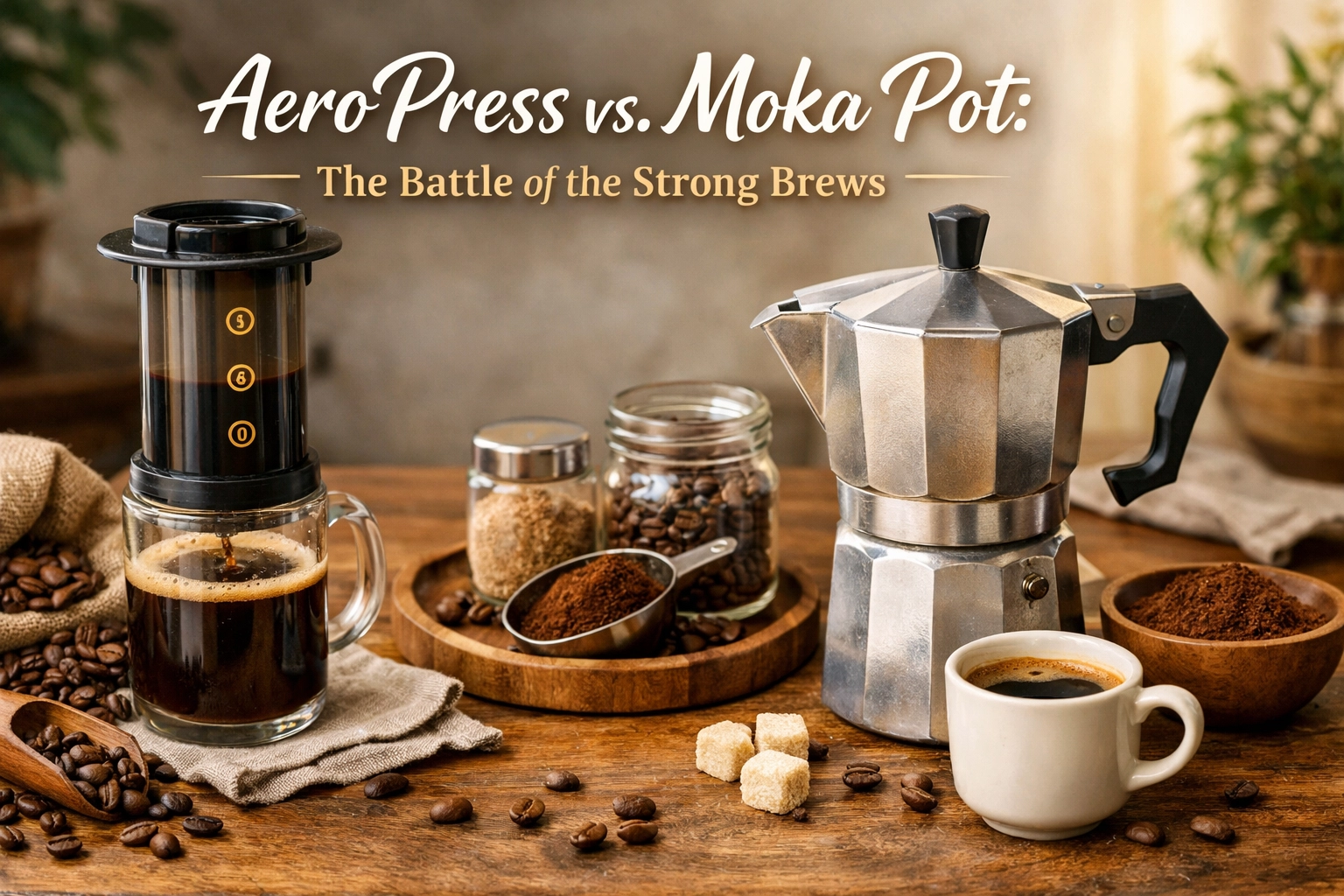
If you're the type who takes their coffee seriously: we're talking bold, intense, wake-you-up-properly coffee: then you've probably looked at both the AeroPress and the Moka Pot and wondered which one deserves a spot on your kitchen counter.
Both brew strong, concentrated coffee using pressure. Both have cult followings. And both can make an absolutely brilliant cup when you know what you're doing.
So which one's right for you?
Let's settle this once and for all.
The Basics: What Are We Actually Comparing?
The Moka Pot is that classic Italian stovetop brewer your nonna might have used. It's been around since the 1930s, brewing coffee through steam pressure. Water heats in the bottom chamber, creates pressure, and forces itself up through the coffee grounds into the top chamber. The result? A rich, espresso-style coffee that's been the backbone of Italian home brewing for nearly a century.
The AeroPress, on the other hand, is the new kid: invented in 2005 by the same bloke who created the Aerobie flying disc. It uses manual air pressure. You push down a plunger, forcing hot water through coffee grounds and a micro-filter. It's lightweight, plastic, and looks a bit like something from a science lab.
But don't let appearances fool you. Both can produce seriously good coffee.
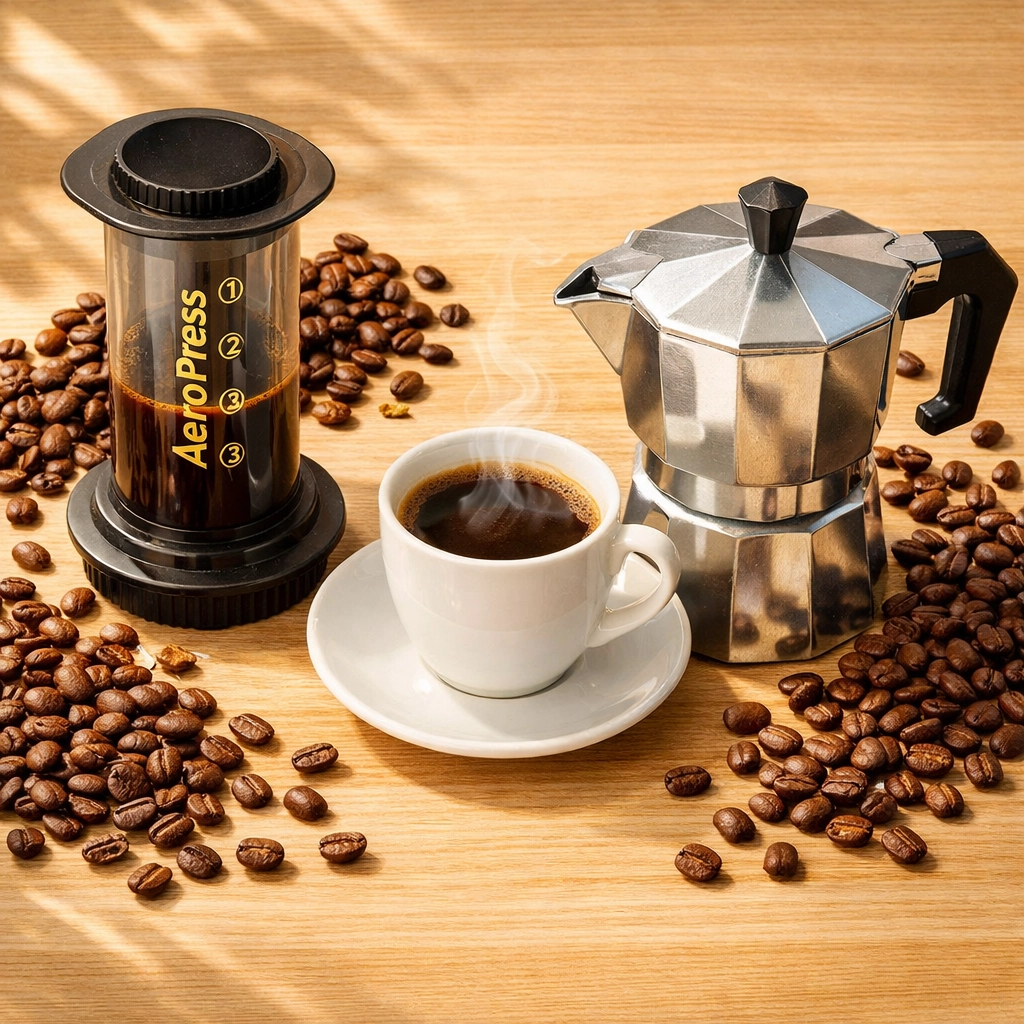
The Brewing Method: Steam vs. Manual Pressure
Here's where things get interesting.
The Moka Pot generates about 1-2 bars of pressure using steam. You fill the bottom with water, add coffee to the middle basket, screw on the top, and put it on the hob. As the water heats and boils, steam pressure builds and pushes the water up through the grounds. You'll hear that distinctive gurgling sound when it's done: music to any coffee lover's ears.
The AeroPress uses roughly 2 bars of pressure, but you're creating it manually. You add coffee to the chamber, pour in hot water (which you've heated separately), stir, then press down the plunger with your hands. The whole process takes about two minutes from start to finish.
The key difference? Control.
With the Moka Pot, you're somewhat at the mercy of your heat source. Too hot and you'll burn the coffee. Too cool and extraction stalls. There's a sweet spot, but finding it takes practice.
With the AeroPress, you control the water temperature, brewing time, grind size, and pressing speed. You can dial in your recipe with precision. Want a longer extraction? Steep longer before pressing. Prefer it stronger? Use more coffee or a finer grind. It's incredibly forgiving for experimentation.
Flavour Profile: Bold vs. Clean
Let's talk about what ends up in your cup.
The Moka Pot produces a bold, rich, intense coffee that sits somewhere between espresso and drip coffee. It's got body, it's got punch, and it definitely wakes you up. The coffee has a syrupy thickness and assertive flavor that works brilliantly with milk if you're making a home cappuccino.
However: and this is important: the Moka Pot lacks effective filtration. You'll often get some sediment in the cup, which can make it taste a bit muddy or silty. And because the water has to reach boiling point to create pressure, there's a risk of extracting bitter, burnt-tasting compounds if you're not careful. Some people love that intense, slightly harsh edge. Others find it a bit much.
The AeroPress delivers a smoother, cleaner cup with bright, clear flavors. The paper micro-filter (or reusable metal filter if you prefer) removes oils and fine particles, giving you a grit-free coffee with lower acidity. The result is balanced and nuanced: you can actually taste the distinct characteristics of the beans rather than just "strong coffee."
This is where using quality beans really shines. Both methods work beautifully with freshly roasted specialty coffee, but the AeroPress especially lets you appreciate the subtleties of origin and roast profile.
Ease of Use: Simple vs. Simpler
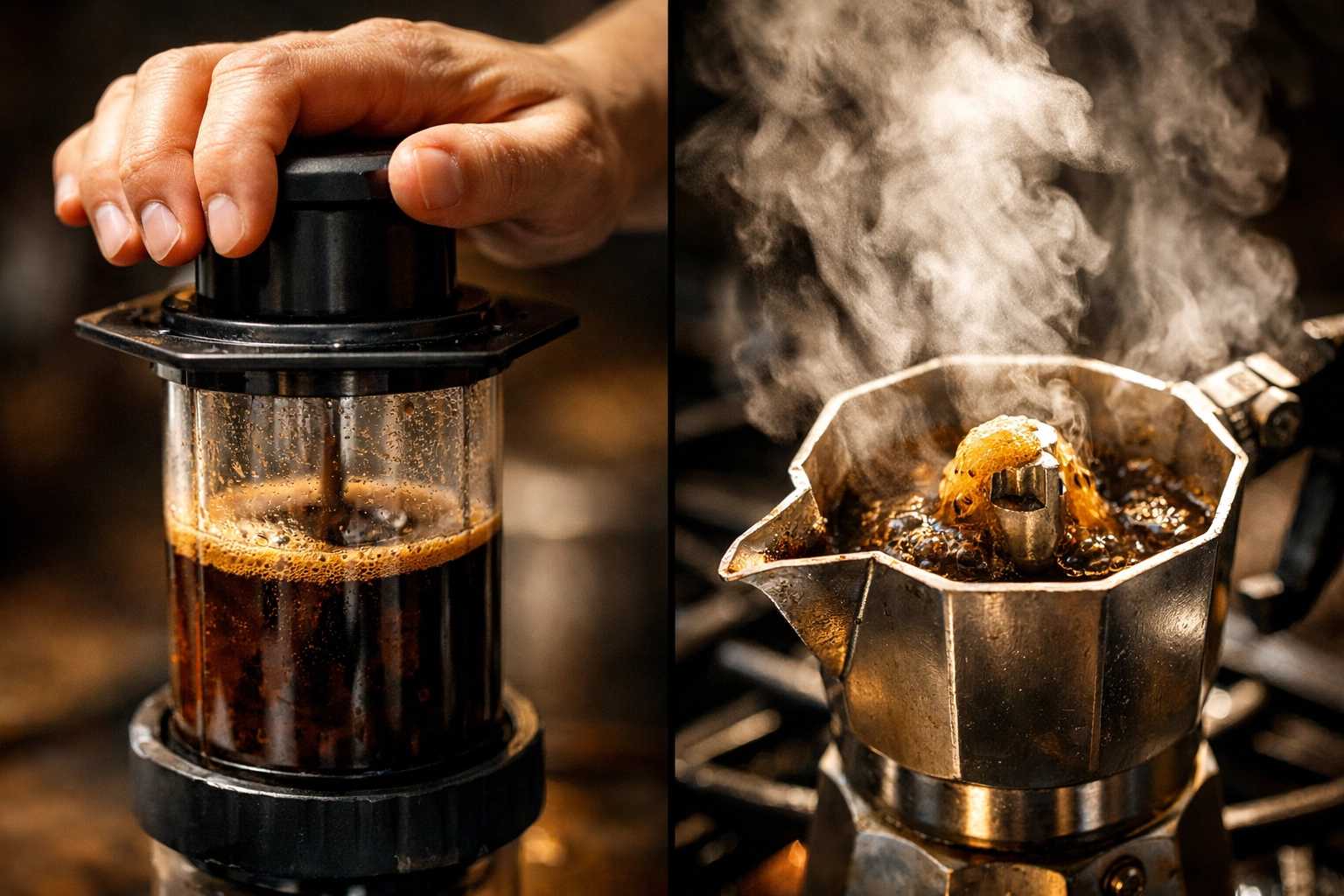
The Moka Pot requires a bit of babysitting. You need to watch the heat, listen for the gurgling, and remove it from the hob at just the right moment. Leave it too long and you'll over-extract bitter nastiness. The multiple components also get extremely hot, so you're handling everything with tea towels or waiting for it to cool.
Cleanup involves disassembling the three parts: bottom chamber, filter basket, and top chamber: and washing each one. Not difficult, but more faff than some people want first thing in the morning.
The AeroPress is dead simple. Grind your coffee, add it to the chamber, pour hot water, wait, press, done. Total time? About two minutes. Cleanup is equally straightforward: unscrew the cap, press out the coffee puck straight into the bin, rinse the plunger. You're done in thirty seconds.
For bleary-eyed mornings when you need coffee to function enough to make coffee, the AeroPress wins on convenience.
Capacity: One Cup Wonder vs. Family Sized
Here's a practical consideration that might make or break your decision.
The AeroPress brews one cup at a time. That's it. You can make a concentrated brew and dilute it (Americano-style), but fundamentally, it's designed for individual servings. If you're making coffee for yourself, brilliant. If you're making coffee for three or four people, you'll be standing there pressing away for ages.
Moka Pots come in various sizes: from single cup models to 12-cup beasts. If you're regularly brewing for multiple people, the Moka Pot is far more practical. Make one batch, pour it out, job done.
Portability: Kitchen Tool vs. Travel Companion
The AeroPress absolutely dominates when it comes to portability. It's lightweight plastic, compact, and requires nothing but hot water. Camping? Bring the AeroPress. Office? AeroPress. Hotel room with a kettle? You know the answer.
The Moka Pot requires a heat source: stovetop, camping stove, whatever: making it bulkier and less versatile for travel. It's also typically aluminum or steel, so it's heavier. That said, it's incredibly durable. Drop a Moka Pot and it'll probably dent. Drop an AeroPress and it might crack.

Cost: Initial Investment and Ongoing Expenses
Both are similarly priced initially: you can get a decent Moka Pot or AeroPress for £25-40.
However, the AeroPress requires paper filters, which you'll need to replace regularly. They're cheap: about £5 for 350 filters: but it's an ongoing cost. You can use reusable metal filters, though they produce a different cup profile with more oils and sediment.
The Moka Pot has basically zero ongoing costs once you've bought it. No filters, no replacement parts unless you're incredibly rough with it. From a long-term economics perspective, it's slightly cheaper.
Though honestly, we're talking pennies per cup. If you're drinking quality coffee, the beans will always be your biggest expense.
Versatility: One Trick Pony vs. Coffee Chameleon
The Moka Pot does one thing: brew strong, espresso-style coffee. It does it well, but that's your only option.
The AeroPress is ridiculously versatile. Standard method, inverted method, different recipes for different beans, cold brew, pseudo-espresso for lattes: there are literally championship competitions dedicated to finding new AeroPress brewing techniques. If you like experimenting and tweaking your coffee, the AeroPress is a playground.
So Which One Should You Choose?
Here's the honest answer: it depends what you value.
Choose the Moka Pot if:
- You want that classic, bold, Italian-style coffee
- You're brewing for multiple people regularly
- You prefer low-maintenance gear with no ongoing costs
- You like the ritual and romance of traditional brewing
- You're making milk-based drinks at home
Choose the AeroPress if:
- You value clarity and complexity in your coffee
- You're brewing for one or two people
- You want maximum control over the brewing process
- You need something portable for travel or office
- You enjoy experimenting with different techniques
- You want quick, easy cleanup
Honestly? If you're serious about coffee, you might end up with both. We do. They serve different purposes and different moods.
The Bean Factor
Regardless of which brewer you choose, the quality of your beans matters enormously. Both the AeroPress and Moka Pot are unforgiving with stale, poorly roasted coffee: they'll amplify every flaw.
That's why we always recommend starting with freshly roasted specialty beans. Whether you're pressing or percolating, fresh beans with clear roast dates make all the difference between a mediocre cup and something genuinely special.
Both methods really let you taste the origin characteristics and roasting skill. A bright, fruity Ethiopian will taste completely different from a rich, chocolatey Colombian: and both brewers will showcase those differences beautifully when you're working with quality coffee.
Final Verdict
There's no clear winner here because these are fundamentally different tools for slightly different jobs.
The Moka Pot is traditional, bold, and practical for larger quantities. It rewards practice and produces that classic strong coffee that millions of Italians have relied on for generations.
The AeroPress is modern, versatile, and exceptionally clean-tasting. It's forgiving for beginners but offers endless depth for coffee geeks who want to experiment.
Try both if you can. Brew the same beans on each and taste the difference. You might be surprised which one clicks with your personal preferences.
And whatever you choose, fill it with freshly roasted beans. That's the real secret to strong brews that actually taste good, not just strong.
Leave a Reply