You open your laptop.
Fifty-three unread emails. A spreadsheet that needs updating. Invoices to chase. Client data to copy from one system to another. Meeting notes to distribute. Files to organize.
And it's only 9 AM.
Every single day starts like this. You tell yourself you'll get to the "real work" , the strategy sessions, the creative thinking, the business development , once you clear these admin tasks.
But here's the truth: you never do.
The Silent Killer of Business Growth
Let me paint you a picture of what's really happening in your business right now.
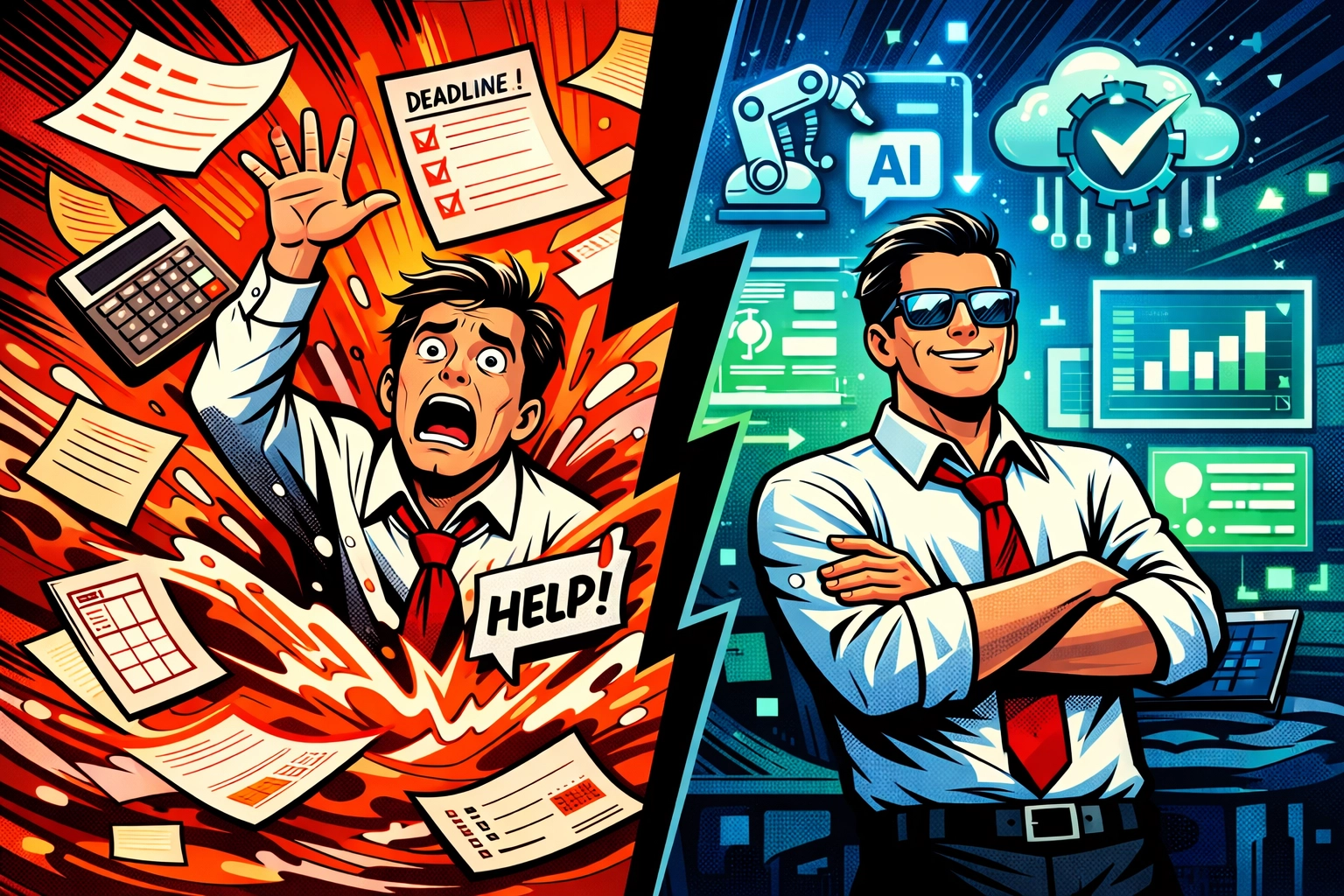
Your team is losing 15 hours per week per person to administrative tasks. That's not a typo. Fifteen hours. Per week. Per employee.

Think about that for a second. If you have five people on your team, that's 75 hours of productive work time vanishing into the admin void every single week. That's nearly two full-time positions worth of effort… spent copying and pasting data, filing documents, and sending follow-up emails.
And you're paying skilled professionals to do it.
Your marketing manager , the one you hired for her creative campaigns , spends her mornings updating CRM records. Your sales director , who could be closing deals , is stuck formatting proposals. Your operations lead , who should be streamlining processes , is drowning in spreadsheet maintenance.
The work still gets done. But the growth? That's what's dying in the process.
The Real Cost of "Just Getting It Done"
You might be thinking, "Sure, admin work is annoying, but it's necessary. Someone has to do it."
Let me show you what that mindset is actually costing you.
Manual document processing costs approximately £8,000 per 100,000 documents. With automation? £170. That's a 98% cost reduction for the same outcome.
But the costs don't stop at document handling.
Organizations lose 5.87% of revenue to data quality issues. Bad data in the UK alone costs the economy £244 billion annually. And here's the kicker : manual data entry processes account for 40% of errors in data handling. Error rates typically sit between 1-6%.
One missed digit in a client invoice. One duplicate record in your CRM. One outdated contact detail on a proposal. These aren't just embarrassing mistakes : they're revenue leaks.
And in regulated industries? Healthcare, finance, legal services? These errors don't just cost money. They jeopardize compliance. They expose you to litigation. They put your entire operation at risk.
The Scaling Problem Nobody Talks About
Here's where it gets really interesting.
You land a big new client. Fantastic news, right?
Except now you need to onboard them. Set up their account. Import their data. Create their custom workflows. Schedule their kickoff meetings. Send their welcome materials.
And your team is already maxed out.
So what do you do? You hire someone. Maybe two people. That's £6,000+ per hire in turnover costs, plus the time to recruit, interview, and onboard. Then you spend weeks training them on your systems, your processes, your way of doing things.
Three months later, you're finally back to baseline capacity.
But what happens when you land the next big client? You go through the whole cycle again.
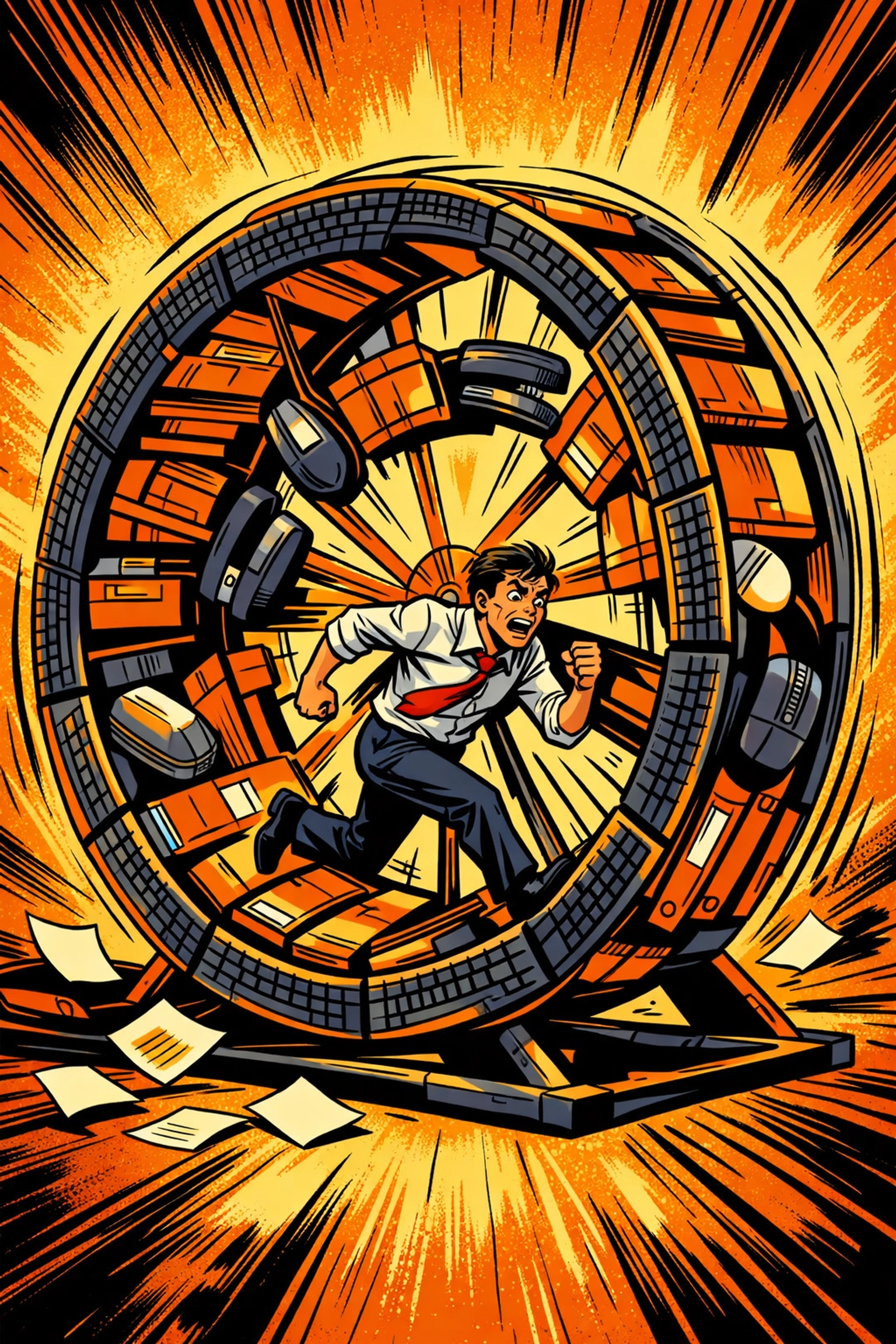
This is not a business model. This is a hamster wheel.
Manual processes require linear scaling : more work means more people. And more people means more management, more overhead, more complexity.
Meanwhile, your competitors who've embraced AI business automation? They're scaling exponentially. Same team size. Triple the client load.
Your Team Is Telling You Something
Let's talk about what this is doing to your people.
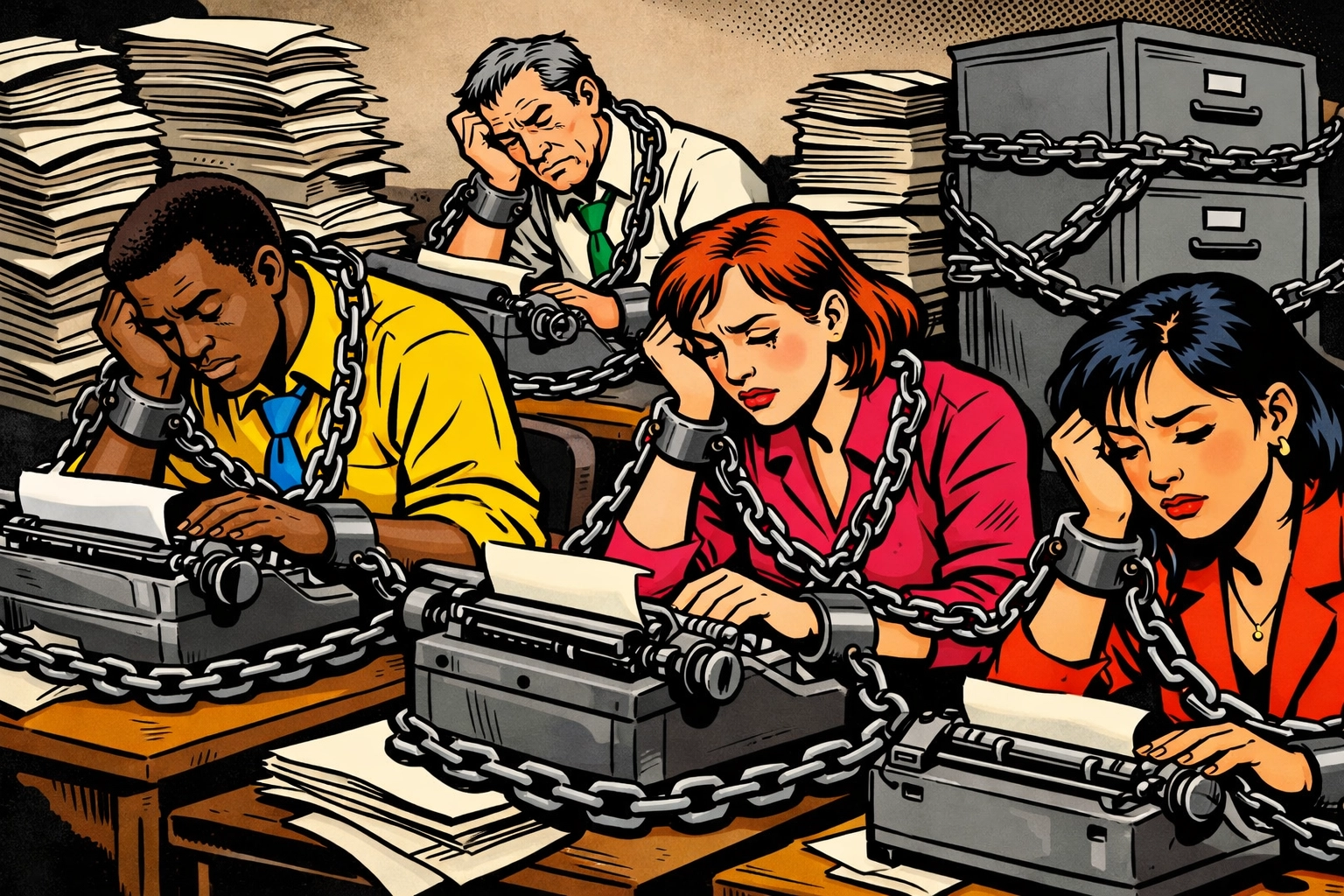
41% of workers are considering leaving over admin burden. Not because of bad management. Not because of poor compensation. Because they're drowning in busywork that has nothing to do with why they took the job in your first place.
Your best developer didn't sign up to update Jira tickets all day. Your brilliant account manager didn't dream of becoming a human copy-paste machine. Your talented designer isn't inspired by filing paperwork.
And the data backs this up: employees take an average of 9.4 absence days annually, and a significant chunk of that is burnout-related. When people spend their time on rote work instead of meaningful, strategic tasks, engagement drops. Creativity suffers. Innovation stalls.
You're not just losing hours to admin tasks. You're losing the discretionary effort : the extra mile, the creative solution, the proactive improvement : that actually moves your business forward.
The 94% Problem
Here's a stat that should wake you up: 94% of businesses are slowed down by repetitive admin tasks that could be automated.
Could be. Not "might be eventually" or "theoretically possible." Could be. Right now. Today.
Google's research shows that business automation tools powered by AI can save teams up to 122 hours per year on tasks like confirmation emails, invoice generation, and basic data entry.
That's three full work weeks per employee. Three weeks that could be spent on client relationships, product development, market expansion, strategic planning.
Three weeks that could change the trajectory of your business.
What This Actually Looks Like
Let me get specific.
You're manually sending follow-up emails to leads. Copy, paste, personalize, send. Repeat 50 times. Two hours gone.
You're updating your CRM after every sales call. Open the record, type the notes, update the status, set the follow-up task. Another hour vanished.
You're generating weekly reports by pulling data from three different systems, copying it into Excel, formatting it, adding charts, and distributing it. There goes your Friday afternoon.
You're scheduling social media posts one by one. Writing the caption, uploading the image, selecting the time, clicking post. Next platform. Repeat.
And the entire time, there's a voice in your head saying, "There has to be a better way."
There is.
The Shift That Changes Everything
Imagine this instead.
A lead fills out your contact form. Your AI immediately sends a personalized response, logs the inquiry in your CRM, alerts the right team member, and schedules a follow-up task : all before you even see the notification.
A client meeting ends. The notes are automatically transcribed, summarized, and distributed to stakeholders. Action items are extracted and assigned. Calendar invites go out for follow-ups.
Invoice time rolls around. Your system generates them based on completed work, sends them to clients with payment links, and logs everything in your accounting software. No manual input required.
Your social media calendar? Planned a month in advance, auto-posted at optimal times, with engagement tracked and reported back to you.
This isn't science fiction. This is AI business automation in action right now, for businesses just like yours.
The Growth You're Missing
Think about what you could do with those 15 hours back every week.
You could finally launch that new service offering. Build that partnership you've been putting off. Actually work on your business instead of in it.
Your team could focus on what they were actually hired to do. Your sales director could spend 15 more hours selling. Your marketing manager could create 15 more hours of campaigns. Your operations lead could streamline 15 more hours of processes.
That's not incremental improvement. That's transformation.
And here's the beautiful part: automation scales instantly. Once you set it up, it doesn't matter if you process 10 documents or 10,000. The system handles it. No new hires. No bottlenecks. No capacity constraints.
Your Move
Look, I get it. Change is uncomfortable. You've built systems that work : even if they're painfully slow. You've got people in roles, processes documented, workflows established.
But "working" and "optimal" are two very different things.
Every day you wait is another day your competitors pull ahead. Another day your team burns out a little more. Another day you lose money on tasks that could cost you nearly nothing.
Want to see what's possible when you stop doing things manually? Check out how businesses are actually implementing this: https://marblism.link/scott-bowen
The difference between businesses that scale and businesses that stall isn't talent. It isn't capital. It isn't even strategy.
It's leverage.
And in 2026, AI business automation is the ultimate leverage tool.
The question isn't whether you'll eventually automate. The question is how much growth you'll sacrifice before you do.
Leave a Reply