Author: admin

  • Are You Making These 5 Common AI Social Media Content Generator Mistakes?

    Are You Making These 5 Common AI Social Media Content Generator Mistakes?

    ☕ 7:00 AM.

    The house is quiet. Your coffee is steaming. You open your laptop, ready to conquer the digital world. You’ve got your shiny new AI content generator open in one tab and your social media scheduler in the other.

    "Write a post about business growth," you tell the prompt box.

    Seconds later, a wall of text appears. It looks professional. It looks smart. It’s polished… but it’s not you.

    You hit "Schedule" anyway. You’ve got a business to run, and the algorithm is a hungry beast that needs feeding. But as the day goes on, the engagement stays flat. No likes. No comments. Just the digital equivalent of crickets.

    You’re using the latest tech, so why does it feel like you’re shouting into a void?

    Most business owners treat AI like a magic wand. Wave it, and the work is done. But here’s the cold truth: AI is a powerful engine, but if you don’t know how to steer, you’re just going to crash into a wall: very, very fast.

    Let’s look at the five mistakes that are quietly killing your reach, and how we do things differently at Marblism.


    1. THE IDENTITY CRISIS: LOSING YOUR BRAND VOICE

    📱 9:30 AM.

    Your phone buzzes. A notification from LinkedIn. You check the post you scheduled earlier. One of your long-time clients has commented: "Who wrote this? It doesn't sound like you at all."

    Ouch.

    The biggest mistake you can make with AI is letting it dictate the tone. By default, most AI models lean toward a "helpful corporate assistant" persona. It’s polite. It’s balanced. It’s… incredibly boring.

    If your brand is built on being a "no-nonsense disruptor" and your AI is churning out "I hope this finds you well" energy, you’re eroding your brand equity with every click. Your audience follows you for your perspective, your quirks, and your specific way of seeing the world.

    When you replace that with generic AI-speak, you aren't just saving time. You're losing trust.

    Illustration comparing a vibrant human brand voice to a dull robotic AI-generated clone.

    The Fix: You need to feed the machine more than just a topic. You need to give it a soul. At Marblism, we don't just "generate." we calibrate. You have to provide the AI with examples of your best-performing content. Tell it what you don't like.

    Instead of saying "write a post," try: "Write a post in the style of a casual, slightly cynical tech founder who hates jargon."

    Better yet? Use a system that remembers your voice across every platform. Stop starting from scratch every morning.


    2. THE "SET IT AND FORGET IT" TRAP (OVER-AUTOMATION)

    🔍 11:15 AM.

    You’re in a meeting when your Twitter mentions start blowing up. Not the good kind of blowing up.

    You scheduled a "funny" post about the weather, but you forgot that a major news event just happened. Now, your brand looks tone-deaf and insensitive.

    This is the danger of the "Ghost Ship" approach to social media. You’ve automated the posting, but nobody is at the helm. AI content generators are incredible at creating volume, but they have zero situational awareness. They don’t know that your industry just had a massive shift, and they certainly don't know if your "trending" joke is suddenly in poor taste.

    Automation should be your assistant, not your replacement.

    The Fix: Human review is non-negotiable.

    You need a workflow that allows for a "sanity check" before anything goes live. You don't need to spend hours on it. You just need five minutes to read through the queue and ensure the context is still right.

    We built Marblism to handle the heavy lifting of creation so that you can focus on the strategy. Think of the AI as your intern who drafts everything, but you're still the Editor-in-Chief. You give the final thumbs-up.


    3. THE HALLUCINATION HANGOVER

    📊 1:45 PM.

    You posted a fascinating statistic about SaaS growth rates to impress your followers. It sounded legit. It looked great in the infographic.

    Then, someone asks for the source.

    You go back to your AI tool. You ask for the link. The tool gives you a URL that leads to a 404 page. You realize the "statistic" was completely made up. The AI "hallucinated" a fact because it thought a number would look good there.

    This is the dirty secret of AI: It would rather lie to you than tell you it doesn't know the answer.

    If you publish misinformation, your credibility takes years to build and seconds to destroy. One fake stat can turn you from an industry leader into a cautionary tale.
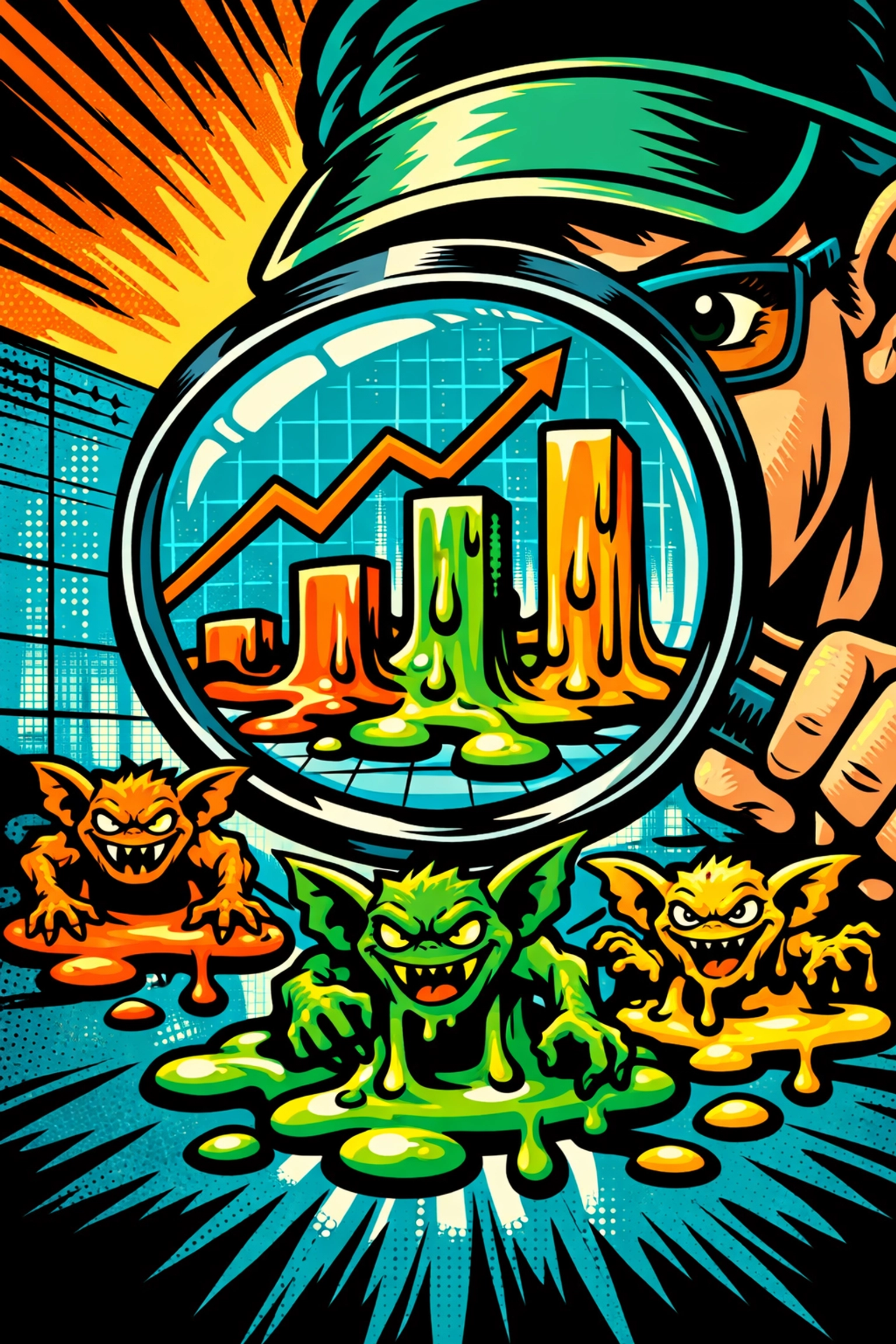
    Business owner verifying data with a magnifying glass to catch AI hallucinations and fake statistics.

    The Fix: Verify. Everything.

    If your AI gives you a quote, a number, or a historical fact: check it. Treat AI-generated data like a rumor you heard at a bar. It might be true, but you’d better Google it before you bet your reputation on it.

    At Marblism, we advocate for using AI to structure your arguments, but always plugging in your own proprietary data or verified sources to keep things grounded in reality.


    4. THE VAGUE PROMPT VOID

    📝 3:30 PM.

    You’re staring at the prompt box again. You’re tired. You just type: "Give me 5 tips for productivity."

    The AI spits out:

    1. Wake up early.
    2. Drink water.
    3. Make a to-do list.
    4. Take breaks.
    5. Limit distractions.

    Groundbreaking. (That was sarcasm.)

    If you give the AI a "mid" prompt, you will get "mid" content. Generic instructions lead to generic results. If your content looks like a 2012 Pinterest board, your audience is going to scroll right past it. They’ve seen these tips a thousand times. They want something fresh. They want your secret sauce.

    The Fix: Be aggressively specific.

    Don't just ask for productivity tips. Ask for: "5 productivity hacks for solo founders who have ADHD and work in the EST timezone, focusing on deep work blocks."

    Now we’re talking. Now you have something that actually helps someone.

    Marblism helps you bridge this gap by turning your raw ideas into sophisticated prompts that actually yield results. We believe that scaling shouldn't be about doing more average work: it's about doing more exceptional work in less time.


    5. THE PLATFORM PARADOX (ONE SIZE FITS NONE)

    🤝 5:00 PM.

    You’ve got a great piece of content. You’ve checked the facts. The voice is right. So, you copy and paste the exact same text into LinkedIn, Instagram, and Twitter.

    Mistake. Huge.

    Each platform is a different room with a different vibe.

    • LinkedIn is the office. It’s professional, value-driven, and likes a bit of "thought leadership."
    • Twitter is the water cooler. It’s fast, punchy, and thrives on threads and hot takes.
    • Instagram is the art gallery. If the visual isn't stopping the thumb, the caption doesn't matter.

    Using the same AI-generated caption across all three makes you look like a bot. It ignores the formatting nuances: like how LinkedIn loves white space and Twitter loves brevity.

    A person in mismatched outfits across different settings, showing why one-size-fits-all AI content fails.

    The Fix: Tailor the output.

    A single core idea should be refracted through the lens of each platform. Your AI tool should be able to take one "seed" idea and sprout three different versions of it.

    One long-form post for LinkedIn.
    One 5-part thread for Twitter.
    One punchy, emoji-rich caption for Instagram.

    This is where true business automation shines. You provide the insight once; the system handles the adaptation.


    SCALING WITHOUT THE SOUL-CRUSH

    🌙 8:00 PM.

    The day is winding down. The lights are low.

    You look at your social media dashboard. The engagement is up. People are actually talking to you. You feel… calm.

    The chaos is gone because you stopped using AI as a crutch and started using it as a lever. You aren't just "posting content." You're building a brand.

    Avoiding these five mistakes isn't about working harder. It's about working smarter with the right partner.

    At Marblism, we’ve seen every pitfall in the book. We’ve watched businesses automate themselves into obscurity, and we’ve watched others use AI to skyrocket their growth while keeping their human touch fully intact.

    The difference? It’s all in the implementation.

    Stop juggling the "to-dos" and start leading. Let the machine do the grunt work, while you do the thinking.

    Ready to see how real automation feels?

    You can reclaim your week. You can scale without the burnout. You can be the version of yourself that actually enjoys the process again.

    Check out what we're building at Marblism and see for yourself.

    The future is automated. But it doesn't have to be cold.

    It just has to be you.

    Scaling Shouldn't Be This Easy. But Here We Are.

  • Does “Hyper-Personalization” Really Matter in 2026? (The Hospitality Trends You Can Actually Use)

    Does “Hyper-Personalization” Really Matter in 2026? (The Hospitality Trends You Can Actually Use)

    Anticipate guest needs. Automate every interaction. Drive record revenue.

    In 2026, the phrase "hyper-personalization" is no longer just a buzzword thrown around at tech conferences by people in expensive sneakers. It’s the baseline. If you’re still treating your guests like a spreadsheet row, you’re already behind. Today’s travelers don't just want a room; they want a curated experience that feels like it was designed specifically for them: because, with the right tech, it was.

    Personalized offers are currently converting at 3–5x the rate of generic "special deals." We aren’t just guessing anymore. We’re using data to craft the "one size fits one" stay, managing everything from pillow density to local gin preferences, all from one innovative hospitality platform.

    The death of the "Dear [Guest Name]" era

    We believe personalization started dying the moment it became automated and lazy. In 2026, seeing your name in an email subject line doesn't impress anyone: it’s the digital equivalent of a limp handshake. Real hyper-personalization is about behavior, not just identity.


    It’s knowing that a guest who booked a spa treatment last time probably wants to know about your new aromatherapy session before they even check in. It’s recognizing that a business traveler who always orders a 6:00 AM double espresso would appreciate a prompt on their phone to pre-order it for their first morning.

    • Behavioral over basic. Track what they do, not just who they are.
    • Context is king. A guest traveling for a wedding has different needs than that same guest on a solo hiking trip.
    • Seamless delivery. Information should flow to the guest where they already are: their smartphone.

    Minimalist hotel bedside with personalized amenities highlighting 2026 proactive guest services.

    AI isn't coming; it’s already answering the door

    The hospitality landscape has shifted from reactive to proactive. We think the most successful hotels in 2026 are the ones that use AI to disappear. When technology works perfectly, the guest doesn't see the "tech": they just see a magical experience.

    AI-driven recommendation engines now analyze previous stays, current local weather, and even real-time events to suggest itineraries. If it’s raining in London (shocking, we know), your guest’s app shouldn't be suggesting the rooftop bar; it should be offering a cozy table by the fireplace with a 15% discount on comfort food.

    "We switched to an AI-integrated concierge and saw guest satisfaction scores jump by 40% in three months," says one Mews partner. "It’s like having a staff member who never sleeps and remembers every single preference of 12,500 properties' worth of guests."

    The data infrastructure: Your secret weapon

    You can’t build a skyscraper on a swamp, and you can’t build hyper-personalization on a legacy PMS that looks like it belongs in the 90s. To win in 2026, you need granular data in a centralized location. You need a heartbeat for your hotel.

    This is where the magic happens. By moving beyond broad market insights into deep segmentation, you can understand not just who is booking, but how they book and where they spend their time.

    1. Centralize your guest profiles. Stop losing data across three different systems.
    2. Integrate your CRM. Let your marketing and operations teams speak the same language.
    3. Go cloud-native. Ensure your team can access guest insights from anywhere, whether they’re at the front desk or in the laundry room.

    Traveler using a smartphone in a hotel lobby to access cloud-based hospitality guest experiences.

    Dynamic inventory: More than just a room

    Why are we still selling "Standard Queens" and "Deluxe Kings" as static blocks? In 2026, forward-thinking hoteliers are treating their inventory like a deck of cards that can be shuffled.

    Hyper-personalization means offering a "Wellness Suite" that includes a yoga mat and a detox juice pack to one guest, while offering the exact same physical room as a "Gamer’s Retreat" with a high-end console and extra snacks to another. It’s about tailoring the ancillary offerings to the human inside the room. This dynamic inventory strategy doesn't just make guests happy; it maximizes your RevPAR by matching the right "vibe" to the right price point.

    Humanizing the data (The balance)

    Success in 2026 belongs to the brands that use data without losing their soul. We believe that the more we automate the boring stuff: check-ins, billing, basic queries: the more time your staff has to be actual humans.

    The data tells you it’s their anniversary. The AI ensures a bottle of their favorite vintage is in the room. But it’s the hand-written note from the concierge that makes them post a photo on Instagram. Use technology to handle the "what" so your team can focus on the "why."

    • Storytelling matters. Use your data to find your most loyal guests and invite them to exclusive local "immersions."
    • Local voices. Partner with micro-influencers who actually stay at your property to tell your story.
    • Staff empowerment. Give your team the data they need to surprise and delight guests in person.

    Modern hotel reception desk with a slim tablet for empowered staff using real-time guest data.

    How to start (without the headache)

    Transforming your guest experience doesn't have to be a multi-year ordeal. You can start making moves today that will put you ahead of the competition by tomorrow.

    • Audit your tech stack. If your systems don't talk to each other, you're losing money.
    • Schedule a demo. See how a modern PMS handles hyper-personalization at scale.
    • Get your data clean. Start collecting preferences now, even if you aren't using them yet.

    If you’re ready to see how the world’s most innovative hotels are staying ahead of the curve, it’s time to look at a platform that was built for the future. Check out how Mews is redefining the guest journey and get your property ready for the expectations of 2026.

    The bottom line

    Hyper-personalization isn't a trend; it's the evolution of hospitality. It’s about making every guest feel like your only guest. In a world where travelers have infinite choices, the only way to win is to be the brand that remembers they like extra pillows and a room far from the elevator.

    It sounds simple, but doing it at scale requires the right partner. Don't wait for 2027 to realize you're still living in 2019. The tools are here. The data is waiting. The guests are ready.

    Get started with a more intuitive, more powerful way to manage your hotel. Explore Mews today and get you earning revenue in no time.

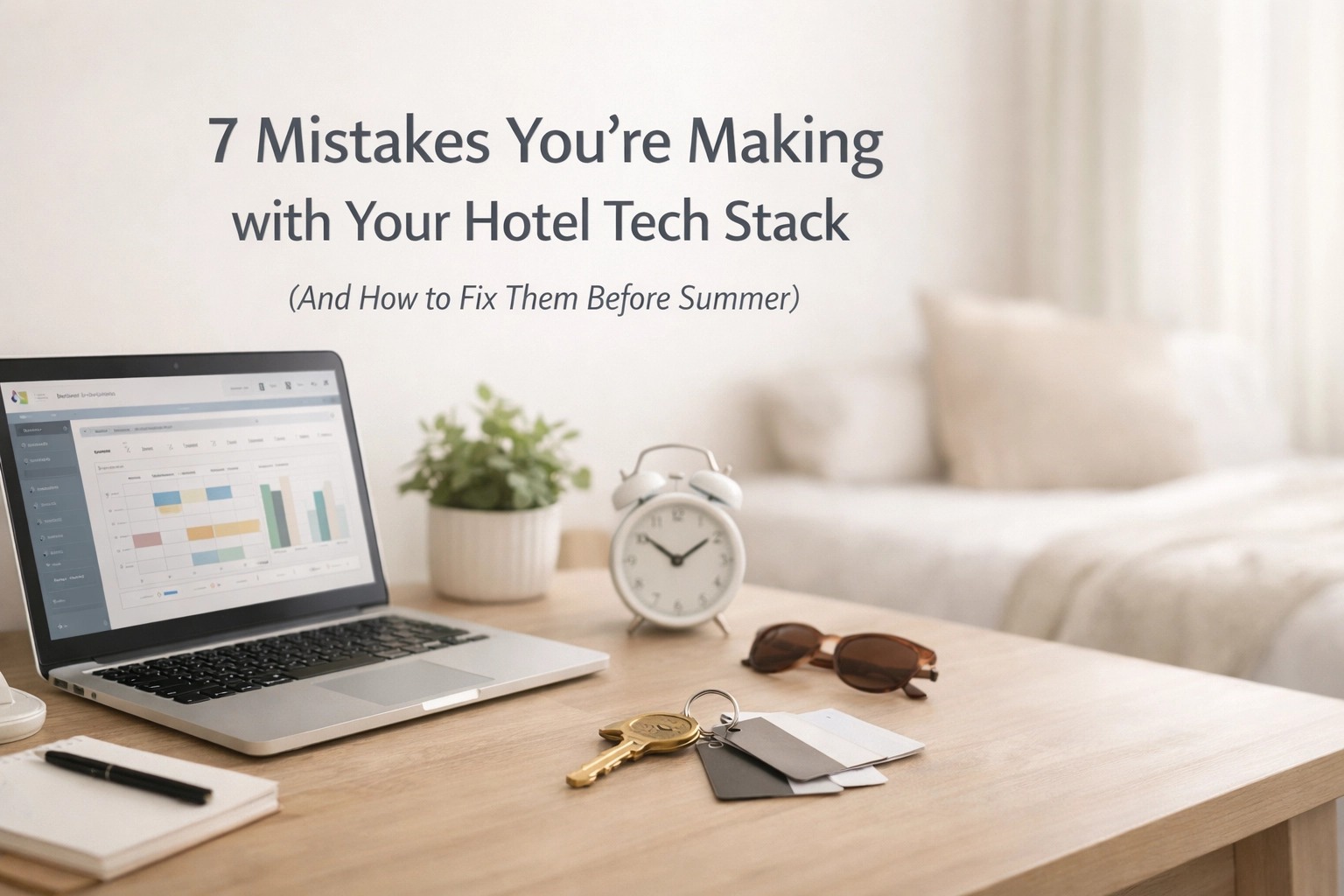
  • 7 Mistakes You’re Making with Your Hotel Tech Stack (And How to Fix Them Before Summer)

    7 Mistakes You’re Making with Your Hotel Tech Stack (And How to Fix Them Before Summer)

    Automate your operations. Elevate your guest experience. Empower your team.

    The summer rush is a double-edged sword. It’s the season of peak occupancy and high energy, but it’s also the ultimate stress test for your property. If your current technology feels like a collection of digital duct tape and broken promises, you aren’t just losing time, you’re losing revenue.

    We see it everywhere. Hoteliers are working harder than ever, yet 60% of their day is swallowed by manual data entry and system workarounds. It doesn't have to be this way. We believe technology should be the silent engine that lets your hospitality shine, not a hurdle your staff has to jump over every morning.

    Before the first wave of summer travelers hits your lobby, let's look at the friction points holding you back and how to pivot toward operational excellence.

    1. Buying Features Instead of Outcomes

    It’s easy to get distracted by the newest "shiny object" in travel tech. You see a dashboard with pretty graphs and think, "I need that." But adding a tool because it has a specific feature is a trap. It leads to overlapping functionality, bloated costs, and a tech stack that looks like a jigsaw puzzle with missing pieces.

    We think about technology differently. You shouldn't be buying a "booking engine"; you should be buying a 15% increase in direct conversions. You shouldn't be buying "housekeeping software"; you should be buying a 20-minute reduction in room turnover time.

    The Fix:

    1. Identify your biggest summer bottleneck (e.g., long check-in lines).
    2. Set a specific goal (e.g., reduce check-in to under 60 seconds).
    3. Select the platform that delivers that result.

    When you focus on outcomes, the fluff disappears. You’re left with a lean, mean, hospitality machine that actually moves the needle.

    2. Treating Integrations as an Afterthought

    The "Frankenstein" tech stack is the silent killer of guest satisfaction. You have a PMS that doesn't talk to your POS, which doesn't talk to your CRM, which has no idea what’s happening in your guest messaging app. When data lives in silos, your staff becomes the "human bridge," manually typing names and credit card numbers from one screen to another.

    In a world moving toward hyper-personalization, a closed system is a death sentence. You need an open ecosystem.

    "Switching to a platform with an open API changed everything for us. We went from spending hours on manual reconciliations to having a real-time view of our entire operation. It saved us at least 10 hours of admin a week." , Sarah, Boutique Hotel Manager

    The Fix:
    Look for a cloud-native PMS with an open API and a massive marketplace of pre-built integrations. You should be able to connect your favorite tools in clicks, not months. If a vendor charges you a "connection fee" just to talk to another piece of software you already own, it’s time to walk away.

    Sleek tablet on a hotel front desk counter showing a modern, integrated management platform.

    3. Neglecting the Staff Experience (and Adoption)

    You can have the most advanced AI-driven revenue management system on the planet, but if your front desk team finds it "too complicated" and goes back to using Excel sheets, you’ve wasted your money.

    Poor UX (User Experience) isn't just a tech problem; it’s a turnover problem. In an industry struggling with labor shortages, forcing your team to use clunky, Windows 95-era software is a great way to send them packing. We believe the best tech is the tech your team actually wants to use.

    The Fix:
    Prioritize intuitive interfaces. If a new hire can’t learn the basics of your PMS in 30 minutes, it’s too complex. Involve your operational leads in the demo process. If they don't love it, they won't use it. High adoption leads to high ROI.

    Check out how a modern platform can empower your team: https://referrals.mews.com/umqhyito

    4. Underestimating the Power of AI and Automation

    If your team is still manually sending "Welcome" emails or assigning rooms by hand, you’re living in the past. Automation isn't about replacing people; it’s about freeing your people to be hospitable.

    The modern guest doesn't want to stand in line to give you their ID. They want to check in on the train, walk past the desk, and open their door with a digital key. AI can handle the mundane, billing, room assignments, and basic guest inquiries, leaving your staff to handle the "wow" moments.

    The Fix:
    Implement a guest journey that is digital-first.

    • Automated online check-in.
    • Smart room assignment based on guest preferences.
    • AI-driven chatbots for FAQs (towels, Wi-Fi, breakfast times).

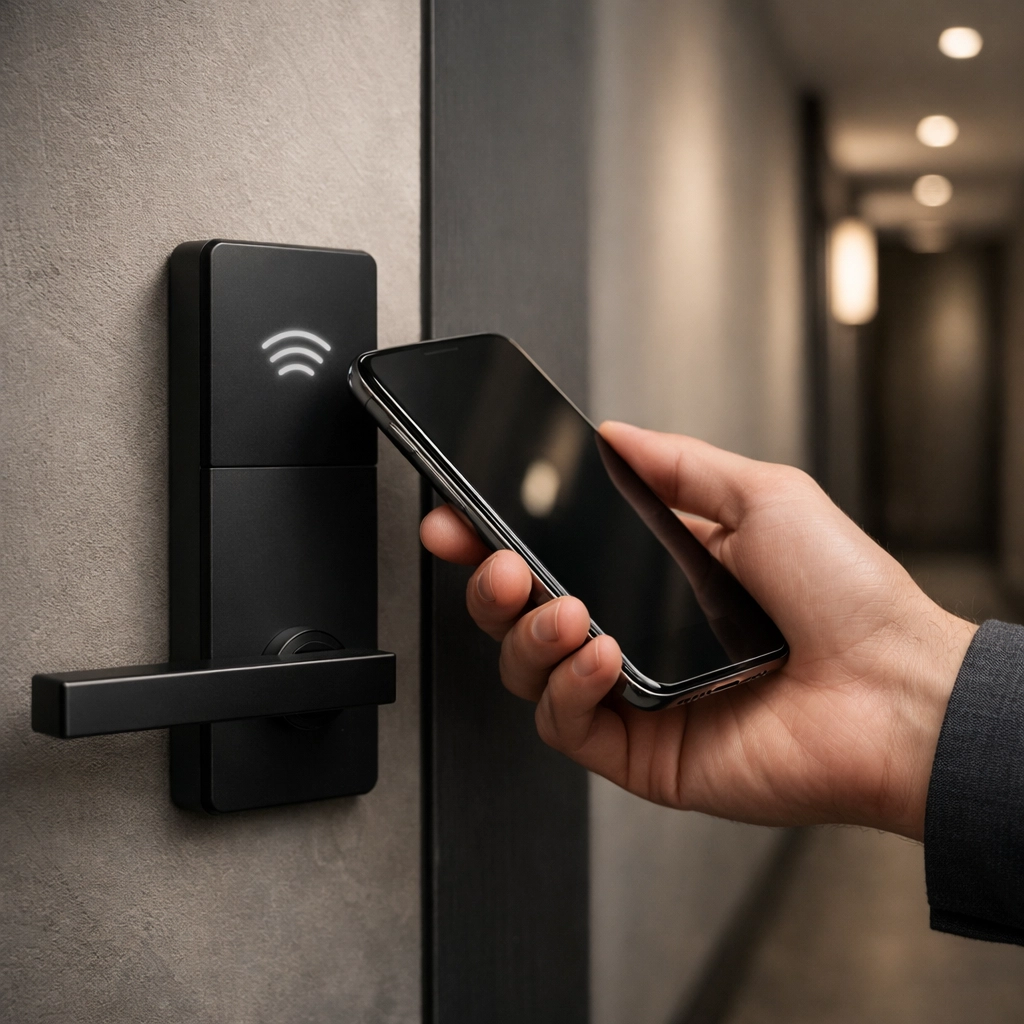
    Guest using a smartphone for digital key entry at a modern hotel room door for a digital-first stay.

    5. Prioritizing Initial Cost Over Total Value

    We get it. Budgets are tight. But picking the "cheapest" PMS often ends up being the most expensive mistake a hotel can make. Legacy systems might have a lower monthly subscription, but they hide their costs in hardware maintenance, manual labor, lost revenue from downtime, and missed upsell opportunities.

    Think of your tech stack as your property's nervous system. If you skimp on the nervous system, the rest of the body eventually fails.

    The Fix:
    Calculate the Total Cost of Ownership (TCO). Factor in:

    • Staff hours saved through automation.
    • Incremental revenue from integrated upselling.
    • Reduced IT overhead from moving to the cloud.
    • The cost of guest dissatisfaction when your system crashes during a Saturday rush.

    6. Staying Tethered to the Front Desk

    The traditional front desk is a barrier. It’s a physical wall between you and your guests. If your tech requires your staff to be tethered to a desktop computer in the lobby, you’re missing out on the flexibility that modern hospitality demands.

    Mobile-first tech allows your team to manage the hotel from anywhere. Housekeeping updates room status on their phones. Maintenance logs a fix from the basement. The General Manager checks occupancy from a coffee shop across town.

    The Fix:
    Move to a 100% cloud-based, mobile-optimized platform. Your staff should be able to check a guest in while walking them to their room or serve them a drink poolside while simultaneously handling a billing query.

    Hotel staff using a mobile tablet to assist a guest in a lounge, showcasing cloud-based flexibility.

    7. Ignoring Scalability and Future-Proofing

    Are you buying for the hotel you have today, or the hotel group you want to be in three years?

    Many hoteliers fall into the trap of choosing "local" or "niche" software that works fine for 20 rooms but buckles under the pressure of 100 rooms or multiple properties. When you grow, your tech should grow with you: not become a roadblock that requires a total system replacement every two years.

    The Fix:
    Review vendor roadmaps. Are they investing in AI? Are they expanding their integration partners? Do they support multi-property management from a single login? Choose a partner, not just a provider.

    Modern glass hotel building facade symbolizing scalable and future-proof hospitality technology.

    The Summer Readiness Checklist

    It’s March. You have a window of opportunity to optimize your operations before the peak season madness begins.

    • Audit your integrations: Does data flow seamlessly?
    • Test your mobile journey: Is check-in actually "one-click"?
    • Review your data security: Is your guest data PCI and GDPR compliant?
    • Empower your team: Schedule a 30-minute training refresher on your most powerful features.

    Success in modern hospitality isn't about working more hours; it's about making your hours count. By eliminating these common tech hurdles, you give your team the freedom to do what they do best: look after guests.

    Ready to see how a truly innovative platform can transform your summer?

    Get started with Mews today.

    Peaceful luxury hotel poolside at dusk representing successful operational excellence for summer.

    Hospitality is changing fast. The hotels that thrive this summer won't be the ones with the most rooms, but the ones with the smartest systems. Don't let outdated tech be the reason you miss out on your best season yet. All from one intuitive platform.

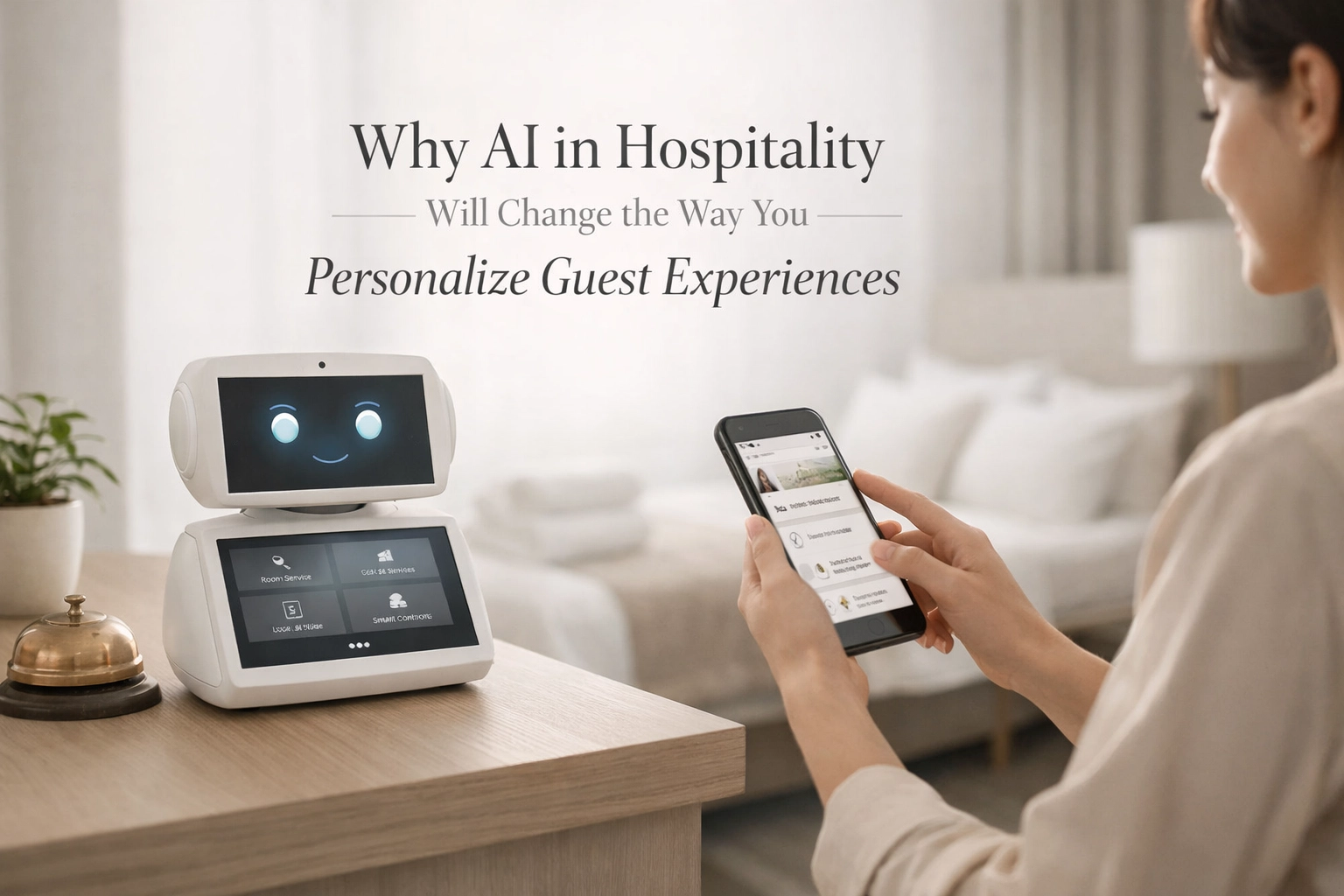
  • Why AI in Hospitality Will Change the Way You Personalize Guest Experiences

    Why AI in Hospitality Will Change the Way You Personalize Guest Experiences

    Transform guest data. Anticipate every need. Scale your hospitality.

    Personalization used to be the ultimate luxury, a service reserved for five-star boutique hotels with enough staff to memorize every guest’s favorite vintage or pillow preference. It was manual, it was labor-intensive, and it was nearly impossible to scale.

    Today, that’s changing. We’re seeing a shift where AI handles the heavy lifting of data analysis, allowing hotels of any size to deliver hyper-personalized experiences. It’s not just about adding a name to an email. It’s about understanding the guest journey before they even step through your doors.

    At Mews, we believe technology should get out of the way so you can focus on your guests. Our platform is built on the idea that automation isn’t about removing the human touch, it’s about providing the data you need to make every interaction count.

    The death of "one-size-fits-all"

    For decades, the hospitality industry relied on a standard operating procedure. Every guest got the same check-in script, the same room layout, and the same generic follow-up email. It was efficient, but it wasn't personal.

    AI is putting an end to that. By analyzing vast amounts of data, past stays, booking behaviors, dietary preferences, and even specific requests made via your booking engine, AI creates a living, breathing profile for every guest.

    We think personalization should be:

    • Proactive, not reactive.
    • Data-driven, not based on guesswork.
    • Seamlessly integrated into your daily workflow.

    When your hotel PMS is powered by AI-driven insights, you stop guessing what your guests want. You already know. Whether it’s a business traveler who needs a quiet room near the elevator or a family looking for local kid-friendly recommendations, AI stitches these details together into a cohesive narrative.

    Personalized hotel room amenities on a marble bedside table reflecting a tailored guest experience.

    Scaling the "wow" factor

    The biggest challenge with personalization has always been scale. How do you treat 500 guests like individuals without hiring 50 more concierges?

    The answer lies in automation-focused technology. AI doesn't get tired. It doesn't forget that a guest mentioned a gluten allergy three stays ago. It works in the background, constantly updating your CRM with fresh insights.

    See what a smart platform can do:

    1. Automate routine communication: Send tailored messages based on guest segments.
    2. Predictive room assignments: Match guests to rooms that fit their historical preferences automatically.
    3. Dynamic upselling: Offer the right add-on at the right time through your booking engine.

    "Since we moved to an automated system, our front desk spend 40% less time on screens and 100% more time looking guests in the eye," says one of our partners. That’s the power of letting the machine handle the data while your team handles the hospitality.

    The role of the modern Hotel PMS

    Your hotel PMS is the brain of your operation. If that brain isn't cloud-native and AI-ready, you’re operating at a disadvantage. Modern hospitality technology needs to be open and flexible.

    We believe your tech stack should work for you, not the other way around. This means your channel manager, CRM, and self-check-in kiosks need to talk to each other in real-time. When a guest updates their preferences on a self-check-in kiosk, that data should immediately sync across your entire ecosystem.

    Hotel staff providing personalized service in a modern lobby powered by hospitality technology.

    This level of connectivity allows for "Smart Room" customization. Imagine a world where the room temperature, lighting, and even the TV welcome screen are pre-set based on a guest’s profile stored in your PMS. This isn't science fiction: it's happening now in properties that prioritize innovative technology.

    Conversational AI and the New Concierge

    We’ve all seen the basic chatbots of the past. They were clunky, frustrating, and often led to more work for the staff. The new generation of conversational AI is different.

    Generative AI tools can now engage guests in natural, helpful conversations. They can build personalized itineraries, book restaurant reservations, and handle common queries about Wi-Fi passwords or breakfast hours.

    Why this matters:

    • Instant response times 24/7.
    • Reduced pressure on the front desk.
    • Consistent brand voice across all digital touchpoints.

    By integrating these AI assistants with your CRM, every interaction becomes a data point that further refines the guest’s profile. It’s a virtuous cycle of better data leading to better experiences.

    Predictive Personalization: The Next Frontier

    The most exciting part of AI in hospitality isn't just reacting to what a guest wants today: it’s predicting what they’ll want tomorrow.

    AI-driven analytics can identify patterns that humans might miss. For example, if data shows that guests who book through a specific channel manager during the winter months almost always ask for late check-outs, your system can proactively offer that as an add-on during the booking process.

    We believe in making the complex feel easy. Predictive personalization allows you to:

    • Offer suite upgrades to guests most likely to accept them.
    • Tailor loyalty rewards to individual spending habits.
    • Identify potential issues before the guest even notices them.

    Luxury hotel suite with custom welcome amenities showcasing automated personalized guest rewards.

    Why Cloud-Native is Non-Negotiable

    You can't do any of this with legacy, on-premise software. To leverage AI effectively, your data needs to be accessible, secure, and integrated.

    Mews is cloud-native from the ground up. This means we can roll out AI updates and new features instantly, without you needing to call an IT guy or reboot a server. It’s about giving you the freedom to innovate without the technical debt.

    Our platform is designed to be:

    • Easy to use: Your team can learn it in minutes, not weeks.
    • Automation-focused: We eliminate the "busy work" of hotel management.
    • Innovative: We’re always looking at what’s next in hospitality tech.

    If you’re still using a legacy system, you’re not just behind on technology: you’re falling behind on guest expectations. Modern travelers expect a digital-first, personalized experience. They want to check in on their phones, use self-check-in kiosks to skip the queue, and receive offers that actually matter to them.

    Transforming the Guest Journey

    Let’s look at what this looks like in practice. A guest books a stay through your booking engine. AI analyzes their past stay history and notes they usually travel for business but have stayed on weekends twice.

    1. Pre-stay: The CRM sends an automated, personalized email offering a "Bleisure" package: staying an extra night at a discounted rate.
    2. Arrival: The guest uses a self-check-in kiosk. The system recognizes them and automatically assigns a room on a high floor, as per their preference.
    3. During the stay: An AI concierge sends a message suggesting a quiet workspace nearby, knowing they are on a business trip.
    4. Post-stay: The guest receives a customized loyalty offer for their next visit, specifically for the amenities they actually used.

    This entire journey happens without a staff member needing to manually check a single box. That is the future of hospitality.

    Guest using a digital key on their smartphone for a seamless and automated hotel check-in process.

    It’s Time to Lead the Change

    The shift toward AI isn’t a trend; it’s a fundamental change in how hotels operate. Those who embrace these tools will find themselves with more loyal guests, higher revenue, and a much happier workforce.

    At Mews, we’re committed to building the tools that make this future possible. We’re not just a hotel management software; we’re a partner in your digital transformation. We believe that by automating the routine, we can help you rediscover the joy of hospitality.

    Ready to see how AI and automation can transform your property? It’s easier than you think. You can start small, automate one process at a time, and watch the impact on your guest satisfaction scores.

    Get started with Mews today and see how our cloud-native platform can take your guest experience to the next level.

    Explore the future of hospitality technology at https://referrals.mews.com/umqhyito.

    We think you’ll love the freedom that comes with a truly automated system. Let's get you earning more revenue and spending more time with your guests in no time.

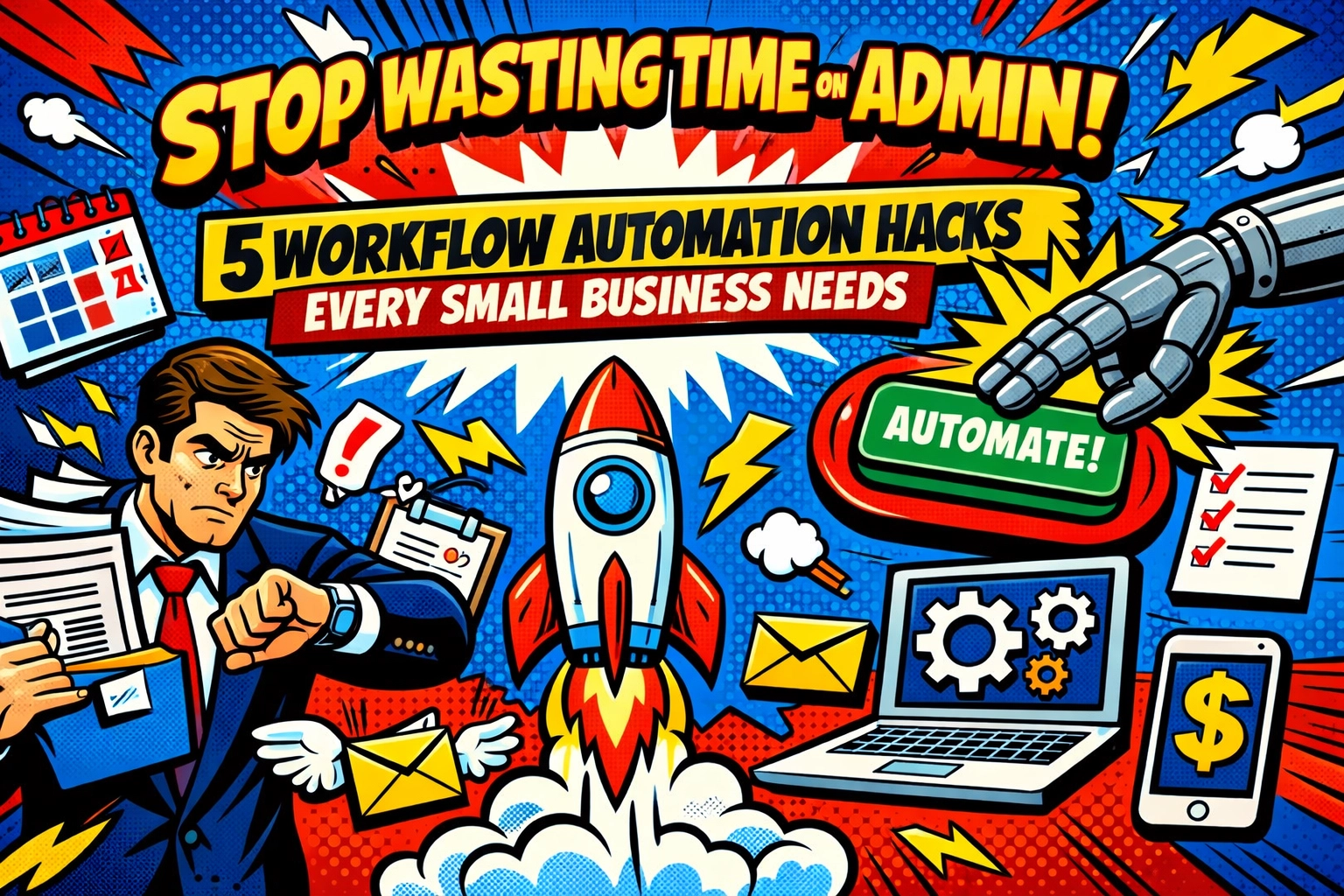
  • Stop Wasting Time on Admin: 5 Workflow Automation Hacks Every Small Business Needs

    Stop Wasting Time on Admin: 5 Workflow Automation Hacks Every Small Business Needs

    WORKFLOW AUTOMATION FOR SMALL BUSINESS: STOP DOING THE BUSY WORK

    ☕ 7:00 AM.

    You’re staring at a lukewarm cup of coffee and an inbox that looks like a digital crime scene. 142 unread emails. Three "gentle reminders" about unpaid invoices. A customer asking for a tracking number that’s buried in a spreadsheet you haven't updated since Tuesday.

    This isn’t "running a business." It’s being a professional firefighter, and you’re losing the war against the flames.

    But it doesn't have to be this way. You didn't start your company to become a data entry clerk. You started it to build something. To create. To actually talk to your customers.

    The secret isn’t working harder. It’s working… less. Or rather, letting the machines do the heavy lifting while you focus on the stuff that actually moves the needle.

    Here are 5 workflow automation hacks that will give you your life back.

    1. THE MONEY MOVES ITSELF: INVOICING & ACCOUNTING

    Stop chasing checks. Seriously.

    When a customer buys from you on Shopify or hits "pay" on a Stripe link, your work should be done. Instead, most of us spend hours manual-copying data into QuickBooks. It’s tedious. It’s prone to typos. And it’s a total waste of your brainpower.

    The Hack: Set up an automated sync. The second a payment hits, an invoice is generated and pushed to your accounting software. No manual entry. No "oops, I forgot to record that."

    It’s about cash flow. Faster invoicing means faster payments. And faster payments mean you aren't sweating payroll on Friday.

    Business owner using workflow automation to sync invoices and digital payments to accounting software.

    2. NO LEAD LEFT BEHIND: CRM INTEGRATION

    You spend money on ads. You grind on social media. A lead finally fills out your "Contact Us" form… and then they wait.

    By the time you see the notification three hours later, they’ve already emailed your competitor.

    The Hack: Use smart web forms that talk directly to your CRM. When someone hits "submit," three things happen instantly:

    1. They get a personalized "We’re on it" email.
    2. Their info is tagged and dropped into your sales pipeline.
    3. You get a notification to your phone so you can strike while the iron is hot.

    It turns a "maybe" into a "yes" before they even have time to close the tab.

    3. THE STOCK WATCHER: INVENTORY & REORDERS

    Running out of your best-seller is a nightmare. Over-ordering a dud is a tragedy.

    If you’re still counting boxes in a warehouse or manual-checking spreadsheets, you’re living in 1995.

    The Hack: Set up "Low Stock" triggers. When your inventory hits a certain threshold, the system automatically drafts a purchase order to your supplier. You just hit "approve."

    Real-time syncing across Shopify, Amazon, and your physical store ensures you never sell something you don't have. It’s peace of mind you can’t put a price on.

    4. THE PAPERWORK ASSASSIN: EXPENSE APPROVALS

    Remember that pile of crumpled receipts on your dashboard? Your employees hate it even more than you do.

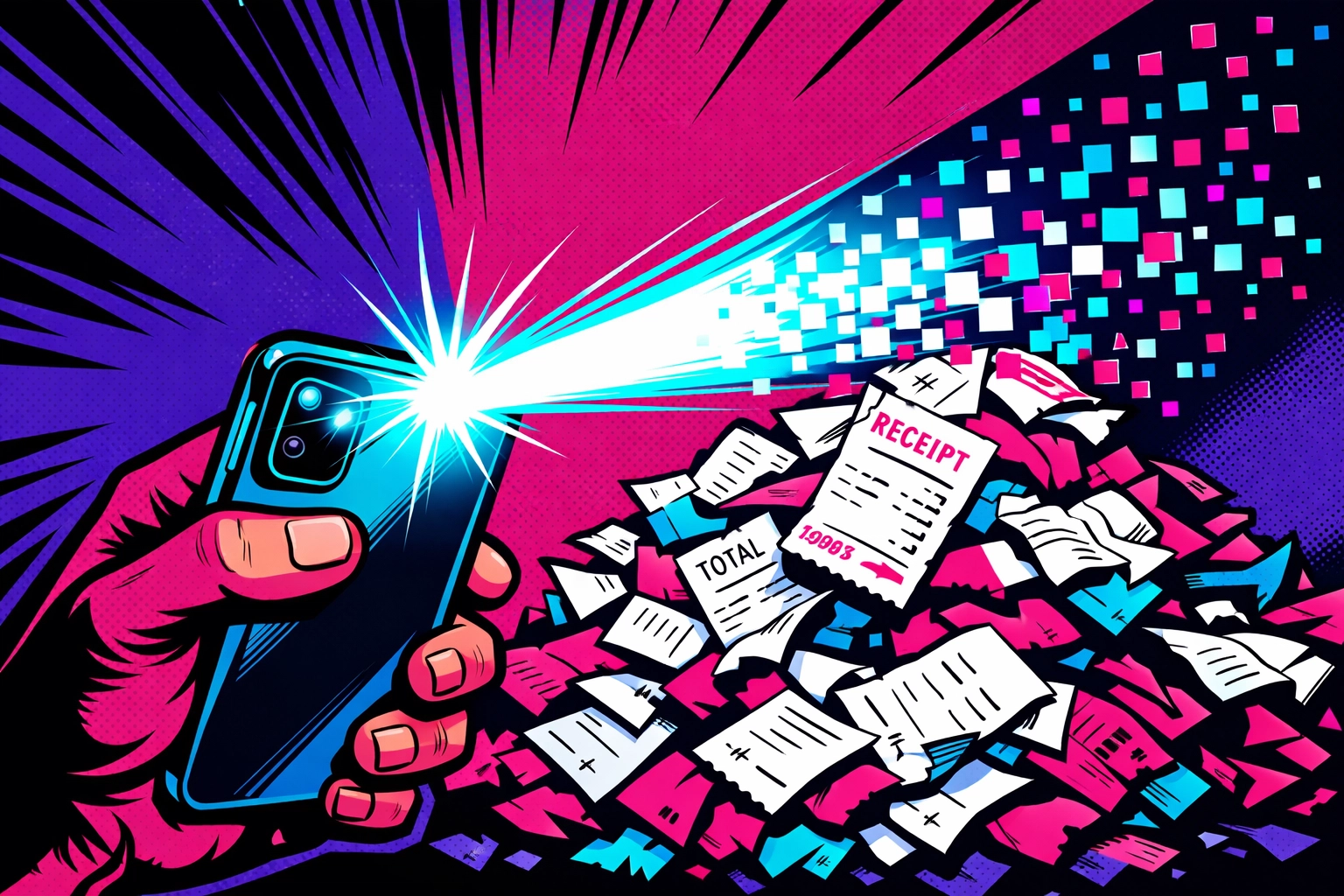
    The Hack: Let them snap a photo. AI reads the receipt, checks it against your company policy, and routes it to you for a one-click approval. The reimbursement happens automatically.

    No more Excel sheets. No more "where is the receipt for that lunch?" It just… happens.

    A smartphone scanning receipts using AI to automate expense report and approval workflows.

    5. CUSTOMER SUPPORT ON AUTOPILOT

    "Where is my order?"
    "What are your hours?"
    "How do I return this?"

    You’ve answered these questions ten thousand times. Stop doing it manually.

    The Hack: Deploy a chatbot that actually works. Most common questions can be handled by AI in seconds. For everything else, the system sorts the ticket and hands it to the right person on your team.

    You’re not ignoring your customers, you’re giving them answers faster than a human ever could.

    Scaling shouldn't be this hard. And with Marblism, it isn't. If you're ready to stop the busy work, see how we do it here.


    WHY YOUR BUSINESS NEEDS AN AI VIRTUAL ASSISTANT (BEFORE YOUR COMPETITORS GET ONE)

    📱 11:00 PM.

    The house is quiet. The lights are off. But your phone buzzes.

    It’s a potential client from three time zones away. They have a question. They have a budget. And they want an answer now.

    In the old world, you’d see this tomorrow morning. In the new world, your AI Virtual Assistant already handled it. They answered the question, sent over a calendar link, and booked a discovery call for Tuesday at 2:00 PM.

    You didn't even wake up.

    THE COMPETITIVE EDGE IS SPEED

    We live in an "on-demand" economy. Patience is dead. If you take four hours to reply to an inquiry, you might as well take four years.

    Your competitors are already looking into AI. Some of them are already using it. They’re answering leads at 3:00 AM. They’re qualifying prospects while they’re on vacation. They’re moving faster because they have a digital workforce that never sleeps, never complains, and never asks for a raise.

    If you aren't using an AI VA, you're bringing a knife to a drone fight.

    An AI virtual assistant managing multiple business tasks efficiently to speed up workflows.

    WHAT DOES AN AI VA ACTUALLY DO?

    Forget the clunky "Press 1 for Sales" menus of the past. Modern AI Virtual Assistants are smart. They’re nuanced. They sound like… well, like you.

    • They Manage Your Calendar: No more back-and-forth "Does Thursday work for you?" emails. They find the slot and lock it in.
    • They Filter the Noise: They can scan your incoming communications and only interrupt you for the "Code Red" emergencies or the "Big Deal" opportunities.
    • They Do the Research: Need a summary of a 50-page industry report before your noon meeting? Your AI VA has it ready by 9:00 AM.

    THE ROI OF SLEEP

    The biggest benefit isn't just the money you save on hiring a human assistant (though that’s a nice perk).

    It’s the cognitive load.

    As a business owner, your most valuable asset is your focus. Every time you stop a high-level strategy session to answer a "How much do you charge?" DM, you lose momentum.

    An AI VA protects your time. It acts as a gatekeeper for your sanity.

    Business owner relaxing while AI automation handles administrative tasks and business operations.

    MEET THE TEAM WITHOUT THE OVERHEAD

    Imagine having a team of ten people working for you. One for marketing, one for admin, one for sales follow-up, one for data analysis.

    Now imagine that team costs less than your monthly coffee budget.

    That’s the reality of Marblism. We build the systems that let you scale without the burnout. We provide the AI backbone so you can go back to being the visionary, not the errand boy.

    THE WINDOW IS CLOSING

    Early adopters always win. Right now, having an AI-integrated business is a "wow" factor. It makes you look professional, high-tech, and incredibly responsive.

    In two years, it will be the bare minimum.

    Don't wait until you're forced to catch up. Lead the pack.

    Stop juggling. Start scaling.

    Your new digital team is waiting for you. See what Marblism can do for your workflow right now.

    The chaos is gone before you even take your first sip. 🤝

  • AI Business Automation Secrets Revealed: What Your Most Productive Competitors Are Doing

    AI Business Automation Secrets Revealed: What Your Most Productive Competitors Are Doing

    You wake up. You reach for your phone. Your thumb hovers over the email app like a soldier stepping into a minefield…

    142 unread messages. Three "urgent" customer complaints. A vendor asking about an invoice you haven't even seen yet. And it’s only 7:15 AM.

    You spend your morning putting out fires. You spend your afternoon in the "manual labor" of data entry. By 5:00 PM, you haven't actually grown your business, you’ve just survived it.

    But then you look at your biggest competitor. Their team is smaller than yours. They seem to be launching new products every month. They’re active on every social channel, and their customer reviews are glowing.

    How? Are they robots?

    Actually… yes. Part of them is.

    The secret isn't that they’re working harder than you. It's that they’ve stopped working "in" the business and started letting AI run it. They’ve discovered the world of agentic systems, and if you don’t catch up soon, that gap between you and them is going to become a canyon.

    STOP JUGGLING. START DELEGATING TO THE CLOUD.

    Your competitors have moved past the "experimental" phase of AI. They aren't just playing with ChatGPT to see if it can write a funny poem about office coffee.

    They are building "agentlakes."

    Think of an agentlake as a specialized team of AI workers that live inside your business systems. One agent handles your CRM. Another manages your ERP. A third sits in your Finance folder. They talk to each other. They plan. They execute.

    This is the ai virtual assistant for business evolution you weren't told about. It’s not a chatbot that waits for you to ask a question. It’s an autonomous system that sees a problem and fixes it before you even log on.

    A team of AI virtual assistant robots managing business operations in a high-tech command center.

    A DAY IN THE LIFE: THE AUTOMATED VS. THE EXHAUSTED

    Let’s look at how the "Productive Competitor" spends their Tuesday compared to you.

    7:00 AM , The Morning Filter
    While you’re scrolling through 142 emails, their AI has already sorted theirs. It archived the newsletters. It drafted replies to the FAQs. It flagged only the two emails that actually require a human brain.
    They wake up to a clean slate. You wake up to a headache.

    📱 10:00 AM , The Support Surge
    A shipment is delayed. Suddenly, fifty customers are asking, "Where is my stuff?"
    You’re frantically typing replies or bark-ordering your assistant to "get on it."
    Your competitor? They automate customer support with ai. Their AI agent sees the delay in the shipping system, proactively emails the customers with a discount code for the trouble, and updates the tracking info.
    The competitor doesn't even know there was a problem until they see the "High Satisfaction" report at the end of the day.

    🤝 1:00 PM , The Sales Chase
    You’re trying to remember which leads you were supposed to follow up with. You’re digging through sticky notes.
    Their AI has already analyzed which leads are "hot" based on website behavior. It sent a personalized follow-up at 12:45 PM, exactly when the lead was most likely to be at their desk.

    🔍 4:00 PM , The Admin Abyss
    You’re staring at a stack of invoices, trying to match them to purchase orders. Your eyes are crossing.
    Their AI scanned the invoices the second they hit the inbox, verified the data, and queued them for payment.

    🌙 8:00 PM , The Wind Down
    You’re finishing up the "real work" you couldn't get to during the day.
    They’re at dinner. Because their business didn't need them to be a glorified data-entry clerk.

    THE 50% RULE: THE BENCHMARK OF SURVIVAL

    In 2026, the benchmark for a "mature" business is simple: Over 50% of your workflows should operate autonomously.

    If you are still manually routing every support ticket, manually checking inventory levels, and manually onboarding every new employee, you are effectively paying a "human tax" that your competitors have abolished.

    Productive companies are targeting these four areas first:

    1. Invoice Processing: Turning hours of review into seconds of verification.
    2. Inventory Management: Using AI to predict demand and trigger reorders before the "Out of Stock" sign ever appears.
    3. Customer Support: Routing and resolving tickets without a human ever touching a keyboard.
    4. Decision Intelligence: Letting AI simulate "what if" scenarios so they know if a price hike will kill their sales before they implement it.

    A business owner transitioning from manual paperwork to efficient AI business automation.

    WHY "AI VIRTUAL ASSISTANT FOR BUSINESS" ISN'T JUST A BUZZWORD

    When people hear "virtual assistant," they think of a person in a different time zone who handles their calendar. That’s 2015 thinking.

    In 2026, an ai virtual assistant for business is a piece of infrastructure. It’s the glue between your Shopify store and your accounting software. It’s the brain that sits on top of your Slack channel and summarizes the 400 messages you missed while you were in a meeting.

    The most productive companies are restructuring their entire teams around these agents. They aren't hiring more admins; they’re hiring "AI Orchestrators", people who know how to tell the AI what the goal is and then let the AI figure out the "how."

    AUTOMATE CUSTOMER SUPPORT WITH AI (OR LOSE YOUR CUSTOMERS)

    Let's be real: customers are impatient. In 2026, "we'll get back to you in 24 hours" is basically an invitation for them to go to your competitor.

    Your competitors are using AI that understands sentiment. If a customer is angry, the AI knows to escalate it to a human immediately with a summary of the issue. If the customer just wants to change their password, the AI does it in three seconds.

    This doesn't just save money. It saves your reputation.

    A customer support AI robot wearing a headset, delivering fast and friendly service to happy users.

    THE SCARY PART: THE VELOCITY GAP

    The reason your competitors are winning isn't just because they’re saving money. It’s because of Decision Velocity.

    When your data is trapped in spreadsheets and your processes are trapped in your head, making a decision takes time. You have to "get the numbers together." You have to "circle back."

    When you automate customer support with ai and admin tasks, your data is live. It’s clean. It’s analyzed in real-time. Your competitors are making decisions in minutes that take you weeks. By the time you’ve decided to launch a sale, they’ve already finished theirs and analyzed the results.

    HOW DO YOU START WITHOUT LOSING YOUR MIND?

    You don't need to be a Silicon Valley genius to do this. You just need the right tools and the right guidance. Most small business owners feel like they’re standing at the bottom of a mountain looking up at AI.

    But you don't have to climb the whole thing today. You just need to automate one workflow. Then another. Then the "agentlake" starts to fill up.

    This is exactly what we specialize in. We don't just give you a tool and wish you luck. We help you build the systems that your competitors are already using to leave you in the dust.

    If you're tired of being the bottleneck in your own business, it's time to see what actual automation looks like.

    Stop guessing and start scaling. You can see the exact blueprints your competitors are using by checking out what we’re doing over at Marblism with Scott Bowen.

    An entrepreneur using AI business automation to navigate their company toward rapid growth and scale.

    THE CHOICE IS YOURS (BUT THE CLOCK IS TICKING)

    By the end of 2026, 40% of all business applications will use task-specific AI agents. That’s not a "maybe." That’s the trajectory.

    You can continue to be the hero who "does it all" and eventually burns out. Or, you can be the owner who builds a machine that works while they sleep.

    The "secrets" of your most productive competitors aren't really secrets anymore. They’re just tools. And those tools are now sitting right in front of you.

    Your inbox is waiting. Or… you could let an AI handle it.

    Ready to stop being the "Chief Everything Officer"?

    Explore how to reclaim your time and automate your growth right here: https://marblism.link/scott-bowen.

    Scaling shouldn't be this hard.
    But it is( until you let the machines take the wheel.)

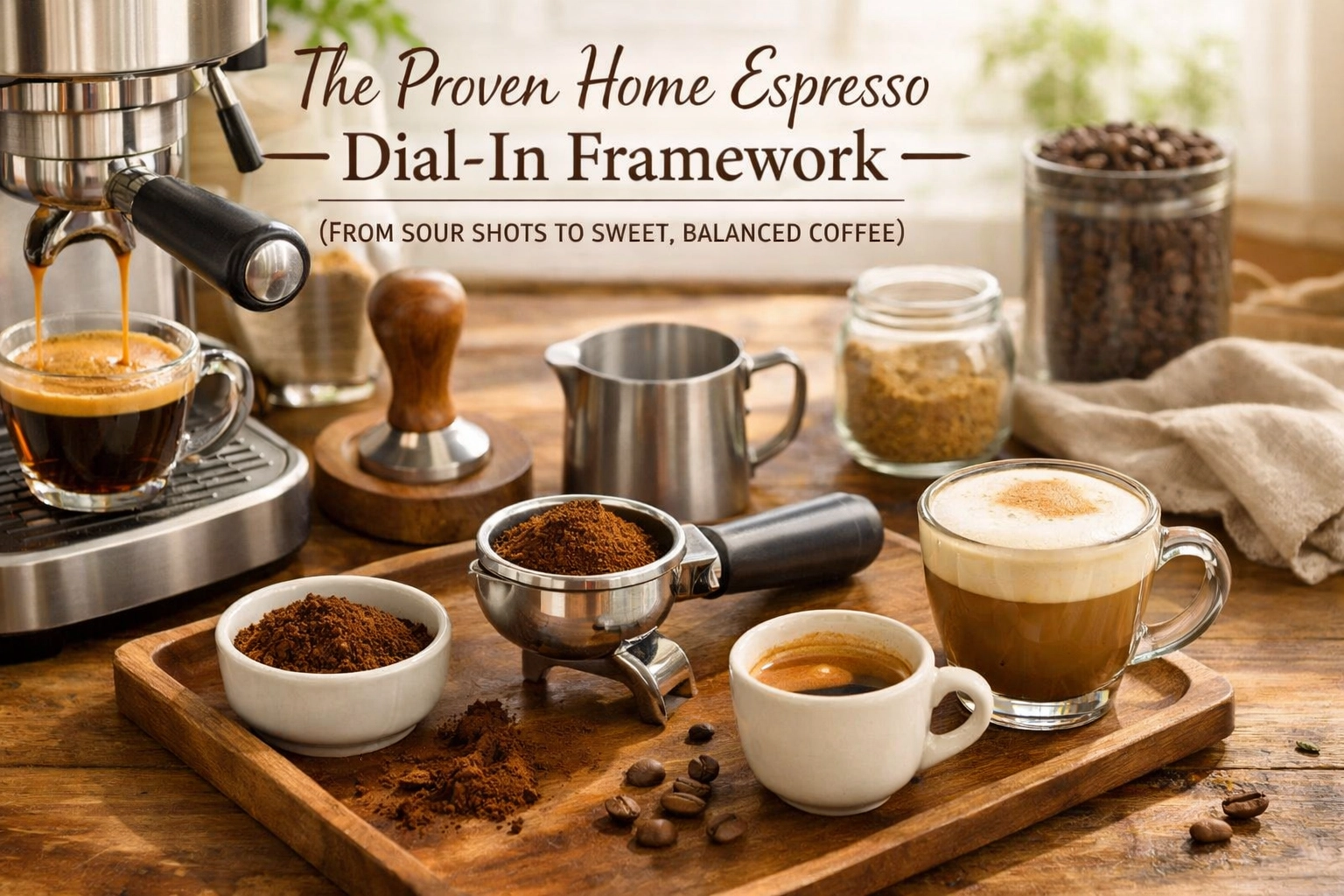
  • The Proven Home Espresso Dial-In Framework (From Sour Shots to Sweet, Balanced Coffee)

    The Proven Home Espresso Dial-In Framework (From Sour Shots to Sweet, Balanced Coffee)

    There is nothing quite like the smell of a fresh bag of speciality coffee arriving at your door. You tear it open, the aroma fills the kitchen, and you’re ready for that perfect morning latte. But then, you pull the shot, take a sip, and… ouch. It’s sour enough to make your eyes water. Or perhaps it’s so bitter it tastes like you’re licking a piece of charcoal.

    Don't worry, we’ve all been there. Even the pros.

    The truth is, making great espresso at home isn’t about luck or magic. It’s about a process we call "dialing in." It’s the systematic way we adjust our variables: grind size, dose, and time: to find the "sweet spot" where the coffee tastes balanced, sweet, and complex. At Limini Coffee, we believe that anyone can master this with a little patience and the right framework.

    So, let's stop guessing and start brewing.

    The Baseline: Where to Start?

    Before we start turning dials on your grinder, we need a starting point. Think of this as your "home base." If you don't have a consistent starting recipe, you’ll be chasing your tail forever.

    We generally recommend the "Golden Ratio" of 1:2. This means for every gram of dry coffee in your basket, you want two grams of liquid espresso in your cup.

    Our Go-To Starting Recipe:

    • Dose: 18 grams of dry coffee (assuming you have a standard double basket).
    • Yield: 36 grams of liquid espresso.
    • Time: 25 to 30 seconds.

    Why this specific set of numbers? Because it’s right in the middle of the road. It gives the coffee enough room to express itself without being too concentrated or too watery. If you’re ever feeling lost, head over to our coffee brewing calculator to help crunch the numbers for different basket sizes.

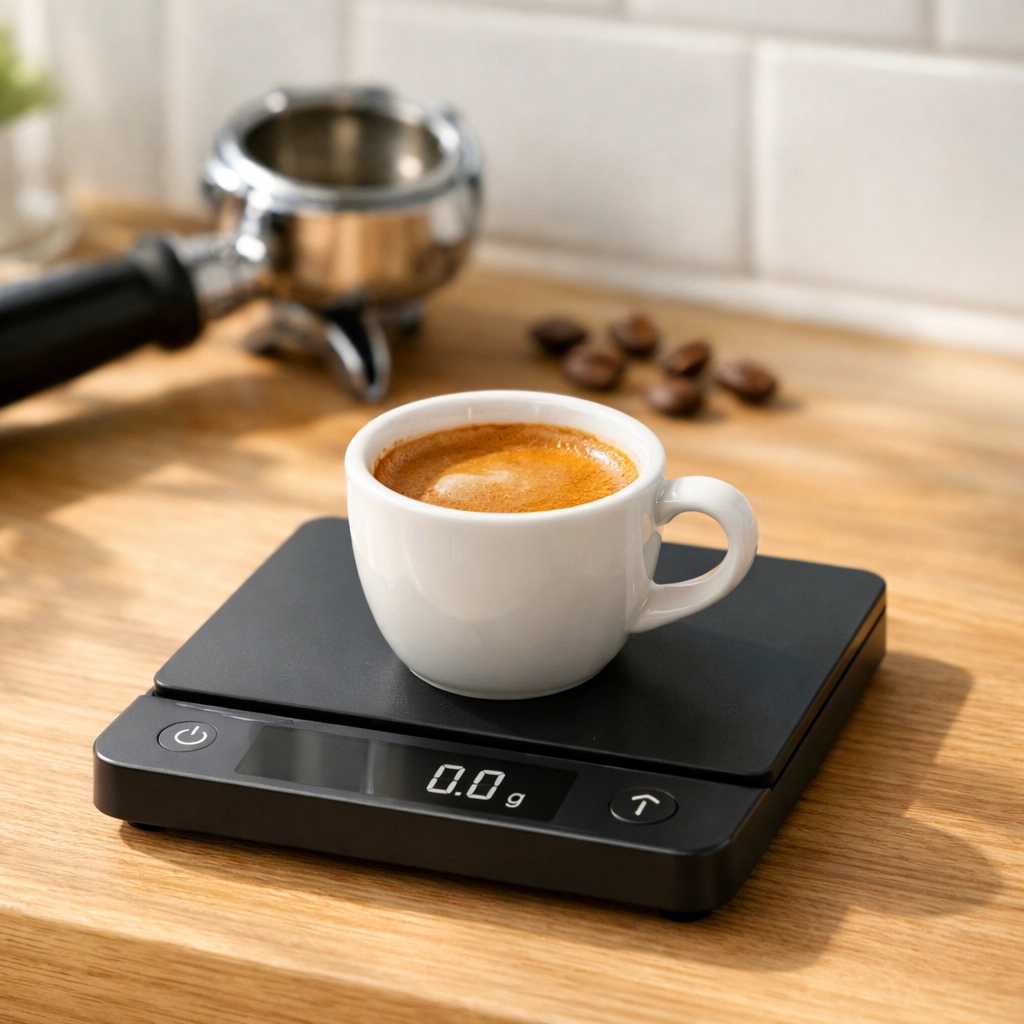
    A fresh espresso shot with rich crema being weighed on a digital scale at a home coffee station.

    Step 1: Pre-Shot Preparation

    Consistency is the enemy of frustration. If your preparation changes every time, your results will change every time, even if you don't touch the grinder.

    First, ensure your machine is fully warmed up. Most home machines need at least 15 to 30 minutes for the group head and portafilter to reach a stable temperature. If the metal is cold, it will suck the heat out of your brew water, leading to under-extraction (sour coffee).

    Second, we need to talk about the "puck." When you dose your 18 grams into the basket, use a WDT (Weiss Distribution Technique) tool: essentially a few thin needles: to stir the grounds. This breaks up clumps and ensures the water flows evenly through the coffee. Then, tamp firmly and level. You don't need to be a bodybuilder here; just push until the coffee resists back. We have a great deep-dive on the art of tamping if you want to perfect your technique.

    Step 2: The Diagnostic Sip

    Now, pull your shot. Put your cup on a scale, start your timer the moment you hit the "on" switch, and stop the shot when you hit 36 grams.

    Now, the most important part: Taste it.

    Forget how it looks for a second. Crema is pretty, but it can be a bit of a liar (as we discuss in our article on crema). The flavor is the only thing that matters.

    Is it Sour? (Under-extracted)

    If the shot tastes thin, salty, or sharp (like a green apple or a lemon), it is under-extracted. This means the water passed through the coffee too quickly and didn't have enough time to pull out the sugars and oils. Usually, these shots finish in under 20 seconds.

    Is it Bitter? (Over-extracted)

    If the shot tastes harsh, dry, or "ashy," it is over-extracted. The water stayed in contact with the coffee for too long, pulling out the unpleasant, woody compounds. These shots usually drag on for 35 or 40 seconds.

    Step 3: The One-Variable Rule

    This is where most home baristas go wrong. They change the grind size and the dose and the temperature all at once. It’s chaos.

    The Golden Rule: Only ever change one variable at a time.

    Usually, that variable should be your grind size. We keep the dose (18g) and the yield (36g) the same, and we let the grind size determine the time.

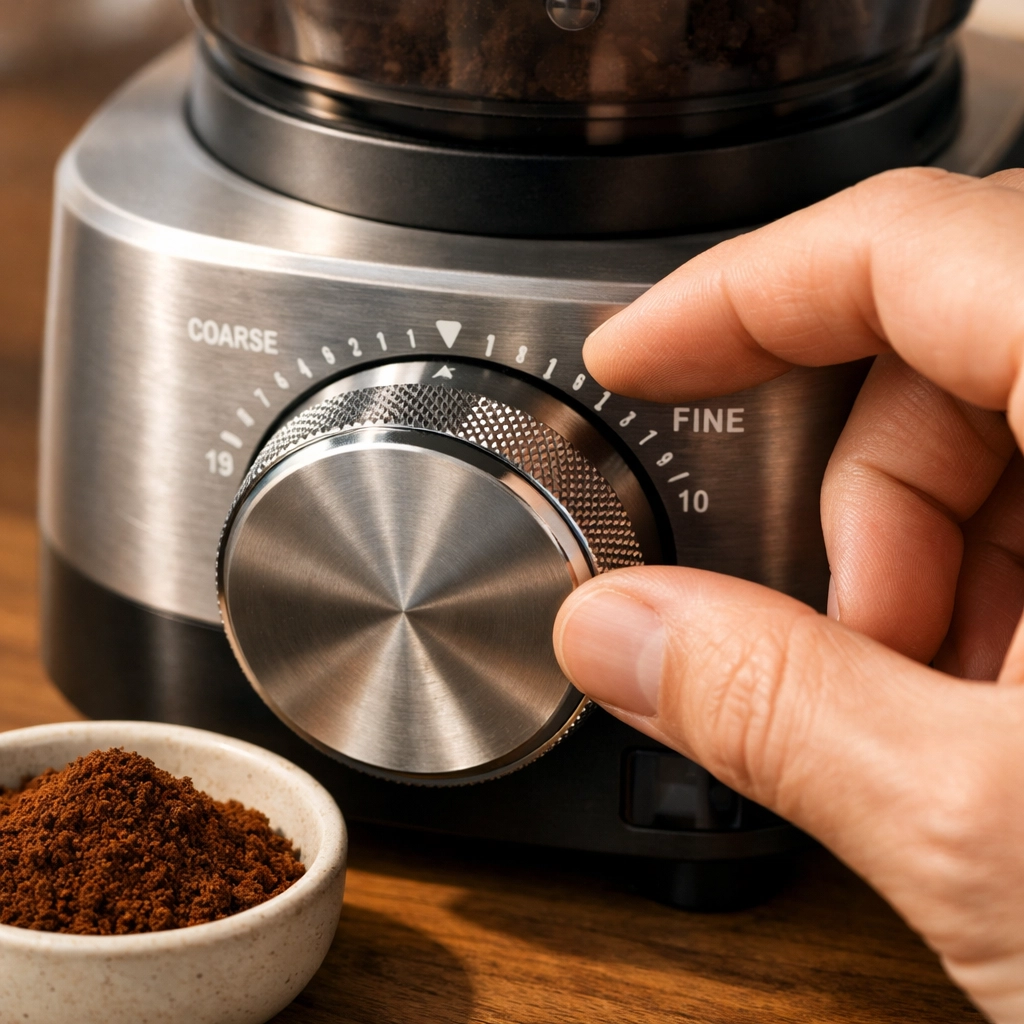
    • To fix sour/fast shots: Grind finer. Finer particles pack closer together, creating more resistance for the water. This slows the flow and increases extraction.
    • To fix bitter/slow shots: Grind coarser. Larger particles allow water to pass through more easily, speeding up the flow and decreasing extraction.

    Barista using a WDT distribution tool to stir coffee grounds in a portafilter for better extraction.

    The Dial-In Dance: A Real-World Example

    Let’s say you’ve just grabbed a bag of our fresh Limini Coffee beans. You set your grinder to what you think is the right setting.

    1. Shot 1: 18g in, 36g out. It takes 15 seconds. You taste it, and it’s sour enough to make you wince.
    2. The Fix: You adjust your grinder two "notches" or a small turn towards Finer.
    3. Shot 2: 18g in, 36g out. It takes 22 seconds. It’s better! Still a bit sharp, but the sweetness is starting to show up.
    4. The Fix: You go just a tiny bit Finer again.
    5. Shot 3: 18g in, 36g out. It takes 28 seconds. Boom. It’s creamy, sweet, and has a lingering chocolatey finish. You’ve found the sweet spot.

    Essential Tools for the Job

    You wouldn't try to build a house without a measuring tape, so don't try to dial in espresso without a few key tools.

    • A Digital Scale: This is non-negotiable. You need to know exactly how much coffee is going in and how much liquid is coming out. If you're off by even half a gram, it changes the flavor.
    • A Timer: Most scales have these built-in now. We aim for that 25-30 second window as a guide.
    • A Bottomless Portafilter: These are fantastic for learning. They allow you to see the bottom of the basket. If you see "spurting" or uneven flow (channeling), you know your puck prep needs work, not necessarily your grind size.
    • A Notebook: Write down your settings! Coffee is an agricultural product; it changes as it ages. A setting that worked on Monday might need a tiny tweak by Friday.

    If you are just starting out and feeling overwhelmed by gear, check out our guide on choosing espresso equipment to see what we recommend for home setups.

    Advanced Considerations: Temperature and Water

    Once you’ve mastered the grind, you might want to look at the finer details.

    Temperature: Most modern machines allow you to adjust the PID (the digital temperature controller). Generally, we brew between 88 °C and 95 °C (190 °F to 203 °F).

    • Lighter Roasts: Usually need higher temperatures (93-95 °C) to help extract those stubborn sugars.
    • Darker Roasts: Usually perform better at lower temperatures (88-91 °C) to prevent them from tasting too smoky or bitter.

    Water Quality: If your water tastes bad, your coffee will taste bad. Coffee is 98% water, after all. If you live in a hard-water area, use a filter jug. It protects your machine from scale and makes the coffee taste significantly cleaner.

    Adjusting the grind size dial on a premium coffee grinder for the perfect home espresso dial-in.

    Why Is This Important?

    We believe that the ritual of making coffee should be as enjoyable as drinking it. There’s a certain zen-like quality to the process once you understand the "why" behind the "how."

    When you dial in a coffee perfectly, you aren't just making a drink; you’re experiencing the hard work of the farmers and the roasters. You’re tasting the specific terroir of a single-origin bean or the carefully crafted balance of a blend.

    And look, if you’re finding all this a bit technical and just want someone to show you the ropes in person, we’d love to see you at one of our barista training sessions. We spend all day talking about extraction, milk texture (including understanding milk science), and how to make the perfect latte.

    Wrapping Up

    Dialing in is a skill, and like any skill, it takes practice. Don't be discouraged if your first few shots aren't perfect. Even after years in the industry, us here at Limini Coffee still have "off" days where the humidity changes and the grinder decides to be difficult.

    The framework is simple:

    1. Keep your dose and yield consistent.
    2. Let the taste guide your grind adjustments.
    3. Change one thing at a time.

    If you follow these steps, you'll move away from those "sink shots" and start pulling espresso that rivals your favorite local cafe.

    Ready to start your journey? Grab some freshly roasted beans from our shop and let’s get brewing. Whether you’re looking for a bright, fruity African coffee or a deep, chocolatey South American roast, we’ve got something that will make the "dial-in" process well worth the effort.

    Happy brewing!

  • The Ultimate Guide to Hotel Management Software: Everything You Need to Succeed in a High-Tech World

    The Ultimate Guide to Hotel Management Software: Everything You Need to Succeed in a High-Tech World

    Streamline operations. Delight guests. Scale effortlessly.

    The modern hotel isn't just a building with beds; it’s a high-tech ecosystem where every second counts. In 2026, the difference between a thriving property and one that’s just getting by comes down to your tech stack. Specifically, your Property Management System (PMS).

    We believe hospitality should be about people, not paperwork. Yet, for too long, hoteliers have been held back by clunky, legacy systems that feel more like 1996 than 2026. It’s time to move beyond the green screens and embrace a platform designed for the future of travel.

    The Heart of Your Hotel

    Your hotel management software is the central nervous system of your property. It coordinates everything: from the moment a guest finds you on an OTA to the second they receive their digital receipt after checkout.

    A guest uses a smartphone for digital check-in at a modern, minimalist hotel lobby reception desk.

    When you switch to a modern, cloud-native platform, you aren't just buying software. You’re reclaiming your time.

    • Automate the boring stuff.
    • Empower your staff.
    • Focus on the guest.

    Why the Tech Shift Matters Now

    The travel landscape has shifted. Guests don't just want a room; they want a seamless, frictionless experience. They want to check in on their phones while they’re still in the Uber. They want to message the front desk for extra towels without picking up a dusty plastic phone.

    Properties using advanced management software see a 15% increase in RevPAR on average. They also see a massive reduction in manual errors. Why? Because the software does the heavy lifting, ensuring your inventory is synced, your rates are optimized, and your guests are recognized.

    All from one innovative platform.

    Features That Actually Move the Needle

    Not all software is created equal. Some systems are just digital versions of a paper ledger. Others: the ones that actually help you win: are built with operational excellence in mind.

    1. Seamless Guest Journeys

    We think the "front desk" is a concept that needs an update. Why make guests wait in line?

    • Online check-in and check-out.
    • Digital keys delivered to smartphones.
    • Automated guest communication.

    2. Intelligent Housekeeping

    If your housekeeping team is still carrying around clipboards, you’re losing money. Real-time updates mean rooms are flipped faster, and guests can check in earlier.

    • Live room status updates.
    • Task assignment via mobile app.
    • Instant communication between departments.

    3. Hyper-Connected Ecosystems

    Your PMS shouldn't be an island. It should be the hub. We believe in an open API approach that lets you plug in the best tools in the industry: whether that’s a niche revenue management tool or a specialized spa booking system.

    Cloud-based hotel management software dashboard displayed on a tablet in a professional hotel setting.

    The AI Revolution in Hospitality

    Artificial Intelligence isn't a buzzword anymore; it’s your new best friend. In the high-tech world of 2026, AI is the silent partner that helps you predict the future.

    We’re seeing properties use AI to analyze guest preferences before they even arrive. If a guest always orders a Pinot Noir and requests a late checkout, the system should know that. It shouldn’t wait for them to ask.

    AI also handles the heavy lifting in revenue management. It looks at local events, weather patterns, and historical data to adjust your rates in real-time. It’s about being proactive rather than reactive.

    “Our team used to spend 10 hours a week on manual data entry. Now, the AI handles the logistics, and we spend those 10 hours actually talking to our guests,” says one boutique hotel manager. That’s the transformation we’re talking about.

    Choosing Your Path to Success

    Selecting the right software is a big decision, but it doesn’t have to be a painful one. You need a partner that understands the nuances of modern hospitality.

    While legacy giants like Oracle OPERA have been around forever, they often come with a "tech tax": high complexity and a need for dedicated IT staff. On the other hand, platforms like Mews are built for the modern era. They are intuitive, cloud-based, and designed to get you up and running without a three-month training course.

    Think about your goals:

    1. Do you want to reduce staff turnover by giving them better tools?
    2. Are you looking to maximize your ancillary revenue (F&B, parking, long-stays)?
    3. Do you want a system that grows with you, whether you have 10 rooms or 10,000?

    Luxury boutique hotel suite interior featuring integrated smart room technology and modern design.

    Operational Excellence as Standard

    Operational excellence isn't a destination; it's a way of working. It's about having data at your fingertips so you can make informed decisions.

    With the right hotel management software, you can see your occupancy rates, ADR, and guest satisfaction scores in a single dashboard. No more exporting three different spreadsheets just to see if you had a good Tuesday.

    We believe that when you have better data, you provide better hospitality. It’s that simple.

    The Mews Advantage

    At Mews, we aren't just building software; we’re reimagining the guest experience. Our platform is designed for the hotelier who wants to break free from the status quo.

    We serve over 12,500 properties worldwide, helping them turn their hotels into high-performing tech hubs. From smart space management (think: monetizing every square meter of your property) to an industry-leading marketplace of integrations, we give you the tools to succeed in a high-tech world.

    Multi-functional hotel lounge area demonstrating smart space management and efficient layout.

    Getting Started is Easier Than You Think

    The biggest hurdle to upgrading your tech is usually the fear of the "big switch." We get it. Changing your core system feels like open-heart surgery for your business.

    But the modern transition process is different.

    • 30-minute discovery calls to map your needs.
    • Easy data migration from your old system.
    • Remote training that doesn't disrupt your daily operations.

    You can be up and running with a more efficient, more profitable system in a fraction of the time it used to take.

    The Future is Now

    The high-tech world isn't coming; it's already here. The hotels that thrive will be the ones that embrace automation, leverage AI, and put the guest journey at the center of everything they do.

    Stop fighting with your software and start letting it work for you. Whether you’re an independent boutique or a growing multi-property group, the right PMS is your ticket to operational freedom.

    Ready to see how the right tech can transform your property? Join the thousands of hoteliers who have already made the leap to a smarter way of working.

    Check out Mews and start your journey today.

    It’s time to stop managing and start hosting. Let the technology handle the rest. You’ve got guests to delight and a business to grow. We'll provide the platform to get you there.

    Success in the high-tech world starts with a single step. Make sure it's the right one.

    A guest using a digital room key on a smartphone for contactless entry to their hotel room.

  • Stop Being Your Own Intern: How to Save 10+ Hours a Week Using Business Automation Tools

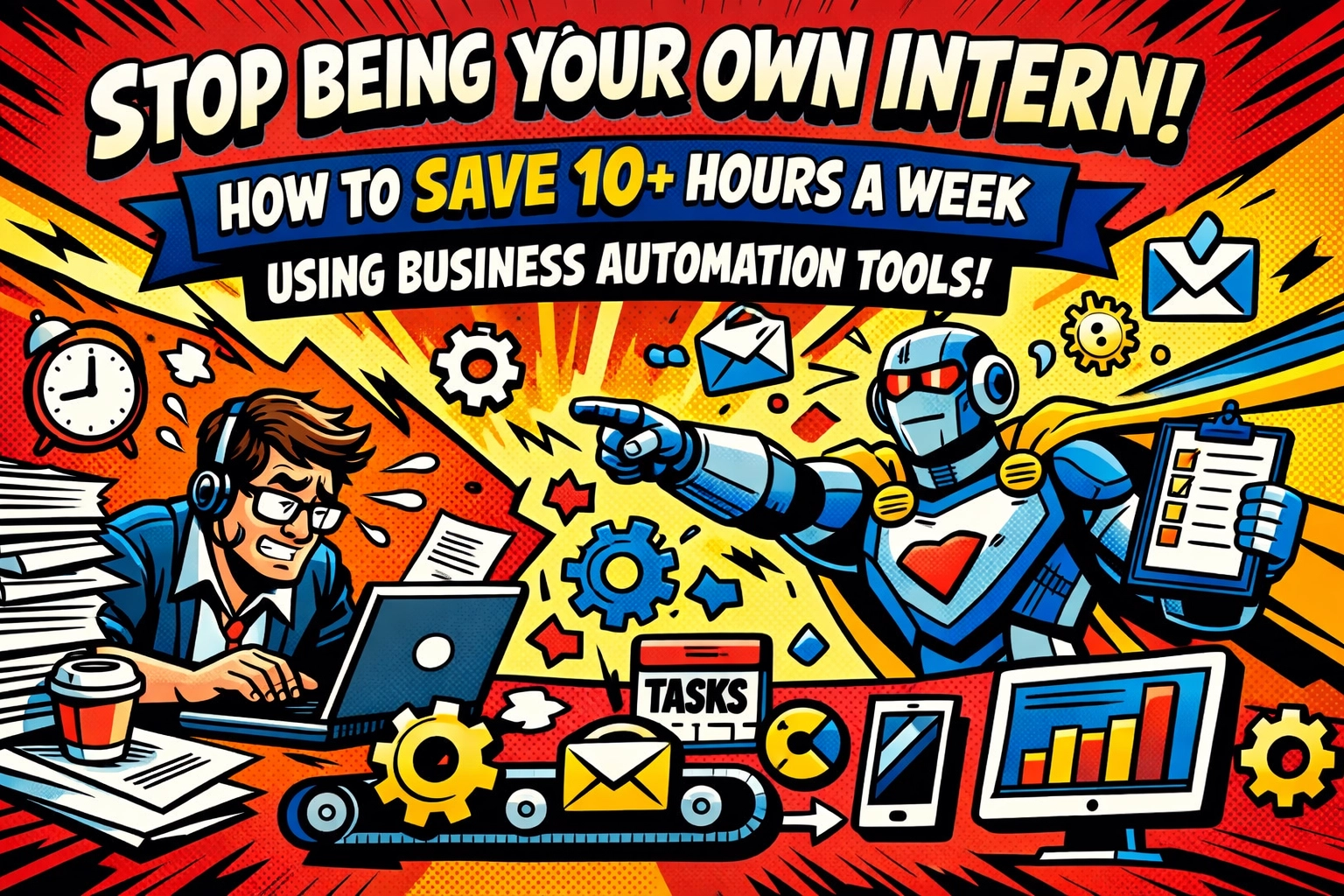
    Stop Being Your Own Intern: How to Save 10+ Hours a Week Using Business Automation Tools

    You didn’t start a business to spend your Tuesday afternoons copy-pasting data from a spreadsheet into an invoice.

    You didn’t sign up for this to be a professional "email forwarder."

    And yet, here you are. It’s 3:00 PM. Your coffee is cold. You have seventeen tabs open, and three of them are just different versions of the same customer's address. You’re the CEO, the visionary, the founder… and currently, the unpaid intern of your own company.

    It’s time to fire your inner intern.

    In 2026, manual labor is a choice. A bad one. If you aren’t using business automation tools, you’re essentially choosing to throw ten hours of your life into a woodchipper every single week.

    Let’s change that.


    AUTOMATE ADMIN TASKS: HOW TO SAVE 10+ HOURS EVERY WEEK

    ☕ 7:02 AM.
    You wake up. Normally, this is when the "internal screaming" starts. You remember that you have to onboard a new contractor, track down three late payments, and somehow tell your Slack channel that the weekly report is delayed.

    But it’s quiet… organized.

    Because while you were sleeping, your business was working.

    The Death of the "Busywork"

    Administrative tasks are the silent killers of growth. They don’t feel heavy individually, but together, they’re an anchor.

    Think about it. How many times a day do you:

    • Manually move a lead from an email to a CRM?
    • Send a "just following up" note to a client?
    • Export a CSV just to import it somewhere else?

    If the answer is "more than once," you’re losing.

    Business owner relaxing while business automation tools handle manual data entry and administrative tasks.

    Meet Your New Workflow

    The key to reclaiming your time isn't working faster; it's building a system that doesn't need you. Tools like Zapier or IFTTT act as the "glue" between your apps.

    Imagine this: A lead fills out a form on your site.
    Automatically, they get a "Welcome" email.
    Automatically, a folder is created for them in Google Drive.
    Automatically, your team gets a notification in Slack with a summary of the lead’s needs.

    You did… nothing. You just watched it happen.

    Payroll and Invoicing: The 90-Second Miracle

    Remember when payroll took all afternoon? Checking hours, calculating taxes, praying you didn't miss a decimal point. Modern business automation tools like Rippling or QuickBooks Online have turned this into a 90-second task.

    By syncing your bank feeds and using automatic triggers for recurring invoices, you stop chasing money and start receiving it.

    If you’re ready to stop the manual grind and start scaling, you need to look at how the pros do it at https://marblism.link/scott-bowen.


    THE BEST AI ASSISTANT FOR SMALL BUSINESS IN 2026

    📱 11:15 AM.
    Your phone buzzes. It’s not a notification you have to deal with, it’s a confirmation of a task completed.

    "The client meeting for Friday has been moved. I’ve updated your calendar, notified the team, and sent the revised agenda to all participants."

    You smile. You didn't even have to ask.

    Not Your Grandma’s Chatbot

    Back in 2023, AI was a novelty. You’d ask it to write a poem or a generic email. In 2026, an ai assistant for small business is a full-blown department head. It’s not just talking; it’s doing.

    The "best" AI assistant isn't a single app. It’s an integrated intelligence that lives inside your workflow. It knows your brand voice, understands your pricing, and, most importantly, it knows when to shut up and just handle the task.

    Why You Need a Digital Second-in-Command

    As a small business owner, your brain is a crowded place. You’re trying to remember if you replied to Sarah, if the inventory is low, and why the Facebook ad spend is spiking.

    A modern AI assistant handles the "mental load" by:

    • Predicting bottlenecks: "Hey, you have 4 meetings on Thursday. Should I block out Friday morning for deep work?"
    • Summarizing chaos: Turning a 50-comment Slack thread into three bullet points of actionable tasks.
    • Handling First-Line Support: Answering 80% of customer FAQs so you only talk to people when it actually matters.

    The Marblism Advantage

    We’ve moved past simple automation. We’re in the era of orchestration. You need a tool that doesn't just follow "If This Then That" rules, but actually understands the context of your business.

    That’s where we come in. Scaling shouldn’t feel like a weightlifting competition. It should feel like a breeze. See how the right assistant changes the game here: https://marblism.link/scott-bowen.


    AI CONTENT GENERATOR FOR SMALL BUSINESS: YOUR SECRET MARKETING WEAPON

    🔍 2:30 PM.
    The "Content Block." We’ve all been there. You know you need to post on LinkedIn. You know you need a newsletter. You know the blog hasn't been updated since last November.

    But the cursor just blinks at you. Mocking you.

    Quality Without the Tears

    For a long time, using an ai content generator for small business meant getting robotic, boring text that sounded like a blender reading a dictionary.

    Not anymore.

    Today’s tools are sophisticated. They don't just "generate text"; they analyze your past successful posts, mimic your unique witty tone, and produce content that actually converts.

    Electrified typewriter representing an ai content generator for small business creating creative marketing copy.

    Stop Being a Content Slave

    Marketing is a hungry beast. It needs to be fed every single day. If you’re the one writing every caption and every email, you aren't running a business, you’re running a social media agency for a client that doesn't pay well (yourself).

    With a high-end generator, you can:

    • Turn one idea into ten: Write one solid blog post and have the AI turn it into 5 tweets, 2 LinkedIn posts, and a newsletter sequence.
    • Maintain Consistency: No more "ghosting" your audience because you got busy with actual work.
    • SEO Optimization: The AI knows what Google wants better than you do. Let it handle the keywords while you handle the vision.

    Your Secret Weapon

    Imagine sitting down for 30 minutes on a Monday and having your entire week’s marketing scheduled, written, and optimized. That’s 10+ hours saved right there.

    Content shouldn't be a chore. It should be a magnet.

    And if you want to see the future of how this stuff is built, and how you can leverage it without a computer science degree, you need to check out what Scott is doing over at https://marblism.link/scott-bowen.


    THE BOTTOM LINE: TIME IS THE ONLY CURRENCY THAT MATTERS

    🌙 6:00 PM.
    The sun is setting. Usually, this is when you’re just starting your "second shift", the one where you do all the admin you were too busy to do during the day.

    But today? The lights are off. The laptop is closed.

    You’re heading to dinner. Your business is fine. Better than fine, actually. The leads are being nurtured, the invoices are being sent, and the content is being published.

    Is It Worth It?

    Yes.

    Every hour you spend doing a task that a machine could do for pennies is an hour you’ve stolen from your growth, your family, or your sleep.

    Business automation tools aren't just "nice to have" anymore. They are the barrier between businesses that thrive and businesses that burn out.

    Stop being your own intern. You’re overqualified for the job anyway.

    FAQ: Common Questions About Automation

    Is this going to be hard to set up?
    No. Most tools in 2026 are "no-code." If you can use a smartphone, you can automate your business.

    Will AI make my business sound robotic?
    Only if you let it. The best tools are designed to learn your voice, not replace it.

    Is it expensive?
    Compared to the cost of 10+ hours of your time every week? It’s the cheapest hire you’ll ever make.

    Where do I start?
    Start with one process. Maybe it’s invoicing. Maybe it’s lead follow-up. Just start.

    Scaling shouldn’t be this easy. But here we are.

    Ready to reclaim your time?

    https://marblism.link/scott-bowen

  • Looking For Wholesale Coffee Roasters? Here Are 10 Things You Should Know

    Looking For Wholesale Coffee Roasters? Here Are 10 Things You Should Know

    So, you’re diving into the wonderful, slightly chaotic world of opening a café? Or perhaps you’re already running one and realizing that your current coffee supplier just isn't hitting the mark anymore? We get it. Choosing a wholesale coffee roaster is arguably the most critical decision you’ll make for your business. It’s not just about buying beans in big bags; it’s about finding a partner who cares as much about your morning rush as you do.

    At Limini Coffee, we’ve spent years roasting, tasting, and: most importantly: supporting coffee businesses just like yours. We know that the search for the perfect "coffee suppliers" can feel like looking for a needle in a haystack of caffeine. To help you navigate the noise, we’ve put together the ten essential things you need to know before you sign on the dotted line.

    1. Understanding the Roaster's DNA

    Not all roasters are created equal. Broadly speaking, you’ll find three types: commodity roasters, specialty roasters, and solution providers. Commodity roasters are all about volume and low price points. They roast dark (often to hide defects in the beans) and focus on shelf-life over soul.

    Then you have specialty roasters: that’s us! We focus on the quality of the green bean, ethical sourcing, and roasting profiles that bring out the unique characteristics of each origin. Finally, some roasters act as "solution providers," offering a mix of equipment and beans, often optimized for speed. Before you start your search, decide what your brand stands for. If you want to serve top-tier, wholesale specialty coffee, you need a roaster that lives and breathes quality.

    2. Consistency is King (and Queen)

    Imagine a regular customer comes in on Tuesday and has the best flat white of their life. They come back on Friday, and it tastes like burnt rubber. That customer is likely gone for good. Consistency is the hardest thing to achieve in coffee, but it’s the most important.

    You want a roaster that uses high-tech equipment and rigorous quality control. We’re talking about crop-to-cup tracking and precision roasting software. Ask potential suppliers how they ensure that the "Blue Mountain" blend you buy in October tastes the same as the one you bought in May. It’s about more than just the beans; it’s about the science of the roast.

    Freshly roasted specialty coffee beans in a professional cooling tray at a wholesale coffee roastery.

    3. Freshness is Not Negotiable

    This might sound obvious, but you’d be surprised how many "wholesale coffee roasters" ship coffee that’s been sitting in a warehouse for months. Coffee is a fresh agricultural product. Once roasted, it begins to degas (releasing CO2) and eventually oxidizes, losing those vibrant notes we all love.

    We believe fresh is best. Look for a roaster that roasts to order. This means your coffee is roasted specifically for you and shipped within days. This ensures that when the beans hit your grinder, they still have that beautiful crema that customers look for. If you’re curious about how we handle our beans, you can learn more about us here.

    4. Training: The Secret Ingredient

    You can buy the most expensive, ethically sourced beans in the world, but if your barista doesn't know how to dial in the grinder or steam milk properly, the final drink will be mediocre. A great wholesale partner doesn't just drop off boxes; they provide barista training.

    So, when interviewing suppliers, ask about their training programs. Do they offer an overview of training for new staff? Do they teach the basics of tamping and milk science? At Limini, we’re huge fans of education because we want your coffee to taste amazing every single time.

    5. Equipment Support and Knowledge

    Your espresso machine is the heart of your business. If it goes down, your revenue stops. Many roasters offer "free" equipment if you buy their coffee, but be careful: there’s no such thing as a free lunch. Often, these machines are lower quality, or you’ll pay a significantly higher price per kilo for the beans to cover the cost.

    We prefer a more transparent approach. Whether you’re looking at choosing espresso equipment like the reliable La Spaziale range or interested in the workings of a La Spaziale, your roaster should be an expert in the hardware. They should also be able to advise on looking after your espresso machine to prevent those dreaded Saturday morning breakdowns.


    6. Transparency in Sourcing

    In today’s market, customers care about where their coffee comes from. They want to know that the farmers were paid fairly and that the environment wasn't trashed in the process. A reputable roaster should be able to tell you exactly where their beans are from.

    We take sourcing our coffee very seriously. This transparency allows you to tell a story to your customers, which builds brand loyalty. If a roaster is vague about their "proprietary blend" origins, that’s a red flag. You want details: altitudes, processing methods, and farm names.

    Raw green specialty coffee beans in a burlap sack, representing ethical sourcing from a wholesale supplier.

    7. More Than Just Beans: The Technical Details

    A good wholesale coffee roaster understands the chemistry of the beverage. For example, did you know that milk makes up about 70-80% of your total sales? If you don't understand milk science, you’re missing a huge piece of the puzzle.

    Your supplier should be able to help you with the nitty-gritty:

    • Water Quality: Is your water filtered? (98% of coffee is water, after all).
    • Brew Ratios: Do they provide a coffee brewing calculator?
    • Temperature: Are they helping you set your machine to the right temperature (usually between 88 ºC to 95 ºC)?

    These details might seem nerdy, but they are what separate a "good" café from a "legendary" one.

    8. Reliability and Logistics

    You need a supplier who is organized. There is nothing more stressful for a café owner than realizing you’re down to your last bag of beans on a Thursday and your supplier doesn't deliver until next Tuesday.

    Check their delivery schedules. Do they have a minimum order quantity (MOQ)? How do they handle emergencies? We pride ourselves on being a reliable partner for our wholesale coffee clients because we know that your success is our success.

    9. Helping with the "Theatre"

    Coffee is an experience. It's the sound of the grinder, the smell of the roast, and the visual appeal of a perfectly poured latte art. This is what we call the theatre of coffee.

    A great roaster will help you with the aesthetics too. This includes everything from choosing the right coffee cups to understanding the difference between a latte and a cappuccino so your menu is clear and professional. They can even offer advice on building a coffee shop from the ground up.

    A barista pouring professional tulip latte art, showcasing the quality of specialty coffee for a café menu.

    10. The Relationship Fit

    At the end of the day, you’re entering into a long-term relationship. You should actually like the people you’re buying from. Are they responsive? Do they seem genuinely interested in your business goals? Or are you just another account number on a spreadsheet?

    We believe in the personal touch. We want to hear about your triumphs and your struggles. If you’re looking for a team that is warm, expert, and deeply passionate about what they do, we’d love to chat. You can check out what other people think of us on our reviews page.

    Wrapping Up

    Selecting a wholesale coffee roaster is a big step, but it doesn't have to be a scary one. Focus on quality, consistency, and support. Look for transparency and a roaster that offers more than just coffee in a bag.

    If you are ready to take your coffee business to the next level with a roaster that genuinely cares, we invite you to explore what we offer. Whether you need a high-end lever or automatic machine or just the best beans in the business, we're here to help.

    Check out our full range of services and start your journey with Limini Coffee today.

    Opening a café is a wild ride, but with the right coffee supplier by your side, it’s a whole lot more fun. Happy brewing! 🙂

    A café owner and coffee supplier discussing a wholesale partnership over fresh cups of specialty coffee.