Author: admin

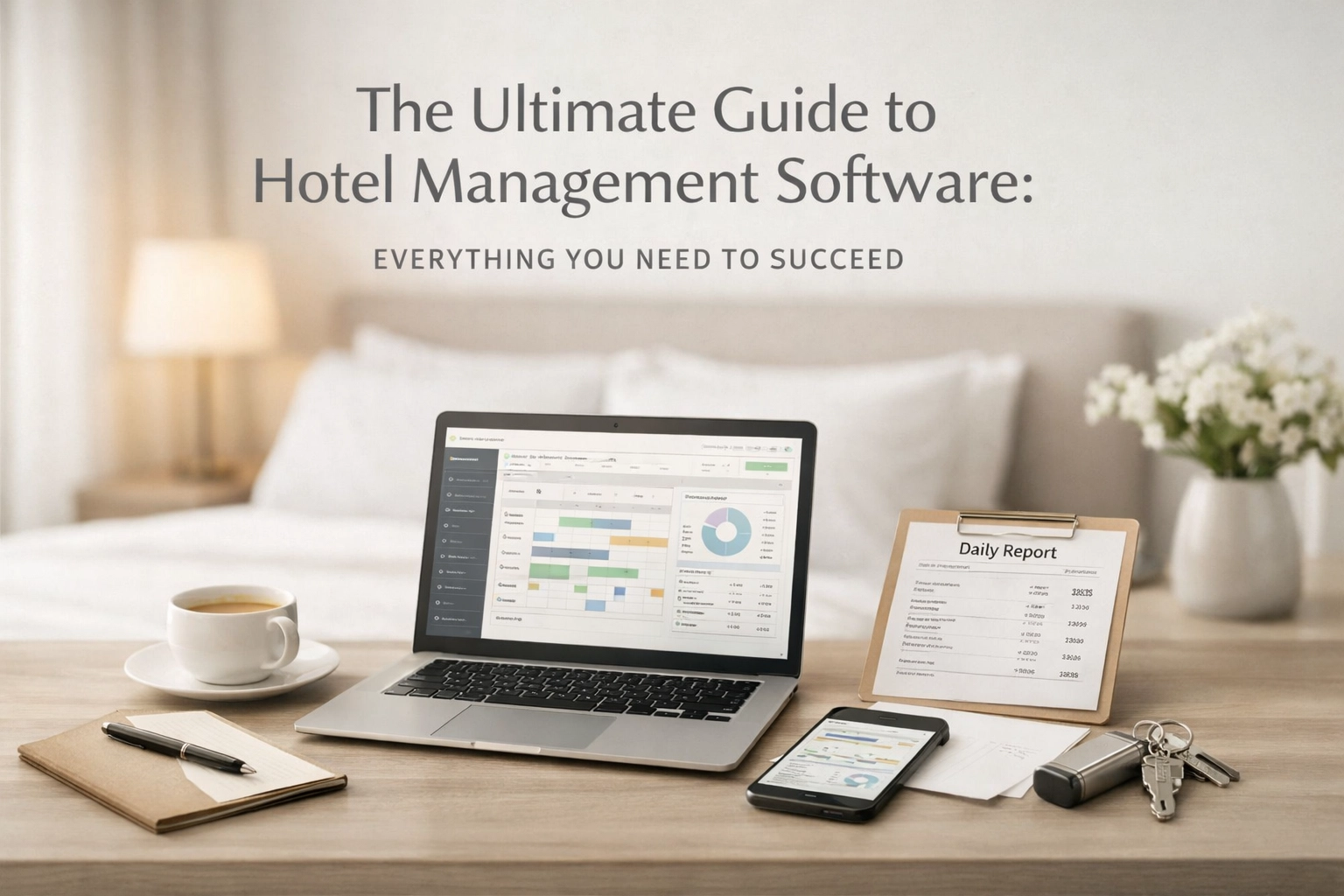
  • The Ultimate Guide to Hotel Management Software: Everything You Need to Succeed

    The Ultimate Guide to Hotel Management Software: Everything You Need to Succeed

    Transform operations. Boost revenue. Delight guests.

    In the modern hospitality landscape, your choice of technology isn't just a back-office decision: it’s the foundation of your entire guest experience. Over 5,000 properties have already realized that legacy systems are the anchors holding back their growth. The future belongs to those who automate the mundane to focus on the human, all from one innovative platform.

    The heart of your hotel.

    We believe a Property Management System (PMS) should be the brain of your operation, not just a digital ledger. It coordinates every moving part of your business, from the moment a guest searches for a room to the second they receive their automated checkout folio.

    Today’s software does more than track keys; it orchestrates a symphony of data. When your systems talk to each other, magic happens. Availability updates across every channel instantly. Housekeeping knows exactly which room to hit next. Guest preferences follow them from the bar to the spa.

    It’s about moving away from "clunky" and toward "seamless."
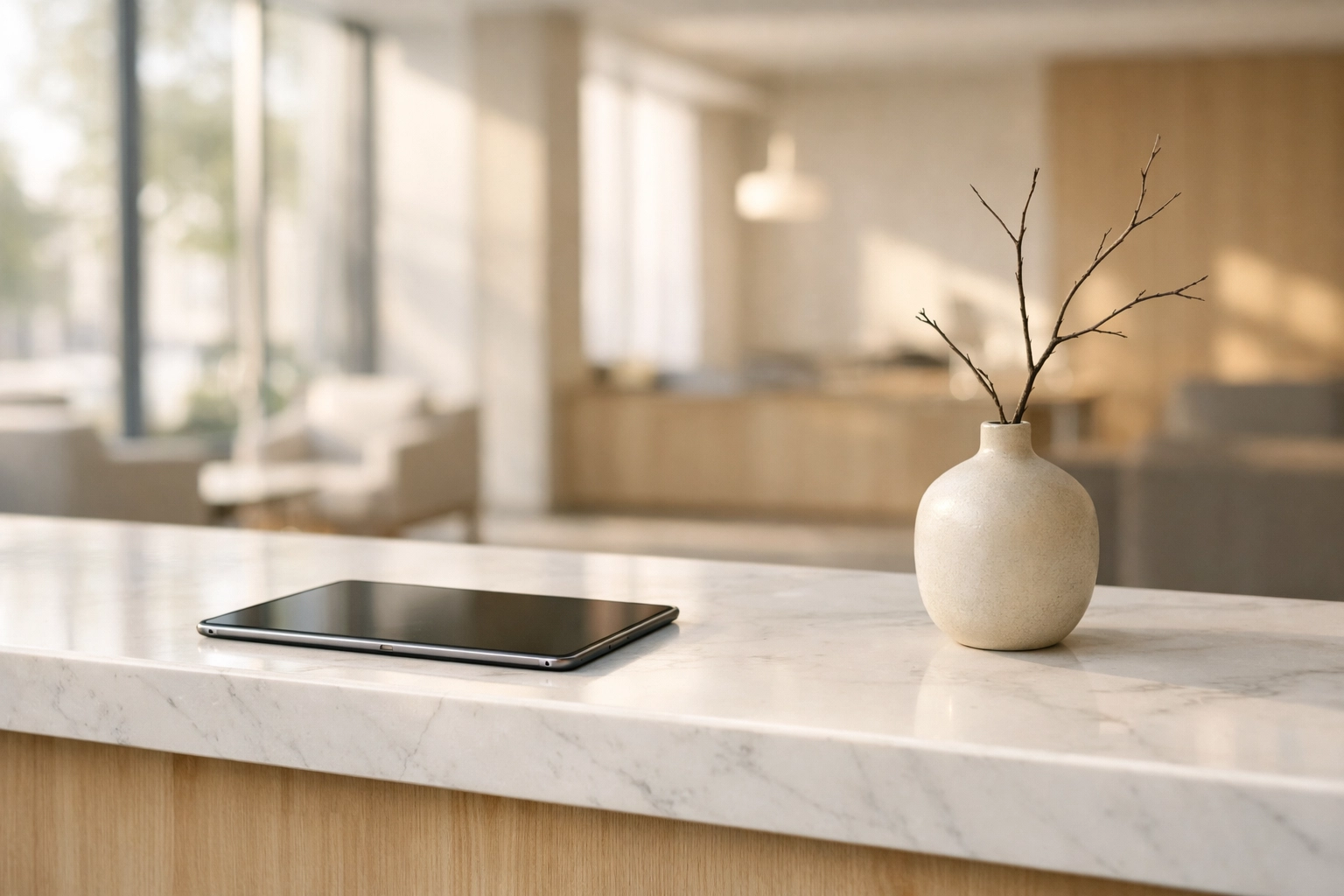
    Modern hotel reception desk with a tablet symbolizing seamless cloud property management software.

    Features that actually matter.

    Why settle for a digital version of a 1990s spreadsheet? Modern hotel management software focuses on outcomes, not just inputs. We think the best tools are the ones your staff actually enjoy using: the ones that get them out from behind a desk and into the lobby to greet guests.

    • Automated Check-in: Let guests skip the queue and go straight to their room.
    • Smart Space Management: Sell more than just beds; manage parking, meeting rooms, and co-working spaces.
    • Unified Payments: Process transactions securely without manual entry or "oops" moments.

    "Switching to a modern PMS gave our team back 10 hours a week in pure admin time. We finally have time to actually talk to our guests again." : Independent Boutique Hotelier

    Data-driven success.

    Numbers don't lie. Properties that embrace cloud-based automation see a significant uptick in efficiency and guest satisfaction scores.

    • 15% increase in average RevPAR through smart pricing integrations.
    • 20% reduction in front desk wait times with mobile check-in.
    • 100% real-time synchronization across all booking channels.

    By leveraging granular reporting, you can spot trends before they become problems. Whether it’s identifying your most profitable guest segment or optimizing your housekeeping schedule based on real-time occupancy, data is the fuel for operational excellence.

    Connect everything.

    The era of the "all-in-one" box that does everything poorly is over. The new standard is a core platform that plays well with others. We believe in the power of choice, which is why having an open API is non-negotiable for the modern hotelier.

    Imagine a world where your PMS, your POS, and your CRM are in a constant, productive three-way conversation. With over 800+ integrations available, you can build a tech stack that is as unique as your property.

    • Channel Management: Sync your rates and availability with OTAs effortlessly.
    • POS Integration: Ensure the double espresso at the bar ends up on the right room bill.
    • Guest Messaging: Connect via WhatsApp or SMS for instant, personal service.

    Smartphone and coffee in a hotel lounge representing integrated guest messaging and mobile POS.

    Scaling without the stress.

    Whether you’re running a cozy 10-room B&B or a sprawling multi-property group, your software should grow with you. Scalability isn't just a buzzword; it’s the difference between a smooth expansion and a technical nightmare.

    Multi-property management allows you to oversee your entire portfolio from a single login. Compare performance across locations, share guest profiles to ensure consistent service, and centralize your accounting. It’s about having a bird’s-eye view while maintaining boots-on-the-ground control.

    AI and the guest of 2026.

    Travelers are changing. They expect speed, personalization, and a touch of tech-forward flair. AI is no longer a sci-fi concept in hospitality: it’s a practical tool for daily excellence.

    From chatbots that handle 80% of routine guest inquiries to predictive analytics that forecast your occupancy three months out, AI is the silent partner every hotel needs. It’s not about replacing humans; it’s about giving humans the data they need to be more hospitable.
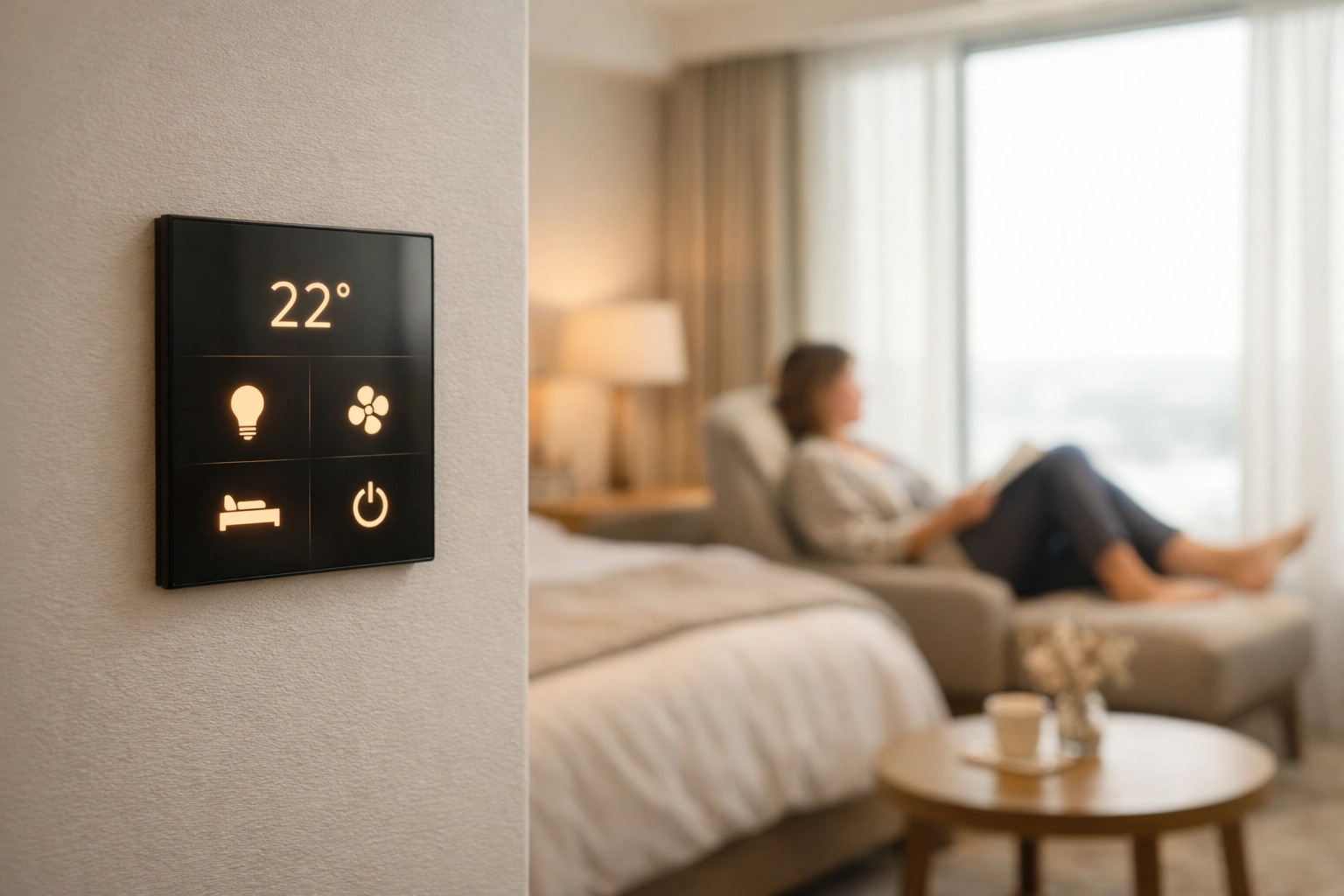
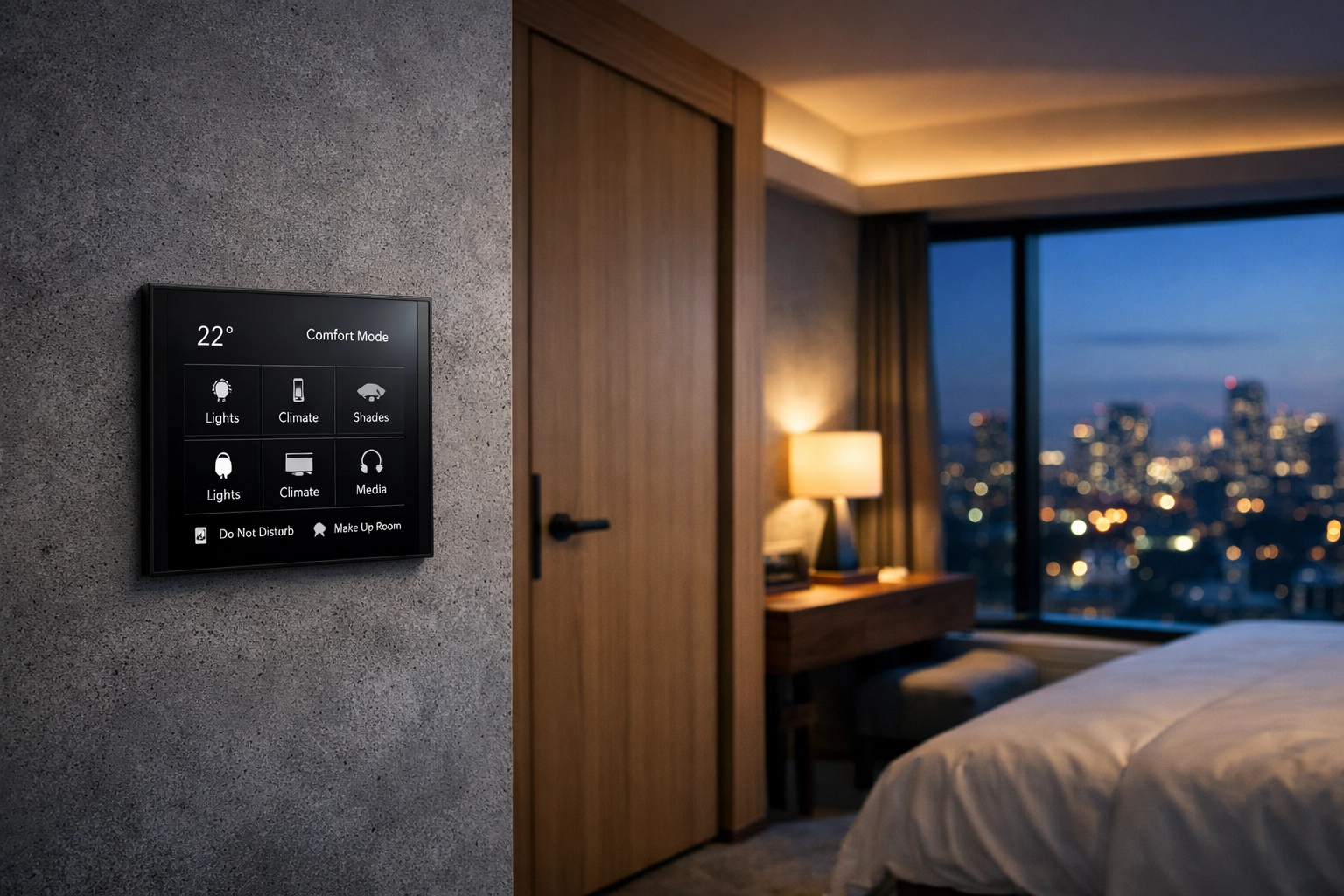
    Modern hotel suite with a digital control panel highlighting AI-powered guest experience technology.

    Choosing your path.

    Selecting the right software is a big move. While legacy giants like Oracle Hospitality OPERA offer deep complexity for massive chains, and tools like Little Hotelier cater to the smallest inns, Mews sits at the sweet spot of innovation and usability.

    With subscriptions starting at competitive rates like £155/month, high-tier technology is no longer reserved for the industry giants. You deserve a system that is:

    1. Cloud-native: Access your hotel from your phone, your laptop, or a beach in Bali.
    2. User-friendly: Train new staff in minutes, not weeks.
    3. Secure: Protect guest data with the highest levels of PCI and GDPR compliance.

    Get started today.

    The transition to a better way of working is easier than you think. Don't let old tech dictate your hotel’s potential. It’s time to empower your team, impress your guests, and take control of your revenue.

    Explore how the right platform can transform your property. Check out Mews and see the difference for yourself.

    It’s time to build the future of hospitality, one guest at a time. This is how you succeed in 2026 and beyond.

    Sleek boutique hotel exterior at dusk representing the future of hospitality management success.

  • Top 10 Hospitality Trends 2026 to Keep Your Hotel Ahead of the Curve

    Top 10 Hospitality Trends 2026 to Keep Your Hotel Ahead of the Curve

    Transform your operations. Delight your guests. Scale your brand.

    The hospitality landscape in 2026 isn't just evolving; it’s being rewritten. We’ve moved past the "digital transformation" buzzwords of the early 2020s and landed firmly in an era where technology is the silent partner in every guest interaction. Today, being "ahead of the curve" doesn’t mean having a pretty website: it means running a hyper-automated, data-obsessed, and deeply human operation.

    At Mews, we see over 12,500 properties worldwide pushing the boundaries of what a hotel can be. The winners in 2026 are those who trade manual checklists for AI agents and generic rooms for attribute-based experiences.

    Ready to see where the industry is headed? Let's dive in.

    1. The Rise of the Autonomous AI Agent

    The chatbot is dead. Long live the AI Agent. In 2026, we’ve moved beyond basic FAQ bots that get confused by a simple "Can I have more towels?" Modern AI agents are autonomous. They don't just talk; they do.

    We believe the best technology is the kind you don't have to manage. These agents handle complex booking modifications, trigger upsell opportunities based on real-time sentiment, and even monitor energy usage across your property.

    • Reduces manual administrative load by up to 70%.
    • Handles real-time revenue management shifts without human intervention.
    • Operates 24/7 across every digital touchpoint.

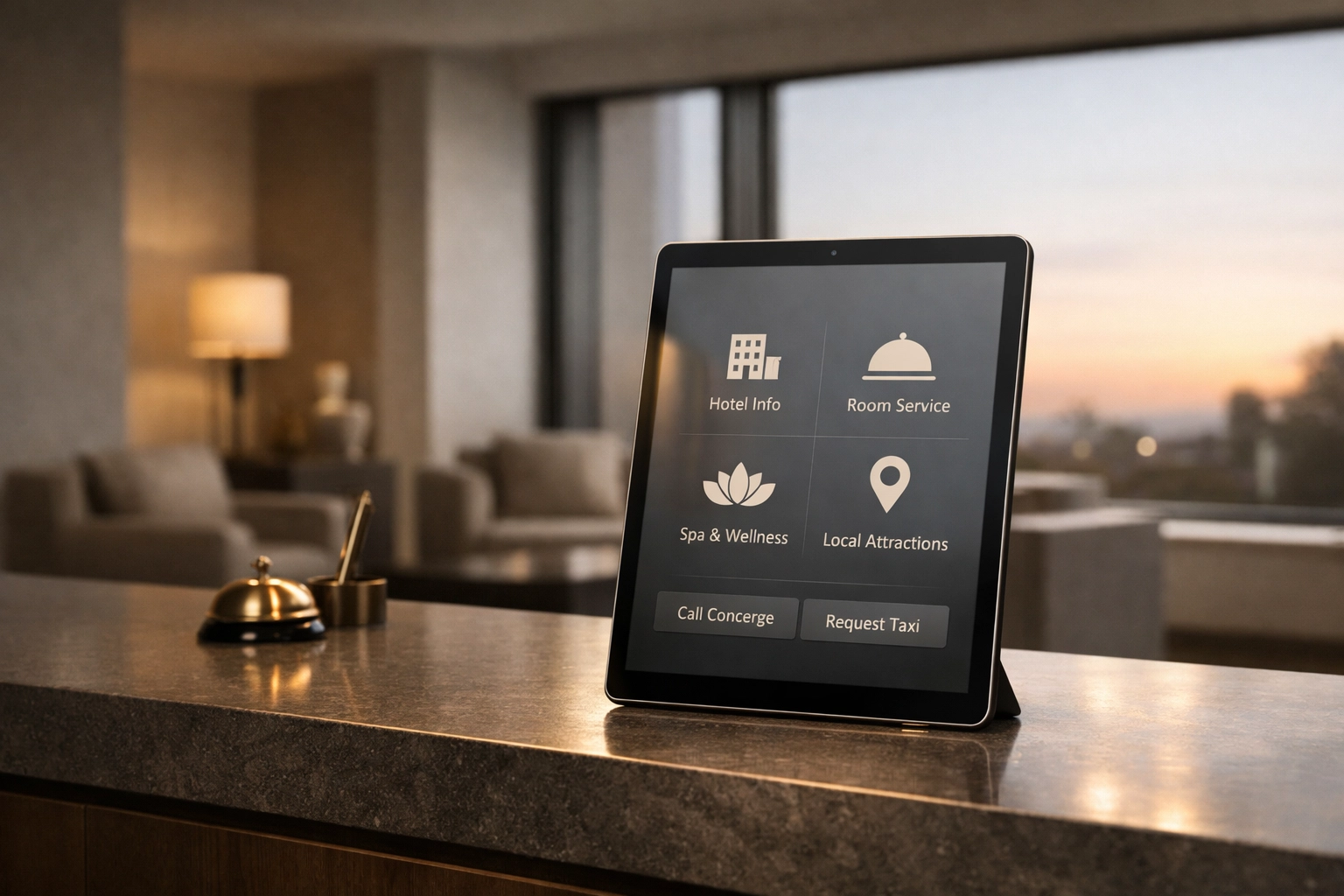
    Tablet on a hotel concierge desk demonstrating AI automation for guest services in a modern lobby.

    2. Hyper-Personalization as a Standard

    Generic "Welcome back" emails are the new junk mail. Hyper-personalization is the industry's defining trend this year. It’s about moving beyond broad market insights to deep, granular segmentation.

    You need to know not just who your guests are, but how they book and what makes them click "confirm." Are they booking because of your spa’s organic tea selection or your lightning-fast Wi-Fi?

    • Predictive dining recommendations based on past stay data.
    • Wellness promotions tailored to specific guest recovery goals.
    • Tailored pre-arrival offers that actually convert.

    3. Attribute-Based Selling (ABS)

    The traditional "Standard Room vs. Deluxe Room" model is crumbling. Guests in 2026 want to pay for exactly what they value. Attribute-based selling allows you to unbundle your inventory.

    Instead of selling a category, you’re selling features: a high floor, a balcony, a sunrise view, or an espresso machine. This approach increases perceived value and allows you to capture ancillary revenue that was previously hidden.

    • Higher guest satisfaction through "build-your-own" stay models.
    • Increased RevPAR by monetizing specific room features.
    • Clearer differentiation from competitors.

    4. Agentic Commerce: Booking via LLMs

    Search engines are becoming answer engines. More travelers are using Large Language Models (LLMs) like ChatGPT or Gemini to plan and book their entire trips. This is "Agentic Commerce."

    If your hotel's data isn't exposed to these AI systems, you don't exist in the search results of the future. The shift is from SEO to AIO (AI Optimization). Brands that integrate seamlessly with these agents will capture bookings directly through voice and chat interfaces.

    Traveler using a smartphone to book a stay through an AI travel agent in a luxury hotel suite.

    5. The Premiumization of Travel

    Luxury isn't about gold leaf anymore; it's about time, access, and exclusivity. In 2026, the premium sector is the primary growth engine of the hospitality industry.

    Luxury travelers now expect a holistic experience that combines high-tech convenience with "high-touch" service. Ultra-high-net-worth guests are seeking discreet, private accommodations and access to cultural moments that money can’t usually buy: think private concerts or after-hours museum tours.

    • Focus on wellness-centric room design.
    • Exclusive partnerships with local artisans.
    • Priority access to "niche" cultural events.

    6. Renewable Energy and Smart Monitoring

    Sustainability is no longer a PR play; it’s an operational necessity. With rising energy costs and stricter regulations, hotels are turning into mini-power plants.

    We’re seeing a massive uptick in properties implementing solar panels, wind turbines, and geothermal systems. But it's not just about generation: it's about conservation. Smart monitoring systems now detect a leak or an inefficient HVAC unit before your maintenance team even checks their email.

    • Significant reduction in long-term operational costs.
    • Appeal to the 80% of travelers who prefer eco-certified stays.
    • Real-time data visualization of carbon footprints.

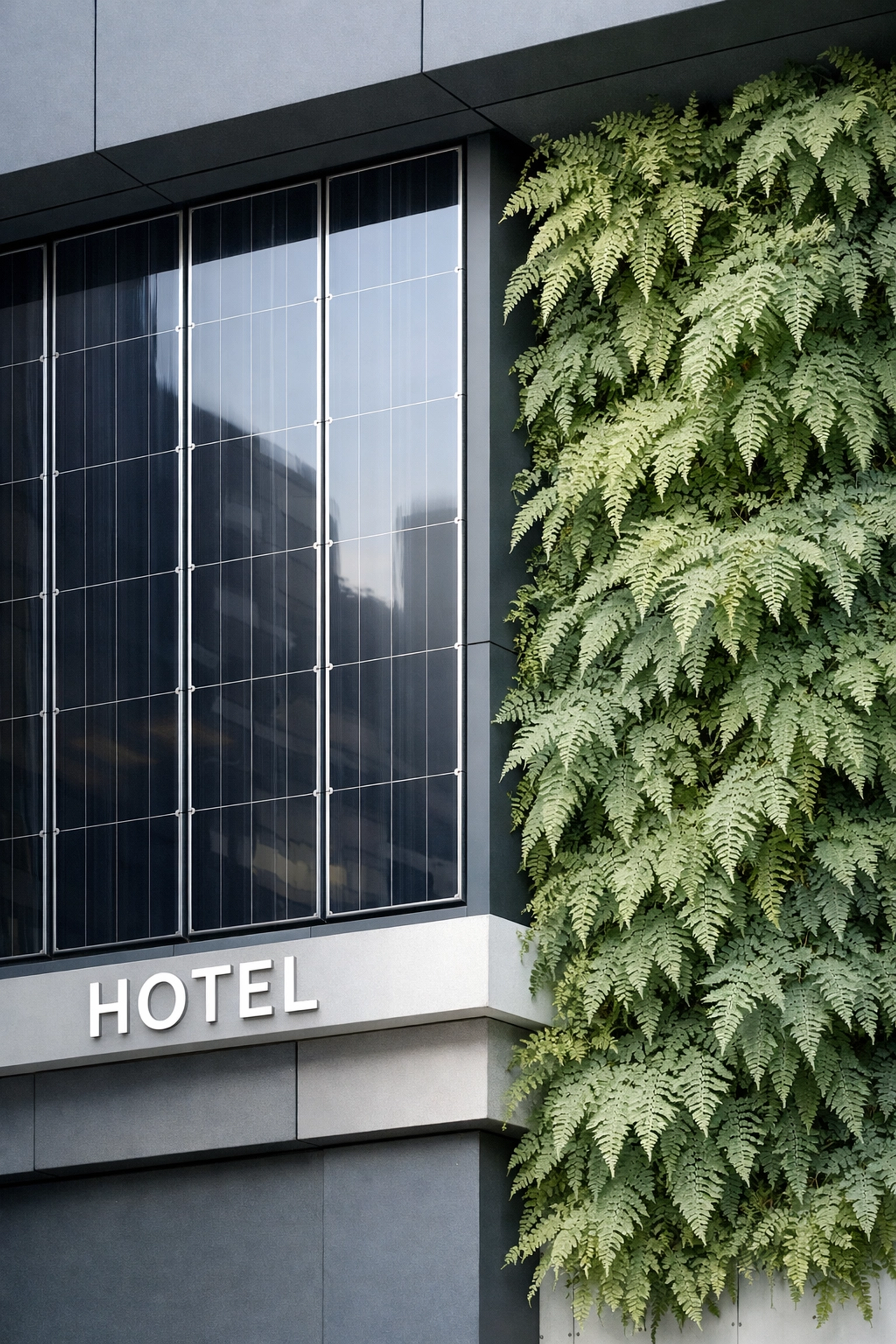
    Modern hotel exterior with integrated solar panels and a vertical garden for sustainable energy management.

    7. The Era of the "Whycation"

    Intentionality is the theme of 2026. Travel has shifted toward the "Whycation": trips rooted in a specific purpose or cultural niche. Whether it's a "sleep retreat," a "creative sabbatical," or a "heritage tour," guests are aligning their trips with their personal values and hobbies.

    Hotels must design experiences that go beyond the four walls of the room. If you aren't facilitating a meaningful memory, you're just a bed.

    • Partner with local experts to lead niche workshops.
    • Curate "purpose-driven" stay packages.
    • Focus marketing on the feeling of the stay, not just the amenities.

    8. Community-Centric Hospitality

    The hotel of 2026 is a neighborhood hub. The lines between "tourist" and "local" are blurring. Leading hotels are partnering with local farmers, artisans, and small businesses to create an ecosystem that benefits everyone.

    This isn't just about sourcing local honey for breakfast. It’s about hosting community events, featuring local art in the lobby (available for purchase), and directing guests to under-the-radar local gems.

    • Stronger brand loyalty through authentic storytelling.
    • New revenue streams from local foot traffic (cafes, co-working).
    • Deeply integrated social responsibility.

    Handcrafted local ceramics displayed in a lobby to showcase community-centric hospitality and local art.

    9. Smart Water and Waste Management

    While energy gets the headlines, water is the quiet crisis. Smart hotels are leading the charge with greywater recycling and sensor-activated everything.

    In housekeeping, the trend is "chemical-free." Biodegradable products and high-efficiency laundry systems that use 50% less water are becoming the standard. Guests are no longer just "invited" to reuse towels; they are actively participating in the property's conservation goals through gamified apps and rewards.

    10. Operational Excellence via Integrated Tech

    Finally, none of these trends matter if your tech stack is a mess of disconnected legacy systems. Operational excellence in 2026 is about a unified platform.

    The most successful hotels have moved away from "all-in-one" systems that do everything poorly, toward "best-of-breed" ecosystems connected by a powerful PMS core. You need a system that talks to your AI agents, your smart thermostats, and your guest’s smartphone without skipping a beat.

    • Eliminate data silos for a single guest view.
    • Automate 90% of routine check-in/out tasks.
    • Scale your brand with a few clicks, not a few months.

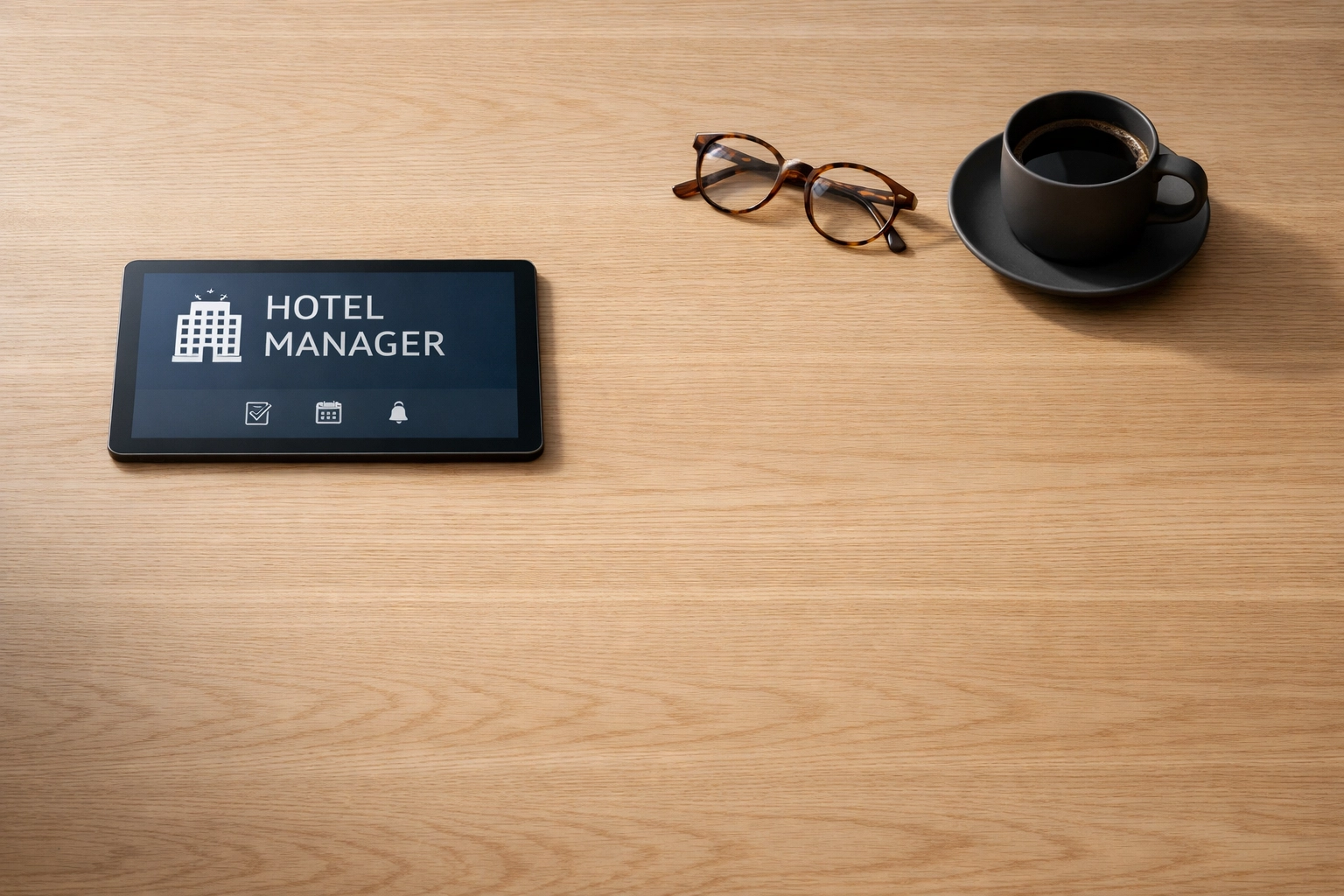
    Minimalist hotel manager's workspace featuring a tablet with integrated hospitality management software.

    See what Mews can do

    The future of hospitality is already happening. It's faster, smarter, and more personal than ever before. To keep your hotel ahead of the curve, you need a partner that lives at the intersection of innovation and guest experience.

    We believe that by automating the mundane, we can humanize the hospitality experience. Let us help you get back to what matters: taking care of your guests.

    Ready to transform your property?
    Get started with Mews today.

    It only takes a 30-minute demo to see how our platform can save your team 10 hours a week and get you earning more revenue in no time. All from one innovative platform.

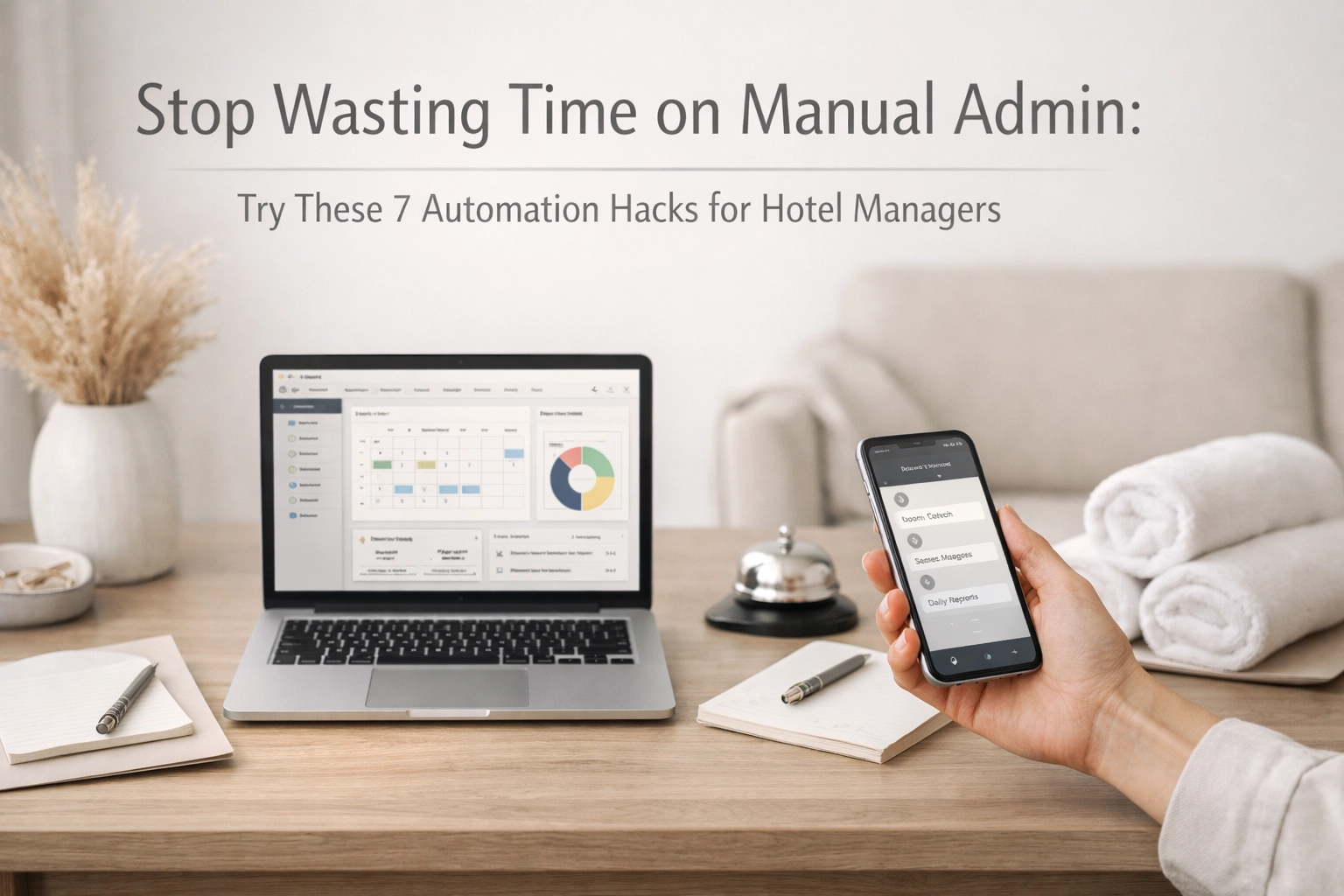
  • Stop Wasting Time on Manual Admin: Try These 7 Automation Hacks for Hotel Managers

    Stop Wasting Time on Manual Admin: Try These 7 Automation Hacks for Hotel Managers

    Free your staff. Delight your guests. Scale your brand.

    Hospitality was never meant to be about staring at a screen for eight hours a day. We believe that great service happens when people are present, not when they’re buried under a mountain of manual paperwork. Yet, the reality for many hotel managers involves a constant battle with spreadsheets, manual room assignments, and the dreaded "night audit" that takes half the night.

    It doesn’t have to be this way. Modern hotel management software has moved past simple record-keeping into the realm of true operational intelligence. By leveraging a cloud-native hotel PMS, properties are seeing a 30% increase in staff efficiency and a significant boost in guest satisfaction scores.

    We think the future of hospitality is invisible. It’s a world where the technology handles the "boring stuff" so your team can focus on the human stuff.

    Here are seven automation hacks that will transform your daily operations: all from one innovative platform.

    1. Stop the Manual OTA Dance with a Unified Channel Manager

    If your team is still logging into five different extranets to update room availability, you’re losing time (and money) to human error. Double bookings are the ultimate guest experience killer, and they almost always stem from manual lag.

    We believe your inventory should be a single source of truth.

    • Sync availability across 100+ OTAs instantly.
    • Update rates in real-time from your central dashboard.
    • Eliminate the "overbooking anxiety" that plagues your front desk team.

    A robust channel manager doesn't just push data; it ensures that whether a guest finds you on Booking.com, Expedia, or your own website, they see the exact same thing. This keeps your brand consistent and your staff sane.

    Minimalist hotel reception desk with a laptop showing efficient channel manager automation.

    2. Revolutionize the Arrival with Self-Check-In Kiosks

    Let’s be honest: nobody likes standing in a queue after a long flight. The traditional "front desk hurdle" is a legacy of the past. By introducing self-check-in kiosks and mobile check-in options, you give guests the freedom to choose their own arrival experience.

    We think the lobby should be a place for a welcome drink, not a paperwork marathon.

    • Let guests check in on their own devices before they even arrive.
    • Reduce front desk wait times to zero during peak hours.
    • Automatically issue digital keys or prompt for physical key pickup.

    When you automate the check-in process, your front office team stops being "transaction processors" and starts being true hosts. They can spend those first few minutes recommending a local bistro instead of asking for a passport scan for the thousandth time.

    3. Master the Art of Automated Guest Communication

    Sending manual confirmation emails is a waste of your team's talent. Automated guest communication sequences ensure that every guest feels cared for from the moment they book until long after they’ve checked out.

    "We used to spend hours every week just following up on arrivals. Now, the system handles it, and our guests actually arrive better prepared." : General Manager, Boutique Hotel Group.

    • Schedule pre-arrival emails with upsell opportunities (like late check-outs).
    • Trigger automated "how is your stay?" messages two hours after check-in.
    • Send personalized post-stay surveys to boost your CRM data.

    By using your CRM to segment these messages, you ensure the content is always relevant. A business traveler doesn't need to know about the kids' club, but they might appreciate a link to book a workspace.

    Guest in a hotel suite using a smartphone for seamless communication with a hotel CRM.

    4. Deploy Dynamic Pricing Rules with AI

    Manual rate loading is a relic of the 90s. If you’re waiting until Monday morning to adjust your weekend rates based on demand, you’ve already missed the window.

    We believe your booking engine should work as hard as your revenue manager.

    • Set rules to automatically increase rates as occupancy hits certain thresholds.
    • React instantly to market demand shifts without human intervention.
    • Maximize RevPAR by ensuring you never under-price a high-demand night.

    Integrating AI-powered revenue management tools directly into your hotel PMS means your pricing is always optimized. It’s like having a 24/7 revenue expert who never sleeps and never gets tired of analyzing spreadsheets.

    5. Automate Housekeeping with Smart Scheduling

    Communication between the front desk and housekeeping is often the biggest bottleneck in a hotel. Radios are noisy, and paper lists are outdated the second they’re printed.

    We think housekeeping should be a well-oiled machine, not a guessing game.

    • Update room status in real-time via a mobile app for cleaning staff.
    • Automatically prioritize rooms based on guest arrival times.
    • Trigger instant notifications when a room is ready for the next guest.

    When your housekeeping team can see exactly which rooms need attention on their mobile devices, they spend less time walking hallways and more time preparing perfect guest environments. It’s an easy win for operational excellence.

    Freshly prepared hotel bed highlighting efficient operations from housekeeping management software.

    6. Streamline Payments for an Invisible Checkout

    The checkout process should be as easy as getting out of an Uber. If your guest has to wait for a printed folio and manually swipe a card, the last memory of their stay is a chore.

    • Process deposits and final payments automatically via a secure payment gateway.
    • Send digital folios to the guest’s email the moment they check out.
    • Eliminate manual billing errors and the need for stressful reconciliation.

    A unified payment system doesn't just save time; it increases security. By automating the transaction within your hotel PMS, you reduce the risk of fraud and ensure that every penny is accounted for without the manual tallying at the end of the shift.

    7. Connect Your Entire Tech Stack via API

    The most powerful automation hack isn't a single feature: it's the ability to connect all your tools. A cloud-native platform with an open API allows your PMS to "talk" to your guest messaging apps, your smart locks, and your accounting software.

    We believe in a connected hospitality ecosystem.

    • Connect your booking engine directly to your CRM for seamless guest profiles.
    • Integrate smart room controls that adjust the temperature when a guest checks in.
    • Sync your financial data directly with your accounting software to save hours of data entry.

    When your systems work together, the data flows effortlessly. You stop being the "bridge" between disconnected tools and start being the conductor of a high-performing symphony.

    Smart hotel room control panel demonstrating seamless integration within a modern hotel PMS.

    The Mews Difference: Innovation by Design

    At Mews, we didn't just build a hotel PMS; we built a platform designed to rethink how hotels operate. We know that the administrative burden on hotel managers is real, and we’ve made it our mission to eliminate it.

    Our software is cloud-native, meaning you can manage your property from anywhere: whether you’re in the back office or on a beach. It’s intuitive, easy to use, and focused entirely on the guest journey. We don't just provide tools; we provide the freedom to be creative, to be hospitable, and to grow.

    See how 12,500+ properties are already using these hacks to stay ahead of the curve.

    Ready to see what a truly automated hotel looks like? Check out how we can help you transform your operations here: https://referrals.mews.com/umqhyito

    Simple Steps to Start Today:

    1. Audit your day: Identify the three manual tasks that annoy your team the most.
    2. Get a demo: See how a modern hotel PMS handles those specific tasks.
    3. Go live: Our 30-minute implementation calls make the transition feel effortless.

    Stop fighting with your software and start letting it work for you. The future of your hotel is waiting; and it involves a lot less admin.

  • A Day in the Life of a Modern Hotelier: Life Beyond the Desk

    A Day in the Life of a Modern Hotelier: Life Beyond the Desk

    7:42 AM – The Lobby Café

    Jordan's not at a desk. She's at table six in the hotel's ground-floor café, laptop closed, phone in hand, double espresso cooling beside her. A couple approaches the front desk across the lobby. She watches.

    The notification hits her screen before the guest even speaks. Room 304 – early check-in request, 11 AM arrival.

    Two taps. Request approved. Room auto-assigned based on preference history. Housekeeping gets the alert.

    The guest at the desk is already smiling. The receptionist just told them their room will be ready early. Jordan takes another sip. The whole transaction took eight seconds.

    This is hotel management in 2026. No office. No being chained to a desktop. Just a smartphone, the right system, and the ability to be exactly where you need to be, which is usually anywhere but behind closed doors.

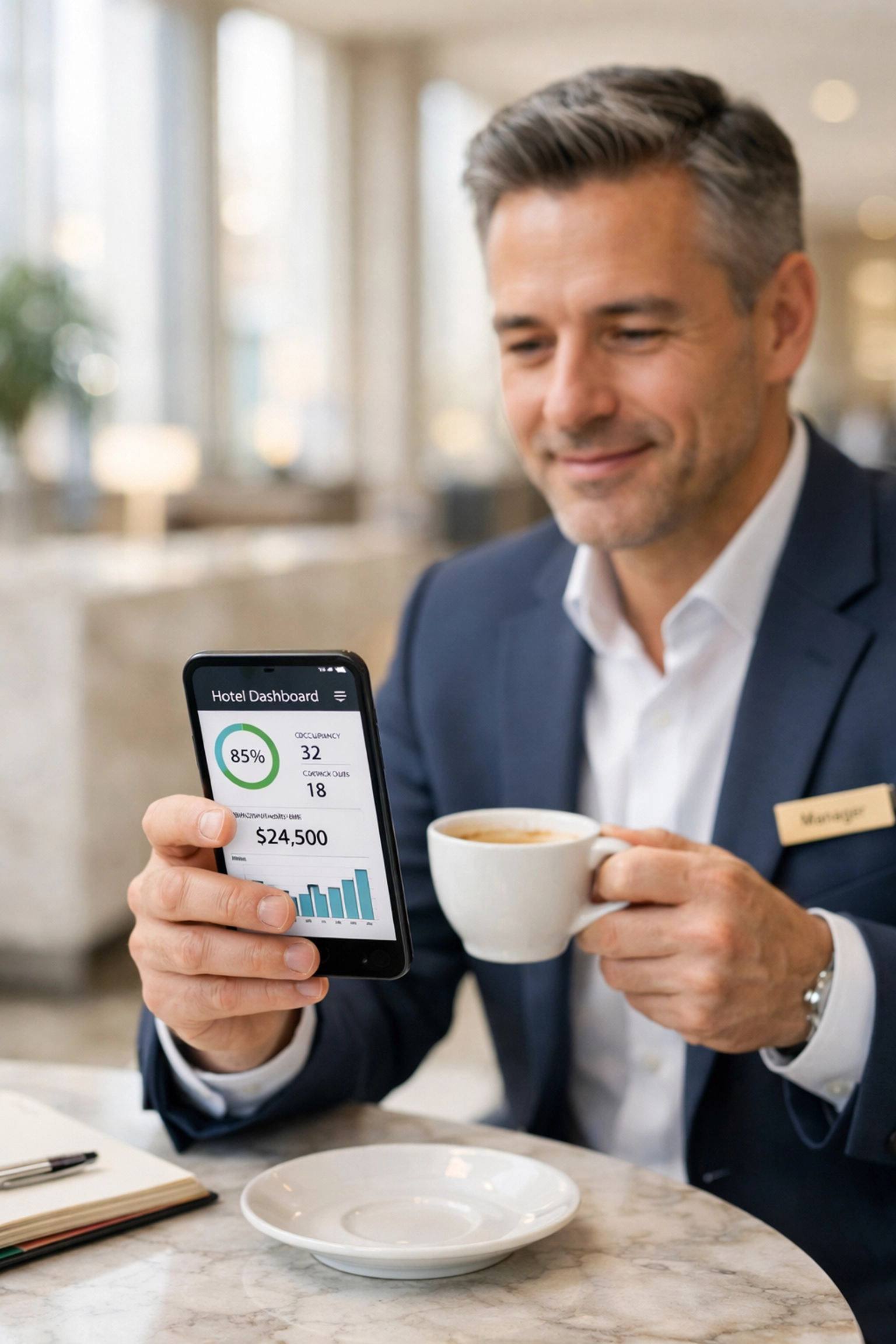
    Hotel manager using smartphone for mobile hotel management in lobby café

    8:15 AM – The Morning Walk-Through

    Jordan pockets her phone and does what she calls "the circuit", a casual walk through public spaces that looks like she's just stretching her legs. She's actually working.

    In the breakfast area, she notices the coffee station needs restocking. She could radio someone. Instead, she opens her app, taps the F&B checklist, marks "coffee station low," and assigns it to Luis with a three-minute priority flag.

    Luis gets the notification in the kitchen. He's there in ninety seconds with fresh beans and milk.

    Before mobile hotel management systems, this would've meant finding someone, telling them, hoping they remembered, maybe checking back later. Now it's instant. Accountable. Done.

    She spots a regular guest, Mr. Chen, here every month for three years. Her phone already shows his profile. Prefers quiet rooms. Always orders room service around 8 PM. Left feedback last visit about wanting more vegetarian options.

    "Mr. Chen! Good to see you again. We've added those plant-based options to the room service menu you mentioned."

    His face lights up. He had no idea his feedback was even read, let alone acted on.

    That's the thing about modern hotel management. The technology doesn't replace the human touch, it enables it. Jordan has information that makes her more present, not less.

    10:30 AM – The Rooftop Meeting That Isn't a Meeting

    She takes a video call on the rooftop terrace. Director of Sales wants to discuss next quarter's group bookings. Jordan pulls up real-time occupancy forecasts, rate comparisons, and revenue projections, all from her phone.

    "We can offer the March 15th conference at the requested rate," she says, watching the numbers shift in real time as she adjusts the quote. "But April 3rd makes more sense financially. We're showing softer demand that week."

    The entire negotiation happens in twelve minutes. No one needed to "get back to them" with information. No one printed reports or scheduled follow-up meetings.

    Before she even ends the call, she's pushed the approved booking into the system. Revenue management adjusts rates automatically for surrounding dates. Marketing gets a notification to start the pre-arrival engagement campaign.

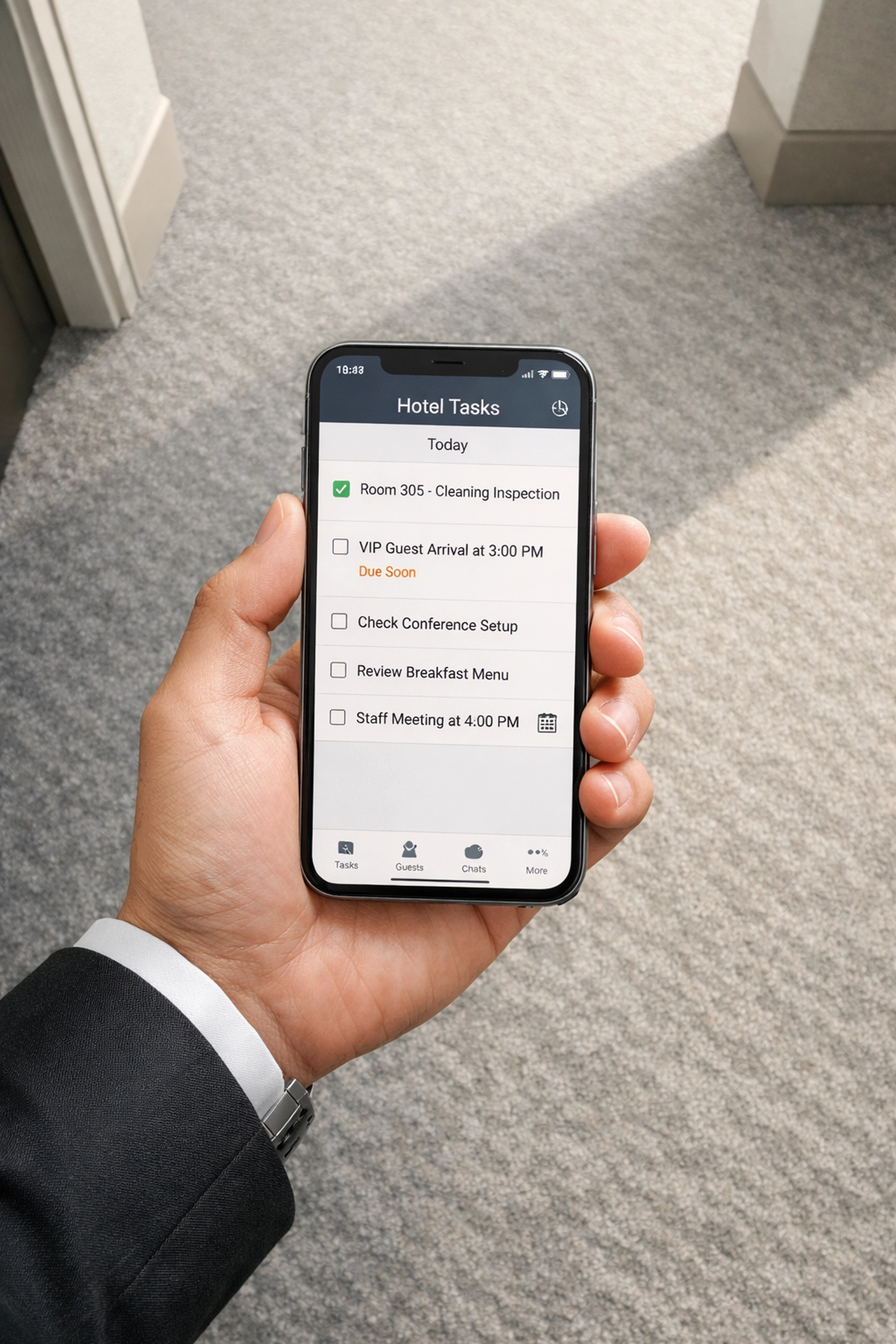
    Smartphone displaying hotel management app for real-time task coordination

    12:15 PM – Lunch Service Crisis (That Isn't Really a Crisis)

    Her phone buzzes. Maintenance alert, ice machine down in the third-floor pantry.

    In the old days, this could spiral. Guests complain to housekeeping. Housekeeping tells the desk. The desk calls maintenance. Maintenance doesn't know the full scope. Multiple guests are now annoyed.

    Jordan pulls up the maintenance workflow. The sensor already logged the failure time, temperature readings, and usage patterns. She can see three other ice stations within fifty meters of affected rooms. She reassigns those rooms to priority service from working machines and schedules the repair for 2 PM when that corridor is typically quiet.

    She drafts a quick message: "Hi! We're performing quick maintenance on your floor's ice station this afternoon. In the meantime, our team is happy to bring ice directly to your room, just call extension 0."

    The message goes to the seven rooms that might be affected. Proactive. Transparent. Fixed before it becomes a problem.

    She handles the entire situation from a barstool at lunch, fork in one hand, phone in the other. Total time invested: three minutes.

    2:45 PM – The Guest Experience Moment

    Jordan's in the lounge when she sees it, a booking just came in for tonight, special occasion flag attached. Anniversary. They booked last minute because their original hotel had a plumbing disaster.

    Old approach: hope someone notices and maybe mentions it.

    New approach: Jordan sends a message to the F&B team. "Room 512 arriving at 6 PM. Anniversary. Let's make it special."

    By 5:30, there's champagne chilling in the room and a handwritten note. Cost to hotel: minimal. Impact on guests: they'll remember this hotel for years.

    The booking came through an automated channel, but the experience is anything but automated. The technology just made sure the right person knew the right information at the right time.

    4:00 PM – The Revenue Decision

    Dashboard alert: tomorrow's occupancy is tracking below forecast. Jordan pulls up the dynamic pricing suggestions.

    The system recommends dropping the rate by 8% for tomorrow's remaining inventory, targeting last-minute bookers. Expected pickup: four additional rooms. Net revenue impact: positive.

    She could approve it with one tap. But she knows there's a regional festival this weekend she heard about from the concierge team. She checks social media, confirms it's bigger than expected, and instead makes a different call: hold rates steady, increase the minimum stay to two nights, and push weekend availability.

    The AI gave her good data. Her local knowledge made it great.

    The beauty of modern hotel management isn't that computers make all the decisions. It's that humans make better decisions because they have better information, faster.

    Want to see how modern hotel management software can give you this kind of flexibility? Check out how Mews works for properties that refuse to be desk-bound.

    Hotel manager working remotely from rooftop terrace using mobile technology

    6:20 PM – The Evening Circulation

    Jordan's back in the lobby. A family is checking in, two kids, both under ten, both clearly tired from travel.

    Her system already flagged them: late arrival, children in party, loyalty program members. She stops by the desk casually.

    "The kids' activity packs are already in your room," she tells the parents. "And we've set up the connecting room exactly how you had it last time."

    The mother looks genuinely surprised. "You remembered?"

    Jordan smiles. "The system did. But yes, we remember."

    This is the part that people misunderstand about hospitality technology. They think it makes hotels robotic. In reality, it makes them more human. Jordan can remember what matters because she doesn't have to remember everything else.

    8:00 PM – The Problem That Solved Itself

    Late alert: guest in 210 reported a noise complaint about the room above them.

    Jordan checks the system. Room 310 checked in this afternoon. First-time guests. She pulls the noise monitoring data: nothing abnormal. Probably just unfamiliar hotel sounds, thin floors, or bad luck.

    She could head up there. Knock on doors. Mediate.

    Instead, she sends a thoughtful message to 210: "So sorry about the disruption. I've made a note and we're monitoring. If it continues, we have a lovely room on the fifth floor we'd be happy to move you to: no charge, completely our pleasure."

    To 310, she sends nothing. No accusation. No confrontation. Just a system note to check in with them tomorrow if there are any other complaints.

    By 8:15, room 210 responds: "Thank you for being so responsive. It's actually settled down. We appreciate you checking in."

    Problem solved. Guest feels heard. No awkward confrontations. No escalation.

    10:30 PM – The Metrics Review

    Jordan's home now, but she still checks the day's snapshot on her phone. Occupancy hit 94%. RevPAR exceeded budget by 6%. Guest satisfaction scores posted that afternoon averaged 4.7 out of 5. Three positive reviews already posted online.

    Tomorrow's forecast looks strong. Housekeeping is properly staffed. Two VIP arrivals are flagged with preferences loaded.

    She closes the app.

    Here's what didn't happen today: Jordan never sat at a desk for more than ten minutes. She never missed something important because she was in a back office. She never told a guest "I'll have to check and get back to you." She never felt disconnected from what was actually happening in her hotel.

    The modern hotelier isn't desk-bound. They're everywhere they need to be, with everything they need to know, making decisions in real time that used to take hours or days.

    That's not the future of hotel management. That's today. And it changes everything.

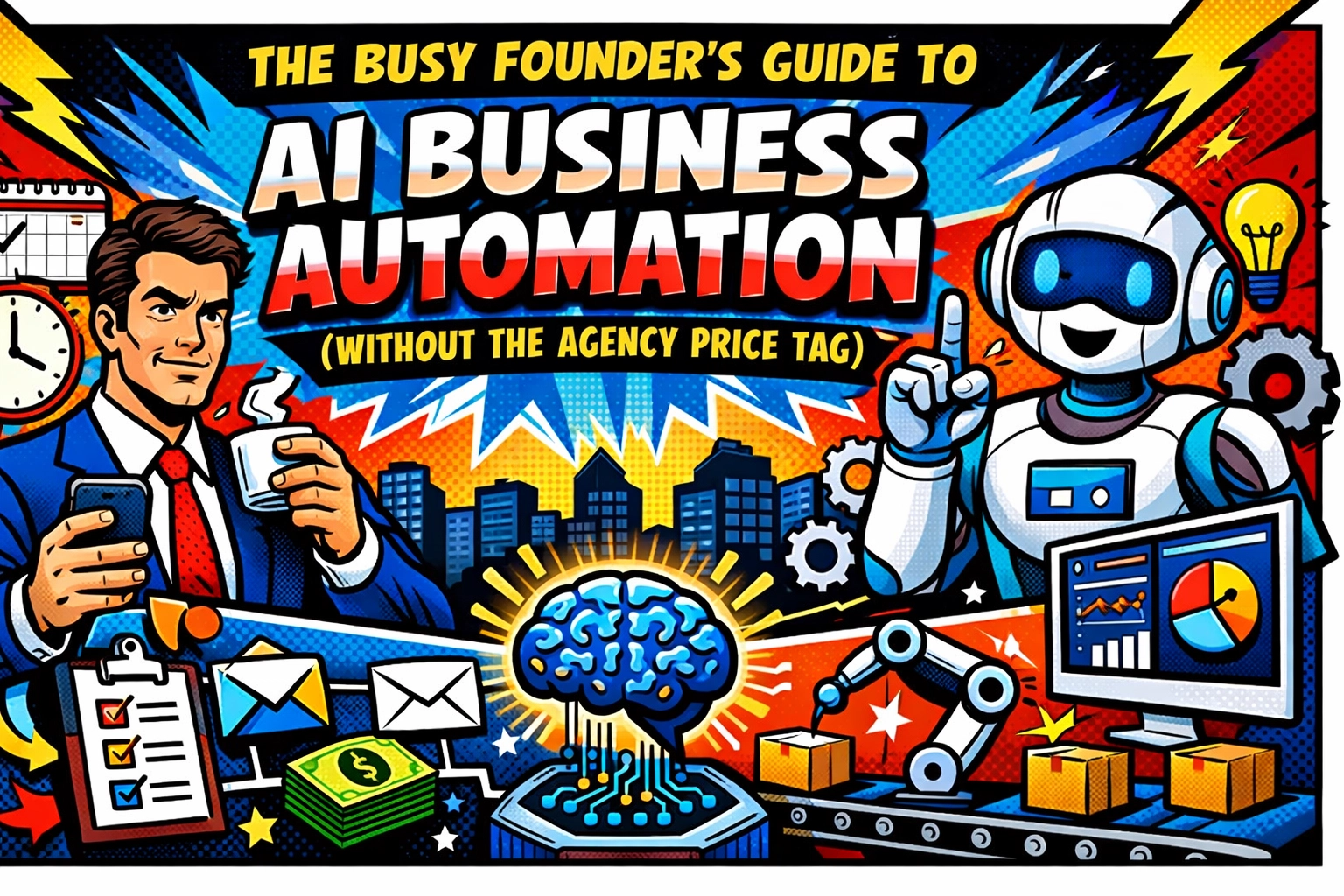
  • The Busy Founder’s Guide to AI Business Automation (Without the Agency Price Tag)

    The Busy Founder’s Guide to AI Business Automation (Without the Agency Price Tag)

    ☕ 7:00 AM. Your phone buzzes on the nightstand.

    It’s not a text from a friend. It’s a notification. Then another. And another. Three "where is my order?" emails, two LinkedIn pitches, and a calendar invite for a meeting you definitely don't have the energy for.

    You haven't even had a sip of coffee yet, and you're already behind.

    This is the "Founder’s Tax." It’s the price you pay for being the visionary, the janitor, and the customer support lead all at once. You know you need help. You’ve looked at agencies, but their "onboarding fee" costs more than your first car. You’ve looked at hiring, but the thought of managing another human makes you want to crawl back under the covers.

    There’s a middle ground. It’s quiet. It doesn't ask for a 401k. And it’s faster than any intern you’ve ever hired.

    Welcome to the world of AI business automation… done the smart way.

    THE $10,000 AGENCY MYTH

    Stop thinking you need a team of "AI Consultants" in Patagonia vests to fix your workflow.

    Most agencies are just using the same tools you can access for the price of a Netflix subscription. They wrap it in fancy jargon and call it a "proprietary solution." But here’s the secret: you don't need a bespoke algorithm. You need an ai virtual assistant for business that actually works while you sleep.

    The goal isn't to build a robot that thinks like a human. The goal is to build a system that handles the "boring" stuff so you can be more human.

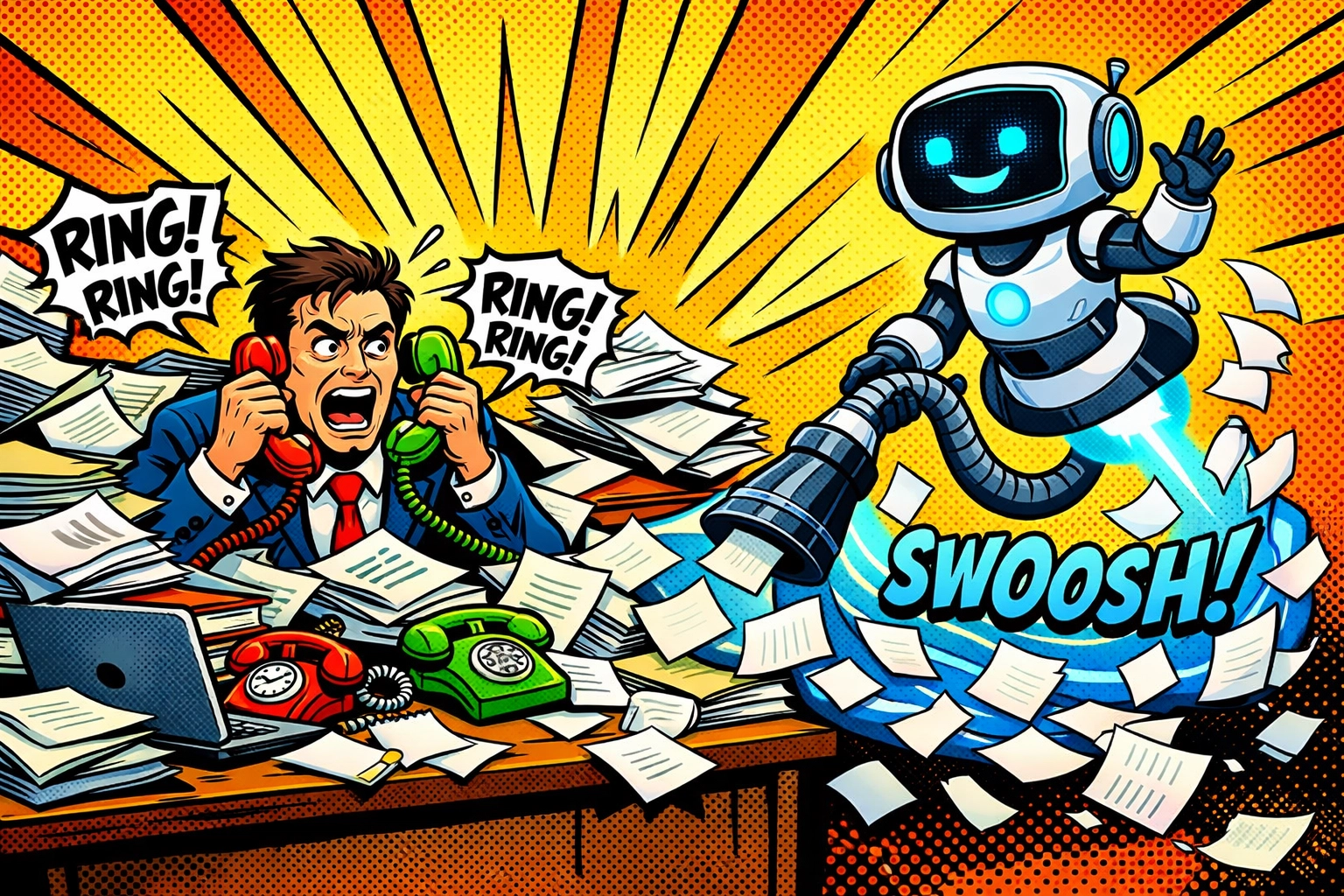
    AI virtual assistant for business cleaning a founder's desk of paperwork and phone calls.

    📱 9:00 AM: THE INBOX ISN'T A MONSTER ANYMORE

    You sit down at your desk. Usually, this is where the dread sets in.

    But today is different. Your AI virtual assistant has already been through your inbox. It tagged the junk, drafted replies to the FAQs, and flagged the one email from that high-value lead you’ve been chasing for weeks.

    Instead of spending two hours typing "Per my last email," you spend ten minutes hitting "Send" on drafts that are already 90% perfect.

    Why it matters right now:
    Admin tasks are the silent killer of growth. If you’re a founder spending three hours a day on email, you’re not a founder, you’re an overqualified secretary. By using an ai virtual assistant for business, you reclaim that time for high-leverage moves. Like closing deals. Or finally eating lunch away from your screen.

    🔍 11:30 AM: AUTOMATE CUSTOMER SUPPORT WITH AI

    Your phone pings. A customer is frustrated because they can't find their login.

    In the old days, this would derail your deep-work session. You’d stop writing that marketing copy, find their account, and reset the password.

    Now? Your AI support bot handles it.

    It doesn’t just give a canned response. It looks up their account, verifies their identity, and sends them the reset link, all in under 30 seconds. The customer is happy. You didn't even know it happened until you checked your logs later.

    When you automate customer support with ai, you aren't "losing the human touch." You're removing the human bottleneck. Because let's be honest: no customer wants to wait six hours for a "human" to tell them something a bot could have said in six seconds.

    Check out how we’re making this a reality for founders over at Marblism.

    STOP JUGGLING. START BUILDING.

    Most founders fail at automation because they try to do everything at once. They want a "God-mode" AI that runs the whole company.

    That's how you end up with a mess.

    Instead, follow the One-Hour Sprint rule:

    1. Pick one task that makes you sigh every time you do it.
    2. Set a timer for 60 minutes.
    3. Use a tool like Zapier or Marblism to automate just that one task.

    Don't aim for perfection. Aim for "Done."

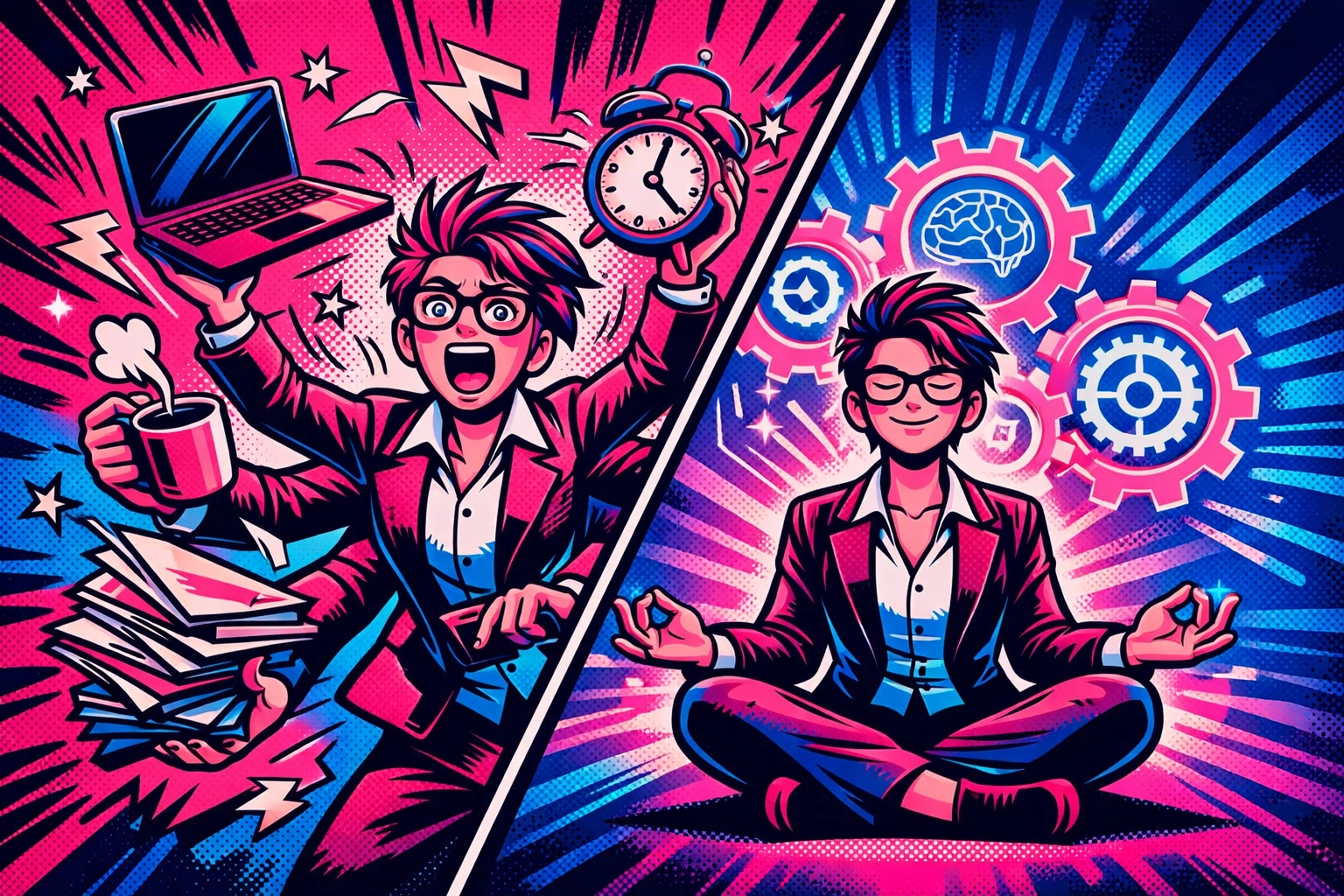
    Illustration of a business founder moving from juggling tasks to calm productivity with AI.

    🤝 2:00 PM: THE SALES ENGINE THAT NEVER SLEEPS

    It’s the afternoon slump. You’re eyeing that second espresso.

    While you’re debating between a latte and a nap, your AI is digging through your CRM. It’s identifying leads that haven't been touched in three days and sending them a personalized follow-up.

    "Hey [Name], I saw you checked out our pricing page but didn't book a call. Do you have 5 minutes tomorrow?"

    It sounds like you. It acts like you. But it doesn't get tired, and it never forgets to follow up because it had a "busy afternoon."

    EMPLOYEE OF THE MONTH. EVERY MONTH.

    Imagine a team member who:

    • Never complains about "bandwidth."
    • Works 24/7 without overtime pay.
    • Remembers every customer’s name and order history.
    • Costs less than your monthly coffee habit.

    That’s what happens when you commit to the AI-first model. You’re not just saving money; you’re buying back your sanity.

    "I used to spend my Sundays catching up on admin. Now, I actually play with my kids. The AI handles the 'where is my order' crowd, and I handle the strategy." , Mark, Solo Founder

    "We replaced our $4k/month support agency with a custom AI flow. Our response times went from 4 hours to 4 seconds. It’s a no-brainer." , Sarah, E-commerce Owner

    A professional AI assistant celebrated as employee of the month for business automation.

    🌙 8:00 PM: THE PEACE OF MIND

    The sun is down. The lights in the office are off.

    In the past, this is when you’d start your "second shift." Checking tickets, updating spreadsheets, prepping for tomorrow.

    But today? The chaos is gone before you even take your first sip of evening tea.

    The spreadsheets are updated. The tickets are closed. The schedule for tomorrow is set. You close your laptop with a smile. Not because you worked harder, but because you worked smarter.

    You’re finally acting like the CEO you set out to be.

    HOW TO START (WITHOUT BREAKING THE BANK)

    You don't need a computer science degree. You don't need a venture capital-sized budget. You just need to start small.

    • Step 1: Audit your day. What are the "Groundhog Day" tasks?
    • Step 2: Use an ai virtual assistant for business to handle your scheduling and basic research.
    • Step 3: Use Marblism to automate customer support with ai so you can stop being a help-desk technician.
    • Step 4: Iterate.

    The tools are ready. The question is: are you ready to stop being the bottleneck in your own business?

    Scaling shouldn't be this hard. But here we are, making it look easy.

    If you're ready to see what your business looks like on autopilot, jump over to https://marblism.link/scott-bowen and take a look at how we’re helping founders reclaim their lives.

    Stop being the engine. Start being the driver. 🚗

    A founder experiences peace of mind after they automate customer support with AI.

    SCALING SHOULDN'T BE THIS EASY. BUT HERE WE ARE.

    The difference between a stressed founder and a successful one isn't their work ethic. It’s their leverage.

    AI is the ultimate lever.

    You can keep doing it the hard way. You can keep paying the "Founder’s Tax." Or you can build a system that works as hard as you do, without the agency price tag.

    The choice is yours. But the robots are already waiting for their instructions.

    Ready to automate? Let’s get to work.

    https://marblism.link/scott-bowen


    FAQ: YOUR QUESTIONS, ANSWERED.

    Is AI hard to set up?
    No. If you can use a smartphone, you can set up basic automation. Most tools are "drag and drop" or "chat to build."

    Will it replace my staff?
    It replaces the tasks your staff hates doing. It lets your humans be more creative and strategic. Think of it as a promotion for everyone.

    Is it expensive?
    Compared to an agency? It’s practically free. Most founders save thousands in their first month alone.

    Does it sound like a robot?
    Only if you want it to. Modern AI can be trained on your brand voice so it sounds exactly like you (just more caffeinated).

    Where do I start?
    Start with the biggest pain point. Usually, that’s support or scheduling.

    Go see for yourself: https://marblism.link/scott-bowen

  • Single Origin 101: A Beginner’s Guide to Mastering Coffee Tasting at Home

    So, you’ve decided to move beyond the "standard" morning brew and dive into the vibrant, sometimes confusing, but always rewarding world of single origin coffee. We think that’s a brilliant move.

    If you’ve ever looked at a bag of coffee and seen words like "Heirloom varieties," "washed process," or "altitude 1,800 masl" and wondered if you needed a degree in geography to enjoy your caffeine, don't worry. You’re not alone. At its heart, single origin coffee is simply about storytelling. It’s about tasting a specific place and time in a cup.

    In this guide, we’re going to break down what single origin actually means, why it’s the darling of the specialty coffee world, and: most importantly: how you can master the art of tasting these incredible beans in your own kitchen. Whether you’re a seasoned home brewer or just starting out with your first V60, there’s always something new to discover.

    What Exactly is Single Origin?

    When we talk about single origin, we’re talking about traceability. Most supermarket coffees are "blends," which are essentially an orchestra of beans from different countries designed to create a consistent, repeatable flavor profile. There’s nothing inherently wrong with blends: we use them for espresso all the time to ensure that "chocolatey punch": but single origin is more like a solo performance.

    Single origin coffee comes from one specific geographic location. But "location" is a bit of a sliding scale. Here is how we usually categorize them:

    • Single Country: Beans sourced from various farms within one nation, like "Ethiopian Sidamo." While it gives you a general vibe of the country’s profile, it’s the broadest category.
    • Single Region: Now we’re getting specific. This might be coffee from the Huila region in Colombia. Farms here share similar altitudes and soil types, leading to a more distinct flavor.
    • Single Farm or Estate: This is where the magic happens. You’re drinking coffee from one specific plot of land owned by one producer. You can actually point to a map and say, "My coffee grew right there."
    • Microlot: The crème de la crème. This is a specific harvest from a small section of a farm, often processed separately because the quality is so exceptionally high.

    Why does this matter? Because coffee is a fruit, and like wine grapes, it’s a product of its environment: something the French call terroir. The soil, the rainfall, the shade trees, and the altitude all leave a thumbprint on the flavor. When you drink a single origin, you’re tasting that thumbprint.

    If you’re ready to start your own exploration, we highly recommend checking out the rotating selection of freshly roasted single origin beans at Limini Coffee. It’s the best way to see these differences for yourself.

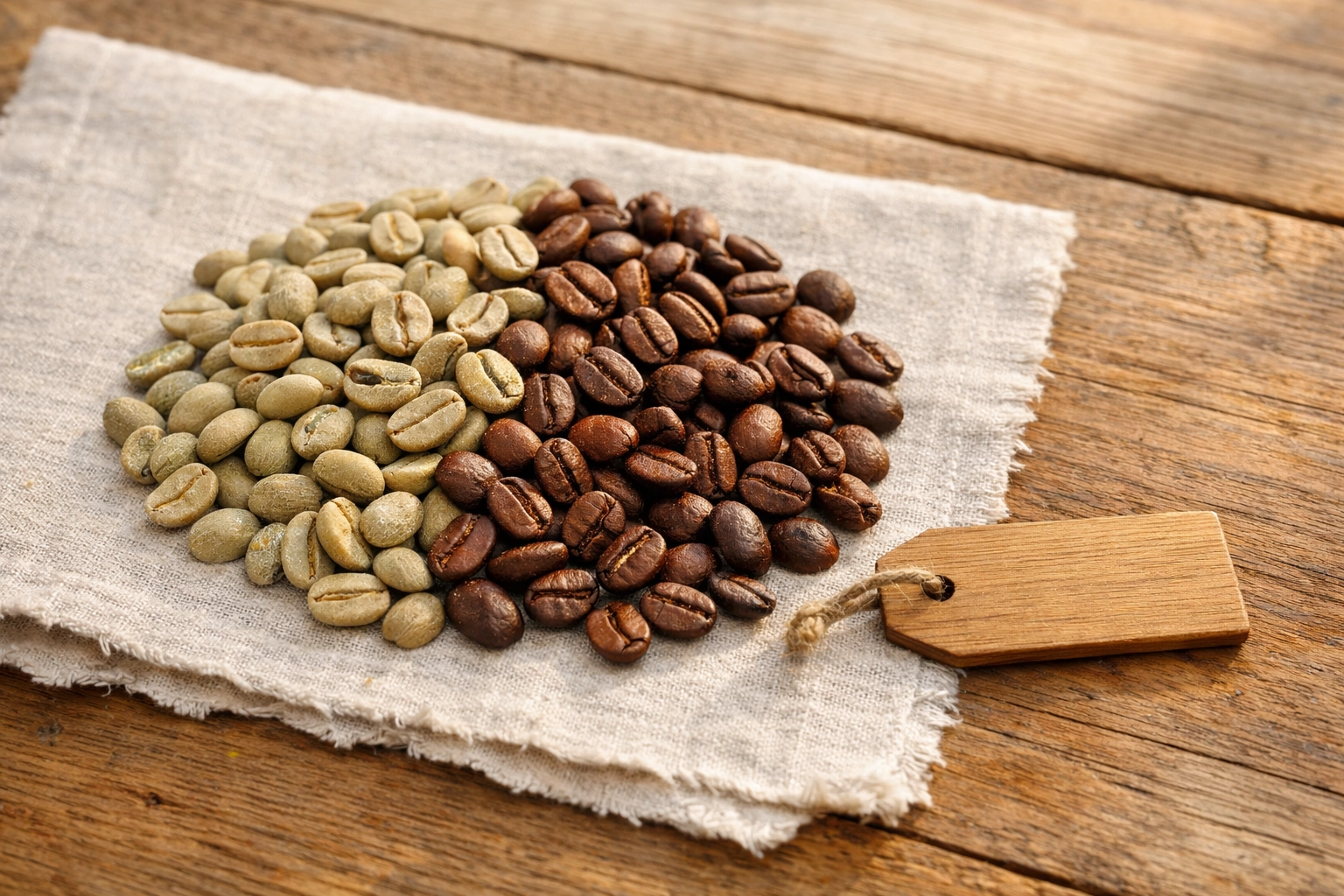
    Freshly roasted single origin coffee beans transitioning from green to deep brown on a rustic table.

    The Magic of Terroir: Why Geography Changes Flavor

    Have you ever wondered why one coffee tastes like a citrus explosion while another reminds you of a Snickers bar? It’s usually down to where it was grown. While every farm is unique, there are some "general rules" of thumb for coffee regions:

    African Coffees (Ethiopia, Kenya, Rwanda):
    Expect the unexpected. These are often tea-like, floral, and packed with bright acidity. Think notes of bergamot, jasmine, blueberry, and lemon. They are the "bright" kids in the class.

    Central & South American Coffees (Colombia, Guatemala, Brazil):
    These are the crowd-pleasers. Colombian coffees often have a beautiful balance of caramel sweetness and apple-like acidity. Brazilian beans are famous for their heavy body and nutty, chocolatey profiles.

    Asian/Pacific Coffees (Indonesia, Vietnam, Papua New Guinea):
    These tend to be earthy, spicy, and full-bodied. If you like a coffee that feels "heavy" on the tongue with notes of tobacco, cedar, or dark chocolate, this is your territory.

    Mastering the "Slurp": How to Taste Coffee at Home

    To truly master coffee tasting, you need to move beyond "it tastes like coffee." Professional tasters use a process called "cupping," but you don't need a lab to do this. You just need a few bowls, a spoon, and an open mind.

    Step 1: The Fragrance (Dry Aroma)

    Grind your beans (medium-coarse, like sea salt). Put them in a glass and give them a good sniff. What do you smell? Is it sweet like brown sugar? Spicy like cinnamon? Or maybe it smells like a meadow in spring? This is the "fragrance."

    Step 2: The Aroma (Wet)

    Add hot water (around 94°C / 201°F). Let it sit for four minutes. A "crust" of grounds will form on top. Lean in close, take a spoon, and gently push the grounds back. This releases a burst of steam. This is the "aroma." Often, the smell changes completely once the water hits the beans.

    Step 3: The Slurp

    After clearing the grounds from the surface, dip your spoon in. Now, here’s the trick: you need to slurp it loudly. We know, your parents told you not to, but in the coffee world, it’s mandatory. Slurping aerates the coffee and sprays it across your entire palate, hitting all your taste buds at once.

    Three white ceramic coffee cupping bowls and a silver spoon ready for a professional tasting at home.

    What are you looking for?

    When you’re slurping your way through a new single origin from Limini Coffee, try to categorize what you’re experiencing:

    1. Acidity: This isn't "acid" like stomach acid. In coffee, acidity is a good thing! It’s that brightness or "zing." Is it like a sharp lime (high acidity) or a mellow red apple (low acidity)?
    2. Body: This is the weight or "mouthfeel" of the coffee. Does it feel thin and refreshing like tea, or thick and creamy like whole milk?
    3. Sweetness: Even without sugar, high-quality specialty coffee is sweet. Look for notes of honey, molasses, or ripe fruit.
    4. Finish: How long does the flavor stay on your tongue after you swallow? A clean finish disappears quickly; a long finish lingers like a good wine.

    Brewing for Clarity: The Gear Matters

    If you’re spending money on a beautiful single origin, you don't want to drown its personality. This is why we generally steer people toward filter brewing (pour-over) for single origins rather than milk-based espresso drinks.

    Espresso is intense and can sometimes mask the delicate floral notes of a light-roast Ethiopian. A V60 or Chemex, however, acts like a magnifying glass for flavor. The paper filter catches the oils and sediment, leaving you with a cup that is incredibly clear and nuanced.

    A quick tip on water: Coffee is 98% water. If your tap water tastes like chlorine, your coffee will too. Use a simple water filter jug; it’s one of the easiest ways to instantly improve your home brewing. You can find more brewing tips and gear advice here.

    Water pouring into a V60 coffee dripper over fresh grounds during a manual pour-over brewing process.

    Common Pitfalls to Avoid

    We’ve all been there: you buy a fancy bag of beans, and it tastes… sour. Or bitter. Here’s how to troubleshoot:

    • It tastes sour/salty: Your coffee is "under-extracted." This means the water didn't pull enough flavor out. Try grinding finer or using hotter water.
    • It tastes bitter/ashy: Your coffee is "over-extracted." You’ve pulled out the "bad" flavors. Try a coarser grind or slightly cooler water (around 90°C).
    • It tastes flat: Your beans might be old. Single origin coffee is at its peak between 7 and 30 days after roasting. Always check the "roasted on" date!

    Why We Love Single Origin (And You Will Too)

    The beauty of coffee is that it is an endless journey. One week you might be sipping a natural-process Brazilian that tastes like a boozy fruitcake, and the next, you’re enjoying a washed Salvadoran that is as clean and crisp as a mountain spring.

    It connects you to the farmers. When you buy a single origin, you’re often supporting a specific supply chain that rewards quality over quantity. It’s a more ethical, sustainable way to enjoy your daily ritual.

    If you’re feeling inspired to start your tasting journey, why not pick up a couple of different bags and try a side-by-side tasting? It’s the fastest way to calibrate your palate. Head over to Limini Coffee’s shop to see what’s currently in season.

    A cup of black coffee surrounded by blueberries, star anise, and chocolate to illustrate flavor notes.

    Final Thoughts…

    Mastering coffee tasting isn't about being a snob; it's about appreciation. It’s about taking five minutes out of a busy day to actually taste something remarkable. Don't worry if you can't taste "notes of star anise and elderflower" right away. Start simple: Is it fruity or nutty? Do I like it?

    That’s the only metric that truly matters.

    So, grab a bag of something new, get that kettle on, and start slurping. You might just find your new favorite corner of the world, one cup at a time. If you ever find yourself stuck or wanting to take your skills to the next level, we offer Barista Training that covers everything from sensory skills to advanced brewing.

    Happy brewing!


    Quick Reference Guide for Tasting:

    Region Common Profile Best Brewing Method
    Ethiopia Floral, Citrus, Tea-like V60 / Chemex
    Colombia Nutty, Chocolate, Red Apple AeroPress / Cafetiere
    Sumatra Earthy, Spicy, Full Body French Press
    Kenya Bright, Blackcurrant, Tomato Pour-over

    Hands holding a warm ceramic mug of home-brewed single origin coffee in a cozy, sunlit living room.

  • Stop Wasting Time on Admin: 7 Workflow Automation Hacks for Small Business

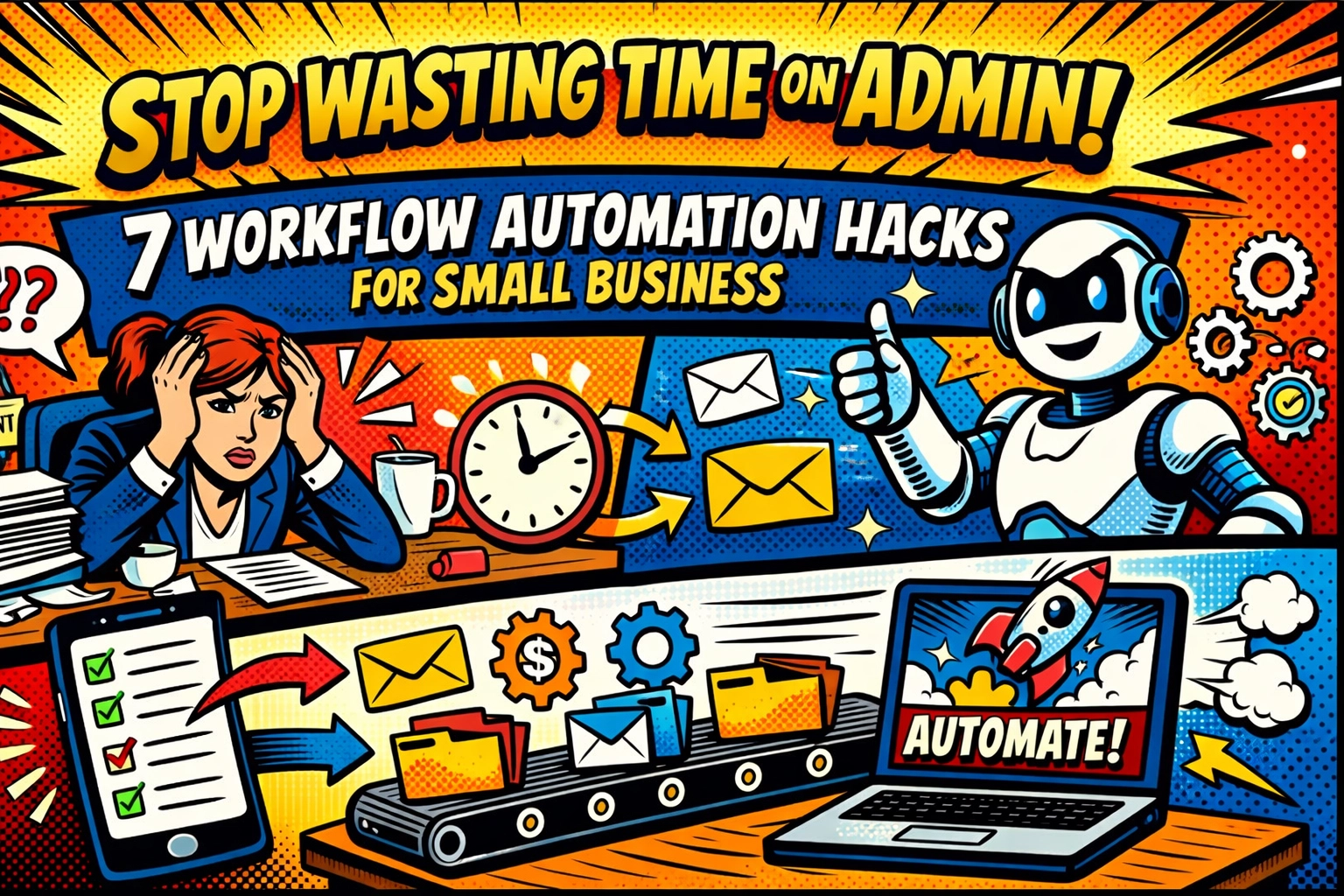
    Stop Wasting Time on Admin: 7 Workflow Automation Hacks for Small Business

    You’re drowning.

    Not in actual work: the stuff you love, the reason you started this business: but in the paperwork of the work. The "busy work." The soul-crushing administrative tasks that feel like death by a thousand papercuts.

    ☕ 7:00 AM. You sit down with your first coffee. You should be thinking about growth. Instead, you’re manually copying lead data from a contact form into a spreadsheet. Again.

    It doesn’t have to be this way.

    Workflow automation for small business isn’t just a buzzword for tech giants with massive IT budgets. It’s for you. It’s for the person who wants their life back.

    Here are 7 workflow automation hacks to stop the bleeding and start scaling.

    1. STOP CHASING LEADS MANUALLY

    You get a new lead. Great! But by the time you see the email, manually check which sales rep is available, and forward it over… four hours have passed.

    The lead is already gone. They’ve moved on to a competitor who replied in five minutes.

    The Hack: Automate lead assignment. Use a tool to instantly route new leads to your team based on territory or load. If no one picks it up in 10 minutes? The system nudges them. Or you.

    No more "Did you see that email?" No more lost revenue. Just speed.

    2. INVOICING ON AUTOPILOT

    Chasing money is the worst part of the job.

    Generating the invoice, sending the reminder, checking the bank account, marking it as paid: it’s a loop of boredom.

    🔍 The Hack: Set up automated billing. Your system should generate the invoice the moment a project hits a specific milestone. If they don’t pay? The system sends the "Hey, just checking in" email for you.

    You only get involved when there’s a real problem. Otherwise, the money just… appears.

    Automated invoicing workflow sends payments and reminders so cash comes in without admin work

    3. THE "NO-SWIVEL" ONBOARDING

    Remember hiring your last employee? You spent the first three days "swivel-chairing" between five different apps.

    Creating a Slack account. Setting up the email. Adding them to the HR portal. Signing the NDA.

    📱 The Hack: Create a single onboarding trigger. One form entry should automatically provision every account they need.

    Your new hire starts their first day actually working, not watching you reset passwords.

    4. INTELLIGENT TICKET ROUTING

    Your support inbox is a jungle.

    "I can't log in" mixed with "I want a refund" mixed with "Do you have this in blue?"

    Sorting through this is a full-time job you didn't sign up for.

    🛠️ The Hack: Use AI-driven routing. It reads the intent of the message and sends it to the right person immediately.

    Tech issues go to the devs. Sales questions go to you. Chaos disappears.

    5. EXPENSES THAT APPROVE THEMSELVES

    You shouldn't be looking at every $15 Starbucks receipt your team submits.

    It’s a waste of your mental energy.

    💼 The Hack: Set up automated expense rules. If a lunch is under $30 and has a receipt, the system approves it. If someone tries to claim a $2,000 "office chair" that looks suspiciously like a gaming throne? Then it flags you.

    Standardize the boring stuff. Audit the weird stuff.

    6. INVENTORY THAT REORDERS ITSELF

    Running out of stock is a nightmare. Overstocking is a cash-flow killer.

    Checking shelves manually is a job for the 1990s.

    📦 The Hack: Trigger replenishment. When your stock hits a "safety level," the system automatically drafts a purchase order and sends it to your supplier.

    You just hit "Approve." Or better yet, let the system do it for you.

    7. THE RECURRING TASK TERMINATOR

    Every Friday, you do the same report. Every month, you close the books.

    Why are you still setting reminders for this?

    📅 The Hack: Schedule recurring workflows. Use pre-built templates that auto-generate with the right roles assigned.

    The work shows up in the right place, at the right time, with the right instructions.

    Stop juggling. Start leading. If you're ready to see how these automations look in the real world, check out what Scott Bowen is doing to help businesses skip the manual grind.


    Why Your Business Needs an AI Virtual Assistant (Before Your Competitors Get One)

    ![AI virtual assistant for business helping small teams handle admin tasks faster than competitors Why Your Business Needs an AI Virtual Assistant]

    The lights are off. Your office is empty. You’re finally in bed.

    But your business is still awake.

    Or is it?

    If you don't have an AI virtual assistant for business, your company is effectively "closed" the moment you close your laptop. Meanwhile, your competitor: the one who’s been quiet lately: just integrated an AI that’s currently answering customer questions, qualifying leads, and booking meetings while they sleep.

    The gap is widening.

    IT'S NOT ABOUT REPLACING PEOPLE. IT'S ABOUT EMPOWERING YOU.

    When people hear "AI Virtual Assistant," they think of a robot taking a job.

    Wrong.

    Think of it as a version of yourself that doesn't need coffee, never gets grumpy at 4 PM, and has a perfect memory.

    🤝 11:00 PM. A potential client lands on your site. They have a specific question about your pricing tiers. In the old world, they’d fill out a form and wait 24 hours. By then, they’ve forgotten why they liked you.

    With an AI Assistant, they get an answer now. The AI qualifies them, sees they’re a perfect fit, and drops a calendar link.

    You wake up to a booked meeting. You didn't lift a finger.

    AI virtual assistant works overnight, sorting messages and booking meetings while you sleep

    THE COST OF "DOING IT MANUALLY"

    You might think you’re saving money by not investing in AI.

    You’re actually paying a "Manual Tax."

    • The cost of the lead who didn't wait.
    • The cost of the mistake made during a 2 PM data entry session.
    • The cost of your own time: which is worth a lot more than $0/hour.

    AI doesn't just do things faster; it does them with 100% consistency. It doesn't have "off days." It doesn't forget to follow up.

    YOUR COMPETITORS ARE ALREADY LOOKING

    The window of "AI as a competitive advantage" is closing.

    Soon, having an AI assistant will be as basic as having a website. Right now, it’s a superpower. It allows a three-person team to output as much work as a thirty-person team.

    …But only if you act before the "superpower" becomes the "standard."

    SCALING SHOULDN'T BE THIS EASY. BUT HERE WE ARE.

    Imagine a world where your inbox organizes itself.

    Imagine your assistant: let’s call her Penny: knowing exactly which emails are urgent and which can wait. She drafts the responses. You just scan and hit send.

    The "busy work" evaporates.

    You’re back to the big picture. You’re back to why you started this in the first place.

    Stop fighting the future. Start using it.

    The first step is simpler than you think. You don't need a degree in computer science. You just need the right partner. See how Marblism and Scott Bowen are turning AI from a mystery into a massive ROI for businesses just like yours.

    The chaos is gone before you even take your first sip of coffee.

    You just send a thumbs-up.

    Workflow automation for small business fuels growth, launching results like a rocket on charts

    FAQ: Is this hard to set up?

    No. Most modern AI virtual assistants are designed to plug into what you already use.

    Does it sound like a robot?

    Only if you want it to. Modern AI can be trained to match your brand’s exact tone: whether that’s professional, quirky, or somewhere in between.

    Is it expensive?

    Compared to the cost of a full-time hire or the cost of lost sales? Not even close. It’s the highest ROI tool in your stack.

    Scaling shouldn't be a struggle. It should be a system.

    Don't wait for your competitors to show you how it's done.

    Be the one who shows them.

    Explore the possibilities at Marblism.

  • How to Choose the Best Coffee Suppliers for High-Volume Cafes (Compared)

    How to Choose the Best Coffee Suppliers for High-Volume Cafes (Compared)

    So, you’ve got a high-volume site. Or maybe you’re planning one. First off, congratulations, and also, our sympathies for your soon-to-be-tired legs. Running a cafe that pumps out hundreds of coffees a day is a different beast entirely compared to a sleepy corner shop. When you’re doing high numbers, every second of workflow and every gram of coffee matters.

    Choosing the right coffee suppliers for coffee shops isn't just about finding a bag of beans that tastes "nice." It’s about logistics, reliability, and finding a partner who won't leave you hanging when your steam wand decides to retire at 8:00 AM on a Monday.

    In this guide, we’re going to look at what actually matters when you’re scaling up and how to compare different types of wholesale specialty coffee partners.


    What High-Volume Really Means for Your Supply Chain

    In the industry, "high-volume" is a bit of a loose term, but usually, we’re talking about shops shifting 30kg, 50kg, or even 100kg+ of coffee per week. At this level, your relationship with your supplier changes. You aren't just a customer; you are a significant part of their roasting schedule.

    Why does this matter? Because consistency becomes your biggest challenge. If a small roaster has a "bad batch," it’s annoying. If a high-volume supplier has a bad batch, it’s a catastrophe for your brand. You need a supplier who has the tech, like state-of-the-art roasting equipment, to ensure that the profile you loved in January is exactly the same in July.

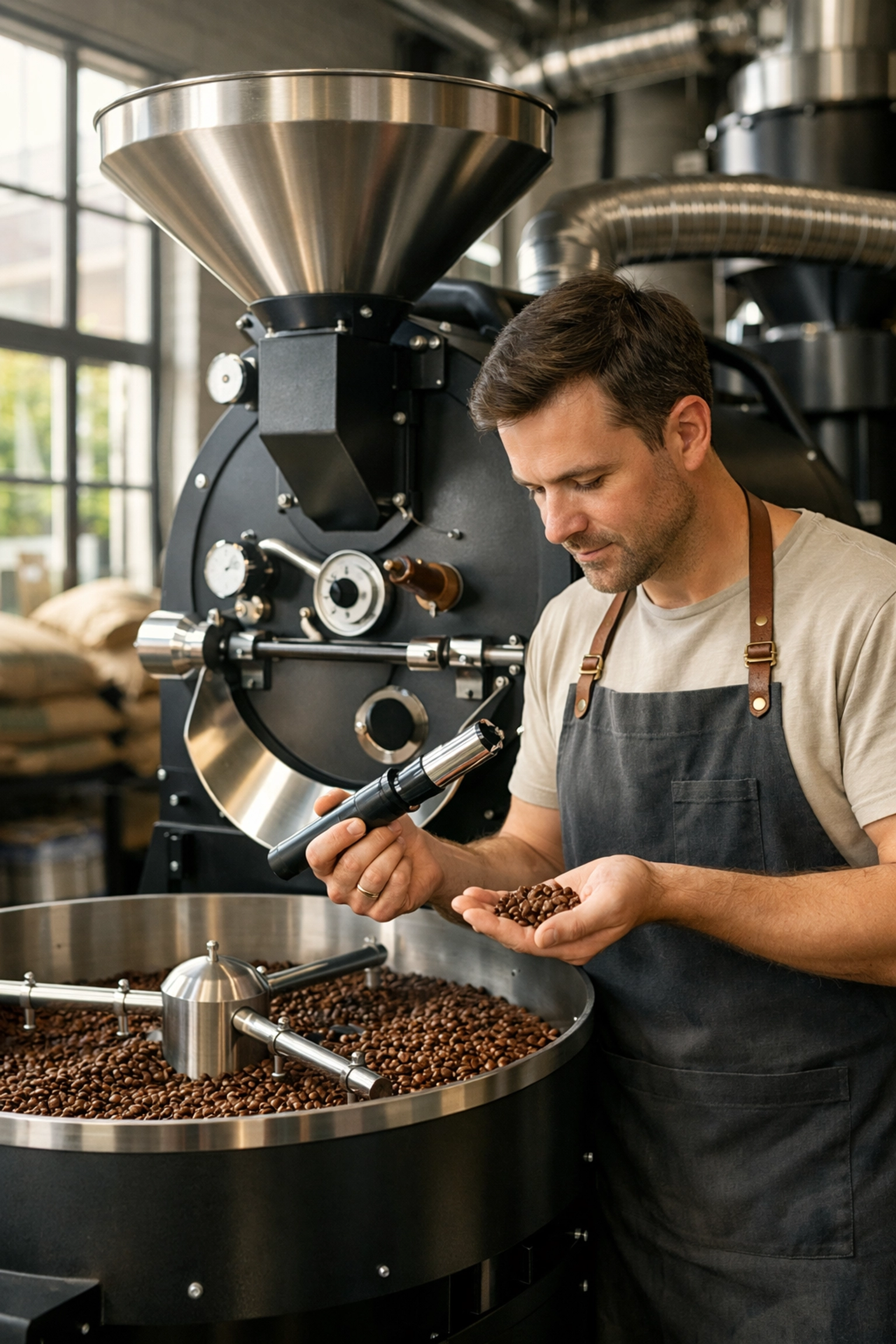
    Professional roaster examining beans at a high-volume facility for wholesale specialty coffee suppliers.

    The Three Main Types of Coffee Suppliers

    When you start looking for coffee suppliers, you'll generally find they fall into three buckets. Let’s break them down.

    1. The Commercial Giants

    These are the massive names you see everywhere. Think pre-ground pods or industrial-scale roasting.

    • The Pros: They are cheap. Seriously cheap. They usually have a massive network of engineers.
    • The Cons: The coffee is often… well, boring. Or worse, burnt. You won't get much in the way of "specialty" here. It’s a commodity product.
    • The Verdict: If you are a hospital canteen, maybe. If you want people to actually enjoy their latte, probably not.

    2. The Local "Micro" Roaster

    The guy down the road with a 5kg roaster in his garage.

    • The Pros: Incredible passion and very "cool" branding. Great for local marketing.
    • The Cons: Can they keep up? If you suddenly need an extra 20kg because of a local festival, they might struggle. Also, their technical support is often non-existent. You’re on your own when the grinder jams.
    • The Verdict: Great for low-volume boutique spots, risky for high-volume hubs.

    3. The Speciality Wholesale Partner (The Sweet Spot)

    This is where we at Limini Coffee live. It’s a roaster that has the scale of a commercial operation but the soul and quality of a specialty roaster.

    • The Pros: State-of-the-art roasting (we use Loring roasters which are incredibly consistent), full technical support, and barista training.
    • The Cons: Usually more expensive than the "Big Box" commercial guys, but the quality jump is massive.
    • The Verdict: The best choice for cafes that care about their reputation but need the security of a professional setup.

    Comparison: What to Look For

    Feature Commercial Supplier Micro Roaster Speciality Wholesale Partner
    Coffee Quality Low (Commodity) High (Artisan) High (Specialty)
    Consistency High (but consistently "meh") Variable High (Advanced Tech)
    Training Support Minimal Often none Extensive & Professional
    Equipment Maintenance Good Usually outsourced Integrated/In-house
    Scalability Unlimited Limited High

    The "Hidden" Costs of Cheap Coffee

    We see it all the time. A cafe owner chooses a supplier based solely on the price per kilo. They see £12/kg and think they’re winning compared to £18/kg. But in high-volume environments, the price of the beans is often the smallest part of the equation.

    The "Cheap Coffee" Trap:

    1. High Waste: Inconsistent beans mean your baristas are constantly "dialing in" and throwing away shots.
    2. Lack of Support: If your machine breaks and your supplier doesn't have engineers, you lose thousands in sales while waiting for a third-party repair.
    3. Staff Turnover: Baristas want to work with good coffee. If you give them oily, over-roasted beans, the talented ones will leave for the shop down the road.

    Basically, saving £2 on a bag of coffee can cost you £200 in lost efficiency. This is why we focus so much on sourcing our coffee correctly; it’s about more than just taste; it’s about how that coffee performs in a busy environment.

    Macro view of espresso extraction using beans from premium coffee suppliers for coffee shops.

    Equipment: The Backbone of High-Volume

    If you are doing high volume, your equipment choice is just as important as your supplier. You need a workhorse. We often recommend La Spaziale machines because they are built like tanks and handle back-to-back orders without breaking a sweat (or losing temperature).

    When comparing suppliers, ask them:

    If a supplier says "we just send the beans," run away. A high-volume cafe needs a partner who understands the workings of the machine. We believe in being a one-stop-shop because it makes your life easier. One phone call, one invoice, zero headaches.


    Training: The Secret Ingredient

    You can have the best wholesale specialty coffee in the world and a £15k espresso machine, but if your staff don't know the difference between a latte and a cappuccino, you're in trouble.

    High-volume cafes usually have higher staff turnover. It’s just the nature of the beast. This means you need a supplier who offers ongoing, professional barista training.

    We offer an overview of training that covers everything from the basics of tamping to the complexities of understanding milk. When your staff are confident, they are faster. When they are faster, your throughput increases. When throughput increases, your profit goes up. It’s a simple loop.

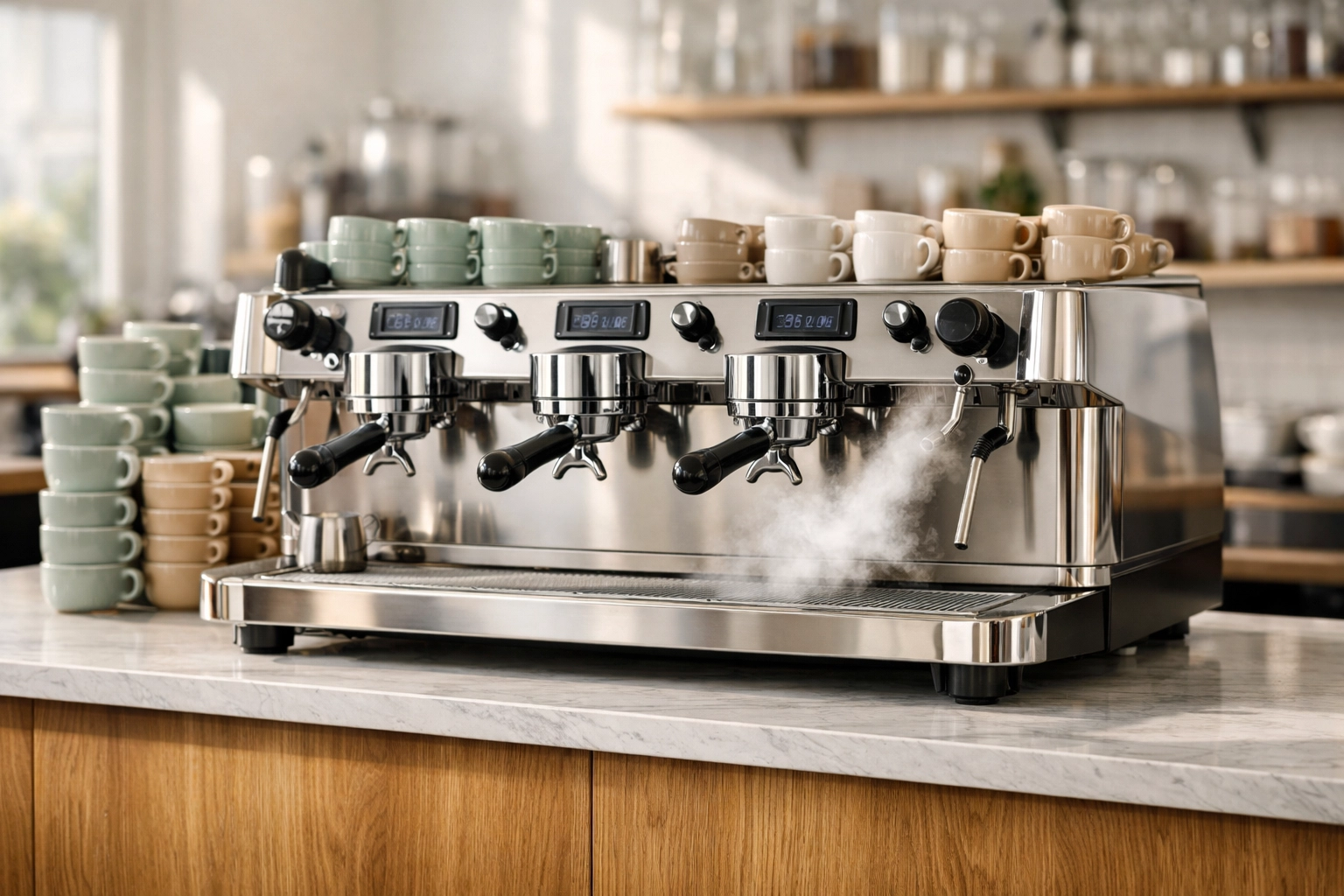
    High-volume cafe equipment setup featuring a professional espresso machine on a modern coffee bar.

    Workflow and "Theatre"

    In a busy shop, the way you set up your bar is critical. This is often called "shop fitting" or workflow design. A good supplier will help you with building a coffee shop layout that makes sense.

    And don't forget the "theatre" of coffee. People like to watch the process. Even in a high-volume rush, there is room for creating theatre with great latte art or a beautiful machine. It justifies the specialty price point and keeps customers coming back.


    How to Make the Final Decision

    Before you sign a contract with any coffee suppliers for coffee shops, do these three things:

    1. Check the Reviews: Don't just trust the salesperson. Look at what other cafe owners say. Are they reliable? Does the coffee arrive on time?
    2. Visit the Roastery: You can tell a lot about a company by how they treat their roasting space. Is it clean? Is it professional? (You’re always welcome to come and see us, by the way).
    3. Run the Numbers: Use a coffee brewing calculator to see your actual margins. A slightly more expensive bean that extracts better might actually be cheaper per cup.

    Why Limini Coffee for High-Volume?

    We’ve spent years perfecting the art of being a "big-small" roaster. We have the state-of-the-art roasting technology to ensure that your house blend is perfect every single time. We have the engineering team to keep your machines running. And most importantly, we actually care.

    If you’re looking for wholesale specialty coffee that doesn't just taste great but actually works for your business, we’d love to chat. We don't just sell beans; we help you build a profitable, sustainable coffee business.

    Whether you're curious about the perfect Americano or you're debating lever vs automatic machines, we’ve got the expertise to guide you.

    High volume doesn't have to mean high stress. It just means you need the right partner in your corner. Let's make some great coffee together. 🙂

  • Hospitality Trends 2026: 10 Things You Should Know to Future-Proof Your Hotel

    Hospitality Trends 2026: 10 Things You Should Know to Future-Proof Your Hotel

    Elevate your guest experience. Streamline your operations. Grow your revenue. Hospitality in 2026 isn't a guessing game anymore. It’s a data-driven, AI-powered playground where the most adaptable properties win big.

    We believe that great technology shouldn't just sit in the background, it should actively propel your business forward. In 2026, the gap between "traditional" hotels and "future-proofed" properties has become a canyon. To bridge it, you need more than just a software update; you need a shift in mindset.

    Everything you need to thrive is now accessible from one innovative platform.

    1. AI is Your New Co-Pilot (And Your Guests’ Travel Agent)

    By 2026, AI has moved past the "cool gimmick" phase. It’s now the operational backbone of the industry. We’re seeing AI handle everything from predictive maintenance to complex revenue management. But the real shift? Travelers are using AI agents, think smarter, more autonomous versions of ChatGPT, to plan and book their entire trips.

    If your property isn't "readable" by these AI agents, you’re essentially invisible. You need to ensure your data is structured, your reviews are sentiment-rich, and your availability is synced in real-time.

    Why it matters:

    • Operational efficiency: AI lighting and HVAC systems are cutting energy costs by up to 25%.
    • Predictive maintenance: Fix the AC before the guest even notices it’s rattling.
    • Discovery: AI-driven search is replacing traditional SEO as the primary booking driver.

    Sleek hotel reception desk with a tablet illustrating AI-powered guest check-in and operational efficiency.

    2. Personalization? No, Hyper-Personalization

    Broad market segments are dead. Nobody wants to be treated like "a corporate traveler" or "a leisure guest." In 2026, guests expect you to know that they prefer an oat milk latte at 7:30 AM and a room on a high floor away from the elevator.

    Hyper-personalization uses granular data to tailor the experience. This is where Attribute-Based Selling (ABS) shines. Instead of selling a "Standard Room," you’re selling a "King Bed with a Sunrise View and a Yoga Mat."

    The data says:

    • 80% of guests are more likely to book when offered a personalized experience.
    • Attribute-based selling can increase ancillary revenue by 15-20%.
    • Guests feel a 30% higher brand affinity when their preferences are remembered across multiple stays.

    3. Wellness as a Lifestyle, Not an Amenity

    A dusty treadmill in a windowless basement doesn't count as a "wellness offering" anymore. In 2026, wellness is baked into the room design. We're talking about circadian lighting, air purification systems, and in-room fitness content.

    With 56% of travelers citing "rest and recharge" as their primary motivation, your hotel needs to be a sanctuary. Partnering with wellness brands: like providing high-end recovery tools or on-demand meditation: is no longer optional for luxury and boutique brands.

    How to lead:

    1. Integrate biophilic design to reduce guest stress levels.
    2. Offer "Sleep Kits" featuring weighted blankets and aromatherapy.
    3. Schedule local wellness pop-ups, from sound baths to morning run clubs.

    4. The Rise of the "Home-tel" (Extended Stay 2.0)

    The lines between living, working, and traveling have officially blurred into oblivion. Remote work isn't a "trend": it's the standard for a massive portion of the global workforce. This has led to the explosion of the "Home-tel": properties that offer the consistency of a hotel with the soul and functionality of an apartment.

    Think modular furniture that converts a desk into a dining table and kitchenettes that actually work.

    "We saw our average length of stay jump from 1.8 nights to 4.5 nights just by adding high-speed mesh Wi-Fi and ergonomic chairs to our suites," says one London hotelier.

    Modern hotel suite with a dedicated workspace and comfortable seating for long-term extended stay guests.

    5. Operational Excellence Over Raw Growth

    In a market where labor costs remain high and margins are tight, 2026 is the year of "Work Smarter, Not Harder." Success is no longer measured solely by room count, but by operational efficiency.

    This means adopting smarter staffing models that use data to predict busy periods and automate the mundane. If your staff is still spending 10 minutes per guest on manual check-ins, you’re losing money and guest satisfaction points simultaneously.

    See what Mews can do for your efficiency:

    • Automate 80% of routine administrative tasks.
    • Reduce check-in times to under 30 seconds via mobile.
    • Centralize multi-property management all from one cloud-based platform.

    Check out how we're changing the game at https://referrals.mews.com/umqhyito.

    6. Sustainability is Now a Data Point

    Eco-conscious travel has evolved from "nice to have" to a non-negotiable requirement. But in 2026, guests want proof, not just a card on the pillow about saving water. They want to see your carbon footprint, your waste reduction stats, and your commitment to local sourcing.

    Properties that use smart tech to monitor and display their sustainability metrics in real-time are winning the trust of Gen Z and Millennial travelers.

    Three ways to go green(er):

    • Eliminate single-use plastics entirely (seriously, it’s 2026).
    • Implement greywater recycling for landscaping.
    • Source 70%+ of F&B from within a 50-mile radius.

    7. The Hotel Lobby as a Social Powerhouse

    The "dead space" lobby is over. Modern hotels are transforming their ground floors into multifunctional social hubs. These are co-working spaces by day, cocktail bars by night, and community galleries on the weekend.

    By designing for locals as much as for guests, you create an authentic atmosphere that travelers crave. It also provides a steady stream of non-room revenue that keeps the lights on during the off-season.

    Multifunctional hotel lobby with modern seating and communal tables designed as a social hub for guests.

    8. The Frictionless Guest Journey

    Friction is the enemy of hospitality. If a guest has to wait in a line, sign a physical paper, or call the front desk for a towel, you’ve failed the 2026 "Convenience Test."

    The modern guest journey is mobile-first. They want to book on their phone, check in on the train, unlock their door with their watch, and order room service via a web app. It’s seamless, it’s fast, and it’s what they expect.

    The "Always-On" Guest Journey:

    1. Mobile Check-in: Complete before they even arrive at the property.
    2. Digital Key: Direct-to-room access with zero stops at the desk.
    3. Instant Messaging: Guest requests handled via WhatsApp or SMS in real-time.

    9. Niche Positioning and Dual-Branding

    Trying to be everything to everyone is a recipe for mediocrity. In 2026, the most successful hotels are those that lean into a specific niche: whether that’s a "biohacking hotel" or a "digital nomad retreat."

    Alternatively, we’re seeing a massive rise in dual-brand properties. This involves running two different brands (e.g., a mid-scale extended stay and a luxury boutique) in the same building. You share the "back of house" costs, the laundry, and the staff, but you capture two completely different market segments. It’s a masterclass in maximizing square footage.

    10. "Whycations": The Intentional Traveler

    The "whycation" is the 2026 term for intentional travel. People aren't just going somewhere; they’re going for a reason. Whether it’s to learn a new skill, attend a specific niche event, or fulfill a personal value (like supporting sustainable businesses), travel has become more purposeful.

    Your marketing shouldn't just show the bed; it should show the transformation the guest will experience.

    Focus on these pillars:

    • Curated Experiences: Offer more than just a room; offer a connection to the local culture.
    • Values-Based Marketing: Highlight your ethics, your community involvement, and your "Why."
    • Niche Packages: Create bundles that cater to specific hobbies or goals (e.g., "The Urban Photography Package").

    A guest enjoying an intentional travel experience on a hotel balcony with a view, focusing on wellness and rest.

    Ready to future-proof your property?

    The world of hospitality moves fast, but your technology should move faster. We believe in empowering hoteliers to spend less time behind a screen and more time with their guests.

    Success in 2026 is about being proactive, not reactive. It's about using the best tools available to create moments that guests will talk about long after they've checked out.

    Join the 12,500+ properties already innovating.

    Get started with a platform that understands where the industry is going: not just where it's been.

    Explore the future of hospitality with Mews and get your property earning more revenue in no time.

  • The Psychology of a Perfect Check-In: Why the First 60 Seconds Matter

    The Psychology of a Perfect Check-In: Why the First 60 Seconds Matter

    You've just spent three hours on a plane. Your back hurts. You're hungry. You want a shower and a nap, in that order.

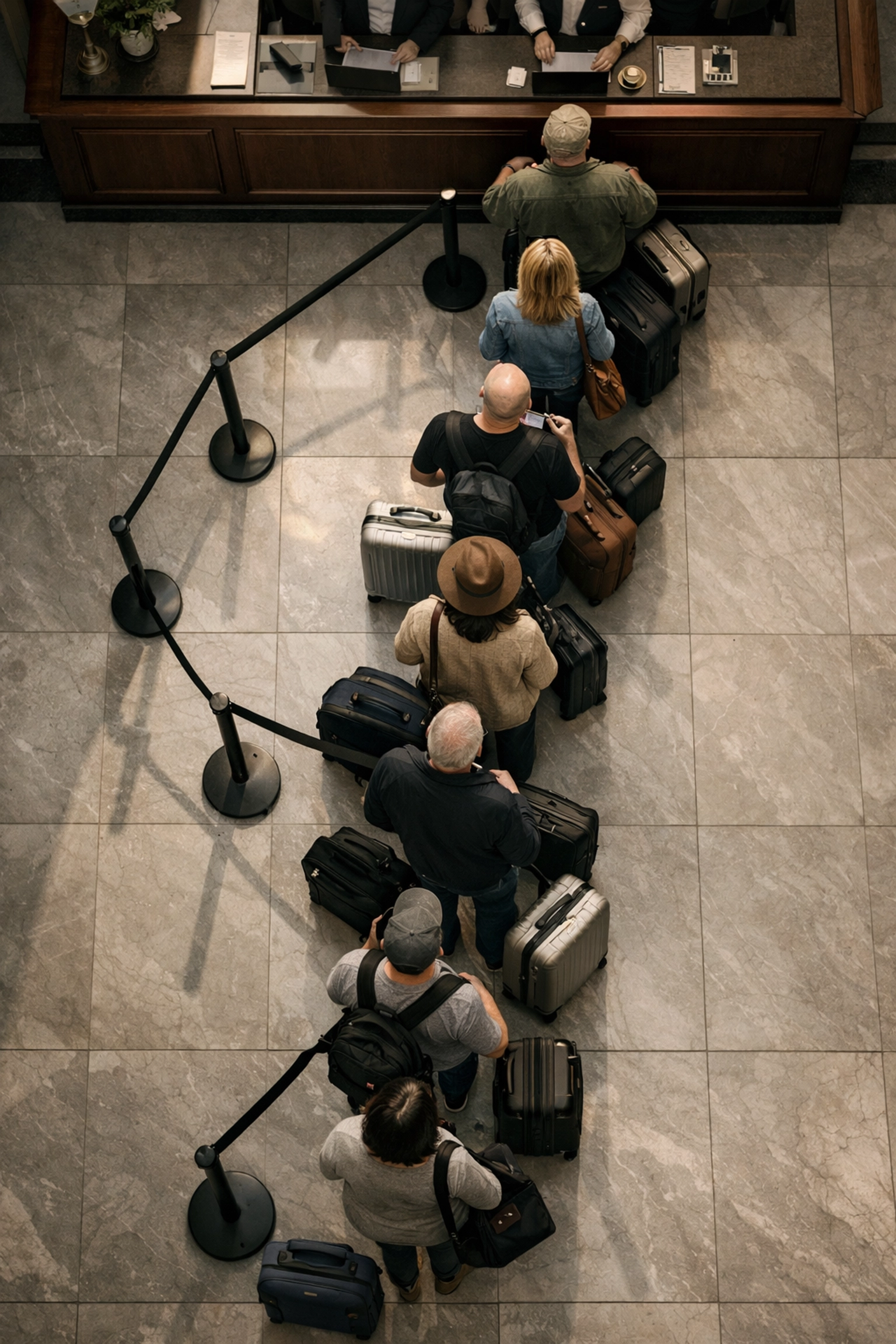
    You walk into the hotel lobby and see it: a line. Seven people deep. One frazzled front desk agent clicking furiously at a computer that's clearly from 2014.

    Your entire stay just got worse: and you haven't even gotten your room key yet.

    The 60-Second Rule

    Here's the thing about hotel check-ins: the first minute shapes everything that follows. Not the amenities. Not the thread count. Not the artisanal coffee in the lobby.

    Those first 60 seconds.

    It's called psychological anchoring, and it's wildly powerful. That initial impression: whether you feel welcomed or inconvenienced, valued or just another transaction: colors your perception of the entire stay. You could have the best room in the building, but if check-in sucked, you're already mentally writing a three-star review.

    Research backs this up. Studies on guest experience show that the emotional tone set during arrival directly influences overall satisfaction scores. Even if everything else goes perfectly, a rocky start leaves a sour taste. Your brain latches onto that first experience and uses it as a reference point for everything else.

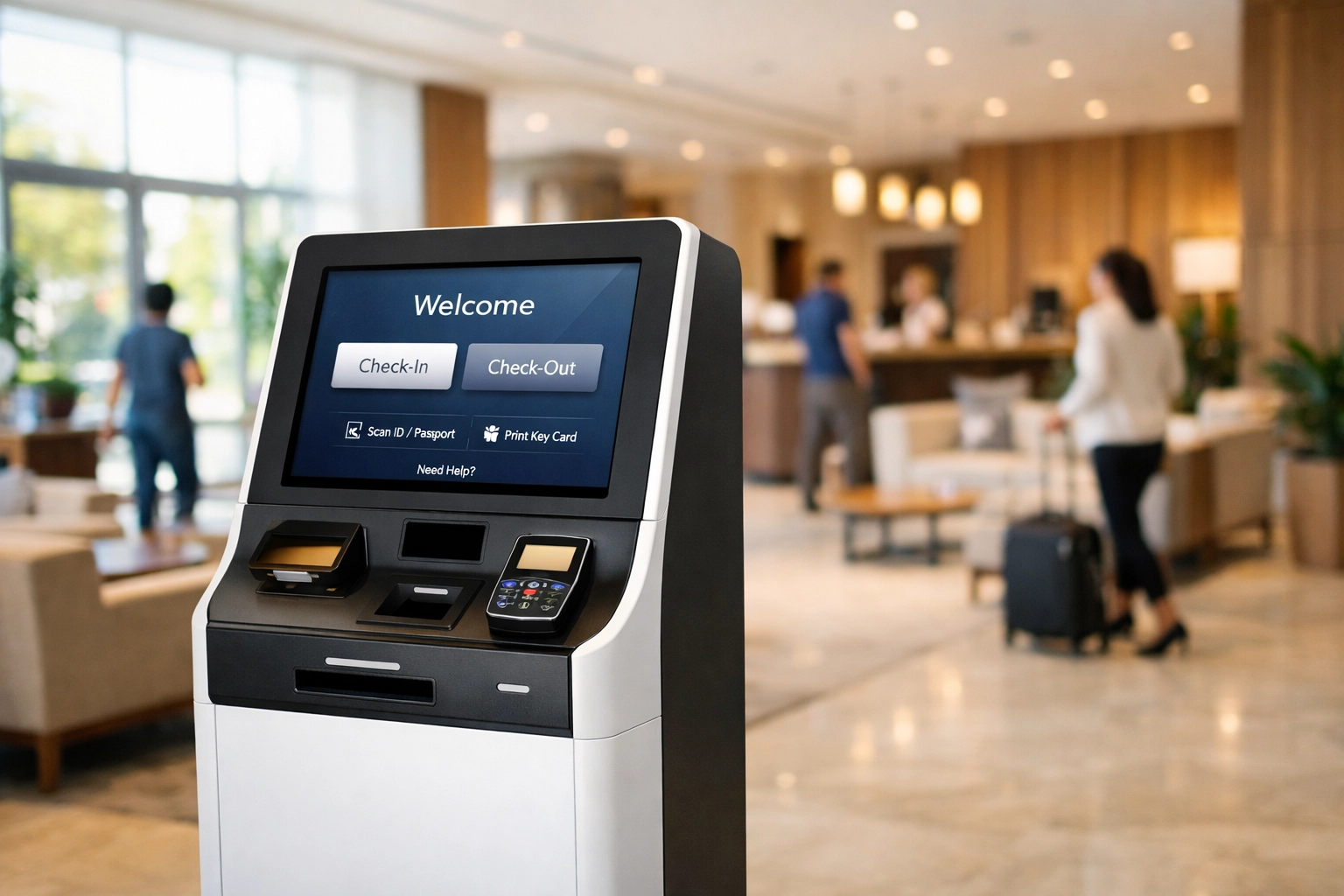
    Modern hotel lobby with self-service check-in kiosk and guests in minimalist space

    The Lobby Queue: Where Guest Experience Goes to Die

    Let's talk about the elephant in the lobby: the queue.

    Standing in line after traveling is psychological torture. You're tired. You're done. You just want to get to your room. But instead, you're watching someone argue about a booking made three months ago while the person behind the desk explains, for the fourth time, that breakfast ends at 10:30 AM.

    This waiting period does two terrible things simultaneously.

    First, it creates stress. Travel is already stressful. Adding a 15-minute wait before you can even begin to relax compounds that stress. Your cortisol levels are probably already elevated from navigating airports or highways. Now you're stuck in limbo, watching minutes tick by.

    Second, it signals that your time isn't valuable. Whether intentional or not, a long queue sends a message: the hotel's operational convenience matters more than your comfort. You're a number in the system, not a guest.

    The perceived value of your stay drops with every passing minute.

    What Your Brain Actually Needs

    Cognitive ease. That's the psychological term.

    Humans prefer experiences that require minimal mental effort. We like things that flow. Straightforward processes. Clear communication. No friction points.

    A perfect check-in provides exactly that. You arrive. You're acknowledged immediately. The process is smooth, efficient, maybe even personalized. Within 60 seconds, you feel welcomed and you're on your way.

    The best part? When check-in is seamless, you barely remember it: and that's exactly the point. Great experiences fade into the background. Bad experiences stick in your memory like a splinter.

    Hotel lobby queue with guests waiting in line at front desk for check-in

    Enter the Tech That Actually Helps

    This is where modern property management systems earn their keep.

    Traditional check-in creates bottlenecks because everything funnels through one point: the front desk. One person. One computer. One queue. It's a design flaw masquerading as hospitality.

    Modern solutions: mobile check-in, self-service kiosks, automated systems: remove the bottleneck entirely. They distribute the process. Suddenly, five guests can check in simultaneously instead of waiting for one overwhelmed agent.

    Take Mews Kiosks, for example. Sleek, intuitive, designed specifically for the "I just want my room key" crowd. Guests can check in, get their key, and head upstairs in under a minute. No queue. No small talk about the weather. Just efficiency wrapped in a pleasant interface.

    But here's the clever bit: these systems don't replace hospitality. They enhance it.

    Your front desk team isn't stuck processing IDs and running credit cards. They're freed up to actually engage with guests who want that interaction. The travelers who need restaurant recommendations. The families checking in with questions. The VIPs who deserve personalized attention.

    Technology handles the transactions. Humans handle the relationships.

    The Rhythm of a Smooth Check-In

    When check-in works properly, it follows a natural rhythm. No awkward pauses. No confusion. No "let me just check with my manager."

    The process flows like this:

    Arrival: You're acknowledged immediately. Eye contact. A smile. "Welcome to [Hotel Name]."

    Verification: Your identity is confirmed quickly. ID scanned or tapped. No fumbling with photocopiers.

    Personalization: The system already knows your preferences. Room type. Floor level. Any special requests you made when booking.

    Key distribution: Physical or digital. Your choice. Either way, it happens in seconds.

    Departure to room: You're given clear directions and sent on your way with genuine warmth.

    Total elapsed time? Under 60 seconds for the efficient crowd. Maybe two minutes if you want to chat.

    This rhythm creates psychological safety. You know what's happening. Nothing feels uncertain or unpredictable. You're in control of your experience.

    Guest holding hotel room key card after completing smooth check-in process

    The Power of Personalization

    Here's where modern systems really shine: they remember.

    Your previous stays. Your preferences. That time you requested extra pillows. Whether you prefer a high floor or low floor. The fact that you always book king beds.

    When this information surfaces naturally during check-in: "Welcome back, we've put you in a corner room on the 8th floor like last time": it triggers something powerful in your brain. Recognition. Value. The sense that you matter.

    It's the hospitality equivalent of a bartender remembering your drink order.

    These moments don't require extra time or effort from staff. The system serves up the information automatically. But the psychological impact? Massive. You're not just another booking confirmation number. You're a returning guest with preferences that matter.

    Why Hotels Are Finally Getting This Right

    For years, the hospitality industry resisted technology at the front desk. The reasoning went something like: "But we're in the people business. Technology dehumanizes the experience."

    Turns out, that's backwards.

    Technology dehumanizes repetitive tasks. It automates the boring bits. ID verification. Payment processing. Key encoding. The stuff nobody enjoys anyway.

    What technology enables is better human connection. Your best front desk agents aren't data entry specialists. They're problem solvers. Relationship builders. The people who turn a standard stay into a memorable one.

    Modern PMS platforms and self-service options let these talented humans do what they do best while eliminating the friction points that frustrated both staff and guests.

    The result? Better experiences on both sides of the desk.

    The Bottom Line

    The first 60 seconds of check-in aren't just operationally important: they're psychologically critical.

    They set the tone. They establish expectations. They determine whether a guest feels welcomed or tolerated.

    Smart hotels recognize this. They're investing in systems that remove friction, reduce wait times, and create space for genuine hospitality. Tools like Mews Kiosks and mobile check-in options that put control in guests' hands while freeing staff to focus on what actually matters: making people feel valued.

    Because at the end of the day, nobody remembers a fast check-in. They remember feeling welcomed. Feeling important. Feeling like their time was respected.

    And that all happens in the first 60 seconds.