Author: admin

  • AI Business Automation 101: A Beginner’s Guide to Reclaiming Your Mornings

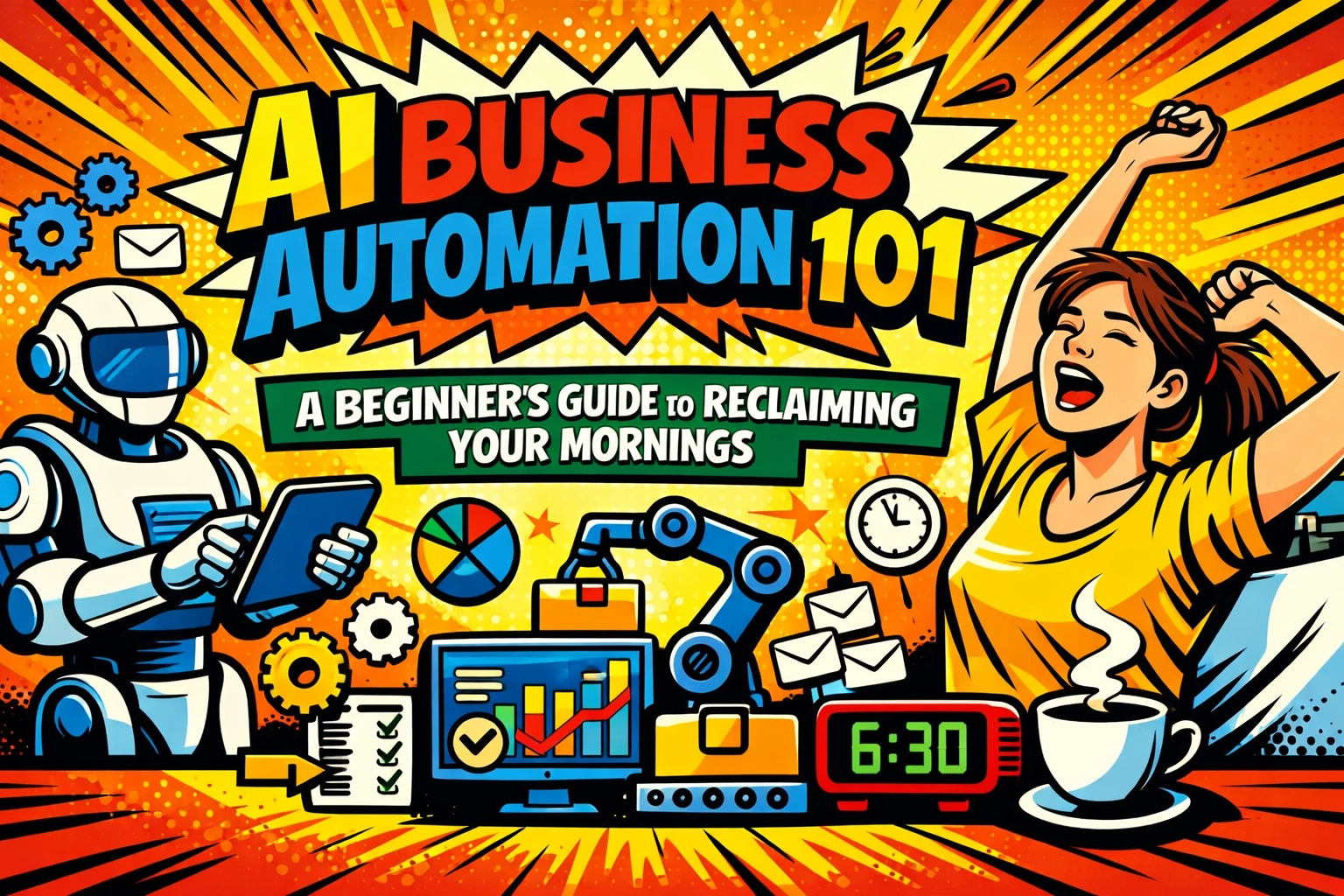
    AI Business Automation 101: A Beginner’s Guide to Reclaiming Your Mornings

    7:00 AM

    The alarm hasn't even finished its first cycle. You reach out, eyes half-closed, and grab your phone. The blue light hits your face like a bucket of cold water.

    47 unread emails.
    Two missed Slack messages from a confused freelancer.
    A calendar that looks like a game of Tetris played by someone who’s losing.

    You haven’t even had a sip of coffee yet, but you’re already behind. You’re not "running" your business… the business is running you. It’s a familiar weight in your chest, isn't it? That quiet realization that you’re spending 80% of your time on $10-an-hour tasks.

    But imagine a different morning.

    One where you wake up, check your phone, and see that while you were dreaming, your "invisible team" handled the heavy lifting. The emails are sorted. The leads are followed up with. The data is organized.

    That’s not a pipe dream. That’s ai business automation. And it’s about to become your new best friend.

    If you're ready to stop being the bottleneck in your own company, you need to see what we're building at https://marblism.link/scott-bowen.


    THE INVISIBLE ASSISTANT YOU ALREADY OWN

    When most people hear "AI," they think of sentient robots or complex code that requires a PhD to understand. Forget that.

    Think of AI as a very fast, very obedient intern who never sleeps, never complains, and works for pennies. AI business automation is simply the process of using smart software to handle those repetitive, soul-crushing tasks that eat your mornings for breakfast.

    We’re talking about tools that learn your habits, predict your needs, and execute workflows without you clicking a single button.

    Studies show that businesses leaning into automation see a 90% reduction in errors and a 30% decrease in operational costs. For a small business owner, that isn't just "efficiency."

    It’s oxygen.

    Friendly AI robot serving coffee, illustrating efficient business automation for small owners.


    8:15 AM: THE INBOX WHISPERER

    Usually, this is where the dread sets in. You open your inbox and start the "Manual Sift."

    Newsletter… Trash.
    Invoice… Save for later.
    Actual client question… Panic.
    Spam… Delete.

    Stop. Just stop.

    With business automation tools, your AI can categorize these before you even see them. It identifies high-priority clients and flags them. It takes those invoices and automatically shoves them into your accounting software. It even drafts replies to common questions, leaving them in your "Drafts" folder for a quick 1-second approval.

    ☕ The day begins… but it’s quiet. Organized.

    You aren't reacting to the noise. You’re responding to the signal.


    9:30 AM: THE LEADS THAT DON'T SLEEP

    While you were sleeping, a potential client visited your site.

    In the old days (last year), they would fill out a form and wait for you to wake up, drink coffee, and manually type an email. By then? They’ve already moved on to your competitor who replied faster.

    Now? AI business automation takes the wheel.

    The moment that lead hits your site, a chatbot engages them. It qualifies them. If they’re a good fit, it automatically sends them a personalized intro deck and a link to your calendar.

    📱 Your phone buzzes.

    It’s not a notification of a problem. It’s a notification that a new meeting has been booked for 2:00 PM. You didn't lift a finger. You just send a thumbs-up to the mirror.

    Check out how we’re making this seamless at https://marblism.link/scott-bowen.

    Business automation tools organizing digital emails while a business owner relaxes.


    11:00 AM: DATA WITHOUT THE DRAMA

    Manual data entry is where dreams go to die.

    Copying numbers from a spreadsheet to a dashboard…
    Formatting reports for a weekly sync…
    Updating CRM statuses…

    It’s tedious. It’s prone to human error. And frankly, you’re too smart to be doing it.

    Advanced business automation tools like Make or Zapier act as the glue between your apps. When a sale happens in Shopify, the data moves to your CRM, updates your revenue dashboard, and pings your team in Slack.

    The reporting happens in real-time. No more "I'll have that report to you by Friday."

    You have it now. Because the AI built it while you were having your second cup of coffee.


    PICKING YOUR WEAPONS: THE BEGINNER’S TOOLKIT

    You don't need a massive budget to start. You just need the right stack. Here are the heavy hitters for anyone just starting their automation journey:

    • Zapier AI: The "Grandaddy" of automation. It connects over 4,000 apps. You can now literally tell it what you want in plain English: "Every time I get a new lead in Facebook, send them a welcome email and add them to my Google Sheet": and it builds the workflow for you.
    • HubSpot CRM + AI: Perfect for keeping your customer relationships from becoming a mess. Their AI features help with everything from writing emails to predicting which leads are most likely to buy.
    • Make (formerly Integromat): For when you want to get a little more "visual." It’s a drag-and-drop playground for multi-step automations.
    • Microsoft Power Automate: If you’re already deep in the Windows/Office 365 ecosystem, this is your powerhouse.

    AI automation tools securing a digital handshake for automated lead generation.


    HOW TO ESCAPE THE GRIND (A 3-STEP PLAN)

    Don't try to automate your entire business in one afternoon. You’ll break things, get frustrated, and go back to your spreadsheets.

    Follow this instead:

    1. Identify the "Leak"

    Look for tasks that take more than 5 hours of your week. Tasks that are repetitive, predictable, and: let’s be honest: boring. This is your first target.

    2. Choose One "High-Impact" Win

    Start with something that gives you immediate relief. Usually, this is either Email Management or Lead Follow-ups. Once you see the AI working, you’ll get the "automation itch" to do more.

    3. Test and Monitor

    Don't just set it and forget it on day one. Run it on a small scale. Make sure the AI isn't accidentally sending "Hey [First_Name]!" to your biggest client. Once it's smooth? Scale it.


    EMPLOYEE OF THE MONTH. EVERY MONTH.

    The beauty of ai business automation is that it doesn't get tired. It doesn't have "off days." It doesn't forget to follow up because it had a long lunch.

    It’s the most consistent employee you’ll ever have.

    When you automate the "boring" stuff, you free up your brain for the "big" stuff. Strategy. Creative direction. Talking to actual humans. You know… the reasons you started a business in the first place.

    Small business owner relaxing while AI automation tools handle routine morning tasks.


    THE RECLAIMED MORNING

    Imagine it’s 9:00 AM.

    You’ve had your coffee. You’ve walked the dog. You’ve actually spoken to your family without looking at your screen every thirty seconds.

    You sit down at your desk. You open your laptop.

    The tasks that used to take you three hours are already done. Your "to-do" list is actually manageable. You feel… calm?

    That’s the power of putting the right systems in place.

    If you're ready to see how Marblism can help you build these systems faster than you ever thought possible, head over to https://marblism.link/scott-bowen.


    STOP JUGGLING. START GROWING.

    The gap between the businesses that scale and the ones that stall is getting wider. The difference? Automation.

    You can either spend your life being the "operator": the person pulling every lever and turning every gear: or you can be the "architect."

    The architect builds the system. The system does the work.

    Reclaim your mornings. Reclaim your sanity.

    Scaling Shouldn't Be This Easy. But Here We Are.

    Start your journey here: https://marblism.link/scott-bowen.

    You've got this. And if you don't… the AI does. 🌙

  • The Ultimate Guide to Wholesale Coffee Roasters: Everything You Need to Succeed

    The Ultimate Guide to Wholesale Coffee Roasters: Everything You Need to Succeed

    So, you’ve decided to open a coffee shop. Or maybe you’re already running one and you’ve realized that the "mystery beans" you’re currently using just aren't cutting it anymore. First of all, congratulations! It’s a wild, caffeinated ride, and we’re thrilled you’re part of the industry. But here is the reality check: your choice of coffee supplier is probably the single most important decision you will make for your business.

    It’s not just about who has the prettiest packaging or the most "profound" tasting notes about hints of Himalayan blueberries. It’s about finding a partner who will answer the phone when your grinder decides to quit at 8:00 AM on a Monday.

    In this guide, we are going to dive deep into what makes a wholesale coffee roaster truly great and how you can find the perfect match for your business. If you’re looking to get started right away with a team that actually cares, you should definitely check out what we do over at Limini Coffee.


    Why Wholesale specialty coffee is a Different Beast

    When you buy a bag of coffee for your kitchen, you’re looking for a tasty morning brew. When you’re looking for wholesale coffee roasters, you’re looking for a foundation. You need volume, you need consistency, and you need a price point that allows you to actually pay your rent.

    Specialty coffee is defined by quality, but in a wholesale environment, "quality" has a twin brother named "consistency." If your espresso tastes like heaven on Tuesday but like a battery terminal on Thursday, your customers won't come back. A proper wholesale partner understands this. They don't just roast; they profile, they test, and they ensure that the 50th bag you open is exactly like the first.

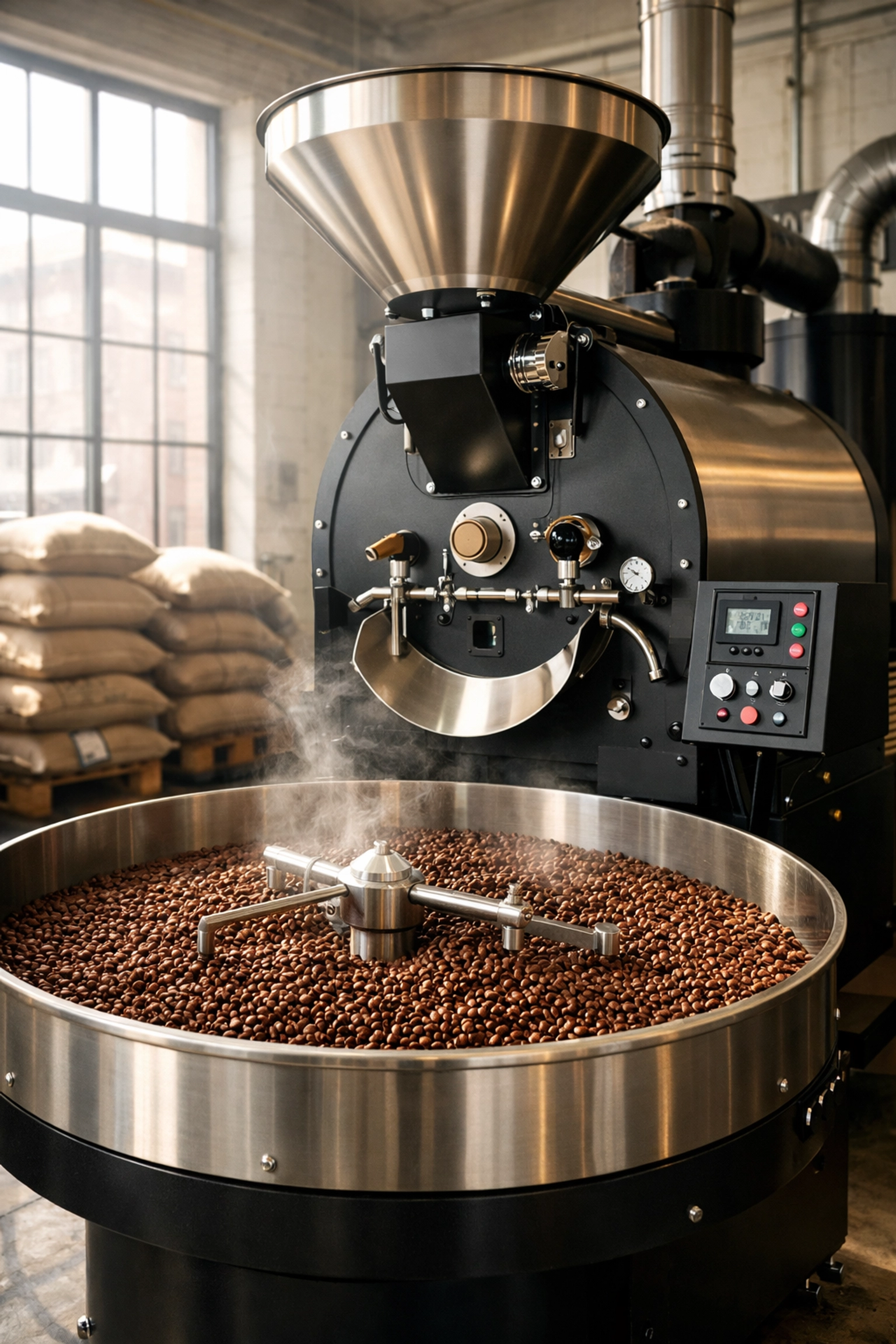
    Professional wholesale coffee roaster machine with fresh roasted specialty beans in a sunlit warehouse.

    What to Look for in Coffee Suppliers

    Choosing a supplier is a bit like dating: you want someone who looks good, sure, but you also need someone who’s reliable and shares your values. Here is what we believe are the non-negotiables:

    1. The Quality of the Roast

    It sounds obvious, but you’d be surprised. You need to taste the coffee. Not just once, but in different formats. How does it taste as a straight double espresso? How does it cut through milk? We always suggest visiting the roastery if you can. It’s important to see where the magic happens and meet the people behind the machine. At Limini, we are incredibly proud of how we source our coffee and the care we put into every batch.

    2. Barista Training and Support

    You can have the best beans in the world, but if your staff doesn't know how to dial in a grinder, it’s all for naught. A great wholesale partner offers comprehensive barista training. We’re talking about more than just "push this button." We mean understanding extraction, tamping techniques, and the science of milk.

    3. Equipment Guidance

    Are you looking at a lever or an automatic machine? Do you need a La Spaziale that can handle the lunch rush? A good supplier shouldn't just sell you the most expensive shiny box; they should help you with choosing espresso equipment that fits your specific volume and budget.


    The Hidden Value: More Than Just Beans

    When you partner with a company like Limini Coffee, you aren't just buying beans. You are buying into a support system.

    Technical Expertise

    Let’s talk about the technical side for a second. Most people don't realize that water chemistry, pump pressure (usually that sweet spot of 9 BAR), and temperature stability (looking for that 88 C to 95 C range) are what separate a "good" coffee from a "destination" coffee. Your roaster should be able to explain the workings of a La Spaziale or help you understand why your crema looks a bit thin today.

    Business Consultancy

    Starting a café is about more than just coffee. It’s about building a coffee shop from the ground up. This includes shop fitting, menu development, and even understanding the "theatre" of coffee. We believe that a great coffee shop experience is a performance. Your wholesale partner should be your director.

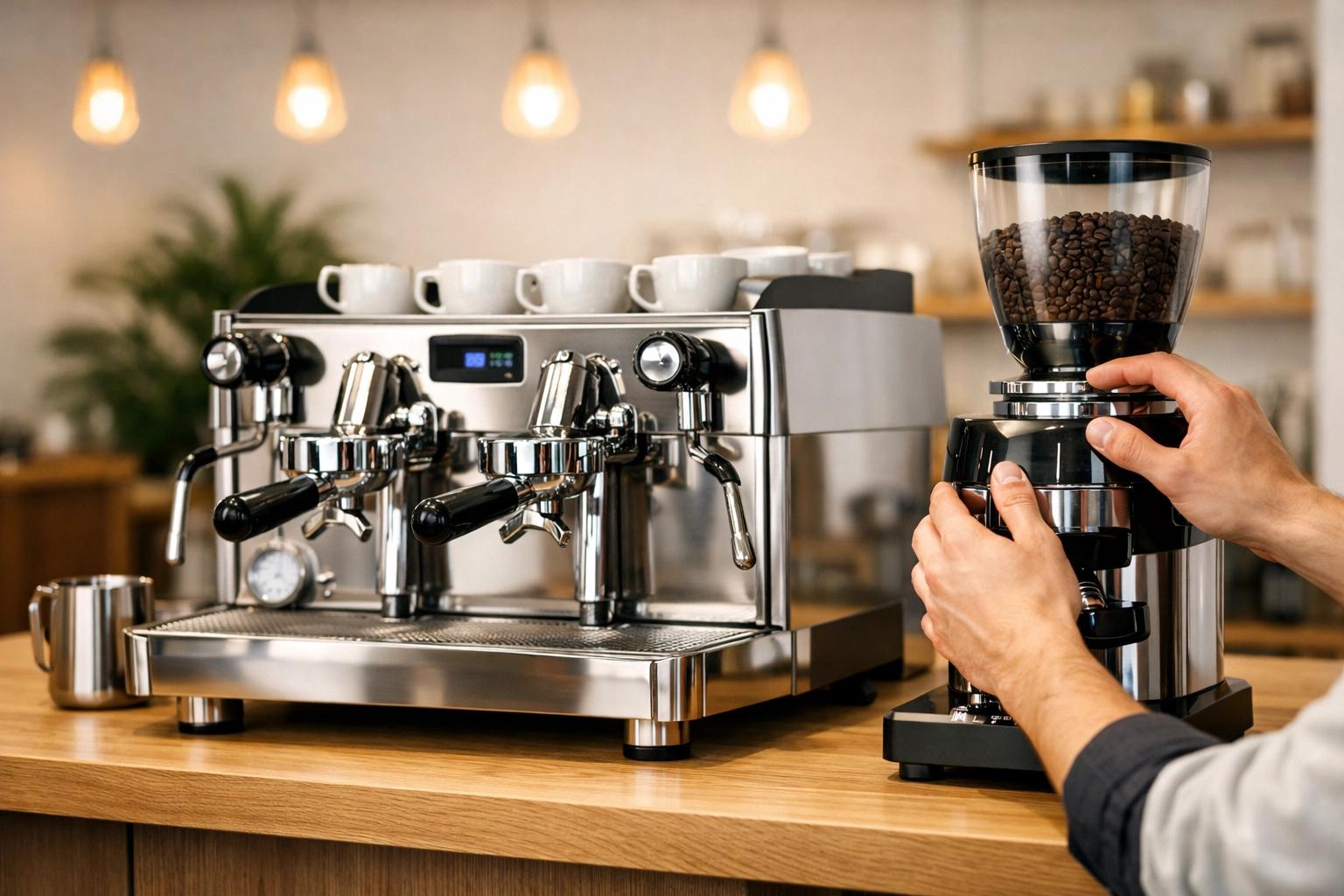
    Modern cafe espresso machine and grinder setup showcasing high-quality coffee shop equipment.

    Understanding the Logistics

    Consistency isn't just about the flavor; it's about the delivery. You need to know that when you order your coffee, it will arrive on time, every time.

    Inventory Management:
    A wholesale roaster needs to have a solid grip on their green coffee inventory. If they run out of your house blend, your business suffers. We recommend looking for roasters who practice "forward buying." This basically means they've secured the coffee months in advance, locking in the quality and the price for you.

    Pricing Structures:
    Be wary of suppliers who give you a different price every time you call. You want transparent, bulk pricing. While it’s tempting to hunt for the absolute lowest price per kilo, remember: you get what you pay for. If the price is too good to be true, the roaster is likely cutting corners on green coffee quality or support services.


    The Technical Nitty-Gritty: Milk and Beyond

    In the UK, the majority of coffee drinks sold are milk-based. This means your understanding of milk is just as important as your understanding of coffee.

    Do you know the difference between the microfoam needed for a latte versus a cappuccino? Your wholesale supplier should be able to teach your team how to create that silky, glossy texture that makes customers pull out their phones for a photo.

    Pouring silky microfoam into espresso to create latte art, demonstrating professional barista milk texturing.

    We also recommend using tools like a coffee brewing calculator to keep your recipes precise. Precision leads to consistency, and consistency leads to happy regulars.


    Is Specialty Coffee Worth the Higher Price Tag?

    You might be wondering if "specialty" is just a buzzword used to justify a higher price. To be honest, in some cases, it can be. However, true specialty coffee is about traceability and quality control.

    When you choose a specialty coffee roaster, you are getting beans that have been graded highly by professionals. These beans have fewer defects, which means a cleaner, sweeter cup. More importantly, it often means the farmers were paid a fairer price. In the long run, serving better coffee allows you to charge a premium and builds a brand that people trust.

    The Partnership Checklist

    Before you sign on the dotted line with a coffee supplier, ask yourself these questions:

    • Do they offer training? (And is it ongoing, or just a one-time thing?)
    • Do they know their equipment? Can they explain the makings of a La Spaziale?
    • Is the coffee consistent? Have you tried multiple batches?
    • Do they offer more than just coffee? (e.g., coffee cups, tea, chocolate, cleaning supplies?)
    • Do you actually like them? You’ll be talking to these people a lot. A warm, friendly relationship makes the stressful days much easier.

    Wholesale coffee supplier and cafe owner discussing bean quality during a training and tasting session.

    Final Thoughts: Your Success is Our Success

    At the end of the day, a wholesale coffee roaster shouldn't just be a line item on your balance sheet. They should be a member of your team. When your café is full and the shots are pouring perfectly, we’re happy. That is the beauty of coffee :).

    If you are looking for a partner who is expert, casual, and genuinely invested in your journey, come and see us. You can read our reviews to see how we've helped others, or learn more about us and our philosophy.

    Ready to take the next step? Check out our wholesale options and let’s start roasting something special for you.

    And remember, if you want to see the full range of what we offer and support the content we create, use this link to visit Limini Coffee. We can't wait to help you build something amazing.

  • The Ultimate Guide to the Best AI Assistant for Small Business in 2026: Everything You Need to Scale

    ☕ 7:00 AM.

    The sun is barely up, but your phone is already screaming. Three "urgent" emails from clients who didn't read the FAQ. A Slack notification from your one employee asking where the 2025 invoice template is hidden. And that nagging feeling in your gut that you’re forgetting something big.

    You haven’t even finished your first cup of coffee, and you're already behind.

    This isn't "running a business." This is the business running you. You’re drowning in the "admin tax", that invisible pile of soul-crushing tasks that keep you from actually growing. But it’s 2026. The world has changed.

    Scaling shouldn't be this hard. And honestly? It isn't. Not anymore.

    You just need the right digital sidekick.

    AUTOMATE ADMIN TASKS: HOW TO SAVE 10+ HOURS EVERY WEEK

    📱 10:00 AM.

    Usually, this is when the mid-morning slump hits because you’ve spent three hours chasing signatures and rescheduling Zoom calls. But today… it’s quiet.

    Your business automation tools are already doing the heavy lifting. While you were driving to the office, your AI was busy. It scanned your inbox, categorized the "urgent" from the "can wait," and drafted replies that actually sound like you. Not a robot. You.

    Business owner using automation tools to manage admin tasks, emails, and scheduling efficiently.

    Stop juggling.

    Think about your week. How much time do you spend on data entry? How many hours disappear into the black hole of "scheduling back-and-forth"?

    In 2026, saving 10 hours a week isn't a pipe dream. It’s the baseline.

    • The Inbox Zero Hero: AI assistants now categorize emails based on intent. If a lead asks for pricing, the AI pulls the latest deck and drafts the response. You just hit "send."
    • The Calendar Whisperer: No more "Does Tuesday at 2 work for you?" Your AI knows your energy levels. It schedules deep work in the morning and client calls in the afternoon. It handles the timezone math. It just works.
    • The Invisible Accountant: Invoices are generated as soon as a project hits "Done" in your PM tool. Expenses are tracked. Receipt photos are parsed and filed.

    You aren't just saving time. You're buying back your sanity. You step back into your day, and for the first time in months, you actually have time to think about the big picture.

    If you want to see how these workflows actually look in the wild, check out Scott’s setup at Marblism. It’s how the pros do it without breaking a sweat.

    THE BEST AI ASSISTANT FOR SMALL BUSINESS IN 2026

    🤝 1:00 PM.

    You’re sitting down for a strategy session. In the old days, this meant digging through fifteen different tabs to find market research, customer feedback, and last month’s P&L.

    Now? You just ask.

    But which "brain" are you asking? The landscape has exploded, and picking the wrong AI assistant for small business needs can feel like hiring the wrong person.

    Let's break down the heavy hitters of 2026:

    1. ChatGPT (The All-Rounder)

    Still the king of versatility. It’s your first hire. It writes, it researches, and with the latest 2026 updates, it practically thinks in real-time. It’s the most practical starting point because it requires zero setup. You talk to it. It does things.

    2. Notion AI (The Company Brain)

    If your business is a mess of documents and scattered notes, Notion AI is the librarian you can't afford not to have. It doesn't just write; it remembers. "Where did we document the refund policy for the Q3 promo?" Ask Notion. It’ll find it in three seconds.

    3. Microsoft Copilot (The Office Professional)

    If your life is lived inside Excel and Teams, this is your play. It’s $30/user/month, which is a bit of a sting, but it turns a spreadsheet of raw data into a beautiful chart before you can finish your lunch.

    4. Marblism (The Automation Powerhouse)

    When you need your tools to actually talk to each other and build real solutions, Marblism is where the magic happens. It’s not just an assistant; it’s the glue that holds your tech stack together.

    AI assistant robot helping a small business owner analyze growth charts and scale their company.

    But here’s the secret: The "best" assistant isn't the one with the most features. It’s the one that removes the most friction from your specific day.

    "I used to spend my Sundays prep-ping for the week," says Mark, a boutique agency owner. "Now, I just check my AI dashboard on Monday morning. Everything is already lined up. It feels like I have a Chief of Staff for the price of a Netflix subscription."

    AI CONTENT GENERATOR FOR SMALL BUSINESS: YOUR SECRET MARKETING WEAPON

    🔍 4:00 PM.

    The "Marketing Block." We’ve all been there. You know you need to post on LinkedIn. You know the blog needs an update. You know that email newsletter is three days late.

    But your brain is fried.

    Enter the AI content generator for small business. This isn't about "spinning" low-quality junk. In 2026, the tech has evolved. It understands your brand voice better than you do after a long day.

    Imagine this: You take a 5-minute voice memo of your thoughts on a new industry trend. You upload it.

    Suddenly, you have:

    • A 1,200-word deep-dive blog post.
    • Three punchy LinkedIn updates.
    • A series of X (Twitter) threads.
    • A draft for your weekly newsletter.

    All in your voice. All ready to go.

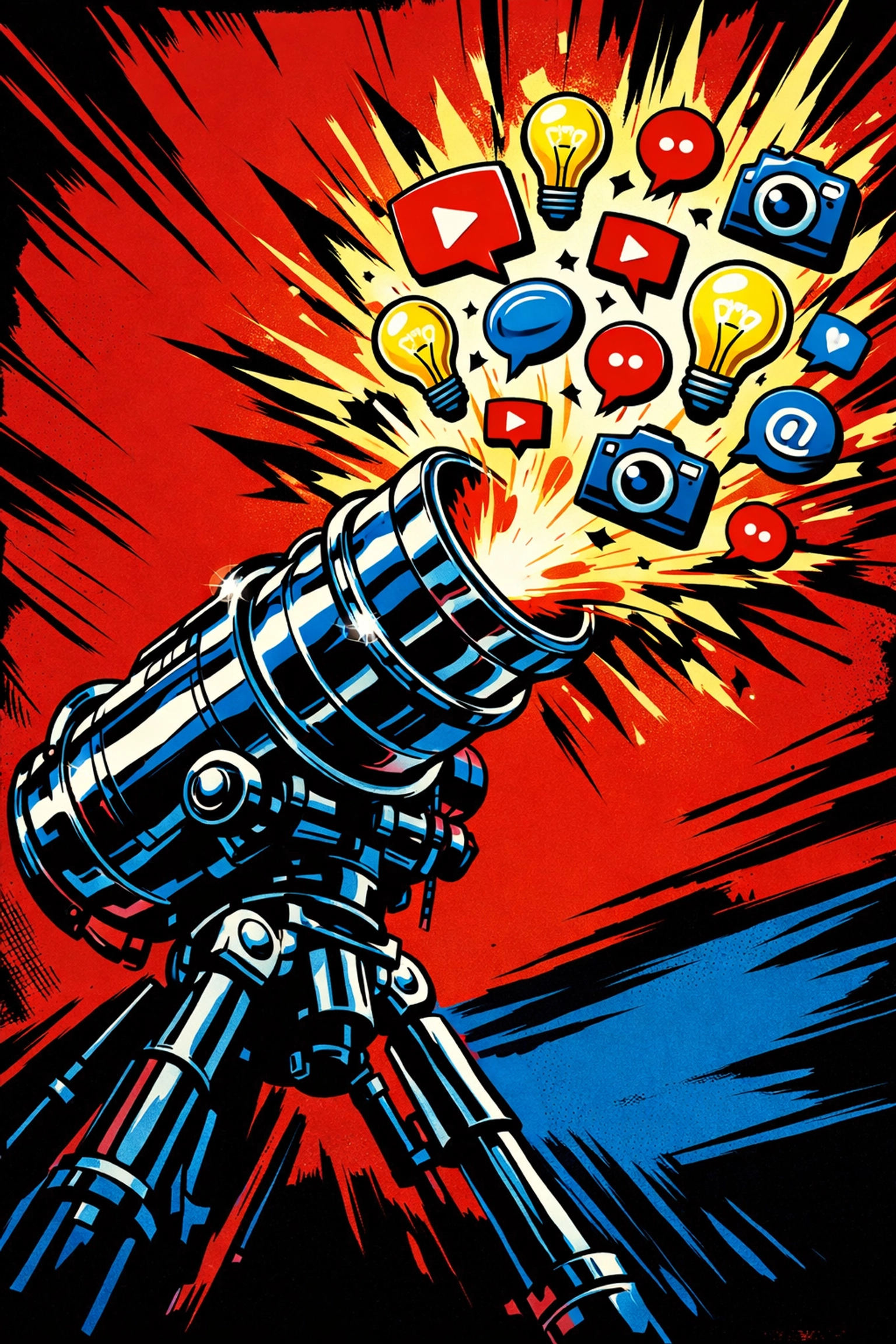
    Marketing cannon launching content icons, representing an AI content generator for small business.

    The "Secret Weapon" isn't just the generation; it's the distribution. Modern business automation tools can take that content and schedule it across every platform while you’re picking up the kids or heading to the gym.

    You’re no longer shouting into the void. You’re building an authority machine that runs while you sleep.

    And the best part? It costs less than a single freelance article used to cost in 2022. If you’re not using an AI content generator by now, you’re not just behind, you’re invisible.

    EMPLOYEE OF THE MONTH. EVERY MONTH.

    🌙 7:00 PM.

    The lights are off in the office. You’re home.

    In the "before" times, you’d still be hunched over a laptop, eyes blurring as you tried to finish "one last thing."

    But today? You’re sitting on the couch. You’re present.

    The chaos is gone before you even take your first sip of evening tea. Your AI team is still working, of course. Penny’s behind the scenes organizing the morning's leads. Stan’s finding the best prices for your next inventory restock.

    Everything is handled.

    Business owner relaxing while an AI assistant handles background operations and automation.

    Scaling a small business used to mean hiring more people, increasing your overhead, and doubling your stress. In 2026, scaling means leverage. It means using AI to do the work of a team of five while you stay lean and fast.

    It’s not magic. It’s just good business.

    FREQUENTLY ASKED QUESTIONS

    Is AI too expensive for a solo founder?
    No. Most tools like ChatGPT have free tiers that are incredibly powerful. Even the pro versions usually cost less than a few cups of coffee a month. The "cost" is actually in the time you're losing by not using them.

    Will my customers know I'm using AI?
    Only if you're lazy. The trick is to use AI for the 80% of the heavy lifting (drafting, research, structure) and add your 20% of "human soul" at the end.

    Is my data safe?
    Yes, if you choose the right tools. Enterprise-grade AI assistants (like Copilot or Notion) have strict data privacy standards. Just don't put your passwords into a random bot you found on a shady forum.

    Where do I start?
    Start small. Don't try to automate your whole life in one day. Pick one task you hate: like scheduling or drafting emails: and give it to an AI. See how it feels.

    Rocket ship launching from digital blocks, symbolizing scaling a small business with AI systems.

    Scaling shouldn't be a struggle. It should be a system.

    If you're ready to stop playing small and start using the tools that the big players are using, it's time to meet the team.

    See how we're changing the game at Marblism.

    The future is here. It’s organized. It’s automated. And it’s waiting for you to hit "Start."

    Scaling Shouldn't Be This Easy. But Here We Are.

  • The Simple Trick to Improve Your Housekeeping Efficiency Right Now

    The Simple Trick to Improve Your Housekeeping Efficiency Right Now

    Boost room turnover. Reduce staff friction. Delight every guest.

    In the high-stakes world of hospitality, efficiency isn't just a metric. It’s the heartbeat of your property. When rooms aren't ready, your lobby fills with frustrated guests and your front desk feels the heat. But what if you could overhaul your entire housekeeping department with one simple shift in mindset? We’re talking about a transformation that turns chaotic mornings into seamless operations. Everything you need to run a high-performance operation, all from one innovative hospitality platform.

    The Power of the Two-Minute Rule

    We believe that complexity is the enemy of execution. Most housekeeping delays aren't caused by major disasters. They are the result of a thousand tiny friction points that pile up throughout the day.

    The secret? The two-minute rule.

    The concept is simple: if a task takes two minutes or less to complete, do it immediately. In a hotel environment, this prevents the "snowball effect" where small neglected details turn into a massive backlog. When a housekeeper notices a low lightbulb, a loose screw, or a missing amenity, addressing it right then: rather than "adding it to the list": saves a second trip later.

    • Eliminate the "mental load" of pending tasks.
    • Prevent minor issues from becoming guest complaints.
    • Maintain physical and psychological momentum.

    When your team operates with this "do it now" mentality, the entire pace of the floor changes. It’s no longer about surviving the shift; it’s about mastering the space.

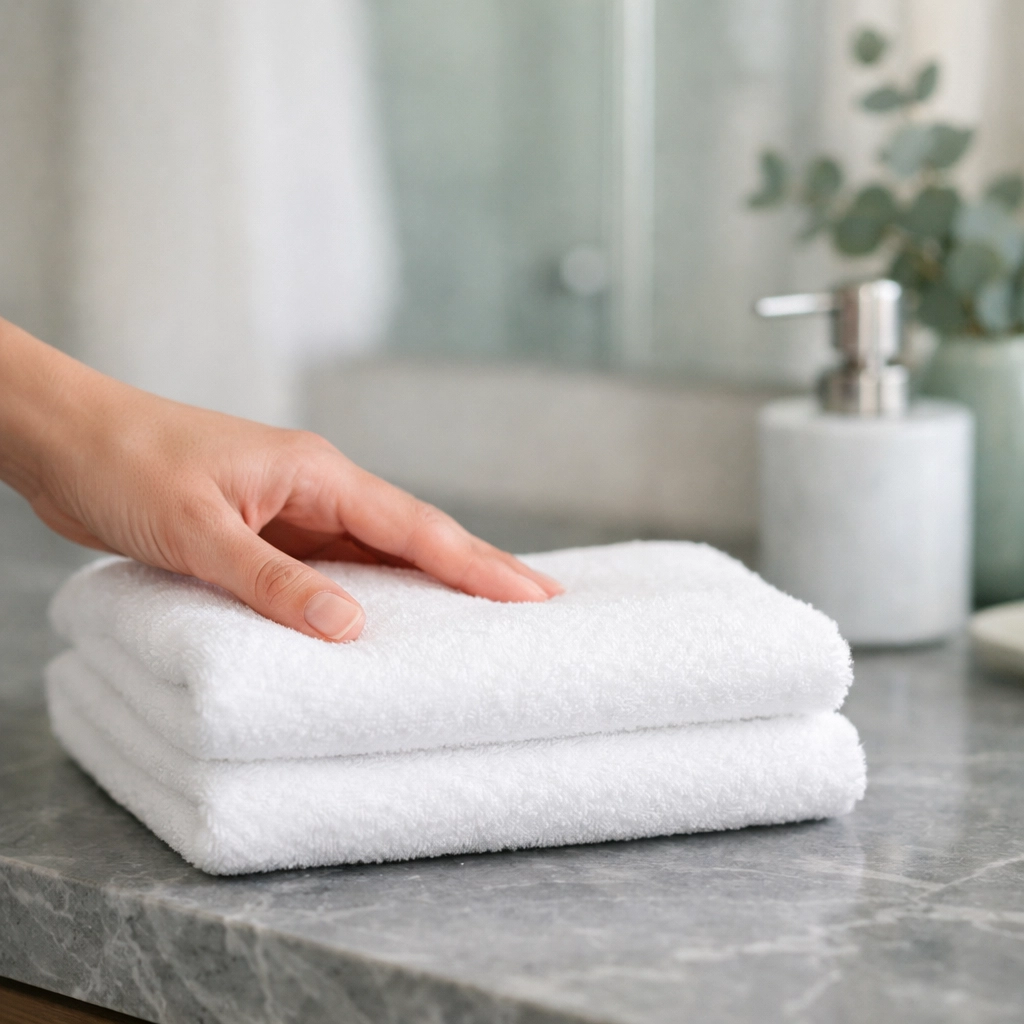
    Housekeeper placing a fresh towel in a luxury bathroom, demonstrating the two-minute rule for hotel efficiency.

    Why Real-Time Data Changes the Game

    We think your team deserves better than paper lists and walkie-talkies. The two-minute rule only works if your staff isn't bogged down by manual reporting. If a room is finished, it should be "clean" in the system the second the door closes.

    3.5x faster updates
    Properties using mobile-first housekeeping tools see a massive jump in turnover speed.

    15 minutes saved
    The average time saved per room when staff can update status in real-time without returning to a central office.

    98% accuracy
    Real-time status updates eliminate the "is it ready yet?" phone calls from the front desk.

    By moving your operations to a cloud-native solution like Mews, you empower your staff to act on information instantly. You can see exactly how the day is progressing at https://referrals.mews.com/umqHYIto.

    The "Clean-as-You-Go" Culture

    Efficiency isn't just about speed. It’s about rhythm. We’ve seen that the most successful housekeeping teams don't wait for the "big clean." They embrace a proactive mindset that treats every movement as an opportunity to improve the space.

    Think about it. Instead of letting messes accumulate during a stay-over service, staff can address them as they happen. Wipe the sink immediately after moving the toiletries. Put the dirty linens directly into the bag. It’s about micro-actions that prevent a room from ever reaching a state of "overwhelming."

    1. Spot-check constantly. Keep eyes open for the small stuff during every room entry.
    2. Organize tools. A messy cart is a slow cart.
    3. Standardize the flow. Every room should be cleaned in the exact same sequence to build muscle memory.

    See what modern housekeeping looks like

    "Switching to a mobile-first platform meant our team stopped running back and forth to the office, saving us 10 hours a week in wasted walking time."

    We believe that your staff are your most valuable asset. Giving them the right tools doesn't just make them faster: it makes them happier. When the job is easier, retention goes up. When retention goes up, the quality of your service becomes consistent. It’s a virtuous cycle that starts with a single tap on a screen.

    Hotel housekeeping staff using a tablet to manage room turnover and real-time operations data.

    Precision Through Timing

    If you want to manage it, you have to measure it. We suggest using a timer for specific high-frequency tasks. This isn't about micromanaging your team; it's about helping them find their "flow state."

    Setting a 15-minute block for a standard bathroom deep-clean creates a sense of urgency and focus. It prevents the "perfectionism trap" where a staff member spends 30 minutes on a single chrome fixture while five other rooms wait.

    • Set clear time expectations for different room types.
    • Use data to identify which staff members are "superstars" and have them train others.
    • Identify bottlenecks (like a slow laundry elevator) that time-tracking reveals.

    Logistics: The Proximity Advantage

    Distance is the silent killer of efficiency. If your housekeeping supplies are stored at the end of a long hallway or in the basement, your team is losing hours every week just in transit.

    Keeping cleaning supplies in a convenient, centralized location on each floor eliminates the distraction of searching for tools. We’ve seen properties increase their rooms-per-hour metric simply by reconfiguring their supply closets.

    • Ensure every cart is fully stocked before the shift begins.
    • Use "kits" for specific tasks (e.g., a "mini-bar kit" or a "linen kit").
    • Automate inventory alerts so you never run out of essential chemicals.

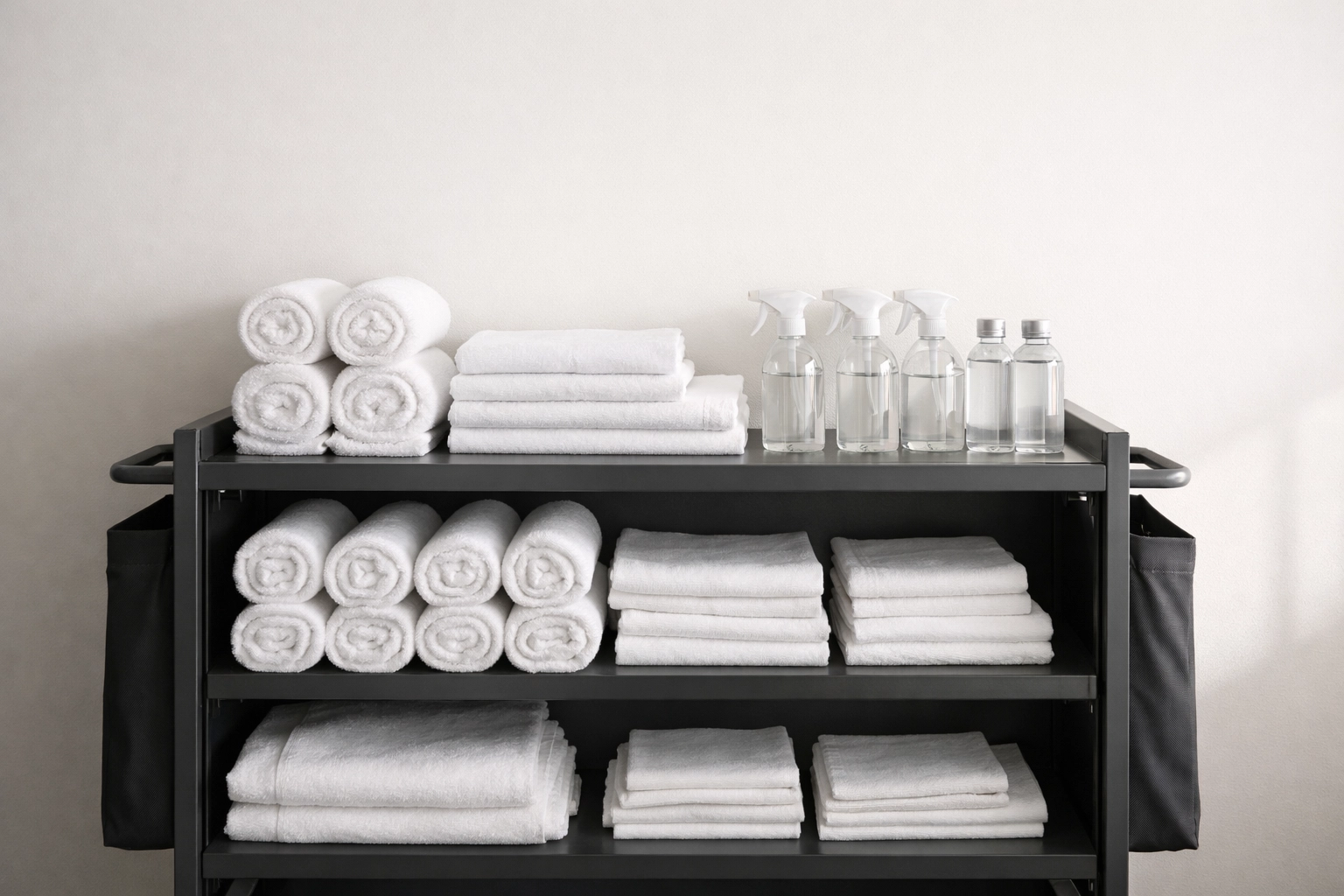
    Organized hotel housekeeping cart stocked with linens and supplies to improve cleaning efficiency.

    The Future of Housekeeping is Agentic

    We are entering the era of Agentic AI. This isn't just about "smart" schedules; it's about systems that can think and adapt. Imagine a platform that automatically reroutes your housekeeping team based on real-time guest check-outs and VIP arrivals.

    Instead of a static morning list, your staff receives a dynamic feed of priorities. If a guest at the airport checks in via their mobile device, the system immediately flags their room as the next priority for the team. No phone calls. No confusion. Just seamless execution.

    • AI-driven task assignment based on staff proximity.
    • Predictive cleaning schedules that account for guest behavior patterns.
    • Automated maintenance triggers when a room takes too long to clean (indicating a potential issue).

    Ready to see the future? Explore the possibilities at https://referrals.mews.com/umqHYIto.

    Empowering Your Team

    At the end of the day, housekeeping is a human business. We believe in technology that stays out of the way so your people can shine. When your team has a clear, simple goal and the tools to achieve it, the results speak for themselves.

    Don't overcomplicate it. Start with the two-minute rule. Give them a mobile app that works. Watch your efficiency soar.

    Impeccably clean and sunlit boutique hotel room showing the results of efficient housekeeping operations.

    Transform your operations today

    Making the switch to a modern system doesn't have to be a headache. It's about taking the first step toward a more organized, profitable future. You can start seeing improvements in your room turnover times almost immediately.

    Get your property running at peak performance. It's easy, it's fast, and it will get you earning more revenue in no time. Check out how Mews can help you at https://referrals.mews.com/umqHYIto.

  • How to Choose the Best Coffee Suppliers for Coffee Shops (Compared)

    How to Choose the Best Coffee Suppliers for Coffee Shops (Compared)

    So, you’re opening a coffee shop? Or perhaps you’re already in the thick of it, but your current setup feels a bit… lukewarm. Choosing a partner is one of the most significant decisions you will make. Notice we said "partner" and not "supplier." Because, to be honest, anyone can sell you a bag of beans. But not everyone will stand by you when your grinder decides to give up the ghost at 8:00 AM on a Monday.

    Finding the right coffee suppliers for coffee shops is about more than just the price per kilo. It’s about quality, reliability, and finding people who care as much about your customers' morning latte as you do. We believe that the relationship between a roaster and a café should be a "double shot" of mutual success.

    In this guide, we’re going to dive deep into what you should look for, compare the different types of wholesale coffee roasters, and explain why the "cheapest" option often ends up being the most expensive mistake you’ll ever make.


    1. Quality and Freshness: The Non-Negotiables

    We’ve all been there. You walk into a café, the decor is stunning, the lighting is perfect, but the coffee tastes like burnt rubber. Usually, that’s a freshness issue. When you’re looking at coffee suppliers, the very first thing you need to ask is: "When was this roasted?"

    Coffee is a fresh product. Think of it like bread or produce rather than a pantry staple. Ideally, you want beans that have been roasted within the last 7 to 14 days. This gives the coffee enough time to "degas" (release carbon dioxide) but ensures the volatile aromatics are still peaking. At Limini Coffee, we roast to order. This means your coffee isn't sitting on a shelf in a warehouse for months; it’s fresh, vibrant, and ready to shine.

    Why is this important?

    Freshness affects everything from the crema on your espresso to the ease of tamping and extraction. Old beans become brittle and lose their oils, making them unpredictable to dial in. If your supplier can’t give you a clear roast date, it’s probably time to look elsewhere.

    Freshly roasted specialty coffee beans in a cooling tray, highlighting quality for coffee shop suppliers.


    2. More Than Just Beans: Training and Support

    You could have the most expensive, ethically sourced, award-winning beans in the world, but if your barista doesn't know how to properly steam milk, the end result will be mediocre. This is where the best coffee suppliers for coffee shops really differentiate themselves.

    We believe that a roaster’s job only starts with the roast. A huge part of our role is ensuring you know how to use the product. Does your potential supplier offer barista training? And we don't just mean a quick 20-minute demo. We’re talking about deep dives into extraction theory, milk chemistry, and workflow efficiency.

    The "Hidden" Value of Training

    Imagine a busy Saturday morning. Your new starter is struggling with the latte art or the difference between a flat white and a cappuccino. If your supplier has provided solid training overview sessions, that staff member feels confident, the drinks come out faster, and your customers leave happy. When comparing suppliers, check if training is included in your wholesale agreement or if it's an extra cost. At Limini Coffee, we see training as an investment in our partnership.


    3. The Equipment Dilemma: To Buy or To Lease?

    The hardware in your shop is the engine room of your business. When looking for wholesale coffee roasters, you’ll find that some also provide equipment. This can be a lifesaver.

    Expert barista pouring heart latte art, showcasing the value of professional training from coffee suppliers.

    Choosing the right kit: like a La Spaziale machine: is crucial. But what happens when things go wrong? You need to know that your supplier has your back.


    4. Comparing the Types of Suppliers

    Not all coffee suppliers are created equal. Let’s break down the three main categories you’ll encounter in the UK market.

    Supplier Type Pros Cons
    The "Big" Commercial Brands Very low price per kilo, free (but basic) equipment, recognizable branding. Low quality, dark/oily roasts, very little personalized support, long contracts.
    The Micro-Roaster Often very high quality, extremely local, trendy. May lack the infrastructure for emergency repairs, limited training facilities, can struggle with consistency at scale.
    Specialty Wholesale Roasters (The Sweet Spot) High-quality specialty coffee sourcing, dedicated training labs, in-house engineers, and scalable volume. Slightly higher price point than commercial brands (but worth every penny).

    We like to think of Limini Coffee as that sweet spot. We have the passion and quality of a micro-roaster but the robust support system of a much larger operation. We’ve spent years perfecting the wholesale experience because we know that your success is our success.


    5. Sourcing and Ethics: Why it Matters to Your Customers

    Modern coffee drinkers are savvy. They want to know where their coffee comes from and if the farmers were paid fairly. "Sustainability" isn't just a buzzword anymore; it's a business requirement.

    When you’re vetting coffee suppliers for coffee shops, ask about their sourcing practices. Do they have direct relationships with farms? Are they transparent about their supply chain? We take great pride in how we source our coffee, focusing on quality and ethical partnerships. Being able to tell your customers the story behind their cup adds a layer of theatre and engagement that builds loyalty.

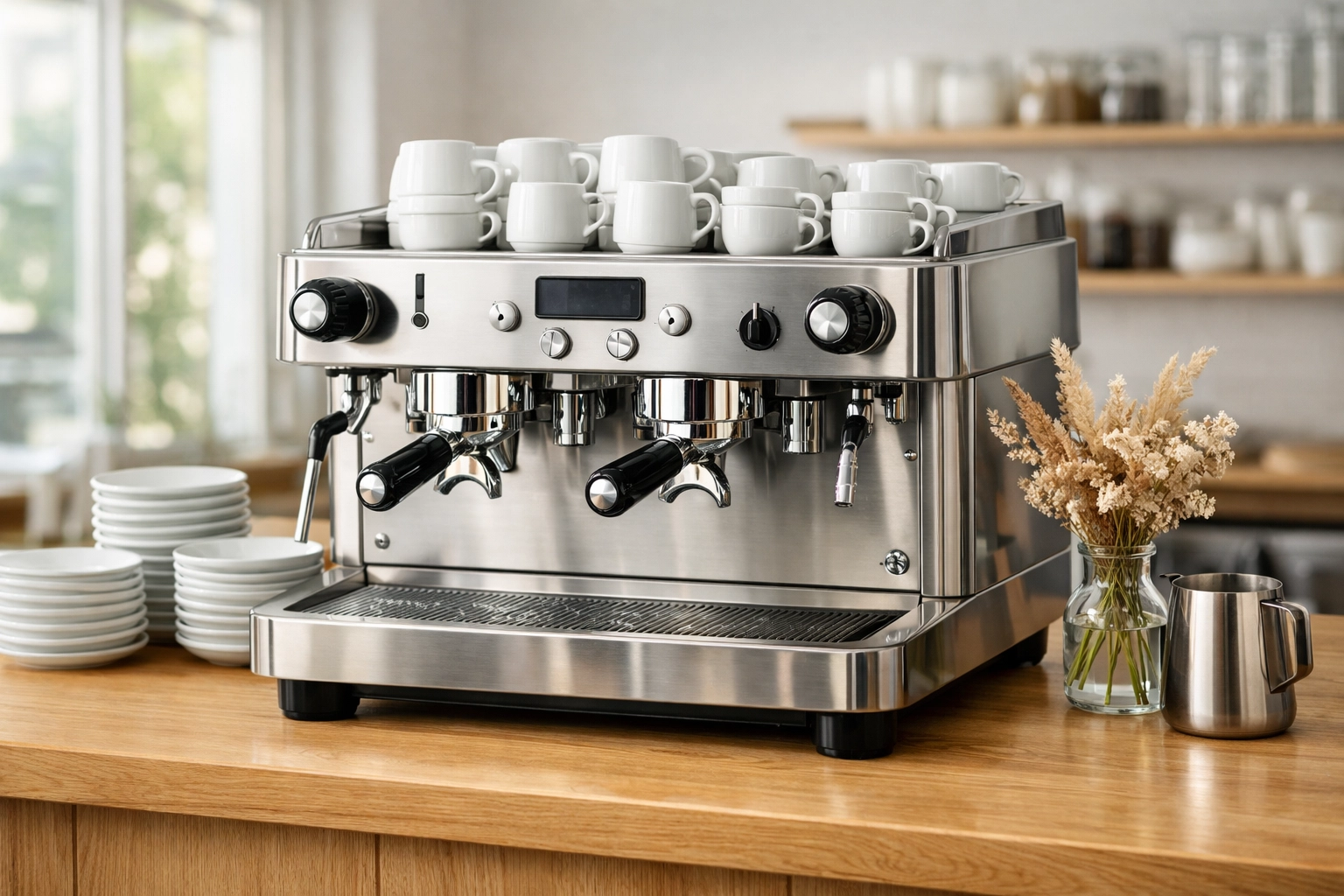
    Professional espresso machine in a sunlit café, illustrating essential equipment support from wholesale roasters.


    6. Logistics, Minimum Orders, and Reliability

    It sounds boring, but logistics can make or break your week.

    • Minimum Order Quantities (MOQs): Some large wholesale coffee roasters require you to buy 20kg+ at a time. If you’re a small shop, that coffee is going to go stale before you reach the bottom of the last bag.
    • Delivery Windows: Do they deliver on a set day, or can you order as needed?
    • Communication: If you realize at 4:00 PM on a Thursday that you’re going to run out of beans by Saturday, can you get a human on the phone?

    At Limini Coffee, we try to be as flexible as possible. We know that café life is unpredictable. Sometimes you have a random rush and need extra coffee cups or beans yesterday. A good supplier understands this and works with you, not against you.


    7. The Final Checklist: Making Your Decision

    Before you sign any contracts or place that first big order, run through this checklist:

    1. Taste the coffee: This seems obvious, but don't just try one espresso. Try it as a latte, a flat white, and a long black. Does it hold up?
    2. Visit their roastery: See where the magic happens. Is it clean? Are they passionate? Do they have a training lab?
    3. Check the reviews: What are other shop owners saying? You can see our reviews here to get a feel for how we treat our partners.
    4. Ask about the "Extras": Do they provide point-of-sale materials? Do they have a coffee brewing calculator or other tools to help your baristas?
    5. Test the tech support: Ask what their response time is for a broken machine. If it's more than 24 hours, you might want to reconsider.

    Ethical sourcing of green and roasted coffee beans, showing the artisanal journey from farm to coffee shop.

    Summary: Finding Your Perfect Match

    Choosing between various coffee suppliers for coffee shops is a bit like dating. You’re looking for someone who shares your values, supports your goals, and: most importantly: makes you look good.

    We’ve dedicated ourselves to being the kind of wholesale coffee roasters that we would want to work with. Warm, professional, and obsessed with quality. If you’re looking for a partner that offers more than just a bag of beans: someone who offers the full package of training, equipment support, and world-class coffee: we’d love to chat.

    You can learn more about us here or dive straight into our wholesale options. Let’s make some incredible coffee together. 🙂

  • The Ultimate Guide to Hospitality Trends in 2026: Everything You Need to Succeed

    The Ultimate Guide to Hospitality Trends in 2026: Everything You Need to Succeed

    Master your margins. Elevate guest delight. Scale with ease.

    In 2026, the hospitality landscape has officially moved past "digital transformation" as a buzzword and into "intelligent operations" as a reality. With over 12,500 properties worldwide leading the charge, the industry is no longer just about providing a bed, it’s about orchestrating an ecosystem of seamless experiences.

    We believe technology should be invisible. It should sit quietly in the background, handling the heavy lifting so your team can do what they do best: look after people.

    Whether you’re a boutique hotelier or managing a global portfolio, staying ahead this year requires a shift in mindset. It’s about moving from reactive management to proactive intelligence, all from one innovative platform.

    The Era of Agentic AI: Beyond the Chatbot

    The days of clunky chatbots that can only tell a guest the breakfast hours are over. In 2026, we’ve entered the age of Agentic AI.

    These aren't just tools; they are autonomous agents capable of making decisions and executing workflows. They analyze historical data, real-time occupancy, competitor pricing, and even local weather patterns to implement dynamic pricing strategies that maximize your RevPAR while you sleep.

    Why it matters

    We think the best technology feels like magic. AI shouldn't just suggest a price change; it should understand why the change is necessary and execute it across all channels instantly.

    • Autonomous Revenue Management: AI agents now manage complex yield strategies, reacting to global events in milliseconds.
    • Predictive Maintenance: Systems analyze machinery and infrastructure to anticipate a leak or a broken AC unit before the guest even checks in.
    • Dynamic Housekeeping: AI-powered management assigns tasks based on real-time check-out patterns, optimizing every minute of your staff's day.

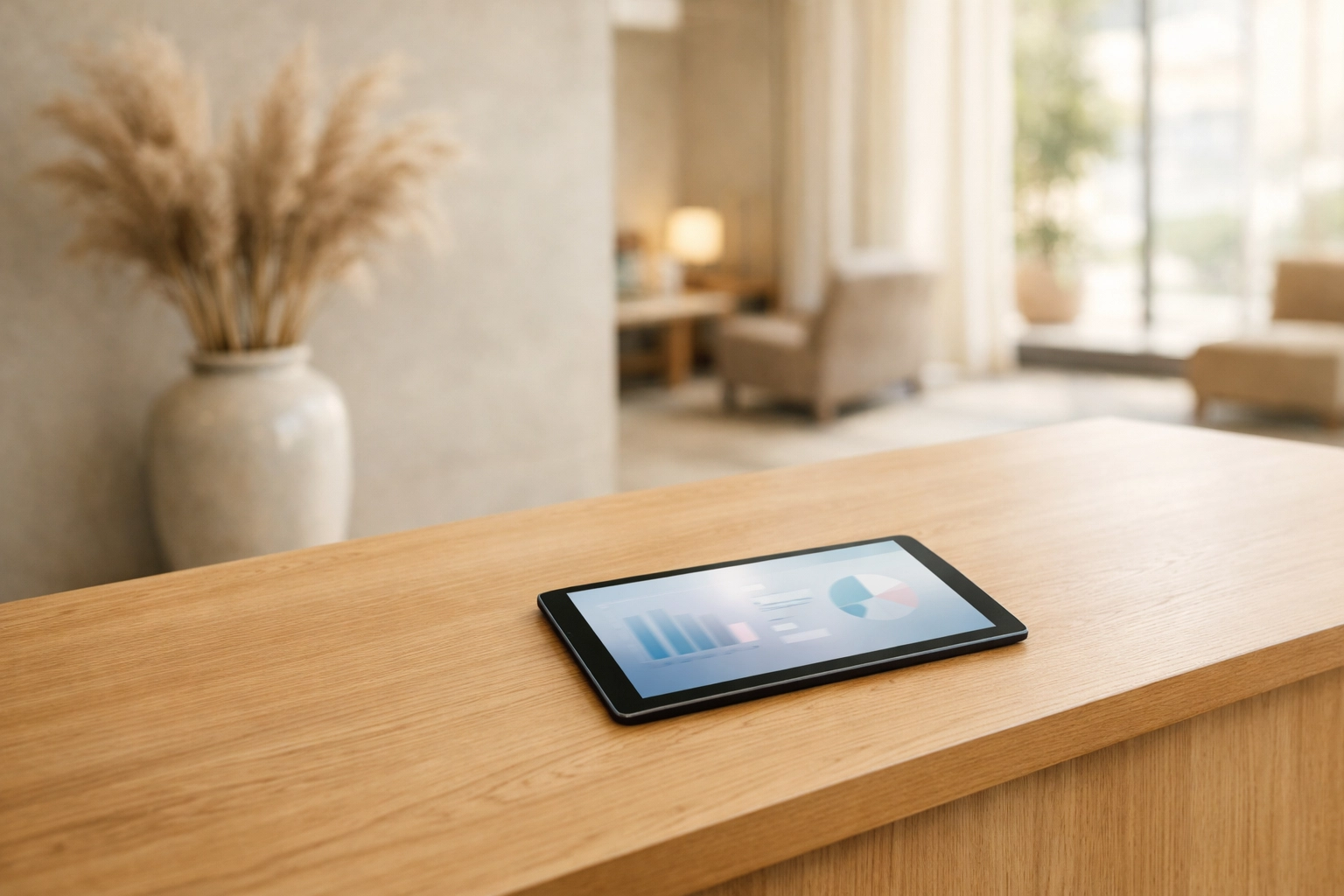
    Minimalist hotel reception desk with a digital tablet showing AI-driven hospitality data visualizations.

    Agentic Commerce: The Death of the Date Picker

    Remember when guests had to click through endless calendars to find a room? In 2026, that feels like using a rotary phone.

    Agentic commerce is reshaping how people book. Travelers are now using large language models (LLMs) and personal AI agents to plan entire trips. A guest might simply tell their device: "Find me a boutique hotel in London for the Route 66 centennial celebrations with a spa and high-speed Wi-Fi, and book it."

    For hoteliers, this means your digital presence must be optimized for AI discovery. If your PMS isn't feeding rich, real-time data to these agents, you're essentially invisible.

    "We stopped worrying about search engine rankings and started focusing on how AI perceives our brand. Our direct bookings jumped by 22% once we integrated with a platform that speaks the language of modern tech." , Regional Director, Boutique Collection

    Hyper-Personalization as a Brand Identity

    Personalization in 2026 is no longer just about putting a guest's name at the top of an email. (Though, please, keep doing that: it’s polite).

    True personalization is now an identity marker. It’s about using data-driven insights to reflect your hotel’s unique DNA back to the guest. Advanced CRM systems now offer fine-grained segmentation that adapts to whether your property is lifestyle, luxury, or experiential.

    The new standard of "Knowing Your Guest"

    • Tailored Offers: Don't send a spa discount to a business traveler who hasn't left the conference room in three days.
    • Room Allocations at Scale: Automatically assigning the quietest room to a repeat guest who values sleep above all else.
    • Fluid Seasonality: Traditional peak seasons are shifting. Use data to identify demand in shoulder months and create hyper-local reasons to visit.

    Luxury hotel room bedside with personalized amenities and high-end decor reflecting bespoke guest experiences.

    The Luxury Pivot and the Wealth Bifurcation

    The luxury segment is currently the engine room of global travel spending. High-net-worth travelers are seeking more than just a five-star room; they are seeking exclusivity, convenience, and deep local connections.

    In 2026, luxury is defined by "The Access Economy." This means providing private villas, club floors with restricted access, and curated experiences around major cultural moments like the Olympics or the Super Bowl.

    If you aren't offering a "money-can't-buy" experience, you're missing the most resilient part of the market. Luxury travelers want the friction of travel removed entirely. They expect a seamless journey from the moment they leave their front door to the moment they check into your property.

    Human-Centric Leadership in a Tech-First World

    With AI handling the routine, mundane tasks (the ones no one really liked doing anyway), your staff is free to be human again.

    However, labor costs are rising, and the staffing shortage hasn't fully vanished. The winners in 2026 are the leaders who prioritize emotional intelligence and employee well-being.

    The math is simple:

    • Leaders who prioritize well-being are 4x more likely to retain staff.
    • Happy staff are 22x more likely to drive high performance and guest satisfaction.

    We believe that great guest experiences start with great employee experiences. When your PMS handles the data entry, your team can focus on the guest standing in front of them.

    Hotel staff member interacting warmly with a guest in a modern lounge, highlighting human-centric service.

    Operational Excellence: Managing the Margins

    Rising labor and operational costs are the persistent "villains" of 2026. To combat this, operational excellence isn't just an goal: it’s a survival tactic.

    Efficiency doesn't mean cutting corners; it means cutting waste. AI lighting systems that adapt to occupancy, automated check-ins that reduce front-desk queues, and integrated payment systems that eliminate manual reconciliation.

    Simplify your stack

    If you’re still toggling between twelve different tabs to check your occupancy and your laundry costs, it’s time for a change. You need a platform that centralizes everything.

    1. Schedule a demo: See how a modern PMS can consolidate your tech.
    2. Get a 30-minute audit: Identify where manual tasks are costing you money.
    3. Deploy fast: Get up and running without the months of "onboarding" typical of legacy systems.

    Privacy, Trust, and the Data Balance

    While guests want personalization, they are also increasingly protective of their data. In 2026, transparency is your best marketing tool.

    Hotels that are clear about what data they collect and: more importantly: how it benefits the guest will build the deepest trust. The goal is to collect better data, not more data. Focus on the preferences that actually change the guest’s stay, and leave the rest behind.

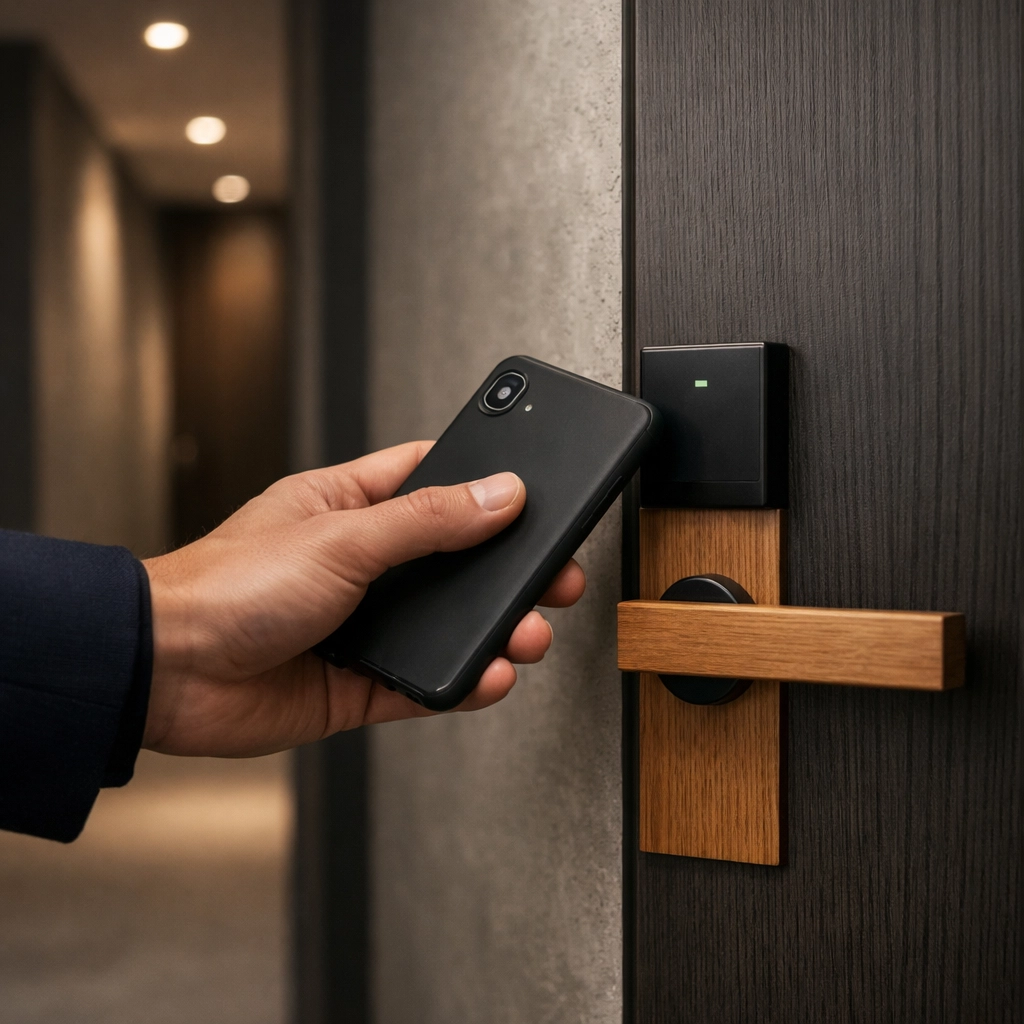
    Guest using a digital room key on a smartphone to securely unlock a modern hotel door for a seamless stay.

    The Path Forward

    The hospitality industry in 2026 is vibrant, fast-paced, and more intelligent than ever. Success isn't about having the most gadgets; it's about having the right ecosystem that allows you to be agile.

    You don't need to fear the robots. You just need to make sure they're working for you, not the other way around.

    Ready to transform your property and lead the 2026 trends? We’re here to help you get there.

    Get started with the world’s most innovative hospitality platform.
    Learn how Mews can elevate your guest experience today.

  • 7 Mistakes You’re Making with Direct Bookings (and How a Better Engine Fixes Them)

    7 Mistakes You’re Making with Direct Bookings (and How a Better Engine Fixes Them)

    Capture the guest. Increase your margin. Build a lasting brand.

    In the high-stakes world of modern hospitality, your booking engine is more than a utility. It’s your digital front door. Yet, for too many hoteliers, that door is heavy, creaky, and occasionally locked. We see properties spending thousands on SEO and social media only to let the guest slip away at the final hurdle.

    The industry is moving fast. AI is personalizing every interaction. Guests expect a Netflix-style ease of use. If your booking process feels like a 1998 tax form, you aren't just losing a reservation: you’re losing a relationship.

    We believe technology should disappear into the background. It should empower, not hinder.

    Here are the friction points slowing you down and how a modern platform turns them into conversion machines.

    1. The Friction-Heavy Checkout

    Speed is the new currency.

    If your guest has to click through five different pages to see a price, they’ve already opened a new tab for Expedia. The "click-and-pray" method of hotel booking is dead. Modern guests suffer from decision fatigue. When you ask them to fill out 15 fields of information before they even see a room total, you’re creating a barrier to entry.

    A better engine streamlines this into a single-flow experience.

    • One-click room selection.
    • Minimalist data entry.
    • Instant confirmation.

    We think the best booking engine is the one the guest doesn't even notice they’re using. It should be a frictionless slide from "I want to stay here" to "I’m staying here."

    2. The Mobile Ghost Town

    In 2026, "mobile-friendly" isn't a feature; it’s the baseline.

    More than 60% of travel searches happen on a smartphone. Yet, many booking engines are still just desktop sites shrunk down until the buttons are impossible to tap. If a guest has to pinch and zoom to find the "Book Now" button, they won’t. They will leave.

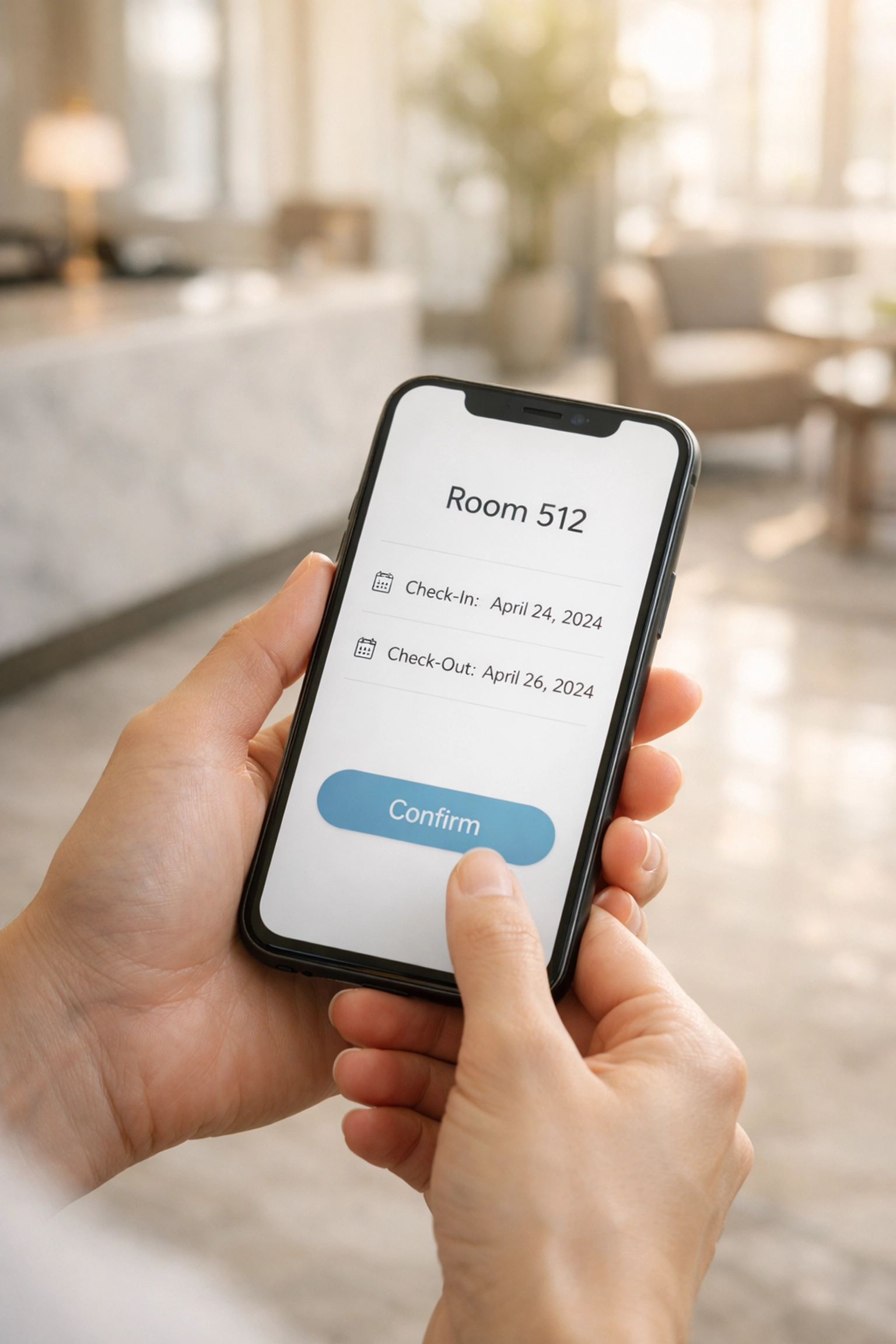
    Person using a mobile-first hotel booking engine on a smartphone in a bright hotel lobby.

    A modern engine is built mobile-first. This means thumb-friendly navigation, Apple Pay or Google Pay integration, and lightning-fast load times. When you remove the need for a guest to find their physical wallet, your conversion rates skyrocket.

    "We saw a 25% jump in mobile bookings the month we switched. It turns out people actually like booking on their phones when it doesn't hurt their eyes." : General Manager, Boutique London Property.

    3. Hidden Fees and Pricing "Surprises"

    Transparency builds trust. Obfuscation builds resentment.

    One of the biggest mistakes in direct booking is showing one price on the results page and a significantly higher one at checkout due to "resort fees," "cleaning taxes," or "service charges." This bait-and-switch tactic might work once, but it kills your brand long-term.

    An innovative booking engine displays the total cost of the stay upfront.

    • Clear breakdowns of taxes and fees.
    • Live currency conversion.
    • Honest value propositions.

    When guests feel like you’re being straight with them, they are more likely to book direct. They don't want to feel like they’re being "gamed." They want to feel like they’re being hosted.

    4. Leaving Incremental Revenue on the Table

    Upselling isn't just about making more money; it’s about better guest experiences.

    Most booking engines treat a room as a commodity. A bed, a bath, a price. But a guest isn't just buying a room; they’re buying a weekend away, a business trip, or a romantic escape. If you aren't offering a breakfast add-on, a late checkout, or a bottle of champagne at the point of purchase, you’re failing the guest.

    Elegant breakfast-in-bed tray on a white duvet illustrating hotel upsell opportunities and add-ons.

    A smart engine uses AI to suggest relevant add-ons based on the booking type.

    • Suggesting a spa treatment for a weekend couple.
    • Offering high-speed Wi-Fi upgrades for business travelers.
    • Promoting local experiences directly in the flow.

    By integrating these into the booking journey, you increase your RevPAR (Revenue Per Available Room) without extra marketing spend. It’s about being helpful, not pushy.

    5. The Great Data Silo

    Your booking engine should be your PMS’s best friend.

    A common mistake is using a third-party booking engine that doesn't talk to your Property Management System (PMS) in real-time. This leads to overbookings, manual data entry errors, and a fragmented guest profile. If your front desk doesn't know what the guest requested in the booking engine until they check in, the guest experience is already compromised.

    We believe in a unified ecosystem. When your booking engine is part of a platform like Mews, data flows seamlessly.

    • Real-time inventory updates across all channels.
    • Instant guest profile creation.
    • Automated communication triggers.

    Everything stays in one place. No manual exports. No "lost" requests. Just operational excellence.

    6. Friction at the Finish Line (Payments)

    If the payment fails, the guest fails.

    Traditional booking engines often rely on clunky, third-party payment gateways that redirect the user to a scary-looking website. This is where trust dies. Furthermore, if you’re still manually charging cards from a printed-out list at the end of the day, you’re inviting fraud and chargebacks.

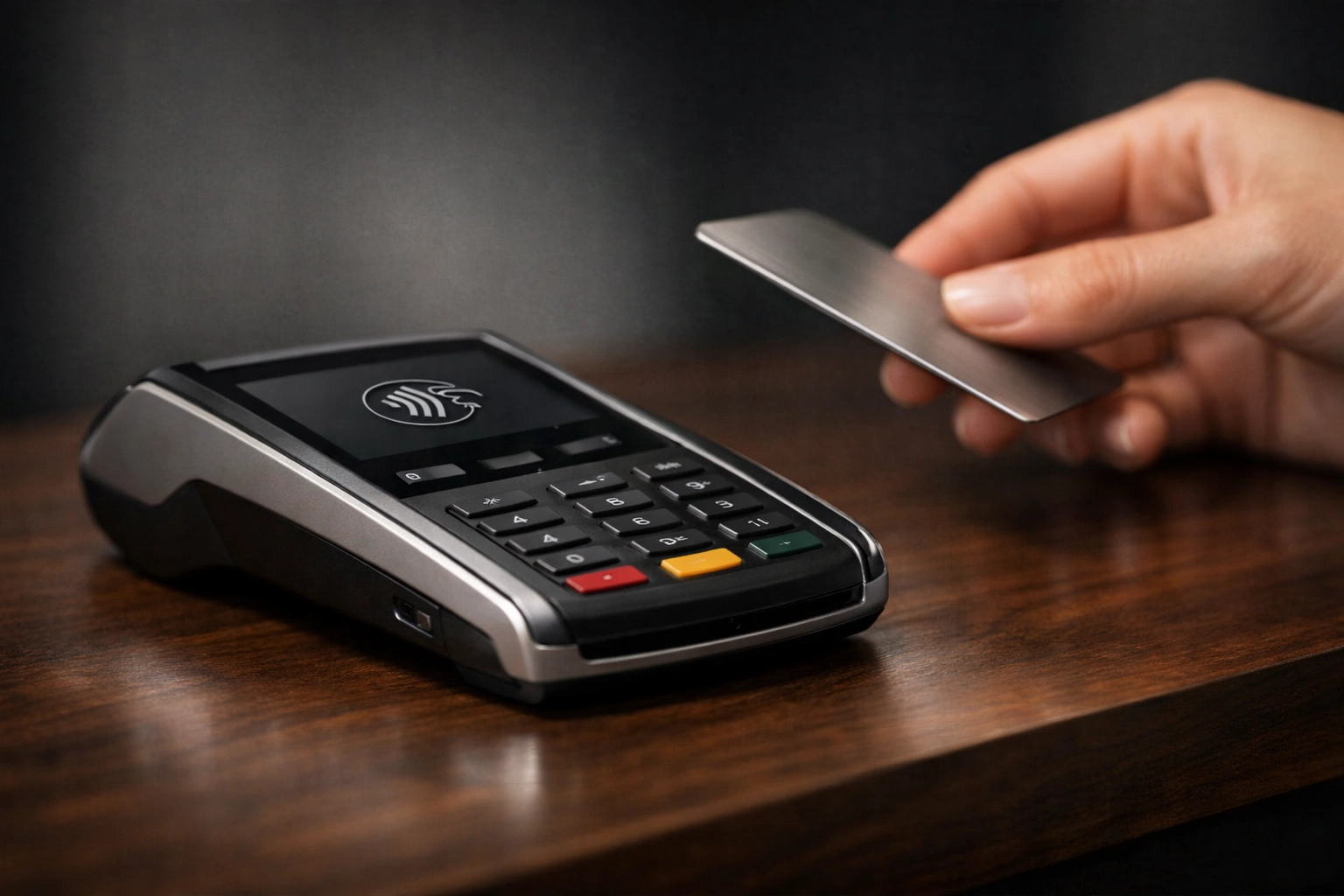
    Secure contactless payment terminal in a hotel for seamless and safe direct booking transactions.

    A better engine handles payments natively and securely.

    • Tokenized card details for maximum security.
    • Support for local payment methods (Alipay, iDEAL, etc.).
    • Automated pre-authorizations to reduce no-shows.

    By automating the payment flow, you free up your staff to actually talk to guests instead of wrestling with a credit card terminal. Get started with a more secure way to manage your property at https://referrals.mews.com/umqhyito.

    7. The Generic "Thank You"

    The booking journey doesn't end when the "Confirm" button is clicked.

    Most hotels send a boring, plain-text confirmation email that looks like a receipt from a hardware store. This is a missed opportunity. This is the moment of peak excitement for the guest. They just spent money on a trip; celebrate it.

    An innovative engine allows for customized, branded, and automated post-booking journeys.

    • Personalized welcome videos.
    • Links to a digital guest portal.
    • Early check-in options via the web.

    This is where you move from being a "provider" to being a "host." You set the tone for the entire stay before they even step through your doors.

    A traveler entering a modern hotel room, showcasing a seamless and welcoming guest experience.

    The Shift to Operational Excellence

    Stop thinking about your booking engine as a cost center. Start thinking about it as your most productive employee.

    The hospitality landscape in 2026 is defined by those who embrace technology to enhance humanity. By fixing these common mistakes, you aren't just increasing your direct booking percentage; you’re reclaiming your guest data, your margins, and your time.

    We see a future where the guest journey is invisible, intuitive, and incredibly personal. It starts with a booking engine that works with you, not against you.

    Why Mews?

    We believe in the power of the guest experience. Our platform is designed to take the friction out of hospitality so you can focus on what matters: making people feel welcome.

    • 12,500+ properties worldwide.
    • Industry-leading conversion rates.
    • The heart of your digital ecosystem.

    It’s time to stop making mistakes and start making connections. Your guests are ready. Are you?

    Explore how to transform your property’s performance and join the future of hospitality by visiting https://referrals.mews.com/umqhyito. It’s a simple step toward a more profitable, more innovative guest journey that will get you earning revenue in no time.

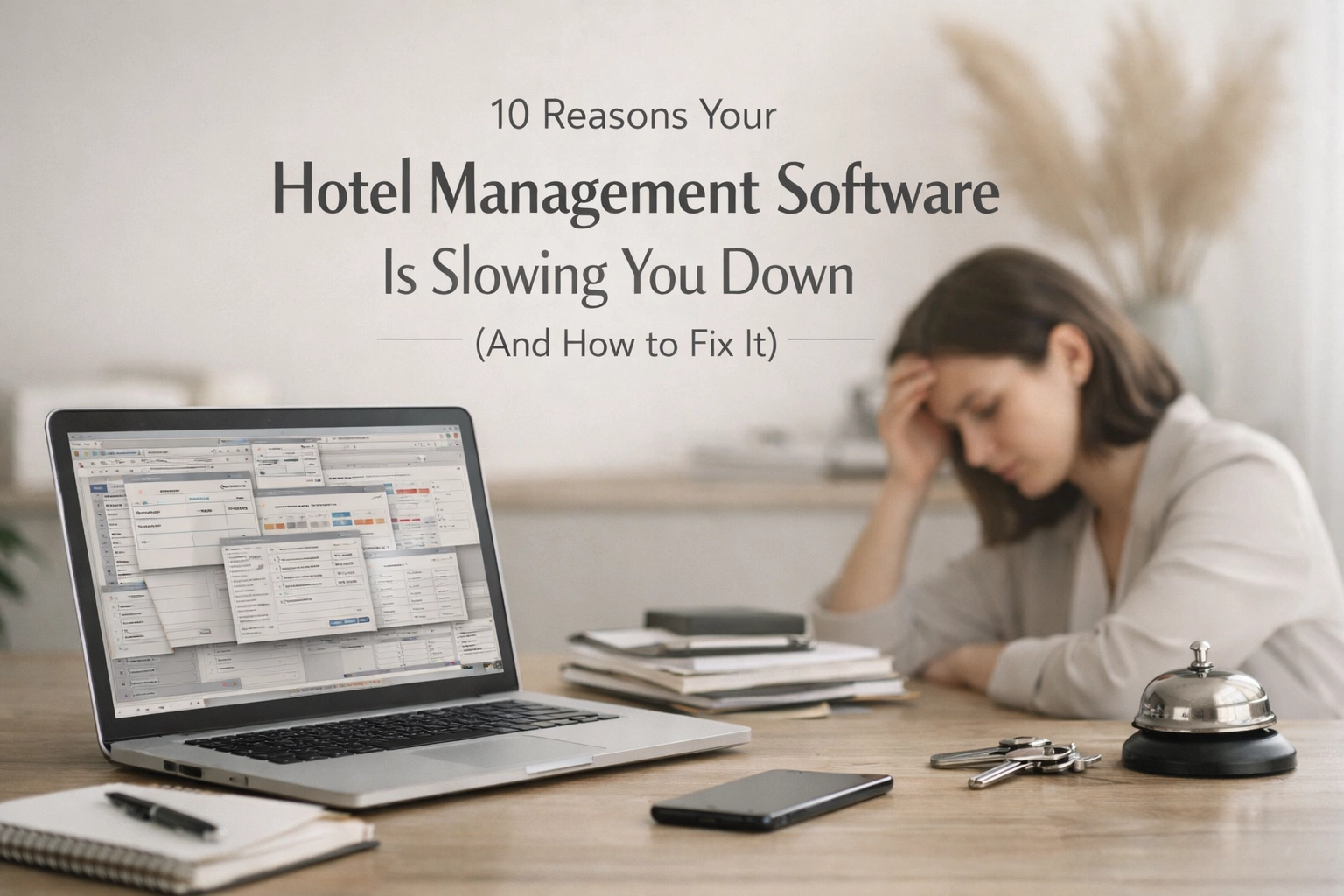
  • 10 Reasons Your Hotel Management Software Is Slowing You Down (And How to Fix It)

    10 Reasons Your Hotel Management Software Is Slowing You Down (And How to Fix It)

    Streamline your operations. Empower your team. Delight your guests.

    If you feel like you’re spending more time fighting your software than hosting guests, you aren't alone. Legacy systems and clunky interfaces are the silent killers of hotel productivity. In an industry where seconds matter, being tethered to a desk by a slow PMS is a liability.

    We believe technology should be the wind in your sails, not the anchor dragging you down. Modern hospitality demands a platform that’s as fast and flexible as the guests you serve.

    Here is why your current setup is likely slowing you down: and the roadmap to fixing it.

    1. The Integration Wall

    Most legacy systems are closed loops. They don’t play well with others. When your PMS doesn’t talk to your channel manager, CRM, or POS, your staff becomes the "human API": manually moving data from one screen to another. This isn't just slow; it’s a recipe for error.

    • Why it matters: Disconnected tools lead to overbookings and lost revenue.
    • The Mews way: We use an open API philosophy. Connect to hundreds of industry-leading apps in minutes, not months.
    • The fix: Move to a cloud-native platform that treats integrations as a standard, not a luxury.

    Modern hotel workspace with cloud-native PMS software on a laptop for seamless integrations.

    2. Manual Overrides are Killing Your Flow

    Are you still manually adjusting rates every time a local event is announced? Or worse, overriding your system's logic because you don't trust its automation? Manual overrides create a fragmented data trail that makes it nearly impossible to track performance over time.

    We think automation is the key to scaling. If you're doing the same task three times a day, your software should be doing it for you.

    • Actionable step: Audit your most frequent manual tasks.
    • The goal: Shift 80% of routine updates to automated rules.
    • The result: Your team gets back hours of their day to focus on high-touch guest interactions.

    3. The "On-Premise" Anchor

    If your software requires a server room in the basement, you’re already behind. Legacy hardware is slow, prone to failure, and expensive to maintain. It also limits your mobility. If you can't check your occupancy levels from your phone while grabbing a coffee, your software is slowing your personal productivity.

    • 12,500+ properties have already moved to the cloud to ditch the hardware headache.
    • Cloud-native means instant updates, no downtime, and access from anywhere in the world.
    • Security: Modern cloud systems provide enterprise-grade encryption that local servers simply can't match.

    4. Fragmented Guest Data

    A guest checks in. They’ve stayed with you five times, but your PMS sees them as a stranger because they booked through a different channel this time. This lack of a unified guest profile forces your staff to ask the same questions repeatedly, slowing down the check-in process and hurting the guest experience.

    "We used to spend ten minutes per check-in just verifying details. Now, with a unified CRM, it’s under two minutes. Our guests feel recognized, and our lobby stays clear."

    Hotel staff using a unified CRM on a tablet for a personalized and fast guest check-in experience.

    5. The Nightmare of Non-Real-Time Inventory

    If your booking engine and channel manager aren't synced in true real-time, you’re playing a dangerous game. A 30-second delay in synchronization can lead to a double booking during peak periods. This forces your team into "recovery mode": calling guests to cancel or relocate them: which is the ultimate productivity killer.

    • Eliminate lag. Real-time inventory management is a non-negotiable.
    • Automate distribution. Your rates should update across all OTAs the moment a booking is made.
    • Focus on RevPAR. Stop worrying about overbookings and start focusing on yield.

    6. Reports That Require a Data Science Degree

    Data is useless if you can’t read it. Many older systems bury key metrics under layers of complex menus and archaic export formats. If it takes your revenue manager two hours to build a daily pickup report, your software is failing you.

    We believe in clear, visual dashboards that tell you exactly how your business is performing at a glance.

    1. Identify your top 3 KPIs (Occupancy, ADR, RevPAR).
    2. Schedule automated reports to hit your inbox every morning.
    3. Spend your time acting on data, not collecting it.

    7. Over-Complicated User Interfaces

    If it takes two weeks to train a new receptionist on your PMS, the software is too complex. High staff turnover is a reality in hospitality; you need a system that is intuitive enough for a new hire to master in a single afternoon.

    • Easy to use: A clean, modern UI reduces "click fatigue."
    • Search-first design: Find guests, rooms, or bookings instantly with a global search bar.
    • Mobile-first: Enable your team to manage housekeeping or check-ins from a tablet on the move.

    8. Ignoring the Self-Service Shift

    Forcing every guest to stand in line at a front desk is an outdated operational model. It creates bottlenecks during peak hours and frustrates modern travelers who prefer digital solutions.

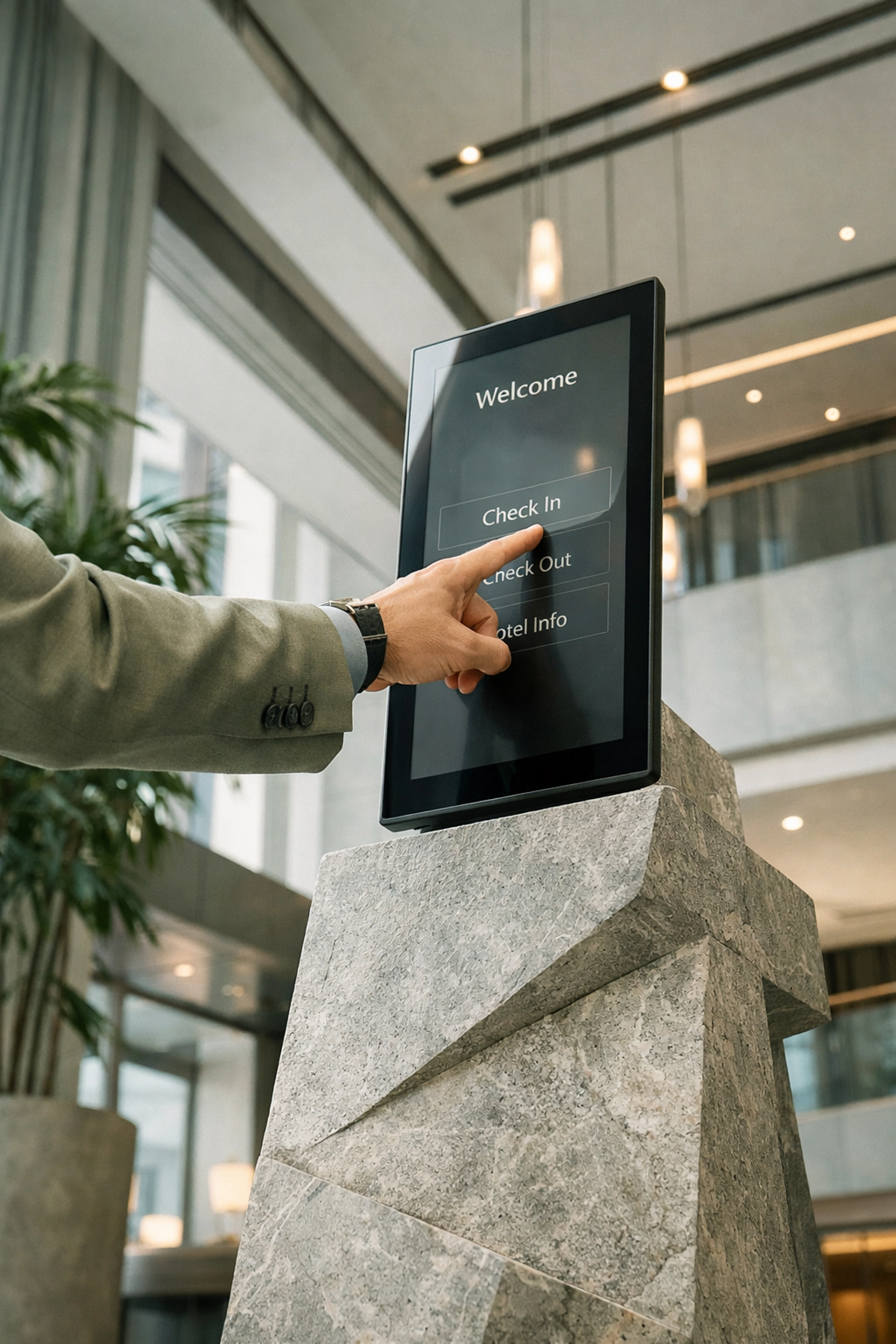
    • Self-check-in kiosks: Let guests bypass the queue.
    • Mobile check-in: Send a link to the guest's phone so they can check in before they even arrive.
    • Digital keys: Automate the entire arrival process for a seamless "straight-to-room" experience.

    A guest using a sleek digital self-check-in kiosk in a modern hotel lobby to avoid queues.

    9. Lack of Actionable Guest Feedback

    Guest reviews often highlight the exact operational friction points your software is causing. If your PMS doesn't integrate feedback loops, you're missing out on the data needed to improve.

    • Fix: Integrate your guest survey tool directly with your PMS.
    • Follow up: Automate responses to common feedback to save time.
    • Trend analysis: Look for patterns: if guests consistently mention slow check-ins, it's time to look at your kiosks and automation.

    10. Security and Compliance Gaps

    Older systems often struggle with modern security standards like PCI DSS or GDPR. Managing these manually is a massive time sink and a significant legal risk. Modern, innovative software handles compliance in the background, ensuring guest data is protected without requiring constant manual intervention from your IT team.


    How to Fix It: The Mews Transformation

    The solution isn't just to work harder; it's to work smarter with a platform designed for the future of hospitality. Mews isn't just a PMS; it's an ecosystem designed to give you your time back.

    We’ve seen properties achieve:

    • 40% reduction in check-in times through automation.
    • 20% increase in secondary revenue via upsell tools.
    • Hours of admin saved every single week for every staff member.

    See what Mews can do for your property.

    If you're ready to stop the slowdown and start growing, it's time for a change. Experience a cloud-native platform that puts your guests: and your sanity: first.

    Explore the Mews Platform and get started today.

    Ready to innovate?

    Don't let outdated technology define your guest's experience. Schedule a 30-minute demo to see how automation can transform your daily operations. It’s time to move fast, stay flexible, and get back to the heart of hospitality.

    Innovative hotel lounge design reflecting the efficiency and automation of modern management software.

    Get started with Mews here: https://referrals.mews.com/umqhyito

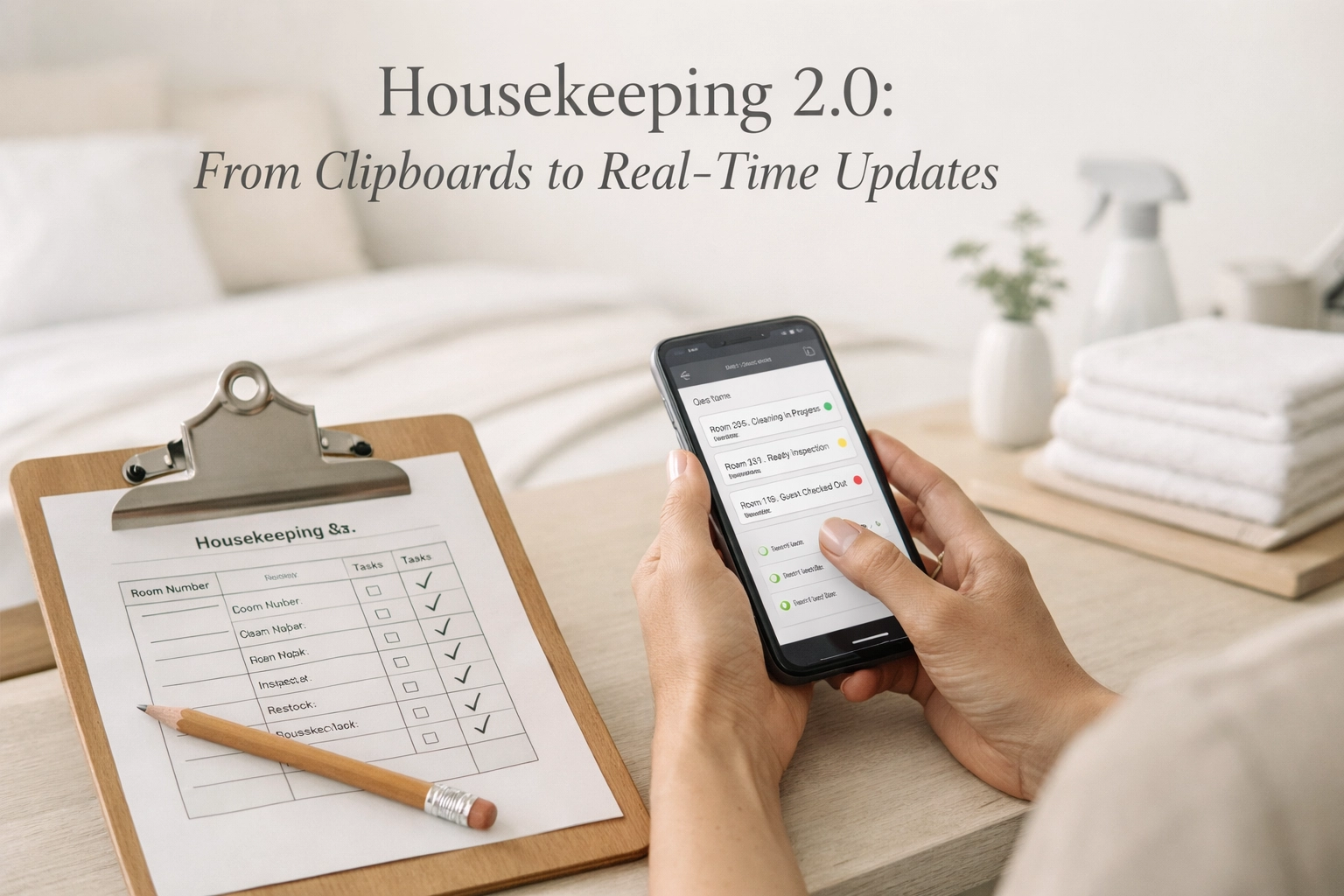
  • Housekeeping 2.0: From Clipboards to Real-Time Updates

    Housekeeping 2.0: From Clipboards to Real-Time Updates

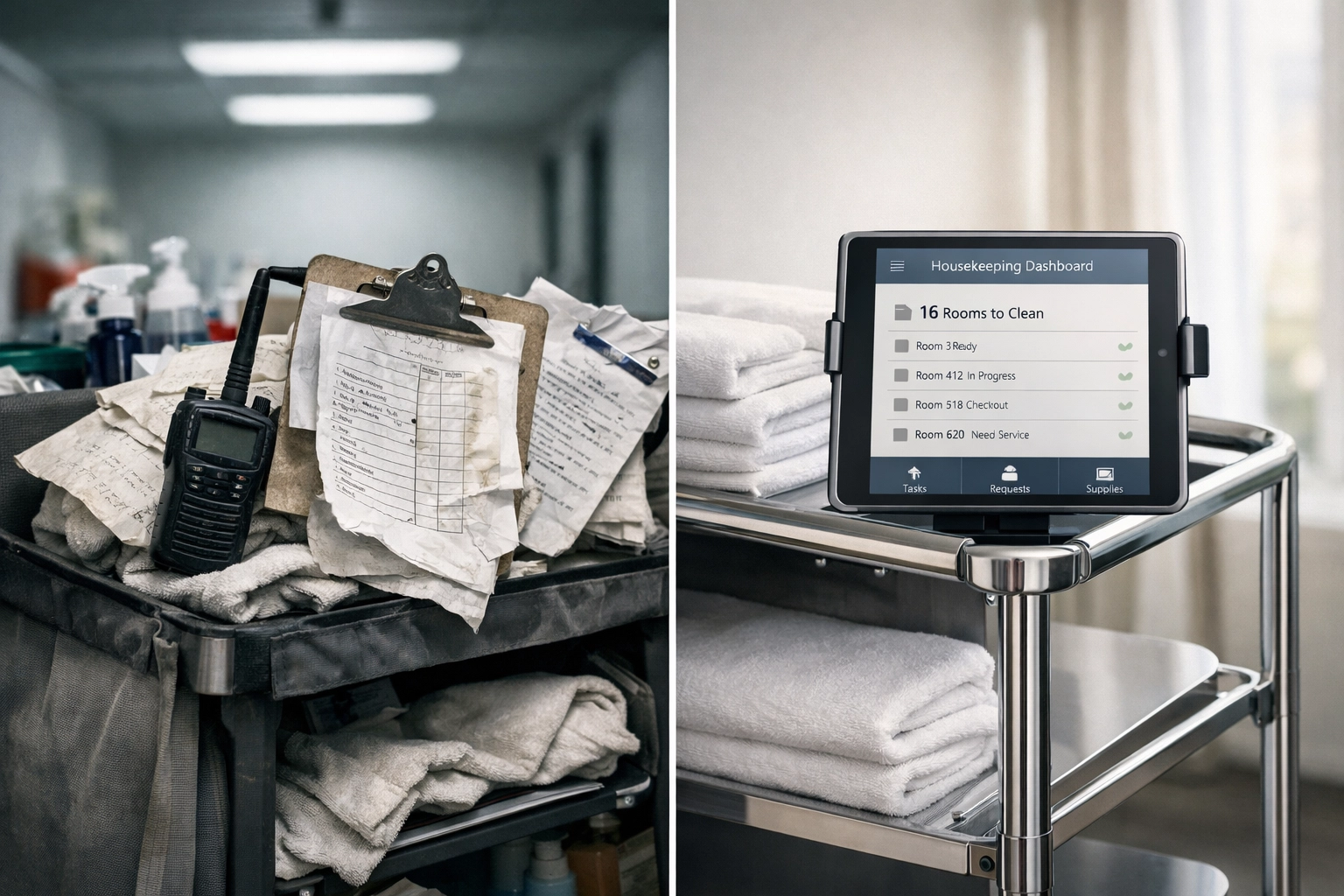
    Your front desk just got a checkout. Your housekeeping team? Still checking a printed list from two hours ago.

    This is the clipboard problem: and it's costing you rooms, revenue, and guest satisfaction every single day. When your housekeeping operations run on paper, phone calls, and hope, the gap between checkout and availability stretches longer than it should. That means lost same-day bookings, frustrated walk-ins, and a front desk that can't give guests straight answers about room availability.

    Housekeeping software for hotels eliminates that gap entirely.

    The Real Cost of Clipboards

    Here's what happens without real-time communication. A guest checks out at 11 AM. The front desk makes a note. Eventually: maybe during a phone call, maybe when housekeeping swings by the desk: that room gets added to the cleaning list. The housekeeper finishes at 1:30 PM but doesn't report back until their break. By the time the front desk knows that room is ready, it's 2:15 PM.

    You just lost three hours of potential bookings.

    Multiply that across 50 rooms, across every checkout, and the revenue loss adds up fast. Even worse? The operational chaos. Your front desk can't accurately quote availability. Your housekeeping manager can't see who's doing what. Your maintenance team doesn't know about issues until the end of a shift.

    Paper systems create information silos. Digital systems break them down.

    Hotel housekeeper using smartphone for real-time room updates in corridor

    What Real-Time Actually Means

    Real-time housekeeping isn't just about speed: it's about visibility. Modern housekeeping software for hotels creates a shared operational picture that everyone can see and act on instantly.

    When a guest checks out, the system updates immediately. Your housekeeping team sees the new task on their mobile device right away. No waiting for printed lists. No phone tag. No "I didn't know about that room."

    As they clean, they update their progress. The front desk watches room status change from "dirty" to "in progress" to "clean" in real-time. If they find a maintenance issue: a leaky faucet, a broken TV remote: they report it through the app instantly. The maintenance team gets the alert with photos and location details before the housekeeper even leaves the room.

    This is the difference between reacting and responding. Between guessing and knowing.

    Three Ways Digital Housekeeping Changes Everything

    1. Communication becomes instant and documented

    Your housekeeping team carries mobile devices that connect them directly to every department. Need to prioritize a VIP arrival? Send the task instantly. Find a maintenance issue? Report it with photos and it's logged automatically. No more "he said, she said" about what was communicated or when.

    Every interaction leaves a digital trail. You can track who was assigned what task, when they completed it, and any issues they reported. That documentation protects your team and improves accountability across the board.

    2. Turnaround time drops dramatically

    The average hotel room takes 20-30 minutes to clean. But in traditional operations, the total turnaround time: from checkout to the front desk knowing it's available: can stretch to 3-4 hours. That's not cleaning time. That's communication lag.

    Digital systems compress that lag to near-zero. The moment a room is clean and inspected, it's available for sale. Some properties report cutting their average turnaround time by 40% simply by eliminating communication delays. That's the same cleaning speed with radically better availability.

    3. Task management becomes dynamic, not static

    Printed lists are obsolete the moment you print them. A VIP booking comes in, a guest extends their stay, a pipe bursts in room 304: your printed schedule can't adapt.

    Housekeeping software for hotels lets you reassign tasks on the fly. Your housekeeping manager can see the entire team's workload in real-time and shift priorities instantly. Need to fast-track three rooms for a group arrival? Two taps and your team knows which rooms come first.

    This flexibility doesn't just improve efficiency: it reduces stress. Your team isn't juggling mental notes and paper updates. They follow clear, current instructions on their device.

    Traditional paper-based housekeeping versus modern digital tablet system

    The Integration Advantage

    Here's where modern housekeeping software really delivers value: integration with your Property Management System.

    When your PMS and housekeeping platform talk to each other, magic happens. Check-ins, checkouts, extensions, early departures: all of this flows automatically between systems. Your housekeeping team always has the current picture. Your front desk always knows true room status.

    This integration also powers smarter scheduling. The system knows your occupancy patterns, your typical cleaning times, and your team's capacity. It can suggest optimal task assignments that balance workload and minimize movement between floors.

    You can track performance metrics without manual counting. How long does Room Type A take to clean versus Room Type B? Which team members consistently hit quality standards? How many rooms does each person complete per shift? The data's already there: you just need to look at it.

    Some platforms like Mews take this further by connecting housekeeping to your entire hotel operations ecosystem. Reservations, guest messaging, maintenance, inventory: everything flows together in one platform instead of forcing your team to jump between disconnected systems.

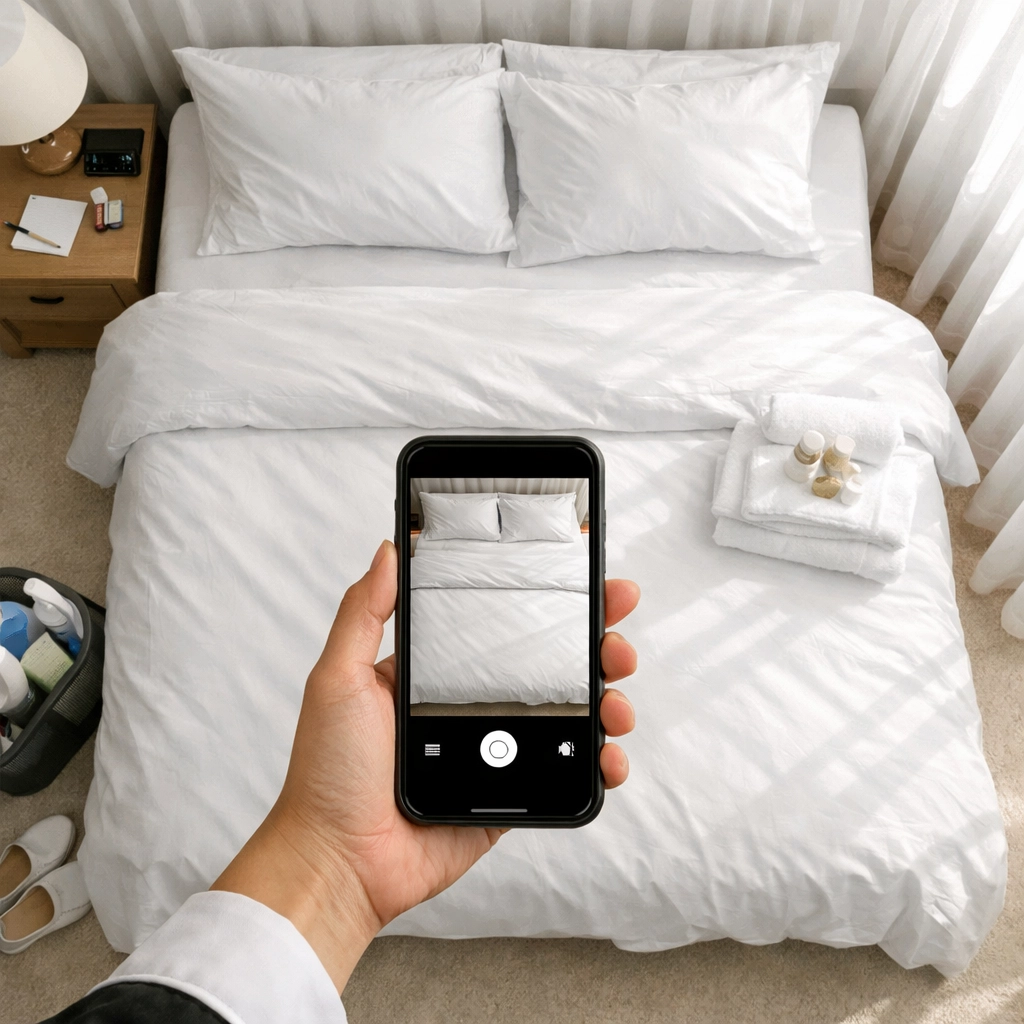
    Housekeeper documenting cleaned hotel room with mobile housekeeping software

    Beyond Basic Task Management

    The best housekeeping software for hotels goes beyond simple checklists. Look for these capabilities:

    Photo documentation. When housekeepers find damage or finish a room, they can attach photos. This creates a visual record for disputes, tracks maintenance issues more clearly, and helps with quality control.

    Preventive maintenance tracking. Deep-cleaning schedules, mattress rotations, carpet cleaning: the system can track these recurring tasks automatically and add them to appropriate schedules. No more spreadsheets or forgotten deadlines.

    Custom room priorities. Not all rooms are equal. VIP guests, long-stay rooms, rooms near problem areas: you can flag these for special attention or faster turnaround. The system remembers so your team doesn't have to.

    Multi-property management. Running more than one property? Manage all your housekeeping operations from one dashboard. Compare performance across locations, shift staff when needed, and maintain consistency without extra effort.

    Inventory integration. Some systems connect to your inventory management so housekeepers can report low supplies as they work. The hotel knows what needs restocking before you run out, not after.

    Making the Switch

    Moving from clipboards to digital housekeeping feels like a big leap. It's not.

    Most teams adapt within days, not weeks. The interface is usually simpler than social media apps your staff already use daily. Training takes a few hours, and the benefits start immediately.

    Start with a pilot approach. Choose one floor or one team to test the system first. Work out any kinks with a small group before rolling it out property-wide. This also creates internal champions who can help train the rest of your staff.

    The investment pays back quickly. Between reduced turnaround time, fewer communication errors, and better room availability, most hotels see ROI within months. Some recover their costs in weeks just from improved same-day bookings.

    What Your Team Will Notice First

    Better communication. That's what staff report most often. Front desk agents stop making awkward calls to housekeeping asking about room status. Housekeepers stop wondering which rooms to prioritize. Managers stop tracking people down for updates.

    Everyone has the information they need, when they need it.

    The second thing they notice? Less stress. When systems work smoothly, friction disappears. Your team can focus on quality and speed instead of figuring out what needs to happen next.

    Guests notice too. Faster room availability means fewer disappointed walk-ins. Cleaner quality control means more consistent experiences. Better issue reporting means problems get fixed faster.

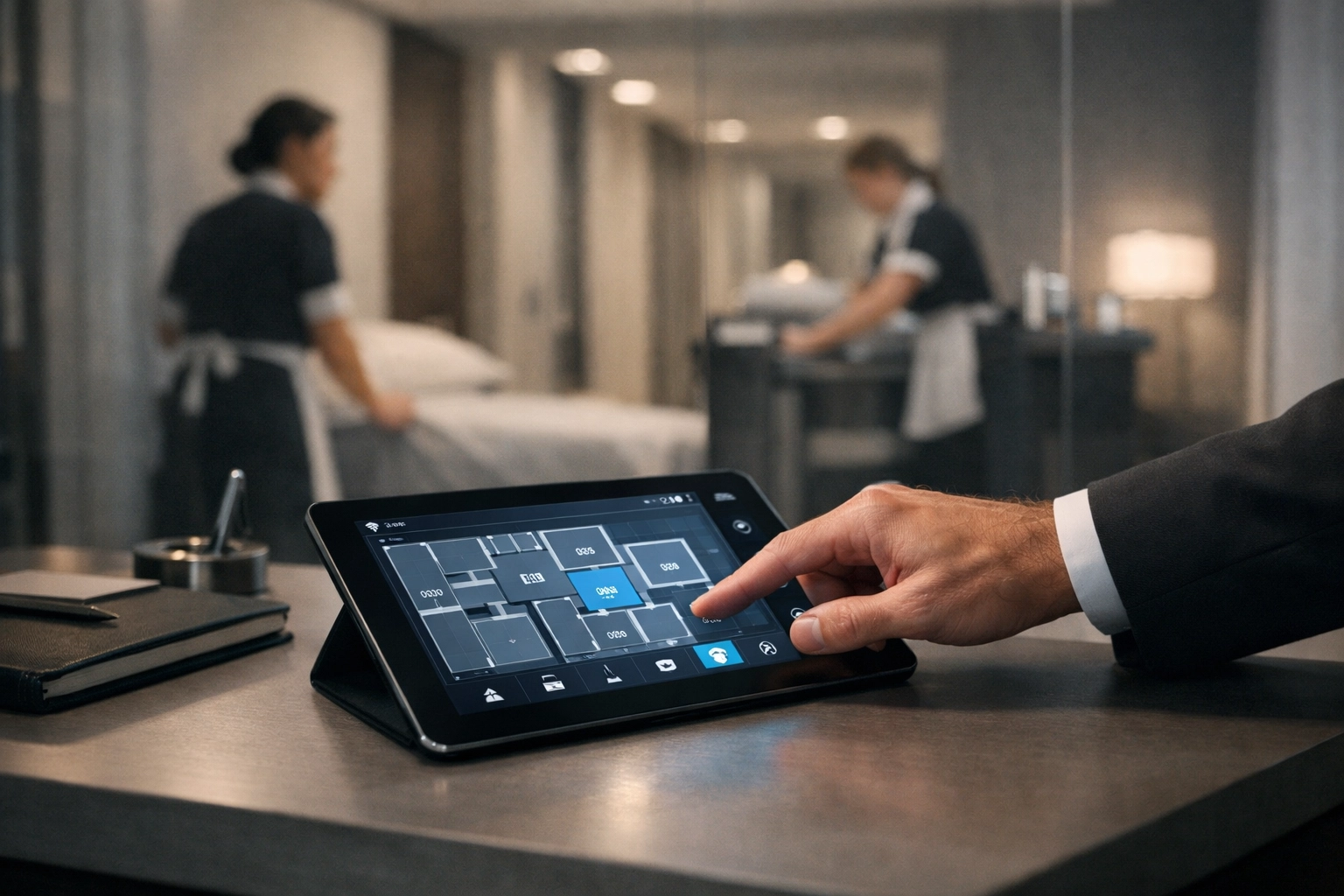
    Hotel manager monitoring housekeeping operations through digital floor plan software

    The Bottom Line

    Housekeeping software for hotels isn't about replacing your team: it's about giving them superpowers. The same people, the same rooms, but with instant communication, real-time visibility, and dynamic task management.

    The result? Rooms turn over faster. Communication improves across departments. Your front desk can quote availability with confidence. Your housekeeping manager can optimize workload without guesswork. Your team spends less time wondering what to do next and more time doing it.

    The clipboard era is over. Real-time operations are here, and they're accessible to properties of every size.

    Your next checkout is already happening. Will your housekeeping team know about it in real-time, or in two hours?

    The choice is yours; but the opportunity cost of waiting isn't zero.

  • The Ultimate Guide to Hospitality Trends 2026: Everything You Need to Succeed

    Welcome to 2026. The world is faster, smarter, and more demanding than ever. In the hospitality game, the "new normal" was yesterday’s news, today is about hyper-personalized, AI-driven, and human-centric experiences.

    If you’re still managing your property like it’s 2022, you’re already behind. But don't panic. Whether you’re running a boutique hotel in Berlin or a luxury resort in Bali, the goal remains the same: happier guests, higher revenue, and a team that isn’t burnt out.

    We believe the future of hospitality isn't just about better software. It’s about creating space for what actually matters, genuine human connection. And we’ve got the roadmap to get you there.

    The Rise of Agentic Commerce (Yes, It’s a Thing)

    The way guests book has fundamentally shifted. We’ve moved past the "click and hope" era of OTAs. In 2026, we’ve entered the age of Agentic Commerce.

    What does that mean for you? It means your future guests aren't just browsing your website; their personal AI agents are. These autonomous assistants are scanning the web, comparing your amenities against a guest’s specific preferences, and completing the booking before the human even looks at a screen.

    • Be AI-Ready: Ensure your hotel’s content: images, data, and descriptions: is structured for LLM (Large Language Model) consumption.
    • Direct-to-Agent Booking: Hotels that allow AI agents to book directly will bypass traditional commission-heavy channels.
    • Real-Time Inventory: If your PMS isn't updating in real-time, those AI agents will move on to the next property in milliseconds.

    We think the smartest way to win in 2026 is to embrace the bots so you can focus on the people.

    Person using a smartphone in a futuristic minimalist hotel lobby highlighting digital-first hospitality.

    AI: From Buzzword to Your Best Employee

    In 2026, AI has moved out of the IT department and onto the front lines. It’s no longer just about chatbots that (sometimes) answer questions. It’s about a platform that thinks, predicts, and acts.

    Revenue Management & Dynamic Pricing
    Gone are the days of manual rate changes. AI now analyzes historical data, real-time occupancy, competitor moves, and even local weather patterns or stadium events to adjust your pricing instantly.

    • Maximize ADR without lifting a finger.
    • Predict "dip" periods and launch targeted campaigns automatically.
    • Optimize inventory across all channels simultaneously.

    Operational Efficiency
    Running a hotel is expensive. Labor costs are up, and energy prices aren't getting any lower. AI-driven infrastructure is now a non-negotiable for the modern operator.

    • Smart Energy: Systems that adjust lighting and AC based on real-time occupancy, slashing utility waste by up to 30%.
    • Predictive Maintenance: Sensors that tell you a boiler is going to fail before it ruins a guest’s morning shower.
    • Dynamic Housekeeping: AI that assigns tasks based on guest check-out patterns rather than static lists.

    "Since we integrated Mews, we've saved 10 hours a week on manual admin: that’s 10 hours back to our guests." – Operations Manager, London.

    Human-Centric Leadership in a Digital World

    Here’s a truth we hold dear: technology should empower employees, not replace them.

    The hospitality industry is still grappling with staffing shortages. In 2026, the winners are the brands that prioritize employee well-being. If your staff is bogged down by clunky, legacy software, they can't provide the "wow" moments that drive 5-star reviews.

    • Mobile-First Workflows: Give your team the freedom to manage the property from a tablet or phone. No more being tethered to a front desk.
    • Automated Mundanity: Let the AI handle the "What's the Wi-Fi password?" questions. Your staff should be the ones recommending the secret local wine bar.
    • Collaborative Assistants: Digital assistants help staff manage complex guest histories, making every team member feel like they’ve known the guest for years.

    We believe that when your team is happy, your guests are happy. It’s that simple.

    Smart hotel room bedside control panel on a wooden nightstand representing automated guest experiences.

    Sustainability: The New Gold Standard

    Eco-conscious travel isn't a niche anymore; it’s the standard. In 2026, guests aren't just looking for "green" labels: they want to see the data.

    • Locally Sourced Everything: From the materials in your lobby to the ingredients in your kitchen.
    • Zero-Waste Initiatives: Guests are actively choosing properties that have eliminated single-use plastics and have robust composting programs.
    • Energy Transparency: Some hotels are even showing guests their specific "stay carbon footprint" in real-time.

    It’s not just good for the planet; it’s good for the bottom line. Reducing waste means reducing costs.

    Wellness Beyond the Gym

    If you think a treadmill in a basement counts as a "wellness program," think again. In 2026, nearly 90% of guests want to maintain their fitness and health routines while traveling.

    • In-Room Fitness: High-end equipment and streaming workout classes integrated into the room's tech.
    • Sleep Hygiene: Smart beds that adjust firmness and temperature, and lighting systems that sync with circadian rhythms.
    • Integrated Wellness: Partnering with local practitioners for in-room massages, nutritionists, or meditation sessions.

    Hotel staff using a tablet to provide personalized guest service in a bright modern hotel atrium.

    Hyper-Personalization vs. The Privacy Paradox

    Personalization has evolved. It’s no longer about putting the guest’s name on a TV screen. It’s about knowing they prefer an oat milk latte at 7:00 AM and having it ready before they ask.

    However, 2026 has also brought a "Privacy Paradox." Guests want the benefits of personalization but are increasingly wary of how their data is collected.

    • Value Exchange: Clearly show guests why you need their data. "Give us your preferences, and we’ll customize your minibar."
    • Consent-First Marketing: Move away from intrusive tracking and toward direct-to-guest communication through your own app or platform.
    • Niche Targeting: Focus on guest values (like sustainability or pet-friendliness) rather than just broad demographics.

    The Luxury Segment: Privacy is the New Flex

    The luxury market is booming, but it’s changing. Ultra-high-net-worth travelers are moving away from flashy displays of wealth and toward discreet, authentic experiences.

    • Club Floors & Private Access: The "hotel within a hotel" concept is bigger than ever.
    • Cultural Moments: Guests are booking their entire year around events: the Super Bowl, the Olympics, or the centennial of Route 66.
    • Private Villas: A massive shift toward branded residences and private villas that offer the service of a hotel with the privacy of a home.

    Minimalist hotel wellness suite with a yoga mat and natural light focusing on restorative travel trends.

    See what Mews can do

    The hospitality landscape is shifting beneath our feet, but the opportunities have never been greater. To succeed in 2026, you need a partner that lives and breathes innovation. You need a platform that connects your guests, your team, and your tech seamlessly.

    We believe in making the complex simple. Our cloud-native PMS is designed for the modern hotelier who isn't afraid to lead.

    • Connect effortlessly: Integrate with over 1,000 industry-leading apps.
    • Grow faster: Scalable solutions for single properties or global chains.
    • Work smarter: Automate the boring stuff and get back to hospitality.

    Ready to transform your property and lead the charge into 2026? It’s easier than you think.

    Get started with Mews today and get your property future-ready in no time.

    Final Thoughts: The Road Ahead

    2026 is the year where technology finally becomes invisible. It’s the engine under the hood that allows your property to run smoothly, while you and your team provide the human touch that no AI can ever replicate.

    Focus on your people. Embrace the bots. Prioritize the planet. If you do those three things, you won't just survive in 2026: you'll thrive.

    Let's make some magic happen. All from one innovative platform.