Author: admin

  • Why Wholesale Specialty Coffee Will Change the Way You Think About Your Margins

    Why Wholesale Specialty Coffee Will Change the Way You Think About Your Margins

    Let’s talk about the Great Coffee Illusion. You’ve probably seen the headlines or heard the "experts" at the pub claiming that coffee shops are absolute gold mines. The logic usually goes something like this: "It only costs 20p to make a cup of coffee, and they sell it for £3.50! That’s a massive markup!"

    And honestly? On paper, they aren’t entirely wrong. If you look strictly at the cost of goods sold (COGS) for a single beverage, the margins are eye-watering. We’re talking 70% to 85% on brewed coffee and a solid 65% to 80% on specialty drinks like lattes or flat whites.

    But if it were really that easy, every coffee shop owner would be retiring to a private island after three years in business. The reality is a bit more nuanced. While the item-level margin is high, the business-level net profit for most independent shops often hovers between 2.5% and 6.8%.

    So, where does the money go? And more importantly, how can switching to a wholesale specialty coffee model actually save your margins rather than squeeze them? Let’s dive into the mechanics of coffee math.


    The Margin Trap: Markup vs. Profitability

    Imagine your shop brings in £10,000 in a week. If you have a 75% gross margin on your drinks, you might think you’re sitting pretty with £7,500. But then the "Margin Monsters" arrive. Rent, business rates, electricity (which isn't getting any cheaper, is it?), insurance, and the biggest one of all: labour.

    By the time you pay your baristas, service your espresso machine, and buy those compostable cups, that 75% margin has been whittled down significantly. This is why focusing solely on the "cheapest" bean is often a trap.

    You might think, "If I buy a commodity-grade coffee for £8 a kilo instead of a specialty wholesale coffee for £16 a kilo, I’ll double my profit!"

    But we’ve seen it time and time again: it usually works the opposite way. Cheap coffee is often harder to dial in, leads to more waste, and: most importantly: doesn't give customers a reason to walk past three other shops to get to yours.

    Hands sorting high-quality wholesale specialty coffee beans on a wooden table to ensure roast consistency.

    Why Specialty Coffee is Actually a Defensive Strategy

    When we talk about "Specialty Coffee," we aren’t just being fancy. It’s a technical distinction. We’re talking about coffee that has been graded 80+ points on a 100-point scale. But for a business owner, "Specialty" translates to "Consistency" and "Value."

    Here is how specialty wholesale changes your margin perspective:

    1. Reduced Waste and Dial-in Time
    Cheap, inconsistent beans are a barista’s nightmare. One bag is oily; the next is dry. One bag is roasted to a cinder; the next is underdone. This means your staff spends more time "dialing in" the grinder and pouring test shots down the sink. If you're tossing 5–10 shots every morning just to get a drinkable brew, your "cheap" coffee just became very expensive. Specialty beans from a reputable roaster are consistent. You set it, you check it, and you’re ready to go.

    2. The Power of Premium Pricing
    If you sell "just coffee," you are a commodity. You’re competing with the petrol station and the massive chains on price. That is a race to the bottom that you will not win. However, when you serve specialty coffee, you’re selling an experience. You can confidently charge an extra 40p or 50p per cup because the quality is noticeably higher. That extra 50p goes straight to your bottom line, often more than covering the slightly higher cost per kilo of the beans.

    3. Equipment Longevity
    It sounds strange, but the quality of your coffee affects your gear. Oily, over-roasted commodity beans leave more residue and carbon buildup on your group heads and internal valves. We always say that looking after your espresso machine is the easiest way to protect your margins. Using high-quality, cleanly roasted specialty coffee means less "gunk" in the system and fewer emergency call-outs for a machine that’s stopped performing at 9 BAR.


    The Technical Math: Breaking Down a Latte

    Let’s look at the numbers. If you’re using a high-quality espresso machine: perhaps one of the La Spaziale models we love: your recipe might look like this:

    • Coffee: 18g of specialty espresso (Cost: ~28p)
    • Milk: 250ml of high-quality whole milk, textured to 140 °F / 60 ºC (Cost: ~20p)
    • Cup/Lid/Sleeve: (Cost: ~15p)
    • Total Variable Cost: 63p

    If you sell that latte for £3.60, your gross profit is £2.97. That’s an 82% margin.

    Now, let’s say you used the "cheap" coffee and saved 10p per cup on the beans. Your cost drops to 53p. Great, right? But what if the lower quality means you lose just 5% of your daily customers? Or what if your staff takes 10 minutes longer every morning struggling with the extraction? The "saving" disappears instantly.

    Basically, specialty coffee isn't an expense; it's an insurance policy for your customer retention.

    A skilled barista pouring latte art into a specialty coffee drink, showcasing premium cafe quality and craft.

    Wholesale is a Partnership, Not Just a Transaction

    This is where the real margin magic happens. When you work with a wholesale partner: like what we offer here at Limini: you aren't just buying bags of beans. You’re buying an ecosystem of support.

    If your baristas aren't trained properly, they’ll waste milk, burn shots, and give away "freebies" because they’re embarrassed by the quality. This is why we place such a huge emphasis on barista training. A trained barista is an efficient barista. They know how to handle milk texturing to minimize waste and how to tamp correctly to ensure every shot is perfect.

    Efficiency is the secret ingredient to healthy margins. If you can serve 60 customers an hour instead of 40 because your workflow is optimized and your coffee is easy to work with, your labour cost per cup plummets.


    How to Start Thinking Differently

    If you want to change the way you think about your margins, stop looking at the price per kilo and start looking at the "Profit Per Kilo."

    One kilo of coffee should yield about 50 to 55 double espressos.

    • Option A: Cheap coffee at £12/kg. You sell 50 cups at £3.00. Total revenue: £150.
    • Option B: Specialty coffee at £18/kg. You sell 50 cups at £3.50. Total revenue: £175.

    For an extra £6 investment in your beans, you’ve generated an extra £25 in revenue. That is a 316% return on that extra £6 spent. That is the specialty coffee margin.

    And it's not just about the beans. It’s about the theatre of the cafe. It's about the cups you choose and the environment you build. Everything contributes to the perceived value, which allows your margins to stay healthy even when inflation tries to bite.

    A modern, inviting coffee shop interior with a fresh cup of specialty coffee, showing a successful cafe environment.

    The Bottom Line

    We believe that the most successful coffee businesses are those that treat coffee as a craft, not a commodity. By choosing to go the wholesale specialty route, you are positioning your business in a "safe zone" where quality justifies your price point.

    You don't need to be a chemist to understand this stuff, though a little bit of technical knowledge helps! Whether you are choosing espresso equipment for the first time or looking to switch suppliers, keep your eyes on the net profit, not just the bag price.

    If you’re ready to see how a specialty partnership can actually improve your bottom line while making your life a whole lot easier, we’d love to help. You can explore our wholesale options and get started here.

    Remember, at the end of the day, a coffee shop is a volume business built on tiny details. When those details: like the crema on your espresso: are perfect, the volume takes care of itself.

    So, stop worrying about the 20p and start focusing on the £3.50 experience. Your bank account will thank you for it. 😊


    Want to dive deeper into the business of coffee? Check out our training overview or see what other shop owners say about us here. We've helped hundreds of shops find that "sweet spot" where quality meets profitability, and we'd love to do the same for you. ☕️
  • The Ultimate Guide to Travel Tech Innovation: Everything You Need to Succeed

    The Ultimate Guide to Travel Tech Innovation: Everything You Need to Succeed

    Automate. Personalize. Scale.

    The travel landscape in 2026 isn’t just different: it’s unrecognizable to anyone still clinging to the workflows of five years ago. We’ve moved past the era of "digital transformation" as a buzzword and into the era of total ecosystem intelligence. Success today doesn't come from buying more software; it comes from orchestrating an experience that feels like magic to the guest and like clockwork to your team.

    At Mews, we see over 12,500 properties navigating this shift every day. They aren't just surviving; they’re redefining what hospitality means. This guide is your roadmap to the tech that matters right now. All from one innovative platform.

    The Rise of Agentic AI

    We believe the era of the search bar is ending. In its place, AI travel designers are taking over the heavy lifting. These aren't the clunky chatbots of 2022. These are agentic systems capable of understanding intent, context, and preference.

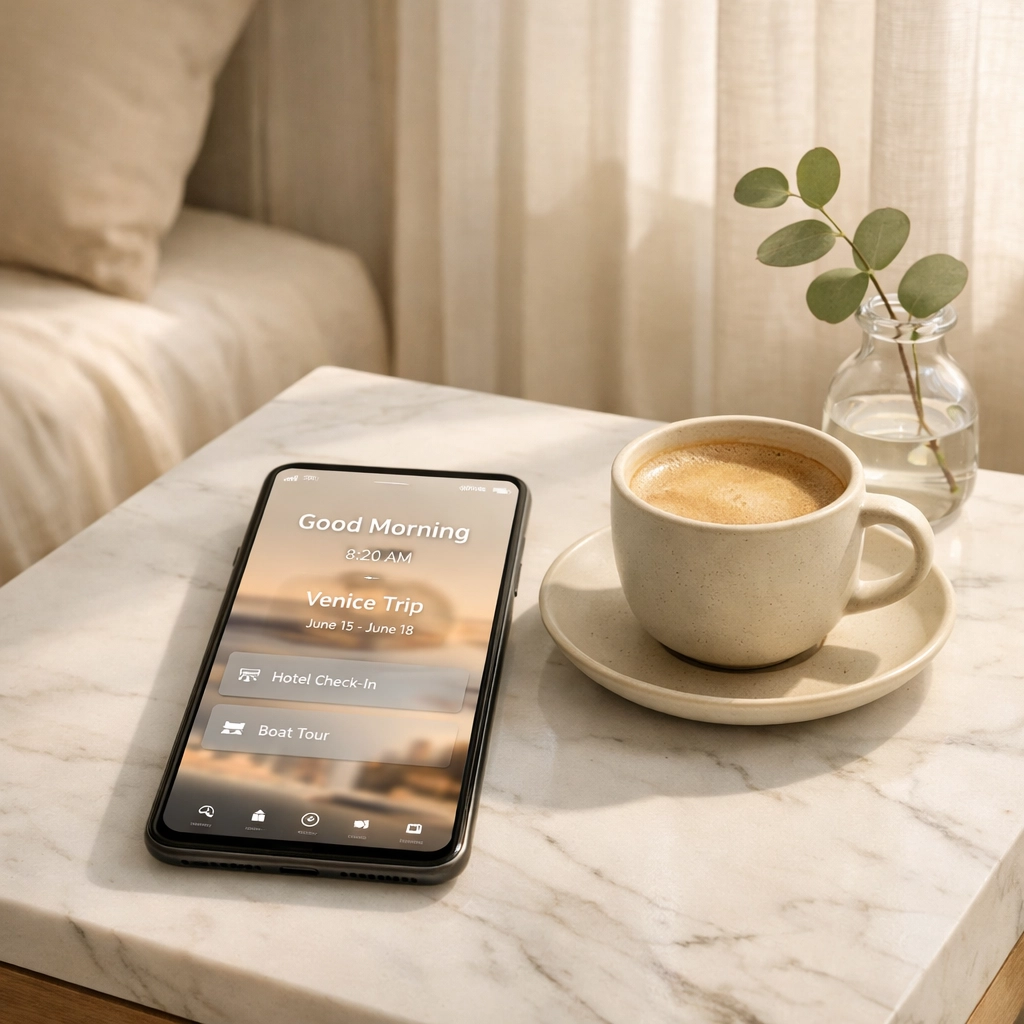
    Smartphone displaying an AI travel designer app on a minimalist hotel nightstand with morning light.

    When a guest tells their AI assistant they want a "relaxing weekend in London with good coffee and a gym," the system doesn't just return a list of links. It analyzes booking history, checks real-time availability, and builds a dynamic itinerary. For hoteliers, this means the point of discovery has moved. Your PMS needs to talk to these agents as fluently as it talks to humans.

    • Dynamic Personalization: AI adjusts itineraries in real-time based on weather or local events.
    • Proactive Management: Systems now rebook disrupted flights or rooms before the guest even knows there's a problem.
    • Voice-First Interaction: Hands-free booking is the new standard for the modern traveler.

    "We saw a 40% reduction in booking-related queries the moment we integrated our AI concierge with Mews," says one boutique owner in Berlin. "It’s like having a digital genius at the front desk 24/7."

    Frictionless Movement Through Biometrics

    Queues are a relic of the past. In 2026, the guest’s face is their passport, their room key, and their credit card. Biometric technology has moved from high-security airports to the lobby of every forward-thinking hotel.

    Facial recognition and fingerprint scans now handle document verification at scale. This isn't just about speed; it's about security. Multiple identity verifications happen in the background, ensuring that the person checking in is exactly who they say they are: without them ever having to reach for a wallet.

    1. Curb-to-Room Flow: Guests move from the airport gate to their hotel bed without showing a physical ID.
    2. Touchless Payments: Biometrics link directly to secure digital wallets for one-tap (or one-look) transactions.
    3. Enhanced Security: Real-time verification reduces fraud and chargebacks for operators.

    See what the Mews platform can do to bridge the gap between security and convenience.

    The IoT-Enabled Guest Experience

    We think your hotel room should know you better than your own home does. The Internet of Things (IoT) has turned static rooms into living, breathing environments that adapt to the individual.

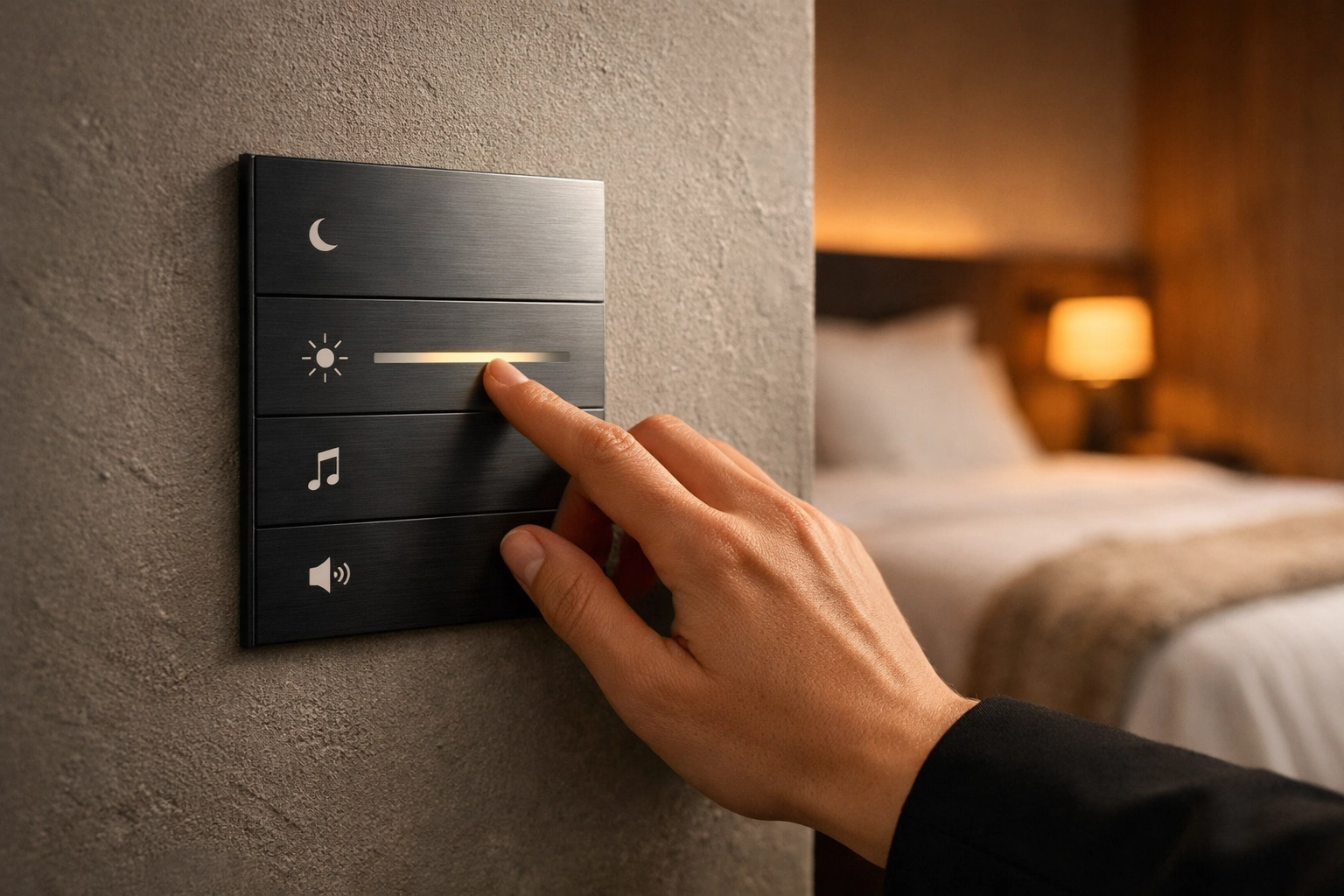
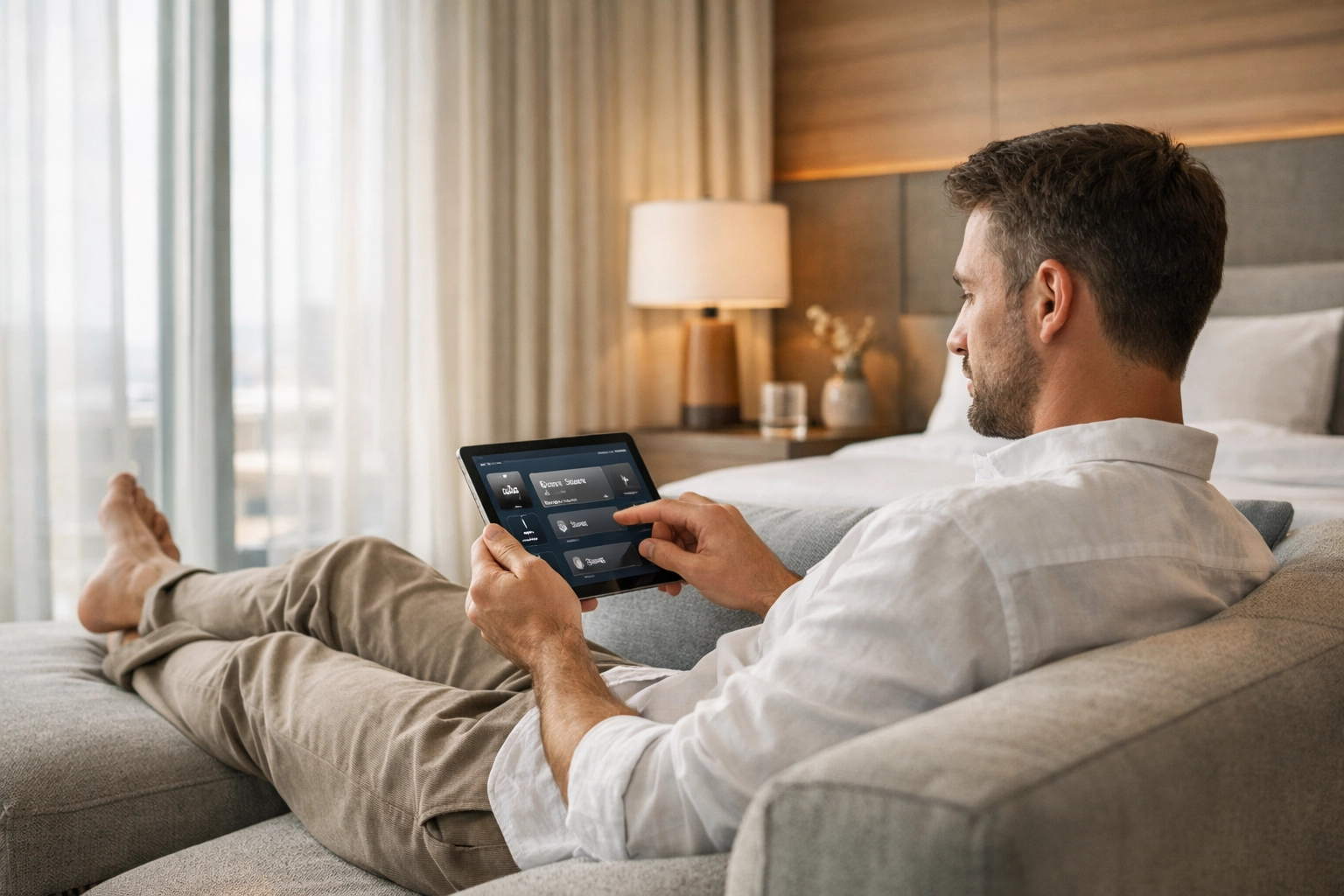
    Guest using a smart hotel room control panel to personalize lighting and temperature through IoT.

    When a guest arrives, the room temperature is already at their preferred 21 degrees. The lighting is dimmed because they’ve had a long flight. Their favorite Spotify playlist is softly playing through the smart mirrors. This level of environmental intelligence is no longer a luxury; it’s an expectation.

    • Contextual Notifications: Wearables send alerts about nearby events or gate changes based on the traveler's location.
    • Device Synchronization: Preferences travel with the guest, moving seamlessly from their phone to their hotel room.
    • Predictive Maintenance: IoT sensors identify a leaking tap or a dying lightbulb before the guest ever notices, allowing for silent, proactive repairs.

    Operational Excellence: The Invisible AI

    While guests enjoy the shiny gadgets, the real innovation is happening behind the scenes. We believe the best technology is the kind you don't see. In 2026, AI is the silent operator managing the complexities of modern hospitality.

    For many properties, the challenge isn't data collection: it's data action. AI now quietly manages policy compliance, automates expense submissions, and optimizes staff shifts based on predicted occupancy. It’s about removing the friction from the people who keep the building running.

    Hotel manager using hospitality management software to automate back-office operations and analytics.

    The Mews Advantage:

    • Automated Back-Office: Eliminate manual data entry with integrated financial tools.
    • Real-Time Analytics: Get a 360-degree view of your property’s performance in seconds.
    • Seamless Integration: Connect to thousands of apps to build a custom tech stack that fits your unique needs.

    "Before Mews, my team spent three hours a day on night audits. Now? It’s done in minutes," says Scott, an Affiliate partner. "That’s three hours back to focus on the guests."

    Secure Payments and Blockchain

    Blockchain has finally found its footing in travel. Beyond the hype of crypto, the real value lies in secure, cost-efficient transactions. Digital wallets and decentralized ID systems are streamlining how money moves across borders.

    For the business traveler, this means bypassing foreign exchange fees and traditional banking delays. For the hotelier, it means instant settlements and a tamper-proof audit trail. It’s secure, transparent, and incredibly fast.

    1. Reduced Fees: Bypass the middlemen of traditional banking.
    2. Tamper-Proof ID: Protect guest data with decentralized security protocols.
    3. Instant Settlement: No more waiting days for international payments to clear.

    VR and the "Try Before You Buy" Meta

    Virtual Reality (VR) and Augmented Reality (AR) have transformed the booking funnel. We've moved past flat photos and 360-degree videos into fully immersive "digital twins" of destinations.

    Traveler using a VR headset to explore immersive virtual hotel rooms and destinations before booking.

    In 2026, a guest can walk through their suite, check the view from the balcony, and explore the local neighborhood in the metaverse before they ever hit "confirm." This significantly reduces booking anxiety and increases upsell opportunities. If they can see how much better the penthouse looks through a VR headset, they're much more likely to upgrade.

    • 3D Property Previews: Let guests explore your space from their living room.
    • AR Wayfinding: Help guests navigate your property or city with real-time overlays.
    • Interactive Event Planning: Allow corporate clients to layout their conference rooms in a virtual space.

    Your Strategy for Success

    To win in this new era of travel tech, you don't need to be a technologist. You just need to be a strategist. The goal isn't to have the most gadgets; it's to have the most integrated ecosystem.

    Focus on systems that talk to each other. Choose platforms that prioritize the guest experience without sacrificing operational sanity. And most importantly, stay human. The tech is there to clear the path so you can do what you do best: provide world-class hospitality.

    Three steps to get started:

    1. Audit your current stack: If your software doesn't have an open API, it's holding you back.
    2. Focus on the "Why": Don't buy AI because it's cool; buy it because it saves your staff 10 hours a week.
    3. Partner with leaders: Work with platforms that are already building for 2030, not just 2026.

    Ready to see how the future of hospitality feels? Get started with Mews today and let’s get you earning more revenue in no time.

    It's time to stop managing software and start managing experiences. The future is here, and it looks a lot like Mews.

  • Why AI in Hospitality Will Change the Way You Treat Your Guests

    Why AI in Hospitality Will Change the Way You Treat Your Guests

    Anticipate needs. Automate tasks. Elevate stays.

    The hospitality industry is shifting from a reactive model to a proactive powerhouse. You know the drill: a guest walks in, they have a problem, and you fix it. That’s classic service. But what if the problem never existed in the first place? What if you knew they wanted a late checkout before they even realized they were tired?

    In 2026, AI isn't just a buzzword for tech conferences; it’s the engine driving a 25% increase in guest satisfaction scores for forward-thinking properties. This isn't about robots replacing housekeepers. It’s about a platform that understands your guests better than they understand themselves. All from one innovative platform.

    Predictive personalization. The end of "One Size Fits All."

    We believe hospitality is personal. Or at least, it should be. For too long, hotels have treated every guest like a generic data point. You get the same check-in script, the same "standard" room temperature, and the same generic "how was your stay?" email.

    AI changes the math. By analyzing booking patterns, previous preferences, and even external data like local event schedules, AI predicts what your guests want before they open their mouths.

    • Pre-arrival prep. The system notices a guest always orders a double espresso at 8:00 AM. The machine is ready.
    • Climate control. AI adjusts the room temperature based on the guest’s historical preference for a cool 19 degrees.
    • Inventory intelligence. Predict which guests are likely to extend their stays and offer the option preemptively.

    "We saw a 15% jump in ancillary revenue just by letting the AI suggest room upgrades to the right people at the right time," says one Mews user. It’s about being relevant, not noisy.

    Morning coffee on a bedside table illustrating personalized guest service and predictive hospitality.

    24/7 Intelligent support. Because sleep is for humans.

    Guests don't care about your office hours. They want to know the Wi-Fi password at 3:00 AM. They want to order extra towels during the morning rush. They want to know where the best local sourdough is located while they're sitting in an Uber.

    Human staff have limits. AI doesn't. Smart assistants and chatbots have evolved far beyond the "I'm sorry, I didn't understand that" phase. Modern AI in hospitality handles complex queries in multiple languages, instantly.

    • Multilingual mastery. Chat with guests in their native tongue without hiring a translator.
    • Instant resolution. Handle room service orders and maintenance requests without a single phone call.
    • Pattern recognition. If ten guests ask about the pet policy in one morning, the AI flags it so you can put that info front and center.

    This isn't about being cold; it's about being available. When the routine questions are handled by the system, your team is free to handle the moments that actually require a human touch.

    Liberating the front desk. Stop staring at screens.

    Let’s be honest: the traditional check-in process is a friction point. It’s a desk, a screen, and a long wait. It’s the opposite of a warm welcome. We think the front desk should be a social hub, not a bureaucratic barrier.

    AI-driven automation handles the boring stuff. Identity verification, payment processing, and key distribution can all happen before the guest even steps through your doors.

    1. Schedule. Set automated check-in triggers.
    2. Verify. Use AI-powered document scanning for instant security.
    3. Greet. Meet your guest with a drink, not a clipboard.

    By removing the administrative burden, your staff can actually look guests in the eye. They can offer local tips. They can be hosts. It’s a shift from data entry to genuine connection: all managed through a seamless interface.

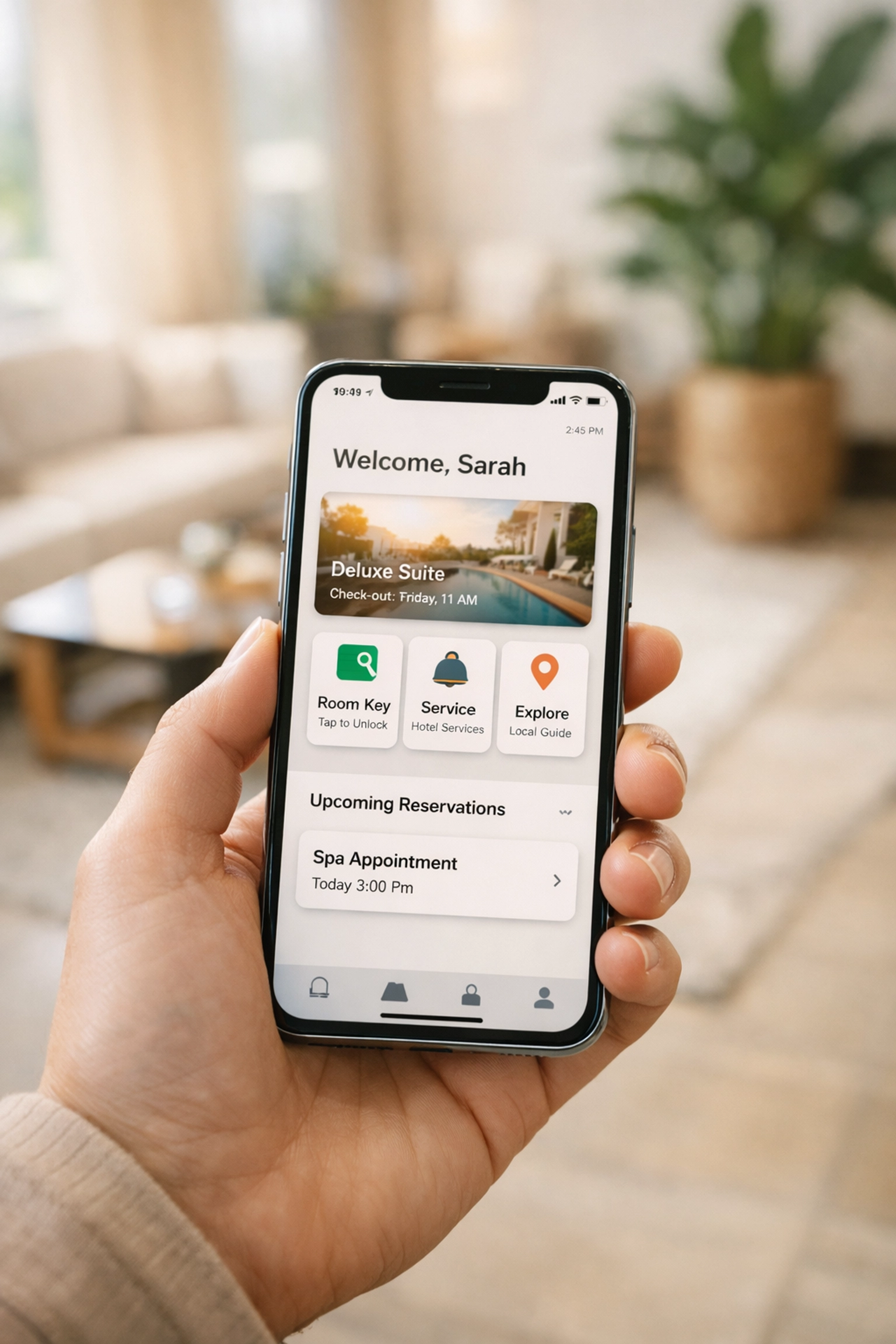
    A hotel guest using a smartphone for 24/7 digital concierge support and seamless stay management.

    Sentiment-driven improvement. Hear what isn't being said.

    Waiting for the post-stay survey is too late. If a guest had a bad experience on night one, you’ve already lost the chance to fix it. AI-powered sentiment analysis tools listen to the "digital breadcrumbs" guests leave throughout their stay.

    Whether it’s a mention in a chat message or a comment made to a digital concierge, AI categorizes the mood. It spots trends in real-time. If the AI detects a pattern of guests mentioning "cold water" or "slow elevators," you get an alert before it hits TripAdvisor.

    • Real-time alerts. Fix issues while the guest is still on-site.
    • Operational trends. Identify service gaps based on actual behavior, not assumptions.
    • Continuous evolution. Your service gets smarter every day as the data grows.

    We believe data is the foundation of empathy. When you know how people feel, you can act with purpose.

    Operational excellence. The invisible hand.

    AI doesn't just talk to guests; it talks to your building. Managing a hotel is a logistical nightmare of housekeeping schedules, maintenance cycles, and energy consumption. AI streamlines the "back of house" so the "front of house" looks effortless.

    Imagine housekeeping routes that update in real-time based on which guests have actually checked out, rather than a static list. Imagine smart sensors that dim lights and cut AC in empty rooms, saving you 30% on energy costs without a guest ever noticing.

    • Dynamic scheduling. Housekeeping stays ahead of the curve.
    • Predictive maintenance. Fix the boiler before it breaks.
    • Resource allocation. Put your staff where they are needed most based on occupancy flow.

    "It feels like the building is finally working with us, not against us," says a boutique hotel manager in London. It’s about working smarter, not harder.

    Hotel staff providing human-centric service in a modern lobby, enabled by automated check-in technology.

    Hyper-personalized experiences at scale.

    In the past, high-touch personalization was reserved for five-star luxury resorts with massive staff-to-guest ratios. AI democratizes that experience. Whether you’re running a 10-room guest house or a 500-room city hotel, you can offer a curated stay.

    Hotels in Sonoma are already using AI to curate activity recommendations based on the specific wines a guest liked during their last visit. Hilton uses it to optimize pricing and perks for specific guest segments. This is the new standard.

    See what the right tech can do:

    • Curated dining. Suggest the perfect table based on past dietary preferences.
    • Local integration. Connect guests with experiences they actually care about.
    • Loyalty redefined. Recognize a returning guest and have their favorite pillow waiting.

    The Mews approach. Innovation by design.

    At Mews, we don't just build software; we build the future of hospitality. We believe that technology should disappear into the background so that hospitality can take center stage. Our platform is designed to be the central nervous system of your property: smart, fast, and incredibly intuitive.

    The world is changing. Guests expect more. They want speed, they want relevance, and they want to feel seen. Embracing AI isn't a luxury; it’s the only way to keep up with the modern traveler.

    Ready to see how AI can transform your operations? It’s easier than you think. You can start small, automate the basics, and watch your guest satisfaction scores climb.

    Don't let your tech hold you back. Explore the possibilities and get your property earning more revenue while providing better service in no time.

    A future built on connection.

    The goal of AI in hospitality isn't to make hotels more like machines. It’s to make them more human. By automating the routine, predicting the necessary, and personalizing the experience, we give hoteliers the one thing they always need more of: time.

    Time to talk to guests. Time to innovate. Time to provide the kind of service that people actually remember.

    AI is changing the way you treat your guests. It’s making you better at what you already do best. The only question is: are you ready to lead the charge?

    A perfectly prepared luxury hotel suite reflecting high operational standards and guest experience excellence.

    Check out how we can help you get started at Mews.

  • 10 Reasons Your Hotel Booking Engine Isn’t Converting (And How to Fix It)

    10 Reasons Your Hotel Booking Engine Isn’t Converting (And How to Fix It)

    Convert faster. Drive revenue. Delight guests.

    Your booking engine is the digital front door to your property. But all too often, that door is heavy, creaky, and locked from the inside. When a guest lands on your site, they are ready to buy. They have the intent. They have the credit card. Yet, the industry average conversion rate hovers around a measly 2%.

    We believe booking a room should be as effortless as ordering a flat white. It’s about removing the friction that sits between a guest’s desire and their confirmation email. If your conversion rates are stalling, it’s rarely because your rooms aren't great, it’s because the journey to get there is broken.

    Here is why your booking engine is underperforming and, more importantly, how to transform it into a high-octane revenue driver. All from one innovative platform.

    1. The mobile bottleneck

    Nearly 70% of hotel bookings now occur on mobile devices. If your booking engine feels like a desktop site shrunk down by a shrink-ray, you’re losing half your audience before they even see a room type.

    Guests are booking on trains, in meetings, and while waiting for coffee. They don’t want to pinch and zoom. They want thumb-optimized navigation and buttons they can actually hit.

    The Fix:

    • Implement a mobile-first design that prioritizes speed and ease.
    • Use sticky "Book Now" CTAs that follow the user as they scroll.
    • Ensure the calendar view is intuitive on a vertical screen.

    A guest using a mobile-optimized hotel booking engine on a smartphone in a bright, modern lobby.

    2. Speed (or lack thereof)

    In the digital age, a three-second delay is an eternity. Research shows that pages loading in under two seconds have the highest conversion rates. Every millisecond of lag is an invitation for a guest to click back to Google or head over to an OTA.

    Slow load times signal a lack of technical sophistication. If your booking engine is sluggish, guests subconsciously wonder if your check-in process or Wi-Fi will be just as frustrating.

    The Fix:

    • Optimize image sizes without sacrificing quality.
    • Minimize heavy scripts that bloat load times.
    • Prioritize technical performance as a core guest experience feature.

    3. The "Paradox of Choice" room display

    We’ve all seen it: a list of twenty room types with names like "Deluxe Superior Garden View (East Wing) – Non-Smoking." By the time the guest finishes reading the options, they’ve forgotten why they wanted to stay with you in the first place.

    Vague descriptions and overlapping categories create cognitive load. When guests are overwhelmed, they freeze. And frozen guests don't click "Confirm."

    The Fix:

    • Simplify your room categories into clear, distinct tiers.
    • Use high-quality, professional photography for every single room type.
    • Highlight three key amenities per room (e.g., King bed, Rainfall shower, City view).

    4. Hidden pricing and "Sticker Shock"

    Transparency is the foundation of trust. If a guest sees one price on your homepage and a significantly higher one, thanks to hidden fees or taxes, at the final checkout stage, they feel deceived.

    Transparency isn't just about honesty; it's about confidence. Guests should see real-time, dynamic pricing that updates as they change their dates or guest count.

    The Fix:

    • Display the total price, including taxes and fees, from the very first step.
    • Use dynamic pricing that syncs instantly with your PMS.
    • Show price comparisons to OTAs to prove booking direct is the best deal.

    5. Third-party redirects

    Nothing kills a conversion faster than being "handed off." When a guest clicks "Book" and is suddenly redirected to a completely different URL with a different design, a different logo, and a different feel, their security alarm goes off.

    We think the booking journey should be a seamless part of your brand, not a disconnected side-quest. You want to keep the guest in your ecosystem from discovery to departure.

    The Fix:

    • Integrate your booking engine directly into your website’s architecture.
    • Maintain consistent branding, fonts, and colors throughout the flow.
    • Use a modern PMS-integrated solution like Mews to keep the data flow internal and secure.

    A seamless hotel booking experience displayed on a laptop in a clean, professional hospitality workspace.

    6. Too many hoops to jump through

    Complexity is the enemy of conversion. If your booking process requires six pages of forms, account creation, and a blood sample, you’re making it too hard for people to give you money.

    Every additional field in a form is a point of abandonment. We’ve seen properties ask for home addresses, car license plates, and "how did you hear about us" before the guest even enters their credit card. Save the data collection for the pre-arrival email.

    The Fix:

    • Enable "Express Checkout" for returning guests.
    • Only ask for the essentials: Name, Email, and Payment.
    • Use a single-page checkout flow to reduce click-fatigue.

    7. A lack of social proof

    In hospitality, trust is the primary currency. Guests want to know that people like them have stayed with you and loved it. If your booking engine is a vacuum of information, they’ll head to TripAdvisor to "verify" you, and you’ll likely lose them to an OTA ad on that page.

    Subtle trust signals can increase conversions by 15–30%. It’s about providing reassurance at the exact moment of hesitation.

    The Fix:

    • Embed a review widget directly on the booking page.
    • Display trust badges (SSL certificates, industry awards).
    • Use "live" social proof, like "3 people are looking at this room right now."

    8. No clear "Why Direct?" incentive

    Why should I book with you instead of Expedia? If you can’t answer that question within three seconds of a guest landing on your booking engine, you’re losing the battle.

    OTAs spend billions on UX to make booking easy. To win, you need to offer value that they can’t. This isn't just about the lowest price; it's about the best experience.

    The Fix:

    • Highlight direct-only perks like "Late Checkout Included" or "Free Welcome Drink."
    • Offer flexible cancellation policies that are exclusive to direct bookings.
    • Ensure your "Best Price Guarantee" is front and center.

    9. Ignoring the power of AI and automation

    We are entering the era of the "smart" booking engine. If your system is just a static grid of dates and prices, you’re missing out on the nuance of modern travel.

    AI can help personalize the booking experience based on user behavior. If a guest is looking at a family suite, the engine should automatically suggest breakfast add-ons or local attraction tickets. It’s about moving from a transaction to a conversation.

    The Fix:

    • Use AI-driven upselling tools that offer relevant upgrades during the booking flow.
    • Implement chatbots that can answer "Is the pool heated?" without the guest leaving the page.
    • Automate your guest communication so the moment they book, they receive a personalized welcome.

    A hotel guest using a tablet to enjoy a personalized, tech-enhanced experience in a luxury suite.

    10. The "Set It and Forget It" mentality

    Optimization isn't a one-time task; it's a philosophy. The best hotels in the world are constantly A/B testing their booking engines. They test button colors, CTA text ("Book Now" vs. "Reserve Your Stay"), and image placement.

    If you aren't measuring your funnel, you're flying blind. You need to know exactly where guests are dropping off. Is it the room selection page? The payment page? The data doesn't lie.

    The Fix:

    • Set up Google Analytics (GA4) ecommerce tracking to monitor your funnel.
    • Run quarterly A/B tests on your primary call-to-action.
    • Aim for a baseline conversion rate of 3%, then iterate until you hit 5% or more.

    Innovation is the only way forward

    The hospitality landscape is shifting. Guests expect more than just a bed; they expect a seamless, tech-forward experience that starts the moment they find your website.

    At Mews, we believe in a world where technology works for the hotelier, not the other way around. By stripping away the legacy friction of old-school booking engines, you free up your team to do what they do best: provide incredible hospitality.

    Your booking engine shouldn't be a hurdle. It should be the first "wow" moment of the guest journey.

    "Moving to a modern, integrated booking engine saved our front desk 10 hours a week in manual entry and boosted our direct revenue by 22% in the first quarter." : A forward-thinking Mews customer.

    Ready to see how a truly innovative PMS can transform your bottom line?

    Schedule a 30-minute demo today and get you earning revenue in no time.

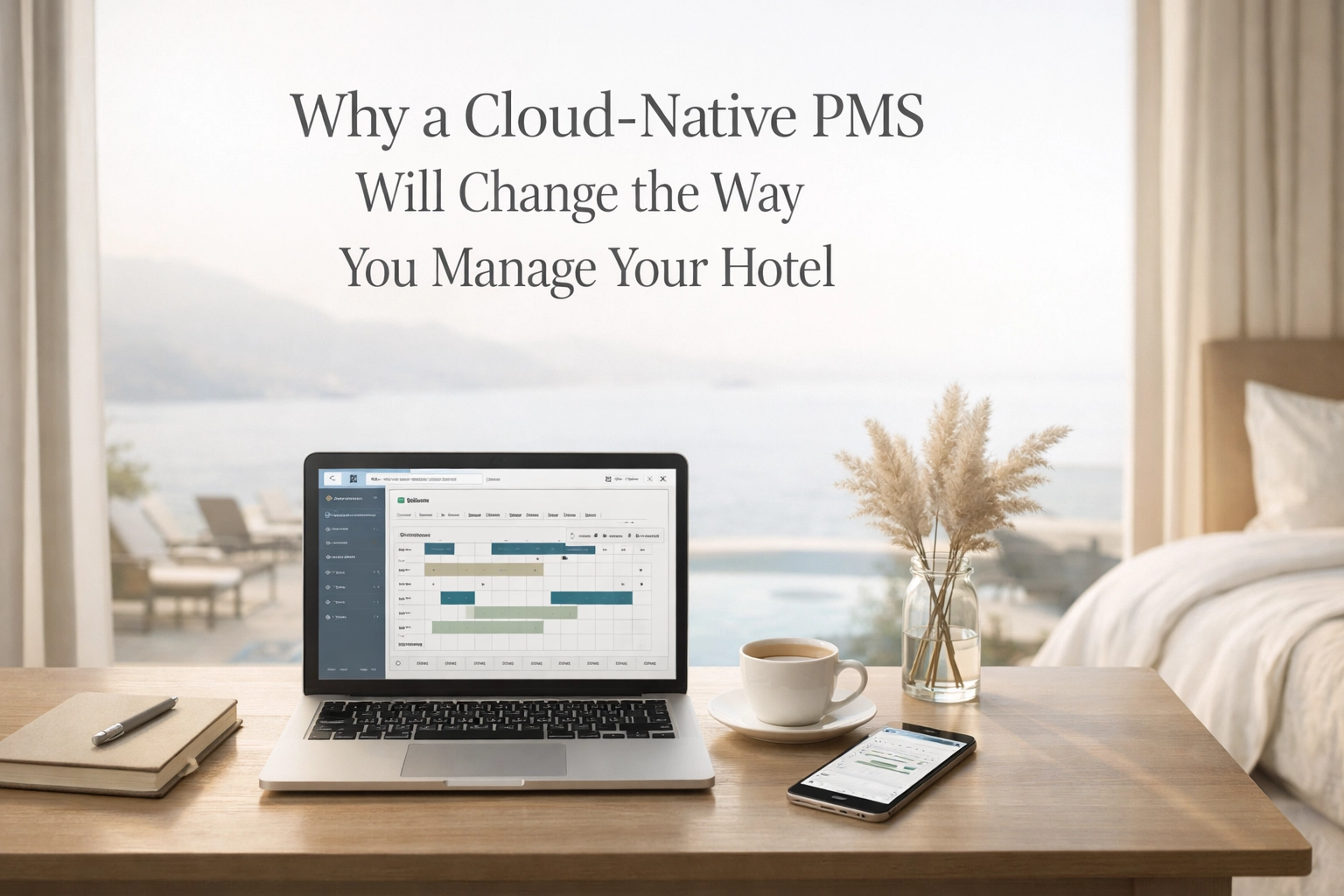
  • Why a Cloud-Native PMS Will Change the Way You Manage Your Hotel

    Why a Cloud-Native PMS Will Change the Way You Manage Your Hotel

    Automate your operations. Delight every guest. Grow your revenue.

    The transition to a cloud-native hotel PMS isn’t just a technical upgrade; it’s a fundamental shift in how your business breathes. Properties moving to modern platforms see a 25% increase in operational efficiency within the first six months. We believe that technology should remove barriers, not create them. By consolidating your booking engine, channel manager, and guest data into a single intuitive interface, you can finally stop managing software and start managing hospitality: all from one innovative platform.

    Empower your team. Simplify your tech. Scale your brand.

    For too long, hoteliers have been tethered to back-office servers and clunky desktop interfaces. Legacy systems are built on rigid architectures that don't talk to other tools. They create silos. They slow down check-ins. They make your staff look at screens instead of guests. A cloud-native system flips the script.

    We believe the front desk should be a choice, not a requirement. When your PMS lives in the cloud, your lobby transforms from a transaction zone into a welcome lounge.

    • Mobility as standard. Access your entire property management suite from a tablet while walking the floor or a smartphone while off-site.
    • Real-time synchronization. Housekeeping updates a room status on their mobile device, and it’s instantly live for the front office and your booking engine.
    • Zero-drag updates. No more "system is down for maintenance." Updates happen in the background, ensuring you always have the latest features without the downtime.

    "Switching to a mobile-first setup changed everything for us. I can check our occupancy and adjust rates while I’m grabbing a coffee down the street. It’s freedom we never had before."

    Hotel staff member using a mobile hotel PMS on a tablet in a modern, sun-drenched lobby.

    Seamless guest journeys. Faster check-ins. Personalized stays.

    The modern guest expects the same level of convenience they get from Uber or Amazon. They don't want to stand in a queue to sign a paper registration card. They want speed. They want autonomy.

    We think the best guest experience is one that feels effortless. By integrating self-check-in kiosks and automated pre-arrival messaging, you give guests the power to design their own stay.

    1. Automate pre-arrival. Send a digital check-in link 24 hours before arrival.
    2. Enable self-service. Use self-check-in kiosks to cut wait times to under 60 seconds.
    3. Personalize the room. Use guest profile data to offer tailored upsells like late check-outs or breakfast deals.

    This isn't just about speed; it's about data. A cloud-native PMS acts as your central CRM, capturing preferences that allow you to treat a returning guest like an old friend. When your booking engine knows a guest prefers a high floor and a firm pillow, you aren't just selling a room: you're providing a service.

    Smarter distribution. Dynamic pricing. Maximum occupancy.

    If your channel manager and your hotel pms aren't best friends, you're leaving money on the table. In the old days, manual entry led to overbookings and missed revenue opportunities. In 2026, automation is the only way to stay competitive.

    We believe revenue management should be proactive, not reactive. Cloud-native platforms use real-time data to push the right price to the right channel at the right time.

    • Integrated channel management. Sync inventory across 100+ OTAs instantly to eliminate double bookings.
    • Data-driven decisions. View RevPAR, ADR, and occupancy trends on a single dashboard without exporting spreadsheets.
    • Automated payments. Process deposits and final bills automatically, reducing manual errors and chargebacks.

    Modern hotel office desk with a laptop showing cloud-native PMS data and revenue management dashboards.

    Less IT overhead. Predictable costs. Higher security.

    The hidden cost of legacy software is the infrastructure. Servers, cooling, IT consultants, and manual backups eat into your margins. A cloud-native PMS operates on a SaaS (Software as a Service) model, turning massive capital expenditures into predictable, manageable operating costs.

    We think you should spend your budget on better linens and better staff, not on server maintenance.

    • Enterprise-grade security. Benefit from the same security protocols used by global banks, handled entirely by the provider.
    • Open API architecture. Connect your favorite third-party apps: from smart locks to accounting software: in minutes, not months.
    • Scalability. Whether you have 10 rooms or 1,000, the cloud scales with you without needing more hardware.

    "We used to spend about 10 hours a week just fixing printer drivers and server sync issues. Now? That time goes into training our team and looking after guests. The ROI was clear in month one."

    The path to modern hospitality

    Moving to a cloud-native PMS isn't a "maybe" anymore; it's a "when." The gap between properties using automation and those stuck in manual workflows is widening every day. Properties that embrace a cloud-first mindset are seeing RevPAR boosts of up to 15% through better distribution and upselling.

    Ready to see how Mews can transform your property? It’s easier than you think.

    • Schedule a demo. See the interface in action and ask about your specific needs.
    • Get a 30-minute consultation. Map out your current tech stack and find the gaps.
    • Start your migration. Our team handles the heavy lifting to get you live faster.

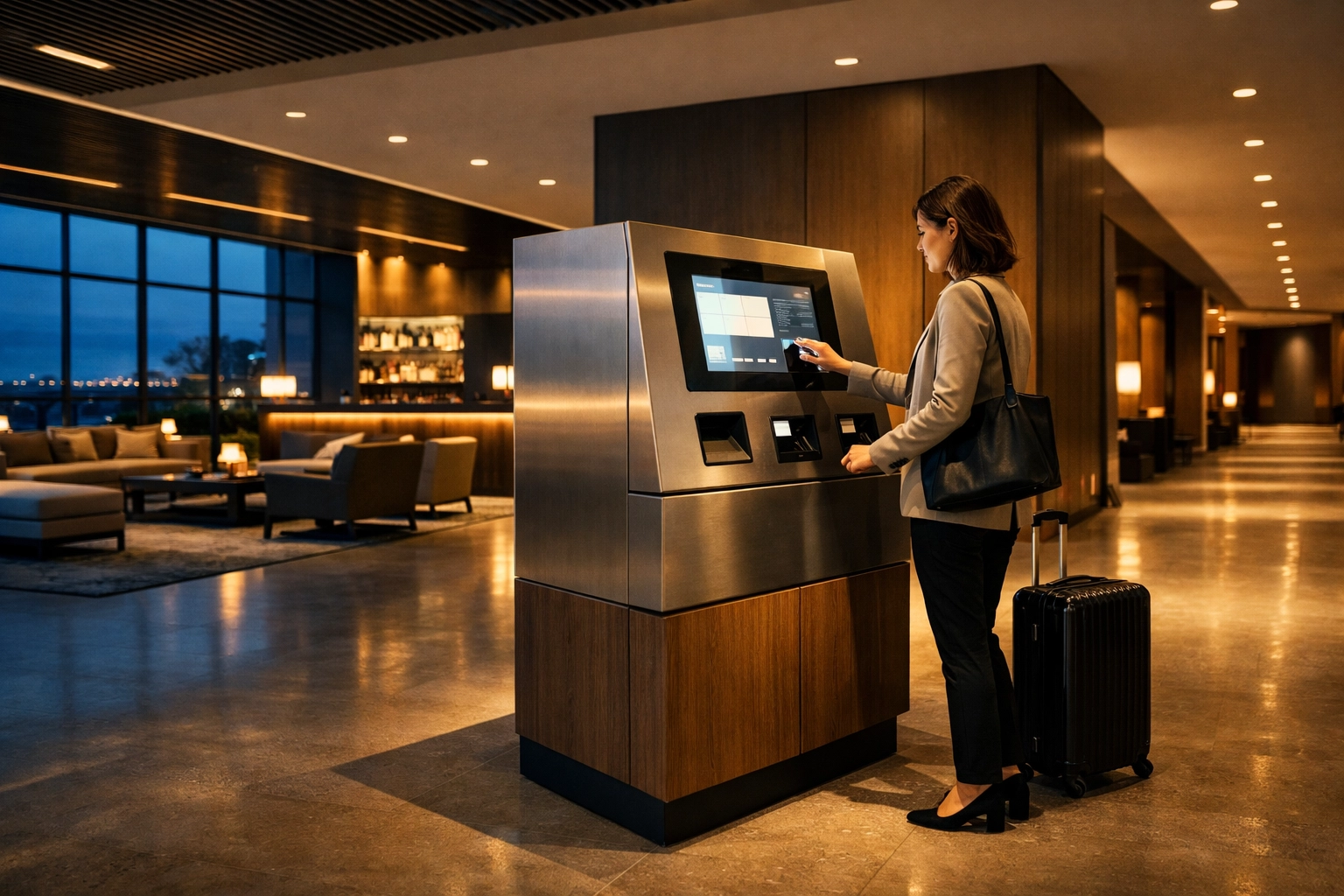
    A guest using a minimalist self-check-in kiosk in a contemporary hotel lobby with warm, modern lighting.

    We believe the future of hospitality is human, powered by invisible technology. When the "management" part of hotel management is automated, you’re free to focus on the "hotel" part. That means more time for guest interaction, more creative marketing, and a team that isn't burnt out by administrative friction.

    Take the next step

    Your hotel deserves a platform that works as hard as you do. Don't let outdated technology hold back your growth or dampen your guest experience. Explore how a unified, cloud-native approach can simplify your daily life and boost your bottom line.

    Check out how we can help you thrive at https://referrals.mews.com/umqhyito.

    The transition is smooth, the support is expert, and the results are immediate. It's time to move your operations into the cloud and get you earning more revenue in no time. Give your staff the tools they love and your guests the experience they expect. The future of your hotel starts with a single click.

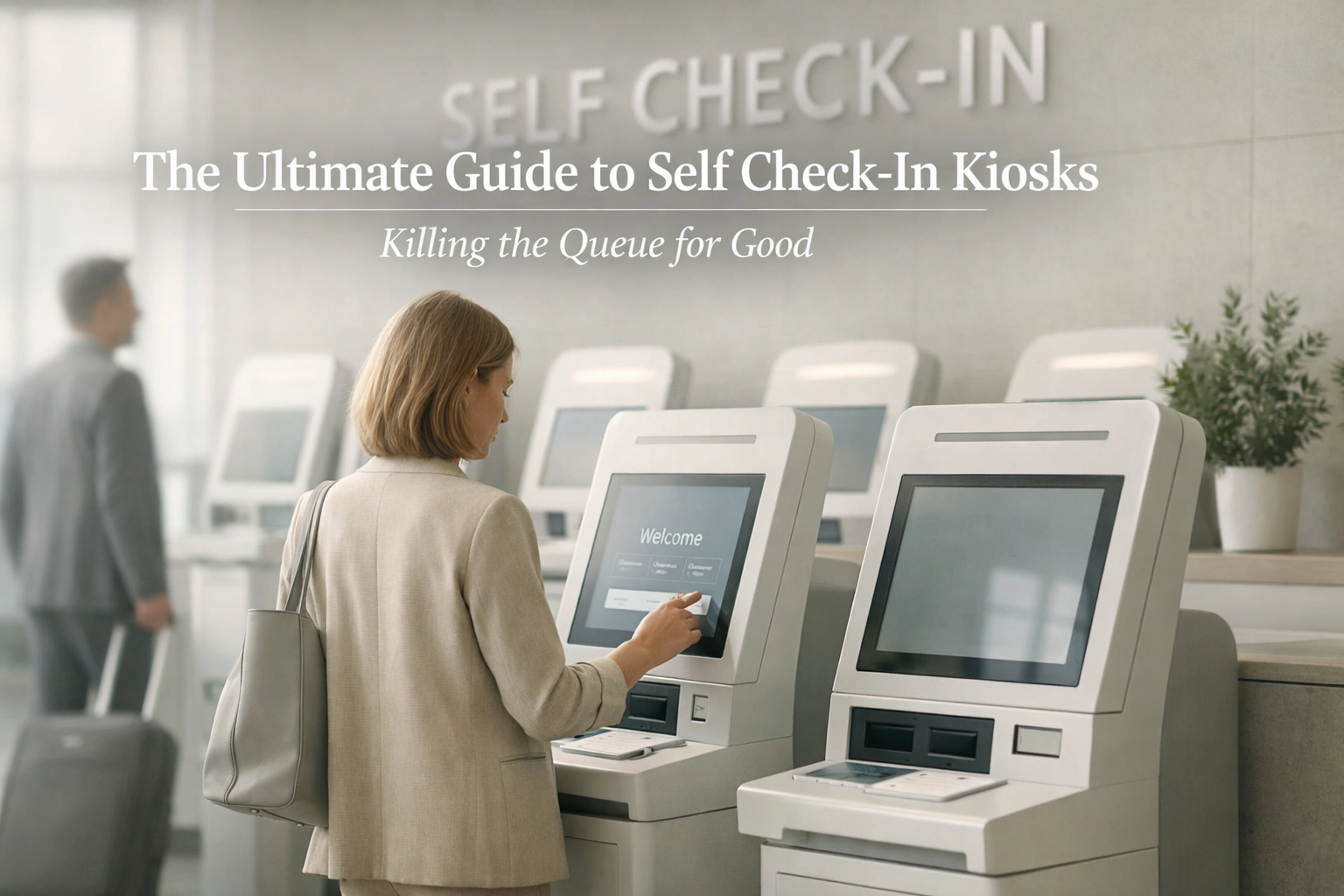
  • The Ultimate Guide to Self Check-In Kiosks: Killing the Queue for Good

    The Ultimate Guide to Self Check-In Kiosks: Killing the Queue for Good

    Nobody checks into your hotel dreaming about standing in line.

    Yet traditional front desks create exactly that experience: guests bunched up in your lobby, luggage scattered, patience wearing thin. Self check in kiosk hotel technology flips this script entirely. These automated terminals let guests complete their arrival in under two minutes, zero queuing required, while your team focuses on what actually builds loyalty.

    The transformation isn't subtle. Properties using self-check-in kiosks report dramatic reductions in lobby congestion, fewer staffing headaches, and guests who actually smile when they walk through the door.

    The Front Desk Bottleneck

    Peak arrival times turn hotel lobbies into chaos. Business travelers landing at 6 AM. Tour groups descending at 3 PM. Wedding parties rolling in throughout the evening. Your front desk staff: no matter how skilled: can only process one guest at a time.

    The math doesn't work. Three reception agents handling thirty arriving guests means twenty-seven people waiting. And here's the thing: they've already given you all their information. Name, dates, payment details, special requests. They submitted everything during booking.

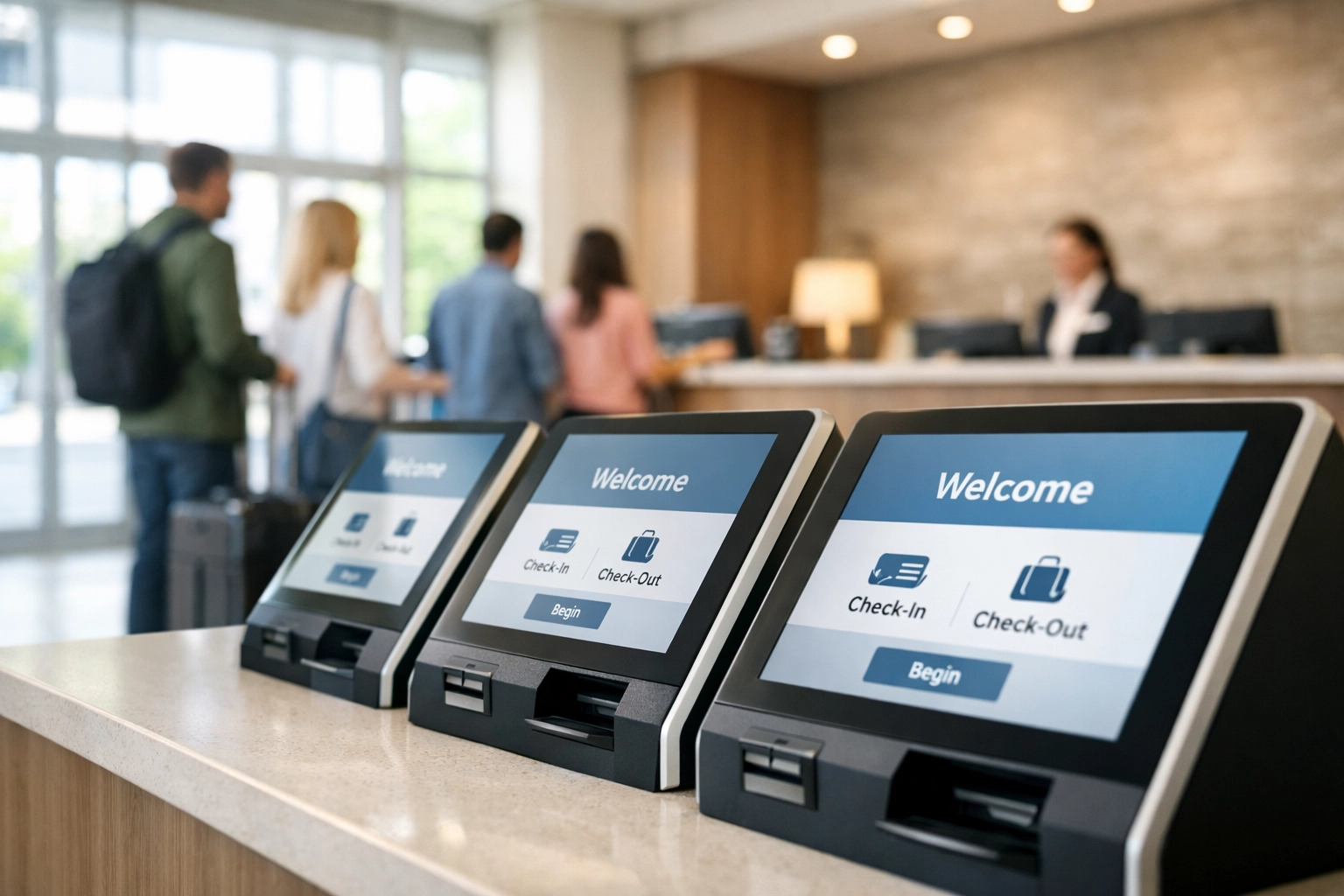
    Modern hotel self-check-in kiosks in lobby with traditional front desk queue in background

    Traditional check-in forces guests to stand there while someone types in data they've already provided, asks questions they've already answered, and explains policies they've already read. It's redundant. It's slow. And it sets a frustrating tone for the entire stay.

    How Self-Check-In Kiosks Actually Work

    Self-check-in kiosks put guests in control from the moment they arrive. The process is straightforward:

    Guests approach the kiosk and look up their reservation: by name, email, booking number, or by scanning their ID. Modern systems support biometric verification like fingerprints for added security. The kiosk retrieves their reservation details instantly.

    Everything happens on one screen. Guests verify their information, confirm room preferences, process payment if needed, and receive their room key. Advanced kiosks even encode key cards on the spot or generate mobile keys sent directly to smartphones.

    The entire transaction takes 90 seconds on average. No line. No wait. No repeating information to someone typing slowly into a computer.

    Kiosks operate 24/7, which means your hotel never closes for check-in. Early morning arrivals? Handled. Late-night flights? No problem. Guests get in on their schedule, not yours.

    What This Means for Your Guests

    Speed matters more than you think. Research consistently shows that wait time is the single biggest factor in guest satisfaction with self-service technology. When guests can check in immediately, their entire perception of your property shifts.

    You're giving them autonomy. Business travelers departing at 5 AM can grab their key without waking anyone. International guests access multilingual interfaces that make the process clearer than dealing with language barriers at a desk. Families juggling kids and luggage can complete check-in without wrestling both simultaneously.

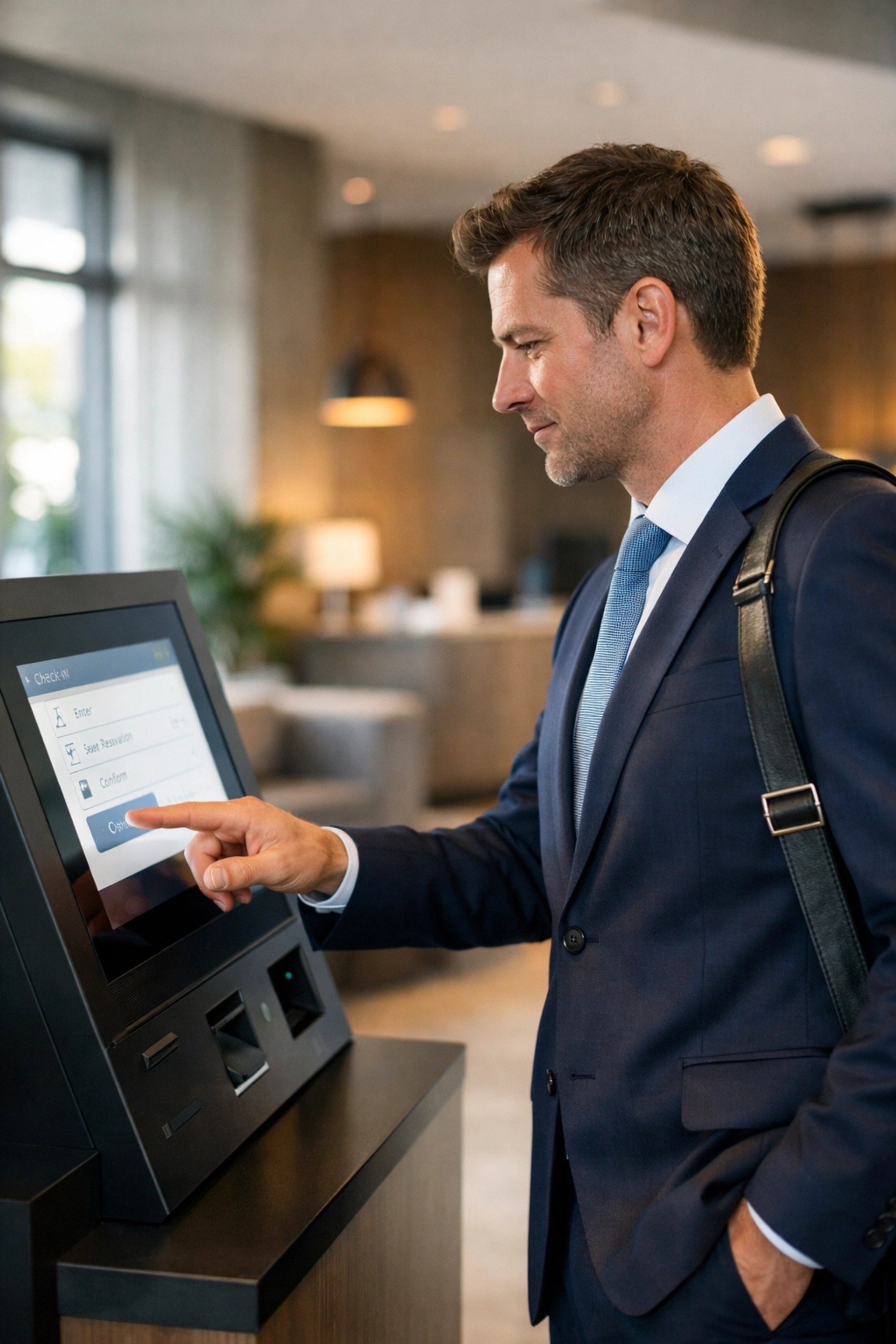
    Business traveler using hotel self-check-in kiosk touchscreen for fast contactless check-in

    Contactless interaction appeals to a growing segment of guests who simply prefer it. Not everyone wants conversation after a long travel day. Some people just want to get to their room. Self-check-in kiosks respect that preference.

    The technology also enables personalization through integration. Kiosks remember returning guests, greet them by name, recall their preferences, and can suggest relevant services or dining options. It's automated, but it doesn't feel impersonal.

    What This Means for Your Team

    Here's where the real operational magic happens. Self-check-in kiosks don't replace your staff: they liberate them.

    Instead of spending hours processing routine transactions, your team focuses on genuine hospitality. The conversations that actually matter. Recommending the perfect restaurant for an anniversary dinner. Solving a complex group booking issue. Greeting VIP guests personally. Handling special requests that require human judgment.

    Labor efficiency improves dramatically. Properties report needing fewer front desk agents during peak times because multiple guests can check in simultaneously through kiosks. You're not hiring less: you're deploying people smarter.

    Accuracy improves too. When guests input their own information, you eliminate the miscommunications and typos that plague manual data entry. Everything from email addresses to special requests gets captured correctly the first time.

    Hotel staff providing personalized guest service while self-check-in kiosk operates in background

    Revenue opportunities increase. Kiosks can present upsell options at the optimal moment: room upgrades, early check-in, late checkout, parking, spa packages. Guests browse options without feeling pressured by a sales pitch. Properties see uptake rates on ancillary services improve when guests control the decision.

    Consistency becomes automatic. Every guest at every property experiences identical check-in standards. No variation based on which agent is working. No training gaps. Just reliable, repeatable service.

    Implementation: What You Need to Know

    Modern self-check-in kiosks integrate directly with property management systems. That integration is crucial: the kiosk needs real-time access to reservation data, inventory, payment processing, and key encoding systems.

    Look for solutions with intuitive interfaces. If guests need instructions, the design failed. The best kiosks guide users through each step with clear visuals and minimal text.

    Hardware matters less than you might think. Kiosks range from sleek tablets to robust floor-standing terminals. Choose based on your lobby layout and volume. High-traffic properties need durable hardware that handles constant use. Boutique hotels might prefer something more subtle.

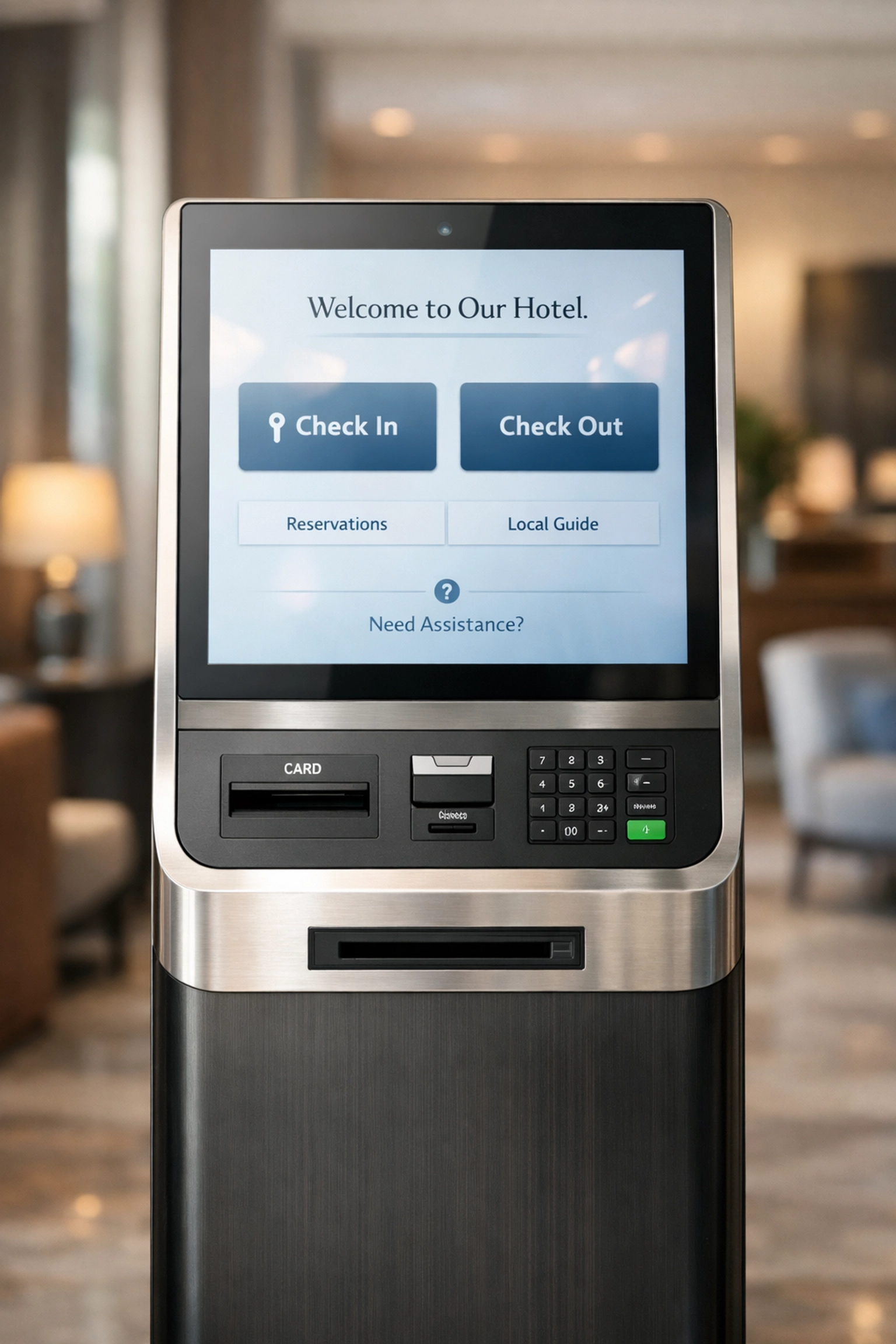
    Self-check-in kiosk terminal with touchscreen interface in contemporary hotel lobby

    Key card encoding presents the biggest technical requirement. Your kiosks need to integrate with your lock system to program cards or generate mobile credentials. This works seamlessly with modern systems but requires coordination during setup.

    Placement strategy makes the difference between adoption and avoidance. Position kiosks where guests naturally flow: near the entrance but not blocking it. Make them obvious without making them obstacles. Consider lighting and sightlines.

    Staff training shifts from "how to check in guests" to "how to help guests use kiosks." Your team becomes guides rather than processors. Most guests figure out kiosks instantly, but having someone nearby to assist builds confidence during the transition period.

    The Bigger Picture

    Self-check-in kiosks represent a fundamental shift in hospitality operations. You're moving from a model where staff complete transactions to one where staff create experiences.

    The technology works across industries: airlines, healthcare, retail, restaurants: because it solves a universal problem: nobody wants to wait in line for routine transactions. Hotels were actually late to adopt this compared to other sectors.

    That delay means opportunity. Properties implementing self-check-in kiosks now gain immediate competitive advantage. Guests notice when you respect their time.

    The financial case is straightforward. Reduced labor costs during peak periods. Increased revenue from automated upsells. Improved guest satisfaction scores. Faster processing means higher turnover capacity during busy check-in windows.

    Making It Happen

    If you're managing a property without self-check-in capability, you're fighting with one hand tied. Modern hotel management platforms like Mews build this functionality into their core systems: self-check-in kiosks, mobile check-in, automated communications, and the operations dashboard to manage everything seamlessly.

    See what Mews can do for your property.

    The queue era is ending. Guests expect better. Your staff deserves better. The technology exists today to deliver check-in experiences that feel effortless: because they are.

    Kill the queue. Free your team. Welcome guests properly. That's what self-check-in kiosks make possible.

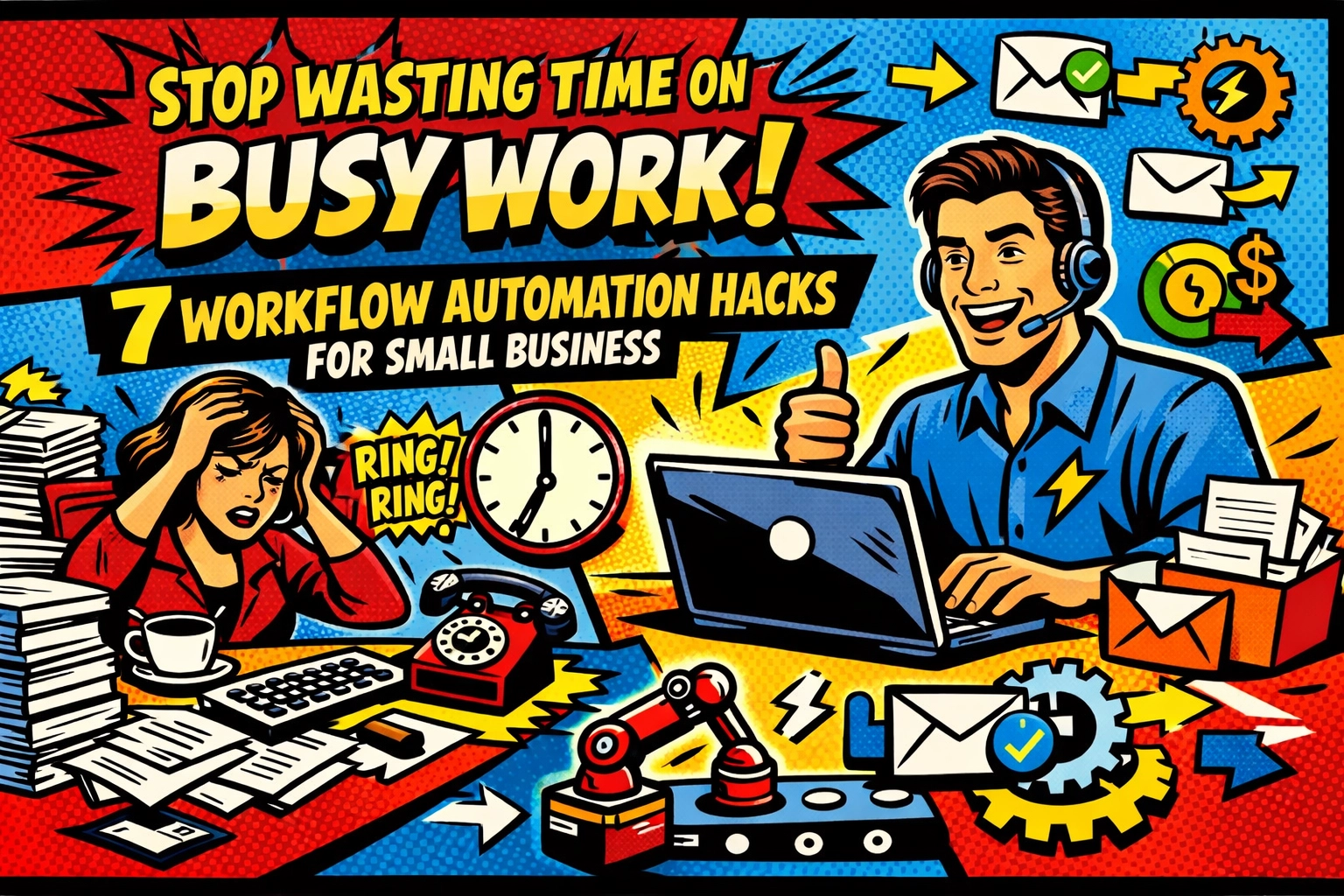
  • Stop Wasting Time on Busy Work: 7 Workflow Automation Hacks for Small Business

    Stop Wasting Time on Busy Work: 7 Workflow Automation Hacks for Small Business

    8:00 AM. Your coffee is still steaming, but your brain is already fried.

    You’ve got 47 unread emails, three invoices that were due yesterday, and a lead from LinkedIn who just went cold because you didn’t reply fast enough. You didn't start this business to be a professional data-entry clerk… and yet, here you are.

    Staring at a spreadsheet. Again.

    Small business owners lose an average of 20% of their week to "busy work." That’s one full day every week spent on tasks that a toaster with an internet connection could probably handle.

    It’s time to stop the leak. Here are 7 workflow automation hacks to help you reclaim your Friday (and your sanity).

    1. THE MONEY MACHINE: AUTOMATE YOUR INVOICING

    You provide a great service. You deserve to get paid. So why is the actual act of getting paid such a massive headache?

    Manual invoicing is the ultimate silent killer of productivity. You finish the job, then you have to remember to send the bill, then you have to check the bank account, then you have to send a "polite" reminder when they inevitably forget.

    The Fix: Use tools like Zapier or Bit Flows to connect your CRM directly to QuickBooks or Xero. When a project hits "Done," the invoice sends itself. No typos. No delays. Just money hitting your account while you’re actually doing real work.

    Illustration of a money machine representing automated small business invoicing and accounting workflows.

    2. GHOST NO MORE: AUTOMATED CUSTOMER FOLLOW-UPS

    You know that feeling when a customer buys something and then… silence? Or worse, when someone abandons a cart and you just let them walk away?

    You’re leaving money on the table. But you also don’t have time to write "Hey, did you forget this?" 50 times a day.

    The Fix: Set up automated email sequences. Trigger a "Thank You" email 10 minutes after a purchase. Send a satisfaction survey three days later. If they haven't bought in a month? Send a "We miss you" discount code.

    📱 It happens in the background. You just see the sales notifications pop up.

    3. STOP CHASING THE WRONG LEADS

    Not all leads are created equal. Some are ready to buy a house; others are just bored and clicking buttons. If you’re spending your precious 2:00 PM energy calling someone who just wanted a free PDF, you’re losing.

    The Fix: Implement lead scoring. Use automation to track how a lead interacts with your site. Did they visit the pricing page three times? Give them 50 points. Did they just read one blog post? 5 points.

    Your automation can then automatically assign the "hot" leads to your top sales rep (or yourself) and put the "cold" ones into a long-term nurture sequence.

    4. INVENTORY THAT MANAGES ITSELF

    🔍 The worst sentence in business is: "Oh, we're out of that."

    Counting boxes in a warehouse is a 1995 problem. If you’re still manually checking stock levels, you’re living in the past.

    The Fix: Set up triggers. When your stock hits a certain threshold, the system automatically sends a purchase order to your supplier. AI-powered systems can even look at your sales trends from last year to predict that you’ll need 20% more stock in December.

    You don’t count. You just receive the delivery.

    5. SOCIAL MEDIA WITHOUT THE SCROLL-HOLE

    You go on Instagram to post a quick update about your new product. One hour later, you’re watching a video of a raccoon eating grapes and you’ve forgotten why you opened the app.

    Social media is a necessity, but it's also a trap.

    The Fix: Batch your content. Use a scheduling tool to map out your entire month in one afternoon. Set it, forget it, and stay off the feed. Your brand stays active while you stay focused.

    Person relaxing on a beach while a smartphone handles automated social media marketing and scheduling.

    6. THE 24/7 CUSTOMER SERVICE DESK

    Customer: "What are your hours?"
    You: (At 11:00 PM, trying to sleep) "9 to 5…"

    Stop being your own helpdesk. Most customer questions are the same five things repeated over and over.

    The Fix: Deploy a simple AI chatbot. It can handle the "Where is my order?" and "Do you have this in blue?" questions instantly. If things get complicated, it routes the chat to you.

    🌙 You sleep. The bot works. Everyone wins.

    7. DATA REPORTING THAT DOESN'T SUCK

    Gathering data from five different platforms into one spreadsheet is a special kind of hell. It’s tedious, it’s prone to human error, and by the time you finish the report, the data is already old.

    The Fix: Use workflow platforms to pull metrics automatically into a live dashboard.

    Want to see your ROI? Look at the dashboard.
    Want to see website traffic? Look at the dashboard.

    No more "I'll get back to you on that after I check the numbers." You already know.

    SCALING SHOULDN'T BE THIS HARD.

    You’ve got the vision. You’ve got the drive. Now you just need the systems to catch up. Don't let "busy work" be the reason your business plateaus.

    Check out how we do things differently over at Marblism.


    Why Your Business Needs an AI Virtual Assistant (Before Your Competitors Get One)

    Let’s be honest for a second. Your competitors are looking for an edge.

    Right now, they’re probably staring at the same pile of admin tasks you are. They’re stressed. They’re overworked. They’re wondering how to scale without hiring ten more people they can’t afford.

    The first person to figure out the AI Virtual Assistant game wins. Period.

    IT’S NOT A CHATBOT. IT’S A BRAIN.

    When people hear "Virtual Assistant," they think of a person in a different time zone. When they hear "AI," they think of a clunky robot that doesn't understand context.

    An AI Virtual Assistant (AVA) is the middle ground. It’s software that learns your business, understands your tone, and executes tasks with the precision of a Swiss watch.

    Digital brain illustration representing an AI virtual assistant managing business automation tasks.

    REASON 1: THE 24/7 REALITY

    🤝 Your customers don't live in your time zone. They browse at midnight. They have questions at 3:00 AM on a Sunday.

    If you wait until Monday morning to reply, they’ve already bought from someone else. An AI VA doesn't need coffee, doesn't get "the Mondays," and never asks for a holiday. It responds to leads in seconds, not hours.

    In the world of online business, speed isn't just a benefit: it’s the whole game.

    REASON 2: SCALING WITHOUT THE HEADACHE

    Hiring a human is expensive. You’ve got payroll taxes, onboarding, training, and the inevitable "office drama."

    An AI VA scales instantly. Need it to handle 1,000 inquiries instead of 10? Just turn the dial. You get the output of an entire department for a fraction of the cost of one entry-level hire.

    It’s like having a super-employee who never gets tired and only gets smarter the more you use them.

    REASON 3: THE END OF "I FORGOT"

    We’re all human. We forget to follow up. We miss a calendar invite. We forget to move a lead from "Interested" to "Contacted" in the CRM.

    Your AI Assistant doesn't "forget."

    It moves data between your apps effortlessly. It updates your CRM while you’re on the phone. It schedules your meetings and sends the "Looking forward to it" email before you’ve even hung up.

    It makes you look like the most organized person on the planet, even if your desk is currently covered in sticky notes.

    A multi-armed robot in an office representing efficient AI automation of administrative business tasks.

    THE COMPETITIVE GAP IS WIDENING

    In six months, AI VAs will be standard. In a year, they’ll be mandatory.

    If you start now, you’re the innovator. You’re the one with the high margins and the relaxed lifestyle. If you wait, you’re just the person trying to play catch-up while everyone else has already automated their way to the top.

    Don't wait for your competitors to show you how it's done.

    Stop juggling. Start growing.

    See how you can get your own AI edge at Marblism.

    The chaos is gone before you even take your first sip.

    YOU'RE IN CONTROL NOW.

  • 10 Reasons Your Morning Espresso Doesn’t Taste Like the Coffee Shop’s (And How to Fix It)

    We’ve all been there. You wake up, stroll into the kitchen, and fire up your home espresso machine with visions of a syrupy, rich, cafe-quality latte dancing in your head. You go through the motions, pull the shot, and take that first sip, only to find it’s thin, sour, or perhaps tastes like a burnt rubber tyre.

    Why does this happen? You’re using "espresso" beans, you’ve got the machine, and you’re wearing your favourite pyjamas. What gives?

    The truth is, there’s a massive gap between a commercial setup and a home kitchen. But here’s the good news: that gap isn't impossible to bridge. We’ve spent years at Limini Coffee helping people transition from "okay" coffee to "wow" coffee, and it usually comes down to a few specific tweaks.

    So, let’s dive into the ten reasons your home espresso is acting up and, more importantly, how you can fix it.


    1. The Beans Aren't as Fresh as You Think

    We’ll start with the most common culprit. If you’re buying coffee from a supermarket shelf, it’s likely already months old by the time it reaches your basket. Coffee is a fresh agricultural product. Once it’s roasted, it begins to degas (releasing CO2) and eventually goes stale.

    In a speciality coffee shop, we use beans that were roasted recently: usually between 7 to 21 days ago. This is the "sweet spot" where the flavours are fully developed but the oils haven't gone rancid. If your beans are old, you won’t get that beautiful thick crema we all crave; you’ll just get a watery mess.

    The Fix: Buy directly from a roaster. We recommend looking for a "roasted on" date rather than a "best before" date. If you want the real deal, check out our range of freshly roasted coffee beans that we ship out daily. Fresh is best. Period.

    2. Your Grinder is Holding You Back

    You might have a brilliant espresso machine, but if you’re using a cheap blade grinder (or worse, pre-ground coffee), you’re fighting a losing battle. Espresso requires an incredibly fine and, crucially, uniform grind.

    Blade grinders "whack" the beans into uneven shards. This leads to uneven extraction: the tiny dust particles over-extract (bitter), while the big chunks under-extract (sour). You end up with a cup that manages to be both bitter and sour at the same time. Not a great way to start a Tuesday.

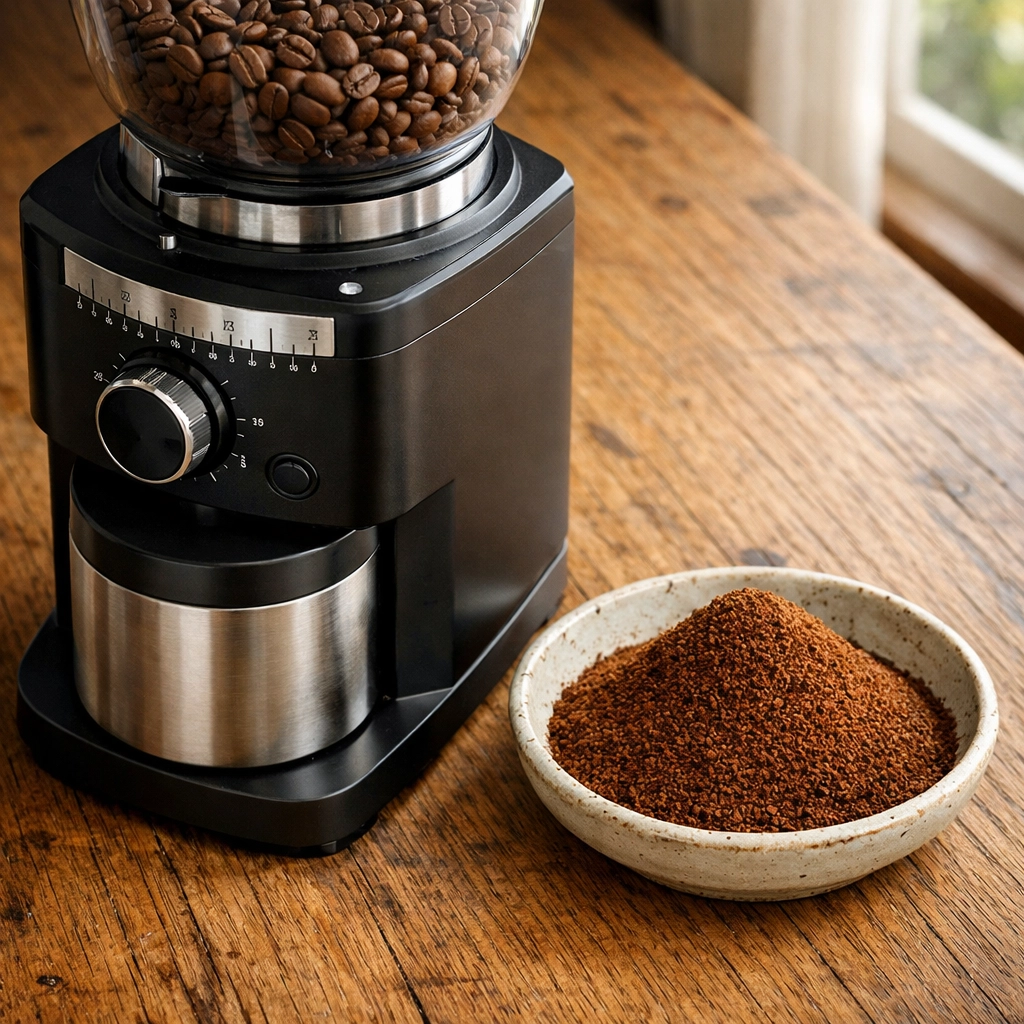
    A premium burr grinder on a wooden counter next to a bowl of perfectly consistent espresso coffee grounds.

    The Fix: Invest in a decent burr grinder. Burr grinders crush the beans to a specific, consistent size. When you’re choosing espresso equipment, we often suggest spending as much on the grinder as you do on the machine itself. It’s that important.

    3. You’re Not Dialling In (Grind Size Matters)

    So, you’ve got a burr grinder. Great! But are you "dialling it in"?

    Espresso is all about resistance. The ground coffee acts as a puck that the water has to push through. If the grind is too coarse, the water rushes through in 10 seconds, and it tastes thin and acidic. If the grind is too fine, the machine struggles, and the coffee drips out like sludge, tasting ashy and bitter.

    The Fix: Aim for a "brew time" of about 25 to 30 seconds. If your shot is too fast, move the grinder finer. If it’s too slow, move it coarser. Small adjustments make a huge difference here. We’re talking millimetres.

    4. Temperature Instability

    Commercial machines are massive beasts filled with copper and brass. They are designed to stay at a very specific temperature (usually between 90 °C to 95 °C) all day long. Many home machines, however, suffer from "temperature surfing." The water might be too hot at the start and too cold by the end of the shot.

    If the water is too cold, you won't extract enough flavour (sour). Too hot? You’ll burn the delicate oils (bitter).

    The Fix: Give your machine plenty of time to warm up. Even if the "ready" light comes on in 2 minutes, the actual metal of the group head is still cold. Give it 15-20 minutes. You can also run a "blank shot" (water only) through the portafilter to heat everything up before you put the coffee in.


    5. The Water Problem

    Espresso is roughly 98% water. If your tap water tastes a bit "chlorine-y" or is incredibly hard (common in many parts of the UK), your coffee will suffer. Hard water is also the number one killer of espresso machines due to limescale build-up.

    The Fix: At the very least, use a basic water filter jug. If you want to get serious, look into bottled water with a low mineral content or specific "coffee water" packets. Your taste buds: and your machine: will thank you. You can learn more about espresso machine looking after to keep things running smoothly.

    6. Inconsistent Tamping

    Tamping is the act of compressing the coffee grounds into a level puck. If you tamp at an angle, the water will find the path of least resistance: a phenomenon we call "channelling." The water blasts through one side of the puck while leaving the other side dry.

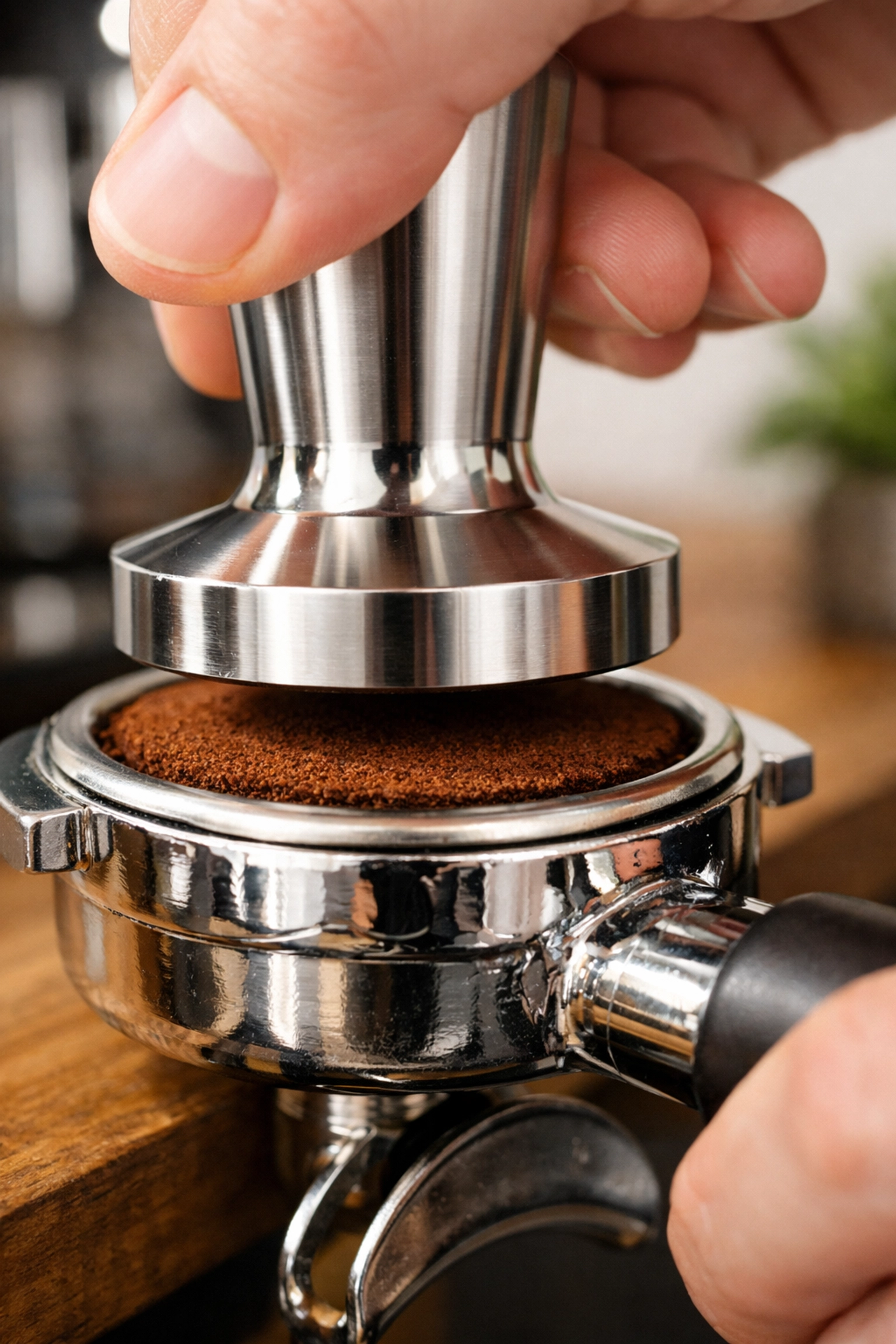
    Close-up of a barista using a stainless steel tamper to create a level coffee puck in a portafilter.

    The Fix: Focus on a level tamp rather than a hard tamp. You don't need to be a bodybuilder; you just need to ensure the surface is flat. We’ve written a whole guide on the art of tamping if you want to master the technique.

    7. You Aren't Weighing Your Coffee

    In a speciality cafe, baristas weigh everything. We weigh the dry coffee going in and the liquid espresso coming out. This is called the "brew ratio." A common ratio is 1:2. For example, 18g of dry coffee in, 36g of liquid espresso out.

    If you’re just "eyeballing" the volume in the cup, you’ll never get consistency. Crema takes up a lot of room but doesn't weigh much, so looking at the "line" on the glass is deceptive.

    The Fix: Buy a cheap set of digital scales that fit under your portafilter. Use our coffee brewing calculator to help you find the perfect numbers for your setup. It takes the guesswork out of the equation.


    8. Milk Texture: Microfoam vs. Sea Foam

    If you’re making lattes or cappuccinos, the espresso is only half the battle. Most home machines have less steam pressure than commercial ones, leading to "big bubble" foam that looks like dish soap. Real cafe milk is "microfoam": silky, glossy, and pourable.

    Silky microfoam being poured into a cup of espresso to create a professional latte with rich crema.

    The Fix: It’s all about the "stretch" and the "roll." You want to introduce air only at the very beginning (the hissing sound), then plunge the wand deeper to create a vortex that incorporates those bubbles. For a deep dive, read our article on understanding milk.

    9. Your Machine is Dirty

    Old coffee oils are disgusting. They are literally rancid fats. If you don't clean your shower screen and backflush your machine regularly, every shot you pull is being filtered through a layer of bitter, old gunk.

    The Fix: Backflush with water every day and use a dedicated espresso cleaner once a week. Wipe your steam wand immediately after every use. A clean machine makes happy coffee.

    10. The Need for Practice

    Let’s be honest: professional baristas pull hundreds of shots a day. They develop a "feel" for the machine, the beans, and the milk. It’s a skill, just like cooking or playing an instrument. You can’t expect to nail it every time without a bit of legwork.

    The Fix: Don't get frustrated! Experiment with different beans from our online shop and keep a little notebook of what worked. Or, if you want to fast-track your skills, come see us for some coffee barista training. We love teaching people how to get the most out of their home setups.


    Summary: How to Step Up Your Game

    If you’re looking for that "lightbulb moment" where your home coffee finally tastes like the local shop, start with the basics. Get yourself some high-quality, fresh beans, buy a scale, and pay attention to your timing.

    Making great espresso is a journey. There will be bad shots and messy counters along the way, but that’s all part of the fun. Once you nail that perfect, syrupy extraction, you’ll never want to go back to supermarket coffee again.

    If you're ever feeling stuck, we’ve got plenty of resources on the workings of espresso machines and how to choose the right gear.

    Happy brewing!

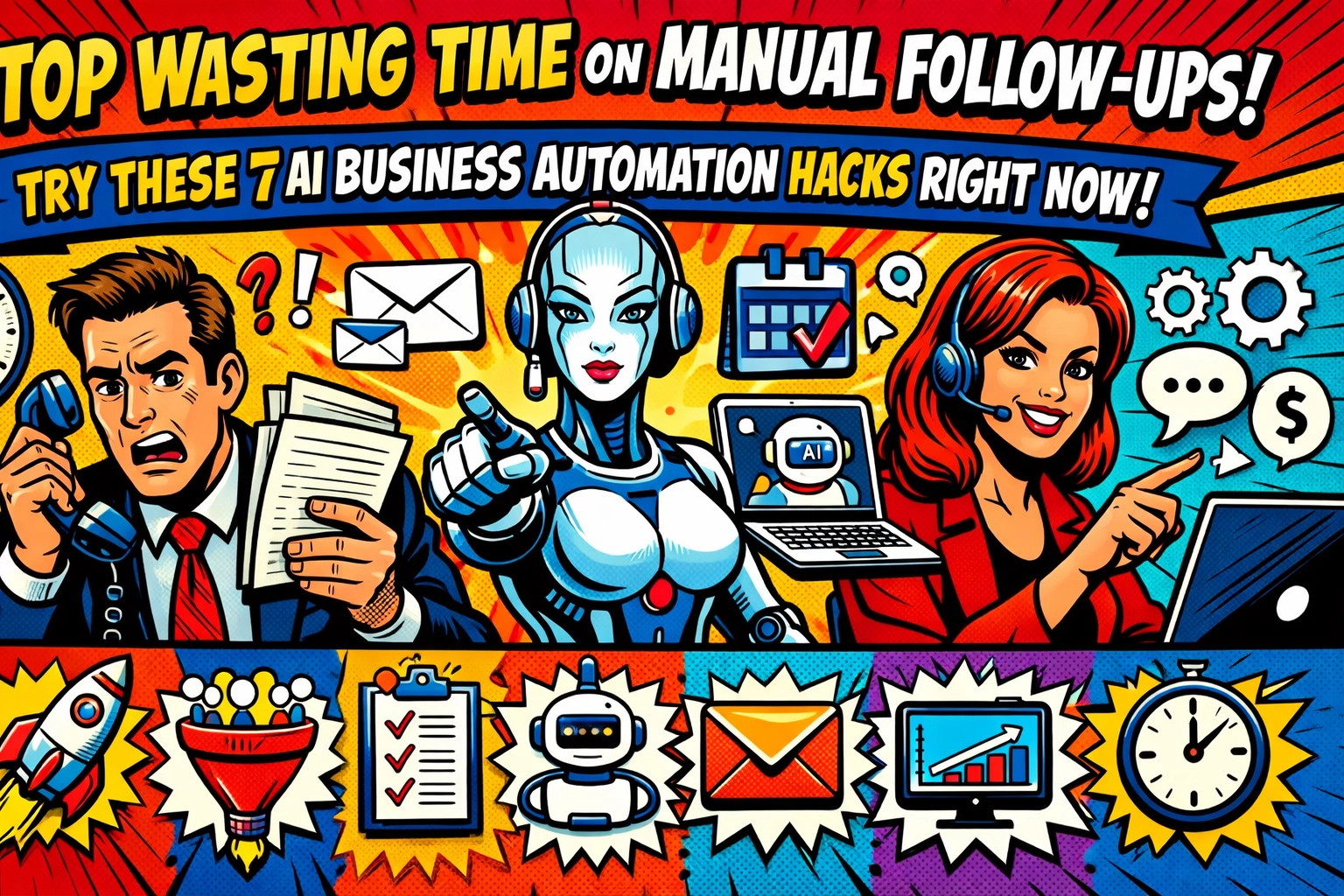
  • Stop Wasting Time on Manual Follow-Ups: Try These 7 AI Business Automation Hacks Right Now

    Stop Wasting Time on Manual Follow-Ups: Try These 7 AI Business Automation Hacks Right Now

    7:05 AM.

    The light from your phone hits your face before you’ve even had a sip of coffee.

    You scroll. One unread email. Five. Twelve. Most of them are prospects you talked to three days ago. They’re "circling back." Or worse, they aren’t.

    You know the drill. You need to reach out, send that "just checking in" note, and keep the lead warm. But you have a meeting at 9:00, a client fire to put out at 10:00, and a growing suspicion that you’re becoming a professional "follow-up artist" instead of a business owner.

    The manual follow-up is the silent killer of small business growth. It’s tedious. It’s repetitive. And frankly? It’s beneath you.

    But there’s a better way. A way where the work happens while you’re actually living your life.

    It’s time to stop juggling and start automating. Here are 7 AI business automation hacks that will turn your messy inbox into a well-oiled machine.


    1. HIRE A GHOST ASSISTANT WITH ZAPIER AI AGENTS

    9:15 AM.

    You’re in your first meeting of the day. Normally, your brain would be half-occupied thinking about the three form submissions that just landed in your inbox.

    Not today.

    With Zapier AI Agents, you’ve essentially hired a digital ghost. This isn't just a simple "if this, then that" automation. This is an ai virtual assistant for business that actually thinks.

    You show the agent your workflow once, maybe it’s "If a lead doesn't respond to my first email within 48 hours, send them a polite nudge with a link to my calendar."

    The agent watches. It learns. And then it just… does it. It works across 8,000+ apps. Whether your leads come from a Facebook ad, a Typeform, or a random LinkedIn message, your AI agent is already drafting the follow-up before you’ve even finished your morning latte.

    AI virtual assistant for business drafting follow-up emails while the owner enjoys coffee.

    2. PREDICT THE FUTURE WITH HUBSPOT AI

    11:30 AM.

    You have 50 leads in your CRM. You only have time to call five. Which ones do you pick?

    In the old days, you’d guess. You’d pick the names that sounded "promising" or the ones at the top of the list.

    HubSpot AI changes the game with predictive lead scoring. It looks at the data, how many times they opened your email, which pages of your site they visited, and whether they’ve ghosted you before, and gives them a score.

    It’s like having a crystal ball for your sales funnel.

    Instead of wasting your breath on cold leads who are just "window shopping," the AI highlights the hot ones. It even uses a ChatGPT-style assistant to help you draft the perfect, personalized response in seconds.

    Stop guessing. Start closing. Check out how to streamline this at https://marblism.link/scott-bowen.

    3. PROTECT YOUR TIME WITH RECLAIM AI

    1:00 PM.

    The dreaded "mid-day slump." Usually, this is when your calendar looks like a game of Tetris gone wrong. You have tiny 15-minute gaps where you’re supposed to "follow up," but you usually just end up staring at a wall.

    Reclaim AI is the bodyguard your calendar deserves.

    It doesn't just list your tasks; it protects them. If you tell Reclaim you need two hours a week for deep-work follow-ups, it will scan your schedule and block that time out automatically.

    If a meeting gets booked over your "Follow-Up Block," Reclaim automatically shifts that block to the next available slot. It detects your work patterns and ensures that the most important admin tasks never fall through the cracks.

    No more manual juggling. Just a clean, organized day.

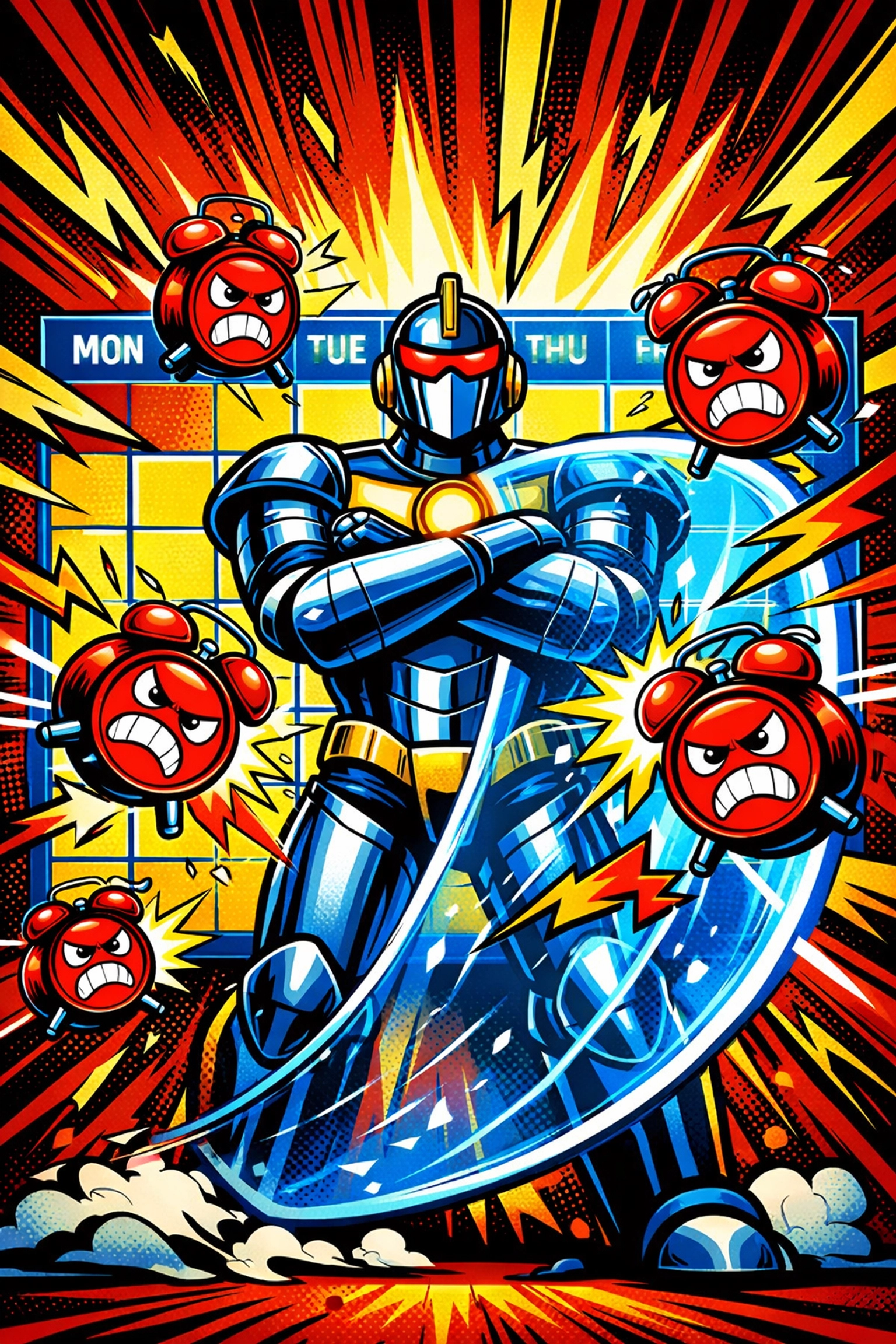
    A robotic guard protecting a digital calendar to show business automation in task scheduling.

    4. BUILD A NO-CODE ARMY WITH LINDY AI

    2:45 PM.

    A customer sends a complex support ticket. They’re annoyed. They want an update on their order, a refund on a previous charge, and a demo for a new product.

    Normally, that’s twenty minutes of your life gone.

    Enter Lindy AI. These are custom "Lindies", AI agents you can build without touching a single line of code. You can automate customer support with ai by creating a Lindy that specifically handles multi-step processes.

    It can check your Shopify store for the order status, ping your Stripe account for the refund, and then send a friendly email to the customer with a link to book a demo.

    It’s not just an auto-responder. It’s a worker. It handles the "doing" so you can focus on the "growing."

    5. DRAFT LIKE A PRO WITH CHATGPT ENTERPRISE

    3:30 PM.

    You need to write a re-engagement campaign for 500 former clients. You want it to feel personal, but you’d rather eat a stapler than write 500 individual emails.

    ChatGPT Enterprise is your secret weapon.

    When you pair it with your automation stack, you can feed it basic lead info and tell it to "Write a 3-sentence check-in that mentions their specific industry and offers a 10% discount."

    It generates responses to objections, drafts personalized follow-ups, and handles the heavy lifting of content creation. It’s the difference between sending a generic "Hey, remember me?" and a message that makes the client think you spent all afternoon writing to them specifically.

    Multi-tasking robot demonstrating how to automate customer support with AI for email follow-ups.

    6. STAY ON BRAND WITH JASPER AI

    4:15 PM.

    The biggest fear with automation? Sounding like a robot.

    Nothing kills a lead faster than a follow-up that sounds like it was written by a 1995 mainframe. Jasper AI solves this by learning your brand voice.

    Whether you’re witty, professional, or "strictly business," Jasper creates entire email sequences that sound exactly like you. You can build 10-step nurture campaigns in minutes.

    It ensures that every touchpoint, from the first "hello" to the final "let's sign", is consistent and high-quality. No more "I'll write that sequence next week." It's done. Now.

    7. AUTOMATE THE HAND-OFF WITH CLICKUP AI

    5:00 PM.

    The day is winding down. But in a growing business, the end of the day usually means a pile of tasks for other people.

    "Did I tell Sarah to follow up on that invoice?"
    "Did the tech team see that bug report?"

    ClickUp AI acts as your air traffic controller. It analyzes your team’s capacity and automatically assigns follow-up tasks based on who actually has time to do them.

    It predicts delays before they happen. If a follow-up task is sitting idle for too long, ClickUp AI pings the right person or re-assigns it.

    The chaos is gone before you even take your last sip of the day.


    STOP JUGGLING. START GROWING.

    6:00 PM.

    The office is quiet. Your laptop is closed.

    Usually, this is the time you’d be sitting on the couch, laptop balanced on your knees, sending "one last email" to a prospect.

    But tonight? The emails are already sent. The tasks are assigned. The leads are scored.

    You’re not just "busy." You’re efficient.

    Using an ai virtual assistant for business isn't about being lazy. It’s about being smart. It’s about recognizing that your time is worth more than $15 an hour spent on manual data entry and "checking in."

    Small business owners who embrace these hacks aren't just saving time, they're scaling without the burnout.

    If you’re ready to see how this looks in the real world, you need to check out what we’re doing at Marblism. We build the tools that make these "hacks" your everyday reality.

    Ready to reclaim your time?
    Click here to see how Marblism can automate your business growth right now.


    FAQ: YOUR AUTOMATION QUESTIONS ANSWERED

    Is AI hard to set up for a small business?
    No. Most of the tools mentioned, like Zapier and Lindy, are specifically designed for people who don't know how to code. If you can use Facebook, you can use these tools.

    Will my customers know I'm using AI?
    Only if you let them. Tools like Jasper AI are designed to mimic your specific voice, so the emails sound human, personal, and relevant.

    Is it expensive?
    Most of these tools have free tiers or low-cost starter plans. The real question is: How much is your time worth? If an AI saves you 10 hours a week, it’s already paid for itself ten times over.

    Can I automate customer support with AI without losing the personal touch?
    Yes. Use AI for the repetitive "Where is my order?" questions. This frees you up to give your full attention to the complex issues that actually require a human heart.

    Scaling Shouldn't Be This Easy. But Here We Are.

    Don't let another day disappear into the "manual follow-up" void. The tech is here. The time is now.

    Explore the future of business automation here.

  • The Ultimate Weekend Brunch: Coffee Pairing Tips

    The Ultimate Weekend Brunch: Coffee Pairing Tips

    Is there anything better than a slow Saturday morning? The sun is peeking through the curtains, the to-do list is blissfully blank, and the only real decision you have to make is whether you want your eggs poached or scrambled. Brunch isn't just a meal; it’s a lifestyle. It’s that magical bridge between breakfast and lunch where calories don't count and the coffee flows like water.

    But here is the thing: most of us put a lot of effort into the food: sourcing the best sourdough, finding the ripest avocados, or perfecting that pancake flip: only to wash it down with whatever coffee happens to be in the cupboard. That is a real shame, to be honest. If you are going to go to the trouble of making a spectacular brunch, your coffee deserves to be more than an afterthought.

    Pairing coffee with food is much like pairing wine. It’s about finding balance. It’s about enhancing the flavours on your plate while letting the coffee shine in its own right. We’ve spent a lot of time exploring these combinations here at Limini Coffee, and we’ve put together this guide to help you elevate your weekend brunch from "pretty good" to "legendary."


    The Philosophy of Pairing: Contrast vs. Complement

    Before we dive into specific dishes, let’s talk about the "why." When we pair coffee with food, we generally follow two main paths: complementing or contrasting.

    Complementing is all about finding similar flavour profiles. If you have a chocolatey, nutty brownie, you pair it with a coffee that has chocolatey, nutty notes. They lean into each other, creating a deep, harmonious experience.

    Contrasting, on the other hand, is about balance. This is where you use the coffee to cut through the richness of a dish or provide a bright counterpoint to something heavy. Think of a high-acidity, citrusy light roast cutting through the fatty richness of a buttery croissant. It cleanses the palate, making every bite of that pastry taste as good as the first.

    So, how do you apply this to your brunch table? Let's break it down by the classics.


    The Savoury Stars: Eggs, Bacon, and Avocado

    Savoury brunch dishes tend to be rich. We are talking about fats, proteins, and salt. These need a coffee that can stand up to them without getting lost.

    Eggs Benedict and the Iced Latte

    Eggs Benedict is the king of brunch, but that Hollandaise sauce is heavy. It’s essentially a warm butter emulsion. We believe that an iced latte is the secret weapon here. The cold temperature and the creamy milk provide a refreshing contrast to the richness of the eggs and sauce. It’s a palate cleanser that keeps the meal from feeling too "weighty." Plus, the espresso backbone provides enough bitterness to balance the salt of the ham or bacon.

    The Classic Bacon and Egg Muffin

    If you’re going for something a bit more casual, like a bacon and egg muffin, you can’t go wrong with a flat white. The microfoam in a well-made flat white is incredibly silky, which mimics the creaminess of the egg yolk. It’s a texture thing. The saltiness of the bacon also brings out the inherent sweetness in the milk. If you’re curious about why milk behaves the way it does, it’s worth checking out our article on understanding milk.

    Avocado Toast

    The millennial favourite! Avocado is creamy and earthy. You have two ways to go here. You can go for a bold, black coffee (like a Long Black) to provide a stark contrast to the fatty avocado. Or, you can lean into the creaminess with a latte or cappuccino. We personally think a medium-bodied coffee with a bit of acidity: think a washed Colombian: works wonders here, especially if you’ve added a squeeze of lemon or some chilli flakes to your toast.

    Savoury Eggs Benedict on a rustic table paired with a refreshing iced latte for brunch.


    The Sweet Side: Pancakes, Waffles, and French Toast

    When the maple syrup comes out, the coffee rules change. You are dealing with high sugar content and often "cakey" textures.

    Pancakes and Waffles

    Whether they are topped with berries or drowned in maple syrup, pancakes and waffles need a coffee with some "oomph." We recommend a bold yet sweet coffee, ideally brewed with an Aeropress or a stove-top brewer. The intensity of an Aeropress brew (which is naturally a bit more concentrated) acts as a necessary anchor for all that sugar. If you use a coffee that is too light or delicate, the maple syrup will simply steamroll over the flavour of the beans.

    Fruit-Forward Muffins

    If your brunch involves blueberry or raspberry muffins, reach for a light roast. Light roasts are known for their higher acidity and bright, fruity notes. This is a classic case of complementing flavours. The berry notes in a Kenyan or Ethiopian coffee will sing when paired with actual berries in your food. It’s a vibrant, energetic way to start the morning.


    The Bakery Basket: Pastries and Breads

    There is something deeply civilised about a basket of warm pastries in the middle of the table. But the wrong coffee can make a pastry feel greasy, while the right coffee makes it feel like a luxury.

    Croissants and the Cappuccino

    This is the quintessential pairing. The buttery, flaky layers of a croissant are the perfect partner for a cappuccino. The foam on the cappuccino acts as a sort of "cushion" for the pastry. As you sip through the foam, the coffee cuts through the butter, while the chocolatey notes often found in espresso blends highlight the toasted wheat flavours of the bread. It’s a match made in heaven.

    Banana Bread

    Banana bread is dense, sweet, and often a little spicy (if there’s cinnamon involved). We’ve found that it pairs incredibly well with a medium roast coffee. Look for something with nutty or chocolatey notes. The mellow sweetness of the banana complements the deeper roast profile, and if you add a splash of milk, it becomes almost like a liquid dessert.

    Almond Croissants

    These are a bit more complex due to the nuttiness. For these, we suggest a single-origin coffee from Colombia or Costa Rica. These regions often produce beans with a very balanced, nutty profile that mirrors the frangipane filling perfectly.

    Flaky golden croissant served with a creamy cappuccino topped with chocolate powder.


    Brewing for the Crowd

    When you’re hosting a brunch, you don’t necessarily want to be stuck behind the espresso machine for forty-five minutes while everyone else is laughing and eating. This is where your equipment choice matters.

    If you’re making coffee for four or more people, we recommend using a batch brew method like a large French Press or a Chemex. It allows you to produce a high volume of quality coffee all at once. To make sure you get the ratios right, we always suggest using a coffee brewing calculator. It takes the guesswork out of it: because nobody wants "weak" coffee with their hearty breakfast.

    However, if you are a bit of a coffee geek and want to show off your skills, pull some shots! Just make sure your equipment is up to the task. If you’re looking to upgrade your home setup, choosing the right espresso equipment is key to getting that coffee-shop quality at your kitchen counter.

    And remember, the most important ingredient is the beans themselves. Freshness is everything. You can have the fanciest machine in the world, but if your beans have been sitting on a supermarket shelf for six months, it’s going to taste like cardboard. Grab some fresh, speciality beans from us here at Limini Coffee to ensure your brunch is actually worth waking up for.


    Why Water Quality Matters (Seriously!)

    It’s worth mentioning something that often gets overlooked: water. Your coffee is about 98% water. If your tap water is very hard (high in minerals) or smells of chlorine, your coffee will never reach its full potential, no matter how good the pairing is. Hard water can make coffee taste dull and chalky, while very soft water can make it taste sharp and sour.

    For the ultimate weekend brunch, we suggest using a simple water filter jug. It’s a small step that makes a massive difference in the clarity of the coffee's flavour. This allows those subtle notes of jasmine, chocolate, or citrus to actually come through and interact with your food.

    Pouring filtered water into a Chemex coffee brewer for a clean and clear flavour profile.


    The Final Flourish: Presentation

    We are big believers in the "theatre" of coffee. Part of the joy of brunch is that it looks good. Use nice cups. If you’re running a small cafe or just want your home kitchen to feel like one, the choice of coffee cups actually matters for heat retention and "mouthfeel."

    If you are serving espresso-based drinks, pay attention to the crema. A thick, golden-brown crema isn't just a sign of a good shot; it looks beautiful. And if you’re feeling brave, try a bit of latte art. Even a simple heart goes a long way in making someone feel special on a Sunday morning.

    A professional latte art heart in a teal ceramic cup showing rich hazelnut coffee crema.


    Bringing It All Together

    At the end of the day, coffee pairing is subjective. What we love might not be what you love, and that is the beauty of coffee! The "rules" are really just guidelines to get you started.

    Next time you’re planning a brunch, take a second to think about the flavours. Are you eating something sweet? Maybe reach for that bold, dark roast. Are you having a light, citrusy fruit salad? Try a delicate pour-over.

    The goal is to create a cohesive experience where the food and the drink elevate each other. It’s about taking a moment to appreciate the craft: from the farmer who grew the beans to the roaster (that’s us!) who brought out their potential, to you, the home barista, who brought it all to the table.

    If you’re interested in learning more about the technical side of things: maybe you want to master tamping or understand the inner workings of an espresso machine: we have plenty of resources to help you on your journey.

    So, go ahead. Invite some friends over, put the sourdough in the toaster, and brew something spectacular. Your brunch deserves it.

    A full weekend brunch spread with avocado toast, pancakes, and fresh speciality coffee.