Author: admin

  • Is Your Hotel PMS Holding You Back? Why Modern Hotels Are Upgrading in 2026

    Is Your Hotel PMS Holding You Back? Why Modern Hotels Are Upgrading in 2026

    Empower your team. Delight your guests. Scale your brand.

    The hospitality landscape in 2026 looks fundamentally different than it did just a few years ago. We believe that technology should be the wind at your back, not an anchor dragging you down. Today, over 12,500 properties have realized that a hotel PMS upgrade isn't just about software: it’s about reclaiming time and unlocking new revenue streams.

    When you move to a cloud-native hospitality software platform, you aren’t just changing your interface; you’re centralizing your entire operation into one intelligent ecosystem.

    The Shift to Cloud-Native Intelligence

    Modern hoteliers are no longer looking for simple digital ledger books. They are looking for engines of growth. In 2026, the baseline for success is built on integrated capabilities and intelligent automation. Legacy systems often act as silos, keeping your front desk in the dark about what’s happening in housekeeping or finance.

    We think the future is unified. A modern platform brings everything together:

    • Integrated Payments. 60% of hoteliers now prioritize built-in payment processing to eliminate manual reconciliation.
    • Real-time Synchronization. Instant updates between housekeeping and the front desk accelerate room turnover by up to 20%.
    • Universal Access. Manage your entire portfolio from a tablet at a coffee shop or a smartphone on the train.

    Everything stays connected. All from one innovative platform.

    Hotel manager accessing cloud-native hospitality software on a tablet in a minimalist lobby.

    Elevate the Guest Journey

    We believe the first impression shouldn't happen at a mahogany desk while someone types on a loud keyboard. It should happen on the guest’s terms. Modern hotels are leveraging a hotel PMS upgrade to remove the friction points that guest feedback consistently highlights.

    By shifting to cloud-native hospitality software, you offer a journey that feels like 2026, not 1996.

    1. Digital Check-in. Guests arrive and head straight to their room, having completed everything on their phone.
    2. Mobile Keycards. Secure, instant access via smartphone eliminates the "lost plastic card" dance.
    3. Self-Service Kiosks. For those who want a physical touchpoint without the queue, kiosks provide a 30-second check-in experience.

    "Our guest satisfaction scores jumped by 15% the month we ditched the front desk queues," says one boutique owner. "It turns out people actually want to spend their vacation vacationing, not waiting for a printer."

    Automate the Mundane. Focus on the Human.

    Why are we still spending hours on manual data entry? We think your staff’s talent is wasted on clicking "save" five hundred times a day. Modern systems use AI-powered agents to handle the heavy lifting.

    • Autonomous Upselling. Based on guest history and real-time availability, the system offers the right upgrade at the right price.
    • Smart Room Assignment. Algorithms balance wear and tear across your inventory while ensuring VIPs get the best views.
    • Automated Invoicing. Send accurate, professional folios to guests' emails the moment they check out.

    When you automate the repetitive stuff, your team can finally focus on being hosts again. They can remember a guest’s favorite drink or recommend the best local hidden gems. That’s the kind of hospitality that builds loyalty.
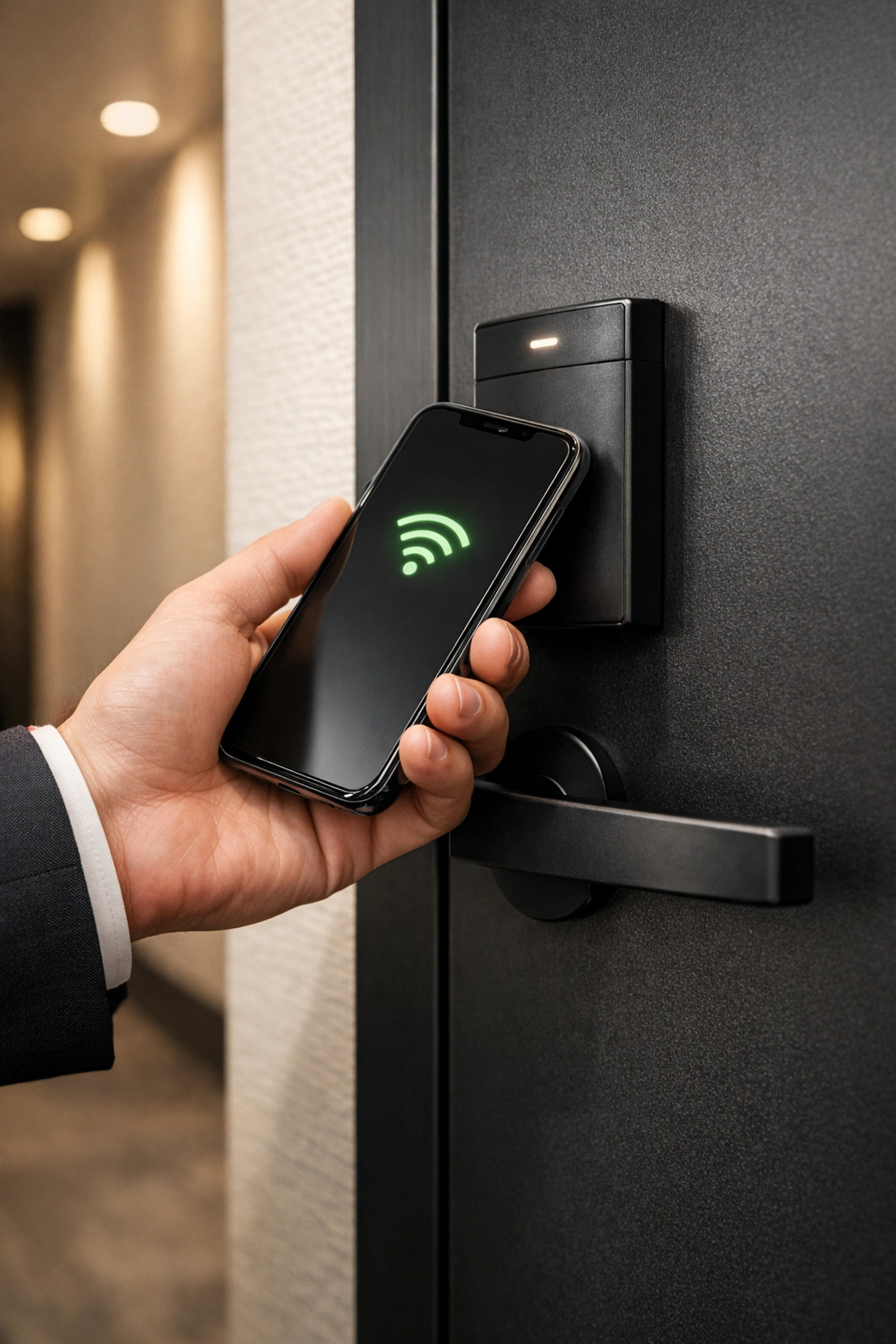
    Seamless guest check-in experience using a smartphone key after a modern hotel PMS upgrade.

    Data You Can Actually Use

    In 2026, data is the most valuable asset your hotel owns: if you can access it. Legacy systems often bury your insights in clunky PDF reports that are out of date by the time you open them.

    Upgrading to a modern platform gives you:

    • Live Business Intelligence. See your RevPAR, occupancy, and ADR across all properties in a single, beautiful dashboard.
    • Dynamic Pricing. Deep connectivity with over 300+ OTAs and channel managers ensures your rates are always optimized for the market.
    • Guest Preference Tracking. Understand spending patterns so you can tailor your marketing and onsite offers.

    We believe that better data leads to better decisions. 48% of high-performing hotels cite advanced reporting as their top reason for a hotel PMS upgrade. It’s the difference between guessing your strategy and knowing it.

    Unified Finance and Operations

    The "behind the scenes" of a hotel shouldn't be a chaotic mess of spreadsheets and sticky notes. Cloud-native hospitality software bridges the gap between the guest experience and the back office.

    • Built-in Housekeeping. Staff receive real-time updates on their devices, knowing exactly which room is ready for cleaning next.
    • Instant Financial Reporting. No more end-of-month stress. Your books are essentially balanced in real-time.
    • Vendor Integration. Connect your CRM, spa management, and F&B systems directly into the PMS core.

    "It used to take me ten hours a week just to reconcile payments," notes a finance manager. "Now, it's all handled automatically before I even finish my morning coffee."
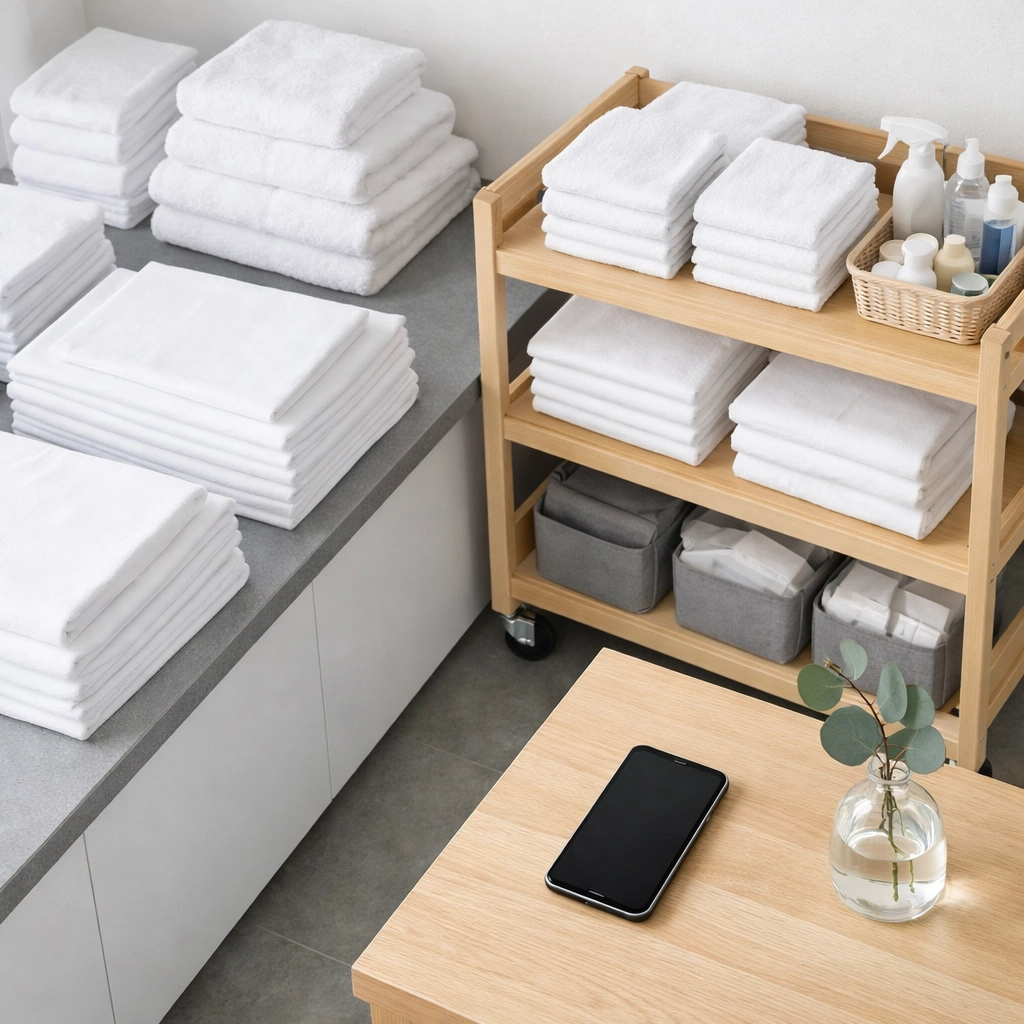
    Organized housekeeping station with mobile technology powered by cloud-native hospitality software.

    Why 2026 is the Year to Act

    The competitive gap is widening. Hotels running on modern stacks are more agile, more profitable, and have happier staff. They can pivot their strategy in minutes, not months.

    Upgrading isn't just a technical change: it's a cultural one. It signals to your team and your guests that you are invested in the future. It shows that you value their time and their experience.

    If you feel like your current system is a barrier to your creativity or your growth, it’s time to look at what’s possible today. The transition is easier than you think, and the outcomes: increased revenue, streamlined operations, and glowing reviews: are well worth it.

    Ready to Unlock Your Hotel's Potential?

    We believe your technology should work for you, not the other way around. Joining the Mews community means joining a global network of innovators who are redefining what it means to be a hotelier.

    Take the first step toward a more efficient, more profitable future. Our team is ready to show you how a hotel PMS upgrade can transform your daily operations and your bottom line.

    Schedule a 30-minute demo and see how cloud-native hospitality software can get you earning more revenue in no time.

    A thriving modern hotel rooftop terrace, the result of a successful hotel PMS upgrade in 2026.

    The Bottom Line

    Modern hospitality is about freedom. Freedom from the front desk, freedom from manual errors, and freedom to grow your brand. By choosing a system designed for the needs of 2026, you aren't just buying software; you're investing in a partner that evolves with the industry.

    Don't let your legacy software hold back your vision. The future is cloud-native, automated, and guest-centric. It’s time to make the move.


    Get started with Mews today.

  • 7 Mistakes You’re Making with AI Business Automation (And Why You’re Still Stressed)

    You bought the tools. You subscribed to the SaaS. You’re supposed to be on a beach sipping a mojito while the "robots" do the heavy lifting.

    But it’s 11:00 PM. You’re staring at a spreadsheet that looks like a digital crime scene, your AI chatbot just told your biggest client to "have a nice life," and your stress levels are higher than they were before you even heard the word "automation."

    What happened?

    You fell for the "Magic Wand" trap. You thought AI was a plug-and-play solution for a broken business model. It’s not. It’s an accelerator. And if you’re accelerating in the wrong direction, you’re just hitting the wall faster.

    If you’re ready to stop the bleeding and actually start saving time, check out how we do it right at Marblism.

    But first, let’s look at why you’re still losing sleep.


    ☕ 7:30 AM , THE DATA DUMP DISASTER

    You sit down with your first coffee, ready to see the "insights" your new AI tool generated overnight. Instead, you see a report that says your best-selling product is a discontinued SKU from 2018.

    Mistake #1: Feeding AI Messy or Low-Quality Data

    AI is a reflection of your reality. If your reality is a disorganized mess of duplicate entries, inconsistent naming conventions, and outdated pricing, your AI is going to spit out garbage.

    You can’t sync five years of chaotic spreadsheets into an AI system and expect a miracle. AI output is only as reliable as your input. When you feed it "messy" data, it produces distorted forecasting. You make decisions based on those forecasts. You lose money.

    Mistake #2: Ignoring Data Bias

    It gets worse. Machine learning models aren’t objective; they’re mirrors. They inherit the biases of whatever you give them. If your historical data is skewed, your AI will reinforce those flaws rather than fix them. You’ll end up with unfair pricing strategies or inaccurate customer segments because your AI is literally living in the past.

    Business owner stressed by a robot dumping trash, representing bad data in AI business automation tools.


    📱 10:15 AM , THE "ROBOT" WHO RUINED CHRISTMAS

    Your phone buzzes. It’s a notification from your automated customer support bot. A long-time client is furious because the bot couldn't understand a simple request about a refund and started quoting a policy that doesn't even exist.

    Mistake #3: Automating High-Stakes Interactions Without Humans

    This is the fastest way to kill a brand. You tried to automate emotional intelligence.

    AI is great at data gathering. It’s terrible at empathy. High-stakes interactions, especially those involving frustrated customers or complex problem-solving, require a human touch. When you automate these entirely, you’re telling your customers they aren't worth five minutes of your time.

    Use AI to prep the data. Let a human provide the resolution.

    Mistake #4: Over-Relying on AI Outputs (The Hallucination Trap)

    AI is confident. It writes in beautiful, complete paragraphs. It sounds like an expert. But it doesn't "know" things; it predicts the next most likely word.

    It will cite legal requirements that don't exist. It will miscalculate numbers with total authority. If you aren't having a qualified professional review your AI-generated technical or financial documents, you aren't automating, you’re gambling.


    🤝 1:45 PM , THE "SHINY OBJECT" SYNDROME

    You’re in a meeting, discussing a new "AI-driven" dashboard that cost a fortune and took three months to integrate. Nobody knows how to use it. It doesn't actually solve the bottleneck in your lead generation.

    Mistake #5: Overestimating AI Capabilities

    You thought AI was a universal solution. You assumed it could replace entire processes overnight.

    AI performs best when applied to specific, well-defined tasks, like fraud detection or demand forecasting. It is not a magic "fix my business" button. When you treat it like one, you end up with "Tool Fatigue." You have twelve different subscriptions and zero actual results.

    Scaling shouldn't be this hard. But it is when you're chasing every shiny new tool instead of focusing on what actually moves the needle. If you want to see what actual, result-driven automation looks like, take a look here.


    🔍 4:00 PM , FLYING WITHOUT A MAP

    You’re looking at your monthly expenses. The AI tools are costing you $1,200 a month. You can't tell if they've saved you a single hour of work or brought in a single new lead.

    Mistake #6: Lacking Clear Business Objectives

    Did you know 70% of AI pilots fail to scale? It’s because teams don’t plan for the "so what?" factor.

    Before you implement any AI business automation tool, you need a success metric.

    • Are you aiming to reduce costs by 10%?
    • Do you want to improve forecast accuracy by 15%?
    • Are you trying to cut response time in half?

    Without a goalpost, you’re just playing with expensive toys. You’re stressed because you’re spending money without seeing the ROI.

    Stressed business owner overwhelmed by robotic arms, symbolizing tool fatigue from poorly planned automation.


    🌙 6:30 PM , THE SILOED NIGHTMARE

    The day is winding down, but you’re still manual-copying data from your AI lead scraper into your CRM because the two "automated" systems won't talk to each other.

    Mistake #7: Insufficient Planning for Integration

    Automation is supposed to streamline. But often, it just creates more complexity. If your AI-driven dashboard doesn't integrate with your existing workflow, it’s just another tab you have to check.

    True automation requires human validation and cross-tool communication. You need review processes where humans audit the AI’s work to catch misclassifications before they turn into expensive mistakes.

    Stop juggling. Start integrating.


    WHY MARBLISM IS THE CURE FOR AUTOMATION ANXIETY

    The reason you’re stressed isn’t because AI is bad. It’s because you’re trying to build a house on quicksand.

    At Marblism, we don't just give you a tool and wish you luck. We help you build the foundation. We focus on business automation tools that actually work, tools that help you generate leads, save time, and, most importantly, let you sleep at night.

    You don't need more AI. You need better AI.

    See how Marblism can actually simplify your life.


    YOUR QUESTIONS, ANSWERED (WITHOUT THE JARGON)

    Q: Can AI replace my sales team?
    No. And you shouldn't want it to. AI can handle the lead scraping and the initial outreach, but humans close deals. Use AI to do the "boring" stuff so your team can do the "human" stuff.

    Q: Why is my AI making mistakes with my numbers?
    Because AI is a language model, not a calculator. It’s predicting words, not doing math. Always use a human: or a dedicated accounting tool: to verify the final digits.

    Q: Is automation expensive to set up?
    It's more expensive not to. The cost of manual labor and human error far outweighs the subscription fee of a well-integrated tool. But only if that tool actually solves a problem.

    Q: How do I know which tool to choose?
    Start with your biggest pain point. If you’re losing leads, look at lead generation automation. If you’re spending 4 hours a day on email, look at communication tools. Don't buy the "all-in-one" solution first.


    THE FINAL WORD

    The chaos is gone before you even take your first sip of coffee. That’s the dream, right?

    But that dream only happens when you stop making these seven mistakes. Stop treating AI like a magic wand and start treating it like a high-performance engine that needs the right fuel and a skilled driver.

    You’ve got the engine. Now, let’s get you the driver.

    Stop the stress. Start the automation. Click here to see what you've been missing.

    Scaling shouldn't be this easy.

    But here we are.

  • The Ultimate Guide to Wholesale Specialty Coffee: Everything You Need to Succeed

    So, you’re thinking about taking the plunge into the world of specialty coffee? Perhaps you’re dreaming of opening a quirky corner café, or maybe you’re looking to upgrade the caffeine game in your existing restaurant or office. Whatever the case, you’ve landed in the right spot. Moving from a casual coffee drinker to a business owner navigating the world of B2B coffee can feel a bit like trying to dial in a new espresso roast at 6:00 AM, a little overwhelming, but incredibly rewarding once you get it right.

    At Limini Coffee, we’ve spent years roasting, tasting, and partnering with businesses just like yours. We know that choosing from the sea of wholesale coffee roasters isn't just about finding a bag of beans with a pretty label. It’s about building a relationship with a supplier that actually cares about your success.

    In this guide, we’re going to walk you through everything you need to know about wholesale specialty coffee. From the nitty-gritty of sourcing to the technical side of the equipment, we’ve got you covered.


    Why Specialty Coffee Matters for Your Business

    First things first: why "specialty"? You might see this term thrown around a lot, but in our world, it has a very specific meaning. Specialty coffee refers to the highest grade of coffee available, typically scoring 80 points or above on a 100-point scale by the Specialty Coffee Association (SCA).

    But beyond the score, it’s about the experience. When you choose to work with specialty coffee suppliers, you aren't just buying a commodity; you’re buying a story, a flavor profile, and a commitment to quality that your customers will notice immediately.

    And let’s be honest, the modern coffee consumer is savvy. They know the difference between a mass-produced, oily dark roast and a carefully nurtured, freshly roasted specialty bean. By serving the good stuff, you’re telling your customers that you value quality. This builds loyalty, and loyalty, as we all know, is the lifeblood of any café or restaurant.

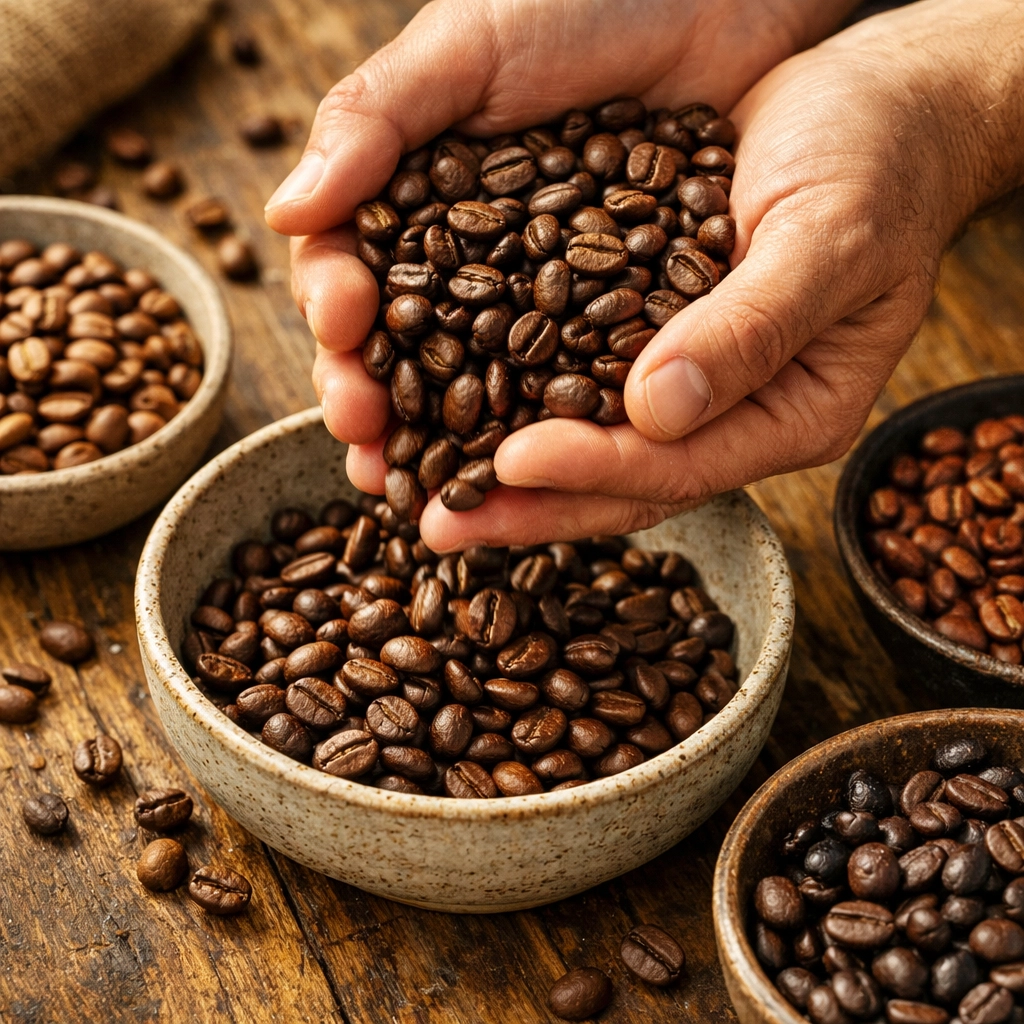
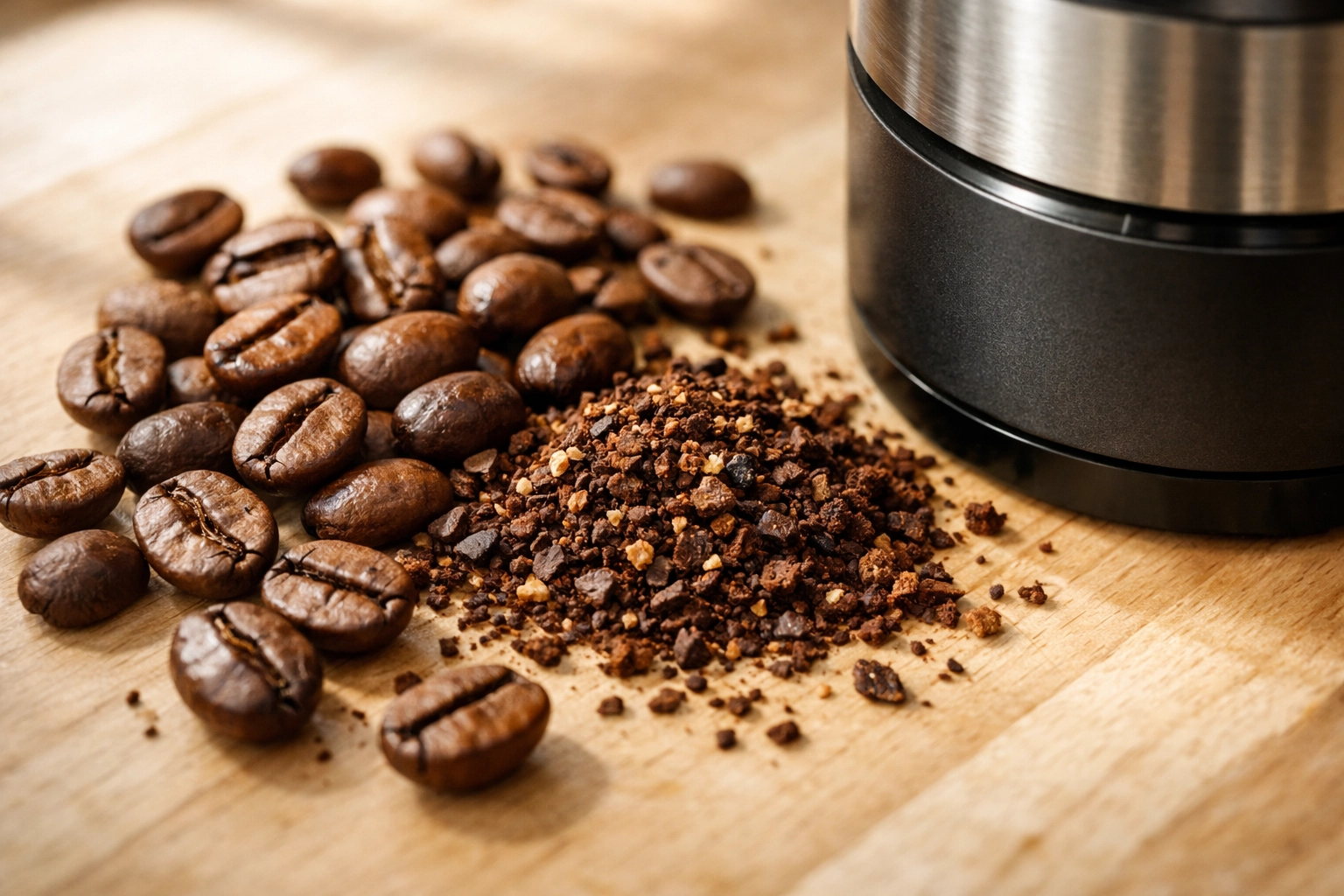
    Artisan hands inspecting high-quality roasted specialty coffee beans from a wholesale supplier.


    Choosing the Right Wholesale Coffee Roasters

    Finding the right partner is arguably the most important decision you’ll make for your business. You want a roaster that acts as an extension of your team. So, what should you look for when vetting potential coffee suppliers?

    1. Consistency is King

    It’s easy to roast one amazing batch of coffee. It’s significantly harder to roast one thousand amazing batches. You need a supplier that can guarantee the flavor profile of your house blend stays the same week after week. If your customers fall in love with a chocolatey, nutty latte on Monday, they expect that same hug-in-a-mug on Friday.

    2. Freshness and Lead Times

    Coffee is a fresh product. Ideally, you want beans that have been roasted within the last few days, not sitting in a warehouse for months. Ask about their roasting schedule. At Limini, we’re big believers in the "fresh is best" philosophy. We roast to order to ensure your beans arrive at their absolute peak.

    3. Support and Training

    A bag of world-class beans is useless if your barista doesn't know how to extract them properly. The best wholesale partners offer comprehensive barista training. You want a supplier that will help you understand the variables, grind size, water temperature, and tamping pressure, to ensure every cup is perfect.


    The Technical Side: It’s More Than Just Beans

    When we talk about wholesale specialty coffee, we have to talk about the kit. You can have the best beans in the world, but if your machine is set to the wrong temperature or your grinder is inconsistent, the coffee will suffer.

    The Magic Numbers

    For a standard espresso, we usually look for a pump pressure of about 9 BAR. The water temperature should ideally sit between 190 °F and 203 °F (88 °C to 95 °C). If the water is too cool, the coffee will taste sour and under-extracted. Too hot? You’ll end up with a bitter, burnt mess.

    This is why we often recommend equipment with a PID (Proportional-Integral-Derivative) controller. Think of a PID as cruise control for your espresso machine's boiler; it keeps the temperature stable to within a fraction of a degree. We’re big fans of the La Spaziale machines for this very reason, they are incredibly reliable workhorses for a busy café environment.

    Don't Forget the Grinder

    Your grinder is actually more important than your espresso machine. (Yes, we said it!) An inconsistent grind means the water will find the path of least resistance through the coffee puck: a phenomenon called "channeling." This results in a cup that is both sour and bitter at the same time. Not a great vibe.

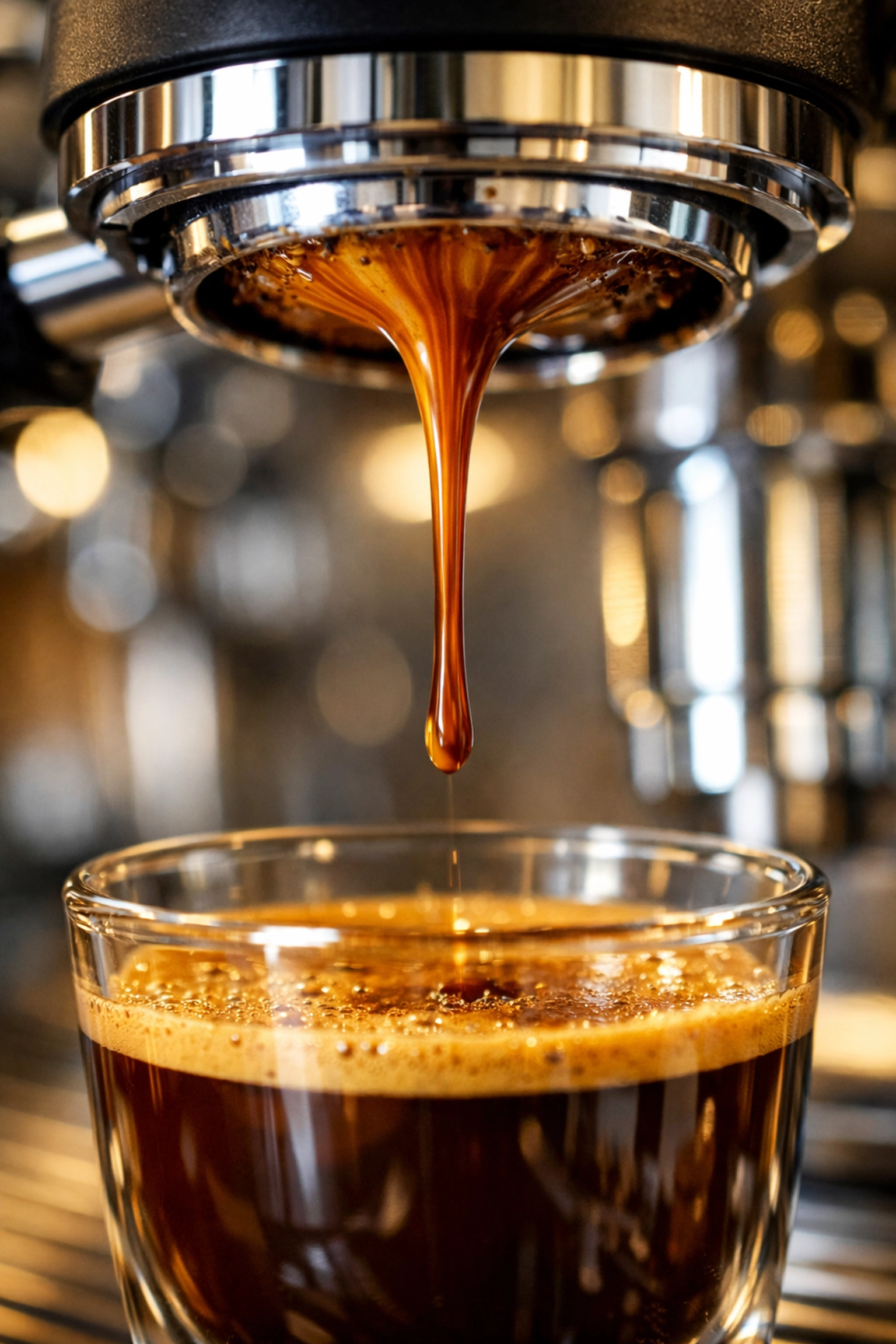
    A perfect espresso extraction with rich crema pouring from a professional espresso machine portafilter.


    The Importance of Training (The Secret Sauce)

    We’ve seen it happen many times: a beautiful new shop opens with top-tier equipment and fantastic beans, but the coffee is… let’s say, "uninspired." Usually, the culprit is a lack of training.

    Training isn't a one-time event; it’s an ongoing process. Your team needs to understand the basics of tamping technique and how to steam milk to that perfect, silky microfoam texture (aim for about 140 °F / 60 °C for the best sweetness).

    We offer an overview of training that covers everything from basic espresso preparation to the more theatrical elements of running a coffee shop. Because let's face it, a bit of theatre in your coffee service goes a long way in making a customer feel like they’re getting something special.


    Sourcing and Ethics

    In the specialty world, we care deeply about where our coffee comes from. This isn't just about being "nice"; it’s about sustainability. If farmers aren't paid a fair price, they can’t afford to keep producing high-quality specialty crops.

    When you look into how we source our coffee, you’ll see a focus on transparency and long-term relationships. This traceability is something you can share with your customers. People love knowing that their morning latte supported a specific washing station in Ethiopia or a family farm in Brazil.


    Building Your Business: Beyond the Cup

    Opening a café is about more than just coffee. It’s about the space you create. If you’re in the early stages, we highly recommend looking into the logistics of building a coffee shop and shop fitting. The flow of your counter, the height of your machines, and even the cups you choose all contribute to the customer experience.

    Wholesale vs. Dropshipping

    Depending on your business model, you might not need to hold massive amounts of stock. For some businesses, wholesale dropshipping is a brilliant way to offer fresh coffee without the inventory headache. For others, a traditional wholesale arrangement works best.

    Bright and modern interior of a specialty coffee shop featuring minimalist wood design and natural lighting.


    A Few Parting Tips for Success

    So, you’re ready to start your journey. Here are a few "pro-tips" from us here at Limini:

    • Don't overcomplicate the menu: Start with the classics. Master the latte and cappuccino before you start experimenting with 15 different syrups.
    • Watch your milk: Most of your drinks will be milk-based. Understanding your milk is just as important as understanding your coffee.
    • Keep it clean: A dirty machine produces dirty coffee. Period.
    • Taste everything: Develop your palate. Check the crema: it should be rich, hazelnut-colored, and persistent.

    Starting a coffee business is a marathon, not a sprint. It takes patience, a lot of cleaning, and a genuine passion for the craft. But with the right wholesale coffee roaster by your side, you’re already halfway there.

    If you’re feeling a bit overwhelmed by the choices, why not read some of our reviews to see how we’ve helped other businesses? Or, even better, just give us a shout. We love talking shop and helping new businesses find their feet.

    Success in the coffee industry isn't just about the beans: it's about the people. And we’d love to be your people.

    Ready to take the next step? Check out our wholesale options and let's get brewing!

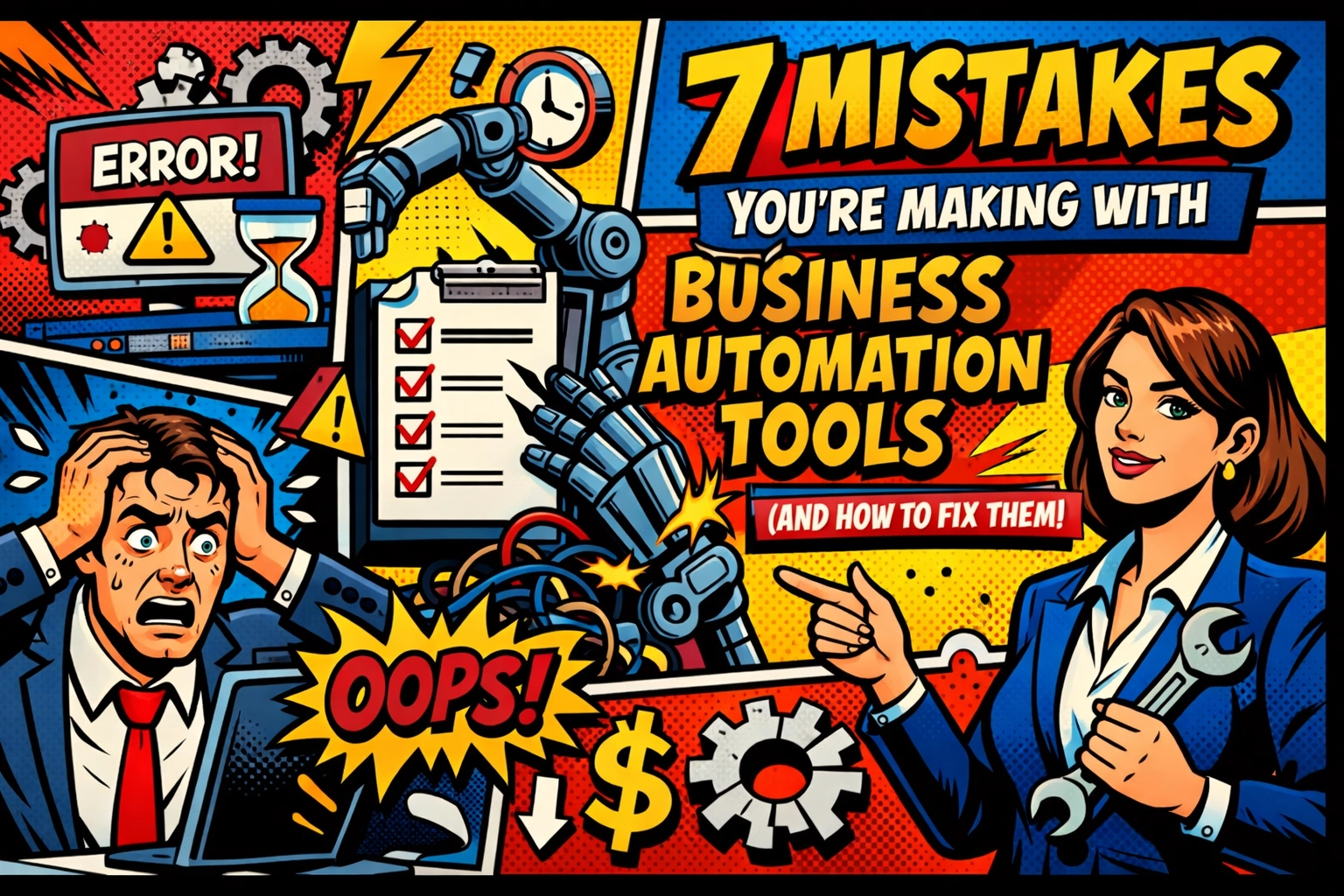
  • 7 Mistakes You’re Making with Business Automation Tools (and How to Fix Them)

    7 Mistakes You’re Making with Business Automation Tools (and How to Fix Them)

    You’re staring at a spreadsheet. Again.

    It’s 11:45 PM, the coffee is cold, and you’re wondering why you spent $200 last month on "efficiency software" that seems to produce nothing but error notifications and headaches.

    You were promised a beach. You were promised "passive income" while a robot did the heavy lifting. Instead, you’re just a glorified babysitter for a bunch of buggy algorithms.

    The truth? Business automation tools aren't broken. Your approach is.

    Let’s fix that.

    1. You’re Automating a Mess

    You can’t automate chaos. If your manual process is a tangled web of "I’ll remember to do that later," putting it into a tool just makes it a faster tangled web.

    Research shows that 38% of automation failures happen because people skip the optimization phase. You’re essentially building a house on a swamp.

    The Fix: Map it out on paper first. If you can’t explain the process to a five-year-old, don't try to explain it to an AI. Clean the data, standardize the steps, and then let the robots take over.

    2. The "Set It and Forget It" Delusion

    You think you’re done once you hit "Publish."

    …It’s a trap.

    Markets change. APIs break. Customer behavior shifts. If you aren't monitoring your workflows, you’re losing ROI every single day. In fact, 62% of organizations see their automation value drop within two years because they stopped paying attention.

    The Fix: Schedule a "Robot Performance Review." Once a month, check the logs. Is the tool still doing what it was hired to do? If not, fire it (or at least tweak the settings).

    3. Ignoring the Human Element

    You bought the tools, but did you ask your team?

    Implementing an ai assistant for small business without getting your staff on board is a recipe for internal sabotage. People fear what they don't understand. If they think the robot is there to replace them, they won't use it.

    The Fix: Involve them early. Show them that the automation is there to take away the "boring stuff" (like data entry) so they can do the "cool stuff" (like actually talking to humans).

    Small business owner high-fiving a robot symbolizing successful implementation of business automation tools.

    4. Buying Everything at Once

    You’re a sucker for a good SaaS landing page. We get it.

    But when you automate large, independent tasks instead of small, interconnected components, you create "automation silos." These systems don't talk to each other. You end up with five different tools that all have different versions of the same customer's email address.

    The Fix: Start small. Automate one tiny component of a workflow, ensure it works, then build the next block. Think LEGOs, not monoliths.

    5. Data Quality is an Afterthought

    "Garbage in, garbage out" is a cliché for a reason.

    If your CRM is full of duplicates and typos, your business automation tools will happily send personalized emails to "Dear [FirstName] [LastName]" or, worse, to a lead that died in 2019.

    The Fix: Use automation to clean your data before you use it to send it. Build workflows that flag discrepancies and enforce data validation rules.

    6. You Forgot to Calculate the ROI

    "But everyone else is doing it" is not a business strategy.

    If you're spending $500 a month to save two hours of work that costs $20 an hour… you’re losing money. It sounds obvious, but surprisingly few people actually sit down and do the math on implementation and training costs.

    The Fix: Before you sign up, document the costs: the tool, the setup time, and the training. Only move forward if the math makes sense. If you need a partner who actually understands efficiency, check out Marblism.

    7. Choosing the Wrong "Brain"

    In 2026, not all AI is created equal. Using a generic bot for a specialized task is like hiring a plumber to fix your laptop.

    The Fix: Choose an ai assistant for small business that actually integrates with your specific stack. Don't settle for "good enough."


    Automate Admin Tasks: How to Save 10+ Hours Every Week

    ☕ The day begins.

    Usually, you’d spend the first two hours drowning in "quick" tasks. Answering the same five questions in your inbox. Scheduling meetings. Moving data from a form to a sheet.

    By 10:00 AM, your brain is already fried. You haven't even started the "real" work yet.

    What if those 10 hours just… disappeared?

    The "Admin Death Spiral"

    Admin tasks are the silent killers of growth. They feel productive because you’re "doing things," but you’re actually just spinning your wheels.

    The secret to saving 10+ hours isn't working harder. It’s working fewer minutes on things that don't require a human brain.

    Step 1: The Calendar Gatekeeper

    Stop the back-and-forth "Does 2:00 PM work for you?" emails. It’s 2026. If you aren't using an automated scheduler, you’re bleeding time.

    Step 2: The Inbox Filter

    Most of your emails don't need you. They need an answer. An ai assistant for small business can draft responses based on your previous emails, leaving you to just hit "Send."

    Step 3: The Seamless Sync

    Every time you manually copy an address from an invoice into your accounting software, a little piece of your soul dies. Use business automation tools to bridge the gap.

    Relaxed professional using an ai assistant for small business to automate invoices and administrative tasks.

    You just send a thumbs-up. The data moves. The invoice is sent. You go back to your coffee.

    Scaling shouldn't be this hard. But here we are. If you’re ready to reclaim your Friday afternoons, it’s time to see what Marblism can do for your workflow.


    The Best AI Assistant for Small Business in 2026

    📱 Your phone buzzes.

    It’s your AI assistant. It noticed a lead came in from your website, researched their company, checked your calendar, and drafted a proposal based on their specific needs.

    All while you were at the gym.

    This isn't science fiction anymore. It’s Thursday.

    Why 2026 is Different

    Two years ago, AI was a novelty. Today, it’s a requirement. The "Best" assistant isn't the one with the most features; it’s the one that actually understands your business context.

    Meet Your New Team Member

    A true ai assistant for small business shouldn't just be a chatbot. It should be a proactive partner.

    • Contextual Awareness: It knows who your VIP clients are.
    • Cross-Platform Integration: It talks to your CRM, your email, and your project management tools.
    • Zero-Maintenance: It learns from your feedback, so you don't have to keep repeating yourself.

    Stop juggling. Start leading. The tools are ready when you are. Explore the future here.


    AI Content Generator for Small Business: Your Secret Marketing Weapon

    🔍 You need a blog post. A LinkedIn update. A newsletter. Five tweets.

    The blinking cursor is mocking you. It’s been twenty minutes, and all you’ve written is "Hey everyone."

    Content marketing is a beast that never stops eating. If you’re trying to feed it manually, you’re going to starve your business of actual strategy.

    The Power of an AI Content Generator for Small Business

    The mistake people make is thinking AI should do 100% of the work.

    …No.

    The AI is your researcher, your drafter, and your editor. It’s the "Secret Weapon" that handles the 80% of the grunt work so you can add the 20% of human soul that actually sells.

    Digital stylus creating marketing icons using an ai content generator for small business to save time.

    How to Use It (Without Looking Like a Robot)

    1. Feed it the Hook: Give the generator a specific, weird, or controversial opinion you have.
    2. Let it Expand: Let the ai content generator for small business build the structure and fill in the facts.
    3. The Human Polish: Spend 10 minutes injecting your voice, your stories, and your "Scott-isms."

    Suddenly, a four-hour task takes twenty minutes.

    You look like a marketing genius. But it’s quiet: organized. That’s the Marblism way.

    Ready to stop clicking and start growing?
    See how Marblism automates the boring so you can do the brilliant.

    The lights are off. The work is done. You’re already home.

  • The Ultimate Guide to Coffee Shop Branding: Standing Out in a Crowded Market

    The Ultimate Guide to Coffee Shop Branding: Standing Out in a Crowded Market

    Walk down any high street in the UK and you'll count at least five coffee shops within a stone's throw. That's the reality of the market we're all navigating. So here's the question: what makes a customer choose your shop over the one next door?

    The answer isn't just about having a clever name and a nice logo (though those help). It's about building a cohesive brand that lives and breathes through every single touchpoint – from the colour of your walls to the way your baristas greet regulars on a Monday morning.

    Let's dig into what it really takes to create a coffee shop brand that doesn't just survive, but thrives.

    Branding is More Than a Logo

    We've all seen it. A coffee shop opens with a gorgeous logo, slick signage, and then… nothing else matches. The interior feels disconnected, the social media looks like it's run by three different people, and the customer experience is all over the place.

    Your logo is just the beginning. Think of it as the front door to your brand – but what happens when customers step through that door?

    Real branding is about creating a complete, immersive experience. It's the story you tell through your space, your service, your coffee, and your community presence. When done right, customers should be able to walk into your shop blindfolded (not recommended for safety reasons) and still feel your brand.

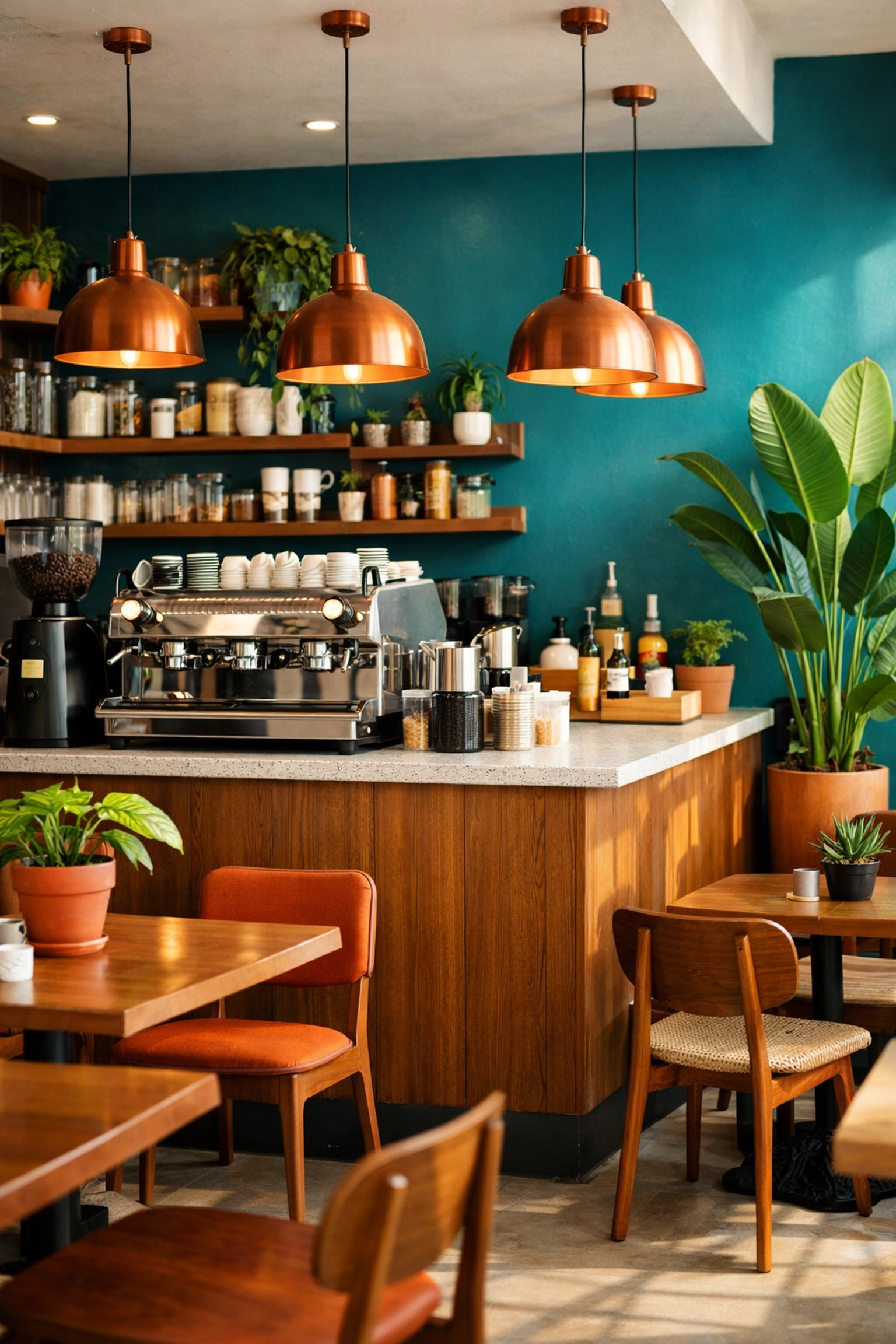
    Modern coffee shop interior design with bold teal walls and warm wood showcasing strong brand identity

    Your Space Tells a Story

    Interior design isn't just aesthetics – it's brand communication in physical form.

    The colours you choose matter more than you might think. Research shows 67% of people can recognise a brand by colour alone. That's huge. So while the coffee industry has traditionally leaned into neutral browns and creams, we're seeing a shift toward bolder choices. Vibrant colours, pastels, distinctive accent walls – these create memorable impressions that stick with customers long after they've finished their flat white.

    But here's the thing: your design choices need to align with your brand positioning. Are you a high-end specialty shop targeting serious coffee enthusiasts? Maybe sleek, minimalist design with premium materials works. Targeting families and casual coffee drinkers? Warm, approachable spaces with comfortable seating and rounded, friendly design elements create that welcoming vibe.

    Think about lighting, furniture, the flow of the space, even the music you play. Every detail either reinforces or contradicts your brand message. Make it intentional.

    Customer Service is Your Brand in Action

    You can have the most beautiful space and the most stunning logo in the world, but if your customer service is inconsistent, your brand falls apart.

    Your staff are brand ambassadors. How they interact with customers, the language they use, their energy and attitude – that's your brand voice coming to life. This means training isn't just about pulling the perfect espresso shot (though that's crucial). It's about embodying the brand personality you've worked hard to define.

    If your brand is casual and approachable, your team should reflect that. Friendly banter, remembering regular orders, creating genuine connections. If your brand is premium and refined, service should be attentive and knowledgeable without being pretentious.

    The key word here? Consistency. Every customer, every shift, every interaction should feel recognisably you. That's when brand loyalty starts to build.

    Barista serving latte to customer demonstrating excellent coffee shop customer service and brand experience

    Coffee Quality: Your Unspoken Brand Promise

    Let's be honest. You can have the most Instagrammable interior and the friendliest staff, but if your coffee isn't up to scratch, your brand will suffer. Quality is your most important brand promise.

    This is where your choice of coffee supplier becomes a strategic brand decision, not just a procurement one. The beans you serve, the consistency you maintain, the flavour profiles you offer – these all communicate what you value.

    Premium, ethically sourced, specialty-grade coffee tells customers you're serious about quality. It says you care about the full journey from farm to cup. And increasingly, customers notice and care about these details.

    This is where partnering with the right roaster becomes critical. At Limini Coffee, we work with coffee shops to ensure your coffee quality aligns with your brand positioning. Whether you're after unique single origins that tell a story or consistent, crowd-pleasing blends, the coffee in your cup needs to deliver on your brand promise.

    White Label: Making Your Brand Truly Yours

    Here's something many aspiring coffee shop owners don't initially consider: white label coffee options.

    Imagine your customers buying bags of coffee to take home, and those bags feature your branding, your story, your name. That's powerful brand extension. It turns your coffee shop into a retail brand, creating additional revenue while strengthening brand recognition.

    White label services allow you to offer coffee that's roasted to your specifications, packaged with your unique branding, and sold as an authentic representation of your business. It's not just about the extra income (though that's nice). It's about giving customers a way to take your brand home with them, to gift it to friends, to become advocates for your business.

    At Limini Coffee, our white label options let you create a coffee range that's distinctly yours, backed by our roasting expertise and commitment to quality. We handle the technical side – sourcing, roasting, quality control – while you build your brand.

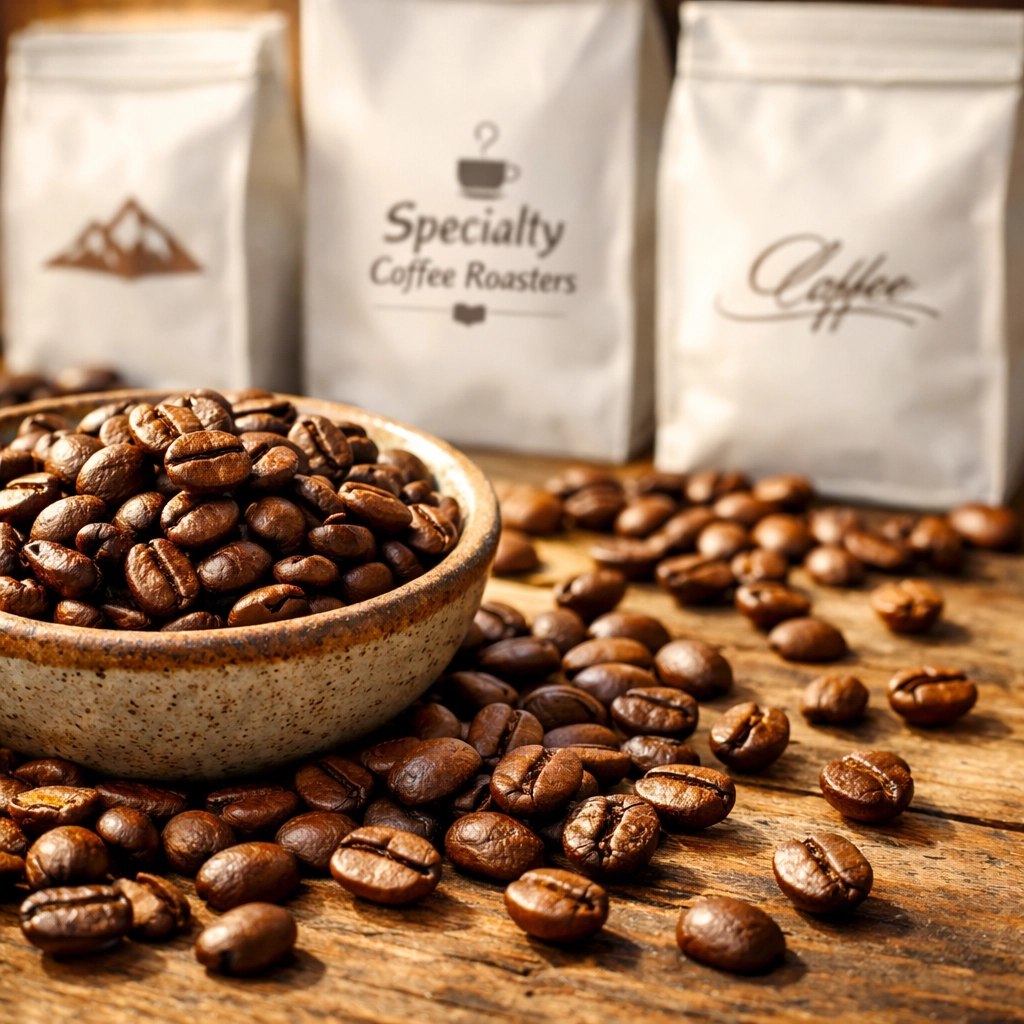
    Premium specialty coffee beans with white label packaging for coffee shop branding

    Building Consistency Across All Touchpoints

    Your brand exists everywhere customers encounter you. In-store experience, social media, website, packaging, uniforms, loyalty cards, email newsletters – the list goes on.

    Omnichannel consistency is what separates amateur brands from professional ones. This means:

    • Your colour palette is consistent from your shop walls to your Instagram feed
    • Your brand voice is recognisable whether someone's reading your menu board or your social captions
    • Your customer experience feels cohesive whether they're ordering in person or browsing your website
    • Seasonal promotions are coordinated across physical and digital spaces

    When customers see fragmented branding, they unconsciously question your professionalism. When everything aligns? They trust you more.

    The Power of Local Connection

    Here's a stat that should inform your branding strategy: 70% of consumers are willing to shop locally more often, and 65% of Gen Z shoppers specifically feel community connection through local shopping.

    Your local identity is a brand differentiator. Incorporate elements of your city, neighbourhood, or regional culture into your branding. This doesn't mean plastering your logo with obvious landmarks (though that can work). It means genuinely embedding yourself in the community fabric.

    Host local artists' work on your walls. Partner with nearby businesses. Celebrate community events. Source local pastries and treats. Your brand becomes not just a coffee shop, but a gathering place that reflects the character of your area.

    This authentic local connection creates emotional bonds that generic chain coffee shops simply cannot replicate.

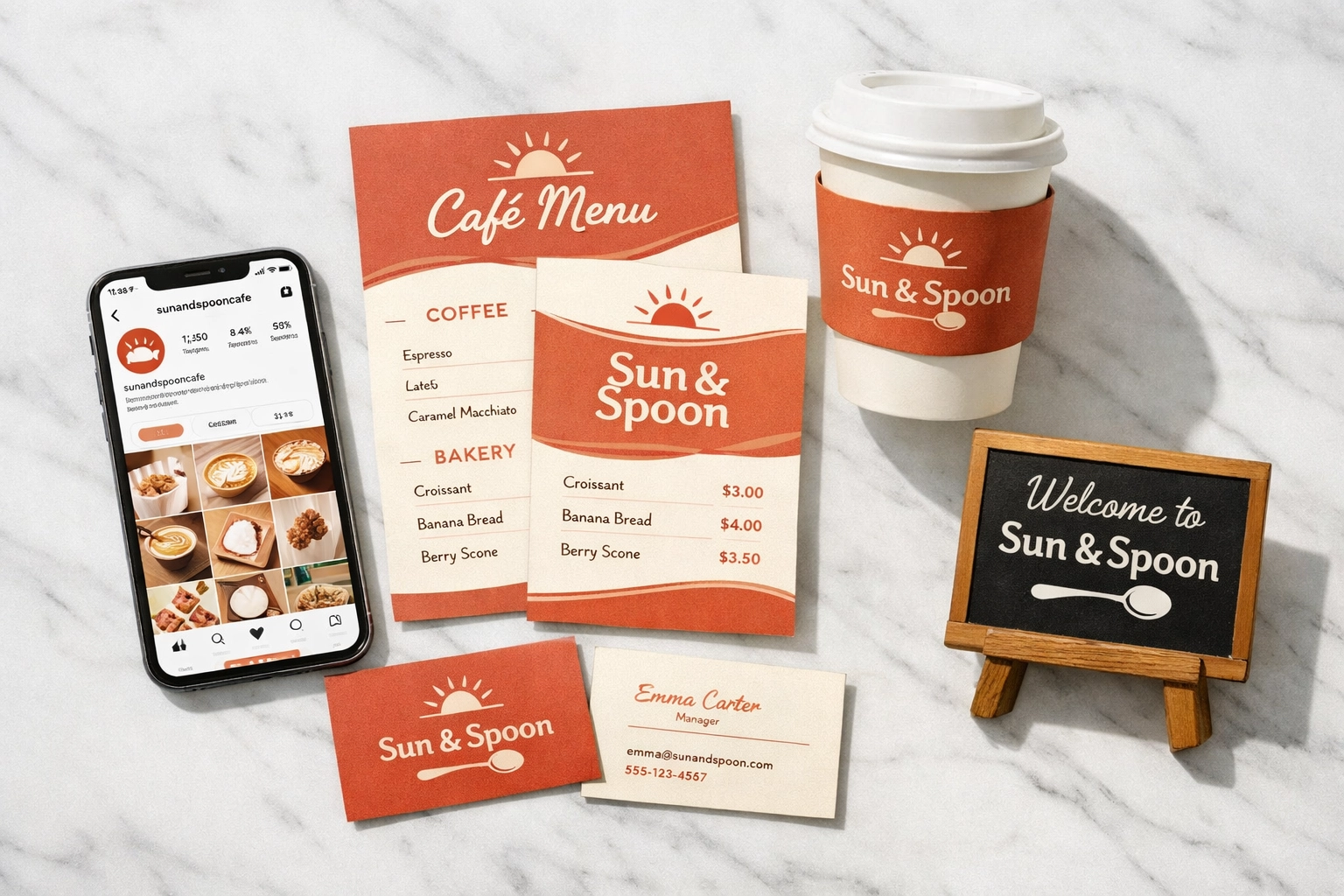
    Coffee shop brand consistency shown across menu cards, cup sleeves, and social media marketing materials

    Social Media: Your Digital Storefront

    In 2026, if your coffee shop isn't on social media, does it even exist?

    Instagram and TikTok are where potential customers discover you, where regulars stay connected, and where your brand personality really shines. High-quality photos of your drinks, behind-the-scenes content, staff features, customer stories – this content builds brand awareness and loyalty.

    But here's what matters: consistency and authenticity. Posting sporadically with varying quality undermines your brand. Create a content rhythm that's sustainable and maintains your brand voice. And please, make it authentic. Customers can smell inauthentic brand content from a mile away.

    Live video content, Instagram Stories, collaborative posts with local influencers – these tools create engagement that static posts can't match. They make your brand feel accessible and real.

    Your Brand is a Long-Term Investment

    Building a distinctive coffee shop brand doesn't happen overnight. It's not about choosing a colour scheme and calling it done. It's about creating a cohesive identity that touches every aspect of your business, then consistently delivering on that promise day after day.

    The coffee shops that thrive aren't necessarily the ones with the biggest budgets. They're the ones with the clearest brand identity, executed consistently across every customer interaction.

    Whether you're just starting out or looking to strengthen an existing brand, remember that your coffee quality is foundational to everything else. You can't fake that. Partner with suppliers who understand your vision and can deliver the quality your brand demands.

    Ready to build a coffee shop brand that lasts? Start with exceptional coffee that reinforces your quality promise. Explore how Limini Coffee can support your brand with premium beans, white label options, and the kind of partnership that helps your business grow.

    Your brand story is waiting to be told – through your space, your service, and most importantly, through the coffee in every cup you serve.

  • The Ultimate Guide to Modern Hotel PMS: Everything You Need to Succeed in 2026

    The Ultimate Guide to Modern Hotel PMS: Everything You Need to Succeed in 2026

    Automate manual tasks. Boost direct revenue. Elevate the guest experience.

    In 2026, the hospitality industry isn't just about providing a bed for the night; it’s about delivering a seamless, technology-driven journey. Modern hoteliers are moving away from clunky, legacy systems that tether staff to desks. Instead, they are embracing agile platforms that run in the cloud and think for themselves.

    We believe that your Property Management System (PMS) should be the heartbeat of your business: a unified platform that connects every department, simplifies every task, and turns every guest into a loyal advocate.

    The Foundation: Cloud-Native Power

    The era of on-site servers is over. In 2026, the most successful hotels operate entirely in the cloud. We think this shift is the single most important decision a hotelier can make. A cloud-native PMS provides the freedom to manage your property from anywhere in the world, whether you’re on the floor talking to guests or checking performance from a beach in Bali.

    Why cloud-native wins:

    • Instant Updates. No more manual downloads or system downtime for upgrades.
    • Total Accessibility. Log in from any device, anytime, with zero hardware maintenance.
    • Ironclad Security. Professional-grade encryption and automated backups keep your data safe.

    Traditional systems are often a patchwork of old code and manual workarounds. A modern PMS like Mews is built from the ground up to be intuitive. It’s easy to use, meaning your team can spend less time looking at a screen and more time looking at your guests.

    Modern hotel manager using a cloud-native PMS on a tablet for easy property management.

    Automation: Your New Secret Weapon

    Time is the most valuable commodity in hospitality. We think your technology should give time back to your team. Recent studies show that modern PMS platforms save hotels over 500 hours annually through automation. That’s hundreds of hours redirected toward guest interaction and creative problem-solving.

    Automation isn’t just about doing things faster; it’s about doing them better. By automating repetitive tasks like invoicing, room assignments, and night audits, you eliminate the risk of human error.

    Our approach to automation focuses on three key areas:

    1. Housekeeping Efficiency. Real-time updates tell your team exactly which rooms are ready, maximizing turnover speed.
    2. Smart Communication. Automated, personalized emails and SMS keep guests informed without you lifting a finger.
    3. Dynamic Payments. Integrated payment processing handles deposits and final bills automatically, ensuring PCI compliance and reducing chargebacks.

    When your PMS handles the "boring stuff," your staff is free to do what they do best: provide exceptional hospitality. If you're ready to see how automation can transform your daily operations, you can explore our solutions here.

    The Booking Journey: Engine and Channel Management

    Your guest's experience starts long before they walk through your doors. It starts at the moment of discovery. To succeed in 2026, you need a high-converting booking engine and a robust channel manager that work in perfect harmony.

    The modern booking engine must be fast, mobile-responsive, and direct-booking focused. We believe in reducing the friction between "looking" and "booking." By offering a sleek, two-click reservation process, you can capture more direct revenue and reduce your reliance on expensive OTAs.

    Maximizing your distribution:

    • Real-time Sync. Your channel manager should update inventory across Booking.com, Expedia, and Airbnb instantly.
    • Rate Parity. Maintain consistent pricing across all platforms with a single dashboard.
    • Direct Incentives. Use your booking engine to offer exclusive perks for direct bookers, like early check-in or a welcome drink.

    Pristine hotel suite showing automated housekeeping efficiency and a premium guest experience.

    Rethinking the Guest Experience

    The modern guest expects autonomy. They don't want to stand in line at a front desk for twenty minutes after a long flight. This is where self-check-in kiosks and mobile check-in technology come into play.

    In 2026, the "front desk" is a concept, not a piece of furniture. By implementing self-check-in kiosks, you give guests the choice to bypass the queue. They can scan their ID, sign their registration card, and even cut their own room key: all in under 60 seconds.

    Benefits of a contactless guest journey:

    • Reduced Wait Times. Dramatically lower the pressure on your staff during peak arrival hours.
    • Upsell Opportunities. Guests are more likely to purchase a room upgrade or breakfast when presented with options on a digital screen.
    • Enhanced Privacy. Many modern travelers prefer the convenience of a digital-first interaction.

    This technology doesn't replace staff; it empowers them. Instead of being data-entry clerks, your front-of-house team becomes hosts, ready to offer local recommendations or a warm welcome while the guest handles the logistics on their phone or a kiosk.

    Data-Driven Decisions with Integrated CRM

    In the past, guest data was scattered across spreadsheets and sticky notes. Today, a unified CRM (Customer Relationship Management) system is essential. When your CRM is baked directly into your PMS, you gain a 360-degree view of every guest.

    We think data should be actionable, not just interesting. A modern PMS provides real-time insights into guest behavior, occupancy trends, and revenue performance. This allows you to move away from "gut feelings" and toward strategic, data-led decision-making.

    Unlock the power of your data:

    • Personalized Marketing. Send tailored offers based on past stay history and preferences.
    • Predictive Pricing. Use demand forecasting to adjust your rates automatically and maximize RevPAR.
    • Guest Loyalty. Identify your "VIPs" the moment they book and ensure their preferences are met every time.

    Guest using a mobile booking engine on a smartphone to access loyalty perks and direct rates.

    Building Your Hospitality Ecosystem

    No PMS is an island. The true power of a modern platform lies in its ability to play well with others. Whether it's your accounting software (like QuickBooks or Xero), your smart lock system, or your review management tool, everything should be connected.

    We believe in a "best-of-breed" approach. You should have the freedom to choose the tools that work best for your specific property, knowing that they will integrate seamlessly with your Mews PMS.

    Critical integrations for 2026:

    1. Accounting. Automatically sync revenue and tax data for painless reconciliation.
    2. Smart Locks. Issue digital keys directly to a guest's smartphone for a truly keyless experience.
    3. Review Management. Trigger feedback requests the moment a guest checks out to boost your ranking on TripAdvisor and Google.

    Sustainability: Tracking Your Footprint

    Sustainability is no longer a "nice to have": it’s a business imperative. Modern travelers prioritize eco-friendly properties. Your PMS can now help you track energy consumption, waste, and carbon footprints.

    By using technology to monitor resources, you not only help the planet but also reduce your operational costs. We think it’s a win-win for everyone. Digital check-ins and invoicing also mean you can finally move toward a truly paperless office.

    Why Mews is the Choice for 2026

    We’ve seen the hospitality landscape change rapidly over the last few years. The properties that thrive are the ones that embrace change rather than fear it. Mews is designed for the modern hotelier who wants to break free from the constraints of the past.

    Our platform is cloud-native, easy to use, and focused entirely on automation. We don't just provide software; we provide the foundation for you to create remarkable guest experiences. Whether you manage a boutique hotel, a luxury resort, or a multi-property group, our technology scales with you.

    The Mews Impact:

    • Increase ADR. Use data to price smarter and upsell effectively.
    • Save Time. Let automation handle the manual work so you can focus on your guests.
    • Grow Revenue. Capture more direct bookings with a world-class engine.

    The future of hospitality is already here. It’s automated, it’s digital, and it’s guest-centric. If you’re still fighting with a system that feels like it’s from 2006, it’s time for an upgrade.

    Ready to see how the right PMS can transform your business? Get started with Mews today and discover what true operational freedom feels like. It only takes a few minutes to start your journey toward a more profitable and guest-focused 2026.

    Hotel host providing personalized service made possible by self-check-in kiosks and automation.

    Summary of Success

    The ultimate guide to succeeding in 2026 boils down to three things: flexibility, automation, and guest choice. By moving to a cloud-native PMS, embracing self-check-in kiosks, and leveraging a powerful booking engine, you position your hotel at the forefront of the industry.

    The technology you choose today will define your guest experience tomorrow. Make it innovative. Make it seamless. Make it Mews.

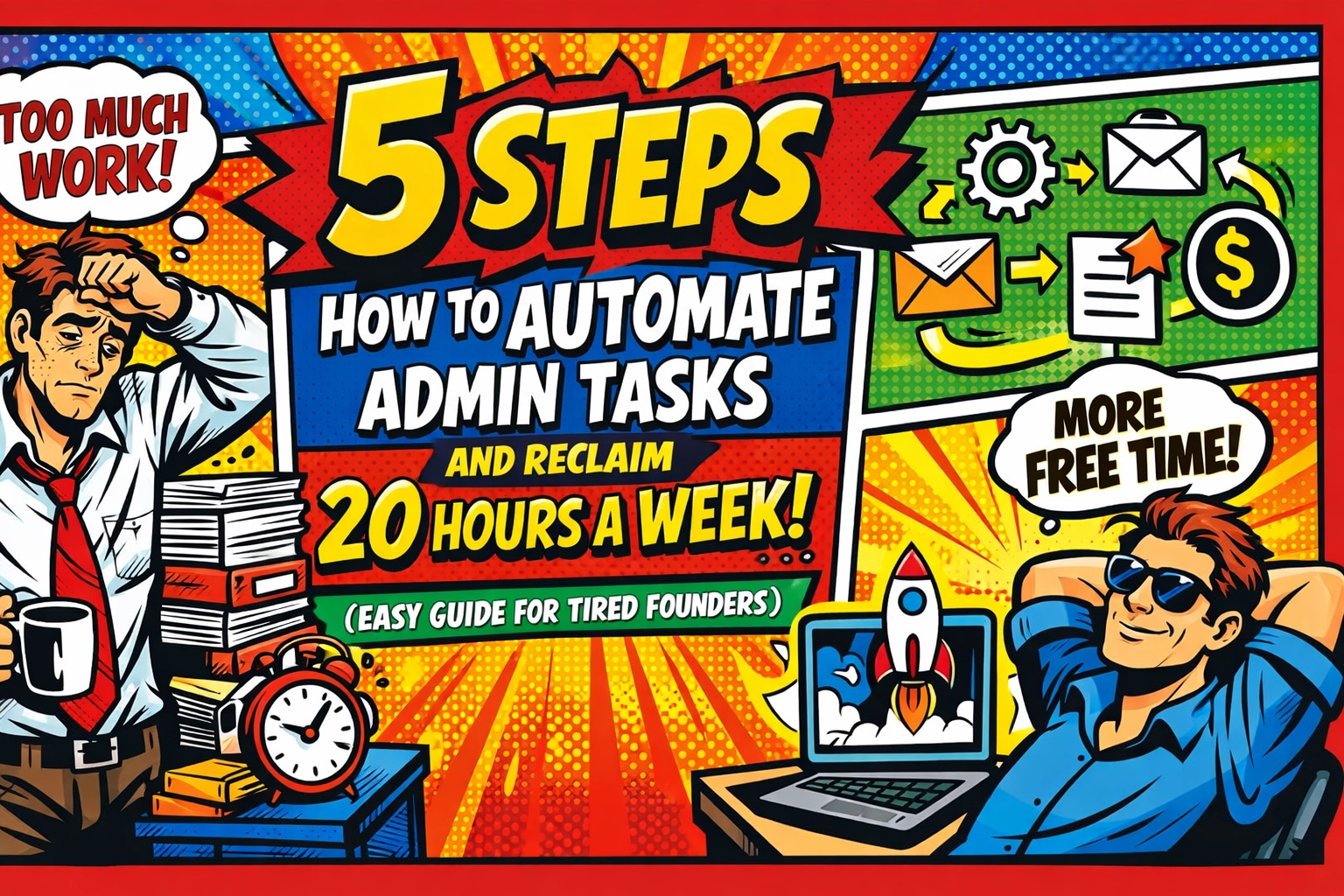
  • 5 Steps How to Automate Admin Tasks and Reclaim 20 Hours a Week (Easy Guide for Tired Founders)

    5 Steps How to Automate Admin Tasks and Reclaim 20 Hours a Week (Easy Guide for Tired Founders)

    ☕ 6:45 AM.

    Your eyes open, but you aren’t thinking about the sunrise.

    You’re thinking about the three discovery calls you forgot to confirm.

    And the five invoices that are currently "somewhere in the cloud."

    And that one customer who’s been waiting 12 hours for a simple "Reset my password" link.

    You haven’t even touched your coffee yet, and you’re already behind. It’s the "Founder’s Fog", that heavy, grey cloud of administrative debt that follows you from the bedroom to the home office. You started this business to build something great, not to become a professional email-shuffler.

    But here’s the secret the "hustle culture" gurus won't tell you: you aren't failing. You're just doing the work of five people with the tools of one.

    We’re going to fix that.

    If you follow these five steps, you won’t just "save time." You’ll reclaim your life. We’re talking about 20 hours a week, half a workweek, handed back to you on a silver platter.

    Ready to stop the bleeding? Let’s dive in.

    STOP JUGGLING. START BUILDING.

    7:30 AM , The Audit of Agony

    Before you can fix the problem, you have to find it.

    Most founders try to automate "everything" all at once. That’s a recipe for a digital nervous breakdown. Instead, look for the "High-Frequency, Low-Value" tasks. These are the little gnats that buzz around your head all day.

    Ask yourself:

    • What task makes me sigh before I even start it?
    • What do I copy and paste more than three times a day?
    • What could a smart intern do if they had a clear set of instructions?

    Usually, it’s scheduling. Or it’s data entry. Maybe it’s chasing down late payments. Pick one. Just one. This is your biggest bottleneck.

    A tired business founder overwhelmed by manual paperwork and repetitive admin task bottlenecks.

    STEP 1: FIND THE HOLE IN THE BUCKET

    Identify your biggest time drain. For most of you, it’s the back-and-forth "What time works for you?" dance.

    You send an email. They reply three hours later. That time is gone. You suggest a new time. They’re in a different timezone.

    Stop it.

    Pick a specialized tool like Calendly or Square Appointments. These aren't just calendars; they are your front-desk receptionists. They sync with your life, send automatic reminders, and, most importantly, they never forget to follow up.

    And if you're looking for the ultimate "set it and forget it" setup, check out how we handle these flows at Marblism.

    STEP 2: HIRE AN AI VIRTUAL ASSISTANT FOR BUSINESS

    You don’t need a $50k-a-year executive assistant. You need an ai virtual assistant for business.

    Think of this as your digital shadow. While you’re in a deep-work session or, heaven forbid, taking a nap, your AI is sorting your inbox. It’s flagging urgent emails from "Big Client A" and archiving the "Weekly Newsletter from a Guy You Don't Remember" automatically.

    But it goes deeper than email.

    An AI virtual assistant can draft your responses, organize your project boards, and even summarize long Zoom transcripts so you don't have to watch the recording.

    It’s like having a second brain… but this one doesn’t get tired and never asks for a raise.

    11:00 AM , The Support Surge

    Your phone buzzes.

    "How do I change my subscription?"
    "Where is my tracking number?"
    "Can I get a refund?"

    These aren't complex questions. They don't require your genius-level IQ to solve. Yet, they pull you away from the work that actually grows your business.

    This is where you automate customer support with ai.

    AI virtual assistant robot managing multiple customer support queries to automate business tasks.

    STEP 3: AUTOMATE CUSTOMER SUPPORT WITH AI

    Imagine a world where 80% of your tickets are solved before you even see them.

    By implementing an AI-driven support system, you can train a chatbot on your specific business data. It knows your FAQs. It knows your shipping policy. It speaks your brand tone (even if that tone is "casual and witty").

    When a customer asks a question at 3:00 AM, the AI answers instantly.

    The customer is happy because they got an answer. You’re happy because you’re asleep.

    It’s not just a bot; it’s a growth engine. Because when people get fast answers, they buy faster.

    STEP 4: THE "GLUE" THAT BINDS YOUR APPS

    Your tools need to talk to each other.

    If your CRM doesn't talk to your invoicing software, you're doing manual labor. If your lead magnet doesn't automatically add people to your email list, you're leaving money on the table.

    Use "no-code" automation platforms.
    Connect your world.

    • Lead fills out form → Added to CRM → Welcome email sent → Task created in Trello.
    • Invoice paid → Marked as "Done" in project management → Thank you note sent.

    This is the "Workflow Ecosystem." It’s the invisible clockwork that makes your business look like a Fortune 500 company while you’re still in your pajamas.

    Interlocking gears and puzzle pieces representing an automated workflow ecosystem for business.

    1:00 PM , The Lunch Break (Yes, an Actual One)

    You sit down. You eat a sandwich. You aren't checking your phone every 45 seconds.

    Why?

    Because the system is running. The ai virtual assistant for business is handling the sorting. The customer support is being handled by your AI. The invoices are being tracked.

    You feel… calm.

    Is this what it’s supposed to feel like?

    Yes.

    STEP 5: SCALE STRATEGICALLY AND MONITOR IMPACT

    Now that you’ve reclaimed your first 5 or 10 hours, don't just fill them with more busy work.

    Monitor the impact. Look at the time you saved and apply that same logic to the next task.

    Automation is a muscle. The more you use it, the stronger your business becomes. Eventually, you’ll reach a point where you aren't "running" the business anymore, you’re leading it.

    You’re the architect, not the bricklayer.

    EMPLOYEE OF THE MONTH. EVERY MONTH.

    4:00 PM , The Review

    The day is winding down. Usually, this is when you’d be bracing for a three-hour "admin sprint" to catch up on everything you missed during the day.

    But it’s quiet.

    Organized.

    The chaos is gone before you even take your last sip of water.

    You check your dashboard.

    • 14 customer queries resolved by AI.
    • 3 discovery calls booked.
    • 2 overdue invoices paid after automated reminders.
    • Total founder time spent: 0 minutes.

    This isn't a dream. This is just modern business automation.

    DON'T JUST TAKE OUR WORD FOR IT

    "I used to spend 4 hours a day on emails and scheduling. I was burning out. After setting up an AI virtual assistant and automating my support, I’ve literally doubled my output without adding a single staff member." , Marcus, E-commerce Founder

    "The peace of mind is worth more than the time saved. Knowing the little things are 'handled' lets me actually be creative again." , Sarah, SaaS Founder

    YOUR NEW REALITY STARTS HERE

    Scaling shouldn't be this easy. But here we are.

    You have a choice. You can keep manually dragging files, sending "just checking in" emails, and drowning in support tickets.

    Or, you can reclaim those 20 hours.

    You can spend them with your kids. You can spend them at the gym. Or you can spend them on the high-level strategy that actually makes you a millionaire.

    The tools are ready. The AI is waiting.

    Are you?

    Stop being the bottleneck in your own success.

    Click through this 3-min interactive demo to see how Marblism can automate your life

    FAQ: FREQUENTLY ASKED QUESTIONS

    Is AI hard to set up?
    No. Most modern tools are "plug and play." If you can use a smartphone, you can automate customer support with ai.

    Will my customers hate talking to a bot?
    Not if the bot is smart. Customers hate waiting. If an AI gives them the right answer in 5 seconds, they love it. If they need a human, the AI can seamlessly hand them off to you.

    Can I afford this?
    The question is: can you afford to lose 20 hours a week? Most of these tools cost less than a daily Starbucks habit.

    What if I have a very specific business?
    AI is flexible. You can train an ai virtual assistant for business on your specific documents, tone, and rules. It’s bespoke, not basic.

    THE FINAL WORD

    The lights are off.
    The office is quiet.
    Your business is still working.

    That is the power of automation.

    It’s time to stop surviving and start thriving.

    Reclaim your time. Reclaim your sanity.

    Build your automated future right here

    Scaling shouldn't be a struggle.
    It should be a system.

    See you on the other side of those 20 hours.

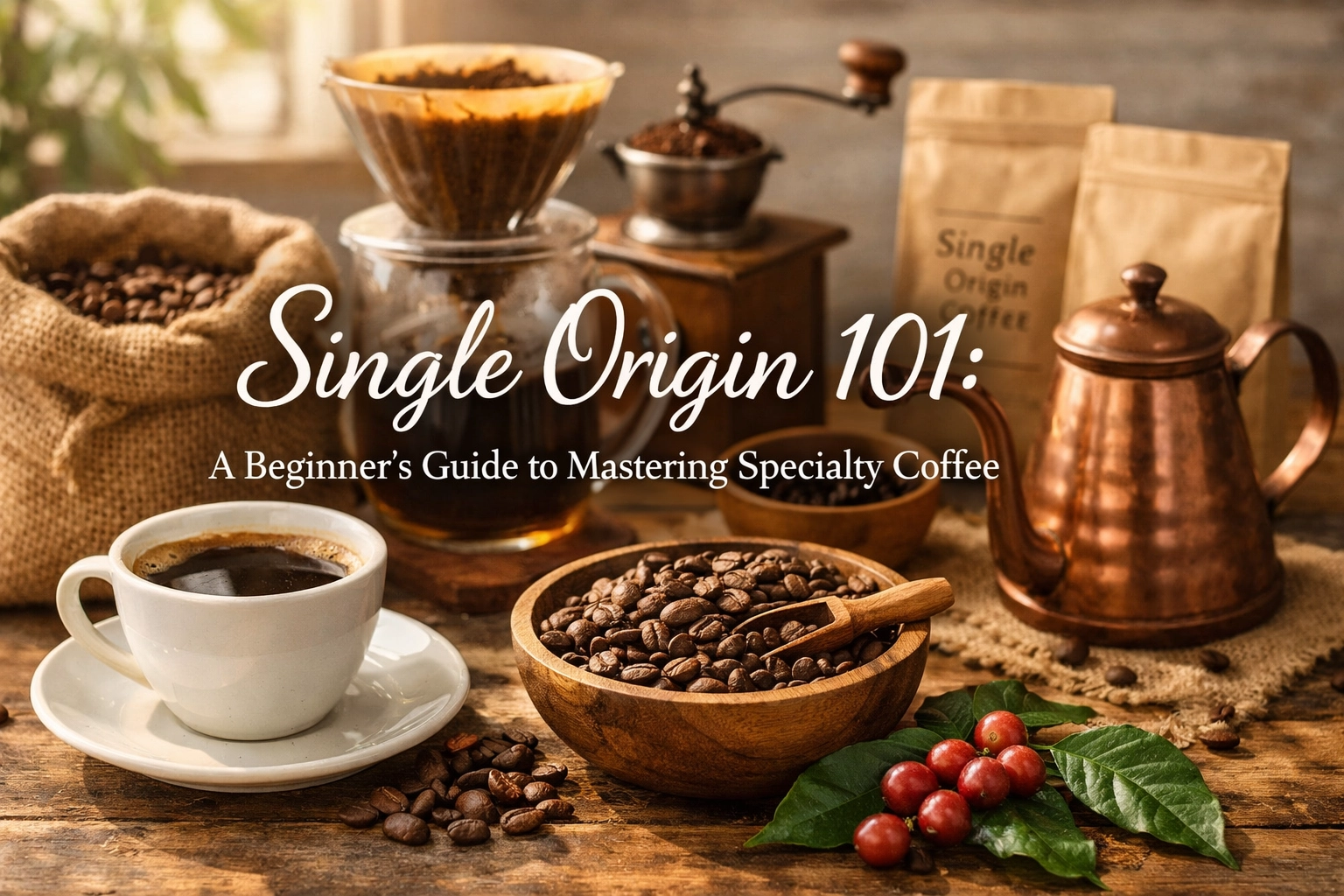
  • Single Origin 101: A Beginner’s Guide to Mastering Specialty Coffee

    Single Origin 101: A Beginner’s Guide to Mastering Specialty Coffee

    So… what actually counts as single origin, and why does it sometimes taste like blueberries, jasmine, or chocolate mousse even though it’s, you know, coffee?

    If you’re buying fresh beans for home and you want to level up (without turning your kitchen into a lab), this is your playbook. We’ll cover what “single origin” means, how it differs from blends, how to read a bag like you know what you’re doing, and how to dial it in for espresso and filter without wasting half the bag.

    And yep, if you want to browse fresh roasts and gear as you read, here’s the Limini Coffee link we use: https://www.liminicoffee.co.uk/?af=1471531379787


    What “single origin” really means… and why it matters

    At its core, single-origin coffee means the beans come from one specific geographic source. That could be:

    • One country (e.g., “Ethiopia”)
    • One region (e.g., “Yirgacheffe”)
    • One farm/estate (e.g., “Finca La Esperanza”)
    • One tiny lot from a specific plot/harvest (micro-lot)

    The point is traceability, you can track it from farm to cup, not just “somewhere in South America.” And for you as a home brewer, that traceability usually signals two things:

    1. Distinct flavour (it tastes like somewhere)
    2. Seasonality (it won’t taste identical forever, and that’s the fun)

    Single origin is basically coffee with a passport.


    Single origin vs blends… which should you choose?

    You’ll see both, and both are valid. The trick is knowing what problem you’re trying to solve.

    What you want Choose Why
    Big, specific flavours (floral, fruit, funky, winey) Single origin You’re tasting terroir (environment + processing)
    Consistency week to week Blend Blends are built to be stable and balanced
    A “daily driver” espresso with easy dialing-in Blend (usually) More forgiving across grinders/machines
    A new experience every bag Single origin Seasonal lots keep it interesting
    To learn coffee fast Single origin It teaches your palate patterns quickly

    We love single origins for filter and “coffee tasting mode,” and blends when we want a no-drama espresso before a busy morning. (No shame. Caffeine first, philosophy later.)

    If you want to explore what we’re roasting right now, start here: https://www.liminicoffee.co.uk/?af=1471531379787


    The single origin label… decoded (without the fluff)

    Ever picked up a bag and thought, “Cool… but what does any of this mean?”

    Here’s what matters most, in the order we think you should care:

    1) Origin & specificity

    • Country/region gives you broad expectations (Ethiopia = florals/fruit; Brazil = nutty/chocolatey… generally).
    • Farm / washing station / cooperative usually means higher traceability and more deliberate processing.

    2) Varietal (plant genetics)

    You might see Bourbon, Caturra, Gesha, SL28, Pink Bourbon, etc. This is the type of coffee plant, not the origin.

    This means… some varietals naturally lean floral, some lean sweet, some lean bright and citrusy.

    3) Processing method

    This is how the fruit is removed and the beans are dried. It’s a massive flavour lever.

    • Washed: cleaner, brighter, more “transparent” flavours
    • Natural: fruit-forward, heavier body, sometimes boozy
    • Honey: somewhere in between: sticky sweetness, rounded acidity
    • Anaerobic / extended fermentation: intense, funky, sometimes tropical

    Processing is where a lot of the “how is this coffee tasting like pineapple?” magic comes from.

    4) Altitude

    Often shown in masl (metres above sea level). Higher altitude generally = denser beans, slower maturation, often more acidity/complexity.

    Not a guarantee. But it’s a useful clue.

    5) Roast date (extremely important)

    Fresh is best.

    We generally like:

    • Filter: start around day 5–14 post-roast (it often opens up nicely)
    • Espresso: day 7–21 post-roast is a sweet spot for many coffees

    If you’re shopping, always prioritise roast date over buzzwords. And if you want genuinely fresh roasted coffee shipped in the UK, that’s the whole point of what we do at Limini: https://www.liminicoffee.co.uk/?af=1471531379787


    Terroir… the coffee word that’s actually useful

    Terroir is basically “why this tastes like this here.”

    It’s the combination of:

    • soil
    • altitude
    • climate
    • local varieties
    • farming practices
    • processing culture

    So a washed coffee from Ethiopia can feel like tea: bergamot, lemon, jasmine. Meanwhile a natural from Brazil might taste like cocoa, hazelnut, and dried fruit. Different place, different genetics, different process, different result.

    Why is this important?

    Because once you start connecting origin → processing → flavour, you get way better at buying beans you’ll love (and avoiding ones you’ll regret at 7am).

    Sun-dried single origin coffee beans in a bowl at a high-altitude specialty coffee plantation.


    How to choose your first (or next) single origin

    Let’s make this practical. If you’re browsing and you don’t want to overthink, use this simple “flavour compass”:

    If you like sweet, chocolatey, low-acid

    Try:

    • Brazil (natural/pulped natural)
    • Colombia (washed, classic profiles)
    • Guatemala (washed, cocoa + citrus)

    Keywords on the bag: chocolate, caramel, nuts, toffee.

    If you like bright, fruity, “wow”

    Try:

    • Ethiopia (washed = floral/citrus; natural = berry bomb)
    • Kenya (blackcurrant, grapefruit, punchy acidity)
    • Rwanda/Burundi (tea-like, clean fruit)

    Keywords: berry, stone fruit, floral, citrus, juicy.

    If you like funky, experimental

    Try:

    • Anaerobic/fermentation-led lots (often Colombia, Costa Rica, Panama)
    • Naturals with tropical notes

    Keywords: tropical, boozy, fermented, bubblegum (yes, really).

    And if you want a place to start that’s curated for home brewing (not just café service), browse what’s in season here: https://www.liminicoffee.co.uk/?af=1471531379787


    Brewing single origin at home… the “don’t mess this up” basics

    Single origin rewards precision: but it doesn’t need to be complicated.

    The 3 things that matter most

    1. Grind size (your #1 control)
    2. Water quality (under-rated, huge)
    3. Ratio (coffee to water)

    If you only improve one thing, make it the grinder. A good grinder turns “nice beans” into “oh wow.”

    Quick ratios we actually use

    • Filter (V60 / batch / AeroPress): 1:15 to 1:17
      • e.g., 20 g coffee → 300 g water (1:15)
    • Espresso: 1:1.8 to 1:2.5
      • e.g., 18 g in → 36–45 g out

    Want to calculate without doing maths in your head? We’ve got you: https://www.liminicoffee.co.uk/coffee_brewing_calculator


    Dialling in for filter… clean, sweet, not sour

    Filter is where single origin shines, because you’re not forcing everything through a puck at 9 BAR.

    Starting recipe (V60-style):

    • Dose: 18 g
    • Water: 270 g (1:15)
    • Temp: 94 °C / 201 °F (lighter roasts like hotter water)
    • Time: 2:30–3:15 total brew time

    Taste diagnosis (fast and reliable):

    • Sour / thin: grind finer, or raise temp (92 → 95 °C / 198 → 203 °F)
    • Bitter / dry: grind coarser, or lower temp (95 → 92 °C / 203 → 198 °F)
    • Flat: increase dose slightly or tighten ratio (1:16 → 1:15)

    And remember: single origin flavours can be subtle. Don’t chase “stronger.” Chase clearer.

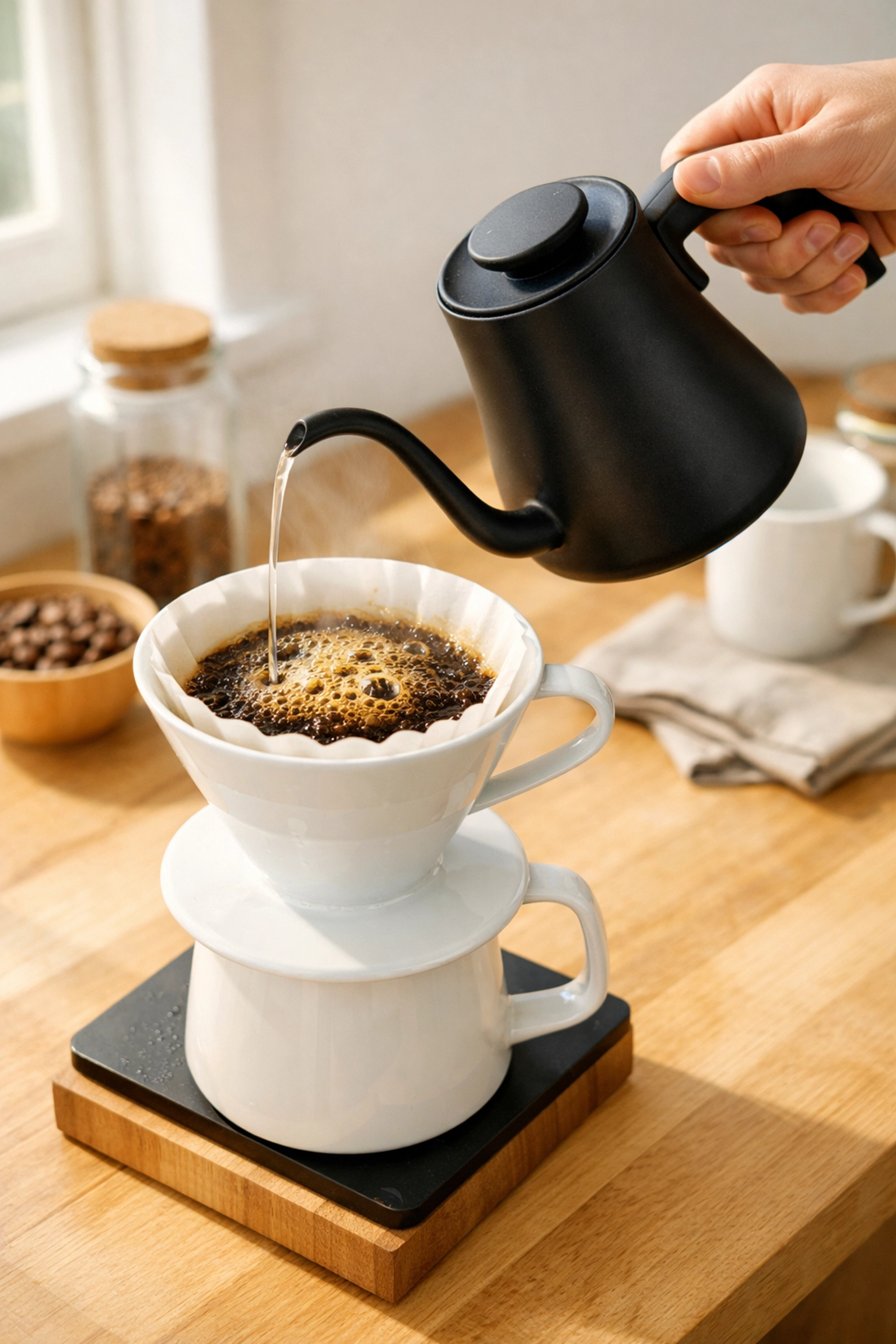
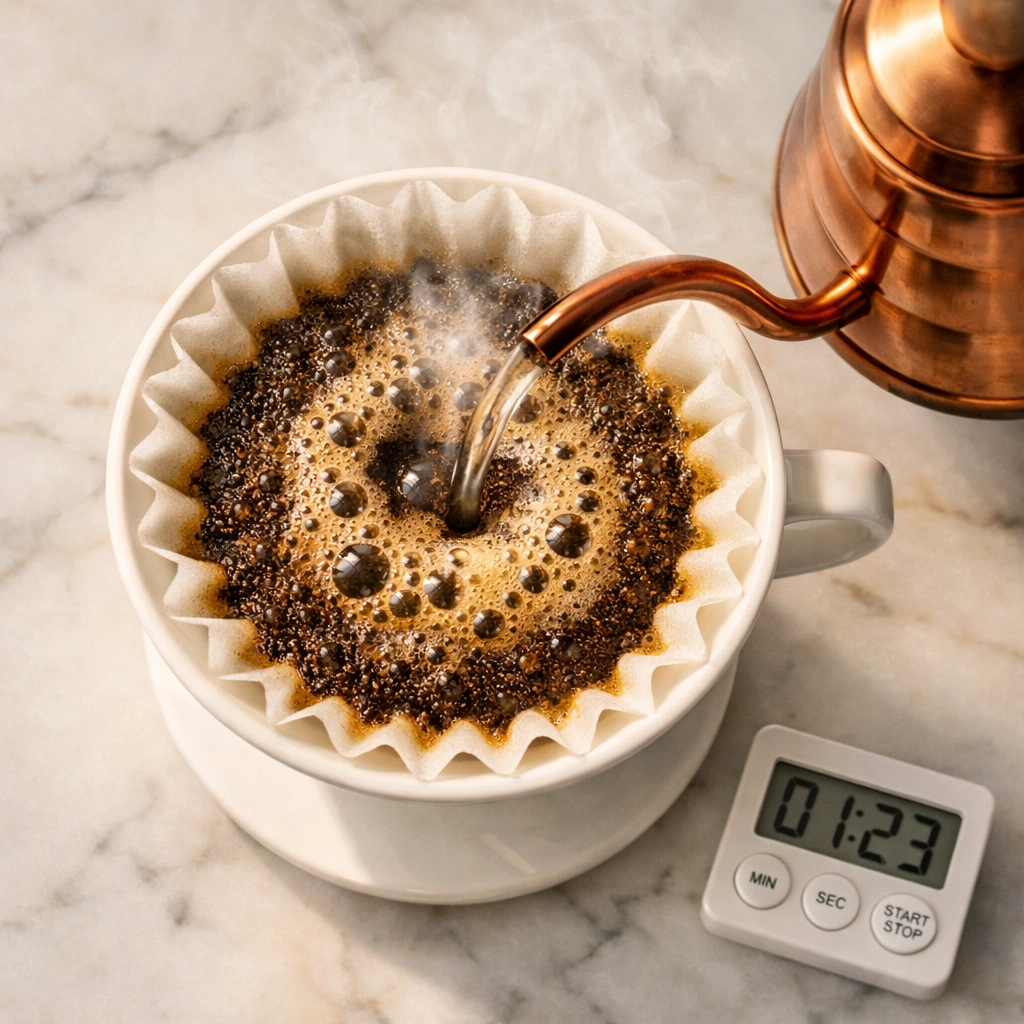
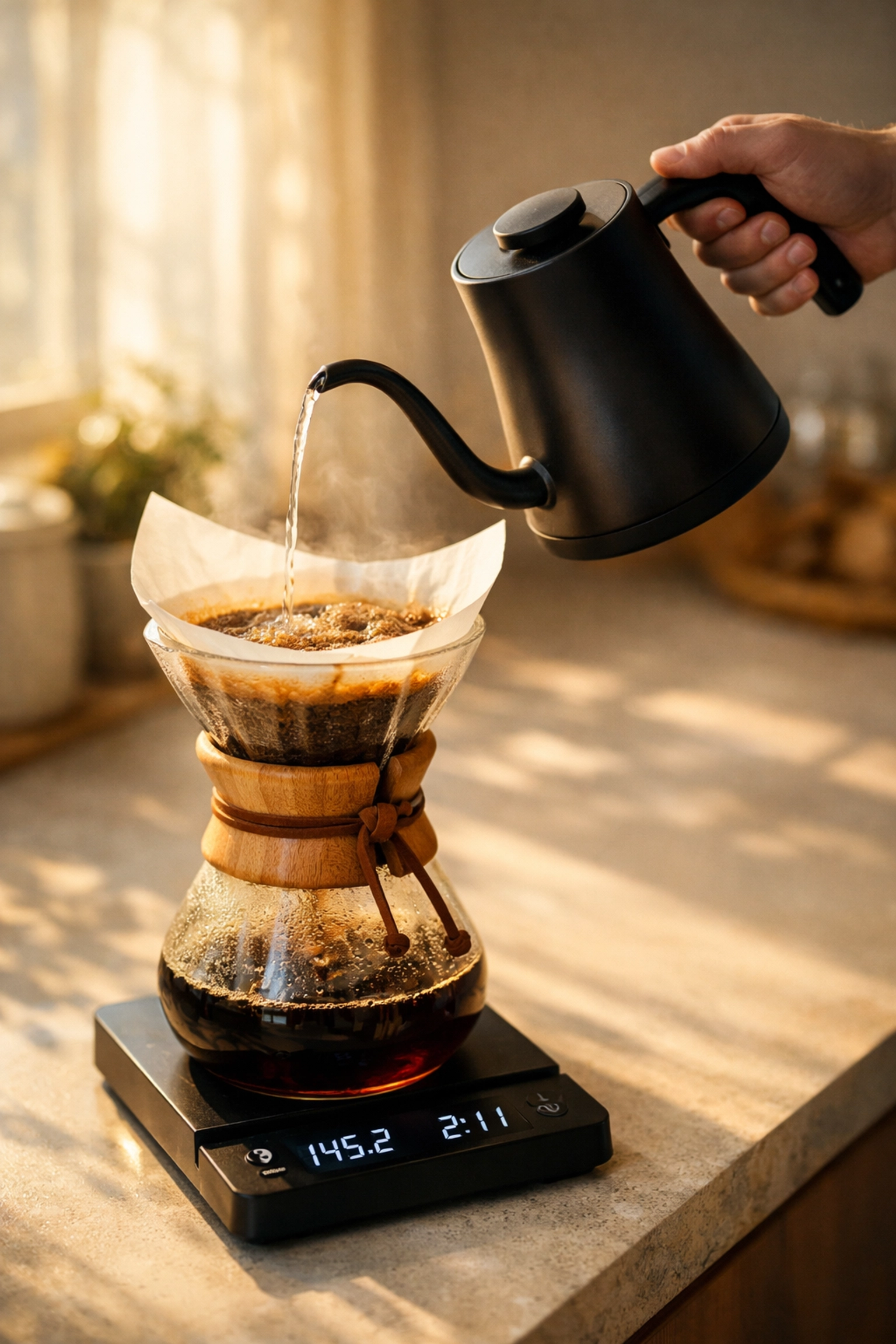
    Pouring hot water from a kettle into a V60 dripper to brew fresh specialty coffee at home.


    Dialling in for espresso… where single origin gets spicy

    Espresso with single origin can be unreal… but it can also punish lazy settings. The problem is that brighter coffees show extraction issues immediately.

    A solid starting point:

    • Dose: 18 g (in a typical 54–58 mm basket, depending on your setup)
    • Yield: 40 g out (1:2.2-ish)
    • Time: 26–32 seconds
    • Temp: 93–94 °C / 199–201 °F (lighter = hotter, generally)

    If it’s sour (common with light roasts):

    • grind finer
    • increase yield (go from 36 g to 42–45 g)
    • increase temp 1–2 °C (2–4 °F)
    • consider a longer pre-infusion if your machine allows it

    If it’s bitter:

    • grind a touch coarser
    • reduce yield (pull shorter)
    • drop temp 1–2 °C

    Puck prep matters here, too. Distribution and tamping errors show up as channeling (water finding cracks and over-extracting parts of the puck). If you want a straight, practical guide, we’ve written one: https://www.liminicoffee.co.uk/article_tamping

    And if you’re choosing equipment specifically to make single origins easier (PID stability, good steam, decent pre-infusion), this is worth a read: https://www.liminicoffee.co.uk/choosing_espresso_equipment


    “Tasting notes” you’ll actually taste… and how to train your palate

    You don’t need to be a Q-grader to taste more. You just need a repeatable method.

    Try this 60-second tasting routine

    When you sip:

    1. Aroma: what do you smell before sipping?
    2. Acidity: is it lemony, apple-like, grape-like?
    3. Sweetness: honey? caramel? ripe fruit?
    4. Body: tea-like, silky, syrupy?
    5. Finish: short and clean, or long and chocolatey?

    Basically… you’re building a mental map. Over time you’ll notice patterns like:

    • Kenya often hits blackcurrant / grapefruit
    • Washed Ethiopia often hits floral / citrus
    • Naturals often hit berry / tropical / heavier body

    Pro tip: compare two coffees side-by-side using the same recipe. The differences jump out instantly.

    A steaming cup of specialty coffee with berries and chocolate illustrating complex tasting notes.


    Storage & freshness… keep your single origin tasting like it should

    Want the easiest win? Don’t let oxygen and heat wreck your coffee.

    Do this

    • Keep beans sealed, cool, and dry
    • Use the bag’s one-way valve, or an airtight container
    • Buy amounts you’ll finish in 2–4 weeks after opening

    Avoid this

    • Storing near the hob (temperature swings)
    • Clear jars on sunny countertops (looks cute, tastes stale)
    • Freezer in/out daily (condensation is the enemy)

    If you do freeze, freeze in small portions and don’t repeatedly thaw/refreeze. One-and-done.


    Common beginner mistakes (we’ve all done them)

    Buying single origin and expecting it to taste like “strong coffee”

    Single origins can be delicate. If you want heavy body and classic “coffee” flavours, choose origins/processes that lean that way (Brazil, Guatemala, washed Colombia).

    Grinding too coarse because the coffee is “bright”

    Bright isn’t bad. Under-extraction is. If it’s sour, go finer or increase contact time/yield.

    Changing five variables at once

    Don’t. Change one thing, taste, repeat. Coffee rewards patience (annoyingly).

    Using boiling water on dark roasts

    For darker roasts, try 88–92 °C / 190–198 °F. Too hot and it turns ashy fast.


    Where to go next… a simple path to “we get it now”

    If you want to get genuinely good at single origin (without drowning in theory), we’d do it like this:

    1. Pick one brew method for two weeks (V60 or espresso)
    2. Buy two different origins roasted in a similar style
    3. Brew them with the same ratio and water
    4. Adjust grind until both taste sweet and clear
    5. Only then start playing with temperature, yield, and agitation

    And if you want to explore single origins that are roasted fresh and described in plain English (not just poetic waffle), have a look at what’s currently available at Limini Coffee here: https://www.liminicoffee.co.uk/?af=1471531379787

  • Workflow Automation for Small Business: Stop Doing the Busy Work

    Workflow Automation for Small Business: Stop Doing the Busy Work

    You didn't start your business to spend four hours a day copy-pasting data between spreadsheets.

    You started it to build something. To create. To disrupt. But here you are… staring at a mountain of "pending" invoices and a CRM that looks like a digital junk drawer.

    The weight is heavy. It’s that low-level hum of anxiety that follows you into your weekend. You know the one. It’s the feeling that if you stop moving for one second, the whole machine will grind to a halt because you are the machine.

    But what if you weren't?

    Overwhelmed business owner trapped in gears representing manual busy work and lack of workflow automation.

    ☕ 8:00 AM: THE INBOX APOCALYPSE

    You open your laptop. Your coffee is still hot, but your spirit is already flagging. 142 unread emails. Half of them are "Where is my order?" and the other half are "Can we hop on a quick call?"

    In the old world, you’d spend the next two hours typing the same three responses. You'd manually check the tracking numbers. You'd cross-reference the calendar.

    In the automated world? It's quiet.

    Your workflow automation for small business has already scanned the inbox. It identified the tracking requests, pulled the data from your shipping platform, and sent out personalized updates. It even flagged the high-priority "quick calls" and offered your booking link.

    You just take a sip of coffee. And breathe.

    📊 11:00 AM: DATA ENTRY PURGATORY

    The mid-morning slump hits. Usually, this is when you start the manual migration. Moving lead info from a Facebook ad to a Google Sheet to your email marketing tool.

    It’s mindless. It’s soul-sucking. And it’s exactly where human error lives. One wrong digit and a $5,000 lead vanishes into the void.

    …But not today.

    With Marblism, the data flows like water. The second a lead clicks, the "pipes" wake up. They verify the email. They categorize the interest level. They drop a notification into your Slack channel with a link to everything you need to know.

    Stop juggling. Start closing.

    Digital funnel organizing chaotic data into valuable assets through small business workflow automation.

    ☎️ 3:00 PM: THE CHASE THAT NEVER ENDS

    "Did they pay yet?"

    You’re scrolling through your bank feed. Then your invoicing software. Then your sent items. You’re playing detective when you should be playing CEO. Chasing payments is the ultimate "busy work." It makes you feel productive because you're doing something, but it adds zero value to your bottom line.

    Enter the AI virtual assistant for business.

    It doesn't forget. It doesn't get awkward about asking for money. It sees the overdue invoice, sends a polite (but firm) reminder, and only alerts you if the client actually replies with a question.

    The money just… appears.

    🌙 7:00 PM: THE FREEDOM TO SWITCH OFF

    The sun is going down. Usually, you’d have "just one more thing" to do. A report to compile. A social media post to schedule.

    But the automation worked while you did the real work. The reports were generated at 4:59 PM. The posts are already in the queue.

    You close the laptop. You don't feel guilty. Everything is handled.

    If you're ready to stop being the "glue" that holds your business together and start being the "engine" that drives it, check out how we do it at Marblism.

    Scaling shouldn't be this hard. But here we are.


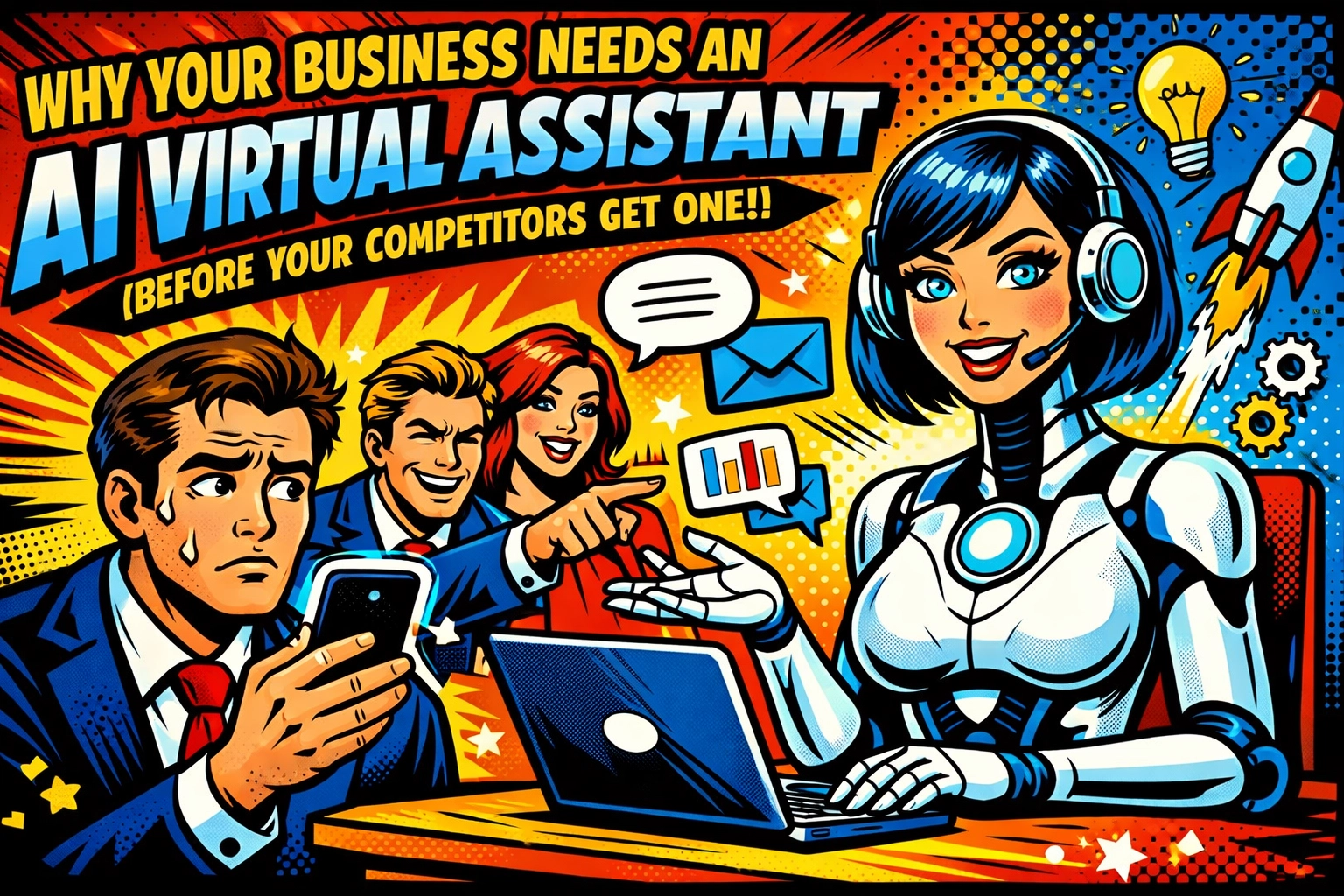
    Why Your Business Needs an AI Virtual Assistant (Before Your Competitors Get One)

    The business world is currently divided into two camps.

    The first camp is still doing things "the artisanal way." They pride themselves on "human touch" while their customers wait 48 hours for a reply. They’re drowning in tabs. They’re tired.

    The second camp? They’ve gone bionic.

    They’re using an AI virtual assistant for business to do the work of a 10-person team for a fraction of the cost. And here’s the kicker: their customers actually like it better.

    Because speed is the new loyalty.

    🔍 THE COMPETITIVE EDGE YOU CAN'T IGNORE

    According to PwC, AI could contribute more than $15 trillion to the global economy by 2030. That's a "15" with twelve zeros behind it. Your competitors aren't just "looking into" AI: they're training it to take your market share.

    While you're sleeping, their AI is qualifying leads. While you're on vacation, their AI is solving customer complaints.

    It’s not a fair fight.

    Comparison of a tired manual worker and a productive leader using an AI virtual assistant for business.

    🌙 10:00 PM: THE 24/7 SALESMAN

    Imagine it's late. You're catching up on Netflix. Your phone stays silent because you've set your boundaries.

    On the other side of the world (or just down the street), a potential client is browsing your site. They have a question. They’re ready to buy right now.

    If you don't have an AI assistant, they leave. They go to the person who answers first.

    But if you have Marblism in your corner? The AI greets them. It answers the technical question about your API. It qualifying them as a "Hot Lead" because they mentioned a $20k budget. It books a meeting on your calendar for tomorrow morning.

    You wake up to a "New Meeting Booked" notification.

    You didn't lift a finger.

    📈 SCALING WITHOUT THE GROWING PAINS

    Usually, growth is scary. More customers means more support tickets. More support tickets means hiring more people. Hiring more people means more management, more payroll, and more "Can we talk about my benefits?" conversations.

    AI assistants scale without the proportional infrastructure costs.

    They make your existing team up to 66% more productive. Instead of your best people doing password resets, they're doing strategic work that actually moves the needle.

    It’s like giving everyone on your team a personal intern who never needs a coffee break.

    🤝 PERSONALIZATION AT SCALE

    "But I want my business to feel human!"

    We get it. But let’s be honest: there’s nothing "human" about a canned email response sent 3 days late.

    An AI virtual assistant references past interactions. It knows what the customer bought six months ago. It uses their name. It provides a level of personalization that a human simply can't achieve when they're handling 50 chats at once.

    The AI doesn't get grumpy. It doesn't have "Mondays." It is consistently, perfectly on-brand every single time.

    AI virtual assistant shaking hands with a business owner symbolizing reliable and consistent automation.

    🚀 DON'T WAIT FOR THE "PERFECT" MOMENT

    The "perfect" moment to automate was yesterday. The second-best moment is right now.

    If you wait until your competitors have fully integrated AI, you’re not just behind: you’re obsolete. The cost of entry is low, but the cost of delay is astronomical.

    You don't need to be a tech genius to get started. You just need to know where the friction is in your business.

    Stop doing the busy work. Let the machines handle the mundane so you can handle the extraordinary.

    Ready to see the future of your business? Connect with us and let’s build something efficient over at Marblism.

    The lights are off, the office is empty, but your business is still growing.

    That’s the power of the right assistant.

    The choice is yours: stay "artisanal" or go bionic.

    See you on the other side.

  • The Art of Slow Coffee: How to Master the Pour-Over

    The Art of Slow Coffee: How to Master the Pour-Over

    In a world that's constantly rushing, there's something beautifully rebellious about pour-over coffee. It demands your attention. It asks you to slow down, to be present, to engage with the process. And in return? A cup of coffee that's cleaner, brighter, and more nuanced than almost any other brewing method can deliver.

    Pour-over isn't just a technique: it's a ritual. Whether you're using a V60, a Chemex, or a Kalita Wave, the principles remain the same: control, patience, and respect for the coffee itself. So let's dive into how you can master this beautiful brewing method and unlock flavours you didn't know existed.

    Why Pour-Over?

    What makes pour-over special is the level of control it gives you. Unlike automatic drip machines or French presses, you're orchestrating every element: the water flow, the temperature, the contact time. This means you can coax out the delicate notes in your coffee that might otherwise be lost.

    Pour-over excels at showcasing single origin coffees. Those floral Ethiopian beans? The bright citrus notes from a Kenyan roast? The chocolate sweetness of a Colombian? Pour-over lets them shine. It's why we always recommend trying this method with quality single origins: like the ones we roast at Limini Coffee.

    The process itself becomes meditative. The bloom, the spiral pour, the gentle sound of water meeting coffee grounds: it's a few minutes carved out of your day where nothing else matters.

    Pouring water from gooseneck kettle into V60 dripper for pour-over coffee

    What You'll Need

    Before we get into technique, let's talk equipment. You don't need to break the bank, but a few key items will make your life considerably easier:

    A pour-over brewer – V60, Chemex, Kalita Wave, or similar. Each has slightly different characteristics, but the fundamentals we'll cover work across all of them.

    A burr grinder – This is non-negotiable if you want consistency. Blade grinders create uneven particle sizes, which leads to uneven extraction. A decent burr grinder ensures every ground is roughly the same size.

    A gooseneck kettle – The long, narrow spout gives you precise control over your pour. You can direct the water exactly where you want it and maintain a steady flow rate. Game-changer.

    Scales – Preferably with a timer. Consistency comes from measurement, and you'll want to track both your coffee-to-water ratio and your brew time.

    Fresh coffee beans – Ideally roasted within the last 2-4 weeks. Coffee degrades over time, and pour-over is unforgiving of stale beans.

    The Coffee and the Grind

    Start with whole beans and grind them immediately before brewing. Coffee begins losing its aromatics and flavour compounds within minutes of being ground: grinding fresh makes an enormous difference.

    For pour-over, you're looking at a medium-fine grind. Think slightly coarser than espresso but finer than what you'd use for a French press. The grind should feel like fine sand when you rub it between your fingers.

    Too fine, and your brew time will stretch beyond 4 minutes, resulting in over-extraction and bitterness. Too coarse, and water will rush through too quickly, leaving you with a weak, sour cup. Dialling in your grind is part of the fun: and part of the learning curve.

    Fresh coffee beans and burr grinder showing proper grind size for pour-over

    The Ratio and the Water

    Let's talk numbers. A solid starting point is a 1:16 ratio: that's 1 gram of coffee to 16 grams (or milliliters) of water. So for a standard 400ml cup, you'd use 25 grams of coffee.

    Feel free to adjust based on your taste. Want something stronger? Try 1:15. Prefer it lighter? Go to 1:17. The beauty of pour-over is that once you understand the baseline, you can tweak to your personal preference.

    Water quality matters more than most people realize. If your tap water tastes chlorinated or metallic, it's going to come through in your coffee. Use filtered water if possible.

    Temperature-wise, you want freshly boiled water: just off the boil is ideal, around 92-96°C. Too hot and you'll scorch the coffee. Too cool and you'll under-extract. If you're not sure, boil your kettle and then let it sit for 30 seconds before pouring.

    The Bloom: Setting the Stage

    Here's where the magic begins.

    Place your filter in the brewer and rinse it with hot water. This removes any papery taste and preheats your vessel. Discard that water.

    Add your ground coffee to the filter and give it a gentle shake to level the bed. Place everything on your scales, tare to zero, and start your timer.

    Pour just enough water to saturate all the grounds: roughly double the weight of your coffee. So if you're using 25 grams of coffee, pour about 50 grams of water. Pour gently from the center outward in a spiral motion, making sure every ground gets wet.

    You'll see the coffee bed start to bubble and rise: this is the bloom. CO2 trapped in the beans during roasting is being released. If you skip this step, that gas creates pockets that block water from extracting evenly.

    Wait 30-45 seconds while the coffee blooms. Don't rush this. The bloom is your foundation.

    Coffee bloom phase in V60 dripper with bubbling grounds releasing CO2

    The Pours: Patience and Rhythm

    After the bloom, it's time for your main pours. There are different schools of thought here: some prefer multiple pulses, others a single continuous pour. We'll walk you through a reliable multi-pour approach.

    Second pour: Slowly pour another 100-150 grams of water (taking you to around 150-200g total on your scale). Use that same spiral motion, starting from the center and working outward. Avoid pouring directly onto the paper filter: keep the water on the coffee bed itself.

    Pour slowly and steadily. You're aiming to keep the water level in your brewer between halfway and two-thirds full. If it rises too high, slow down. If it drains too fast, grind slightly finer next time.

    Once you've hit your target weight for this pour, give the brewer a gentle swirl to level out the coffee bed. This promotes even extraction.

    Third and fourth pours: Continue with similar pours of 100-150 grams until you've reached your total water weight (400g in our example). Between each pour, let the water drain to just above the coffee bed: you don't want it to run dry, but you also don't want it to stay too high.

    The key here is control and consistency. Your pour rate should feel meditative: not rushed, not trickling, but steady and deliberate.

    Timing and Troubleshooting

    Your total brew time: from the moment you start your bloom to the last drip: should land somewhere between 2:45 and 3:30 minutes. This window gives you proper extraction without tipping into over-extraction territory.

    If your brew finishes faster than 2:30, try grinding finer or slowing your pour rate. If it's stretching past 4 minutes, grind coarser or pour slightly faster.

    Signs of under-extraction: Sour, sharp flavors. Weak body. Lack of sweetness. Solution? Grind finer, use hotter water, or slow down your pour to increase contact time.

    Signs of over-extraction: Bitter, harsh flavors. Dry, astringent finish. Dull notes. Solution? Grind coarser, lower your water temperature slightly, or speed up your pour.

    Pour-over coffee brewing setup with Chemex brewer and digital scale

    Enjoying the Process

    Here's the thing about pour-over that we love: it forces you to be present. You can't walk away and do something else. You can't rush it. You have to be there, kettle in hand, watching the coffee bloom and spiral and drip.

    And honestly? That's the point.

    In those 3-4 minutes, you're not checking your phone or thinking about your to-do list. You're just making coffee. Really, really good coffee.

    The ritual becomes its own reward. The focus, the precision, the satisfaction of getting everything just right: it all adds up to an experience that goes beyond the cup itself.

    The Coffee Makes All the Difference

    Of course, technique only gets you so far. The quality of your beans is the foundation of everything.

    This is where single origin coffees truly shine. Pour-over is the perfect method to explore the distinct characteristics of different regions and processing methods. The clarity of the brew lets you taste the terroir: the altitude, the soil, the climate, the care taken by the farmers and roasters.

    We roast small batches of carefully sourced single origins specifically with brewing methods like pour-over in mind. Whether you're drawn to the fruity brightness of African coffees or the chocolatey depth of South American beans, pour-over will let you experience them fully.

    You can explore our range of single origin coffees at Limini Coffee and find something that speaks to you. Trust us: once you taste a proper pour-over made with fresh, quality beans, there's no going back.

    Finished pour-over coffee in glass cup on wooden table

    Start Slow, Stay Curious

    Mastering pour-over isn't about perfection from day one. It's about understanding the principles, experimenting with variables, and developing your own rhythm. Every coffee behaves slightly differently, and part of the joy is learning how to adapt.

    Keep notes if you're keen: record your grind size, water temperature, and brew time. Over time, you'll develop an intuition for what works and what doesn't.

    And remember: even a slightly imperfect pour-over made with care and attention will taste better than a rushed cup from a machine. The act of slowing down, of engaging with your coffee, changes how it tastes.

    So grab your kettle, weigh out your beans, and give yourself permission to take a few minutes for the ritual. Your morning coffee is about to get a whole lot more interesting.