Author: admin

  • How to Automate Your Afternoon Admin Routine in 5 Minutes (No Tech Degree Required)

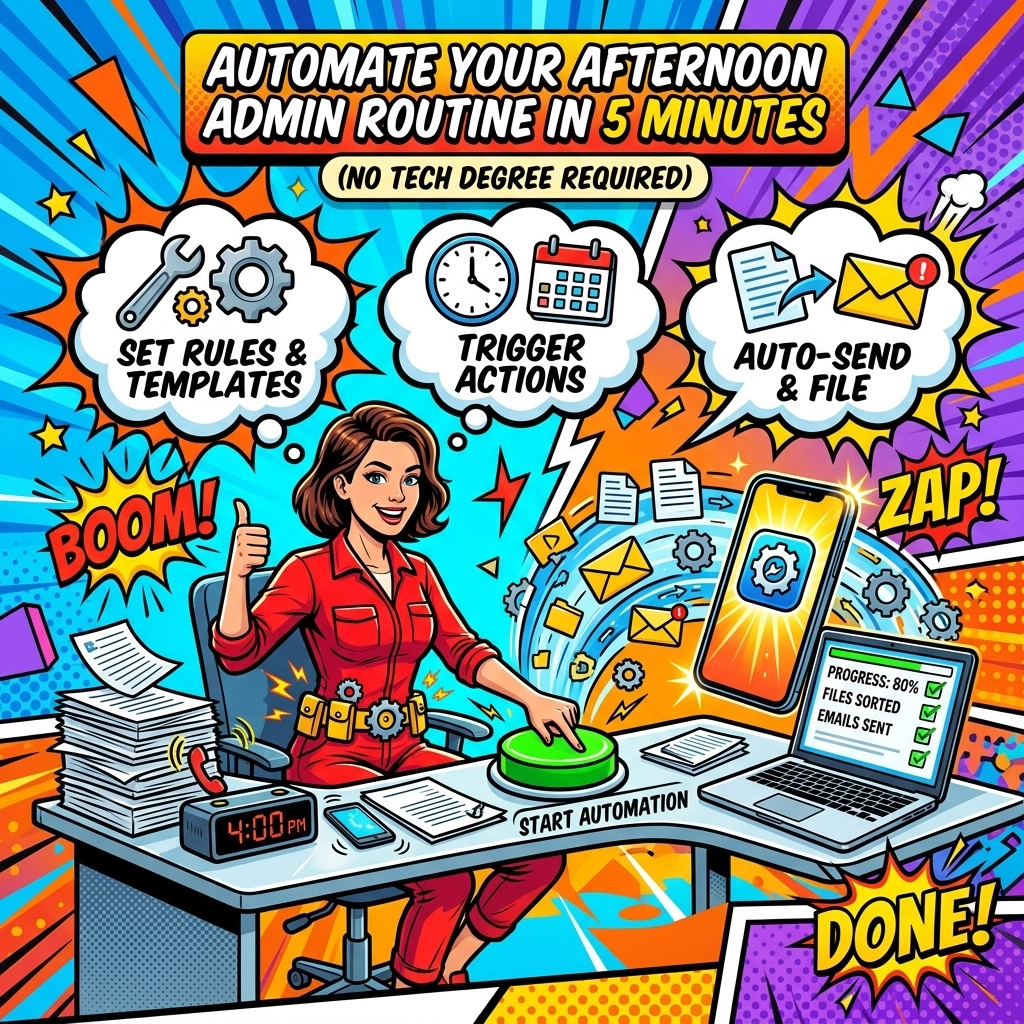
    How to Automate Your Afternoon Admin Routine in 5 Minutes (No Tech Degree Required)

    ☕ It’s 2:15 PM.

    The caffeine from your post-lunch espresso is starting to betray you. You look at your browser tabs. There are seventeen of them open. Three are different email threads where you’re trying to find a time to meet a client who "is free basically whenever, except Tuesdays."

    Four tabs are half-written invoices.

    One tab is a customer asking for the third time where their login link is.

    You’re not "running a business" right now. You’re a highly paid (or perhaps dangerously underpaid) data entry clerk. You’re a human router. You’re the bottleneck… and it’s exhausting.

    But imagine if the next five minutes were the last time you ever had to do this manually. Imagine if, by the time you finished your next cup of coffee, your afternoon was actually yours again.

    It’s not magic. It’s just smart automation. And no, you don’t need to know how to code. You just need to stop doing the same things over and over again like a glitching NPC in a video game.

    THE 2:15 PM REALITY CHECK

    You started this business to create something. To help people. To build a legacy. You didn't start it to spend your Tuesday afternoons copy-pasting "I'd love to chat! Does Thursday at 3 PM work for you?" into fourteen different windows.

    The admin creep is real. It starts small, a couple of emails here, a quick calendar invite there. Then, suddenly, it’s 4:30 PM, the sun is dipping, and you haven't actually moved the needle on your big goals all day.

    You feel busy. But you aren't being productive.

    There’s a difference.

    Overwhelmed small business owner frantically juggling afternoon admin tasks and emails.

    MINUTE 1-2: KILL THE REPETITIVE TYPING (EMAIL TEMPLATES)

    📱 2:17 PM.

    Let's start with the biggest time-thief: the "Common Query."

    How many times a week do you type out your pricing structure? Or instructions on how to onboard? Or a polite "no" to a guest post request?

    If the answer is "more than once," you’re losing.

    Whether you use Gmail or Outlook, you have a built-in superpower called "Templates" (or "Canned Responses").

    1. Open your "Sent" folder. Find the last three emails you sent that felt like a repeat.
    2. Copy the text.
    3. Go to Settings > Advanced > Enable Templates.
    4. Save those suckers.

    Now, the next time someone asks for your "standard package details," you aren't hunting through old threads. You’re clicking two buttons. You’re done in four seconds.

    But if you want to go pro? This is where an ai virtual assistant for business steps in. Instead of you clicking a template, an AI like the ones we build at Marblism can actually read the incoming inquiry, understand that they’re asking for pricing, and draft the response for you.

    You just hit "send." Or better yet, you let the AI handle the boring stuff while you focus on the high-ticket closing. You can see how this works in real-time over at Marblism.

    MINUTE 3-4: END THE SCHEDULING CHICKEN

    🤝 2:19 PM.

    "How does Wednesday look?"
    "Wednesday is bad. Thursday?"
    "I can do Thursday before 10 AM or after 4 PM."
    "Oh, I have a thing at 4 PM. Friday?"

    Stop. Just… stop.

    The "scheduling dance" is a relic of the 90s. If you are still manually negotiating meeting times, you are actively telling your clients that your time isn't valuable.

    You need a self-service scheduling link. Tools like Calendly or Microsoft Bookings are the standard, but integrating them into your workflow is the secret sauce.

    Connect your calendar. Set your "Deep Work" blocks (where no one can touch you). Then, take that link and put it everywhere.

    • In your email signature.
    • In your "Contact" page.
    • In your AI assistant’s brain.

    When you automate customer support with ai, your virtual assistant can literally hand out your booking link the moment someone expresses interest. No back-and-forth. No "Let me check my planner."

    The meeting just… appears. With a Zoom link already attached. And a reminder sent to the client so they actually show up.
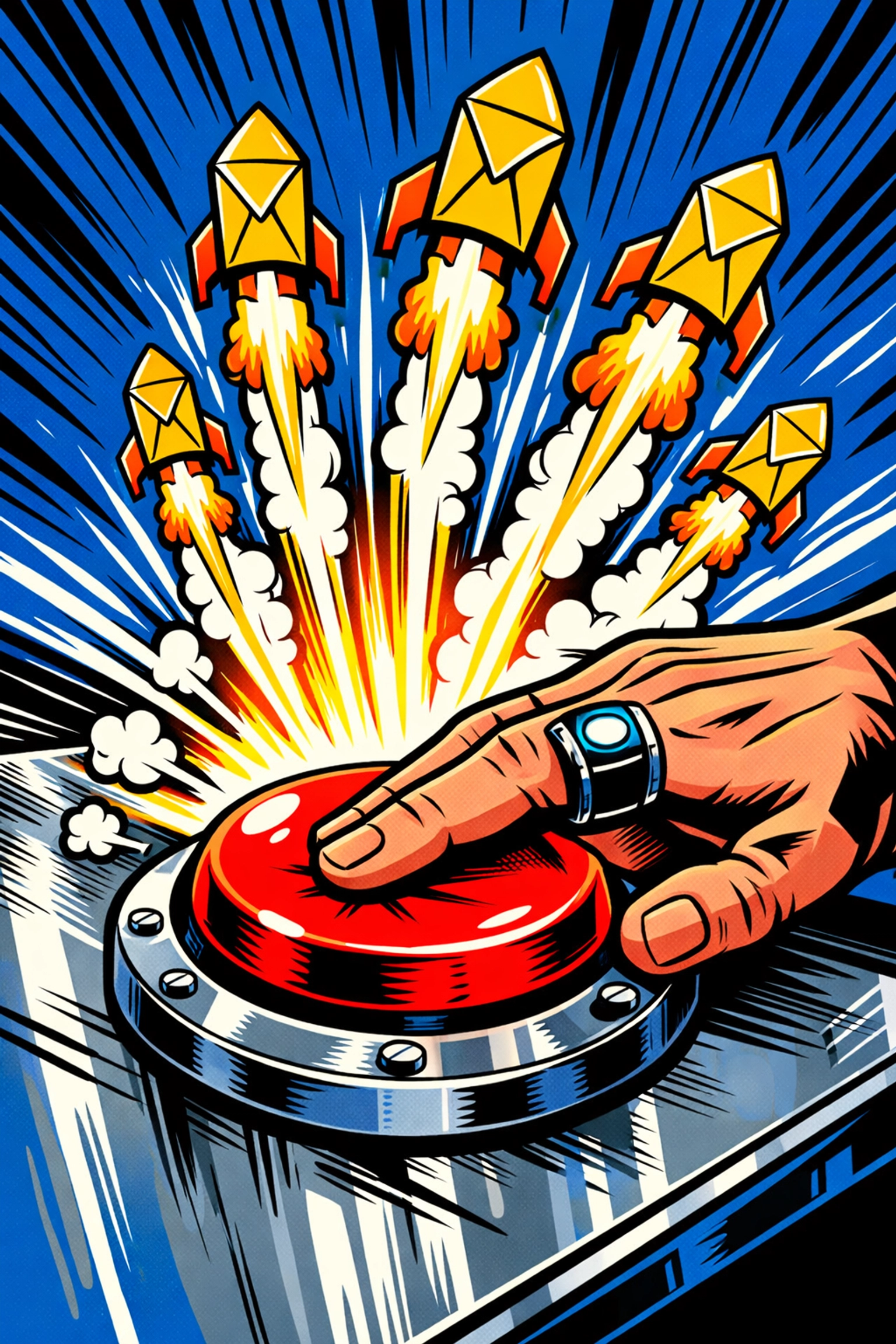
    Hand pressing a button to automate customer support with AI and streamline email workflows.

    MINUTE 5: THE INBOX GATEKEEPER

    🔍 2:21 PM.

    Your inbox is a loud room where everyone is screaming at once. The "urgent" invoice is buried under three newsletters and a notification that someone liked your LinkedIn post from 2022.

    You need a filter. Not just a "label," but a logic-based gatekeeper.

    Spend your final minute setting up three basic filters:

    1. The "Receipts" Folder: Anything with the word "Invoice," "Receipt," or "Order Confirmation" goes here automatically. Skip the inbox. You’ll deal with them once a week during your accounting hour.
    2. The "Newsletter" Graveyard: Use a tool like SaneBox or simply filter anything with the word "Unsubscribe" into a "Read Later" folder.
    3. The "Client Priority": Any email from a domain ending in your biggest client’s company name gets starred and moved to the top.

    Suddenly, your inbox isn't a mountain of 100 emails. It’s a curated list of the 5 things that actually matter.

    THE TRANSFORMATION: FROM CHOS TO CALM

    🌙 4:00 PM.

    Usually, this is the time of day where you’re frantically trying to wrap things up. You’re stressed. Your brain feels like it has too many tabs open.

    But today?

    The emails handled themselves. The meetings booked themselves. The receipts filed themselves.

    You’re finishing your work for the day, and for the first time in months… it’s quiet.

    You aren't wondering if you missed a follow-up. You know the AI handled it. You aren't worried about tomorrow's schedule. You know it’s optimized.

    This is what efficiency feels like. It’s not about working more hours. It’s about making the hours you work actually count.

    Entrepreneur relaxing while an AI virtual assistant for business handles repetitive admin work.

    WHY SMALL BUSINESS OWNERS ARE OBSESSED WITH AI

    Let's be real: you can't afford a full-time human executive assistant. And even if you could, they need sleep. They take lunch breaks. They occasionally get the flu.

    An ai virtual assistant for business is different. It’s the "Employee of the Month," every single month.

    When you automate customer support with ai, you aren't just "saving time." You’re increasing your conversion rate. Customers today don't want to wait six hours for a reply. They want an answer now. If your AI can give them that answer at 2:00 AM while you’re asleep, you just won the game.

    Scaling shouldn't be this easy. But here we are.

    At Marblism, we specialize in taking those "ugh, I have to do this again" tasks and turning them into "oh, that’s already done" moments. If you’re ready to stop being the bottleneck in your own company, you should probably see what Scott is up to.

    Check out the future of your business right here: https://marblism.link/scott-bowen.

    COMMON QUESTIONS ABOUT ADMIN AUTOMATION

    "Is this going to make my business feel cold and robotic?"
    No. In fact, it’s the opposite. By automating the boring stuff, you have more emotional energy to be actually human when it matters. Your clients would rather have a fast, automated booking link than a slow, frustrated manual email from you three days later.

    "Do I need to be a 'tech person' to set this up?"
    If you can order a pizza on an app, you can do this. Most of these tools are "drag and drop." And if you use a partner like Marblism, we handle the heavy lifting anyway.

    "Is it expensive?"
    What’s your hourly rate? Multiply that by the 5 hours a week you waste on admin. Automation isn't a cost; it’s a refund on your life.

    "Can AI really handle customer support?"
    Yes. Modern AI can understand context, tone, and intent. It’s not the "Press 1 for Sales" nightmare of the past. It’s conversational, helpful, and incredibly fast.

    Smart AI robot head illustrating how to automate customer support with AI technology.

    YOUR NEW AFTERNOON STARTS NOW

    The clock is ticking. You can go back to your seventeen tabs. You can keep manually typing out those follow-ups. You can keep playing "Calendar Tetris."

    Or, you can take five minutes.

    Set up the templates. Link the calendar. Turn on the filters.

    Then, go have a look at how Marblism is helping business owners like you reclaim their sanity. The tools are there. The tech is ready. The only thing missing is your decision to stop doing things the hard way.

    Stop juggling. Start scaling.

    Your afternoon is waiting for you.

    Triumphant business owner scaling their company using efficient AI automation tools.

    Ready to see the magic in action?
    Don't just take my word for it. Dive into the world of AI-driven efficiency and see how much time you can actually win back.

    👉 Take the first step toward a 5-minute admin routine here.

    Scaling shouldn't be a struggle. Let's make it easy.
  • The Ultimate Guide to Home Brewing: Everything You Need to Succeed

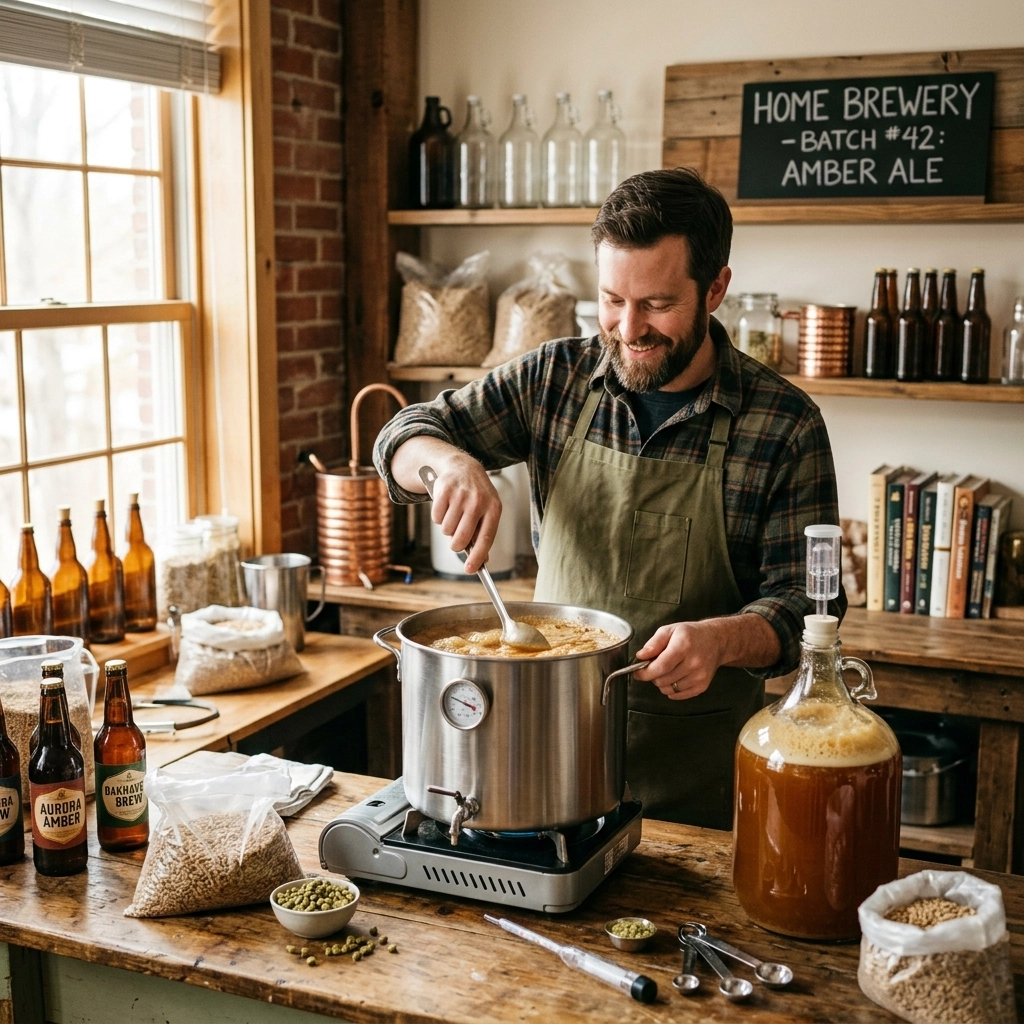
    The Ultimate Guide to Home Brewing: Everything You Need to Succeed

    We’ve all been there. You wake up, stumble into the kitchen, and perform the ritual. But let’s be honest: sometimes that ritual results in a cup of brown water that tastes more like a sad memory than a vibrant, specialty-grade beverage. Why is it that the coffee you get at your favorite local spot tastes like a symphony of stone fruit and chocolate, while your home brew tastes… well, just like "coffee"?

    The good news is that brewing world-class coffee at home isn't reserved for the elite or the folks with five-thousand-pound espresso machines (though those are lovely, aren't they?). It’s actually quite accessible once you understand a few core principles. We believe that anyone can master the art of the brew with the right gear, the right beans, and a little bit of patience.

    So, let's dive into the ultimate guide to home brewing. We’re going to cover everything from the chemistry of water to why your choice of grinder is the most important decision you’ll make this year.


    It All Starts with the Bean

    You can have the most expensive kettle in the world, but if you’re using stale, over-roasted beans from the bottom shelf of a supermarket, your coffee is going to struggle. It’s just the truth. Specialty coffee is a different beast entirely. We focus on sourcing our coffee from farmers who care deeply about quality, and that quality is something you can taste in the cup.

    Freshness is paramount. Coffee is a seasonal agricultural product. Once it’s roasted, the clock starts ticking. We usually recommend using your beans within four weeks of the roast date for the best experience. If you’re looking for that vibrant, fresh-roasted goodness to start your journey, you can find our latest single-origin offerings and blends here at Limini Coffee.

    Freshly roasted single-origin coffee beans in an open bag on a wooden kitchen counter.

    Why Single Origin?

    You’ll hear us talk a lot about "Single Origin." Basically, this means the coffee comes from a specific farm or region. Why is this important? Because it allows the unique characteristics of that soil, altitude, and climate to shine. An Ethiopian Yirgacheffe will taste wildly different from a Brazilian Santos: the former being floral and tea-like, the latter being nutty and chocolatey.


    The Essential Gear List

    Before you start pouring, you need the right tools for the job. You don't need a lab full of equipment, but there are a few non-negotiables.

    1. The Grinder (The MVP)

    If you take one thing away from this guide, let it be this: buy a decent burr grinder. Blade grinders (the ones that look like little blenders) don't actually grind coffee; they smash it into uneven shards. This leads to uneven extraction: some bits are over-extracted (bitter) and some are under-extracted (sour). A burr grinder gives you uniform particles, which is the secret to a balanced cup.

    2. Digital Scales

    Stop using scoops. Please. We’re begging you! A scoop of coffee can weigh 10 grams or 15 grams depending on the bean size and roast level. Using a scale allows you to hit the same "recipe" every single time. It takes the guesswork out of the morning.

    3. A Gooseneck Kettle

    If you’re into pour-over coffee (like a V60 or Chemex), a gooseneck kettle is a game-changer. It gives you total control over the flow of water. If you dump a liter of water in all at once, you’re going to agitate the grounds too much and end up with a mess. Precision is key.


    The Golden Variables

    Brewing coffee is essentially a game of managing variables. There are four main ones that we always keep an eye on:

    • Ratio: The relationship between coffee and water. We usually start with a 1:16 ratio (1 gram of coffee for every 16 grams of water). It’s a great middle ground. If you want a stronger cup, try 1:15. If you want something lighter, 1:17. You can even use a coffee brewing calculator to do the math for you.
    • Grind Size: Think of this as the "speed control." Fine grinds slow down the water flow (more surface area, more extraction), while coarse grinds let it through quickly (less surface area, less extraction).
    • Temperature: We generally aim for between 92 °C and 96 °C (around 197 °F to 205 °F). If the water is too hot, you risk burning the coffee and extracting harsh tannins. Too cool, and the coffee will taste flat and sour.
    • Time: How long the water is in contact with the coffee. A V60 might take 3 minutes, while a French Press takes 4 minutes.

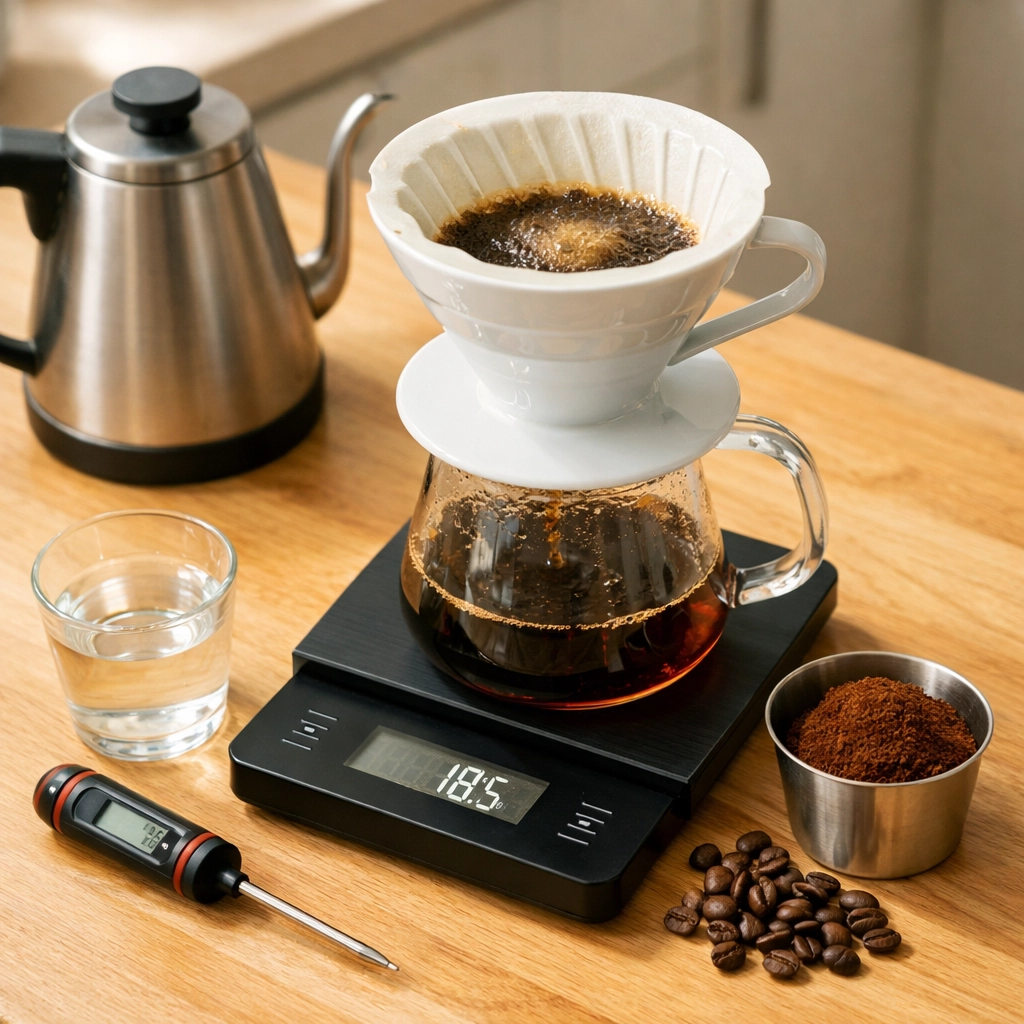
    Complete home coffee brewing setup with a V60 dripper, digital scale, and gooseneck kettle.


    Choosing Your Method

    There isn't a "best" way to brew coffee: only the way that fits your lifestyle and taste buds.

    The Pour-Over (Hario V60 / Chemex)

    This is for the purists. Pour-over brewing produces a clean, crisp cup that highlights the delicate acidity of the beans. It requires a bit of technique (the "spiral pour"), but the results are worth it. If you’re brewing a bright, citrusy African coffee, this is the way to go.

    The AeroPress (The Workhorse)

    We love the AeroPress. It’s indestructible, portable, and incredibly forgiving. It uses a combination of immersion and pressure to produce a concentrated, sweet cup. It’s perfect for travel or for someone who wants a great cup of coffee in under two minutes without a lot of fuss.

    The French Press (The Classic)

    The French Press is all about body and texture. Because it uses a metal mesh filter instead of paper, the natural oils of the coffee make it into your cup. This results in a heavy, silky mouthfeel. If you like your coffee bold and "punchy," this is your best bet. If you find yourself wanting to turn that bold brew into a latte or cappuccino, it's worth understanding how milk works to get that texture just right.

    Freshly brewed coffee in a glass French press being plunged in a warm, sunny kitchen.


    The Step-By-Step Pour-Over Process

    Let's walk through a standard V60 brew. This is where we see most people get hooked on the hobby.

    1. Prepare: Heat your water to 94 °C. Place your filter in the dripper and rinse it with hot water. This removes the "papery" taste and warms up your vessel.
    2. Measure: Weigh out 15g of coffee and grind it to a medium-fine consistency (like table salt).
    3. The Bloom: Start your timer and pour about 30g of water over the grounds. You’ll see bubbles: this is the "bloom." It’s the coffee releasing CO2. Wait about 30 seconds.
    4. The Main Pour: Slowly pour the remaining water (up to 250g) in steady, concentric circles. Avoid pouring directly onto the sides of the filter.
    5. The Draw Down: Let the water drain through. The bed of coffee at the bottom should look flat, not like a crater.
    6. Enjoy: Give the carafe a little swirl to aerate the coffee before pouring.

    It sounds like a lot of steps, but once you do it three times, it becomes second nature. And the difference in quality compared to a standard drip machine is honestly staggering.


    Troubleshooting Your Brew

    "My coffee tastes bad. What do I do?" Don't worry, we’ve been there.

    If your coffee is bitter, dry, or ashy, you have likely over-extracted. To fix this, you can:

    • Coarsen your grind.
    • Lower your water temperature.
    • Shorten your brew time.

    If your coffee is sour, salty, or thin, you have under-extracted. Basically, you haven't taken enough "good stuff" out of the bean. To fix this, you can:

    • Find a finer grind setting.
    • Increase your water temperature.
    • Brew for a little longer.

    Close-up of pouring water from a gooseneck kettle into a V60 for home pour-over brewing.


    What About Espresso?

    Espresso is the "final boss" of home brewing. It’s a beautiful, complex, and sometimes frustrating journey. It requires a significant investment in equipment, including a high-quality espresso machine and a specialized espresso grinder.

    If you're thinking about taking that plunge, we have a whole guide on choosing espresso equipment to help you navigate the world of boilers, PIDs, and group heads. It's a steep learning curve, but pulling that perfect shot with a thick, syrupy crema is a feeling like no other.


    Final Thoughts

    At the end of the day, the "best" coffee is the one you enjoy drinking. Whether you’re using a simple French Press or a high-end lever machine, the goal is the same: a moment of peace and a delicious beverage.

    We recommend starting simple. Get yourself a decent grinder, a scale, and some freshly roasted beans from Limini Coffee. Experiment with your grind size, play with your ratios, and don't be afraid to make a bad cup every now and then. That’s how you learn!

    If you ever feel like you need a bit more hands-on help, we offer barista training that covers everything from basic brewing to advanced latte art. We love sharing what we know, and we’re always here to help you on your coffee journey.

    Happy brewing! 🙂

  • Why Everyone Is Talking About Repurposed Coffee Sacks (And You Should Too)

    Why Everyone Is Talking About Repurposed Coffee Sacks (And You Should Too)

    If you’ve ever stepped foot inside our roastery, you know the vibe. There is the hum of the roaster, the intoxicating scent of browning sugars, and, of course, the mountains of burlap. These rugged, rustic coffee sacks are the unsung heroes of the speciality coffee world. They carry precious green beans across oceans, from the high altitudes of Ethiopia to the volcanic soils of Guatemala, finally landing here at Limini Coffee.

    But what happens once the beans are roasted and bagged into our shiny retail pouches? For a long time, these beautiful jute sacks were relegated to the back of the warehouse or, worse, the bin.

    Not anymore.

    The world has finally caught on to what we’ve known for years: repurposed coffee sacks are a goldmine for sustainability, creativity, and home decor. Whether you are a hardcore DIY enthusiast or a cafe owner looking to add some soul to your shop, there is a reason everyone is talking about these sacks.


    The Sustainability Factor: Why Reuse Beats Recycling

    So, why the sudden obsession with "upcycling" these bags? Basically, it comes down to the circular economy. We are all trying to do our bit for the planet, and while recycling is great, repurposing is often even better.

    Recycling facilities for textiles like jute aren't always easy to find, and the process itself requires energy and water. Repurposing, however, takes a material that already exists and gives it a second (or third!) life with almost zero carbon footprint. Jute is a natural vegetable fiber, mostly from the Corchorus plant, meaning it is 100% biodegradable and compostable.

    Imagine a product that is durable, breathable, and actually returns to the earth when you’re done with it. That is the beauty of jute. When we talk about sustainability at Limini Coffee, we aren't just talking about the beans; we’re talking about the whole journey.

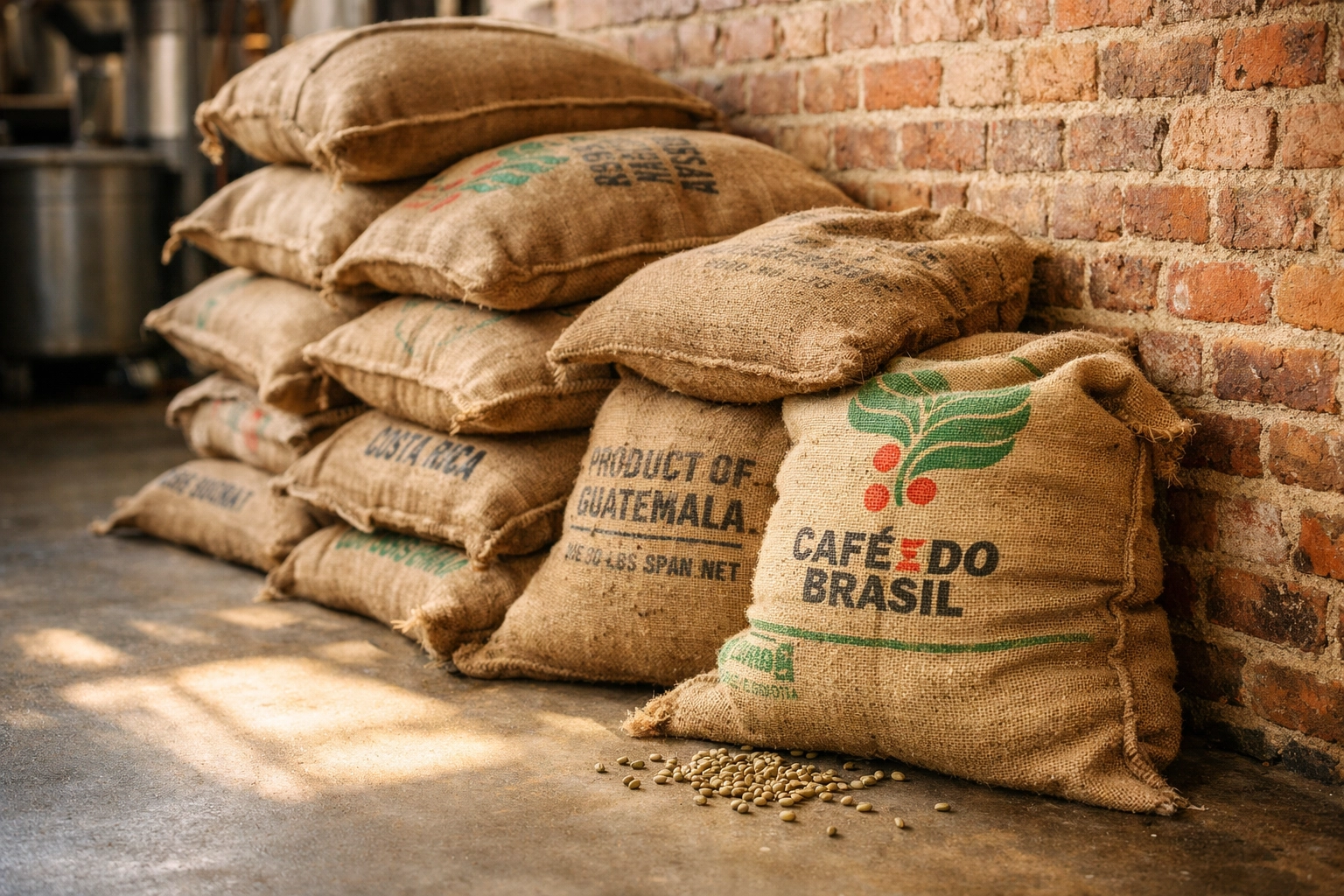
    Authentic burlap coffee sacks stacked in a sunlit roastery against a rustic brick wall.

    The Secret Weapon for Your Garden

    You might not associate coffee with your vegetable patch (unless you’re using old grounds for fertilizer), but coffee sacks are a gardener’s best friend. Because jute is a breathable material, it allows air and water to pass through while providing structure and protection.

    • Weed Barriers: Forget that nasty black plastic. Laying down coffee sacks and covering them with mulch is a fantastic way to suppress weeds. They eventually break down, adding organic matter to your soil. It’s a win-win.
    • Frost Protection: Do you have some delicate shrubs that aren't fans of the British winter? Wrapping them in a coffee sack provides a cozy layer of insulation while still letting the plant "breathe."
    • Potato Planters: This is a classic. You can grow a surprising amount of spuds in a single upright coffee sack. Just roll down the sides, fill with compost, and plant. As the plant grows, unroll the sack and add more soil.
    • Compost Covers: Keeping your compost pile at the right temperature and moisture level is key. A damp coffee sack on top acts like a blanket, keeping the "good" bacteria happy and active.

    We think it’s pretty cool that a sack that started in a tropical climate ends up helping a garden thrive in the UK.


    Rustic Chic: Coffee Sacks in Home Decor

    If you aren't much of a gardener, don't worry. The aesthetic appeal of coffee sacks is undeniable. Each sack usually features unique prints, bold typography, vibrant logos of the coffee estates, or even "Product of Brazil" stamped in thick, industrial ink. They bring an instant "industrial-meets-rustic" feel to any room.

    A rustic stool upholstered with a repurposed coffee sack in a cozy home interior setting.

    Upholstery and Soft Furnishings
    One of the most popular uses we see is upholstery. We’ve seen some incredible bar stools and ottoman benches covered in coffee sacks. The texture is rough (hydrophobic by nature, meaning it doesn't soak up spills instantly!), which makes it surprisingly durable for furniture.

    A quick pro-tip from us: If you’re making cushions or seat covers, make sure to wash the sacks thoroughly first. They can be a bit "dusty" straight off the boat. Use a gentle cycle or hand wash, and let them air dry. They might shrink a bit, but they’ll be much softer to the touch.

    Wall Art with a Story
    Why buy mass-produced prints when you can frame a piece of coffee history? Some of the artwork on these sacks is genuinely stunning. We’ve seen people stretch them over wooden frames just like a canvas. It’s a great conversation starter. "Oh, that? That carried 60kg of speciality beans from a small farm in Sidamo."

    It’s about bringing that theatre of coffee into your home or shop.


    Functional and Fashionable: Bags and Storage

    Let’s talk about the tote bag. We all have a million of them, but a tote made from a repurposed coffee sack is on another level. It’s sturdy enough to carry a heavy load of groceries and looks a lot more interesting than a plain cotton bag.

    Because jute is so strong, these sacks are also perfect for heavy-duty storage.

    • Log Bags: Keep your firewood tidy by the hearth.
    • Laundry Hampers: Line a wire basket with a coffee sack for a vintage look.
    • Pet Bedding: If you have a dog that loves to dig and nest, a coffee sack stuffed with old blankets makes a very durable (and cheap!) bed.

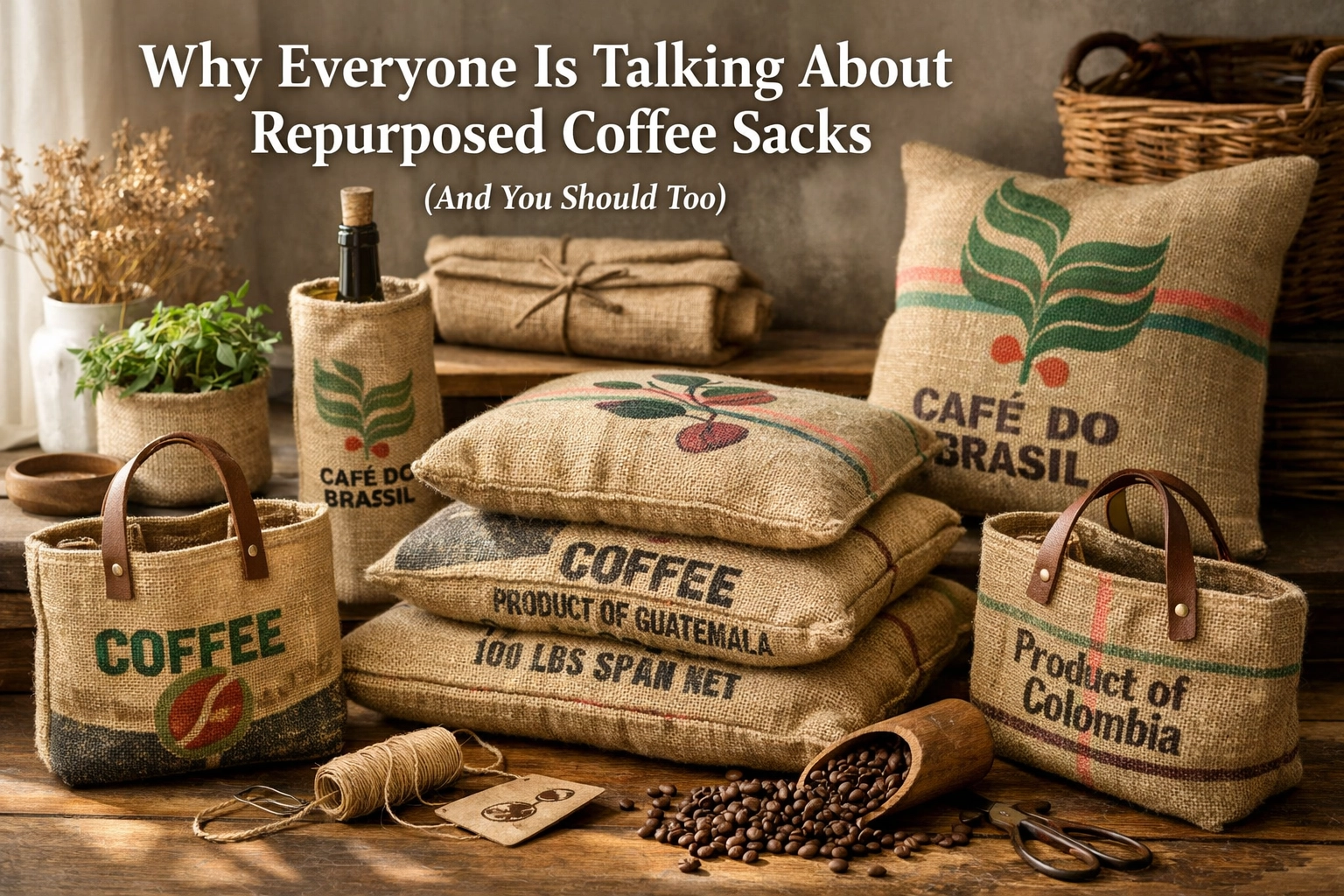
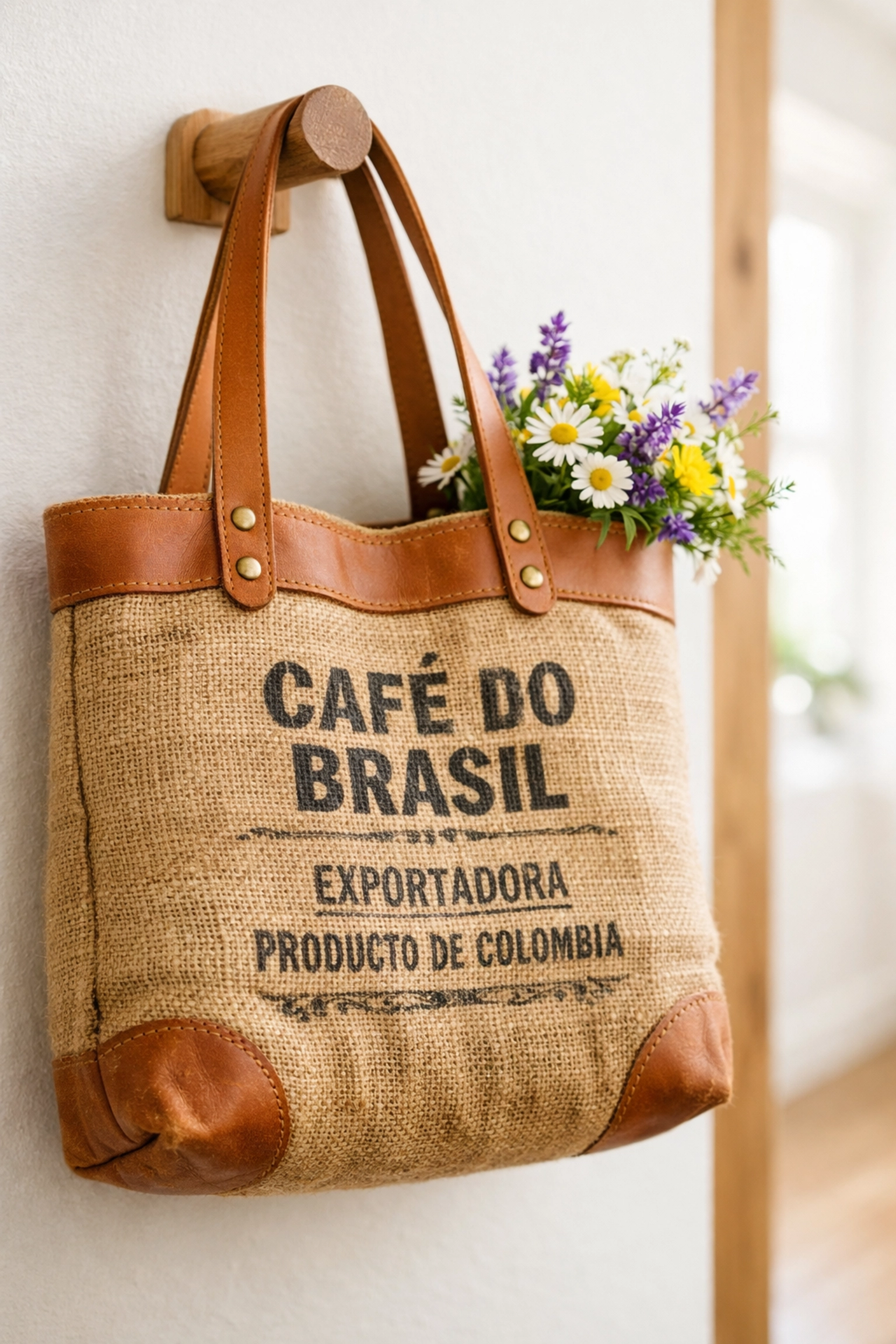
    Handcrafted tote bag made from a repurposed jute coffee sack with stylish leather handles.

    A Practical Guide to Sourcing Your Sacks

    So, how do you get your hands on them? If you are a wholesale customer with us at Limini, you might already have a few lying around. If not, just ask! We often have a surplus of sacks that we are more than happy to pass on to people who will give them a good home.

    If you’re just starting your coffee journey, perhaps looking to set up a coffee shop or just upgrading your home brewing game, you can check out our offerings through Scott’s link here. Getting the coffee is the first step; getting the sack is the bonus.

    The "Industrial" Reality: A Word of Caution

    We should probably mention: to be honest: that these sacks are industrial items. They’ve been on ships, in warehouses, and on the backs of trucks. They might have a bit of a "natural" smell (a mix of earth and green coffee).

    When you get one, give it a good shake outside. If you’re using it for indoor crafts, a quick soak in some mild detergent and a dash of vinegar can help neutralize any lingering scents. It’s a small price to pay for such a versatile material.


    Why it Matters to Us at Limini Coffee

    At Limini Coffee, we are obsessed with the details. We spend our days obsessing over crema, perfecting tamping techniques, and sourcing the finest beans. But we also care deeply about the footprint we leave behind.

    Every time a customer tells us they’ve turned one of our old sacks into a garden planter or a set of cafe cushions, it makes us smile. It’s the ultimate tribute to the hard work of the farmers who grew the coffee in the first place. That sack didn't just protect the beans; it became a part of someone's home.

    A latte with heart art sitting on a textured coaster made from repurposed coffee sack fabric.

    The DIY Challenge

    So, here is our challenge to you. The next time you see a coffee sack, don't just see a piece of packaging. See a potential weed barrier. See a rustic cushion. See a way to make your space a little more sustainable and a lot more stylish.

    If you’re a business owner, think about how you can use these in your shop layout. They work brilliantly as partitions, or even as rustic "curtains" for under-counter storage. It’s these little touches that create an atmosphere and make people remember your brand.

    Want to learn more about the world of coffee, from the farm to the sack to the cup? We offer everything from barista training to wholesale support. We’d love to help you tell your coffee story.

    And remember, if you need to stock up on the beans that come inside those sacks, head over to our site via Scott's link to see what we have roasting this week.

    Happy crafting!

  • Housekeeping 2.0: Real-Time Task Automation for Leaner Teams

    Housekeeping 2.0: Real-Time Task Automation for Leaner Teams

    Clean faster. Coordinate better. Scale smarter.

    The back-of-house has long been the invisible engine of the hotel industry, often operating on stacks of paper, frantic radio calls, and manual spreadsheets. But the landscape of 2026 demands a different approach. We believe the clipboard is a relic of a slower era. Today, operational excellence isn't just about how well your team cleans; it’s about how intelligently they are deployed.

    Modern hotel management software has transformed housekeeping from a reactive chore into a proactive, data-driven department. In an era where labor markets are tight and guest expectations are at an all-time high, the ability to run a lean, high-performing team is the ultimate competitive advantage. This is Housekeeping 2.0: a world where real-time task automation does the heavy lifting, allowing your staff to focus on what they do best: creating exceptional guest experiences.

    The end of the manual paper trail

    We think the traditional morning briefing: where supervisors spend an hour hand-assigning rooms: is a drain on your most valuable resource: time. When you automate the administrative burden, you reclaim hours of productivity every single day.

    In a legacy environment, a housekeeper finishes a room and has to find a phone or walk back to the office to report it clean. Then, a supervisor has to physically verify it before the front desk even knows the room is ready. It’s a chain of delays. With modern housekeeping software for hotels, that chain is broken.

    • Instant Updates: The second a guest checks out at the kiosk or on their phone, the system triggers a priority cleaning task.
    • Dynamic Sequencing: Tasks aren't just listed; they are ranked by urgency, proximity, and guest ETA.
    • Zero Latency: As soon as a housekeeper marks a room "Clean" on their mobile device, the room status updates across the entire PMS instantly.

    By removing the "middleman" from the communication flow, properties are seeing a massive reduction in the time rooms sit vacant but "dirty" in the system. It’s about squeezing every bit of efficiency out of your inventory.

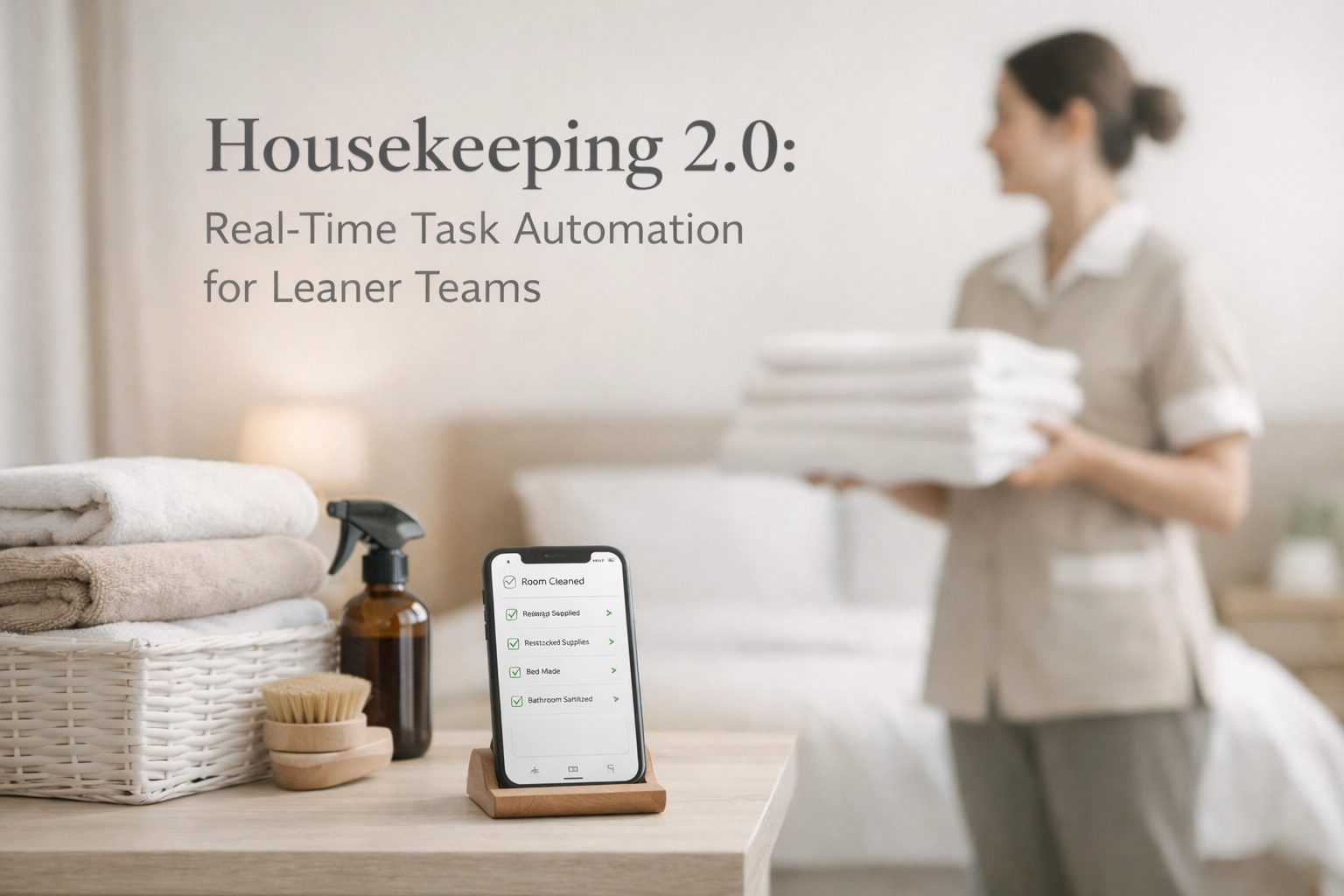
    Smartphone on a clean hotel bed representing digital hotel management software and task automation.

    Intelligent assignment for lean teams

    The goal isn't to work your staff harder; it’s to help them work smarter. We’ve seen that housekeeping automation can reduce administrative tasks by up to 70%. When the software understands the layout of your hotel, the current occupancy, and the specific skills of your team, it can distribute work in ways a human brain simply can't process in real-time.

    Intelligent task assignment considers the "why" behind the clean. Is it a stay-over? A deep-clean departure? A VIP arrival?

    1. Occupancy-Based Scheduling: The system looks at your booking data to predict laundry loads and staffing needs days in advance.
    2. Proximity Routing: No more housekeepers crossing paths in the hallway to get to their next room. The software groups tasks by floor and wing to minimize transit time.
    3. Productivity Tracking: Managers can see exactly how long specific room types take to clean, allowing for fairer workload distribution and better-informed staffing decisions.

    This level of precision allows hotels to operate with leaner teams without burning out their employees. It’s a shift from "we need ten people today" to "we need 42 hours of labor, strategically distributed."

    The silent concierge: Real-time mobile execution

    We believe that a housekeeper with a smartphone is more effective than a housekeeper with a walkie-talkie. A mobile-first approach provides the frontline team with everything they need to be autonomous.

    When a staff member logs into their mobile dashboard, they see their personalized digital task sheet. It’s not just a list of room numbers; it’s a detailed guide. They can see guest notes: perhaps the guest in 402 requested extra feather pillows or prefers a 2:00 PM turndown.

    "Since we switched to automated mobile assignments, my team feels more empowered. They don't have to wait for me to tell them where to go next: the app handles it, and I can focus on quality control instead of traffic direction."
    : Executive Housekeeper, 150-room Boutique Property

    This digital connection also bridges the gap between housekeeping and maintenance. If a housekeeper spots a leaky faucet, they don't need to write it down or call it in. They snap a photo, tag it in the app, and a maintenance ticket is automatically generated and assigned. It’s seamless. It’s fast. It’s Housekeeping 2.0.

    Hotel staff member using operational automation tools on a tablet in a bright hotel corridor.

    Visibility without micromanagement

    One of the biggest pain points for hotel managers is the "black hole" of the midday shift. Where is the team? Which rooms are half-finished? When can we start checking people in?

    With a centralized digital platform, that "black hole" disappears. Managers gain a bird’s-eye view of the entire property’s status through live dashboards. You can see the progress of every floor in real-time. If one wing is lagging behind due to a particularly messy departure, you can reassign staff with a single click to ensure you hit your check-in targets.

    This isn't about watching over a staff member’s shoulder; it’s about having the data to support them. If the data shows that 30% of your rooms are taking longer than average to clean, you might realize you’re understaffed or that your cleaning supplies need an upgrade. It’s about turning operational "gut feelings" into hard facts.

    The Guest Experience: Beyond the "Clean" sign

    At the heart of every technological shift at Mews is the guest. While housekeeping automation happens behind the scenes, the guest is the primary beneficiary.

    Think about the traditional check-in experience. A guest arrives at 1:00 PM, tired from a flight, only to be told, "Your room isn't ready yet. Check back at 3:00 PM." In a Housekeeping 2.0 environment, the front desk can see that a room of that type is currently being cleaned and is 80% finished. They can offer the guest a coffee, knowing the room will be ready in exactly twelve minutes.

    • Early Check-In Revenue: By accelerating room turnover, you can confidently sell early check-in as an ancillary service.
    • Consistency: Automated checklists ensure that every room meets the brand standard, every single time.
    • Personalization: When housekeeping knows a guest's preferences via the hotel management software, they can set the room up perfectly before the guest even touches the door handle.

    We believe that true luxury in 2026 is defined by friction-less service. A spotless room that is ready exactly when the guest needs it: that is the goal.

    Pristine boutique hotel room ready for guests after cleaning via automated housekeeping software.

    Sustainable stays and the future of labor

    The benefits of automation also extend to your property's footprint and your bottom line. By optimizing routes and tasks, you reduce the energy consumed by keeping lights and HVAC on in empty rooms during the cleaning process. Furthermore, real-time data allows for more accurate inventory management of linens and cleaning chemicals, reducing waste.

    But perhaps the most significant impact is on your team’s culture. The hospitality industry has long struggled with high turnover in housekeeping roles. By removing the chaos and providing clear, digital instructions, you reduce the stress of the job. You’re giving your team the tools they need to succeed, which leads to higher job satisfaction and lower turnover.

    Setting up for success

    Transitioning to Housekeeping 2.0 doesn't happen overnight, but it is easier than you might think. It starts with choosing a hotel management software that treats housekeeping as a core component, not an afterthought. You need an API-first ecosystem that allows your PMS, your housekeeping app, and your guest messaging platform to speak the same language.

    1. Audit your current flow: Where are the bottlenecks? Is it communication? Is it scheduling?
    2. Empower the frontline: Provide tablets or smartphones to your team and invest in 30 minutes of training.
    3. Trust the data: Let the automation handle the assignments for a week and watch the productivity metrics climb.

    The hotels that thrive in the coming years will be the ones that embrace operational excellence through technology. They will be the ones that can do more with a leaner, happier team. They will be the ones that never have to tell a guest, "Your room isn't ready yet."

    Ready to see how Housekeeping 2.0 can transform your property? We’ve helped thousands of hotels move from manual chaos to automated clarity.

    Explore the Mews platform and see what real-time automation can do for you.

  • 5 Easy Steps to Automate Admin Tasks (and Finally Get Your Weekends Back)

    ☕ It’s Saturday morning. 7:14 AM.

    The sun is barely peeking through the blinds, and you should be asleep. Or at least, you should be pouring a second cup of coffee while thinking about absolutely nothing. But instead, you’re sitting at the kitchen table with your laptop glowing like a judgmental ghost.

    You’re matching invoices. You’re rescheduling a discovery call for the third time. You’re manually copying lead data from a contact form into a spreadsheet that: let’s be honest: you’ll probably forget to look at by Tuesday.

    You didn’t start a business to become a high-priced data entry clerk. Yet, here you are.

    The administrative "vampires" are sucking the life out of your week. But it doesn't have to be this way. You can actually save 10+ hours every single week by following five simple steps.

    Let’s get your life back.


    AUTOMATE ADMIN TASKS: HOW TO SAVE 10+ HOURS EVERY WEEK

    STEP 1: THE BRUTAL BRAIN DUMP

    Grab a piece of paper. Or a digital doc. Whatever doesn't stress you out. For the next 24 hours, every time you do something that feels like a "chore," write it down.

    We’re looking for the repetitive, soul-crushing stuff:

    • Sending "Just checking in" emails.
    • Moving data from Point A to Point B.
    • Generating invoices.
    • Posting the same update to four different social media platforms.
    • Approving internal requests that don't actually need your brainpower.

    If you do it more than once a week, it’s a candidate for execution. Or, you know, automation.

    STEP 2: THE MATH OF MISERY

    Look at your list. Next to each task, write down how many minutes it takes. Now, multiply that by how many times you do it a month.

    That 10-minute task you do every day? That’s 5 hours a month.
    The 30-minute "quick update" twice a week? That’s 4 hours a month.

    Suddenly, you’re looking at a 20-hour hole in your schedule. That’s a lot of missed gym sessions or skipped happy hours. Seeing the numbers makes it real. It turns "I'm busy" into "I'm losing thousands of dollars in billable time to clerical work."

    STEP 3: PICK YOUR WEAPONS

    You don't need a degree in computer science. You just need the right business automation tools.

    Pop art illustration of business automation tools shown as a high-tech utility belt on an office chair.

    In 2026, the landscape has changed. You aren't just looking for "apps"; you're looking for an ecosystem. You need a hub that talks to your calendar, your email, and your CRM without you having to play middleman. This is where you look for an ai assistant for small business that actually understands context.

    STEP 4: SET THE RULES (AND FORGET THEM)

    This is the "If This, Then That" phase.

    • If a new lead fills out a form… Then add them to the CRM and send a "Let's chat" link.
    • If an invoice is 3 days overdue… Then send a polite (but firm) reminder.
    • If a client books a meeting… Then create a Zoom link and block your calendar.

    Once you set these rules, they don’t get tired. They don’t forget. They don’t have a "bad Monday." They just work.

    STEP 5: MONITOR AND OPTIMIZE

    Spend 15 minutes on Friday reviewing your automations. Did anything break? Probably not. But maybe you realized that the "Let's chat" email needs a different tone. Tweak it. Refine it. Then go home.

    Scaling shouldn't be this hard. And with Marblism, it isn't.


    THE BEST AI ASSISTANT FOR SMALL BUSINESS IN 2026

    📱 Your phone buzzes.

    It’s not a notification you have to deal with. It’s a notification that something has already been dealt with.

    In the old days (like, 2024), "automation" meant simple triggers. In 2026, the ai assistant for small business has evolved into a digital teammate. It doesn’t just move data; it makes decisions based on the parameters you’ve set.

    Imagine having an employee who:

    • Works 24/7.
    • Never asks for a raise.
    • Doesn't take your "favorite" mug from the breakroom.
    • Knows exactly how you like your reports formatted.

    A friendly AI assistant for small business supporting a confident entrepreneur in a pop art style.

    WHY "MANUAL" IS THE NEW "EXTINCT"

    Small business owners often suffer from "Hero Syndrome." You think if you don't do it yourself, it won't be done right. But let's be real: are you really the best person to be copying-and-pasting email addresses at 11:00 PM?

    Probably not.

    The best business automation tools act as a force multiplier. They take your existing skills and magnify them. While you’re focusing on big-picture strategy or closing a major deal, your AI assistant is in the background, keeping the engine greased and the lights on.

    MEET YOUR NEW TEAM

    When you integrate a tool like Marblism into your workflow, you aren't just buying software. You're buying time. You're buying the ability to scale without adding five new salaries to your overhead.

    It’s about moving from "hustle culture" to "efficiency culture."

    Stop juggling. Start leading. See how a real AI assistant changes the game at Marblism.


    AI CONTENT GENERATOR FOR SMALL BUSINESS: YOUR SECRET MARKETING WEAPON

    🔍 You’re staring at a blinking cursor.

    The "New Post" window is open. You know you need to talk to your audience. You know that if you don't post, you don't exist in the eyes of the algorithm. But your brain is fried. You’ve spent all day actually running the business. Now you have to be a creative genius too?

    It’s exhausting.

    Enter the ai content generator for small business.

    Marketing ideas erupting from a laptop screen using an AI content generator for small business.

    STOP WRITING FROM SCRATCH

    The biggest hurdle to marketing is the blank page. An AI content generator doesn't just "write for you": it brainstorms with you. It takes your rough ideas, your messy notes, and your brand voice, and it turns them into something polished in seconds.

    • Social Media? Done in a click.
    • Email Newsletters? Drafted while you drink your tea.
    • Blog Posts? Structured, researched, and ready for your final touch.

    THE CONSISTENCY TRAP

    Most small businesses fail at marketing because they aren't consistent. They post five times in a week, get busy, and then go dark for a month.

    An ai content generator for small business fixes this. You can batch-produce a month’s worth of high-quality content in the time it used to take to write one single caption.

    YOUR VOICE, ONLY FASTER

    A common fear is that AI sounds "robotic." But in 2026, the tech has caught up. It learns your style. It knows if you’re witty, professional, or direct. It’s not about replacing your voice; it’s about giving your voice a megaphone and a personal trainer.

    You shouldn't have to choose between running your business and growing it.

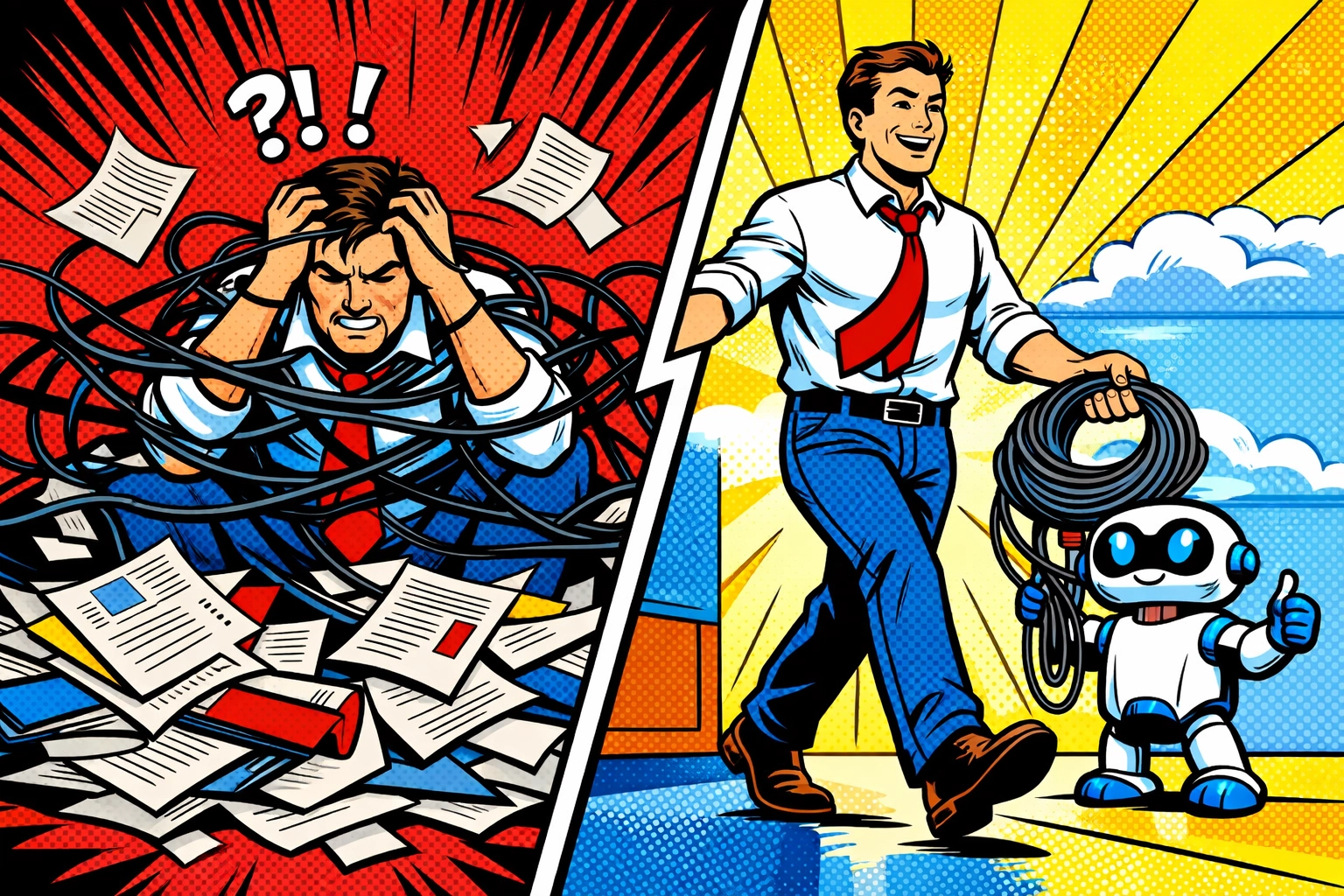
    A person transitioning from messy manual paperwork to organized efficiency with business automation.

    Marketing is no longer a chore you do at midnight. It’s a button you press. It’s a strategy you oversee. It’s the secret weapon that lets you compete with the big guys without the big-guy budget.

    THE WEEKEND IS CALLING

    Look at your calendar again. Imagine those blocks of "Admin" and "Content Creation" disappearing.

    Imagine Sunday afternoon. No laptop. No spreadsheets. Just you, your family, and the quiet satisfaction of knowing that your business is running itself.

    It’s not a dream. It’s just good automation.

    Stop being the bottleneck in your own success. Use the tools designed for the future of work.

    Check out how we do it here: Marblism.

    🌙 The day ends. The lights are off. But your business? It’s still working.

    Scaling shouldn't be this easy. But here we are.
    Welcome to the club.

  • 7 Mistakes You’re Making with Business Automation Tools (and How to Fix Them Before Lunch)

    7 Mistakes You’re Making with Business Automation Tools (and How to Fix Them Before Lunch)

    ☕ 7:00 AM.

    The sun is barely up, and your phone is already buzzing. Not with client calls, those would be welcome. No, it’s buzzing with notifications from the four different business automation tools you signed up for last week.

    "Zapier failed."
    "HubSpot sync error."
    "New lead (Incomplete Data)."

    You stare at the steam rising from your coffee and wonder… wasn't this supposed to make your life easier? You were promised a beach, a laptop, and a business that runs itself. Instead, you’ve just built yourself a digital monster that requires constant feeding.

    Scaling shouldn't be this exhausting. But here we are.

    If you feel like you’re working for your software instead of the other way around, you’re likely making one of these seven common mistakes. The good news? We can fix them before you even think about what’s for lunch.

    1. THE "SHINY OBJECT" TRAP (9:00 AM)

    You saw an ad. Or a TikTok. Someone told you that "AI is the future" and showed you a flashy dashboard. So, you hit "Subscribe."

    Most small business owners start with the tool, not the problem. You’re buying a high-end chainsaw to cut a slice of bread. It’s messy, expensive, and totally unnecessary.

    The Mistake: Adopting ai business automation because it looks cool, rather than because it solves a specific bottleneck.

    The Fix: Stop. Put the credit card away. Before you touch another piece of software, do a process audit. Grab a piece of paper (yes, physical paper) and list every repetitive task that makes you want to scream. Is it lead follow-ups? Is it invoicing? Pick one.

    Define a goal. "I want to save 3 hours a week on manual data entry." Now, go find the tool that does exactly that. If you want a partner that actually understands the "business" part of business automation, check out what we're doing at Marblism.

    2. AUTOMATING A BROKEN PROCESS (9:30 AM)

    You have a lead generation flow that’s about as smooth as a gravel road. It’s full of manual hand-offs, missing info, and "I'll get to that later" sticky notes.

    You decide to automate it.

    Congratulations. You now have a high-speed, automated gravel road.

    The Mistake: Automating a flawed process. Automation doesn't fix bad habits; it scales them. If your manual process is confusing, your automated process will be a catastrophe.

    The Fix: Optimize first. Automate second. Look at every step. If a human can’t explain the logic behind a task, a machine definitely can't execute it. Clean up the workflow. Cut the fluff. Once the manual version works perfectly, then, and only then, do you let the business automation tools take over.

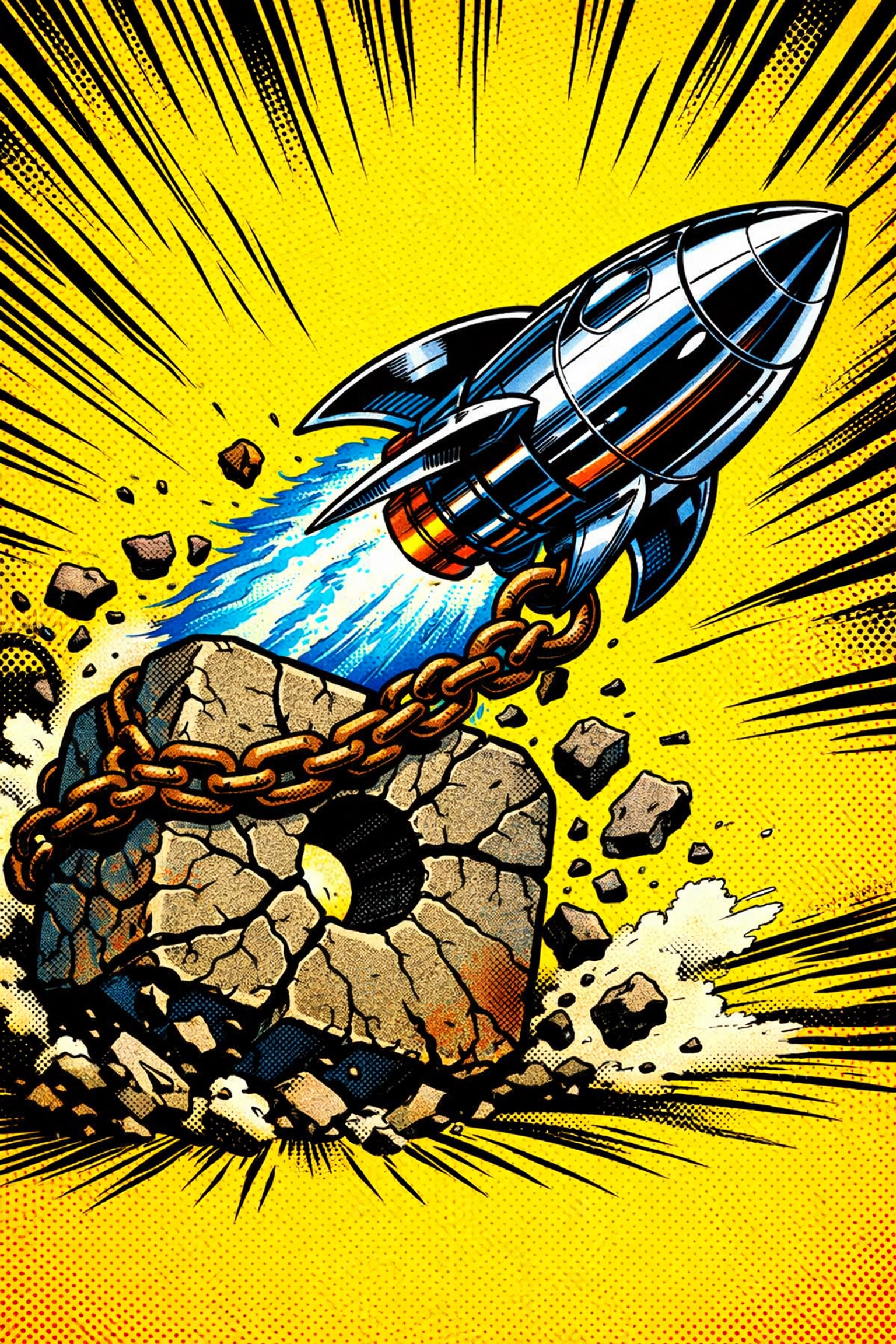
    Futuristic rocket tethered to a stone wheel, illustrating the mistake of automating a broken business process.

    3. THE "HUMAN SOUL" DELETE BUTTON (10:00 AM)

    You’ve seen those LinkedIn messages. You know the ones.
    "Hello [FIRST_NAME], I see you are in [INDUSTRY]. Let's hop on a 15-minute call to discuss synergies."

    Gross.

    The Mistake: Automating the "core" of your brand, the human connection. You’re trying to automate empathy, and your customers can smell the silicon from a mile away.

    The Fix: Use AI for the grunt work, not the heart work. Let your ai business automation handle the scheduling, the data syncing, and the initial lead sorting. But when it comes to the actual conversation? That’s where you step in.

    Use tools like Marblism to build the infrastructure that gives you more time to be human. Automation should be the wind in your sails, not the person steering the boat. You can see how we handle that balance right here: https://marblism.link/scott-bowen.

    4. CREATING AN "AUTOMATION ISLAND" (10:30 AM)

    You have a tool for your CRM. A tool for your email marketing. A tool for your project management.

    But they don’t talk to each other.

    You’re spending your "saved time" exporting CSV files from one and importing them into another. You’ve built a series of high-tech islands, and you’re the only person with a rowboat.

    The Mistake: Building siloed workflows. If your tools aren't integrated, you haven't automated anything, you've just moved the manual labor to a different screen.

    The Fix: Look for the "bridge." Before you commit to a new piece of software, check its integration capabilities. Does it have a native integration? Does it play well with Zapier or Make? If it doesn’t talk to your existing ecosystem, it’s a liability, not an asset.

    5. IGNORING THE "GARBAGE IN" RULE (11:00 AM)

    Your automation is running perfectly. It’s sending out 500 emails a day.

    The problem? Your data is trash. Half the emails are bouncing, and the other half are addressed to "Current Resident" or "Test Test."

    The Mistake: Neglecting data quality. Automation is a multiplier. If you multiply zero, you still get zero. If you multiply garbage, you get… well, a lot of garbage.

    The Fix: Implement data validation at the source. If you’re using a form to capture leads, make the fields specific. Use tools that "clean" your data before it hits your automation triggers. A small, high-quality list will always outperform a massive, messy one.

    A machine multiplying trash to show how poor data quality ruins results from business automation tools.

    6. THE "SET IT AND FORGET IT" MYTH (11:15 AM)

    You built a workflow six months ago. It worked great. You haven't looked at it since.

    But APIs change. Software updates. Your business model evolves. Suddenly, that automation is sending outdated pricing to your best prospects.

    The Mistake: Assuming automation is a one-time setup. It’s not a crockpot; it’s a garden. If you don’t weed it, it will eventually become a mess.

    The Fix: Schedule a monthly "Automation Audit." Take 30 minutes to walk through your key workflows. Are they still relevant? Are they still firing correctly? A quick check-up prevents a massive breakdown down the road.

    7. SCARED TEAM SYNDROME (11:30 AM)

    You’ve implemented a suite of business automation tools, and you’re excited. But your team? They’re quiet. They’re hesitant. They’re worried they’re being "replaced."

    Because they aren't using the tools, the data is incomplete. Because the data is incomplete, the automation fails.

    The Mistake: Prioritizing tools over people. If your team doesn't buy into the "why" behind the automation, they will subconsciously (or consciously) sabotage it.

    The Fix: Bring them in early. Explain that the AI isn't there to take their jobs: it's there to take the boring parts of their jobs. Show them how it saves them time. Let them help design the workflows. When they see it as a teammate rather than a threat, that’s when the real magic happens.

    Office workers and a friendly robot, representing successful team adoption of AI business automation.

    12:00 PM: THE LUNCH BREAK REVELATION

    You look at your watch. It’s noon.

    By identifying these seven mistakes, you’ve already done more for your business than most owners do in a month. You’ve moved from "randomly clicking buttons" to "strategic implementation."

    Automation shouldn't feel like a second job. It should feel like a superpower. It should be the quiet hum in the background that allows you to focus on the big ideas: the reasons you started this business in the first place.

    But let’s be honest. Setting this all up alone is a headache. You’ve got a business to run, not a coding degree to earn.

    That’s where we come in.

    At Marblism, we specialize in helping small business owners bridge the gap between "overwhelmed" and "automated." We don't just give you a tool; we give you a system. A system that generates leads, manages data, and saves you hours every single day.

    Stop wrestling with your software.

    Start winning.

    Take three minutes right now: before you grab that sandwich: and see how easy it can actually be. Your future, less-stressed self will thank you.

    👉 Fix Your Automation at Marblism

    The chaos is gone before you even take your first sip of afternoon coffee.

    Scaling shouldn't be this easy. But here we are.

  • 15 Ways Wholesale Coffee Roasters Can Help You Scale Your Business

    15 Ways Wholesale Coffee Roasters Can Help You Scale Your Business

    So, you’ve got a coffee shop. Or maybe you’re just starting one. Either way, you’ve probably realised by now that running a successful café isn't just about liking coffee; it’s about logistics, consistency, and a fair amount of spinning plates. When it comes to scaling: moving from that first busy site to a second, or simply making your current shop more profitable: you can’t do it alone.

    This is where your choice of coffee suppliers becomes the most important decision you’ll make. A wholesale coffee roaster shouldn't just be a name on an invoice; they should be your silent partner. At Limini Coffee, we’ve spent years helping businesses grow from tiny startups to local legends.

    Here are 15 ways a great wholesale coffee roaster can help you scale your business.


    1. Rock-Solid Consistency

    Imagine a regular customer walks in on a Tuesday. They buy a flat white, and it’s incredible. They come back on Friday, but this time, it’s sour and thin. Will they come back a third time? Probably not.


    Scaling a business relies on trust. When you work with expert wholesale coffee roasters, you’re paying for their ability to profile and roast beans with extreme precision. We use high-end software to ensure that the roast profile of your favourite blend is the same in November as it was in May. Consistent beans mean a consistent product, which means loyal customers.

    2. Professional Barista Training

    You can buy the most expensive beans in the world, but if your team doesn't know how to dial them in, you’re wasting money. Training is often the first thing that slips when a business tries to scale, but it’s actually the most vital.

    We believe that education is the foundation of growth. That’s why we offer comprehensive barista training that covers everything from basic espresso theory to advanced latte art. When your staff are confident, they work faster and produce better results, which is essential for handling higher volumes.

    Professional barista training showing hands pouring latte art to help scale coffee business volume.

    3. Choosing the Right Espresso Equipment

    Scaling often means upgrading. That domestic-style grinder that worked for ten coffees a day isn't going to cut it when you’re doing three hundred. A good roaster acts as an equipment consultant.

    We don't just sell machines; we help you find the right fit for your specific space and volume. Whether you’re looking at a lever automatic machine for that classic feel or a high-volume La Spaziale, we guide you through the process. Check out our guide on choosing espresso equipment to see the level of detail we go into.

    4. Technical Support and Maintenance

    Nothing kills a busy Saturday morning faster than a blown head gasket or a pump failure. If you buy your coffee from a random online warehouse, you’re on your own.

    A dedicated wholesale partner provides technical support. We understand the workings of La Spaziale machines inside and out. Knowing that you have an expert on the end of the phone: or a technician ready to visit: gives you the confidence to push your business further without fear of "the big breakdown."

    5. Menu Development and Trends

    Speciality coffee moves fast. One minute it’s all about the flat white, the next everyone wants oat milk cortados or nitrogen-infused cold brew. Scaling requires staying relevant.

    We help our wholesale partners stay ahead of the curve by suggesting menu tweaks that increase margins. It’s not just about the coffee, either; it’s about understanding how to describe drinks to your customers to make them sound irresistible.

    6. Sourcing and Storytelling

    In today's market, customers care about where their coffee comes from. They want to know about the farm, the altitude, and the processing method.

    By partnering with us, you get access to our coffee sourcing stories. We do the legwork of finding ethical, high-quality speciality coffee, so you can tell those stories to your customers. Authenticity sells, and it helps build a brand that people actually care about.


    7. Understanding the Science of Milk

    Most of the drinks sold in a UK coffee shop are milk-based. If you want to scale, you need to master the 80% of the drink that isn't espresso.

    We take a deep dive into the science, helping your team understand milk proteins and fats. When your team understands why milk foams the way it does at 60 °C (140 °F), they stop making mistakes. Fewer mistakes equal less waste and more profit.

    8. Optimising Shop Flow and Fitting

    Scaling often involves moving into a new space. How you layout that space determines how many coffees you can serve per hour.

    We’ve seen hundreds of café layouts, and we know what works. From the height of the counters to where the knock-box sits, we can help with building a coffee shop that is built for speed. If your baristas aren't bumping into each other, they’re making more money for you.

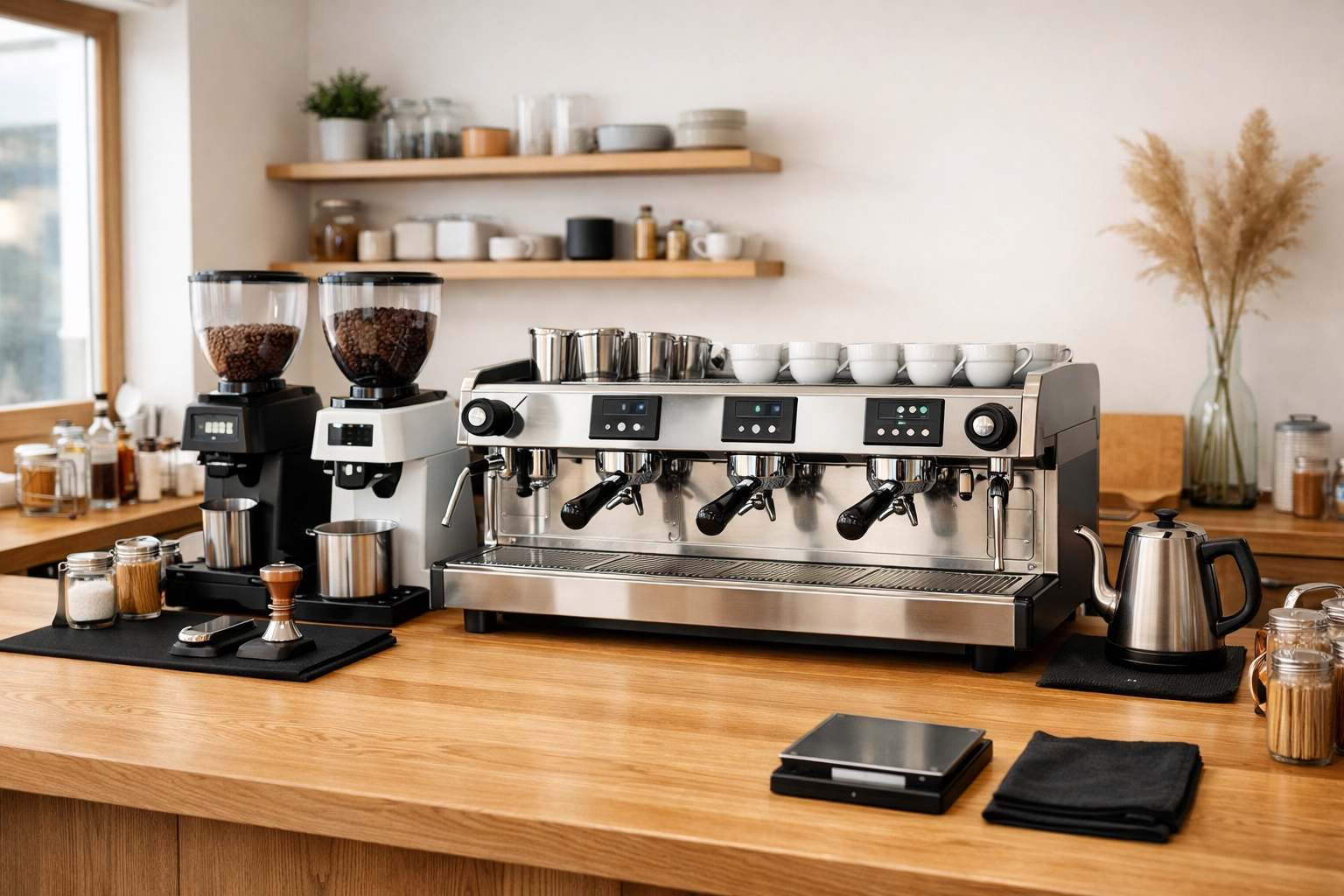
    Efficient coffee shop layout featuring professional espresso equipment and grinders for optimized workflow.

    9. The Power of "Theatre"

    Coffee is a performance. If a customer sees a barista carefully tamping the coffee and checking the shot time, they perceive the value to be higher.

    We teach our partners how to embrace the theatre of coffee. This isn't just for show; it’s about creating an experience that justifies a premium price point. When you scale, you want to scale your reputation as well as your footprint.

    10. Margin Management

    Do you know exactly how much a single latte costs you? Not just the beans, but the milk, the cup, and the overheads?

    A great roaster helps you with the numbers. We even provide tools like a coffee brewing calculator to help you get your recipes: and your costs: exactly right. Scaling without knowing your margins is just a fast way to go out of business.

    11. Troubleshooting Common Issues

    Why is the crema looking thin? Why is the coffee tasting bitter today?

    Instead of guessing, our wholesale partners can just ask us. We have resources on everything from understanding crema to fixing extraction issues. Having this knowledge on tap prevents small problems from becoming expensive disasters.


    12. Access to Better Equipment Financing

    New equipment is a huge capital outlay. Many wholesale coffee roasters have relationships with leasing companies that understand the coffee industry better than a high-street bank. We can help you navigate the options so you can get the kit you need to scale without draining your cash reserves.

    13. Brand Association

    When you serve a respected speciality coffee, you're "borrowing" some of that roaster’s prestige.

    Displaying the Limini Coffee brand tells your customers that you take quality seriously. It’s a shorthand for "this place knows what they’re doing." As you scale to new locations, that instant recognition helps you build a customer base faster.

    14. Inventory Management

    One of the biggest headaches of scaling is stock control. Too much coffee and it goes stale; too little and you’re turning away customers.

    We work closely with our wholesale clients to set up delivery schedules that make sense. We roast to order, ensuring that the beans arriving at your shop are at their absolute peak of freshness. Freshness is a competitive advantage.

    15. A Community of Likeminded People

    Finally, scaling a business can be lonely. When you join the Limini family, you’re part of a community. We share what we’ve learned from our reviews and our own experiences in the industry. We’ve seen what works and, more importantly, we’ve seen what doesn’t.

    Collaborative meeting between a wholesale coffee roaster and a café owner discussing business growth strategies.

    Ready to take the next step?

    Scaling your business is a huge challenge, but it’s also incredibly rewarding. You need more than just a supplier; you need a partner who is as invested in your success as you are. Whether you need better beans, better training, or just some honest advice on which cups to choose, we’re here to help.

    If you’re looking for a wholesale partner who understands the "speciality" in speciality coffee, come and have a chat with us. You can learn more about who we are and how we work by visiting our main site.

    So, let's get roasting. Check out our full wholesale offering here and let’s see how we can help you grow.

  • The Silent Concierge: How AI Guest Messaging is Boosting Ancillary Revenue

    The Silent Concierge: How AI Guest Messaging is Boosting Ancillary Revenue

    Transform guest experiences. Boost ancillary revenue. Scale your operations.

    In 2026, the guest journey isn't a straight line: it’s a series of digital touchpoints. If your front desk is still the only place guests can buy a room upgrade or book a spa treatment, you’re leaving money on the table. The modern traveler doesn't want to pick up a room phone or wait in line to ask a question. They want to text.

    Forward-thinking hoteliers are turning to AI guest messaging to act as a "Silent Concierge." This isn't just about answering "What's the Wi-Fi password?" (though it does that too). It’s about creating a proactive, personalized revenue engine that lives in your guest’s pocket.

    By leveraging AI in hospitality, properties are seeing a 35% reduction in routine staff inquiries and up to 8x higher conversion rates on upsells compared to traditional email. It’s smarter service, delivered through the channels guests already love.

    All from one innovative platform.

    The death of the "Wait and See" approach

    We believe the era of passive hospitality is over. For decades, hotels waited for guests to arrive, waited for them to walk into the restaurant, and waited for them to ask for a late checkout.

    That wait is expensive.

    AI guest messaging flips the script. It uses two-way digital communication: SMS, WhatsApp, and web chat: to meet guests where they are. By analyzing guest profiles and behaviors in real-time, the Silent Concierge identifies the perfect moment to offer a service.

    • Proactive engagement. Reach guests before they even step onto the property.
    • Instant gratification. Provide answers and booking links in seconds, not minutes.
    • Frictionless transactions. Remove the barriers to spending.

    A hotel guest uses AI in hospitality on their smartphone to enjoy a seamless lounge experience.

    By the numbers: The impact of AI in hospitality

    Data doesn't lie. When you move beyond static emails and manual outreach, the financial impact is immediate. Hotel guest experience technology is no longer a "nice to have": it’s a primary driver of the bottom line.

    • 8x higher conversions. Multi-channel messaging beats email-only outreach every single time.
    • 20% more revenue per guest. Intelligent segmentation ensures the right offer hits the right person.
    • 80% automation. Most guest conversations can be handled by AI without human intervention.
    • 4x boost in upsell revenue. AI doesn't get tired of asking if a guest wants a room upgrade; it just finds the best time to do it.

    How the Silent Concierge drives revenue

    We think technology should feel like magic for the guest and like a profit center for the owner. The beauty of AI messaging lies in its timing. It’s not spam; it’s a helpful suggestion delivered exactly when the guest needs it.

    1. The Pre-Arrival Power Play

    The window 3–5 days before arrival is prime time for upgrades. Your AI concierge can send a friendly text offering a suite upgrade or a pre-booked airport transfer. Because it’s a text, the open rates are nearly 100%.

    2. The Mid-Stay Upsell

    Once the guest is on-site, the focus shifts to amenities. Is it raining? Send a message about the indoor spa or a discount on cocktails at the bar. Is it 6 PM? Suggest a table at your signature restaurant with a direct booking link.

    3. The Seamless Departure

    The final night is the perfect time to offer a late checkout. A simple automated message: "$25 for a 2 PM checkout?": is one of the highest-converting offers in the industry. It’s a small price for the guest to pay for comfort, but across hundreds of rooms, it’s a massive win for your RevPAR.

    Luxury hotel amenities like artisanal cocktails drive ancillary revenue through intelligent guest messaging.

    Operational excellence: Giving time back to your team

    "My team used to spend three hours a day answering the same five questions about breakfast times and checkout. Now, the AI handles it, and my staff actually has time to welcome guests by name." : General Manager, Boutique Lifestyle Hotel

    We think your staff's talent is wasted on repetitive tasks. When an AI chatbot handles 80% of routine inquiries, your team is freed up to focus on high-value interactions.

    AI doesn't replace your staff; it makes them better. If a guest has a complex request or an actual complaint, the AI recognizes the sentiment and instantly hands the conversation off to a human. This ensures that when a human is needed, they are fully present and not distracted by a mountain of mundane tasks.

    Personalization at scale

    The secret to a 20% increase in revenue per guest is knowing who you are talking to. AI doesn't just send the same "10% off spa" message to everyone. It looks at the data.

    • Business travelers. Offer workspace upgrades or fast-track breakfast.
    • Families. Suggest kid-friendly activities or connecting room options.
    • Repeat guests. Acknowledge their loyalty and offer their "usual" preferences.

    When the messaging is tied to guest profiles within your hotel management software, every interaction becomes an opportunity to build a deeper connection.

    Hotel staff using guest experience technology on a tablet to build personal connections in a modern lobby.

    Why API-first architecture matters

    To make this work, your guest messaging platform can't live in a silo. It needs to talk to your PMS, your POS, and your spa management system.

    At Mews, we believe in an open ecosystem. Our API-first approach means that your guest messaging tools have real-time access to the data they need to be effective. If a guest books a late checkout via text, it should instantly update the housekeeping app and the billing system. No manual entry. No mistakes. No friction.

    Getting started with the Silent Concierge

    Building a tech-forward property doesn't have to be a multi-year project. You can start seeing results in weeks, not months.

    1. Audit your touchpoints. Where are guests currently asking questions?
    2. Integrate your data. Ensure your messaging platform and PMS are speaking the same language.
    3. Automate the basics. Start with Wi-Fi, breakfast hours, and checkout times.
    4. Launch your first upsell. Try a late-checkout offer via SMS.
    5. Refine and scale. Use the data to see what’s working and double down.

    The future of hospitality isn't found in a brochure at the front desk. It’s found in the seamless, silent, and incredibly profitable interactions happening on your guests' phones.

    See how Mews can help you turn guest messaging into your most powerful revenue stream. Our platform is built for the modern hotelier who values innovation over tradition.

    Get started with Mews today and get you earning revenue in no time.

    The bottom line

    The Silent Concierge is your most consistent employee. It never sleeps, it never forgets to upsell, and it speaks every language your guests do. By implementing AI guest experience technology, you aren't just following a trend: you’re setting a new standard for operational excellence.

    Ready to see the impact for yourself? Let's talk about how to future-proof your property.

    Explore the Mews ecosystem here.

  • Can Coffee Dropshipping UK Really Help You Build a Brand? Find Out Here

    Can Coffee Dropshipping UK Really Help You Build a Brand? Find Out Here

    Imagine waking up to the smell of fresh coffee, knowing that while you slept, dozens of customers across the country bought bags of "Your Name Here" espresso. You didn't have to fire up a roaster at 5 am. You didn't have to wrestle with a tape dispenser or haggle with a courier. You just… built a brand.

    Does that sound a bit too good to be true? In the world of speciality coffee, there’s often a bit of "purist" snobbery that suggests if you aren't roasting the beans yourself in a shed until your hair smells like smoke, you aren't a real coffee business. We think that’s nonsense, to be honest.

    The landscape of the UK coffee market is changing. With the rise of e-commerce, coffee dropshipping uk has become a powerhouse for entrepreneurs who have a vision for a brand but perhaps don't have the £30,000 required for a high-end commercial roaster and a warehouse lease. But the big question remains: can you actually build a brand this way, or are you just a middleman for someone else's hard work?


    What exactly is coffee dropshipping?

    So, let's break it down into plain English. Usually, if you wanted to sell coffee, you’d buy 50kg of beans, roast them (or buy them pre-roasted), store them in your spare room, and ship them out as orders come in. It’s rewarding, but it’s a lot of physical labour and a massive upfront cost.

    Dropshipping flips this. You create the website and the brand. When a customer buys a bag of coffee from you, the order goes directly to us, the roastery. We roast the beans, pack them into a bag with your label on it, and ship it directly to your customer.

    Basically, we are the "back engine," and you are the "face." This means your competitive advantage shifts from "I am a master roaster" to "I have built a brand that people actually want to be a part of." And in today’s market, the latter is often more valuable.


    Why brand identity beats roasting expertise (sometimes)

    We’ve seen it a thousand times: someone makes the best coffee in the world, but nobody knows they exist because they spent all their time tweaking roast profiles and zero time talking to customers.

    When you use a coffee dropshipping uk model, you are freed from the operational "grind" (pun intended). You can spend 100% of your energy on:

    • Storytelling: Why does your brand exist? Are you supporting specific origins? Is your coffee for the "early morning gym-goers" or the "late-night coders"?
    • Design: Creating a visual identity that looks stunning on an Instagram feed.
    • Community: Engaging with your followers, sending out newsletters, and building a subscription tribe.

    The secret is that most customers aren't looking for a technical breakdown of the Maillard reaction during the roast. They are looking for a feeling. They want a bag of coffee that looks beautiful on their kitchen counter and tastes consistently brilliant. By partnering with a speciality roaster like Limini Coffee, you ensure the quality is there (90+ point coffees, perfectly developed) while you focus on the "soul" of the business.

    A stylish matte-black coffee bag and mug on a sunlit counter, representing a unique coffee brand identity.


    The "White Label" vs. "Private Label" debate

    If you’re serious about building a brand, you need to know the difference between these two.

    White label is essentially taking an existing product, say, our house espresso, and putting your sticker on it. It’s the fastest way to get started. Private label, however, is where things get really exciting for brand building. This is where you work with us to create a unique blend or select a specific single origin that only you sell.

    Why is this important? Because it prevents "price-shopping." If you sell the exact same beans as five other dropshippers, customers will just go for the cheapest one. But if you have a "Midnight Fuel Blend" that is specifically roasted to be punchy and chocolatey for French Press lovers, you’ve created something unique.

    We believe that the best brands are built on this kind of exclusivity. It’s worth putting in the time to find a profile that fits your brand’s personality. If your brand is "Bright and Bold," you probably want a high-altitude Kenyan or Ethiopian bean with that lovely citrus acidity. If you’re "Cosy and Comforting," a Brazilian or Colombian chocolate-bomb is the way to go.


    The Technical Reality: Freshness and Logistics

    Let’s talk numbers and "the boring stuff" because this is where brands live or die. In the UK, coffee drinkers have become incredibly savvy. They know that "Fresh is Best."

    One of the biggest risks with traditional retail is stale stock. Coffee starts to lose its vibrant aromatics after about 4-6 weeks. If you’re holding inventory, you’re always racing against the clock. With the dropshipping model, the coffee is often roasted the same day the order is placed.

    This means when your customer opens the bag, they get that "room-filling" aroma. That experience is your brand.

    It’s also important to consider shipping temperatures. While we don't worry too much about coffee getting "too cold" in the UK, we do want to ensure it isn't sitting in a hot delivery van for three days. Using a roaster that understands UK logistics and can get a bag from the roaster to the front door in 24-48 hours is vital.


    Can you really make money?

    We have to be honest here: your margins will be lower than if you were roasting the beans yourself. That’s the trade-off for not having to pay for a warehouse, staff, or a £20,000 Giesen roaster.

    However, your "Customer Acquisition Cost" (CAC) is what you should be looking at. Because you don't have high fixed overheads, you can afford to spend more on marketing. Let's say a bag of coffee costs you £8 to fulfill via dropshipping and you sell it for £12. That £4 margin needs to cover your marketing and your profit.

    The beauty of coffee is the repeat purchase. If someone likes your brand and your coffee, they don't just buy once; they buy every two weeks for three years. This is where a subscription model comes in. We think subscriptions are the "Holy Grail" of the coffee business. They provide predictable income and allow you to build a genuine relationship with your customers.

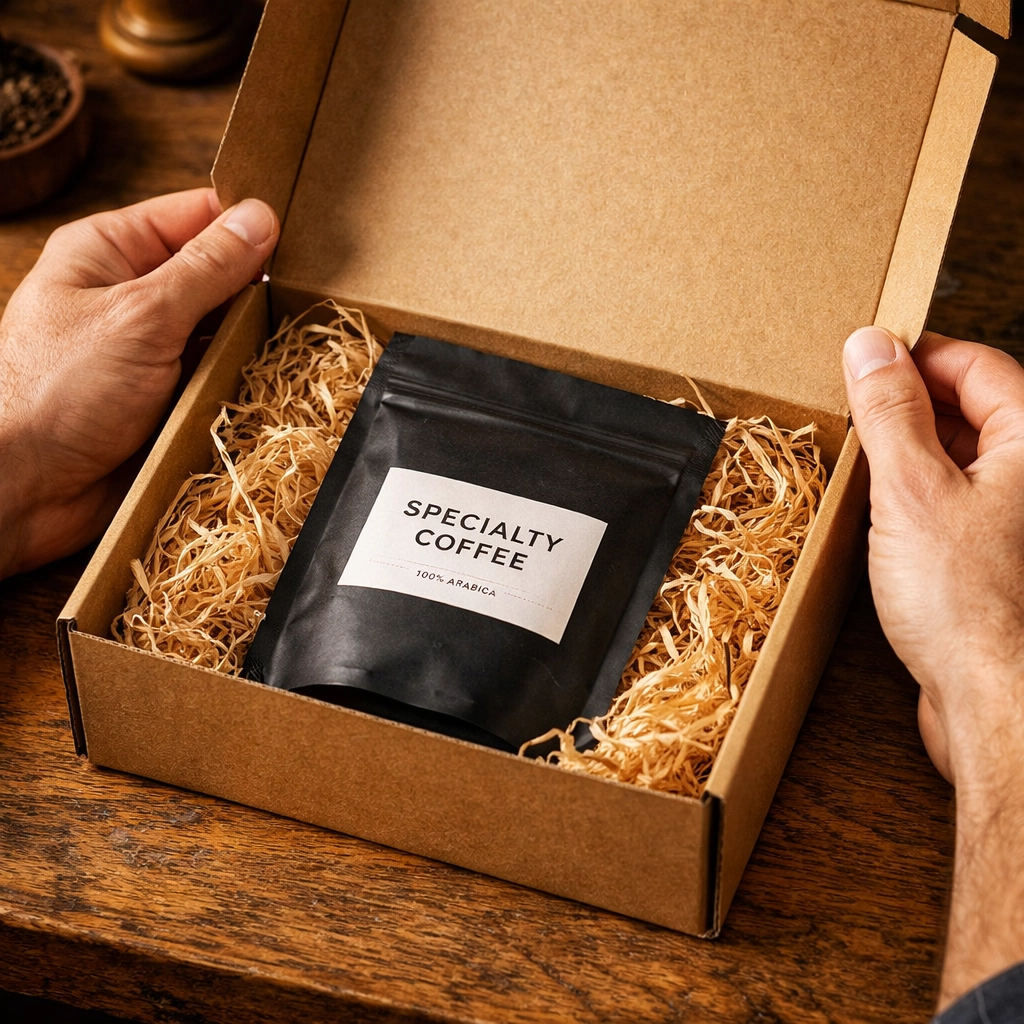
    Close-up of a premium coffee unboxing experience, featuring eco-friendly packaging for a coffee subscription brand.


    Building trust through transparency

    You might be worried that customers will "find out" you aren't roasting the coffee yourself. Our advice? Don't hide it, but don't lead with it either.

    Many of the world's most premium brands outsource their manufacturing. Apple doesn't make iPhones; Foxconn does. The value Apple provides is the design, the ecosystem, and the brand promise.

    In your case, you can be transparent about your partnership. You can say: "We partner with one of the UK's leading speciality roasters to ensure every bag is roasted to our exacting standards." This actually builds more trust than pretending you’re roasting in your kitchen (which, by the way, is illegal without the right council permits!).

    It’s also worth noting that by using a professional roastery, you gain access to their certifications and ethical sourcing. At Limini Coffee, we spend a huge amount of time sourcing our coffee ethically, ensuring farmers are paid fairly. You can lean on our hard work to bolster your brand’s ethical credentials.


    Essential steps to get started in the UK

    If you're ready to take the plunge into coffee dropshipping uk, here is the roadmap we suggest:

    1. Define your Niche: "Everyone who likes coffee" is not a niche. "People who love camping and want high-quality coffee for the trail" is a niche.
    2. Order Samples: You cannot sell what you haven't tasted. You need to know exactly how that coffee behaves at different temperatures, from a piping hot 95 C (203 °F) to a cooler 60 ºC (140 °F) where the sweetness really starts to shine.
    3. Design Your Packaging: Don't just settle for a generic bag. Think about the unboxing experience. Can you include a postcard? Is the label matte or glossy?
    4. Set Up Your Shopify/WooCommerce: Make sure your website is "mobile-first" because that’s where 80% of your coffee sales will happen.
    5. Focus on Social Proof: As soon as you get your first customers, get reviews. A brand without reviews is just a stranger on the internet. You can check out how we handle reviews for inspiration.

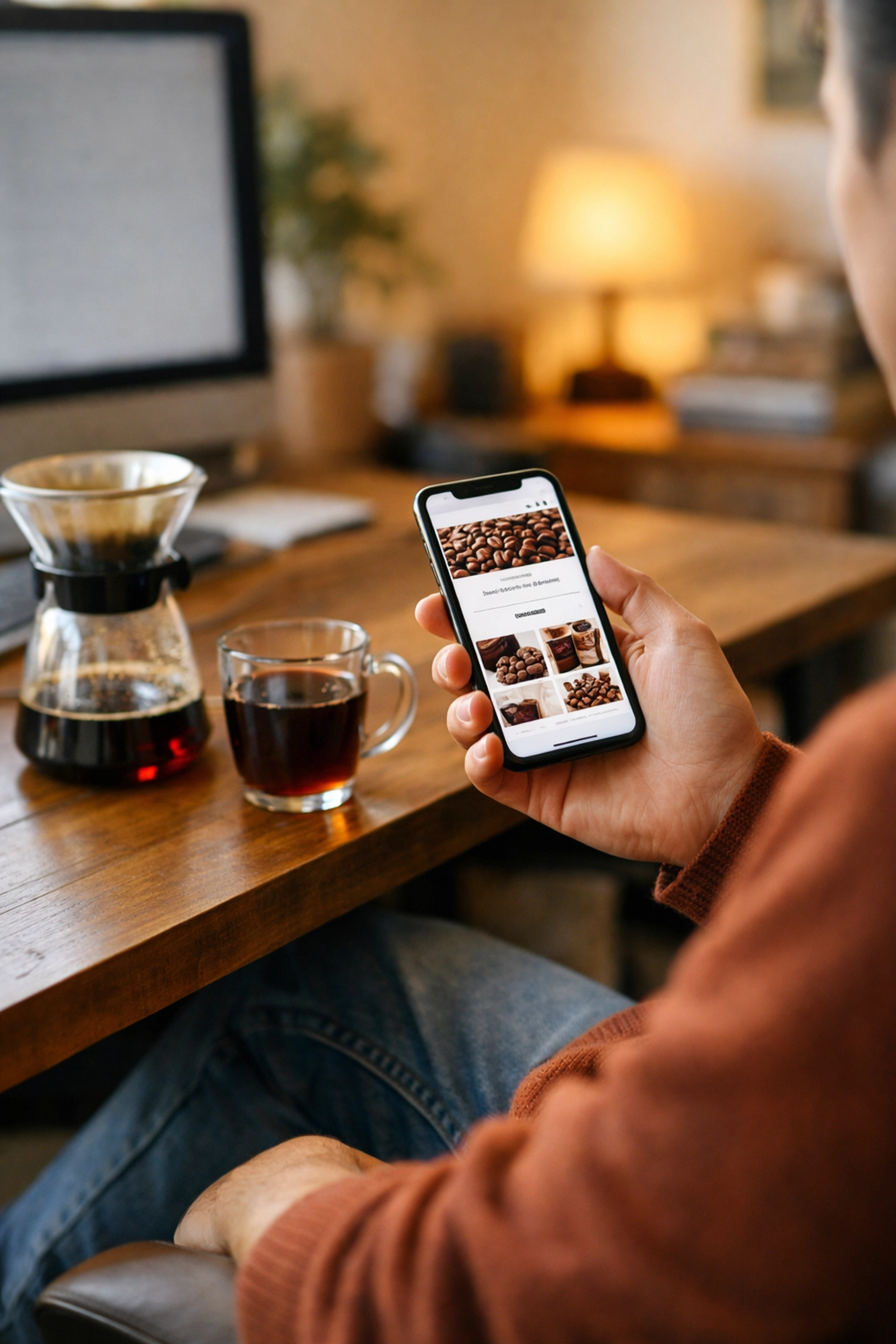
    A coffee entrepreneur using a smartphone to manage their online coffee dropshipping UK business in a cozy office.


    Is it right for you?

    So, is coffee dropshipping the "easy" way out? No. It’s just a different kind of hard work. Instead of being a technician in a roastery, you become a digital marketer and a community builder.

    If you love the idea of coffee but hate the idea of logistics, then yes, coffee dropshipping uk can absolutely help you build a brand. It allows you to start small, fail fast (if you have to), and scale incredibly quickly without ever touching a burlap sack.

    The most important thing is to start with quality. If the coffee in the bag isn't brilliant, the best branding in the world won't save you. People might buy one bag because it looks cool, but they’ll only buy a second because it tastes amazing.

    If you’re curious about how the wholesale side of things works or you want to see the equipment that would be roasting your future brand's beans, take a look at our wholesale page. And if you're ever in the neighbourhood, we’d love to show you around the roastery so you can see the passion that goes into every gram of coffee we produce.

    Building a brand is a journey. It’s about more than just caffeine; it's about the rituals, the mornings, and the connections that happen over a cup. If you have a vision, don't let the lack of a roaster stop you. The tools are all right here.

    And remember, we’re always here to help if you have questions about the technical side of things, from understanding milk to the science of the perfect crema.

    Ready to start? Let’s brew something great together. Check out Limini Coffee to see the kind of quality you could be putting your name on.

  • Travel Tech Innovation 101: A Beginner’s Guide to Mastering Modern Operations

    Travel Tech Innovation 101: A Beginner’s Guide to Mastering Modern Operations

    Automate. Connect. Expand.

    The travel landscape isn’t just changing; it has already shifted. If you’re still relying on manual spreadsheets or legacy systems that feel like they belong in 1998, you’re not just behind: you’re invisible. Modern hospitality is about speed, personalization, and removing the friction that stands between a guest and a great time.

    We believe that technology should work for you, not the other way around. Today, 45% of travelers use their smartphones for every single part of their journey. They aren't just looking for a room; they’re looking for a seamless digital ecosystem. Mastering modern operations means building that ecosystem from the ground up, all from one innovative platform.

    The Mobile-First Mandate

    Your guest’s remote control for their entire trip is already in their pocket. If your operation doesn’t start with mobile, it doesn't start at all. Mobile-first operations aren't a "nice-to-have" feature; they are the backbone of the modern guest experience.

    Think about how major players are adapting. Some airlines now skip the dedicated app entirely for routine updates, opting to send boarding passes and flight alerts via platforms like Facebook Messenger or WhatsApp. It’s about meeting the guest where they already live (digitally speaking).

    • Mobile Check-In: Eliminate the front desk queue and let guests go straight to their room.
    • Digital Keys: Use smartphone Bluetooth to unlock doors, reducing plastic waste and lost keycards.
    • Instant Communication: Use messaging apps to handle requests in real-time without the guest ever picking up a landline.

    A guest using a mobile digital key on a smartphone to unlock a modern hotel door.

    AI: Your 24/7 Digital Concierge

    We think the future of hospitality is personal, but we also know you can't be everywhere at once. That’s where Artificial Intelligence steps in. AI isn't about replacing your staff; it’s about giving them the freedom to focus on what actually matters: human connection.

    AI algorithms are currently doing the heavy lifting by analyzing search history and user preferences to offer tailored recommendations. Whether it’s suggesting a specific spa treatment or a local hidden gem for dinner, AI makes every guest feel like your only guest.

    • Smart Chatbots: These handle the "What time is breakfast?" and "Do you have extra towels?" questions so your team doesn't have to.
    • Personalized Itineraries: AI can curate full-day plans based on a guest’s past behavior and current trends.
    • Predictive Pricing: Optimize your revenue by letting intelligent systems adjust rates based on demand, local events, and historical data.

    The Living Hotel: IoT and 5G

    The Internet of Things (IoT) is turning static hotel rooms into responsive environments. Imagine a room that knows exactly how a guest likes their lighting, what temperature they prefer, and which Netflix show they were mid-way through. This isn't sci-fi; it’s current standard practice for innovators.

    With 5G connectivity now delivering speeds up to 20 times faster than 4G, these smart devices can finally talk to each other without a hitch. This massive jump in bandwidth makes the Internet of Things truly practical for the first time, allowing hundreds of devices to stay connected across a single property.

    • Energy Management: Smart thermostats and lights turn off when the room is empty, slashing your utility bills.
    • Luggage Tracking: Airlines are already using IoT to track bags in real-time: there’s no reason your high-end property can’t do the same for guest storage.
    • Preventative Maintenance: IoT sensors can detect a leaky pipe or a failing AC unit before the guest even notices a problem.

    Hotel staff member with a tablet providing personalized service in a modern lobby.

    Operational Excellence Behind the Scenes

    While the guest sees the sleek interface, the real magic happens in the backend. This is where APIs (Application Programming Interfaces) come into play. They are the invisible bridges that allow your PMS, your booking engine, and your third-party apps to talk to each other in one language.

    When a guest books on an OTA and that data flows instantly into your property management system without a single manual entry, you’re seeing an API at work. This reduces human error, prevents overbookings, and keeps your data clean.

    • Real-Time Availability: Intelligent caching strategies ensure that what the guest sees on their screen is actually available in your inventory.
    • Automated Payments: Stop chasing credit card authorizations. Secure, automated payment processing handles everything from deposits to final check-out.
    • System Integration: Connect your POS, your spa management, and your housekeeping apps into a single source of truth.

    Proactive Problem Solving

    Innovation isn’t just about making things smoother when they go right; it’s about fixing them before they go wrong. Modern systems are now proactive. If a flight is cancelled, the next generation of travel tech doesn't wait for the guest to call. It monitors the itinerary, flags the delay, and offers alternative options or pushes back a check-in time automatically.

    This level of care creates "sticky" loyalty. When you solve a problem before the guest even realizes they have one, you’ve won a customer for life. (And probably a five-star review to boot).

    High-tech hotel suite with integrated smart room controls and bedside tablet.

    The Mews Approach to Innovation

    At Mews, we believe that the best technology is the kind that gets out of the way. Our platform is designed to handle the complexity of modern hospitality so you can focus on being a host. With over 12,500 properties worldwide, we’ve seen first-hand how moving to a cloud-native, API-first system can transform a business from a struggling operation into a market leader.

    It’s about more than just software. It’s about a mindset of continuous improvement. We’re constantly pushing the boundaries of what a PMS can do, from integrated fintech solutions to AI-driven guest insights.

    • 30-Minute Onboarding: Get your team up and running on a modern interface they actually enjoy using.
    • Global Scalability: Whether you have ten rooms or ten thousand, our infrastructure grows with you.
    • Guest-Centric Design: Every feature we build starts with the question: "How does this make the guest stay better?"

    Ready to Lead the Pack?

    The "101" phase of travel tech is over. Now, it’s time to master it. The transition to modern operations doesn't have to be a headache. By focusing on mobile accessibility, AI integration, and a robust API-driven backend, you’re setting your property up for long-term success in a digital-first world.

    Stop fighting with your legacy tech and start looking forward. The tools are here. The guests are waiting. It’s time to give them the experience they expect.

    Schedule a demo today and see how easy it is to bring your operations into the future. It’s time to move to a platform that thinks as fast as you do.

    Get started with Mews today: https://referrals.mews.com/umqHYIto

    Minimalist workspace symbolizing efficient hotel operations and modern hospitality tech.

    Final Thoughts

    Innovate. Automate. Elevate.

    The barrier to entry for high-tech hospitality has never been lower. You don’t need a degree in computer science to run a smart hotel: you just need the right partners. By embracing these trends today, you’re not just keeping up; you’re setting the standard for what travel looks like in 2026 and beyond.

    Stay curious. Stay agile. And most importantly, stay guest-focused. The tech will handle the rest.

    Ready to see what the future of hospitality looks like in action? Check out our latest features and join the revolution.

    https://referrals.mews.com/umqHYIto