Author: admin

  • The Proven Framework: How Modern Hotels Cut Manual Tasks by 50%

    The Proven Framework: How Modern Hotels Cut Manual Tasks by 50%

    Your front desk team shouldn't be drowning in spreadsheets. Your housekeeping staff shouldn't be chasing down room status updates on paper. And you definitely shouldn't be manually entering the same guest data into three different systems.

    Here's what's possible instead: European hotel groups are saving more than 50 working days per year per workflow they automate. That's not a typo. Fifty days. Per workflow.

    The secret? A systematic framework that identifies the right tasks to automate, connects your core systems, and lets technology handle the repetitive stuff while your team focuses on what actually matters: creating memorable guest experiences.

    Start With the Low-Hanging Fruit

    Not all manual tasks are created equal. Some are quick wins that deliver immediate returns. Others require complex implementation. Smart hoteliers begin with the simple, repetitive processes that eat up the most time.

    Think about your daily operations. What tasks happen dozens or hundreds of times per day? Those are your targets.

    Reservation management. Every booking requires data entry, confirmation emails, and system updates. Multiply that by 50 or 100 daily reservations, and you're looking at hours of manual work.

    Check-in and check-out processes. Guests queuing at the desk. Staff typing information. Credit card processing. Key card programming. It's time-consuming for everyone involved.

    Housekeeping coordination. Room status updates. Task assignments. Priority flags for VIP rooms or deep cleans. All of this typically requires phone calls, radios, or paper forms.

    Guest communication. Pre-arrival emails. Check-in reminders. Post-stay surveys. Most hotels still handle these manually, one guest at a time.

    When you automate these processes, the time savings compound fast. One workflow improvement might save 2 hours per day. Five workflow improvements? You've just freed up 10 hours of staff time: every single day.
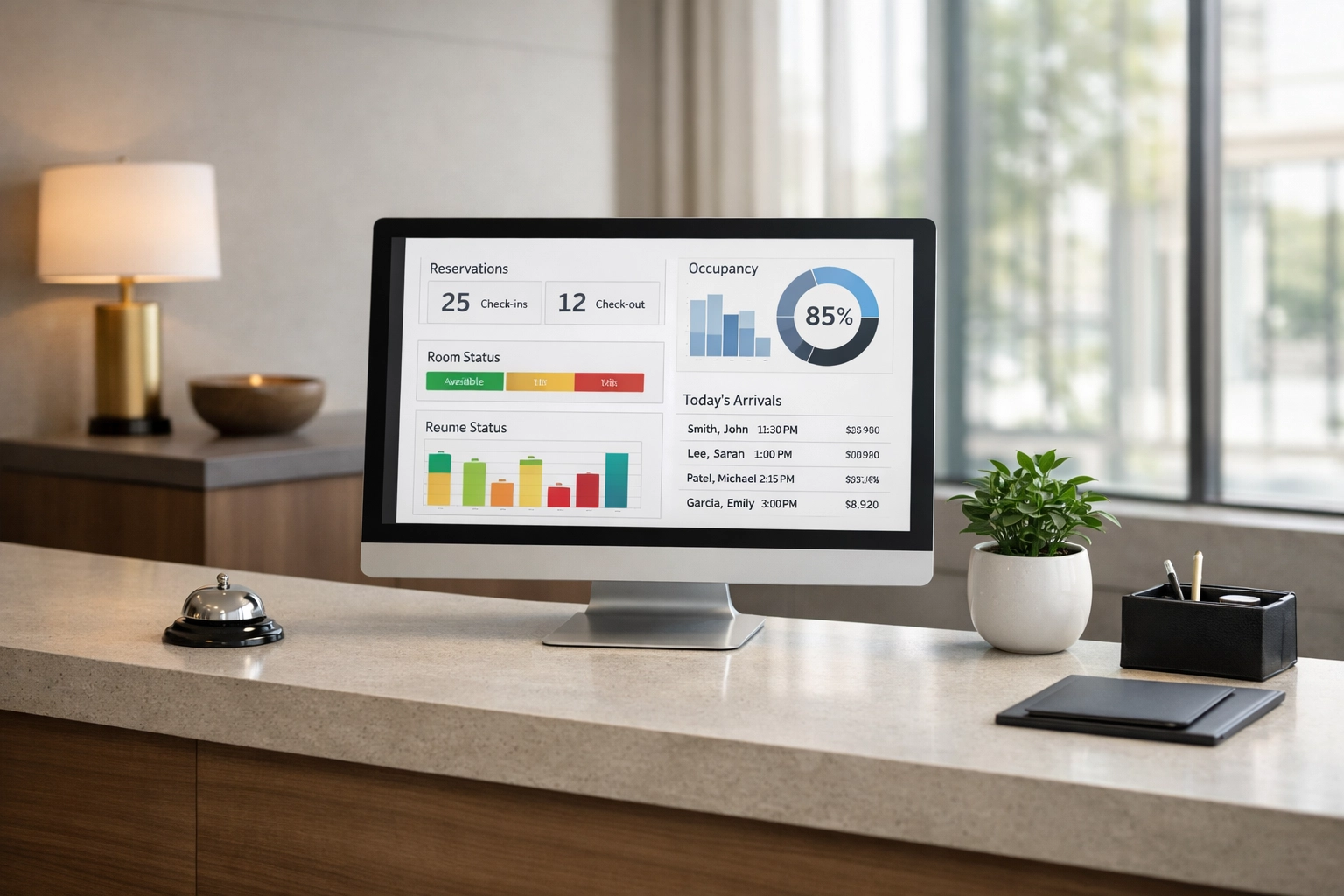
    Modern hotel front desk with automated PMS dashboard reducing manual tasks

    Build Your Integrated System Architecture

    Here's the truth: Automation only works when your systems talk to each other. Disconnected software creates more manual work, not less.

    Your hotel PMS sits at the heart of this integration. A modern, cloud-native system connects everything: your booking engine, channel manager, CRM, payment processing, and housekeeping management: into one unified operation.

    Real-time synchronization across channels. When a room books on Booking.com, your PMS updates immediately. Availability adjusts. Rates recalculate. Your direct booking engine reflects the change. No manual intervention required.

    Automatic task generation. A guest checks out at 11 AM. The system instantly creates a housekeeping ticket, flags the room priority level, and notifies the relevant staff member. By 11:02 AM, someone's already on their way to clean the room.

    Seamless data flow. Guest information entered once flows everywhere it's needed. The CRM captures preferences. The billing system has the right details. Marketing can segment intelligently. Your staff never touches a spreadsheet.

    This is where Mews shines. Our cloud-native hotel PMS was built specifically for this kind of integration. Everything connects. Everything updates in real-time. And because it's designed for automation first, you're not fighting against the system: you're letting it work for you.

    Want to see how it works? Check out Mews and see the difference an automation-focused platform makes.
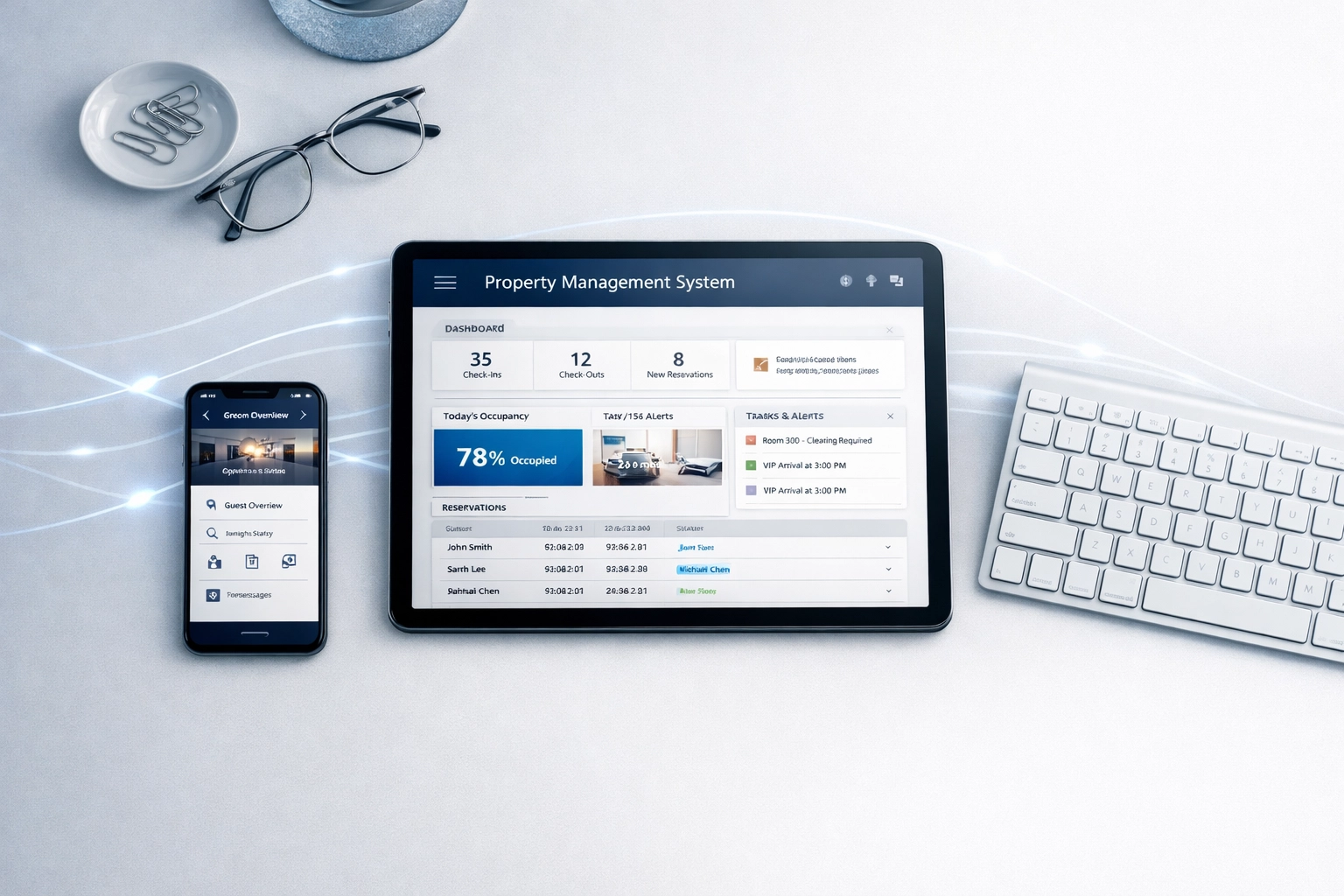
    Integrated hotel PMS system connecting tablet and devices for seamless operations

    Deploy AI-Driven Intelligence

    Automation isn't just about replacing manual data entry. It's about augmenting your entire operation with intelligence that makes better decisions, faster.

    24/7 guest assistance. AI chatbots handle common questions instantly. Room service orders. WiFi passwords. Local recommendations. Complex issues get escalated to staff automatically, but 70% of inquiries never need human intervention.

    Intelligent task optimization. Instead of assigning housekeeping rooms randomly, smart systems balance workload, optimize routes, and prioritize based on checkout times and booking patterns. Your team works efficiently without anyone playing traffic controller.

    Predictive staffing. Historical booking data reveals patterns. The system predicts when you'll need extra hands on deck and when you can operate lean. No more scrambling to cover unexpected rushes.

    One hotel manager told us: "We used to spend hours every week creating schedules and coordinating tasks. Now the system handles it, and we've redirected that time to training our team on guest service skills."

    The result? Fewer errors, faster response times, and staff who actually enjoy their jobs because they're not buried in administrative work.
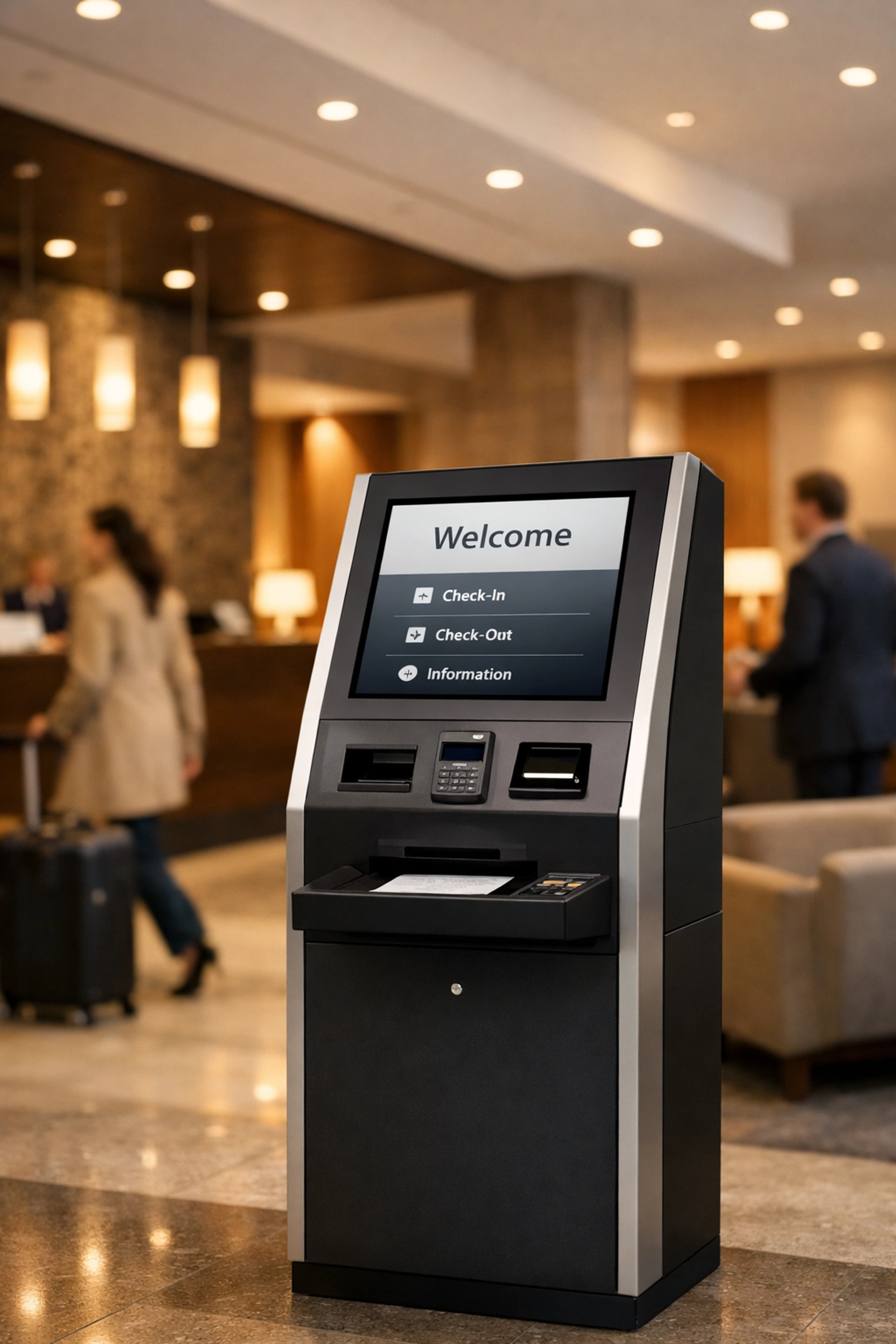
    Self-check-in kiosk in hotel lobby enabling automated guest check-in process

    Standardize Your Process Orchestration

    The real magic happens when you create end-to-end process chains: where completing one task automatically triggers everything that comes next.

    Here's what modern process orchestration looks like:

    Guest checkout initiates a cascade. The moment a guest checks out, five things happen simultaneously: housekeeping gets notified with room details, the room status updates across all systems, the final invoice processes, the post-stay survey sends, and the CRM tags the guest profile with visit data. Zero manual steps.

    Self-check-in kiosks trigger backend workflows. A guest checks in at your kiosk at 2 AM. The system assigns their room, programs their mobile key, charges their card, and updates your night audit report. Your night staff never leaves the back office.

    Channel manager updates cascade everywhere. Change your rates in one place, and every OTA, your booking engine, and your direct channels update instantly. No more logging into multiple platforms to make the same change six times.

    This kind of orchestration eliminates the gaps where things fall through the cracks. No more "I thought you sent that email" or "I didn't know that room was ready." The system coordinates everything.

    The Measurable Results That Matter

    Let's talk numbers, because that's what makes this framework proven rather than theoretical.

    50% reduction in manual tasks. That's the baseline. Some hotels do better, especially when they're coming from paper-based or heavily manual processes.

    80-90% fewer data entry errors. When humans aren't retyping information, mistakes plummet. Your audit trail gets cleaner. Your reporting becomes reliable.

    30-40% faster response times. Automated workflows mean tasks get completed faster. Rooms turn faster. Guest requests get handled faster. Revenue opportunities appear faster.

    Staff reallocation to revenue-generating activities. Here's the part that really matters: your team stops doing administrative grunt work and starts doing the things that actually impact your bottom line. Upselling. Guest recovery. Building relationships.

    One property manager summed it up perfectly: "We went from spending 10 hours a week on administrative coordination to maybe 2 hours. That's 8 hours we redirected to improving our guest experience scores, which directly impacts our online reputation and our ability to charge premium rates."
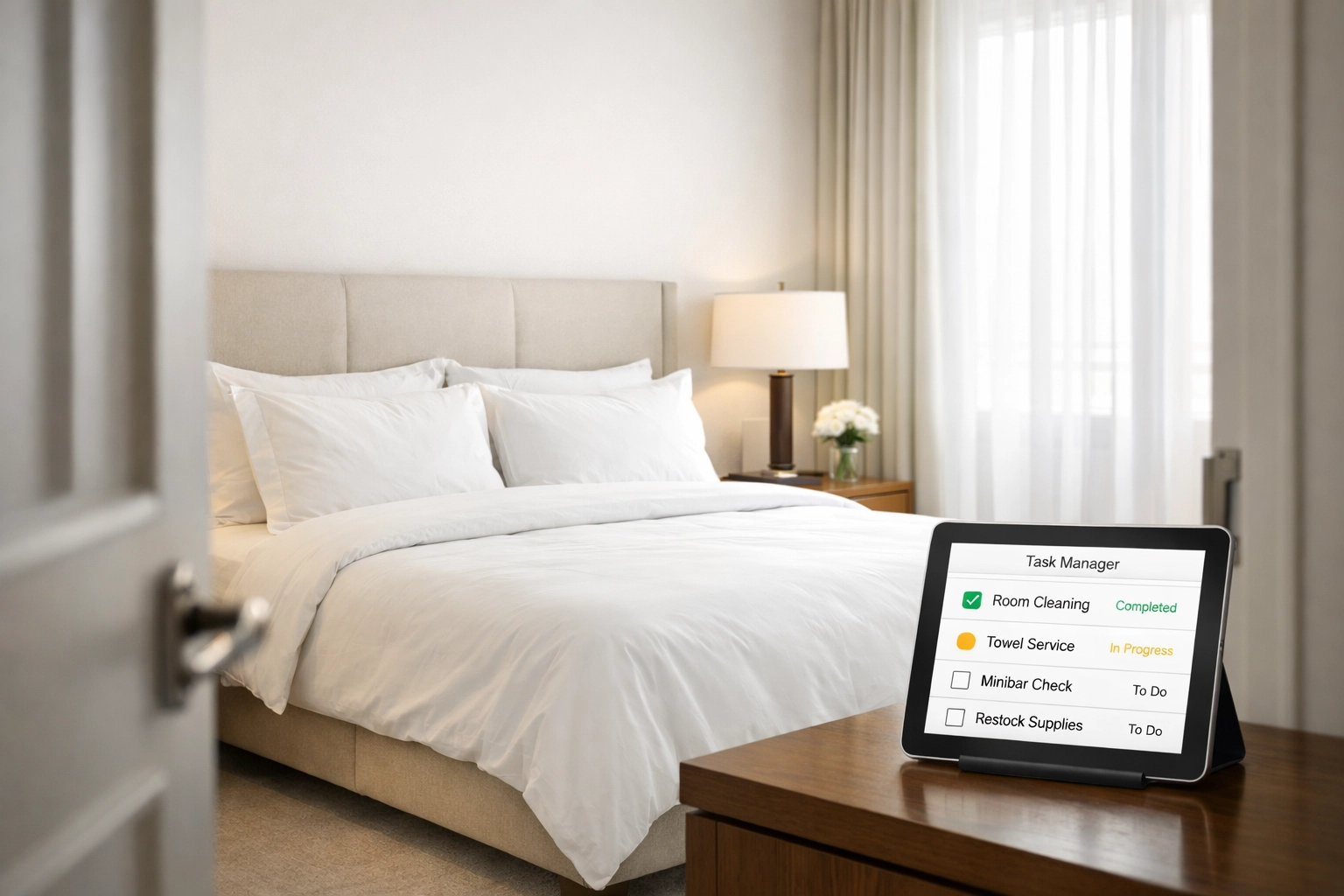
    Hotel room with automated housekeeping task management system on tablet

    Making the Framework Work for Your Property

    You don't need to automate everything overnight. Start with one workflow. Prove the concept. Build confidence. Then expand.

    The hotels seeing 50% reductions in manual tasks typically follow this sequence:

    Month 1: Automate pre-arrival and post-stay guest communication. Immediate time savings and improved guest touchpoints.

    Month 2: Connect your booking engine and channel manager to eliminate manual rate and availability updates.

    Month 3: Implement automated housekeeping task generation and real-time room status updates.

    Month 4: Deploy self-check-in kiosks or mobile check-in to handle straightforward arrivals without front desk involvement.

    Month 5: Integrate your CRM with your hotel PMS so guest data flows automatically and marketing can work with accurate segmentation.

    Month 6: Review, optimize, and identify the next automation opportunities.

    Each step builds on the previous one. Each step proves ROI before you move forward.

    Your Next Move

    The framework isn't complicated. Identify repetitive tasks. Connect your systems. Let automation handle the manual work. Redeploy your staff to guest-facing activities.

    Modern hotel management software makes this possible: but only if it's built with automation at its core. Legacy systems retrofitted with integrations create more problems than they solve. You need cloud-native, purpose-built technology designed for exactly this kind of operation.

    That's what we've built at Mews. Automation-first. Easy to implement. Powerful enough to transform your entire operation. And trusted by properties worldwide who've proven this framework works.

    See how Mews can cut your manual tasks in half: and give your team back the time they need to focus on what hospitality's really about.
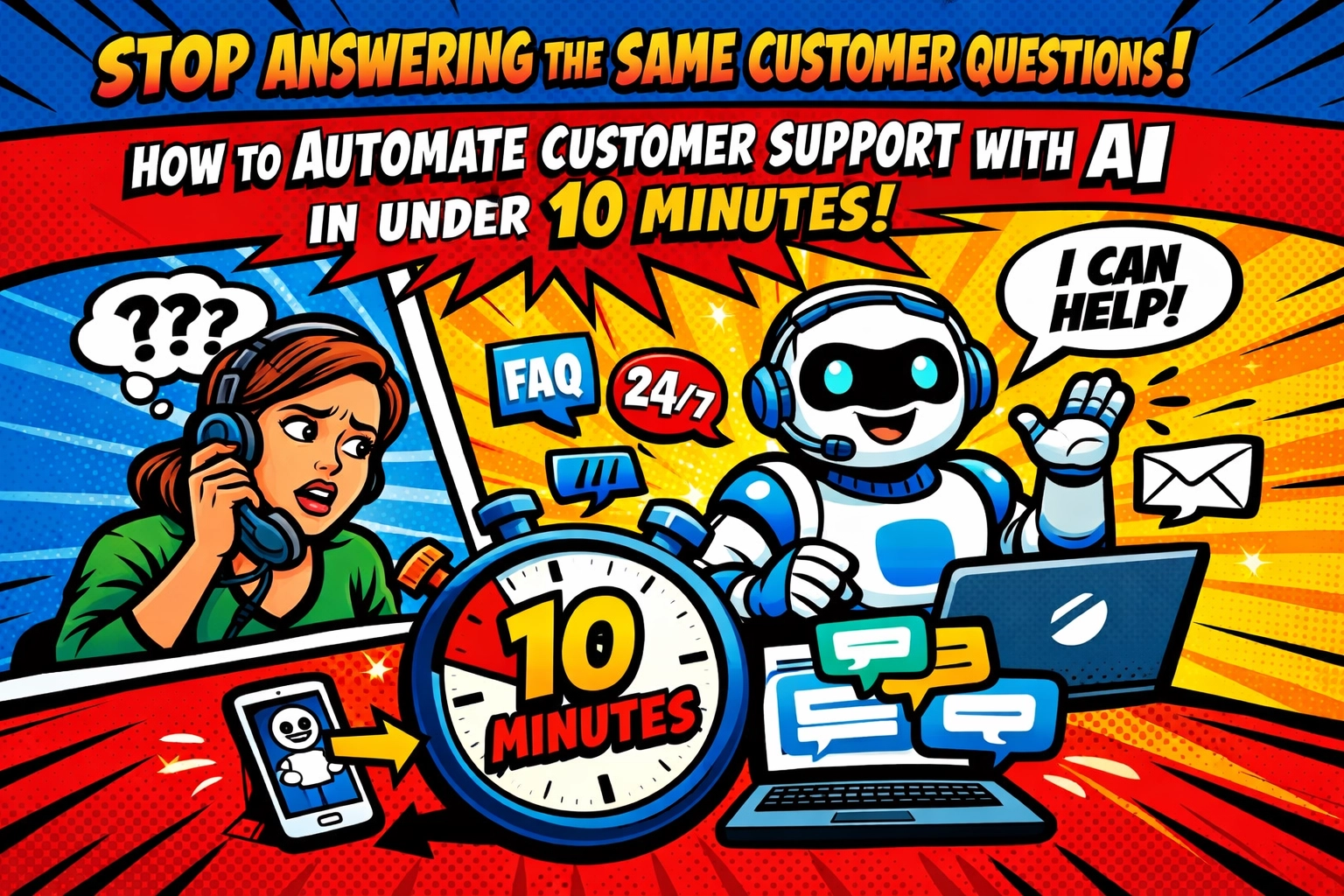

  • Stop Answering the Same Customer Questions: How to Automate Customer Support With AI in Under 10 Minutes

    Stop Answering the Same Customer Questions: How to Automate Customer Support With AI in Under 10 Minutes

    Monday morning. 9:47 AM.

    Your inbox has 67 unread messages.

    Forty-three of them ask the same three questions you answered last week. And the week before. And every single week since you launched.

    "What are your business hours?"
    "How do I reset my password?"
    "Where's my order?"

    You copy. You paste. You personalize just enough to not sound like a robot.

    Then your phone buzzes. A customer on live chat asking… the same question you just answered via email.

    This is your Tuesday. And Wednesday. And every single day after that.

    The Hidden Cost of Being "Helpful"

    Here's what nobody tells you about running a small business: customer support isn't the hard part. It's the repetitive part.

    You're not solving complex problems. You're answering the same questions on loop while your actual business , the strategy, the growth, the things that move the needle , sits waiting in another browser tab.

    You know you need help. But hiring someone costs thousands per month. And training them? That's another week you don't have.

    Meanwhile, your competitors are responding in seconds. Their customers rave about "instant" support. You're over here manually typing the same response for the 47th time…

    There has to be a better way.

    Small business owner overwhelmed by repetitive customer support questions and email notifications

    What if Your Support Team Never Slept?

    Imagine this instead.

    A customer emails at 11 PM asking about your return policy. Before you even wake up, they've received a complete answer with links to the exact documentation they need. No copy-paste from you. No waiting until morning.

    Another customer hits your website chat at 2 PM. "How do I upgrade my plan?" Within 15 seconds, they're looking at upgrade options with personalized recommendations based on their current usage. You didn't lift a finger.

    That's not science fiction. That's an ai virtual assistant for business doing what it does best , handling the repetitive stuff so you can focus on the work that actually needs your brain.

    The best part? You're about to set this up in roughly the time it takes to drink your coffee.

    The 10-Minute Setup (Yes, Really)

    Let's walk through this. No technical degree required. No coding. Just you, a laptop, and ten minutes of focused effort.

    Minutes 1-2: Pick Your Platform

    You need a tool that connects to where your customers already talk to you : your website, email, or both.

    Here's the truth: most AI support platforms want to impress you with features you'll never use. You need three things:

    • Fast setup
    • Works with what you already have
    • Doesn't cost as much as hiring a person

    Start with platforms offering free trials. Tidio gets you running in minutes. Gorgias works brilliantly if you're on Shopify. Zendesk has the depth if you want room to grow.

    For most small businesses, simple beats sophisticated. Choose something you can deploy this afternoon, not next quarter.

    Minutes 3-7: Feed It Your Knowledge

    This is the secret sauce. Your AI virtual assistant for business is only as good as what it knows.

    Grab your FAQ page. Your help center. Those email templates you've been copy-pasting for months. Even your product documentation.

    Most platforms let you upload or link directly to this content. The AI reads it, learns it, and starts using it to answer questions.

    This isn't programming. This is pointing your new assistant to the manual.

    Pro tip: if you don't have an FAQ page yet, spend these five minutes creating one. List the ten questions you answer most often. Write clear, simple answers. That's your training data right there.

    Before and after comparison: manual customer support vs AI automated support with virtual assistant

    Minutes 8-10: Deploy and Test

    Add the chat widget to your website. Connect it to your email. Most platforms give you a simple code snippet or plugin.

    Then test it. Ask it the questions your customers ask. "What are your hours?" "How do I return something?"

    Watch it work.

    If an answer isn't quite right, adjust the source material. The AI will learn from the update instantly.

    That's it. You just built an automated customer support system while your coffee was still hot.

    What Happens Next (The Part Nobody Mentions)

    Here's where it gets interesting.

    📱 Your first automated resolution happens within hours.

    Someone visits your site at 7 PM. They ask about shipping times. Your AI assistant answers instantly with accurate information pulled directly from your shipping policy. The customer is satisfied. You were probably eating dinner.

    You don't even know this interaction happened. But it happened. And you didn't spend three minutes typing a response.

    The next morning, you check the dashboard.

    Overnight, your AI assistant handled 12 conversations. Nine of them were fully resolved without human intervention. The other three got escalated to you because they required actual human judgment : a refund request, a custom order inquiry, a complaint.

    You handle those three conversations in fifteen minutes. Without the AI, you would've handled all twelve. And taken an hour.

    That's forty-five minutes back in your day. Every single day.

    Not All Questions Are Created Equal

    Let's be real: AI won't replace you for everything. Nor should it.

    Your AI virtual assistant excels at:

    • Order status checks
    • FAQ responses
    • Basic troubleshooting
    • Business hours, shipping info, return policies
    • Creating support tickets for complex issues

    You're still needed for:

    • Angry customers who need empathy
    • Complex technical problems
    • Refund decisions
    • Custom requests that fall outside standard procedures

    But here's the game-changer: you're only seeing the questions that actually need you.

    The routine stuff? Handled. The repetitive questions that make you question your life choices? Gone.

    You're left with the interesting problems. The ones where your expertise matters.

    AI customer support dashboard displaying automated conversation metrics and satisfied customer interactions

    The Real Cost of Doing Nothing

    Let's do the math.

    Say you spend 90 minutes per day on customer support. That's 7.5 hours per week. Thirty hours per month.

    If your time is worth $50/hour (and it probably should be), that's $1,500 of your time every month spent answering the same questions over and over.

    An ai virtual assistant for business costs anywhere from $25 to $100 per month depending on your volume.

    Even if it only saves you 50% of that support time, you're still getting back 15 hours per month. That's almost two full workdays.

    What would you do with two extra days every month?

    Stop Answering. Start Building.

    You started your business to build something. To create. To grow.

    Not to answer "What are your hours?" for the 400th time.

    The technology exists. The setup takes ten minutes. The cost is less than you spend on coffee.

    The question isn't whether you can automate customer support with AI.

    It's why you haven't done it yet.

    Ready to get those hours back? See exactly how this works for your business : no commitment, just clarity on what's possible when you stop being your own help desk.

    Because the best use of your time isn't answering the same question twice.

    It's building the business that makes those questions worth asking in the first place.

  • 7 Mistakes You’re Making with Your Home Coffee Setup (and How to Fix Them)

    Look, we've all been there. You've invested in decent gear, watched countless YouTube tutorials, and yet that morning cup still doesn't quite hit the mark. Here's the thing – most home coffee enthusiasts are unknowingly sabotaging their own brews with some surprisingly common mistakes.

    After years of working with passionate home brewers, we've noticed the same issues cropping up again and again. The good news? They're all fixable. Let's dive into the seven biggest culprits standing between you and café-quality coffee at home.

    1. You're Not Cleaning Your Equipment Properly

    We get it. You rinse your portafilter after pulling a shot. Maybe you wipe down your machine. Job done, right?

    Not quite.

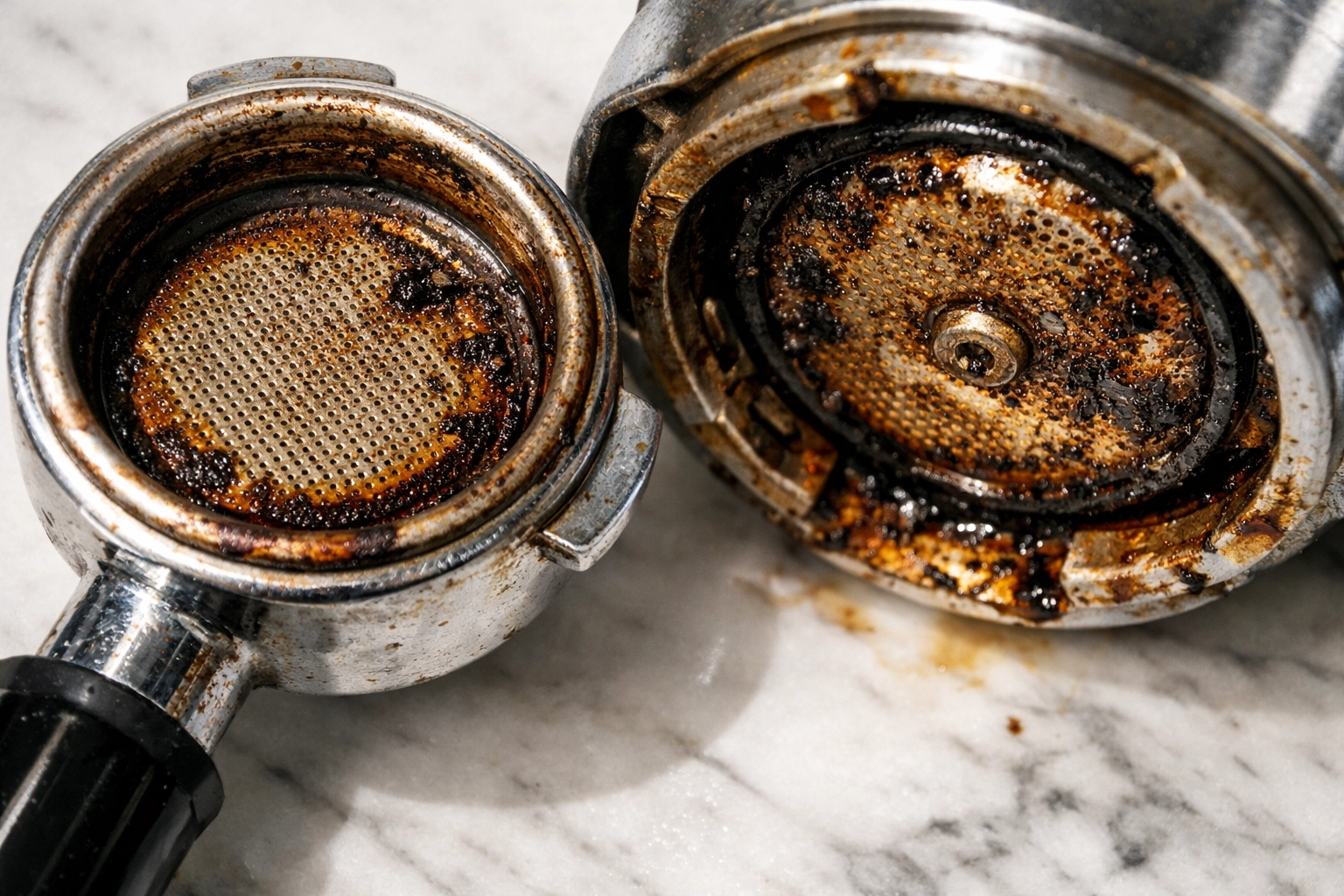
    Coffee oils, fine particles, and residue accumulate in places you don't see – inside your group head, throughout your grinder's burrs, and in the hidden corners of your brewing equipment. When you use pressurized systems like espresso machines, that pressure creates turbulence that deposits gunk absolutely everywhere. Over time, this buildup turns rancid and taints every shot you pull.

    The Fix: Get serious about cleaning. For espresso machines, backflush your group head weekly with proper espresso machine cleaner – not just water. Remove your shower screen and give it a proper scrub. For grinders, brush out the burrs regularly and do a deep clean monthly. Pour-over gear? Hot water rinses aren't enough. Use dedicated coffee equipment cleaners to strip away those oils that plain water leaves behind.

    It's tedious, we know. But the difference in taste is honestly dramatic.

    Dirty espresso machine portafilter showing coffee residue and oil buildup requiring deep cleaning

    2. You're Using Stale Coffee (or Worse, Pre-Ground)

    This is probably the biggest crime we see. You wouldn't cook with ingredients past their prime, so why do it with coffee?

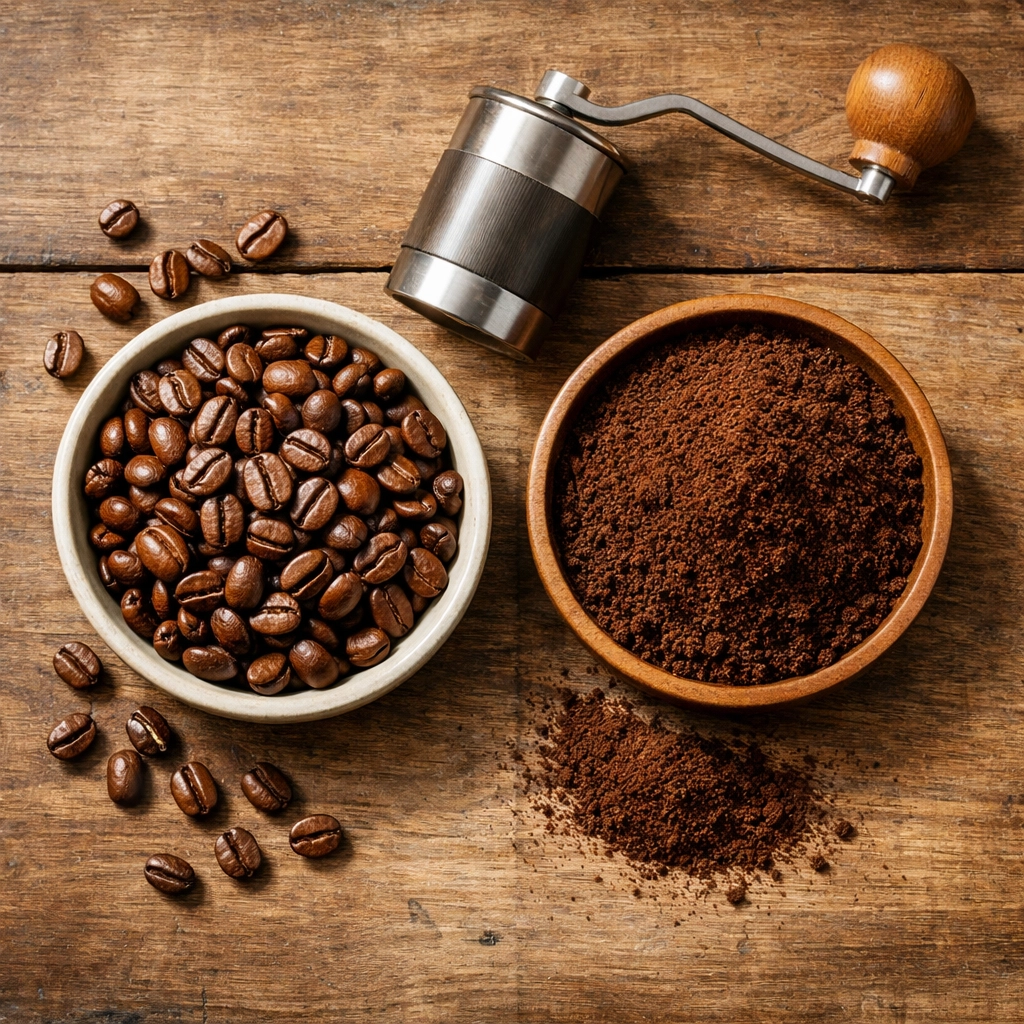
    Coffee starts losing its magic the moment it's roasted. Within days, those volatile compounds that create complex flavors begin to dissipate. Grind those beans? You've just accelerated the process exponentially. Pre-ground coffee – even if ground last night – has already lost a significant portion of what makes specialty coffee special.

    The Fix: Buy fresh, buy whole bean, and grind immediately before brewing. We're talking minutes before, not hours. At Limini Coffee, we roast to order for exactly this reason – so you're getting beans at their absolute peak. Store your beans in an airtight container with a one-way valve in a cool, dry place away from light. Use them within two to three weeks of the roast date for optimal flavor.

    And please, invest in a decent grinder if you haven't already. It matters more than you think.

    Check out our freshly roasted single origins here – we roast specifically for home brewers who care about this stuff.

    3. Your Water Temperature is All Over the Place

    Too hot? You're scalding your coffee and extracting bitter, astringent compounds. Too cold? You're under-extracting, leaving all those delicious flavors locked in the grounds.

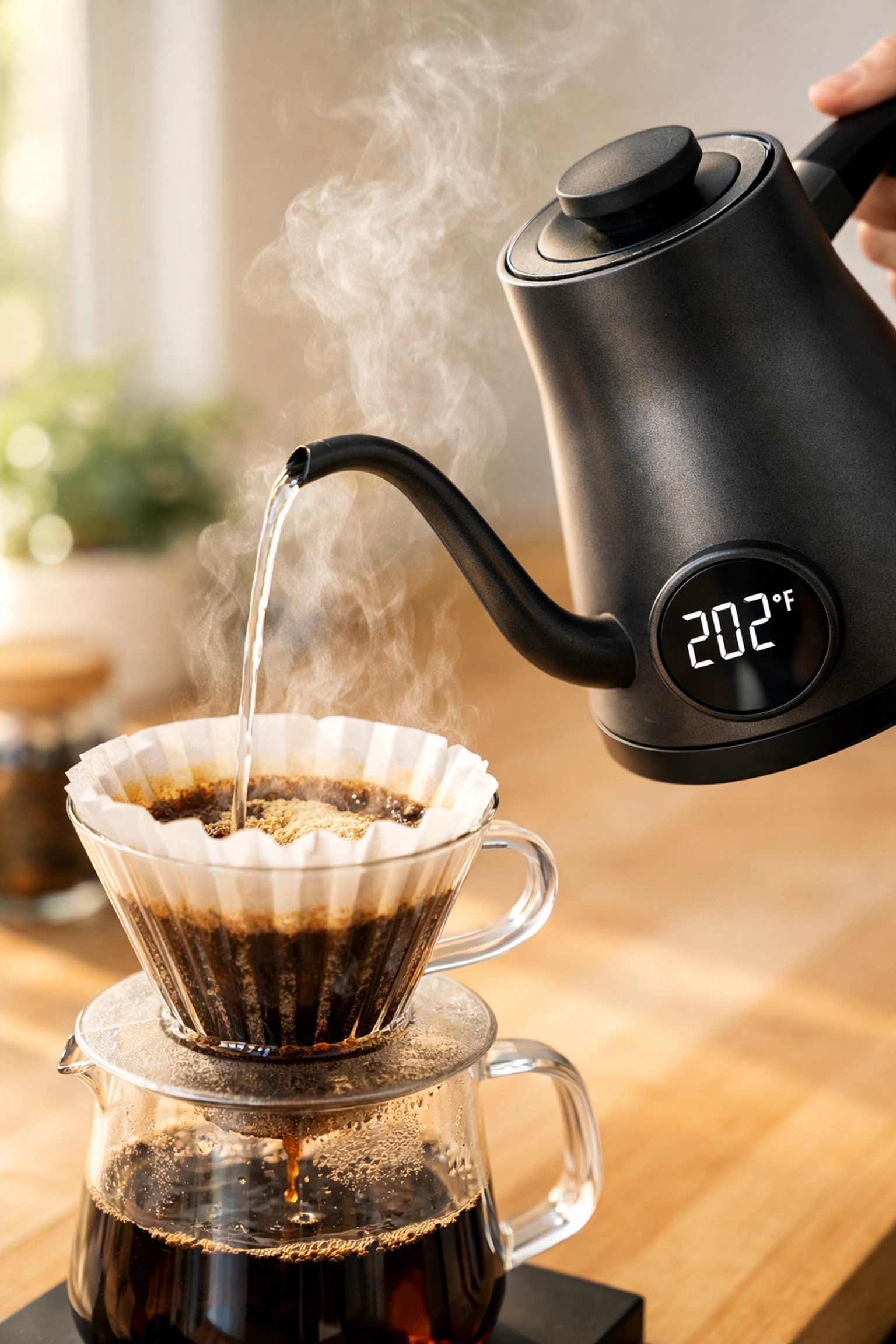
    The sweet spot sits around 93°C (200°F) for most brewing methods. But here's what many home brewers miss – your kettle reaching boiling doesn't mean your water stays at the right temperature when it hits the grounds. Heat loss happens quickly, especially with some brewing methods.

    The Fix: Use a temperature-controlled kettle if you're serious about pour-over or other manual methods. They're not that expensive anymore, and the consistency they provide is worth every penny. For espresso machines, ensure your machine has adequate temperature stability – ideally with PID control (basically cruise control for temperature). Let your machine fully warm up before pulling shots. We're talking 20-30 minutes, not five.

    If you're using a standard kettle, let the water rest for about 30 seconds after boiling before brewing.

    4. Your Grind Size is Wrong for Your Brewing Method

    Fine grinds for French press? You're getting over-extraction and a muddy, bitter cup. Coarse grinds for espresso? Good luck getting any pressure buildup or decent extraction at all.

    Each brewing method has an ideal grind size range for a reason. The contact time between water and coffee determines how fine or coarse you need to go. Espresso needs fine grounds because water passes through quickly under pressure. French press needs coarse grounds because the coffee steeps for several minutes.

    The Fix: Match your grind to your method. Espresso requires fine grounds (think table salt consistency). Pour-over methods like V60 want medium-fine (like sand). French press needs coarse grounds (like breadcrumbs). Drip coffee machines typically work best with medium grinds.

    But don't just set it and forget it. Taste your coffee. If it's too bitter and harsh, grind coarser. If it's weak and sour, grind finer. Dialing in is an ongoing process, and variables like bean age, roast level, and even humidity affect the ideal grind size.

    Fresh whole coffee beans compared to pre-ground coffee with hand grinder on wooden surface

    5. You're Guessing Your Coffee-to-Water Ratio

    Eyeballing your coffee dose is the fastest way to inconsistent results. Too much coffee creates an overpowering, muddy brew that's often bitter. Too little leaves you with something that tastes more like coffee-flavored water than actual coffee.

    The Fix: Buy a scale. Seriously, a basic digital scale costs less than a bag of decent beans, and it's arguably the most important tool in your arsenal. We recommend starting with a 1:16 ratio for most brewing methods – that's 1 gram of coffee to 16 grams of water. For espresso, you're typically looking at 1:2 to 1:2.5 (so 18g of coffee to 36-45g of liquid espresso).

    Use these as starting points, then adjust to taste. Some people prefer stronger coffee and go with 1:15. Others like it lighter at 1:17. The key is consistency – once you find what you like, you can recreate it reliably.

    Need help calculating? We've got a brewing calculator that takes the guesswork out.
    6. You're Ignoring Water Quality

    You wouldn't make tea with terrible water, right? Coffee is 98% water, yet so many home brewers overlook this completely.

    Heavily chlorinated tap water will absolutely ruin your coffee. But it's not just about avoiding bad water – the mineral content matters too. Too soft (like distilled water), and your coffee tastes flat and under-extracted. Too hard, and you're getting mineral buildup in your machine plus off-flavors in your cup.

    The Fix: At minimum, use filtered water. A simple carbon filter removes chlorine and many unpleasant tastes. If you want to get serious, look into water specifically formulated for coffee brewing – yes, this is actually a thing, and yes, it makes a difference.

    The ideal water for coffee has moderate mineral content – enough calcium and magnesium to aid extraction, but not so much that it creates scale. If you're on particularly hard water, consider using bottled water for brewing. It seems excessive until you taste the difference.

    Temperature-controlled gooseneck kettle pouring hot water for pour-over coffee brewing

    7. You're Storing Your Coffee Wrong

    That cute glass jar on your counter might look Instagram-worthy, but it's killing your coffee. Light, air, heat, and moisture are the four enemies of fresh coffee. Exposing your beans to any of these accelerates staling.

    Keeping coffee in the bag it came in (if it's not resealable) means air exposure every time you open it. Storing it near your stove? The heat fluctuations are degrading those precious aromatics. In the freezer? Unless you're doing it properly, you're introducing moisture and freezer odors.

    The Fix: Store your coffee in an airtight container with a one-way valve, kept in a cool, dark place like a cupboard. Room temperature is fine – you don't need to refrigerate or freeze unless you're storing beans long-term (and even then, it's debatable).

    Buy smaller quantities more frequently rather than bulk-buying. We know it's convenient to stock up, but coffee is at its best in that two-to-three-week window after roasting. At Limini Coffee, we purposely roast small batches regularly so you're always getting the freshest beans possible.

    Only grind what you need for each brew session. Ground coffee stales within minutes, not days.


    The Bottom Line

    Here's the thing – these mistakes are incredibly common because they're not immediately obvious. You can make decent coffee while doing several of these things wrong. But once you address them? The improvement is honestly night and day.

    You don't need to fix everything overnight. Pick one or two areas to focus on first. Maybe start with buying fresh, whole beans and a basic scale. Get consistent with your ratios. Then work on cleaning routines. Add a temperature-controlled kettle. Each improvement compounds on the others.

    We've seen home brewers who've invested thousands in equipment still making mediocre coffee because they're using month-old pre-ground beans stored in a glass jar on the counter. Conversely, we've seen people pull incredible shots from relatively basic setups because they nail the fundamentals.

    The gear matters, sure. But these fundamentals matter more. Get these right, and you'll be amazed at what your current setup can actually produce.

    What mistakes have you caught yourself making? We'd love to hear what clicked for you when you finally fixed that one thing that was holding back your home brewing game.

  • Single Origin vs. Espresso Blends: Which One Should You Actually Buy?

    Single Origin vs. Espresso Blends: Which One Should You Actually Buy?

    You're standing in front of the coffee selection (whether that's online or in a shop), and you're faced with a choice that seems simple but somehow isn't: single origin or blend?

    We get it. The coffee aisle can feel like you need a degree in coffee science just to pick a bag. One promises the "bright, floral notes of Ethiopian Yirgacheffe" while another boasts "smooth, chocolatey consistency perfect for espresso." Which one actually belongs in your basket?

    Let's cut through the coffee snobbery and figure out what you actually need based on how you drink your coffee. Because here's the truth: there's no objectively "better" choice. It all comes down to what you're making and what your taste buds are after.

    What Exactly Is Single Origin Coffee?

    Single origin means exactly what it sounds like , the coffee comes from one place. That could be a single country, a specific region within that country, or even one particular farm or estate.

    Think of it like wine. A single origin is your regional vintage , it showcases the unique characteristics of where it was grown. The soil composition, altitude, climate, processing method, and even the specific coffee varietals all contribute to a distinct flavour profile that you simply can't replicate elsewhere.

    Single origin coffee beans from different regions showing variety in roast color and origin

    Single origins are often described with tasting notes that sound more like a fruit bowl than coffee: "blueberry," "jasmine," "citrus," "stone fruit." And these aren't just marketing fluff (well, mostly). When coffee is roasted to highlight its origin characteristics and brewed properly, you genuinely can taste these nuanced flavours.

    The trade-off? Single origin coffees change with the seasons. Once a particular harvest runs out, that exact flavour profile is gone until next year. So if you fall in love with a Kenyan AA from a specific farm, you might be waiting months before it's available again. They also tend to be a bit more expensive due to their limited availability and the traceability involved in sourcing them.

    So What About Blends Then?

    Blends are where the roaster's artistry really shines. A blend combines beans from multiple origins : sometimes two, sometimes five or more : to create a balanced, consistent flavour profile that tastes the same all year round.

    We craft blends with a specific purpose in mind. Maybe we want something that cuts beautifully through milk for lattes and cappuccinos. Or perhaps we're aiming for a well-rounded everyday espresso that won't assault your palate at 7 AM. Blends are engineered for consistency and versatility.

    The flavour notes in blends tend toward the comforting and familiar: chocolate, caramel, nuts, toffee. These aren't boring flavours : they're just less… shouty than a bright Ethiopian single origin. They play well with others (milk, sugar) rather than demanding to be the star of the show.

    Here's the practical magic of blends: when one origin in the blend goes out of season, we can substitute it with a similar coffee from elsewhere, maintaining that signature taste you've grown to love. It means your morning routine doesn't get disrupted by harvest schedules halfway around the world.

    When Single Origin Makes Sense for You

    Let's get specific. You should reach for single origin coffee if:

    You drink your coffee black. This is the big one. Whether you're making pour-over, French press, AeroPress, or even filter coffee, single origins absolutely sing when nothing is added. All those delicate, complex flavours that make single origins special? They're most noticeable when milk and sugar aren't in the picture.

    You enjoy flavour exploration. If you're the type who gets excited about tasting a coffee from Rwanda one week and Guatemala the next, single origins are your playground. Each bag is a mini coffee holiday, letting you explore how terroir affects flavour without leaving your kitchen.

    You want to occasionally push your espresso boundaries. Some coffee lovers enjoy single origin espresso as an occasional palate refresher. Fair warning though : it requires more precise brewing technique. Single origins can be temperamental in the espresso machine, and the intense, concentrated flavour isn't for everyone. When dialled in properly, though? You can get this incredible complex fruit explosion that's genuinely exciting.

    You're willing to adjust your brewing. Single origins often need more attention to detail. Different origins extract differently, so you might need to adjust your grind size, water temperature, or brew time to get the best from each bag.

    Black coffee and latte side by side comparing single origin and espresso blend drinks

    When Blends Are Your Best Bet

    Reach for a blend when:

    You're a milk drink devotee. If your daily ritual involves lattes, cappuccinos, flat whites, or any coffee that includes steamed milk, blends are designed for you. They're engineered to hold their own against milk without getting lost, while complementing those creamy, sweet flavours rather than fighting them. Those chocolate and caramel notes we mentioned? They're basically best friends with milk.

    You want consistency. Maybe you've found a coffee you love and you want it to taste the same every single time you buy it. Blends deliver that reliability. No surprises, no seasonal disappointments : just the coffee you know and trust.

    You're newer to home brewing. Blends are more forgiving. They typically have a wider "sweet spot" when it comes to extraction, meaning you've got more margin for error in your grind size and technique. If you're still getting comfortable with your equipment, blends won't punish you for slight inconsistencies.

    You drink multiple cups a day. If you're a serious coffee drinker putting away three or four cups daily, the intense, complex flavours of single origins might become overwhelming. Blends offer balanced, approachable flavours that you can enjoy repeatedly without palate fatigue.

    Budget matters. Generally speaking, blends are more affordable than single origins. If you're drinking coffee daily and watching your spending, a quality blend gives you excellent value without compromising on taste.

    The Decision Framework: Ask Yourself These Questions

    Still not sure? Let's make this practical with some simple questions:

    What's your primary brewing method? Espresso with milk = blend. Pour-over, black = single origin. French press, black = single origin. Espresso, straight = probably blend (unless you're feeling adventurous).

    How adventurous is your palate? Do you like trying new flavours and experiencing subtle differences? Single origin. Do you prefer knowing exactly what you're getting every time? Blend.

    What time of day are we talking about? Many coffee lovers use blends for their reliable morning espresso and save single origins for a weekend pour-over when they can actually pay attention and savour it. There's no rule saying you can't have both in your cupboard.

    What's your skill level? Be honest with yourself. If you're still mastering your equipment, blends will be kinder to you while you learn. Once you've got your technique down, single origins become more rewarding.

    Pour-over coffee brewing setup with glass dripper and manual grinder for single origin

    What We Offer at Limini Coffee

    Here's where we should mention that we've got you covered either way. Our range includes both carefully crafted blends and rotating single origins, so you don't have to commit to one camp or the other.

    Our single origin selection changes with the seasons, bringing in the best coffees from around the world as they become available. One month you might find a bright, fruity Ethiopian natural process, and the next a clean, balanced Colombian washed coffee. It's how we keep things interesting.

    On the blend side, we've developed profiles that work beautifully for different purposes : whether you're pulling straight espresso shots or building milk-based drinks. The consistency means you can dial in your grinder settings and trust that the coffee will behave the same way bag after bag.

    Can't We Just Have Both?

    Honestly? This is probably the smartest approach.

    Many home coffee enthusiasts keep a blend on hand for their daily milk drinks and espresso, then have a single origin for those moments when they want to slow down and actually taste their coffee. It's not indecisive : it's versatile.

    Think of blends as your reliable everyday coffee and single origins as your weekend exploration. Or blends for morning routine and single origins for afternoon pour-overs. There's no coffee police checking that you've picked a side.

    The beautiful thing about speciality coffee in 2026 is the sheer variety available. You're not limited to one type of coffee any more than you're limited to one type of food. Your coffee shelf can (and probably should) reflect how you actually drink coffee throughout the day and week.

    The Bottom Line

    If someone tells you single origins are objectively better than blends (or vice versa), they're missing the point entirely. Both have their place, and that place depends entirely on your personal preferences and brewing habits.

    Single origins showcase unique regional characteristics and shine in black coffee preparations. Blends offer consistency, versatility, and are specifically designed to work beautifully in milk-based drinks. Neither is "better" : they're just different tools for different jobs.

    The real question isn't which one you should buy. It's which one suits what you're making right now. And honestly? The best way to figure that out is to try both and see what your taste buds prefer.

    Ready to explore both sides? Check out our full range of single origins and blends at Limini Coffee and see what calls to you. Your perfect cup is waiting : whether that's a complex Ethiopian pour-over or a comforting chocolatey latte made with our house blend.

    The coffee world is big enough for both, and your cupboard probably is too.

  • How AI Lead Generation Finds Your Dream Clients (Without Cold Calling)

    How AI Lead Generation Finds Your Dream Clients (Without Cold Calling)

    You stare at that list of contacts.

    Two hundred names. Two hundred phone numbers. Two hundred cold calls you're supposed to make today.

    Your stomach tightens. You've done this before. The awkward pauses. The immediate hang-ups. The polite-but-firm "we're not interested." The twenty-seven calls it takes to get one person who'll actually talk to you… and they're still not a good fit.

    Cold calling feels like throwing darts blindfolded. You know some leads are out there. But finding them? That's the part that drains your soul before lunch.

    Here's what most people don't realize: you're not bad at sales. You're just working with broken tools.

    The Cold Calling Problem Nobody Talks About

    The issue isn't your pitch. It's not your confidence. It's not even the leads themselves.

    It's that you're calling people who don't need you yet.

    Think about it. You dial a prospect who visited your website three months ago. Or someone from a list you bought. Or a referral who vaguely fits your customer profile. You're interrupting their day, hoping: praying: they happen to need exactly what you're selling at exactly this moment.

    The odds are terrible because you're working blind.

    Frustrated business owner overwhelmed by cold calling contacts and phone calls

    You don't know if they're actively looking. You don't know if they have budget. You don't know if they just signed with your competitor yesterday. You're guessing. And then you're wondering why it feels so hard.

    What If Leads Found You Instead?

    Here's where things get interesting.

    Imagine an ai lead generation tool that watches thousands of potential customers simultaneously. Not creepily: strategically. It notices when someone searches for solutions like yours. When they visit your pricing page. When they download your guide. When they check out competitor reviews.

    It spots the buying signals before the prospect even raises their hand.

    This isn't science fiction. This is how modern AI virtual assistants for business operate right now, in 2026. While you're sleeping, while you're in meetings, while you're actually closing deals: AI is identifying people who are already showing interest in what you sell.

    And then it prioritizes them.

    9:00 AM : The Qualified Lead Appears ☕

    You open your dashboard with your coffee.

    There's a notification. A SaaS company just got flagged: high priority. The AI noticed they recently raised Series A funding. They posted a job for a role your product directly supports. They visited your website twice this week, including your pricing page.

    You're not cold calling. You're warm texting a prospect who's already halfway to a decision.

    The AI has already validated their company size fits your ICP. It enriched their contact data with verified emails and LinkedIn profiles. It even noted they're using a competitor tool that's been getting negative reviews lately.

    This is someone who needs you. Soon.

    You draft a personalized message: not a template, a real conversation starter based on what the AI surfaced: and hit send. Within an hour, they respond. They've been researching solutions. Can you jump on a call tomorrow?

    That's the difference between interrupting someone's day and entering an existing conversation.

    Cold calling stress versus AI lead generation finding qualified prospects automatically

    How AI Actually Identifies Your Dream Clients

    Let's get specific about what's happening behind the scenes.

    Intent data activation : The AI monitors search behavior, content downloads, website visits, social media engagement, and third-party signals across the web. When someone starts researching solutions in your category, the system knows.

    Behavioral analysis : It tracks patterns. Did they visit your site once and bounce? Or did they return three times, read your case studies, and watch a demo video? Behavior tells you readiness.

    Firmographic matching : The AI automatically checks if prospects match your ideal customer profile: industry, company size, location, tech stack, growth stage. It filters out the tire-kickers before you waste a single minute.

    Predictive lead scoring : Machine learning ranks every prospect by conversion likelihood. Not everyone who visits your site is equal. Some are browsing. Others are buying. The AI learns which signals predict deals: and surfaces those leads first.

    This is how you end up with a pipeline full of people who actually want to talk to you.

    2:00 PM : The Chatbot Qualifies Another One 🤖

    While you're in back-to-back meetings, something happens on your website.

    A visitor lands on your homepage. Starts browsing features. Clicks through to pricing. Then… they just sit there. Reading. Thinking.

    Your AI chatbot gently appears. Not pushy. Just helpful.

    "Looking for a solution to automate your lead generation?"

    They type back. Yes. They ask about integrations. The chatbot answers: intelligently, conversationally, like a real person. It asks qualifying questions. Budget range? Team size? Timeline?

    By the time you check your CRM at 3:00 PM, there's a fully qualified lead with all their information, ready for outreach.

    You didn't interrupt anyone. You didn't cold call. You didn't even know they existed until they were already interested.

    That's the ai virtual assistant for business advantage.

    AI virtual assistant qualifying leads with automated data analysis for business

    The Multi-Touch Magic (Without the Manual Work)

    Here's where it gets even better.

    Traditional lead gen means you build sequences. Email Monday. LinkedIn message Wednesday. Follow-up email Friday. Maybe a call next week. You manage it all manually, or you set up clunky automation that feels robotic.

    AI lead generation tools orchestrate this differently.

    They watch prospect behavior and adapt in real-time. Someone opens your email but doesn't click? The AI adjusts the next message. They engage on LinkedIn but ignore email? It shifts channel priority. They visit your site again? It triggers a perfectly timed follow-up.

    Every touchpoint is contextual, not scheduled.

    You're not blasting the same message to everyone. You're having personalized micro-conversations across channels: automatically: with people who are already showing interest.

    It's the warmth of relationship-building at the scale of automation.

    5:30 PM : You Review Your Week 📊

    Friday evening. Lights are dimming outside.

    You pull up your lead dashboard. Twenty-three qualified leads this week. Twelve conversations booked. Three deals in negotiation.

    Last month: before the AI: you made a hundred cold calls to get half those results. And you hated every minute.

    Now? You're only talking to people who want to talk to you.

    The fear is gone. The rejection is gone. The soul-crushing grind of dialing strangers is gone.

    You've got a system that finds dream clients while you focus on what you're actually good at: closing deals and building relationships.

    This Is How Marblism Changes the Game

    You don't need another tool to juggle. You don't need to become a data scientist. You don't need to hire a six-person SDR team.

    You need an ai virtual assistant for business that does the heavy lifting.

    Marblism identifies high-intent prospects, enriches their data, qualifies them automatically, and surfaces them at exactly the right moment. While you're running your business, it's building your pipeline with people who are already looking for what you sell.

    No cold calling. No guesswork. Just qualified leads who are ready to have a conversation.

    Want to see how it works for your business? Check out Marblism here and watch your pipeline fill with dream clients: without ever picking up the phone for a cold call again.

    Because your time is too valuable to waste on people who aren't ready. And your dream clients? They're already out there, looking for you.

    You just need the right AI to connect the dots.

  • How to Automate Your Hotel Operations in 5 Minutes (Or Less)

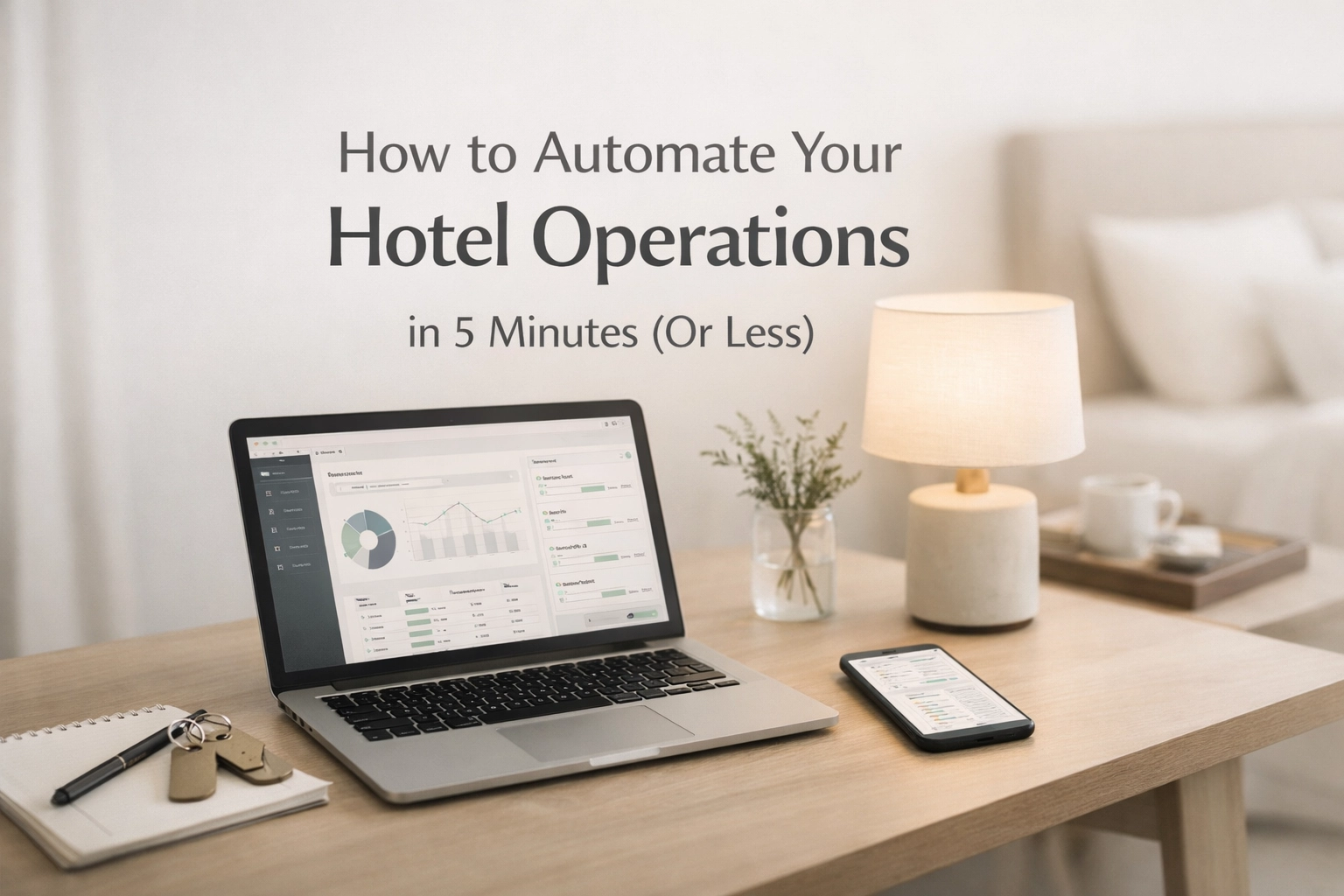
    How to Automate Your Hotel Operations in 5 Minutes (Or Less)

    Let's be honest. You can't fully automate your hotel in 5 minutes.

    But you can start. And starting is what matters.

    The best hotel automation happens in phases: not all at once. You implement quick wins first. Then build from there. Within 5 minutes, you can set up automation tools that transform your daily operations immediately.

    Here's how hoteliers are doing it right now.

    The Quick-Win Approach to Hotel Automation

    Most hotels overthink automation. They imagine months of implementation, complex integrations, and disrupted operations.

    That's the old way.

    Modern hotel PMS systems like Mews let you activate automation features with a few clicks. Cloud-native technology means you're not installing software. You're not training IT teams. You're just turning features on.

    Three areas deliver immediate results:

    • Online reservations
    • Guest check-in
    • Communication workflows

    Start there. The rest follows naturally.

    Modern hotel reception desk with touchscreen tablet showing automated PMS interface

    Quick Win #1: Stop Manually Processing Reservations

    Your front desk staff shouldn't touch every booking.

    Here's what happens when you automate reservation processing. A guest books on Booking.com at 2 AM. Your channel manager syncs the reservation to your PMS instantly. Room inventory updates across all channels automatically. The guest receives a confirmation email. Your housekeeping schedule adjusts.

    Zero manual work.

    This single automation saves properties 10+ hours per week. That's time your team spends on guest experience instead of data entry.

    Channel manager integration is the foundation. It connects your PMS to every booking platform you use: OTAs, your direct booking engine, GDS systems. When inventory changes on one channel, it changes everywhere.

    No more double bookings. No more overselling. No more logging into six different extranets.

    Properties using Mews report 30% faster booking confirmation times. Guests appreciate the speed. Staff appreciate the simplicity.

    Quick Win #2: Self-Service Check-In Changes Everything

    Check-in shouldn't require a queue.

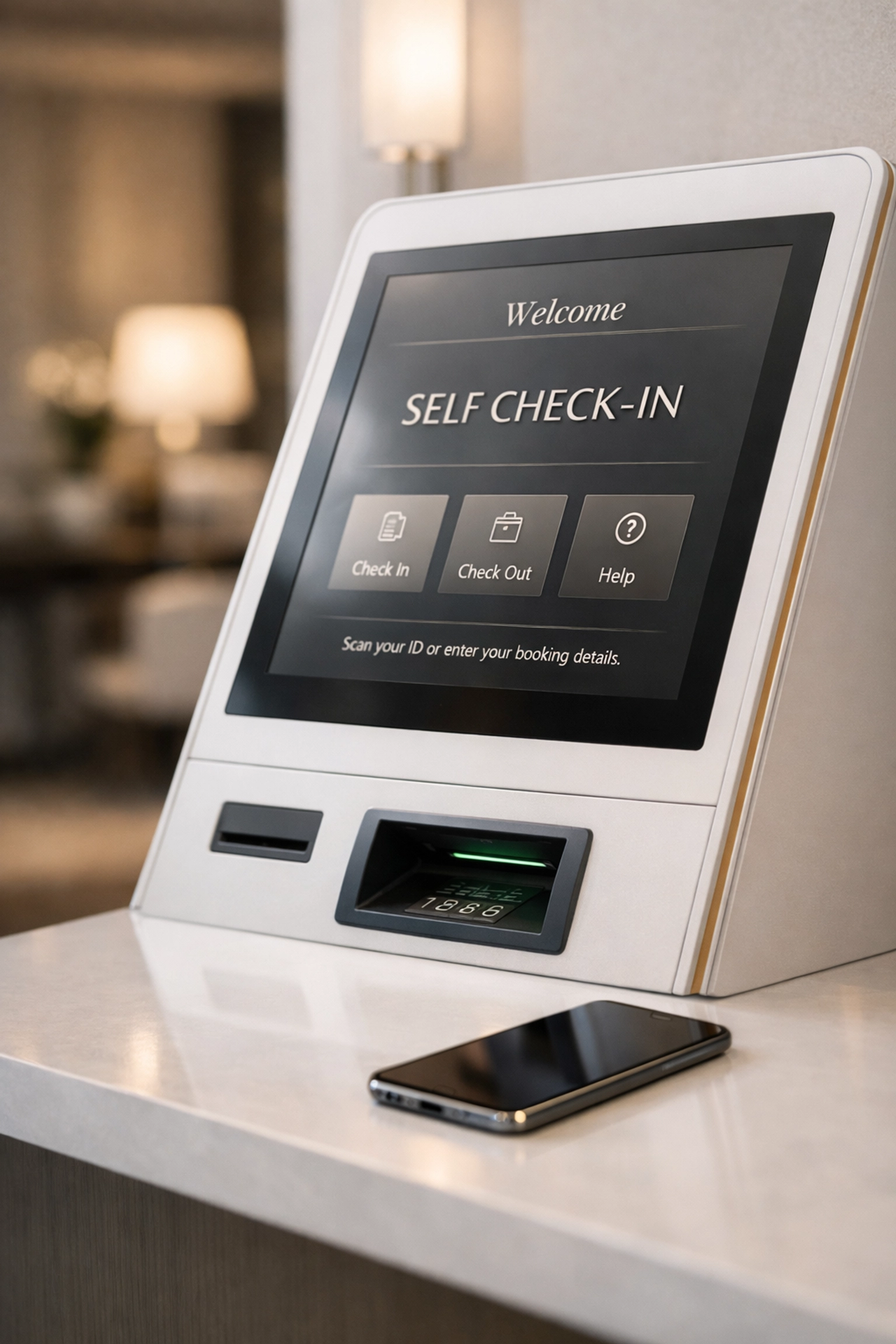
    Modern guests expect options. Some want face-to-face interaction. Others want to grab their key and go. Self-check-in kiosks and mobile check-in give them that choice.

    Self-check-in kiosk with touchscreen in hotel lobby for contactless guest arrivals

    The setup takes minutes. You enable self-service features in your PMS. Guests receive a pre-arrival email with a check-in link. They complete registration on their phone. Select their room. Handle payment. Get a digital key.

    Your front desk team handles exceptions and creates memorable experiences instead of processing forms.

    One boutique hotel in London cut check-in times by 60% after implementing self-service options. Their front desk staff now focuses on personalized recommendations and upgrades. Revenue increased. Guest satisfaction scores improved.

    Self-service tools work because they reduce friction. Nobody wants to stand in line after a long flight. Give guests control over their arrival experience.

    Quick Win #3: Automate Guest Communication

    Your guests have questions. Lots of them.

    "What time is breakfast?" "Can I get extra towels?" "How do I connect to WiFi?"

    Automated messaging systems handle these inquiries 24/7. No human intervention required.

    Here's the flow: A guest books a room. Your system triggers a welcome message with check-in instructions. Two days before arrival, another message with local recommendations. On check-in day, room access details. During their stay, automated responses to common questions.

    Hotel guest using smartphone for automated messaging and mobile check-in in room

    AI-powered chatbots integrated with your CRM learn from every interaction. They get smarter over time. They escalate complex issues to staff. They handle everything else.

    Properties report 40% fewer routine inquiries reaching the front desk. Staff time gets redirected to high-value guest interactions. Response times drop from minutes to seconds.

    Automated messaging isn't impersonal: it's efficient. Guests get instant answers. Your team handles situations that actually need human attention.

    How to Actually Do This (The 5-Minute Version)

    Let's get practical.

    You're sitting at your desk right now. You want to start automating. Here's your action plan:

    Step 1: Log into your hotel PMS dashboard
    Step 2: Navigate to integrations or marketplace section
    Step 3: Connect your channel manager (if not already connected)
    Step 4: Enable self-check-in features in guest journey settings
    Step 5: Activate automated messaging templates

    That's it. Five steps. Five minutes.

    Obviously, customizing these features takes longer. You'll want to personalize message templates. Configure check-in workflows. Test the guest experience. But the core functionality activates immediately.

    The beauty of cloud-native systems is this: You're not waiting for installations or IT tickets. Changes happen in real-time.

    Hotel management dashboard on laptop showing cloud-native PMS automation tools

    Integration Is Everything

    Here's what trips up most hotels: They choose automation tools that don't talk to each other.

    Your channel manager doesn't sync with your PMS. Your messaging platform sits separate from your CRM. Your check-in kiosks require manual data transfer.

    That's not automation: that's more work.

    True automation requires a unified platform. Everything connects. Data flows seamlessly. One change updates everywhere.

    This is where Mews makes a difference. Built cloud-native from day one. Every feature designed to work together. Open API for custom integrations. Over 12,500 properties trust this approach.

    When your systems integrate properly, automation compounds. Your channel manager feeds your PMS. Your PMS triggers automated messages. Messages update your CRM. Your CRM personalizes future communications.

    It's a cycle that improves over time.

    The Realistic Timeline

    Five minutes gets you started. Full automation takes longer.

    Think in phases:

    Phase 1 (Day 1): Activate basic automation: reservation processing, automated confirmations, simple guest messaging.

    Phase 2 (Week 1): Enable self-service check-in. Customize message templates. Train staff on new workflows.

    Phase 3 (Month 1): Expand to housekeeping automation. Dynamic pricing tools. Advanced guest journey personalization.

    Phase 4 (Ongoing): Optimize based on data. Add revenue management automation. Implement predictive maintenance scheduling.

    Each phase builds on the last. You don't need everything perfect before launching. You need to start.

    Modern hotel lobby showcasing integrated automated operations and guest areas

    Start Now, Scale Later

    Hotel automation isn't about replacing your team. It's about empowering them.

    Your staff didn't get into hospitality to process spreadsheets and answer WiFi password questions. They wanted to create memorable guest experiences. Automation gives them time to do exactly that.

    The properties winning right now started small. They automated one process. Saw results. Added another. Built momentum.

    You can do the same. Today.

    Choose a cloud-native hotel PMS that makes automation simple. Connect your booking channels. Enable self-service options. Activate automated messaging.

    Five minutes. Real results.

    See what Mews can do for your property. No complex implementation. No lengthy training. Just straightforward automation that works from day one.

    Your guests are already expecting it. Your competition is already implementing it. Your team will thank you for it.

    The question isn't whether to automate. It's why you're waiting.

  • Stop Wasting Time on Admin Tasks: 7 Quick AI Automation Hacks

    You know the drill.

    You open your laptop. 47 unread emails waiting. Three meeting requests that need coordinating across four time zones. A spreadsheet that desperately needs updating. Customer inquiries piling up. And that IT ticket from accounting about their printer… again.

    It's 9 AM and you're already behind.

    The admin tasks multiply like gremlins. Every time you cross one off, two more appear. You're not running a business : you're managing chaos with a clipboard and a prayer.

    But here's the thing…

    What if those admin gremlins could handle themselves? What if all that repetitive, soul-crushing busywork just… disappeared?

    Welcome to ai business automation. Not the sci-fi version. The "I-just-got-three-hours-back-in-my-day" version.

    ☕ 7:00 AM : Stop Playing Email Ping-Pong

    Your first meeting request of the day arrives. Then another. Then three more.

    You know what happens next. The dance begins.

    "How's Tuesday at 2?"
    "Can't do Tuesday. Wednesday morning?"
    "I'm in London, you're in New York…"
    "What about 3 PM your time?"
    "Let me check my calendar…"

    Twelve emails later, you've scheduled one meeting. And you haven't even touched your real work.

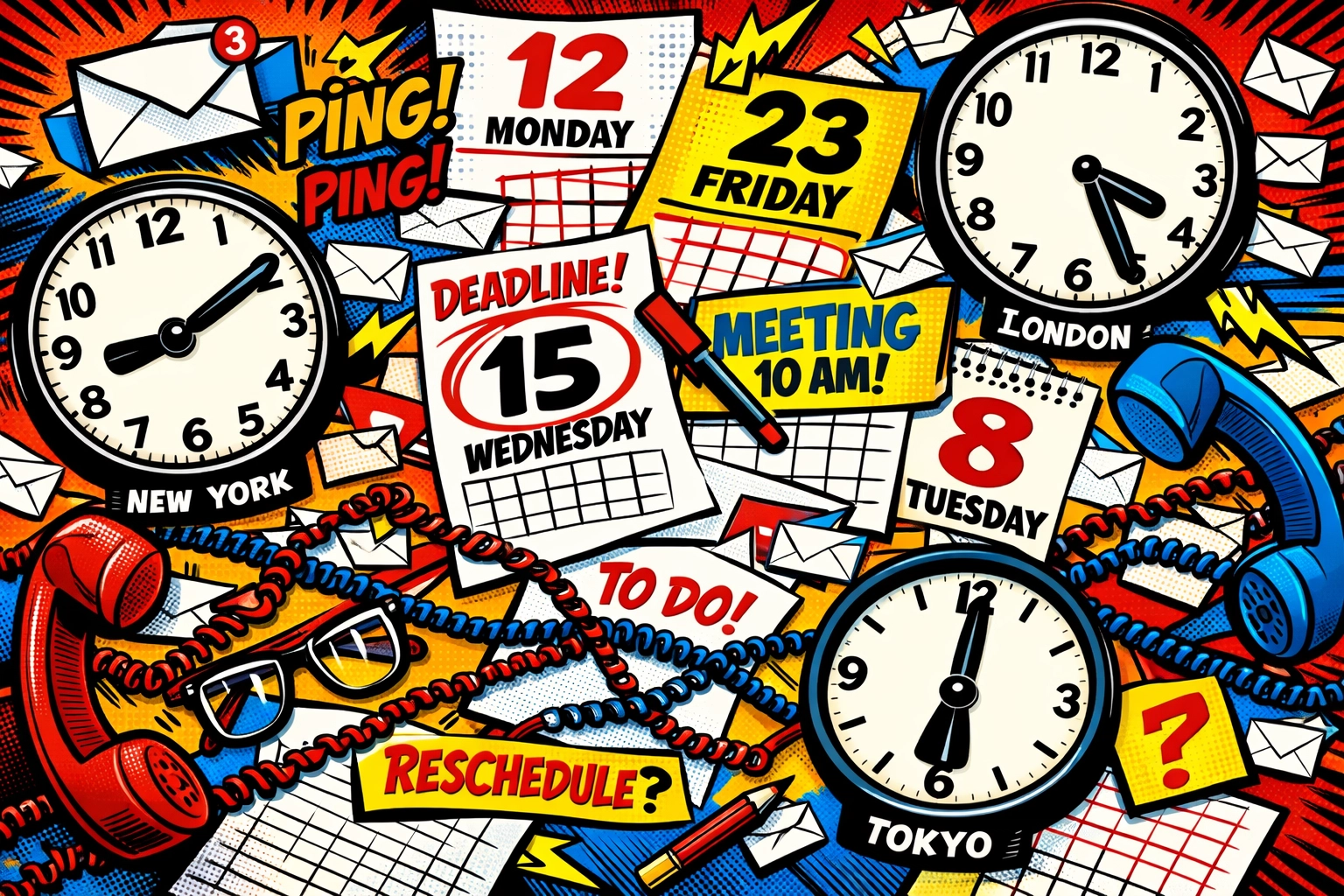
    Chaotic desk with overlapping calendars and time zones showing scheduling inefficiency before AI automation

    Hack #1: Deploy intelligent scheduling agents.

    These business automation tools sync with everyone's calendars, handle time zone math automatically, spot conflicts before they happen, and generate meeting links without you lifting a finger. The back-and-forth? Gone.

    Your scheduling agent sends one message: "Here are three times that work for everyone. Pick one."

    Done.

    You just got your mornings back.

    📧 9:30 AM : Drown in Data Entry (Or Don't)

    Invoices need filing. Contracts need tagging. Reports need summarizing. Documents need organizing.

    Your inbox is basically a filing cabinet that exploded.

    You spend 90 minutes sorting, labeling, copying, pasting, and wondering if this is really what you went to business school for.

    Hack #2: Automate data entry and document processing.

    AI-powered systems read incoming documents, understand what they are, file them correctly, extract key data automatically, and create summaries of lengthy reports. No more manual sorting. No more "where did I save that contract?"

    Your documents organize themselves while you focus on decisions that actually matter.

    📱 11:00 AM : The Request Avalanche

    Three emails. Two phone calls. A website form. A voicemail. A text from a client.

    All asking different questions. All needing responses. All requiring you to stop what you're doing and switch contexts six times.

    Your brain feels like a browser with 47 tabs open.

    Hack #3: Centralize and route incoming requests automatically.

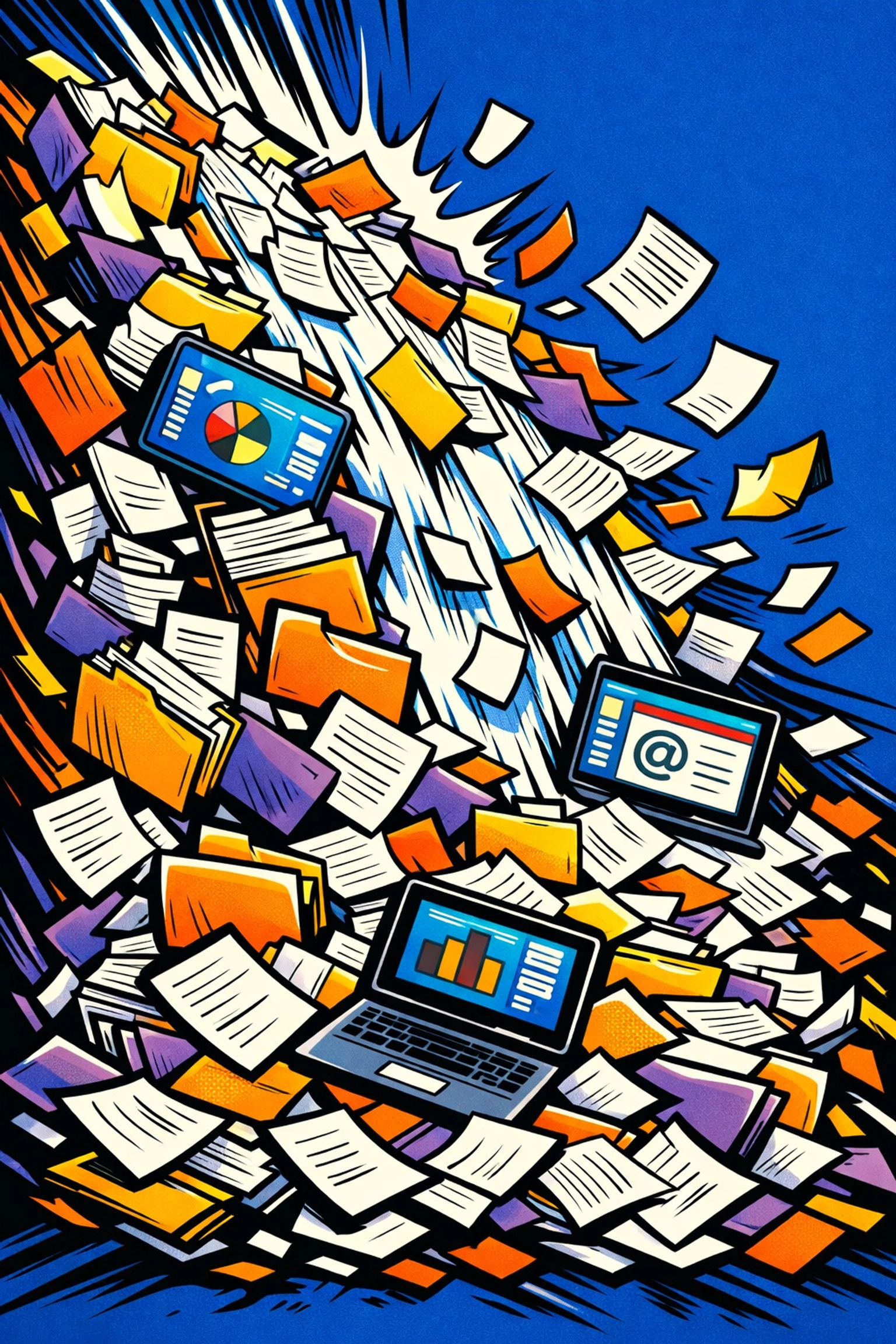
    Avalanche of documents and requests flooding in from multiple channels requiring automation

    AI business automation platforms capture every incoming request : email, phone, forms, wherever : and sort them automatically. They identify priority, route to the right person, and send acknowledgment replies instantly.

    You see a clean dashboard of organized requests, not a scattered mess across five platforms. Each item already categorized, prioritized, and ready for action.

    The chaos becomes a checklist.

    🔍 1:00 PM : Email Hell Is Real

    Your inbox is a warzone.

    Urgent mixed with spam. Action items buried under newsletters. Important client emails hiding beneath vendor pitches.

    You spend 45 minutes just figuring out what needs your attention today.

    Hack #4: Let AI handle email and workflow management.

    Smart filters that actually understand context. Automatic flagging of high-priority messages. Task assignments based on who's actually available and skilled for the job. Real-time tracking that shows you exactly where bottlenecks are forming.

    Your inbox goes from overwhelming to organized. The signal cuts through the noise.

    And you can finally see what matters.

    💻 2:30 PM : "IT, My Computer's Acting Weird Again"

    Sarah from sales can't access the shared drive. Tom's password reset didn't work. The new hire needs software installation help.

    Your IT support queue looks like Black Friday at Best Buy.

    Hack #5: Automate routine IT support.

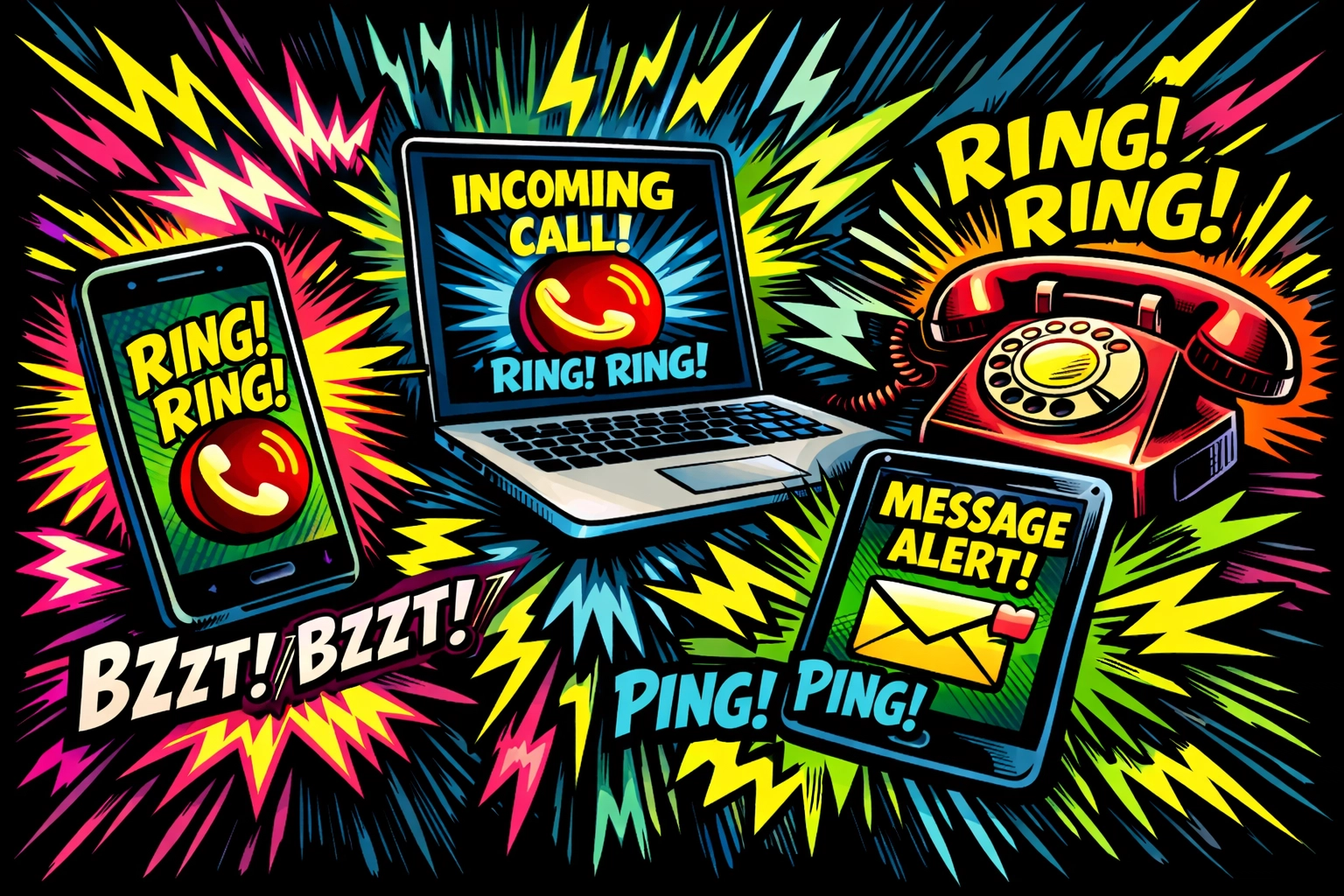
    Multiple ringing devices showing IT support request overload before business automation

    Employees describe their issues in plain English. AI systems diagnose common problems, surface step-by-step solutions, and walk users through fixes. The simple stuff resolves itself. Your IT team only handles the genuinely complex issues.

    Support tickets close faster. Your team's sanity stays intact.

    Everyone wins.

    💬 3:45 PM : Answer the Same Questions. Again.

    "What are your business hours?"
    "How do I reset my password?"
    "Where's my order?"
    "Do you offer discounts for bulk purchases?"

    Your customer service inbox is 80% questions you've answered a thousand times.

    Hack #6: Deploy intelligent chatbots for common inquiries.

    AI chatbots handle the repetitive questions instantly. They're available 24/7, never get tired, and free your human team to tackle the complex problems that actually need human judgment and creativity.

    Your customers get instant answers. Your team gets to do meaningful work.

    It's not replacing people : it's elevating them.

    📊 5:00 PM : Coordination Chaos

    The project needs approval from three departments. Each has their own process. Each needs updates. Each needs follow-up.

    You're basically a human router, manually moving information from point A to point B to point C.

    Hack #7: Coordinate cross-functional workflows automatically.

    Overflowing email inbox bursting with messages representing workflow chaos without automation

    Workflow agents update task statuses across teams, route approvals through the correct channels, handle compliance checkpoints automatically, and facilitate handoffs between departments. No more "Did you get my email?" No more manual status updates.

    The work flows. You oversee. The difference is massive.

    The Real Magic Happens When You Stack Them

    Here's where it gets interesting…

    These seven hacks don't just work individually. They stack. They compound. They transform your entire operation.

    Your scheduling agent feeds into your workflow coordinator. Your document processor talks to your email system. Your chatbot routes complex issues to your centralized request system.

    Suddenly, you're not just saving time on individual tasks. You're running a business that actually runs itself.

    What This Actually Looks Like

    Monday morning. 8:00 AM.

    You open your laptop. Your AI scheduling agent has already coordinated this week's meetings. Your document processor filed Friday's contracts. Your email system flagged the three messages that need your personal attention.

    Everything else? Handled.

    You spend your morning on strategy. On growth. On the decisions that actually move your business forward.

    The admin gremlins are still there. But they're working for you now, not against you.

    Your Next Move

    AI business automation isn't some distant future thing. It's not complicated. It's not just for enterprise companies with massive IT budgets.

    It's available now. It's accessible. And it's transforming how smart businesses operate.

    The business automation tools exist. The technology works. The only question is whether you're ready to stop drowning in admin tasks and start focusing on what you actually built your business to do.

    Want to see how these automation hacks work in practice? Check out what's possible when you let AI handle the busywork: https://marblism.link/scott-bowen

    Because here's the truth…

    Every hour you spend on admin tasks is an hour you're not spending on growth, strategy, or innovation. Every manual process is a leak in your productivity bucket.

    The businesses winning right now aren't working harder. They're automating smarter.

    Your move.

  • The Ultimate Guide to Setting Up a Coffee Shop: From Beans to Business Launch

    The Ultimate Guide to Setting Up a Coffee Shop: From Beans to Business Launch

    So you're thinking about opening a coffee shop. Maybe you've been dreaming about it for years, or perhaps you've just realized the world needs another place serving proper specialty coffee. Either way, you're about to embark on one of the most rewarding (and challenging) ventures in the hospitality world.

    Let's be honest, opening a coffee shop isn't just about serving great coffee. Though that's obviously crucial. It's about creating a business that works, finding the right wholesale coffee suppliers, managing costs, and building something sustainable. We've seen plenty of cafés launch with passion but without a solid plan, and it rarely ends well.

    This guide walks you through everything you need to know, from sourcing your beans to unlocking those doors on day one.

    Start With Your Vision (And Make It Specific)

    Before you do anything else, you need to know exactly what kind of coffee shop you're opening. And "a nice place that serves good coffee" isn't specific enough.

    Are you creating a community hub with comfortable seating, Wi-Fi, and weekend events? Or a fast-paced grab-and-go spot for commuters who want quality but need speed? Maybe you're focusing on sustainability, or perhaps you want to showcase single-origin offerings from specific regions.

    Your concept needs at least one clear differentiator. What makes you different from the established café down the street? This could be your coffee sourcing story, your approach to customer service, a unique menu offering, or your commitment to barista education.

    Figure this out first. Everything else flows from this decision.

    Modern coffee shop interior with espresso bar and seating area

    The Business Plan You Actually Need

    Right, let's talk about business plans. You've probably heard you need one, and you definitely do, especially if you're seeking funding. But it doesn't need to be a 50-page academic document. It needs to be thorough, realistic, and actually useful.

    Your business plan should cover:

    Your Executive Summary – Think of this as your elevator pitch in writing. What are you opening, why does it matter, and what makes it unique? Keep it to one page.

    Market Analysis – Who are your customers? Office workers grabbing morning coffee? Students studying for hours? Local residents wanting a community space? And critically, who's your competition? Visit every coffee shop within a mile radius. Understand what they do well and where the gaps are.

    Your Menu and Pricing – What are you serving, and at what price points? Your menu needs to reflect your concept while remaining profitable. And yes, you need to think about your wholesale coffee suppliers now, because bean costs significantly impact your pricing strategy.

    Financial Projections – We'll get into the numbers shortly, but you need realistic projections for at least three years. Include startup costs, monthly operating expenses, and revenue forecasts. Be conservative. Extremely conservative.

    Marketing Strategy – How will people discover you before and after launch? Social media matters, but don't underestimate traditional methods like local partnerships, community events, and simply being present in your neighborhood before opening day.

    Location Matters More Than You Think

    You've heard it before, location, location, location. But what does that actually mean for a coffee shop?

    For a beginner operation, we're talking about 800 to 1,200 square feet. Enough space to work efficiently without overwhelming yourself or your budget. When evaluating potential spaces, consider:

    • Foot Traffic – High traffic is great, but only if they're your target customers. A busy office district is perfect for weekday morning trade but might be dead on weekends.

    • Accessibility and Parking – Can people actually get to you? Is there parking or good public transport links?

    • Infrastructure – This is crucial. You need proper electrical capacity (commercial espresso machines pull serious power), water supply, drainage, and ventilation. Get an inspector to verify the space is suitable before signing anything.

    • Rent – Your rent shouldn't exceed 10-15% of your projected revenue. If the numbers don't work, walk away. There will be other spaces.

    Competition in the immediate area isn't necessarily bad, it proves there's demand for coffee. But you need to offer something distinctly different.

    Coffee shop business planning materials with bean samples and financial documents

    Choosing Your Coffee Suppliers (This Is Where It Gets Good)

    Let's talk about arguably the most important decision you'll make: who roasts your coffee.

    Your wholesale coffee roaster isn't just a supplier, they're a partner. The right roaster provides quality beans, yes, but they should also offer training, equipment support, and ongoing technical assistance. This is especially vital if you're new to the specialty coffee world.

    When evaluating coffee suppliers, ask yourself:

    • Do they offer comprehensive barista training? Proper training makes the difference between serving mediocre coffee and exceptional coffee.

    • What's their sourcing story? Can they tell you where their beans come from, how they're processed, and why they've chosen those particular coffees?

    • Do they provide equipment support? Some roasters, like Limini Coffee, offer complete packages including equipment supply, installation, and ongoing maintenance support.

    • What's their minimum order quantity? Can they scale with you as you grow?

    • Are they responsive? You'll have questions, equipment issues, and occasional panic moments. Your roaster should be accessible and helpful.

    We're obviously biased, but we believe in building genuine partnerships with the cafés we work with. It's not just about selling beans, it's about setting you up for long-term success. That means proper training, equipment guidance, and being there when things go wrong (because occasionally, they will).

    Equipment and Operations (The Practical Stuff)

    Your equipment list depends entirely on your menu complexity. Serving straight espresso drinks and filter coffee? Your needs are relatively straightforward. Adding complicated signature drinks or food? You'll need more kit.

    Essential equipment includes:

    • Espresso Machine – This is your biggest single investment. For a new café, you're looking at a two or three group commercial machine. Understanding how to choose the right equipment is crucial.

    • Grinders – You need separate grinders for espresso and filter coffee. Never compromise on grinder quality. Ever.

    • Brewing Equipment – Depending on your offering: pour-over stations, batch brewers, or cold brew systems.

    • Refrigeration – For milk, food, and cold beverages.

    • Small WaresCups, pitchers, tampers, scales, timers, cleaning supplies, knock boxes… the list is long.

    • Point of Sale System – A modern POS that tracks inventory, sales, and labor costs.

    Beyond equipment, establish your operational procedures early. How will you open and close? What are your cleaning protocols? How do you handle the morning rush versus quiet afternoon periods? Document everything.

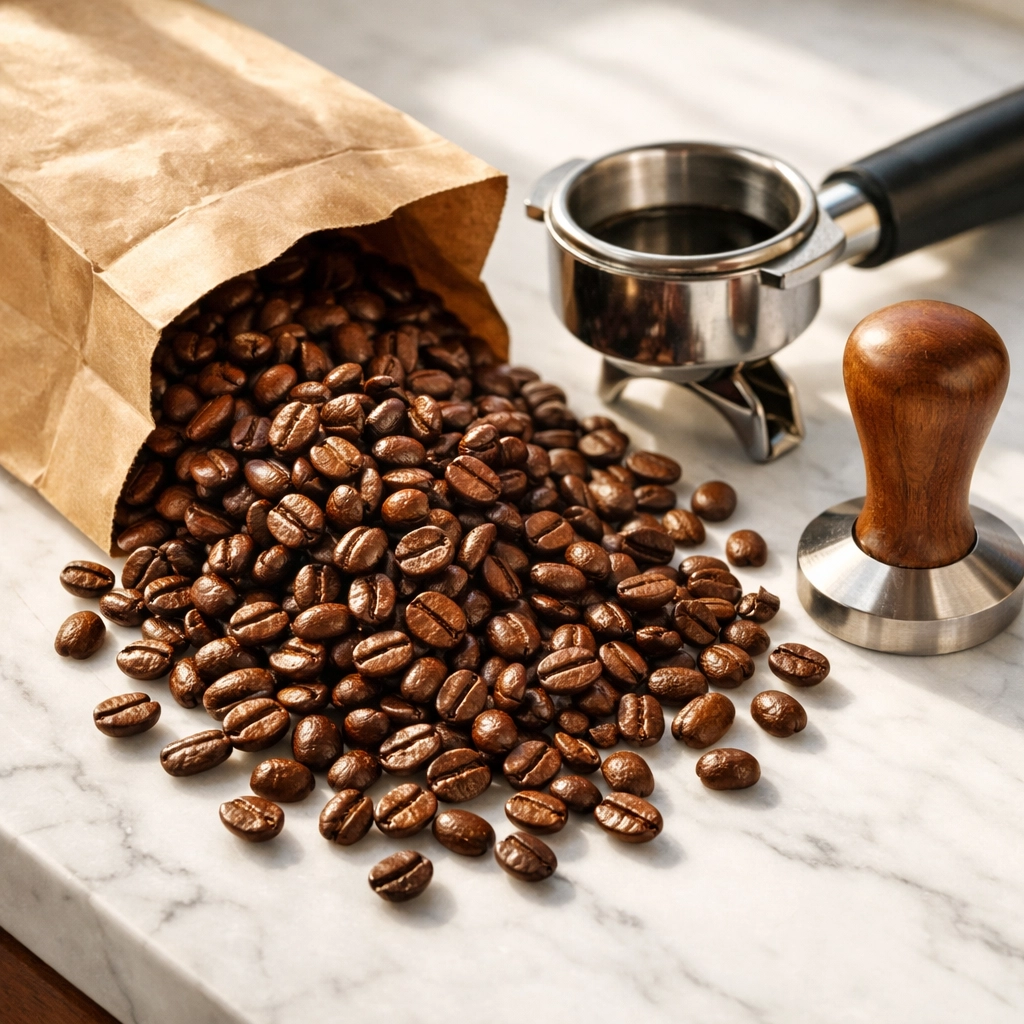
    Fresh roasted specialty coffee beans with espresso portafilter and tamper

    The Numbers (Let's Be Realistic)

    Coffee shops with seating typically cost between £80,000 and £280,000 to start (roughly $100,000 to $350,000). That's a significant investment, so let's break down where the money goes:

    Major Startup Costs:

    • Equipment purchases and installation
    • Shopfitting and renovations
    • Initial inventory (beans, milk, syrups, to-go supplies, food if applicable)
    • Permits, licenses, and insurance
    • Three to six months of operating expenses as a buffer
    • Marketing and branding
    • Contingency fund (add 15-20% to your total estimate)

    Ongoing Monthly Costs:

    • Rent and utilities
    • Staff wages (usually your biggest ongoing expense)
    • Coffee and other inventory
    • Equipment maintenance
    • Insurance
    • Marketing
    • Loan repayments if applicable

    Your coffee cost should be roughly 15-20% of your drink price. If you're charging £3.50 for a cappuccino, your coffee cost should be around 50-70p. This is why choosing the right wholesale coffee roaster matters, you need consistent quality at a price that maintains healthy margins.

    Funding options include self-funding through savings, small business loans, investor partnerships, or occasionally crowdfunding. Most new café owners use a combination of personal investment and bank financing.

    The Legal Bits You Can't Skip

    Nobody opens a coffee shop because they love paperwork, but these legal requirements aren't optional:

    • Register your business structure (we generally recommend an LLC for liability protection and tax flexibility)
    • Obtain your Employer Identification Number (EIN)
    • Business license (requirements vary by location)
    • Food service license
    • Seller's permit for sales tax
    • Food handler's permits for all staff members
    • Verify zoning allows food service operations
    • Public liability insurance
    • Employer's liability insurance if you have staff

    Set up a separate business bank account immediately. Never mix personal and business finances. Trust us on this one.

    The process varies significantly by location, so check with your local council or small business administration for specific requirements in your area.

    Building Your Team

    You can't do this alone. Well, you technically can, but you'll burn out within six months.

    Your team makes or breaks the customer experience. Hire people who genuinely care about coffee and customer service. Experience is valuable, but attitude and willingness to learn matter more. You can teach someone how to pull espresso shots; you can't teach them to be kind to customers.

    Invest properly in training. Your staff should understand basic coffee theory, espresso extraction principles, milk technique, and customer service. Good wholesale coffee roasters will help with this training: it's in everyone's interest that your baristas can showcase the coffee properly.

    Create clear job descriptions, establish fair wages, and build a positive work culture. The coffee industry has historically struggled with staff retention because of low pay and poor conditions. Be better than that.

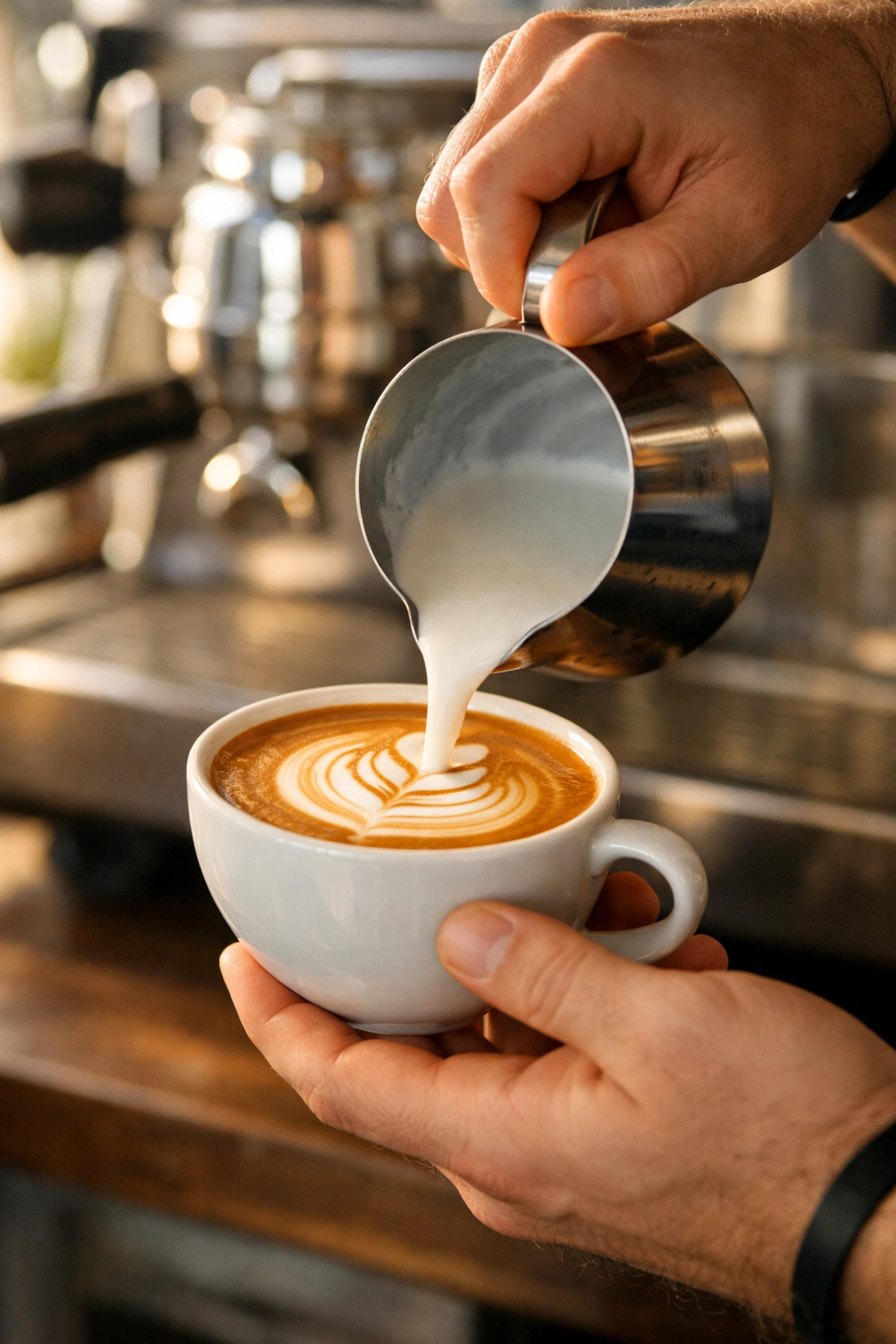
    Barista pouring steamed milk to create latte art in specialty coffee shop

    Getting Ready to Launch

    Start marketing before you open. Build anticipation through social media, engage with the local community, and create buzz around your launch date.

    Consider hosting a soft opening for friends, family, and local influencers before your official launch. This lets you identify operational issues in a lower-pressure environment. You'll discover your espresso machine takes longer to warm up than expected, your POS system needs tweaking, or your workflow needs adjustment. Better to figure this out before the official opening day rush.

    Plan a proper launch event. Free coffee samples, local partnerships, live music: whatever fits your brand and budget. The goal is creating memorable first impressions and encouraging people to return.

    Document everything. Take photos, share your journey, and build your story. People connect with authenticity and passion.

    So, Are You Ready?

    Opening a coffee shop is genuinely challenging. The hours are long, the margins are tight, and the work is physically demanding. But if you do it right: with a solid plan, the right partners, and genuine passion: it's also incredibly rewarding.

    Choose your coffee suppliers carefully, invest in proper training, understand your numbers, and never compromise on quality. The specialty coffee community is supportive and collaborative. Reach out to other café owners, ask questions, and learn from those who've gone before you.

    And remember, success isn't about being perfect from day one. It's about building something sustainable, creating genuine connections with your customers, and continuously improving your craft.

    If you're looking for a wholesale coffee roaster who genuinely supports café startups, we'd love to chat. We're not just about selling beans: we're about helping you build something brilliant.

    Now, let's get brewing.

  • Coffee Dropshipping UK: The Quick-Start Guide to Launching Your Coffee Brand (Without a Roastery)

    Coffee Dropshipping UK: The Quick-Start Guide to Launching Your Coffee Brand (Without a Roastery)

    So you want to start your own coffee brand. You've got the vision, the passion, and maybe even the perfect name picked out. But here's the problem: roasting equipment costs tens of thousands of pounds, you need warehouse space, inventory management systems, packaging supplies, and don't even get us started on the logistics of fulfillment.


    What if we told you there's a way to launch your coffee brand without any of that?

    Welcome to coffee dropshipping, the business model that's making it possible for entrepreneurs across the UK to launch their own coffee brands with minimal investment and maximum flexibility. And honestly, it's brilliant.
    What Is Coffee Dropshipping, Anyway?

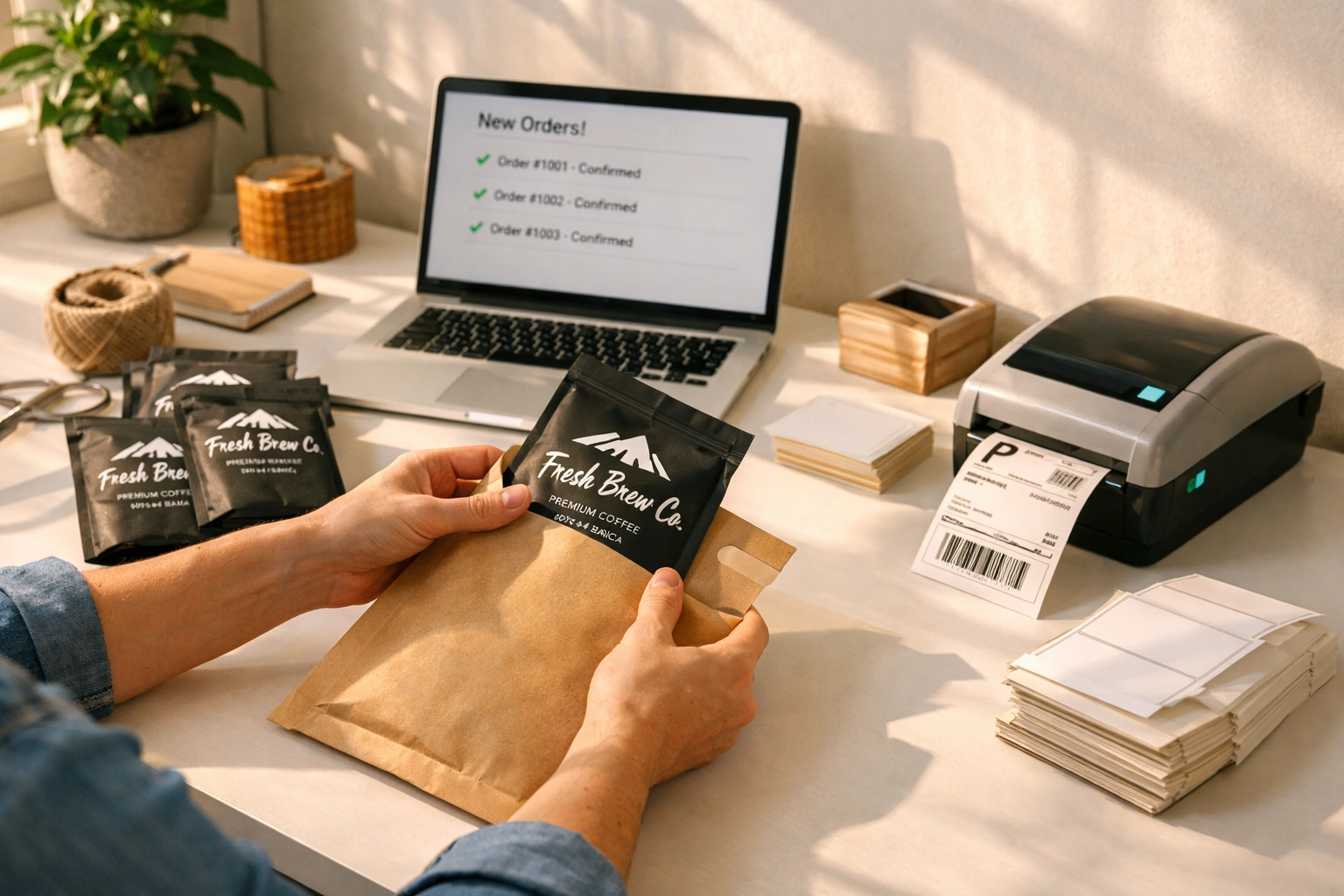
    Coffee dropshipping is refreshingly straightforward. You create and market your coffee brand, take orders from customers, and then your dropshipping partner (that's where we come in) handles everything else, roasting, packaging, labeling, and shipping directly to your customers.

    You never touch the beans. You never worry about stock levels. You focus entirely on what you do best: building your brand and connecting with customers.

    Think of it as having your own roastery and fulfillment center, except you don't actually own them. Your partner roasts fresh coffee to order, packages it with your branding, and ships it out while you're busy planning your next marketing campaign or designing your new seasonal blend.

    The best part? Your customers never know you're working with a partner. No Limini Coffee branding appears on the package unless you want it there. It's your brand, your way.

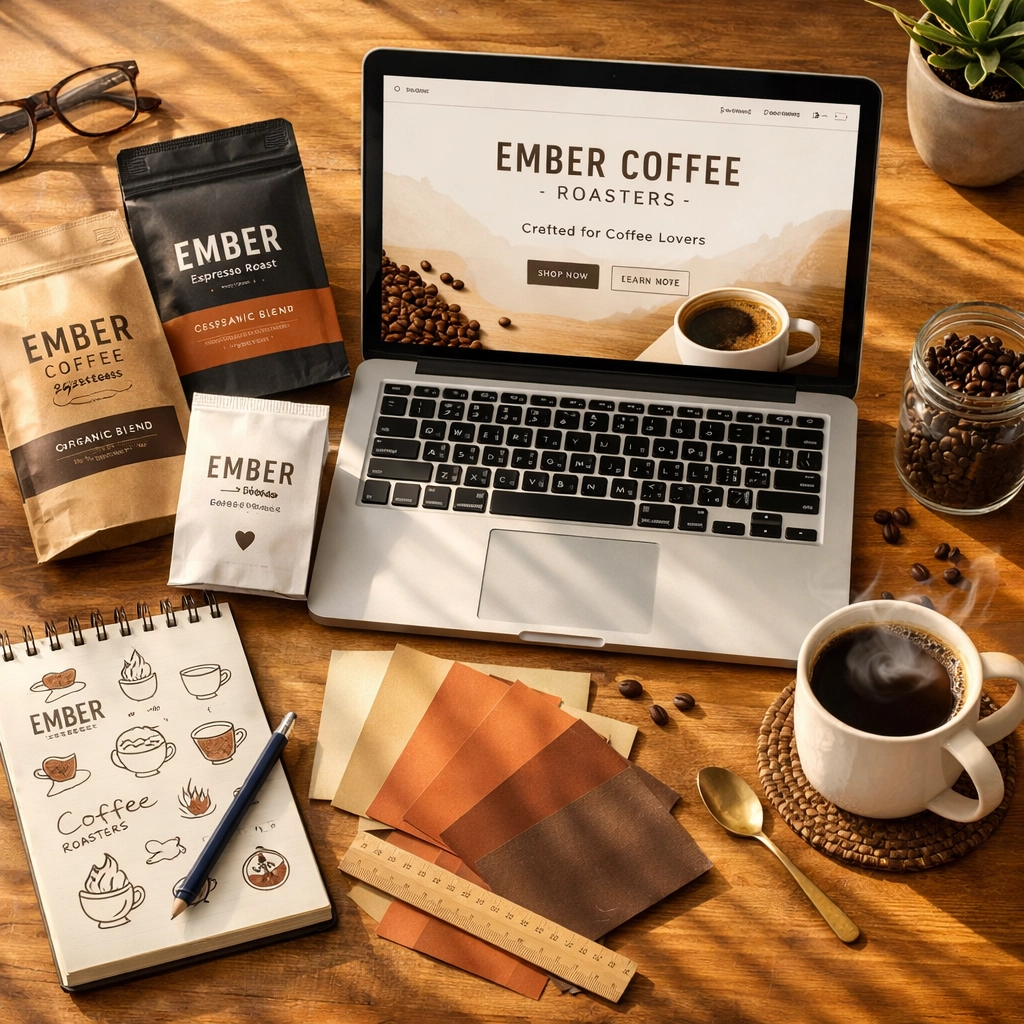
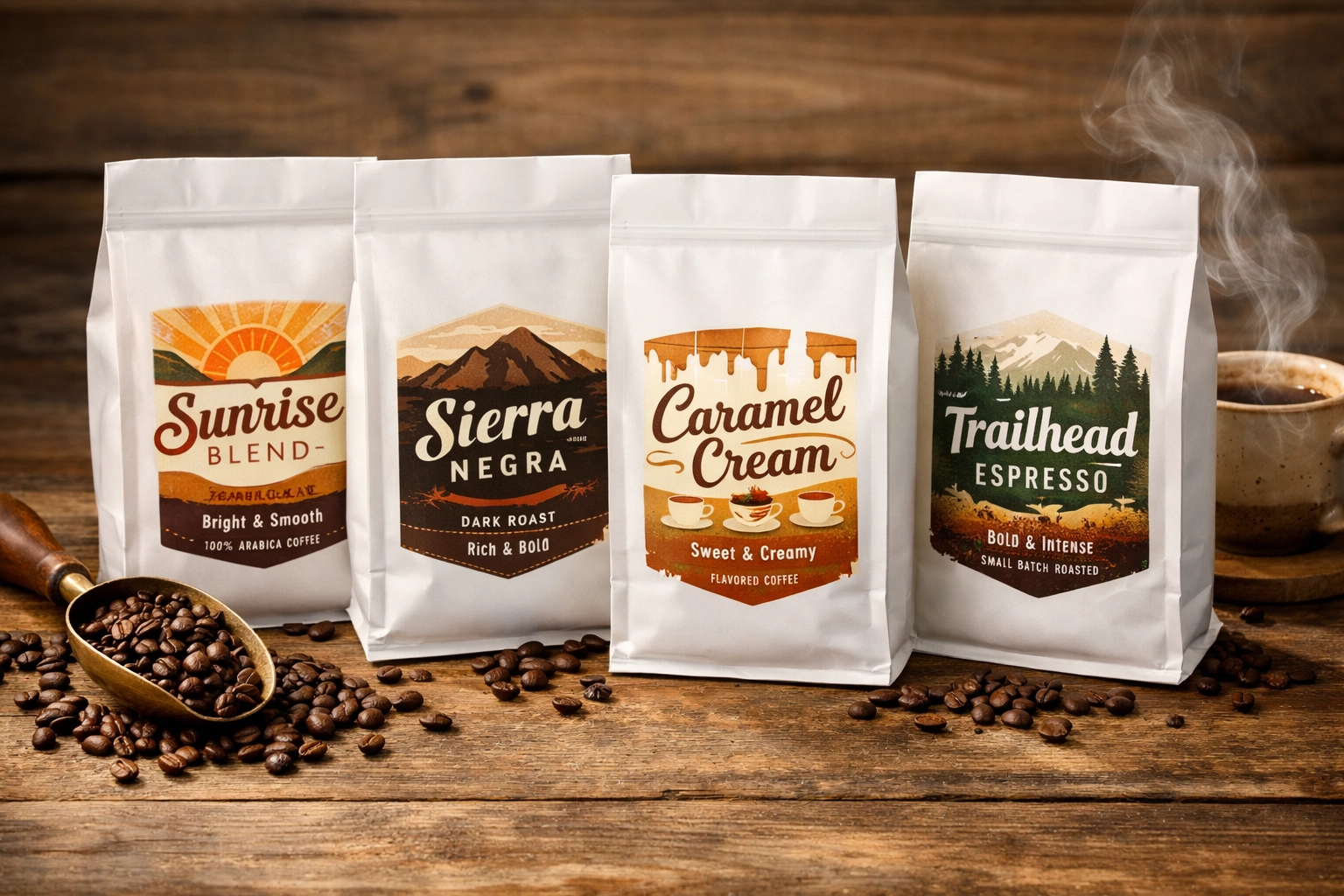
    Entrepreneur's workspace with laptop showing coffee brand website mockup and custom packaging samples

    Why The UK Market Is Perfect For This

    The UK coffee scene has absolutely exploded over the past decade. People aren't settling for supermarket instant anymore, they want specialty coffee, single origins, unique blends, and brands with personality. The demand for quality coffee is higher than it's ever been.

    And here's the thing: consumers love supporting small, independent coffee brands. They want to know the story behind their morning cup. They want brands that align with their values. They want something that feels personal and authentic.

    That's your opportunity.

    By working with UK-based suppliers, you're also tapping into the local market advantage. Faster delivery times, support for local businesses, and a smaller carbon footprint compared to importing from overseas. Your customers will appreciate that.

    Your Step-By-Step Quick Start Guide

    Let's break down exactly how to launch your coffee dropshipping business. We'll keep this practical and actionable.

    Step 1: Choose Your Niche

    The coffee market is big, which means you need to stand out. Think about who you're serving and what makes your brand different.

    Are you targeting busy professionals who need convenience? Health-conscious consumers looking for organic options? Coffee geeks who geek out over processing methods and tasting notes? New parents who need decaf that doesn't taste like disappointment?

    Your niche will guide everything, your branding, your product selection, your marketing voice. The more specific you can be, the easier it becomes to find and connect with your ideal customers.

    Some questions to consider:

    • What origin stories resonate with your target audience?
    • Are you focusing on sustainability and ethical sourcing?
    • Will you offer blends, single origins, or both?
    • What about roast levels, light, medium, dark, or a range?
    • Are you including decaf options?

    Don't try to be everything to everyone. Pick your lane and own it.

    Coffee entrepreneur reviewing specialty coffee samples and taking notes at cafe table

    Step 2: Find Your Dropshipping Partner (Hello!)

    This is arguably the most important decision you'll make. Your dropshipping partner is the backbone of your business: they're handling the product quality, fulfillment speed, and ultimately, your customer's experience.

    Here's what to look for in a supplier:

    Product Quality: Your brand is only as good as the coffee you sell. You need a roaster who sources quality beans and roasts them properly. Taste their coffee first. If you wouldn't drink it yourself, don't sell it.

    White Label Capabilities: Can they package coffee under your brand name with custom labels? This is essential for building brand recognition.

    Delivery Times: UK customers expect quick delivery. Your partner should ship promptly: ideally within a day or two of receiving the order.

    Minimum Orders: Many suppliers require minimum order quantities, which defeats the purpose of dropshipping. Look for partners with no minimum requirements.

    Integration Options: How easy is it to place orders? Can they integrate with your website or do you need to email every order manually?

    Pricing Structure: What are the wholesale prices? Are there setup fees or monthly charges? The economics need to work for your business model.

    We offer white label dropshipping with no setup charges, no monthly fees, and no minimum orders. You get wholesale pricing on specialty coffee that we roast fresh to order, and we handle everything from grinding (if needed) to packaging to shipping. Your customers get quality coffee delivered fast, and you get to focus on building your brand. Check out how it works at Limini Coffee's dropshipping services.

    Step 3: Set Up Your Online Shop

    You need a home base where customers can discover your brand and place orders. For most coffee dropshippers, that means an e-commerce website.

    Shopify is the popular choice here, and for good reason. It's user-friendly, looks professional, and integrates well with most dropshipping suppliers. You can have a functional storefront up and running in a weekend.

    When building your shop, focus on:

    Branding: Your visual identity matters. Invest time in your logo, color palette, and overall aesthetic. This is what customers will remember.

    Product Descriptions: Don't just list specs. Tell the story of each coffee. Where's it from? What does it taste like? How should they brew it? Make it compelling.

    Photography: Quality images make a massive difference. If your supplier provides product photos, great. If not, order samples and shoot your own.

    User Experience: Make it stupid simple to browse, select, and checkout. Every extra click is an opportunity for customers to abandon their cart.

    About Page: People want to know who they're buying from. Share your story, your values, why you started this brand.

    Custom branded coffee bags with white label packaging and fresh roasted beans

    Step 4: Price Your Products

    Pricing is a balancing act. You need to cover your costs, make a profit, and remain competitive: all while reflecting the quality and positioning of your brand.

    Most coffee dropshippers mark up wholesale prices by 50-100%, though premium brands can go higher if the quality and branding justify it. A 250g bag that costs you £6 wholesale might retail for £9-12.

    Remember to factor in:

    • Your wholesale coffee cost
    • Payment processing fees (usually 2-3%)
    • Marketing costs
    • Website hosting and platform fees
    • Your time and effort

    Don't compete on price alone, especially in the specialty coffee market. Customers will pay more for quality, great branding, and excellent service.

    Step 5: Market Your Brand

    Here's where your creativity comes in. You've got the product sorted: now you need to get it in front of people.

    Social Media: Instagram is perfect for coffee brands. Share beautiful photos, brewing tips, behind-the-scenes content, and customer features. TikTok is also brilliant for reaching younger audiences with quick, entertaining coffee content.

    Content Marketing: Start a blog (like this one!). Write about coffee origins, brewing guides, industry trends. This helps with SEO and positions you as an authority.

    Email Marketing: Build your list from day one. Offer a discount for first-time subscribers. Send regular newsletters with coffee tips, new products, and exclusive offers.

    Partnerships: Collaborate with other small businesses, cafes, or influencers in your niche. Cross-promotion can be incredibly effective.

    Local Markets: If you're building a local brand, set up stalls at farmers markets or food festivals. Let people taste your coffee and connect with your story in person.

    The beauty of dropshipping is you can test different marketing approaches without worrying about inventory. Running a promotion? No problem. Want to launch a limited edition blend? Easy. Your supplier handles the operational side while you experiment with what works.

    Why Limini Coffee Makes Sense For Your Business

    We've worked with coffee dropshippers across the UK, and we understand what you need to succeed.

    Fresh-Roasted Quality: We roast to order, which means your customers get coffee at its peak. We're talking days-fresh, not months-old beans sitting in a warehouse.

    Flexibility: Whether you want beans or ground coffee, 250g bags or 1kg, we've got you covered. We offer single origins, blends, and decaf options to suit different customer preferences.

    True White Label: Your branding, your labels, your brand story. We stay completely invisible unless you want to mention us.

    No Risk: No setup fees, no monthly charges, no minimum orders. You only pay for what you sell.

    Quick Turnaround: We process and ship orders fast, so your customers aren't waiting around.

    Ready to explore how it works? Visit our dropshipping program to learn more about wholesale pricing and getting started.

    Small business owner packing coffee dropshipping orders at home office desk

    The Real Benefits: Low Risk, High Reward

    Let's talk about why this model is so attractive for aspiring coffee entrepreneurs.

    Minimal Startup Costs: You're not buying roasting equipment, renting warehouse space, or investing in bulk inventory. Your main expenses are your website, branding, and marketing. You can literally start this business for under £500.

    No Inventory Risk: Traditional retail means buying stock upfront and hoping it sells. Dropshipping eliminates that risk entirely. You only order what's already sold.

    Scalability: Want to test a new blend? Launch it tomorrow. Want to expand into corporate gifting? Just add the option to your site. Want to sell 10 bags a week or 100? The infrastructure scales with you.

    Location Freedom: You can run this business from anywhere with an internet connection. No physical location required.

    Low Time Commitment: Especially in the beginning, you can run this alongside a day job. As it grows, you decide when to go full-time.

    Test Before You Invest: Many successful coffee brands start with dropshipping to validate their concept and build a customer base before investing in their own roasting equipment.

    Getting Started Today

    The coffee industry can feel intimidating from the outside. Roasting seems complex. Sourcing seems mysterious. Logistics seem overwhelming.

    But with dropshipping, you can bypass all of that and focus on what actually matters: building a brand that people love, connecting with customers, and sharing great coffee.

    Your first step? Get clear on your brand concept. Who are you serving? What makes you different? What's your story?

    Then reach out to a dropshipping partner (like us!) and start the conversation. Taste their coffee. Understand their process. Make sure it's a good fit.

    Set up your website. Start with a simple, clean design and a few core products. You can always expand later.

    And then: and this is the important part: launch. Don't wait for everything to be perfect. Get your brand out there, start making sales, and iterate as you go.

    The UK coffee market is thriving, and there's absolutely room for your brand in it. Whether you're dreaming of turning this into a full-time business or just want a creative side project that pays for itself, coffee dropshipping offers a genuine path forward.

    Want to chat about launching your coffee brand? Check out our dropshipping services and let's make it happen. Your coffee brand starts now. ☕

  • The Real Cost of Hiring vs. AI: Why Your First ‘Hire’ Should Be a Bot

    The Real Cost of Hiring vs. AI: Why Your First ‘Hire’ Should Be a Bot

    You need help. Your business is growing, and you're drowning in admin tasks, customer emails, social media scheduling, and data entry. The solution seems obvious: hire someone.

    But then you do the math… and your stomach drops.

    Salary. Benefits. Training. Management time. Recruitment fees. And that's just Year One.

    What if I told you there's a better first "hire"? One that costs 80-90% less, never calls in sick, and starts delivering ROI in weeks instead of months?

    THE REAL COST OF HIRING A HUMAN (SPOILER: IT'S BRUTAL)

    Let's break down what that first hire actually costs you:

    Base Salary: $40,000-$50,000 for entry-level admin or customer support

    Benefits & Payroll Taxes: Add another 25-40% on top ($10,000-$20,000)

    Recruitment: Agency fees, job board postings, your time interviewing ($3,000-$16,000)

    Onboarding & Training: Equipment, software licenses, productivity ramp-up time ($2,000-$5,000)

    Management Overhead: Your time managing, reviewing, correcting mistakes (conservatively 5-10 hours/week)

    Total Year One Cost: $55,000-$91,000

    And here's the kicker , that salary increases 3% annually. By Year Five, you're paying $62,000-$105,000 annually for that same role.

    Business owner stress vs relaxation: comparing traditional hiring costs with AI automation benefits

    WHAT AN AI "EMPLOYEE" ACTUALLY COSTS

    Now let's look at AI business automation:

    Setup Investment: $5,000-$20,000 (one-time)

    Monthly Subscription: $50-$500 depending on usage

    Training Time: Basically none. It learns your business in days, not months.

    Management Time: Maybe an hour a week to check in and optimize

    Annual Cost: $600-$26,000 (setup year), then $600-$6,000 ongoing

    The math is stupid simple. You're looking at 70-90% cost savings compared to a human hire.

    But it gets better.

    THE ROI BREAKDOWN (WHERE THIS GETS REALLY FUN)

    Let's say you're running a small business and need help with customer support, email management, and social media scheduling. Here's the real comparison:

    Human Hire:

    • 30-40 hours spent per week on these tasks
    • Cost: ~$50,000/year (conservative)
    • Time to productivity: 2-3 months
    • Error rate: 3-5%

    AI Solution:

    • Same tasks automated 24/7
    • Cost: ~$3,000-$6,000/year
    • Time to productivity: 1-2 weeks
    • Error rate: <1%

    Your savings: $44,000-$47,000 in Year One alone.

    And here's what most people miss : that AI "employee" works while you sleep. It handles customer inquiries at 2 AM. It schedules social posts on weekends. It processes orders on holidays.

    You're not just saving money. You're getting 24/7 coverage for less than the cost of a part-time human.

    AI robot assistant automating multiple business tasks 24/7 including emails and social media

    "BUT WHAT ABOUT THE HUMAN TOUCH?"

    I hear you. And look : AI isn't replacing your entire team. It's replacing the mind-numbing, repetitive tasks that burn your team out.

    Customer onboarding emails? AI handles it.

    Data entry from forms? AI's got it.

    Social media posting? Already scheduled.

    Appointment reminders? Done before you even wake up.

    This frees up your actual human employees (or you, if you're solo) to do what humans do best: strategic thinking, relationship building, creative problem-solving.

    The best businesses in 2026 aren't choosing between humans OR AI. They're using AI to automate admin tasks so their humans can be more… human.

    THE HIDDEN COSTS NOBODY TALKS ABOUT

    Here's what really makes the AI math work:

    Turnover: The average employee turnover cost is 40% of their annual salary. Contact centers see 30-45% annual turnover. Your AI assistant? Zero turnover risk.

    Sick Days: Average employee takes 7-10 sick days per year. That's 3-4% of your investment just… gone.

    Scaling: Need to 2x your support capacity? With humans, you need to double your hiring, training, and management time. With AI, you just… scale up your subscription.

    Opportunity Cost: That role you need filled? It takes 30-45 days on average to hire someone. During that time, you're either doing the work yourself (losing focus on revenue-generating activities) or the work isn't getting done. AI is operational in days.

    A healthcare provider recently cut their annual cost for 1.5 full-time employees from $159,671 to $2,985 using AI automation. That's a 98.1% reduction.

    Let that sink in.

    Business owner achieving financial success while AI automates admin tasks and daily operations

    THE "BUT I'M JUST STARTING OUT" SCENARIO

    You're bootstrapping. You're doing everything yourself. You can't afford a $50K hire, but you're drowning in busywork that's keeping you from actually growing your business.

    This is exactly when AI makes the most sense.

    Instead of spending your evenings responding to customer emails, scheduling social posts, and updating spreadsheets, you automate it. For the cost of a nice dinner out each month.

    You get your nights and weekends back. You get to focus on sales, product development, and strategy. The work still gets done : it just doesn't require YOU to do it anymore.

    That's not just cost savings. That's lifestyle change.

    REAL TALK: WHEN DOES THIS PAY OFF?

    Most AI automation solutions hit ROI in 3-9 months. Here's a conservative scenario:

    Month 1-2: Setup and integration. You're investing time and the initial cost.

    Month 3: Things are humming. You're getting 20-30 hours back per week.

    Month 4-6: You've fully optimized. The AI is handling 70-80% of your repetitive tasks.

    Month 6-9: You've hit ROI. Everything from here is pure savings and freed-up time.

    By Year Two, you're not just saving money. You're scaling faster than competitors who are still stuck in the "hire more people" mindset.

    YOUR NEXT MOVE

    Look, I'm not saying AI replaces every human role. But if you're a small business owner or solopreneur staring down the cost of your first hire : or your second, third, or fourth : the math is undeniable.

    AI business automation isn't the future. It's right now. And the businesses figuring this out first are the ones who'll still be standing when everyone else has burned through their runway on hiring costs.

    Want to see what this actually looks like for your business? Take a look at Marblism : it's built specifically for small businesses and solopreneurs who need the power of a full team without the cost of actually hiring one.

    Your first "hire" should be a bot. Your second one probably should be too.

    The question isn't whether AI automation makes financial sense. It's whether you can afford to keep doing things the old way.