Author: admin

  • Why Everyone Is Talking About AI in Hospitality (And You Should Too)

    Why Everyone Is Talking About AI in Hospitality (And You Should Too)

    Redefine guest discovery. Automate complex operations. Personalize every interaction.

    The hospitality landscape just hit a massive inflection point. It is Monday, March 30, 2026, and the industry is no longer just "using" tech: it’s being redefined by it. If you feel like the conversation around AI has reached a fever pitch, you’re right. We aren’t talking about simple chatbots anymore. We are talking about the brain of your hotel.

    At Mews, we believe technology should give you more time, not take it away. We think the best guest experiences happen when the software stays out of the way. That’s why AI is the biggest thing to happen to hotels since the internet itself. It’s the difference between being a choice on a list and being the only recommendation an AI agent gives to a traveler.

    The Rise of the Agentic Guest

    The way people find your hotel has fundamentally changed. We’ve moved past the era of scrolling through endless OTA pages. Today, agentic AI is doing the heavy lifting.

    Think about it. AI agents now query dozens of sources, evaluate real-time sentiment, and complete bookings autonomously. They don’t "browse"; they execute. By 2030, experts predict that 30% of all travel bookings will be handled entirely by these AI agents. This is a machine-to-machine transaction.

    If your data is fragmented: if your hotel PMS isn’t talking to your channel manager in real-time: you effectively disappear. If the AI can’t find a clean, structured set of data about your amenities and availability, it simply skips you. You aren’t just losing a booking; you’re losing visibility in the new digital ecosystem.

    Smartphone on a hotel lounge table representing AI discovery and mobile booking engine interaction.

    Operational Excellence through Automation

    AI isn’t just for the guest; it’s for your team. We see properties transforming their daily grind into a seamless flow. We think automation is the only way to solve the industry’s perpetual labor challenges.

    Consider the ripple effect of a connected system:

    • Housekeeping synchronization: As soon as a guest checks out via a self-check-in kiosk or mobile app, the AI notifies the cleaning team. No radios. No clipboards. Just real-time updates.
    • Waste reduction: Smart hotels are using AI to track food waste in kitchens, cutting costs by up to 50% in under a year.
    • Front desk liberation: When the AI handles the repetitive "What’s the Wi-Fi password?" or "Can I have a late checkout?" questions, your staff can actually be hosts again.

    "We saved 10 hours a week just by letting the AI handle routine guest queries," says one of our partners. That’s 10 hours of human connection regained. That is the Mews way: using automation to foster humanity.

    Hyper-Personalization at Scale

    We believe every guest should feel like your only guest. In the past, that kind of attention was reserved for high-end boutiques with massive staff-to-guest ratios. Not anymore.

    By connecting your CRM directly into your hotel PMS, AI creates a unified data fabric. It remembers that a guest prefers a high floor and a firm pillow. It knows they always order a latte at 8:00 AM.

    AI doesn't just store this data; it acts on it:

    1. Dynamic Upselling: Suggesting a spa treatment exactly when the guest is most likely to book.
    2. Predictive Room Assignment: Mapping guest preferences to the perfect room before they even arrive.
    3. Tailored Marketing: Sending offers that actually resonate, leading to guest satisfaction increases of 25%.

    This isn't creepy; it's convenient. It’s the "platform" approach: everything working together to anticipate a need before the guest even voices it.

    Serene hotel bedroom showing personalized guest comfort driven by an integrated hotel CRM.

    Why Your Tech Stack Is Your Strategy

    In this AI-defined era, your infrastructure is your destiny. You cannot run 2026 AI on a 1996 legacy system. To stay relevant, your tech stack needs to be cloud-native and open.

    Your booking engine needs to be more than a form; it needs to be a conversion machine powered by real-time data. Your channel manager shouldn't just push rates; it should analyze demand patterns and adjust them in milliseconds.

    This is where Mews excels. We built our platform to be:

    • Cloud-native from day one: No bulky servers. No downtime.
    • Automation-focused: Built-in features that handle the "boring" stuff so you don't have to.
    • Easy to use: An interface that feels like your favorite smartphone app, not a spreadsheet from the 90s.

    When your systems are integrated, you aren't just managing a hotel; you're orchestrating an experience. You’re giving yourself the freedom to innovate.

    Modern workspace representing an innovative hotel PMS and an integrated, cloud-native tech stack.

    The Cost of Waiting

    The urgency is real. We’ve entered a phase where traditional strategies become outdated before they’re even fully implemented. Hotels that modernize now will define the landscape for the next decade. Those that wait will spend years: and a lot of money: trying to recover lost ground.

    This isn't an incremental upgrade. It’s a foundational shift. If you aren't leveraging AI within your hotel PMS today, you are giving your competitors a head start that might become impossible to close.

    We believe in a future where hospitality is effortless. We think your software should be your biggest competitive advantage, not your biggest headache.

    Get Ready for What's Next

    So, where do you start? You don't need a PhD in computer science. You just need the right partners.

    1. Audit your data: Make sure your guest profiles are clean and your inventory is synced across all channels.
    2. Embrace self-service: Implement self-check-in kiosks to gather better data and free up your staff.
    3. Focus on the platform: Look for a PMS that prioritizes connectivity and automation.

    See what Mews can do for your property. We’ve helped over 12,500 properties move away from legacy friction and toward automated freedom. It’s about more than just software; it’s about a new way of working.

    Ready to see how automation can transform your guest experience?
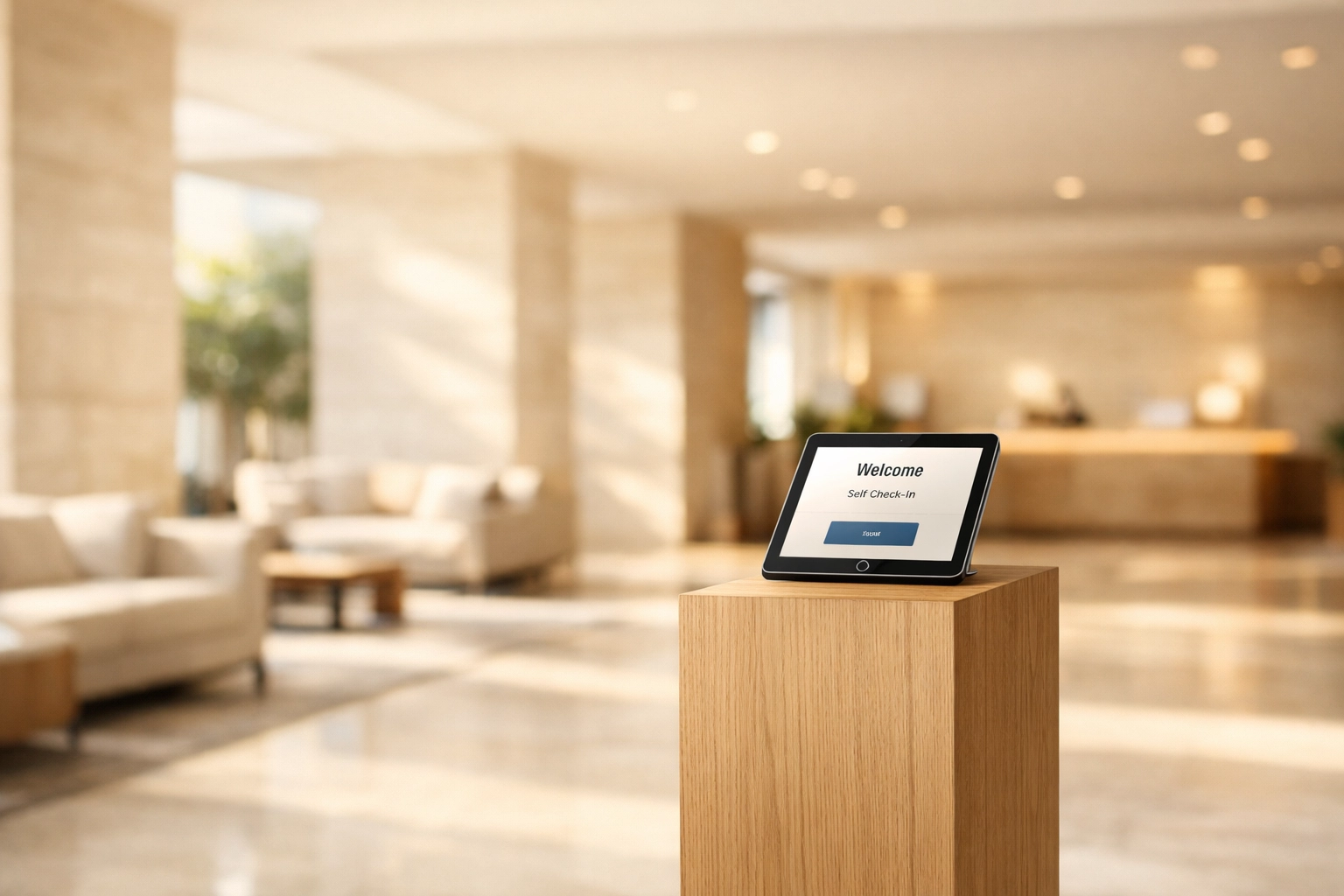
    Self-check-in kiosk in a modern lobby highlighting automated guest experiences and innovation.

    Schedule a 30-minute demo today and get your property ready for the agentic era. Let’s get you earning more revenue while doing less manual work. It's time to let AI do what it does best, so you can do what you do best: looking after your guests.

    Don't let your hotel disappear from the digital map. Join the conversation. Join the innovation. Join Mews.

    Get started here and discover why we are the heart of the modern hotel.

  • Stop Wasting Time on Boring Admin: Try These 5 AI Automation Hacks Instead

    7:02 AM.

    The room is dark. Your eyes are barely open. But your hand, driven by a muscle memory you've grown to loathe, reaches for the smartphone on the nightstand.

    The blue light hits your face like a physical weight.

    14 unread emails. 3 Slack notifications. A "gentle reminder" from a client about a spreadsheet you forgot to update. Before you’ve even had a sip of water, your brain is already spinning. You’re already behind.

    It’s the Small Business Tax. You know it well. It’s that invisible mountain of boring, repetitive, soul-crushing admin that eats your mornings, kills your creativity, and makes you wonder why you started this business in the first place.

    But here’s the thing… it doesn't have to be this way.

    The "busy-ness" isn't a badge of honor anymore. It’s a leak in your boat. And today, we’re going to plug it. If you’re ready to stop playing digital janitor and start being the CEO again, you need an ai virtual assistant for business.

    Let’s walk through a day where the admin does itself.


    HACK 1: THE INBOX EXORCIST

    8:30 AM.

    Usually, this is when you’d sit down with a coffee and lose two hours to the "Inbox Abyss." You’d sort through spam, "quick questions," and newsletters you don't remember subscribing to.

    Not today.

    While you were sleeping, your AI email manager was working. It didn't just "filter" things, it understood them. It identified the urgent client request, flagged the invoice that needs paying, and drafted three "Standard Procedure" replies for those repetitive questions you get every Tuesday.

    The Hack: Use AI to prioritize and draft.
    Tools like SaneBox or even custom GPT integrations can scan your incoming mail. They look for action items. They extract deadlines. They can even draft a response that sounds exactly like you, minus the passive-aggressive sigh.

    Stop juggling. Start reviewing.
    You don't need to write every "Sounds good, thanks!" email from scratch. Let the machine do the heavy lifting while you focus on the conversations that actually move the needle.

    AI email automation helping a business owner stay calm while a robot clears a cluttered inbox.

    HACK 2: THE "CALENDAR TETRIS" TERMINATOR

    10:15 AM.

    "Does Tuesday at 2 PM work?"
    "No, how about Wednesday at 10?"
    "I have a dentist appointment then. Thursday?"
    "Thursday is tight. Maybe next week?"

    …Stop. Just stop.

    This back-and-forth is a time-thief. It’s a tiny, annoying mosquito that drains your focus.

    The Hack: AI Scheduling Assistants.
    Imagine an ai virtual assistant for business that knows your preferences better than you do. It knows you hate meetings before 11 AM. It knows you need a 15-minute "sanity break" between calls.

    When someone wants to chat, you send one link. Or better yet, your AI assistant handles the whole conversation. Tools like Calendly or Reclaim.ai don’t just show availability; they optimize your day. They protect your "deep work" blocks like a digital bodyguard.

    You just see a notification: Meeting confirmed for Thursday at 3 PM.
    You didn't lift a finger. You just kept working.


    HACK 3: THE CUSTOMER SUPPORT CLONE

    1:00 PM.

    Lunch is over. Usually, this is when the "support tickets" start piling up.
    "How do I reset my password?"
    "What’s your refund policy?"
    "Can I upgrade my plan?"

    You've answered these questions four thousand times. You could do it in your sleep. So… why are you still doing it awake?

    The Hack: Automate customer support with ai.
    This is the big one. If you aren't using an AI chatbot or a virtual support agent, you’re essentially paying yourself (or an employee) to be a broken record.

    Modern AI support doesn't feel like those clunky "Press 1 for Sales" bots from 2012. They’re smart. They’re conversational. They can tap into your company's knowledge base and answer complex questions instantly.

    Imagine a world where 80% of your customer queries are resolved before they ever hit your inbox. The customer is happy because they got an answer in three seconds. You’re happy because you didn't have to explain your pricing page for the fifth time today.

    If you want to see how this looks in the real world, check out what’s happening at https://marblism.link/scott-bowen. It’s basically like hiring a support team that never sleeps and never complains about the coffee.

    Automate customer support with AI using virtual assistants that provide instant and accurate answers.

    HACK 4: THE DATA ENTRY DEATH-BLOW

    3:45 PM.

    The dreaded "Spreadsheet Hour."
    You’ve got a stack of digital receipts, a list of new leads from a webinar, and a CRM that’s looking a little dusty. Manual data entry is where dreams go to die. It’s tedious. It’s prone to human error. And it makes your brain feel like it’s melting.

    The Hack: Document Processing & Flow.
    AI can now "read" documents just like you can. It can scan an invoice, pull out the total, the tax, and the vendor name, and then automatically shove that data into your accounting software.

    Uber reportedly saved nearly $300,000 in employee hours just by automating expense tracking. You might not be Uber (yet), but your time is worth just as much per hour to your business.

    Tools like Zapier paired with OpenAI can take a lead from a Facebook ad, summarize their LinkedIn profile, and drop a personalized note into your CRM.
    You don't type. You don't copy-paste. You just… observe.


    HACK 5: THE WORKFLOW WHISPERER

    5:30 PM.

    The sun is starting to set. Usually, you’d be frantically writing a "To-Do" list for tomorrow, terrified that you’ve missed something.

    The Hack: Autonomous Task Coordination.
    AI project management is the final boss of admin hacks. Instead of you chasing your team (or yourself) for updates, the system does it.

    AI-driven tools can look at your deadlines and automatically reshuffle your tasks based on priority. It can send a ping to your freelancer when a file is ready for them. It coordinates the "if-this-then-that" of your entire business.

    It’s like having a Chief of Staff who lives inside your computer.
    The chaos is gone. The "What was I supposed to do today?" anxiety is replaced by a clear, calm list of wins.

    Using an AI virtual assistant for business to coordinate complex tasks and streamline company workflows.


    STOP JUGGLING. START GROWING.

    6:15 PM.

    The laptop is closed.
    The office lights are off.
    But your business? It’s still moving.

    Your ai virtual assistant for business is still sorting leads. Your automated support is still helping customers. Your calendar is filling up with high-value meetings, all while you’re heading to dinner.

    Scaling shouldn’t be this easy. But here we are.

    We live in an era where "boring admin" is a choice. If you’re still doing it manually, you’re not being "thorough", you’re being inefficient. You’re leaving money on the table and life on the shelf.

    The transition from "Overworked Owner" to "Efficient Operator" starts with one step. You don't have to automate everything overnight. Start with one hack. Pick the one that makes you sigh the loudest.

    Maybe it’s the emails.
    Maybe it’s the constant support pings.

    Whatever it is, there’s an AI solution ready to take it off your plate.

    If you’re ready to see how Marblism can transform your daily grind into a streamlined machine, you need to look at the tools available right now. This isn't future-tech. This is today-tech.

    Go here to see the future of your business: https://marblism.link/scott-bowen.

    Stop wasting your genius on chores.
    The robots are ready.
    Are you?


    FAQ: EVERYTHING YOU’RE AFRAID TO ASK ABOUT AI ADMIN

    Is AI going to mess up my data?
    Only if you give it bad instructions. Modern AI is incredibly accurate at data extraction, often more so than a tired human at 4 PM on a Friday.

    Will my customers hate talking to a bot?
    They’ll hate waiting six hours for a human response more. When you automate customer support with ai, you give them instant gratification. That’s a win in any language.

    Is it expensive to set up?
    Most of these tools have "freemium" tiers. The ROI isn't just in dollars; it’s in the hours of your life you get back. What is one hour of your time worth? Multiply that by 20 hours a month. There’s your answer.

    Do I need to be a coder?
    No. Most AI automation tools today are "no-code." If you can drag and drop a file, you can automate your admin.

    Where do I start?
    Start with the thing that hurts most. Usually, that's customer support or email.

    Go check out https://marblism.link/scott-bowen and take the first step toward a quiet, organized, and profitable morning.

    The coffee tastes better when your inbox is already empty. ☕


    Penny's Final Thought:
    You didn't start a business to become a data entry clerk. Give yourself permission to delegate the boring stuff to the machines. They don't mind. In fact, they’re quite good at it.

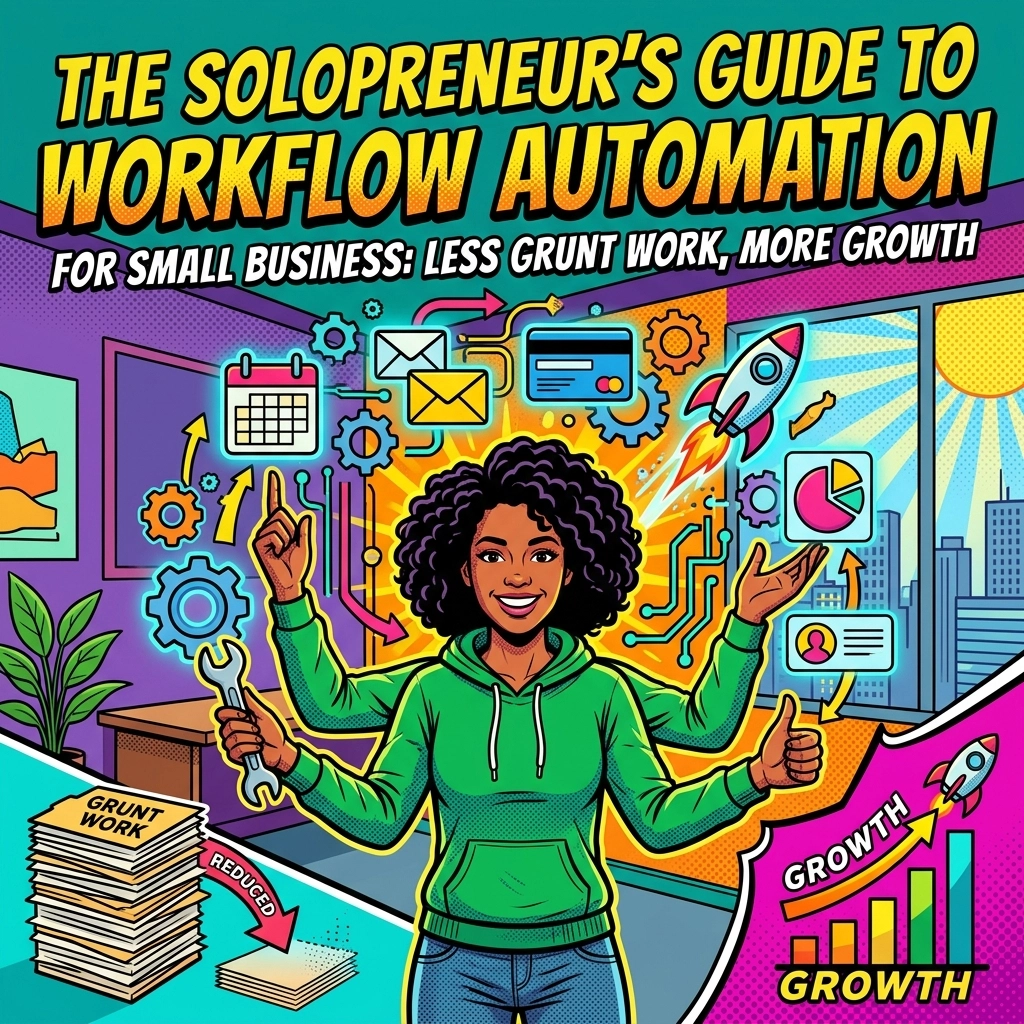
  • The Solopreneur’s Guide to Workflow Automation for Small Business: Less Grunt Work, More Growth

    The Solopreneur’s Guide to Workflow Automation for Small Business: Less Grunt Work, More Growth

    Workflow Automation for Small Business: Stop Doing the Busy Work

    ☕ 7:30 AM. The house is quiet. The coffee is hot. You open your laptop, ready to conquer the world, or at least finish that big project.

    But then… it happens.

    Your inbox is a crime scene. Three clients are asking for the same onboarding document. Your calendar is a jigsaw puzzle with missing pieces. You spent two hours yesterday manually copying data from a lead form into a spreadsheet, and guess what? You’ve got five more waiting for you today.

    By 10:00 AM, you’re not a CEO. You’re a high-priced data entry clerk.

    This is the "Busy Work Trap." It’s the invisible ceiling that stops small businesses from becoming big businesses. But there’s a way out that doesn't involve hiring a 10-person team or working until 2:00 AM.

    THE TRUTH ABOUT WORKFLOW AUTOMATION

    Workflow automation sounds like something for Silicon Valley giants with massive IT budgets. It’s not. For a solopreneur, it’s simply setting up "If This, Then That" rules so your software talks to each other while you do the actual work.

    Think of it as building a digital assembly line.

    Instead of you manually moving a lead from your website to your CRM, sending them a welcome email, and then creating a task in your project manager… the system just does it.

    Solopreneur at desk with automated arms managing business tasks, illustrating workflow automation for small business.

    YOUR 30-DAY ESCAPE PLAN

    You can’t automate your entire business in an afternoon. If you try, you’ll just create a faster way to make mistakes. Follow this roadmap instead:

    Days 1-7: The Audit
    Stop working for a second. Look at everything you did last week. What happened more than three times? What felt like a chore? If it has clear rules and happens often, it’s a candidate for automation.

    Days 8-14: The First Win
    Pick one thing. Just one. Maybe it's meeting scheduling. Instead of the back-and-forth "Does Thursday at 2:00 work for you?" dance, set up an automated scheduler. You send a link. They pick a time. The calendar invite and Zoom link appear magically. You just saved four emails per client.

    Days 15-30: Connecting the Dots
    Start linking your tools. When a client pays an invoice, have your system automatically send the "Getting Started" guide. When someone fills out a contact form, have their details pop up in your Slack or via text.

    SCALING WITHOUT THE STRESS

    The goal isn't to be "techy." The goal is to be free. When you implement workflow automation for small business, you aren't just saving time, you're buying back your mental energy.

    You stop wondering "Did I send that invoice?" because the system already did. You stop worrying about leads falling through the cracks because the automation is holding the net.

    Scaling shouldn't be this easy. But here we are.

    Ready to stop the manual grind? Check out how Scott Bowen and Marblism make this transition seamless.


    Why Your Business Needs an AI Virtual Assistant (Before Your Competitors Get One)

    📱 11:15 PM. You’re finally in bed, scrolling through LinkedIn. You see a competitor, the one who started six months after you, announcing their third major partnership this quarter.

    How are they doing it? They have the same 24 hours you do. They don't seem smarter. They definitely don't seem to be working harder.

    The difference? They aren't doing it alone. And they didn't hire an expensive agency either.

    They got an AI virtual assistant.

    THE INVISIBLE EMPLOYEE

    An AI virtual assistant for business isn't just a chatbot that says "Hello, how can I help you?" on your homepage. It’s a sophisticated layer of intelligence that lives inside your operations.

    While you’re sleeping, it’s qualifying leads.
    While you’re in a meeting, it’s drafting your social media posts based on your brand voice.
    While you’re taking a weekend off, it’s analyzing your sales data to tell you which product is actually making you money.

    A glowing AI virtual assistant for business working at a desk at midnight, managing data and emails efficiently.

    WHY AI BEATS THE TRADITIONAL VA

    Don't get it wrong, human assistants are great. But they have limits. They need sleep. They have "off" days. They cost a full-time salary.

    An AI assistant:

    • Never sleeps. 3:00 AM inquiry from a lead in London? Handled.
    • Is infinitely scalable. It can talk to one person or 1,000 people simultaneously without breaking a sweat.
    • Costs a fraction of a hire. You get executive-level support for the price of a few lattes.

    THE "AFTER" STATE: CALM COMPETENCE

    Imagine a Tuesday morning.

    ☕ 9:00 AM. You sit down. Your AI assistant has already sorted your inbox into "Action Required," "Information Only," and "Trash." It has prepared a summary of your meetings for the day.

    🤝 1:00 PM. A potential high-ticket client pings your site. The AI engages, answers three technical questions about your service, and books a call on your calendar for tomorrow. You didn't even touch your phone.

    🌙 6:00 PM. You close your laptop. The day is done. The work is finished. There are no "oops, I forgot" moments lingering in the back of your mind.

    THE COMPETITIVE EDGE IS SHRINKING

    The window of opportunity to use AI as a secret weapon is closing. Soon, having an AI virtual assistant for business will be as standard as having an email address.

    Right now, it’s your edge. It’s how you out-work, out-think, and out-scale businesses ten times your size. If you wait until everyone else has one, you’re not gaining an advantage: you’re just playing catch-up.

    Stop being the bottleneck in your own company.

    A business professional surfing a wave of gears, symbolizing scaling a small business and growth through AI automation.

    THE BOTTOM LINE

    You didn't start a business to spend your life in spreadsheets and admin panels. You started it to create, to lead, and to grow. AI is the leverage that lets you get back to that.

    The grunt work is optional. The growth is waiting.

    See the future of your business with Scott Bowen at Marblism.

    EMPLOYEE OF THE MONTH. EVERY MONTH.

    Scaling doesn't have to hurt. It just has to be smart.

  • How to Choose the Best Coffee Beans for Espresso at Home (Compared by Roast, Origin & Price)

    How to Choose the Best Coffee Beans for Espresso at Home (Compared by Roast, Origin & Price)

    So, you’ve finally invested in a home espresso machine. Maybe it’s a shiny new lever machine or a reliable automatic setup. You’ve got the espresso equipment, you’ve got the fancy cups, and you’re ready to pull that god-shot. But then you stand in front of the coffee aisle, or scroll through an endless list of online roasters, and panic sets in.

    "Espresso Roast," "Single Origin," "Dark Roast," "Italian Blend"… what does it all actually mean for your morning latte?

    The biggest secret in the industry (that isn't really a secret) is that "espresso beans" aren't a special type of bean grown on a secret mountain. Espresso is simply a brewing method. You can use any coffee bean for espresso, but, and this is a big "but", not every bean will taste good when concentrated under 9 BAR of pressure.

    At Limini Coffee, we spend our days obsessing over these variables so you don't have to. If you're looking for the perfect starting point for your home barista journey, you can browse our current freshly roasted selection here.


    The Roast Level: Finding Your Sweet Spot

    Roast level is arguably the most significant factor in how your espresso will taste. It affects everything from the crema to how easy the coffee is to "dial in."

    Dark Roasts: The Traditional Heavyweight

    When you think of a classic Italian espresso, you're thinking of a dark roast. These beans are roasted longer, often until they develop a glossy, oily surface.

    The Profile: Low acidity, heavy body, and flavours of dark chocolate, toasted nuts, and caramel.
    Why we like it: They are incredibly forgiving. Because they are more porous, they extract easily. They also cut through milk like a dream, making them perfect for lattes and cappuccinos.
    The Drawback: If roasted too dark, you lose the individual characteristics of the bean and end up with a "burnt" or "ashy" flavour.

    Medium Roasts: The Modern Standard

    Most specialty roasters (us included!) lean towards a medium roast for espresso.

    The Profile: A balance of sweetness and acidity. You’ll find notes of milk chocolate, red fruits, and brown sugar.
    Why we like it: It offers more complexity than a dark roast without the aggressive "sourness" that can come from light roasts. It’s the "Goldilocks" zone for home brewers.
    The Drawback: Requires a bit more precision with your tamping and grind size to get the best results.

    Light Roasts: The Wild Card

    Light roasts are rarely labelled "espresso roast" because they are notoriously difficult to extract in a short window of time.

    The Profile: High acidity, floral, tea-like, and citrusy.
    Why we like it: If you want to taste the "terroir" of the coffee, this is it.
    The Drawback: For most home baristas, light roasts can taste like sour lemon juice if the water temperature isn't high enough or the grind isn't fine enough. We usually recommend these for filter coffee rather than espresso.

    Comparison of light, medium, and dark roast coffee beans to show espresso roast level differences.


    Origin Selection: Does Geography Matter?

    Where your coffee is grown determines the chemical makeup of the bean. When we talk about sourcing our coffee, we look for specific profiles that complement the espresso method.

    Central and South America (The Reliable Backbone)

    Countries like Brazil, Colombia, and Guatemala are the powerhouses of the espresso world.

    • Brazil: Often low in acidity with a big, nutty, chocolatey body. It’s the perfect "base" for a blend.
    • Colombia: Offers a bit more "zip" and caramel sweetness.

    East Africa (The Flavor Bombs)

    • Ethiopia: Known for "natural" processed beans that can taste like blueberries or jasmine. When added to a blend, these beans add a "jammy" complexity that makes an espresso stand out.
    • Kenya: High acidity and big berry notes. Exciting, but can be overwhelming for some as a straight espresso shot.

    Asia and Indonesia (The Earthy Giants)

    • Sumatra: These beans often have an earthy, spicy, or even "tobacco" note. They provide a very heavy mouthfeel and almost zero acidity.

    If you're unsure where to start, we highly recommend a blend that combines South American beans for body and African beans for a hint of fruit. You can find our signature blends and single origins right here.


    Price Comparison: Budget vs. Specialty

    Let's talk money. We know it’s tempting to grab a massive 1kg bag of "Espresso Beans" from the supermarket for £8. But there’s a reason specialty coffee costs more.

    Category Price Range (per 250g) What you get
    Budget (Supermarket) £3 – £5 Often stale, roasted months ago, oily (which can clog grinders), and bitter.
    Mid-Range (Mass Market) £6 – £8 Better quality control, but usually very dark/oily to mask inconsistent bean quality.
    Specialty (Limini Coffee) £9 – £14 Freshly roasted (essential!), ethically sourced, complex flavours, and easier to brew.

    Is it worth the extra £5?
    Absolutely. Freshness is the single most important factor in espresso. Old beans lose their CO2, which means no crema. Without crema, your espresso lacks that silky texture and looks… well, a bit sad. Specialty beans like ours are roasted to order, ensuring you get that perfect "tiger-striped" pour.

    Two espresso shots comparing thick golden tiger-stripe crema from fresh beans with a stale flat pour.


    Freshness: The "Roasted On" Date

    If a bag of coffee has a "Best Before" date but no "Roasted On" date, put it back.

    Espresso relies on the degasification of CO2 to create pressure and crema.

    • Too Fresh (1-3 days): The coffee is still "fizzing" with gas. The shots will be inconsistent and can taste metallic.
    • The Sweet Spot (7-21 days): This is peak performance for espresso. The flavours have settled, and the gas levels are perfect for a stable extraction.
    • Too Old (6+ weeks): The oils have begun to oxidise (go rancid), and the bean has lost its internal pressure. You’ll find the water just gushes through the puck no matter how fine you grind.

    If you find yourself struggling with shot times, check our coffee brewing calculator to help you adjust your ratios based on your bean’s age and roast.


    Blends vs. Single Origins

    This is a common debate in the home barista community.

    Blends are designed for consistency. We take different beans and mix them to create a balanced flavour profile that remains the same bag after bag. They are generally much easier to work with and are designed specifically to taste great with milk.

    Single Origins come from one specific farm or region. They are more "seasonal." One month your Colombian might taste like apple and caramel; the next, it might be more chocolatey. They are fantastic for the adventurous brewer who drinks straight espresso or long blacks and wants to explore the nuances of different regions.

    If you’re just starting out, we suggest starting with a house blend. It removes one variable from the equation while you're still mastering your barista training skills at home.

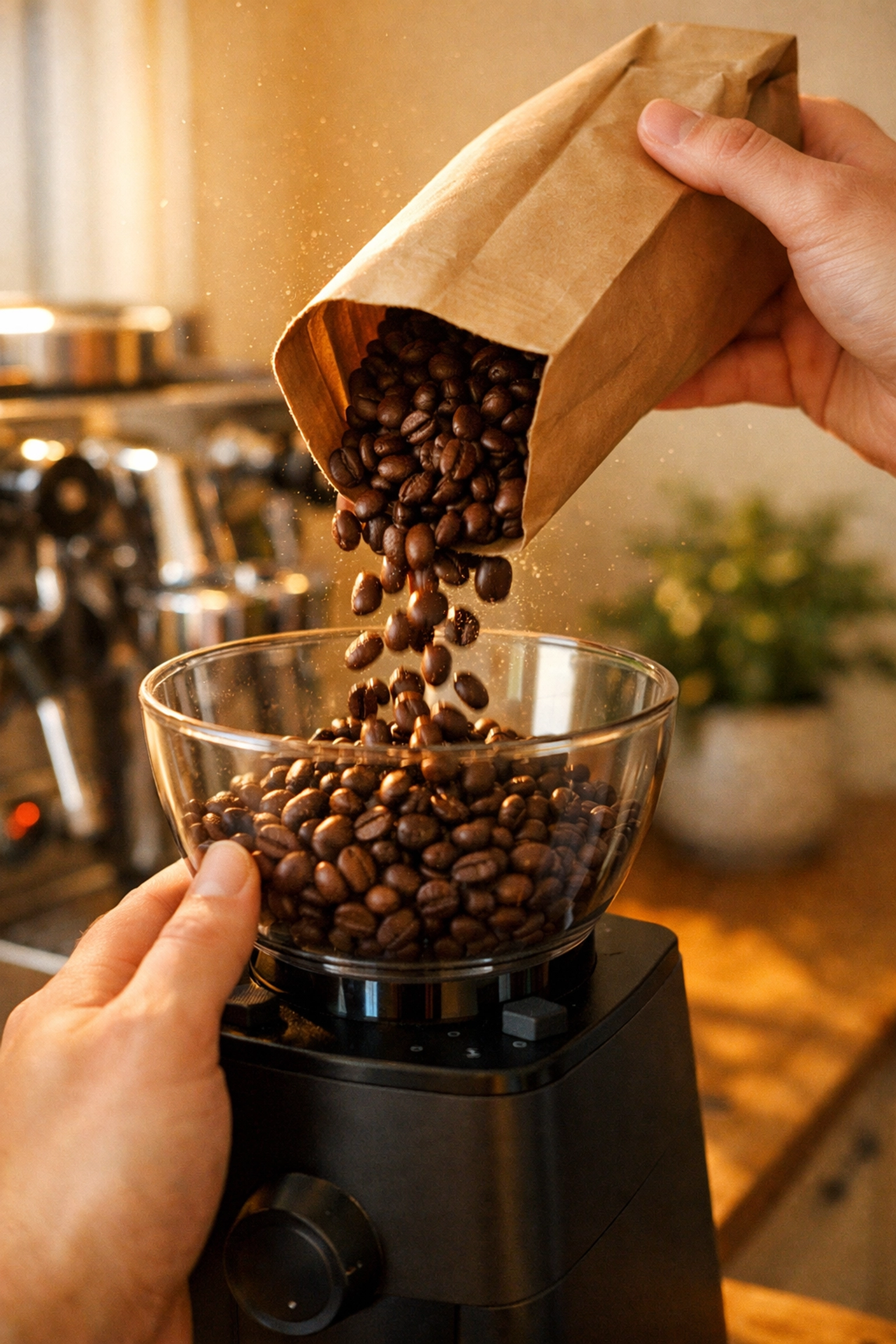
    Pouring freshly roasted specialty coffee beans into an espresso grinder hopper for home brewing.


    Putting it All Together: Our Practical Advice

    So, how do you actually choose? Here is our "cheat sheet" for your next purchase at the Limini Coffee shop:

    1. Check the Roast: If you love milk-based drinks (Lattes/Flat Whites), go for a Medium-Dark roast. If you drink black espresso, try a Medium roast.
    2. Look for the Date: Ensure the beans were roasted within the last 14 days.
    3. Choose Your Vibe: Do you want "Chocolate and Nuts" (Brazil/Colombia) or "Fruit and Flowers" (Ethiopia/Kenya)?
    4. Invest in Quality: Spend the extra few pounds for specialty-grade beans. Your palate (and your expensive espresso machine) will thank you.

    Basically, the "best" coffee bean is the one that makes you excited to get out of bed in the morning. Espresso is a journey of trial and error, but starting with high-quality, fresh beans from a roaster who cares about the craft makes that journey a whole lot more delicious.

    If you want to dive deeper into the technical side of things: like understanding why milk textures differently or how to maintain your La Spaziale machine: we have a wealth of guides available.

    Ready to pull the perfect shot? Grab your next bag of fresh beans here and let's get brewing!

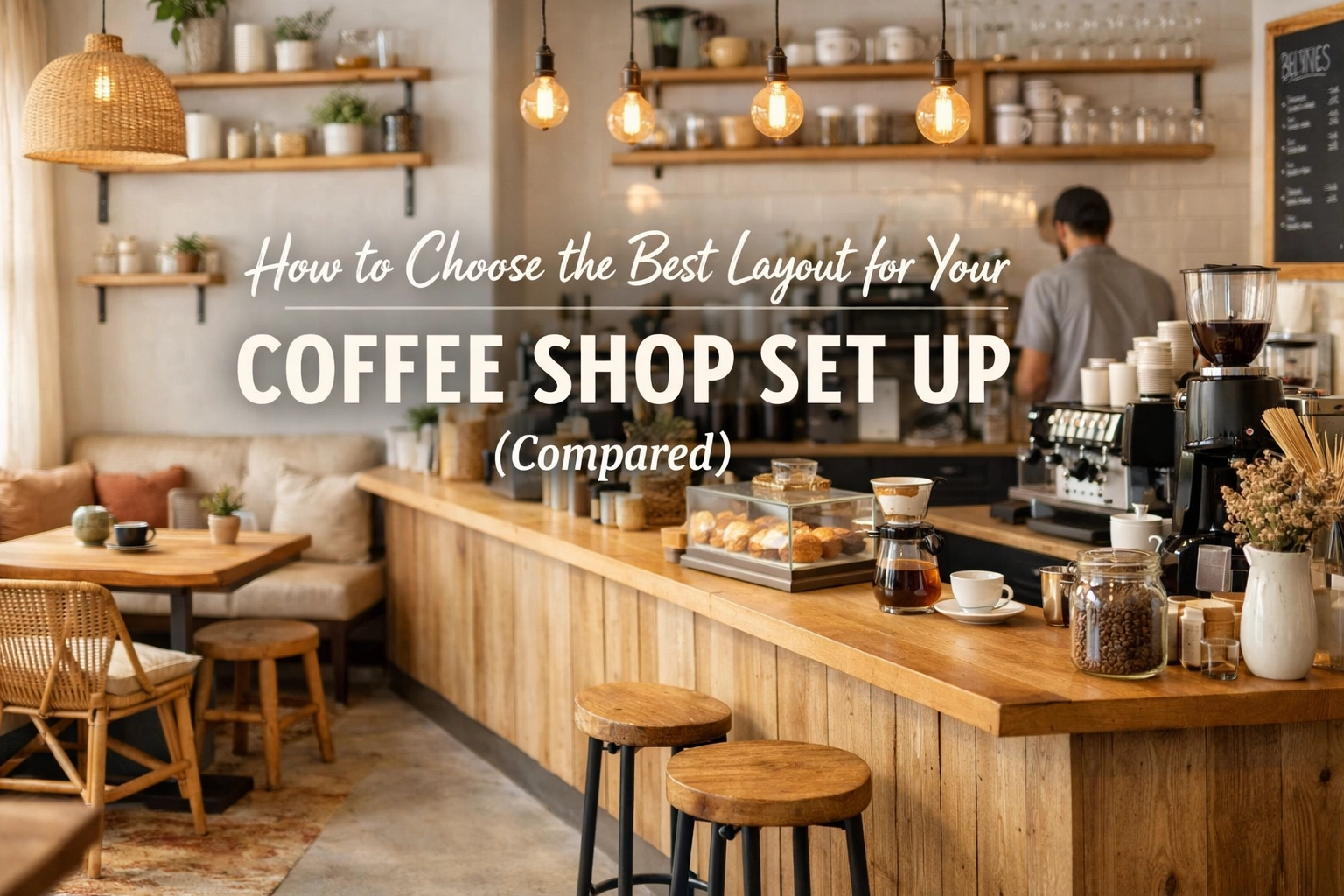
  • How to Choose the Best Layout for Your Coffee Shop Set Up (Compared)

    How to Choose the Best Layout for Your Coffee Shop Set Up (Compared)

    So, you’ve found the perfect location, the lease is signed, and you’ve probably spent late nights scrolling through Pinterest looking at reclaimed wood and industrial lighting. But before you start hammering nails into the wall, we need to talk about the one thing that will actually make or break your business: the layout.

    Choosing the right coffee shop set up isn’t just about where the sofa goes. It’s a delicate dance between operational efficiency (how fast your baristas can work) and customer experience (how comfortable your guests feel). If you get it wrong, you end up with "the bottleneck": that awkward huddle of people near the door that makes new customers turn around and walk right back out.

    At Limini Coffee, we’ve seen hundreds of shop fits. We’ve seen layouts that purr like a well-oiled La Spaziale and others that feel like a game of Tetris played in the dark.


    The Barista Workflow: The Golden Triangle

    Why is the behind-the-bar layout so important? Because every extra step your barista takes is time added to the ticket. If your team has to walk three steps to the fridge for every latte, and you serve 200 lattes a day, that’s 600 unnecessary steps. Over a year? That’s a marathon.

    We like to think of the bar layout in terms of the "Work Triangle." This is the relationship between the espresso machine, the grinder, and the milk/sink station.

    1. The Espresso Machine: This is your anchor. It should be front and centre, often facing the customer so they can see the "theatre" of the pour. (We’re big fans of the theatre of coffee, as it builds value in the cup).
    2. The Grinder: This needs to be right next to the group head. If a barista has to turn their back or walk to dose the portafilter, the flow is broken.
    3. The Milk Station: A dedicated fridge under the counter and a rinser sink within arm's reach.

    Imagine your barista is standing in one spot. Ideally, they should be able to reach the grinder, the machine, and the milk without moving their feet more than once. This level of efficiency is what keeps the queue moving during the 8:00 AM rush. If you’re just starting out and looking for the right gear to fit your space, our wholesale specialty coffee packages often include advice on how to spec your equipment to fit your counter.

    Professional barista workstation showing a streamlined coffee shop set up for efficient espresso service.


    Mapping the Customer Journey: The "Entry to Exit" Path

    Have you ever walked into a shop and stood there for five seconds wondering where the queue starts? That’s a layout fail. Your customer should instinctively know where to go the moment they step inside.

    Basically, you want a linear flow:
    Entry -> Ordering -> Payment -> Waiting/Pickup -> Seating/Exit.

    The most common mistake we see in a new coffee shop set up is placing the till too close to the door. This creates a "logjam." If three people are queuing, the fourth person can’t even get inside. We recommend pushing the ordering point further into the shop. This pulls people in, makes the shop look busy (but not blocked), and gives them time to look at your pastries: which, let's be honest, is where the profit is.

    The Pickup Point Separation
    This is extremely important. Your ordering point and your pickup point should be separate. Why? Because you don’t want people who are waiting for their flat whites to be standing in the way of people trying to pay. A simple 1-metre gap between the till and the pickup area can change the entire vibe of the shop from "stressful" to "slick."


    Seating Strategies: Maximizing the "Sq Ft"

    You want as many seats as possible, but you don't want your customers to feel like they’re sitting in someone else's lap. It's a tough balance.

    We've found that a mix of seating is always the best approach. Not everyone wants a plush armchair.

    • The "Window Watcher": High bars along the window with stools. These are great for solo drinkers and use very little floor space.
    • The "Worker Bee": Small two-top tables. These are the most flexible. If a group of four comes in, you just push two together.
    • The "Community": One large table. Believe it or not, people are often happy to share a large table as long as it's big enough that they don't feel "together."
    • Bench Seating: This is a secret weapon for small spaces. By using a built-in bench along a wall, you can place tables closer together than you could with individual chairs. Usually, you can save about 200mm (about 8 inches) of floor depth by using a bench instead of chairs.

    Remember to keep your pathways clear. You need at least 900mm (36 inches) for a main walkway to ensure people (and staff with trays) can move comfortably.

    Space-saving coffee shop set up with built-in wooden bench seating and a variety of cafe furniture.


    Technical Details You Can't Ignore

    It’s not the most glamorous part of a coffee shop set up, but the "invisible" stuff will haunt you if you get it wrong. We’re talking about plumbing, electrics, and counter heights.

    Counter Height
    Standard kitchen counters are usually 900mm high. For a coffee shop, we often prefer something slightly higher: around 950mm to 1000mm. This is more ergonomic for baristas who are tamping and steaming milk all day. It also keeps the "work" at eye level for the customer.

    Power and Water
    Your espresso machine is a beast. Most commercial machines, like the La Spaziale S5, require a dedicated 20-amp or 32-amp power supply and a direct water connection with a high-quality filter.

    Wait, what about the milk?
    If you're serious about your latte art and milk texture, your layout needs to account for temperature. Don't put your milk fridge right next to a heat source (like an oven or the back of the espresso machine). Keeping your milk at a consistent 4 ºC / 40 ºF is crucial for that glossy, silky microfoam.


    The "Vibe" and Visual Sightlines

    When a customer sits down, what do they see? If they are staring at a pile of dirty dishes or the back of a bin, they probably won't stay for a second cup.

    Use visual tricks to make a small space feel bigger. Mirrors are a classic for a reason: they reflect light and add depth. But also consider sightlines. Can the barista see the door? It’s a small thing, but being greeted with a "Hello!" the moment you walk in makes a huge difference. If your back is turned because the machine is facing the wall, you lose that connection.

    We always recommend putting your best foot forward. Show off your beans! Whether you’re sourcing specialty coffee or showing off your retail bags, make sure they are well-lit and at eye level near the queue.

    Inviting cafe interior showing a professional coffee shop set up from a first-person customer perspective.


    Layout Comparison: Linear vs. Island

    Which one is right for you?

    Feature Linear (Wall-hugger) Island (The Centrepiece)
    Best For Small, narrow units Large, open-plan spaces
    Workflow Very efficient, easy to manage Allows multiple baristas to work 360°
    Customer Interaction Traditional, clear queue Very social, high "theatre"
    Space Usage Saves floor space for seating Takes up a lot of room but acts as a focal point

    Most new owners start with a linear layout because it’s easier to plumb and cheaper to build. However, if you have the space, an island bar can turn your shop into a destination.


    Summary: Test Drive Before You Build

    Before you commit to your layout, we have one final tip: Tape it out.

    Go into your empty unit with a roll of masking tape. Tape out where the counter goes, where the machine sits, and where the tables will be. Then, "walk" the shop. Pretend to be the customer. Pretend to be the barista. Is the bin too far away? Is the coffee cup storage awkward?

    Getting the layout right is a process, but it’s the foundation of everything you do. If you're feeling overwhelmed, don't worry. We help our wholesale partners navigate these exact hurdles every day. From barista training to choosing the right equipment, we've got your back.

    Opening a coffee shop is a wild ride. But with a solid layout, you’re at least starting the journey on the right foot. (And hopefully, that foot isn't tripping over a poorly placed milk crate!)

    If you want to dive deeper into the world of coffee shop ownership, why not check out our guide on building a coffee shop for more technical tips?

    Happy planning!

  • Beyond Rooms: Monetizing Every Square Meter of Your Property

    Beyond Rooms: Monetizing Every Square Meter of Your Property

    Unlock hidden value. Diversify your revenue. Transform your property.

    The traditional hotel model is changing. For decades, the industry measured success by one primary metric: RevPAR. If the beds were full, the business was healthy. But in 2026, relying solely on overnight stays is a missed opportunity. Your property isn't just a collection of bedrooms: it is a versatile ecosystem of real estate.

    Every square meter of your property has the potential to generate income. From the empty corner of your lobby to the underutilized parking lot, there is money being left on the table. We believe that modern hospitality is about maximizing the utility of every inch of your space.

    It is time to move beyond the room-centric mindset and embrace a platform-driven approach. By diversifying your revenue streams, you create a more resilient business that thrives even during the low season.

    The Shift to RevPAM

    Revenue Per Available Meter (RevPAM) is the new gold standard. While occupancy focuses on how many people slept in your beds, RevPAM looks at how effectively you are using your entire footprint.

    Think about your lobby at 2:00 PM on a Tuesday. It’s likely quiet. Think about your rooftop garden on a weekday morning. It’s probably empty. These are assets that are currently costing you money in maintenance and taxes without providing a return.

    By shifting your strategy, you can turn these "dead zones" into high-margin profit centers. All from one innovative platform.

    Modern hotel atrium with minimalist furniture optimized for remote work and lobby revenue.

    Workspace as a Service: The New Lobby

    The rise of remote and hybrid work has fundamentally changed how people interact with physical spaces. Your guests (and your local community) are looking for professional, inspiring places to work.

    We think your lobby shouldn't just be a transit zone. It should be a productivity hub.

    • Hourly Hot Desks: Rent out lobby seating or quiet corners for two-hour windows.
    • Micro-Meeting Rooms: Convert small storage areas or underused offices into tech-enabled "Zoom rooms."
    • Co-working Memberships: Offer local residents a monthly pass that includes high-speed Wi-Fi and unlimited coffee.

    Hourly rentals are a game-changer. Research shows that short-term commercial spaces can often command a 20–60% premium over traditional long-term rates. If a standard daily rate for a room is $300, renting a meeting space for $50 an hour over an eight-hour day can significantly outperform a guest stay.

    Parking and Storage: The Low-Hanging Fruit

    Parking is often the most undervalued asset in a hotel’s portfolio. If you are in a city center or near a transportation hub, your parking spots are premium real estate.

    Many properties treat parking as a complimentary perk or a flat daily fee for guests. This is a mistake. By integrating smart hotel revenue management software, you can dynamically price your parking based on local demand.

    • Commuter Parking: Rent out spots during the day when guests are out exploring.
    • Event Parking: Charge premium rates during local concerts or sports events.
    • Secure Storage: People pay a premium for security. Use basement space for bike storage, luggage lockers for non-guests, or even vehicle winterization.

    In urban areas where parking is limited, vehicle storage can provide a consistent, low-maintenance income stream. It’s about being the solution to a local problem.

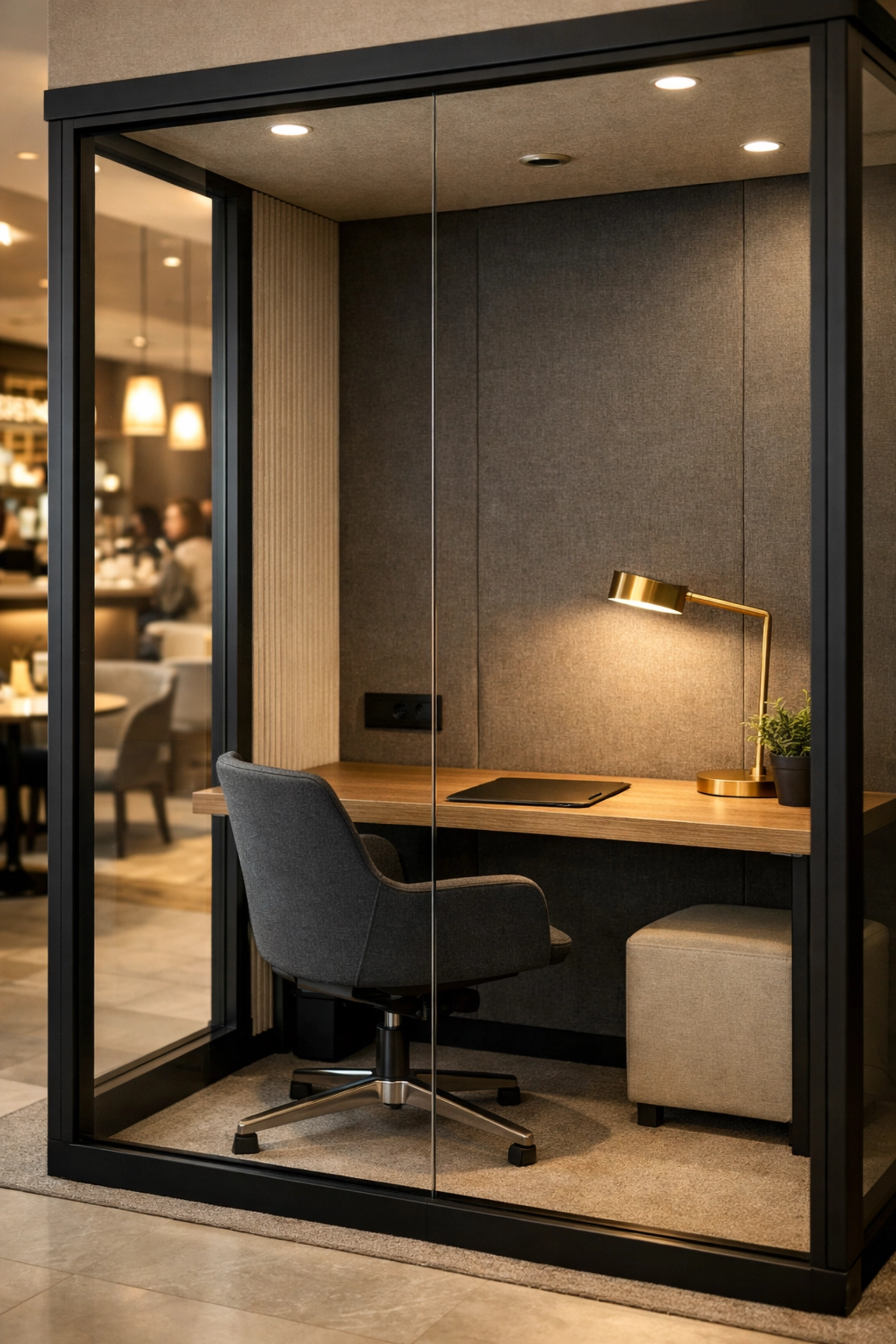
    Sleek glass micro-office in a boutique hotel lobby for private guest workspace.

    Boutique Hotel Management Tips: Leveraging Uniqueness

    If you run a boutique property, you have a distinct advantage. Your spaces have character. They have a "soul" that a generic corporate chain can’t replicate. You should lean into this.

    Monetizing a boutique property requires a bit of creativity and a lot of local connection.

    1. Curated Pop-Ups: Partner with local artisans or clothing brands to turn a corner of your lobby into a retail experience.
    2. Photography and Film: Boutique interiors are high-demand locations for content creators and brands. Renting your space for a four-hour photo shoot can earn more than a three-night stay.
    3. Wellness Spaces: If you have a small gym or a quiet courtyard, offer it to local yoga instructors for morning classes.

    We believe that boutique hotels should be at the heart of their community. When you open your doors to locals, you don’t just gain revenue; you gain brand ambassadors.

    Events and the Experience Economy

    Your property is a stage. Whether it’s a rooftop, a garden, or a small terrace, these spaces are perfect for micro-events.

    The trend in 2026 is moving away from massive, 500-person ballroom weddings and toward "micro-weddings" and curated gatherings. These smaller events are easier to manage and often more profitable when you factor in the reduced overhead.

    • Rooftop Yoga: Low overhead, high demand, and great for social media.
    • Private Chef Dinners: Use your breakfast room in the evening for exclusive, ticketed culinary experiences.
    • Art Galleries: Use your hallways to showcase local artists. Take a commission on any pieces sold.

    These initiatives keep your property buzzing with energy, which in turn makes the experience better for your overnight guests. It's a virtuous cycle.

    Luxury hotel parking bay featuring an EV charging station for sustainable revenue management.

    The Technology Backbone

    You might be wondering: "How do I manage all of this without making my front desk team quit?"

    This is where the right technology comes in. You cannot manage 20 different revenue streams using a legacy PMS and a series of spreadsheets. You need a system designed for the modern era.

    Mews was built with this flexibility in mind. Our platform allows you to manage "spaces," not just "rooms." This means you can book a parking spot, a meeting room, and a bedroom all in the same ecosystem.

    • Unified Inventory: See all your assets on one screen.
    • Automated Payments: Frictionless transactions for both guests and locals.
    • API-First Design: Connect to the best-of-breed tools for parking management or co-working access.

    When your hotel revenue management software understands that a square meter of the lobby is just as valuable as a square meter of a suite, your profit margins start to look very different.

    Monetizing the Invisible: Advertising and Infrastructure

    Sometimes the best way to monetize your property is to look at what's on top of it or around it.

    For properties with the right location, there are high-margin opportunities that require almost zero daily management.

    • Billboard Leasing: If your property faces a high-traffic area, the exterior walls or roof could be valuable for digital signage.
    • Cell Towers: This is a high-investment, high-return play. A 25-year contract for a rooftop cell tower can generate hundreds of thousands of dollars in pure profit over its lifetime.
    • Parcel Lockers: Host a secure delivery locker for a service like Amazon or a local courier. It brings foot traffic to your property and provides a small, steady stream of rental income.

    Elegant hotel rooftop dining setup with city views for high-margin event revenue.

    Sustainability as a Revenue Driver

    In 2026, sustainability is not just a checkbox; it’s a business strategy. Implementing green tech can actually help you monetize your space.

    Consider installing EV charging stations in your parking lot. Not only does this attract high-spending guests who drive electric vehicles, but you can also list your chargers on public maps for non-guests to use for a fee. You are selling energy and convenience.

    Similarly, if you have unused land, community gardens or urban beehives can provide fresh produce for your kitchen while acting as a unique selling point for eco-conscious travelers.

    Making the Transition: A Simple Playbook

    Ready to start earning from your extra space? Here is how to get moving:

    1. Audit Your Assets: Walk through your property with a fresh pair of eyes. Identify every area that sits empty for more than four hours a day.
    2. Define Your Audience: Is there a demand for parking? For quiet workspaces? For local events?
    3. Start Small: Pick one underutilized area: like a corner of the lobby: and launch a pilot program for hourly rentals.
    4. Leverage Tech: Ensure your booking engine can handle non-room inventory. Check out how we do it at Mews.
    5. Measure and Iterate: Use your data to see which spaces are performing best and adjust your pricing accordingly.

    Secure automated parcel lockers integrated into a modern hotel exterior for ancillary income.

    The Future is Flexible

    The properties that will win in the coming years are those that stop thinking of themselves as "hotels" and start thinking of themselves as "hospitality platforms."

    When you monetize every square meter, you aren't just increasing your revenue; you are future-proofing your business. You become less dependent on seasonal travel trends and more integrated into the daily lives of your community.

    We believe the most successful properties of the future will be busy 24 hours a day, 7 days a week, utilizing every inch of their real estate to create value.

    It's time to look beyond the room. Your property has so much more to give.

    Want to see how Mews can help you manage your entire property’s inventory? Book a demo today and let’s get you earning revenue from every square meter in no time.

  • Can Business Automation Tools Really Save You 10+ Hours a Week? (Spoiler: Yes, and Here’s How)

    AUTOMATE ADMIN TASKS: HOW TO SAVE 10+ HOURS EVERY WEEK

    ☕ 7:00 AM.

    The sun is barely up, but your brain is already running a marathon. You open your laptop, and there it is… the dreaded inbox. 142 unread emails. Half of them are "quick questions," the other half are scheduling requests that will inevitably turn into a 15-message thread just to find a 30-minute window on Tuesday.

    You’re not building a business right now. You’re acting as a glorified traffic controller.

    According to the data, you’re likely wasting 15 to 20 hours every single week on these repetitive, soul-crushing tasks. That’s half a work week. Gone. Vanished into the void of manual data entry and "just checking in" pings.

    But imagine a different morning…

    Business owner relaxing while automated digital arms manage administrative tasks and email workflows.

    THE INVISIBLE WORKFORCE

    You don't need a bigger team. You need a smarter one.

    Business automation tools aren't just for the Silicon Valley giants anymore. In 2026, they are the baseline for survival. When you automate your admin, you’re essentially hiring an invisible workforce that never sleeps, never takes a lunch break, and never forgets to update the CRM.

    • Email Management: Instead of manually sorting, your AI filters the noise, drafts replies for common queries, and flags only the "must-reads."
    • LinkedIn Prospecting: Stop the manual "copy-paste" outreach. One sales rep can save over 3 hours a week just by automating connection requests.
    • Lead Follow-ups: A B2B firm recently cut their lead entry time from 25 hours a week down to 3. That’s 22 hours back in their pocket.

    Stop juggling. Start scaling. If you want to see how the pros are reclaiming their time, check out what’s happening over at Marblism.

    THE BEST AI ASSISTANT FOR SMALL BUSINESS IN 2026

    📱 11:00 AM.

    The mid-morning rush is hitting. You have a client call in five minutes, a proposal due by noon, and your "to-do" list is starting to look like a grocery receipt for a family of twelve.

    In the old days, like, two years ago: this is where the wheels would fall off. You’d miss a detail. You’d forget to send that follow-up. You’d feel that familiar tightening in your chest.

    But it’s 2026. And your AI assistant for small business just handled it.

    An AI assistant for small business efficiently managing calendar schedules and digital communication.

    MEET YOUR NEW MVP

    An AI assistant isn't just a chatbot that tells you the weather. It’s the connective tissue of your business. It lives inside your Slack, your email, and your project management tools. It’s proactive, not just reactive.

    While you were on that call, your assistant:

    • Scraped the notes from your last meeting.
    • Updated the project timeline.
    • Sent a "thank you" note to the prospect.
    • Stan's finding the documents you need before you even ask.

    It feels like magic… but it’s just good engineering.

    The best tools in 2026 don't require you to learn a new language or become a prompt engineer. They work with the tools you already use. They learn your voice. They understand your "vibe."

    You’re not a manager of tasks anymore. You’re a manager of outcomes.

    Scaling shouldn’t be this hard. But here we are, making it look easy. If you’re ready to meet your new digital right hand, Scott's got the blueprint right here at Marblism.

    AI CONTENT GENERATOR FOR SMALL BUSINESS: YOUR SECRET MARKETING WEAPON

    🔍 2:00 PM.

    The "afternoon slump" is real. You know you need to post on LinkedIn. You know the blog hasn't been updated in three weeks. You know your Instagram followers are wondering if you’ve retired to a remote island.

    But the cursor just blinks.

    Blink.

    Blink.

    Content is the fuel for your growth, but creating it feels like pulling teeth. You aren't a full-time writer; you're a business owner. Why are you spending four hours struggling over a caption?

    Enter the AI content generator for small business.

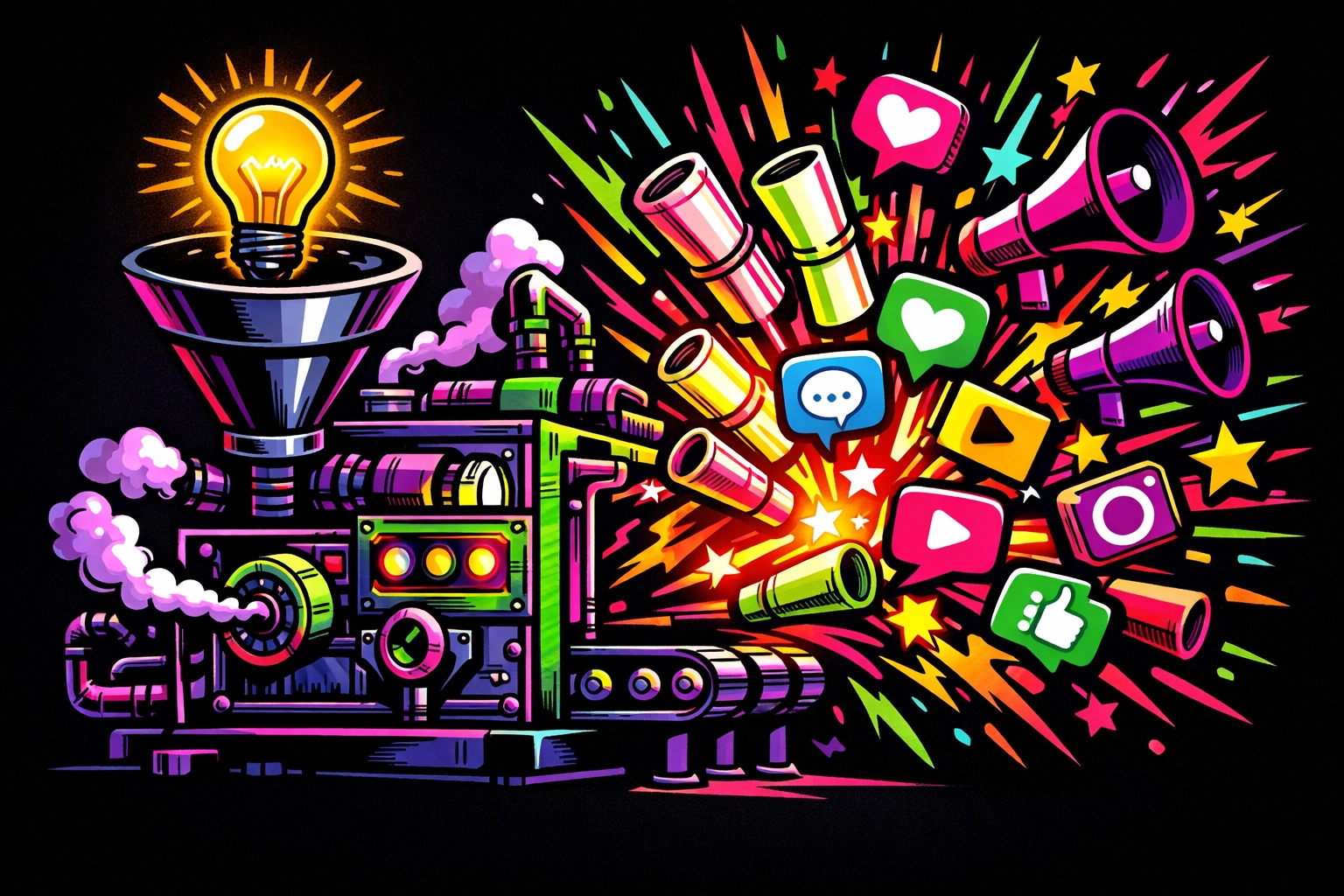
    AI content generator for small business transforming a single idea into diverse marketing and social posts.

    THE END OF WRITER'S BLOCK

    This isn't about "spinning" old articles or creating robotic, lifeless text. In 2026, AI content generation is about high-octane research and creative partnership.

    Imagine feeding your AI a single idea: maybe a transcript from a podcast or a rough outline of a new service: and watching it transform into:

    1. A long-form, SEO-optimized blog post.
    2. Ten punchy social media snippets.
    3. A weekly newsletter that actually gets opened.
    4. Three different ad copy variations for testing.

    Done in minutes. Not days.

    The "secret" isn't just the generation; it's the distribution. When you use a tool like Marblism, you’re not just getting words on a page. You’re getting a strategy that’s designed to convert. You’re building an authority machine while you’re busy actually running your company.

    STOP GUESSING. START GROWING.

    The gap between the businesses that "make it" and the ones that struggle is getting wider. The winners are using these tools to do the work of a 10-person marketing team for a fraction of the cost.

    You don't need a massive budget. You just need the right weapon.

    🤝 THE FINAL VERDICT

    🌙 6:00 PM.

    The day is winding down. The office (or your home office) is quiet.

    Usually, this is when you’d be catching up on the admin you missed. You’d be staring at a blank screen, trying to figure out what to post for tomorrow. You’d be exhausted, wondering where the last 11 hours went.

    But today? Today was different.

    Your admin is done. Your leads are followed up with. Your content is scheduled for the next week. You’ve actually saved those 10+ hours.

    The chaos is gone before you even take your last sip of coffee. You just send a thumbs-up to your team, close your laptop, and walk away.

    You’ve stopped working in your business and started working on it.

    That’s the power of automation. That’s the power of Marblism.

    Scaling shouldn't be a struggle. It should be a system.

    Ready to reclaim your week?

    See how it works here.

    SCALING SHOULDN'T BE THIS EASY. BUT HERE WE ARE.

  • Wholesale Specialty Coffee Secrets Revealed: What Experts Don’t Want You to Know

    Wholesale Specialty Coffee Secrets Revealed: What Experts Don’t Want You to Know

    Opening a café is exciting, terrifying, and, if we’re being honest, full of people trying to sell you things you don't actually need. When you’re hunting for the right wholesale coffee roasters, you’ll hear a lot of buzzwords. "Premium," "Artisan," "Gourmet", they all sound lovely, right? But here’s the thing: in the world of wholesale specialty coffee, there is a massive difference between what looks good on a glossy brochure and what actually makes your business thrive.

    At Limini Coffee, we’ve spent years working with café startups and seasoned pros alike. We’ve seen it all, and we think it’s time to pull back the curtain on a few industry secrets that some experts might prefer stayed hidden.


    Secret #1: The "Freshness" Lie

    We’ve all seen bags of coffee on supermarket shelves with "Best Before" dates two years into the future. That should be your first warning sign. A dirty secret of the commercial coffee world is the "mega-roastery" model. Large companies often over-roast beans in massive batches, ship them across continents, and store them in warehouses for months. By the time that coffee reaches your espresso machine, it’s effectively dead.

    The oils have oxidized, the aromatics have vanished, and you’re left with a bitter, dusty cup. Why does this matter for your business? Because stale coffee is impossible to dial in. You’ll find yourself constantly fighting with your grinder, wasting beans, and serving a product that lacks that "wow" factor customers expect from a specialty shop.

    When you work with proper coffee suppliers, you should be looking for a roast date, not a "use by" date. We believe that coffee is at its peak between 7 and 30 days after roasting. This allows for degassing (the release of CO2) without losing the delicate flavour profiles that make specialty coffee special.


    Secret #2: Not All "Specialty" is Actually Special

    The term "specialty coffee" isn't just a marketing tag; it’s a technical grade. To be legally considered specialty, coffee must score 80 points or higher on a 100-point scale by a certified Q-Grader.

    The secret? Some suppliers will buy "borderline" coffee, maybe a 78 or 79, and market it as specialty to save on their margins. The difference in the cup is noticeable. True specialty coffee focuses on sourcing and transparency. It’s about knowing the farm, the altitude, and the processing method.

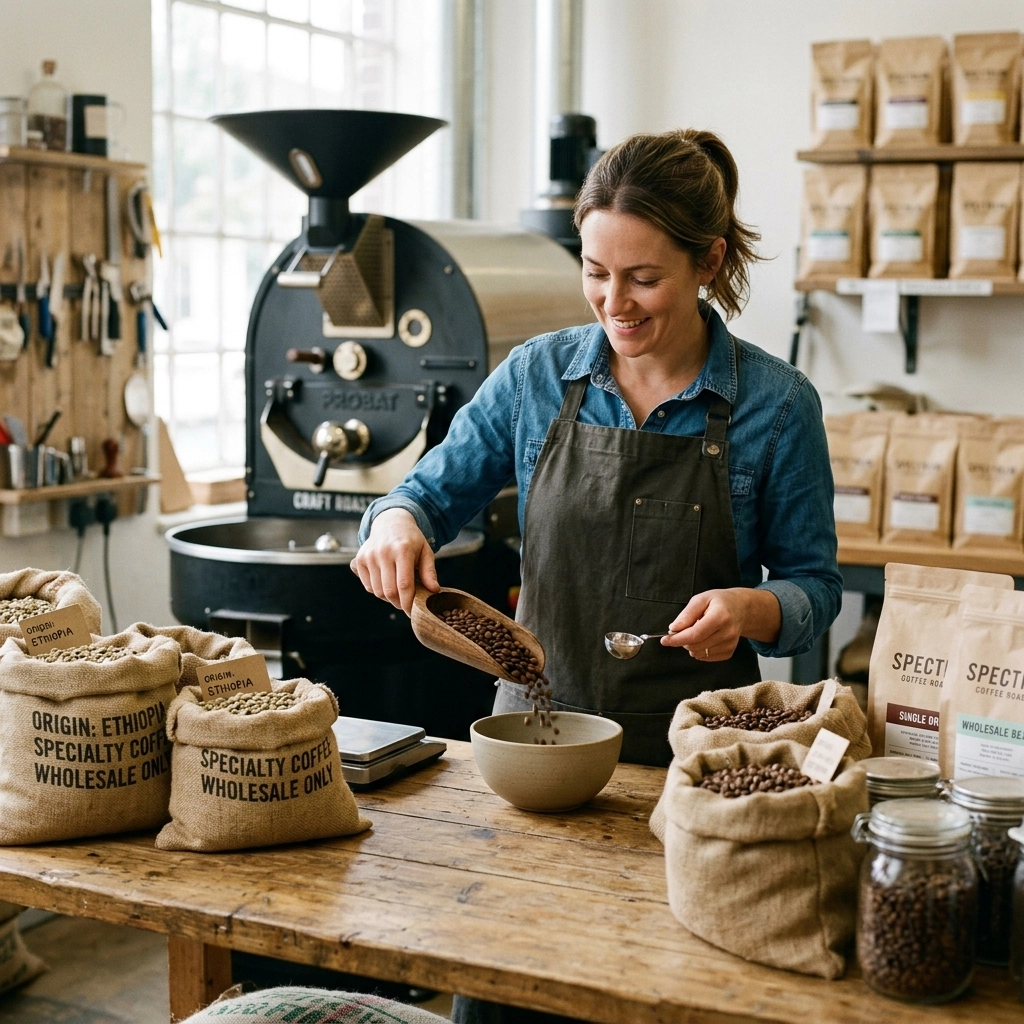
    Comparison of green unroasted and roasted specialty coffee beans highlighting quality coffee sourcing.

    If your wholesaler can’t tell you exactly where the beans came from or how they were processed (washed, natural, or honey-processed), they might be masking lower-quality beans with a darker roast. Over-roasting is a classic trick to hide "off" flavours in cheap beans, creating a uniform, burnt taste that many people mistake for "strong" coffee. We prefer to roast in a way that highlights the bean's natural character, not the fire it was cooked in.


    Secret #3: The "Free" Equipment Trap

    This is a big one for café startups. You’ll find many wholesale coffee roasters offering "free" espresso machines if you sign a multi-year bean contract.

    It sounds like a dream, doesn't it? Saving £5,000 to £10,000 on equipment is tempting when your budget is tight. However, the reality is that you usually end up paying for that machine twice over in inflated bean prices. Even worse, you're often tied to a supplier who has no incentive to keep your coffee quality high because they already "own" you for the next three years.

    We think it’s much better to own your gear or lease it independently. This gives you the freedom to choose the best coffee for your customers. If you are choosing espresso equipment, look for reliability and serviceability. A "free" machine that breaks down on a busy Saturday morning, with no technician available, is the most expensive machine you'll ever own.


    Secret #4: Your Staff are More Important Than Your Beans

    You can buy the most expensive, 90+ point Gesha coffee in the world, but if your barista doesn't understand extraction, it will taste like battery acid.

    A secret that many suppliers ignore is that their job shouldn't end when the pallet of coffee is delivered. True wholesale support is about education. The best coffee suppliers are the ones who insist on training your team.

    Why is this important? Because coffee is a volatile product. Changes in humidity, temperature, and even the age of the beans require constant adjustments to the grind and dose. If your team doesn't know how to "tamp" correctly or understand the importance of crema, your investment in high-quality beans is wasted.

    We highly recommend looking for a partner that offers comprehensive barista training. It’s the difference between a one-off customer and a loyal regular.


    The Technical Bits (Don't Skip This!)

    To run a successful wholesale coffee programme, you need to get comfortable with the numbers. We’re not just talking about your P&L, but the numbers inside the group head.

    1. Temperature Control: For most specialty espressos, you want your water temperature between 88 °C and 95 °C (190 °F to 203 °F). Even a 1-degree fluctuation can drastically change the acidity and sweetness. This is why we love machines with PID controllers, it's like cruise control for your espresso.
    2. Pressure: The industry standard is 9 BAR. Too much pressure and you’ll get "channelling" (where water finds the path of least resistance through the puck); too little, and you won't get that rich, silky texture we all crave.
    3. Milk Temperature: We believe 140 °F / 60 ºC is the "sweet spot" for milk. Anything higher and you start to kill the natural sugars in the milk, leading to a flat, scorched taste.

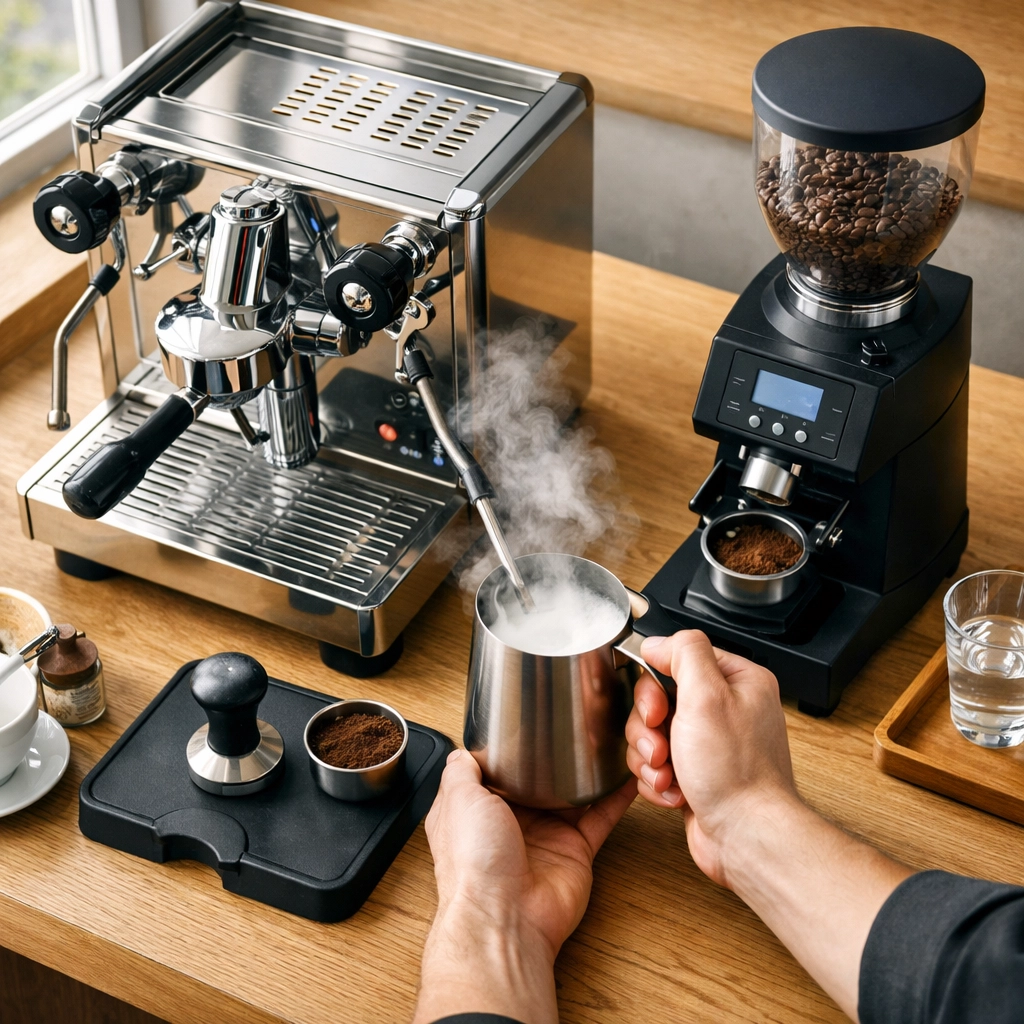
    Close-up of a steam wand creating silky microfoam in a milk pitcher at a specialty coffee shop.


    How to Choose the Right Wholesale Partner

    So, how do you sift through the noise? Here are a few things we suggest you look for:

    • Transparency: Do they provide roast dates? Do they share information about their sourcing practices?
    • Support: Do they offer on-site machine servicing and regular staff training?
    • Quality Consistency: Ask for samples. Not just once, but over a period of time. Specialty coffee is an agricultural product, but a great roaster knows how to maintain a consistent profile.
    • The "Vibe" Check: You’re going to be talking to these people every week. Do they feel like partners or just a delivery service? At Limini Coffee, we pride ourselves on being the former.

    The Hidden Cost of Bad Coffee

    The final secret is one that shows up in your bank account six months after opening. Bad coffee is a silent killer for cafés. Most customers won't complain to you; they’ll just never come back.

    In the specialty world, word of mouth is everything. If your flat white is consistently incredible, people will walk past three other shops to get to yours. If it’s mediocre, you’re just a convenience stop. Investing in a high-quality wholesale relationship isn't an expense, it’s your most effective marketing strategy.

    A perfectly poured flat white with tulip latte art on a café counter featuring an espresso machine.

    Let’s Make Some Great Coffee Together

    Opening a coffee business is a journey, and honestly, it’s a beautiful one. There is nothing quite like the feeling of a busy shop with the hum of the grinder and the smell of fresh beans in the air.

    If you are looking for a partner who cares about your success as much as you do, we’d love to chat. Whether you need help building a coffee shop, choosing the right La Spaziale machine, or just want to taste some truly incredible coffee, we are here for you.

    Check out our wholesale options here and let’s see how we can help your business grow. Because at the end of the day, that is the beauty of coffee :).


    Quick Checklist for New Café Owners:

    • Check Roast Dates: Never accept beans without a clear roast date.
    • Taste Everything: If you wouldn't drink it yourself, don't serve it.
    • Prioritize Training: Your staff are your brand ambassadors.
    • Own Your Equipment: Avoid being "locked in" to bad contracts.
    • Watch Your Temps: Use a thermometer until your team has the muscle memory.

    Ready to start? Visit us at Limini Coffee and let’s get brewing.

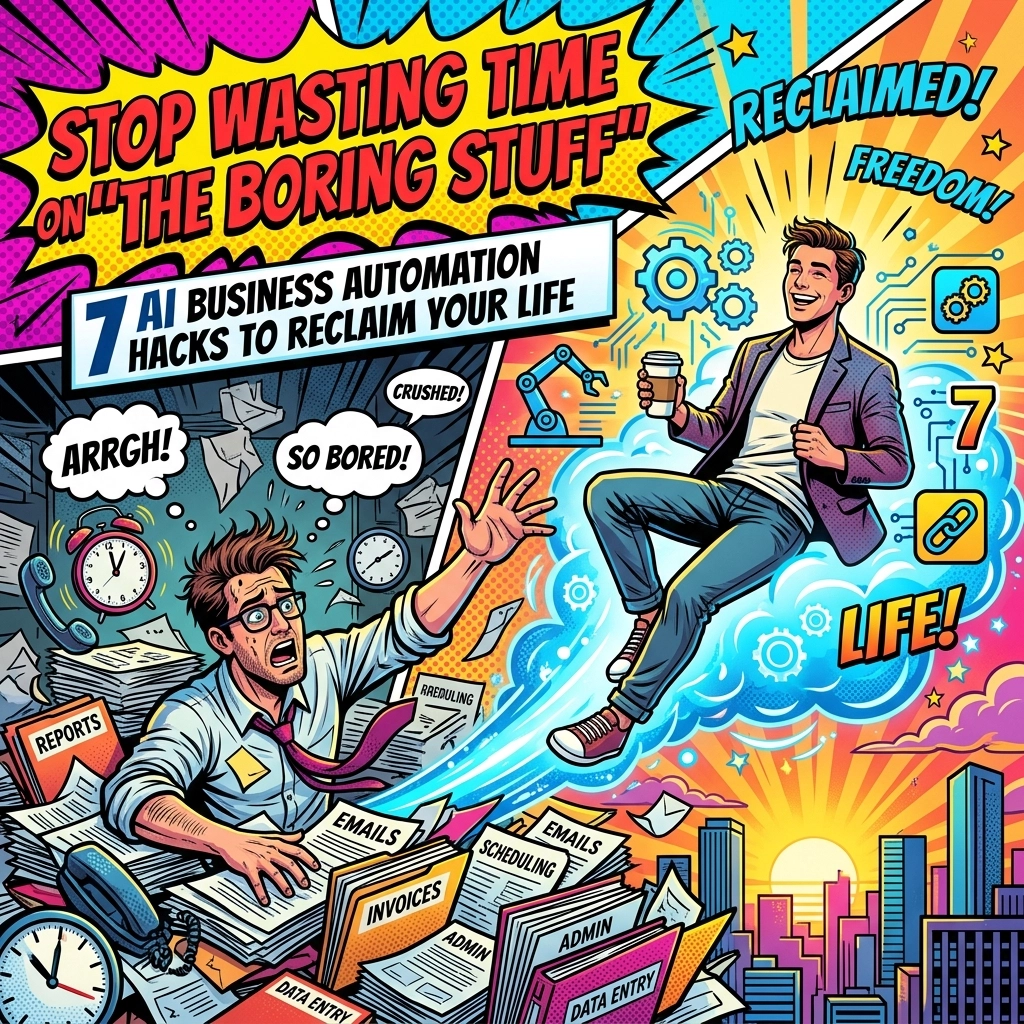
  • Stop Wasting Time on “The Boring Stuff”: 7 AI Business Automation Hacks to Reclaim Your Life

    Stop Wasting Time on “The Boring Stuff”: 7 AI Business Automation Hacks to Reclaim Your Life

    ☕ 7:00 AM.

    You’re staring at your phone before your feet even hit the floor.

    The screen is a wall of notifications. Three "urgent" emails about a project you thought was finished. Four Slack messages from a client who clearly doesn't sleep. And that nagging feeling in the back of your head, the one that reminds you that you still haven't updated your lead spreadsheet from yesterday.

    You didn't start your business to become a professional email-replier or a spreadsheet-scrubber. You started it to build something. To create. To actually live.

    But right now? The "boring stuff" is winning.

    The administrative debt is piling up, and it’s dragging your growth down with it. It’s quiet, it’s constant, and it’s exhausting.

    But it doesn't have to be this way.

    AI business automation isn't just for Silicon Valley giants with unlimited budgets anymore. It's for you. It’s for the person running a lean team or a solo operation who just wants their Sunday back.

    Here are 7 AI business automation hacks that will help you reclaim your life while your business grows in the background.


    1. STOP BEING THE OFFICE SCRIBE

    📝 10:30 AM.

    You just finished a 45-minute discovery call. Your brain is full, your coffee is cold, and now comes the part everyone hates: the write-up.

    You have to summarize the goals, list the action items, and email the client so they know you were actually listening. That’s 20 minutes of your life you’ll never get back.

    The Hack: Use Notion AI or Microsoft 365 Copilot to do the grunt work.

    Instead of staring at a blinking cursor, you feed the transcript into your AI tool. Within ten seconds, it generates a clean, professional SOP or a list of action items.

    It’s not just "taking notes." It’s transforming a messy conversation into a structured plan without you lifting a finger.

    You didn't write the summary. You just hit "Send."

    AI business automation tool organizing messy paperwork into a clean digital document for an entrepreneur.

    2. KILL THE "JUST CHECKING IN" EMAIL CYCLE

    📧 1:15 PM.

    Your inbox is a graveyard of repetitive questions. "What are your rates?" "Are you available next Tuesday?" "Can you send that PDF again?"

    Responding to these takes zero brainpower, but it eats your afternoon alive. Every time you switch tasks to answer an email, it takes you 23 minutes to get back into "the zone."

    The Hack: Deploy ChatGPT Enterprise to handle routine communications.

    You can train a custom GPT on your specific business data, your pricing, your availability, your FAQs. When a common question hits your inbox, the AI drafts the response.

    You aren't ghosting your customers. You're giving them instant answers while you focus on the work that actually pays the bills.

    It’s like having a dedicated assistant who never needs a lunch break and knows exactly how you like to phrase things.

    3. SHOW AN AGENT YOUR WORKFLOW ONCE, THEN WALK AWAY

    🔄 3:00 PM.

    You’re manually moving data from a Typeform to a Google Sheet, then creating a Trello card, then sending a Slack notification. It’s "digital manual labor."

    You’ve tried to automate it before, but the logic was too complex. You gave up and went back to copy-pasting.

    The Hack: Zapier AI Agents.

    The game has changed. You don't need to be a developer to build complex bridges between your apps anymore. You simply show the AI agent what you do once.

    "Hey, whenever a new lead comes in from this form, check if they’re a high-value target based on their company size, and if they are, put them in my 'Priority' list and ping me."

    The AI learns the logic. It understands the nuance. And then it runs forever.

    Stop juggling. Just let the bots talk to each other.

    If you want to see how this looks in practice for your specific business, check out what we're doing over at https://marblism.link/scott-bowen.

    4. CLONE YOUR VOICE (WITHOUT THE CREEPY FACTOR)

    🎙️ 4:45 PM.

    You know you need to be on more channels. You should have a podcast. You should have audio versions of your blog posts. But who has the time to sit in a soundproof booth and record for hours?

    The production cost alone is enough to make you stick to text.

    The Hack: ElevenLabs.

    This isn't the robotic, "Siri" voice of 2015. This is studio-quality, human-sounding audio. You can take your written content, this blog post, for example, and turn it into a high-fidelity audio file in minutes.

    It maintains your brand voice. It sounds like you. And it allows you to reach your audience while they’re driving or at the gym.

    You're scaling your presence without increasing your workload.

    Entrepreneur scaling their brand voice across multiple devices using AI audio automation tools.

    5. PREDICT THE BOTTLENECK BEFORE IT HAPPENS

    📊 9:00 AM (The Next Day).

    Usually, you find out a project is behind schedule when a client asks, "Where is this?" By then, it’s too late. You’re in damage-control mode.

    The stress of project management isn't the work itself, it's the uncertainty.

    The Hack: ClickUp Brain.

    Let the AI do the heavy lifting of project oversight. It looks at your team’s workload, their historical speed, and the current task list.

    It predicts delays before they happen. It says, "Hey, at this rate, you're going to miss the Friday deadline by two days. Want me to reassign these tasks to Sarah, who has a light week?"

    You aren't guessing anymore. You're managing with a crystal ball.

    The chaos is gone before you even take your first sip of coffee.

    6. NO MORE SPREADSHEET NIGHTMARES

    🔍 2:30 PM.

    You’ve got a list of 5,000 leads, but the formatting is a mess. Some names are in all caps. Some emails are missing. The data is "dirty," and you need to clean it before you can run your campaign.

    You could spend your entire afternoon in Excel, or…

    The Hack: ChatGPT Data Analysis.

    Upload your messy CSV. Tell the AI: "Clean this up. Standardize the names, flag the duplicates, and give me a summary of the top three industries represented here."

    Done. In seconds.

    What used to be a specialized skill (advanced data cleaning) is now just a conversation. You don't need to remember VLOOKUP formulas. You just need to know how to ask.

    Business owner using AI data analysis tools to organize chaotic spreadsheets into structured business data.

    7. THE "GLUE" THAT BINDS YOUR BUSINESS

    🔗 5:30 PM.

    You use ten different apps. They don't talk to each other. You feel like you're constantly jumping between tabs, trying to keep everything synced.

    The Hack: n8n or Make.

    These are the "Power User" versions of automation tools. They allow you to build multi-app workflows without writing a single line of code.

    Think of it as building a custom engine for your business. Every time a sale happens, it triggers a sequence that handles the invoice, the onboarding email, the CRM update, and the team celebration message.

    It’s not just a "hack." It’s an infrastructure.

    Scaling shouldn't be this easy. But here we are.


    STOP JUGGLING. START GROWING.

    The common thread here? The best AI business automation tools don't replace your brain. They remove the friction.

    They take the 2-hour "boring" tasks and turn them into 2-minute "done" tasks.

    You didn't start your business to spend your life in the weeds. You started it to make an impact.

    If you're ready to see how these business automation tools can specifically help you reclaim your time and scale your lead generation, you need to see what we've built.

    🤝 Click here to see how Marblism can automate your growth


    FAQ: YOUR AUTOMATION ANXIETIES, ANSWERED

    Q: Is this going to make my business feel "robotic" to my clients?
    No. In fact, it usually makes you feel more responsive. When the AI handles the routine stuff instantly, you have more time to be human on the stuff that actually matters.

    Q: Do I need to be a tech genius to set this up?
    Absolutely not. If you can send a text message or write an email, you can use these tools. Most of them are "no-code" or "natural language," meaning you just tell them what to do in plain English.

    Q: Is it expensive?
    Most of these tools have free tiers or very affordable entry points. Compare the monthly cost of a tool like Zapier to the cost of your own time (or the cost of a full-time assistant). The ROI is usually immediate.

    Q: Where do I start?
    Pick one "boring" task you do every single day. Just one. Automate that first. Once you see the time coming back to you, you'll never go back.


    🌙 6:00 PM.

    The day is over. Your inbox is at zero. Your leads are organized. Your projects are on track.

    And for the first time in a long time…

    The lights are off.

    You step back into your life, not because you finished the "boring stuff," but because you finally let the machines handle it.

    The secret is out.

    RECLAIM YOUR LIFE WITH MARBLISM

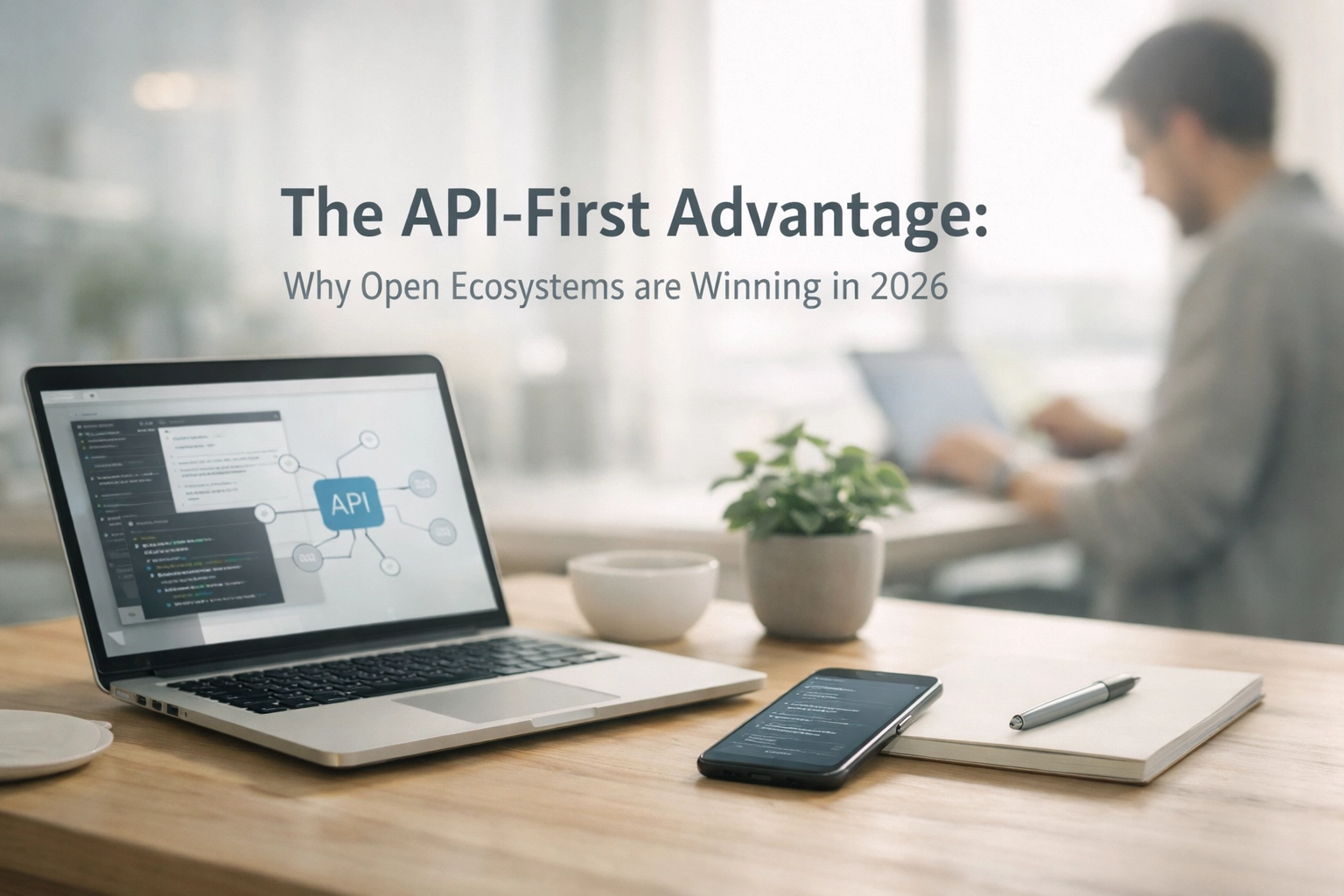
  • The API-First Advantage: Why Open Ecosystems are Winning in 2026

    The API-First Advantage: Why Open Ecosystems are Winning in 2026

    Connect deeper. Innovate faster. Scale better.

    In 2026, the gap between the leaders and the laggards in hospitality isn't just about the thread count or the location. It’s about the stack. We believe that your hotel management software should be the engine of your innovation, not the anchor holding you back.

    Modern hospitality leaders are moving away from the "all-in-one" monoliths of the past. Why? Because a jack-of-all-trades is a master of none. Instead, the industry is pivoting toward open ecosystems built on an API-first foundation. This shift has enabled properties to increase operational efficiency by 35% while delivering guest experiences that feel personal, seamless, and: most importantly: modern. All from one flexible, innovative platform.

    The end of the walled garden

    For decades, the hotel PMS was a black box. If you wanted to connect a new keyless entry provider or a smart energy management tool, you had to wait months for a "certified integration." Usually, it came with a hefty fee and a lot of headaches.

    We think those days are over.

    An API-first approach means the API isn't an afterthought or a "bolt-on" feature. It is the core of the product. Every function within Mews: from making a reservation to updating a housekeeping status: is built as an API call first. This creates a stable, predictable contract that allows your tech stack to grow as fast as your ambition.

    Why the architecture matters:

    • Parallel progress. Your marketing team can build a custom guest app while your operations team tests new door locks. Neither has to wait for the other.
    • Zero dependencies. Frontend and backend teams work independently, meaning you ship new features to your guests in days, not months.
    • Reliable scaling. Whether you’re managing one boutique property or a global chain of 50, the data flows with the same precision and speed.

    Minimalist hotel reception desk with a tablet demonstrating modern hotel management software efficiency.

    Speed is the only true competitive advantage

    The world moves fast. Guest expectations move faster. In 2026, the ability to pivot is what keeps you profitable. When a new payment method becomes the global standard or a revolutionary AI concierge hits the market, you can't afford to wait for your software vendor's roadmap to catch up.

    With a truly open ecosystem, you are the pilot. You can browse a marketplace, click a button, and have a new integration live in minutes. This isn't just "tech talk": it’s a fundamental shift in how you run your business.

    "We used to spend ten hours a week just trying to get our different systems to talk to each other. Now, everything just works, and we can focus on the guests." : General Manager, London Boutique Collection

    The impact of rapid integration:

    • 30-minute setups. Most of our 1,000+ integrations can be activated in the time it takes to have a coffee.
    • Plug-and-play finance. Connect your preferred payment gateway instantly to ensure frictionless transactions across every touchpoint.
    • Real-time data. Your analytics tools get fed the second a guest checks in, giving you a live pulse on your revenue.

    Better for developers, better for guests

    We believe that developer experience is a competitive differentiator. If a third-party developer loves working with our API, they will build better tools for you. It’s that simple. By providing clear documentation, reliable SDKs, and predictable versioning, Mews has become the playground for travel tech innovation.

    This developer-friendly approach translates directly to the guest experience. When systems talk to each other without friction, the guest never sees the "seams." They experience a journey that feels like one continuous brand interaction, from the first booking click to the final digital checkout.

    Guest using a laptop in a modern hotel lounge, showing a seamless travel tech innovation experience.

    Creating the "Invisible" Guest Journey:

    1. Personalized recognition. Your CRM knows the guest’s preferences before they even walk through the door.
    2. Omnichannel consistency. Whether they interact via a mobile app, a lobby kiosk, or a voice assistant, the data is identical.
    3. Instant gratification. Changes made to a booking are reflected across all systems in milliseconds, preventing double-bookings or lost requests.

    Maximizing every square meter

    The most successful properties in 2026 aren't just selling rooms. They are selling experiences, coworking spaces, parking spots, and wellness sessions. This "beyond the room" strategy is only possible if your hotel management software can handle diverse inventory types through a unified API.

    An open ecosystem allows you to monetize every inch of your property. You can integrate with specialized spa management software, parking apps, or restaurant POS systems, ensuring that all revenue streams flow into one central hub.

    Revenue diversification statistics:

    • 25% increase in ancillary revenue for properties using integrated upsell tools.
    • 12,500 properties worldwide are already using these open connections to redefine what a "hotel" can be.
    • 15% reduction in labor costs through automated task assignment between integrated housekeeping and maintenance apps.

    Sophisticated hotel coworking space utilizing hotel management software to maximize property square footage.

    Future-proofing against technical debt

    Technical debt is the "hidden tax" of old-school software. Every time you use a workaround or a clunky integration, you’re adding to a pile of problems that will eventually break. API-first architecture is the antidote.

    By building on clean, modular foundations, you ensure that your system is maintainable for the long haul. You don't have to tear everything down and start over when technology evolves. You simply swap one module for another. It’s the difference between building a house out of solid bricks versus building one out of Lego: the latter lets you remodel the kitchen without touching the roof.

    Keeping your stack lean:

    • No more legacy constraints. Move away from the "we do it this way because we've always done it this way" mindset.
    • Global compliance. As data privacy laws (like the evolved GDPR of 2026) shift, an API-first platform can adapt its data handling protocols instantly.
    • Secure by design. Protecting guest privacy is easier when data flows through standardized, encrypted API endpoints rather than messy, manual exports.

    Minimalist hotel smart-room control panel integrated via secure hotel PMS API for guest privacy.

    The Mews philosophy: Empowerment over complexity

    We don't want to just sell you a PMS. We want to give you the freedom to build the exact hotel experience you’ve always imagined. We believe that technology should be an enabler, not a barrier.

    Our open API is the heartbeat of this mission. It’s why we’ve seen such incredible growth and why the most innovative brands in the world are switching to Mews. They aren't just buying a software license; they are joining an ecosystem that values agility, transparency, and forward-thinking.

    See what a truly open ecosystem can do:

    1. Explore the Marketplace. See the hundreds of apps already waiting to plug into your property.
    2. Check the Docs. Show our API documentation to your IT lead and watch their eyes light up.
    3. Schedule a Demo. Let us show you how an API-first approach can save you 10+ hours of admin every week.

    Hospitality is an art, but in 2026, it is powered by science. The properties that embrace the API-first advantage will continue to outpace the competition, offering better service, higher margins, and a more resilient business model.

    Ready to break free from the monolith?

    Get started with Mews today and see how an open ecosystem can get you earning more revenue in no time. (It’s easier than you think.)