Author: admin

  • The Golden Rule of Freshness: How to Store Your Roasted Coffee Beans

    The Golden Rule of Freshness: How to Store Your Roasted Coffee Beans

    You've just received your freshly roasted beans – maybe from our selection at Limini Coffee – and you're ready to brew exceptional coffee at home. But here's the thing: how you store those beans over the next few weeks will make or break every cup you make.

    We've seen it countless times. Someone invests in quality specialty coffee, only to watch it go stale within days because it's sitting in the wrong container, in the wrong spot, slowly losing everything that made it special in the first place.

    So let's talk about the golden rule of freshness and how to protect your investment.

    The Four Enemies of Fresh Coffee

    Your roasted coffee beans have four mortal enemies: air, light, heat, and moisture.

    These aren't just minor inconveniences – they're actively working against you from the moment you open that bag. Each one degrades the delicate aromatic compounds and oils that give specialty coffee its complex flavors and aromas.

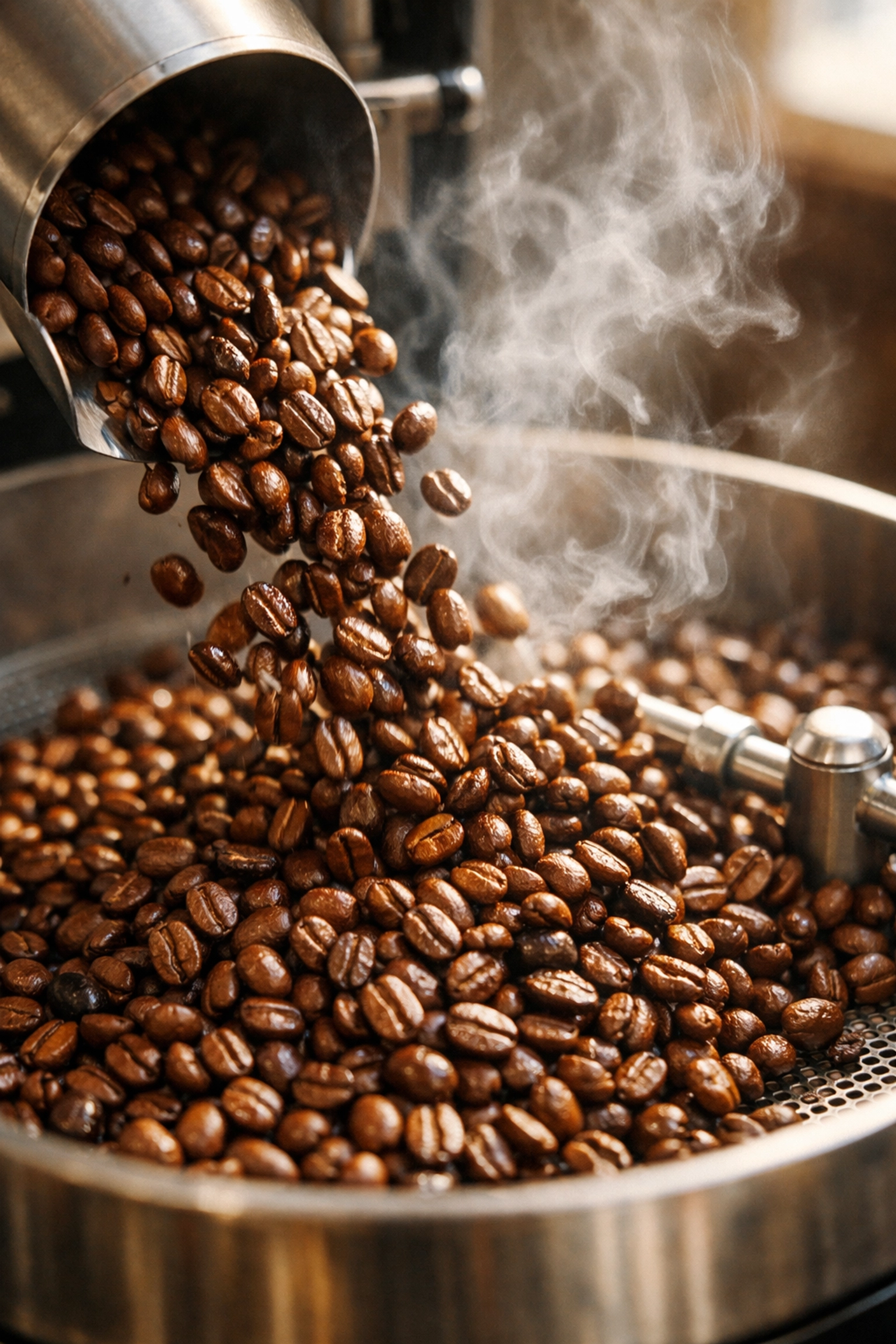
    Think of fresh coffee as a ticking clock. Roasted beans begin losing their aromatics within 10 days after roasting, and that degradation accelerates dramatically when exposed to these four factors. The good news? We can slow that clock way down with proper storage.

    Various airtight coffee storage containers on kitchen counter with whole coffee beans

    Why Container Choice Matters More Than You Think

    The container you choose isn't just about keeping beans contained – it's your first line of defense against those four enemies we mentioned.

    We recommend dark, opaque containers made from ceramic, stainless steel, or non-transparent plastic. The key word here is opaque. Clear glass jars might look lovely on your countertop, but they're letting light flood in and destroy those precious aromatics.

    Your container needs to be genuinely airtight. Not just "sort of closes well" but properly sealed. When oxygen interacts with the oils in your coffee beans, oxidation occurs, and those vibrant flavors start turning stale and flat. An airtight seal minimizes this contact.

    Here's something we get asked all the time: "Can I just keep the beans in the original bag?"

    If your coffee came in a bag with a resealable zipper (like ours do), you absolutely can – but only if you're storing it in a cool, dark location away from direct sunlight. The bag itself needs to be protected from light and heat. So basically, yes to the original bag, but no to leaving it on your sunny kitchen counter.

    The Ideal Storage Location

    Location, location, location. It matters in real estate, and it definitely matters for your coffee beans.

    You want a cool, dark place with stable temperature – ideally between 15-24°C (65-75°F). A dark pantry or cupboard works brilliantly. What you're looking for is consistency. Temperature fluctuations are just as damaging as high temperatures because they create condensation, and moisture is one of our four enemies.

    Keep your coffee away from the stove. We know it's convenient to have it nearby when you're making your morning brew, but the heat from cooking will accelerate staleness. Same goes for windows – even indirect sunlight warms up containers and degrades quality.

    Also avoid anywhere near your sink or dishwasher. Humidity and moisture are absolutely devastating to coffee beans. You want to maintain relative humidity around 60% in your storage area, which basically means: keep it dry.

    Dark opaque coffee container stored in pantry cupboard away from light

    The Grinding Question

    Here's a rule we're quite strict about: don't grind your beans until you're ready to brew.

    Whole beans have significantly less surface area exposed to air compared to ground coffee. Once you grind, you're dramatically increasing that exposure, and the degradation process goes into overdrive. Ground coffee can lose its freshness within hours, not days.

    We understand the convenience of pre-grinding, especially for busy mornings. But if you care about flavor – and you invested in quality beans, so we know you do – grinding fresh is non-negotiable. A decent burr grinder is one of the best investments you can make for home brewing.

    How Long Will Freshness Last?

    With proper storage in an airtight, opaque container in a cool, dark place, your roasted coffee beans will maintain their flavor and freshness for up to 30 days after opening.

    Notice we said "after opening." Before you break that seal, beans stay fresh considerably longer – usually 2-3 months from the roast date if the bag is unopened and properly stored.

    This is why we recommend buying quantities you'll actually consume within that 30-day window. It's better to order smaller amounts more frequently than to have a massive bag slowly going stale in your cupboard. When you're browsing our coffee selection, think about your actual consumption rate.
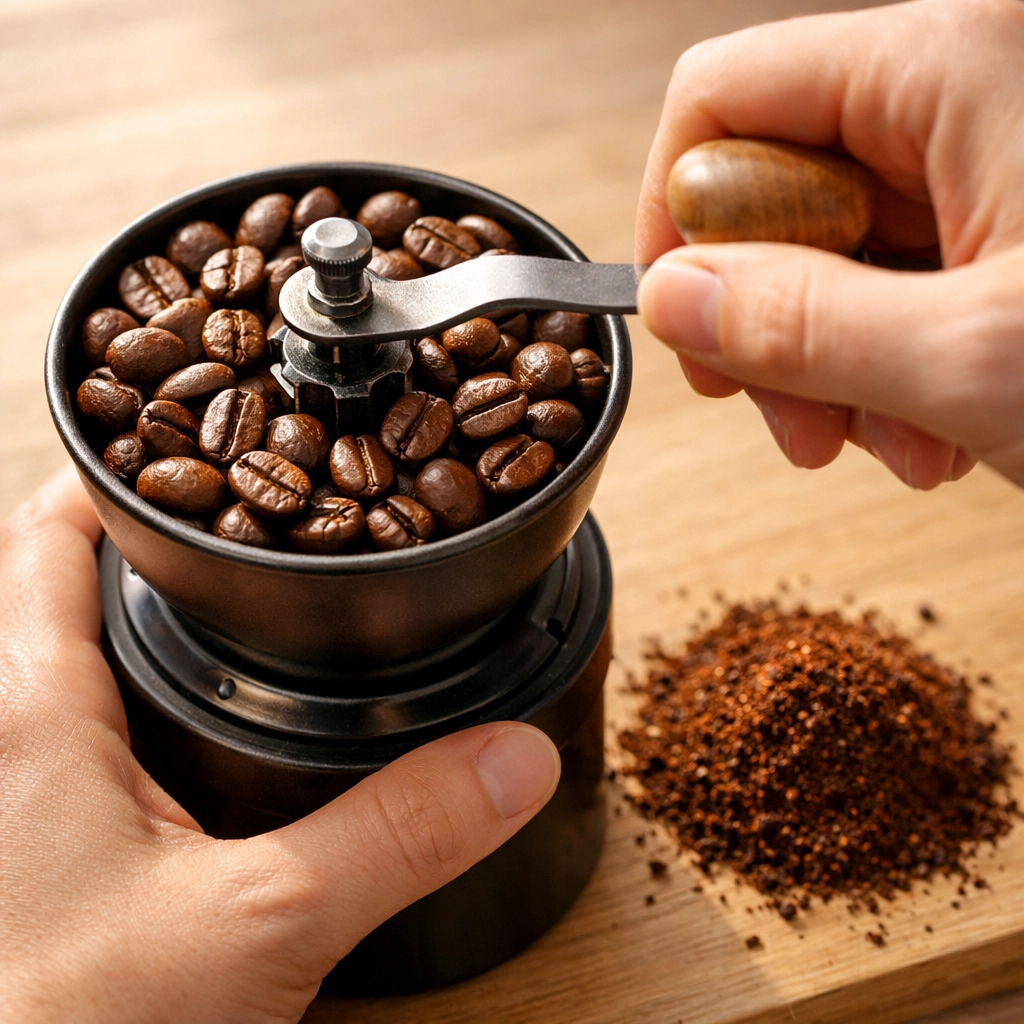
    Manual burr grinder with whole roasted coffee beans ready for fresh grinding

    The Freezer Debate: When It Works and When It Doesn't

    Should you freeze coffee beans? It's one of the most contentious questions in the specialty coffee world.

    Here's our take: for long-term storage beyond one week, freezing is better than refrigeration. But there are very specific rules to make this work.

    If you're going to freeze coffee, you need vacuum-sealed bags or genuinely airtight containers. Place them in the coldest part of your freezer – usually the back, away from the door. And here's the critical part: thaw only once. Do not refreeze.

    Why? Because every time frozen beans come back to room temperature, condensation forms. That moisture seeps into the beans, compromising flavor and potentially causing freezer burn. So if you freeze, portion your coffee into smaller amounts that you'll use entirely when you defrost them.

    But honestly? For most home brewers, we don't recommend freezing. If you're ordering regularly and consuming your coffee within 30 days, proper pantry storage works brilliantly without the complications of freezing and thawing.

    What About Refrigeration?

    Short answer: no. Just no.

    Refrigerators are humid environments with fluctuating temperatures (every time you open the door) and countless odors from other foods. Coffee beans are porous and will absorb those odors – imagine your Ethiopian natural tasting like last night's leftover curry. Not something we would recommend.

    The condensation issue is even worse in fridges than freezers because of the constant temperature changes. Skip the fridge entirely for coffee storage.

    Comparison of fresh glossy coffee beans versus dull stale coffee beans

    Signs Your Coffee Has Gone Stale

    How do you know if your storage method isn't working? Your beans will tell you.

    Stale coffee loses its aroma first. Fresh beans should smell vibrant and complex when you open the container. If there's barely any smell, or it smells flat and cardboard-like, freshness has left the building.

    The appearance changes too. Fresh beans have a slightly oily sheen (especially with darker roasts). Stale beans look dull and dry.

    And of course, there's the taste. Stale coffee brews thin, flat, and lifeless. You'll notice the absence of those bright, complex notes you fell in love with when you first opened the bag.

    Practical Storage Tips We Actually Use

    Here are some things we've learned from years of working with specialty coffee:

    Buy whole beans in quantities you'll finish within 3-4 weeks maximum. Smaller, more frequent orders beat bulk buying for home brewing.

    Invest in one really good storage container rather than several cheap ones. Quality matters here.

    Keep a permanent marker near your coffee storage and write the roast date on containers when you transfer beans. It's easy to forget when you opened a bag.

    If you're comparing different coffees, use separate containers for each. Don't mix old and new beans – it defeats the purpose of buying fresh.

    Consider getting a small kitchen scale to portion your beans. This helps you buy the right quantities and ensures you're not constantly opening and closing your main container.

    Fresh Is Best

    Look, we roast coffee because we're obsessed with flavor. Everything we do – from sourcing green beans to the roasting process itself – is about delivering exceptional coffee to your cup. But all that work means nothing if those beans aren't stored properly once they reach your kitchen.

    The golden rule of freshness really comes down to this: protect your beans from air, light, heat, and moisture. Get those four things right with a proper airtight, opaque container in a cool, dark location, and you'll enjoy amazing coffee for weeks after opening.

    Your beans deserve better than a random jar on a sunny shelf. Give them the storage they need, and they'll reward you with brilliant cups every single time.

    If you'd like to explore our range of freshly roasted specialty coffee and put these storage principles into practice, visit us here. We roast to order, which means you're getting beans at their absolute peak freshness – and now you know exactly how to keep them that way.
  • The Fastest Way to Cut Manual Tasks by 50%: Hotel Property Management System Automation

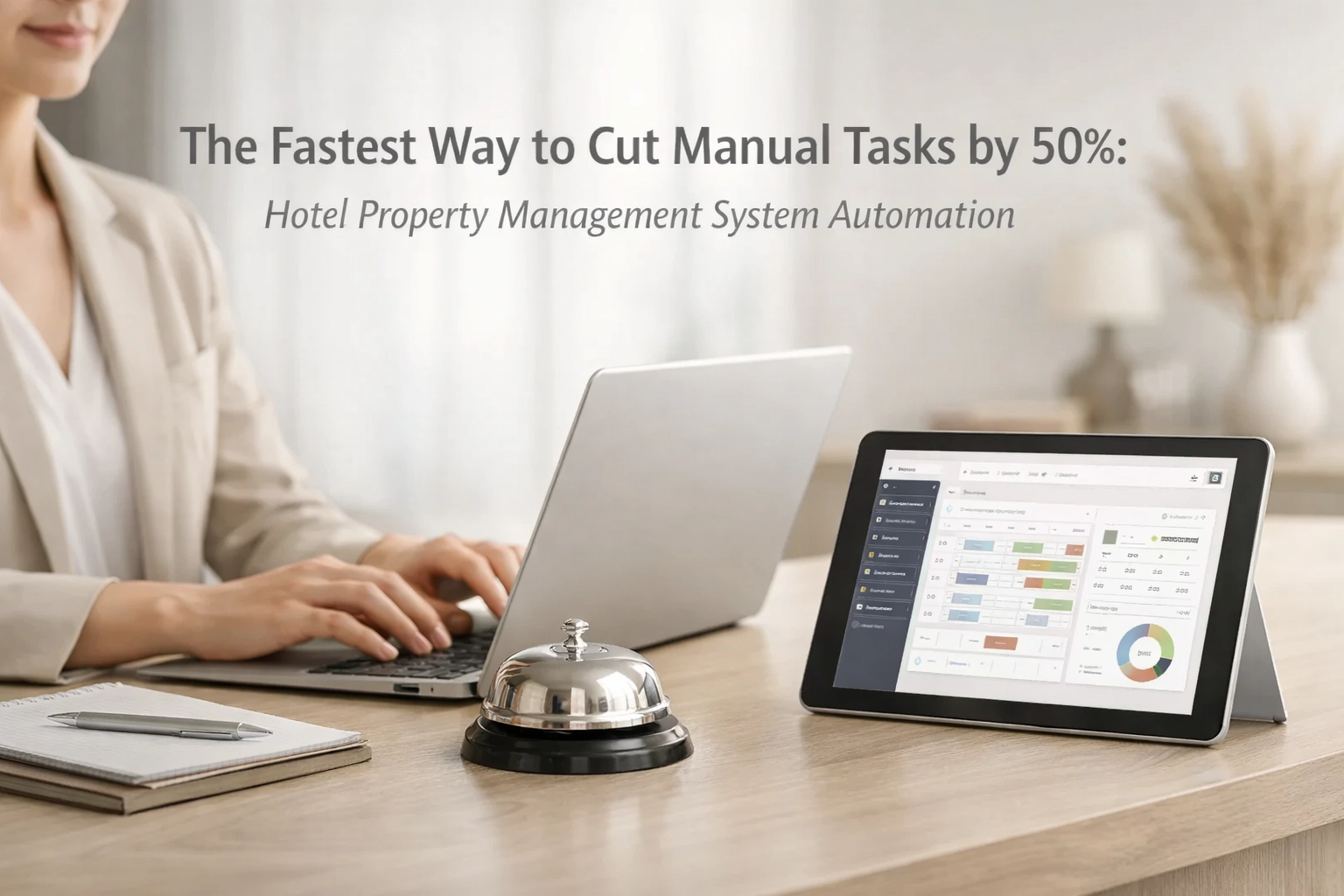
    The Fastest Way to Cut Manual Tasks by 50%: Hotel Property Management System Automation

    Manual tasks are stealing your time. Hours disappear into reservation tracking, payment processing, and room status updates. Your staff spends their days on spreadsheets instead of with guests.

    There's a better way. A modern hotel PMS with automation capabilities can cut those manual tasks in half, sometimes more. We're talking about systems that handle the grunt work automatically while your team focuses on what actually matters: creating memorable guest experiences.

    Let's look at how the right property management system automation transforms hotel operations.

    Where Manual Work Eats Your Day

    Before automation, here's what happens. Front desk staff manually update reservations across multiple platforms. Someone has to track payments, chase invoices, and reconcile accounts. Housekeeping coordination requires constant phone calls and check-ins. Reports? Built by hand at the end of each shift.

    It's exhausting. It's error-prone. And it's completely unnecessary in 2026.

    The research backs this up: hotels using hotel property management systems with robust automation see efficiency increases of up to 63.5%. That's not a small bump, that's transformation.

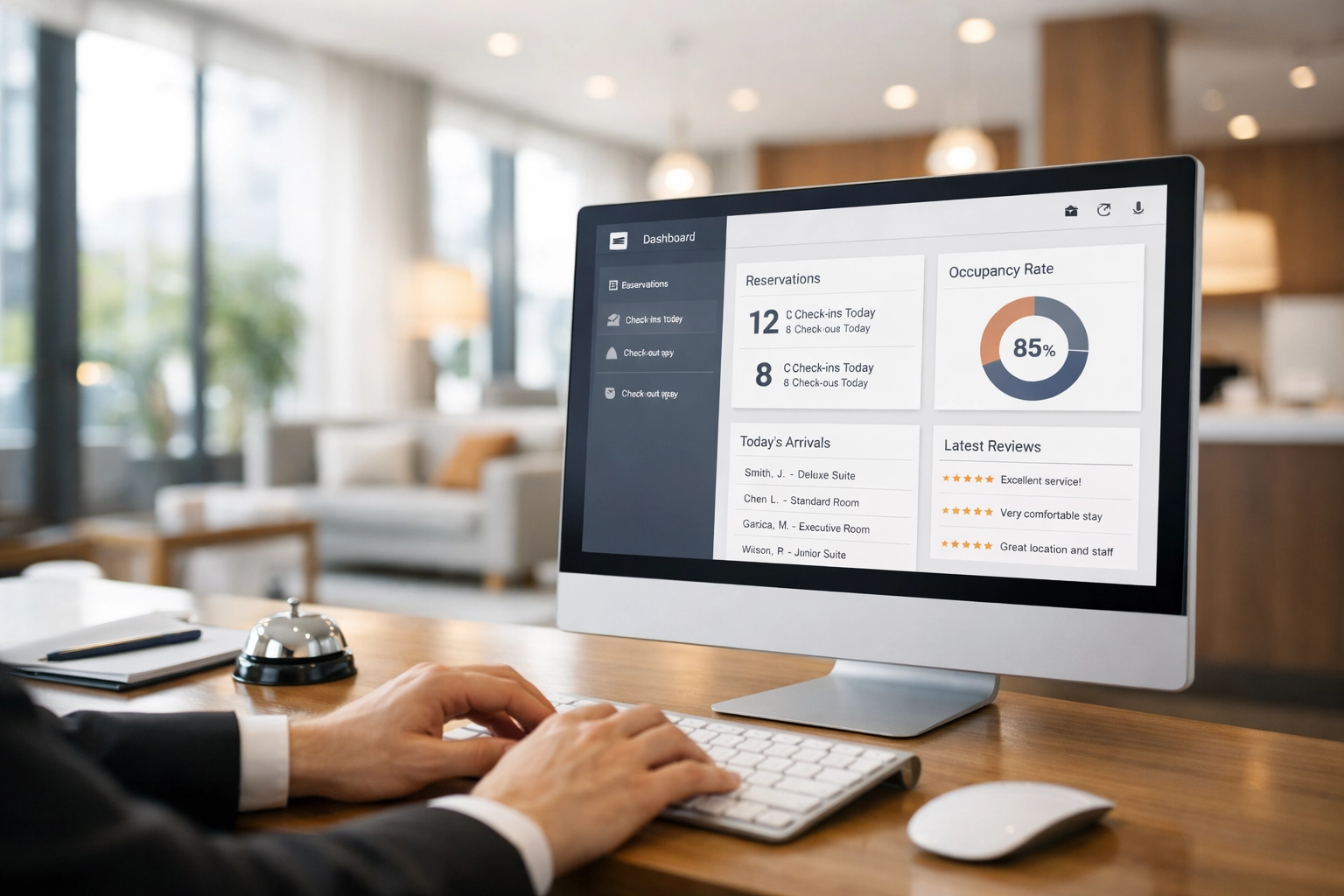
    Hotel front desk receptionist using modern PMS dashboard for automated property management

    The Five Areas Where Automation Changes Everything

    1. Reservation and Booking Management

    Every booking that comes through, whether from your direct site, a booking engine, or through a channel manager, gets automatically logged, confirmed, and synced across all platforms. No double-entry. No mismatched calendars. No "wait, do we have that room available?"

    Cloud-native systems excel here. Updates happen in real-time, everywhere, all at once. Your staff sees accurate availability whether they're at the front desk, working remotely, or checking from a mobile device.

    2. Payment and Billing Automation

    This is where the time savings get dramatic. One hotel operator reported saving 16 hours per week per employee through payment automation alone. That's not a typo.

    Auto-payment systems handle:

    • Automatic invoice generation
    • Payment processing without manual entry
    • Overdue payment tracking and reminders
    • Real-time financial record keeping

    No more chasing payments. No more manual reconciliation at month-end. The system handles it all while maintaining complete accuracy.

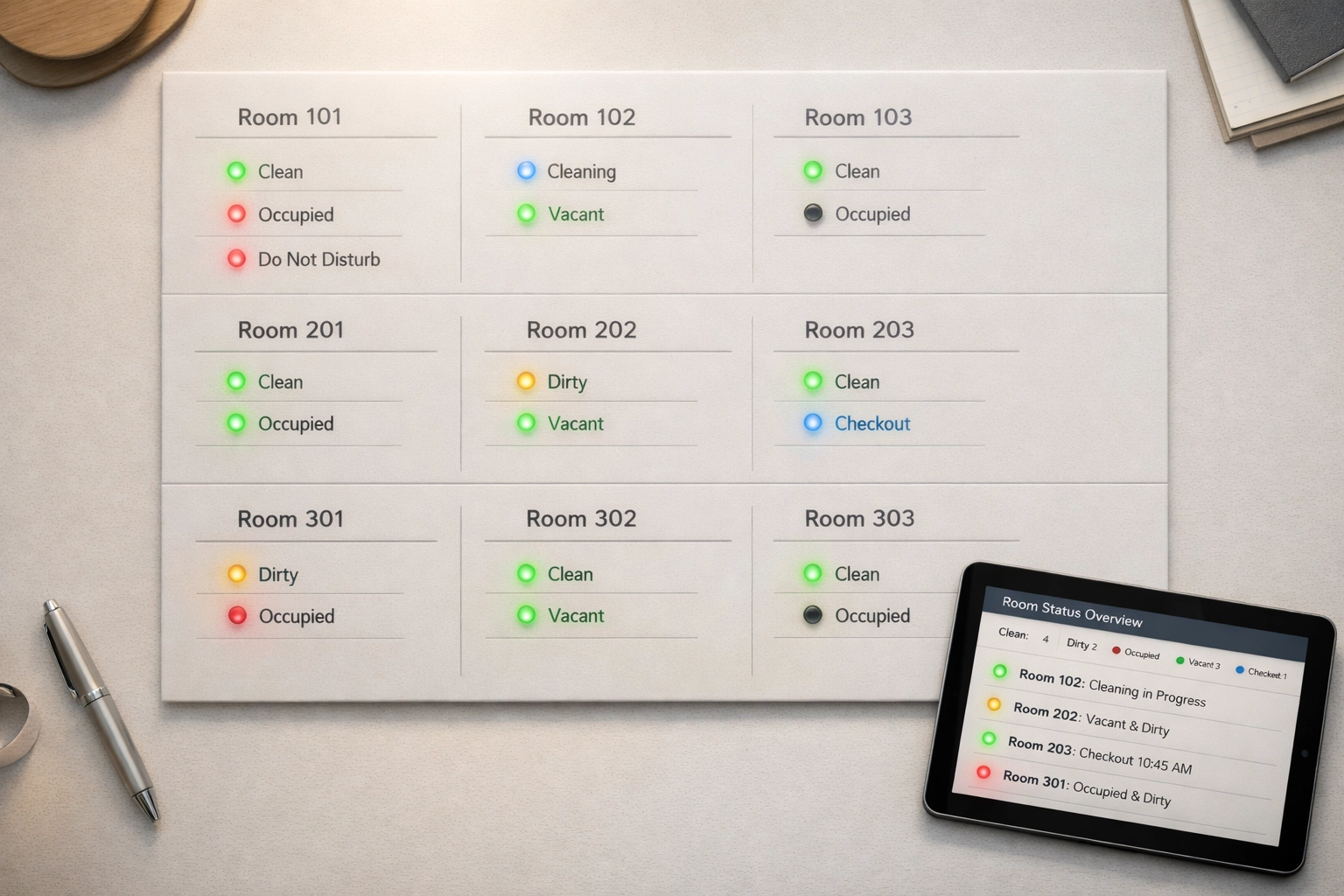
    Real-time hotel room status board showing automated housekeeping coordination system

    3. Housekeeping and Room Status Updates

    Manual housekeeping coordination is chaos. Phone calls, walkie-talkies, paper lists, it's 1990s technology trying to manage 2026 operations.

    Modern automation generates housekeeping tickets the moment guests check out. Room status updates happen in real-time. Front desk sees exactly which rooms are ready for new arrivals. No guessing. No awkward delays. No guests waiting in the lobby because housekeeping didn't get the message.

    4. Guest Communication and CRM

    A sophisticated CRM integrated with your PMS automates guest communication at every touchpoint. Pre-arrival emails. Check-in instructions. Post-stay follow-ups. Review requests. All personalized, all automated, all timely.

    The system remembers guest preferences automatically. Returning guests get recognized without staff having to dig through files. Preferences are flagged. Special requests are logged. It's personalization at scale without the manual work.

    5. Reporting and Analytics

    Manual reporting is where hours vanish. Collecting data from different systems, building spreadsheets, calculating metrics, it's tedious and time-consuming.

    Automated reporting delivers:

    • Real-time occupancy metrics
    • RevPAR tracking
    • Financial summaries
    • Performance analytics

    All without anyone compiling a single spreadsheet. Data flows automatically from operations into actionable insights.

    Hotel housekeeping cart in corridor ready for automated room service coordination

    The Real-World Impact

    Let's talk numbers. Hotels using automated property management systems report cutting new staff training time in half. That's experienced employees spending their time on revenue-generating activities instead of training newcomers on complex manual processes.

    The automation frees up your team for higher-value work. Face time with guests. Upselling opportunities. Problem-solving. The human touches that actually drive satisfaction and revenue.

    Error rates drop significantly too. Manual data entry means human error. Automated systems eliminate those mistakes. Double bookings vanish. Payment errors disappear. Guest records stay accurate.

    Why Cloud-Native Makes the Difference

    Traditional on-premise systems can't deliver this level of automation. They're too rigid, too isolated, too dependent on manual workarounds.

    Cloud-native platforms work differently. Updates happen automatically. Integrations are seamless. Access is universal. Your team works from anywhere, on any device, with the same real-time information.

    That's why systems like Mews focus on cloud-native architecture from the ground up. It's not just about where the software lives, it's about enabling capabilities that simply aren't possible with older technology.

    The platform approach matters too. When your PMS, booking engine, channel manager, and payment processing all work together natively, automation reaches its full potential. No clunky integrations. No data silos. Just smooth, automated workflows that actually work.

    Want to see what modern automation can do for your property? Check out what's possible at https://referrals.mews.com/umqhyito.

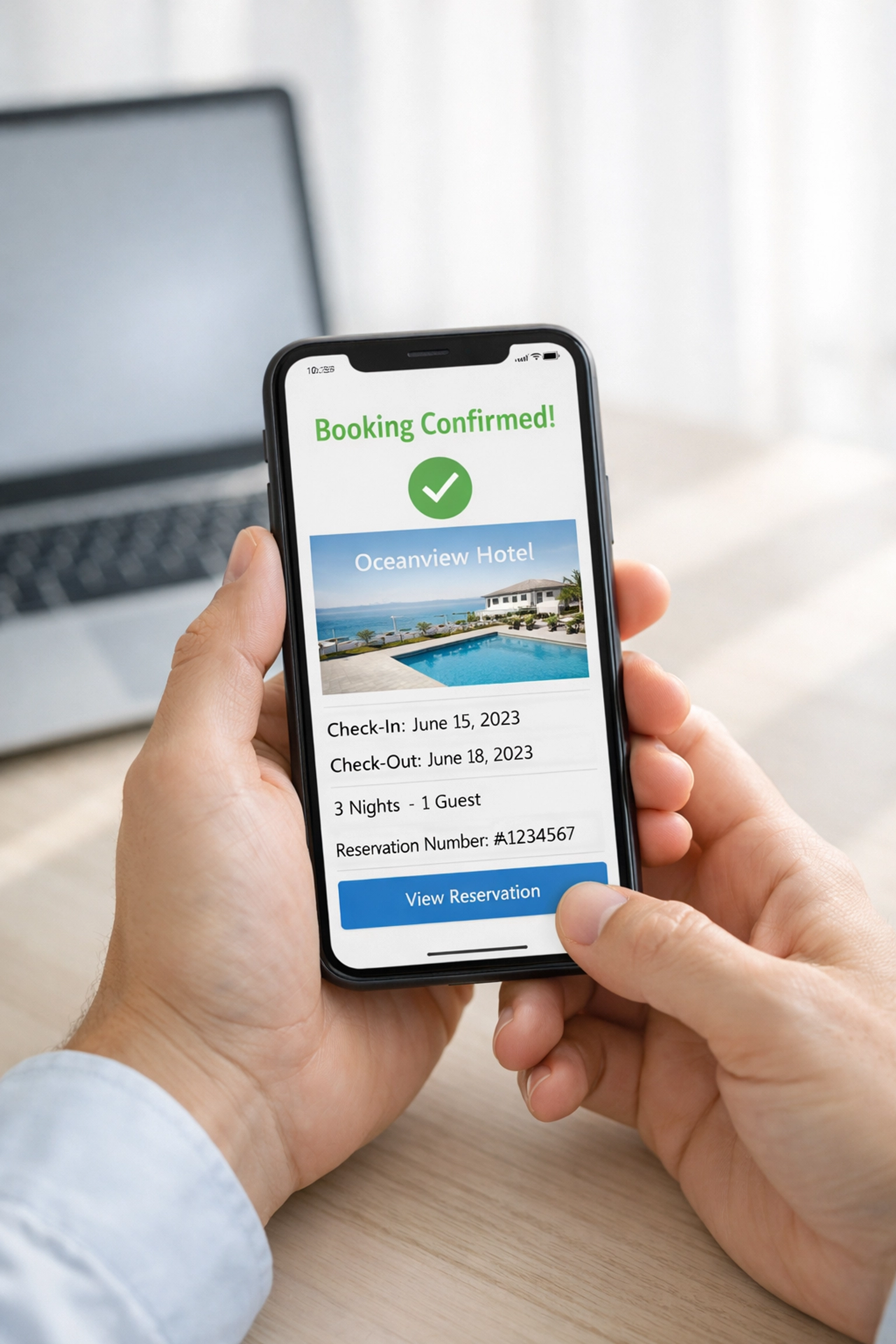
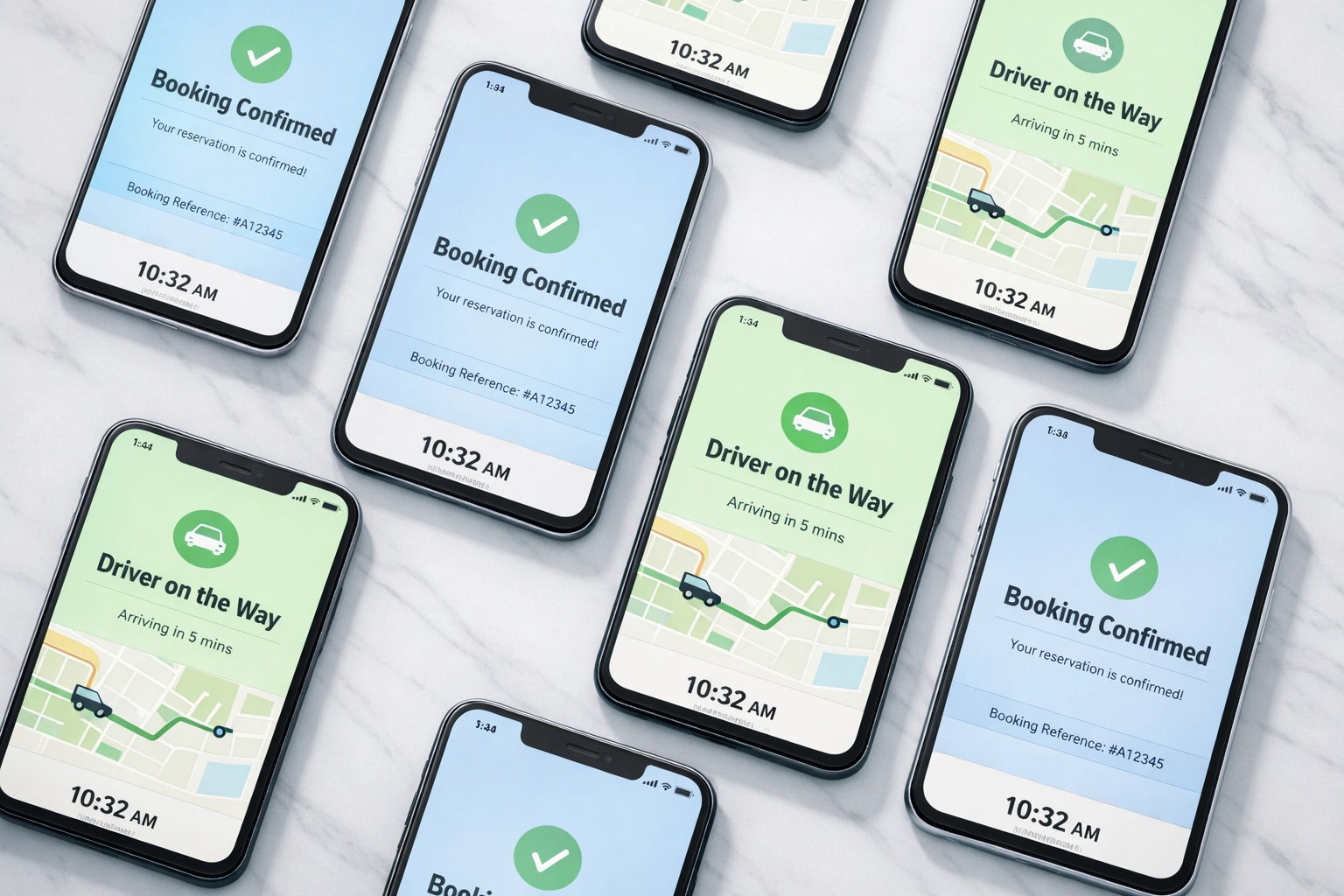
    Mobile hotel booking confirmation displayed on smartphone showing automation features

    Getting Started with Automation

    The shift to automated operations doesn't have to be overwhelming. Here's how properties typically approach it:

    Start with the biggest time drains. Payment processing and reservation management usually offer the quickest wins. Automate those first, let your team experience the benefits, then expand.

    Choose systems built for automation. Not all property management systems are created equal. Look for platforms that put automation at the core, not as an afterthought. Cloud-native, API-first architecture, real-time updates, these aren't nice-to-haves anymore.

    Train once, automate forever. Yes, there's a learning curve. But remember: automated systems cut training time for new hires by 50%. The upfront investment pays off quickly.

    Integrate everything. The real magic happens when your booking engine, channel manager, PMS, and CRM work together seamlessly. Isolated systems require manual work to connect them. Integrated platforms automate those connections.

    The Bottom Line

    Manual tasks are expensive: in time, in errors, in opportunity cost. Your staff didn't join hospitality to stare at spreadsheets all day.

    Property management system automation isn't just about cutting tasks. It's about redirecting human energy where it actually matters. Guest experiences. Revenue opportunities. Problem-solving. The work that makes hospitality rewarding.

    The technology exists. The results are proven. Hotels are cutting manual work by 50% or more while increasing efficiency by over 60%.

    The question isn't whether automation works. It's whether you can afford to keep operating manually.

    Hotel manager reviewing automated analytics and performance data on tablet

    Modern hotel operations run on automation. Cloud-native platforms handle the repetitive work. Your team handles the human work. And your guests get the attention they deserve.

    That's the future of hospitality. And it's already here.

  • Workflow Automation for Small Business: 10 Things You Should Know Before Your Coffee Gets Cold

    Workflow Automation for Small Business: 10 Things You Should Know Before Your Coffee Gets Cold

    You're doing it again.

    Opening 47 tabs. Switching between three different apps just to send one invoice. Copy-pasting customer data from emails into spreadsheets. Manually following up on leads that came in two days ago because you forgot. Again.

    Your coffee's getting cold while you're stuck doing work that honestly… a robot could do better.

    Here's the thing about workflow automation for small business: it's not some luxury reserved for corporations with IT departments the size of small villages. It's the difference between you working 70-hour weeks and actually having a life.

    Let me walk you through the 10 things I wish someone had told me before I spent three years doing everything manually like some kind of spreadsheet martyr.

    1. You're Losing an Entire Work Week Every Month (And You Don't Even Know It)

    Here's a stat that should make your eye twitch: employees using business automation tools are 14% more productive each week. That's not some marginal improvement. That's one full workday back in your pocket. Every. Single. Week.

    Do the math. That's 50+ days per year you're currently spending on tasks that could run themselves.

    Fifty days.

    What would you do with an extra 50 days? Probably not manually updating your CRM at 11 PM on a Tuesday. Just saying.

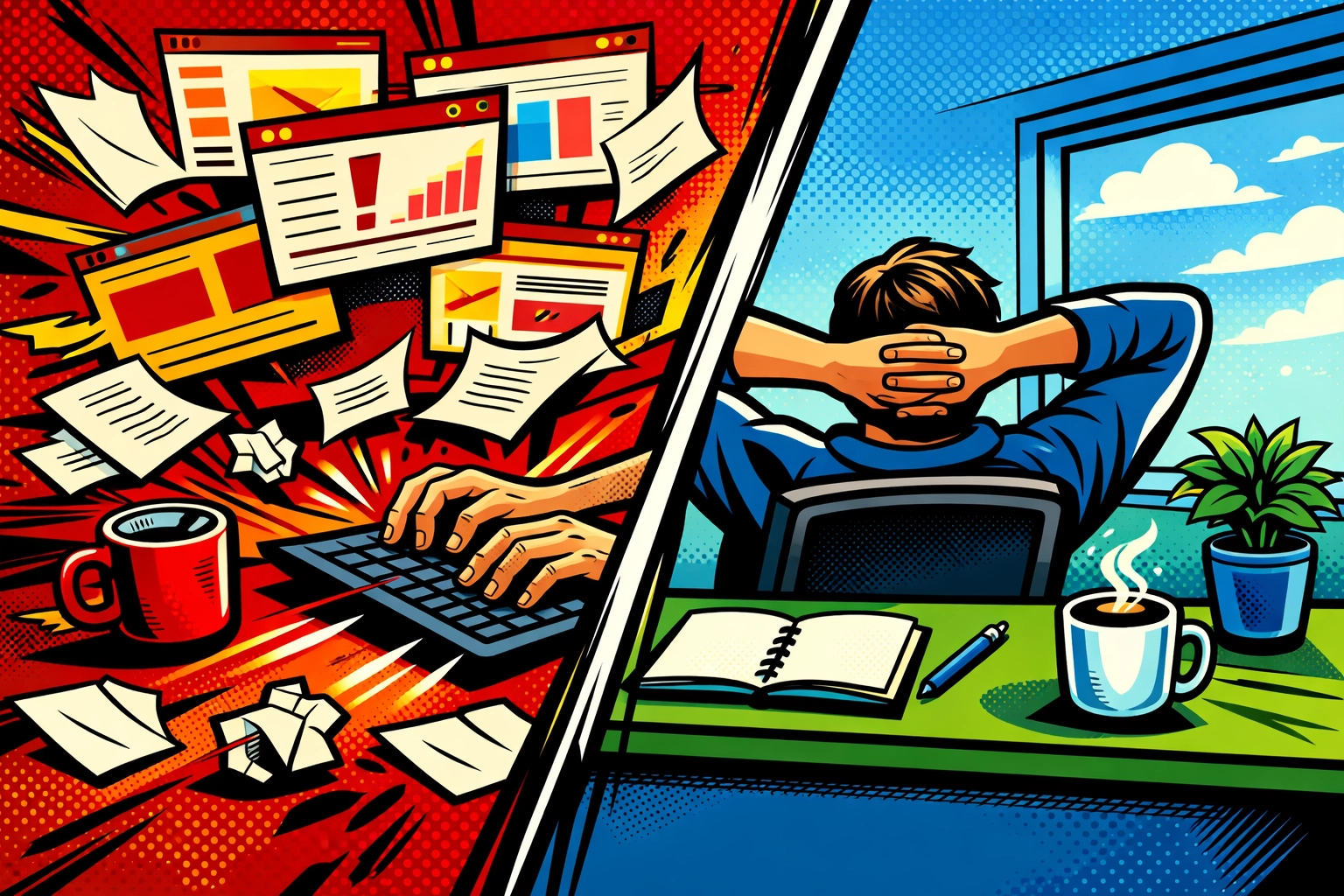
    Workflow automation transforms chaotic workspace into organized productivity for small business owners

    2. The Money You're Burning Isn't Just Time

    Let's talk cold, hard numbers. Businesses that implement ai business automation cut costs by 15-20% and reduce errors by 32% after implementation.

    That error reduction? That's not just about fixing typos. That's missed invoices. Double-booked appointments. Customer data entered wrong. The kind of mistakes that cost you actual money and make you look… less than professional.

    And here's the kicker: automation eliminates the need to hire three more people when you want to scale. You're not building a team. You're building a system that scales with you.

    3. Your Brain Is Too Expensive for Data Entry

    You didn't start a business to become a professional copy-paster.

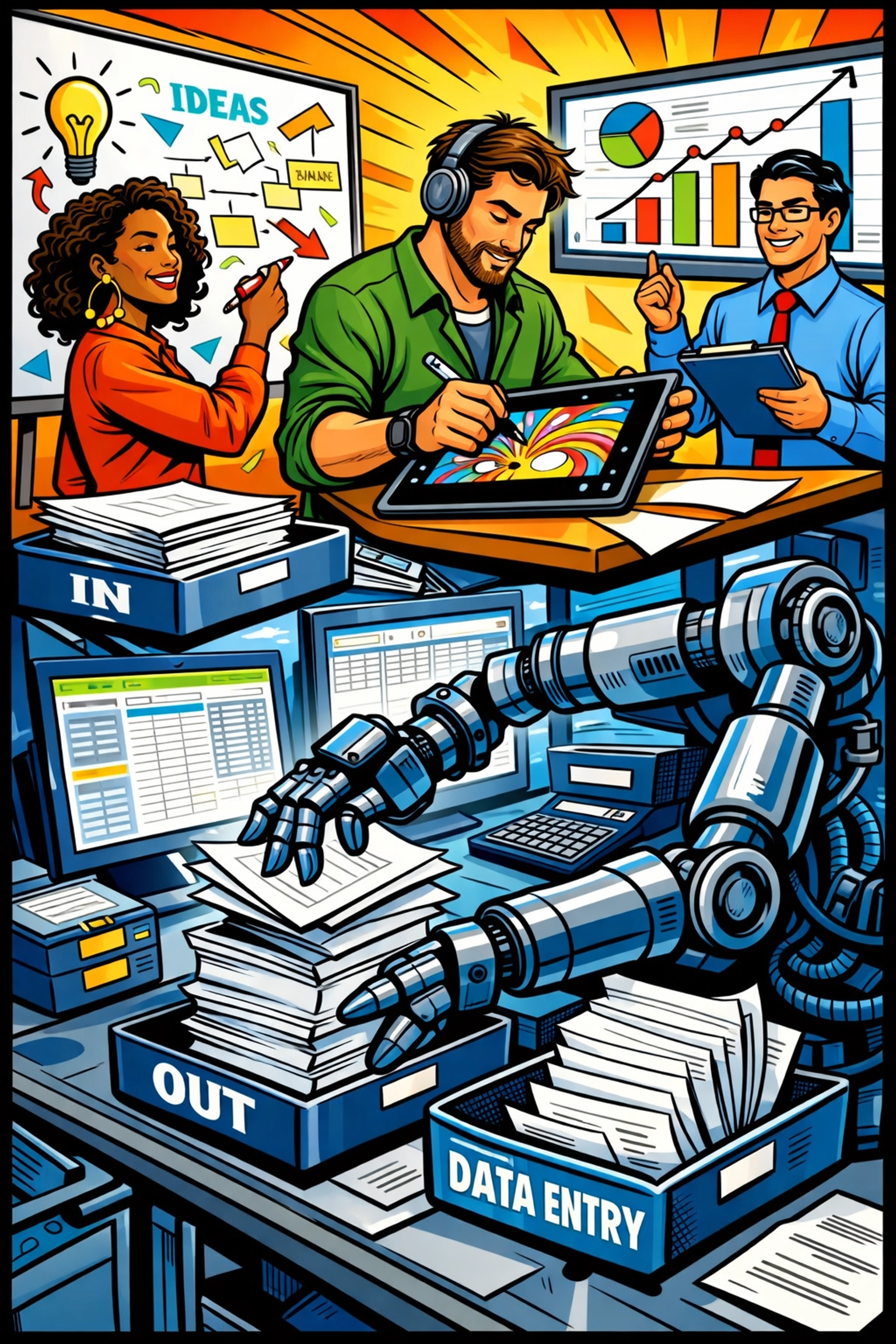
    Automation handles the soul-crushing repetitive stuff, data entry, appointment reminders, follow-up emails, invoice generation, with zero errors. No "oops, I forgot." No "I'll do it later" (which means never). Just done.

    Your brain is meant for strategy. For creative thinking. For actually growing your business. Not for remembering to send the same email to every new lead.

    4. Your Team Will Actually Like Working for You

    Hot take: nobody dreams of spending their day doing manual data entry and chasing down approvals.

    When you automate the boring bits, your team gets to focus on work that actually uses their skills. The creative stuff. The strategic stuff. The work that makes them feel like professionals instead of robots.

    Result? Happier employees. Lower turnover. And people who don't secretly fantasize about throwing their laptop out the window every Monday morning.

    Business automation reduces costs and errors: frustrated owner becomes confident with automated systems

    5. You Can Actually Scale Without the Chaos

    Remember that coffee shop owner who doubled sales with just one part-time hire? That's what happens when your order processing runs on autopilot instead of manual chaos.

    Here's the beautiful truth about workflow automation: it lets you handle 2x the volume without 2x the staff. You can grow your business without that panicked feeling of "I need to hire someone yesterday but I can't afford it yet."

    The system scales. You just… benefit.

    6. Start Where Your Customers Can Feel It

    Don't overthink this. The best place to start with business automation tools? Wherever your customers are waiting for you.

    Customer onboarding. Inquiry responses. Order processing. The stuff where delays make you look bad and fast responses make you look like a hero.

    Automate these first, and suddenly you're the business that replies in minutes instead of days. Your customers notice. Your competitors panic.

    7. Speed Compounds Across Everything

    Here's what happens when you automate your workflows: everything gets faster.

    Projects finish quicker because approvals don't sit in someone's inbox for three days. Customer questions don't get lost in the shuffle. Orders process immediately instead of "when someone gets around to it."

    That compound speed? That's the difference between you and the competitor who's still doing everything manually. They're running. You're flying.

    Team focuses on creative strategic work while business automation handles repetitive admin tasks

    8. You're Playing Chess, Not Checkers

    Automation isn't about replacing people. It's about positioning them correctly.

    When your marketing coordinator isn't spending 4 hours a day on manual tasks, they can actually… do marketing. When your salesperson isn't drowning in admin work, they can actually sell.

    You're taking limited human capital (fancy term for "the people who work for you") and putting them where they create actual value. Not where they're glorified robots.

    9. The System Grows With You (Without Drama)

    Remember when you upgraded your business operations and it felt like moving house during a hurricane? Yeah, automation doesn't work like that.

    Business automation tools adapt as you scale. More customers? The system handles it. New product line? Add it to the workflow. Growing from 5 to 50 employees? Your automation grows with you.

    No operational overhauls. No "we need to rebuild everything from scratch." Just smooth scaling that doesn't keep you up at night.

    10. You're Already Behind (But You Can Catch Up Fast)

    While you're manually processing orders and typing the same email for the 47th time today, your automated competitors are:

    • Responding to leads in under 2 minutes
    • Processing orders while they sleep
    • Delivering consistent quality at scale
    • Actually taking weekends off

    The gap widens every day. But here's the good news: you can close it faster than you think.

    Small business scales rapidly using workflow automation tools and AI-powered growth systems

    The Part Where I Stop Being Subtle

    Look, I could spend another 1,000 words convincing you that ai business automation is worth it. But you already know. You felt it when you read about those 50 lost days per year.

    The real question isn't "should I automate?" It's "why am I still doing this manually?"

    If you're tired of working 70-hour weeks, watching competitors outpace you, and feeling like you're drowning in busywork…

    Click here to see how Marblism builds your automation system in days, not months.

    No six-month implementation. No corporate complexity. Just clean, simple automation that gives you your time back.

    Your coffee's already cold. Don't waste another day doing work a robot should be doing.

    The automated businesses aren't working harder. They're just working smarter. Join them.

  • Why Wholesale Specialty Coffee is the Secret to Winning Customer Loyalty

    Why Wholesale Specialty Coffee is the Secret to Winning Customer Loyalty

    Here's a question that keeps café owners up at night: Why do some customers become absolute regulars while others drift away after a visit or two?

    The answer isn't just about friendly service or Instagram-worthy interiors. It's about what's in the cup.

    Wholesale specialty coffee is quietly transforming how businesses build genuine, lasting customer loyalty. And we're not talking about the kind of loyalty that comes from a punch card (though those help). We're talking about the kind where customers genuinely miss your coffee when they're away.
    The Foundation: Consistency Builds Trust

    Let's start with something fundamental. Your customers might not be able to articulate what a 'good extraction' means, but they absolutely notice when Tuesday's flat white tastes different from Monday's.

    Consistency is everything.

    When you partner with a proper wholesale specialty coffee supplier, you're investing in reliability. Every batch is roasted to exacting standards. Every bag delivers the same flavour profile your customers have come to expect. This isn't just nice to have, it's the bedrock of repeat business.

    Barista creating latte art with specialty coffee for consistent quality

    Think about it from your customer's perspective. They're making a decision every morning about where to spend their money and their precious time. If they know your café delivers the same excellent coffee every single visit, that decision becomes automatic. You've earned their trust.

    The problem with inconsistent coffee? It erodes confidence. A customer might forgive one subpar cappuccino, but the second time it happens, they start wondering if it's worth the risk. So they go elsewhere.

    Specialty Coffee: Your Competitive Moat

    Here's where wholesale specialty coffee gets interesting for business owners.

    The café down the street can copy your menu. They can hire talented baristas. They can even replicate your aesthetic. But they can't easily replicate your coffee, especially if you're working with unique, specialty-grade beans sourced through a dedicated roaster.

    Wholesale specialty coffee gives you access to beans that simply aren't available in supermarkets or through generic suppliers. We're talking single-origin coffees with distinctive flavour profiles. Limited microlots. Beans from specific farms with fascinating stories.

    This creates genuine differentiation. Your regular customers start to develop preferences. "I love that Ethiopian natural process you do on filter," they'll say. Or, "Is the Colombian back in stock yet?"
    Specialty coffee beans from multiple origins for wholesale café supply

    These aren't just transactions anymore. They're conversations. And conversations build relationships, which build loyalty.
    When customers discover flavours they can only get from you, they have a compelling reason to return. It's exclusivity, but the approachable kind, rooted in quality rather than pretension.

    Customization: Making It Truly Yours

    One of the most underrated advantages of partnering with a wholesale specialty coffee roaster is the ability to customize.

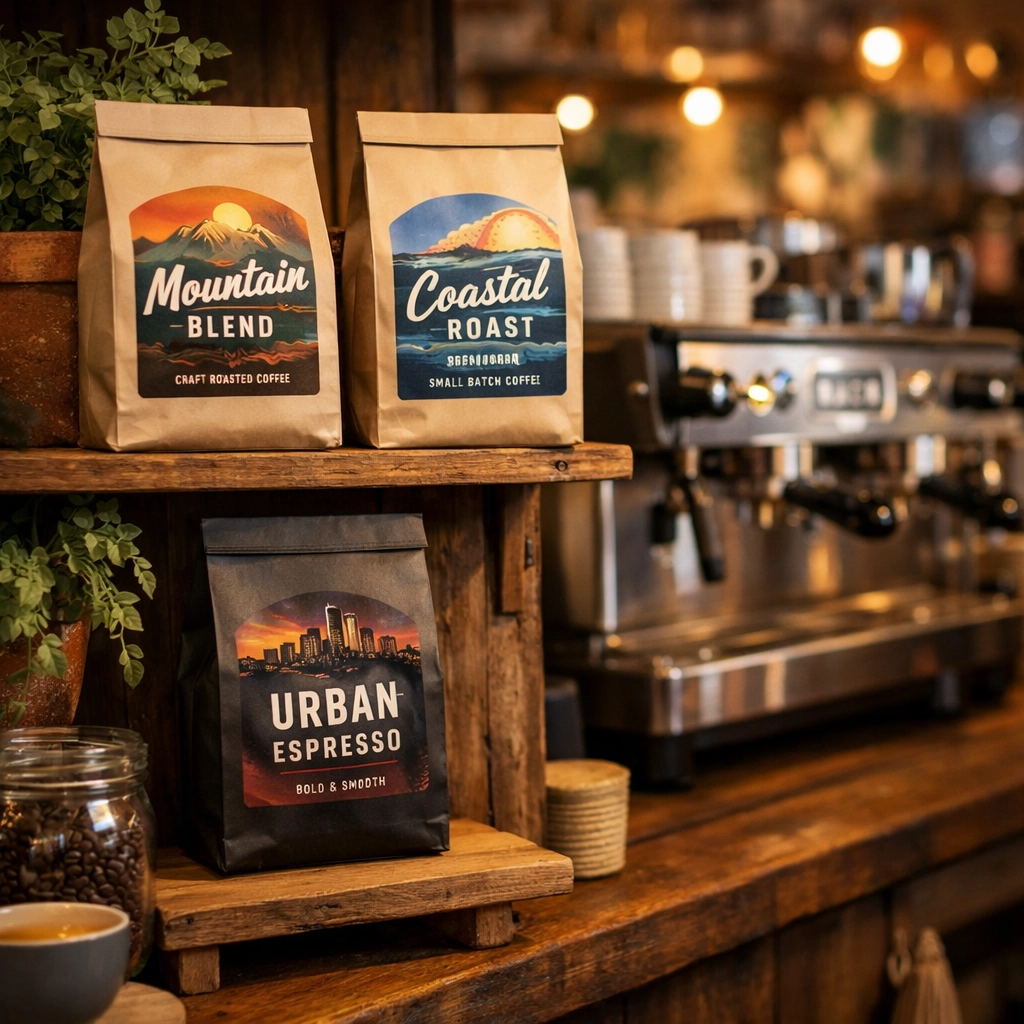
    Many roasters, ourselves included at Limini Coffee, offer custom blending and private labeling. This means you can work with your roaster to develop a house blend that's uniquely yours. Something that reflects your brand's personality and your customers' preferences.

    Imagine a customer walking into another café and thinking, "This is good, but it's not my café's blend."

    That's brand loyalty.

    Private labeling takes this even further. When your coffee bags carry your branding, it reinforces your identity every time a customer sees them (whether in your café or if they purchase retail bags to take home). It's a subtle but powerful reminder of where that exceptional coffee experience comes from.

    Custom labeled wholesale coffee bags displayed in café for brand identity

    We work with cafés and coffee shops to create bespoke wholesale solutions that genuinely reflect their vision. Because cookie-cutter coffee creates cookie-cutter experiences, and nobody builds loyalty with that.

    The Business Advantage: Quality Without Compromise

    Let's talk numbers for a moment.

    Premium coffee at reasonable prices isn't a contradiction when you're buying wholesale. The economies of scale work in your favor. You get specialty-grade beans, the kind that would cost significantly more through retail channels, at prices that make sense for your business model.

    This creates a powerful value proposition for your customers. They're getting genuinely excellent coffee without paying tourist-trap prices. That feeling of getting good value keeps them coming back.

    And here's the thing: customers can tell the difference between specialty coffee and commodity coffee. They might not know the technical reasons why, but they taste it. They feel it in the texture, the complexity, the finish.

    When you're serving properly sourced, freshly roasted wholesale specialty coffee, you're operating at a different level. Your customers notice. Your bottom line notices too.

    Fresh Roasted Makes the Difference

    There's something we need to address directly: freshness matters enormously.

    Coffee is a perishable product. The flavor compounds that make specialty coffee special start degrading the moment beans are roasted. By the time supermarket coffee reaches the shelf, it's often weeks or even months past its peak.

    Wholesale partnerships with dedicated roasters solve this. Beans are roasted to order and shipped quickly. You're getting coffee at its absolute best, usually within days of roasting.

    Your customers taste this freshness. The vibrant aromatics. The clarity of flavor. The sweetness that only comes from beans in their prime.

    Freshly roasted specialty coffee beans for wholesale café partnerships

    It's a night-and-day difference, and once customers experience genuinely fresh specialty coffee, going back to stale commodity coffee feels like a downgrade they're not willing to make. So they keep coming back to you.

    Building Loyalty Programs Around Quality

    Here's a strategy that amplifies everything we've discussed: pairing your wholesale specialty coffee with a structured loyalty program.

    The specialty coffee creates the fundamental experience worth returning for. The loyalty program provides additional incentive and makes customers feel recognized.

    This combination is powerful. Customers aren't just earning points, they're earning rewards while drinking coffee they genuinely love. The program becomes a bonus on top of an already compelling offering, rather than the only reason to return.

    We've seen cafés transform their regular customer base by implementing this dual approach. The specialty coffee does the heavy lifting of creating genuine satisfaction, while the loyalty program adds structure and rewards to encourage frequency.

    The Practical Path Forward

    So how do you actually implement this in your business?

    Start by evaluating your current coffee supplier honestly. Are you getting consistent quality? Do you have access to genuinely distinctive beans? Can you customize offerings to reflect your brand?

    If the answer to any of these is no, it might be time to explore wholesale specialty coffee partnerships. Look for roasters who understand hospitality businesses, who can scale with you, and who treat coffee sourcing as seriously as you treat your customers.

    Happy customer receiving specialty coffee order building café loyalty

    Consider starting with a signature house blend and perhaps one rotating single-origin option. This gives customers consistency with your main offering while keeping things interesting with seasonal variety.

    Train your staff to talk about the coffee with confidence. When they can explain where beans come from, how they're processed, why they taste the way they do, it elevates the entire experience. Customers love this knowledge: it makes them feel like insiders.

    The Truth About Coffee Loyalty

    At the end of the day, customer loyalty in the coffee business isn't about gimmicks or marketing tricks.

    It's about delivering a product so consistently good that choosing anywhere else feels like settling. It's about offering flavours distinctive enough that customers genuinely miss them when they're away. It's about building an experience that feels personal and special, even when it's replicated hundreds of times a day.

    Wholesale specialty coffee makes all of this possible. It gives you the tools: the quality, the consistency, the distinctiveness: to create something worth being loyal to.

    Your customers want to be loyal. They want to find their place, their coffee, their morning ritual. When you give them specialty coffee that delivers on all these fronts, loyalty isn't something you have to manufacture.

    It just happens naturally.

  • Why Your Hotel Needs a Mobile-First Strategy

    Why Your Hotel Needs a Mobile-First Strategy

    Your guests are already mobile-first. Your hotel should be too.

    80% of hotel website visits happen on mobile devices. Yet many properties still design for desktop and adapt for mobile as an afterthought. That's backwards: and it's costing you bookings.

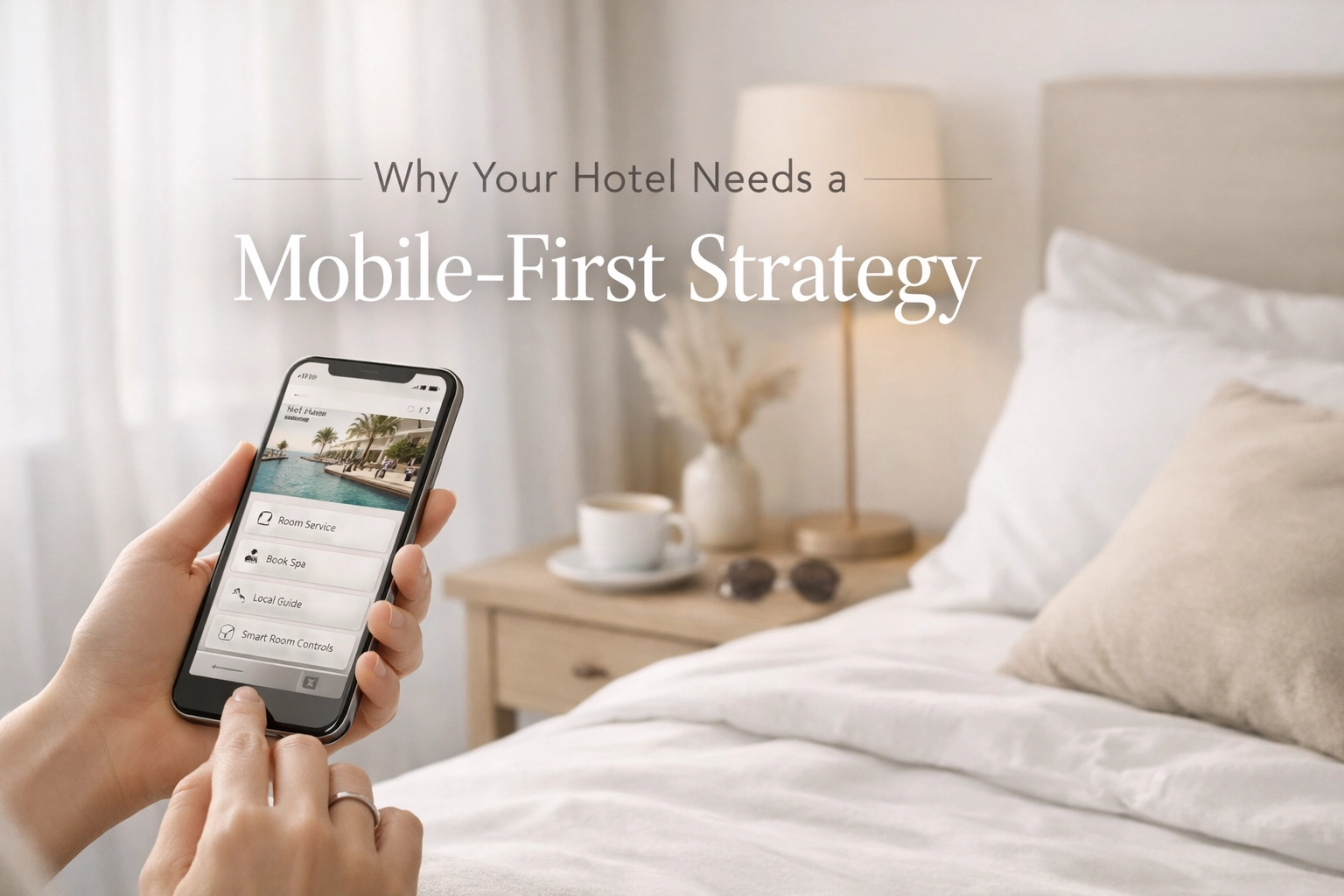
    A mobile-first strategy puts smartphones at the center of your guest experience. It transforms how travelers discover, book, and interact with your property. And it creates new revenue opportunities at every touchpoint.

    Mobile Drives Direct Bookings

    Mobile isn't just where guests browse. It's where they buy.

    Properties accepting mobile payment methods like Apple Pay and Google Pay see higher conversion rates. The reason? Friction kills bookings. When guests can complete a reservation with a fingerprint or face scan, they're more likely to finish what they started.

    Direct bookings matter even more on mobile. Guests searching on their phones want answers fast. If your booking engine loads slowly or forces them to another site, they'll bounce to an OTA. A native mobile experience keeps them in your ecosystem: and keeps commission fees in your pocket.

    Mobile payment options for hotel bookings with Apple Pay and Google Pay

    Mobile channels also unlock location-based marketing. Geo-fencing lets you send real-time offers based on where guests are physically located. Walking past your hotel bar? Get a notification for happy hour specials. Near a local attraction? Receive a discount on event tickets through the hotel.

    This matters because timing changes everything. Guests aren't interested in spa packages during the booking process. They're focused on room rates and availability. But after check-in, when they're settled in and exploring? That's when upsells work. Mobile gives you the moment-to-moment access to make relevant offers when guests actually want them.

    Guests Expect Mobile Control

    Today's travelers want their entire journey in one place.

    57% of travelers want a single app to plan, book, and track their trip. Over 70% of U.S. travelers always use their phones while traveling. These aren't preferences: they're expectations.

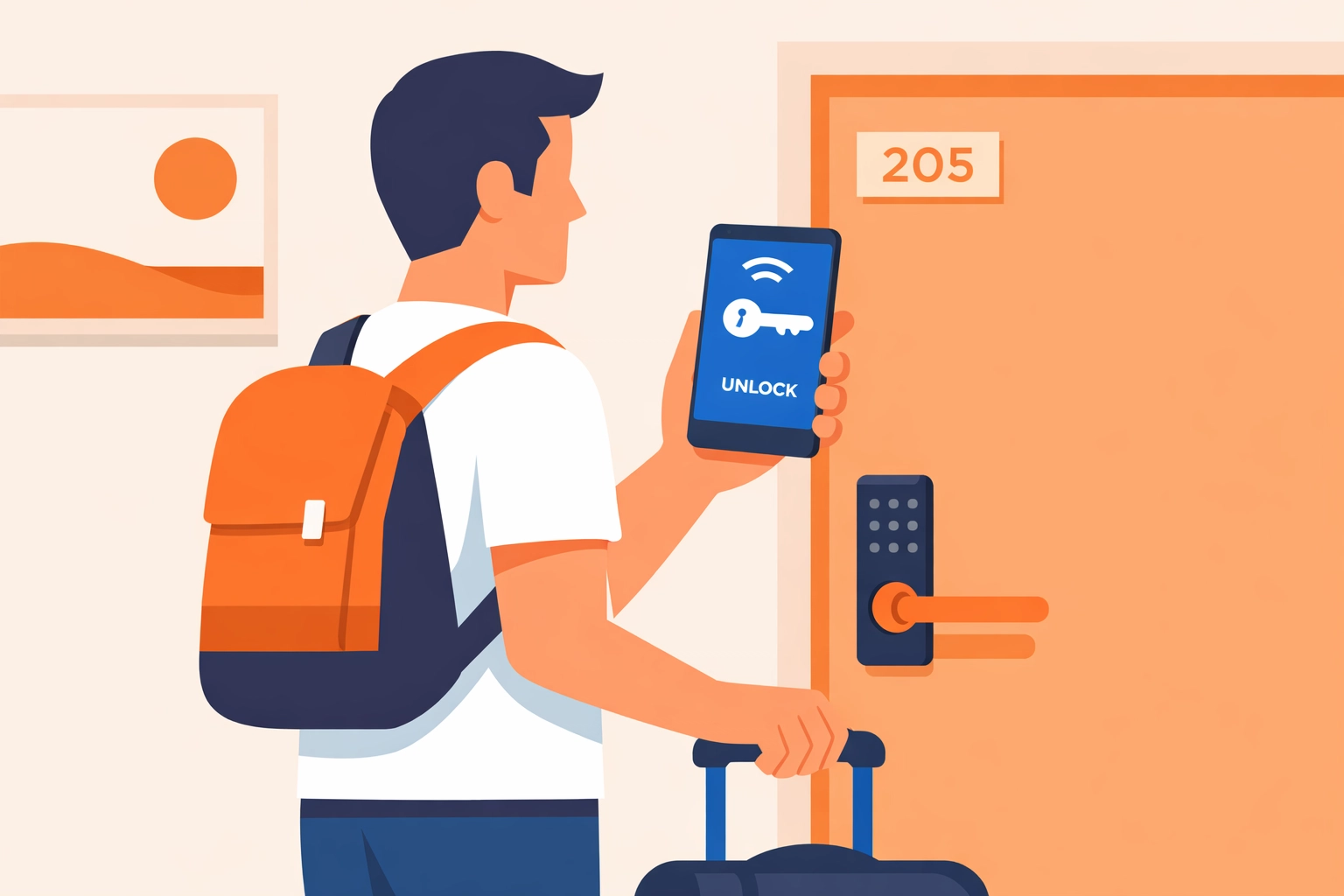
    Mobile check-in has become table stakes. Guests want to skip the front desk, choose their room, and head straight to their floor. Keyless entry through a smartphone app eliminates the plastic key card entirely. These aren't gimmicks. They're conveniences that free up guest time and reduce touchpoints.

    Hotel guest using smartphone for keyless room entry and mobile check-in

    The best mobile experiences give guests control. View their folio in real-time. Request housekeeping or maintenance. Order room service. Book spa appointments. Message the front desk. All without picking up a phone or walking to the lobby.

    This flexibility matters more post-pandemic. Contactless preferences haven't disappeared: they've become standard. A hotel property management system that supports mobile guest services isn't innovative anymore. It's necessary.

    Voice-activated devices in rooms extend mobile functionality even further. Guests can control lighting, temperature, and entertainment without touching a switch. This integration between mobile apps and in-room technology creates a seamless experience that keeps guests engaged with your platform throughout their stay.

    Staff Mobility Changes Operations

    Mobile-first isn't just for guests. Your team needs it too.

    Front desk staff tied to desktop computers can't help guests anywhere else. Housekeeping without mobile devices can't update room status in real-time. Maintenance crews with paper tickets waste time tracking down information.

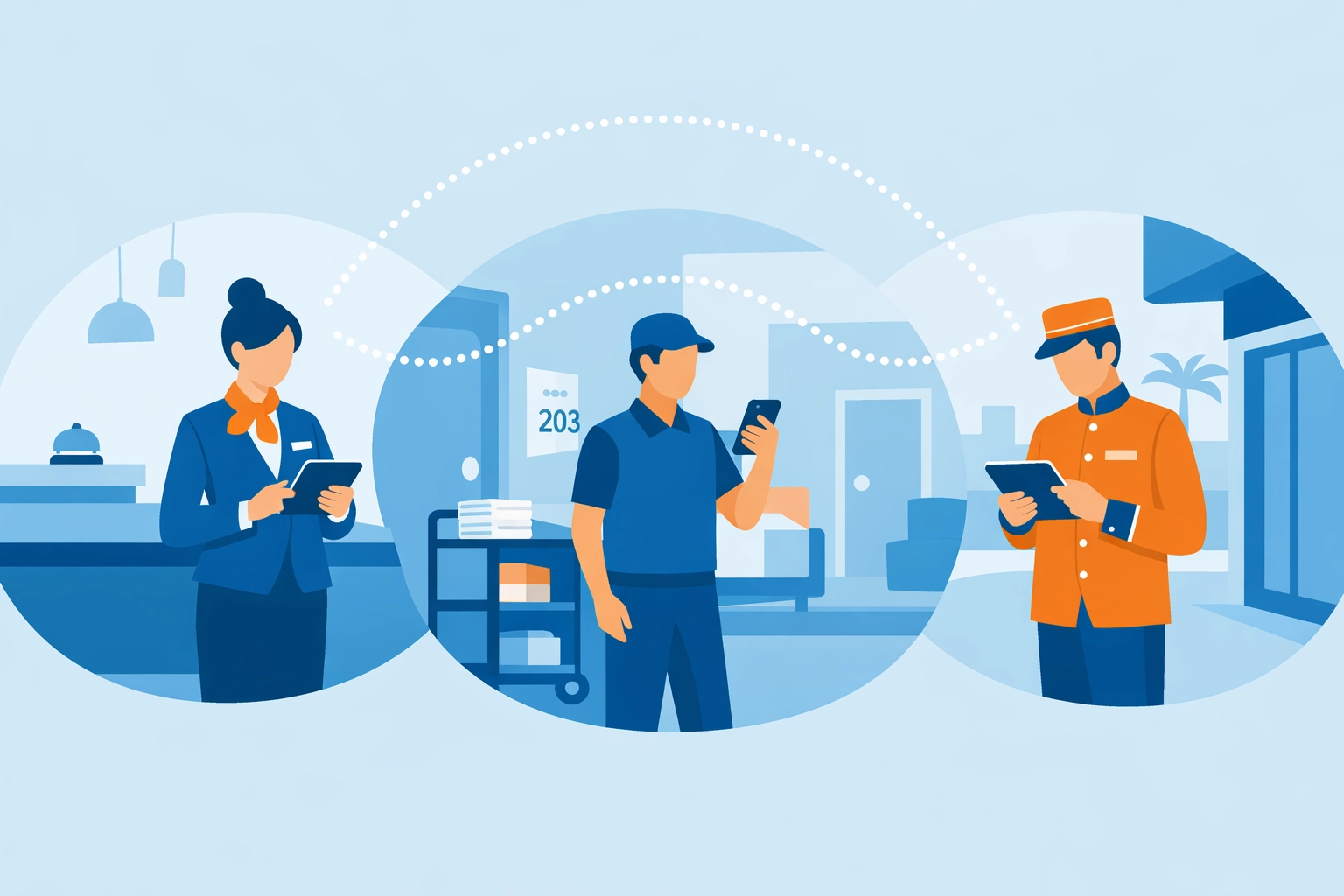
    Staff mobility through a hotel pms transforms operations. Front desk agents can check guests in from the lobby, poolside, or during events. Housekeeping updates room status immediately after cleaning, triggering faster front desk notifications. Maintenance receives and completes work orders through mobile devices, updating status without returning to an office.

    Hotel staff using mobile hotel PMS for real-time communication and operations

    This operational flexibility improves service speed. When your team has information at their fingertips, they solve problems faster. No more "let me go back to the desk and check." Guests get answers immediately.

    Cloud-based systems make this possible. A modern hotel property management system built for mobile access lets staff work from anywhere. Updates sync instantly across all devices. Everyone sees the same real-time information.

    Mobile-First Wins in Search

    Google's mobile-first indexing prioritizes mobile-optimized sites.

    If your website isn't designed for mobile, you're losing visibility in search results. Google evaluates your mobile site first when determining rankings. A slow, clunky mobile experience hurts your SEO: even if your desktop site is perfect.

    Mobile-first design means faster load times. Intuitive navigation. Forms that work with phone keyboards. Buttons sized for thumbs. These details seem small, but they dramatically impact user experience and conversion rates.

    Speed matters especially on mobile. Guests on smartphones are often on cellular networks, not WiFi. A page that takes five seconds to load on mobile loses over half its potential visitors. They'll bounce to a competitor before your booking engine even appears.

    Integrated booking engines keep guests in your ecosystem. When visitors click "Book Now" and stay on your site: rather than redirecting to a third-party platform: they're more likely to complete the reservation. That seamless experience only works when your entire site is designed mobile-first.

    Mobile-first hotel website optimized for search engine visibility

    Personalization Creates Loyalty

    Mobile enables personalization at scale.

    Behavioral data from mobile interactions tells you what guests want. Which amenities they browse. What times they book. How they prefer to communicate. This intelligence powers targeted marketing that feels relevant, not intrusive.

    Location data enhances personalization further. When a repeat guest arrives in your city, send a welcome message with their favorite room already reserved. When they're near your property, offer early check-in if available. These touches build loyalty because they're timely and useful.

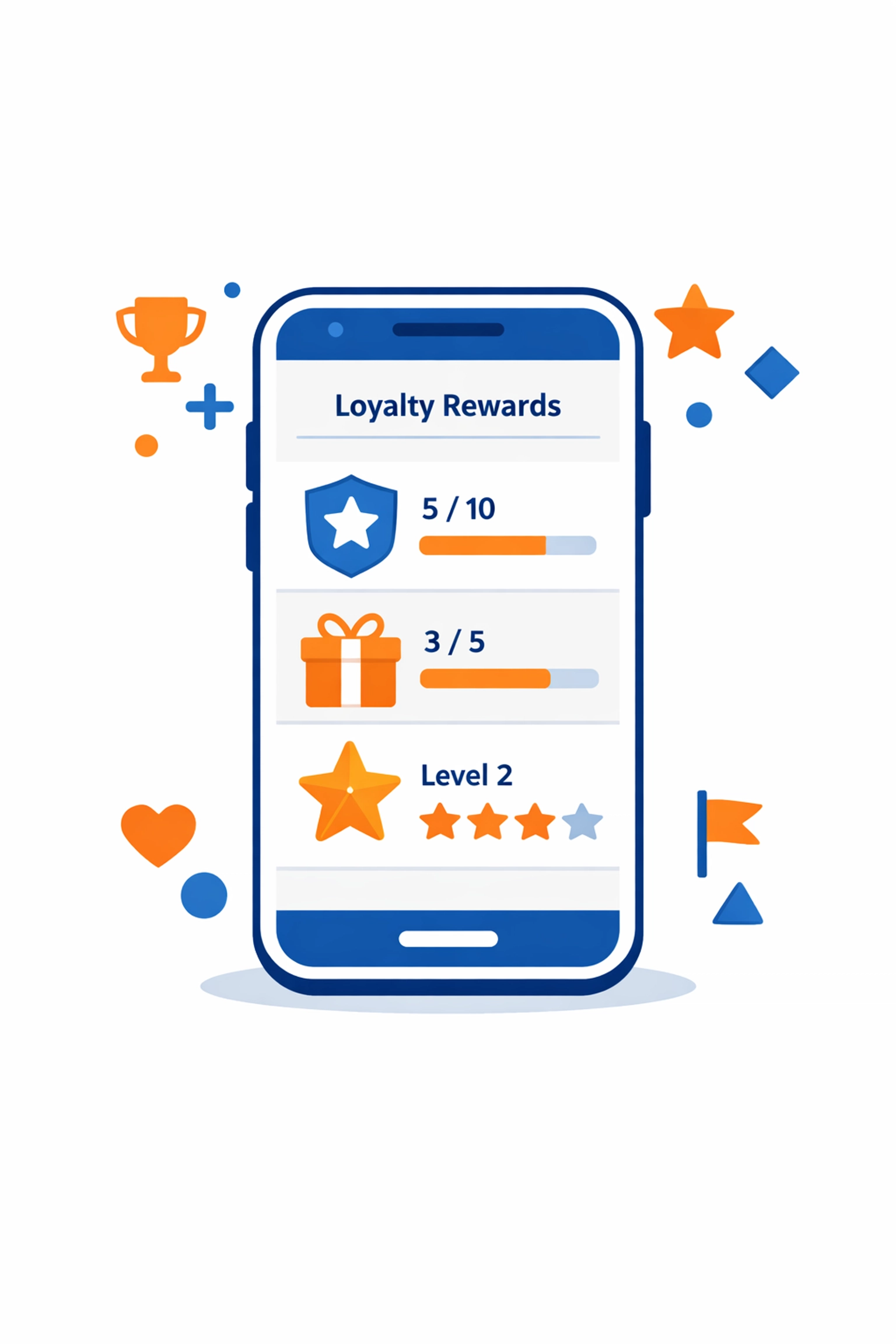
    Gamified loyalty programs work particularly well on mobile. Guests earn points for app interactions, social shares, and on-property spending. Badges and achievements encourage engagement. This isn't just fun: it's data collection that helps you understand guest preferences while rewarding participation.

    Mobile apps create ongoing relationships. After guests check out, the app doesn't disappear. Push notifications remind them to book their next stay. Special offers for returning guests appear at the right moment. Reviews and feedback happen seamlessly through the app.

    Your Next Move

    A mobile-first strategy isn't optional anymore. It's how hospitality works now.

    Start with your booking experience. Is it genuinely designed for mobile, or adapted from desktop? Test it yourself: book a room on your phone. Time how long it takes. Note where you get frustrated. Fix those friction points first.

    Hotel loyalty program app on smartphone with gamification features

    Next, evaluate your hotel property management system. Does it support mobile check-in? Staff mobility? Guest messaging? Real-time updates across devices? If you're working with legacy software that requires desktop access, you're limiting your operational potential.

    Mews offers a cloud-native hotel PMS built for mobile-first operations. Both guests and staff get the flexibility they need. Mobile check-in, keyless entry, and real-time communication come standard: not as add-ons.

    The properties winning today aren't just mobile-friendly. They're mobile-native. That mindset shift changes everything about how you design experiences, train staff, and connect with guests.

    Your guests are already living mobile-first. The question isn't whether to join them. It's how quickly you can catch up.

  • 7 Mistakes You’re Making with Your Hotel PMS (and How Cloud-Native Fixes Them)

    7 Mistakes You’re Making with Your Hotel PMS (and How Cloud-Native Fixes Them)

    Your hotel PMS should make your life easier. Not harder.

    Yet most hoteliers are unknowingly sabotaging their operations with fixable mistakes that cost them time, money, and bookings. The culprit? Systems that weren't built for how hotels actually operate today.

    Let's fix that.

    1. Running Your PMS on Factory Settings

    Here's a painful truth: most properties never properly configure their hotel pms during setup. They accept the defaults and hope for the best.

    This means your minimum rates are wrong. Your competitor weights are off. Your pricing recommendations are about as accurate as a weather forecast from last year.

    The cloud-native fix: Modern systems guide you through personalized setup workflows. They prompt you to revisit configurations as your business evolves. No more "set it and forget it" disasters: your system actually adapts to your property's needs.

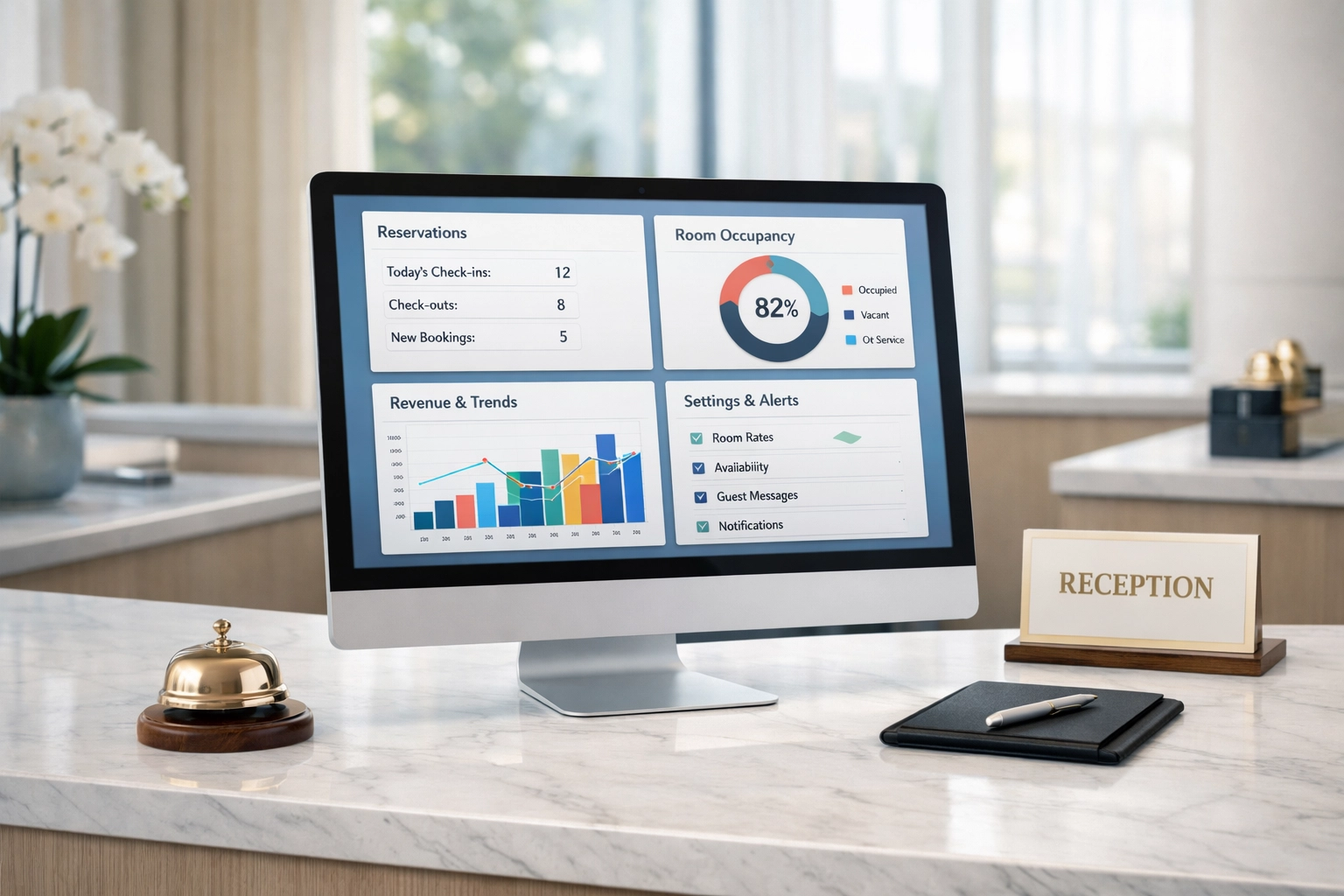
    Hotel reception desk with modern PMS dashboard displaying configuration settings and analytics

    2. Treating Room Types Like an Afterthought

    Room types and rate plans are the foundation of your entire tech stack. Get them wrong, and everything breaks.

    Inconsistent naming across channels. Improper mapping between your PMS and booking engine. Vague definitions that confuse your channel manager.

    The result? Failed availability syncs. Pricing that doesn't update. Automation that just stops working.

    The cloud-native fix: Centralized configuration with built-in validation rules. Your room types stay consistent across every channel. Your booking engine talks to your channel manager without hiccups. Everything synchronizes because it's all built on the same foundation.

    3. Using Your PMS Like a Glorified Calendar

    You've invested in a powerful hotel pms. But you're only using 20% of its features.

    Automated reporting? Untouched. Guest communication workflows? Never set up. Payment processing automation? Still doing it manually.

    It's like buying a smartphone and only making calls.

    The cloud-native fix: Intuitive dashboards that surface unused features. Guided onboarding that shows you what's possible. Regular prompts highlighting automation opportunities you're missing. The system actually wants you to use it fully: and makes it easy.

    Connected hotel management system showing synchronized room types and rate plans across channels

    4. Channel Management on Autopilot

    Here's where money leaks out of your revenue strategy.

    You connected your channels once. You haven't touched your length-of-stay rules in months. Your restrictions don't adjust with demand. You're paying premium commissions to OTAs when you could be driving direct bookings.

    Meanwhile, your competitors are actively managing their distribution and capturing the revenue you're missing.

    The cloud-native fix: Real-time channel management that's actually manageable. Adjust restrictions across all channels in seconds. Apply length-of-stay rules that respond to demand patterns. See exactly where your bookings come from and optimize accordingly. Your channel manager becomes a revenue driver, not just a booking receiver.

    5. Flying Blind Without Data

    When was the last time you looked at your reporting dashboard?

    If the answer is "dashboard… what dashboard?": you're making decisions based on gut feeling instead of data. You're keeping prices too low during peak periods. You're over-relying on high-commission channels without realizing it. You're missing revenue opportunities hidden in plain sight.

    The cloud-native fix: Automated reports that actually get reviewed. Mobile-friendly dashboards you can check from anywhere. Data presented clearly enough that you don't need a degree in analytics to understand it. The insights come to you: you don't have to hunt for them.

    Want to see this in action? Check out how Mews transforms hotel operations with data you can actually use.

    Hotel manager reviewing data-driven reports on cloud-native PMS platform

    6. Living in the Past (by About 5 Minutes)

    Your availability updates every hour. Your pricing changes propagate "eventually." Your booking engine shows rooms you've already sold.

    In hospitality, "eventually" means overbookings. It means disappointed guests. It means damage control instead of revenue optimization.

    Legacy systems weren't built for real-time. They were built when hourly updates seemed fast enough.

    The cloud-native fix: True real-time synchronization across every channel. Change your pricing once, and it updates everywhere instantly. Sell a room, and it's immediately unavailable across all booking channels. No lag. No errors. No overbookings that ruin your guest experience.

    Cloud-native architecture isn't just faster: it's fundamentally different. It's built for the instant-everything world we actually live in.

    7. Choosing Technology for Today's Problems

    You picked your current hotel pms to solve the issues you had three years ago. It worked. Then your property grew. Your needs changed. Your tech didn't.

    Now you're stuck with a system that can't scale. You can't integrate the new CRM you need. Your self-check-in kiosks don't talk to your PMS. Every new tool requires custom development and crossed fingers.

    Plus, you're avoiding updates because they've broken things before. Your staff is undertrained because the system keeps changing in unpredictable ways. You're building your business on quicksand.

    The cloud-native fix: Systems built for scalability from day one. Automatic updates that add features without disruption. Open APIs that integrate with modern tools seamlessly. Training resources that evolve with the platform.

    You grow. Your technology grows with you. Not against you.

    Modern hotel lobby with self-check-in kiosks integrated with cloud-native technology

    The Real Cost of These Mistakes

    Let's talk numbers.

    Manual processes inflate labor costs by up to 30%. System fragmentation requires dedicated staff just to manage the chaos. Poor channel management means you're paying commission rates you shouldn't be. Legacy system support drains resources that could go toward guest experience.

    Add it up, and you're likely spending thousands monthly on problems that modern technology solved years ago.

    Why Cloud-Native Changes Everything

    Cloud-native isn't just cloud-based. It's a fundamental architectural difference.

    Cloud-based systems are old software moved to the cloud. They still carry all the baggage and limitations of their legacy origins.

    Cloud-native is built from the ground up for the cloud. It's designed for real-time data. Instant scalability. Seamless integration. Continuous updates without downtime.

    The difference shows up in every interaction. Every booking. Every guest experience. Every hour your team gets back.

    Hotel staff transformation: from manual processes to streamlined cloud-native PMS workflow

    Your Move

    You don't have to accept these mistakes as the cost of running a hotel.

    Modern hotel pms technology exists that actually works the way your property operates. Systems that automate what should be automated. That integrate what should be connected. That scale when you scale.

    Your guests expect seamless experiences. Your team deserves tools that make their jobs easier, not harder. Your revenue strategy needs technology that enables it instead of limiting it.

    The question isn't whether you can afford to upgrade. It's whether you can afford not to.

    Stop settling for technology that holds you back. Start using systems built for where hospitality is going, not where it's been.

    Your hotel deserves better than factory settings and crossed fingers.

  • Single Origin vs. Espresso Blends: Which One Should You Buy?

    Single Origin vs. Espresso Blends: Which One Should You Buy?

    You're standing in front of your coffee roaster's website (or maybe ours), scrolling through the options, and suddenly you're faced with a choice that feels bigger than it should: single origin or espresso blend?

    It's a question we get asked constantly. And honestly? There's no single "right" answer. But there is a right answer for you – and it depends on how you brew, what you taste for, and what kind of coffee experience you're chasing at home.

    Let's break it down without the pretension. We're going to walk through what these terms actually mean, how they taste, and most importantly, which one deserves a spot in your kitchen.

    What Exactly Is Single Origin Coffee?

    Single origin coffee is exactly what it sounds like: beans sourced from one specific place. That could be a single farm, a particular region, or even one specific lot within a farm.

    Think of it like wine. When you drink a Rioja, you're tasting Spain. When you drink a single origin Ethiopian coffee, you're tasting Ethiopia – the soil, the altitude, the climate, the processing method, all of it.

    These coffees are transparent. They tell a story. Colombian single origins might give you chocolate and fruity notes. A Kenyan coffee? Expect bright acidity, blackcurrant, sometimes a tomato-like sweetness that sounds weird but works beautifully. Mexican beans tend toward chocolate and nutty profiles.

    Ethiopian single origin coffee beans on wooden surface showing regional characteristics

    Single origin coffees are essentially unfiltered expressions of their environment. And that's both their strength and their quirk.

    So What's an Espresso Blend Then?

    Espresso blends are the blended whisky of the coffee world – crafted, consistent, and designed with a purpose.

    A roaster takes beans from different origins and combines them to create a specific flavor profile. We might blend a Brazilian base for body and sweetness, add some Colombian for balance, and throw in a bit of Ethiopian for brightness and complexity. The goal? A coffee that's greater than the sum of its parts.

    Blends are engineered for consistency and versatility. They're meant to perform well across different brewing methods, hold up under pressure (literally, in the case of espresso), and taste reliably good whether it's January or July.

    They're also more forgiving. While single origins can be temperamental – demanding precise temperatures, grind sizes, and techniques – blends are built to be more flexible.

    The Flavor Showdown: Brightness vs. Balance

    Here's where things get interesting.

    Single origin coffees are brighter and more complex. They tend to have distinct, pronounced characteristics. Floral notes. Citrus acidity. Stone fruit sweetness. These aren't marketing buzzwords – when you brew a natural-process Ethiopian Yirgacheffe, you genuinely get blueberry and jasmine notes that make you do a double-take.

    But here's the thing: that complexity can also mean unpredictability. Single origins are seasonal. Climate variations, harvest timing, processing differences – they all affect the cup. The same farm's coffee can taste noticeably different year to year, or even lot to lot.

    Barista pouring steamed milk into espresso creating latte art with espresso blend

    Espresso blends, on the other hand, are balanced and homogenous. Think chocolate, caramel, toasted nuts, gentle sweetness. They're designed to be crowd-pleasers – coffees that taste reliably delicious without demanding your full attention.

    Blends maintain consistent flavor year-round because they combine beans from multiple sources. If one origin's harvest is lighter or more acidic than usual, the roaster can adjust the blend ratios to compensate. This means you get the same comforting cup every time.

    We believe both have their place. It's not about one being "better" – it's about what you're after in that moment.

    Brewing Method Matters More Than You Think

    This is where the decision becomes clearer.

    For pour-over, drip, Aeropress, or French press? Single origins absolutely shine. These gentler brewing methods allow all those delicate, nuanced flavors to express themselves fully. The brightness doesn't get overwhelming. The complexity becomes the whole point.

    When you're doing a slow, mindful pour-over on a Sunday morning, you want that Ethiopian coffee to taste like bergamot and berries. You want to explore it. That's the entire experience.

    For espresso machines and milk-based drinks? Blends are traditionally the better call – and there's solid reasoning behind it.

    When you pull espresso, you're forcing hot water through finely-ground coffee at high pressure. This concentrated extraction process intensifies everything. Those bright, acidic notes in single origins? They can become sharp, even sour. That delicate floral character? It might get lost or turn harsh.

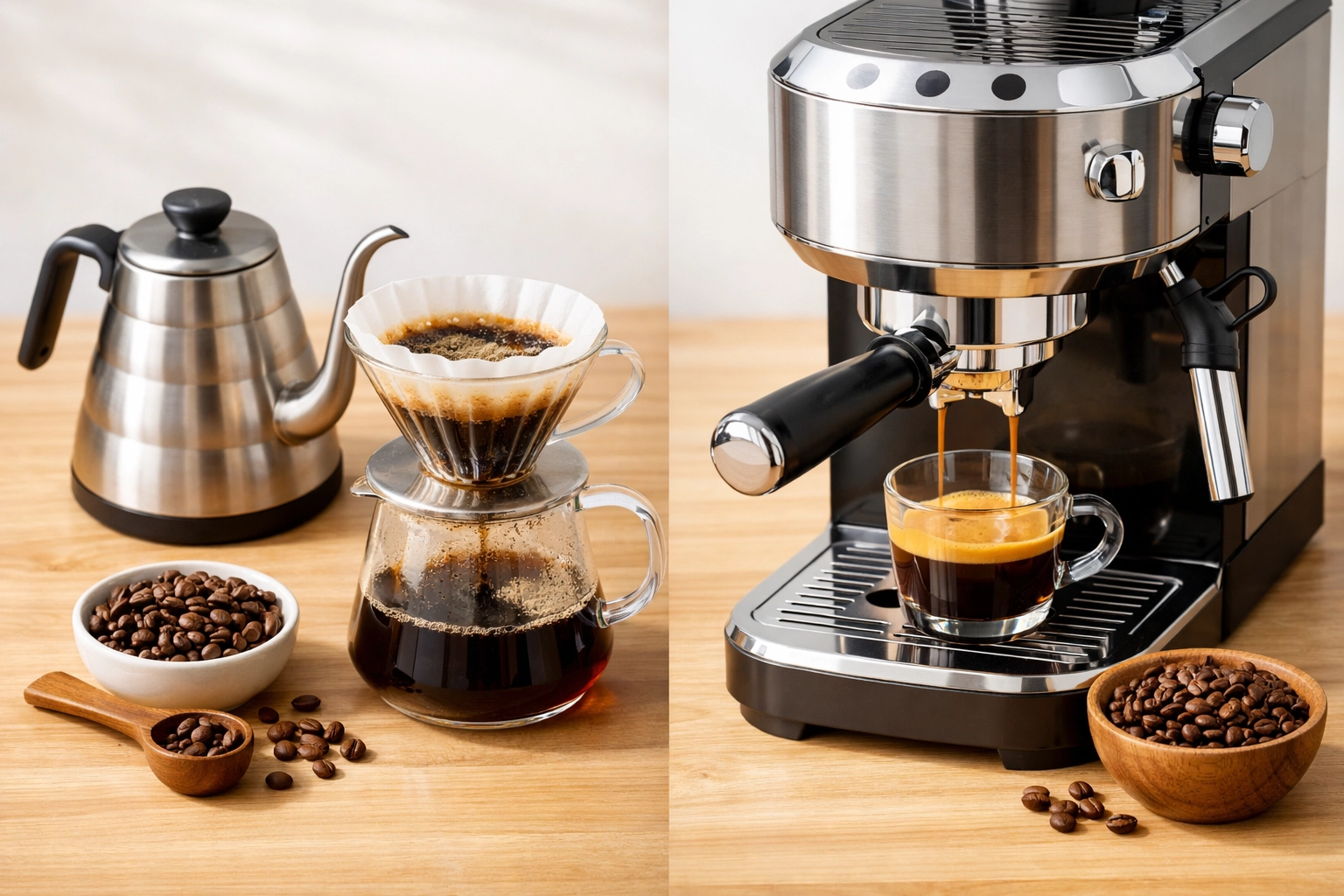
    Pour-over dripper and espresso machine comparison showing different coffee brewing methods

    Espresso blends are specifically formulated to handle this intensity. They're designed to produce that thick, syrupy body. That sweet, lingering finish. That crema on top that tells you everything went right.

    And when you add milk? Blends really prove their worth. They create a foundation that complements steamed milk without getting buried by it. You still taste coffee in your flat white, not just sweet milk.

    So. If you're primarily making lattes, cappuccinos, or straight espresso shots at home, an espresso blend is going to give you more consistent, satisfying results with less fussing about.

    The Consistency Question

    Let's talk about something practical: day-to-day reliability.

    Single origin coffees are seasonal performers. They're harvested once (or sometimes twice) a year. When a roaster runs out of that specific lot, it's gone. The next batch – even from the same farm – might taste different. Climate change, rainfall patterns, processing experiments… it all shows up in the cup.

    This is exciting if you love variety and discovery. It's less exciting if you've found your perfect morning coffee and want it to taste the same every time.

    Espresso blends sidestep this entirely. Because they draw from multiple origins and often multiple harvest cycles, roasters can maintain a consistent profile year-round. The blend you buy in February will taste essentially identical to the one you buy in August.

    For many home brewers, especially those who drink coffee daily rather than as a special ritual, this consistency is valuable. You know what you're getting. Your dialing-in process stays the same. There are no surprises when you're bleary-eyed at 6:30 AM.

    What About Single Origin Espresso?

    We should address this because it's become trendy: pulling single origin coffees as espresso.

    It absolutely can be done. Many specialty roasters (ourselves included) offer single origins specifically developed for espresso. But – and this is important – these require more careful roasting and often more precise brewing technique.

    Espresso shot being extracted from portafilter with rich crema flowing into cup

    Single origin espresso can be incredible when it works. You get clarity and origin character in concentrated form. A naturally-processed Ethiopian pulled as espresso might give you explosive berry sweetness and wine-like complexity.

    But it's also less forgiving. Small changes in grind size, temperature, or extraction time have bigger impacts. The coffee might perform beautifully one day and taste harsh the next. For experienced home baristas who enjoy the challenge? Fantastic. For everyone else? It can be frustrating.

    So Which Should You Actually Buy?

    Let's make this practical.

    Choose single origin if you:

    • Brew primarily with pour-over, filter, Aeropress, or French press methods
    • Enjoy exploring different flavor profiles and regional characteristics
    • Want to learn about coffee origins and processing methods
    • Appreciate seasonality and variety in your coffee routine
    • Drink coffee as a tasting experience, not just caffeine delivery

    Choose espresso blends if you:

    • Make espresso or milk-based drinks most mornings
    • Prefer balanced, approachable flavors without sharp acidity
    • Want reliable, consistent results without much experimentation
    • Value convenience and predictability in your daily routine
    • Tend to drink multiple cups throughout the day

    Honestly? Most home coffee lovers benefit from having both.

    Keep an espresso blend as your daily driver – the reliable friend who always shows up consistent and delicious. Then grab single origins to explore on weekends or when you want to slow down and actually taste what you're drinking.

    Where to Start

    If you're looking to explore both categories, we'd recommend starting with coffees that showcase what each does best.

    For single origins, look for naturally-processed Ethiopians or washed Kenyans – these really demonstrate what origin transparency is all about. For blends, find something described as balanced or classic, ideally with chocolate and nutty notes.

    You can explore our full range of both single origins and carefully crafted espresso blends right here – we roast everything fresh to order, so whether you're chasing complexity or consistency, you're getting beans at their peak.

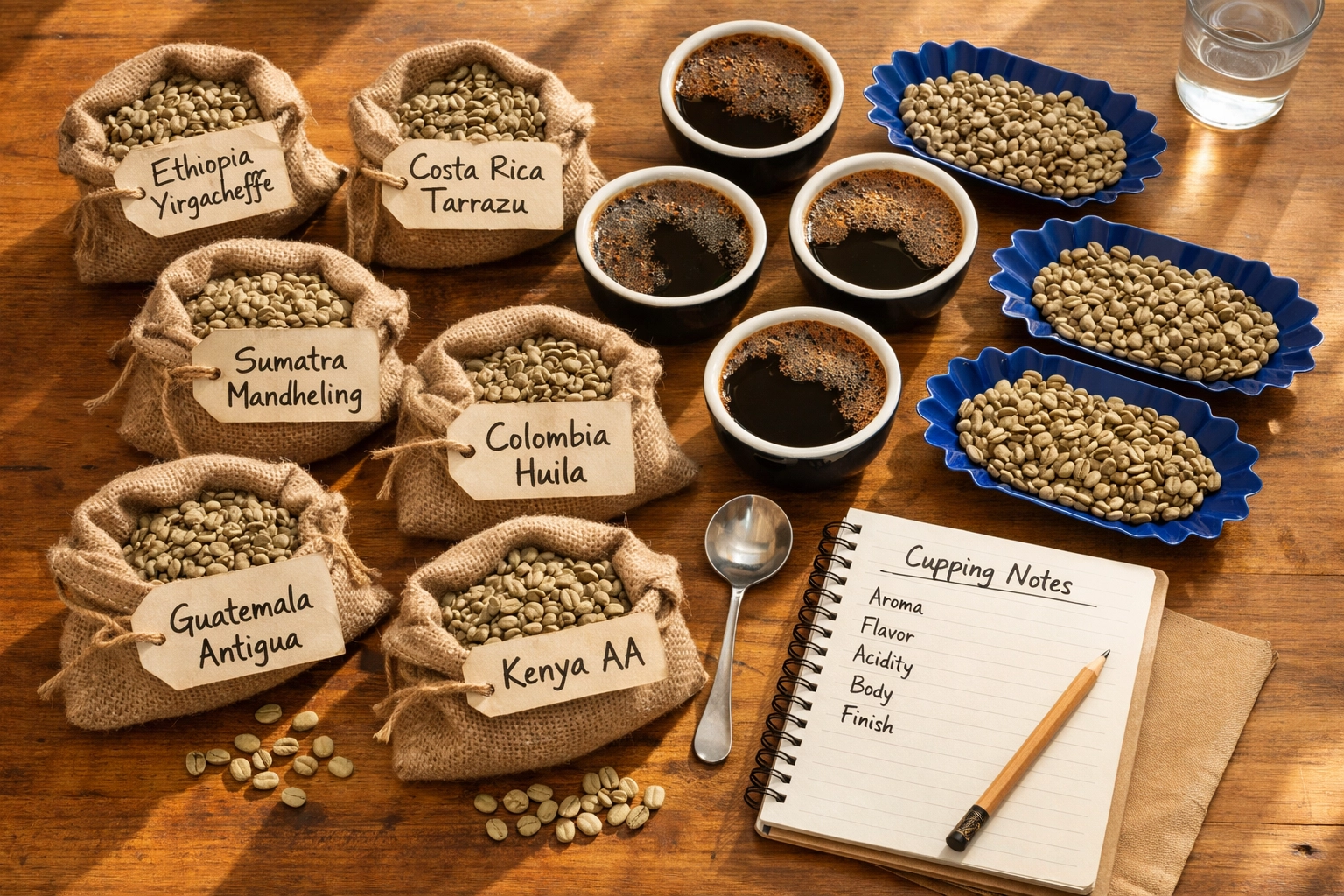
    Coffee cupping samples in tasting cups comparing single origin and espresso blends

    The beautiful thing about specialty coffee in 2026? You don't actually have to choose one forever. Your brewing method might change. Your palate will definitely develop. What tastes "too bright" to you now might become your favorite profile in six months.

    Coffee is personal. There's no wrong answer here – only what works for your setup, your taste, and your morning routine. Start with what sounds appealing, pay attention to what you enjoy, and let that guide you.

    That's the beauty of coffee. It meets you where you are.

  • 7 Mistakes You're Making with Your Hotel PMS (and How to Fix Them)

    7 Mistakes You're Making with Your Hotel PMS (and How to Fix Them)

    Your hotel PMS should be making your life easier. Not harder.

    But here's the thing: most hoteliers aren't getting the full value from their systems. You've invested in technology that promises automation, real-time updates, and seamless operations. Instead, you're stuck with manual workarounds, inconsistent data, and revenue opportunities slipping through the cracks.

    The good news? These mistakes are fixable. Let's walk through the seven most common PMS pitfalls and how to turn things around.

    1. You're Overriding Your Automation (and It's Costing You)

    We get it. Letting software make decisions feels uncomfortable. You didn't get into hospitality to hand control over to algorithms. But here's the problem: when you constantly override automated processes with manual interventions, you're undermining the entire system.

    Your hotel PMS learns from data. When you interfere with every automated pricing recommendation or availability update, you create errors and inaccuracies that ripple through your entire operation.

    The fix: Trust your automation. Modern systems like Mews are built to handle routine tasks with precision. Set your parameters correctly during setup, then let the system do its job. You'll get more accurate pricing, fewer booking errors, and your team can focus on delivering exceptional guest experiences instead of micromanaging software.

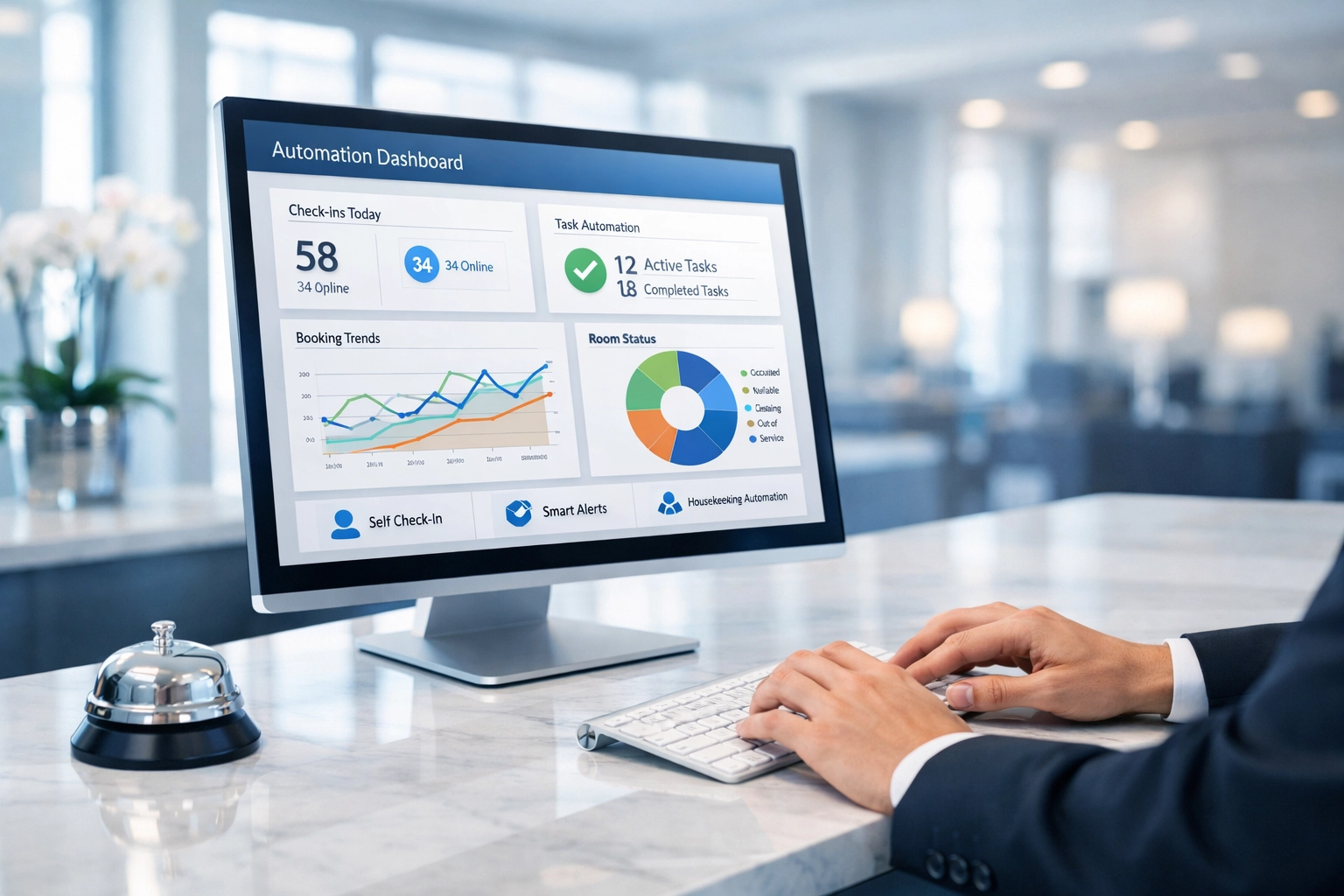
    Hotel front desk with PMS automation dashboard displaying real-time data and analytics

    2. Your Settings Are Half-Baked

    During implementation, it's tempting to rush through configuration. You want to start taking bookings. You need the system live yesterday. So you skip setting minimum and maximum rates. You don't properly weight competitor pricing. You leave sections incomplete.

    Then you wonder why your pricing recommendations make no sense.

    Incomplete configuration is like building a house without a foundation. Everything else crumbles.

    The fix: Spend quality time with your software specialist during onboarding. Map out every room type. Define rate plans clearly. Set pricing boundaries that reflect your market positioning. This isn't a one-time thing either: as your property evolves, your configuration should too. Quarterly reviews keep your system aligned with your business reality.

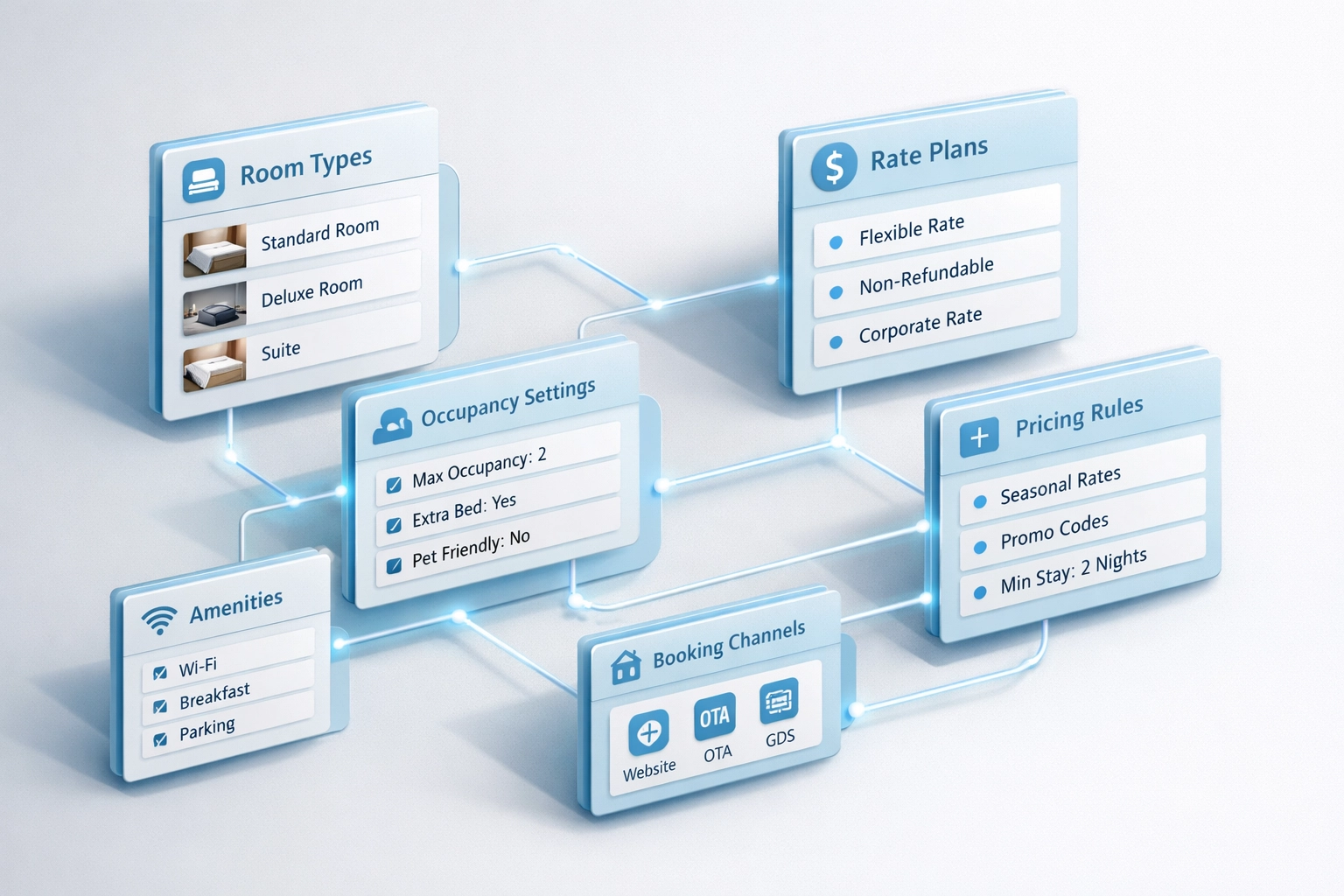
    3. Your Room Types and Rate Plans Are a Mess

    Here's a truth bomb: if your room types and rate plans aren't consistent across all systems, your entire tech stack breaks down.

    One system calls it "Deluxe King." Another says "King Deluxe." Your channel manager thinks it's "Superior King." Now your inventory sync is broken, your pricing updates fail, and you're manually fixing overbookings at 11 PM.

    The fix: Standardize everything. Room names. Rate codes. Policies. Use identical naming conventions across your PMS, booking engine, and all OTA connections. Map your room types properly so availability and pricing updates flow seamlessly. A cloud-native platform handles this integration automatically: no more playing translator between systems.

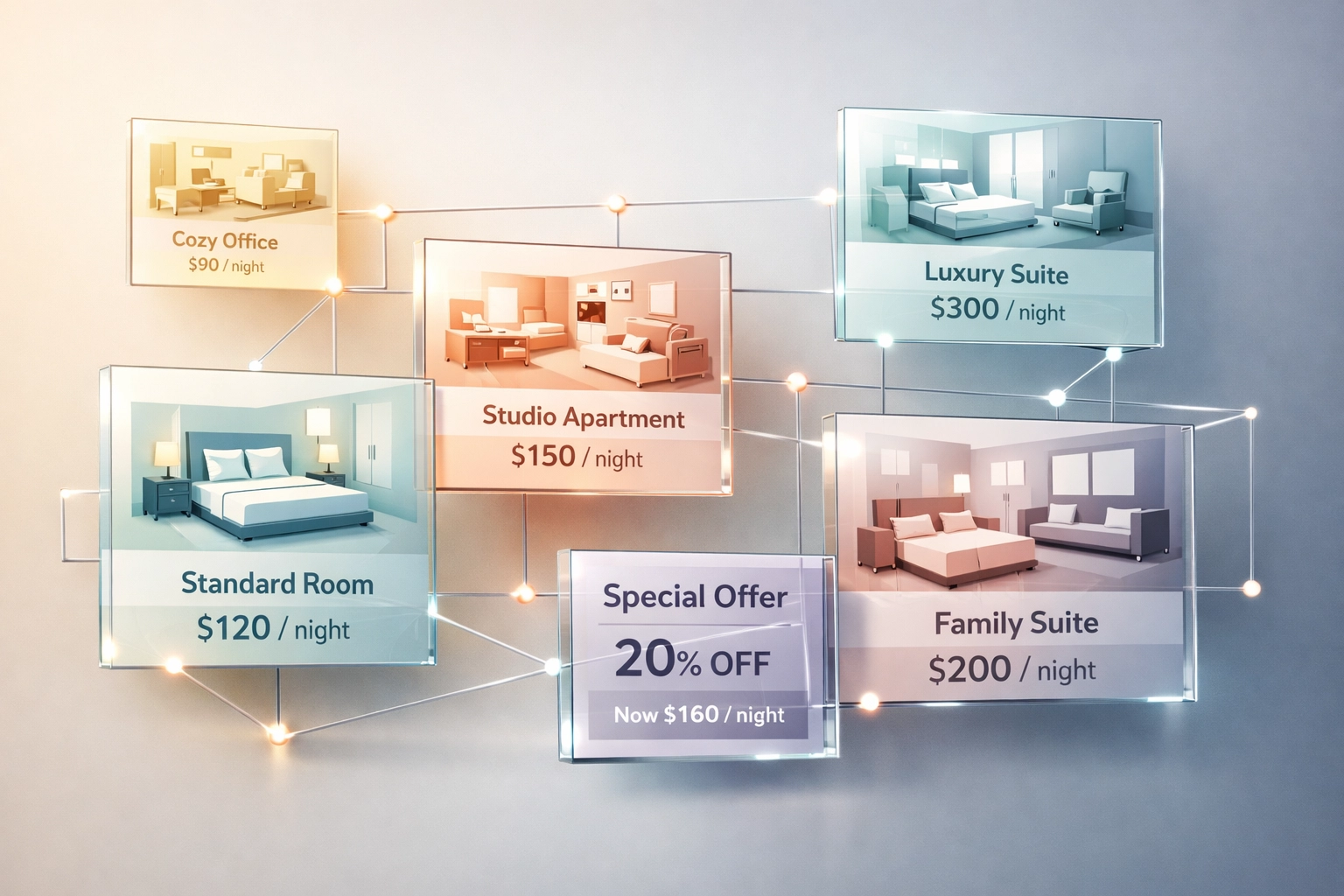
    Hotel room types and rate plans integrated across PMS and channel management systems

    4. You "Set and Forget" Your Channel Strategy

    You configured your channels months ago. Maybe years ago. Since then, you've let them run on autopilot while paying fat commissions to OTAs.

    Meanwhile, demand patterns shift. Your competition adjusts. Market conditions change. But your length-of-stay restrictions, channel mix, and availability settings? Exactly the same as day one.

    The fix: Your channel manager deserves weekly attention. Apply strategic restrictions to drive direct bookings. Close expensive channels during high-demand periods. Open lower-cost channels when you need volume. Adjust minimum stay requirements based on pickup patterns. This isn't busy work: it's revenue management.

    The hotels winning at distribution treat channel strategy like a living, breathing thing. They adapt. They test. They optimize.

    5. You're Flying Blind Without Reports

    Quick question: What percentage of your bookings came through each channel last month? Which rate plans convert best? Are you leaving money on the table during peak periods?

    If you can't answer these questions immediately, you're making decisions based on gut feeling instead of data.

    The fix: Set up recurring reports in your PMS. Track pickup patterns. Monitor channel mix. Analyze occupancy and revenue trends. Modern hotel PMS platforms include dashboards that make this information digestible: you don't need a data science degree.

    Use these insights to answer critical questions: Where are your most profitable bookings coming from? Should you be pushing direct bookings harder? Is your pricing strategy aligned with demand?

    Data-driven decisions beat guesswork every single time.

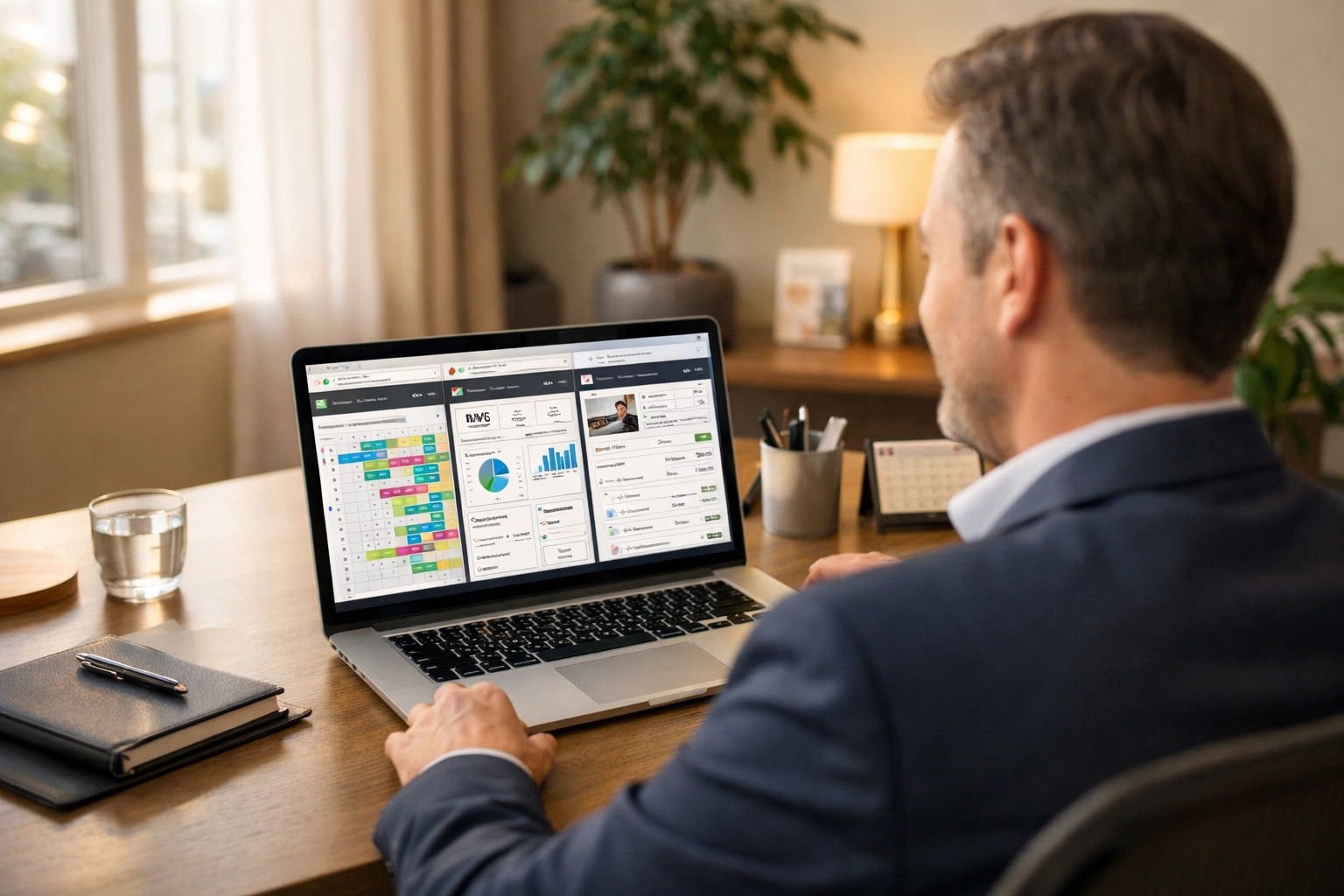
    Hotel manager analyzing PMS reports and booking data on tablet for revenue optimization

    6. You Have No Real-Time Visibility

    Here's a scenario that happens more often than it should: A guest books your last room on Booking.com. Three minutes later, someone books the same room on your website. Your inventory hasn't synced yet. Now you're scrambling to relocate a guest or comp an upgrade.

    Without real-time awareness of rates and availability across channels, you're always reacting to problems instead of preventing them.

    The fix: Your PMS needs instant inventory management and channel integration. When a room books, every platform should update immediately. No delays. No manual pushes. This is where cloud-native technology shines: updates happen in milliseconds, not minutes.

    Real-time visibility also means you can respond to demand shifts fast. Competitor drops prices? Adjust. Event gets announced in your city? Capture that demand before it's gone. Speed matters in revenue management.

    7. You're Thinking Too Short-Term

    You bought your current PMS to solve one immediate problem. Maybe you needed a booking engine. Or better reporting. Or basic automation.

    But here's what you didn't consider: scalability. What happens when you add properties? When guest expectations evolve? When new integrations become must-haves?

    Now you're stuck. Your system can't grow with you. Updates are rare. New features take years to roll out. Staff training ended after onboarding and nobody knows the advanced features.

    The fix: Choose technology built for growth. A platform that adds features regularly. One that integrates with best-in-class tools for CRM, payments, and guest messaging. Investment in comprehensive training: not just during onboarding, but ongoing.

    Mews works with over 12,500 properties precisely because it scales. Independent hotels use the same core platform as major hospitality groups. As your needs evolve, the system evolves with you.

    Real-time hotel booking synchronization across multiple channels and devices

    The Common Thread

    Notice the pattern? These mistakes all stem from the same root cause: treating your PMS like a static tool instead of a dynamic platform.

    Modern hotel technology should be easy to use, automation-focused, and built to adapt. It should reduce manual work, not create more. It should provide clarity, not confusion.

    When you fix these seven mistakes, operations get smoother. Revenue optimization becomes achievable. Your team stops fighting the software and starts using it as the competitive advantage it should be.

    Take an honest look at your current setup. Which mistakes are holding you back? More importantly: what's your plan to fix them?

    The best time to optimize your PMS was during implementation. The second best time is right now.

  • Cloud-Native vs Cloud-Based Hotel PMS: Which Is Better For Your Property?

    Cloud-Native vs Cloud-Based Hotel PMS: Which Is Better For Your Property?

    You've probably heard both terms thrown around when shopping for a hotel property management system. Cloud-native. Cloud-based. They sound pretty similar, right?

    Here's the thing: they're not.

    And the difference? It actually matters for your bottom line, your team's sanity, and your guests' experience. Let's break down what these terms really mean, and why choosing the wrong one could leave you stuck with yesterday's technology dressed up in today's buzzwords.

    What "Cloud-Based" Really Means

    Cloud-based sounds modern. But here's what it often means in practice: someone took old software, built for servers sitting in your back office, and moved it online.

    That's it.

    The underlying architecture? Still designed for a world where updates happened once a year and integrations required custom coding. These systems were retrofitted for the cloud rather than built for it. Think of it like putting a fresh coat of paint on an old car and calling it new.

    Sure, you can access it from a browser now. That's better than nothing. But you're still dealing with the limitations of software that wasn't designed with cloud advantages in mind.

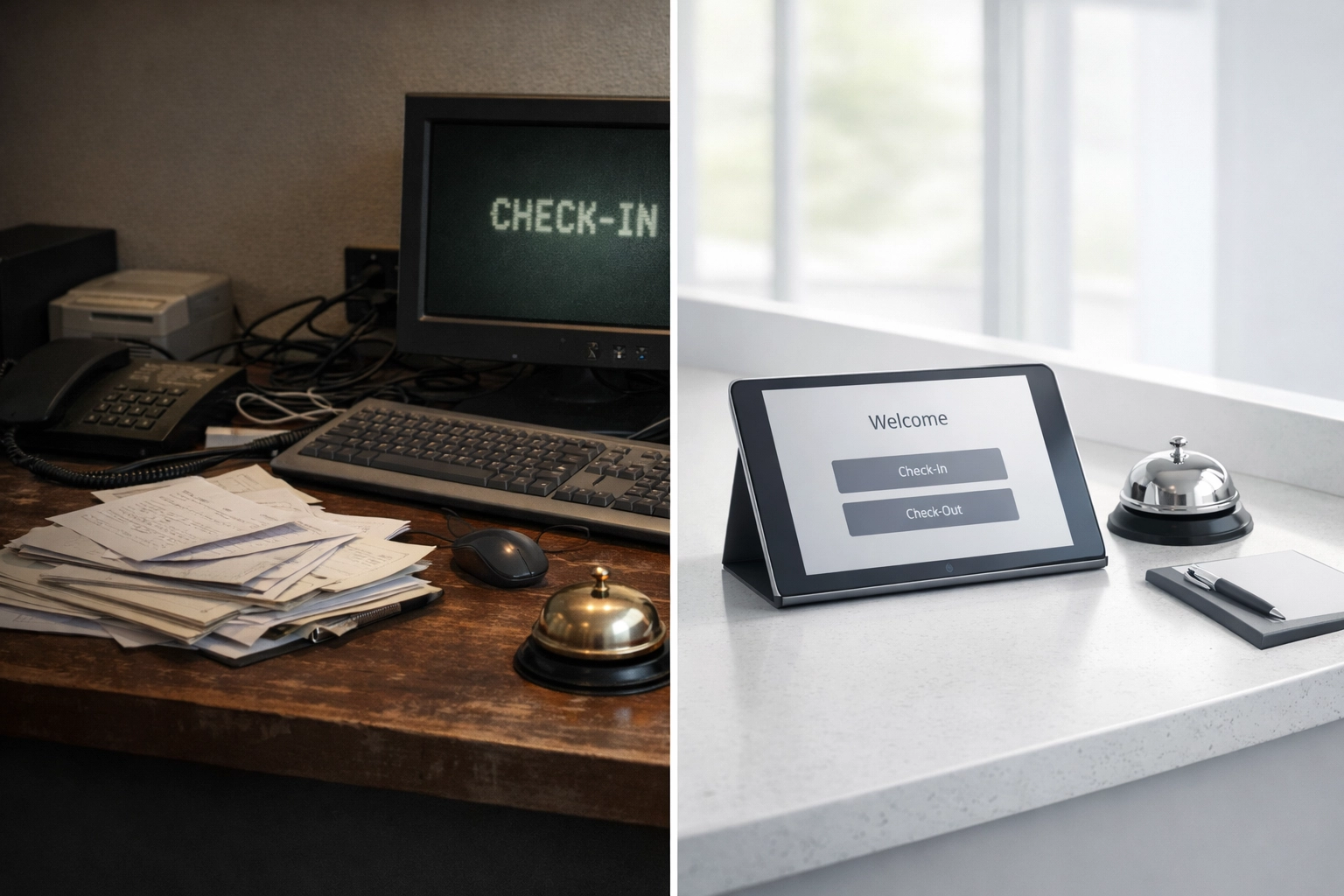
    Comparison of outdated hotel front desk computer versus modern cloud-native PMS tablet interface

    What "Cloud-Native" Actually Means

    Cloud-native is different from the ground up.

    These systems were architected specifically for the cloud. They leverage modern cloud infrastructure: microservices, APIs, continuous deployment. They're designed to update seamlessly, integrate effortlessly, and scale without breaking a sweat.

    A truly cloud-native hotel PMS doesn't just live in the cloud. It thrives there. It takes advantage of everything the cloud offers: instant updates pushed to all users simultaneously, real-time data synchronization across properties, and native integrations that actually work.

    No retrofitting. No compromises. Just software built right for how hotels operate today.

    The Real Differences That Matter

    Let's get specific about what separates cloud-native from cloud-based hotel property management systems.

    Updates and maintenance. With cloud-based systems, updates can still be clunky. You might need scheduled downtime. Some features roll out to certain users first. It's messy.

    Cloud-native systems? Updates happen automatically, instantly, for everyone. No downtime. No waiting. You wake up to new features and improvements without lifting a finger. Your team is always working with the latest version: no exceptions.

    Integration capabilities. This is where the gap gets massive. Cloud-based systems often require middleware, custom integrations, or manual workarounds to connect with your revenue management system, channel manager, or CRM.

    Cloud-native platforms are built with integrations at their core. Modern cloud-native solutions offer access to over 1,000 marketplace integrations with real-time data sharing. Your PMS, RMS, and CRM talk to each other seamlessly. No data silos. No manual exports and imports. Just information flowing where it needs to go.

    Visual representation of cloud-based versus cloud-native hotel PMS architecture and integration

    Performance and reliability. Cloud-based systems can struggle under heavy loads because they weren't designed for the cloud's distributed architecture. Peak check-in times? That's when things slow down.

    Cloud-native systems distribute workloads automatically. They scale up when you need it and scale down when you don't. Your front desk doesn't slow to a crawl during a busy Friday afternoon.

    Accessibility. Both types let you log in from anywhere: that's table stakes now. But cloud-native systems take it further with truly mobile-first design. Your team can manage operations from tablets, phones, or laptops with the same intuitive interface and full functionality.

    Why This Matters for Your Hotel

    You're not buying a hotel property management system for fun. You're trying to run a business more efficiently.

    Cloud-native architecture means your staff spends less time fighting with software and more time taking care of guests. Updates that improve functionality don't require training sessions: they just appear, intuitive and ready to use.

    Integrations that actually work mean you're not manually entering the same data into three different systems. Your revenue manager sees real-time occupancy. Your marketing platform knows exactly who stayed and when. Your housekeeping team gets instant updates when rooms are vacated.

    And here's the thing about scalability: whether you're managing one boutique property or expanding to multiple locations, cloud-native systems grow with you. No major overhauls. No switching platforms when you add your third or thirtieth property.

    Hotel manager using tablet with cloud-native PMS software in modern lobby environment

    The Hidden Costs of "Just Cloud-Based"

    Going with a cloud-based system might seem fine at first. The price looks similar. The feature list checks most boxes.

    But the hidden costs add up fast.

    Custom integration fees. IT support to keep everything talking to each other. Time wasted on manual workarounds. Staff frustration with clunky interfaces. Downtime during updates or: worse: system crashes that you can't fix yourself because the architecture is outdated.

    Cloud-native systems eliminate most of these headaches from day one. Lower total cost of ownership isn't just about the subscription price: it's about what you're not spending on everything else.

    What to Look for in a True Cloud-Native Hotel PMS

    Not every system claiming to be "cloud-native" actually is. Here's what to ask:

    When was the platform originally built? If it launched before 2010, it's probably cloud-based at best. Cloud-native systems are relatively new because the technology enabling them is relatively new.

    How do updates work? If there's any mention of "update windows" or "version numbers," that's a red flag. True cloud-native means continuous deployment: updates just happen.

    What does the integration marketplace look like? A couple dozen integrations? That's old school. Modern cloud-native platforms offer hundreds or thousands of pre-built connections.

    Can you access full functionality on mobile? Not just "view reservations" but actually manage your property from a phone or tablet. Cloud-native systems are designed mobile-first.

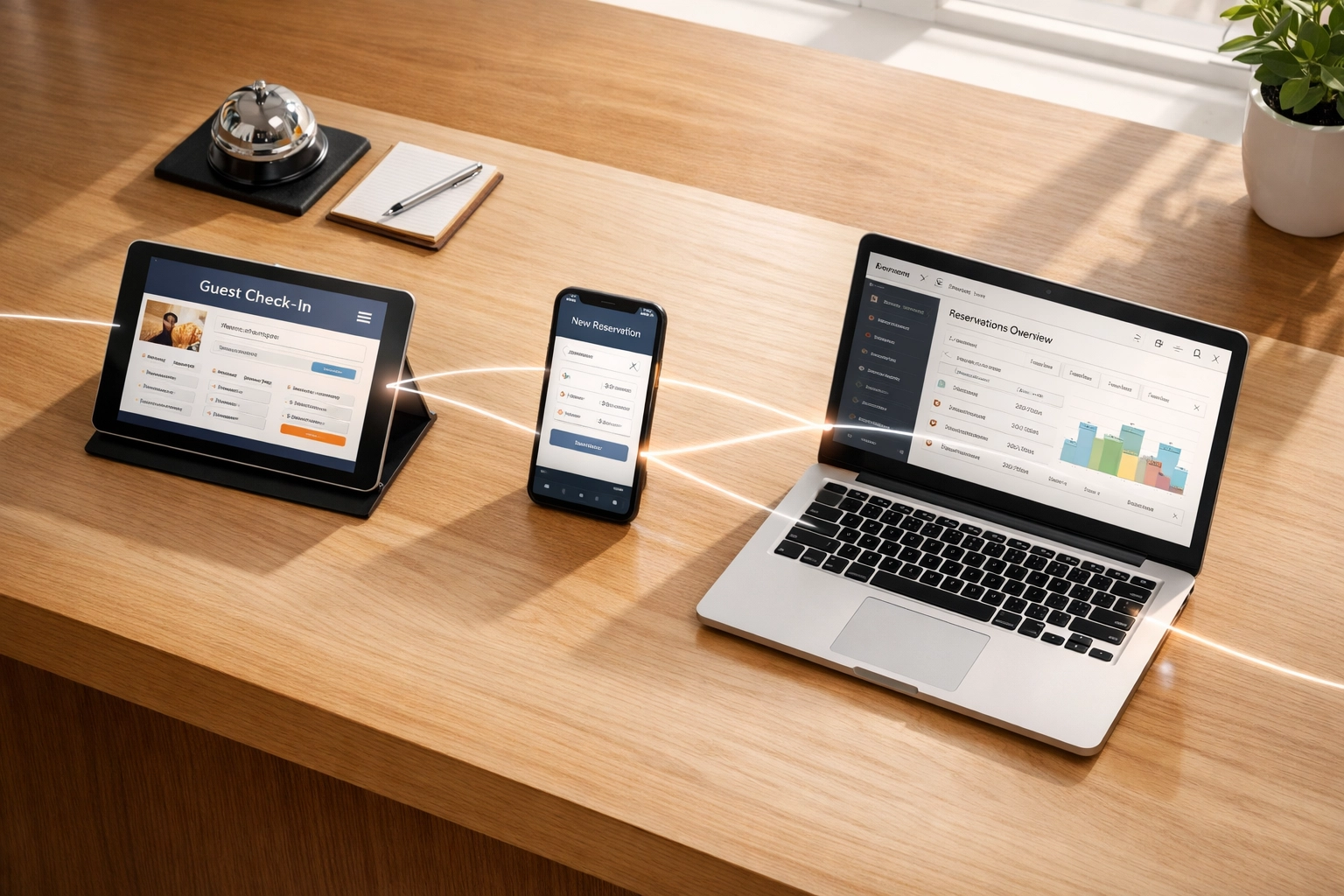
    Multiple connected devices showing seamless hotel property management system integration

    The Mews Difference

    Let's talk about what a truly cloud-native hotel property management system looks like in practice.

    Mews was built cloud-native from day one. No legacy code. No retrofitting. Just modern architecture designed for how hotels actually operate.

    The platform puts automation at the heart of operations. Tasks that used to eat up your front desk's time: like assigning rooms, processing payments, or managing housekeeping schedules: happen automatically. Your team focuses on guests, not paperwork.

    The interface is genuinely intuitive. Not "intuitive once you've been through three training sessions" but actually easy to use from day one. Whether your staff is tech-savvy or not, they're productive immediately.

    Integration? Over 1,000 partners in the marketplace. Your channel manager, booking engine, POS, door locks, reputation management: everything connects seamlessly with real-time data flow.

    And here's the best part: it's accessible from anywhere. Your manager can approve a late check-in from their phone while having dinner. Your front desk can check someone in from a tablet in the lobby. Your owner can review performance reports from a laptop in another country.

    That's what cloud-native looks like when it's done right.

    Making the Switch

    If you're currently using an older cloud-based system (or worse, an on-premise setup), switching to cloud-native might feel daunting.

    It's not.

    Modern cloud-native platforms like Mews handle migration smoothly. Your data transfers securely. Your team gets up to speed fast because the interface makes sense. And because everything is cloud-native, you're not tied to specific hardware or complicated IT requirements.

    Most properties are fully operational within days, not weeks.

    Hotel staff providing excellent guest service using modern cloud-native technology

    The Bottom Line

    Cloud-based and cloud-native aren't just marketing terms: they represent fundamentally different approaches to hotel technology.

    Cloud-based means old software moved online. Cloud-native means modern software built for the cloud from scratch.

    One gives you basic online access. The other gives you automatic updates, seamless integrations, mobile-first design, and an interface your team will actually enjoy using.

    For hotels serious about efficiency, guest experience, and staying competitive in 2026 and beyond, cloud-native isn't optional anymore. It's essential.

    Ready to see what a truly cloud-native hotel PMS can do for your property? Check out Mews and discover how automation and intuitive design can transform your operations.

    The future of hospitality runs on cloud-native technology. The question is whether you'll be part of that future: or still working with yesterday's solutions.

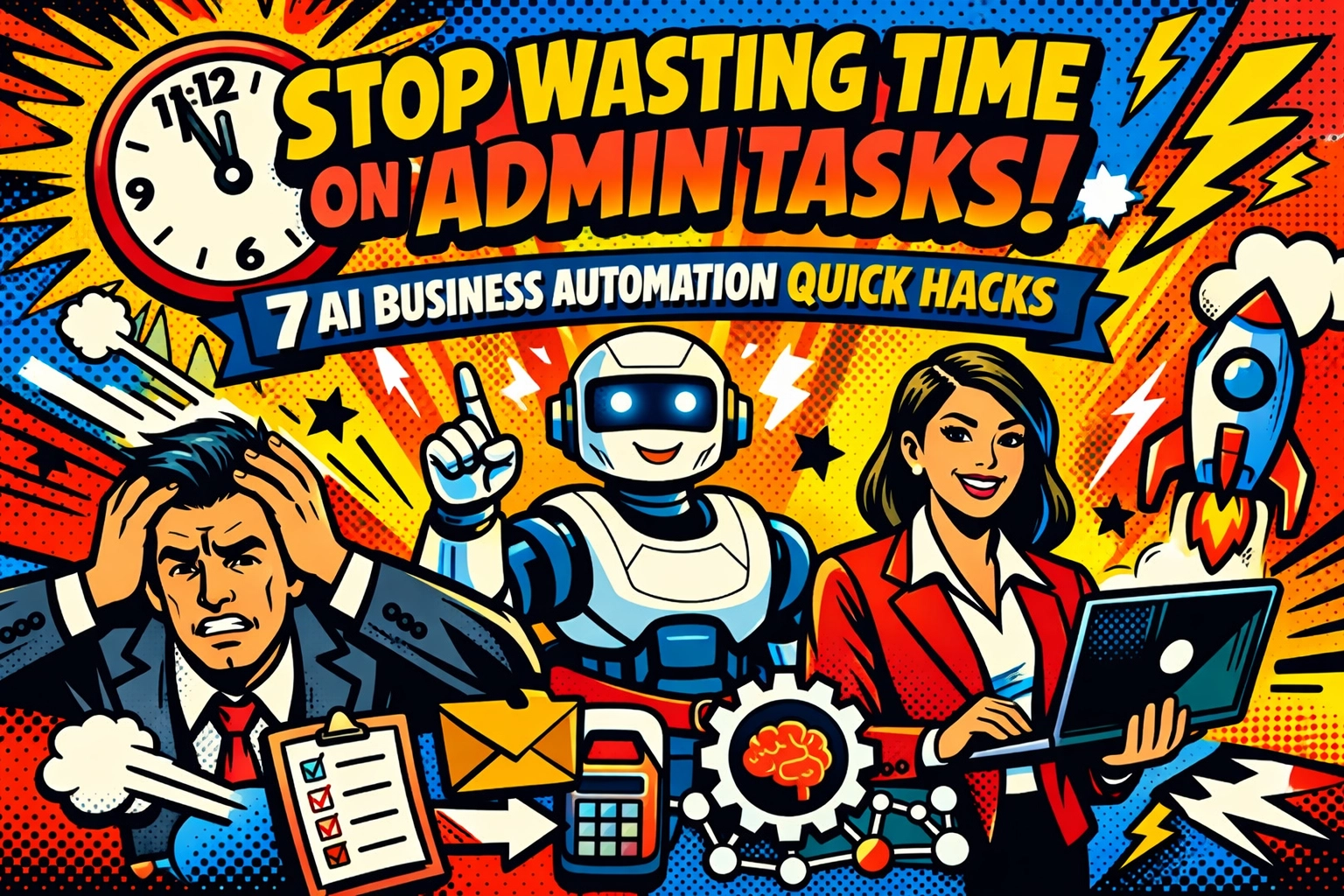
  • Stop Wasting Time on Admin Tasks: 7 AI Business Automation Quick Hacks

    Stop Wasting Time on Admin Tasks: 7 AI Business Automation Quick Hacks

    You're drowning in admin work.

    Every morning, it's the same story. Invoices pile up. Expense reports sit in your inbox like little time bombs. Someone needs approval for time off. The CRM looks like it hasn't been updated since 2019. And somehow… you're the one doing all of it.

    This isn't what you signed up for when you started your business.

    You wanted to build something. Instead, you're stuck processing paperwork, chasing receipts, and manually entering data that should've automated itself years ago.

    Here's the truth: AI business automation isn't just for tech giants with unlimited budgets anymore. Small business owners are using simple automation hacks to reclaim hours every single day, without hiring an admin team or learning to code.

    Let me show you seven quick wins that'll get you out of the admin trap and back to what actually matters.

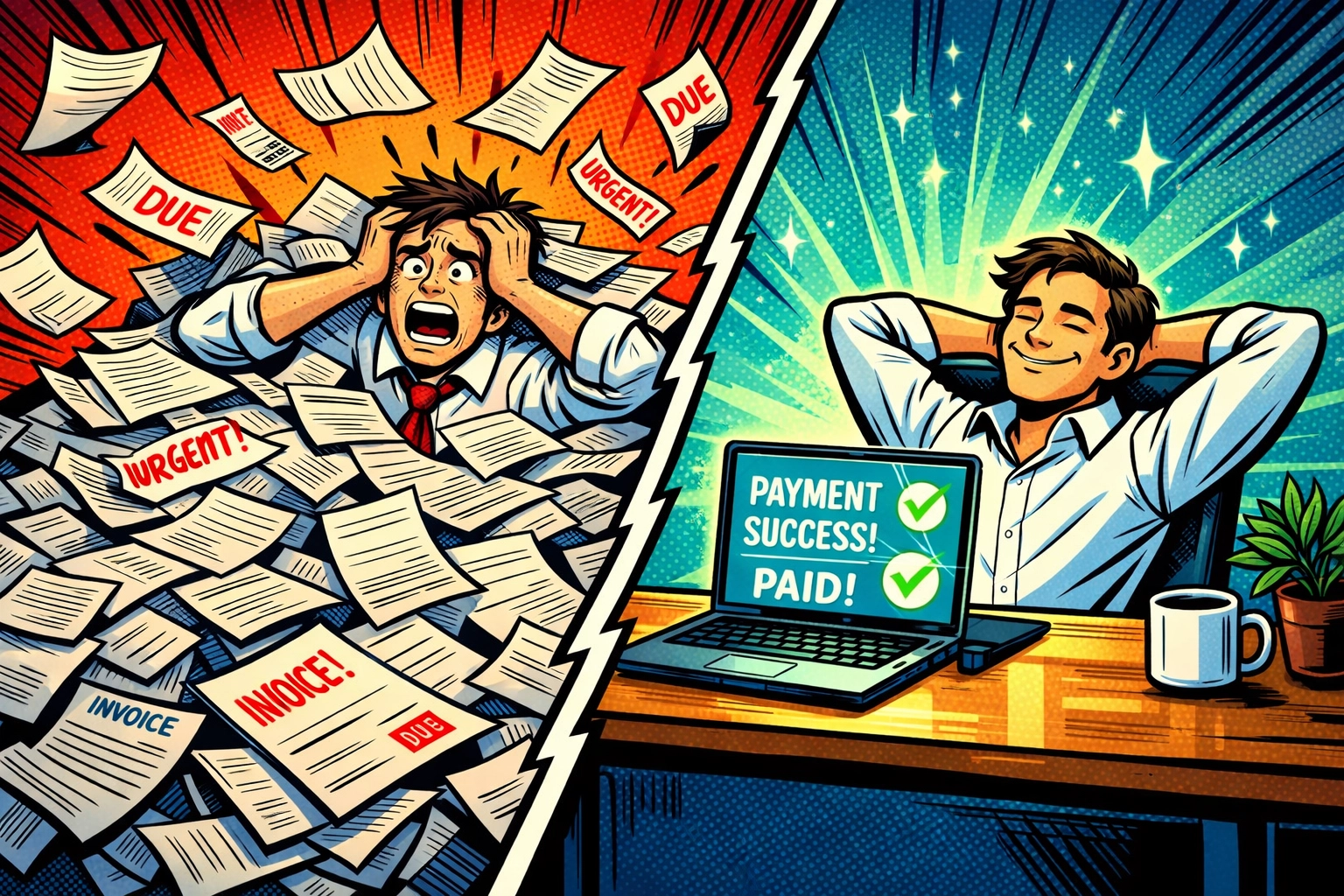
    1. Stop Creating Invoices By Hand

    You know that feeling when you realize you forgot to invoice a client three weeks ago?

    Yeah. That stops now.

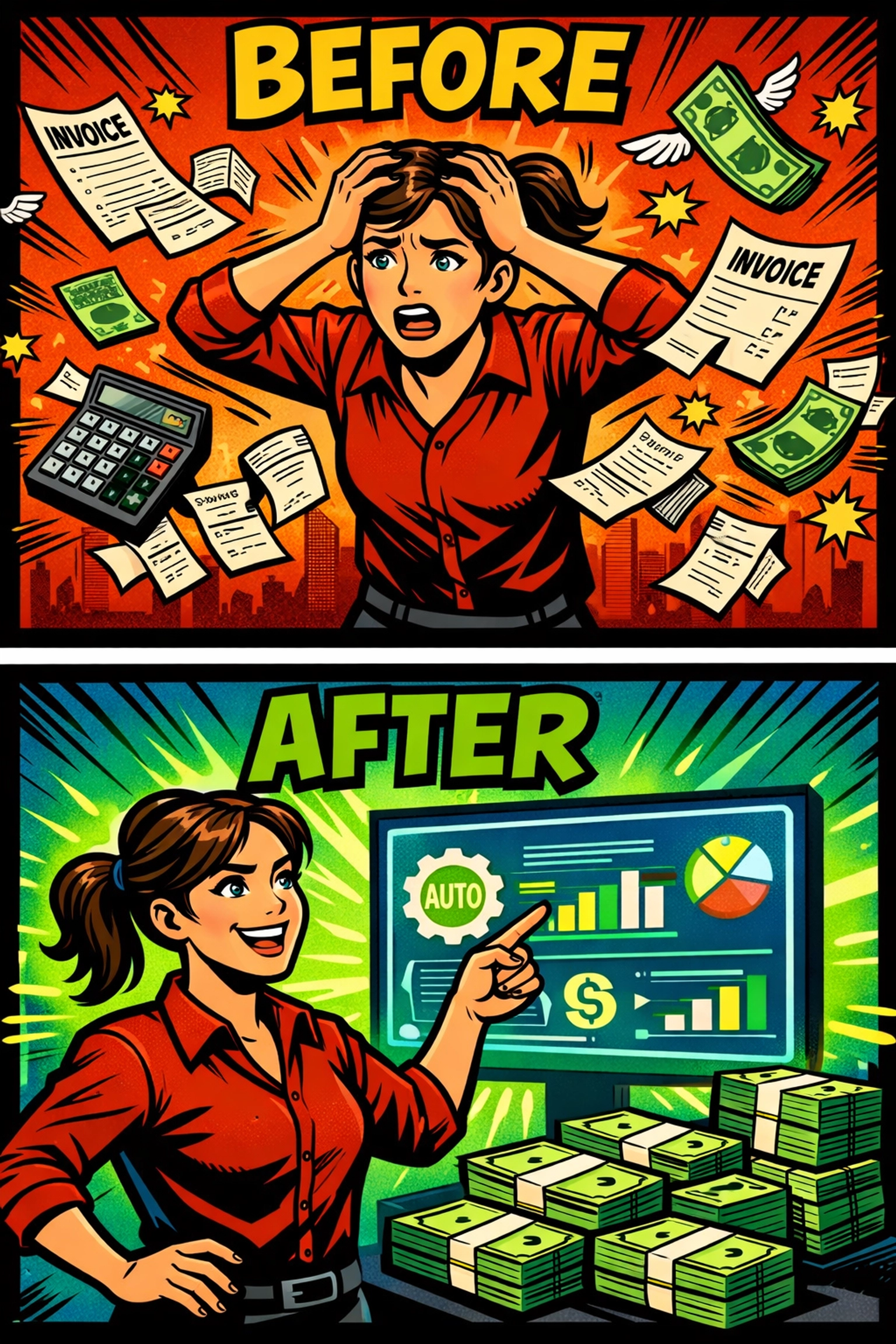
    Business owner transitioning from manual invoicing chaos to automated invoice generation with AI

    Set up automated invoice generation that pulls data straight from your project management tool or time tracker. The second a job's complete, the invoice gets created, sent, and, here's the magic part, automatically followed up if payment's late.

    Connect your bank account, and the system reconciles payments in real time. No more spreadsheets. No more "did they pay me?" panic at 11 PM.

    Business automation tools handle the entire cycle while you sleep. You just check your account and watch the deposits roll in.

    2. End the Time-Off Email Tennis Match

    "Can I take next Friday off?"

    "Let me check with the team…"

    "Did you check?"

    "Oh sorry, yes that's fine: "

    Stop. Just… stop.

    Replace that entire nightmare with an AI-powered approval workflow. Your team requests time off through a simple chat interface. The system checks team capacity, flags any conflicts, routes the request to you, and updates everyone automatically.

    You get a notification. You tap "approve." Done.

    Your team gets instant confirmation. The calendar updates. HR records it. And nobody sends seventeen emails about a single day off.

    3. Automate Expense Reimbursements (Before You Lose Another Receipt)

    Expenses are where admin work goes to die.

    Someone submits a crumpled receipt. You try to read the faded print. You check if it's within policy. You manually enter it into accounting. You send it for approval. You wait. You follow up. You finally process payment.

    Three weeks have passed.

    Mobile expense approval workflow showing automated team collaboration and instant notifications

    AI changes everything here. Employees snap a photo of their receipt through an app. The system automatically reads it, categorizes the expense, checks compliance with your company policy, and routes it for approval: all without you touching it.

    For routine expenses under your threshold? Auto-approved and paid within 24 hours.

    You're not processing receipts anymore. You're just getting quick notifications and watching your team actually get reimbursed on time.

    4. Let AI Handle Your Support Tickets

    Password resets. "How do I access the shared drive?" Someone locked themselves out. Again.

    These tickets don't need you. They just think they do.

    Deploy an intelligent routing system that classifies every ticket instantly, assigns priority levels, and sends complex issues to the right person while handling routine requests automatically.

    Password reset? Done in 30 seconds without human involvement.

    Access question? AI pulls up the documentation and walks them through it.

    Actual problem that needs expertise? Routed to your most qualified team member immediately, with all context already attached.

    Your IT person goes from drowning in tickets to only handling the stuff that actually requires their brain.

    5. Make Your CRM Update Itself

    Your CRM is supposed to help you sell more.

    Instead, it's a ghost town of outdated information and missed opportunities because nobody has time to update it.

    Here's what happens when you automate lead scoring and CRM updates: AI monitors every interaction, assigns scores based on prospect behavior, and updates records automatically whenever new information comes in.

    AI-powered receipt scanning transforming paper expense into organized digital data automatically

    Someone downloads your guide? Scored and logged.

    They visit your pricing page three times? Priority bumped and sales team notified.

    Email bounces? Record cleaned automatically.

    Your sales team stops doing data entry and starts having actual conversations with qualified leads who are ready to buy. The CRM becomes the tool it was supposed to be: not another admin burden.

    6. Speed Up Every Approval Process

    Contracts sitting on someone's desk. Purchase requests lost in email. Expense reports waiting for signatures.

    Approvals shouldn't take weeks. They shouldn't require you to hunt people down.

    Set up automated approval workflows that route every document to the right person based on your business rules. Need legal review? It goes there first. Over $5,000? Finance gets it next. Standard contract? Straight to the decision maker.

    The system tracks everything, sends reminders automatically, and keeps a complete audit trail without you doing anything.

    Documents stop falling through the cracks. Decisions happen in hours, not weeks. And you stop being the bottleneck for everything that needs a signature.

    7. Tame Your Email Inbox With AI Triage

    You open your inbox in the morning and immediately regret your life choices.

    173 unread emails. Half are noise. A quarter need responses. Three are actually urgent but buried somewhere in the middle.

    This is not a sustainable way to run a business.

    AI email triage classifies every incoming message, flags urgent items, moves noise out of your way, and even drafts response suggestions based on how you've handled similar emails before.

    Automated support ticket dashboard organizing customer requests by priority with AI routing

    You see what actually matters. The urgent stuff is already at the top. Routine questions get auto-responses. And you're not spending two hours every morning just figuring out what to read first.

    Your inbox becomes a tool again instead of a source of constant anxiety.

    The Pattern You're Probably Noticing

    These seven hacks have something in common: they target high-volume, low-complexity tasks that eat your time without adding real value.

    That's the secret.

    You're not automating the strategic decisions. You're automating the repetitive nonsense that keeps you from making those decisions in the first place.

    Invoice generation, expense processing, ticket routing, CRM updates, approvals, email triage: none of these need your brilliant brain. They just need consistency and speed.

    AI business automation tools excel at exactly that.

    Start With One (Then Watch What Happens)

    You don't need to implement all seven tomorrow.

    Pick the one that hurts most. The admin task that makes you want to throw your laptop out the window. The thing you've been meaning to fix for months but never had time.

    Start there.

    Get that one process automated. Feel what it's like to have those hours back. Watch how much clearer your mind gets when you're not drowning in admin work.

    Then do the next one.

    Before you know it, you're running a business that actually runs itself: at least for all the stuff that should've been automatic years ago.

    Ready to see what AI automation actually looks like in action? Check out what's possible here and stop wasting another week on admin tasks that shouldn't exist.

    The future of small business isn't about working harder. It's about working on the right things while AI handles the rest.

    Your competitors are already figuring this out. Don't let them get too far ahead.