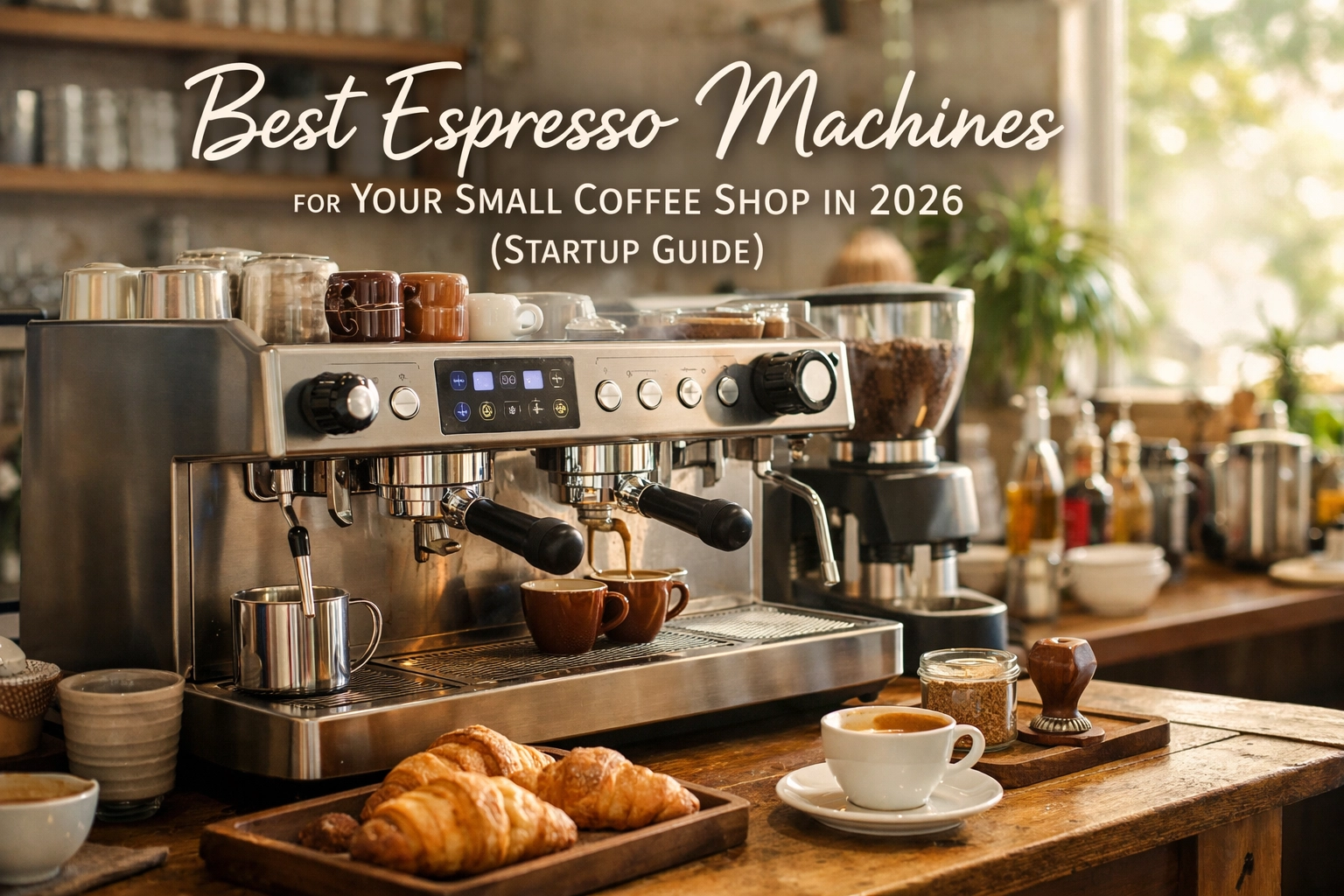
So, you’ve decided to take the plunge. You’re finally doing it, you’re going to start up a coffee shop. First of all, congratulations! There is nothing quite like the buzz of a busy morning, the smell of freshly roasted beans, and the hiss of the steam wand. But before you can open your doors and start pouring those silky flat whites, you’ve got a massive hurdle to clear: choosing your equipment.
When it comes to setting up a coffee shop, the espresso machine is easily the most important (and expensive) investment you’ll make. It is the heart of your business. If it’s underpowered, your service will grind to a halt during the morning rush. If it’s overly complicated, your staff will struggle to get consistent results. In 2026, the market is flooded with "prosumer" machines that look fancy but often lack the "commercial" DNA needed to survive in a professional environment.
Here at Limini Coffee, we’ve spent years testing, installing, and, let’s be honest, sometimes fixing machines in every environment imaginable. We’ve seen what works for a tiny boutique shop and what fails under pressure.
Why Your "Coffee Shop Set Up" Needs a Commercial Machine
You might be tempted to look at high-end home machines. They look great on a kitchen counter, and the price tag is certainly friendlier. However, we cannot stress this enough: do not use a home machine for a business.
The biggest difference isn't just the size; it’s the recovery time and thermal stability. A home machine might make two great lattes back-to-back, but try making twenty in thirty minutes and the temperature will plummet. This leads to sour, under-extracted espresso. In a commercial setting, you need a machine that can hold its temperature at exactly 88 C to 95 C (190 °F to 203 °F) while simultaneously steaming milk at 1.2 to 1.5 BAR of pressure.
If you’re serious about your venture, you need a dedicated commercial unit. For those starting small, a 1-group or compact 2-group machine is usually the sweet spot.
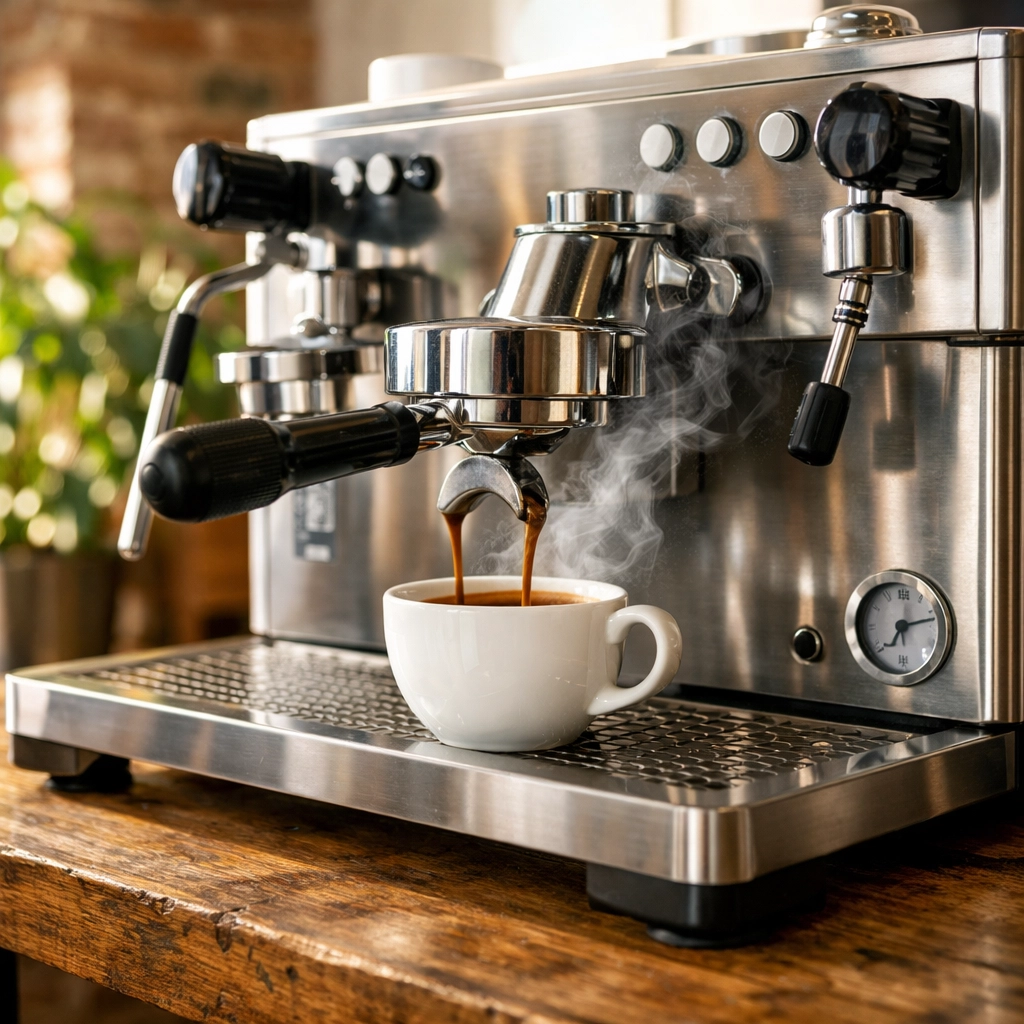
Our Top Picks for 2026 Startups
1. The Reliable Workhorse: La Spaziale S2
We have a massive soft spot for La Spaziale. Why? Because they are incredibly clever. Unlike most machines that use large, heavy 58mm portafilters, La Spaziale uses a 53mm diameter. This might seem like a small detail, but it actually creates a deeper coffee bed, which we find leads to a more forgiving and consistent extraction.
The La Spaziale S2 is a fantastic entry-level commercial machine. It’s a heat exchanger (HX) system, meaning you can brew and steam at the same time without any drop in pressure. It’s built like a tank, and the parts are readily available, which is vital when you need a quick repair.
You can check out some of the technical workings of La Spaziale here. If you’re looking for a machine that just works, day in and day out, this is it. It’s a great choice for any new coffee shop set up.
2. The Space-Saver: La Spaziale S1 Vivaldi II
If you are operating out of a small kiosk, a food truck, or a very low-volume "coffee corner," the S1 Vivaldi II is a legend. It’s a dual-boiler machine, which is rare at this size and price point. One boiler is dedicated to espresso, and the other to steam.
This means the temperature of your espresso isn't affected by how much milk you are steaming. It’s remarkably stable. It also has a front-loading water tank (though we always recommend plumbing it in for business use), which is perfect for tight spaces. We think it’s one of the best bangs for your buck when you're on a tight budget while trying to start up a coffee shop.
3. The Style Icon: Sanremo Zoe
For those who want a bit of "theatre" on their back bar, the Sanremo Zoe is often the go-to. It has a modern, industrial look with an open frame. Beyond the looks, it’s a very capable heat exchanger machine. It’s designed to be easy to service, and the steam wands are powerful enough to get that perfect silky micro-foam.
What to Look for: The Technical Bit
When you’re comparing machines, don't just look at the shiny chrome. Look at the specs. Here are the three things that actually matter in 2026:
1. Boiler Capacity
For a small shop, a steam boiler of at least 3 to 5 litres is essential for a 1-group machine, and 10 litres for a 2-group. This acts as your "battery." The larger the boiler, the more steam power you have on tap. If you find yourself waiting for the pressure gauge to crawl back up after two cappuccinos, your boiler is too small.
2. PID Temperature Control
PID stands for Proportional-Integral-Derivative (don't worry, there won't be a test). Basically, it’s a digital controller that keeps the water temperature much more precise than a traditional mechanical pressure stat. In 2026, most decent machines come with this. It allows you to adjust the temperature by 0.1 degrees, which is vital if you are using specialty beans that require a specific heat to shine.
3. Volumetric vs. Manual
We generally recommend volumetric machines for startups. This allows you to program the exact amount of water for a single or double shot. You press a button, and the machine stops automatically. Why is this important? Because it frees up the barista to start steaming milk or talk to the customer while the shot is pouring. Consistency is the king of the coffee world.
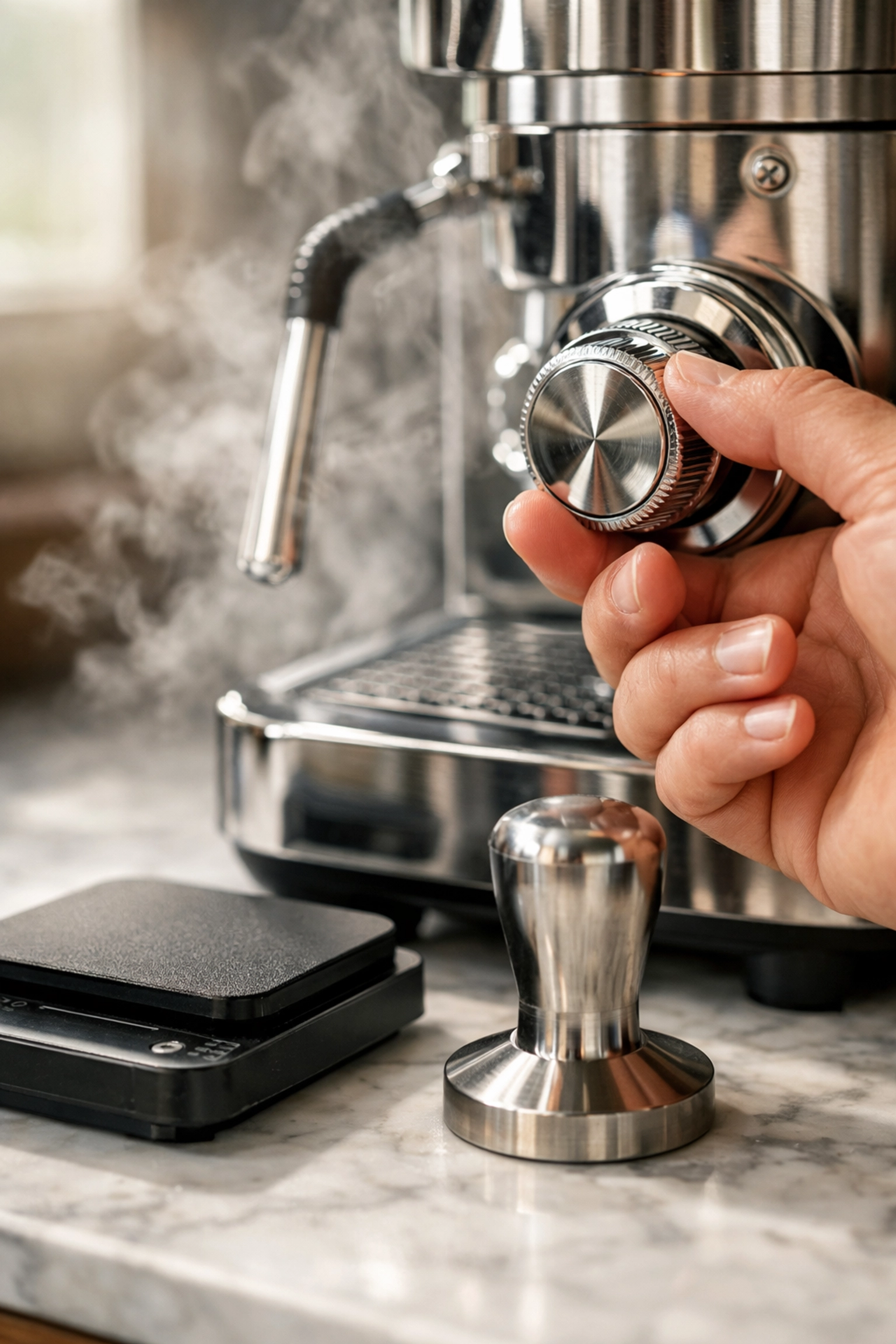
Don't Forget the Grinder!
We see it all the time: a business spends £5,000 on a gorgeous espresso machine and then buys a cheap, £300 grinder. This is a mistake. To be honest, the grinder is arguably more important than the machine.
If your grinder produces uneven particles, your espresso will be a mess of bitter and sour flavours. We recommend "on-demand" grinders. They grind a fresh dose directly into the portafilter every time. No more stale coffee sitting in a dosing chamber for hours. It’s fresher, cleaner, and reduces waste significantly.
Setting Up a Coffee Shop: More Than Just Metal
Buying the machine is only about 40% of the battle. The real work begins with the coffee shop set up and ongoing operations. This is where we come in.
At Limini Coffee, we don't just ship you a box and wish you luck. We provide the full package:
- Equipment Sourcing: We help you choose the right gear for your specific volume and budget.
- Installation: Our engineers handle the plumbing and electrical setup, ensuring your machine is calibrated perfectly from day one.
- Training: This is the big one. We believe that even the best machine in the world is useless if the person behind it doesn't know how to use it. We offer comprehensive barista training to get you and your staff up to speed on everything from tamping technique to pouring latte art.
We also love helping with the shop fitting and layout. The "flow" of your bar determines how fast you can serve customers. If your fridge is three metres away from your steam wand, you’re wasting time and energy.
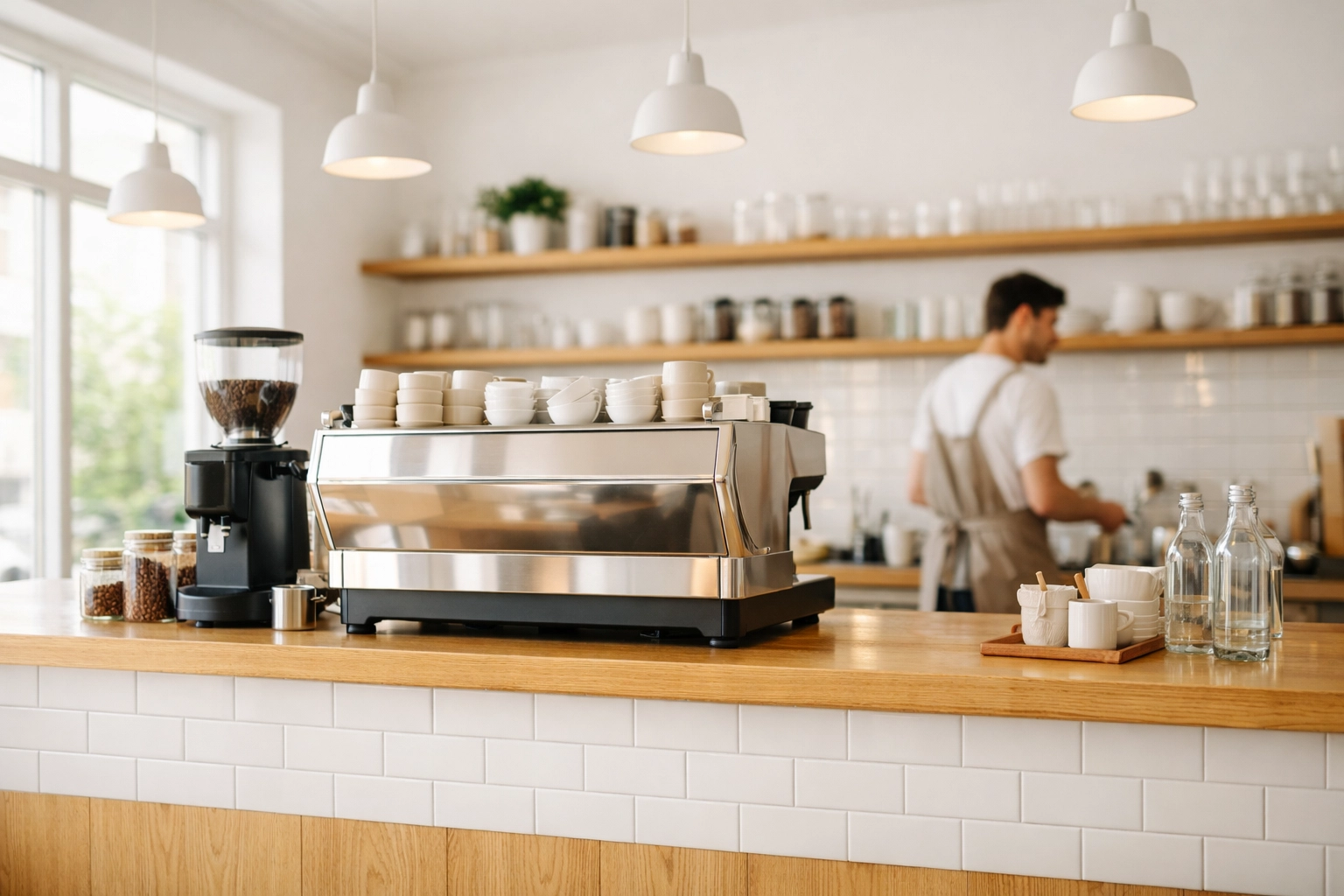
A Quick Note on Maintenance
Once you’ve got your beautiful new setup, you have to look after it. Espresso machines live in a harsh environment, heat, pressure, and water. Scale is the silent killer of coffee machines, especially in areas with hard water.
Always use a high-quality water filtration system. It protects your investment and, just as importantly, makes the coffee taste better. You’ll also need to perform a daily "backflush" with cleaning powder to keep the group heads free of rancid coffee oils. A little bit of daily care goes a long way.
Is It Worth It?
Opening a coffee shop is a massive undertaking. It’s stressful, tiring, and occasionally overwhelming. But when you serve that first perfect cup to a regular who loves your brew, it all clicks.
If you are looking to start up a coffee shop in 2026, don't feel like you have to do it alone. We’ve helped hundreds of people turn their coffee dreams into thriving businesses. Whether you need the wholesale beans, the training, or just some honest advice on which machine to pick, we are here for you.
Imagine your shop with a gleaming La Spaziale on the counter, the steam wand purring, and a queue of happy locals out the door. That’s the goal, isn’t it?
If you’re ready to start your journey or just want to chat about equipment, come and say hello to us at Limini Coffee. We’d love to be a part of your story.
Key Takeaways for Your 2026 Startup:
- Invest in Commercial: Avoid home machines at all costs.
- Prioritise the Grinder: Don't skimp on the burrs.
- Get the Training: Knowledge is more important than the gear.
- Think Long Term: Look for machines with good service support (like La Spaziale).
Starting a business is a marathon, not a sprint. Make sure you have the right shoes: or in this case, the right espresso machine: to go the distance! 🙂
Leave a Reply