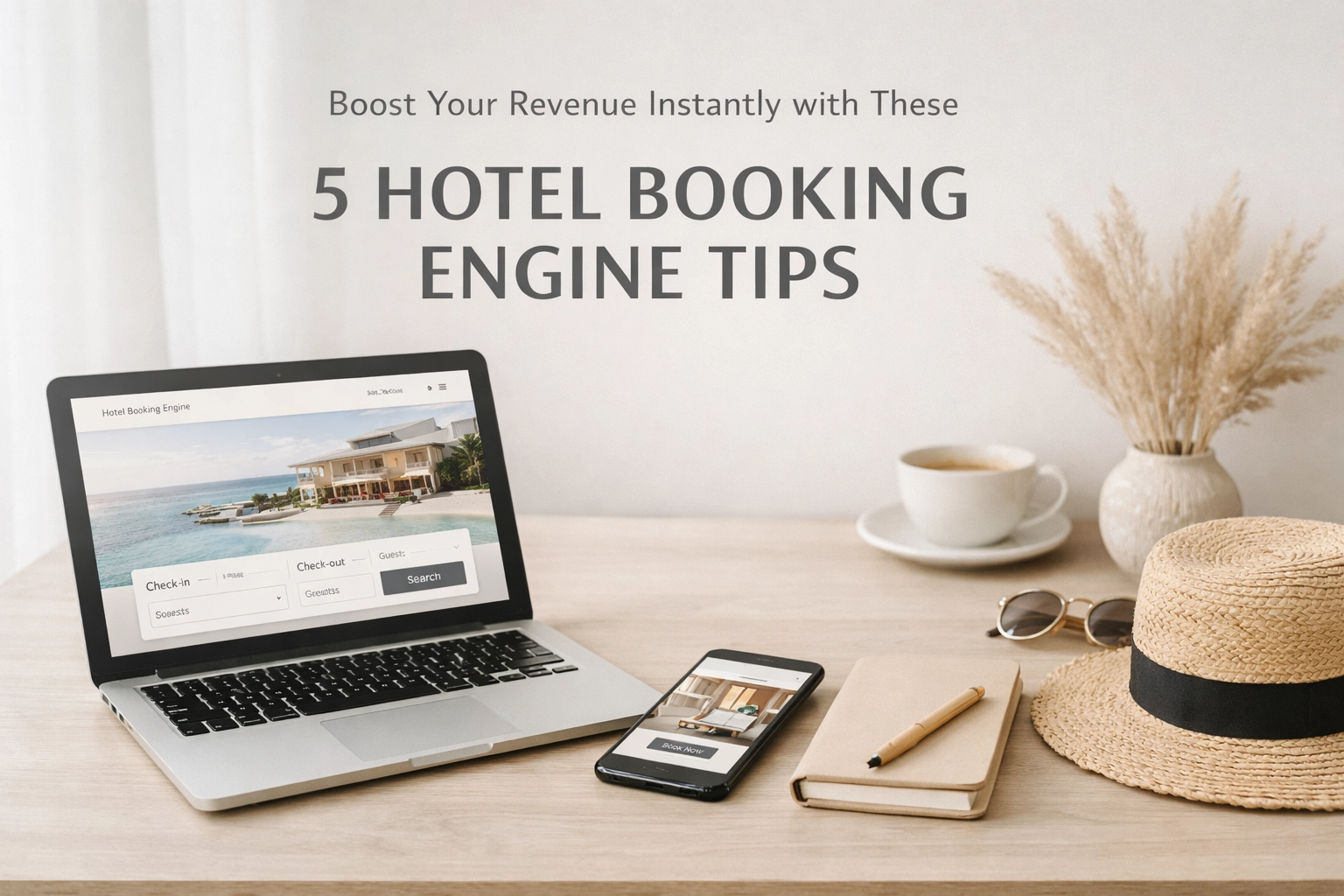
Optimize your sales. Drive direct bookings. Scale your revenue.
You want more direct bookings. It’s the dream of every hotelier: bypassing the heavy commissions of OTAs and building a direct relationship with your guests from the very first click. Most properties see a 25% increase in conversion simply by refining their digital storefront. The secret isn't just having a website; it's about having a high-performance booking engine that works as hard as you do.
We believe that technology should empower hospitality, not complicate it. By moving away from clunky, legacy systems and embracing a modern, cloud-native approach, you can transform your booking engine into a 24/7 revenue-generating machine. It’s about creating a frictionless journey that turns lookers into bookers, all from one innovative platform.
1. Optimize for mobile-first guests.
The world has gone mobile. If your booking engine requires a desktop to navigate, you are leaving money on the table. Over 60% of travel searches now happen on smartphones, and that number is only climbing. A mobile-responsive design isn't a "nice-to-have" anymore: it’s the foundation of your digital strategy.
We believe the guest experience starts long before they arrive at your front desk. If the mobile interface is slow or difficult to use, guests will bounce back to an OTA faster than you can say "occupancy rate."
- Use responsive design that adjusts instantly.
- Prioritize lightning-fast loading speeds.
- Keep buttons large and easy to tap.

"Since we switched to a mobile-optimized engine, our direct bookings from smartphones jumped by 40% in just three months," says one Mews user. It’s not magic; it’s just making it easy for people to give you their money. When your hotel PMS and booking engine share the same DNA, the data flows perfectly, ensuring that what the guest sees on their phone is exactly what’s available in your inventory.
2. Simplify the path to purchase.
Decision fatigue is real. When you present a guest with twelve different room types and sixteen different rate plans, they often choose… nothing. They get overwhelmed and leave. The most successful booking engines are the ones that stay out of the way.
We think that a streamlined checkout is the ultimate guest service. Every extra click is an opportunity for a guest to change their mind. You need to strip away the noise and focus on the essential information.
- Reduce the number of steps to three or fewer.
- Ask only for vital guest details.
- Offer one-click payment options like Apple Pay or Google Pay.
A clean interface doesn't just look better; it performs better. By integrating your booking engine directly with your hotel management software, you can automate the data entry, meaning the guest doesn't have to type their life story just to stay for one night.

3. Lead with total price transparency.
Nobody likes "hidden fee" surprises at the end of a checkout flow. It’s the fastest way to kill trust and increase cart abandonment. Transparency is the new currency in hospitality. When guests see the total price: including taxes and fees: from the very first step, they feel more confident in their purchase.
We believe in building relationships based on trust. Showing the full cost upfront might feel scary, but it actually increases your conversion rate because it qualifies the guest early in the process.
- Display all taxes and mandatory fees immediately.
- Clearly outline your cancellation policies.
- Highlight the value of booking direct (like free breakfast or late checkout).
When your booking engine is connected to a smart channel manager, you ensure that your pricing is consistent across all platforms, but your direct site should always feel like the best deal. This transparency, backed by automation, ensures your staff isn't spending hours explaining "resort fees" over the phone.

4. Personalize the guest journey.
A generic experience is a forgettable experience. Modern guests expect you to know who they are: especially if they’ve stayed with you before. If your booking engine can recognize a returning guest and offer them their favorite room type or a "welcome back" perk, you’ve already won.
We think that data should be used to make guests feel special. By leveraging a built-in CRM, your booking engine can pull historical data to tailor the offers shown to each user.
- Use guest profiles to remember preferences.
- Offer "frequently booked together" add-ons.
- Implement localized currency and language options.
"It feels like the hotel actually knows me," a guest recently noted after a personalized booking experience. This level of detail used to be reserved for luxury boutiques, but with the right automation-focused tech, any property can deliver it. It’s about moving from a transaction to a relationship.

5. Automate your upselling strategy.
Your booking engine is your best salesperson. It doesn't get tired, and it never forgets to ask for the upsell. Instead of just selling a room, sell an experience. Whether it’s a bottle of champagne on arrival, a spa treatment, or a room upgrade, these small additions can significantly boost your RevPAR (Revenue Per Available Room).
We believe that upselling should feel like a suggestion, not a sales pitch. It’s about enhancing the guest's stay, not just padding your bottom line.
- Offer relevant add-ons during the booking flow.
- Enable "bid for upgrade" features.
- Bundle services into attractive packages.
By using dynamic pricing, your booking engine can adjust these offers based on real-time demand. If you have premium suites sitting empty for tomorrow, the engine can automatically offer them as a discounted upgrade to guests currently booking. This is where the power of a cloud-native platform really shines: everything stays synced in real-time, from your self-check-in kiosks to your housekeeping app.

The Power of an Integrated Platform
The common thread through all these tips? Connectivity. You can't have a high-performing booking engine if it’s siloed off from the rest of your operations. When your booking engine, hotel PMS, and channel manager live on the same platform, the magic happens.
Automation takes the manual work out of your hands. No more re-typing credit card numbers. No more manual inventory updates at 2 AM. You get more time to focus on what actually matters: your guests.
We’ve seen properties save 10+ hours a week on admin just by switching to a system that prioritizes automation. That’s 10 hours you can spend improving your property or training your team to provide even better service.
See what Mews can do.
Ready to see how a modern, cloud-native platform can transform your revenue? It's time to stop fighting with your tech and start letting it work for you.
- Schedule a 15-minute discovery call.
- Get a personalized demo of the booking engine.
- See how automation can simplify your life.
Explore the future of hospitality at Mews and get you earning more revenue in no time. (It's easier than you think).
Leave a Reply