Category: Category 1

Use this description to tell users what kind of blog posts they can find in this category.

  • 7 Mistakes You’re Making with Your Boutique Hotel Tech (And How to Fix Them)

    7 Mistakes You’re Making with Your Boutique Hotel Tech (And How to Fix Them)

    Automate the mundane. Elevate the guest experience. Reclaim your time.

    Boutique hospitality is an art form, but running one shouldn't feel like a constant struggle against your own tools. In 2026, the gap between "getting by" and "leading the market" is defined by your tech stack. If you’re still wrestling with manual entries or disconnected systems, you aren't just losing time: you're losing revenue.

    We believe that technology should be the invisible engine that powers your creativity. At Mews, we see thousands of properties transform from reactive operations to proactive powerhouses by simply shifting their perspective on software.

    Let’s look at the friction points holding you back and how to flip the script.

    1. The Manual Overload: Moving Past the "Trust Issues" with Automation

    We’ve seen it a thousand times. A hotelier installs a state-of-the-art Revenue Management System (RMS) or an automated pricing tool, only to spend three hours a day manually overriding every suggestion.

    It’s understandable. You know your local market. You know that the "Flamingo Festival" next door always drives a specific type of crowd. But here’s the reality: AI doesn't get tired, it doesn't have "gut feelings," and it processes thousands of data points: from competitor rates to local weather: in milliseconds.

    The Fix: Trust the Logic
    Stop treating your automation like a junior intern who needs constant supervision. Set your guardrails, define your strategy, and then let the machine run. By trusting the system to handle the fluctuations, you free yourself to focus on what actually matters: the guest standing in front of you.

    • Set clear pricing boundaries.
    • Let the algorithm handle the 2 AM demand spikes.
    • Review performance weekly, not hourly.

    Modern boutique hotel office desk with a data tablet showing automated pricing performance.

    2. Broken Foundations: Why Room Logic Matters

    Your tech is only as smart as the data you give it. One of the most common pitfalls in boutique operations is a messy configuration of room types and rate plans. If your PMS calls a room "Deluxe King" but your Channel Manager calls it "King_Room_DLX," you’re begging for a synchronization nightmare.

    When your room logic is fragmented, your automation breaks. Your availability doesn't sync, your "last room available" logic fails, and you end up overbooked or, worse, undersold.

    The Fix: Standardize Your Digital Architecture
    Think of your property as a clean database. Use standardized naming conventions across every single platform: from your PMS to your OTAs.

    • Audit your room categories today.
    • Ensure rate codes are identical across all channels.
    • Simplify your offerings; too many room types confuse both guests and software.

    3. The Silo Trap: Building a Unified Ecosystem

    Using "best-in-class" tools sounds great on paper. But if your POS doesn't talk to your PMS, and your guest messaging app doesn't know who is currently checked in, you haven't built a tech stack: you’ve built a digital obstacle course.

    Disconnected tools lead to manual work. If a guest buys a gin and tonic at the bar and your staff has to manually type that charge into their room bill at the front desk, you’re living in 2010. It’s time to move into the future.

    The Fix: Prioritize Integration Over Features
    We think a platform should be an open ecosystem. When choosing new software, the first question should always be: "How well does it play with others?" At Mews, we prioritize an open API because we know that a connected hotel is a profitable hotel.

    • Ensure real-time sync between your PMS and booking engine.
    • Automate payment processing to eliminate manual card entry.
    • Check out the Mews Marketplace to see how seamless connectivity looks.

    A hotel guest using a smartphone as a digital room key for a seamless check-in experience.

    4. Complexity is the Enemy of Conversion

    Your booking engine is the front door to your digital hotel. If that door has seven different locks and requires a secret password, guests are going to walk away.

    Lengthy forms and mandatory account creation are conversion killers. Research shows that every extra field you ask a guest to fill out decreases the likelihood of them finishing the reservation. If you're asking for their home address and their dog's middle name just to see a price, you’re leaving money on the table.

    The Fix: The Three-Click Rule
    Your goal should be to get a guest from "browsing" to "booked" in as few steps as possible.

    • Reduce form fields to the absolute essentials (Name, Email, Payment).
    • Use a "Book Now, Pay Later" approach to reduce friction.
    • Make special requests an optional, post-booking step.

    5. The Mobile Gap: Speed is a Feature

    In 2026, the majority of your guests are finding you on a mobile device while they're in an Uber, at a coffee shop, or lying in bed. If your website takes more than three seconds to load, they’ve already clicked on your competitor's link.

    A clunky mobile experience isn't just a minor annoyance; it's a signal to the guest that your physical property might be just as outdated.

    The Fix: Optimize for the Thumb
    Your mobile experience shouldn't just be a "shrunken" version of your desktop site. It needs to be designed for quick, thumb-driven interactions.

    • Test your loading speed on a mobile 4G connection.
    • Ensure your "Book Now" button is always visible.
    • Implement Apple Pay or Google Pay to make mobile checkout instantaneous.

    A guest making a mobile hotel booking on a smartphone in a bright hotel lounge.

    6. Operating in the Dark: The Need for Real-Time Data

    Waiting for an "End of Day" report to understand your performance is like trying to drive a car while only looking in the rearview mirror. You can see where you’ve been, but you have no idea what’s coming.

    Boutique hotels that lack real-time visibility into their rates and occupancy are always playing catch-up. By the time you realize you’re 90% occupied for next weekend, it’s too late to optimize the price for those last few rooms.

    The Fix: Embrace the Live Dashboard
    Modern hospitality technology provides a living, breathing view of your business. You should be able to see your RevPAR, occupancy, and guest sentiment at a glance, from anywhere in the world.

    • Move to a cloud-native PMS that updates in real-time.
    • Use mobile reporting apps to stay connected on the go.
    • Adjust strategy based on today’s data, not last month’s trends.

    7. The Short-Term Lens: Buying for Today, Not Tomorrow

    The biggest mistake boutique hoteliers make is buying software to fix a "now" problem without considering where they want to be in three years. Maybe you only need 10 rooms today, but what happens when you expand? What happens when you want to add a spa, a subscription model, or long-stay apartments?

    If your tech doesn't scale, you’ll end up in a cycle of "rip and replace" every few years, which is expensive, exhausting, and disruptive to your staff.

    The Fix: Choose a Visionary Partner
    Look for a platform that isn't just a database, but a partner in innovation. You need a system that handles today’s check-ins while preparing you for tomorrow’s AI-driven guest journeys.

    • Evaluate software based on its roadmap, not just its current feature list.
    • Prioritize scalability and "API-first" mentalities.
    • Invest in a platform that grows with your ambition.

    Modern boutique hotel interior with a spiral staircase symbolizing scalable business growth.

    The Path to Operational Excellence

    "We’ve seen a 20% increase in direct bookings since we simplified our flow and trusted the automation. I finally have time to actually talk to my guests again." – Boutique Hotel Owner, London.

    Hospitality is, and always will be, about people. But to be great with people, you need to be smart with your tech. By eliminating these common points of friction, you aren't just "fixing" a hotel; you're building a modern, resilient business.

    Ready to see how a truly innovative PMS can transform your property? It takes less time than you think to get started.

    Schedule a 30-minute demo with Mews and discover how we can get you earning more revenue while doing less manual work.

    Let’s build the future of hospitality together.

  • The Proven Hotel Management Software Framework: 5 Steps to Cut Manual Work by 50% (Without Adding Headcount)

    The Proven Hotel Management Software Framework: 5 Steps to Cut Manual Work by 50% (Without Adding Headcount)

    Speed up operations. Maximize guest satisfaction. Reclaim your time.

    You didn’t get into the hospitality industry to spend eight hours a day tethered to a desktop, manually inputting credit card details or cross-referencing availability across five different spreadsheets. Yet, for many hoteliers, the "back office" has become a literal cage. It doesn't have to be this way. By implementing a modern framework centered on automation, properties are seeing a 50% reduction in manual administrative tasks: all from one innovative platform.

    We believe technology should work for you, not the other way around. When your software handles the repetitive "busy work," your team is free to do what they actually enjoy: taking care of people.

    1. Centralize the Core with a Cloud-Native PMS

    The foundation of any efficient hotel is the Property Management System (PMS). If your current system feels like a relic from the early 2000s, it's likely the biggest bottleneck in your operation. A cloud-native hotel pms acts as the brain of your business, connecting every department in real-time.

    We think the best software is invisible. It should run quietly in the background, updating your inventory and guest profiles without requiring constant manual "saves" or refreshes.

    • Access your dashboard from any device, anywhere.
    • Automate night audits and daily reporting.
    • Eliminate local server maintenance and security risks.

    By moving to a cloud-focused ecosystem, you remove the physical barriers to productivity. Your staff can check a room status from a tablet in the hallway or adjust a rate while sitting in a cafe. It’s about mobility and flexibility: the two hallmarks of modern hospitality.

    Hotel staff using a cloud-native PMS on a laptop in a modern, sun-drenched hotel lounge.

    2. Revolutionize Arrival with Self-Check-In Kiosks

    The traditional front desk is a major source of manual labor. Between verifying IDs, swiping cards, and printing registration cards, your team spends ten minutes per guest on data entry. This is a waste of talent.

    Implementing self-check-in kiosks doesn't mean you're removing the human touch; it means you're removing the friction. When guests handle the administrative side of their arrival, your staff can transition from "data entry clerks" to "local experts."

    • Reduce lobby wait times by 70%.
    • Ensure 100% data accuracy through guest-led input.
    • Boost upsell revenue by offering room upgrades during the digital flow.

    "We saved 15 hours a week just by letting guests scan their own IDs," says one of our partners. That’s nearly two full workdays given back to the team. It’s a simple shift that changes the entire energy of your lobby.

    3. Synchronize Distribution via a Smart Channel Manager

    Managing multiple OTAs manually is a recipe for overbookings and exhaustion. If you are still logging into Expedia and Booking.com separately to update your rates, you are working too hard.

    An integrated channel manager ensures that your inventory is always accurate across every platform. When a room sells on your website via your booking engine, it should instantly disappear from the OTAs. No lag, no manual updates, no mistakes.

    • Push rate updates to 400+ channels in seconds.
    • Maintain rate parity without manual monitoring.
    • Prioritize direct bookings to save on commission fees.

    We believe in a "set it and forget it" approach to distribution. Once your rules are established, the software manages the heavy lifting. This allows you to focus on your revenue strategy rather than the mechanics of clicking "update" on twenty different tabs.

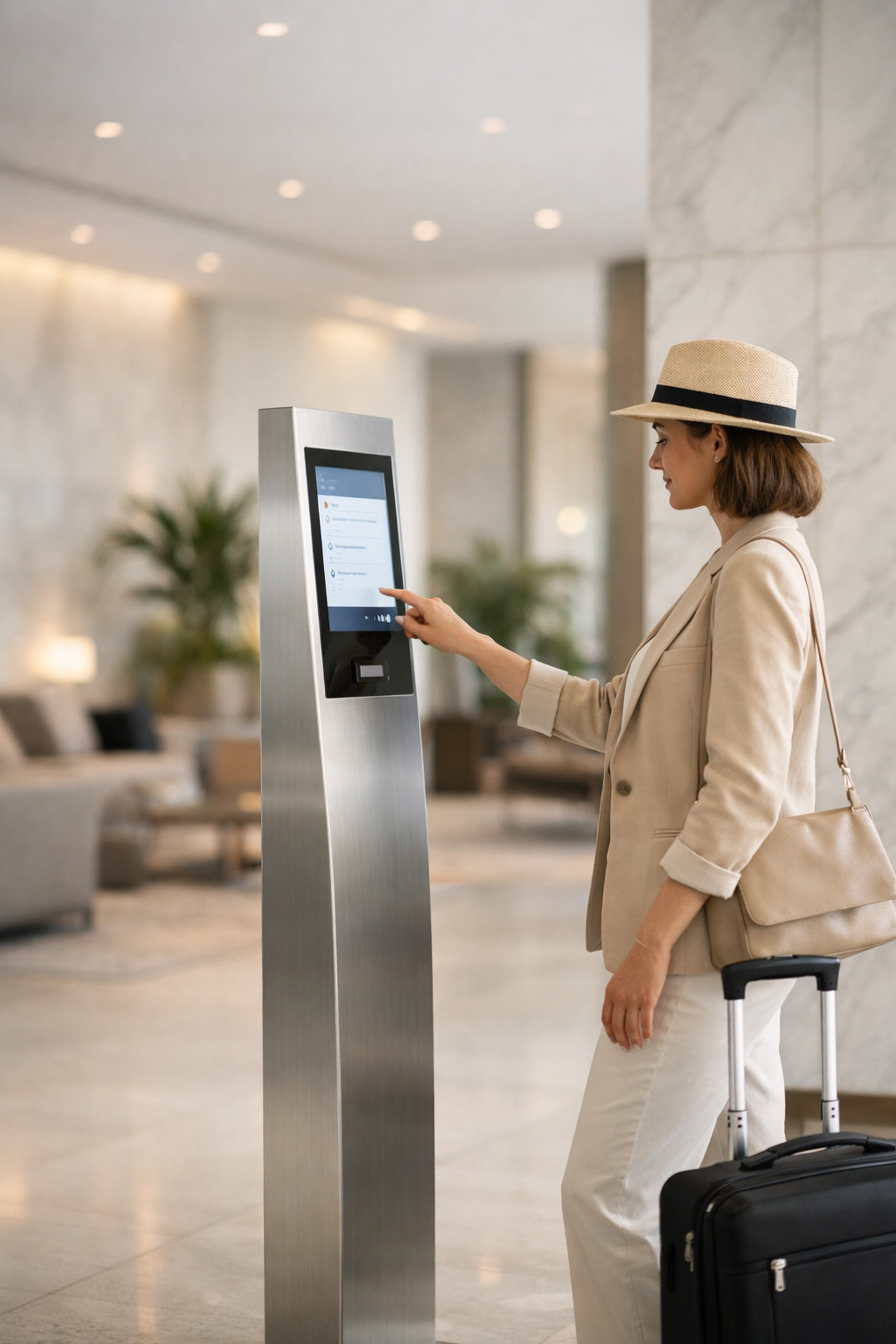
    A guest using a minimalist self-check-in kiosk in a modern, high-end hotel lobby.

    4. Personalize at Scale with an Integrated CRM

    Manual work often stems from a lack of organized data. If your team has to ask a returning guest for their email or pillow preference for the third time, your system is failing you. A CRM integrated directly into your PMS creates a single source of truth.

    When guest data flows seamlessly from the booking engine to the guest profile, personalization becomes automated. You can send pre-arrival emails, birthday discounts, and post-stay surveys without lifting a finger.

    • Automate guest communication sequences.
    • Create detailed guest personas for targeted marketing.
    • Identify high-value repeat guests automatically.

    It’s about being proactive rather than reactive. Instead of manually searching for who is arriving tomorrow, the system flags your VIPs and reminds your team of their specific needs. It feels like magic to the guest, but it’s just smart automation.

    5. Transition to Real-Time Housekeeping Management

    Housekeeping is often the most disconnected department in a hotel. Using paper lists and walkie-talkies to communicate room status is a major drain on efficiency. By digitizing this workflow, you can cut down the communication gap between the front desk and the cleaning crew.

    When a guest checks out via a kiosk, the room status should instantly update to "dirty" on the housekeeper's mobile device. Once the room is cleaned and inspected, it should immediately show as "available" for the next guest.

    • Eliminate paper task lists and manual updates.
    • Track cleaning times to optimize staff performance.
    • Prioritize rooms based on real-time arrival data.

    This level of connectivity ensures that you aren't paying staff to walk back and forth to the office for new instructions. Everything they need is in their pocket.

    Hotel staff managing room status on a mobile device in a minimalist hotel guest room.

    The Result: More Freedom, Better Service

    Reducing manual work by 50% isn't just about cutting costs. It's about culture. When your team isn't bogged down by tedious tasks, they are happier. And happy staff lead to happy guests.

    The framework is simple:

    1. Schedule a transition to a cloud-native PMS.
    2. Get your guests checking themselves in.
    3. Sync your rates through a unified channel manager.
    4. Use your CRM to speak directly to your guests.
    5. Empower your housekeeping team with mobile tools.

    We think the future of hospitality is bright: and it’s automated. You don't need a bigger team; you just need better tools. By focusing on innovation and ease of use, you can transform your property into a high-performance machine that virtually runs itself.

    Ready to see how much time you can save? Check out how Mews is redefining the guest journey and helping hoteliers reclaim their day.

    Explore the future of hospitality at https://referrals.mews.com/umqHYIto.

    See what Mews can do for your property. It’s time to stop managing software and start managing your hotel. Our platform is designed to be intuitive, powerful, and: most importantly: easy to use. Whether you’re running a boutique stay or a large-scale resort, the steps to efficiency remain the same.

    Let's get you earning revenue and spending more time with your guests in no time.

  • Stop Wasting Time on Admin Tasks: 5 AI Hacks to Finally Get Your Life Back

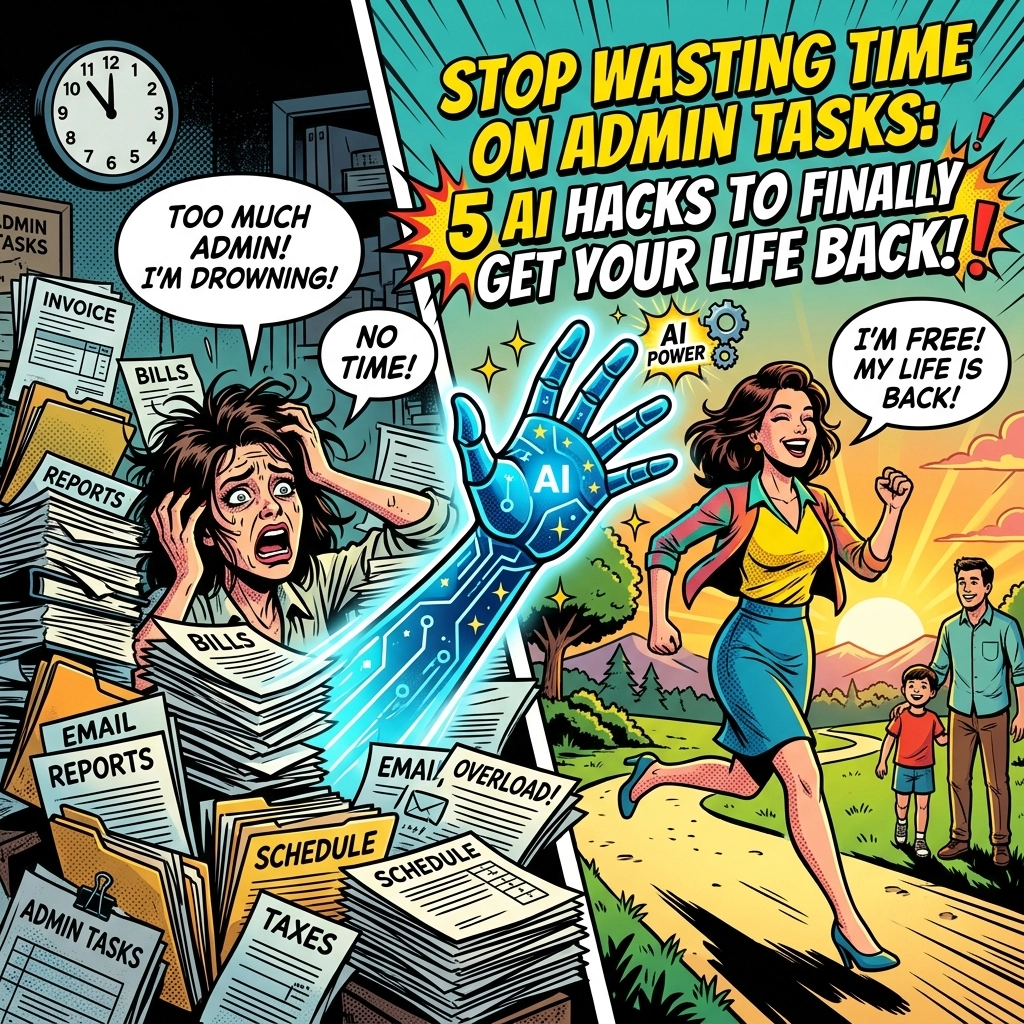
    Stop Wasting Time on Admin Tasks: 5 AI Hacks to Finally Get Your Life Back

    7:00 AM

    The sun isn’t even fully up, but your phone is already screaming at you. You reach over, squinting through one eye, and see it.

    47 unread emails.

    Three of them are marked "URGENT" (they aren't). One is from a lead you forgot to follow up with three days ago. Another is a 12-paragraph manifesto from a client who just "wanted to share some thoughts."

    Your heart sinks. This is the "admin tax." It’s the invisible fee you pay just for being in business. It’s the hours spent sorting, filing, replying, and chasing, while the actual work, the stuff that actually makes you money, sits on the back burner gathering dust.

    You’re not a business owner. You’re a professional button-pusher.

    But it doesn't have to stay this way. Imagine if the chaos was gone before you even took your first sip of coffee.

    Stop juggling. Start automating.

    Here are 5 AI hacks to turn your ai virtual assistant for business into a productivity powerhouse so you can finally get your life back.


    1. THE INBOX EXORCISM: AI SUMMARIES AND SMART REPLIES

    📱 8:30 AM

    You’re sitting at your desk. Usually, this is where you’d spend the next two hours drowning in your inbox. You’d read every word, get distracted by a newsletter about sourdough, and lose half your morning.

    But today is different.

    Instead of reading 50 messages, you let AI act as your filter. Using an ai virtual assistant for business, you can group similar queries and generate summaries of those long-winded threads.

    Think about that 12-paragraph manifesto from earlier. Instead of reading the whole thing, you prompt your AI: "Summarize this thread in 3 bullet points. Then draft a response that addresses the key questions."

    The result?

    • Point 1: They like the draft.
    • Point 2: They want the logo slightly bigger (classic).
    • Point 3: They need it by Friday.

    You review the AI-generated response. It sounds like you, only more caffeinated and professional. You hit send.

    You just saved 45 minutes. And you haven't even finished your first cup of coffee.

    AI virtual assistant for business organizing a chaotic email inbox into neat and concise summaries.


    2. THE 10-MINUTE MEETING PREP

    🤝 10:15 AM

    You have a potential big-ticket client meeting in fifteen minutes. Normally, you’d be frantically searching through old Slack messages and PDFs trying to remember what you promised them last month.

    Your palms are sweaty. You feel like a fraud.

    Stop.

    Drop those documents into your AI tool. Ask it: "I have a meeting about project X in 10 minutes. Give me 5 key talking points and 3 smart questions to ask based on our last three interactions."

    Suddenly, you’re the most prepared person in the room. You aren't just winging it; you’re leading with insights. You walk into that Zoom call with a clear script and a focused mind.

    When you automate customer support with ai, the preparation happens in the background. You’re not just showing up, you’re showing out.

    You smile. You’re in control.


    3. THE END OF THE BROWSER TAB NIGHTMARE

    🔍 1:30 PM

    You need to research a new market or analyze a competitor. Usually, this means opening 15 browser tabs, losing your place, and ending up on a Wikipedia rabbit hole about the history of the stapler.

    Admin tasks are often just disguised research projects.

    Instead of manual digging, use AI to surface insights directly. Ask your AI to research a topic, summarize the top 5 most important points, and provide the sources for deeper investigation.

    If you’re looking at raw data, like a messy spreadsheet of customer feedback, don’t try to find the patterns yourself. Let the AI analyze the raw data and present findings in plain English.

    "What are the top three complaints from last month?"

    The AI tells you. No manual scrolling. No squinting at cells. Just the truth.

    AI data analysis tool streamlining admin tasks by turning scattered research into an organized dashboard.


    4. INTELLIGENT PRIORITIZATION (THE "ANTI-STRESS" HACK)

    🗓️ 3:45 PM

    The afternoon slump hits. Your to-do list has 14 items on it, and they all feel equally important. You start one, get distracted by another, and end up finishing… nothing.

    This is where most small business owners fail. They spend "expensive" time on "cheap" tasks.

    An intelligent AI assistant can analyze your calendar load and your past patterns to prioritize tasks before deadlines are missed. It can predict which projects are likely to run late and send proactive reminders to your team (or yourself).

    It’s like having a project manager who never sleeps and never gets grumpy.

    Instead of chasing people for updates, the AI does it. Your focus stays on the high-impact work, the stuff that moves the needle.

    Scaling shouldn't be this hard. And with the right tools, it isn't. You can see exactly how this works at https://marblism.link/scott-bowen.


    5. THE MAGIC NOTE-TAKER AND ACTION-EXTRACTOR

    🌙 5:00 PM

    The day is winding down. You just finished your last call. In the "old days," you’d spend the next hour typing up notes, assigning tasks in your project management software, and trying to remember who agreed to what.

    But now? You don't take notes. The AI does.

    As the call ends, your AI assistant has already transcribed the conversation, extracted the action items, and dropped them directly into your workflow.

    • Action: Send contract to Sarah.
    • Action: Update the pricing page.
    • Action: Schedule follow-up for Tuesday.

    By the time you close your laptop, the work is already organized. You aren't taking the "mental load" home with you. The chaos is gone.

    The lights are off. The house is quiet.

    And for once… you’re actually done for the day.

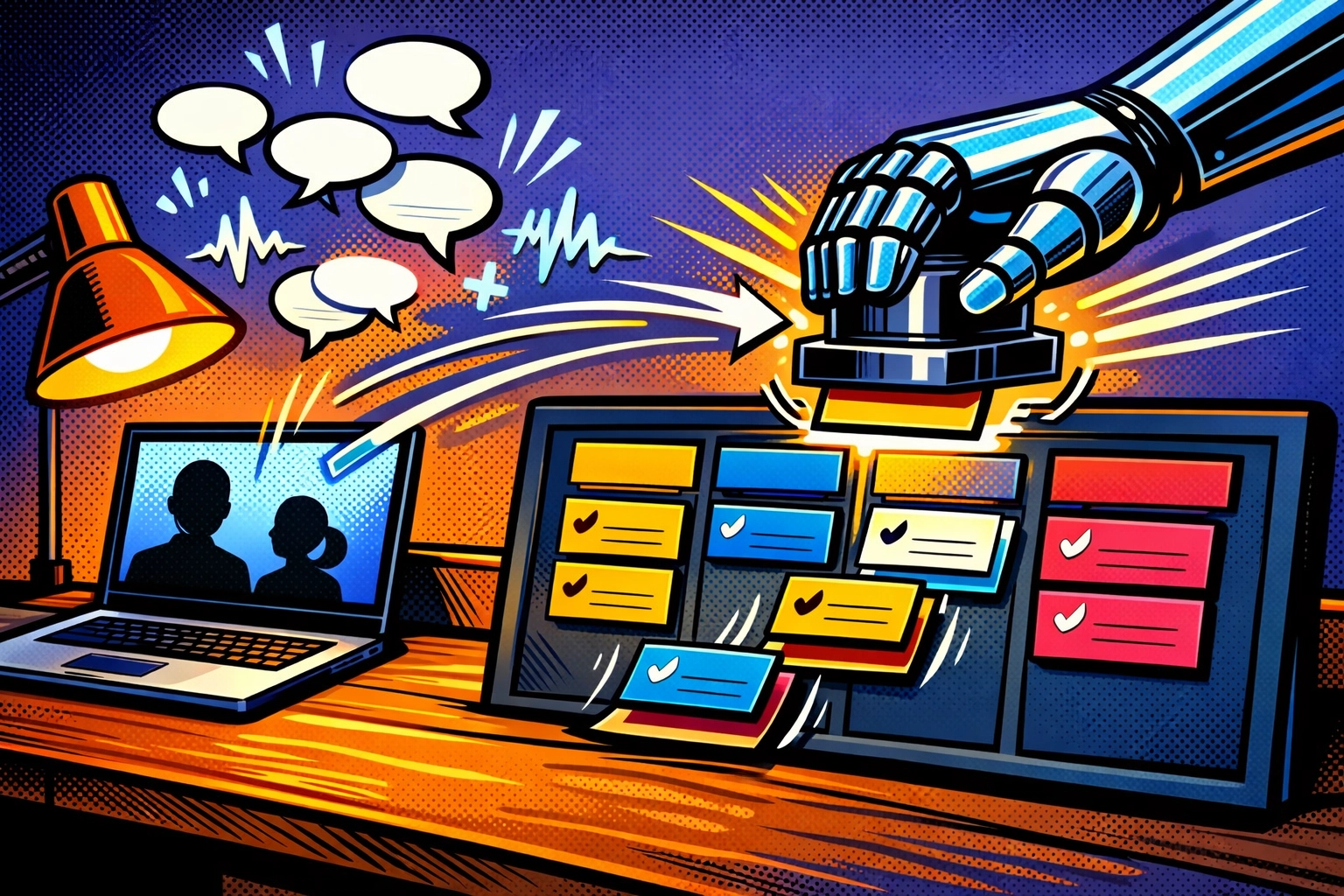
    Automate customer support with AI by extracting meeting action items into a clean project task board.


    EMPLOYEE OF THE MONTH. EVERY MONTH.

    Look, the world of business is changing. You can either keep doing things the "hard way" and burn out by 40, or you can embrace the fact that ai virtual assistant for business technology is finally ready for the prime time.

    You don't need to be a tech genius. You don't need to write code. You just need to stop wasting your life on tasks a machine can do in four seconds.

    Marblism is built for people like you, the ones who want to grow without losing their sanity. We help you automate customer support with ai and streamline the admin junk that keeps you up at night.

    Why Marblism?

    • It’s simple.
    • It’s fast.
    • It actually works.

    Don't take our word for it. See the difference for yourself.

    👉 Get your life back and explore the magic here


    FAQS FOR THE SKEPTICAL BUSINESS OWNER

    Q: Is AI hard to set up?
    No. Most tools are plug-and-play. If you can send an email, you can use these hacks.

    Q: Will it sound like a robot?
    Only if you want it to. Modern AI can be trained to match your specific voice, tone, and brand personality.

    Q: Is my data safe?
    Yes. Professional AI tools use enterprise-grade encryption. Your secrets are safe with the bots.

    Q: Does this replace my human team?
    No. It frees up your human team to do what humans do best: think, create, and connect.


    THE FINAL WORD

    You didn't start a business to become a data entry clerk. You started it to create something, to help people, and to build a life of freedom.

    Admin tasks are the bars of a cage you built yourself.

    It’s time to unlock the door.

    Start with one hack. Just one. Track how much time you save this week. Then layer in the next. Before you know it, you’ll have hours of your life back every single day.

    The future is here. It’s organized. And it’s waiting for you at https://marblism.com/scott-bowen.

    Stop the grind. Start the growth.

    YOU’VE GOT THIS.

  • The Small Business Guide to Workflow Automation: From “Always On” to “Actually Growing

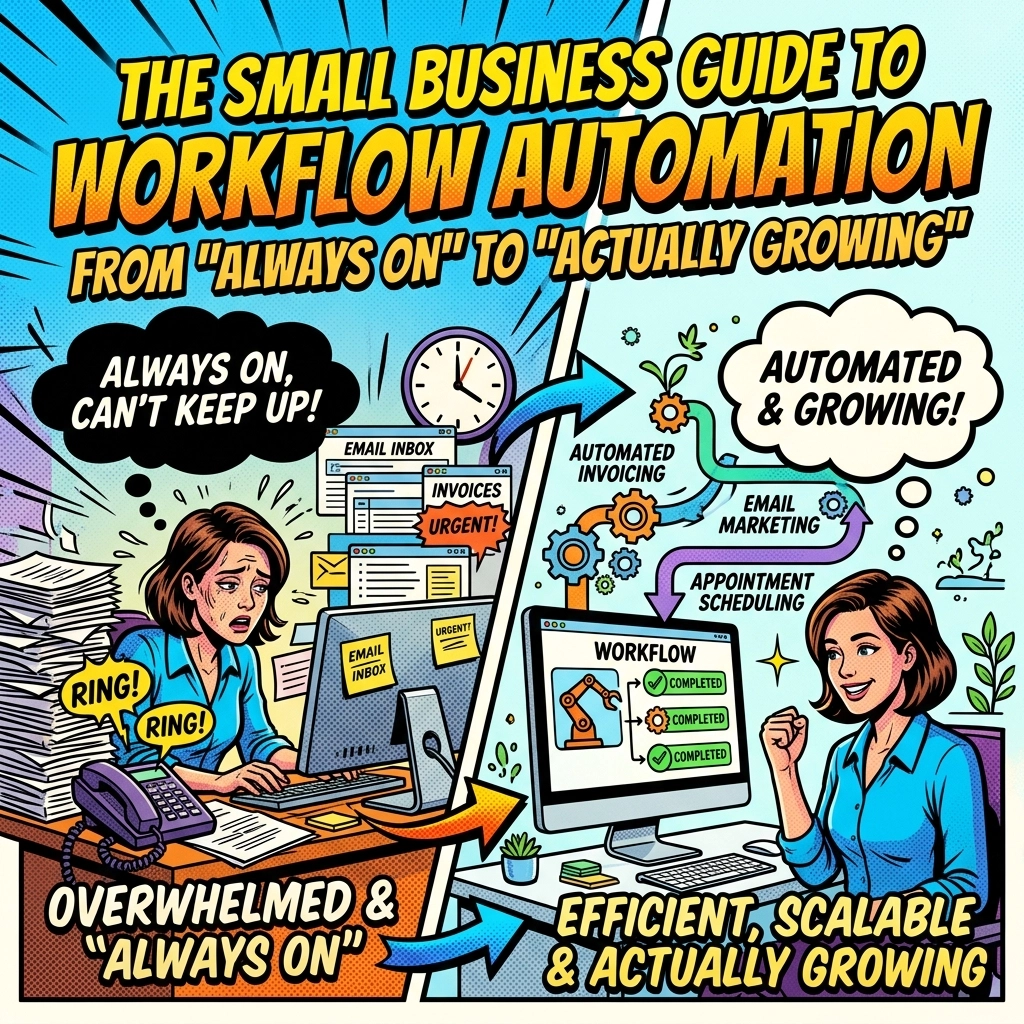
    The Small Business Guide to Workflow Automation: From “Always On” to “Actually Growing

    7:02 AM.

    You haven’t even finished your first cup of coffee. Your phone buzzes. Then again. And once more for good measure. It’s not a "good morning" from a loved one. It’s a lead from your website, an invoice reminder from a vendor, and three "quick questions" from your team.

    Your brain is already at 100% capacity before you’ve even put on your shoes. This is the "always on" trap. You’re not growing a business… you’re just babysitting a bunch of manual tasks that are slowly draining your soul.

    But it doesn’t have to be this way. Imagine a world where the "busy work" disappears before you even wake up.

    Let’s talk about how to stop juggling and start growing.


    WORKFLOW AUTOMATION FOR SMALL BUSINESS: STOP DOING THE BUSY WORK

    You didn’t start your business to become a professional copy-paster.

    You started it because you had a vision. Yet, here you are, manually moving data from an email into a spreadsheet. Or sending the same "Thanks for reaching out!" message for the fifth time today.

    Workflow automation for small business isn't about buying expensive robots. It’s about building a digital nervous system that handles the boring stuff so you can handle the big stuff.

    The "If This, Then That" Magic

    Think of automation as a series of simple instructions.
    If a new lead fills out your contact form… then add them to your CRM and send them your pricing guide.
    If a client pays an invoice… then move the project to the "In Progress" column in your task manager.

    It’s simple logic. But when you stack these rules together, the magic happens.

    📅 9:15 AM: The Lead That Handled Itself

    Usually, you’d see a new lead and think, "I’ll get to that after my 10 AM meeting." By then, they’ve already emailed three of your competitors.

    With automation? The moment they click submit, things move.

    1. Their info is tagged and sorted.
    2. A personalized (but automated) email lands in their inbox.
    3. Your calendar link is right there.
    4. They book a slot.

    You walk into your meeting. You haven’t touched a single key. But you just booked a sales call.

    Small business owner focused on a meeting while automated workflows handle incoming customer data and emails.

    Identifying Your Quick Wins

    Don’t try to automate your entire empire in one afternoon. Start where the pain is loudest. Look for tasks that are:

    • Repetitive: You do them every single day.
    • Rules-based: There’s no "feeling" involved, just logic.
    • Time-sucking: They take 10 minutes, but you do them 20 times a day.

    Common wins include invoice generation, appointment scheduling, and social media posting. Once you clear these off your plate, the air gets a little easier to breathe.

    Scaling shouldn't be this hard. But here we are, making it easier with Marblism. Check out how we do it here: https://marblism.com/scott-bowen.


    WHY YOUR BUSINESS NEEDS AN AI VIRTUAL ASSISTANT (BEFORE YOUR COMPETITORS GET ONE)

    Let’s be honest: your competitors are already looking at AI.

    If you’re still replying to every single customer support query by hand, you’re not just wasting time, you’re falling behind. An AI virtual assistant for business isn't just a chatbot that says "I don't understand." It's an intelligent team member that works while you sleep.

    🍕 12:30 PM: The Lunch Break That Stays a Break

    You’re mid-sandwich. A potential client has a question about your pricing. In the old days, you’d put down the sandwich, wipe your hands, and start typing.

    Now? Your AI Virtual Assistant handles it.
    It knows your services. It knows your brand voice. It answers the question, provides a case study, and asks the client if they’d like to start a trial.

    You finish your sandwich. The client feels taken care of.

    More Than Just a Script

    A human assistant needs sleep, health insurance, and (rightfully) doesn't want to work at 3:00 AM on a Sunday. Your AI Virtual Assistant? It’s fueled by code and pure, unadulterated efficiency.

    It can:

    • Sift through the noise: It identifies which leads are actually ready to buy and which ones are just "kicking tires."
    • Maintain consistency: It never has a "bad day." It treats every customer with the same level of professional polish.
    • Scale instantly: Whether you have 5 customers or 500 reaching out at once, the AI doesn't break a sweat.

    Business owner eating lunch while an AI virtual assistant manages customer questions and support requests.

    🌙 10:00 PM: The Peace of Mind

    The day is winding down. The lights are off. Usually, this is when the "Did I remember to…?" anxiety kicks in.

    Did you send that follow-up? Did the invoice go out?

    You check your dashboard. Every lead was answered. Every file was organized. The chaos is gone before you even take your first sip of nighttime tea.

    You smile. You’re not "always on" anymore. You’re actually growing.


    STOP JUGGLING. START SCALING.

    Workflow automation and AI assistants aren't just for Silicon Valley giants with million-dollar budgets. They are for the local plumber, the boutique agency owner, and the affiliate marketer who is tired of being the bottleneck in their own business.

    The shift from "busy" to "productive" starts with a single step. It starts with deciding that your time is worth more than $15/hour tasks.

    Is It Hard to Set Up?

    No. You don't need a computer science degree. Most modern tools, especially what we're building at Marblism, are designed to be plug-and-play. If you can use a smartphone, you can automate your business.

    Will My Customers Hate It?

    Only if it’s bad. People don't hate automation; they hate bad automation. When you use an AI virtual assistant that actually solves their problems and respects their time, they love it. They get answers in seconds, not days.

    Why Now?

    Because your time is the only resource you can't buy more of. Every hour you spend on manual data entry is an hour you aren't spending on strategy, product development, or just… living your life.

    EMPLOYEE OF THE MONTH. EVERY MONTH.

    Imagine having a team member who never complains, never takes a sick day, and executes your strategy with 100% accuracy. That’s what we’re offering.

    Scaling shouldn't be this easy. But here we are.

    Take back your time. Stop being the "Always On" owner and start being the "Actually Growing" CEO.

    Ready to see how it works? See for yourself and check out what Scott Bowen is doing with the Marblism team: https://marblism.com/scott-bowen.


    FREQUENTLY ASKED QUESTIONS

    Does automation replace my human staff?
    No. It replaces the parts of their jobs they hate. It lets your humans be more human, focusing on creativity and relationships instead of spreadsheets.

    Is it expensive?
    Not compared to the cost of your time. Most small businesses see a return on investment within the first 30 days of implementation.

    Can I start small?
    Yes. In fact, we recommend it. Automate one single process this week. Watch the time open up. Then do the next one.

    Do I need to know how to code?
    Absolutely not. Marblism is built for people who want results, not syntax errors.


    The day is over. You’ve done more than ever before, yet you feel less tired.

    That’s the power of a automated business.

    It’s quiet. It’s organized. It’s yours again.

    Don't let your competitors get there first. Start your automation journey here.

  • The Ultimate Guide to Single Origin Coffee: Everything You Need to Succeed (Without the Snobbery)

    The Ultimate Guide to Single Origin Coffee: Everything You Need to Succeed (Without the Snobbery)

    So, you’ve probably heard the term "single origin" tossed around your local coffee shop or seen it plastered all over the bags at the grocery store. It sounds fancy, right? A bit elite, maybe even a little intimidating. You might be wondering if you need a specialized degree or a perfectly manicured mustache to really "get" it.

    Well, we have some good news for you. Single origin coffee isn't about being a snob. In fact, it’s the exact opposite. It’s about getting closer to the source, understanding where your morning brew actually comes from, and: most importantly: enjoying some seriously incredible flavours that you just can't get anywhere else.

    At Limini Coffee, we believe that great coffee should be accessible to everyone, whether you’re brewing in a high-end espresso machine or a trusty old cafetière. So, let's pull back the curtain and dive into everything you need to know to master the world of single origin beans.


    What Exactly is Single Origin Coffee?

    Let’s start with the basics. What are we actually talking about here?

    Simply put, single origin coffee is coffee that comes from one specific place. Now, "place" can be a bit of a broad term. It might mean a single country (like Ethiopia or Colombia), a specific region within that country, or even a single farm or estate. In the world of speciality coffee, we often take it a step further to "micro-lots," which are beans harvested from a specific plot of land on a farm during a specific time of year.

    Why does this matter? Traceability.

    When you buy a blend, you’re getting a mix of beans from various locations, usually chosen to create a consistent, repeatable flavour profile. There’s absolutely nothing wrong with a good blend: we love them for their reliability. But single origin coffee is about celebrating the unique "terroir" of a specific location.

    Fresh green unroasted coffee beans and red coffee cherries from a single origin farm source.

    Terroir (a fancy French word we’ve borrowed from the wine world) refers to how the soil, climate, altitude, and even the surrounding vegetation affect the taste of the coffee cherry. When you drink a single origin, you’re tasting a specific moment and place in time.


    The Flavour Map: A Whirlwind Tour

    If you’re just starting your single origin journey, the sheer variety of flavours can be overwhelming. To help you out, we’ve broken down the general characteristics of some of the world’s most famous coffee-producing regions. Keep in mind, these are generalities: every farm is different: but they’re a great starting point for your taste buds.

    Africa: The Bright and Floral

    If you like coffee that tastes like tea, flowers, or a basket of fresh berries, African single origins are for you.

    • Ethiopia: Often considered the birthplace of coffee, Ethiopian beans are famous for their blueberry, jasmine, and citrus notes. They are usually light-bodied and incredibly fragrant.
    • Kenya: Known for a bold, wine-like acidity and juicy flavours like blackcurrant and grapefruit.

    The Americas: The Crowd Pleasers

    These are often the most "approachable" single origins because they tend to have that classic coffee taste we all know and love, but with a refined twist.

    • Colombia: Expect a beautiful balance of acidity and sweetness. You’ll often find notes of caramel, nuts, and a gentle citrus finish. You can learn more about how we think about these beans in our section on sourcing our coffee.
    • Brazil: Usually lower in acidity with a heavy body. Think chocolate, peanut butter, and toasted nuts. These make for incredible espresso.

    Asia: The Earthy and Bold

    If you prefer something deep, dark, and spicy, look toward Southeast Asia.

    • Sumatra: Known for an earthy, herbal, and almost woody flavour profile. They are very low in acidity and have a thick, syrupy mouthfeel.

    How to Choose the Right Beans (Without Losing Your Mind)

    Walking into a shop or browsing online can feel like a minefield. Here is our "cheat sheet" for picking the best beans for your home setup.

    1. Check the Roast Date
    This is non-negotiable. Coffee is a fresh produce item. For single origins, you generally want to hit the "sweet spot" between 7 and 21 days after roasting. If a bag doesn't have a roast date, put it back. You can find our latest, freshest roasts at Limini Coffee.

    2. Read the Flavour Notes
    Roasters include these to give you a hint of what to expect. If you see "lemon and floral" and you hate sour things, move on. If you see "milk chocolate and hazelnut," you’re probably on the right track.

    3. Whole Bean is King
    We cannot stress this enough: buy whole beans and grind them right before you brew. Coffee begins to lose its aromatic compounds (the stuff that makes it taste good) within minutes of being ground. If you’re looking for a new setup, check out our guide on choosing espresso equipment.


    Brewing Like a Pro at Home

    You’ve got your beans from Limini Coffee, and now it’s time to brew. Single origins can be a little more "temperamental" than blends, but that’s just because they have more personality.

    The Golden Ratio

    We recommend starting with a ratio of 1:16. That’s 1 gram of coffee for every 16 grams of water. If you’re brewing a liter of coffee, that’s about 60 grams of coffee. To make your life easier, we actually have a coffee brewing calculator on our site to help you get the numbers perfect every time.

    Temperature Matters

    Don't use boiling water! It can scorch the delicate notes of a single origin. We recommend a temperature between 195°F and 205°F (90°C to 96°C). If you don't have a thermometer, just let your kettle sit for about a minute after it clicks off.

    Brewing single origin coffee using a manual pour-over method and gooseneck kettle.

    The Method

    • Pour-Over (V60/Chemex): This is the best way to highlight the delicate, fruity notes of African coffees. It produces a clean, tea-like cup.
    • French Press: Great for Brazilian or Sumatran coffees. It highlights the body and sweetness.
    • Espresso: A bit more of a challenge. Single origin espresso can be very bright (acidic), which some people love and others… not so much. If you're struggling with your shots, check out our tips on tamping and understanding crema.

    Dispelling the Snobbery: A Few Truths

    We promised a guide without the snobbery, so here are a few honest takes from us here at Limini.

    "You must drink it black."
    Look, we believe single origins taste best black because you can actually taste the nuances. But if you want to add a splash of milk, go for it! Just know that heavy milk can drown out the delicate jasmine notes of an Ethiopian Yirgacheffe. If you are a milk lover, check out our guide on understanding milk to see how different fats affect the flavour.

    "Expensive always means better."
    Not necessarily. Price is often driven by rarity and labor costs rather than just flavour. Find what you like. If you prefer a £10 bag of Colombian beans over a £40 bag of Geisha, that doesn’t mean your palate is "wrong." It just means you know what you like.

    "It's too complicated."
    It's just beans and water, friend. Don't let the jargon get in the way of a good morning.


    Why We Care About Sourcing

    At Limini Coffee, we aren't just selling beans; we’re telling a story. When we source our single origins, we’re looking for quality, sustainability, and fair relationships with farmers. It's extremely important to us that the people growing this incredible coffee are treated with the respect they deserve.

    If you're curious about how we pick our beans or want to try some for yourself, head over to the Limini Coffee shop. Whether you're a home brewer or looking for wholesale options for your business, we’ve got something that will blow your mind.

    A steaming mug of fresh brewed black coffee with whole roasted single origin beans.


    Summary Checklist for Success

    To wrap things up, here is your quick-start guide to single origin success:

    1. Buy Fresh: Check those roast dates on our website.
    2. Match Method to Bean: Bright/Fruity = Pour-over. Chocolatey/Nutty = French Press or Espresso.
    3. Use Good Water: If your tap water tastes like a swimming pool, your coffee will too. Use filtered water.
    4. Experiment: Try a different region every month. Your taste buds will thank you.
    5. Relax: It's just coffee. If it tastes good to you, you've succeeded.

    If you ever find yourself wanting to go deeper into the craft, we offer barista training that covers everything from basic brewing to advanced latte art. We’d love to see you there.

    Happy brewing! Remember, the best cup of coffee is the one you enjoy most. No snobbery required. 🙂

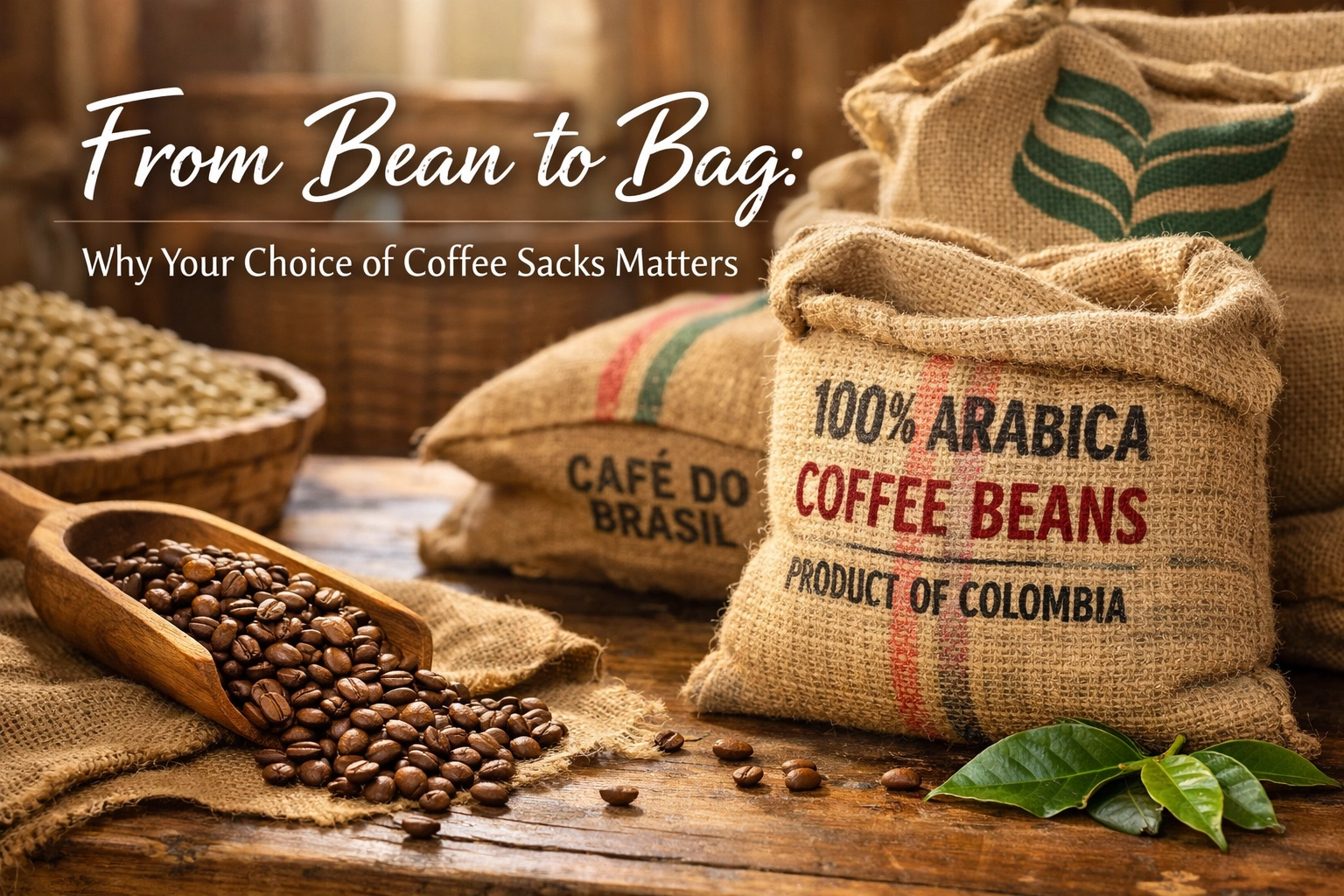
  • From Bean to Bag: Why Your Choice of Coffee Sacks Matters

    From Bean to Bag: Why Your Choice of Coffee Sacks Matters

    When we talk about specialty coffee, we often get caught up in the romance of the origin. We talk about the high altitudes of Ethiopia, the volcanic soil of Guatemala, or the meticulous honey-processing in Costa Rica. We obsess over the roast profile, finding that perfect "sweet spot" where the acidity balances with the body. But there is a silent hero in this journey that often gets overlooked: the bag.

    The coffee sack, whether it’s the rugged jute bag transporting green beans across the ocean or the sleek, valved pouch sitting on your cafe shelf, is the guardian of flavour. If you think about it, a coffee bean spends more time inside a bag than it does anywhere else. So, it stands to reason that the choice of coffee sacks matters, a lot.

    If you’re looking to step up your coffee game, whether as a home enthusiast or a business owner, understanding the "suit" your coffee wears is just as important as the beans themselves. Let's dive into why the right packaging is the difference between a mind-blowing cup and a stale disappointment.


    The Humble Beginning: The Jute Sack

    Before the beans are roasted to a beautiful chocolatey brown here at Limini Coffee, they travel thousands of miles as "green" beans. Historically, and still largely today, these beans are transported in large jute or sisal sacks.

    Why jute? Well, it’s durable, breathable, and incredibly cheap to produce. In the world of wholesale specialty coffee, these 60kg or 70kg sacks are iconic. They represent the rugged, agricultural roots of our industry. However, jute has its drawbacks. It’s porous. If those sacks sit in a damp shipping container or a humid warehouse, the green beans can absorb moisture and off-flavours from the environment.

    This is why many high-end producers now use "GrainPro" or similar hermetic liners inside the jute sacks. It’s like putting a high-tech raincoat inside a vintage tweed jacket. It keeps the moisture out and the freshness in. When we are sourcing our coffee, we always look for these extra steps because it ensures the beans arrive at our roastery in the UK exactly as the farmer intended.

    Green unroasted specialty coffee beans spilling from a textured jute sack on a rustic wooden floor.

    The Roasted Bean’s Greatest Enemies

    Once we roast those beans, the clock starts ticking. Roasted coffee is a volatile, sensitive product. It has four main enemies:

    1. Oxygen: Leads to oxidation and staleness.
    2. Moisture: Can cause mould and ruins the cellular structure.
    3. Light: UV rays break down the fats and oils that provide flavour.
    4. Heat: Accelerates all the chemical reactions that make coffee go "off."

    The coffee sacks you choose for roasted beans need to be a fortress against these elements. This is why you’ll rarely see specialty coffee sold in simple paper bags anymore. While paper looks "crafty" and eco-friendly, it’s essentially a sieve for oxygen. Within days, your beautiful floral Kenyan coffee will taste like cardboard. Not something we would recommend.


    Understanding the Anatomy of a Coffee Bag

    If you’ve ever looked closely at a high-quality coffee bag, you’ll notice it’s not just a single layer of plastic. It’s a multi-layered construction designed for maximum protection.

    The One-Way Valve: The Magic Component

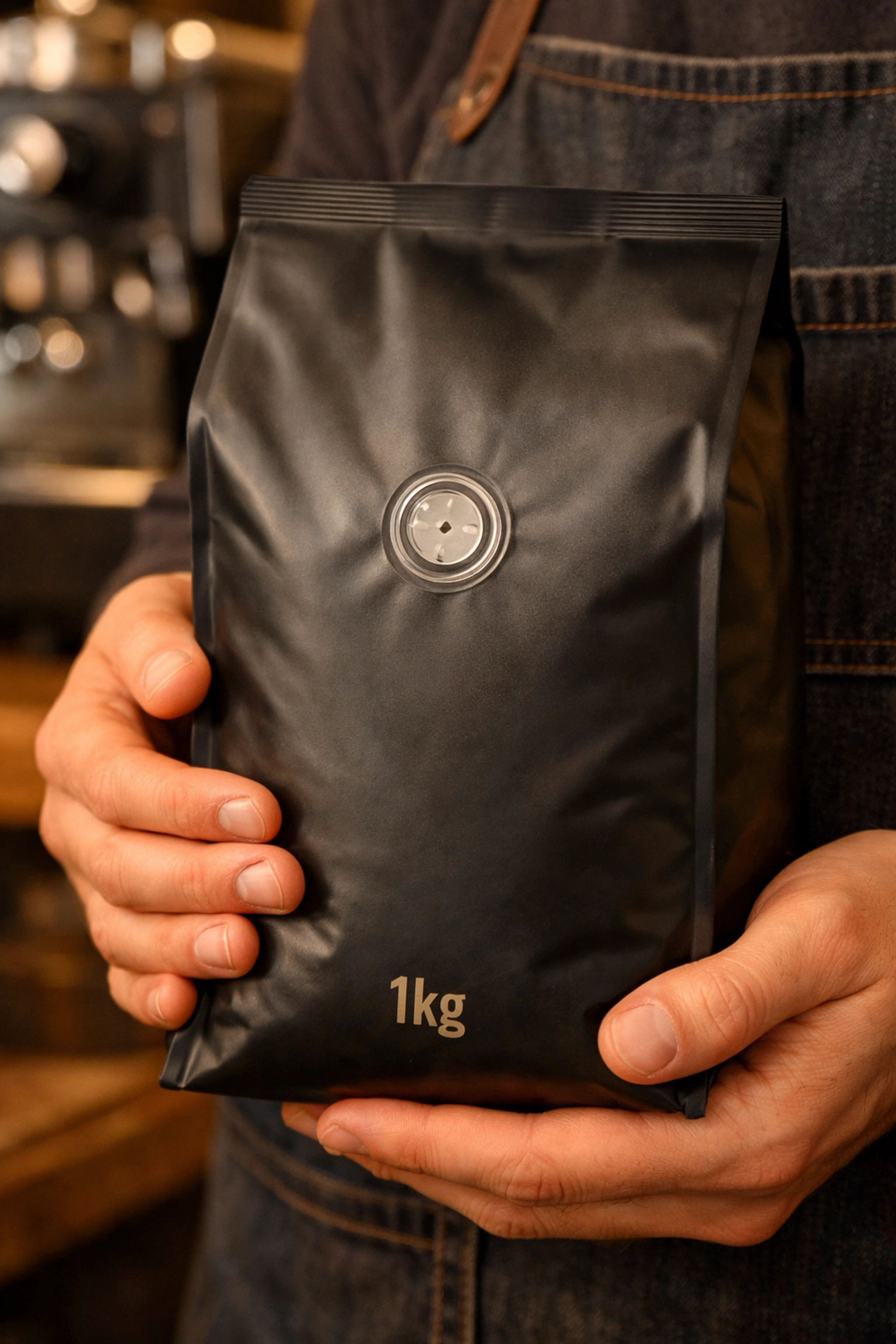
    Have you ever seen that little plastic circle with tiny holes on a coffee bag? That is a one-way degassing valve, and it is arguably the most important invention in coffee packaging history.

    Freshly roasted coffee releases a significant amount of Carbon Dioxide (CO2). If you seal fresh coffee in an airtight bag without a valve, the bag will eventually swell up and pop like a balloon. Not ideal for shipping! The valve allows the CO2 to escape while preventing oxygen from entering. This means we can bag the coffee immediately after roasting, locking in those aromatic oils before they have a chance to dissipate.

    The Barrier Layers

    Most wholesale specialty coffee bags use a combination of materials. Traditionally, this included a thin layer of aluminium foil because it’s a perfect barrier against light and oxygen. However, as we move toward more sustainable options, many roasters (ourselves included) are looking for high-barrier plastics that are easier to recycle or even compost.


    Choosing the Right Shape for Your Business

    The shape of the bag isn't just about aesthetics; it’s about functionality and how it sits on a shelf or in a warehouse.

    Bag Type Best For Why?
    Side Gusset Wholesale/Bulk Classic look, expands well, cost-effective for 1kg+ sizes.
    Stand-Up Pouch (Doypack) Retail/Home Use Sits upright on shelves, usually features a resealable zipper.
    Flat Bottom Premium Retail Combines the best of both; very stable and looks high-end.
    Quad Seal Large Shipments Four corner seals provide extra strength for heavy 1kg or 2kg bags.

    If you are building a coffee shop, you’ll likely be dealing with 1kg side-gusset bags for your espresso. They are the workhorses of the industry. They stack easily, and because they don't have a lot of "dead air" space inside, the beans stay fresher for longer.

    Premium coffee packaging styles including side-gusset and stand-up pouches on a minimalist retail shelf.


    The Sustainability Shift: Coffee Sacks with a Conscience

    Let's talk about the elephant in the room: waste. The coffee industry produces a lot of it. For a long time, the high-barrier bags required to keep coffee fresh were impossible to recycle because they were made of bonded layers of different materials (like plastic and foil).

    The good news? Things are changing. We’re now seeing the rise of:

    • Compostable Bags: Made from plant-based materials like cornstarch. These are great, but they often have a shorter "shelf life" barrier than traditional bags.
    • Recyclable Mono-Plastics: Bags made from a single type of plastic (like LDPE) that can be recycled in most soft-plastic streams.
    • Kraft Paper with Bio-Liners: Gives that natural look while still providing a decent barrier.

    At Limini Coffee, we believe that the journey from bean to bag should be as "green" as possible. When you’re choosing coffee for your business or home via Scott’s affiliate link, you’re supporting a roaster that actually cares about where those bags end up.


    Why Wholesale Packaging Matters for Quality Control

    If you run a cafe, you know that consistency is king. You’ve done the barista training, you’ve dialled in your espresso equipment, and you’re weighing every shot. But if your coffee has been sitting in a poorly sealed 1kg sack for two weeks, all that effort is wasted.

    Poorly made wholesale coffee sacks can develop micro-tears or have faulty valves. This leads to what we call "flat" coffee. The crema will be thin, and the vibrant acidity will have turned into a dull bitterness.

    When you receive a delivery of wholesale specialty coffee, give the bags a gentle squeeze (don't pop them!). You should smell a burst of aroma through the valve, and the bag should feel firm. That’s the sign of a bag doing its job.

    Close-up of a one-way degassing valve on a 1kg specialty coffee bag to ensure maximum freshness.

    Branding: The Bag is Your Storyteller

    Finally, let's talk about the "look." In a crowded market, your coffee sack is your silent salesperson. For us, the brand tone is warm and inviting. We want our bags to reflect the care we put into the roast.

    For a coffee shop owner, the branding on the bag tells your customers what you value. Is it minimalism? Is it transparency about the farmer? Is it bold and energetic? The surface area of a flat-bottom bag or a quad-seal bag offers plenty of space for artwork, roast dates, and flavour notes.

    We always recommend looking at your packaging as an extension of your cafe’s theatre. When a customer sees those bags lined up behind the counter, they should feel like they are about to experience something special.


    Wrapping It Up (Literally)

    So, why does your choice of coffee sacks matter? Because coffee is a living, breathing product. It’s a culmination of a year’s worth of work by a farmer, weeks of transport, and a precise roast by us here at the roastery. To put that precious cargo into a sub-par bag is just a real shame.

    Whether you're looking for the best wholesale specialty coffee for your new venture or just want to make sure your morning brew stays fresh, pay attention to the bag. Look for the valve, feel the thickness of the barrier, and consider the environmental impact.

    If you’re ready to taste the difference that proper sourcing and packaging make, head over to Limini Coffee and see what we’ve got roasting this week. We take the "bean to bag" journey very seriously so that all you have to do is enjoy the cup.

    And remember, if you ever have questions about which coffee is right for your equipment or how to get the most out of your beans, we're always here to help. That’s the beauty of coffee : )

  • Data Security in the Cloud: Protecting Guest Privacy in an AI World

    Data Security in the Cloud: Protecting Guest Privacy in an AI World

    Secure every byte. Protect every guest. Scale every property.

    In 2026, data is the most valuable asset in your hotel. It’s the engine behind personalized guest experiences, the fuel for your AI-driven revenue management, and the foundation of your loyalty programs. But as we lean deeper into travel tech innovation, the surface area for risk expands. Protecting guest privacy isn’t just a legal checkbox anymore: it’s the cornerstone of your brand’s reputation.

    We believe that great hospitality starts with trust. When a guest hands over their passport details or credit card info, they aren't just making a transaction; they’re trusting you with their digital identity. In a world where AI can process millions of data points in seconds, your security strategy needs to be faster, smarter, and more resilient than ever.

    The Cloud Advantage: Why Legacy is a Liability

    If you’re still running your property on a local server tucked away in a back office, you’re not just behind the times: you’re at risk. Legacy systems are silos that are difficult to patch, expensive to maintain, and easy to exploit. Moving to a cloud-based hotel PMS isn’t just about operational efficiency; it’s about moving your data into a fortress.

    Cloud-native platforms allow for real-time security updates, meaning you’re protected against the latest threats the moment they emerge. You don't have to wait for a technician to show up with a USB drive. Everything happens in the background, keeping your guest data safe while you focus on the lobby.

    We think the shift to the cloud is the single biggest security upgrade a hotel can make. Here is why:

    • Centralized data management eliminates "shadow IT" and fragmented guest profiles.
    • Automated software patches ensure you are always running the most secure version of your software.
    • Enterprise-grade encryption that would be too costly for an individual property to manage on-premise.

    Modern hotel lobby showing secure cloud-based PMS integration and advanced data protection.

    Zero Trust: The New Standard for Hotel Security

    The old way of thinking was like a castle: build a big wall (a firewall) and trust everyone inside. But in an interconnected world of APIs and remote work, that wall is full of holes. Today, we operate on the "Zero Trust" principle: never trust, always verify.

    Whether it’s a front desk agent in Berlin or a remote revenue manager in New York, every access request must be authenticated. This is where travel tech innovation really shines. By implementing a Zero Trust architecture, you ensure that even if one account is compromised, the rest of your system remains a vault.

    We believe security should be invisible but invincible. To achieve this, we focus on three core pillars:

    • Identity Management: Using multi-factor authentication (MFA) and hardware keys like YubiKeys to stop phishing in its tracks.
    • Granular Access: Staff only see the data they need to do their jobs: nothing more, nothing less.
    • Continuous Monitoring: AI-powered systems that flag suspicious login patterns before they become a breach.

    The AI Privacy Paradox

    AI is a bit of a double-edged sword. On one hand, it helps you predict guest preferences and automate tedious tasks. On the other hand, AI models need data to learn, and that data often contains sensitive guest information. The challenge for 2026 is harnessing the power of AI without compromising the privacy of the people staying under your roof.

    The key is data masking and anonymization. When you feed data into an AI model for trend analysis, the AI doesn’t need to know the guest’s name or phone number. It just needs the patterns. Modern hotel PMS solutions use sophisticated "privacy-by-design" architectures to strip away personally identifiable information (PII) before it ever touches a learning algorithm.

    We think your AI should be a silent partner, not a privacy risk.

    • Anonymize guest data before processing it for business intelligence.
    • Ensure all AI integrations happen within a secure, encrypted ecosystem.
    • Provide guests with clear, transparent opt-outs for data processing.

    Guest using a smartphone in a suite, illustrating secure data privacy and AI-powered guest services.

    Encryption: Protecting Data in Motion and at Rest

    In the world of cloud security, encryption is your last line of defense. If a hacker managed to intercept a data packet (the "in transit" phase) or break into a database (the "at rest" phase), encryption ensures that all they find is a useless jumble of characters.

    But in 2026, we’ve taken it a step further. We’re moving toward homomorphic encryption: a fancy way of saying we can perform calculations on data without ever decrypting it. This means your system can process a payment or verify an identity while the data stays locked in its encrypted state. It’s the ultimate way to keep guest privacy intact during complex operations.

    At Mews, we enforce TLS 1.2 or higher for every single API endpoint. We also use mutual TLS (mTLS) for internal service communication to prevent any "man-in-the-middle" attacks. It sounds technical (because it is), but the result is simple: your guest data stays your guest data.

    Compliance as a Competitive Edge

    Regulations like GDPR, CCPA, and the latest AI acts aren’t just hurdles to clear; they are frameworks for excellence. When you can prove to your guests: and your stakeholders: that you take data sovereignty seriously, you’re building a brand that lasts.

    Operating in multiple countries means navigating a minefield of different privacy laws. A modern hotel PMS handles this complexity for you, automatically adjusting data storage locations and consent forms based on the guest’s origin and the property’s location. This "compliance-as-a-service" model saves you hundreds of hours of legal work and gives you the peace of mind to scale across borders.

    See how a secure platform can transform your operations: https://referrals.mews.com/umqhyito

    Secure boutique hotel architecture at twilight, representing stable and compliant cloud security for hotels.

    The Human Factor: The Final Frontier

    You can have the best encryption in the world, but if a staff member writes their password on a sticky note, your security is compromised. We’ve seen that over 80% of security incidents involve some form of human error. That’s why security culture is just as important as security technology.

    Education is the antidote to risk. We recommend regular, bite-sized training sessions for your team to keep security top-of-mind. Teach them how to spot a sophisticated "AI-voice" phishing call or a suspicious email link. When your team is as sharp as your tech, your property becomes nearly impenetrable.

    Protecting guest privacy is a team sport. It requires the right tools, the right partners, and the right mindset.

    1. Schedule quarterly security audits to review who has access to what.
    2. Get your team trained on the latest social engineering tactics.
    3. Audit your third-party integrations to ensure they meet your high standards.

    Future-Proofing Your Property

    The threats of tomorrow won’t look like the threats of today. As quantum computing and more advanced AI emerge, the "good guys" and "bad guys" are in a constant arms race. By choosing an innovative, API-first platform, you’re ensuring that your hotel is always equipped with the latest defenses.

    We believe the future of hospitality is open, connected, and: above all: secure. You shouldn't have to choose between giving your guests a seamless digital journey and keeping their data private. With the right cloud-native strategy, you can do both.

    Protect your guests. Secure your business. Get back to the art of hospitality.

    Ready to see how the world's most innovative hotels stay secure in the cloud?
    Explore the Mews platform today.

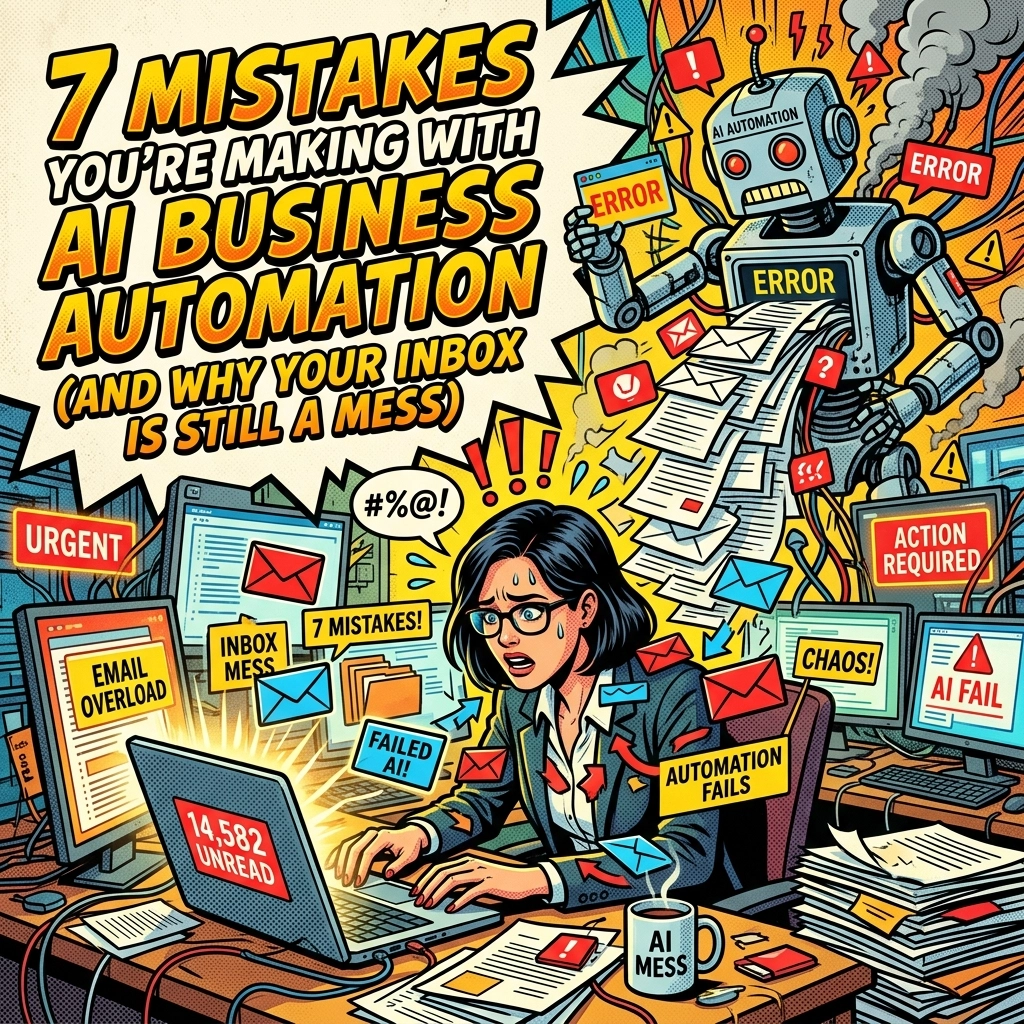
  • 7 Mistakes You’re Making with AI Business Automation (and Why Your Inbox is Still a Mess)

    7 Mistakes You’re Making with AI Business Automation (and Why Your Inbox is Still a Mess)

    ☕ 7:15 AM. You crack open your laptop.

    The screen glows with the light of a thousand unread messages. You were promised that ai business automation would fix this. You bought the subscriptions. You watched the YouTube tutorials. You even told your spouse that by March, you’d be working four-hour weeks.

    It’s April. You’re still here.

    The notifications are mocking you. Your "automated" lead gen system just sent a pitch to your own mother. Your CRM is a graveyard of half-baked data. And your "time-saving" tools are currently taking up four hours of your day just to keep them running.

    It’s not the AI’s fault. It’s how you’re using it.

    If you want to stop the bleeding and actually start scaling, you need to stop making these seven cardinal sins of automation.

    1. THE "SHINY OBJECT" TRAP: AUTOMATING WITHOUT A TARGET

    📱 8:30 AM. You’re scrolling through Twitter (or X, whatever) and see a "must-have" AI tool. You buy it. You spend two hours setting it up.

    By noon, you realize you don’t actually have a problem that tool solves.

    The biggest mistake you can make is implementing AI for the sake of AI. It’s like buying a $5,000 espresso machine when you actually just need a glass of water. You’re chasing the tech, not the result.

    Most small business owners try to automate their entire operation in one weekend. They want the "Iron Man" suit before they’ve even learned how to walk.

    The fix: Pick one, just one, pain point. Maybe it’s following up with leads. Maybe it’s sorting your support tickets. Solve that first. If you can’t measure the time you saved, you didn’t automate anything. You just added another bill to your credit card statement.

    2. FEEDING THE BEAST TRASH (GARBAGE IN, GARBAGE OUT)

    🔍 10:15 AM. You check your automated newsletter.

    It addressed your top client as "First_Name_Error."

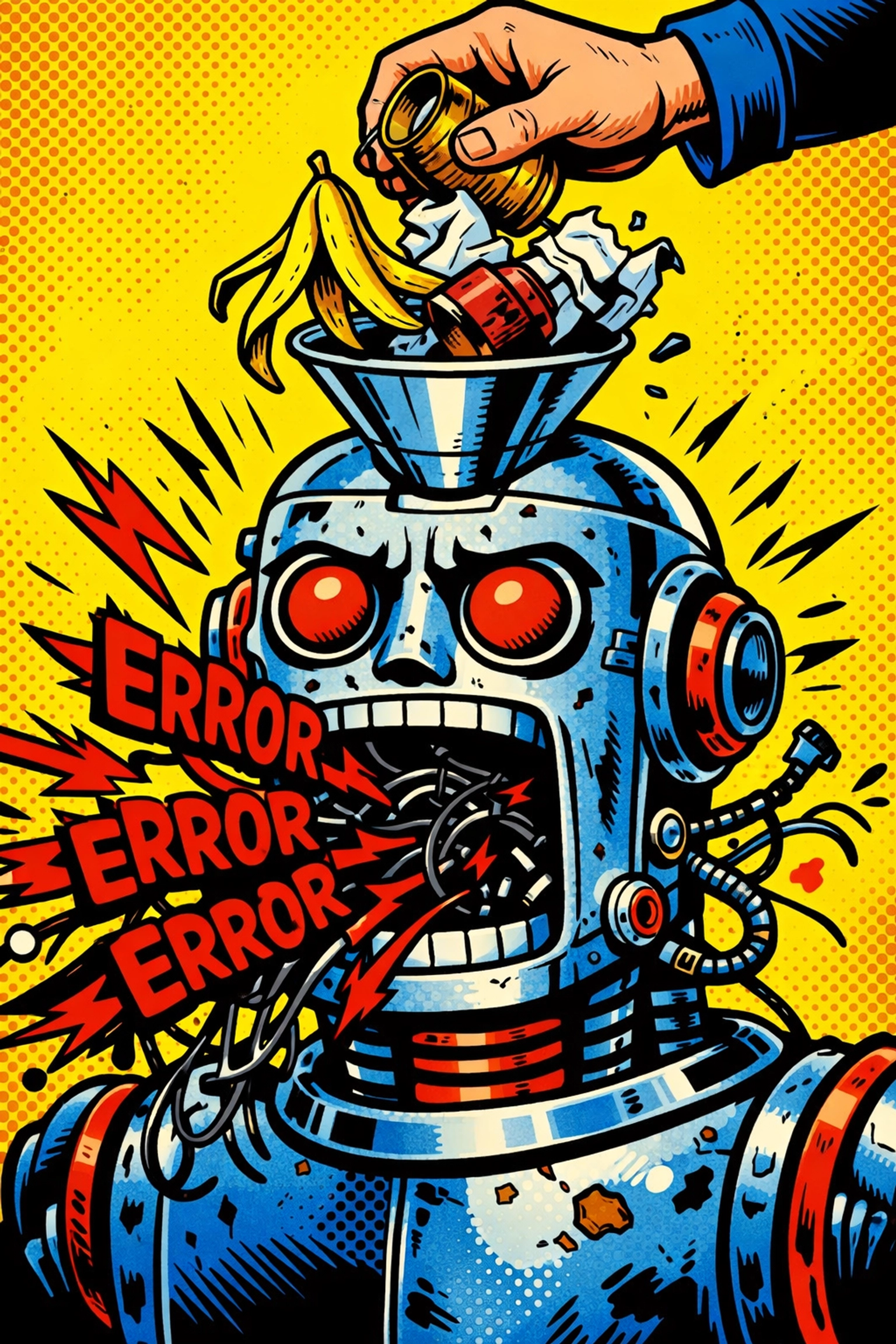
    AI is brilliant, but it’s also a mirror. If your data is messy, your automation will be a catastrophe. If your CRM has three different entries for the same person and half your email list is bounce-backs, no amount of business automation tools will save you.

    You’re asking a high-performance engine to run on swamp water.

    Comic pop art of a robot fed trash, illustrating poor data in business automation tools.

    Before you flip the switch on any AI system, you have to audit your data. Clean the duplicates. Standardize the formatting. If you don't trust your data, you can't trust your automation.

    3. THE DIY DELUSION: THINKING YOU’RE A DEVELOPER

    🤝 11:45 AM. You’ve spent the last three hours trying to get a webhook to talk to a spreadsheet.

    You’re a CEO. Why are you doing this?

    There’s a weird myth that because AI is "easy," you should build everything yourself. But "easy" is relative. Most business owners end up with a "Frankenstein" system, a dozen different tools held together by digital duct tape and hope.

    When it breaks (and it will), you have no idea how to fix it.

    This is where most people get stuck. They refuse to get expert help because they think they can prompt their way out of a technical integration.

    Stop playing developer. Focus on your zone of genius. If you want a system that actually works without you babysitting it, you need a partner who knows the landscape. That’s exactly why we do what we do at https://marblism.link/scott-bowen. We build the systems so you can actually run the business.

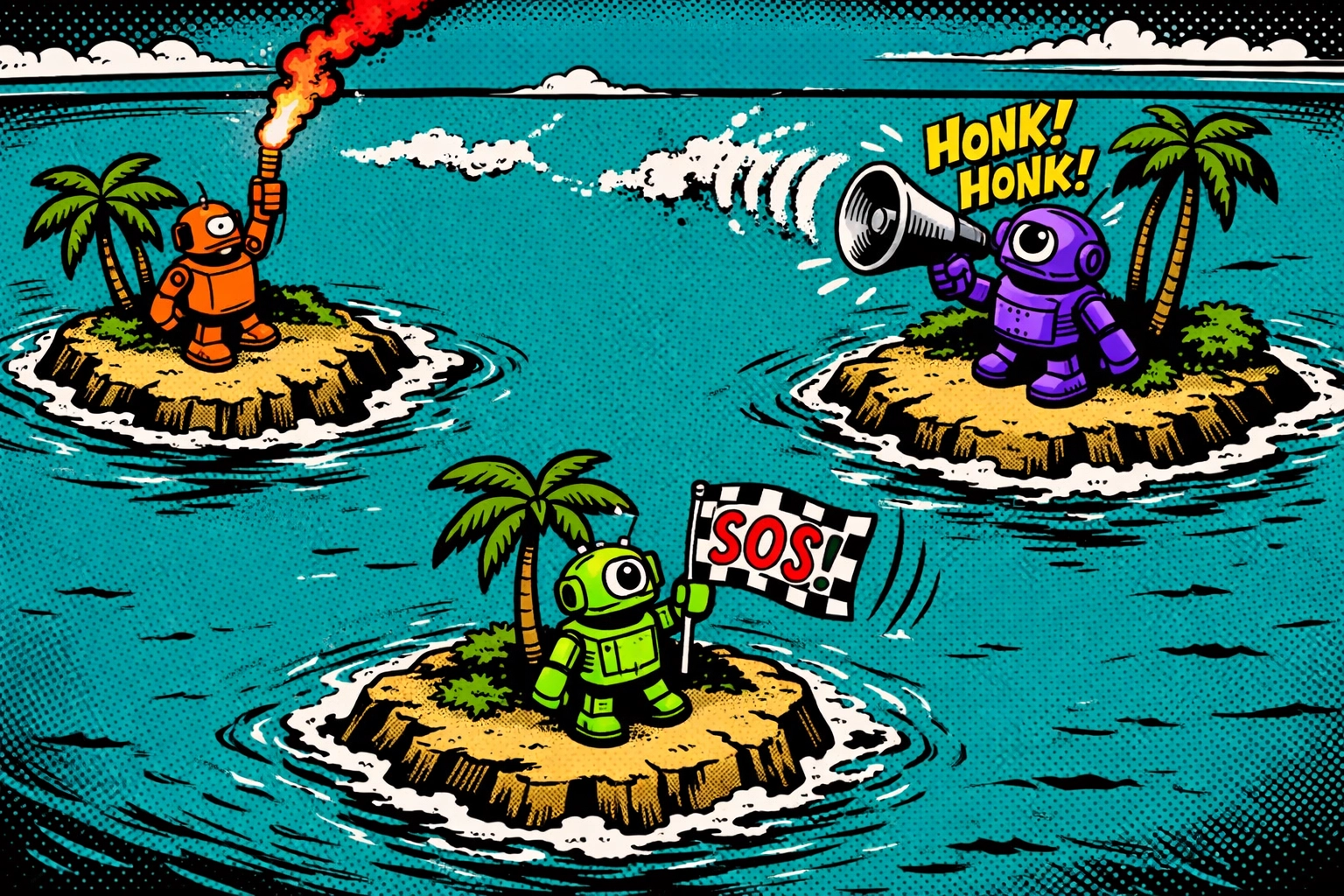
    4. THE ISLAND PROBLEM: ISOLATED AUTOMATION

    ☎️ 1:30 PM. A lead books a call through your AI chatbot.

    Great, right? Except the chatbot doesn't talk to your calendar. And the calendar doesn't talk to your CRM. And your CRM doesn't notify your sales team.

    Now you’re manually copying and pasting info between three different tabs.

    Automation that doesn't integrate with your existing workflow isn't automation, it's just a new chore. If your AI tools are "islands," they’re creating more work, not less.

    The fix: Every new tool you bring in must play nice with the others. If it doesn't have an API or a native integration with your core stack, it’s probably not worth your time.

    Robots on separate islands showing disconnected AI business automation tools.

    5. THE "ROBOT VOICE" SYNDROME: OVER-AUTOMATING THE HUMAN TOUCH

    🌙 3:00 PM. You get a reply from a prospect.

    "Is this a bot? This sounds like a bot. Please stop emailing me."

    Ouch.

    AI is fantastic at processing data, but it’s still learning how to be a human. If you automate your entire customer relationship, you lose the one thing your competitors can't copy: You.

    The mistake isn't using AI; it's removing yourself entirely. You should use AI to enhance your judgment, not replace it. Let the AI do the heavy lifting, researching, drafting, sorting, but you stay the final gatekeeper.

    If your emails sound like they were written by a toaster, your conversion rates will reflect that. Keep the "soul" in your business.

    6. IGNORING THE "FRONT DOOR": SECURITY AND PRIVACY

    🔒 4:20 PM. You realize you just pasted sensitive client data into a public AI model to "summarize" it.

    Your stomach drops.

    In the rush to be efficient, many business owners treat security as an afterthought. They use unverified "free" tools that store data in questionable places. They give AI systems full access to their sensitive accounts without checking the permissions.

    Ai business automation requires trust. If you compromise your clients' privacy for the sake of saving five minutes, you’re risking your entire reputation.

    Always check the privacy settings. Use enterprise-grade tools. And for heaven’s sake, stop putting your passwords into prompts.

    7. THE "INSTANT WIN" FALLACY (NO MEASUREMENT)

    📈 5:45 PM. You’re looking at your bank account.

    You’ve been "automating" for a month, but your revenue hasn't moved. You feel like a failure.

    Here’s the truth: AI is a medium-to-long-term play. It takes time to calibrate, time to gather data, and time to see the ROI. Most people quit right before the breakthrough because they expected a "magic button" that prints money on Day 1.

    You need to track specific metrics.

    • How many hours did you save this week?
    • Did your response time go down?
    • Did your lead-to-meeting ratio go up?

    Without metrics, you’re just guessing. And guessing is a terrible way to run a company.

    Entrepreneur watering a mechanical plant to show growth from AI business automation.

    STOP JUGGLING. START SCALING.

    The chaos is optional.

    You don't need more tools. You need a better strategy. The reason your inbox is still a mess isn't because the technology failed, it's because the system wasn't built for your specific reality.

    You started your business to be free, not to be a slave to a bunch of half-functional software.

    It’s time to stop the DIY madness. Imagine waking up at 7:15 AM, opening your laptop, and seeing that your AI has already sorted the junk, pre-drafted your replies, and booked three high-value meetings, all while you were sleeping.

    No errors. No "robot voice." No stress.

    That’s what happens when you do it right.

    If you're ready to stop making these mistakes and actually put your business on autopilot, we should talk. Check out how we can streamline your entire operation at https://marblism.link/scott-bowen.

    Scaling shouldn't be this hard.

    But it’s quiet, organized, when you have the right team behind you.

    FREQUENTLY ASKED QUESTIONS

    Is AI business automation expensive for small businesses?
    No. In fact, doing things manually is much more expensive when you factor in your hourly rate and the cost of missed opportunities. There are tools for every budget.

    Can I automate my customer service without sounding like a robot?
    Yes. By using custom-trained models that understand your brand voice and knowing when to hand the conversation off to a human.

    Will AI replace my employees?
    It won't replace your employees, but employees who use AI will replace those who don't. Think of it as giving your team superpowers.

    How long does it take to see results?
    You’ll see time savings almost immediately (within the first 2 weeks), but the real revenue impact usually scales over 30 to 90 days as the system gathers data.

    Do I need to know how to code?
    Not if you work with the right partners. Focus on your business; let the experts handle the technical heavy lifting.

    The future of your business is waiting. Don't keep it on hold.

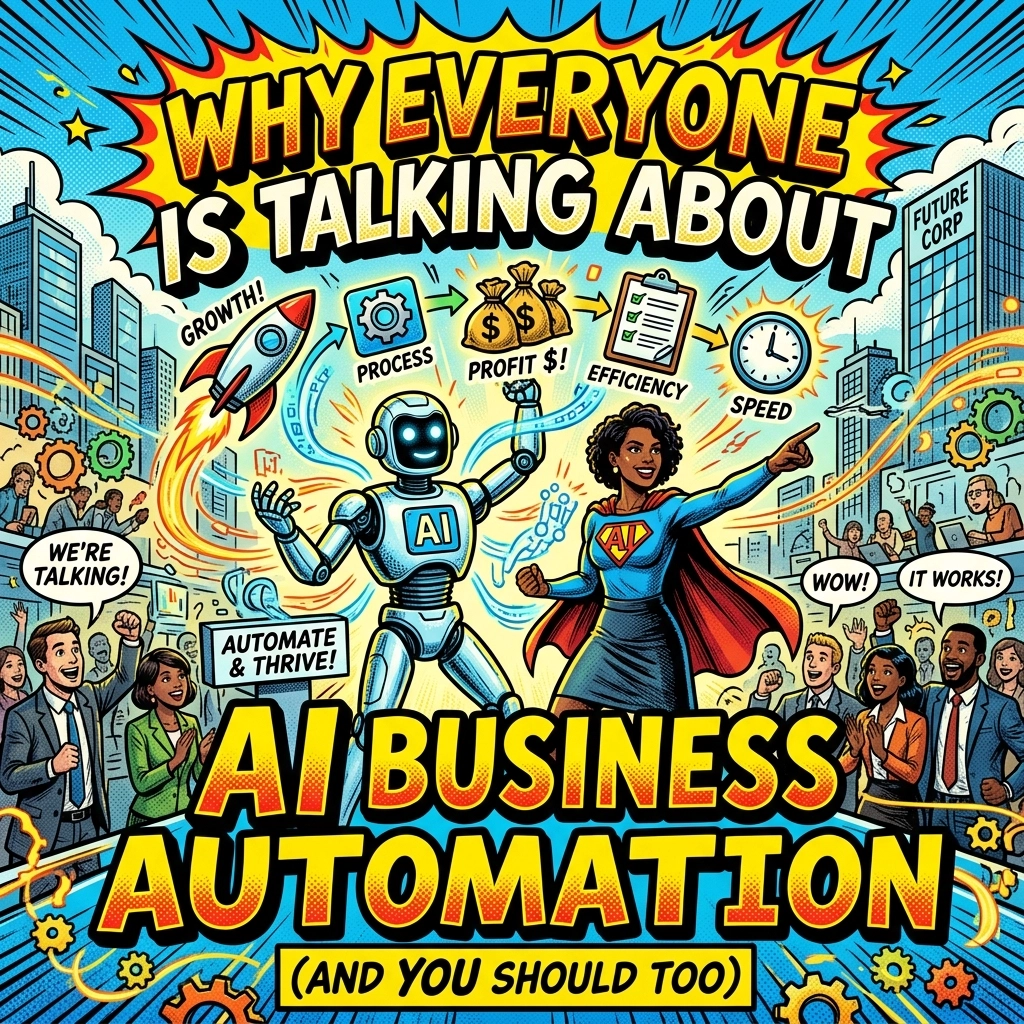
  • Why Everyone Is Talking About AI Business Automation (And You Should Too)

    Why Everyone Is Talking About AI Business Automation (And You Should Too)

    You wake up. Your phone hasn’t even buzzed yet.

    Usually, by 7:00 AM, your lock screen is a graveyard of "Please see attached invoice" and "Where is that report?" notifications. But today? It’s quiet. Not the "nobody likes my business" kind of quiet. The "everything is handled" kind of quiet.

    That’s because it’s 2026. The era of "trying out AI" is over. We’ve moved past the phase where people were just playing with chatbots to see if they could write a poem about a toaster. Now, businesses are using AI business automation as their actual foundation.

    If you’re still clicking "copy" and "paste" between three different spreadsheets… you’re leaving your sanity on the table. It’s time to talk about why everyone, from the bakery down the street to the SaaS giant, is obsessed with this.

    AUTOMATE ADMIN TASKS: HOW TO SAVE 10+ HOURS EVERY WEEK

    ☕ 7:15 AM. You’re holding a coffee that’s actually hot. Usually, you’d be three sips in before getting distracted by an urgent email about a missing tracking number.

    But your business automation tools already caught it. While you were sleeping, the system flagged the delay, emailed the customer with a personalized apology, and updated your internal dashboard.

    You didn't do a thing.

    The Death of the "Busywork" 100-Yard Dash

    You know the feeling. You spend your Monday mornings moving data from your CRM to your accounting software. Then you move it to your email list. Then you move it to a task manager. It’s not "running a business." It’s digital manual labor.

    In 2026, the best business automation tools don’t just move data; they understand it.

    • Invoice processing? Handled.
    • Customer onboarding? Automated.
    • Appointment scheduling? Synchronized.

    Relaxed business owner using automation tools to handle admin tasks and filing.

    When you eliminate these friction points, you don't just save time. You save your brain. You stop being a glorified data entry clerk and start being the CEO again. Imagine what you could do with an extra 10 hours every single week. That’s a full work day and a half. That’s a hobby. That’s a nap. That's a strategic meeting that actually results in growth.

    If you want to see how this looks in practice, check out how we're doing it here.

    THE BEST AI ASSISTANT FOR SMALL BUSINESS IN 2026

    📱 11:30 AM. You’re in a meeting. Your phone vibrates once.

    It’s a notification from your AI assistant. "New lead from the website. I’ve checked their LinkedIn, categorized them as a 'High Priority,' and sent them your calendar for a discovery call. They’ve already booked for Thursday."

    You just send a thumbs-up.

    Not Just a Chatbot. A Team Member.

    The conversation has shifted. Last year, people wanted speed. This year, they want trust. You don’t need an AI that just talks fast; you need an ai assistant for small business that acts with precision.

    In 2026, the "best" assistant isn't a standalone tab in your browser. It’s embedded. It’s living inside your CRM, your Slack, and your email. It knows who touched which document and why. It handles exceptions without breaking the whole workflow.

    Why this matters for you:

    • Reliability: No more "hallucinations." These tools are grounded in your actual business data.
    • Context: It remembers that "Client A" hates Friday meetings but loves detailed reports.
    • Integration: It bridges the gap between your fragmented apps.

    Stop trying to manage five different "AI tools" that don't talk to each other. You need one brain that oversees the body of your business. It’s about consolidation. It’s about peace of mind.

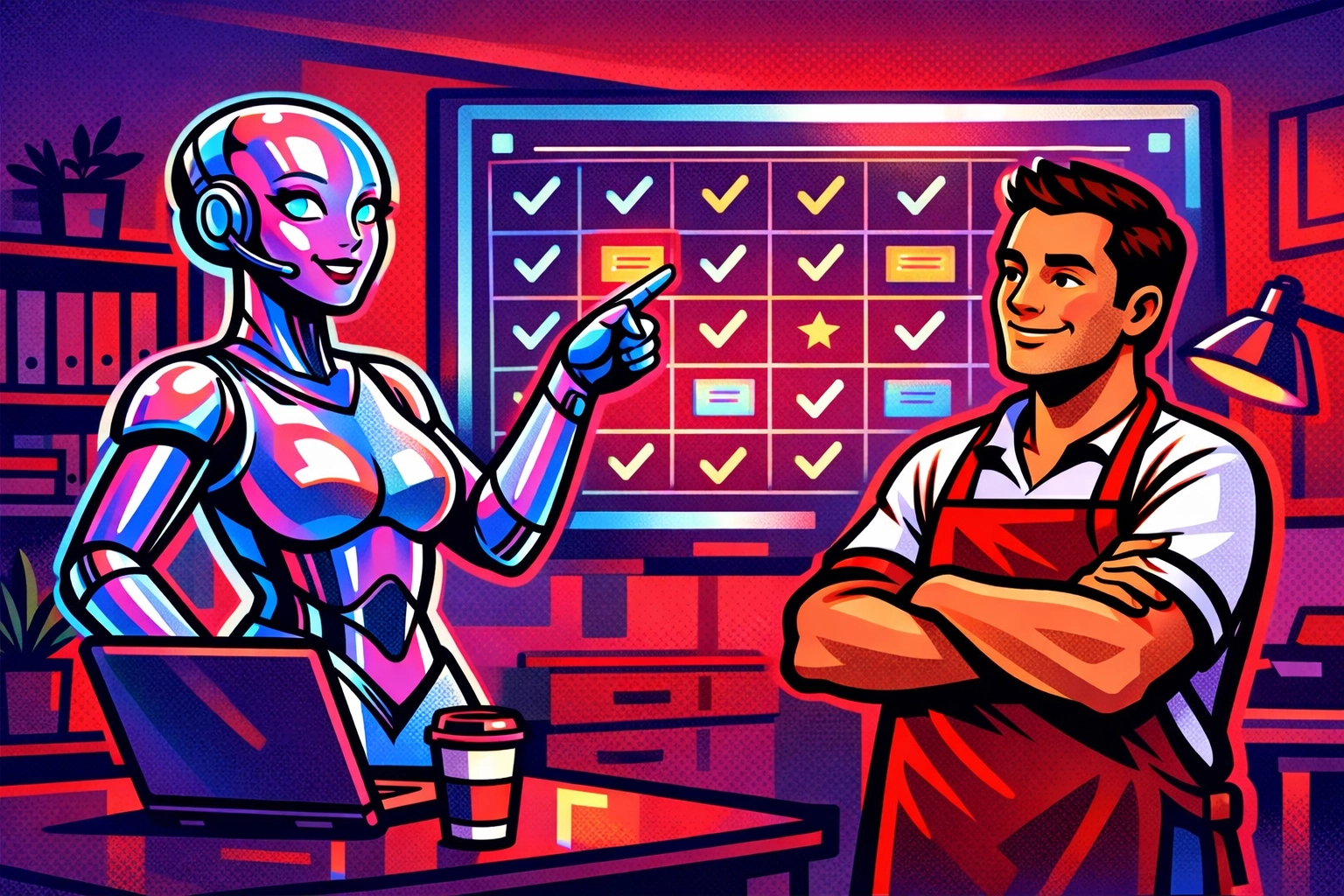
    AI assistant for small business managing a digital calendar for an organized owner.

    AI CONTENT GENERATOR FOR SMALL BUSINESS: YOUR SECRET MARKETING WEAPON

    🔍 3:45 PM. The dreaded "content slump" hits.

    You know you need to post on LinkedIn. You know you need to send that weekly newsletter. You know your blog hasn't been updated since the last solar eclipse. But the blinking cursor is mocking you.

    Enter the ai content generator for small business.

    Marketing Without the Migraine

    In 2026, content generation isn't about "spinning" old articles. It’s about hyper-personalization. It’s about taking your specific business insights and turning them into 10 different formats in 60 seconds.

    • The Secret: You provide the "soul" (your unique expertise), and the AI provides the "scale."
    • The Result: Emails that people actually open because they feel like they were written by a human who cares.
    • The Speed: You go from "I should write something" to "Everything is scheduled for the next two weeks" before your 4:00 PM call.

    Marketing used to be the first thing to fall off the plate when you got busy. Now? It’s the one thing that keeps running while you’re buried in operations. It’s your silent growth engine.

    WHY THE SHIFT MATTERS RIGHT NOW

    The divide is getting wider. On one side, you have businesses that are "too busy" to automate. They’re drowning in tabs, losing leads, and burning out their staff.

    On the other side? Companies that have embraced the shift to intelligent automation. They aren’t just faster, they’re more profitable because their overhead is lower and their customer experience is better.

    The tools are no longer expensive experiments for Fortune 500 companies. They are the standard infrastructure for the smart small business owner. We’re moving away from fragmented tech stacks and toward integrated environments where AI just… works.

    🤝 What our users are saying:

    "I used to spend my Sundays catching up on admin. Now, Marblism handles the boring stuff, and I actually have a weekend." , Sarah, Boutique Agency Owner

    "The transparency is what changed it for me. I know exactly why the AI made a decision, and I can step in if I need to. But honestly? I rarely need to." , David, E-commerce Founder

    THE 2026 REALITY CHECK

    Scaling shouldn't be this hard. But here we are.

    If you feel like you're running on a treadmill that's slightly too fast, it’s not because you’re bad at your job. It’s because you’re doing jobs that shouldn't belong to a human anymore.

    • Stop juggling.
    • Stop copying and pasting.
    • Stop staring at blank pages.

    The future of your business isn't about working more hours. It's about letting the machines handle the 1s and 0s so you can handle the people and the vision.

    AI content generator for small business creating social media posts and marketing ideas.

    FREQUENTLY ASKED QUESTIONS

    Is it hard to set up?
    No. In 2026, most tools are "plug and play." You connect your existing apps, and the AI starts learning your patterns immediately.

    Is it expensive?
    Think of it this way: How much is 10 hours of your time worth? If your time is worth $50/hour, you're losing $500 a week by not automating. The tools pay for themselves in days.

    Will I lose the "human touch"?
    Quite the opposite. By automating the boring stuff, you have more energy to actually talk to your customers and solve their real problems.

    Can I trust the decisions it makes?
    Yes. Modern systems prioritize transparency. You can see the "why" behind every action and set guardrails that fit your specific brand voice and rules.

    YOUR NEXT MOVE

    You’ve seen the "before." The chaos, the tabs, the missed dinners.
    You’ve seen the "after." The quiet mornings, the automated leads, the scaled marketing.

    The choice is yours. You can keep doing it the hard way, or you can join the ranks of businesses that are actually built for 2026.

    If you're ready to see how this actually works for your specific setup, take a look at what we’ve built. It’s not just a tool; it’s your new competitive advantage.

    Click here to see how Marblism is changing the game for affiliates and small businesses alike.

    Scaling shouldn't be this easy. But here we are.

    THE FUTURE IS AUTOMATED. ARE YOU?

  • 7 Mistakes You’re Making with Wholesale Specialty Coffee (and How to Fix Them)

    7 Mistakes You’re Making with Wholesale Specialty Coffee (and How to Fix Them)

    So, you’ve decided to take the plunge and open a coffee shop, or perhaps you’re looking to level up your current offering. It’s an exciting time! You’ve probably spent hours browsing through beautiful Instagram feeds of latte art and sleek espresso machines. But here is the reality: the transition from "coffee lover" to "coffee business owner" is a steep learning curve.

    When it comes to wholesale specialty coffee, it isn't just about buying a bag of beans and putting it in a hopper. It’s a partnership. We’ve seen many talented entrepreneurs stumble because they treat their coffee supply like they treat their milk or sugar, as a commodity.

    At Limini Coffee, we believe that specialty coffee should be accessible, transparent, and, above all, successful for your business. To help you navigate these murky waters, we’ve put together the seven most common mistakes we see in the wholesale world and, more importantly, how you can fix them.


    1. Choosing Your Roaster Based Only on Price

    We get it. Running a business is expensive. When you see one supplier offering a "specialty" blend at £12/kg and another at £18/kg, the temptation to save that £6 is massive. But here is the catch: cheap coffee often ends up being the most expensive mistake you’ll ever make.

    Why is this? Usually, "cheap" specialty coffee means the roaster is cutting corners. This might mean inconsistent screen sizes (which leads to uneven extraction), a higher percentage of defects, or older green beans that have lost their vibrance. If your coffee is inconsistent, your baristas will spend more time "dialing in" and wasting coffee, and your customers will notice the dip in quality.

    The Fix: Look at the total value, not just the price per kilo. Does the roaster offer support? Is the quality consistent week after week? Remember, if you lose just three or four regular customers because the coffee tasted "off" one Tuesday morning, that £6 saving has already evaporated. If you’re looking for a partner that values quality as much as you do, check out what we offer at Limini Coffee.

    2. Ignoring the "Box Dropper" Problem

    A "box dropper" is a wholesaler who sends you the coffee and then disappears until the next invoice is due. This is a huge mistake for new startups. Specialty coffee is a living, breathing product. It changes with the weather, the humidity, and the age of the roast.

    If you don’t have a supplier who provides ongoing support, you’re on your own when the shots start pulling at 15 seconds or the milk won’t stretch properly. You need a partner, not just a vendor.

    The Fix: Ask potential suppliers about their support structure. Do they offer barista training? Do they have technicians who can help if your machine starts acting up? At Limini, we pride ourselves on being more than just roasters; we are your back-office coffee experts.

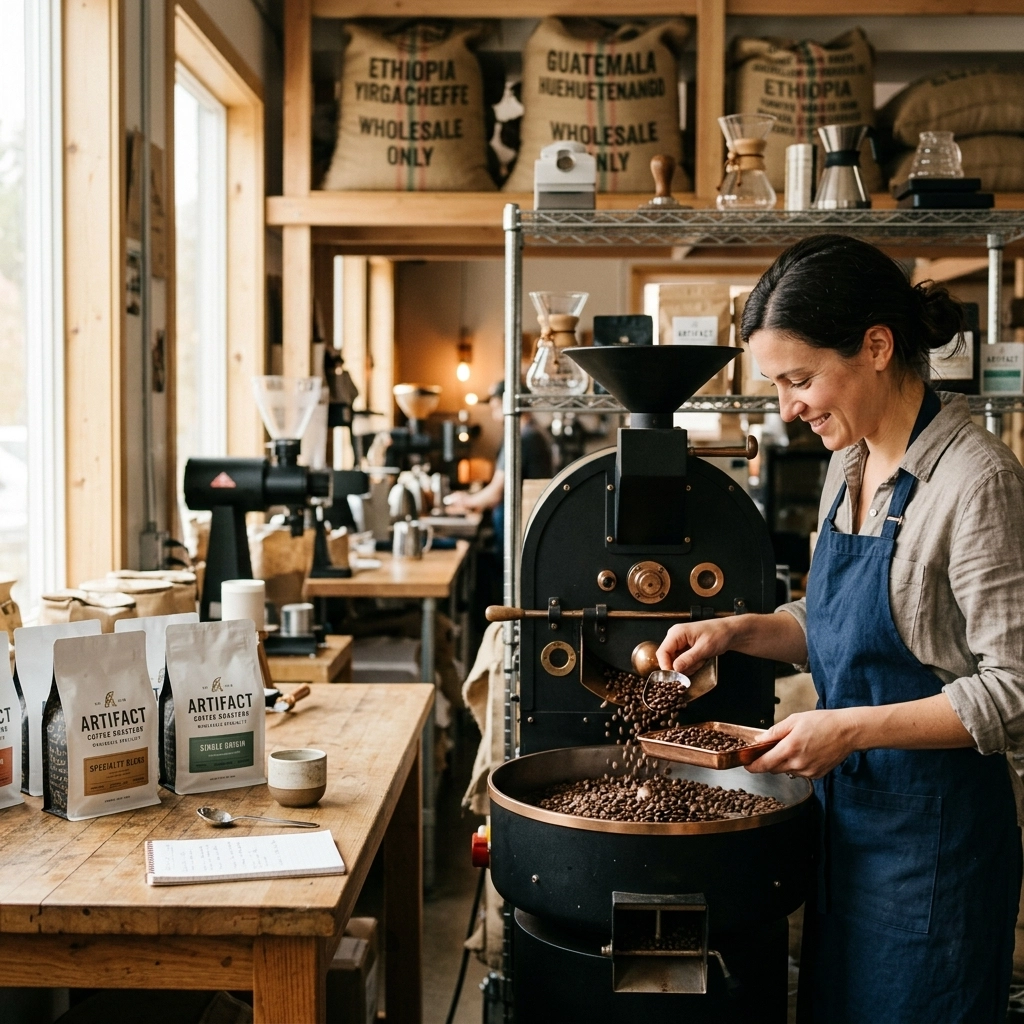
    Barista trainer and café owner reviewing an espresso shot, demonstrating wholesale coffee support.

    3. Underestimating the Importance of Barista Training

    You can buy the best, most expensive beans in the world, but if your team doesn’t know how to extract them, it’s money down the drain. We often see café owners invest £10,000 in a beautiful espresso machine and then zero in staff training.

    Specialty coffee requires a specific skill set. Understanding the "dialing-in" process, the importance of tamping, and the science of milk chemistry is non-negotiable. Without this, your "specialty" coffee will taste mediocre at best.

    The Fix: Make training part of your business DNA. Don’t just do a one-off session when you open. As staff rotate, ensure new hires are properly inducted. We offer comprehensive training overview sessions that cover everything from basic espresso to advanced latte art. It’s worth the investment, trust us.


    4. Mismanaging Freshness and Stock Levels

    There is a common misconception that "the fresher the better" always applies. While you definitely don't want old, stale coffee, using beans that were roasted yesterday can also be a mistake. Freshly roasted coffee contains a lot of CO2, which can cause "blooming" during espresso extraction, leading to inconsistent shots and a sour taste.

    On the flip side, we see shops ordering three months' worth of coffee at once to save on shipping. By month three, that specialty vibrance is gone.

    The Fix: Aim for the "sweet spot." Most specialty coffees perform best between 7 to 21 days post-roast. Work with your wholesale coffee roaster to set up a weekly or bi-weekly ordering schedule. This ensures you always have coffee in that prime window.

    Bags of fresh specialty coffee beans on a shelf, illustrating organized wholesale stock management.

    5. Buying the Wrong Equipment for Your Volume

    We love a beautiful lever machine as much as the next person, but if you’re a high-volume shop in a train station, a manual lever machine might be your downfall. Conversely, buying a cheap, domestic-grade grinder for a busy café will lead to overheating, inconsistent grinds, and eventually, a broken motor.

    Equipment needs to match your business model. Are you focusing on theatre and aesthetics, or pure speed and volume?

    The Fix: Consult with your roaster before buying equipment. We often help clients navigate choosing espresso equipment to ensure they get something reliable and fit for purpose. Whether it's a La Spaziale or a high-tech automatic, the right machine makes all the difference.


    6. Neglecting Quality Control (QC) Systems

    In a busy café, it’s easy to let standards slide. You’re in the middle of a morning rush, the line is out the door, and the shots are running a little fast. A common mistake is saying, "It's fine, they’re putting milk in it anyway."

    This mindset kills specialty coffee businesses. Consistency is what brings people back. If the coffee is amazing on Monday but bitter on Thursday, you won't build a loyal following.

    The Fix: Implement simple, daily QC checks. This means tasting the espresso (yes, even at 7 AM), checking the brew temperature (we usually recommend 88°C to 95°C depending on the roast), and using a coffee brewing calculator to ensure your ratios are spot on. If you aren't measuring, you aren't managing.

    Top-down view of a coffee quality control station with a scale and thermometer for consistent brewing.

    7. Failing to Tell the "Story"

    Specialty coffee is a premium product. Your customers are paying more for it than they would at a fast-food chain, so they want to know why. If you’re serving a beautiful single-origin from Ethiopia but your staff can't tell the customer anything about it, you're missing a massive opportunity to build brand value.

    A mistake many make is treating specialty coffee as a "secret menu" item. If you don't shout about your sourcing and your partnership with a quality roaster, you're just another coffee shop.

    The Fix: Use your marketing materials. Put up cards explaining the origin, the processing method, and the tasting notes. Let people know you care about sourcing. When customers understand the effort that goes into their cup: from the farm to the roast: they become much more loyal.


    Wrapping It Up

    Wholesale specialty coffee is a journey, and honestly, you're going to make a few mistakes along the way. That's just part of the game. However, by avoiding these seven big ones, you’ll be miles ahead of the competition.

    It’s all about the details. From the way you tamp the puck to the way you choose your coffee cups, every decision contributes to the final experience.

    If you’re feeling a bit overwhelmed, don’t worry. We’ve helped hundreds of businesses find their feet. Whether you need a reliable wholesale partner, some expert training, or just a chat about which machine is right for you, we’re here to help.

    Ready to take your coffee game to the next level? Head over to Limini Coffee and let’s start a conversation. We’d love to be part of your story. 🙂