Category: Category 1

Use this description to tell users what kind of blog posts they can find in this category.

  • Touchless Luxury: The High-Tech Future of Boutique Hotels

    Touchless Luxury: The High-Tech Future of Boutique Hotels

    Arrive. Relax. Experience.

    The definition of luxury is shifting. For decades, "high-end" meant a bellhop at every door and a concierge behind a massive mahogany desk. It meant "high touch" in the most literal sense. But today, the most sophisticated travelers define luxury differently. They define it as time. They define it as autonomy. They define it as a stay completely devoid of friction.

    We are entering the era of Touchless Luxury.

    In 2026, the world’s most exclusive boutique properties are trading traditional reception desks for invisible, tech-driven workflows. They are using biometrics, voice-controlled environments, and predictive AI to create a guest journey that feels like magic. It’s not about removing the human element, it’s about removing the hurdles.

    You can manage your entire property, automate the mundane, and delight your guests, all from one innovative platform.

    The end of the arrival queue

    We believe the first ten minutes of a stay dictate the next three days. If a guest spends those minutes standing in a lobby filling out a paper form, the luxury experience has already failed.

    Mobile check-in is no longer a "nice-to-have" feature; it is the industry standard. Over 63% of hotels have already transitioned to digital check-in and mobile keys. For boutique hotels, this technology does more than just save time. It changes the atmosphere of the lobby from a transactional space to a social one.

    • Digital Keys: Issued instantly to the guest’s smartphone upon room readiness.
    • Pre-arrival Identity Verification: Secure, remote document scanning that happens before the guest even leaves the airport.
    • Automated Room Assignment: Real-time synchronization with your property management system to ensure every guest gets exactly what they booked.

    "Our guests don't want to see a computer screen when they walk in," says one London boutique hotelier. "They want to see a glass of champagne and a smile. Mews allowed us to kill the front desk entirely."
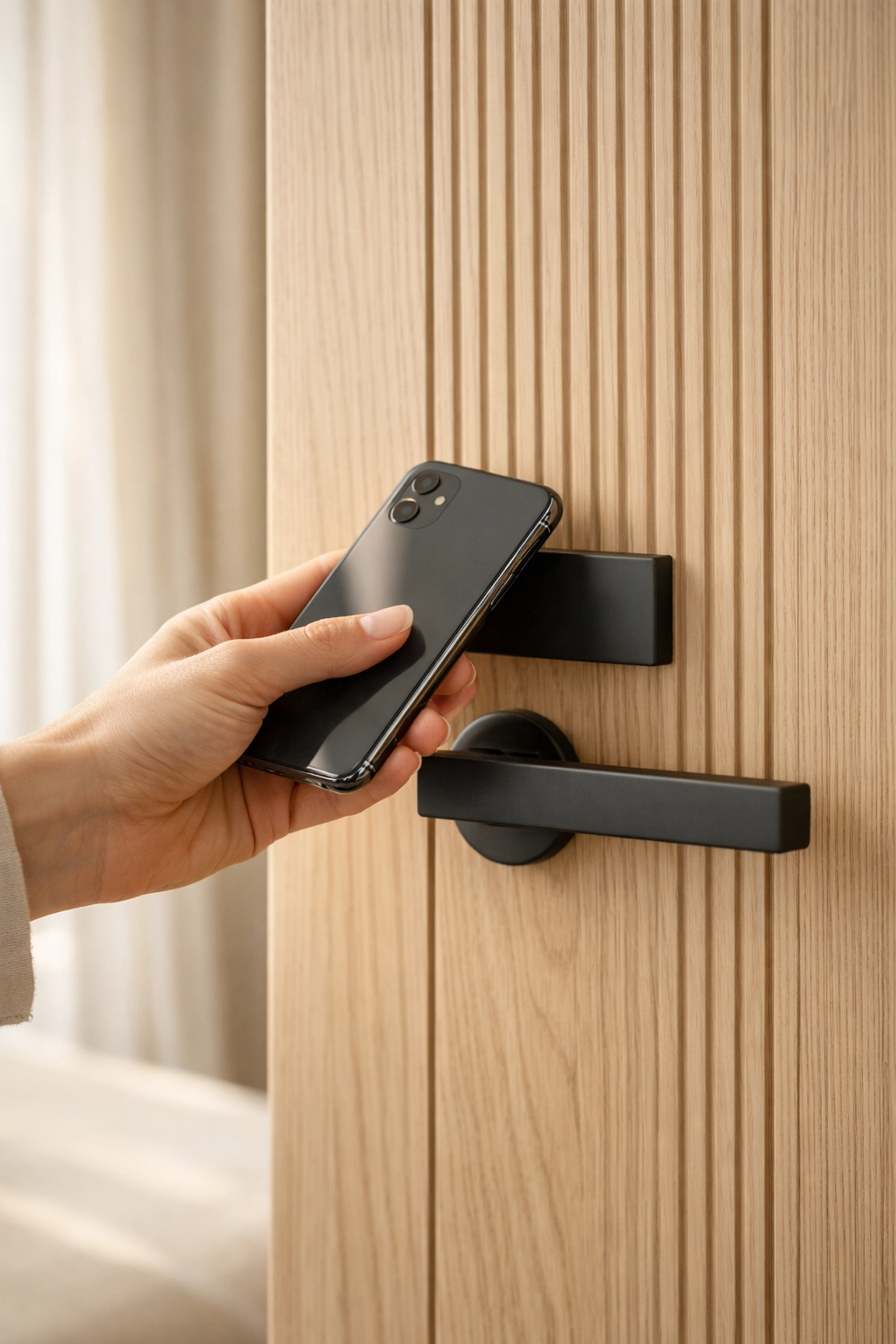
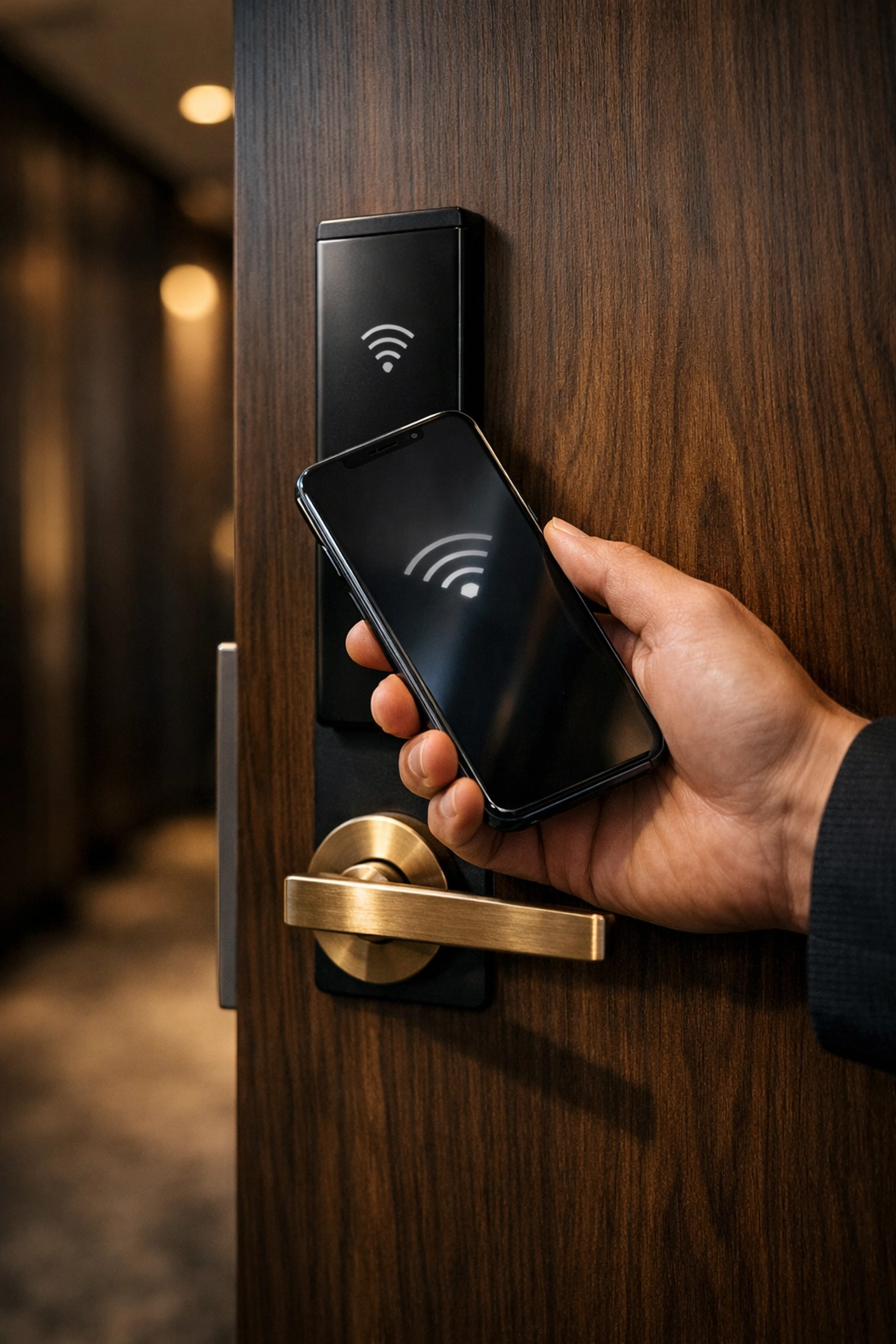
    A guest uses a smartphone as a digital mobile key to unlock a modern boutique hotel room door.

    Biometrics: The ultimate VIP access

    If a mobile key is convenient, biometric access is invisible. We are seeing a surge in high-end properties implementing facial recognition and fingerprint entry for both guest rooms and exclusive amenities like spas or private lounges.

    Biometrics represent the pinnacle of touchless luxury. There is no card to lose. There is no phone to unlock. The guest is the key.

    1. Facial Recognition: Discreet sensors at the door identify the guest and unlock the room in milliseconds.
    2. Personalized Greeting: The system triggers a "Welcome" sequence, the lights dim to the guest's preference, the temperature adjusts, and their favorite playlist begins to play.
    3. Secure Charging: Guests can authorize payments at the bar or restaurant with a simple scan, eliminating the need to carry a wallet or sign a paper check.

    This technology isn't just about security; it’s about recognition. It makes the guest feel known without the need for a staff member to memorize a face. It’s high-tech, high-humanity.

    The voice-controlled sanctuary

    The room of the future is an ecosystem that listens. We think the guest experience should be as intuitive as being in your own home, only better. Voice-controlled rooms are transforming the in-stay experience from a manual process into a conversational one.

    Instead of hunting for a light switch or a thermostat, guests simply ask for what they need. "Set the mood for dinner," or "Wake me up at 7 AM with the sound of rain." These commands control everything from circadian lighting systems to smart curtains and air purification.

    • Wellness Integration: Circadian lighting that aligns with the guest's sleep cycle to reduce jet lag.
    • Instant Requests: Voice-activated housekeeping requests for extra towels or a late-night espresso.
    • Predictive Maintenance: IoT-connected rooms that alert staff to a failing lightbulb or a slow drain before the guest even notices.

    Modern boutique hotel suite with integrated smart room controls and elegant, minimalist interior design.

    Hyper-personalization through Agentic AI

    The real power of touchless technology isn't the hardware, it's the data. When every interaction is digital, every interaction is a data point. Innovative boutique hotels are moving beyond basic "Welcome back" messages to true predictive hospitality.

    By 2026, Agentic AI will be the engine behind revenue management and guest relations. It doesn't just react; it anticipates. If a guest consistently orders a flat white at 8 AM, the system suggests it via a push notification at 7:55 AM. If they frequently book spa treatments, they receive a personalized offer for a massage the moment they check in.

    We believe data should serve the guest, not the other way around.

    • Behavioral Insights: Log dining preferences, pillow choices, and activity levels to build a 360-degree guest profile.
    • Dynamic Upselling: Automated suggestions for room upgrades or late check-outs delivered when the guest is most likely to say "yes."
    • Unified Guest Journey: One interface that tracks every touchpoint, from the first booking click to the final checkout survey.

    "We’ve seen a 20% increase in ancillary revenue simply by offering the right service at the right time through the app," reports a Mews user. "It feels like we have a personal butler for every room."

    Operational excellence behind the scenes

    While the guest enjoys a seamless, touchless experience, the staff enjoys a more meaningful workday. When you automate the repetitive tasks, you empower your team to focus on what actually matters: hospitality.

    The integration of these systems is often the biggest hurdle: 38% of hoteliers cite integration as their top pain point. This is why a unified platform is critical. You don't need ten different apps; you need one core system that talks to everything.

    1. Staff Mobility: Housekeeping and maintenance teams receive real-time updates on their mobile devices, allowing them to flip rooms faster.
    2. Reduced Waste: Smart room sensors detect when a room is empty and automatically adjust the HVAC, leading to significant energy savings.
    3. Accurate Forecasting: AI-driven analytics provide a clear picture of staffing needs and inventory, reducing overhead without sacrificing service.

    Hotel staff member using a tablet to manage daily operations and guest services in a luxury property.

    Moving toward a frictionless future

    Luxury isn't about the number of people waiting on you. It's about how effortlessly you can navigate your environment. Touchless technology allows boutique hotels to provide a level of service that was previously impossible: service that is both deeply personal and completely unobtrusive.

    We believe the future of boutique hospitality is invisible. It’s a world where the technology works so well you don't even know it's there. It’s about creating moments of delight without the distraction of a transaction.

    The tools to build this future are already here. Whether it's biometric access, voice-controlled suites, or AI-driven personalization, the goal remains the same: to give the guest back their time.

    See what the world's most innovative hospitality platform can do for your property. It takes less than 30 minutes to see the future in action.

    Get started with Mews today.

    It’s time to move past the front desk and into the future of luxury. We’ll get you earning more revenue and delighting more guests in no time.


  • 25 Creative Ways to Use Coffee Sacks You’ve Never Thought Of

    25 Creative Ways to Use Coffee Sacks You’ve Never Thought Of

    So, you’ve finally mastered your espresso technique, your latte art is looking less like a smudge and more like a heart, and you’re regularly ordering fresh beans from us here at Limini Coffee. But there is one thing piling up in the corner of your roastery or café: the sacks. Those rugged, rustic, and let’s face it, incredibly cool-looking burlap coffee sacks.

    Whether they held beans from Brazil, Ethiopia, or Vietnam, these jute bags are far too beautiful to simply toss in the bin. They represent the journey of the coffee: the literal miles travelled from farm to cup. At Limini, we’re obsessed with sourcing our coffee responsibly, and that ethos extends to the packaging too.

    If you’re wondering what to do with that growing mountain of hessian, we’ve got you covered. Here are 25 creative, witty, and actually useful ways to upcycle your coffee sacks.


    The "Wearable" Category: Coffee Fashion

    Believe it or not, coffee sacks are a massive hit in the eco-fashion world. The material is durable, breathable, and has a built-in "industrial chic" vibe.

    1. The Ultimate Chic Tote Bag

    This is the classic. By lining a coffee sack with a soft cotton fabric (because burlap on bare skin is a bold choice we wouldn't recommend), you create a heavy-duty shopping bag. It’s perfect for carrying groceries, books, or more coffee.

    2. A Statement Embroidered Coat

    If you’re handy with a needle or know a tailor who is, you can use the central typography of the sack as a back panel for a jacket. Imagine walking down the street with "Product of Colombia" emblazoned across your shoulders. It’s a look.

    3. Super Cute Waistcoats

    Perfect for baristas who want to level up their uniform. A burlap waistcoat over a crisp white shirt says, "I take my extraction times seriously, but I also know how to build a shed."

    4. Heavy-Duty Burlap Aprons

    Standard cotton aprons are fine, but a coffee sack apron is a tank. It protects you from splashes and looks better the more worn it gets. It’s the ultimate wholesale specialty coffee look.

    5. Drawstring Gift Bags

    Got small scraps left over? Don't bin them. Sew them into small drawstring pouches. They make for incredible, rustic gift packaging that people will actually want to keep.

    Handcrafted tote bag and barista apron made from repurposed hessian coffee sacks.


    Home Decor: Giving Your House That Roastery Vibe

    Why spend a fortune on "industrial-style" decor when you have the authentic material right there?

    6. Framed Statement Wall Art

    Some sacks have incredible graphic designs. We’re talking hand-stamped logos and vibrant colours. Stretch them over a wooden frame or pop them behind glass. It's instant art that tells a story about where your coffee comes from.

    7. Rustic Burlap Wallpaper

    Okay, this one is for the brave. You can actually staple or glue flattened coffee sacks to a feature wall. It provides incredible texture and even helps a little bit with sound dampening (though don't fire your acoustic engineer just yet).

    8. The Perfect Table Runner

    A long strip of jute down the centre of a wooden dining table is a Pinterest dream. It adds a layer of warmth and texture that works year-round.

    9. Cafe Curtains

    If you have a small kitchen window, a coffee sack "cafe curtain" (the kind that only covers the bottom half) looks fantastic. It lets light in while keeping your neighbours from seeing you eat cereal in your pyjamas at 2 PM.

    10. Coffee Serving Tray Liners

    Got an old wooden tray? Cut a piece of a coffee sack to fit the bottom. It stops cups from sliding around and looks incredibly professional when you’re serving a latte or cappuccino.


    Soft Furnishings: Comfort with an Edge

    Hessian might be scratchy, but with a bit of clever design, it makes for some of the best-looking furniture accents in the business.

    11. Rustic Cushion Covers

    The trick here is to use the coffee sack for the front and a softer canvas or linen for the back. They look brilliant on a leather sofa. Basically, they add that "specialty coffee shop" feel to your living room.

    12. Fringed "Boho" Pillows

    Leave the edges of your sack cut-outs raw and pull a few threads to create a fringe. It’s very trendy, very easy, and remarkably satisfying to do.

    13. Chair Pad Updates

    Got some old kitchen chairs that have seen better days? Recover the seat pads with coffee sack fabric. It’s incredibly durable: perfect for a high-traffic kitchen.

    14. Professional Upholstery

    If you’re feeling ambitious (or have a professional on speed dial), you can use multiple sacks to upholster an entire armchair. It’s a massive project, but the result is a one-of-a-kind piece of furniture that usually retails for hundreds of pounds in fancy boutiques.

    15. Lampshade Covers

    Adhesive lampshade kits are cheap. Instead of using standard fabric, use a coffee sack. When the light shines through the weave of the jute, it creates a warm, dappled glow that is incredibly cosy.

    Decorative rustic cushion made from upcycled coffee sacks on a cozy leather chair.


    For the Furry Friends and Practical Living

    Coffee sacks are naturally tough, making them ideal for the more "active" members of your household.

    16. The Durable Pet Bed

    Dogs love the smell of coffee sacks (though they shouldn't eat the beans!). Stuff a sack with old rags or foam padding and sew it shut. It’s a heavy-duty bed that can handle a bit of "digging" and scratching.

    17. Stylish Storage Baskets

    Stiffen the fabric with some heavy interfacing or sew it onto a wire frame. These are perfect for storing blankets, toys, or even your espresso machine cleaning supplies.

    18. The Office Pin Board

    Glue a piece of sack over a corkboard. It looks much more professional than plain cork and hides the pinholes better.

    19. Tech Covers

    A coffee sack laptop sleeve lined with fleece? Yes, please. It’s unique, protective, and shows everyone in the cafe that you really know your beans.


    Into the Garden: The Green-Fingered Approach

    Because jute is a natural fibre, it’s one of the best materials you can use in your garden. It’s breathable, biodegradable, and looks great against greenery.

    20. Potato Grow Bags

    This is a game-changer. Fill a coffee sack with soil, plant your seed potatoes, and watch them grow. The breathable fabric prevents root rot and makes harvesting as easy as tipping the bag over.

    21. Compostable Weed Mats

    If you’re starting a new flower bed, lay down opened coffee sacks before adding mulch. They suppress weeds brilliantly and eventually biodegrade, adding organic matter back into the soil.

    22. Hanging Planters

    Line a wire hanging basket with a piece of coffee sack instead of plastic or moss. It provides excellent drainage and gives your garden a cohesive, rustic look.

    23. Firewood Storage

    Need to carry logs from the shed to the fireplace? A coffee sack is the perfect carrier. It’s strong enough to hold the weight and keeps the wood debris off your floor.

    Burlap coffee sacks repurposed as garden grow bags for sustainable vegetable and herb planting.


    Seasonal and Festive Ideas

    When the holidays roll around, coffee sacks are the secret weapon for anyone who loves a "country Christmas" or a rustic party vibe.

    24. Festive Party Bunting

    Cut triangles out of your sacks, sew them onto a piece of twine, and you have instant bunting. It works for birthdays, garden parties, or even as permanent decor in your coffee shop setup.

    25. Handmade Christmas Stockings

    Forget the shiny polyester ones. A coffee sack stocking hanging by the fireplace looks authentic and holds a surprising amount of coal (or, hopefully, Limini Coffee beans).


    Why Do We Love Coffee Sacks So Much?

    At the end of the day, these sacks are more than just waste. They are a symbol of the hard work that goes into every single harvest. When we talk about wholesale coffee, we often focus on the flavour profiles and the roast curves: which are extremely important, don't get us wrong: but the physical journey of the bean is just as fascinating.

    Using these sacks for DIY projects is a great way to honour that journey. Plus, it’s just plain fun.

    So, the next time you finish a bag of our coffee, don't just chuck the sack. Imagine it as a new cushion, a potato planter, or even a very trendy waistcoat. And if you need more "raw materials" (aka more coffee), you know where to find us.

    We believe that every part of the coffee experience should be enjoyed, from the moment you choose your espresso equipment to the moment you finally find a use for that 25th coffee sack.

    If you want to learn more about the industry or perhaps even start your own journey, check out our barista training or have a look at our about us page to see why we do what we do.

    Happy crafting!

  • Coffee Dropshipping UK 101: A Beginner’s Guide to Mastering the Online Brew

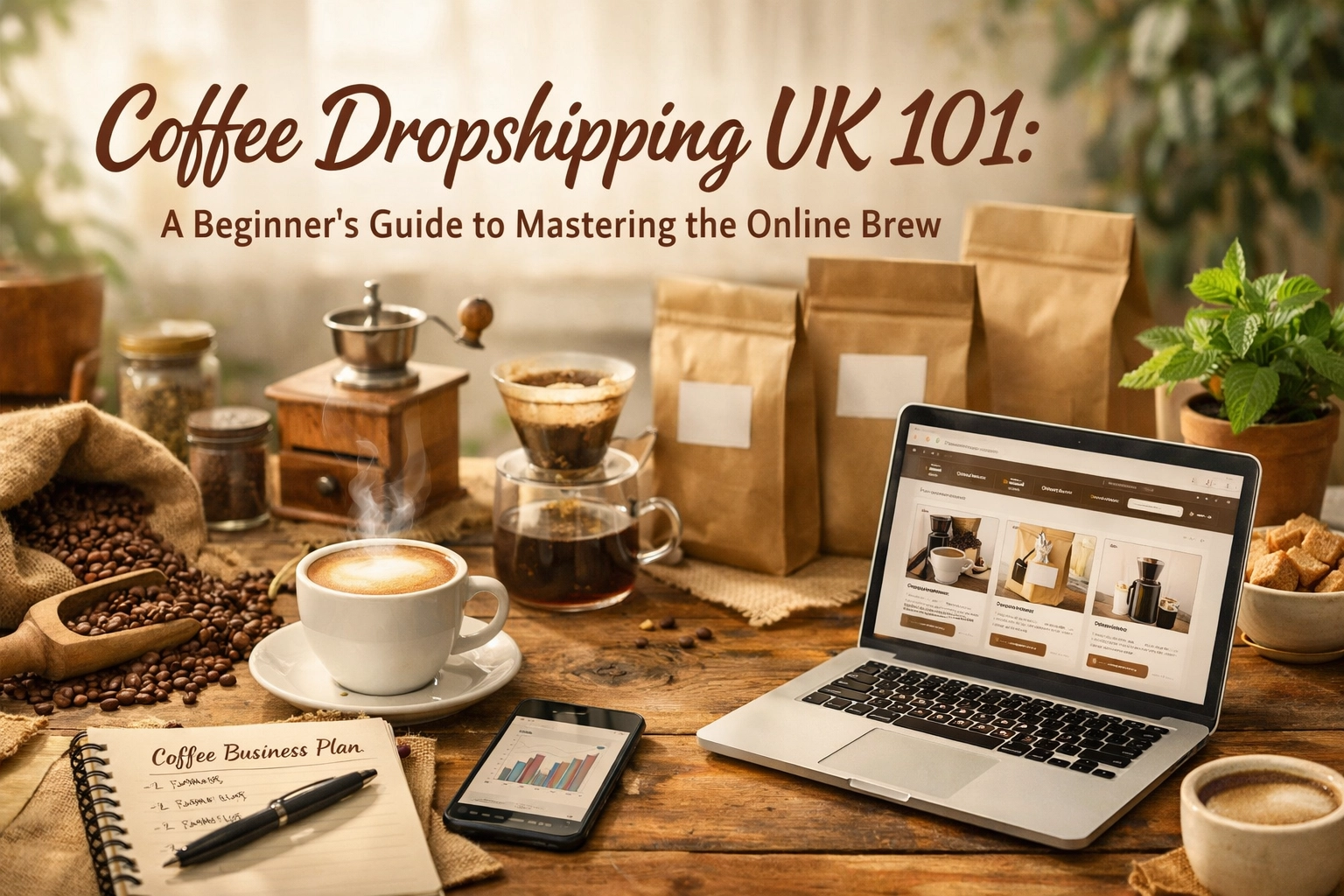
    Coffee Dropshipping UK 101: A Beginner’s Guide to Mastering the Online Brew

    So, you’ve decided that you want to get into the coffee business. Maybe you’ve spent too many hours scrolling through aesthetic café feeds, or perhaps you just really, really love the smell of freshly roasted beans in the morning. But then reality hits: roasting equipment costs more than a small hatchback, and your spare room is currently occupied by a treadmill you haven't used since 2022.

    Enter the world of coffee dropshipping uk.

    It sounds like a dream, doesn't it? You build a beautiful brand, people buy your coffee, and someone else does all the heavy lifting (literally). No heavy sacks of green beans, no scorching hot roasters, and no trips to the post office at 4:55 PM on a Tuesday.

    But how does it actually work? And more importantly, how do you do it without ending up with a basement full of stale beans and a very angry Trustpilot page? Grab a brew, and let’s dive into the nuts and bolts of starting your own online coffee empire.


    What Exactly is Coffee Dropshipping?

    At its heart, dropshipping is just a fancy way of saying "I sell it, they ship it."

    When you run a coffee dropshipping business, you are the face of the brand. You handle the marketing, the website, and the customer service. However, the physical product: the delicious specialty coffee your customers are craving: lives at the roastery.

    When an order comes through your website, it’s automatically (or manually, if you’re doing it the old-school way) sent to your roasting partner. They roast the beans, pack them into bags with your label on them, and ship them directly to your customer.

    The customer thinks it came from you. The roaster gets paid their wholesale price. You keep the difference. It’s a win-win-win (and we love a win-win-win).

    Home office setup for a coffee dropshipping UK business with fresh coffee and laptop.

    Why the UK Market is the Place to Be

    You might be tempted to look at massive international suppliers, but if you’re targeting the British market, coffee dropshipping uk is the only way to go. Why? Because coffee is a fresh product.

    We believe that coffee is at its absolute peak between two and four weeks after roasting. If your beans are sitting on a container ship for three weeks coming from overseas, they’re already "past it" by the time they hit the customer’s letterbox. UK-based roasting means your customers get that incredible aroma the second they tear open the bag.

    Plus, there's the small matter of shipping costs and customs. Nobody wants to pay £15 for a bag of coffee only to be hit with a "handling fee" and a two-week wait. By keeping it local with a partner like Limini Coffee, you ensure fast delivery and happy, caffeinated customers.


    Step 1: Finding Your Partner (The Roaster)

    In this business model, your supplier is your most important asset. They are the ones responsible for the quality of the product that has your name on it. If the coffee is bitter, over-roasted, or: heaven forbid: stale, it’s your reputation on the line, not theirs.

    When you’re looking for a partner for your coffee dropshipping uk venture, you need to ask a few vital questions:

    1. Is it freshly roasted? (If they roast in bulk and let it sit on a shelf, run away).
    2. Do they offer white-label services? This means they’ll put your branding on the bag.
    3. What is the coffee quality? We always recommend going for specialty grade. Commodity coffee is fine for the supermarket, but if people are buying from an independent online brand, they expect something special.
    4. How do they handle shipping? Speed is everything.

    At Limini Coffee, we take this very seriously. We pride ourselves on sourcing our coffee ethically and roasting it to perfection. If you're looking for a partner who understands the craft as much as the commerce, you should definitely check out our wholesale options.


    Step 2: Branding and Legal Bits (The "Serious" Stuff)

    This is where you turn "just some coffee" into your coffee. Your brand identity is what makes a customer choose you over the hundreds of other options.

    The Labels

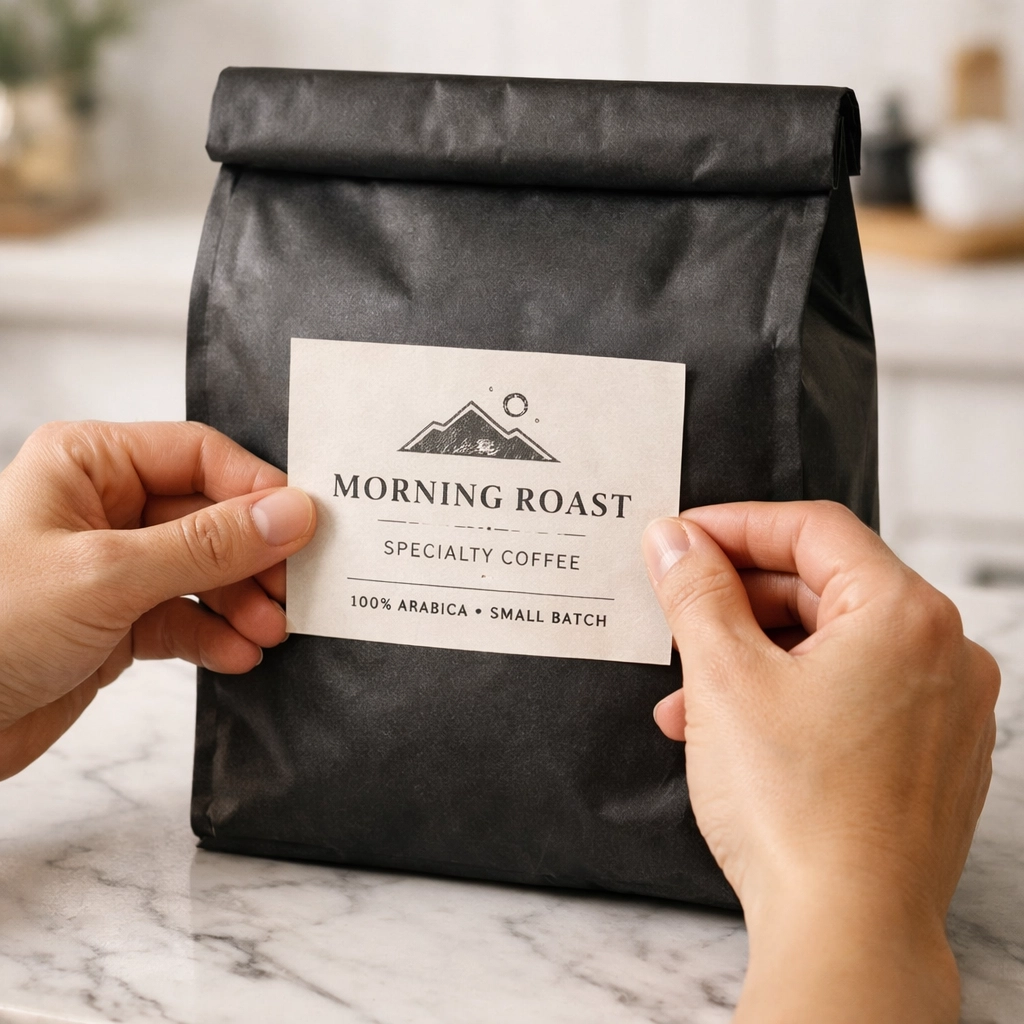
    Most UK suppliers will give you specific dimensions for your labels (usually around 10 x 14 cm). You can design these yourself using something like Canva, or hire a pro. But keep in mind that the UK has some rules.

    You must include:

    • The product weight (250g, 500g, or 1kg are the standards).
    • The type of coffee (Whole bean or ground).
    • Any legal requirements regarding origin or ingredients (though with coffee, it's usually just… coffee).

    The Experience

    Think about the "unboxing." Even though you aren't the one packing the box, the way the label looks and the story you tell on your website matters. Do you focus on the crema and the body? Or are you all about the ethical sourcing and the farm-to-cup journey?

    Hand applying a custom label to a specialty coffee bag for a UK dropshipping brand.


    Step 3: Setting Up Your Online Shop

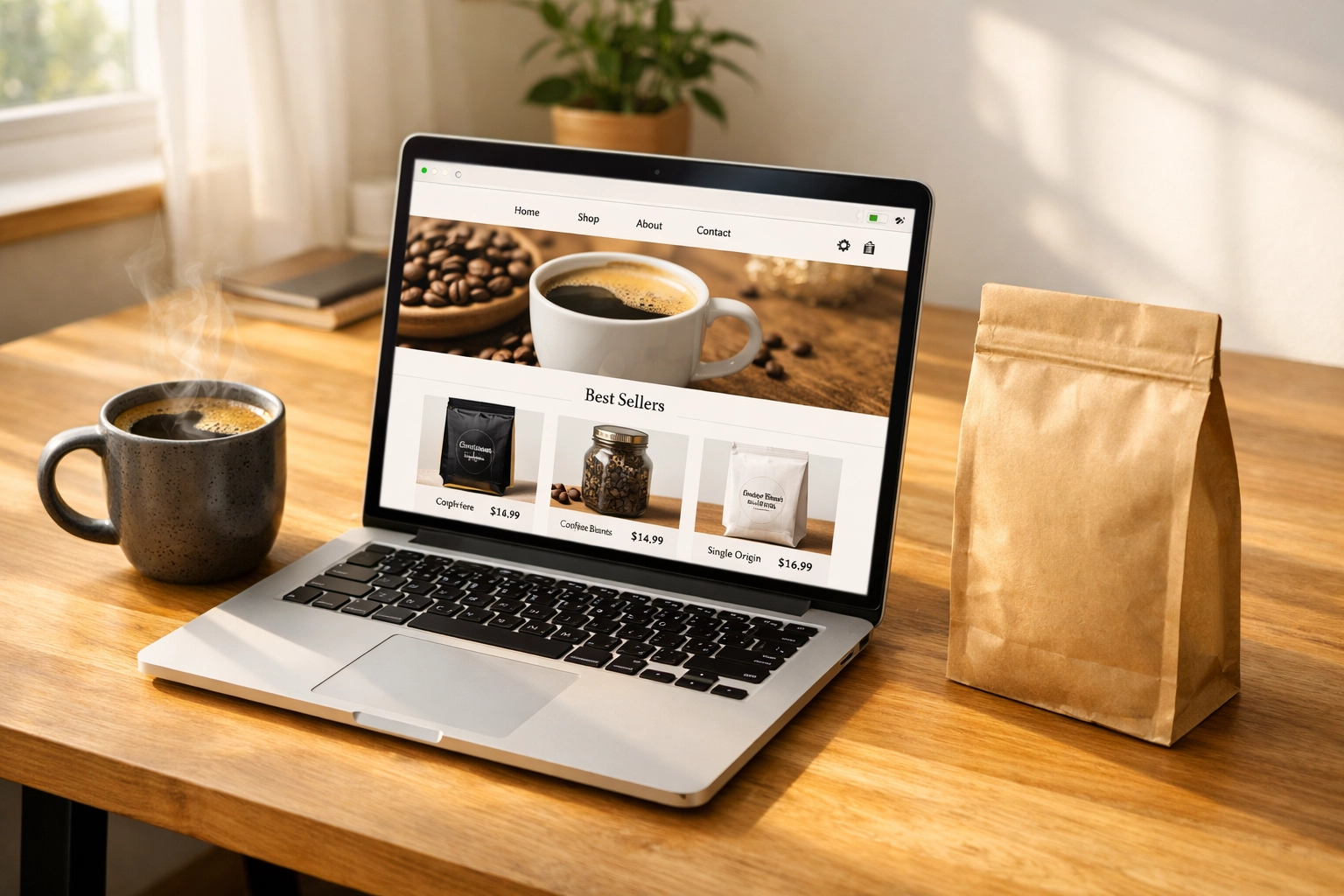
    You don’t need to be a coding wizard to start coffee dropshipping uk. Platforms like Shopify or WooCommerce make it incredibly easy.

    The trick is to make your store look as premium as the coffee tastes. High-quality imagery is non-negotiable. If your product photos look like they were taken in a dark cupboard on a 2014 smartphone, people will assume the coffee tastes like cardboard.

    We also recommend including a coffee brewing calculator on your site or providing brewing guides. It adds value and shows you actually know your stuff. This builds trust, and trust leads to repeat subscriptions (the holy grail of coffee dropshipping).


    Step 4: Pricing for Profit

    Let’s talk money. We know, it’s a bit "un-British," but you’re running a business!

    Typically, a 250g bag of high-quality specialty coffee might cost you between £5 and £8 from a dropshipping supplier. You need to factor in:

    • The supplier’s cost.
    • The shipping cost (Are you offering free shipping? If so, bake it into the price).
    • The marketing cost (How much does it cost you in ads to get one customer?).
    • Your margin.

    Most successful brands aim for a 50% to 100% markup. If you’re selling a truly premium, ethically sourced specialty bean, people are willing to pay for that quality. Don't try to compete with the £3.50 bags in the supermarket: you will lose. Compete on taste, story, and service.


    Step 5: Marketing (How to Actually Sell the Stuff)

    Once the store is live, the real work begins. You could have the best coffee in the world, but if nobody knows it exists, your only customer will be your mum (and she probably expects a discount).

    Content is King

    Social media is your best friend. Show the "theatre" of coffee. Use videos of a perfect tamping technique or a beautiful latte art pour. Even if you aren't making it yourself every day, you can share educational content about understanding milk or the difference between a latte and a cappuccino.

    SEO

    Since you’re targeting coffee dropshipping uk, make sure your website is optimized for people looking for fresh beans in Britain. Use keywords naturally in your blog posts and product descriptions.

    Subscriptions

    The most successful coffee dropshippers focus on subscriptions. It's much easier (and cheaper) to keep a customer than to find a new one. Offer a discount for monthly deliveries. It creates a steady, predictable income stream for you and ensures your customers never run out of caffeine. It's a win for everyone.

    Overhead view of fresh specialty coffee beans and pour-over brewing equipment.


    The Reality Check: Is it Easy?

    We don't want to sugar-coat it (we prefer our coffee black, anyway). While coffee dropshipping uk is "easier" than opening a physical roastery, it still requires work.

    You have to be the expert. Even though you aren't roasting the beans, you should know what makes a good espresso. We highly recommend taking some barista training or at least a training overview so you can answer customer questions with confidence.

    When a customer asks why their coffee doesn't have enough crema, you need to be able to explain the importance of freshness and looking after your espresso machine.


    Why Partner with Limini?

    If you're serious about this, you need a partner who lives and breathes specialty coffee. That's us. We don't just roast beans; we support businesses.

    From helping you understand espresso equipment to providing the beans that will make your brand famous, we’re here for the long haul. And because we're based right here in the UK, your customers will get their orders quickly and at the peak of freshness.

    Ready to start your journey? Learn more about us and see how we can help you build your coffee brand from the ground up: without the heavy lifting.

    Close-up of a barista pouring latte art into a cup of specialty espresso.


    Final Thoughts

    Starting a coffee dropshipping uk business is one of the most exciting ways to enter the world of specialty coffee in 2026. It combines the creativity of branding with the flexibility of an online business, all while supported by the expertise of a professional roaster.

    So, stop dreaming about it and start brewing. The UK coffee scene is thriving, and there is always room for one more brand that truly cares about quality.

    If you have questions about how to get started or want to taste what we have to offer, don't hesitate to reach out. We love talking coffee as much as we love roasting it. Let’s make something great together. Or at the very least, let's make something that tastes incredible.

    Cheers to your new venture! ☕️

  • Create Unforgettable Guest Experiences with these 5 AI Software Solutions

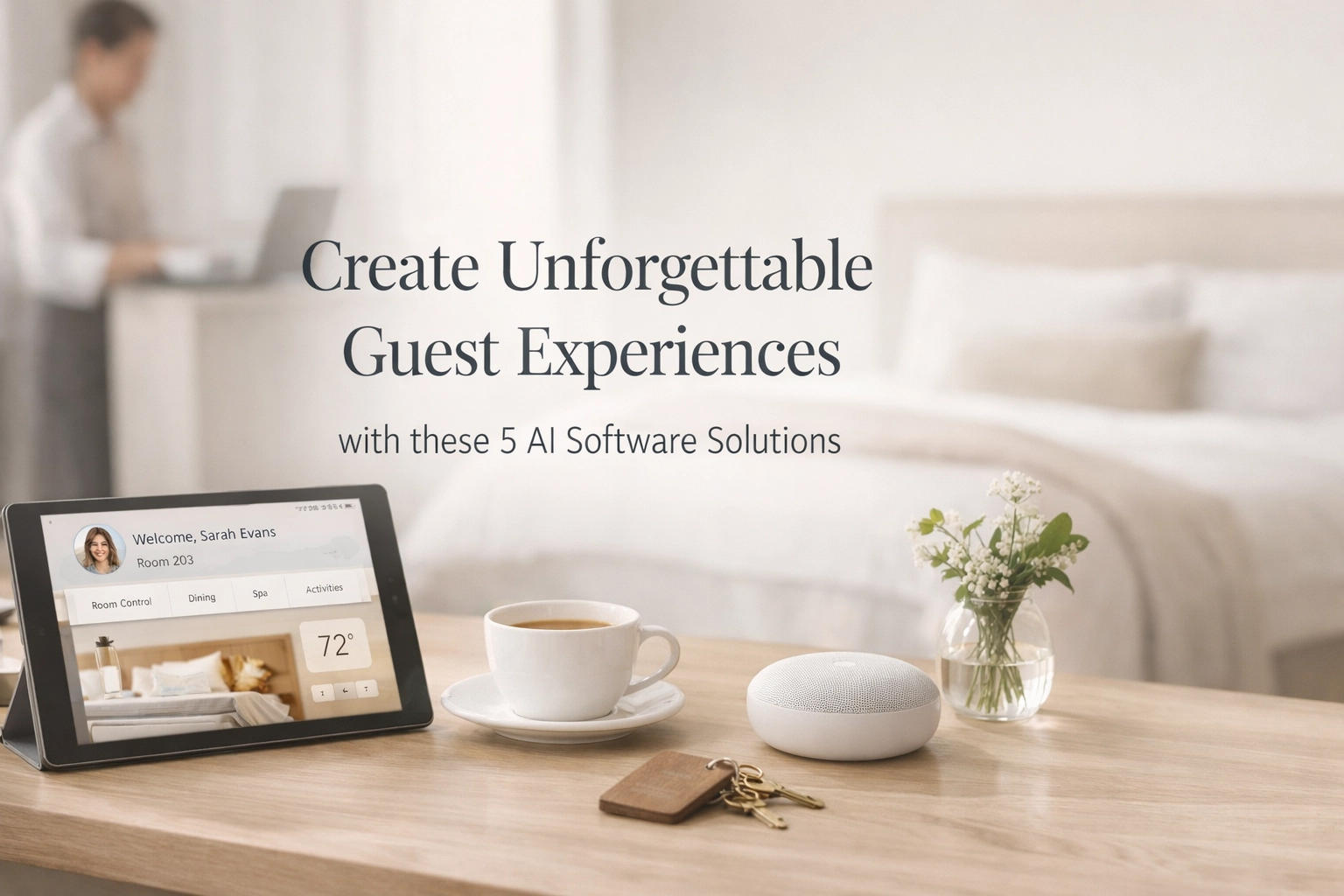
    Create Unforgettable Guest Experiences with these 5 AI Software Solutions

    Redefine the stay. Empower the staff. Drive the revenue.

    In the modern hospitality landscape, "good enough" is the fastest way to get forgotten. Guests don't just want a room anymore; they want a seamless, hyper-personalized journey that feels like it was designed specifically for them. We believe that technology shouldn't get in the way of hospitality, it should amplify it.

    Currently, over 12,500 properties are leveraging next-gen tech to reclaim their time and focus on what matters. By integrating the right AI solutions into your ecosystem, you can reduce manual tasks by up to 80% while seeing a direct boost in guest satisfaction scores.

    It’s all about moving from reactive service to proactive delight, all from one innovative platform.

    Minimalist boutique hotel lobby representing a seamless and proactive guest experience.

    1. Akia: The Guest Lifecycle Whisperer

    We think your guest’s journey starts long before they walk through your doors. Akia acts as an autonomous AI agent that manages the entire lifecycle, from that first booking confirmation to the final checkout text.

    Instead of your front desk team being buried under a mountain of repetitive questions about breakfast times and Wi-Fi passwords, Akia handles it. It converts website visitors into direct bookings through a witty AI web chat that knows your rates and availability better than a human ever could.

    Why it matters:

    • Autonomously manages SMS, WhatsApp, and webchat communications.
    • Turns past guests into repeat fans with smart marketing automation.
    • Reduces front desk noise so your team can actually smile at guests.

    "We saw a massive shift in how our team spends their time. No more repeating the same five answers, Akia handles the basics so we can handle the experience."

    2. eviivo Suite: Native AI Intelligence

    If you’re looking for a solution that’s baked right into the core of your operations, eviivo is leading the charge. With over 28,000 properties globally, they’ve embedded purpose-built AI directly into the PMS workflow.

    Their standout feature, eviivo Concierge™, is a virtual assistant that never sleeps. It provides instant responses to online inquiries 24/7. Even more impressive? Eviivo customer data shows that users generate an average of 90% of their replies using AI. That’s not just a small efficiency gain; that’s a total operational overhaul.

    Why it matters:

    • Unifies guest messaging from OTAs, direct sites, and WhatsApp into one inbox.
    • Generates multi-lingual replies that sound human (not robotic).
    • Maintains a 24/7 presence without the 24/7 payroll costs.

    A smartphone on a marble table showing frictionless digital guest communication and AI concierge services.

    3. Canary Technologies: The Frictionless Front Desk

    Friction is the enemy of hospitality. Long lines at check-in? That’s 1995. Canary Technologies is dragging the guest experience into the future by automating guest-facing workflows like identity verification, upselling, and check-in.

    Serving over 20,000 hotels in 100+ countries, Canary uses AI to handle over 80% of routine inquiries automatically. It even handles translation across more than 100 languages, making it the ultimate tool for international hubs. It fits perfectly into the Mews ecosystem, ensuring that your guest’s first interaction with your property is "Wow," not "Wait."

    The Canary belief system:

    • Check-in should be a choice, not a chore.
    • Upselling should feel like a suggestion from a friend, not a sales pitch.
    • Security and identity verification should be invisible and instant.

    To see how these integrations can transform your property, check out how Mews powers modern hospitality.

    4. Sojern: The Operational Optimizer

    Sojern’s AI Concierge is less about "chat" and more about "action." It intelligently routes requests: like a guest needing extra towels or a late-night maintenance issue: directly to the staff member who can solve it.

    By automating these requests via SMS and mobile apps, Sojern has been shown to reduce front desk inquiries by over 65%. It’s a win-win: the guest gets what they need faster, and your staff isn't running back and forth between the desk and the laundry room just to relay a message.

    What you get:

    • Automated housekeeping and maintenance routing.
    • 24/7 support through the guest’s preferred messaging apps.
    • Smart upselling opportunities that actually convert.

    "The AI Concierge doesn't just talk; it does. It’s like having an extra ten people on staff during the peak summer rush."

    Relaxed traveler in a modern hotel corridor enjoying a personalized and efficient guest journey.

    5. Adobe Experience Cloud: Personalization at Scale

    For the bigger players: or those with big ambitions: Adobe Experience Cloud is the gold standard for AI-driven personalization. This isn't just about knowing a guest's name; it's about knowing they prefer a corner room and a sparkling water waiting for them.

    Look at Marriott International. By using Adobe’s AI capabilities, they reported a 70% faster time to market for their campaigns. That means they can pivot their marketing and guest engagement strategies in real-time based on actual traveler behavior.

    The Adobe Advantage:

    • Predictive analytics that tell you what guests want before they know it.
    • Content automation that scales your brand voice across thousands of touchpoints.
    • Real-time analytics that turn data into actual hospitality.

    The Mews Difference: The Heart of the Stack

    Software is great. But five different software solutions that don't talk to each other? That’s just a new kind of headache. At Mews, we believe in an open, innovative ecosystem. We aren't just a PMS; we are the foundation that allows these AI tools to thrive.

    Because we prioritize connectivity, integrating these AI solutions isn't a three-month coding project: it’s a simple, seamless experience. When your PMS is as smart as the apps you’re plugging into it, magic happens. You get more direct bookings. Your staff feels less burnt out. Your guests feel like VIPs every single time they walk through the door.

    Hotel staff placing a personalized welcome gift, showing the human touch in AI-powered hospitality.

    Why AI? Why Now?

    The hospitality industry is notorious for being slow to adopt new tech. But the gap between "traditional" hotels and "tech-forward" properties is widening. Guests are already using AI to plan their trips, book their flights, and organize their itineraries. If your hotel feels like a step back in time, they’ll notice.

    AI isn't about replacing the human touch: it’s about freeing your humans up so they can actually provide a touch of hospitality. It’s hard to be warm and welcoming when you’re manually typing in credit card details or arguing with a printer.

    Three quick steps to get started:

    1. Identify your biggest bottleneck (is it check-in lines or answering the same five questions?).
    2. Choose one AI tool that solves that specific pain point.
    3. Integrate it with an open PMS like Mews to ensure data flows freely.

    Seamless architectural textures representing the integration of innovative hospitality software and PMS.

    The future of hospitality is here, and it's powered by intelligent, proactive, and witty tech. Whether you're a boutique stay or a global brand, the tools are ready. The question is: are you?

    If you’re ready to see how Mews can help you build the ultimate guest experience stack, get started here. We’ll get you up and running: and earning: in no time. (And we promise it’ll be a lot more fun than your current setup.)

  • How to Integrate AI With Your Hotel Channel Manager for Maximum Revenue

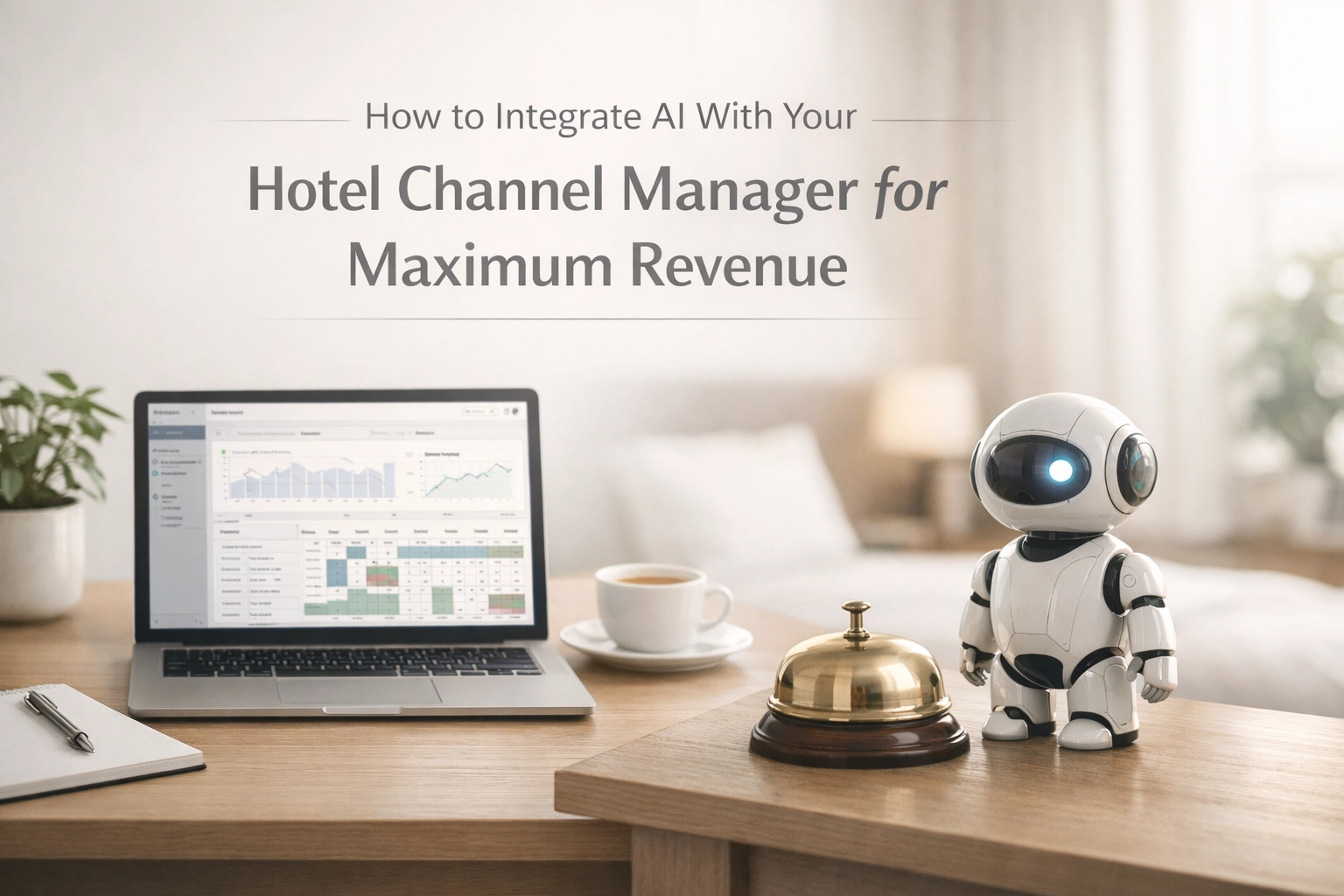
    How to Integrate AI With Your Hotel Channel Manager for Maximum Revenue

    Scale your distribution. Master your pricing. Reclaim your time.

    The era of manual rate updates is over. In 2026, if you’re still logging into three different extranets to adjust your pricing for a long weekend, you’re not just losing time: you’re leaving money on the table. We’ve seen a shift from basic automation to "agentic" AI, a proactive system that doesn't just follow rules but makes decisions to optimize your bottom line.

    By integrating agentic AI with your hotel channel manager, you transform a passive inventory list into a high-octane revenue engine. This isn't about "set it and forget it." It’s about "set it and let it evolve."

    The shift to proactive intelligence

    We believe that hospitality technology should do more than just store data; it should act on it. Traditional channel managers act as a simple pipe, pushing availability from your PMS to OTAs. AI-integrated systems are different. They act as the brain at the center of that pipe.

    Agentic AI doesn't wait for you to notice a competitor's price drop. It sees the market shift, calculates the impact on your occupancy, and updates your rates across 100+ platforms in milliseconds. All from one unified platform.

    Tablet in a modern hotel lobby displaying real-time AI-integrated channel management software.

    Why AI integration matters now

    • Real-time responsiveness. Market conditions change faster than any human revenue manager can type.
    • Hyper-personalization. AI understands which channels perform best for specific room types and adjusts visibility accordingly.
    • Error elimination. Stop overbookings before they happen by syncing inventory with 100% accuracy in sub-second intervals.

    The power of agentic AI

    Unlike standard automation, agentic AI is goal-oriented. You give it a target: say, a 15% increase in RevPAR for the next quarter: and it builds the path to get there. It plans, executes, and monitors the results. If a specific promotion isn't hitting the numbers, the AI adjusts the strategy autonomously. It’s like having a 24/7 revenue manager who never sleeps and has a PhD in data science.

    Dynamic pricing on autopilot

    The heart of revenue maximization lies in dynamic pricing. Most hotels use seasonal rates or basic weekend surcharges. AI goes deeper. It analyzes historical data, local events, weather patterns, and competitor inventory to find the "goldilocks" price: the exact point where you maximize both occupancy and rate.

    How it transforms your workflow

    1. Continuous monitoring. The system scans the market 24/7.
    2. Instant execution. When a pricing opportunity is identified, it’s pushed to Expedia, Booking.com, and your direct engine simultaneously.
    3. Performance feedback. The AI learns from every booking, refining its strategy for the next guest.

    "Since moving our channel management to an AI-driven model, we’ve seen a 22% increase in ADR without lifting a finger on the weekends," says one boutique hotelier. "It’s given me ten hours a week back to focus on my guests instead of spreadsheets."

    Luxury suite desk representing automated hotel revenue management and increased occupancy.

    Intelligent inventory and LOS management

    Revenue isn't just about the nightly rate. It’s about the "stay pattern." AI integration allows your channel manager to manage Length of Stay (LOS) restrictions dynamically. If the AI predicts a surge in demand for a three-day weekend, it can automatically close off one-night stays to ensure you fill the entire block at a premium.

    Smart distribution strategies

    We think your distribution should be as unique as your property. AI helps you identify which channels are costing you too much in commissions and which are bringing in high-value guests.

    • Commission optimization. Shift inventory toward lower-commission channels when demand is high.
    • Rate parity protection. Ensure your direct site always offers the best value without manual cross-checking.
    • Seasonal agility. Automatically launch and kill promotions based on real-time pickup.

    Connecting the ecosystem

    To get the most out of AI, you need a tech stack that talks to itself. Your PMS, your channel manager, and your revenue management system (RMS) should function as a single organism.

    When you use a platform like Mews, integration isn't a chore: it’s a competitive advantage. By connecting your PMS directly to AI-powered revenue tools like Duetto, you create a seamless flow of data. The PMS provides the "truth" about your inventory, the AI provides the "strategy," and the channel manager provides the "reach."

    Close-up of clean architectural lines representing a seamless hotel tech stack and AI integration.

    3 steps to seamless integration

    1. Audit your current stack. Ensure your PMS has an open API that allows for real-time data exchange.
    2. Choose your AI partner. Look for solutions that offer "Autopilot" features specifically for channel distribution.
    3. Set your guardrails. Define your minimum and maximum rates to give the AI a framework to operate within.

    Beyond the booking: Reputation and AI

    Revenue maximization doesn't end at the check-in. AI-integrated systems can now look at guest sentiment and reviews to influence pricing. If your property is trending on social media or receiving a surge of 5-star reviews, the AI recognizes the increase in brand equity and adjusts your rates to reflect the higher demand.

    It’s a holistic approach to hotel management. You aren't just selling a room; you're managing a brand's value in real-time.

    The numbers speak for themselves

    The impact of AI on hospitality isn't theoretical. It’s measurable, repeatable, and significant.

    • 20% average increase in RevPAR for hotels using AI-driven dynamic pricing.
    • 60% reduction in manual data entry for revenue teams.
    • 100+ booking channels managed from a single, intelligent dashboard.

    We believe that the future of hospitality belongs to those who embrace these tools early. The goal isn't to replace the human touch but to free it. When the machines handle the math, your team can handle the hospitality.

    Ready to evolve?

    Integrating AI with your channel manager is the single most effective way to future-proof your revenue. It’s about moving away from reactive management and toward proactive excellence.

    If you’re ready to see how an innovative PMS can sit at the heart of this transformation, we can help. Our platform is designed to connect you with the best AI tools in the industry, ensuring your property is always one step ahead of the competition.

    Get started with a more intelligent way to manage your hotel.

    It takes less than 30 minutes to discover how a modern tech stack can redefine your guest experience and your bottom line. Let's get you earning more revenue in no time.
  • Stop Wasting Time on Admin: 7 Quick Hotel PMS Hacks to Reclaim Your Day

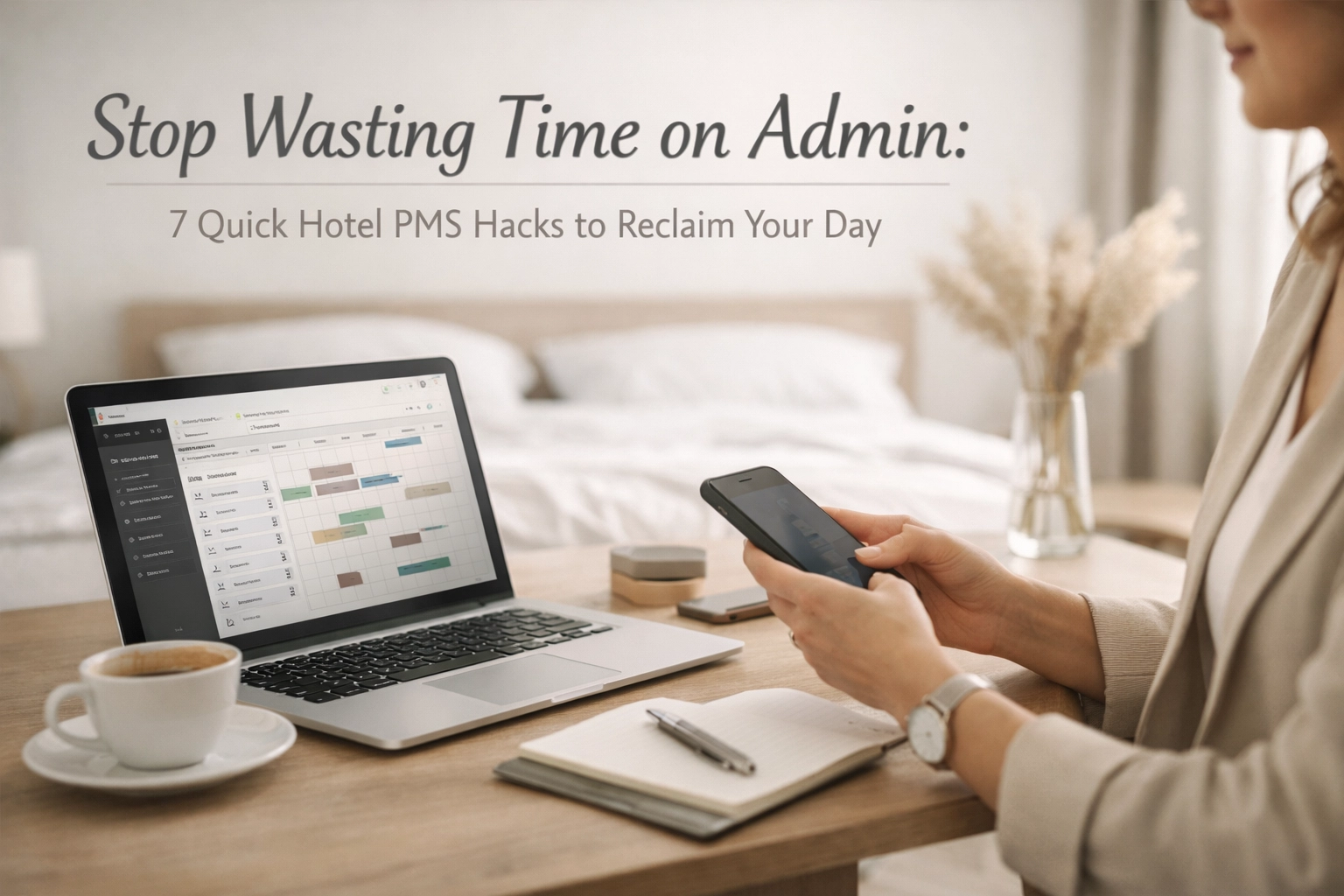
    Stop Wasting Time on Admin: 7 Quick Hotel PMS Hacks to Reclaim Your Day

    Streamline your operations. Boost guest happiness. Reclaim your afternoon.

    Running a hotel shouldn't feel like a constant battle against a mountain of paperwork. Yet, for many hoteliers, the day-to-day reality is a blur of manual data entry, frantic phone calls to housekeeping, and the never-ending struggle of keeping room availability updated across a dozen booking sites. We believe that technology should work for you, not the other way around.

    The numbers tell a compelling story. Recent industry data shows that 89% of hoteliers save between 2 to 10+ hours every single week simply by leveraging PMS automation. That’s nearly a full workday back in your pocket. At Mews, we’ve built a cloud-native platform designed to turn these hours of admin into minutes of oversight, allowing you to focus on what actually matters: your guests.

    By moving your operations to an automation-focused ecosystem, you aren’t just buying software; you’re buying back your time.

    1. Sync your world with a channel manager

    We believe you shouldn't be a data entry clerk for Expedia.

    Manual updates are the enemy of growth. Every time you have to log into five different extranets to change a rate or close out a room, you’re inviting human error and double bookings into your business. A modern hotel PMS should act as the brain of your operation, and the channel manager is its nervous system.

    When your booking engine and external channels are perfectly synced, magic happens. You update a price once, and it ripples across the internet in milliseconds.

    • Eliminate the risk of overbookings instantly.
    • Maintain rate parity without opening twenty tabs.
    • Spend your morning on strategy instead of screen-scraping.

    Hotel PMS channel manager syncing rates and availability on a tablet to prevent overbookings

    2. Master the morning with a central dashboard

    We think clarity is the ultimate productivity hack.

    Most legacy systems hide important information behind layers of clunky menus and "blue screen" interfaces. We’ve all seen it, the front desk agent clicking through five different screens just to see if a guest has paid. It’s a waste of energy. A centralized reservation manager changes the game by putting your entire property’s pulse on one screen.

    From arrivals and departures to VIP notes and maintenance alerts, everything should be visible at a glance. This centralized approach doesn't just save time; it reduces the mental load on your staff, leading to a calmer, more professional lobby environment.

    • Track all bookings from one unified view.
    • Spot guest preferences before they even walk through the door.
    • Coordinate between F&B and the front desk seamlessly.

    "Moving to a central dashboard saved our front desk team at least two hours of searching for info every day," says one of our partners. "It’s like finally being able to see the whole map instead of just one street."

    3. Let guests drive with self-check-in kiosks

    We believe the "queue" is an outdated concept.

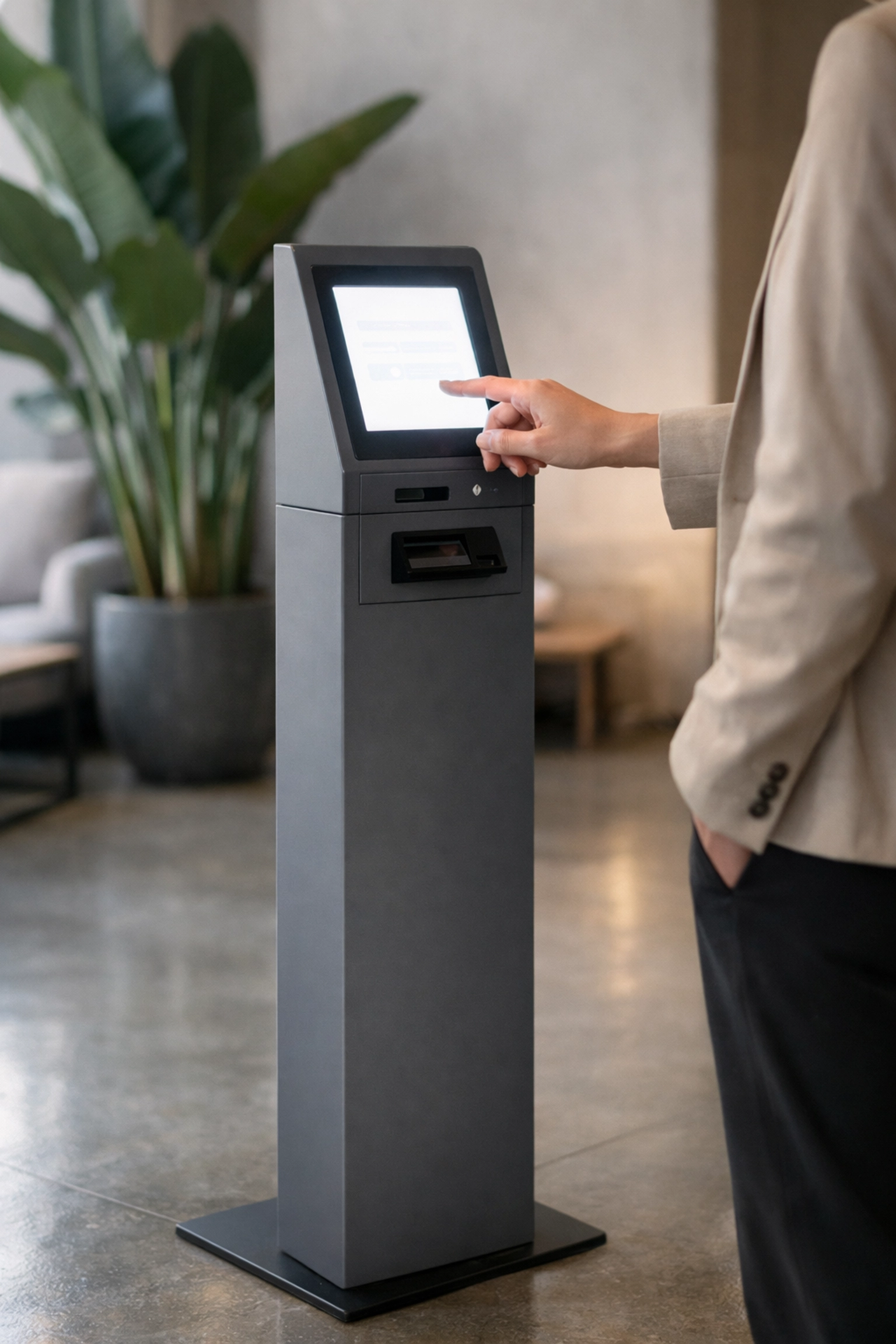
    The traditional check-in process is a friction point. Guests arrive tired and just want to get to their rooms; your staff wants to welcome them but is stuck typing passport numbers into a slow system. Self-check-in kiosks and mobile check-in options flip this script.

    By allowing guests to submit their ID, vehicle info, and payment details before they even arrive at the property, you turn the "check-in" into a "welcome." This isn't about replacing people with machines; it's about replacing data entry with hospitality.

    • Cut front desk wait times to zero during peak hours.
    • Capture accurate guest data without manual typos.
    • Empower guests to choose their own arrival experience.

    Guest using self-check-in kiosks in a boutique hotel lobby for faster, queue-free arrivals

    4. Talk without typing via automated messaging

    We think great communication should be effortless.

    If your team is still manually typing out "We look forward to seeing you tomorrow" emails, you’re stuck in 2010. Automated guest communication, integrated directly with your CRM, allows you to send the right message at exactly the right time without lifting a finger.

    Whether it’s a booking confirmation, a pre-arrival guide, or a post-stay "thank you," these touchpoints can be triggered automatically by the PMS. This ensures consistency and makes your guests feel cared for throughout their entire journey. Plus, it frees your team to handle the complex queries that actually require a human touch.

    • Set up automated triggers for every stage of the stay.
    • Personalize messages using dynamic guest data.
    • Ensure no guest ever misses important check-in instructions.

    5. Ditch the spreadsheets for real-time reporting

    We believe you should act on data, not just collect it.

    Manual end-of-day reports and "Excel gymnastics" are some of the biggest time-sinks in hospitality. If you’re waiting until the end of the month to see how your RevPAR performed, you’re already too late to change the outcome.

    A cloud-native PMS like Mews provides real-time reporting that updates as things happen. You don't need to build the report; you just need to read it. Custom templates allow you to see your financial performance, occupancy trends, and guest demographics in seconds.

    • Access live data from any device, anywhere in the world.
    • Stop spending Sunday nights building manual pivot tables.
    • Identify trends instantly to adjust your pricing strategy.

    Hotel PMS dashboard and CRM reporting on a laptop, replacing spreadsheets with real-time insights

    6. Set your housekeeping team free with mobile tools

    We think your cleaning staff shouldn't have to walk to the front desk for an update.

    The "phone tag" game between housekeeping and the front desk is a classic admin nightmare. "Is room 302 ready?" "Let me check." "No, they just left." This back-and-forth slows down your turn-around time and leaves guests waiting in the lobby.

    Mobile housekeeping access allows your team to see their schedules and update room statuses in real-time on their own devices. When a room is marked "clean" in the app, it’s instantly "available" for the front desk. It’s simple, it’s fast, and it’s remarkably effective.

    • Eliminate manual status calls and paper checklists.
    • Prioritize rooms based on real-time guest arrivals.
    • Sync maintenance issues directly to the tech team.

    7. Open doors remotely with keyless entry

    We believe the plastic key card is a relic of the past.

    Managing physical keys is a logistical headache. They get lost, they demagnetize, and they require a manual hand-off. Integrating digital key systems with your PMS removes this entire layer of admin.

    When a guest checks in via their mobile device, they receive a digital key that works instantly. No more "I lost my card" calls at 2 AM, and no more standing behind a desk just to hand over a piece of plastic. It’s the ultimate way to streamline the guest journey while cutting down on your team's repetitive tasks.

    • Reduce overhead by eliminating physical key card costs.
    • Improve security with automatically expiring digital access.
    • Provide a truly frictionless, 24/7 check-in experience.

    Guest using mobile keyless entry with a hotel PMS for secure, frictionless 24/7 check-in

    See what Mews can do

    Transformation doesn't have to be a multi-year project. It starts with choosing a platform that prioritizes innovation and ease of use. At Mews, we've helped over 12,500 properties move away from the "admin grind" and back into the business of making guests smile.

    We’ve designed our system to be the most easy-to-use, cloud-native solution on the market. By automating the boring stuff: the data entry, the manual syncing, the repetitive emails: we give you the freedom to be a hotelier again.

    Ready to reclaim your day? It’s easier than you think.

    Get started with Mews today and see how 10 hours a week can change your business. Check out our referral page here to learn more: https://referrals.mews.com/umqhyito

    Take the first step toward a more automated, efficient, and profitable property. Let’s get you earning more revenue and wasting less time in no time.
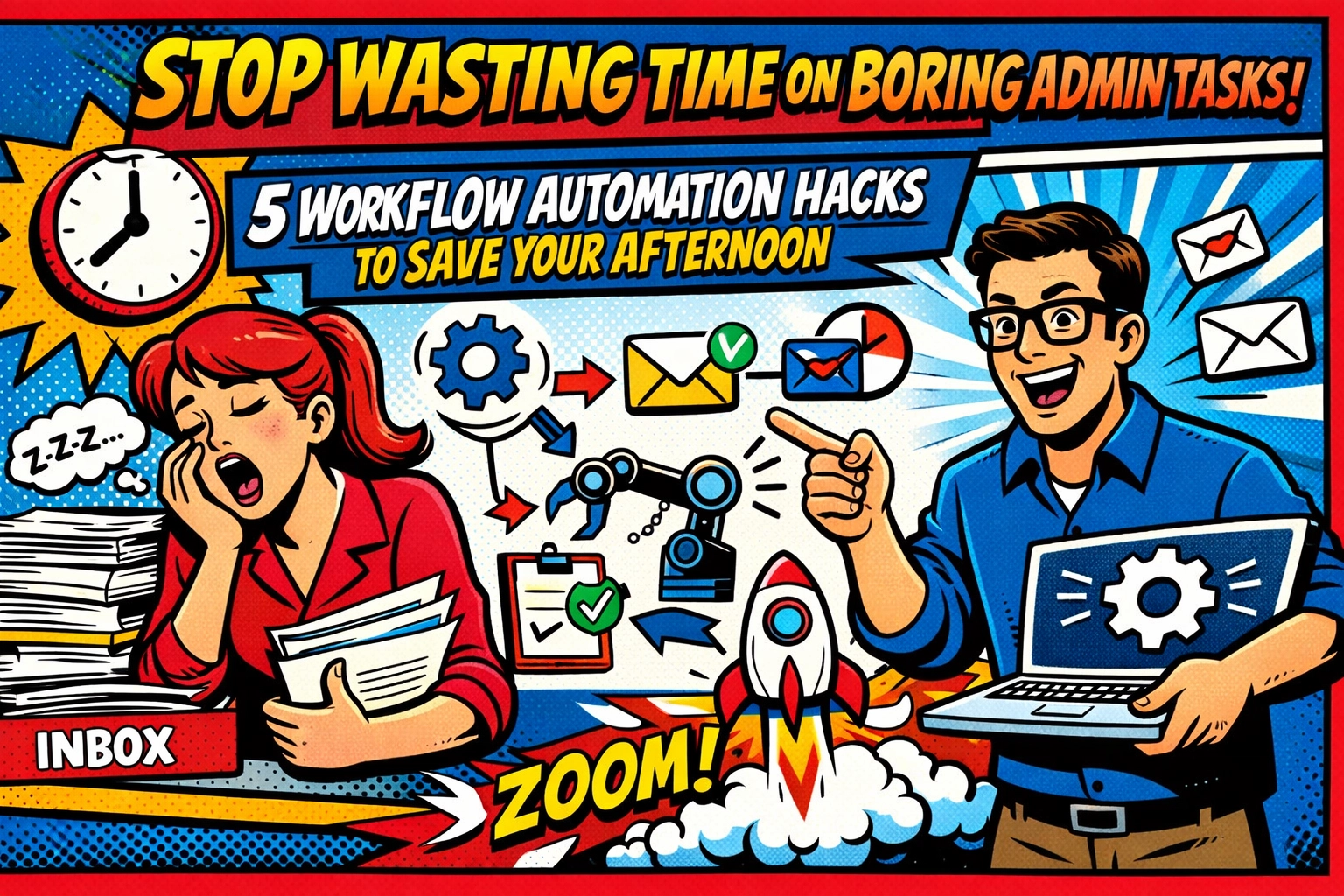
  • Stop Wasting Time on Boring Admin Tasks: 5 Workflow Automation Hacks to Save Your Afternoon

    Stop Wasting Time on Boring Admin Tasks: 5 Workflow Automation Hacks to Save Your Afternoon

    ☕ 8:02 AM.

    You’re sitting at your desk, the steam from your coffee still rising, and you open your inbox.

    It’s not pretty.

    There are seventeen "urgent" requests for time off, three emails from employees who forgot their login credentials, and a mountain of support tickets that all seem to start with "HELP!!!" in capital letters.

    You haven't even touched your real work yet. You know, the stuff that actually makes you money? Instead, you’re stuck in the mud of administrative chores… again. It’s the same loop, every single day. By 11:00 AM, you’re exhausted. By 2:00 PM, you’re looking at the clock, wondering where your life went.

    But it doesn't have to be this way.

    Scaling a business shouldn't feel like you're trying to run a marathon through a swamp. You need to stop being the "Chief Everything Officer" and start letting technology do the heavy lifting. We’re talking about an ai virtual assistant for business that doesn't sleep, doesn't complain, and definitely doesn't forget to update your HR system.

    Let’s claw your afternoon back with these five automation hacks.


    1. STOP THE VACATION EMAIL CHASE

    📱 9:15 AM.

    Your phone pings. It’s Sarah. She wants next Tuesday off to go to a concert.

    Five minutes later, it’s Mike. He needs three days for a wedding.

    Now you have to check the calendar. You have to see if anyone else is out. You have to reply to Sarah. You have to reply to Mike. You have to update the master spreadsheet.

    Stop. Just stop.

    Managing time-off requests via email is a relic of 2005. It’s time to centralize and auto-route. Instead of an email, you give your team a simple form. When they submit it, the data goes straight into a central board.

    But here’s the magic: you set an automation. If the request is approved, the system automatically emails the employee, adds it to the shared Google Calendar, and updates your HRIS.

    No more back-and-forth. No more "Wait, did I tell Mike he could go?"

    You just see the notification, click "Approve," and go back to your coffee. The machine handles the rest.

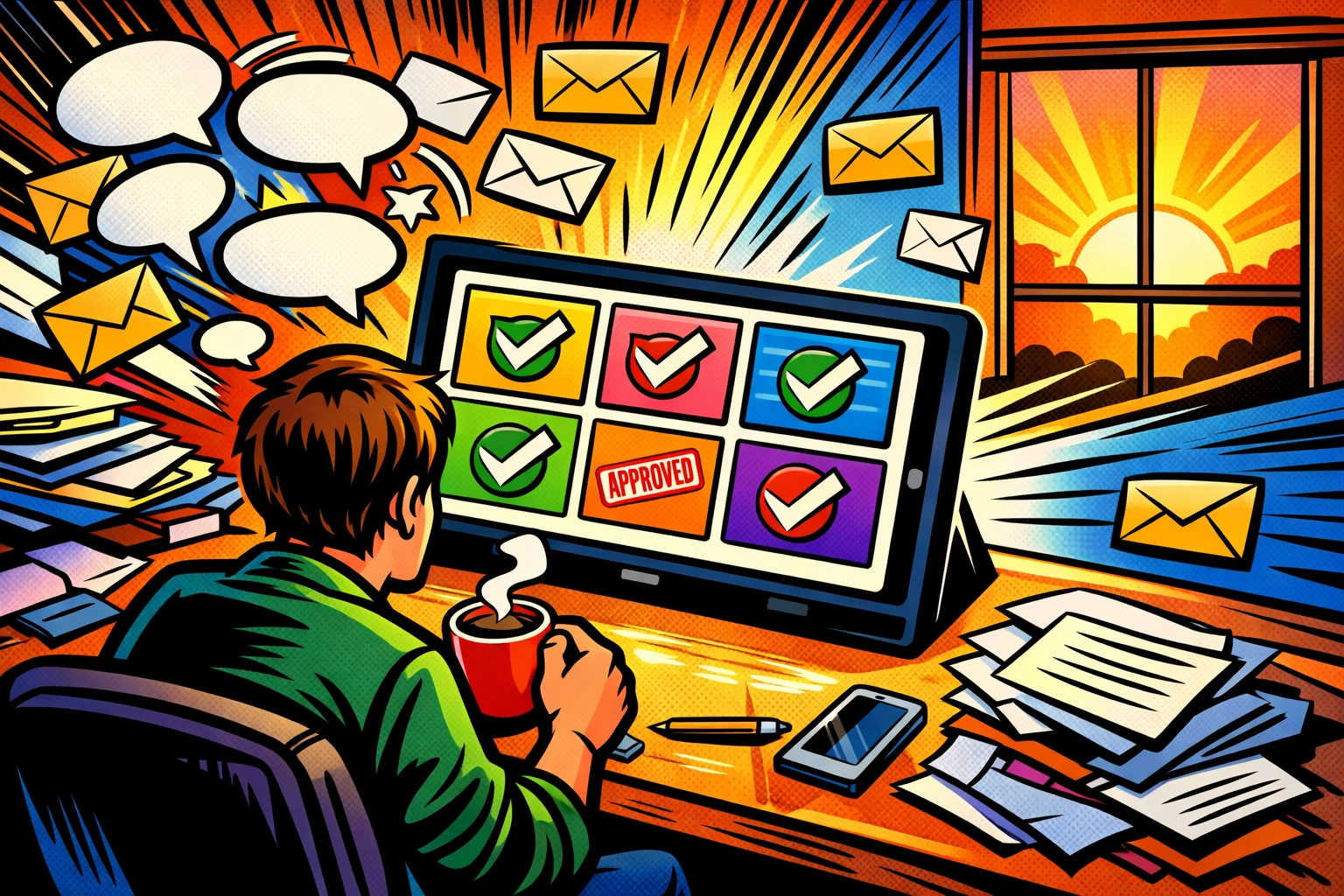
    An ai virtual assistant for business organizing time-off requests for a small business owner.

    2. THE "ONE-AND-DONE" EMPLOYEE SYNC

    🤝 10:30 AM.

    You just promoted Dave. Everyone loves Dave. He’s the new Lead Developer.

    Now comes the fun part: you have to update his title in the project management tool. Then the HR system. Then the employee directory. Then give him access to the "Big Boss" Slack channel.

    If you’re doing this manually, you’re wasting your life.

    With modern automation tools, you can connect your project management platform (like Asana or monday.com) directly to your HRIS. When you change Dave’s status in one place, the automation triggers a chain reaction across every other system you own.

    It’s like a digital row of dominoes. You knock over the first one, and suddenly, Dave has his new permissions, his new title, and a nice little "Congrats!" message in his inbox without you lifting a finger.

    Scale shouldn't be this easy. But here we are.

    3. AUTOMATE CUSTOMER SUPPORT WITH AI

    🔍 1:00 PM.

    The lunch rush is over, and your support queue is a disaster zone.

    Half of the tickets are "I forgot my password." The other half are people asking where their order is. You’re spending hours just sorting through the noise to find the one customer who actually has a complex problem.

    This is where you automate customer support with ai.

    Imagine an ai virtual assistant for business that reads every incoming ticket. It categorizes them. It tags them by urgency. It even writes a draft response based on your previous help articles.

    If it’s a simple "where is my order" query, the AI looks up the tracking number and replies instantly. The customer is happy because they got an answer in seconds. You’re happy because you never even had to see the ticket.

    You’re not just saving time; you’re saving your sanity. You only step in when things get complicated, when the human touch actually matters.

    The chaos is gone before you even take your first sip of afternoon tea.

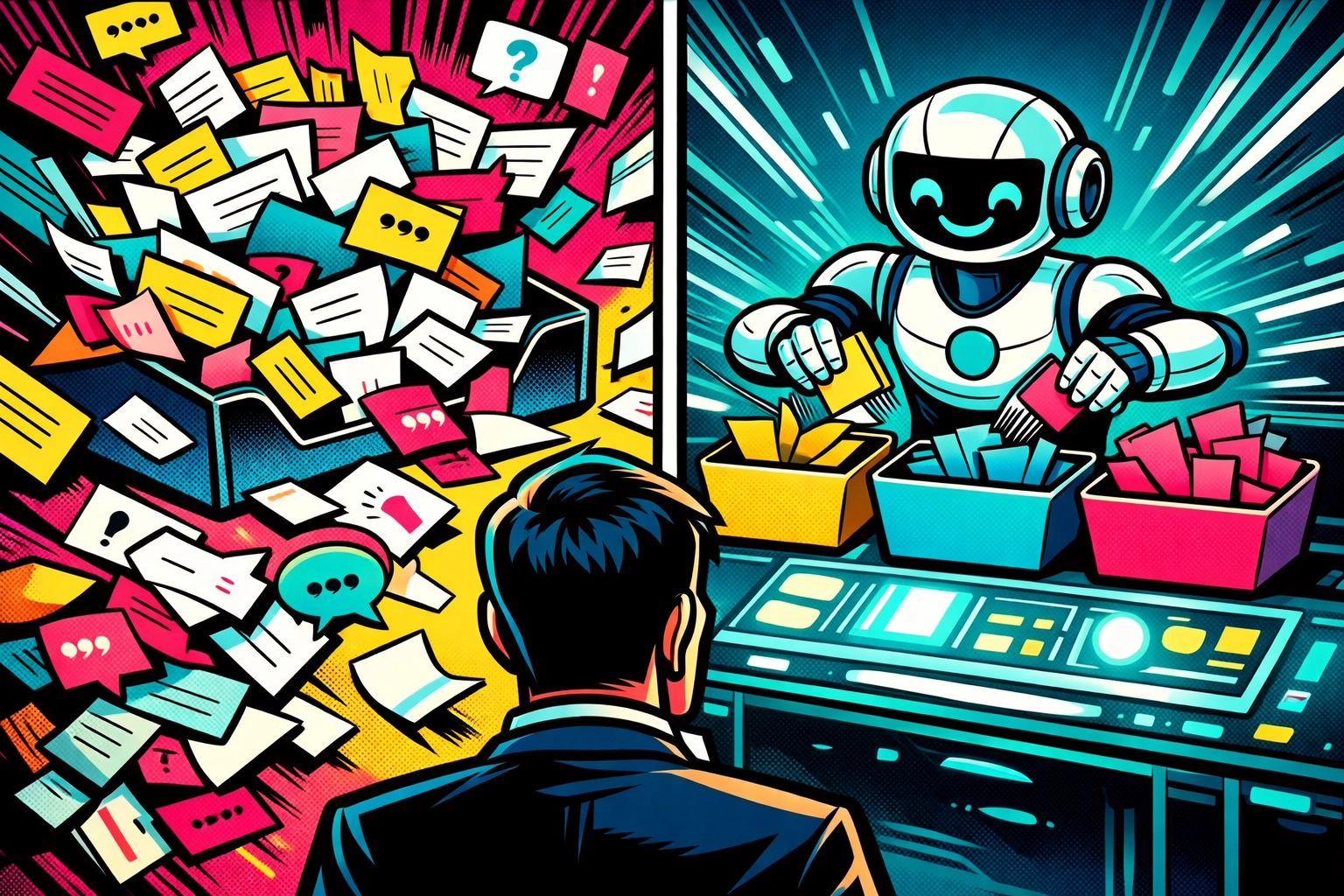
    A virtual assistant helps automate customer support with ai by sorting messy support tickets.

    4. PAYROLL APPROVALS WITHOUT THE HEADACHE

    💰 2:45 PM.

    Payroll is coming up. You have three salary adjustments to approve and a dozen direct deposit changes.

    In the old world, this involved a lot of printing, signing, scanning, or, even worse, chasing people down in the hallway. "Hey, did you see that email about the salary bump for the marketing team?"

    Let's automate the approval flow.

    When a change is requested, it’s automatically routed to the correct manager. They get a notification on their phone. They click a button. The approval is logged, the payroll team is notified, and the audit trail is created automatically.

    No more paper. No more "I'll get to it later."

    It keeps the wheels of your business turning while you focus on the big-picture strategy. If you want to see how to build this kind of efficiency into your own workflow, you need to check out what we're doing over at Marblism. It’s basically like giving your business a superpower.

    5. HUNT THE DIGITAL GHOSTS (LICENSE CLEANUP)

    👻 4:00 PM.

    You’re looking at your monthly software bill. It’s… high. Too high.

    Why are you paying for 50 licenses for that design tool when you only have 3 designers? Because you forgot to remove Steve, who left the company six months ago. And Karen, who only used it once for a project in 2024.

    Manual audits are boring. They’re the kind of task that stays on your to-do list for three months and never gets done.

    So, automate it.

    Set up a monthly workflow that scans your active directory or software licenses. If a user hasn't logged in for 90 days, the system sends an automated email to their manager: "Does Steve still need this?"

    If the manager says no (or doesn't reply), the system automatically removes the license.

    You’re saving money while you sleep. You’re cleaning up your digital house without ever picking up a metaphorical broom.

    Using an ai virtual assistant for business to automatically remove inactive software licenses.


    RECLAIMING YOUR AFTERNOON

    🌙 5:00 PM.

    The lights are off. Your laptop is closed.

    Usually, at this time, you’d still be wading through "urgent" admin emails, feeling like you haven't actually accomplished anything. But today? Today was different.

    The time-off requests were handled. Dave’s promotion was synced. The AI took care of the support queue. Payroll is approved. And you just saved your company $400 a month in "ghost" licenses.

    This is what happens when you stop fighting the machine and start making it work for you.

    Building a business is hard enough. Don't let the boring stuff be the reason you burn out. Whether you’re looking for an ai virtual assistant for business or you just want to automate customer support with ai, the tools are already here.

    You don't need to be a coding genius to make this happen. You just need to decide that your time is worth more than manual data entry.

    If you’re ready to stop the grind and start the growth, come see how we can automate your entire world. Head over to https://marblism.link/scott-bowen and let’s get your afternoons back.

    You’ve earned the break.

    The "before" state was overwhelming. The "after" state is just… quiet. Organized.

    Scaling shouldn't be this easy.

    But here we are.


    FAQ: Common Automation Worries

    Q: Isn't automation expensive?
    A: Actually, it's usually cheaper than the human hours you're currently wasting. Think of it as an investment that pays for itself in about a week.

    Q: Will AI replace my support team?
    A: No. It makes them better. It takes away the boring, repetitive stuff so they can focus on actually helping people with real problems.

    Q: Is it hard to set up?
    A: If you can use a smartphone, you can set up basic automations. Most tools today are "drag and drop." Or, you can just let us handle it.

    Q: What if the AI makes a mistake?
    A: You set the rules. You decide what the AI can and can't do. You're always the one in the driver's seat.

    Q: Where do I start?
    A: Start small. Pick one thing: like those time-off requests: and automate it today. Then watch how much better your tomorrow feels.

    Ready to dive in? Click here to see what the future of your business looks like.

  • 7 Mistakes You’re Making with Workflow Automation for Small Business (And How to Fix Them)

    7 Mistakes You’re Making with Workflow Automation for Small Business (And How to Fix Them)

    ☕ 7:00 AM.

    You’re staring at a screen that’s already shouting at you. 42 unread emails, three "urgent" Slack pings, and a spreadsheet that looks like a digital crime scene. You’ve heard about workflow automation for small business. You even tried to set up a few "zaps" or whatever the kids call them.

    But instead of sipping your coffee in peace, you’re now debugging an error message that says “Invalid API Key.”

    Automation was supposed to be your ticket to freedom. Instead, it’s just another employee who doesn't show up for work and talks back in code.

    If your automation feels like it’s creating more work than it’s saving… you’re likely making one of these seven mistakes. Let’s fix that before you throw your laptop out the window.

    1. YOU’RE AUTOMATING A TRAIN WRECK

    The Mistake: You took a process that was already messy, confusing, and inefficient, and you digitized it.

    Digitizing a broken process doesn't fix it. It just makes the mistakes happen faster. If your manual procurement process involves three unnecessary approvals and a carrier pigeon, automating it just means you’re annoying three people and a bird at the speed of light.

    The Fix: Map it out first. Strip it down to the studs. If a step doesn't add value, kill it. Only then should you let the robots take over. Build on solid ground, or don't build at all.

    Illustration of a train crashing through paperwork, representing failed workflow automation for small business.

    2. THE "WIND UP AND PRAY" STRATEGY

    The Mistake: Neglecting a real plan. You saw a shiny tool, clicked "buy," and started connecting things without knowing what "success" actually looks like.

    Rushing into automation without understanding your pain points is like buying a Ferrari to drive to your mailbox. It’s overkill, and you’re still not getting where you need to go.

    The Fix: Define the win. Is success saving five hours a week? Is it reducing data entry errors to zero? Set a goal. Know your bottlenecks. If you don't know where the dam is breaking, you can't plug the leak.

    3. AUTOMATING THE WRONG STUFF

    The Mistake: You’re automating things that don't matter while your core business bleeds.

    Small business owners often get caught up in automating "maintenance" tasks that take five minutes, while ignoring the massive marketing workflow that’s currently handled by a guy named Steve who forgets half his tasks.

    The Fix: Prioritize high-impact workflows. Ask yourself: "If this task disappeared, would my revenue grow?" If the answer is yes, that’s your target. Focus on what moves the needle, not just what looks cool in a dashboard.

    4. TRYING TO EAT THE WHOLE ELEPHANT

    The Mistake: Automating too much, too soon.

    You want the "Future-Proof AI Office" by Monday. So you try to link your CRM, your accounting software, your social media, and your coffee machine all at once. Then, one thing breaks, and the whole house of cards collapses.

    The Fix: Start small. Automate one component. Watch it. Tweak it. Once it’s bulletproof, move to the next. Gradual wins lead to a system that actually lasts.

    5. THE "GHOST IN THE MACHINE" SYNDROME

    The Mistake: Skipping clarity on roles. You assume "the system" will handle it, so no one is actually responsible for the output.

    When an automated email goes out with the wrong name, who fixes it? If a lead falls through the cracks because a sync failed, who's head is on the block? Without accountability, automation is just a convenient excuse for failure.

    The Fix: Every automated step needs a human owner. Specify who approves, who reviews, and who maintains. Even if the AI does the heavy lifting, a human needs to hold the leash.

    A messy software monster made of tech parts, showing the risk of tool overload in small business automation.

    6. TOOL OVERLOAD (AKA THE FRANKEN-STACK)

    The Mistake: Using 15 different tools that don't talk to each other.

    You’ve got one tool for data collection, another for notifications, a third for reporting, and a fourth just to keep the first three from fighting. You’re spending more time maintaining the "integrations" than actually working.

    The Fix: Consolidate. Choose a platform that handles multiple steps natively. Fewer tools mean fewer breakpoints. Keep your stack lean, mean, and integrated. If you want to see how a streamlined stack actually looks, check out what we're building at Marblism.

    7. THE "SET IT AND FORGET IT" MYTH

    The Mistake: Treating automation as a one-time setup.

    Your business changes. Your team grows. Your customers evolve. If your automation is still running on 2024 logic in 2026, it’s not helping, it’s hurting.

    The Fix: Schedule a "check-up." Every quarter, look at your workflows. Are they still saving time? Are there new bottlenecks? Automation isn't a statue; it’s a garden. It needs weeding.


    Workflow Automation for Small Business: Stop Doing the Busy Work

    You didn't start a business to spend four hours a day copy-pasting data between spreadsheets. You started it to create, to lead, and, let’s be honest, to make some money.

    But here you are. Stuck in the "Busy Work" trap.

    Busy work is the silent killer of growth. It’s the stuff that makes you feel productive because you’re "doing things," but at the end of the day, your bank account hasn't moved.

    Workflow automation for small business isn't about replacing people. It’s about replacing the soul-crushing tasks that people hate doing anyway.

    📱 11:00 AM.

    Your phone buzzes. It’s a notification that three new leads were captured, vetted, added to your CRM, and sent a personalized welcome deck.

    You didn't lift a finger.

    That’s the power of a proper setup. When you stop doing the busy work, you start doing the business work. You have the headspace to think about strategy. You have the time to talk to actual humans.

    Stop juggling. Start scaling. It starts with one simple choice: letting the machine do what it was built for. Explore how to reclaim your time with Marblism's automation tools.


    Why Your Business Needs an AI Virtual Assistant (Before Your Competitors Get One)

    Let’s talk about your competitor. You know the one.

    They seem to be everywhere. Their follow-ups are instant. Their content is consistent. They never seem "swamped."

    They don't have a bigger team than you. They just have an ai virtual assistant for business.

    While you’re manually scheduling meetings and hunting for that one PDF in your downloads folder, their AI is:

    • Drafting responses to common inquiries.
    • Organizing their calendar based on priority.
    • Updating project statuses in real-time.
    • Finding the exact data point they need in seconds.

    A multi-tasking AI virtual assistant for business organizing digital files and tasks for a small business owner.

    🤝 2:00 PM.

    You’re in a meeting. Your AI assistant is in the background, transcribing the call, pulling out action items, and assigning them to your team before the "Leave Meeting" button is even clicked.

    By the time you walk back to your desk, the work is already moving.

    This isn't science fiction anymore. It’s the new baseline. If you aren't using an AI virtual assistant, you’re essentially racing a Ferrari on a bicycle. You might be pedaling as hard as you can, but you're still going to lose.

    The gap between businesses that use AI and those that don't is widening every day. Don't be the one left holding the map while everyone else is using GPS.

    Scaling shouldn't be this hard. But here we are. It’s time to get your edge back.

    Ready to stop the grind?
    See how easy it is to put your business on autopilot.
    Get started with Marblism and Scott Bowen here.


    FAQ: The "No-BS" Edition

    Q: Is automation expensive?
    A: Doing it manually is more expensive. Calculate your hourly rate. Multiply it by the hours you waste on busy work. That’s your real cost.

    Q: Will AI replace my employees?
    A: No. It replaces the tasks they hate. It turns your team from data-entry clerks into high-level strategists.

    Q: Do I need to be a "tech person"?
    A: Not anymore. Modern tools are built for humans, not coders. If you can use an iPhone, you can use Marblism.

    Q: How long does it take to see results?
    A: Usually, within the first 24 hours of your first workflow going live. The silence of a managed inbox is a beautiful thing.

    The chaos is gone before you even take your first sip of coffee.

    Scaling shouldn't be a struggle. It should be a system.

    Go build yours.

  • 7 Mistakes You’re Making with Home Coffee Brewing (and How to Fix Them)

    7 Mistakes You’re Making with Home Coffee Brewing (and How to Fix Them)

    So, you’ve invested in a fancy dripper, watched a dozen YouTube tutorials, and bought a bag of beans that promised notes of "jasmine and toasted marshmallow." But when you take that first sip in your kitchen? It tastes like… well, hot brown water. Or worse, a bitter punch to the throat.

    Don't worry. We’ve all been there. Brewing specialty coffee at home is a bit like baking bread; it looks deceptively simple until you realise there are about fifty variables trying to ruin your morning. Here at Limini Coffee, we believe that everyone deserves a world-class cup without needing a PhD in chemistry.

    The good news is that most home brewing "disasters" come down to a few common hiccups. Let’s dive into the seven most frequent mistakes you’re probably making and, more importantly, how we can fix them together.


    1. You’re Using "Zombie" Beans (Old and Stale)

    We’ve all seen them. Those massive bags of oily, dark beans sitting on supermarket shelves for six months. We call these "zombie beans" because, while they look like coffee, there is absolutely no life left in them.

    The moment coffee is roasted, it starts a process called oxidation. Oxygen is the enemy of flavour. It seeps into the bean, stealing the delicate oils and aromas that make specialty coffee so magical. If your coffee tastes flat, ashy, or just "dusty," your beans are likely past their prime.

    The Fix: Buy fresh and buy local. You want beans that have a "Roasted On" date, not a "Best Before" date. Ideally, you should be using beans within 4 to 28 days of roasting. For the freshest experience possible, we highly recommend checking out our latest seasonal roasts over at Limini Coffee.

    And please, whatever you do, don't store them in the freezer. The moisture and odours from last night's leftovers will ruin them faster than you can say "espresso." Keep them in a cool, dark cupboard in an airtight bag.


    2. The "Close Enough" Grind Size

    Imagine trying to cook a whole potato and a tiny dice of potato in the same pan at the same time. The small bits would turn to mush while the big one stays raw in the middle. This is exactly what happens when your grind size doesn't match your brewing method.

    If your grind is too fine (like powdered sugar) for a French Press, the water can't flow through properly, leading to over-extraction. This results in a bitter, astringent cup. Conversely, if your grind is too coarse (like sea salt) for an Aeropress, the water rushes through too quickly, leaving you with weak, sour, under-extracted tea-like liquid.

    Three different coffee grind sizes, coarse, medium, and fine, displayed for home brewing methods.

    The Fix: Match the grind to the gear.

    • French Press: Coarse (like kosher salt).
    • Drip / V60: Medium (like granulated sugar).
    • Espresso: Fine (like table salt or flour).

    If you’re serious about your home setup, investing in a burr grinder is the single best move you can make. Blade grinders (the ones that look like mini blenders) chop the beans into uneven shards, some big, some small. A burr grinder crushes them to a uniform size, ensuring every particle extracts at the same rate.


    3. You’re Brewing with "Angry" Water

    One of the biggest myths in home brewing is that you should use "boiling" water. If you pour water that is a rolling 100 ºC (212 °F) directly onto your delicate coffee grounds, you are effectively scorching them. It brings out those harsh, burnt, and unpleasantly bitter notes that no amount of milk can hide.

    On the flip side, if your water is too cool, say, under 88 ºC (190 °F), it won’t have enough energy to pull the sugars and oils out of the bean. You’ll end up with a cup that tastes thin and sour.

    The Fix: Precision is key. We find the "sweet spot" for most brewing methods is between 90 ºC and 96 ºC (194 °F to 205 °F).

    If you don't have a temperature-controlled kettle, simply let your kettle sit for about 60 to 90 seconds after it clicks off before pouring. This allows the temperature to drop into that safe zone. If you're curious about the science behind heat and extraction, have a look at our guide on understanding the brewing process.


    4. The "Eyeballing It" Ratio

    "I just use two big spoons of coffee and fill the mug to the top."

    We hear this a lot. The problem is that "two spoons" can vary wildly in weight depending on the roast level and the grind size. Darker roasts are less dense (and thus lighter) than lighter roasts. If you aren't weighing your coffee and your water, you’re basically guessing. Consistency is the hallmark of a great barista, and you can't have consistency without a scale.

    The Fix: Use a digital scale. It might feel a bit "mad scientist" at first, but it changes everything. We generally recommend a starting ratio of 1:16. That’s 1 gram of coffee for every 16 grams (or millilitres) of water.

    For a standard 300ml mug, you’d want about 18g to 19g of coffee. If it's too strong, try 1:17 next time. If it's too weak, try 1:15. You can even use our coffee brewing calculator to do the math for you. Trust us, your taste buds will thank you for the precision.


    5. Ignoring the "Bloom"

    Have you ever noticed your coffee bubbling and expanding when you first pour water over it? That’s called the "bloom." It’s the release of Carbon Dioxide (CO2) that has been trapped inside the beans during the roasting process.

    If you just pour all your water in at once, that escaping gas creates a barrier, preventing the water from actually getting inside the coffee particles to extract flavour. It's like trying to talk to someone who's constantly shouting over you, the message just doesn't get through.

    Freshly roasted coffee grounds blooming in a pour-over dripper to release carbon dioxide gases.

    The Fix: Give your coffee time to breathe. Start your brew by pouring just enough water to saturate the grounds (usually double the weight of the coffee). Stir it gently or give it a little swirl and wait 30 to 45 seconds. Once the bubbling stops and the "bed" of coffee settles, continue with the rest of your pour. This simple step unlocks a depth of sweetness you’ve probably been missing.


    6. Using "London Tap" (Or Any Hard Water)

    Coffee is about 98% water. If your water tastes like chlorine or is packed with heavy minerals (hard water), your coffee is going to taste… well, like pool water or chalk. Hard water is also a nightmare for extraction; the high mineral content literally takes up the "space" in the water that the coffee solids need to dissolve into.

    Beyond the taste, hard water will eventually kill your equipment by depositing limescale. If you've ever looked inside an old kettle, you know what we're talking about.

    The Fix: Use filtered water. A simple charcoal filter jug (like a Brita) is usually enough to remove the chlorine and balance the mineral content for a much cleaner cup. If you’re using an espresso machine, looking after your equipment is even more vital. Check out our advice on espresso machine maintenance to keep your gear running smoothly.


    7. The "I’ll Clean It Next Week" Approach

    Old coffee oils are incredibly stubborn. They cling to the mesh of your French Press, the plastic of your Aeropress, and the group head of your espresso machine. Over time, these oils go rancid. If you’ve ever had a cup of coffee that tasted "fishy" or just oddly sour, dirty equipment is usually the culprit.

    The Fix: Clean as you go. It sounds tedious, but it’s essential. Rinse your equipment with hot water immediately after use. For espresso machines, "backflushing" with a dedicated cleaner is non-negotiable if you want to maintain that beautiful crema.

    And don't forget your grinder! Coffee dust builds up in the burrs and goes stale. A quick brush out once a week will keep your flavours bright and sharp.


    Bonus Tip: Enjoy the Process

    At the end of the day, coffee is a subjective journey. We can give you all the technical specs in the world: 9 BAR of pressure, 93 ºC (199 °F) water, 18.5g dose: but if you don't like the way it tastes, it’s not the right cup for you.

    Don't be afraid to experiment. Change one variable at a time. Maybe you prefer a slightly coarser grind for your V60, or perhaps you like a bit more body in your milk-based drinks. If you're looking to upgrade your home barista skills to a professional level, we’d love to see you at one of our barista training sessions.
    If you want to start your journey with the best possible foundation, grab a bag of our fresh roasted beans using this link. It's the easiest way to fix mistake number one and start brewing coffee that actually tastes as good as it smells.

    Happy brewing, and remember: life is too short for bad coffee! 🙂

  • How to Choose the Best Gear to Start Up a Coffee Shop (Compared)

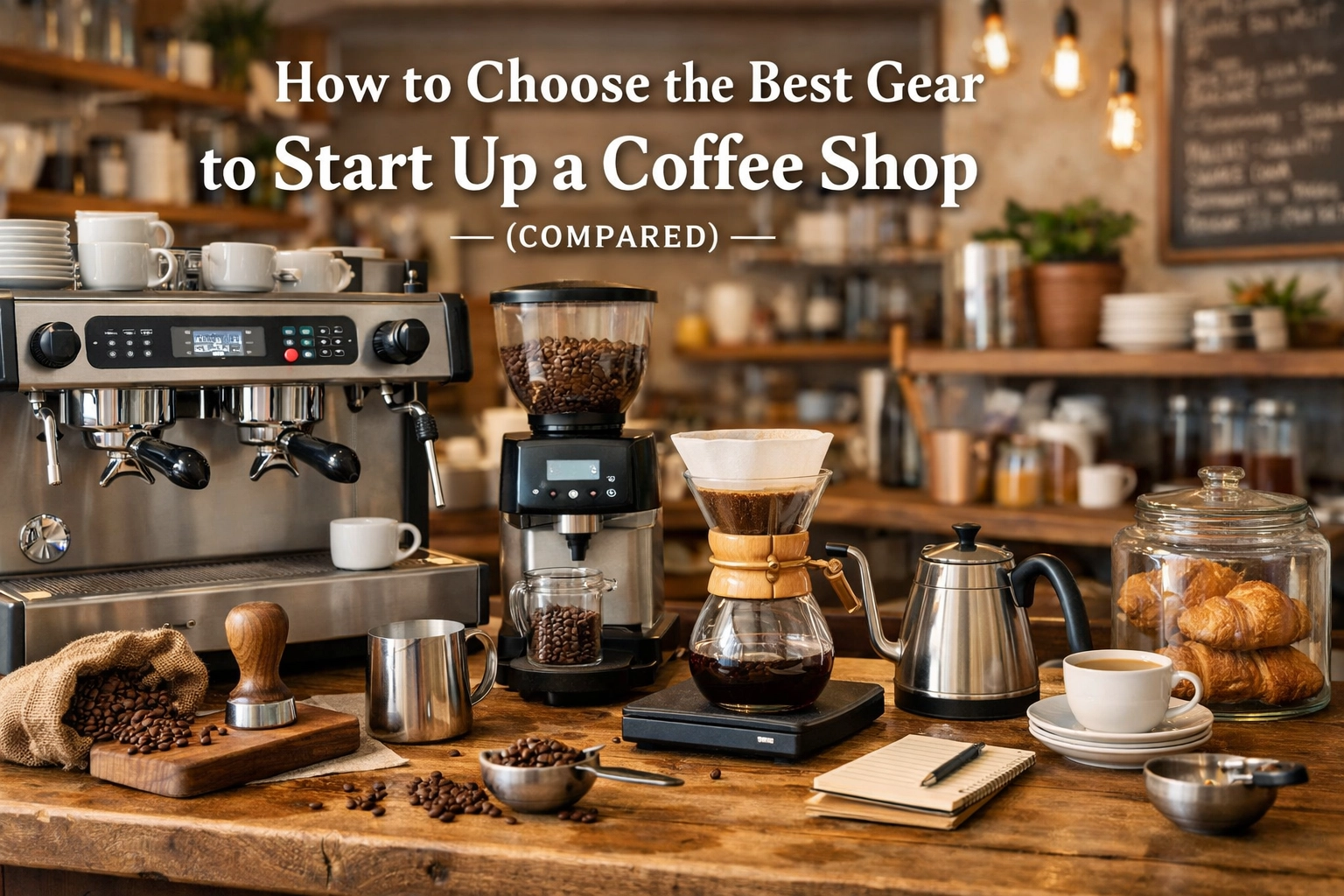
    How to Choose the Best Gear to Start Up a Coffee Shop (Compared)

    So, you’ve decided to take the plunge and start up a coffee shop. First of all, congratulations! You are about to enter a world of caffeine-induced highs, early mornings, and the sheer joy of creating a community space. But before you start picking out the perfect shade of "reclaimed wood" for your counter, we need to talk about the heavy hitters: the gear.

    Choosing equipment is often the most stressful part of the journey. It’s expensive, technical, and if you get it wrong, you’re left with a very shiny, very heavy paperweight that ruins your margins. At Limini Coffee, we’ve spent years helping people navigate this minefield. We’ve seen what works, what breaks, and what just looks good on Instagram but fails in the heat of a Saturday morning rush.

    Let’s break down exactly what you need, what you can skip, and how to compare your options without losing your mind.


    The Heart: The Espresso Machine

    The espresso machine is the centerpiece of your shop. It’s the engine room. If this goes down, your revenue stops. Period. When you’re looking to start up a coffee shop, you’ll likely be torn between a few different "styles" of machines.

    1. Manual/Lever vs. Automatic

    You might be tempted by the romance of a lever machine. There is something undeniably cool: or as we lovingly call it, theatre: about a barista pulling a physical lever. However, for a high-traffic shop, consistency is your best friend.

    Automatic (or "volumetric") machines allow you to program the water delivery. You press a button, and the machine stops once it hits the right volume. This means your barista can be steaming milk or chatting with a customer while the shot pours perfectly. We usually recommend automatic machines for most startups because they reduce human error during a rush. If you’re curious about the technical differences, check out our guide on lever vs automatic machines.

    2. Heat Exchange vs. Dual Boiler

    This is where it gets technical.

    • Heat Exchange (HX): Uses one big boiler for steam and a pipe running through it to flash-heat water for coffee. It’s efficient but can sometimes be less temperature-stable if you aren't careful.

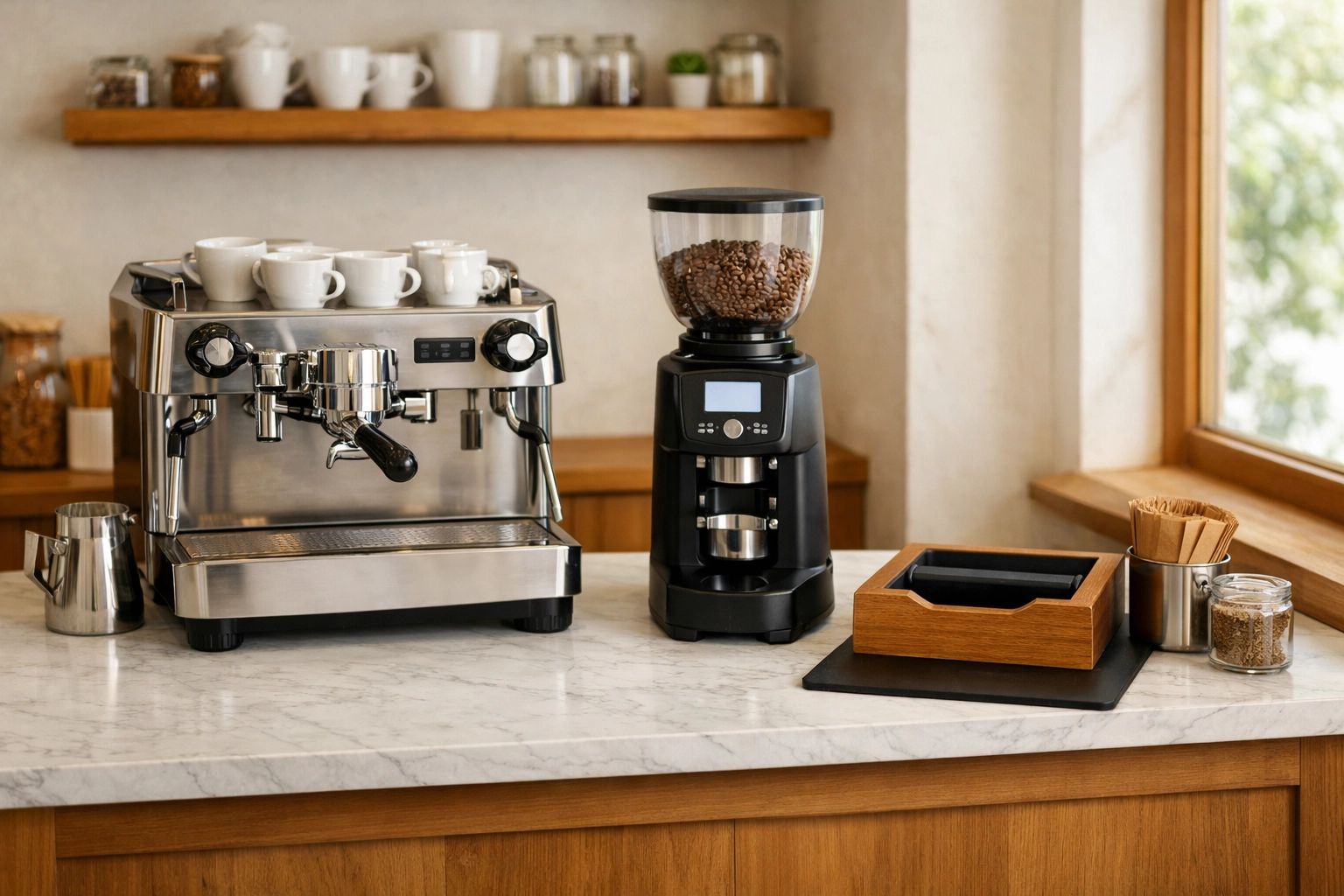
    • Dual Boiler: One boiler for steam, one for coffee. This gives you "cruise control" for your temperature.

    We are big fans of the La Spaziale range. They use a unique steam-heated system for the coffee groups which provides incredible thermal stability. It’s a brilliant system that we’ve found handles the UK's hard water better than almost anything else.

    Commercial espresso machine on an oak counter, essential for those looking to start up a coffee shop.


    The Brain: The Grinder

    Here is a hard truth: the grinder is arguably more important than the machine. You can have a £10,000 espresso machine, but if your grinder produces inconsistent particle sizes, your coffee will taste like sad, bitter battery acid.

    When comparing grinders to start up a coffee shop, you have two main paths:

    On-Demand vs. Doser

    • Doser Grinders: These have that little "chamber" on the front with a lever you click. You grind a bunch of coffee into the chamber and flick it out into your handle. The problem? Coffee starts losing its soul (oxidising) within minutes of being ground. If it sits in that chamber for twenty minutes, it’s dead.
    • On-Demand: You push a button (or the handle), and the grinder grinds exactly 18g (or whatever your recipe is) directly into the basket. Fresh is best. Always.

    We believe an on-demand burr grinder is non-negotiable in 2026. It reduces waste, keeps the coffee fresh, and makes tamping and extraction far more consistent.


    The Supporting Cast: Filter and Batch Brewers

    While espresso pays the bills, batch-brew filter coffee is your high-margin hero. It’s quick to serve and allows you to showcase different origins from a speciality coffee roaster.

    • Automated Brewers: Think Moccamaster or Bunn. These are great for high volume. You set it and forget it.
    • Manual Pour-over: V60s or Chemex. Great for the "coffee nerd" crowd, but they take 4-5 minutes of a barista's undivided attention.

    If you are just starting out, we suggest an automated batch brewer for efficiency and maybe one or two manual options if you want to lean into the craft side of things. Use a brewing calculator to ensure your ratios are spot on: consistency is what brings people back.


    The "Boring" Essentials (That Are Actually Critical)

    You’ve spent the big bucks on the machine and grinder. Now, don't forget the stuff that actually makes the shop run.

    1. Water Filtration

    The water in your pipes is not your friend. Depending on where you are in the UK, it’s likely full of minerals that want to turn into scale inside your expensive machine. A proper water filtration system isn't an "extra": it’s an insurance policy. Without it, you’ll be calling us for repairs within six months.

    2. Milk Management

    Milk is a huge part of your menu. You need high-quality pitchers and, most importantly, the knowledge of how to use them. Understanding the science of how milk stretches and heats (aiming for that sweet spot of 60 ºC to 65 ºC) is what separates a "latte" from "hot coffee with bubbles."

    3. Precision Scales

    "Eyeballing" it doesn't work in a professional environment. You need scales that are accurate to 0.1g. We weigh the dose in and the liquid out. It sounds pedantic, but it’s the only way to ensure the 100th coffee of the day tastes exactly like the 1st.

    Barista pouring silky latte art with professional tools to start up a coffee shop successfully.


    Comparing the Costs: A Reality Check

    What does it actually cost to gear up? While you can find "deals" on eBay, we generally advise against buying used gear for a startup unless you are a part-time espresso machine engineer.

    Equipment Type Entry Level (Reliable) Mid-Range (Recommended) High-End (The Dream)
    Espresso Machine £2,500 – £3,500 £4,000 – £6,500 £8,000+
    Espresso Grinder £500 – £800 £1,000 – £1,500 £2,500+
    Water Filter £150 £300 £500+
    Smallwares £200 £500 £1,000

    Basically, you should budget between £15,000 and £30,000 for a solid equipment package that won't let you down. If that feels like a lot, remember that this gear is what generates every penny of your revenue. You can find more details on choosing your equipment here.


    The Layout: Where Does it All Go?

    You can have the best gear in the world, but if your baristas are bumping into each other like a bad comedy sketch, your service will suffer. This is where shop fitting and layout come in.

    Think about the "workflow triangle":

    1. The Grinder/Machine Station: Where the magic happens.
    2. The Milk/Fridge Station: Easy access to milk and pitchers.
    3. The Sink/Knock-box: For cleaning handles and dumping pucks.

    Keep these close together. If your barista has to take three steps to get to the fridge for every latte, they will be exhausted by 10 AM, and your queue will be out the door (and not in a good way).

    An ergonomic layout of coffee equipment on a marble counter to start up a coffee shop with efficiency.


    Don't Forget the Most Important "Gear": You

    We can sell you the best La Spaziale machine in the world, but it’s only as good as the person pressing the buttons. This is why we obsess over barista training.

    When you start up a coffee shop, you aren't just buying gear; you are building a craft. You need to understand crema, how to look after your machine, and how to talk to your customers about the coffee you’re serving.

    At Limini Coffee, we don't just ship you a box and wish you luck. we provide a full wholesale partnership that includes training, equipment support, and, of course, the beans that make the whole thing worth it.


    Summary Checklist for Starting Up

    Before you swipe that credit card, run through this list:

    • Menu First: Are you doing 90% milk drinks or focusing on black filter coffee? Match your gear to your menu.
    • Power Requirements: Do you have enough juice? (Some 3-group machines need a lot of watts!).
    • Maintenance: Is there a local engineer who can fix this brand? (Hint: We can help with La Spaziale!).
    • Training: Have you budgeted time to learn the gear?

    Choosing gear to start up a coffee shop is a big step, but it doesn't have to be a scary one. If you focus on reliability, consistency, and a solid partnership with your roaster, you’ll be well on your way to serving that perfect cup.

    If you’re feeling overwhelmed, or just want to chat about which machine fits your specific space, reach out to us. We’ve been through this hundreds of times, and we’d love to help you get your dream off the ground.

    Now, go put the kettle on. You've got some planning to do. 🙂