Category: Category 1

Use this description to tell users what kind of blog posts they can find in this category.

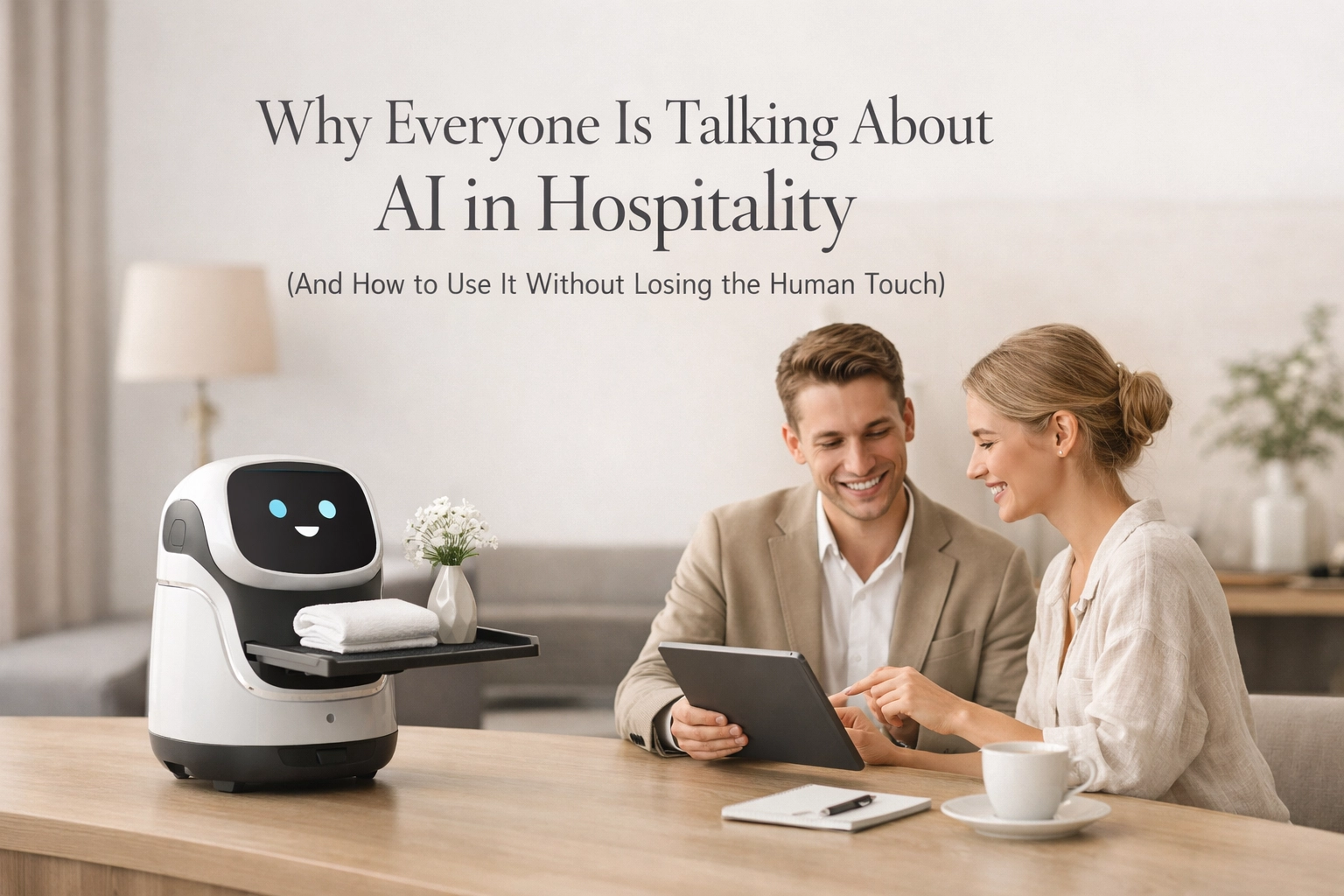
  • Why Everyone Is Talking About AI in Hospitality (And How to Use It Without Losing the Human Touch)

    Why Everyone Is Talking About AI in Hospitality (And How to Use It Without Losing the Human Touch)

    Automate the mundane. Elevate the guest. Transform your operations.

    The hospitality industry is currently undergoing its most significant shift since the invention of the internet. It’s no longer about whether you’re using AI: it’s about how deeply it’s woven into the fabric of your guest journey. By 2026, over 71% of hospitality professionals report that AI is having a transformative impact on their daily business. It’s not just a trend; it’s the new baseline for survival.

    We believe that the future of hospitality belongs to those who use technology to become more human. At Mews, we’ve built a cloud-native ecosystem designed to handle the complexities of modern travel, allowing your team to step away from the screen and back to the guest. It’s about building a connected data foundation that lets you scale personalization effortlessly, all from one innovative platform.

    Why the urgency is real in 2026

    The landscape has changed. We’ve moved past simple chatbots and basic automation into the era of agentic AI. These are intelligent agents that don’t just answer questions: they autonomously search, evaluate, and book travel on behalf of the guest.

    Recent data suggests that by 2030, nearly 30% of all travel bookings will be executed by these AI agents rather than human fingers on a keyboard. If your hotel’s data is fragmented, outdated, or stuck in a legacy "on-prem" system, you effectively become invisible to these agents. They can’t find what they can’t see.

    A smartphone in a minimalist hotel lobby representing a cloud-native hotel PMS and connected data foundation.

    The data foundation: Your Hotel PMS

    We think your property management system should be more than a digital filing cabinet. It should be the brain of your operation. To win in this new era, your hotel pms must be connected to every other touchpoint: your booking engine, your channel manager, and your CRM.

    When these systems talk to each other in real-time, magic happens.

    • Visibility: Your inventory is always accurate across all OTA and direct channels.
    • Intelligence: AI agents find your property because your data is structured and accessible.
    • Speed: Rates adjust dynamically based on demand, not manual input.

    "Switching to a cloud-native system saved our back-office team 15 hours a week," says one boutique hotel owner. "We stopped fighting the software and started focusing on the people in our lobby."

    Automate operations, not hospitality

    The biggest fear in our industry is that AI will make hotels feel cold and clinical. We believe the opposite. By automating the transactional parts of the stay, you create the space for genuine connection.

    Think about the traditional check-in process. It’s a series of administrative tasks: verifying ID, swiping a card, printing a registration card. None of this is "hospitality." It’s just paperwork.

    Move the "work" to the background

    • Self-check-in kiosks: Let guests bypass the line and head straight to their room. It’s fast, easy, and exactly what the modern traveler expects.
    • Automated Housekeeping: Rooms update in real-time. As soon as a guest checks out via their phone, housekeeping is notified. No more radioing the front desk.
    • Smart CRM: Send personalized pre-arrival messages that actually matter. If a guest always asks for extra pillows, have them waiting in the room before they even arrive.
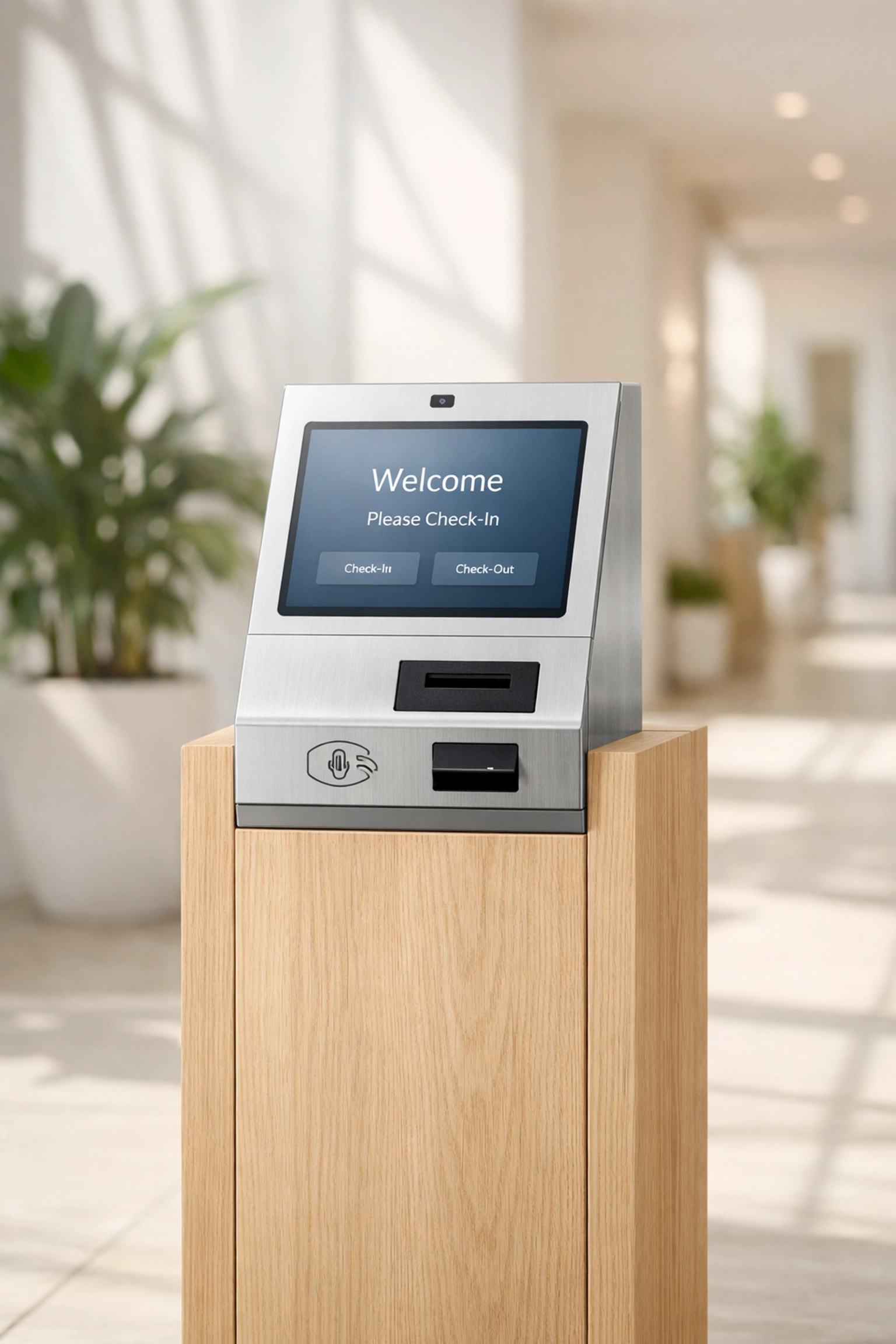
    Modern self-check-in kiosk in a sunlit hotel lobby, illustrating efficient and automated guest registration.

    Using AI to enhance the human touch

    So, if AI is handling the discovery and the admin, what is your staff doing? They’re becoming hosts, not clerks.

    When your team isn't buried in a hotel pms screen, they can look the guest in the eye. They can offer a local recommendation that isn't on a Top 10 list. They can notice it’s a guest’s birthday and send up a handwritten note. This is where loyalty is actually built. Traditional points-based programs are fading; guests now stay for the experience and the feeling of being known.

    We believe that technology should be invisible. The best self-check-in kiosks are the ones that work so smoothly the guest doesn't even think about the tech: they just think about how easy it was to get to their room.

    The power of a connected ecosystem

    Innovation doesn't happen in a vacuum. Your channel manager needs to feed into your booking engine, which needs to sync with your CRM. If these tools don't talk to each other, you're creating friction for your guests and your staff.

    At Mews, we focus on an automation-first approach.

    • Direct Bookings: Your booking engine should feel like an extension of your brand, not a clunky third-party add-on.
    • Real-time Updates: When a room sells on Expedia, your channel manager should update your PMS and your direct site instantly.
    • Unified Guest Profiles: Every interaction, from a spa booking to a late-night snack, should live in one place.

    A hotel host using a mobile tablet to engage with a guest, showing the balance of technology and human touch.

    AI Literacy: The new skill for 2026

    To thrive, your team needs to understand where AI adds value and where the human touch is irreplaceable. This isn't about replacing people; it's about giving them better tools.

    • 92% of staff report higher job satisfaction when repetitive tasks are automated.
    • 85% of guests prefer digital options for transactional interactions.
    • 100% of your competitors are looking at how to use these tools right now.

    The goal is to reach a point where your staff operates with "connected insights." They aren't guessing what the guest wants; they know. They aren't worried about the printer jamming; they're worried about the guest's comfort.

    Why Mews is the choice for the future

    We didn't just add AI to an old system. We built Mews from the ground up to be cloud-native and automation-focused. We believe that hospitality technology should be as easy to use as the apps on your phone.

    See how we can transform your property: https://referrals.mews.com/umqhyito

    Our platform is designed for the way people travel today. It’s mobile-first, guest-centric, and incredibly easy to use. Whether you’re running a single boutique hotel or a global chain, the principles remain the same: simplify the back end so you can amplify the front end.

    Mobile-first guest experience with a smartphone and breakfast in bed, highlighting an easy-to-use booking engine.

    Start your transformation today

    The shift toward AI-driven hospitality is moving fast. The properties that wait until 2027 to modernize their stack will find themselves invisible to the AI agents that are already beginning to dominate the booking landscape.

    Don't let legacy tech hold your hospitality back.

    1. Audit your current stack. Is your PMS holding you back from integrating new AI tools?
    2. Identify friction points. Where are your guests waiting in line? Where are your staff doing manual data entry?
    3. Prioritize the guest experience. Choose tools that remove the "admin" and highlight the "host."

    The future of hospitality isn't robots serving coffee. It's a world where technology handles the logistics so perfectly that humans are free to do what they do best: provide a warm, personalized, and memorable stay.

    Ready to see what the most innovative hotel management software can do for your business?

    Get started with Mews today: https://referrals.mews.com/umqhyito

    It’s time to stop managing software and start managing experiences. Let's get you back to the heart of hospitality. Fast. Easy. Innovative. That’s the Mews way.
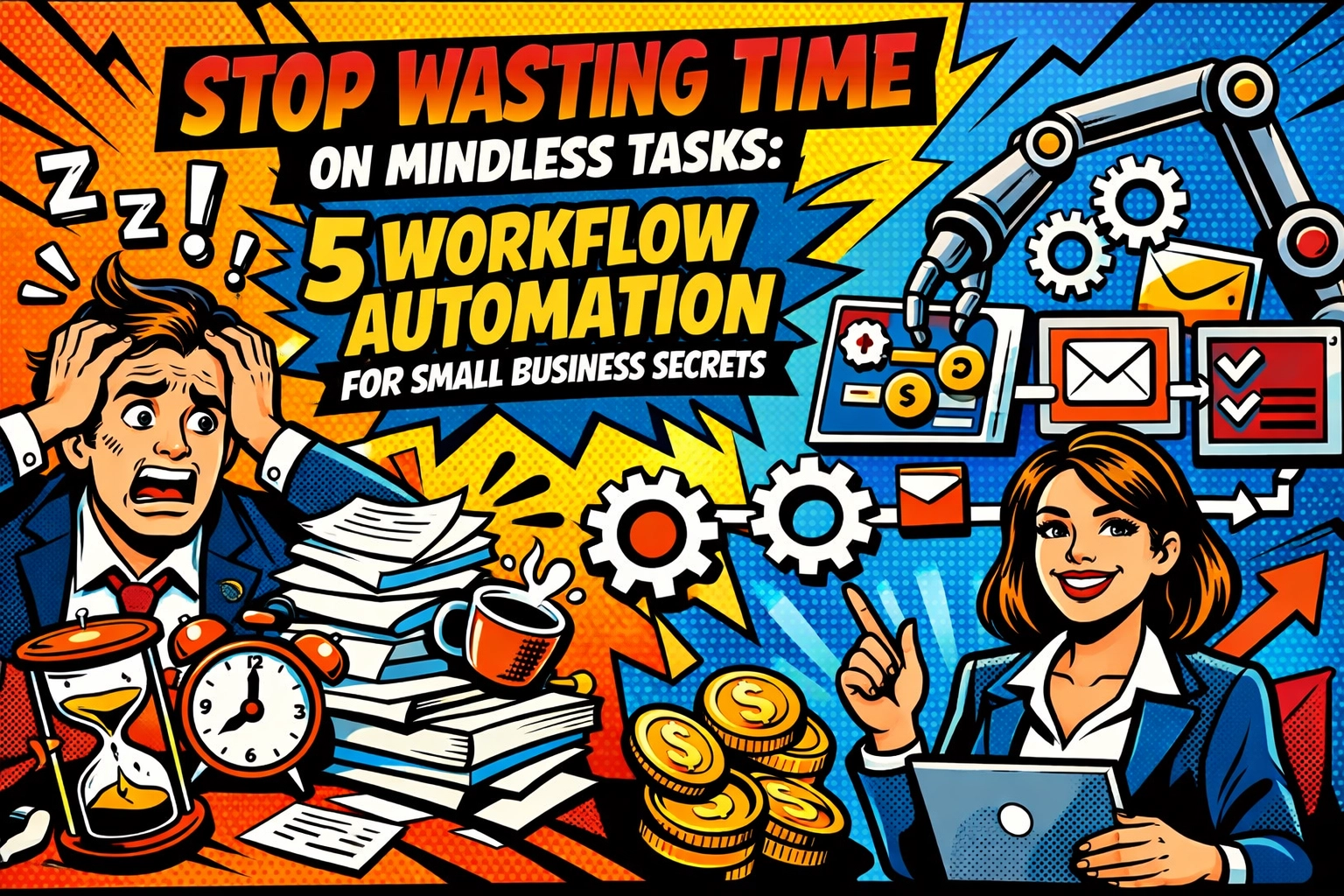

  • Stop Wasting Time on Mindless Tasks: 5 Workflow Automation for Small Business Secrets

    Stop Wasting Time on Mindless Tasks: 5 Workflow Automation for Small Business Secrets

    WORKFLOW AUTOMATION FOR SMALL BUSINESS: STOP DOING THE BUSY WORK

    ☕ 7:00 AM.

    The sun isn’t even fully up yet, but your phone is already screaming. You reach for it, squinting at the blue light, and there it is… 47 unread emails. Three of them are "urgent" requests for invoices you already sent. Two are "just checking in" pings from leads you haven't had time to call back. And one? Well, that’s just a newsletter you forgot to unsubscribe from three years ago.

    You haven’t even had coffee, and you’re already behind.

    This is the "Small Business Trap." You started this thing because you have a vision, a craft, a service that people actually need. But now? Now you’re just a glorified data entry clerk who occasionally does the thing you actually love.

    It’s exhausting. It’s mindless. And honestly… it’s optional.

    STOP JUGGLING. START FLOWING.

    You’re probably thinking that "automation" sounds like something for the big guys, the Fortune 500 companies with IT departments the size of your entire city block.

    But it’s quiet , organized.

    Workflow automation for small business isn’t about building a robot army. It’s about making the boring stuff happen while you sleep, so you can focus on the stuff that actually puts money in the bank.

    Here are the 5 secrets to reclaiming your calendar.

    1. THE DATA ENTRY EXORCISM

    📱 9:00 AM.

    You’re sitting at your desk, staring at a spreadsheet. You’re copy-pasting names from an email into a CRM. Then from the CRM into an invoice. Then from the invoice into a shipping label.

    One typo , just one , and that package is headed to Albuquerque instead of Atlanta.

    Why are you doing this?

    Modern automation tools can grab that data the second a customer hits "submit" on your website. No typing. No errors. Just pure, digital telekinesis. When you eliminate manual entry, you aren't just saving time; you're saving your sanity.

    Business owner watching workflow automation clear a desk of manual data entry tasks and paper.

    2. CUSTOMER COMMUNICATIONS ON AUTOPILOT

    🔍 11:30 AM.

    A lead fills out your contact form. They’re hot. They’re ready to buy. But you’re in a meeting. By the time you get back to them at 4:00 PM, they’ve already moved on to your competitor who replied in five minutes.

    You don't need to be glued to your phone 24/7.

    Set up a workflow that sends an immediate, personalized "Hey, I saw your request!" message. It keeps the lead warm while you’re actually living your life. It’s the difference between a closed deal and a missed opportunity.

    3. THE 24-HOUR ONBOARDING MIRACLE

    🤝 2:00 PM.

    Usually, when you sign a new client, it takes 3 to 5 days of back-and-forth emails to get them set up. Contracts, intake forms, "send me your logo" reminders… it’s a mess.

    But with the right workflow, that timeline shrinks to under 24 hours.

    The moment the contract is signed, the system automatically sends the welcome kit, creates their folder in your cloud storage, and pings your team to get started. You didn't lift a finger. You just look like a pro.

    4. SCHEDULING WITHOUT THE "DANCE"

    ☎️ 3:30 PM.

    "Does Tuesday at 2 work?"
    "No, how about Wednesday at 10?"
    "I can do Wednesday at 10 if we keep it to 15 minutes…"

    Stop the "Calendar Dance." It’s 2026. Use an automated scheduling link. You set your availability, they pick a slot, and the Zoom link magically appears in both your calendars.

    No emails. No friction. Just meetings that actually happen.

    5. APPROVALS THAT DON’T GET STUCK

    🌙 6:00 PM.

    The day is winding down, but there’s a bottleneck. Your team is waiting on you to approve a draft or a budget. It’s buried in your inbox.

    Automation centralizes these requests. Instead of digging through threads, you get a single notification. You click "Approve." The workflow notifies the team and moves the project to the next stage.

    The chaos is gone before you even take your last sip of water for the day.

    If you’re tired of being the bottleneck in your own business, it’s time to look at what Scott Bowen is doing with automation. It’s not about working harder; it’s about making the systems do the heavy lifting.


    WHY YOUR BUSINESS NEEDS AN AI VIRTUAL ASSISTANT (BEFORE YOUR COMPETITORS GET ONE)

    Let’s be real for a second. Your competitors are currently staring at the same walls you are. They’re feeling the same burn. They’re losing the same sleep.

    But some of them have a secret weapon.

    They aren't hiring more people. They aren't working more hours. They’ve brought in an AI Virtual Assistant. And while you’re still trying to figure out how to format that PDF, they’re scaling at a speed that should be illegal.

    THE EMPLOYEE THAT NEVER SLEEPS

    🌙 11:00 PM.

    You’re finally in bed. Your eyes are heavy. But somewhere out there, a potential customer is browsing your site. They have a question.

    If you don't have an AI assistant, that question goes unanswered until 9:00 AM tomorrow. By then? They’re gone.

    But an AI Virtual Assistant is wide awake. It answers the question, qualifies the lead, and books a call on your calendar for tomorrow afternoon. You wake up to money on the table.

    Scaling Shouldn't Be This Easy. But Here We Are.

    Friendly AI virtual assistant for business managing customer leads and tasks in a night office setting.

    BEYOND THE CHATBOT

    This isn't those annoying "Hi, how can I help you?" pop-ups from 2019. This is different.

    An AI Virtual Assistant for business today can:

    • Organize your inbox: It knows what’s junk and what’s a $10,000 opportunity.
    • Draft responses: You just hit "send."
    • Research prospects: Before you even hop on a call, you know their favorite sports team and their last three LinkedIn posts.
    • Manage projects: It pings Stan because he forgot to upload the files again. (Classic Stan.)

    THE COMPETITIVE EDGE (OR THE CLIFF)

    The gap between businesses using AI and those "waiting to see how it goes" is widening. It’s not a gap anymore; it’s a canyon.

    When your competitor can handle 10x the volume of leads with half the overhead, they can lower their prices. They can spend more on ads. They can eat your lunch while you’re still looking for a fork.

    You don't need a massive budget. You just need to be smarter than the guy down the street.

    IT’S NOT ABOUT REPLACING PEOPLE

    It’s about replacing the robotic parts of people.

    Your team shouldn't be spending four hours a day on "busy work." They should be creating. Solving. Selling. When an AI assistant takes over the mindless routine, your human team finally gets to be human again.

    And a human team that isn't burnt out? That’s a dangerous advantage.

    THE CLOCK IS TICKING

    You start your day with 100+ unread emails… but it doesn't have to stay that way.

    The tools are here. The technology is ready. The only thing missing is your decision to stop doing things the hard way. Whether you're looking for a full workflow overhaul or just want to dip your toes into the AI water, you need to see what's possible.
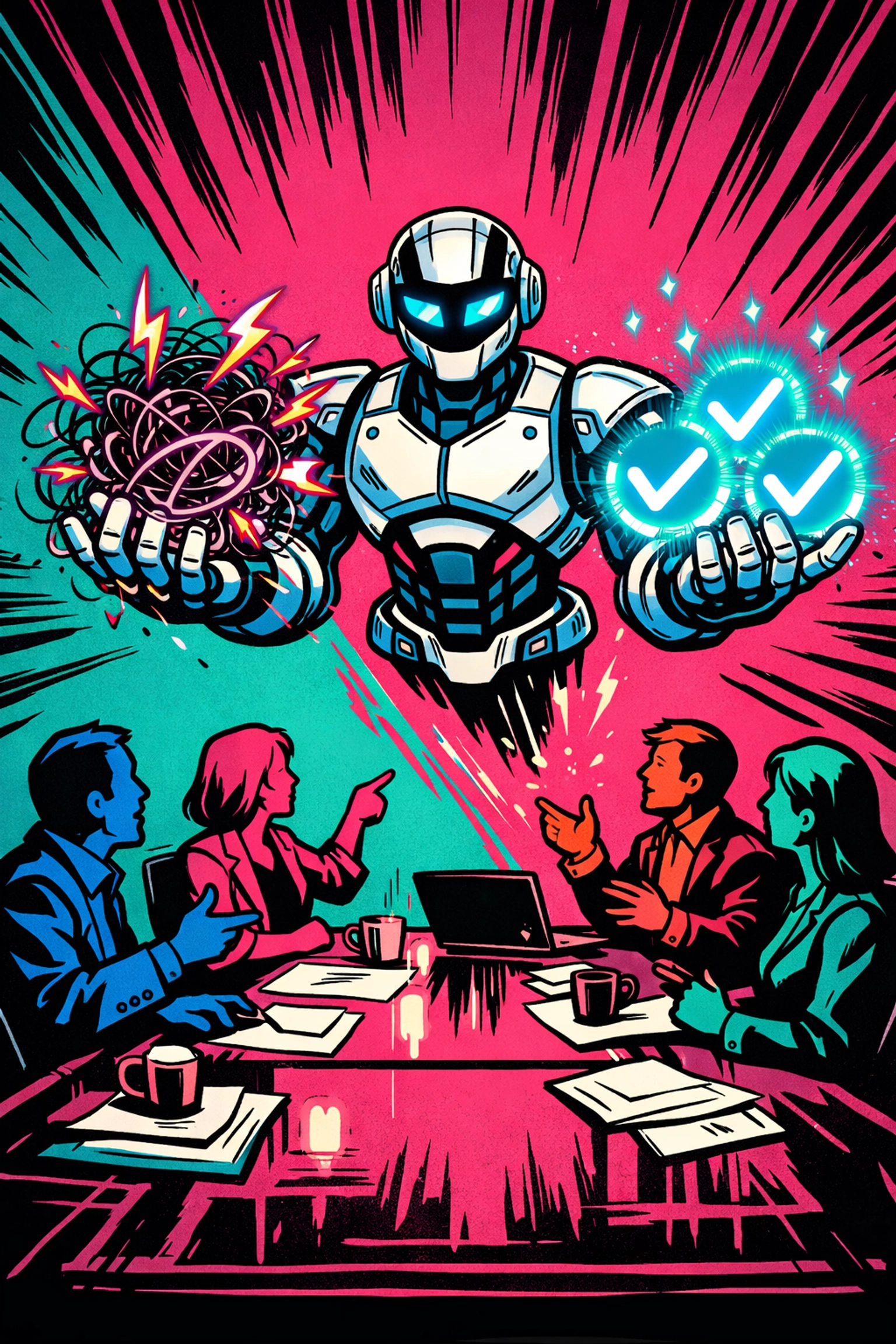
    Don't wait until your competitors have a two-year head start.

    You can check out how to get ahead of the curve right here: Marblism with Scott Bowen.

    FAQ: THE NO-BS ANSWERS

    Is this going to be hard to set up?
    No. Most modern tools are plug-and-play. You don't need to code; you just need to know what you want to happen.
    Will it sound like a robot?
    Only if you want it to. AI has evolved. It can match your tone, your brand, and your specific "vibe" perfectly.
    Is it expensive?
    Compared to hiring a full-time employee? It’s basically free. Most systems pay for themselves within the first month by reclaiming lost time.
    Can I start small?
    Yes. Start with one thing: like your email or your scheduling. You’ll feel the relief instantly. Then you’ll want to automate everything. Trust me.

    The day is ending. The lights are off.

    You smile.

    You step back into your day, knowing that while you’re resting, your business is still moving forward. That’s the power of automation.

    Welcome to the future. It’s much quieter here.

    SCALING ISN'T A CHOICE. IT'S A SYSTEM.

  • The Ultimate Guide to Brewing Better Coffee: Everything You Need to Succeed at Home

    The Ultimate Guide to Brewing Better Coffee: Everything You Need to Succeed at Home

    So, you’ve decided to take the plunge into the world of home brewing. Maybe you’re tired of the watery, burnt-tasting stuff from the supermarket, or perhaps you’ve visited a local speciality shop and wondered, "Why can't I make it taste like that?"

    The truth is, you absolutely can.

    At Limini Coffee, we believe that brewing incredible coffee at home isn't some dark art reserved for people with expensive waistcoats and even more expensive moustaches. It’s actually quite a logical process of managing a few key variables. If you get the fundamentals right, the rest is just a matter of personal preference. Whether you’re after a punchy espresso or a delicate pour-over, we’re here to help you navigate the jargon and the gear.

    And remember, the best coffee starts with the best beans. If you want to jump straight to the good stuff, you can check out our latest roasts over at Limini Coffee.


    The Golden Rule: Freshness Above All Else

    We can talk about equipment until we’re blue in the face, but if your beans are stale, your coffee will be dull. It really is as simple as that. Coffee is a fresh agricultural product. Once those beans are roasted, the clock starts ticking as they begin to release carbon dioxide and oxidise.

    When you buy coffee from the supermarket, it has often been sitting on a shelf for months. By the time it reaches your kitchen, the volatile oils, the things that actually give coffee its flavour, have mostly vanished. This is why we focus so heavily on sourcing our coffee responsibly and roasting it in small batches.

    So, tip number one: Always check the "roasted on" date. If it doesn’t have one, keep walking. Ideally, you want to use your beans within four to six weeks of roasting.

    Freshly roasted coffee beans spilling from a bag, showing why fresh beans matter for home brewing


    The Three Pillars of Home Brewing

    To succeed at home, you need to master three fundamental variables: your grind, your water, and your ratio.

    1. The Grind (Consistency is King)

    If there is one piece of kit you should invest in, it’s a burr grinder. Avoid blade grinders like the plague, they don't grind coffee; they shatter it into uneven chunks. This means the tiny dust-like particles (fines) over-extract and become bitter, while the big boulders under-extract and taste sour.

    A burr grinder uses two revolving abrasive surfaces to "crush" the beans to a uniform size. This consistency is what allows for an even extraction.

    • Coarse (Sea salt texture): Best for French Press.
    • Medium (Sand texture): Great for Drip or Aeropress.
    • Fine (Table salt texture): Ideal for Pour-over.
    • Extra Fine (Powder texture): Essential for Espresso.

    2. The Water (The Hidden Ingredient)

    Your cup of coffee is about 98% water. If your water tastes "off," your coffee will too. We generally recommend using filtered water if you live in a hard-water area. Scale is the enemy of both flavour and your coffee machine.

    Temperature also matters, a lot. We recommend a range of 195–205 °F (90–96 ºC). If you use boiling water straight off the hob, you risk "scalding" the grounds and ending up with a bitter cup. Conversely, water that is too cool won't extract enough flavour, leaving your coffee tasting thin and weak.

    3. The Magic Ratio

    How much coffee should you use? We often see people guessing, but we prefer a more scientific approach. The industry standard is a 1:16 ratio. This means 1 gram of coffee for every 16 grams of water.

    For a standard mug (about 250ml), you’ll want roughly 15-16g of coffee. If you aren't a fan of doing maths before your first caffeine hit, we’ve actually built a coffee brewing calculator to do the hard work for you. Using a scale is the easiest way to make sure your coffee tastes the same every single morning.


    Choosing Your Method

    There is no "best" way to brew coffee, only the way that suits your lifestyle and your palate. Here are our thoughts on the most popular methods for home brewers.

    The Pour-Over (V60 or Chemex)

    This is the purist's choice. It produces a cup with incredible clarity and highlights the nuanced flavours of single-origin beans. It takes a bit of practice and a steady hand (a gooseneck kettle helps!), but the results are worth it.

    • Best for: Exploring different flavour profiles and enjoying a clean, sediment-free cup.
    • Pro Tip: Wet your paper filter first to remove any "papery" taste before adding your grounds.

    Pour-over coffee bloom in a filter with gooseneck kettle, demonstrating better home brew technique

    The French Press (Cafetière)

    The old reliable. It’s an immersion method, meaning the grounds sit in the water for the entire brew time (usually 4 minutes). This produces a heavy-bodied, rich, and oily cup of coffee. It’s very forgiving, but it can be a bit of a pain to clean.

    • Best for: Those who like a big, bold mouthfeel and want to brew for multiple people at once.
    • Warning: Always clean your mesh filter thoroughly. Old coffee oils trapped in the mesh will turn rancid and ruin your next brew.

    The Aeropress

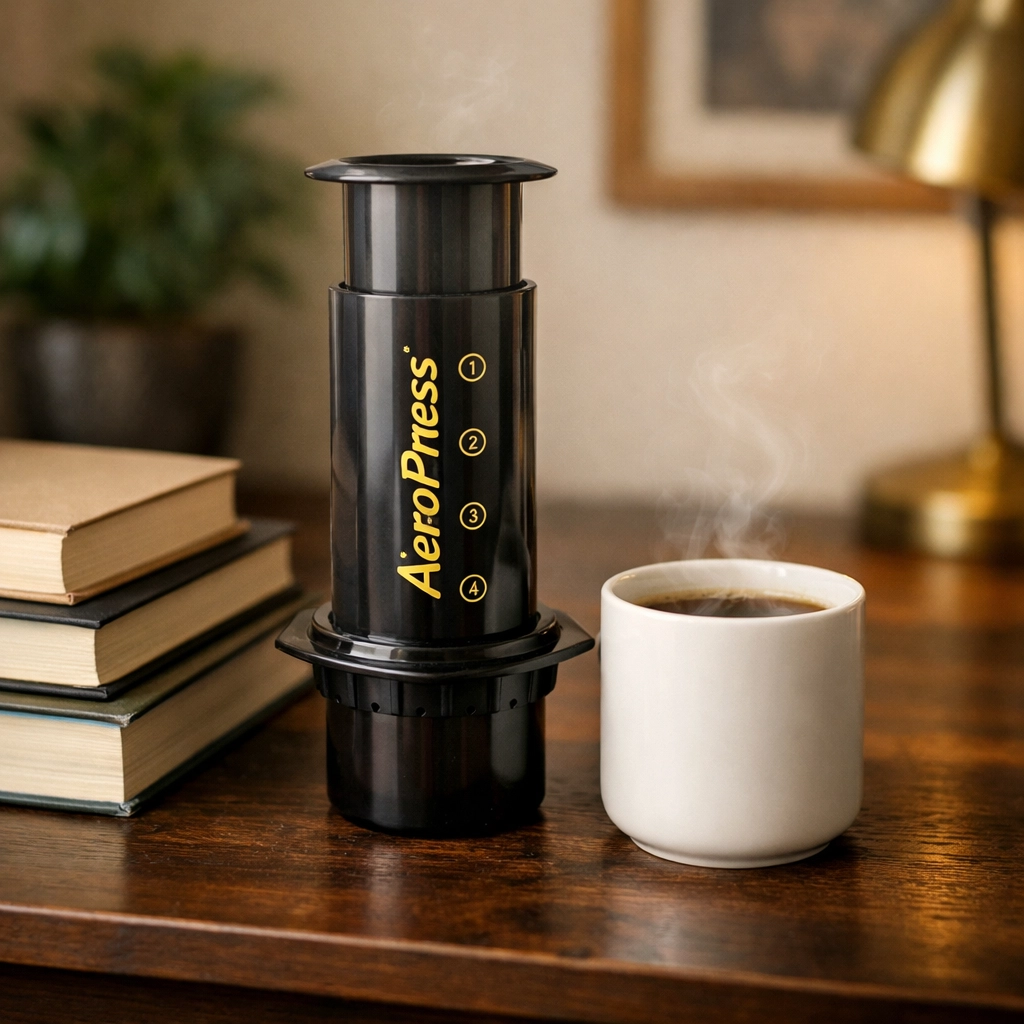
    We love the Aeropress. It’s indestructible, portable, and incredibly versatile. You can make anything from a concentrated espresso-style shot to a standard long coffee. It’s also very fast, you can be drinking your coffee in under two minutes.

    • Best for: Travellers, office workers, and anyone who likes to experiment.
    • Technique: Try the "inverted method" to prevent the coffee from dripping through the filter before you’re ready to press.

    Aeropress coffee maker on a desk beside a mug, ideal single-serve home brewing setup

    The Moka Pot

    If you want something close to espresso without spending thousands on a machine, the Moka Pot is your best friend. It uses steam pressure to push water through the grounds. It produces a very strong, intense coffee that stands up well to milk.

    • Best for: Fans of strong, traditional coffee who don't mind a bit of "theatre" on the stove.

    Upgrading to Espresso

    So, you want to move beyond filter coffee and into the world of espresso? This is where things get serious. Espresso is a whole different beast that requires precise pressure and temperature control.

    When you’re choosing espresso equipment, you need to decide if you want the tactile feel of a lever machine or the consistency of an automatic. It can be intimidating, but it’s also incredibly rewarding when you finally see that perfect, golden crema pouring into your cup.

    If you are just starting out with espresso, we highly recommend looking into some barista training. Learning how to tamp correctly and dial in your grinder will save you hours of frustration and kilograms of wasted coffee.

    Double espresso shot with thick crema in a glass on a drip tray, showing espresso extraction at home


    The Importance of the "Bloom"

    You might have noticed that when you first pour water over fresh coffee, it bubbles and expands. We call this the "bloom." It’s the coffee releasing trapped carbon dioxide.

    Why does this matter? Well, if that gas is still in the beans, it pushes the water away, preventing proper extraction. We suggest pouring just enough water to wet the grounds and waiting about 30-40 seconds before continuing your pour. It’s a small step that makes a massive difference in the final taste.


    Troubleshooting Your Brew

    Is your coffee not tasting quite right? Don't panic. Here is a quick guide to fixing the most common issues:

    • Too Bitter? Your coffee is over-extracted. Try a coarser grind, lower your water temperature, or shorten the brew time.
    • Too Sour? Your coffee is under-extracted. Try a finer grind, hotter water, or a longer brew time.
    • Weak and Watery? You might need to adjust your ratio. Try adding more coffee or using less water next time.

    It’s all about trial and error. We always say that the beauty of coffee is that you have total control. You aren't just a consumer; you’re the head roaster and head barista of your own kitchen.

    Hands holding a steaming mug of home brewed coffee on a rustic table, warm everyday coffee moment


    Final Thoughts

    Brewing better coffee at home is a journey, not a destination. You’ll have days where you make the best cup of your life, and days where it ends up down the sink. That’s okay! Every "bad" cup is just a lesson in what to adjust for the next time.

    If you’re ever feeling stuck or want to dive deeper into the technical side: like understanding milk for latte art or the difference between a latte and a cappuccino: we have plenty of resources on our site to help you out.

    And of course, if you want to make sure you're starting with the highest quality beans possible, head over to Limini Coffee and see what we’ve got in the roaster this week. We’d love to be a part of your morning routine.

    Happy brewing!

  • 7 Mistakes You’re Making with Your Coffee Suppliers (and How to Fix Them)

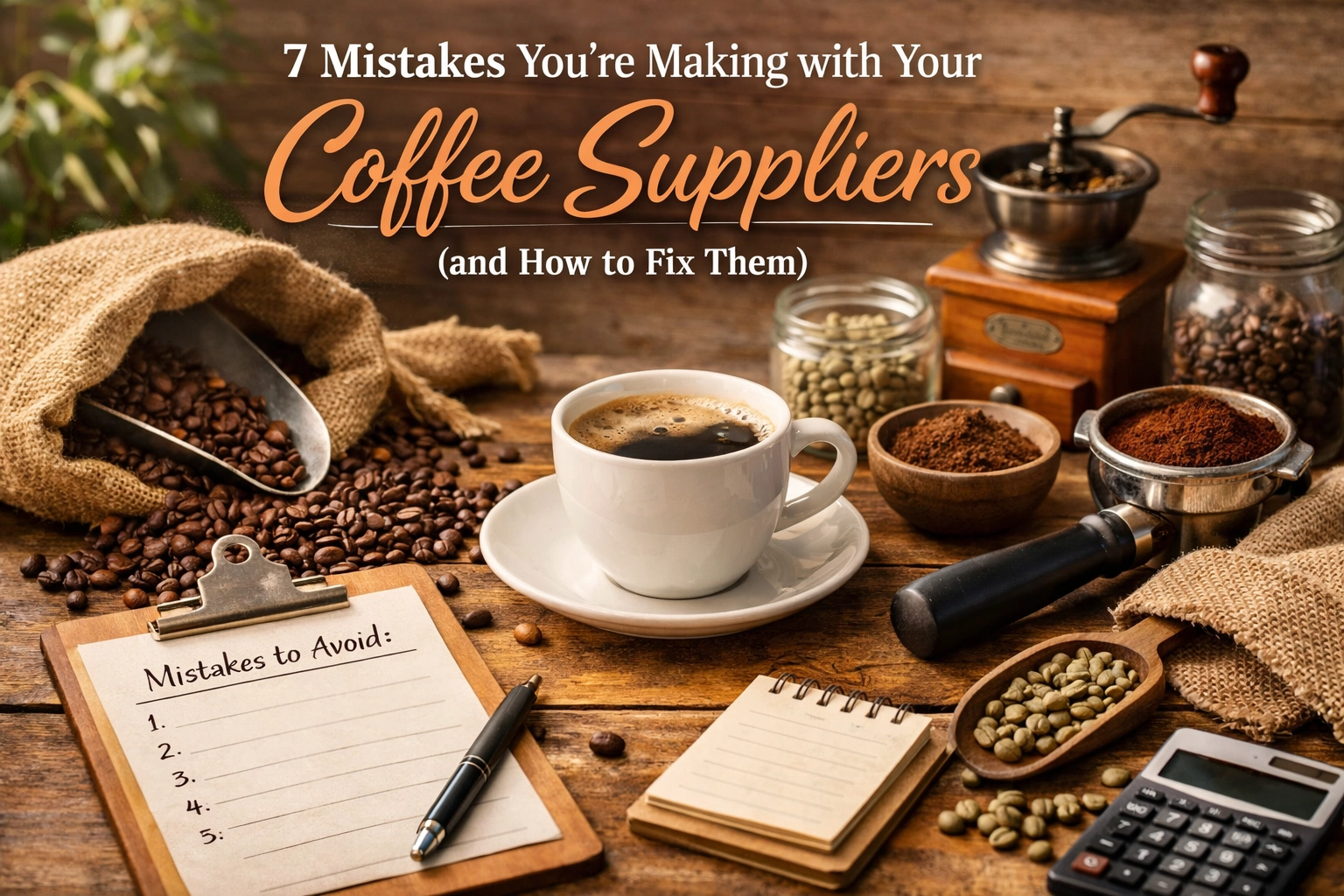
    7 Mistakes You’re Making with Your Coffee Suppliers (and How to Fix Them)

    Choosing a coffee supplier is a bit like online dating. In the beginning, everyone puts their best foot forward. The website looks sleek, the sales rep is charming, and the sample bag they sent you smells like heaven. But six months into the relationship, you might find yourself sitting in a dark café at 6:00 AM, staring at a bag of "speciality" beans that look suspiciously like oily pebbles, wondering why your supplier hasn't returned your last three emails.

    Choosing the right partner is the single most important decision you’ll make for your business, besides, perhaps, choosing a machine that doesn't explode. At Limini Coffee, we’ve seen it all. We’ve been the "fixers" for many cafés that started with the wrong partner.

    So, let’s talk about the mistakes you might be making right now and, more importantly, how to fix them before your customers start heading to the big green siren down the street.


    1. The "Cheapest Kilo" Trap

    We get it. Running a business is expensive. Rent is up, energy bills are eye-watering, and milk prices are… well, don't get us started on milk prices. It is incredibly tempting to scroll through a spreadsheet and pick the coffee supplier with the lowest price per kilo.

    But here’s the cold, caffeinated truth: a cheaper bag of coffee is often the most expensive mistake you can make. Why? Because coffee isn't a commodity like napkins or sugar; it’s the primary reason people walk through your door.

    If you save £2 per kilo but lose three regular customers because the espresso tastes like a burnt rubber tyre, you haven’t saved money: you’ve lost a fortune in lifetime value. Cheap coffee usually comes with a hidden cost: zero technical support, inconsistent roasting, and beans that are old enough to have a pension.

    How to fix it: Stop looking at the price per kilo and start looking at the value per cup. Ask what else is included. Do they offer wholesale support that includes equipment servicing? Do they provide barista training? A supplier that helps you sell more coffee is always cheaper than one that just sells you "cheap" coffee.

    A professionally prepared flat white coffee and roasted beans on a rustic café table.

    2. Failing to Verify Batch-to-Batch Consistency

    Consistency is the holy grail of the coffee industry. It is very easy to roast one amazing batch of coffee. It is incredibly difficult to roast one thousand amazing batches that all taste exactly the same.

    Mistake number two is assuming that because the sample was great, the five-kilo bag arriving on Tuesday will be identical. Many suppliers struggle with quality control as they scale. One week the coffee is bright and fruity; the next, it’s underdeveloped and tastes like a grass clipping salad. This is a nightmare for your baristas who have to constantly dial in and adjust grinders (something we teach in our training sessions).

    How to fix it: Be a bit of a nerd. Ask your supplier about their quality control (QC) process. Do they use a colorimeter to check roast consistency? Do they cup every single roast? At Limini, we’re obsessed with this. We believe that if the coffee isn't right, it doesn't leave the building. Check out our sourcing philosophy to see how we maintain those standards. If your supplier can't explain their QC, they probably don't have one.


    3. The "Ghosting" Phenomenon (Poor Communication)

    Everything is great when the sun is shining and the espresso is flowing. But what happens on a Saturday morning when your steam wand starts screaming or your delivery hasn't arrived?

    Many businesses partner with massive national suppliers because they think "big" means "reliable." Often, it just means you’re customer number 4,502. If you’re struggling to get a human on the phone when you have a crisis, you have the wrong supplier.

    How to fix it: Test the waters early. Before you sign anything, see how long it takes them to reply to a technical question. Do they have a dedicated account manager? Do they actually know who you are? We pride ourselves on being partners, not just vendors. You can read some reviews from our partners to see why communication matters. A supplier should be your first port of call, not a source of frustration.

    A coffee roaster and café owner collaborating behind a bar, showing a strong supplier partnership.

    4. Treating Coffee Like a Commodity

    This is a subtle one. If you think "coffee is just coffee," your customers will too. If your procurement team is treating coffee suppliers the same way they treat the people who provide the toilet rolls, you’re missing the point of speciality coffee.

    Speciality coffee is about traceability, ethics, and craft. It’s an experience. When you treat it as a commodity, you lose the story. And in 2026, the story is what sells. People want to know about the farm, the altitude, and the process.

    How to fix it: Educate yourself and your staff. Coffee isn't just brown dust; it’s a complex fruit. Use tools like a coffee brewing calculator to understand the science behind the brew. When you treat the product with respect, your supplier will too. We love working with people who are as passionate about the crema and the mouthfeel as we are.


    5. Ignoring the "Tech" Side of the Deal

    A common mistake is picking a coffee supplier who knows everything about beans but nothing about the machines that brew them. Your coffee is only as good as the machine it’s coming out of. If your supplier doesn't understand the difference between a lever and an automatic machine, they can’t help you when things go sideways.

    We’ve seen so many cafés with beautiful beans and a machine that hasn't been descaled since the late nineties. The result? Bitter, lukewarm coffee that ruins the supplier's reputation and your profit margins.

    How to fix it: Ensure your supplier has technical expertise. Can they talk you through looking after your espresso machine? Do they understand the inner workings of a La Spaziale? Your supplier should be able to help you troubleshoot basic issues over the phone to save you a call-out fee.

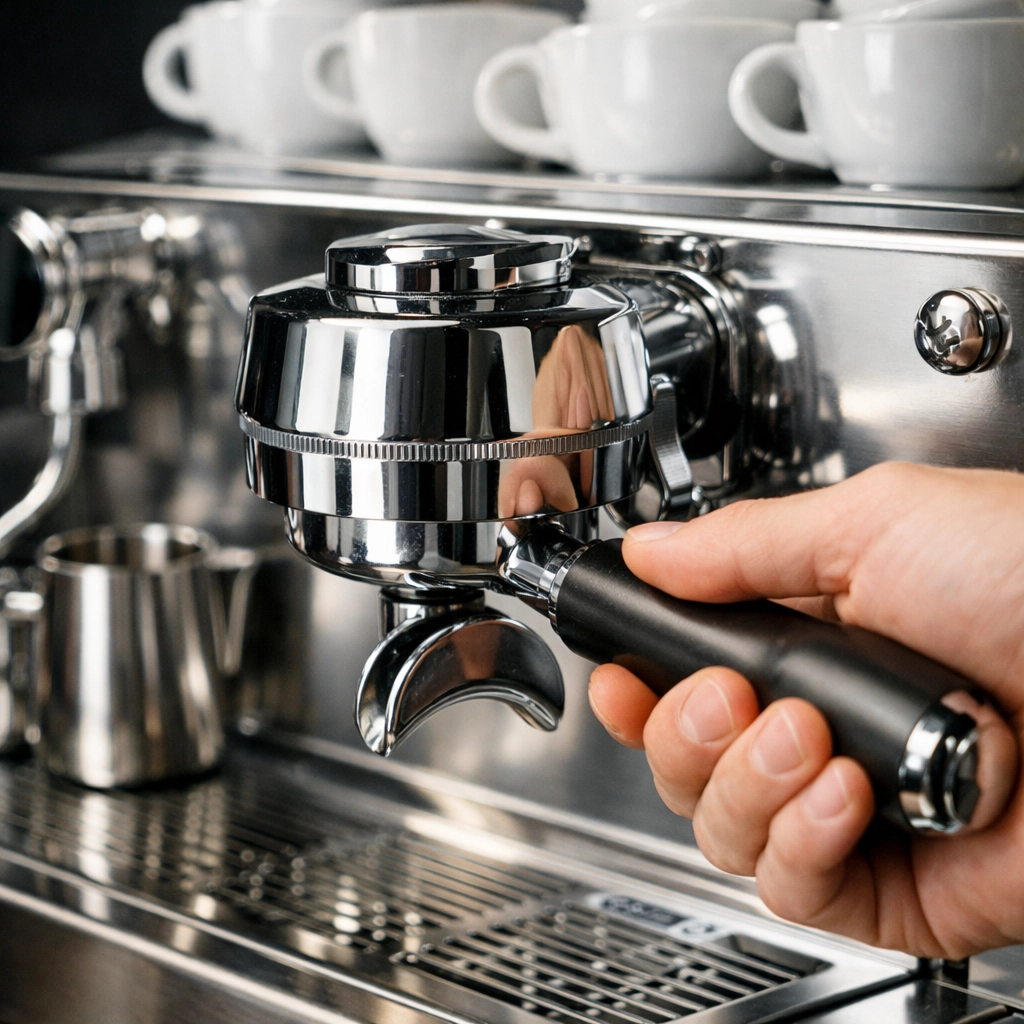
    Close-up of a barista using a professional espresso machine, highlighting equipment maintenance.

    6. Shiny Object Syndrome (Popularity vs. Quality)

    It’s easy to get swayed by the "cool" roaster that everyone is talking about on Instagram. They have the neon packaging and the minimalist aesthetic. But are they actually a good business partner?

    Sometimes, the trendiest suppliers are the most overwhelmed. They might be great at marketing, but they might struggle with the logistical "boring" stuff: like making sure your order arrives on the day they said it would. Or, they might be so focused on "light roasts" that their coffee doesn't actually cut through milk in a 12oz latte, leaving your customers wondering where the coffee flavour went.

    How to fix it: Focus on the "theatre" of your own shop, not theirs. (Check out our article on creating theatre in your café). Choose a supplier based on how their coffee performs in your environment. Does it taste good in the cups you’ve chosen? Does it complement the milk you use? Be practical, not just trendy.


    7. Skipping the Fine Print

    Finally, the boring-but-essential mistake: not understanding the agreement. Some suppliers will offer "free" equipment in exchange for a five-year contract and a massively inflated price per kilo. Others have minimum order quantities that are impossible for a small start-up to hit without the beans going stale.

    How to fix it: Be honest about your volumes. If you’re just setting up your coffee shop, don't over-commit. Ask about the exit strategy. A good supplier: like us at Limini: doesn't need to "trap" you with a predatory contract because the quality of the coffee and the service keeps you coming back anyway.

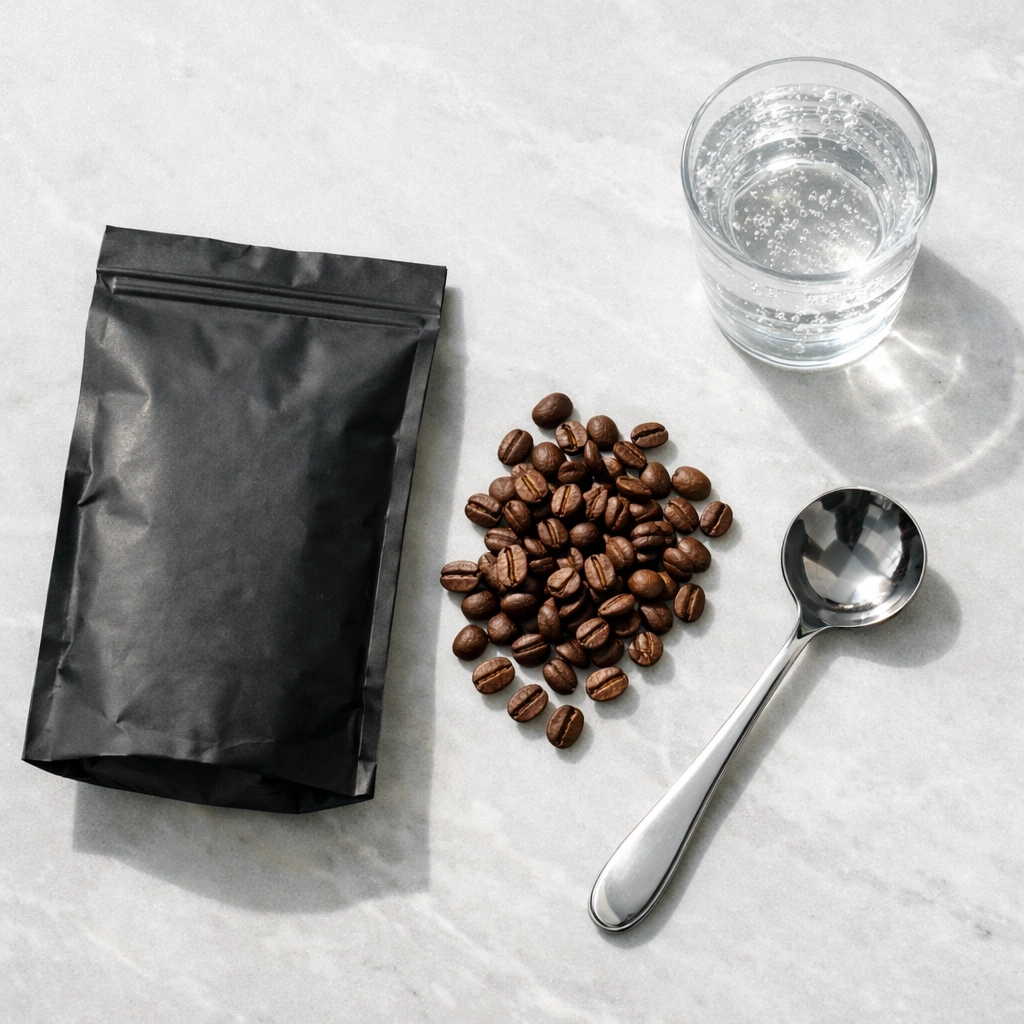
    A coffee cupping setup with freshly roasted specialty coffee beans and a professional spoon.

    The Bottom Line

    Your coffee supplier shouldn't just be a name on an invoice; they should be the backbone of your business. If you’re making any of these mistakes, don’t panic. It’s never too late to pivot.

    Whether you need help choosing espresso equipment or you just want to understand why your tamping technique matters, we’re here to help.

    The goal is simple: serve incredible coffee, keep your customers happy, and make a profit. If your current supplier isn't helping you do all three, it might be time for a fresh start. You can learn more about us and how we do things differently right here.

    Ready to stop making these mistakes? Let’s grab a coffee (a good one) and chat. Head over to Limini Coffee to see what a real partnership looks like.

  • Travel Tech Innovation: 20 Hospitality Trends to Get You Started in 2026

    Travel Tech Innovation: 20 Hospitality Trends to Get You Started in 2026

    Innovate. Automate. Elevate.

    The hospitality landscape in 2026 isn't just evolving, it’s being entirely rewritten. If you’re still wrestling with legacy systems that feel like they belong in the early 2000s, you’re not just losing time; you’re losing guests. We believe that technology should be invisible, yet indispensable. It’s the engine that powers your property while you focus on what actually matters: the people in your lobby.

    Today, over 12,500 properties are moving toward a future where "check-in" is a relic of the past and personalization is the baseline, not a bonus. From generative AI planners to robotic wine-pairing, the trends of 2026 are about reclaiming your time and maximizing your revenue, all from one innovative platform.

    The Intelligence Era: AI and Hyper-Personalization

    We think hospitality is about the human touch, powered by invisible tech. In 2026, AI has moved past the "gimmick" phase and into the core of the guest journey.

    1. Generative AI for Travel Planning

    Trip planning used to be a chore involving 20 browser tabs and a lot of caffeine. Not anymore. AI usage in trip planning doubled in 2025, and now, it’s the standard. Guests are using generative AI to build full itineraries that connect directly to your booking engine. If your tech doesn’t talk to their AI agent, you’re not on the list.

    2. Ultra-Personalization via Machine Learning

    Gone are the days of "Dear [Guest_Name]." Today’s guests expect you to know they prefer a high floor, oat milk in the fridge, and a 7:00 AM yoga class, before they even arrive. By leveraging data segmentation, we help you deliver recommendations that actually mean something.

    3. Predictive Analytics for Guest Behavior

    Why wait for a guest to complain about a slow elevator or a missed cleaning? Predictive AI analyzes semantic patterns and online reputation feedback to identify issues before they manifest. It’s about being proactive, not reactive.

    4. Multilingual AI Support

    Staffing is tough. Finding a night porter who speaks six languages fluently is tougher. Multilingual AI assistants now handle international guest queries in real-time, providing seamless support without the need for a massive HR budget.

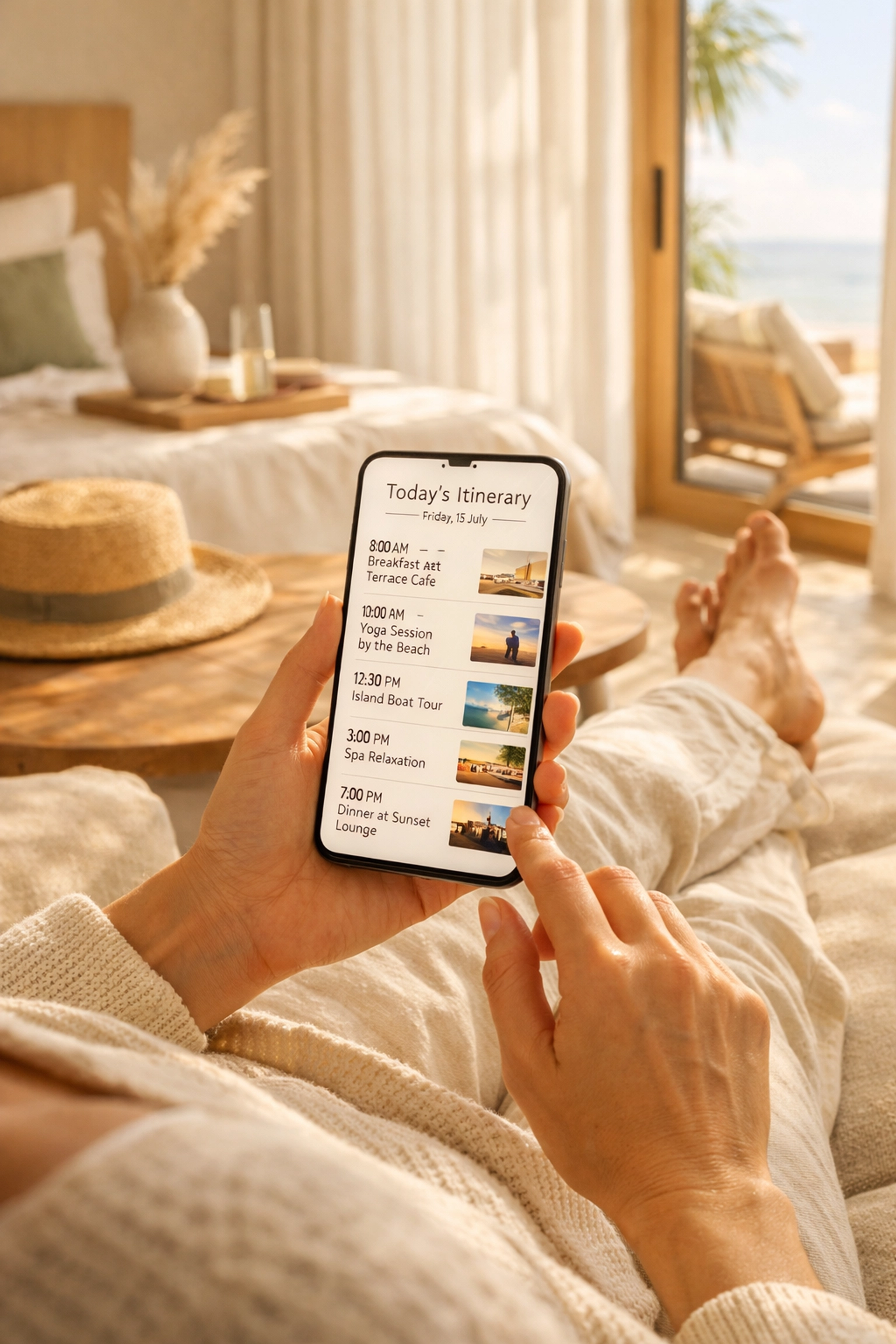
    A guest in a modern hotel room viewing a personalized travel itinerary on a smartphone app.

    Frictionless Operations: The End of the Front Desk

    We believe your staff should be hosts, not data entry clerks. If your team is stuck behind a monitor, they aren't looking at your guests.

    5. Self-Service as a Standard

    The "reception desk" is becoming a piece of furniture rather than a necessity. Guests want to check in on the train, walk straight to their room, and unlock the door with their phone. It’s efficient, it’s fast, and it’s what 85% of modern travelers expect.

    6. Dynamic Guest Apps & QR Portals

    Forget the dusty three-ring binder in the room. Dynamic QR codes and in-room tablets now serve as a living portal. Want a late checkout? Tap. Need a spa booking? Tap. It’s all connected to your CRM in real-time.

    7. Voice-Activated Room Controls

    "Hey Google, set the mood for dinner." From lighting and temperature to ordering extra towels, voice assistants are the new concierge. They reduce the friction of physical switches and provide local recommendations on command.

    8. Mobile-First Everything

    If your guest can’t manage their entire stay from their smartphone, you’re adding friction to their vacation. Mobile integration now includes everything from digital keys to ordering room service and tracking the arrival of their luggage.

    Operational Excellence: Working Smarter, Not Harder

    Automation isn’t about replacing people; it’s about giving them their lives back. In 2026, the most successful hotels are those that automate the boring stuff so their teams can do the brilliant stuff.

    9. Tech-Enabled Staff Automation

    Housekeeping and maintenance shouldn't rely on walkie-talkies and paper lists. Automated workflows assign tasks based on real-time room status, optimizing routes and ensuring rooms are turned over 20% faster on average.

    10. API-First Connected Ecosystems

    The days of "closed" software are dead. You need a platform that plays well with others. A connected ecosystem uses APIs to ensure data flows from your POS to your housekeeping app and back to your guest profile without a single manual entry.

    11. Robotic Efficiency

    From robot massage therapists to automated luggage storage, robotics are handling the heavy lifting. This isn't science fiction: it's operational common sense. It allows you to maintain high service standards even during peak occupancy.

    12. Intelligent Demand Forecasting

    AI doesn't just look at what you did last year; it looks at what’s happening in the world right now. From local events to flight delays, intelligent forecasting helps you adjust pricing and staffing in real-time.

    Hotel staff assisting a guest in a modern, desk-less lobby using a mobile tablet for check-in.

    The Conscious Stay: Sustainability and Security

    Guests in 2026 are looking for properties that reflect their values. They want to know you’re protecting the planet: and their data.

    13. Automated Facilities Management

    Smart sensors are the unsung heroes of 2026. They detect when a room is empty and adjust the HVAC and lighting accordingly. It’s a win for the environment and a massive win for your utility bill (some properties see a 30% reduction in energy waste).

    14. Renewable Energy Integration

    IoT-integrated solar panels and wind turbines are no longer just for eco-resorts. Properties are using smart tech to track their carbon footprint in real-time, often displaying it on guest dashboards to encourage conscious consumption.

    15. Water Recycling and Management

    Advanced water recycling technology is becoming standard in regions facing water scarcity. Smart systems monitor usage and minimize waste, ensuring your property stays green without compromising the guest experience.

    16. Cybersecurity 2.0

    As tech integration grows, so does the target on your back. Hotels are implementing 24/7 network support to counter ransomware and phishing. We believe your guest's data is sacred; protecting it is non-negotiable.

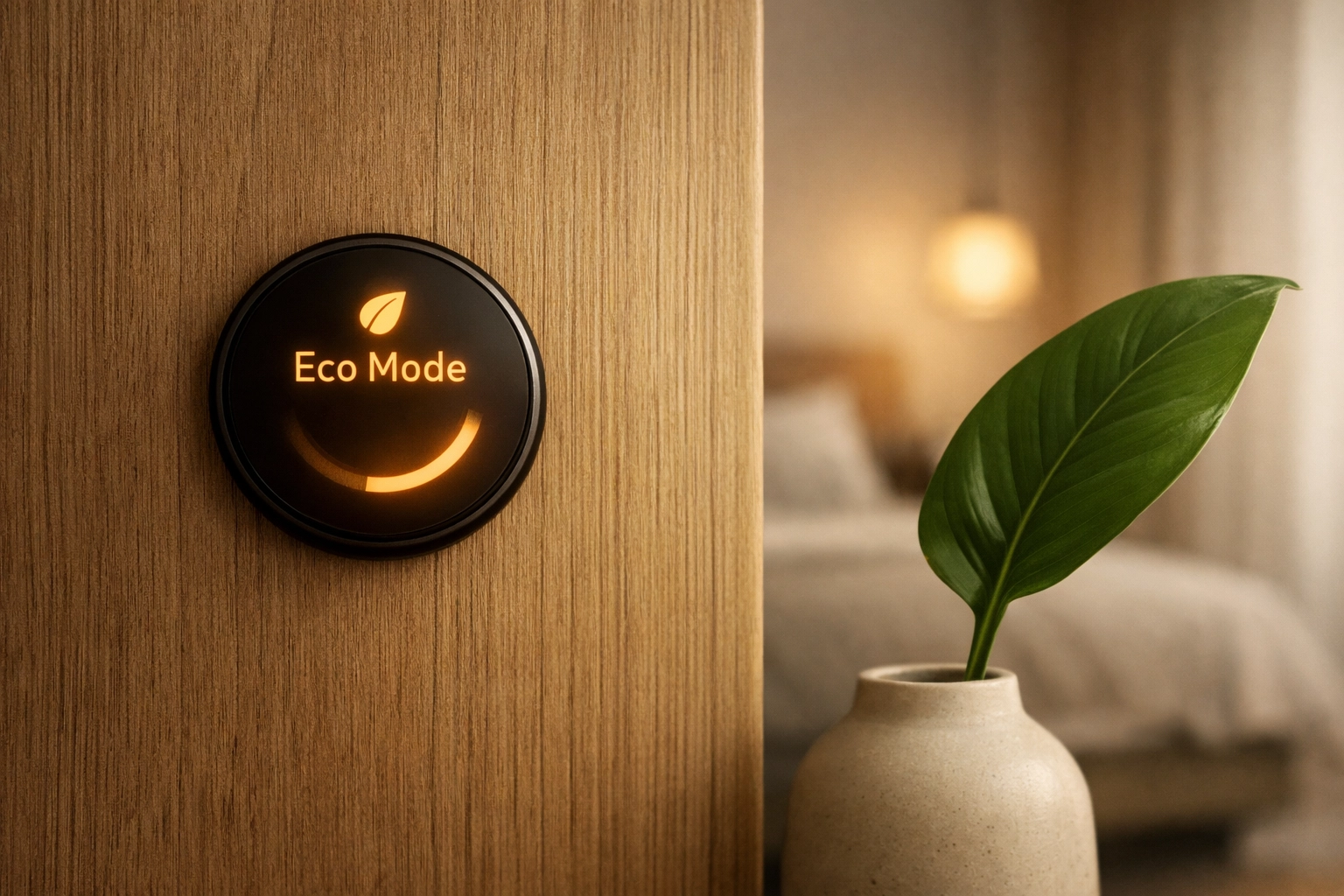
    A smart energy-saving control panel integrated into a sustainable wood wall in a luxury hotel room.

    Immersive Experiences: The New Frontier

    Once the basics are automated, you have the room to get creative. These are the trends that turn a stay into a story.

    17. Cinematic Drone Tours

    Before a guest even books, they want to feel the vibe. AI-piloted drones provide cinematic tours of your property and the surrounding area, offering a "try before you buy" experience that significantly boosts conversion rates.

    18. AI-Enabled Wine and Food Pairing

    Imagine a guest sitting down for dinner and receiving a custom itinerary of wine pairings based on their previous preferences and the chef's current menu. It’s high-tech, high-touch, and high-margin.

    19. Plastic Reduction Automation

    Automation is helping hotels go plastic-free. Automated food stocking and refillable amenity dispensers (tracked by sensors) ensure guests have what they need without the waste of single-use plastics.

    20. IoT-Enabled Security Sensors

    Safety is the ultimate luxury. Face-tracking software and IoT sensors identify potential security threats and direct staff quietly and efficiently, ensuring a safe environment without a heavy security presence.

    An AI-powered wine pairing app displayed on a digital tablet in a sophisticated hotel lounge.

    See what Mews can do

    Transitioning to a tech-forward model doesn't have to be a headache. In fact, we think it should be the most exciting thing you do this year.

    "Since moving to a cloud-native platform, our team saves 10 hours a week on admin alone," says one of our partners. "We’re finally back to being hoteliers."

    Ready to leave the legacy systems behind and embrace the future of hospitality?

    1. Schedule a 30-minute discovery call.
    2. Get a tailored walkthrough of the platform.
    3. Start automating your guest journey.

    Take the first step toward a more efficient, guest-centric property. Check out how we can help you lead the charge in 2026: https://referrals.mews.com/umqhyito.

    The future is here. Let’s get you earning revenue in no time.

  • Instant Gratification: The Impact of Real-Time Guest Messaging

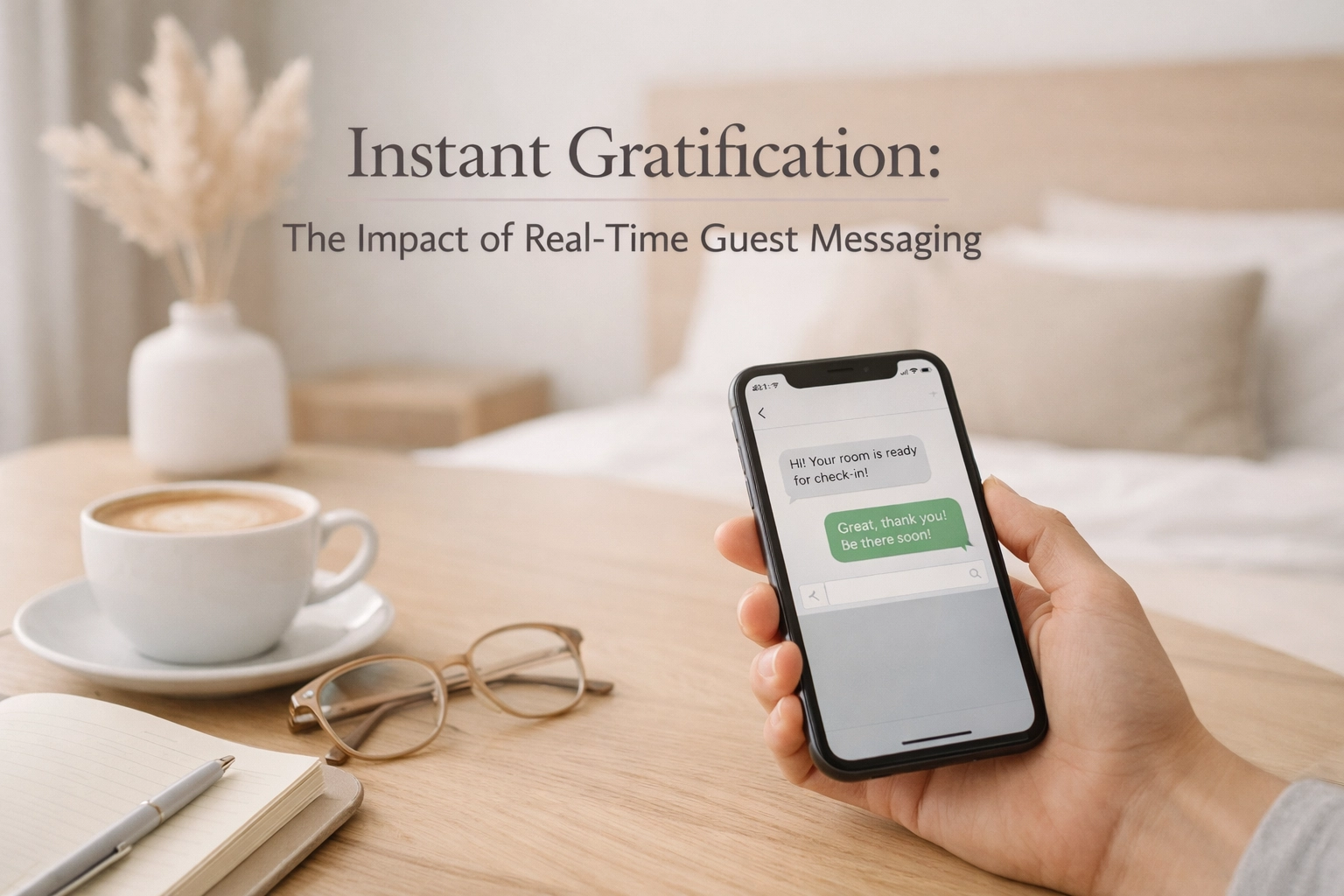
    Instant Gratification: The Impact of Real-Time Guest Messaging

    Stop waiting. Start chatting. Transform the stay.

    In 2026, "fast" is officially a legacy term. We live in a world where groceries arrive in ten minutes and movies stream in 8K without a buffer. Your guests aren’t leaving those expectations at the lobby door. They’re bringing them into your rooms, onto your balconies, and straight to your front desk: except they don’t actually want to go to the front desk.

    Modern hospitality is no longer about the physical check-in. It’s about the digital connection. Real-time guest messaging via WhatsApp, SMS, and integrated apps has shifted from a "nice-to-have" luxury to the heartbeat of operational excellence. It’s how you handle a 2 AM pillow request without waking up your night manager. It’s how you turn a slight room temperature grievance into a five-star review before the guest even checks out.

    We believe the best service is the one that feels invisible but is always available: all from one innovative hospitality platform.

    The death of the "Hold" music

    Let’s be honest. Nobody wants to pick up a plastic hotel phone, wait for a dial tone, and hope someone picks up on the other end. That’s a 1995 vibe. Your guests are already on WhatsApp. They’re already using SMS. They want to communicate with you the same way they talk to their friends: instantly, casually, and on their own terms.

    When a hotel ignores messaging, they’re creating friction. Friction leads to frustration. Frustration leads to three-star reviews. By opening up real-time channels, you aren’t just "chatting": you’re removing the barriers between your guest and a perfect stay.

    • Instant Recognition. Acknowledging a message within seconds builds immediate trust.
    • Frictionless Requests. Ordering a late-night club sandwich shouldn't feel like a chore.
    • Global Accessibility. Messaging breaks down language barriers through integrated translation tools.

    A hotel guest using a smartphone for real-time messaging, replacing traditional bedside hotel phones.

    Automation: Your silent, 24/7 workforce

    You might be thinking, "Scott, I don't have the staff to sit on WhatsApp all day." We hear you. But here’s the reality: you don’t need them to.

    Agentic AI and smart messaging systems are now capable of automating up to 50% of all guest inquiries. We’re talking about the "What's the Wi-Fi password?" or "What time is breakfast?" questions that eat up hours of your team’s week. By automating the repetitive stuff, you give your staff the freedom to focus on high-value human interactions.

    One major property in Las Vegas recently documented savings of over 10,000 labor hours by implementing real-time messaging automation. That’s the equivalent of seven full-time employees. Imagine what your team could achieve with that kind of time back.

    We think the future of hospitality isn't less human: it's more human because the robots are handling the boring bits.

    Catching the "Fire" before it spreads

    Every hotelier has experienced the "Post-Stay Surprise." You know the one: a guest leaves a scathing review about a broken AC that they never mentioned during their three-day stay.

    Real-time messaging kills this problem. By sending proactive, mid-stay "How’s it going?" check-ins, you open the door for guests to vent in private rather than in public.

    • Proactive Recovery. Resolve a noisy neighbor issue in minutes, not days.
    • Live Updates. Notify guests the moment their room is ready or if the pool is temporarily closed.
    • Feedback Loops. Gather data on guest sentiment while they are still on-property and able to be delighted.

    When you solve a problem instantly, you don't just fix a mistake: you create a "peak moment" that guests remember. It’s the difference between a guest who says "the room was okay" and one who says "they took care of everything immediately."

    Hotel staff and guest interacting in a minimalist lobby, showcasing efficient, modern hospitality service.

    Revenue in the palm of their hand

    Messaging isn't just a service tool; it’s a massive revenue engine. Traditional upselling: like those paper flyers in the elevator: is static and easy to ignore. Messaging is dynamic.

    Using real-time data, you can send individualized offers based on exactly what’s happening in the moment. Is the spa looking empty for the next two hours? Send a quick WhatsApp blast with a 15% "flash sale" discount. Is it raining outside? Send a message suggesting a cozy table at your indoor bistro.

    • Contextual Upsells. Offer a late checkout on the final morning when the guest is dreading packing.
    • Event Alerts. Let guests know about the live music starting in the lounge in ten minutes.
    • Direct Bookings. Keep the conversation in your ecosystem and away from high-commission OTAs.

    This isn't about spamming people. It’s about being helpful. When a guest receives a relevant, timely offer that solves a problem or enhances their stay, it doesn’t feel like marketing. It feels like magic.

    Why Mews is the engine for this transformation

    To make this work, you need more than just a chat app. You need a platform that connects your guest’s messages directly to their profile, their folio, and your housekeeping schedule.

    We believe your tech stack should work as one cohesive unit. That’s why Mews integrates seamlessly with the world’s best messaging tools, ensuring that when a guest asks for more towels via SMS, the request goes straight to the person who can actually deliver them. No middleman. No radio static. No delays.

    It’s about creating a "connected hospitality" experience that feels effortless for both the guest and the operator. Whether you’re managing a boutique hotel or a global brand, the goal is the same: stay ahead of the curve.

    See how Mews can elevate your guest communication: https://referrals.mews.com/umqhyito

    Luxury boutique hotel spa and indoor pool, highlighting premium amenities and elevated guest stays.

    The operational "Breathe" factor

    Let’s talk about your staff for a second. A crowded front desk at 3 PM is a high-stress environment. Phones are ringing, people are queuing, and stress levels are through the roof.

    Real-time messaging acts as a pressure valve. When a guest can check in via their phone or message a question from the taxi on the way from the airport, that’s one less person standing in line. It spreads the workload. It digitizes the chaos.

    • Queue Busting. Move the "administrative" parts of hospitality to the digital realm.
    • Task Prioritization. Messaging allows staff to manage multiple conversations at once, something they can’t do with phone calls.
    • Clearer Communication. Written requests reduce errors. No more "I thought they said Room 402, not 204."

    We think the best way to keep your staff happy is to give them tools that actually work. When the technology is intuitive, the service becomes exceptional.

    Personalization at scale

    In the old days, "personalization" meant a handwritten note on the bed. That’s still great, but in 2026, it means knowing that Guest A prefers WhatsApp and wants a firm pillow, while Guest B wants to communicate via your app and loves a high floor.

    Messaging allows you to store these preferences and act on them in real-time. It’s about building a digital relationship that feels personal, even if you have 500 rooms.

    "The ability to just text the hotel and get an answer in 30 seconds changed my entire perception of the brand. I didn't feel like a room number; I felt like a priority." : This is the kind of feedback that defines the modern industry leader.

    Modern hotel desk with a tablet and coffee, illustrating personalized guest tech and digital check-in.

    Ready to join the conversation?

    The shift to real-time messaging isn't a trend; it's the new standard. The hotels that thrive in the coming years will be those that embrace the speed of the modern traveler.

    You don't need a massive IT budget to start. You just need the right partner and a willingness to meet your guests where they already are: on their phones.

    • Schedule a demo. See the platform in action.
    • Get connected. Integrate your favorite messaging tools in minutes.
    • Start winning. Watch your guest satisfaction scores climb.

    The future of guest engagement is happening in the palm of your hand. Don’t leave your guests on read.

    Ready to see how the Mews ecosystem can get you earning more revenue in no time? Check it out here: https://referrals.mews.com/umqhyito

  • Boost Your Profits Instantly with These 5 Wholesale Specialty Coffee Tips

    Boost Your Profits Instantly with These 5 Wholesale Specialty Coffee Tips

    So, you’ve decided to dive into the wonderful, aromatic, and sometimes slightly chaotic world of coffee. Whether you’re a café startup founder or looking to scale an existing operation, you’ve probably realized one thing: passion for a great flat white doesn't automatically pay the rent. To really thrive, you need to master the business side of the bean.

    In the specialty coffee industry, margins can be as thin as the micro-foam on a poorly stretched latte. But don't worry: we’ve been in this game a long time, and we've seen what works (and what definitely doesn't). Increasing your profitability isn't always about raising prices and hoping for the best. Often, it’s about smarter sourcing, better relationships with your wholesale coffee roasters, and tightening up your operations.

    If you are looking for a partner who truly understands the hustle, we’d love for you to check out what we do at Limini Coffee.

    Here are five proven tips to boost your profits instantly.


    1. Choose a Partner, Not Just a Supplier

    When you’re looking for coffee suppliers, it’s easy to get tunnel vision and only look at the price per kilo. We get it; the bottom line matters. However, choosing a supplier based solely on cost is often a "false economy."

    Why? Because a true wholesale partner provides far more than just bags of roasted beans. They provide the backbone of your business. A great roaster offers technical support, equipment advice, and: most importantly: consistency. If your "cheap" coffee supplier sends you a bag that tastes like burnt rubber one week and sour lemon the next, your customers won't come back. And losing a regular customer is the fastest way to kill your profits.

    We believe that the relationship between a café and its roaster should be a two-way street. At Limini Coffee, we focus on sourcing our coffee ethically and roasting it to perfection every single time. This consistency means you can charge a premium for your drinks because your customers know they’re getting the best.

    Professional roaster and café owner examining wholesale specialty coffee beans in a sunlit roasting facility.

    2. Master the Math of Wholesale Margins

    Understanding the wholesale margin structure is vital before you even pour your first shot of espresso. If you are selling bags of coffee at retail, you need to know that most retailers expect a significant markup.

    Let’s talk numbers. If a bag of coffee retails for £16, a grocery store or high-end deli will often want to buy it from you for around £8. If your cost of goods sold (COGS) is £6.75, you’re only making £1.25 in profit. While that might seem small, the secret is in the volume and the predictability of wholesale accounts.

    To boost your profits, you need to:

    • Target High-Margin Channels: Independent specialty cafes and high-end restaurants usually offer better margins than large grocery chains.
    • Tier Your Pricing: Offer a "house blend" that is reliable and cost-effective, alongside a rotating selection of premium "single origins" for a higher price point. This caters to both the budget-conscious and the coffee geeks.

    If you need help figuring out your costs, our coffee brewing calculator can be a handy tool to see exactly how much coffee you're using per cup.


    3. Invest in Barista Excellence (Your Profit Guards)

    Your baristas are the gatekeepers of your profit. You can buy the most expensive beans from the best wholesale coffee roasters, but if your staff doesn't know how to dial in the grind or steam milk correctly, you are literally pouring money down the drain.

    Waste is a silent profit killer. We’re talking about:

    • Milk Waste: Overfilling pitchers for every latte.
    • Coffee Waste: Grinding too much and throwing away "sink shots."
    • Inconsistency: If a drink is bad, you have to remake it. That’s double the cost for one sale.

    This is why we are so passionate about barista training. A well-trained barista isn't just someone who makes pretty hearts in the foam (though we love that too!); they are someone who understands extraction, milk chemistry, and workflow efficiency.

    By ensuring your team knows the difference between a latte and a cappuccino and how to maintain a perfect crema, you reduce waste and increase customer satisfaction. It’s a win-win.

    Close-up of a barista pouring precise latte art, showcasing specialty coffee quality and expert training.

    4. Diversify with White Label and Seasonal Offerings

    If you want to boost profits instantly, you need to give your existing customers more reasons to spend money with you.

    One of the most effective ways to do this is through white label coffee. Imagine having your own branded bags on the shelf. It builds brand loyalty and allows you to capture the "at-home" market. When your customers love your coffee so much they want to drink it on Sunday morning in their pajamas, you’ve won.

    And don't stop at just one house blend. Introduce seasonal offerings. People love the "limited edition" feel. Whether it’s a bright, floral Ethiopian coffee for the summer or a rich, chocolatey Guatemalan for the winter, seasonal rotations keep your menu fresh and encourage repeat visits.

    We also recommend thinking about the "theatre" of coffee. Making the experience special: showing the brewing process or explaining the origin: adds value that allows you to maintain higher price points. You can read more about creating theatre in your shop here.

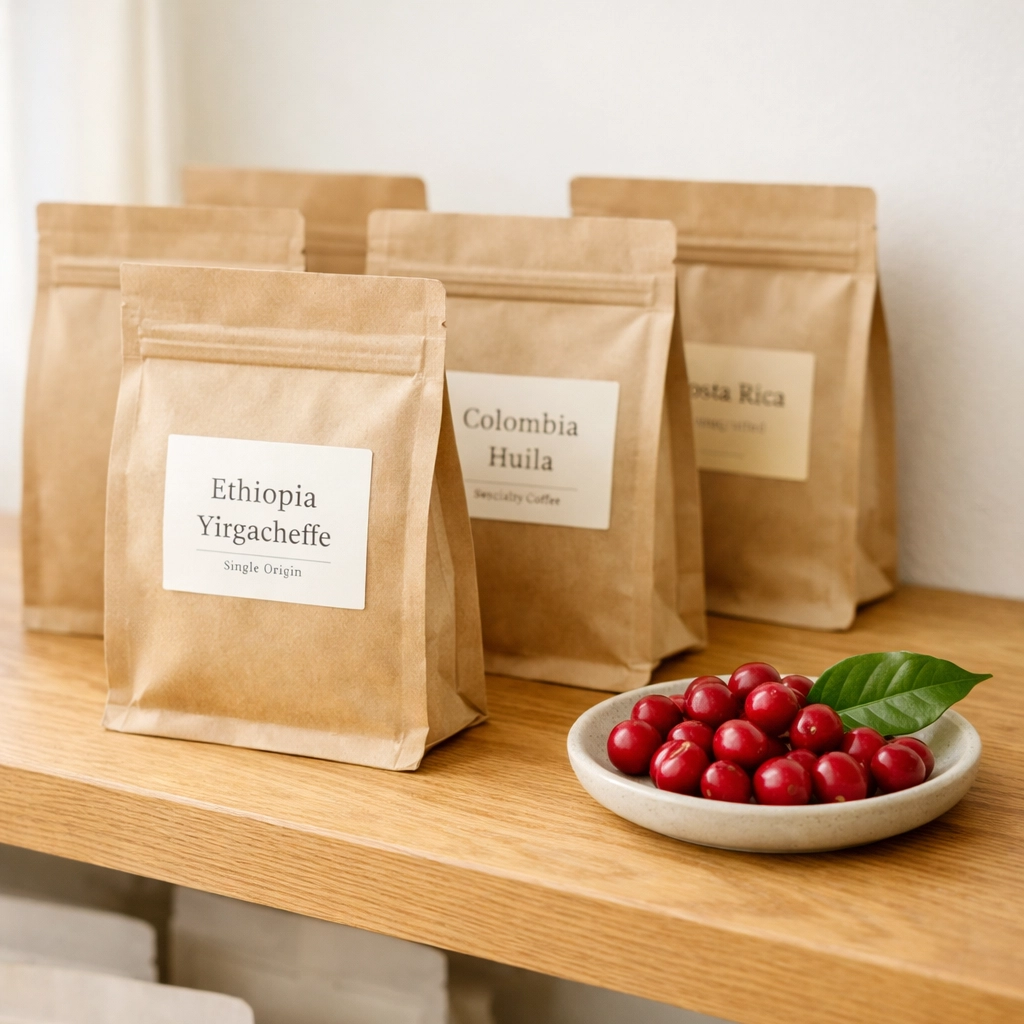
    Minimalist retail coffee bags on a shelf representing white label and seasonal wholesale coffee offerings.

    5. Get Your Equipment Strategy Right

    The equipment you choose can make or break your profitability. If your espresso machine is constantly breaking down, you aren't just paying for repairs; you're losing hours of sales.

    When choosing espresso equipment, reliability is king. We are big fans of La Spaziale machines because they are absolute workhorses. Whether you’re looking at how La Spaziale machines work or how they are built, the focus is always on consistency and thermal stability.

    Another profit-boosting equipment tip: use the right tools for the job. A good tamping technique and the right coffee cups might seem like small details, but they contribute to a professional workflow and a premium feel.


    Putting It All Together

    Boosting your profits in the specialty coffee world isn't about cutting corners. It's about sharpening your focus. By choosing the right coffee suppliers, training your team to minimize waste, and diversifying your offerings, you create a sustainable, profitable business that people love to visit.

    We’ve helped countless café startups find their feet and turn their passion into a thriving business. It’s a journey, and honestly, it’s one of the most rewarding ones you can take.

    If you’re ready to take your wholesale coffee game to the next level, why not reach out? We pride ourselves on being more than just a roaster: we’re your partners in all things caffeine.

    Explore our wholesale specialty coffee options at Limini Coffee today.

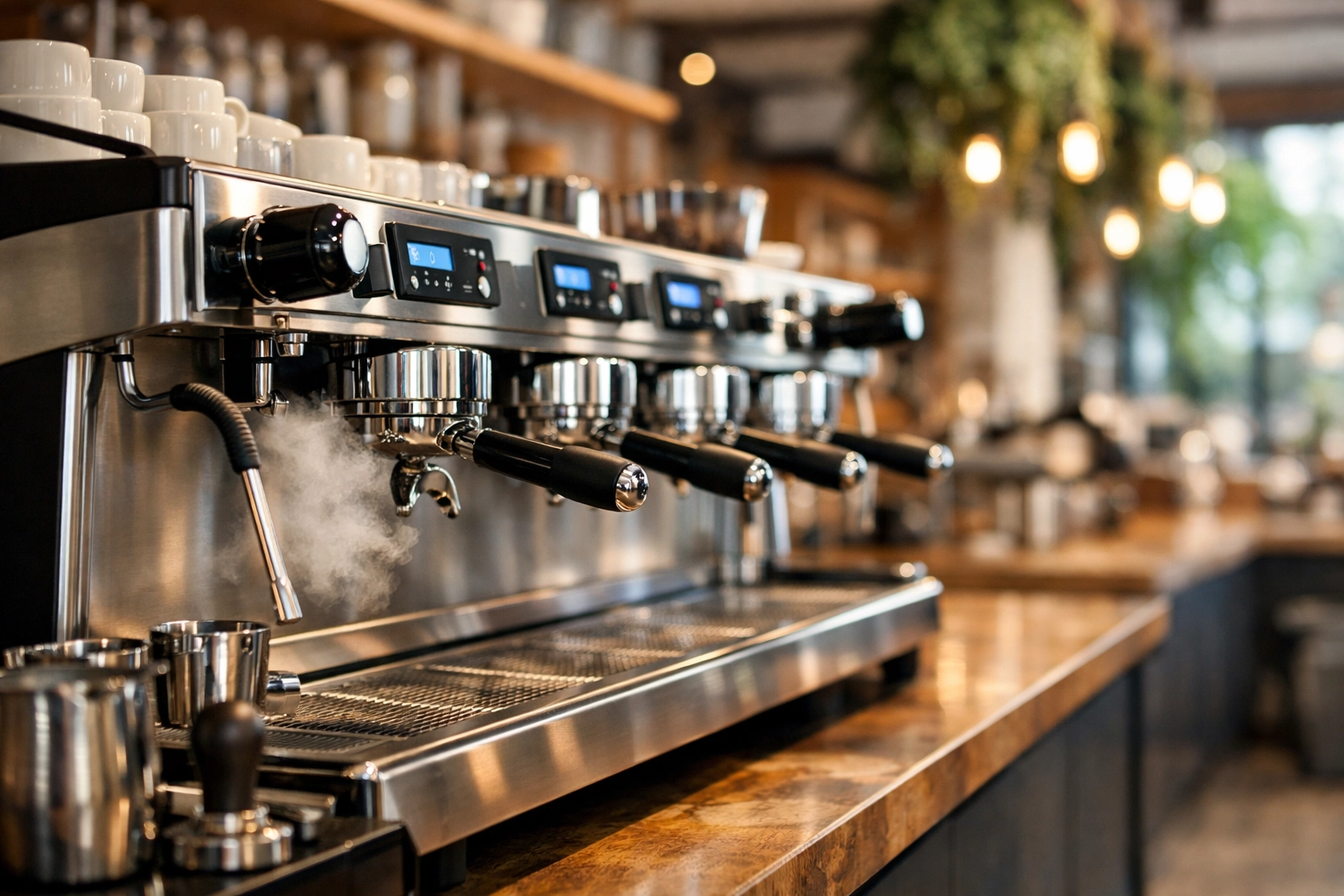
    A high-quality professional espresso machine in a café, highlighting essential equipment for wholesale partners.

    Quick Takeaways for Instant Profit:

    • Audit your milk usage: Are your baristas steaming only what they need?
    • Check your grind: Are you throwing away too many shots during dial-in?
    • Review your pricing: When was the last time you adjusted for inflation or increased COGS?
    • Leverage training: Is your team confident enough to upsell that seasonal single origin?

    Coffee is a beautiful business, but it’s a business nonetheless. Treat it with the respect it deserves, keep an eye on those margins, and you’ll see those profits grow( one cup at a time. :))

  • Stop Wasting Time on Boring Admin: 7 Business Automation Tools to Reclaim 10+ Hours Every Week

    AUTOMATE ADMIN TASKS: HOW TO SAVE 10+ HOURS EVERY WEEK

    ☕ 7:00 AM.

    You haven't even touched your coffee yet, but your brain is already running a marathon. You’re thinking about those 47 unread emails, the three invoices that need chasing, and that spreadsheet that isn't going to update itself.

    It’s the "Small Business Tax." Not the IRS kind, the time kind.

    You’re spending hours every week on tasks that a toaster could probably do if it had an internet connection. But here’s the thing… you don't have to.

    THE GHOST IN THE MACHINE

    You started your business to build something, not to become a professional data-entry clerk. Every minute you spend manually moving a lead from your website to your CRM is a minute you aren't closing a deal.

    It’s a slow leak. Ten minutes here. Fifteen minutes there. By Friday, you’ve lost a whole day to the void.

    But what if your tech talked to each other?

    1. Zapier: The Universal Translator

    Think of Zapier as the glue for the internet. It connects over 8,000 apps. If you want a Slack notification every time someone buys a product, or you want your Typeform entries to automatically become Trello cards… Zapier does it. No code. No crying.

    2. Gumloop: The Browser Whisperer

    Sometimes APIs don't play nice. That’s where Gumloop comes in. It’s a visual builder that can scrape data, fill out forms, and handle web-based tasks like a human would, only faster and without the need for a lunch break.

    A robotic hand connecting data hubs representing business automation and web task efficiency.

    RECLAIMING YOUR FRIDAY

    Imagine finishing your work by 2:00 PM on a Friday because the "boring stuff" finished itself while you were asleep.

    That’s not a dream. That’s just good systems.

    When you automate, you aren't just saving time. You’re saving your sanity. You’re giving yourself permission to be the CEO again, instead of the intern.

    Ready to stop the leak? You can start scaling without the stress right here: https://marblism.link/scott-bowen.


    THE BEST AI ASSISTANT FOR SMALL BUSINESS IN 2026

    📱 11:00 AM.

    The mid-morning rush. Your phone is buzzing. Your calendar looks like a game of Tetris played by someone who's losing.

    In 2026, "hiring" doesn't always mean a W-2 form and a new desk. Sometimes, it just means turning on the right agent.

    The "Virtual Assistant" era is dead. The "AI Agent" era is here. And it’s much, much better.

    MEET YOUR NEW CO-PILOT

    Standard automation is "if this, then that." AI assistants are "if this, then think, then that."

    They don't just move data; they understand it.

    3. Lindy AI: The Agent That Learns

    Lindy isn't a chatbot. She's an agent. You don't just ask her questions; you give her jobs. "Lindy, find a time for this meeting, email the person, and draft a brief based on our last three calls."

    She does it. She doesn't ask for a raise. She doesn't "forget."

    4. Microsoft Power Automate: The Corporate Muscle

    If you’re living in Excel and Teams, this is your best friend. It’s built into the ecosystem you already pay for. It cleans your data, routes your approvals, and makes sure you never have to manually "save as PDF" ever again.

    Small business owner working alongside an AI assistant hologram to manage a digital data dashboard.

    THE SILENT WORKFORCE

    The best AI assistant is the one you forget is there.

    It’s the one that handles the "rescheduling" nightmare while you’re actually talking to a client. It’s the one that flags an invoice as "suspicious" before you even see it.

    Scaling shouldn't be this easy. But here we are.

    You don't need a bigger team. You need a smarter one. See how the pros are doing it at https://marblism.link/scott-bowen.


    AI CONTENT GENERATOR FOR SMALL BUSINESS: YOUR SECRET MARKETING WEAPON

    🔍 3:00 PM.

    The "Content Panic" sets in. You know you need to post. You know you need a newsletter. You know your blog hasn't been updated since the last solar eclipse.

    But you're tired. Your creative well is dry.

    This is where most small businesses fail. They go quiet because they're too busy running the business to talk about the business.

    YOUR CONTENT ON AUTOPILOT

    Marketing isn't a "nice to have." It’s the engine. But you don't need to be a novelist to win.

    5. n8n: The Power User’s Dream

    For those who want absolute control. You can build a workflow that takes a YouTube transcript, turns it into a blog post, creates three tweets, and schedules them all. It’s technical, but the payoff is massive content volume with zero manual effort.

    6. UiPath: The Enterprise Edge

    If you’re dealing with legacy systems or complex documents, UiPath is the heavy hitter. It reads PDFs, extracts the "marketing gold," and pushes it where it needs to go.

    7. Automation Anywhere: Cloud-Native Scale

    Perfect for when you're growing fast. It manages the high-volume transactional work so you can focus on the big-picture strategy.

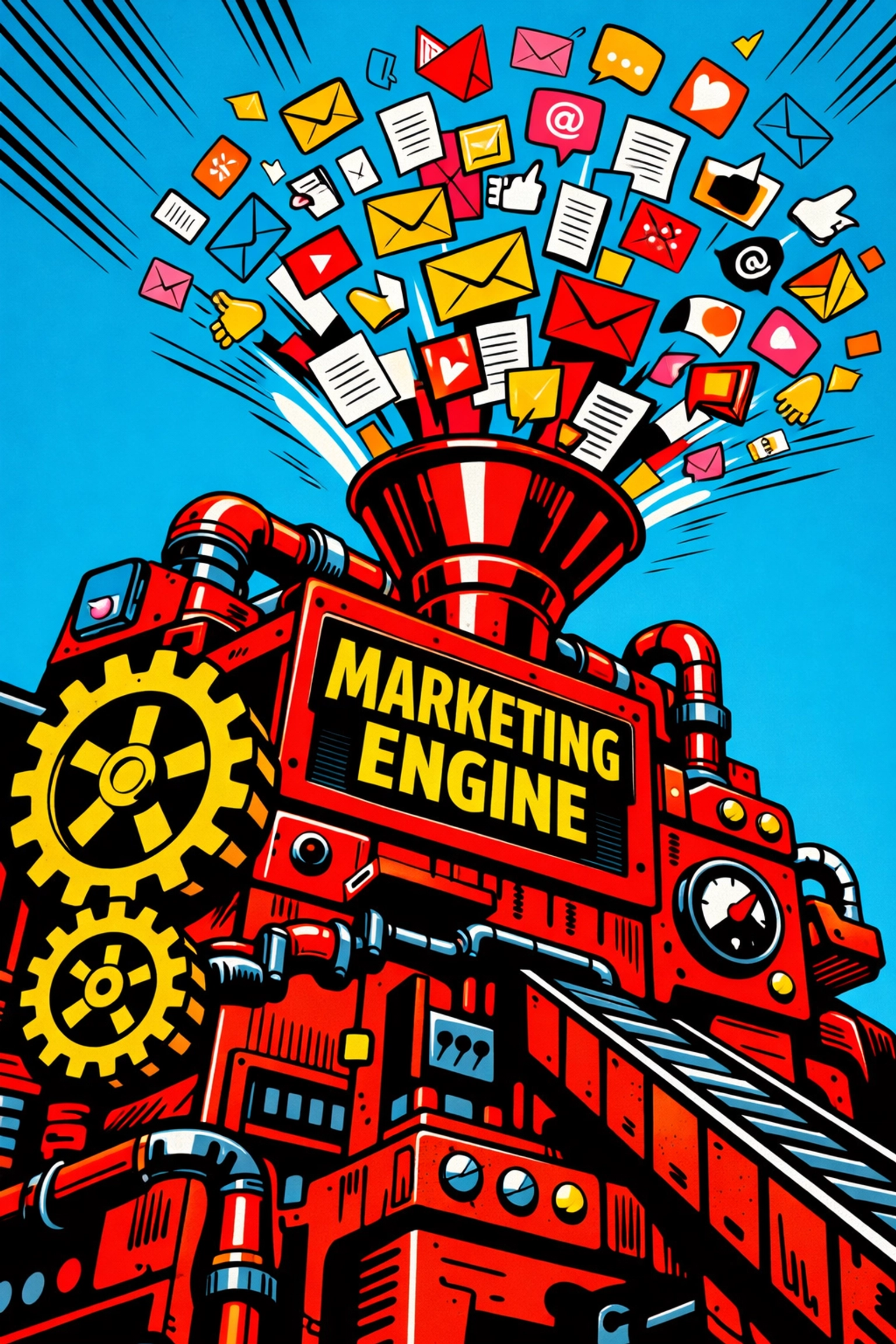
    A powerful marketing engine machine automating content generation and high-volume business documents.

    THE MARBLISM EDGE

    Why struggle with seven different tools when you can have a dedicated partner?

    At Marblism, we don't just talk about automation, we live it. Whether it's generating high-converting content or building the apps that run your business, the goal is always the same: Reclaim your time.

    You could spend your evening staring at a blinking cursor…

    Or you could let the AI handle the heavy lifting while you wind down.

    🌙 7:00 PM.

    The day ends. Not with a whimper, but with a smile. The tasks are done. The content is live. The leads are organized.

    The chaos is gone before you even take your first sip of that evening drink.

    Stop being the bottleneck in your own success. The tools are here. The future is automated. And it’s waiting for you.

    Check out the full suite of what’s possible: https://marblism.link/scott-bowen.


    QUICK RECAP: WHICH TOOL IS YOURS?

    Need Best Tool
    Connecting 8,000+ Apps Zapier
    Deep Microsoft Integration Power Automate
    Task-Specific AI Agents Lindy AI
    Complex/Technical Workflows n8n
    Browser-Based Automation Gumloop
    Enterprise Document Processing UiPath
    High-Volume Cloud Scale Automation Anywhere

    FAQ: WILL THIS ACTUALLY SAVE ME 10 HOURS?

    Yes.
    Most business owners spend at least 2 hours a day on "bridge tasks", moving info from one place to another. Automate just 5 of those bridges, and you’ve got your Sunday back.

    Is it hard to set up?
    No. Most of these tools are "no-code." If you can drag and drop a file, you can build an automation.

    Will AI replace me?
    Only the boring parts of you. It leaves the creative, strategic, and human parts to do what they do best.

    A person relaxing in a hammock while automation robots handle digital files and business admin.

    The lights are off. The office is quiet. But your business is still working.

    That’s the Marblism way.

    Don't wait until you're burnt out to build a system that lasts.

    START RECLAIMING YOUR TIME TODAY.

    https://marblism.link/scott-bowen

  • Stop Wasting Time on Admin Tasks: 7 Quick Hacks to Get Your Life Back Using an AI Assistant

    Stop Wasting Time on Admin Tasks: 7 Quick Hacks to Get Your Life Back Using an AI Assistant

    ☕ 7:00 AM.

    You’re staring at your phone. It’s glowing like a radioactive brick in the dark. Before you’ve even had a sip of coffee, the weight of a hundred unread emails and three "just checking in" Slack messages is already sitting on your chest.

    You didn't start a business to become a professional email-replier. You didn't sign up for the "I'll just move these rows in Excel for three hours" Olympics. But here you are. Drowning in the shallow end of the admin pool.

    It’s called the Admin Tax. And it’s stealing your growth… and your sanity.

    But there's a way out. It’s not about working harder or hiring a human assistant you can’t yet afford. It’s about ai business automation. It’s about letting a digital brain handle the boring stuff so you can get back to the work that actually makes money.

    Ready to reclaim your Tuesday? Let’s dive in.


    1. STOP THE CALENDAR CHICKEN

    📅 8:30 AM.

    You’re three emails deep into a thread trying to find a time to meet with a potential lead.
    "Does Tuesday at 2 work?"
    "No, I have a dentist appointment. How about Wednesday at 10?"
    "My 10 is your 7 AM."

    Stop. Just stop. This isn't a job; it's a game of chicken where everyone loses.

    Using an AI assistant to handle your scheduling is the quickest win in the book. Modern business automation tools don't just send a link; they act as your gatekeeper. They sync with your calendar, understand your "focus time" blocks, and resolve time zone conflicts without you lifting a finger.

    You send one link. They pick a time. It’s on the calendar. Done.

    You just saved 20 minutes of back-and-forth. That's enough time to actually eat breakfast.

    Pop art illustration of an AI assistant robotic hand organizing a business owner's chaotic calendar schedule.

    2. THE INBOX EXORCISM

    ✉️ 10:00 AM.

    Your inbox is a junk drawer. You’ve got newsletters you never read, receipts you need to save, and, somewhere in the middle, a $5,000 lead waiting for a reply.

    An AI assistant doesn't just "read" your email; it prioritizes it. It flags the high-value senders and drafts responses to the common questions you get asked every single day.

    Imagine opening your mail and seeing "Drafted by AI" next to five responses. All you have to do is hit "Send." You’re not starting from zero. You’re starting from the finish line.

    If you want to see how this works for your specific business, check out what Marblism can do here. It’s like having a filter for your life.

    3. NEVER TAKE ANOTHER MEETING NOTE

    📝 11:30 AM.

    The meeting is wrapping up. Everyone is nodding. You’re frantically typing because you know the second you hang up, you’ll forget who promised to send the proposal and who’s responsible for the new logo design.

    But you're not typing. You’re just listening.

    Why? Because your AI assistant is sitting in the call with you. It’s transcribing every word, sure, but it’s doing something better: it’s extracting action items.

    By the time you close your laptop, an automated summary is already in your inbox. It lists the key points, the "to-dos," and the deadlines. You don’t have to "circle back." You just move forward.

    Comic style robot assistant transforming chaotic meeting notes into organized digital task checkmarks.

    4. DATA ENTRY IS FOR ROBOTS (LITERALLY)

    📊 1:30 PM.

    The post-lunch slump is real. This is usually when you start the soul-crushing task of copying info from a lead form into your CRM. It’s boring. It’s repetitive. It’s exactly what AI was built for.

    With ai business automation, your forms and your CRM are finally speaking the same language. Information flows from one to the other without you ever hitting Ctrl+C.

    Integrating tools like Zapier with an AI layer means your customer data is always up to date. No typos. No missed phone numbers. No manual labor.

    5. TEMPLATES ARE YOUR NEW BEST FRIEND

    📄 3:00 PM.

    "Can you send over a proposal?"
    In the old days, this meant digging through your "Sent" folder, finding an old contract, "Save As-ing" it, and hoping to God you changed the names in every paragraph.

    Now? You just ask.
    "Hey, generate a standard service agreement for Client X based on our call notes."

    The AI pulls the templates, fills in the blanks, and formats it perfectly. You’re not a document designer; you’re a business owner. Act like it. Using business automation tools for document creation ensures your brand stays consistent and your legal bases are covered, all while you grab another coffee.

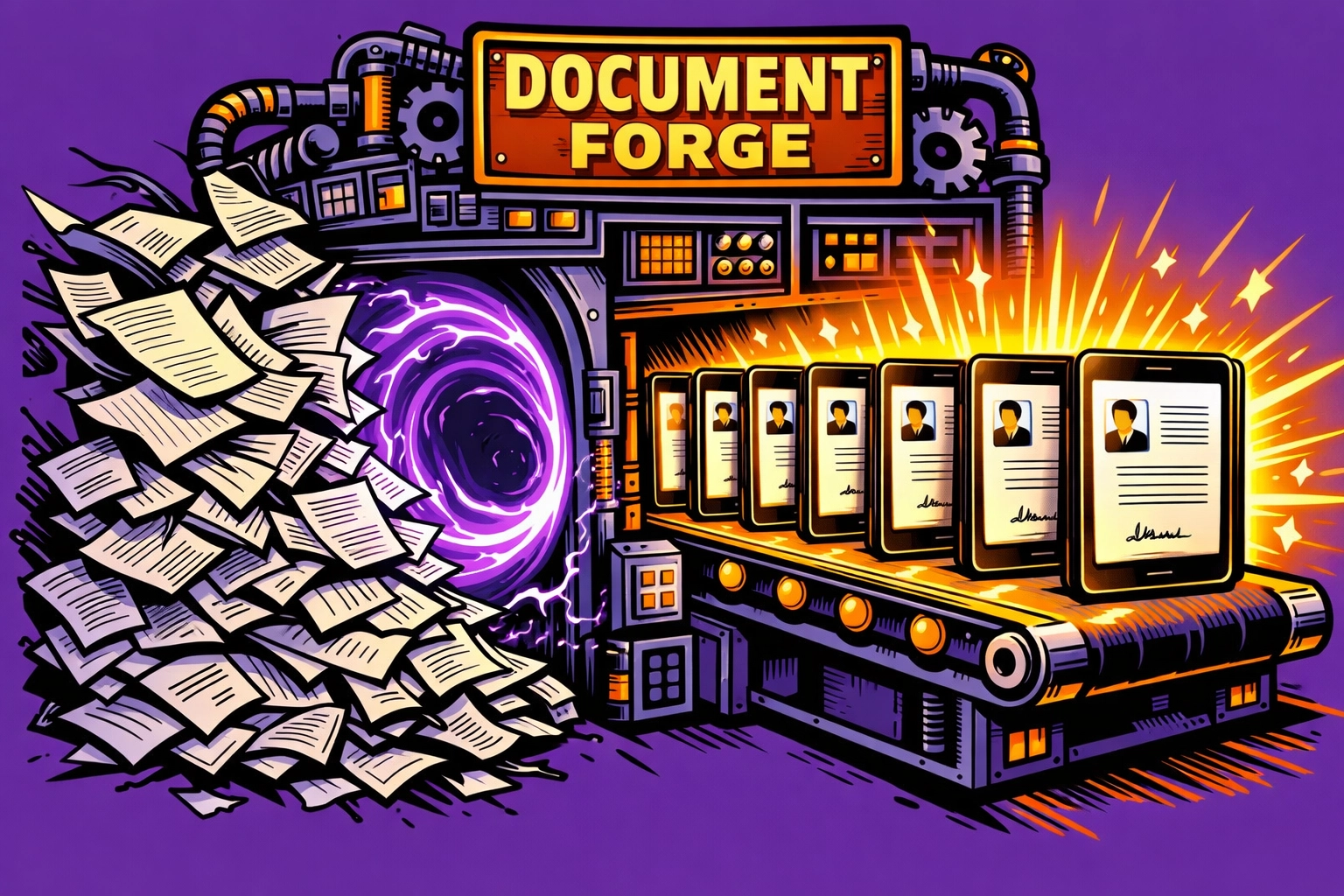
    Pop art image showing chaotic paperwork being converted into organized digital files using automation tools.

    6. THE END OF THE "WHERE IS THAT FILE?" SEARCH

    📂 4:30 PM.

    You know you saved it. You remember the blue icon. You think it was named "Final_Draft_V2_USE_THIS_ONE."
    Ten minutes later, you’re still clicking through folders like a digital archaeologist.

    AI assistants keep your digital house clean. They use logical naming conventions and tag files based on their content, not just their names.

    Need that invoice from July? Just ask. Your AI finds it because it understands the context of your work, not just the file path. The chaos is gone before you even realize it was there.

    7. LET THE BOT BE THE BAD COP (PRIORITIZATION)

    🎯 5:30 PM.

    The day is winding down, but your to-do list still has 12 items on it. The panic starts to set in. What do you do first?

    Most people pick the easiest task. AI picks the most important one.

    By analyzing your deadlines, your habits, and your goals, an AI task manager highlights the "needle-movers." It tells you: "Do this now, ignore that until tomorrow."

    It’s the prioritization you’re too tired to do yourself. You aren't deciding what matters; you’re just executing.


    THE "AFTER" PHOTO

    🌙 6:30 PM.

    The laptop is closed.
    The lights are off.
    But your business isn't "shut down."

    While you’re heading to dinner or hitting the gym, your AI systems are still humming. They’re sorting the late-night emails. They’re organizing the files you uploaded. They’re prepping your agenda for tomorrow.

    Scaling shouldn't be a struggle. It shouldn't mean working 18-hour days until your eyes turn red.

    True ai business automation gives you the one thing money usually can’t buy: time.

    Stop being the bottleneck in your own company. You have the vision; let the bots have the admin.

    SEE IT IN ACTION

    You don't need a degree in computer science to make this happen. You just need the right partner.

    If you're ready to stop juggling and start growing, you need to see how this fits into your workflow. It's not magic; it's just better business.

    👉 Grab your life back and see the magic here

    Stop wasting time. Start winning.

    The bots are ready when you are.


    FAQ: Will AI replace my personal touch?
    No. It replaces your personal toil. It handles the "when" and "where" so you can focus on the "why" and "how."

    FAQ: Is this expensive?
    Compared to the cost of your time? It's the cheapest hire you'll ever make. Most business automation tools pay for themselves in the first week.

    FAQ: How long does it take to set up?
    Less time than you spent on email this morning. Seriously.

    Scaling shouldn't be this easy. But here we are.

  • Hyper-Local Experiences: Using AI to Curate the Perfect Neighborhood Guide

    Hyper-Local Experiences: Using AI to Curate the Perfect Neighborhood Guide

    Explore deeper. Discover faster. Connect better.

    Traditional neighborhood guides are static, outdated, and: to be honest: a bit boring. They rely on the same five "top-rated" tourist traps that everyone already knows. But in 2026, the modern traveler demands more. They want the hidden courtyard cafe that only opens on Tuesdays. They want the jazz bar that’s actually hosting a session tonight. They want the city as a local sees it, and they want it personalized to their specific mood.

    We’ve seen guest engagement with local content jump by 85% when it’s delivered through smart, responsive platforms. By moving away from the printed PDF and toward a dynamic, AI-driven ecosystem, you transform your property from a place to sleep into a gateway to the community. It’s about building a bridge between your hotel and the heartbeat of your neighborhood: all from one innovative platform.

    The death of the "one size fits all" guide

    We believe hospitality is about curation, not just accommodation. The old way of doing things: a dusty binder at the front desk or a generic list on the website: fails because it assumes every guest is the same. It ignores the weather, the time of day, and the unique interests of the person standing in your lobby.

    AI changes the equation. Instead of a static list, you provide a living, breathing digital concierge. This isn’t just about "tech for tech’s sake." It’s about solving the age-old problem of the "bad recommendation."

    • Dynamic relevance. Recommendations change based on the current weather, traffic, and local event schedules.
    • Hyper-personalization. The guide learns if a guest prefers artisanal sourdough or high-octane espresso.
    • Frictionless discovery. Guests find what they need in seconds, not after twenty minutes of scrolling through biased review sites.

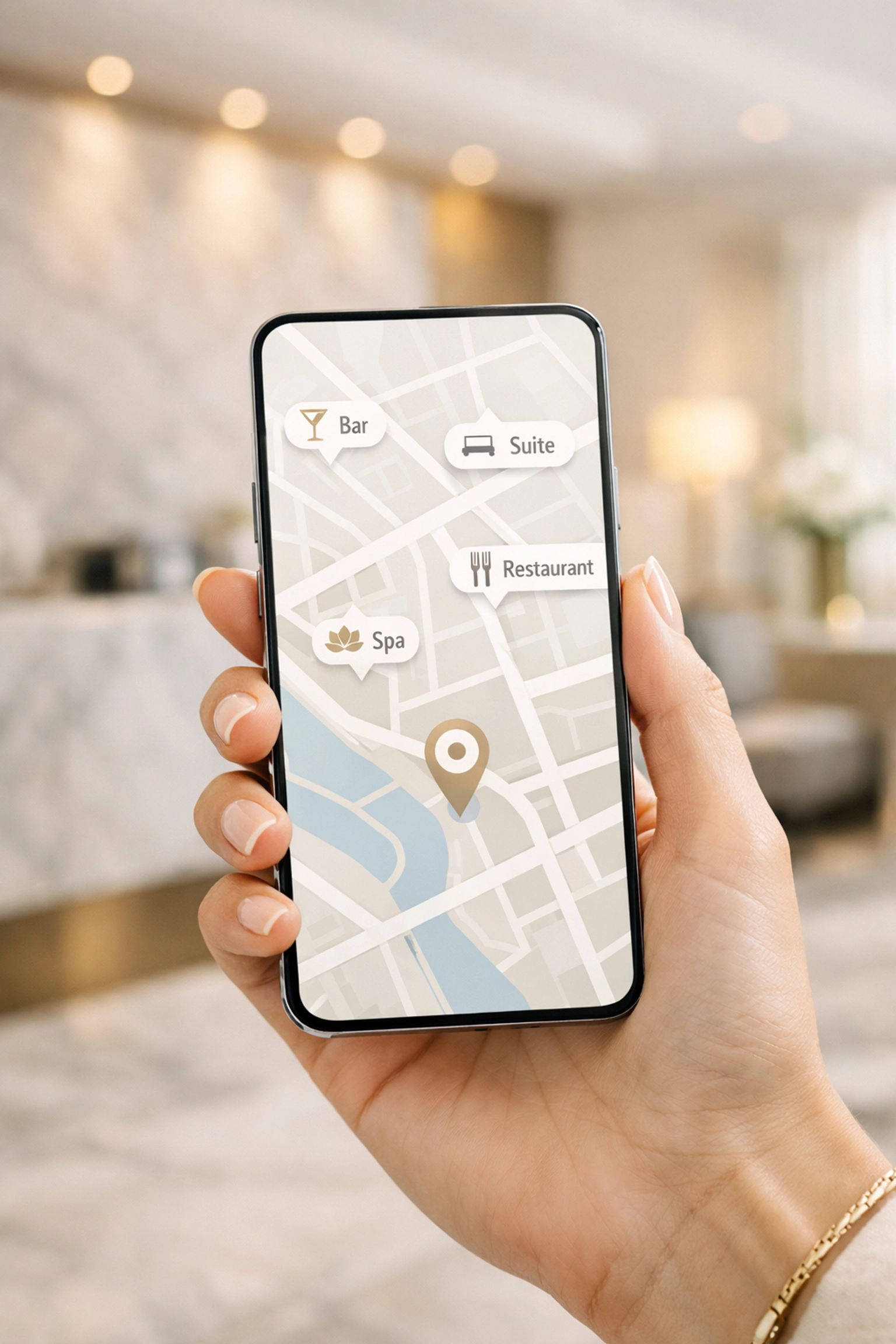
    A guest using a digital neighborhood guide on a smartphone in a modern hotel lobby.

    Agentic AI: The concierge in their pocket

    The leap from 2025 to 2026 has been defined by the move toward Agentic AI. These aren't just chatbots that answer questions; they are agents that take action. In the context of a neighborhood guide, this means the AI doesn't just suggest a restaurant: it checks availability, looks at the guest's previous dining history, and offers to secure a table.

    Think of it as a predictive layer over the physical world. If it’s raining, the guide suggests the best boutique cinema or an indoor art gallery. If the guest is a morning person, it highlights the sunrise viewpoints and the earliest opening bakeries. It’s about providing the right information at the exact moment it becomes useful.

    "Our guests stopped asking 'What should I do?' and started saying 'That recommendation was perfect.' It’s saved our front desk 15 hours a week in repetitive questions." : Sarah T., General Manager

    Curating the "Undiscovered"

    We think the real value of a hotel lies in its ability to unlock the local area. AI tools can now ingest thousands of data points: from local blogs and social media to municipal event calendars: to find the "hidden gems" that even your staff might not know about yet.

    By using AI to aggregate these data points, your property becomes the ultimate local authority. You aren't just competing on room rate or thread count anymore; you're competing on the quality of the experience you provide outside your four walls.

    1. Ingest local data. Connect your guide to real-time local feeds and social signals.
    2. Filter for quality. Use AI to vet recommendations based on recent sentiment and guest profiles.
    3. Deliver instantly. Push recommendations to the guest’s mobile device via your guest portal.

    A hidden courtyard cafe representing hyper-local recommendations from an AI guest portal.

    Beyond the map: Contextual recognition

    The technology has moved beyond the blue dot on a map. With the rise of visual AI, guests can now point their cameras at a historic building or an interesting menu and get instant, context-rich information.

    Imagine a guest walking through the neighborhood. They see a mural. Through your hotel’s AI guide, they can instantly learn about the artist, the history of the building, and where to find similar street art nearby. This isn't just a guide; it’s an immersive, educational experience. It turns a simple walk into a curated tour, and it positions your brand as the facilitator of that magic.

    We believe this level of interaction is what defines a modern luxury stay. It’s proactive, it’s intelligent, and it’s deeply rooted in the physical location of your property.

    • Architectural insights. Instant history on the surrounding skyline.
    • Cultural context. Real-time updates on local festivals or street markets.
    • Personalized detours. Suggestions for "the long way" back to the hotel based on points of interest.

    A traveler using a smartphone AR guide to discover architectural and cultural neighborhood history.

    Driving revenue through local partnerships

    Innovative hospitality isn't just about the guest experience: it’s about the bottom line. When you use AI to curate local guides, you create a powerful channel for local partnerships. By recommending the boutique down the street or the local tour operator, you’re supporting the local economy while potentially opening up new commission-based revenue streams.

    Because the AI tracks what guests are interested in, you can provide local partners with anonymized data on what people are looking for. This helps everyone in the neighborhood provide a better service. It’s a win-win-win scenario: the guest gets a great experience, the local business gets a customer, and your hotel reinforces its position as a community hub.

    You can get started with these types of integrations easily. Take a look at how we're thinking about the future of the guest journey here: https://referrals.mews.com/umqHYIto.

    Freeing your team for what matters

    One of the biggest misconceptions about AI in hospitality is that it replaces the human touch. We believe the opposite is true. By automating the "Where is the nearest pharmacy?" and "What’s a good Italian place?" questions, you give your staff the time to actually engage with guests.

    Instead of being a human search engine, your concierge becomes an experience designer. They can handle the complex, high-touch requests that require true human empathy and creativity, while the AI handles the data-heavy, real-time logistics of the neighborhood guide.

    • Reduce burnout. Eliminate the repetitive "broken record" tasks for front desk staff.
    • Enhance interaction. Staff can spend more time on personalized welcomes and problem-solving.
    • Empower knowledge. Staff can use the same AI tools to stay updated on local trends themselves.

    A local artisan boutique showcasing unique products discovered through a hotel's AI-driven guide.

    How to launch your AI neighborhood guide

    Setting up a high-tech local guide doesn't have to be a months-long project. With the right platform, it’s a matter of connecting the dots between your existing guest data and local information sources.

    Follow these simple steps to get started:

    1. Audit your current "local" content. Identify what’s outdated or generic.
    2. Choose your AI integration. Look for tools that offer real-time data and natural language processing.
    3. Define your "vibe." Train the AI to recommend places that reflect your brand’s personality (e.g., "high-energy and modern" vs. "quiet and historic").
    4. Promote the tool. Use QR codes in-room and links in your pre-arrival emails to get guests using the guide before they even check in.
    5. Gather feedback. Use the AI’s analytics to see which recommendations are hits and which are misses.

    A luxury hotel room bedside table featuring a QR code for a digital neighborhood concierge service.

    The future is hyper-local

    The hotels that thrive in 2026 will be those that realize they are more than just buildings. They are the curators of the local experience. By leveraging AI to provide hyper-local, personalized, and real-time neighborhood guides, you aren't just giving a guest a map: you're giving them a key to the city.

    This level of service creates the kind of loyalty that no points program can match. It’s the difference between a stay that’s forgotten and an experience that’s shared. Ready to see how the right technology can transform your guest experience?

    Explore the possibilities and get you earning revenue in no time: https://referrals.mews.com/umqHYIto.