Category: Category 1

Use this description to tell users what kind of blog posts they can find in this category.

  • Wholesale Specialty Coffee Secrets Revealed: What Experts Don’t Want You to Know

    Wholesale Specialty Coffee Secrets Revealed: What Experts Don’t Want You to Know

    So, you’re thinking about diving into the world of wholesale specialty coffee? Or maybe you’re already in it, staring at a stack of invoices and wondering why your espresso tastes like a burnt rubber tire despite the "premium" labels on the bags.

    We’ve been in the roasting game for a long time here at Limini Coffee, and we’ve seen it all. The coffee industry, especially the wholesale side, is full of smoke and mirrors. There are secrets that the big commercial roasters (and even some "boutique" ones) would rather you didn't know.

    Why? Because transparency usually costs them money.

    Today, we’re pulling back the curtain. We’re going to talk about what actually matters when you're looking for a wholesale specialty coffee partner and how to spot the red flags before you sign a contract that ties you to mediocre beans for three years.


    The Freshness Lie: Best-By vs. Roast-On

    Let’s start with the biggest elephant in the room: Freshness.

    The majority of commercial coffee sitting on warehouse shelves is stale before it even reaches your hopper. Large coffee companies love to talk about their "state-of-the-art" packaging that keeps coffee fresh for two years. To be honest, that’s just a load of marketing nonsense.

    Coffee is a fresh agricultural product. Once it’s roasted, the clock starts ticking. Carbon dioxide escapes (degassing), and oxygen begins to move in, stripping away those delicate floral and fruity notes that make specialty coffee, well, specialty.

    The secret they don't want you to know? Many "wholesale" suppliers roast in massive batches and store the beans for months. They’ll put a "Best-By" date on the bag that is 12 or 24 months in the future.

    What you should look for instead: A "Roast-On" date.

    At Limini Coffee, we believe that if a roaster won't tell you exactly when the beans left the drum, they’re hiding something. We prefer to see coffee used within 4 to 6 weeks of roasting for peak flavor. If you’re buying in bulk, you need a partner who roasts to order, not one who picks a dusty bag off a pallet. You can check out our approach to freshness and sourcing our coffee to see how we handle the logistics of quality.
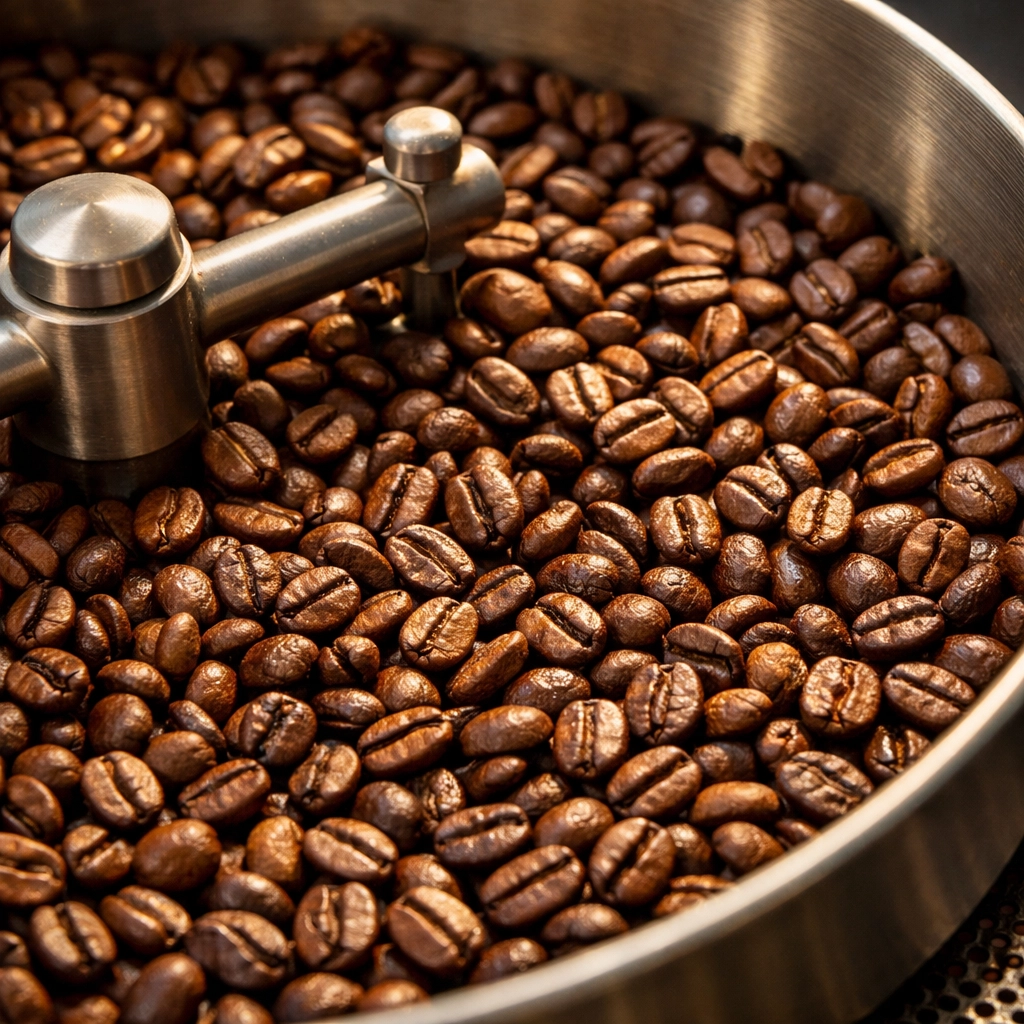
    Freshly roasted specialty coffee beans in a cooling tray, showcasing quality for wholesale clients.


    The Robusta Filler Secret

    Have you ever noticed how some wholesale specialty coffee blends are surprisingly cheap, yet they still claim to be "premium"?

    There’s a hierarchy in the bean world. On one side, you have Arabica: sweet, complex, and high-altitude. On the other, you have Robusta: hardy, high-caffeine, and often tasting like wood or burnt grain.

    In the specialty world, we look for "cupping scores." For a coffee to be legally called "specialty," it needs to score 80 points or higher on a 100-point scale. Commercial roasters often take lower-grade Arabica (which might score 75) and blend it with "Polished" Robusta to keep the price down while keeping the caffeine kick high.

    They won't tell you that, though. They’ll call it a "Signature Italian Blend" or "Dark Roast Extra Strength."

    The truth is, if you want that glossy, thick crema and a balanced cup, you need high-quality Arabica. We’ve written a lot about understanding crema and how it relates to bean quality. Don't be fooled by a low price point; you’re usually paying for filler.


    The "Direct Trade" Buzzword

    "We buy directly from the farmer!"

    It’s a beautiful sentiment, isn't it? It conjures up images of a roaster sitting on a porch in Ethiopia, shaking hands with a producer. While some of us actually do this (it’s a lot of flying, trust us), the term "Direct Trade" is often used loosely to mask a standard supply chain.

    The real secret? Many roasters are still buying from massive importers but calling it direct because they know the name of the farm.

    True wholesale specialty coffee partnerships focus on transparency and fair compensation. When you work with a roaster like Limini Coffee, you should be able to ask where the coffee came from, who grew it, and why it tastes the way it does. This isn't just about feeling good; it’s about consistency. When you have a direct line to the source, the quality doesn't fluctuate wildly from month to month.


    Equipment: The Hidden Profit Center

    This is a spicy one. Many wholesale coffee suppliers are actually equipment leasing companies in disguise.

    They’ll offer you a "Free Machine" if you buy a certain amount of coffee every month. Sounds like a dream, right? Unfortunately, there’s no such thing as a free lunch (or a free espresso machine).

    The cost of that machine is baked into a higher price per kilo of coffee. Not only that, but you’re often locked into using their beans, which might be… let’s say "less than stellar." If the coffee is bad, you can’t leave because you’re tied to the equipment contract.

    We think there’s a better way. Choosing the right espresso equipment should be a separate decision based on what your shop actually needs. Whether it’s a La Spaziale or a traditional lever machine, you want equipment that works for your volume, not just whatever the roaster had sitting in their warehouse.
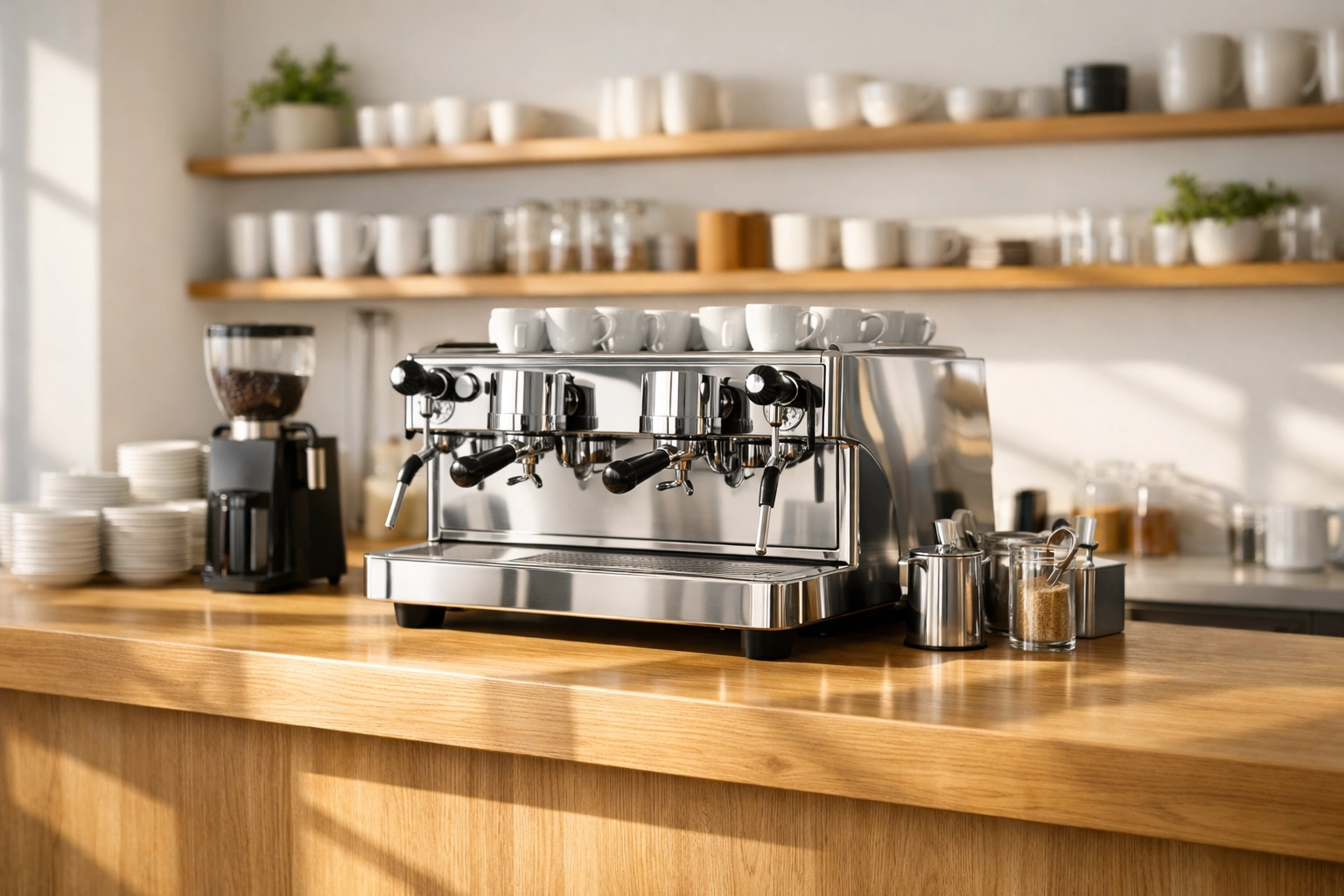
    Professional espresso machine on a clean cafe counter, illustrating the ideal wholesale coffee setup.


    Why Training is the Secret Ingredient

    You can have the most expensive, ethically sourced, 88-point specialty beans in the world, but if your barista doesn't know how to dial in the grinder, it’s going to taste like battery acid.

    Experts often downplay the importance of training because it’s time-consuming for them. They’d rather just drop off the bags and send an invoice.

    But a true wholesale partner knows that their reputation is in the hands of your staff. This is why we place such a massive emphasis on barista training.

    Do your staff know the difference between 88 C and 95 C (190 °F to 203 °F) in terms of extraction? Do they understand why tamping at a consistent 30 lbs of pressure matters? If your supplier isn't teaching you these things, they aren't a partner: they’re just a delivery service.


    The Consistency Trap

    "Our first batch was amazing, but the second one tasted… different."

    We hear this all the time. Consistency is the hardest part of the coffee business. Coffee is a seasonal crop. The beans we get in March might behave differently than the ones we get in September, even if they’re from the same region.

    Large-scale roasters solve this by "roasting the soul" out of the bean: essentially burning it until everything tastes like ash. It’s consistent, sure, but it’s consistently bad.

    Specialty roasters have to work harder. We use software to track roast profiles, ensuring that every batch hits the exact same markers. We're looking for that perfect curve. If you want to see how deep the rabbit hole goes, you might want to look into understanding milk and how it interacts with different roast profiles. It's all part of the science of the perfect cup.

    Macro view of a perfect espresso extraction with rich crema from premium wholesale specialty coffee.


    Pricing: What Are You Actually Paying For?

    Wholesale pricing can be a bit of a dark art. You’ll see prices ranging from £8 to £25 per kilo.

    The secret? Set your wholesale expectations based on value, not just the bottom line. If you buy the £8 coffee, you’re likely getting stale, low-grade beans with zero support. If you pay a bit more for wholesale specialty coffee, you’re paying for:

    1. Quality Control: Cupping every batch to ensure no defects.
    2. Education: Training your team to reduce waste and improve sales.
    3. Technical Support: Help when your machine starts leaking at 8 AM on a Saturday.
    4. Sustainability: Ensuring the farmers get paid enough to keep growing great coffee.

    Basically, you’re buying a safety net for your business. Imagine trying to run a high-end cafe and having no one to call when your extraction goes wonky. That’s the "hidden cost" of cheap coffee.


    The Theatre of the Cafe

    Lastly, let’s talk about the "vibe." Many experts won't tell you that coffee is 50% taste and 50% theatre.

    The way your baristas interact with customers, the cups you use, and even the sound of the steam wand all contribute to the customer's perception of "specialty."

    We love the theatre of coffee. It’s what turns a morning routine into an experience. A good wholesale partner doesn't just give you beans; they help you build that experience. They help you understand the difference between a latte and a cappuccino in a way that makes your customers feel like they’re part of something special.


    Choosing Your Partner

    At the end of the day, the "secrets" of the coffee industry aren't that mysterious: they just require a bit of honesty.

    We believe that a partnership with Limini Coffee should be built on three things: Quality, Consistency, and Support. Whether you are building a coffee shop from scratch or looking to upgrade your current offering, we’re here to help you navigate the noise.

    Don't settle for stale beans and "free" machines that cost you your reputation. Look for the roast-on date, demand 100% Arabica (unless you’re going for a very specific profile), and make sure your team has the skills to back up the beans.

    If you’re ready to see what a real coffee partnership looks like, we’d love to chat. Check out our training overview or dive into our wholesale options.

    Let’s make some incredible coffee together. No secrets, just great beans. 🙂

  • How to Choose the Best Hotel Booking Engine to Finally Kill Those OTA Commissions

    How to Choose the Best Hotel Booking Engine to Finally Kill Those OTA Commissions

    Stop the leak. Reclaim your revenue. Own the guest.

    Direct bookings are the lifeblood of a profitable hotel. Yet, most properties are still handing over 15% to 25% of every reservation to Online Travel Agencies (OTAs). It is a tax on your hard work. It is a barrier between you and your guests. It is time to move past it.

    A modern booking engine is more than just a calendar on your website. It is a high-performance sales tool. It is a conversion machine. It is the heart of your digital strategy. When you choose the right one, you don't just save on commissions: you build a foundation for long-term guest loyalty.

    The high price of convenience

    OTAs provide visibility, but they charge a premium for it. We think the "Billboard Effect" is real, but it shouldn't be your only strategy. Many guests find you on a big platform and then visit your website to see if they can get a better deal or more information.

    If your booking engine is clunky, slow, or looks like it was designed in 2005, they will head right back to the OTA. You lose the direct relationship. You lose the data. You lose the margin.

    We believe your booking engine should be the best salesperson on your team. It should work 24/7. It should never miss a lead. It should close the deal every single time.

    Conversion is the only metric that matters

    Traffic is vanity. Conversion is sanity. You can have thousands of visitors, but if they don't click "Book Now," your engine is failing.

    The best engines focus on a "3-step flow."

    • Select dates and rooms.
    • Add personal details and enhancements.
    • Confirm and pay.

    Anything more than that is friction. Friction leads to abandonment. Statistics show that optimized booking flows can lead to a 63x ROI on the software cost. That is not a marginal gain; that is a business transformation.

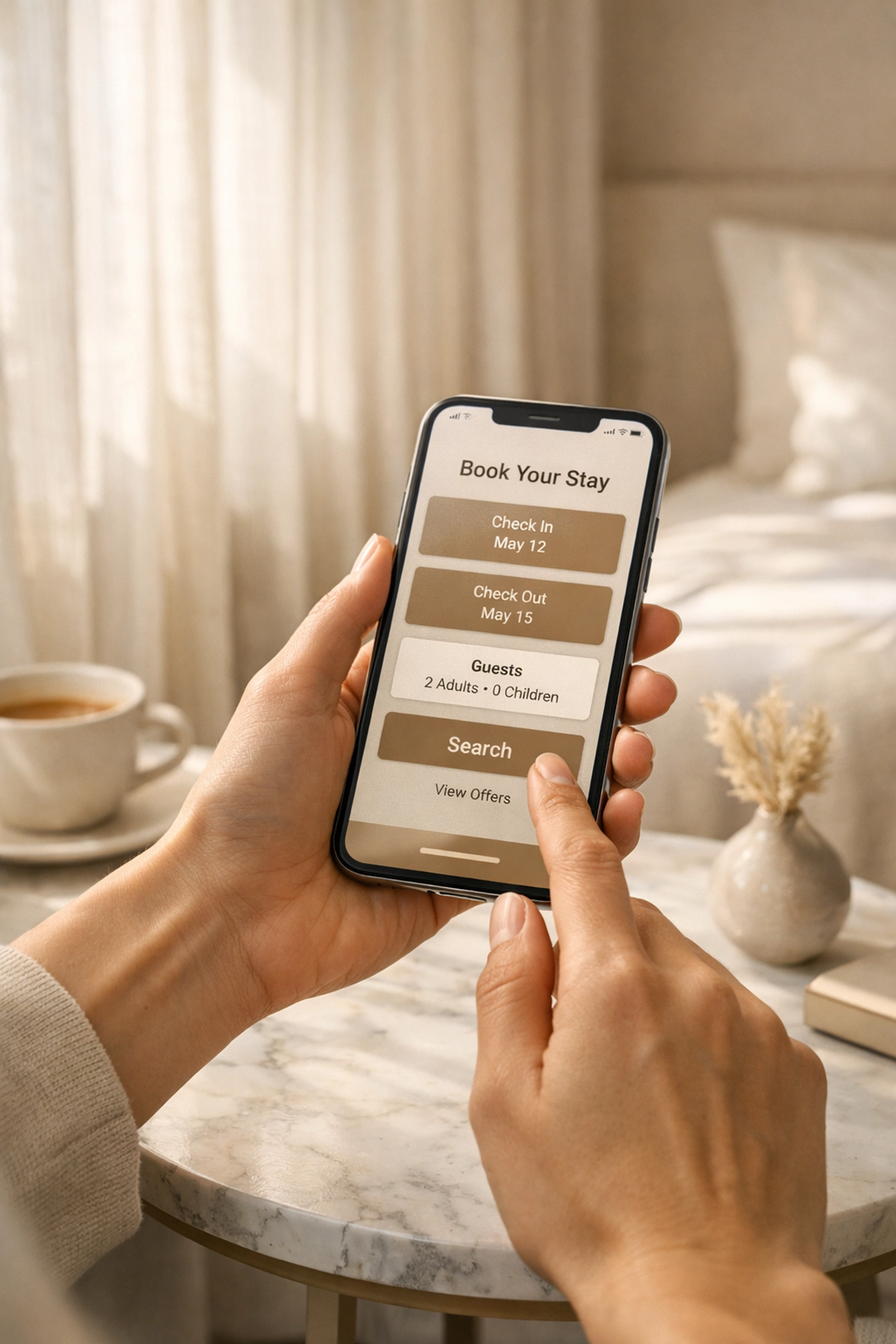
    A guest using a mobile-optimized hotel booking engine on a smartphone in a modern suite.

    Features that drive direct revenue

    To beat the OTAs at their own game, you need a toolkit that matches their sophistication. You aren't just competing with the hotel down the street; you are competing with billion-dollar tech companies.

    1. Real-time rate parity

    Nothing kills trust faster than a guest finding a cheaper price on Expedia while they are looking at your "Direct is Best" page. Your engine must sync perfectly with your Channel Manager.

    • Automatic price matching.
    • Instant availability updates.
    • Zero manual intervention.

    2. Mobile-first design

    The world has gone mobile. Your guests are booking from trains, planes, and couches. If your booking engine requires pinching and zooming, you are losing money. A mobile-first interface ensures the experience is seamless on a five-inch screen. This is no longer an "extra": it is the baseline.

    3. Smart upselling

    The booking path is the perfect time to offer a room upgrade, a late checkout, or a bottle of champagne on arrival. These small additions increase your Average Daily Rate (ADR) without increasing your acquisition costs. We believe upselling should feel like a service, not a sales pitch.

    The power of the integrated ecosystem

    A booking engine shouldn't live on an island. It needs to talk to your Property Management System (PMS) in real-time. This is where Mews changes the game.

    When your booking engine is part of a unified platform, data flows freely. You know who the guest is. You know their preferences. You can offer them a personalized experience from the very first click.

    "We saw a 20% jump in direct bookings within three months of switching," says one boutique hotel manager. "The system just works. No double bookings, no manual entry. Just revenue."

    Boutique hotel staff providing personalized guest service at a minimalist reception desk.

    AI and the future of booking

    The next frontier is personalization powered by AI. We think the future of hospitality is "hyper-local and hyper-personal."

    Imagine a booking engine that recognizes a returning guest and automatically suggests their favorite room type. Or an AI-driven chatbot that answers questions about parking and pets mid-booking, preventing the guest from leaving the page to find an FAQ.

    Innovation isn't just about flashy tech. It’s about removing the hurdles between a guest’s desire and their confirmation. AI allows us to do this at scale, making every guest feel like your only guest.

    How to make the switch

    Choosing a new engine feels daunting. It shouldn't be. Look for partners who prioritize the guest experience over technical complexity.

    • Check the speed. Every second of lag costs you bookings.
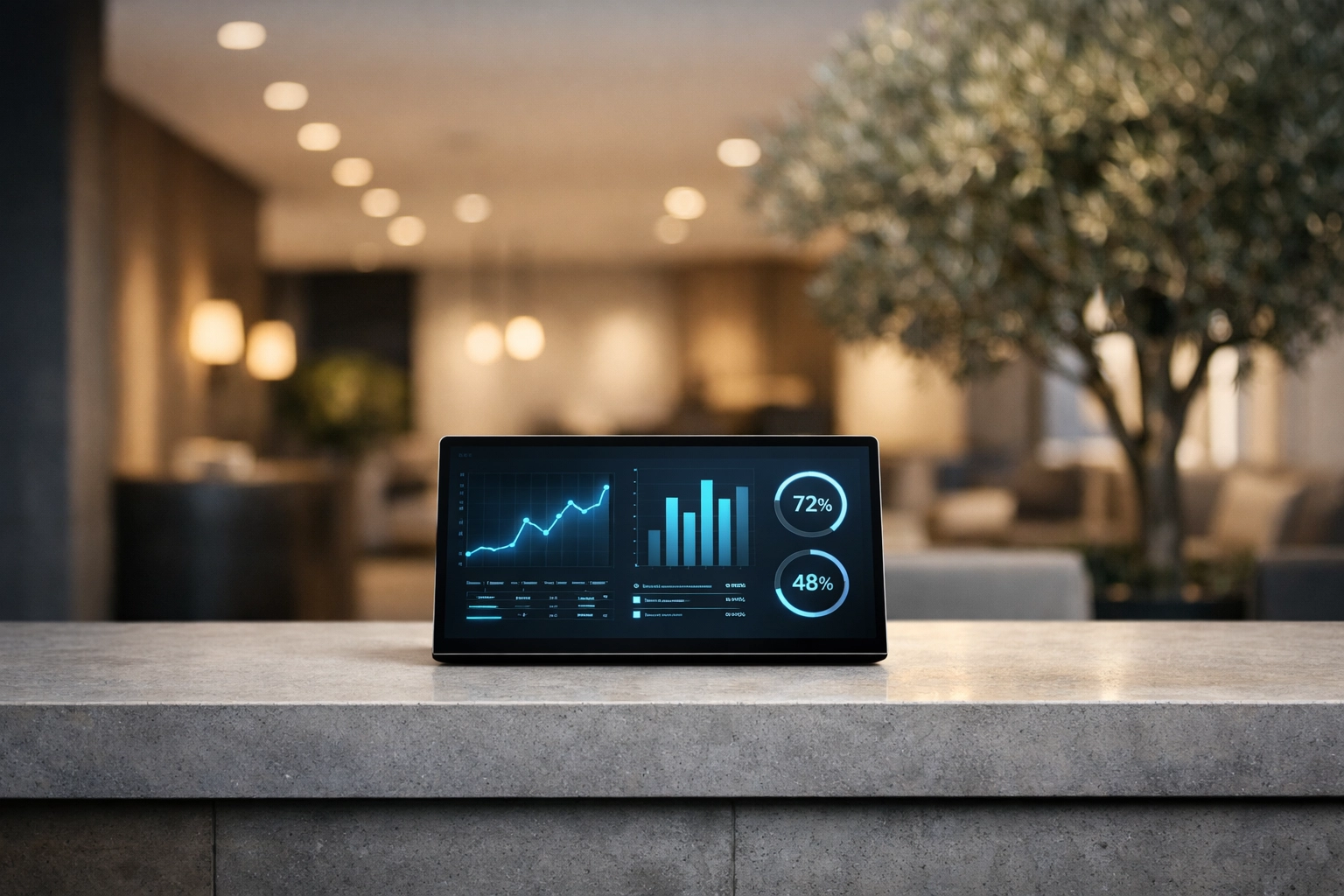
    • Look at the analytics. You need to know where guests drop off.
    • Test the mobile flow. Do it yourself on your phone. Is it easy?
    • Verify the security. PCI compliance is non-negotiable.

    You can explore how a modern, innovative platform handles this by visiting Mews Referrals.

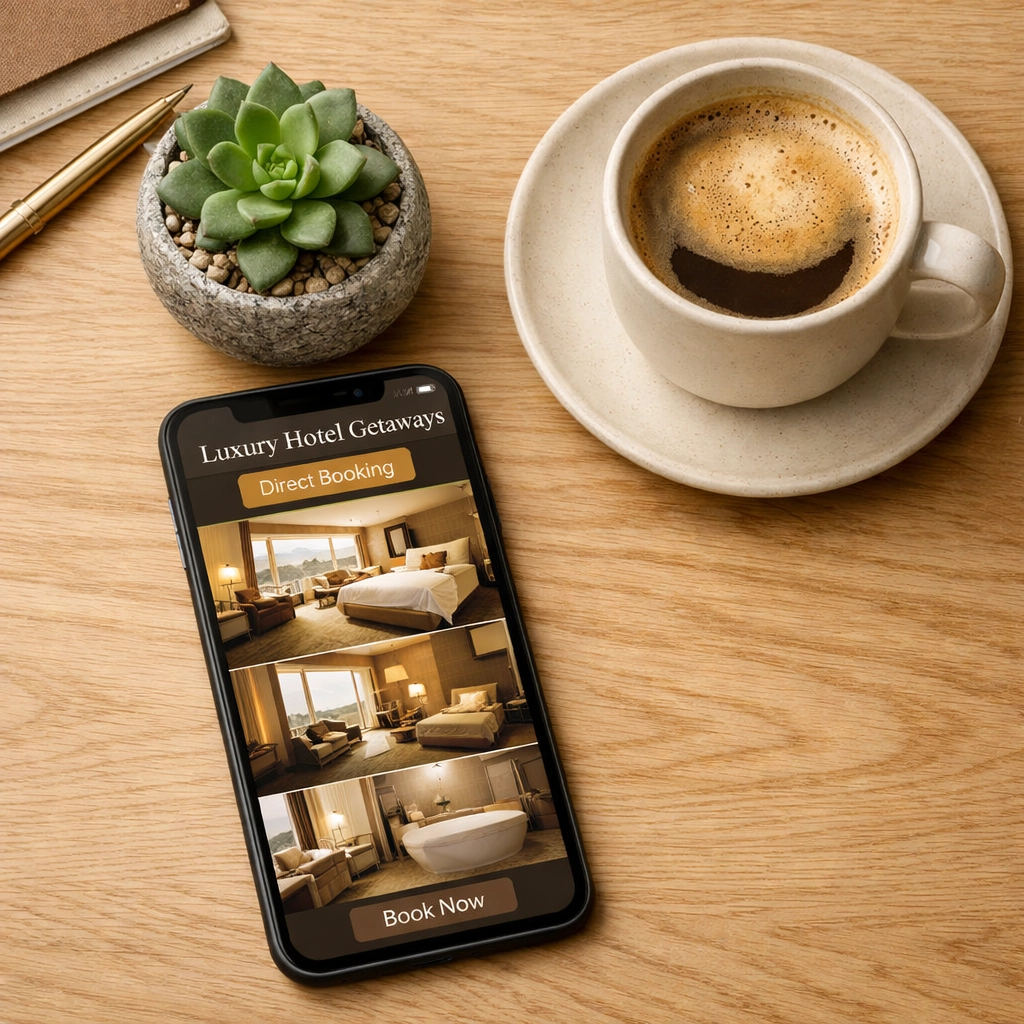
    Smartphone screen displaying a direct booking confirmation on a clean, modern workspace.

    Beyond the transaction

    We believe the best booking engine is the one that guests don't even notice. It should be so smooth, so intuitive, that it feels like a natural extension of your brand's hospitality.

    When you kill the OTA commission, you aren't just saving money. You are reinvesting in your property. You are funding that new roof, that staff bonus, or that upgraded lobby bar. You are taking back control of your business destiny.

    The operational excellence angle

    A great booking engine also saves your team time. Manual entry is a relic of the past. If your staff is spending hours a week fixing synchronization errors or manually inputting OTA emails, they aren't focusing on the guest.

    Efficiency is the ultimate luxury. When your systems work, your people can shine.

    • Eliminate manual data entry.
    • Reduce human error.
    • Free up your front desk for genuine hospitality.

    A confident hotel manager in a light-filled lobby, reflecting operational efficiency.

    Building trust through transparency

    Guests book direct when they feel they are getting the best value and the most reliable information. Use your booking engine to showcase your unique value propositions.

    • Exclusive direct-booking perks.
    • Clear cancellation policies.
    • Real-time room photos that match reality.

    The booking engine is the digital front door of your hotel. Make sure it’s wide open, well-lit, and welcoming.

    Final thoughts

    The era of OTA dominance is only as strong as your digital weakness. By choosing a booking engine that prioritizes conversion, mobile optimization, and seamless integration, you shift the power back to where it belongs: with you.

    It is time to stop paying the "OTA tax." It is time to start building direct relationships. It is time to innovate.

    Ready to see how the right technology can transform your bottom line? Explore the possibilities and get started with a platform designed for the future of hospitality at https://referrals.mews.com/umqhyito.

    Own your journey. Own your guests. Own your revenue. All from one innovative platform.

    Modern hotel exterior at dusk showcasing innovative architecture and premium guest experience.

  • Hospitality Trends 2026: 15 Ideas to Keep Your Hotel Ahead of the Curve

    Hospitality Trends 2026: 15 Ideas to Keep Your Hotel Ahead of the Curve

    Automate your operations. Delight every guest. Scale your growth.

    In 2026, the gap between running a hotel and mastering hospitality is wider than ever. Guests no longer just want a room; they want a seamless, invisible layer of technology that anticipates their needs before they even realize they have them. If your current setup feels like a relic from the early 2000s, it's time for an upgrade.

    We believe that great technology should be felt, not seen. By moving away from legacy systems and embracing a forward-thinking platform, hospitality brands are seeing a 20% increase in operational efficiency: all from one innovative platform.

    Here are 15 trends and actionable ideas to ensure your property remains the first choice for the modern traveler.

    The AI Revolution: Beyond the Buzzwords

    We believe technology should fade into the background to let human connection shine. In 2026, AI isn't just a feature; it’s the infrastructure of your entire guest journey.

    1. Deploy AI-Powered Revenue Management

    The days of manual pricing are over. AI now analyzes historical data, real-time occupancy, and even local weather or events to adjust your rates in milliseconds. It’s dynamic pricing on steroids, ensuring you never leave money on the table.

    2. Enable AI Agent Connectivity

    Travelers are no longer just searching Google; they’re asking ChatGPT to "book a boutique hotel in London with a gym and a rooftop bar." Ensure your PMS allows Large Language Models (LLMs) to access your inventory directly. If an AI agent can’t book you, you don't exist.

    3. Implement AI Chatbots that Actually Work

    Stop using clunky, pre-programmed bots. Modern AI assistants understand intent and context. They handle 80% of routine inquiries: like "What's the Wi-Fi password?" or "Can I get a late checkout?": freeing your staff to focus on the 20% that requires a human touch.

    4. Adopt AI Operational Systems

    Predictive maintenance is the new gold standard. Use AI to monitor infrastructure and manage food and beverage inventory. It tells you when a fridge is about to fail or when to reorder avocados before you run out.

    Minimalist hotel reception desk using digital tablets for AI-powered hospitality operations.

    Hyper-Personalization: The End of "One Size Fits All"

    We think guests aren't segments; they're individuals. Data-driven personalization is no longer a luxury: it’s the baseline expectation.

    5. Leverage Data-Driven Hyper-Personalization

    Move beyond "Business" or "Leisure" categories. Use your guest data to understand booking behaviors and spending patterns. If a guest always buys a bottle of Pinot Noir, have it ready in their room before they check in.

    6. Deploy Attribute-Based Selling (ABS)

    Unbundle your inventory. Let guests pay for exactly what they want. Want a high floor? That's $10 extra. Need a balcony? $15. A room near the elevator? $5. ABS increases perceived value and boosts ancillary revenue without needing to raise base room rates.

    7. Create Niche-Focused Experiences

    Design stays for specific interests. Whether it's a "Biohacking Suite" with red light therapy or a "Content Creator Room" with professional lighting, catering to high-income, niche travelers allows you to command a premium price.

    8. Personalize at Scale

    "It’s impossible to know every guest," you might say. Not anymore. AI identifies patterns in guest data and provides actionable recommendations to your front desk. It’s like having a personal concierge for every single room, 24/7.

    Personalized luxury hotel bedside amenities showing data-driven guest experience and comfort.

    Strategic Distribution: Where the World Finds You

    Visibility is half the battle. In 2026, your distribution strategy needs to be as smart as your guests.

    9. Optimize for AI Travel Planning

    89% of travelers want to use AI for their research. Optimization is no longer just about SEO; it’s about "AIO" (AI Optimization). Ensure your property’s unique selling points are clearly indexed so LLMs recommend you during the discovery phase.

    10. Be Selective with Distribution Channels

    More isn't always better. Map where your most profitable guests come from and double down there. While OTAs are a necessary evil, your direct booking channel should always offer the best experience (and the best perks).

    "Switching to a modern platform saved our team 10 hours a week on manual data entry. We finally have time to actually talk to our guests."

    Operational Excellence: The Silent Powerhouse

    We believe operational discipline is the foundation of creativity. When your back-of-house is a well-oiled machine, your front-of-house can be magical.

    11. Standardize Processes with Digital Workflows

    Consistency is king. Implement standardized, digital cleaning checklists and real-time task assignments. When housekeeping finishes a room, the system updates instantly, allowing for faster check-ins and happier guests.

    12. Adapt Pricing to Shifting Seasonality

    Climate and work patterns have changed the "peak season." Use your data to identify demand spikes migrating to shoulder months. Adjust your restrictions and promotions to capture the "bleisure" crowd that travels when others don't.

    High-quality hotel room bedding highlighting operational excellence and attention to detail.

    Revenue Diversification: Think Beyond the Bed

    A hotel room is just one part of the revenue puzzle. In 2026, the most successful properties act as community hubs and lifestyle centers.

    13. Develop Bundled Offerings

    Create room-and-meal packages or wellness bundles. This preserves your Average Daily Rate (ADR) while providing the guest with a sense of "all-inclusive" value. It’s an easy win for your bottom line.

    14. Expand Group and Event Services

    With remote work being the norm, companies are desperate for physical gathering spaces. Target small-to-medium group retreats. Turning an underutilized breakfast room into a high-end meeting space can yield more revenue per square foot than a guest room.

    15. Cater to Emerging Traveler Segments

    Focus on the "Whycationer": the guest who travels with an intentional purpose, whether it's for a digital nomad stint or a deep-wellness retreat. These guests stay longer and spend more on-site.

    The Path Forward

    The future of hospitality isn't about choosing between technology and humanity; it's about using technology to enable humanity. When you automate the mundane, you empower your team to provide the kind of service that guests remember long after they’ve checked out.

    Ready to see how the world’s most innovative hotels are staying ahead? Explore how Mews can transform your property.

    Get started with Mews today

    Modern hotel lobby lounge with flexible workspaces for digital nomads and productive travel.

    3 Quick Wins for This Week:

    1. Audit your tech stack: Is your PMS talking to your revenue management system in real-time?
    2. Review your room attributes: Could you be charging $10 more for that "quiet corner" room?
    3. Check your AI visibility: Ask a popular AI tool for hotel recommendations in your city. Do you show up?

    Hospitality is changing fast. Don't just keep up: lead the way. All it takes is the right mindset and the right platform to get you earning more revenue in no time.

    Check out Mews to see what the future of hotel management looks like.

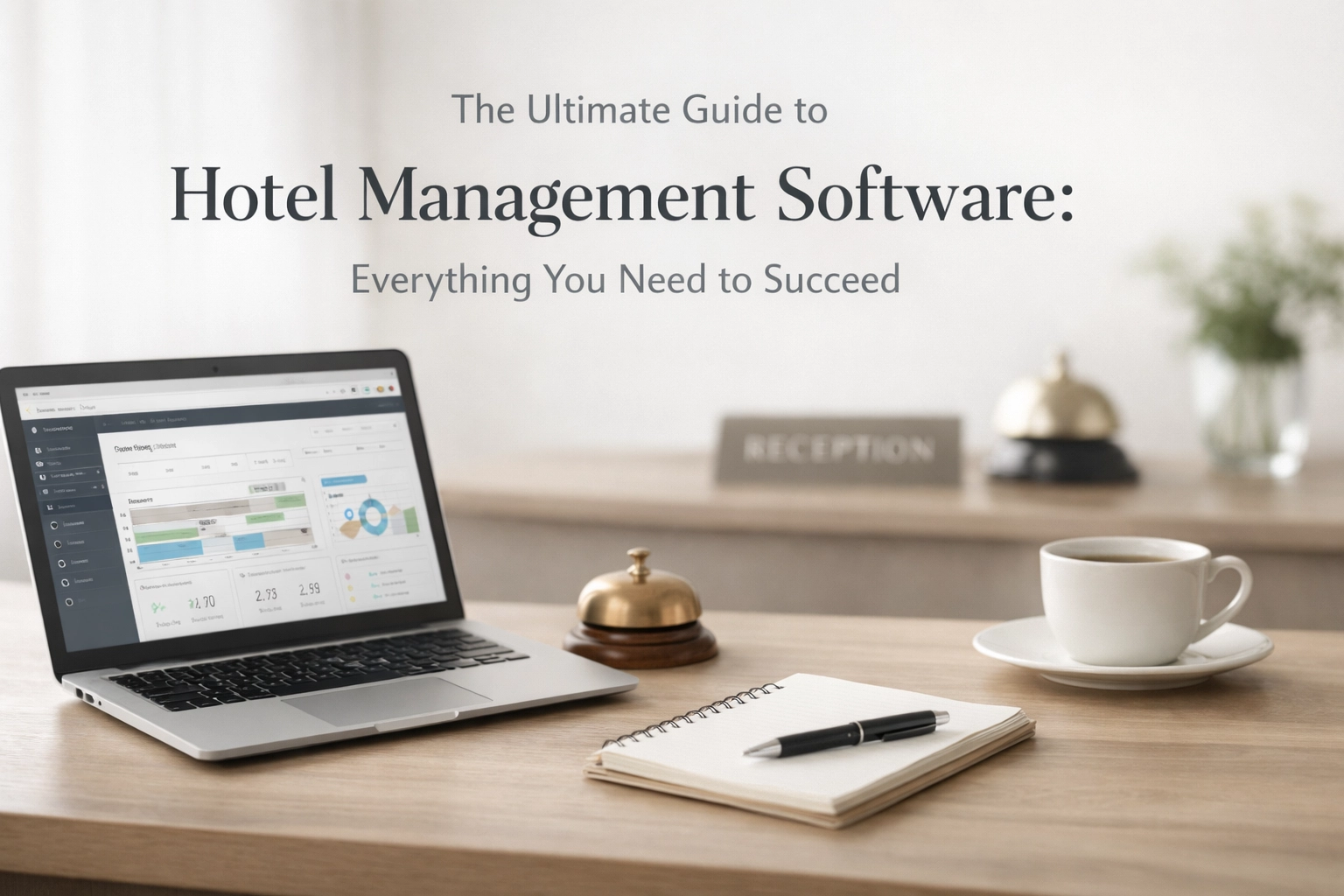
  • The Ultimate Guide to Hotel Management Software: Everything You Need to Succeed

    The Ultimate Guide to Hotel Management Software: Everything You Need to Succeed

    Automate your operations. Delight your guests. Scale your brand.

    In the fast-paced world of 2026 hospitality, your choice of technology is no longer a "back-office" decision. It is the very foundation of your guest experience. If your team is still tethered to a desktop at a front desk, or if your systems don't talk to each other, you aren't just losing time: you’re losing revenue.

    Modern hotel management software should be invisible. It should work silently in the background, handling the heavy lifting so your team can focus on what actually matters: being hospitable. We believe that technology should empower humans, not replace the human touch.

    At Mews, we see a world where 12,500+ properties are already moving away from legacy constraints and toward a connected, cloud-native future. This is how you join them. All from one innovative platform.

    The central nervous system: The Hotel PMS

    Think of your Property Management System (PMS) as the heart of your hotel. In the past, a hotel pms was basically a glorified digital guestbook. Today, it’s the central hub that coordinates everything from housekeeping to financial reporting.

    We believe a PMS should be open. It shouldn't lock you into a single way of working. It should be the foundation upon which you build your entire ecosystem.

    • Cloud-native agility. Access your data from anywhere, on any device.
    • Intuitive design. Reduce training time from weeks to hours.
    • Automation-focused. Let the software handle the boring stuff.

    When your PMS is cloud-native, you aren't just buying software; you're buying freedom. Freedom from local servers, freedom from manual updates, and freedom to run your property from a tablet while walking through the lobby.

    Hotel staff using a cloud-native hotel PMS on a tablet to manage guest operations in a modern lobby.

    Winning the direct booking war: Booking Engine & Channel Manager

    If your PMS is the heart, your booking engine and channel manager are the lungs. They keep the oxygen: your revenue: flowing.

    We think direct bookings should be your primary goal. A sleek, mobile-optimized booking engine doesn't just look good; it converts. It should feel like a natural extension of your brand, not a clunky third-party redirect.

    • Capture more direct revenue. Eliminate high OTA commissions.
    • Real-time sync. Update rates and availability across all platforms instantly.
    • Upsell effortlessly. Offer room upgrades and breakfast add-ons during the booking flow.

    A robust channel manager ensures that whether a guest finds you on Expedia, Booking.com, or your own site, your inventory is always accurate. No more manual entry. No more overbookings. Just a seamless flow of data that keeps your occupancy high and your stress levels low.

    The guest journey: Automation and self-check-in kiosks

    The "front desk" is an outdated concept. We believe the lobby should be a social hub, not a place where people stand in line to hand over a credit card. This is where self-check-in kiosks and mobile check-in change the game.

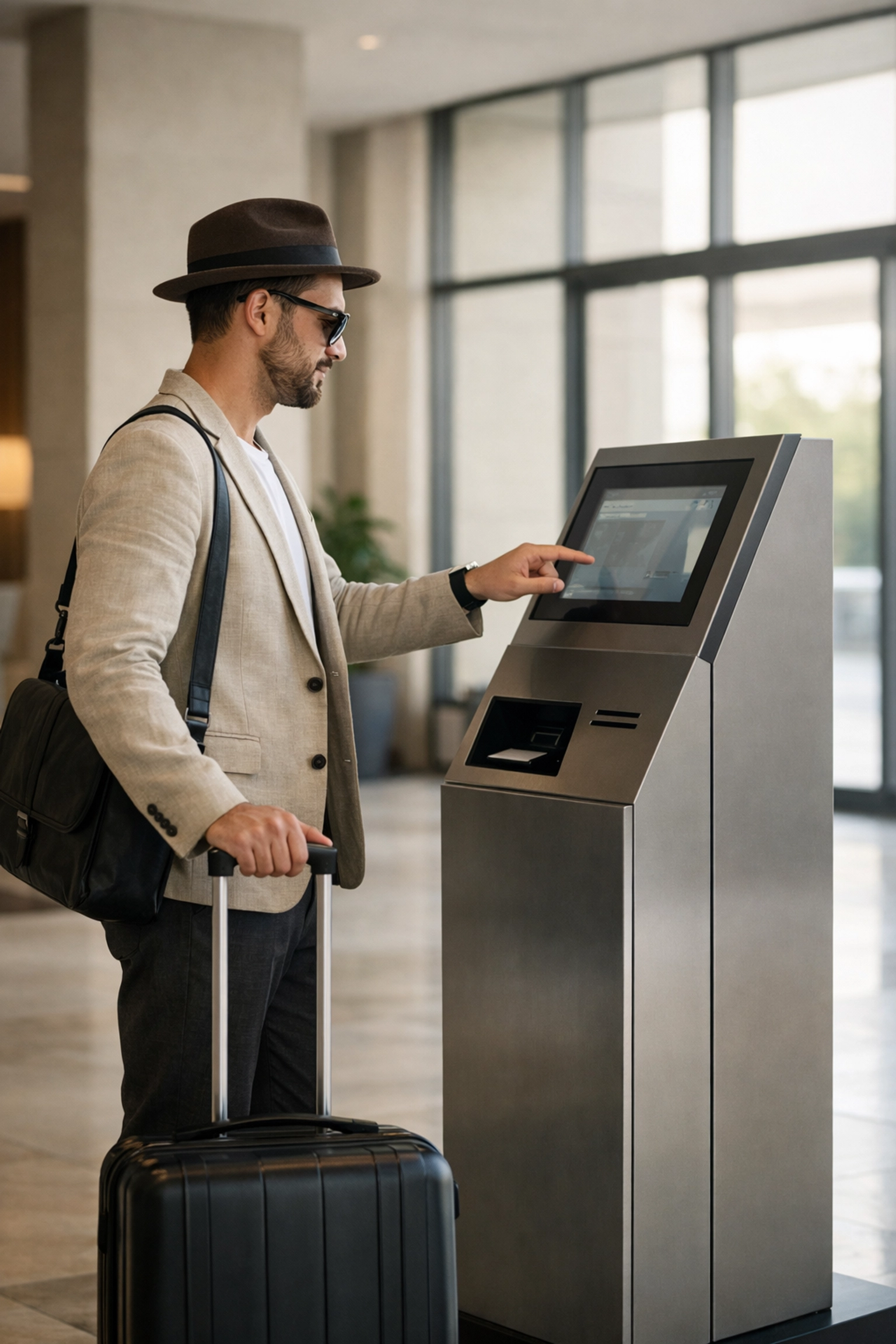
    By the time a guest arrives at your property, they should already be "checked in" via their smartphone. If they prefer a physical touchpoint, a kiosk allows them to cut the line, scan their ID, and cut their own key in under 60 seconds.

    "Our guests love the freedom. They skip the queue, go straight to their room, and we save about 15 hours of manual data entry every week." : Boutique Hotel Manager, London

    • Empower your guests. Give them the choice of how they interact with you.
    • Reduce friction. Eliminate the most frustrating part of the hotel stay.
    • Optimize staff. Move your team from behind a desk to the lobby floor.

    When you automate the administrative tasks, your staff becomes more than just "check-in clerks." They become hosts. They can offer a welcome drink, provide local recommendations, and actually engage with your guests.

    A hotel guest using a self-check-in kiosk for a fast and frictionless arrival experience.

    Personalization at scale: The Power of CRM

    Data is only useful if you can act on it. A hospitality-specific CRM (Customer Relationship Management) allows you to turn a guest's history into a personalized future stay.

    We believe every guest should feel like a regular, even on their first visit. By integrating your CRM with your PMS, you can automate personalized communications that feel genuine, not robotic.

    1. Pre-stay engagement. Send a 30-minute guide to the neighborhood three days before arrival.
    2. Tailored offers. Know that Guest A loves high floors and Guest B always orders a late-night gin and tonic.
    3. Post-stay loyalty. Automate "we miss you" offers based on their specific anniversary or past stay dates.

    This level of personalization used to require a massive team of concierges. Now, it requires a smart platform that remembers the details so you don't have to.

    Breaking down the silos: Integration and Ecosystems

    The biggest mistake a modern hotelier can make is buying "closed" software. If your PMS doesn't play well with your POS (Point of Sale), your key lock system, or your guest messaging app, you are creating digital silos.

    We think you should be able to pick the best tools for your specific needs. Whether it's a high-end revenue management system or a niche spa scheduling app, your software should offer an open API.

    • Plug and play. Connect to hundreds of industry-leading apps.
    • Unified billing. Ensure every coffee, massage, and room service order goes straight to the guest's folio.
    • Future-proof. Swap out tools as your business evolves without changing your entire core system.

    By building a tech stack that communicates perfectly, you eliminate "human error" and ensure that your financial reporting is accurate down to the cent.

    Modern hospitality technology on a smartphone in a luxury hotel suite for a seamless guest experience.

    Why Cloud-Native is the only way forward

    We are often asked why "cloud-native" matters so much compared to "cloud-hosted" or legacy systems. The answer is simple: speed and security.

    Legacy systems are heavy. They require physical maintenance and expensive upgrades. Cloud-native software, like Mews, is built in the cloud, for the cloud. It updates automatically while you sleep. It scales as you grow. It is, quite simply, built for the way we live and work in 2026.

    We believe in a "mobile-first" approach. Your housekeeping team should be updating room status on their phones as they finish a room. Your maintenance team should be logging tickets on the fly. Your managers should be checking performance metrics from a coffee shop.

    Ready to transform your property?

    Choosing the right hotel management software isn't just a technical upgrade: it’s a business transformation. It’s about moving away from "managing tasks" and toward "crafting experiences."

    We believe that when you get the technology right, everything else falls into place. Your staff is happier because they aren't fighting with slow software. Your guests are happier because their journey is frictionless. Your bottom line is healthier because your operations are optimized.

    It’s time to stop settling for "good enough" and start aiming for excellence. See how Mews can help you get there.

    Schedule a 30-minute demo.
    Get your team onboarded in days.
    Start seeing the impact on your guest satisfaction scores immediately.

    Explore the future of hospitality with Mews here.

    It’s time to take back your time and get you earning revenue in no time. The future of hospitality is already here( are you ready to join us?)

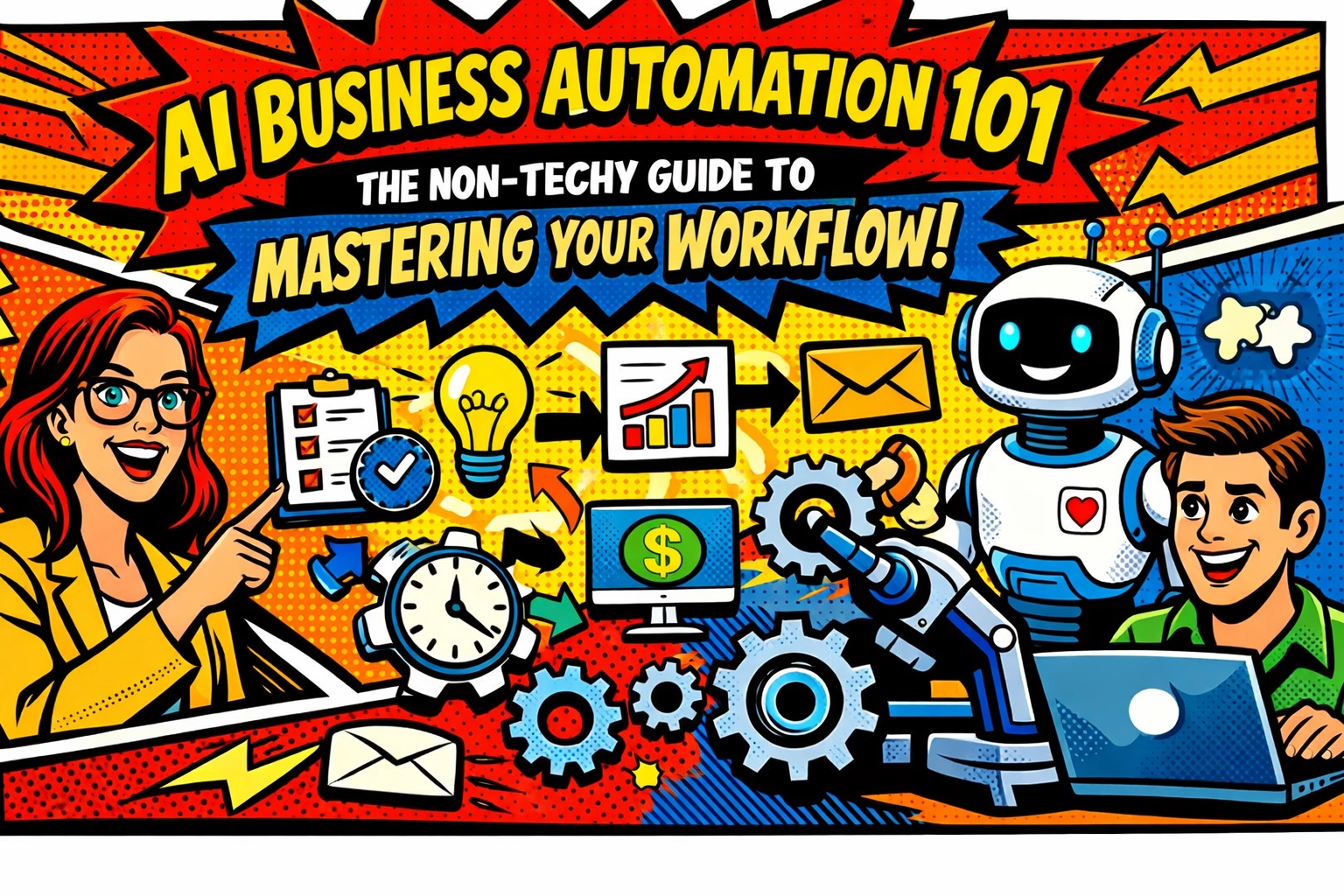
  • AI Business Automation 101: The Non-Techy Guide to Mastering Your Workflow

    AI Business Automation 101: The Non-Techy Guide to Mastering Your Workflow

    You wake up. It’s 6:45 AM. Before your feet even hit the cold floor, you reach for your phone.

    The screen glows with the weight of forty-two unread emails, three "urgent" Slack messages, and a notification that a customer is annoyed because they can’t find their invoice. Your heart does that little caffeine-free skip, the one fueled by pure, unadulterated stress.

    You haven’t even brushed your teeth, and you’re already behind.

    This is the "Small Business Tax." It’s the price you pay in hours, gray hairs, and missed dinners for the crime of being successful enough to have work, but not big enough to have a 50-person department handling the boring stuff.

    But what if the "boring stuff" just… vanished?

    What if you had an ai virtual assistant for business that didn't need a desk, a 401k, or even a lunch break? Welcome to the world of AI business automation. It sounds like sci-fi, but it’s actually just your new secret weapon for reclaiming your Sunday afternoons.


    STOP JUGGLING. START SYSTEMIZING.

    Let’s get one thing straight: You don’t need to be a "tech person" to do this. You don’t need to know how to code. You don’t even need to know what "neural networks" are.

    AI automation is simply about teaching a digital tool to follow a set of instructions. If this happens, then do that. It’s like training a very fast, very obedient intern who never gets distracted by TikTok.

    When you automate customer support with ai, you aren’t just "using software." You’re buying back your freedom. You’re moving from the person who does everything to the person who directs everything.

    Comic art of an AI virtual assistant for business helping a busy owner automate customer support tasks.


    THE "CAN I AUTOMATE THIS?" CHECKLIST

    Before we dive into the "how," we need to talk about the "what." You shouldn't automate everything. (Automating your anniversary dinner? Bad idea. Automating your invoice follow-ups? Brilliant.)

    Look for tasks that fit these three vibes:

    1. The Groundhog Day Tasks: You do it every single day. Over and over.
    2. The "No-Brainer" Logic: There’s a clear right and wrong answer. If an email says "Refund," it goes to the "Refunds" folder. Simple.
    3. The Data Shufflers: Moving information from one window to another window. Copy. Paste. Repeat.

    If a task requires deep, creative strategy or a delicate human touch (like apologizing for a major mess-up), keep it on your plate. For everything else, there’s Marblism.


    A DAY IN THE LIFE: THE AUTOMATED VERSION

    Let’s look at how your day changes when you stop doing the heavy lifting and let an ai virtual assistant for business take the wheel.

    ☕ 07:00 AM , THE SILENT MORNING

    Your eyes open. You check your phone. But instead of 42 chaotic emails, you see one notification: “Daily Summary: 38 emails sorted. 5 urgent items flagged. 3 support tickets resolved automatically.”

    The AI has already read your inbox. It moved the newsletters to a "Read Later" folder. It saw the tracking number requests and replied with the link. It saw a lead and added them to your CRM.

    You put the phone down. You make coffee. The day begins with a sip, not a scream.

    📱 10:30 AM , THE SUPPORT SURGE

    Normally, this is when the "I can't log in" emails start hitting. Usually, you’d stop your deep work to handle them.

    Not today.

    Your AI support bot is on it. It recognizes the "lost password" intent and sends the reset link instantly. For the person asking about shipping to Hawaii, it pulls the data from your FAQ and answers in seconds.

    To the customer, it feels like lightning-fast service. To you, it feels like… nothing. Because you’re busy actually growing your business.

    🤝 01:00 PM , DATA SYNC HEAVEN

    You just finished a great call with a new client. Normally, you’d spend 20 minutes manually typing their details into your CRM, your project management tool, and your invoicing software.

    Instead, you just change the status in your calendar to "Completed."

    Behind the scenes, the AI triggers a chain reaction. It creates the client folder, drafts the "Great meeting!" email, and sets a reminder for you to follow up in three days.

    Vibrant illustration of gears symbolizing an automated business engine and seamless data synchronization.

    🔍 04:00 PM , THE CONTENT CRUSH

    You need to post on LinkedIn. You need a blog post outline. You need to summarize that 45-minute transcript from your team meeting.

    You don't stare at a blinking cursor.

    You feed the transcript to your AI assistant. "Give me the three main takeaways and draft a LinkedIn post from the perspective of a CEO."

    Ten seconds later, you have a 90% finished draft. You tweak three words to make it sound more like "you." You hit send.

    🌙 06:30 PM , THE CLEAN BREAK

    The workday ends. Usually, you’re thinking about the three things you forgot to do.

    But the AI has tracked your tasks. It sends you a quick summary of what got done and what’s on deck for tomorrow.

    You close your laptop. You aren’t "winding down", you’re actually finished.


    HOW TO START (WITHOUT BREAKING EVERYTHING)

    If you try to automate your entire business in one weekend, you’ll end up in a fetal position under your desk. Don't do that.

    Step 1: The "Pain Audit"
    For the next two days, keep a notepad next to your keyboard. Every time you feel that "Ugh, I have to do this again?" feeling, write the task down.

    Step 2: Pick One "Small Win"
    Don't build a complex empire. Start with something tiny. Maybe it’s just an automation that saves every email attachment to a specific Google Drive folder. Or an AI bot that handles the most common question on your website.

    Step 3: Choose Your Tools Wisely
    You want tools that play nice with others. You need something that connects your email, your calendar, and your brain. That’s where we come in. If you're looking for a partner to help navigate this, start here.


    WHY "NON-TECHY" IS ACTUALLY AN ADVANTAGE

    You might think not being a "tech person" is a hurdle. It’s actually your superpower.

    Tech people love complexity. They want to build the most intricate, shiny systems possible.

    Business owners? We just want things to work.

    When you focus on the outcome (saving time) rather than the process (how the code works), you build leaner, more effective automations. You don't care if the AI is using a specific LLM or a vector database; you care that your customer got their answer and you got to go to your kid's soccer game.

    Heroic business owner standing over digital crates with an AI virtual assistant to scale their workflow.


    EMPLOYEE OF THE MONTH. EVERY MONTH.

    Imagine an employee who:

    • Never sleeps.
    • Never complains about the temperature in the office.
    • Handles 1,000 tasks as easily as 1.
    • Costs less than your monthly Starbucks habit.

    That’s what an ai virtual assistant for business represents. It’s not about replacing humans; it’s about making humans more… well, human. It removes the robotic parts of your job so you can focus on the things only you can do: building relationships, dreaming up new products, and leading your team.


    SCALING SHOULDN'T BE THIS EASY. BUT HERE WE ARE.

    The old way of scaling a business involved hiring more people, which meant more payroll, more management, and more headaches.

    The new way? You scale your systems.

    When your customer base doubles, you don't necessarily need to double your support staff. You just let the AI handle the increase in routine queries. Your costs stay flat while your revenue climbs.

    That’s not just "automation." That’s smart business.


    THE "NO-BS" FAQ

    Is this going to make my business feel cold and robotic?
    Only if you let it. Use AI to handle the "data" tasks so you have more time for the "heart" tasks. Your customers will prefer a fast AI answer over waiting three days for a "human" one.

    Is it expensive?
    Actually, it’s usually the opposite. Most AI tools save you more in billable hours within the first week than they cost for the entire year.

    Will it make mistakes?
    Occasionally, just like a human. That’s why you start small, test often, and always keep a "human in the loop" for the big stuff.

    Where do I actually start?
    Right here. We specialize in taking the "scary" out of AI. You don't need a degree in computer science; you just need a desire to stop wasting your life on data entry. See how we can help your workflow here.


    THE FINAL WORD

    The gap between the businesses that stay "busy" and the businesses that "grow" is widening. The bridge between them is automation.

    You can keep spending your mornings in the inbox trenches, or you can build a system that fights the battle for you.

    The choice is yours. But the coffee is getting cold, and those 42 emails aren't going to sort themselves.

    Unless, of course, you let them.

    Scaling shouldn't be a struggle.
    It should be a system.
    LET'S BUILD YOURS.

    Click here to see how Marblism turns your chaos into a clockwork business.

  • Specialty Coffee 101: A Beginner’s Guide to Mastering the Perfect Pour Over

    Specialty Coffee 101: A Beginner’s Guide to Mastering the Perfect Pour Over

    So, you’ve decided to move away from the "press a button and hope for the best" lifestyle of the standard auto-drip machine. We think that’s a fantastic choice. There is something incredibly meditative about the pour over method; it’s a morning ritual that forces you to slow down, pay attention, and actually participate in the alchemy of brewing.

    But let’s be honest: your first few attempts might taste a bit like hot bean water or, worse, a battery-acid-style sour mess. Don't worry, we've all been there. Mastering the pour over isn't about magic, it’s about understanding a few key variables and being consistent. At Limini Coffee, we believe that anyone can brew a café-quality cup at home with just a little bit of guidance and, of course, the right freshly roasted coffee beans.

    In this guide, we’re going to break down everything from the gear you need to the physics of the "bloom." By the time you’re done reading, you’ll be ready to tackle your first Hario V60 or Chemex with total confidence.


    Why Pour Over? (The Theatre of Coffee)

    You might be wondering why we bother with all this manual effort. Why stand there for four minutes with a kettle when a machine can do it?

    The answer is clarity.

    Pour over brewing is a filtration method. Because the water passes through the coffee and a paper filter by the force of gravity, it doesn't sit and stew like it does in a French Press (immersion brewing). This results in a "clean" cup that highlights the delicate, nuanced notes of the coffee. If you’re drinking a high-quality single origin, say, a bright Ethiopian Yirgacheffe or a fruity Kenyan, the pour over is the best way to taste those specific flavor profiles.

    It’s also about control. You control the temperature, the speed of the pour, and the agitation of the grounds. Basically, you are the master of your own caffeine destiny. If you want to see how we view the "experience" of coffee, take a look at our article on theatre in the coffee world.


    The Essential Toolkit

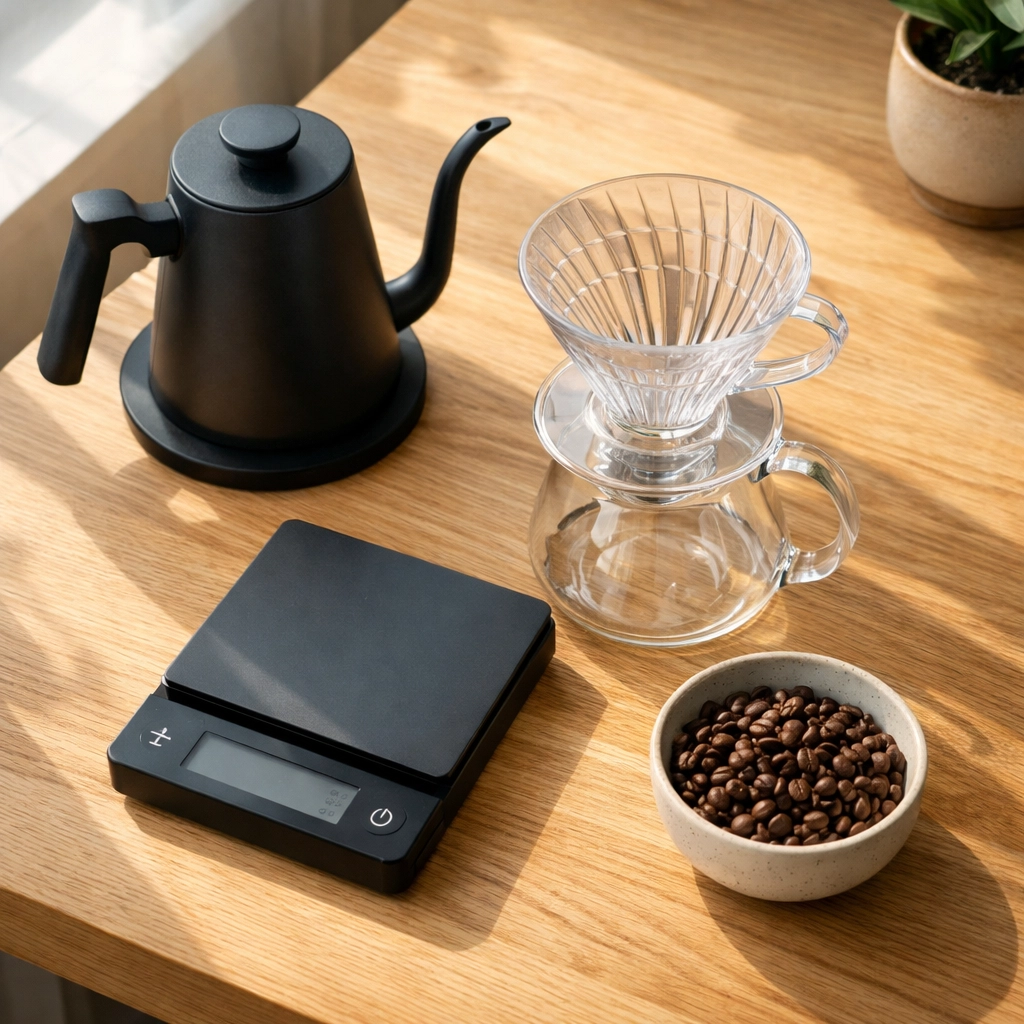
    Before you start pouring, you need the right tools. You don't need a lab full of equipment, but there are four "non-negotiables" if you want consistent results.

    1. The Brewer: Whether it's a Hario V60, a Kalita Wave, or a Chemex, each has its own personality. The V60 is great for those who want to experiment with technique, while the Chemex produces an exceptionally clean cup due to its thick filters.
    2. A Gooseneck Kettle: This is the one piece of gear people try to skip. Don't. A standard tea kettle glugs and splashes water everywhere. A gooseneck kettle allows for a thin, precise stream of water, which is essential for controlling your extraction.
    3. A Digital Scale: We cannot stress this enough, stop using scoops. Coffee beans vary in density. A scoop of a dark roast weighs much less than a scoop of a light roast. If you want a perfect cup every time, you need to weigh your coffee and your water in grams.
    4. A Burrup Grinder: Freshly ground is non-negotiable. Pre-ground coffee starts losing its aromatic compounds the second it leaves the industrial grinder. For pour over, you want a medium-fine grind, roughly the texture of sea salt.

    If you’re looking to upgrade your setup, we always recommend checking out our range of brewing equipment and beans.

    Minimalist home coffee brewing gear featuring a gooseneck kettle and V60 dripper.


    The Golden Ratios and Math (Don't Panic)

    To get that balanced flavor, you need to find the "Golden Ratio." For pour over, we generally recommend a ratio of 1:15 to 1:17.

    This means for every 1 gram of coffee, you use 15 to 17 grams of water.

    • 1:15 produces a stronger, more concentrated cup.
    • 1:17 produces a lighter, more delicate cup.

    For a standard 350ml (about 12 oz) mug, a great starting point is 20g of coffee to 320g of water. It’s easy to remember and works beautifully for most single-origin beans. If you’re feeling a bit lost with the numbers, you can always use a coffee brewing calculator to help you scale your recipe.


    The Process: A Step-by-Step Guide

    Now for the fun part. Put your favorite playlist on, grab your Limini Coffee beans, and let’s get brewing.

    Step 1: Prep and Rinse

    Place your filter in the brewer and rinse it thoroughly with hot water. Why? Two reasons. First, it washes away any "papery" taste that might end up in your coffee. Second, it pre-heats your brewer and your carafe. A cold brewer will suck the heat right out of your water, leading to under-extraction. (Just remember to dump the rinse water before you add the coffee!)

    Step 2: The Grind

    Grind your 20g of coffee to a medium-fine consistency. It should look like table salt or slightly coarser. Add the grounds to the filter and give the brewer a little shake to level the "bed" of coffee. You want a flat surface for even water distribution.

    Step 3: The Bloom (0:00 – 0:45)

    Tare your scale to zero. Start your timer and pour about 40g to 60g of water (roughly double the weight of the coffee) over the grounds. Start in the center and spiral outward.

    You’ll see the coffee start to bubble and expand. This is the "bloom." It’s the release of carbon dioxide gas that’s trapped inside the beans. If your coffee doesn't bloom, it’s likely not fresh. (Fortunately, if you're using our fresh roasted coffee, you’ll see a beautiful, active bloom every time). Wait 30 to 45 seconds for this process to finish.

    Close-up of fresh roasted coffee beans blooming in a pour over paper filter.

    Step 4: The Main Pours (0:45 – 2:30)

    Now, begin your main pour. We prefer to do this in two or three stages. Gently pour in a spiral pattern, avoiding the very edges where the water might just bypass the coffee and run down the side of the filter.

    Keep your pour steady. You want to maintain the water level about halfway up the brewer. If you’ve ever seen a barista look intensely focused during this stage, it’s because they’re watching the "slurry" (the mixture of water and grounds) to ensure everything is being saturated evenly.

    Step 5: The Final Drawdown (2:30 – 3:30)

    Once you hit your target weight (320g in our example), stop pouring. Give the brewer a very gentle swirl or use a spoon to give it one light stir. This help "flatten" the coffee bed as the water drains. The total brew time should fall somewhere between 2 minutes 45 seconds and 3 minutes 30 seconds.


    Troubleshooting Your Brew

    Is your coffee not tasting quite right? Don't toss it out just yet. Brewing is all about adjustments.

    • If it tastes sour or thin: This usually means the water moved through too fast and didn't extract enough flavor (under-extraction). The Fix: Grind your beans finer next time, or pour your water more slowly.
    • If it tastes bitter or harsh: This means you’ve pulled too much out of the beans (over-extraction). The Fix: Grind your beans coarser, or check your water temperature.
    • Water Temperature: We recommend 195–205°F (90–99°C). If you don't have a thermometer, just let your kettle sit for about 30 seconds to a minute after it boils.

    If you're really struggling, it might be worth looking into some coffee barista training to get some hands-on experience with the pros.

    Hand pouring water from a gooseneck kettle to master the perfect pour over technique.


    The Importance of Water Quality

    We hate to be the bearers of bad news, but coffee is about 98% water. If your tap water tastes like a swimming pool or is incredibly hard, your coffee is going to suffer.

    Ideally, you want filtered water that still has some mineral content (magnesium and calcium help "grab" the flavor from the beans), but without the chlorine and heavy scaling. If you're serious about your home brewing, a simple water filter pitcher can make a world of difference.


    Choosing the Right Beans

    At the end of the day, your technique can be perfect, but if you’re using old, stale beans from the supermarket shelf, it’s never going to taste "specialty."

    When choosing beans for pour over, look for:

    • Roast Date: It should be within the last 2-4 weeks.
    • Single Origin: Great for discovering unique flavors.
    • Light to Medium Roasts: These tend to preserve the acidity and floral notes that shine in a pour over.

    We spend a huge amount of time sourcing our coffee to ensure that the beans we roast are of the highest quality. Whether you prefer something chocolatey and nutty or bright and citrusy, you can find it in our online shop.

    Premium fresh roasted specialty coffee beans for home brewing and single origin reviews.


    Final Thoughts

    Mastering the perfect pour over is a journey, not a destination. You’ll have days where the cup is life-changing and days where it’s just… fine. And that is the beauty of coffee :).

    The most important thing is to keep experimenting. Change one variable at a time: maybe the grind size today, the temperature tomorrow: and see how it affects the flavor in the cup. Pretty soon, you’ll have a "sixth sense" for brewing that no machine can match.

    If you ever find yourself in our neck of the woods, feel free to stop by or check out our about us page to learn more about our passion for the craft. Happy brewing!

    And remember, the best cup of coffee is the one you enjoy making. To get started with the best possible ingredients, head over to Limini Coffee and grab a bag of something fresh. Your taste buds will thank you.

  • Workflow Automation for Small Business: Stop Doing the Busy Work

    ☕ 7:00 AM.

    The sun isn't even fully up, but your brain is already sprinting. You’re mentally scrolling through the list of invoices that haven’t been sent, the three "quick" emails you forgot to answer yesterday, and that spreadsheet that needs updating… again.

    You started this business because you had a vision. But lately? Your vision is mostly just looking at a screen, clicking the same three buttons, and wondering where the last four hours went.

    That’s the "Busy Work" trap.

    It feels like progress, but it’s actually just gravity pulling your business toward a standstill. You’re the CEO, the janitor, and the data entry clerk all in one. But here’s the thing, the clerk is the one killing your growth.

    Workflow automation for small business isn't a luxury for the Silicon Valley elite anymore. It’s your survival kit. It’s how you get your Saturday mornings back from the clutches of administrative purgatory.

    Let’s break it down into five steps that actually work. No fluff. No jargon. Just more time for you.

    1. THE AUDIT: FIND THE GHOST IN THE MACHINE

    🔍 Stop for a second.

    Take a look at your past week. Which tasks felt like you were just a human bridge between two apps?

    If you’re sending an invoice, then manually updating a CRM, then emailing a confirmation, you’re not working. You’re acting as a glorified copy-paste machine.

    Look for tasks that are:

    • Repetitive. You do them every single week.
    • Rules-based. If A happens, B always follows.
    • Low-complexity. You could explain it to a teenager in thirty seconds.

    These are your "quick wins." Don't try to automate your entire lead generation strategy on day one. Start with something boring. Something that makes you sigh when you see it on your calendar.

    2. MAP THE CHAOS

    📱 10:00 AM.

    Before you touch a single piece of software, you need to know how the work actually flows. Or how it stumbles.

    Draw it out. Use a napkin. Use a whiteboard. Use the back of a bill.

    • What starts the task? (The Trigger)
    • What happens next? (The Action)
    • Where does it usually get stuck? (The Bottleneck)

    Most people fail at automation because they try to automate a broken process. If your "system" for onboarding a client involves three different people "checking in" via Slack, automation will just make that mess happen faster. Fix the flow first. Then build the machine.

    Small business owner visualizing workflow automation with organized digital gears.

    3. PICK YOUR WEAPON (AND MAKE IT SIMPLE)

    🛠️ There are a thousand tools out there.

    You don’t need a thousand. You need one or two that talk to everything else.

    The best workflow automation for small business tools are the ones you actually understand. Look for visual builders, drag-and-drop interfaces where you can see the logic happening in real-time. You want something that integrates with what you already use. Google Sheets? Slack? Your CRM?

    The goal isn't to add more work to your plate by learning a complex programming language. It’s to find a tool that works while you’re sleeping. Marblism is built on the idea that the tech should disappear into the background so you can stay in the foreground.

    Check out how we handle the heavy lifting here: https://marblism.link/scott-bowen.

    4. THE FIRST BUILD: START SMALL, THINK BIG

    🏗️ 1:00 PM.

    Choose your highest-priority "sigh-inducing" task. Let’s say it’s client onboarding.

    Instead of manually sending a welcome email, a contract, and an invoice, build a workflow.

    • Trigger: A new lead is marked "Won" in your CRM.
    • Action 1: Send a personalized welcome email.
    • Action 2: Create a folder in Google Drive for their assets.
    • Action 3: Notify your team in Slack that it’s go-time.

    Test it. Then test it again. Run a fake client through. Did the email send? Did the folder appear?

    The first time it works without you touching a keyboard? That’s the moment you realize you’re not just a business owner. You’re a system architect.

    Human and robot handshake representing efficient workflow automation for small business.

    5. MONITOR, RINSE, REPEAT

    🌙 8:00 PM.

    You’re not checking emails. You’re sitting on the couch.

    Your automation is running in the background. But don't just set it and forget it forever. Check-in once a week. Is it saving the time you thought it would? Are there errors popping up?

    Once you’ve mastered one workflow, move to the next. In thirty days, you won’t recognize your own schedule. The "Busy Work" will be a memory. You’ll be doing the things that actually move the needle, talking to customers, dreaming up new products, or finally, finally, finishing that book.


    Why Your Business Needs an AI Virtual Assistant (Before Your Competitors Get One)

    🤝 Let's talk about the gap.

    You know the one. It’s the gap between the work you want to do and the work you have to do.

    The big corporations have armies of assistants, coordinators, and middle managers to bridge that gap. You? You have a lukewarm cup of coffee and a growing sense of panic whenever your phone buzzes.

    But things changed. The playing field didn't just level, it flipped.

    An AI virtual assistant for business is no longer a sci-fi dream. It’s the most loyal, tireless, and cost-effective employee you will ever hire. And if you think your competitors aren't already looking into this… well, that’s a dangerous gamble.

    THE ASSISTANT THAT NEVER SLEEPS

    ☎️ 2:00 AM.

    A potential client finds your site. They have a question. In the "old days," they’d send an email, you’d see it at 9:00 AM, and by the time you replied, they’d already moved on to someone else.

    With an AI virtual assistant, that conversation happens in seconds. Not at 9:00 AM. Now.

    It handles the FAQs. It qualifies the lead. It even books the meeting directly onto your calendar. You wake up to a confirmed appointment instead of a "hopeful" inquiry.

    Scaling shouldn't be this easy. But here we are.

    AI virtual assistant for business managing digital tasks in a quiet office at night.

    STOP JUGGLING, START SCALING

    🔍 11:00 AM.

    Your day is usually a series of interruptions.
    "Where is that file?"
    "When are we meeting?"
    "Can you update this spreadsheet?"

    Imagine if every time a question popped into your head: or your client's head: there was an intelligent layer of your business ready to answer it. AI virtual assistants aren't just chatbots. They are data-crunching, task-executing powerhouses.

    They can summarize long meeting notes. They can research your competitors while you're at lunch. They can even help you draft that tricky email you’ve been putting off for three days.

    It’s not about replacing humans. It’s about making the humans you have (including yourself) ten times more effective.

    THE COMPETITIVE EDGE IS SHRINKING

    ⌚ Every day you wait is a day your competitor is getting faster.

    Business used to be about who had the most capital. Then it was about who had the best product. Now? It’s about speed.

    How fast can you respond? How quickly can you pivot? How much of your "brain power" is available for big-picture strategy versus small-scale maintenance?

    An AI virtual assistant for business gives you that brain power back. It handles the "how" so you can focus on the "why."

    Your competitors are already automating. They’re using AI to cut costs and increase response times. If you’re still doing everything manually, you’re not just working hard: you’re working at a disadvantage.

    MEET YOUR NEW BEST EMPLOYEE

    Scaling a small business is a marathon. But you don't have to run it alone.

    At Marblism, we’ve seen what happens when business owners stop being the bottleneck. It’s like a weight is lifted. The chaos is gone before you even take your first sip of coffee.

    You don't need a massive budget. You don't need a degree in computer science. You just need to decide that your time is worth more than $15 an hour.

    If you’re ready to see how an AI-driven approach can transform your daily grind into a well-oiled machine, Scott’s got the roadmap waiting for you.

    Stop doing the busy work. Start building the future.

    See how it works here: https://marblism.link/scott-bowen.

    Scaling shouldn’t be a struggle. It should be a system.

    The lights are off. The office is quiet. But your business is still moving.

    That's the power of automation.

  • Caffe Macchiato vs Latte Macchiato: What’s the Real Difference?

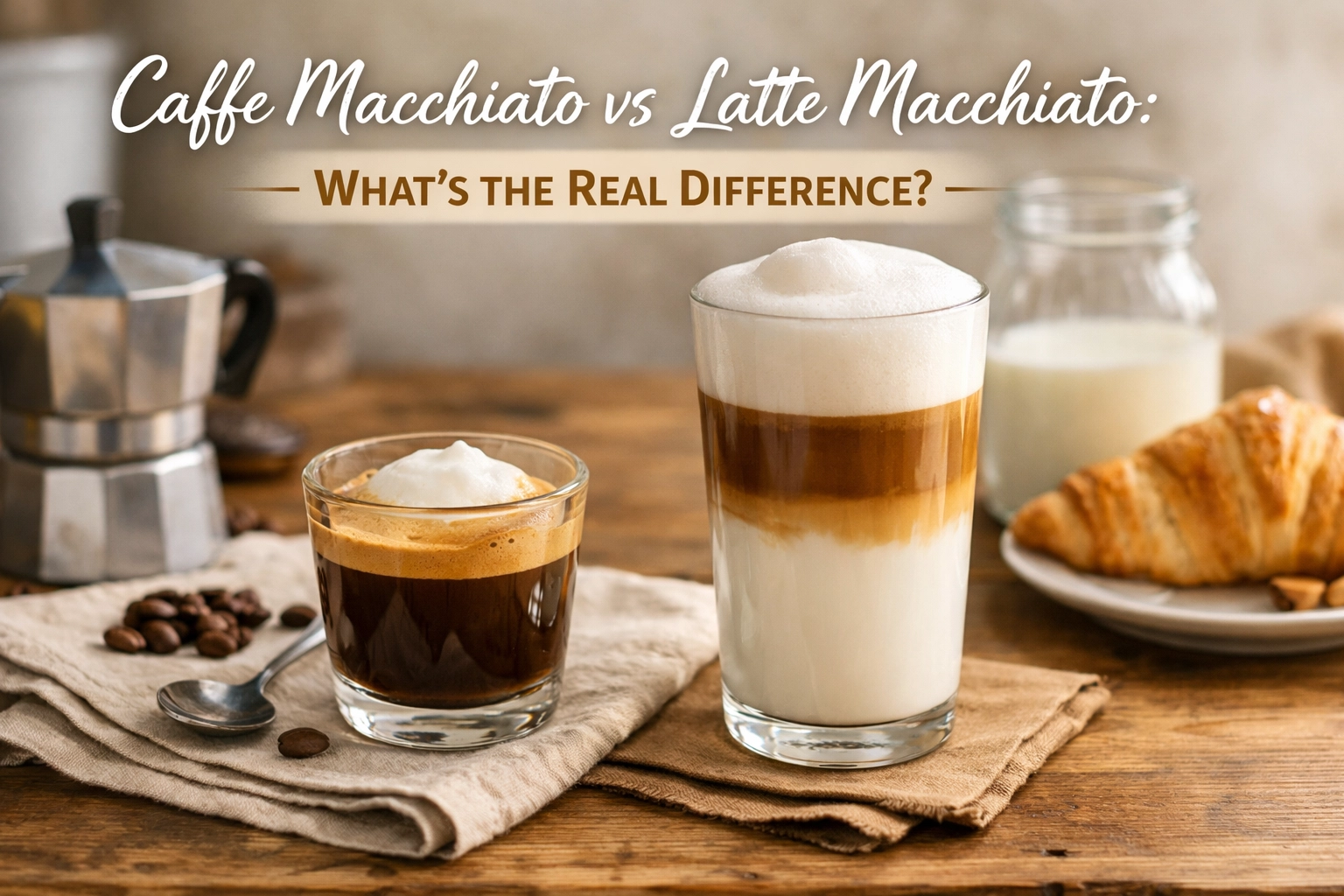
    Caffe Macchiato vs Latte Macchiato: What’s the Real Difference?

    If you have ever stood behind a coffee machine while a customer asks for "a macchiato" without further clarification, you know the internal panic that follows. Do they want the tiny, punchy Italian classic that fits in the palm of your hand? Or are they expecting a towering, three-layered glass of milky goodness that looks like a dessert?

    Confusion in the coffee world is nothing new, but the "Caffe Macchiato vs Latte Macchiato" debate is perhaps the most frequent source of "that’s not what I ordered" moments in modern cafes. Whether you are a cafe owner trying to standardise your menu, a barista in training, or a home enthusiast looking to up your game with some freshly roasted beans from Limini Coffee, understanding the distinction is essential.

    So, let's pull some shots, steam some milk, and dive into the beautiful, sometimes messy world of "marked" coffee.


    It All Starts With a Stain: What Does "Macchiato" Actually Mean?

    Before we look at the differences, we have to look at the word itself. In Italian, macchiato literally means "marked" or "stained."

    The name originally came about because baristas needed a way to show the waiters the difference between a plain espresso and an espresso that had a tiny dash of milk in it. They would "mark" the espresso with a dollop of foam so the server knew which was which.

    Basically, the name describes the action of one ingredient marking the other. The key difference between the two drinks we are discussing today is simply which ingredient is doing the marking.

    • Caffe Macchiato: Espresso marked with milk.
    • Latte Macchiato: Milk marked with espresso.

    It sounds simple, right? And yet, the resulting drinks couldn't be more different if they tried.


    The Caffe Macchiato: The Purist’s Choice

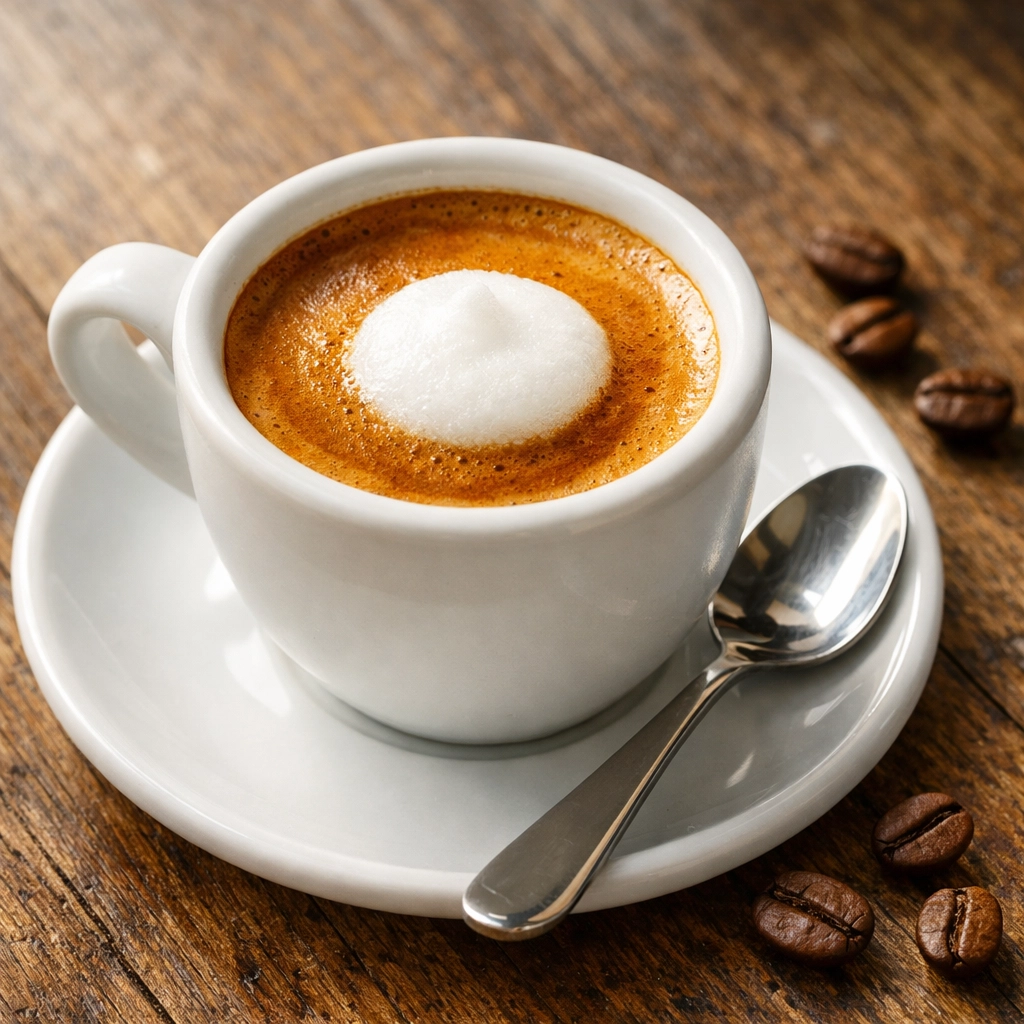
    The Caffe Macchiato (often just called an "Espresso Macchiato") is the traditional Italian version. If you walk into a bar in Rome and ask for a macchiato, this is what you’ll get.

    It is a short, intense drink. We are talking about a single or double shot of espresso topped with a very small amount: usually just a spoonful or two: of steamed milk and foam. The goal here isn't to dilute the coffee, but to soften the sharp edges of the espresso’s acidity and bitterness with a touch of creamy sweetness.

    The Composition

    When we make a Caffe Macchiato here at Limini, we start with a beautifully extracted espresso. (If you're struggling with your shots, check out our guide on understanding crema).

    1. The Base: One shot (about 30ml) or a double shot (60ml) of espresso.
    2. The "Mark": A small dollop of textured milk and microfoam on top.
    3. The Volume: Usually 60ml to 90ml (2-3 oz) in total.

    The flavor is bold. You still get the full profile of the coffee: the chocolatey notes, the fruitiness, the roast: but it’s just a little bit more approachable. It’s the perfect mid-afternoon pick-me-up for someone who finds a straight espresso a bit too "aggressive" but doesn't want the volume of a flat white.

    Traditional caffe macchiato in a white ceramic cup showing rich espresso crema marked with a dot of milk foam.


    The Latte Macchiato: The Beauty of Layers

    The Latte Macchiato is the extroverted cousin. It’s larger, milkier, and visually much more impressive. If the Caffe Macchiato is about the coffee, the Latte Macchiato is very much about the milk.

    While the Caffe Macchiato marks coffee with milk, the Latte Macchiato reverses the formula: we are marking a glass of hot milk with a shot of espresso.

    The Composition

    This drink is almost always served in a tall glass so you can see the distinct layers. Creating those layers is a bit of a science (and a bit of a magic trick).

    1. The Base: 150ml to 200ml of steamed milk.
    2. The "Mark": A shot of espresso poured slowly over the milk.
    3. The Volume: 200ml to 300ml+ (8-12 oz).

    Because the espresso is poured after the milk, it settles between the heavy liquid milk at the bottom and the light, airy foam at the top. This creates a gorgeous three-tier effect. When you take a sip, your palate first hits the cool, thick foam, then the hot, punchy espresso, and finally the sweet, warm milk.

    It’s a much milder experience. If you use our wholesale speciality coffee, the natural sweetness of the milk really shines here, making it a favorite for those who enjoy a longer, more relaxing drink.


    Head-to-Head: The Key Differences

    To help your staff (or your own brain) keep this straight, let’s look at the cold, hard facts.

    Feature Caffe Macchiato Latte Macchiato
    Primary Ingredient Espresso Milk
    Order of Assembly Coffee first, then milk Milk first, then coffee
    Total Volume 60-90ml (Small) 200-300ml (Large)
    Caffeine Intensity High (Perceived) Low (Diluted by milk)
    Visuals Small cup, white dot on brown Tall glass, distinct layers
    Best For… Espresso lovers Milk coffee lovers

    The Technical Bit: Why the Layers Happen

    You might be wondering why the espresso sits in the middle of a Latte Macchiato instead of just mixing straight in like a standard latte. This comes down to density and temperature.

    When you steam milk, you create microfoam. This foam is full of tiny air bubbles, making it much less dense than the liquid milk below it. Espresso is denser than the foam but less dense than the hot milk (partly due to the oils and the temperature).

    If you pour the espresso very slowly: ideally over the back of a spoon or right in the centre: it will pierce the foam and come to rest on top of the milk. It’s a bit of coffee theatre that customers absolutely love.

    For the best results, your milk needs to be textured perfectly. We recommend steaming to around 60 ºC (140 °F). Anything hotter and you risk destroying the sweetness and the structural integrity of the bubbles. For more on this, our article on understanding milk is a must-read.

    A layered latte macchiato in a glass showing distinct levels of steamed milk, espresso, and thick microfoam.


    Training Your Staff (and Managing Customers)

    For cafe owners, the "Macchiato Problem" is a real thing. Because of giant coffee chains, many customers have been conditioned to think a macchiato is a large, sugary, caramel-drizzled latte.

    When a customer orders a "macchiato," we highly recommend your baristas ask a clarifying question: "Would you like the traditional short espresso macchiato, or the long, layered latte macchiato?"

    It takes two seconds, but it saves the cost of a wasted drink and a frustrated customer.

    Barista Tips for the Perfect Caffe Macchiato:

    • Don't over-milk it: You aren't making a small cappuccino. You want just enough foam to "stain" the crema.
    • Focus on the espresso: Since the coffee is the star, the extraction must be perfect. If your machine isn't hitting that 9 BAR pressure consistently, it’s time for a service. You can read more about looking after your espresso machine here.
    • The Cup Matters: Serve it in a demitasse or a very small glass. Presentation is everything. Check out our range of coffee cups for shops for inspiration.

    Barista Tips for the Perfect Latte Macchiato:

    • Wait for the milk to settle: After steaming the milk and pouring it into the glass, let it sit for 30 seconds before adding the espresso. This allows the foam to separate from the liquid, creating a sharper line for your layers.
    • The "Slow Pour": Pour the espresso in a very thin stream. If you dump it in, the momentum will carry it to the bottom, and you’ll just have a messy latte.
    • Temperature is Key: If the espresso is too cold, it will sink. If it's fresh off the machine (around 88 C to 95 C), it should float perfectly.

    Why Quality Beans Matter in Both

    Whether you are "marking" the coffee or the milk, the quality of the bean is the foundation of the house.

    In a Caffe Macchiato, there is nowhere for bad coffee to hide. If the beans are oily, over-roasted, or stale, the drink will be unpleasantly bitter. In a Latte Macchiato, you need a coffee that can "cut through" all that milk. A weak, characterless roast will simply get lost, leaving the customer with a glass of warm milk that slightly smells of coffee.

    We take immense pride in sourcing our coffee to ensure that whether you're serving a tiny macchiato or a large one, the flavor is exceptional. Using Scott’s affiliate link to grab your next bag of beans ensures you’re getting the freshest speciality roast delivered to your door.

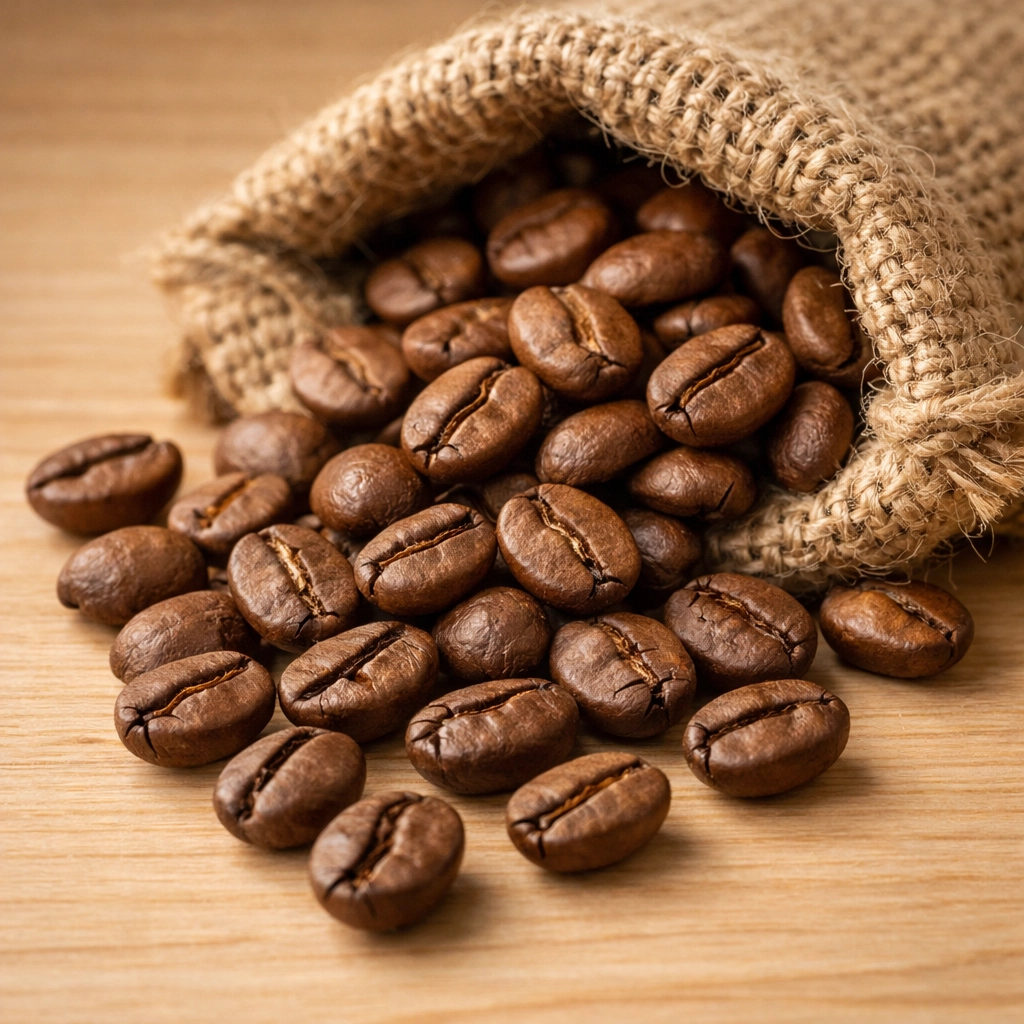
    Freshly roasted speciality coffee beans spilling from a burlap sack on a light wood surface.


    Common Misconceptions (The Caramel Question)

    We can't talk about macchiatos without mentioning the elephant in the room: The Caramel Macchiato.

    Technically, a Caramel Macchiato is usually a Latte Macchiato with vanilla syrup and caramel drizzle. The "mark" in this case is the caramel on top of the foam. While purists might scoff, it’s a huge seller.

    If you're running a cafe, you don't necessarily have to be a "coffee snob" about it. You can serve a brilliant, high-quality version of these sweeter drinks by using better ingredients. Use a real lever or automatic machine to get a superior espresso base, and your "dessert" coffees will taste infinitely better than the high-street chains.


    Final Thoughts: Which One Should You Drink?

    At the end of the day, the "real" difference is about the experience you want.

    • Choose a Caffe Macchiato if you want to taste the nuances of a specific origin, but want a little creamy luxury on top.
    • Choose a Latte Macchiato if you want a long, comforting drink that looks as good as it tastes.

    For cafe owners, the secret is education. Train your staff to know the difference, and train them to communicate that difference to the customer. If you’re looking to level up your team's skills, we offer comprehensive barista training that covers everything from milk chemistry to the perfect pour.

    Coffee is a journey of discovery, and even a drink as seemingly simple as a "stained" coffee has layers (literally!) of history and technique behind it.

    So, next time you’re at the machine, take a second to appreciate the physics of the pour. And if you need more tips on choosing espresso equipment or perfecting your tamping, we've got you covered.

    Happy brewing!


    Ready to stock your cafe with the best? Or maybe you just want the good stuff for your morning brew at home? Check out our full range at Limini Coffee and join the speciality revolution.

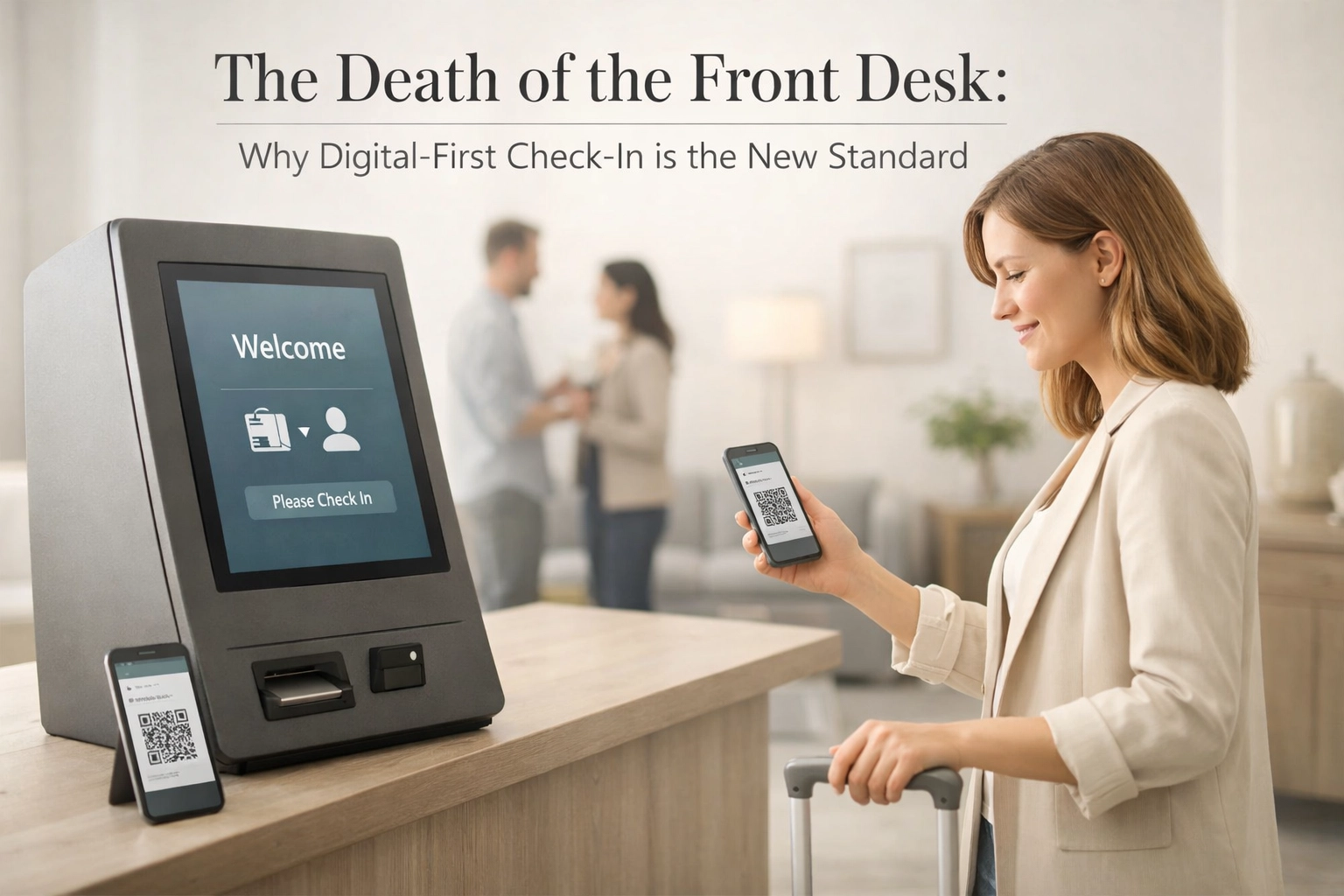
  • The Death of the Front Desk: Why Digital-First Check-In is the New Standard

    The Death of the Front Desk: Why Digital-First Check-In is the New Standard

    Arrive. Tap. Relax.

    The traditional front desk is dead. Or at least, the version of it that involves standing in line for twenty minutes while an exhausted staff member types your name into a legacy terminal is. In 2026, guests don’t want a transaction; they want an experience. They want to skip the administrative hurdles and get straight to the reason they traveled in the first place.

    We’ve seen the numbers. Properties using digital-first arrivals see a 20% increase in guest satisfaction scores within the first three months. It’s about speed. It’s about autonomy. It’s about providing a frictionless journey from the moment of booking to the moment the door clicks open: all from one innovative platform.

    Guests are ready. Are you?

    The barrier to entry for hospitality tech has officially dissolved. We’ve reached a point where 75% of guests are not just willing to use automated check-in: they actively prefer it. Think about it. We use our phones to buy coffee, board planes, and unlock our cars. Why should checking into a hotel feel like a trip back to 1995?

    The Shift in Numbers

    • 75% of guests prefer self-service check-in options.
    • 63% of hotels have already moved to mobile keys or kiosks.
    • < 2 Minutes is the new gold standard for arrival time.

    The data is clear: convenience is no longer a "nice-to-have" feature. It’s the baseline. When a guest arrives at your property after a long flight, the last thing they want is a physical barrier, literally and figuratively: between them and their bed. Digital-first check-in removes the friction.

    A guest using a smartphone for digital check-in in a modern, minimalist hotel lobby.

    We believe the front desk shouldn't be a barrier

    We think the lobby should be a social hub, not a waiting room. The traditional front desk acted as a gatekeeper, creating a bottleneck that stressed out both staff and guests. By moving the administrative heavy lifting to a digital interface, you open up the physical space of your hotel.

    Why it matters:

    • Eliminate the "queue culture" that kills the arrival vibe.
    • Provide 24/7 check-in capabilities without increasing head count.
    • Capture accurate guest data automatically.

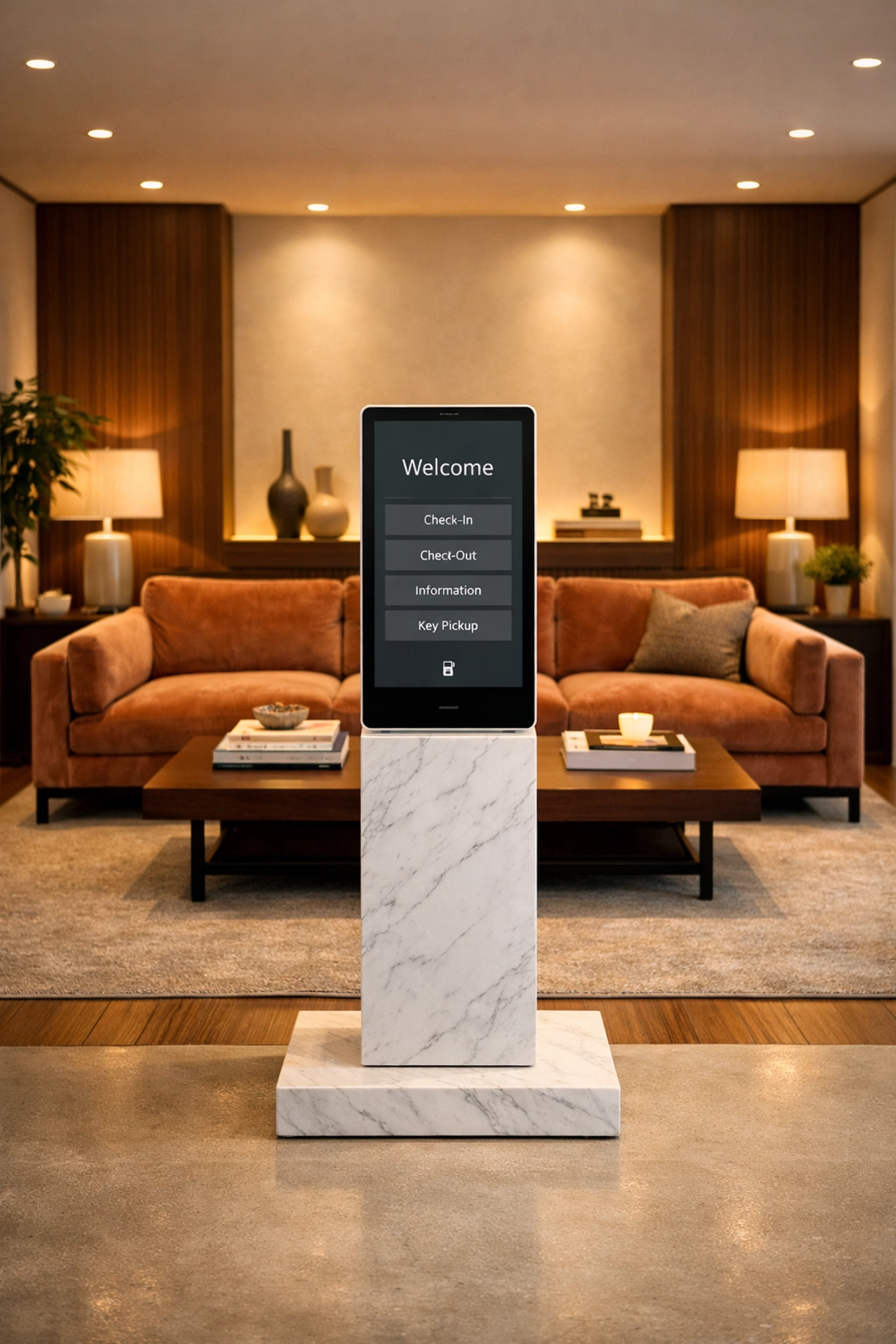
    Our approach centers on the Mews Kiosk. It’s not just a screen; it’s a gateway. It handles the ID scans, the credit card authorizations, and the key cutting (or mobile key delivery) in seconds. This allows your lobby to transform from a sterile processing center into a vibrant lounge or a curated retail space.

    "It used to take us six minutes to check in a guest. Now, they do it themselves in under sixty seconds, and our lobby feels like a five-star living room," says one of our partners in London. That’s the kind of transformation that moves the needle on your Net Promoter Score (NPS).

    The evolution of the "Human Touch"

    A common fear among hoteliers is that "digital-first" means "impersonal." We believe the exact opposite is true. When your staff is stuck behind a desk, staring at a screen and frantically typing, they aren't actually "interacting" with the guest. They are performing data entry.

    By automating the mundane, you empower your team to be true hosts. Instead of "Can I see your ID?", the first interaction becomes "Welcome back, would you like a glass of sparkling water or a coffee?"

    From Admin to Concierge

    1. Automate the boring stuff. Let the software handle the payments and signatures.
    2. Repurpose the lobby. Remove the big wooden desk and replace it with comfortable seating.
    3. Empower your people. Give your staff tablets so they can assist guests anywhere in the building.

    This shift creates a more meaningful connection. Staff are no longer tethered to a workstation. They are in the lobby, greeting people, offering local recommendations, and noticing the small details that make a stay memorable. It’s high-tech meeting high-touch.

    Modern hotel lobby lounge featuring a minimalist self-service check-in kiosk and comfortable seating.

    Mobile keys: The final piece of the puzzle

    If you have a digital check-in but still require the guest to come to a desk to get a plastic card, you’ve only solved half the problem. Mobile keys are the "final boss" of the frictionless arrival.

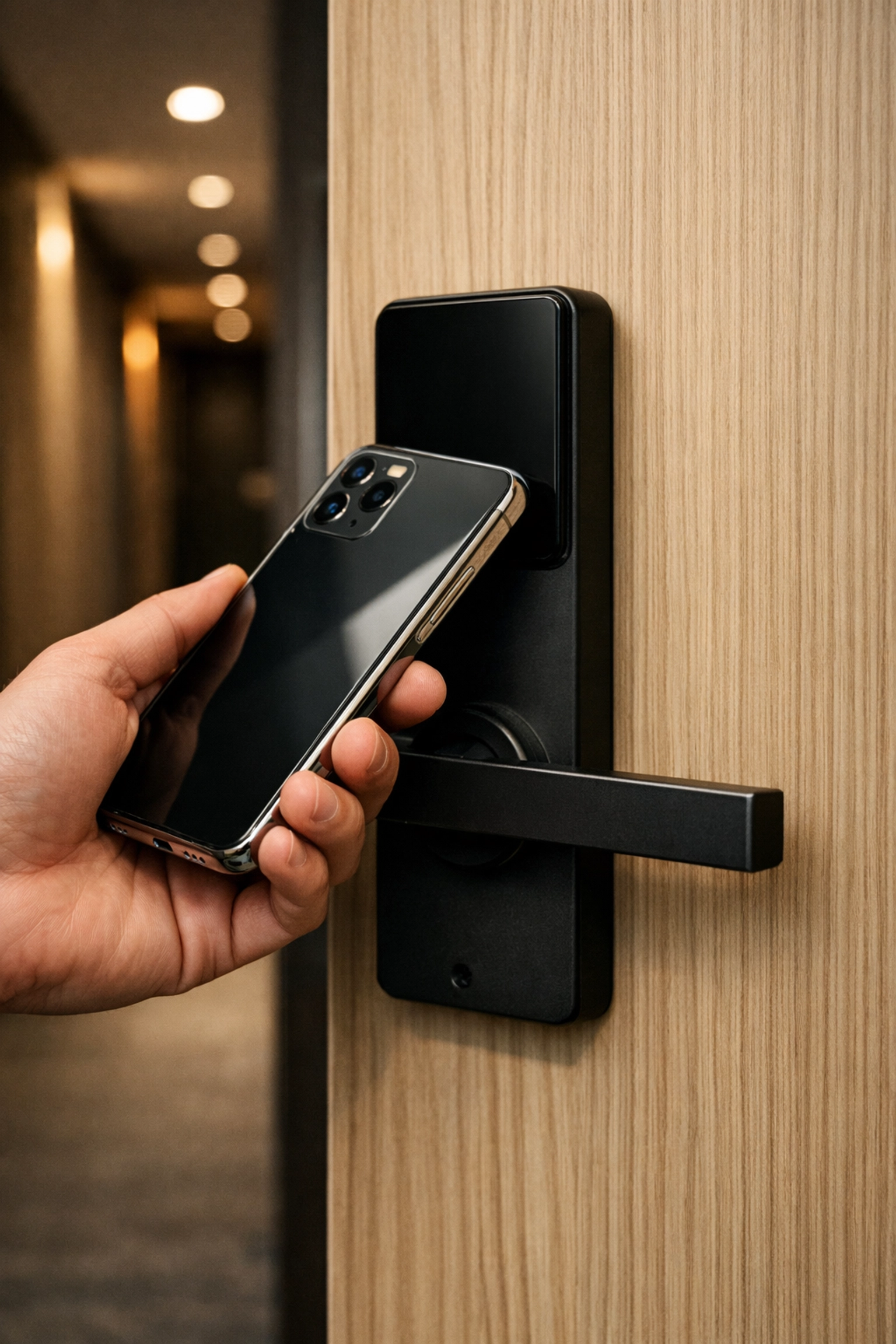
    Using Bluetooth or NFC technology, guests can receive their room key directly on their smartphone via your hotel app. They bypass the kiosk entirely if they choose, heading straight to their room. This isn't just a gimmick for tech-savvy Gen Z travelers; it’s a logistical masterstroke for business travelers and frequent flyers who value time above all else.

    The benefits are immediate:

    • Reduced plastic waste. Thousands of keycards saved every year.
    • Improved security. Mobile keys are harder to lose and easier to deactivate.
    • Seamless upsells. Use the digital key interface to offer room upgrades or late check-outs.

    We see properties using mobile keys reporting a significant drop in lobby congestion during peak hours (usually 3:00 PM to 5:00 PM). It’s a smoother operation for everyone involved.

    Guest unlocking a hotel room door using a mobile key on their smartphone for a contactless arrival.

    Revenue management in the palm of their hand

    Digital check-in isn't just about speed: it’s a massive revenue driver. When a guest checks in via a kiosk or their phone, they are in a "buying" mindset. This is the perfect moment to offer an upgrade to a suite, a breakfast add-on, or a spa treatment.

    In a traditional front-desk setting, staff often feel awkward or "salesy" when pushing upgrades, especially if there is a line forming behind the guest. A digital interface doesn't feel awkward. It simply presents an option: "Would you like to upgrade to a sea view for €30?"

    Properties using the Mews Kiosk for automated upselling see an average of 15% higher ancillary revenue compared to manual front-desk offers. It’s consistent, it’s low-pressure, and it works: all from one [revenue-driving] platform.

    Compliance and Security

    Let’s talk about the less glamorous side: legal requirements. Depending on where your hotel is located, you might need to scan passports, collect tourist taxes, or have guests sign specific indemnity forms. Doing this manually is a recipe for human error.

    Digital-first systems use OCR (Optical Character Recognition) to scan documents with near-perfect accuracy. The data is instantly synced with your PMS, ensuring you stay compliant with local laws without the paperwork headache. It’s safer, faster, and much harder to hack than a physical folder of registration cards.

    "We saved 10 hours a week just on data entry and filing," says a boutique hotel manager using Mews. That’s ten hours that can be spent on guest experience or marketing.

    Hotel staff using a tablet to provide personalized service to a guest in a relaxed, desk-free lobby.

    The standard for 2026 and beyond

    The hospitality industry is notorious for being slow to change, but the "Death of the Front Desk" is a shift that is already well underway. In 2026, a physical desk is increasingly seen as a relic: a sign of a hotel that hasn't kept up with the times.

    Embracing digital-first check-in isn't about replacing people with robots. It’s about using technology to remove the barriers that prevent your people from doing what they do best: taking care of guests.

    Ready to see it in action?

    • Schedule a demo of the Mews Kiosk.
    • Get your staff mobile-ready.
    • Transform your lobby into a revenue-generating space.

    The future of check-in is here, and it’s digital, mobile, and incredibly fast. Don't let your guests get stuck in 1995 while the rest of the world moves on. Give them the freedom to arrive on their own terms and watch your loyalty scores soar.

    Check out how Mews can get you earning revenue in no time.

  • Create Unforgettable Guest Experiences with these 5 Travel Tech Solutions

    Create Unforgettable Guest Experiences with these 5 Travel Tech Solutions

    Transform your stay. Delight your guests. Scale your brand.

    Hospitality is no longer just about providing a bed and a decent breakfast. In 2026, the guest experience is a digital-first, high-touch masterpiece. Guests don’t just want a room; they want a frictionless, hyper-personalized journey that starts the moment they think about booking and lasts long after they’ve checked out.

    The industry is moving fast. If you’re still relying on manual spreadsheets and a clunky desk-bound PMS, you’re not just behind: you’re invisible. Modern travelers expect tech to feel like magic. They want their preferences remembered, their check-ins to be instant, and their room environment to be perfect before they even step through the door.

    We believe that great technology should disappear into the background, leaving only a feeling of effortless luxury. Here are five travel tech solutions that are redefining guest experiences right now, all powered by a single, innovative platform.

    1. AI-Powered Concierge: Always On, Always Personalized

    We believe the best service is invisible.

    The days of guests waiting in line to ask for extra towels or a local restaurant recommendation are over. AI-powered chatbots and messaging platforms have evolved from clunky automated responses to sophisticated virtual concierges. These systems provide 24/7 support without ever needing a coffee break.

    Recent data shows that 77% of guests are actively interested in using automated messaging services during their stay. It’s not about replacing humans; it’s about freeing your staff from repetitive tasks so they can focus on high-value interactions.

    • Instant responses to FAQs.
    • Seamless booking for spa treatments or dinner.
    • Proactive local recommendations based on real-time data.

    Guest using a smartphone in a modern hotel lobby for seamless digital messaging and concierge services.

    When you integrate two-way messaging into your workflow, you’re not just being efficient: you’re being attentive. 84% of hoteliers now view messaging as essential for enhancing guest satisfaction. It’s about meeting the guest where they are: on their phones, in their preferred apps, at their own pace. All from one intuitive platform.

    2. IoT and the Smart Room Revolution

    Connectivity is the new luxury.

    Imagine a guest walking into their room. The lights dim to their preferred evening setting, the temperature is exactly 21 degrees, and their favorite Spotify playlist starts playing softly from the smart speakers. This isn't science fiction; it’s the Internet of Things (IoT) in action.

    IoT-enabled devices allow guests to control their entire environment through their smartphones or simple voice commands. It’s about creating a "home-away-from-home" feel, but better. Voice control has actually climbed to the second most desired technology on guest wishlists this year.

    • Keyless entry via mobile devices.
    • Smart lighting and climate control.
    • Voice-activated room service orders.

    Beyond the "cool factor," IoT provides operational excellence. Sensors can detect when a room is empty and adjust the HVAC system accordingly, drastically reducing energy costs. It’s a win for the guest, a win for your bottom line, and a win for the planet.

    3. Hyper-Personalization through Data Analytics

    Data isn't just numbers; it's a story.

    In the old days, personalization meant remembering a guest’s name. In 2026, it means knowing they prefer a corner room, drink oat milk lattes, and usually visit for business but enjoy a spa session on Thursday afternoons.

    Advanced machine learning and predictive analytics now allow hoteliers to move into "one-to-one" personalization. By processing unified guest profiles, you can deliver individualized offers that actually resonate. If a guest always books a massage, don't send them a discount for the gym: send them a priority booking link for the spa.

    • Unified guest profiles across multiple properties.
    • Predictive analytics for customized upsell offers.
    • Automated loyalty recognition that feels personal.

    "Since we started using data to drive our guest offers, we’ve seen a 25% increase in ancillary revenue," says one Mews partner. "It’s about sending the right message at the right time."

    Tailored guest experience with a personalized spa menu and morning coffee on a luxury hotel bed.

    When your tech stack talks to itself, you stop guessing and start knowing. This level of insight is only possible when your data is centralized and accessible, rather than trapped in silos.

    4. Frictionless Mobile Journeys and Payments

    The front desk is a mindset, not a piece of furniture.

    The most stressful part of travel has traditionally been the "check-in bottleneck." Arriving at a beautiful hotel only to stand in a queue for 20 minutes is a vibe-killer. Mobile check-in and diverse payment solutions remove that friction entirely.

    Modern guests want to bypass the desk. They want to check in on the train, receive a digital key on their watch, and walk straight to their room. And when it comes to paying, they expect the same ease they get from Amazon or Uber.

    • One-click mobile check-in and check-out.
    • Support for Apple Pay, Google Wallet, and BNPL (Buy Now, Pay Later).
    • Automatic, secure billing that eliminates "surprise" charges.

    Using a digital room key on a smartphone for seamless mobile check-in and keyless hotel entry.

    By adopting a mobile-first approach, you’re giving guests the most valuable commodity of all: time. Whether it’s integrating Wi-Fi access with guest profiles to deliver a warm welcome message or offering a seamless "one-tap" checkout, every reduced click is an improved experience. You can see how this looks in practice by checking out the Mews Guest Journey.

    5. Immersive Tech: VR Tours and In-Room Entertainment

    Sell the dream before the flight.

    The guest experience starts long before arrival. Virtual Reality (VR) property tours allow potential guests to explore your facilities, check out the view from a specific suite, and get a feel for the atmosphere from their own living room. This builds immense confidence and excitement, leading to higher direct booking rates.

    Once they arrive, the focus shifts to in-room entertainment. Surveys consistently show that on-demand entertainment access is the number one "must-have" for a great stay. Guests don't want 500 channels of local TV; they want to cast Netflix from their phone to the big screen with zero hassle.

    • 360-degree virtual property walkthroughs.
    • Seamless "Bring Your Own Content" (BYOC) casting.
    • Interactive digital compendiums on the room tablet.

    Guest relaxing in a modern hotel suite with high-end in-room entertainment and smart casting technology.

    Investing in immersive tech isn't just about bells and whistles. It's about transparency and engagement. When a guest can see exactly what they are paying for, the likelihood of a "mismatch" between expectation and reality drops to zero.

    The Power of the Ecosystem

    We think that trying to manage these five solutions separately is a recipe for a headache. The real magic happens when your AI, your IoT, your data, and your payments all live within one ecosystem.

    At Mews, we’re building the future of hospitality by focusing on the guest, not just the room. We believe in empowering hoteliers with tools that are as innovative as they are easy to use. With over 12,500 properties worldwide already moving toward this automated, guest-centric future, the question isn't whether you should adopt these technologies: it's how fast you can get started.

    Ready to see what a truly modern PMS can do for your property? Start your journey with Mews here.

    Summary: The New Standard

    The hospitality landscape in 2026 is defined by those who embrace change. By implementing AI messaging, IoT connectivity, data-driven personalization, mobile-first journeys, and immersive entertainment, you aren't just keeping up: you're leading.

    1. Automate the routine. Use AI to handle the basics so your team can handle the brilliance.
    2. Connect the environment. Let guests control their space with IoT.
    3. Use the data. Turn guest history into future delight.
    4. Remove the friction. Make check-in and payments a non-event.
    5. Inspire the stay. Use VR and top-tier entertainment to sell and sustain the dream.

    It’s time to move past the traditional and toward the unforgettable. All from one innovative platform.