Category: Category 1

Use this description to tell users what kind of blog posts they can find in this category.

  • Hospitality Trends 2026: 10 Things You Should Know to Stay Ahead of the Curve

    Hospitality Trends 2026: 10 Things You Should Know to Stay Ahead of the Curve

    Adapt. Automate. Accelerate.

    The hospitality landscape in 2026 isn't just evolving; it’s being rewritten by autonomous intelligence and a radical shift in how humans choose to spend their time. We’ve moved past the "digital transformation" buzzwords of the early 2020s and landed in an era of pure operational fluidity.

    At Mews, we see this transformation daily across 12,500+ properties. Managing a hotel today means balancing high-tech autonomy with high-touch empathy, all from one innovative platform.

    1. Agentic AI: The Invisible Operations Manager

    We believe the era of the simple "chatbot" is officially over. 2026 is the year of Agentic AI: autonomous systems that don’t just answer questions but execute complex workflows without human intervention. These agents are the new backbone of revenue management and back-office efficiency.

    • Autonomous dynamic pricing based on real-time weather, local events, and flight delays.
    • Self-managing inventory systems that predict maintenance needs before a pipe even leaks.
    • Housekeeping rosters that update instantly based on guest flight status and check-out patterns.

    By delegating the "thinking" to AI agents, your staff can return to the "feeling": providing the genuine hospitality that machines can’t replicate.

    2. Hyper-Personalization as the Minimum Standard

    Data is no longer a luxury; it’s the guest's expectation. Guests aren't looking for a "standard king room" anymore. They are looking for their room. In 2026, attribute-based selling has moved from a niche concept to a revenue-driving powerhouse.

    We think personalization should be effortless:

    • Unbundle room features to let guests pay for specific views, high floors, or specialized coffee machines.
    • Automated loyalty triggers that remember a guest’s preference for extra pillows or a specific room temperature.
    • Marketing campaigns that reach guests with the right offer at the exact moment they’re planning their next trip.

    Minimalist hotel suite interior featuring personalized amenities like artisanal coffee for a tailored guest stay.

    3. The Rise of Agentic Commerce

    Your next guest might not be a human. They might be an AI agent. Travelers are increasingly using LLMs (Large Language Models) like ChatGPT and Copilot to plan and book their entire itineraries. If your hotel isn't optimized for AI discovery, you’re essentially invisible.

    • Optimize your digital footprint for AI crawlers, not just search engines.
    • Ensure your availability and pricing are accessible to direct AI-to-hotel booking APIs.
    • Focus on structured data that helps AI agents understand your unique value propositions.

    "Since we integrated our inventory with AI-first booking channels, our direct bookings have increased by 15% without a single extra click from our marketing team," says one forward-thinking GM.

    4. Human-Centric Leadership in a Tech-First World

    Labor costs are rising, and the talent pool is picky. We believe the best way to keep your staff is to make their jobs easier. 2026 is about "people-first" leadership where technology is viewed as an employee benefit, not a replacement.

    • Eliminate repetitive admin tasks to reduce employee burnout.
    • Provide mobile-first tools that allow staff to manage the property from the floor, not the back office.
    • Focus on fulfillment by letting teams spend more time in guest-facing roles.

    A happy team leads to happy guests. It’s that simple.

    5. The Death of Traditional Seasonality

    Remote work has matured into a lifestyle, effectively killing the "traditional weekend." We’re seeing a massive rise in blended travel: the "workation" or "bleisure" trip where business and leisure are indistinguishable.

    • Weekdays are the new weekends for many high-spending digital nomads.
    • Shoulder months are seeing record occupancy as travelers avoid "over-tourism" peaks.
    • Flexible pricing strategies are now a year-round requirement, not a seasonal adjustment.

    Schedule a demo with Mews to see how we handle these shifting curves: https://referrals.mews.com/umqhyito

    A professional traveler working in a modern hotel lounge, representing the rise of blended travel and workations.

    6. Combatting Labor Costs Through Extreme Efficiency

    Operational excellence is no longer about cutting corners; it’s about maximizing every minute. With labor costs continuing to climb globally, hotels are turning to full-stack automation to protect their margins.

    We believe in making the complex feel easy:

    • One-click check-ins that take 30 seconds or less.
    • Automated payment processing that eliminates manual reconciliation errors.
    • Integrated smart-room tech that reduces energy waste in unoccupied rooms.

    7. The Luxury Segment’s Focus on Privacy and "The Club"

    The luxury market is bifurcating. While some travelers want the buzz of a lobby, the ultra-high-net-worth segment is moving toward "Hushpitality." This involves private access, exclusive club floors, and villa-style privacy within a hotel ecosystem.

    • Growth in private residences and long-stay luxury suites.
    • Emphasis on "embedded" local experiences that can't be found in a guidebook.
    • High-touch concierge services that act as lifestyle managers.

    8. Tech Assets Driving M&A Activity

    In 2026, a hotel's value is determined as much by its tech stack and loyalty data as by its real estate. We’ve seen a 40% increase in deal activity focused on properties with "connected experiences."

    • Loyalty programs are now core strategic assets in mergers and acquisitions.
    • Unified data platforms allow groups to scale rapidly across different geographies.
    • Modern PMS platforms like Mews make transitioning newly acquired properties effortless.

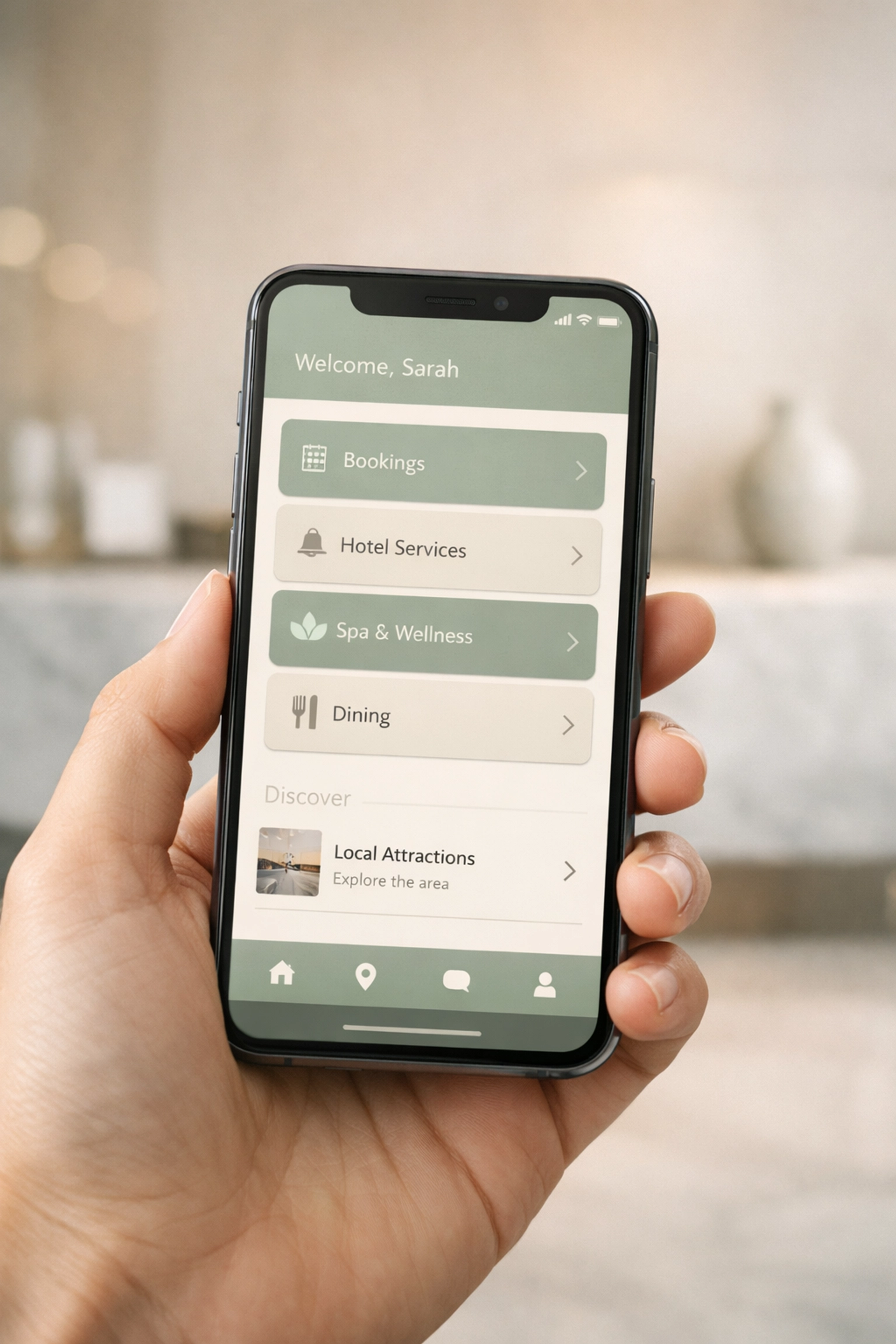
    Close-up of a guest using a smartphone for contactless mobile check-in and digital key access at a modern hotel.

    9. Beyond Sustainability: Regenerative Hospitality

    "Eco-friendly" is so 2022. Today, guests want regenerative hospitality. They want to know that their stay actively improved the local community or restored the local environment.

    • Food production is moving on-site with vertical gardens and hyper-local sourcing.
    • Technology tracks carbon footprints in real-time, offering guests the chance to offset their stay.
    • Hotels are becoming community hubs that support local artisans and social enterprises.

    We think travel should leave the world better than we found it.

    10. The Whycation and the Immersive Experience

    Why are people traveling? In 2026, the "Why" is more important than the "Where." Whether it’s a restorative "Road Trip Revival" or a purpose-driven "Whycation," guests are seeking deep connection and control over their environment.

    • Immersive room designs that adapt to the guest’s mood and purpose.
    • Curated experiences that prioritize restoration and mental well-being.
    • Road trip packages that leverage multi-property stays under a single booking.

    Future-proof your property

    The future of hospitality isn't a distant dream: it's happening right now in your lobby. To stay ahead of the curve, you need a platform that moves as fast as the market. Mews is designed to give you the freedom to innovate, the power to automate, and the data to personalize every single stay.

    See what the world’s most innovative PMS can do for your RevPAR and guest satisfaction scores.

    Ready to lead the pack in 2026?
    Get started with Mews today: https://referrals.mews.com/umqhyito

  • Why Speciality Coffee Will Change the Way You Drink Your Morning Cup

    Why Speciality Coffee Will Change the Way You Drink Your Morning Cup

    Let’s be honest for a second. For most of us, the morning coffee is a survival tool. It’s that bitter, piping hot liquid that bridges the gap between "leave me alone" and "I can probably function as a human now." But what if we told you that your morning cup could be so much more than just a caffeine delivery system?

    We see it all the time here at Limini Coffee. People come to us used to the "supermarket special", beans that have been sitting on a shelf for six months, roasted into oblivion to hide defects. Then, they try a freshly roasted, single-origin speciality coffee, and their world tilts just a little bit.


    If you’ve been wondering why everyone is suddenly obsessed with V60s, scales, and "tasting notes of blueberry and jasmine," you’re in the right place. Speciality coffee isn't just about being a bit fancy; it’s about a fundamental shift in quality, health, and the way you start your day.


    What exactly are we talking about?

    So, what makes a coffee "speciality" anyway? Is it just a marketing term? Actually, no. In the industry, coffee is graded on a 100-point scale. Anything that scores 80 points or above is officially "speciality."

    Basically, this means the beans are free from major defects and have a distinct character. Think of it like the difference between a mass-produced boxed wine and a bottle from a small, dedicated vineyard. We take this very seriously when sourcing our coffee. We look for beans that tell a story of where they were grown, the soil they sat in, and the care the farmers took during the harvest.

    When you buy from a speciality roaster, you’re getting transparency. You know the farm, the altitude, and most importantly, the roast date. Freshness is everything. If you want to see what we mean, you can check out our latest freshly roasted selections here. Trust us, once you smell beans roasted 48 hours ago, you can’t go back.

    Artisanal roaster holding freshly roasted speciality coffee beans in a rustic workshop.


    Your brain (and body) will thank you

    We’ve all had those "coffee jitters", that shaky, anxious feeling after a cup of low-quality Joe. That’s often down to the high caffeine content of Robusta beans (often used in cheap blends) or the presence of mould and toxins in poorly processed commodity coffee.

    Speciality coffee is a different beast entirely. Because the beans are higher quality and the roasting process is more precise, you get a much cleaner, smoother caffeine experience. It’s about focus and mental clarity rather than a frantic heart rate.

    And let’s talk antioxidants. Coffee is actually one of the largest sources of antioxidants in the modern diet. However, many of these beneficial compounds are destroyed when coffee is "dark roasted" to the point of being burnt, which is what most big commercial brands do to keep the flavour consistent. By choosing a lighter, more thoughtful roast, you’re preserving those healthy compounds. Some studies even suggest that the routine of drinking high-quality coffee can help reduce the risk of long-term conditions like Alzheimer’s and Parkinson’s. Not bad for a morning beverage, right?


    The ritual of the brew

    One of the biggest changes you’ll experience when moving to speciality coffee is the shift from a habit to a ritual. There is something deeply satisfying about the process.

    Imagine this: You wake up, weigh out 18g of fresh beans, and grind them. The aroma fills the kitchen immediately. You heat your water to exactly 94 ºC (201 °F) and begin a slow, circular pour. It’s a moment of mindfulness before the chaos of the day begins.

    To get the most out of these beans, you might want to look into your setup. Whether you're a fan of the classic cafetiere or you're looking at choosing espresso equipment for your home kitchen, the gear matters. It doesn't have to be intimidating, though. We believe that with a little bit of guidance, anyone can brew a barista-quality cup at home.

    V60 pour-over coffee brewing ritual with blooming grounds and a gooseneck kettle.


    Let's talk about the "Milk Problem"

    If you’re a latte or cappuccino lover, speciality coffee will change your perspective on milk too. In the commodity world, coffee is often so bitter that you need a lot of milk and sugar to make it palatable.

    With speciality coffee, the natural sweetness of the bean, sometimes chocolatey, sometimes fruity, means you might find yourself reaching for the sugar bowl less often. Plus, when you learn how to properly steam milk to that perfect glossy, microfoam texture, the whole experience becomes incredibly creamy and luxurious.

    We love helping people master their latte art and milk textures. There is a real joy in handing someone a coffee you made yourself that looks (and tastes) like it came from the best shop in town.


    Why precision matters (and why it’s not that hard)

    You might see people using scales and timers and think, "Is that really necessary?"

    To be honest, yes. But only because it makes your life easier! If you find a coffee you love, you want to be able to replicate that taste every single morning. Using a coffee brewing calculator takes the guesswork out of it.

    Think about it this way: if you were baking a cake, you wouldn't just "eye" the flour and sugar, would you? Coffee is the same. A little bit of precision: like hitting that 9 BAR pressure on an espresso machine or getting your tamping technique consistent: ensures you don't waste those beautiful beans you just bought.

    And if you’re looking to stock up on beans that actually deserve this level of attention, have a look at our current roast list.

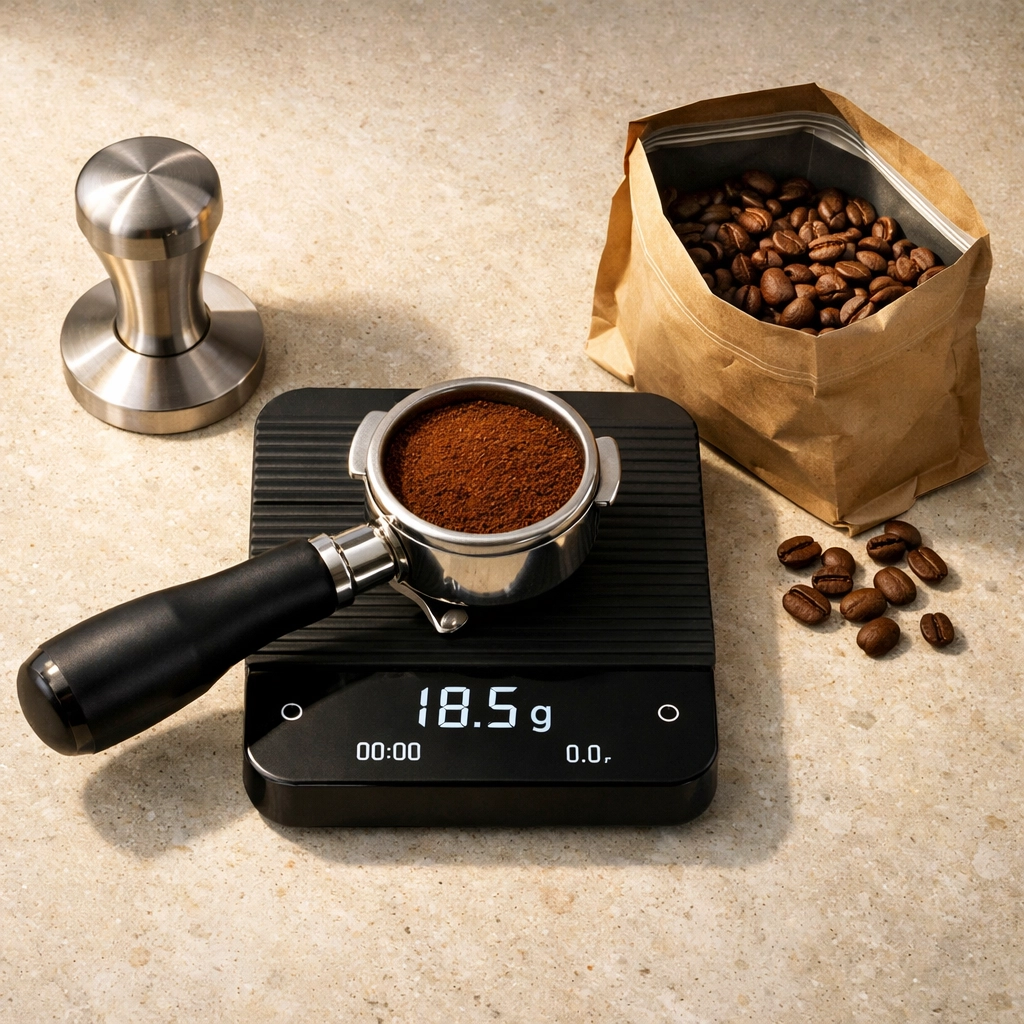
    Professional home barista setup featuring digital scales, coffee tamper, and single-origin beans.


    The "Coffee Shop" experience at home

    Many of our customers started their speciality journey because they wanted to stop spending £4 every morning at a cafe. While there’s a bit of an upfront investment in gear, the long-term savings are huge. Plus, there’s no queue in your kitchen.

    If you’re really looking to dive deep, we even offer barista training. We’ve seen everyone from total beginners to people looking to start their own wholesale business come through our doors. It’s about building confidence. Once you understand the "why" behind things like crema or grind size, the mystery disappears and you're just left with great coffee.

    A creamy flat white with intricate tulip latte art in a rustic stoneware coffee cup.


    A few tips for your first speciality bag

    If you’re ready to take the plunge, here are a few things to keep in mind:

    1. Check the Roast Date: If it doesn’t have one, don’t buy it. You want beans roasted within the last few weeks.
    2. Buy Whole Bean: Ground coffee loses its flavour profile in minutes. Grind fresh for every cup. It's the single biggest upgrade you can make.
    3. Water Quality: If your tap water tastes a bit funny, your coffee will too. Use a simple water filter jug.
    4. Experiment: Don't just stick to "strength" levels. Look for tasting notes. Do you like nutty and chocolatey (South American) or bright and floral (African)?

    Speciality coffee is a journey, not a destination. You’ll try some things you love and some things that aren't for you, and that’s the beauty of it :). It turns a mundane part of your morning into an exploration of flavour.

    So, are you ready to ditch the instant and the over-roasted supermarket beans? Your taste buds are waiting. Go ahead and treat yourself to a bag of the good stuff right here.

    We’d love to hear about your brewing journey. Whether you’re struggling with your dial-in or you’ve just poured your first heart in your latte foam, we’re here to help. After all, life is far too short for bad coffee.

  • How to Integrate an AI Assistant for Small Business With Your Daily “To-Do” List Chaos

    How to Integrate an AI Assistant for Small Business With Your Daily “To-Do” List Chaos

    ☕ You wake up. The sun isn't even fully over the horizon, but your phone is already vibrating.

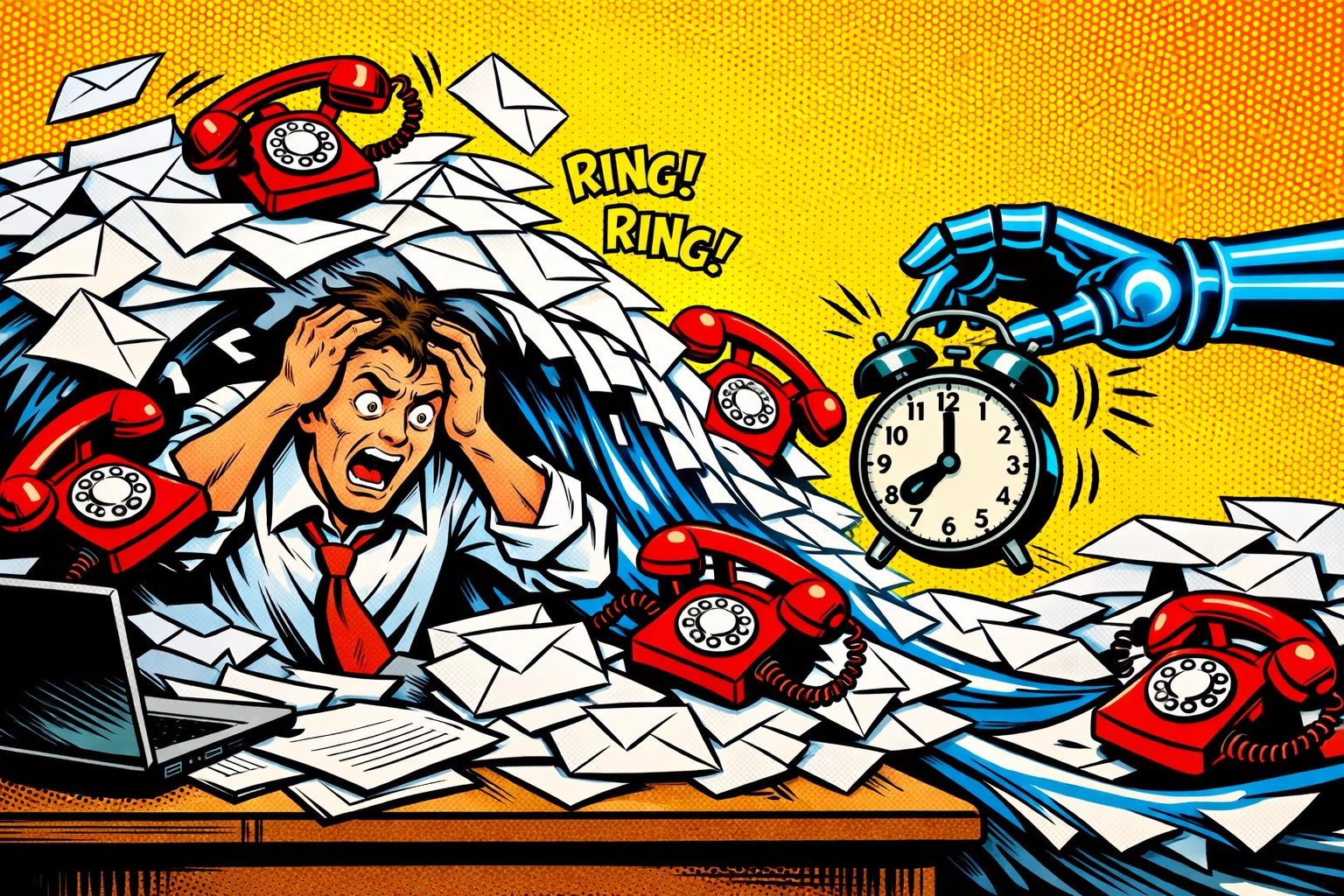
    It’s not a "Good morning" text from your partner. It’s the digital equivalent of a physical avalanche. 47 unread emails. Three Slack notifications from a client who clearly doesn't sleep. And that handwritten to-do list on your nightstand? It looks more like a manifesto of things you'll never actually finish.

    You’re a small business owner. You’re the CEO, the marketing department, the customer service rep, and occasionally the person who remembers to buy more coffee filters.

    The chaos isn't just a part of your day. It is your day.

    But what if your to-do list stopped yelling at you and started working for you? What if you had an ai virtual assistant for business that didn't just sit there, but actually grabbed the steering wheel while you took a breath?

    Let’s talk about how to stop the "To-Do" list madness and actually automate your life using Marblism.

    THE CHAOS IS REAL. THE SOLUTION IS ARTIFICIAL.

    You’ve tried every productivity app under the sun. You’ve got Trello boards, Notion pages, and sticky notes that have lost their stick. The problem isn’t the tools. The problem is that these tools require you to manage them.

    You’re spending more time organizing your work than actually doing it.

    That’s where an ai virtual assistant for business changes the game. It’s not just another app. It’s a layer of intelligence that sits on top of your mess and says, "I've got this."

    Whether it’s sorting through the junk to find the one email that actually matters or making sure you never miss a follow-up, AI is the silent partner you didn't know you could afford.

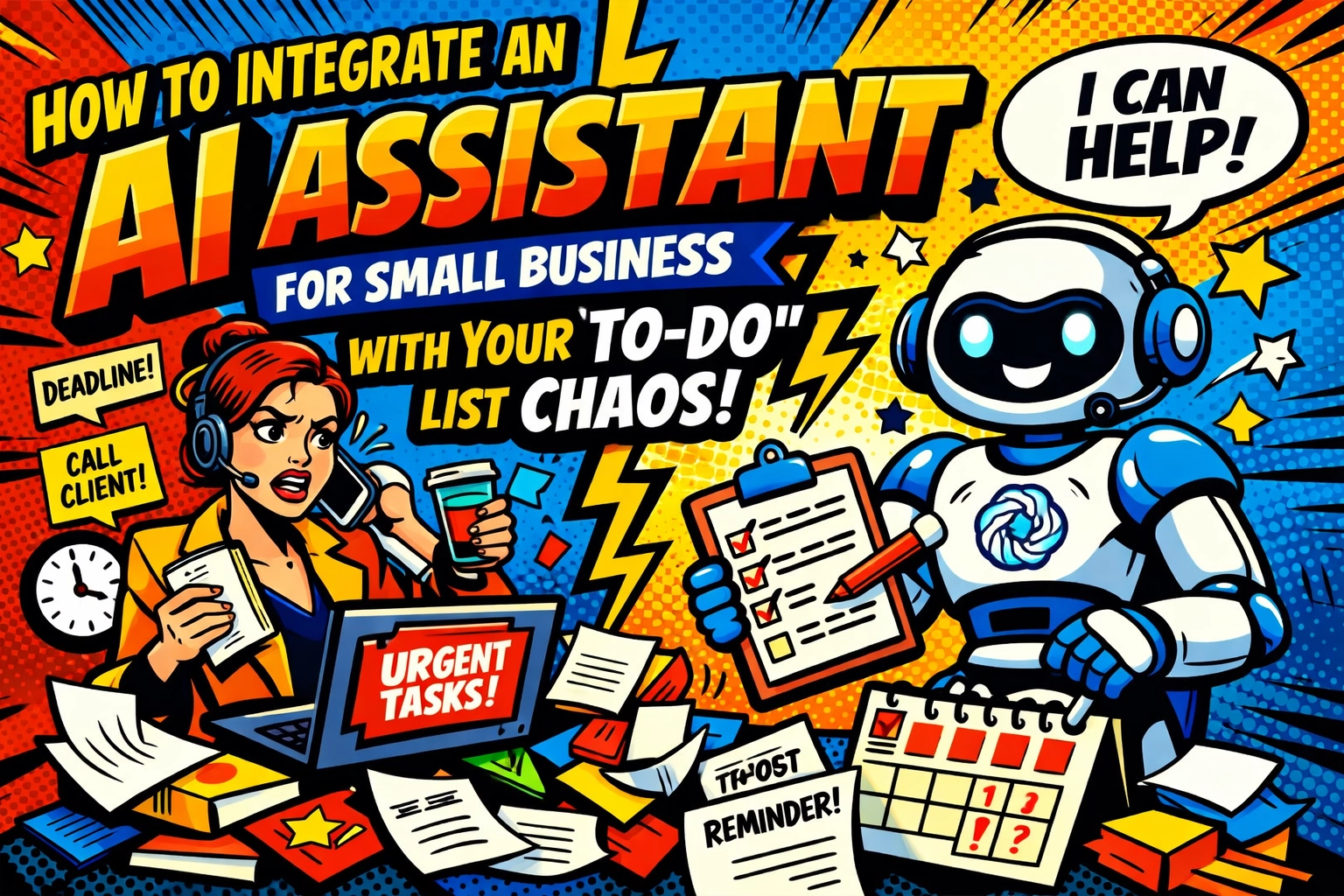
    AI assistant helping a stressed business owner manage task chaos and email overload.

    STOP JUGGLING. START INTEGRATING.

    Most people think "integrating AI" means you need a computer science degree and a week of free time.

    Spoiler alert: You don't.

    If you can use a smartphone, you can integrate AI into your workflow. Here is exactly how you turn that mountain of tasks into a streamlined machine.

    1. THE 15-MINUTE AUDIT

    First, stop. Look at your list. Which tasks make you want to throw your laptop out the window?

    • "Hey, what's the status of my order?"
    • "Can we move our meeting to Thursday?"
    • "I need a copy of my invoice."

    These aren't tasks. They're distractions. List everything you do more than three times a week. These are your prime candidates for automation.

    2. PLUG IN THE PIPES

    Your AI assistant needs to talk to your existing world. This means connecting it to your calendar, your email, and your CRM. Most modern AI tools (like the ones we build at Marblism) use "connect" buttons. No code. No crying. Just sign in, click "Allow," and the AI starts learning how you work.

    3. TEACH IT YOUR "VIBE"

    You don't want a robot that sounds like a robot. You want an assistant that sounds like you.
    Spend 30 minutes feeding your AI examples of how you talk to clients. Tell it your priorities. Tell it that "Urgent" means a paying customer, not a LinkedIn salesperson trying to "hop on a quick call."

    4. START SMALL (BUT SMART)

    Don't try to automate your entire life on day one. Start with one thing, like how you automate customer support with ai. Let the AI handle the basic "Where is my stuff?" questions while you focus on the big-picture strategy.

    Syncing mechanical gears representing automated customer support workflows for small business.

    A DAY IN THE LIFE: THE AI UPGRADE

    Let’s look at what your day looks like once you’ve stopped manual-tasking your life away.

    ☕ 7:00 AM: THE MORNING SYNC

    Normally, this is when the panic sets in. Not today.
    Your AI assistant has already scanned your inbox while you were dreaming about a vacation. It’s flagged two emails as "High Priority," drafted replies for three others, and cleared out 15 newsletters you were never going to read.
    Your to-do list isn't 50 items long. It’s three. And they’re the three that actually move the needle.
    You just send a thumbs-up to the drafts and take a sip of coffee.

    📱 10:30 AM: THE INBOX TSUNAMI

    Mid-morning usually brings the "Customer Support Chaos."
    Instead of you typing "We’re working on it!" fifty times, your AI-powered support system is already on it. It’s looking up order numbers, checking shipping statuses, and providing instant answers.
    When you automate customer support with ai, you aren't just saving time; you're giving your customers instant gratification.
    You smile because you haven't touched the 'Support' folder once.

    🔍 2:00 PM: THE MEETING AFTERMATH

    You just finished a Zoom call. Usually, you’d spend 20 minutes writing notes and creating tasks.
    But your AI was listening (in a helpful, non-creepy way). By the time you hit "End Meeting," a summary is in your inbox with a list of action items already added to your calendar.
    You step back into your day without a single manual data entry.

    🌙 8:00 PM: THE ACTUAL WIND DOWN

    In the "Before Times," you’d be on the couch with your laptop, "just catching up."
    Now? The lights are off. The laptop is closed.
    The AI is still working, of course. It’s organizing tomorrow’s schedule and ensuring that when you wake up, you aren't greeted by an avalanche.
    The chaos is gone before you even start your day.

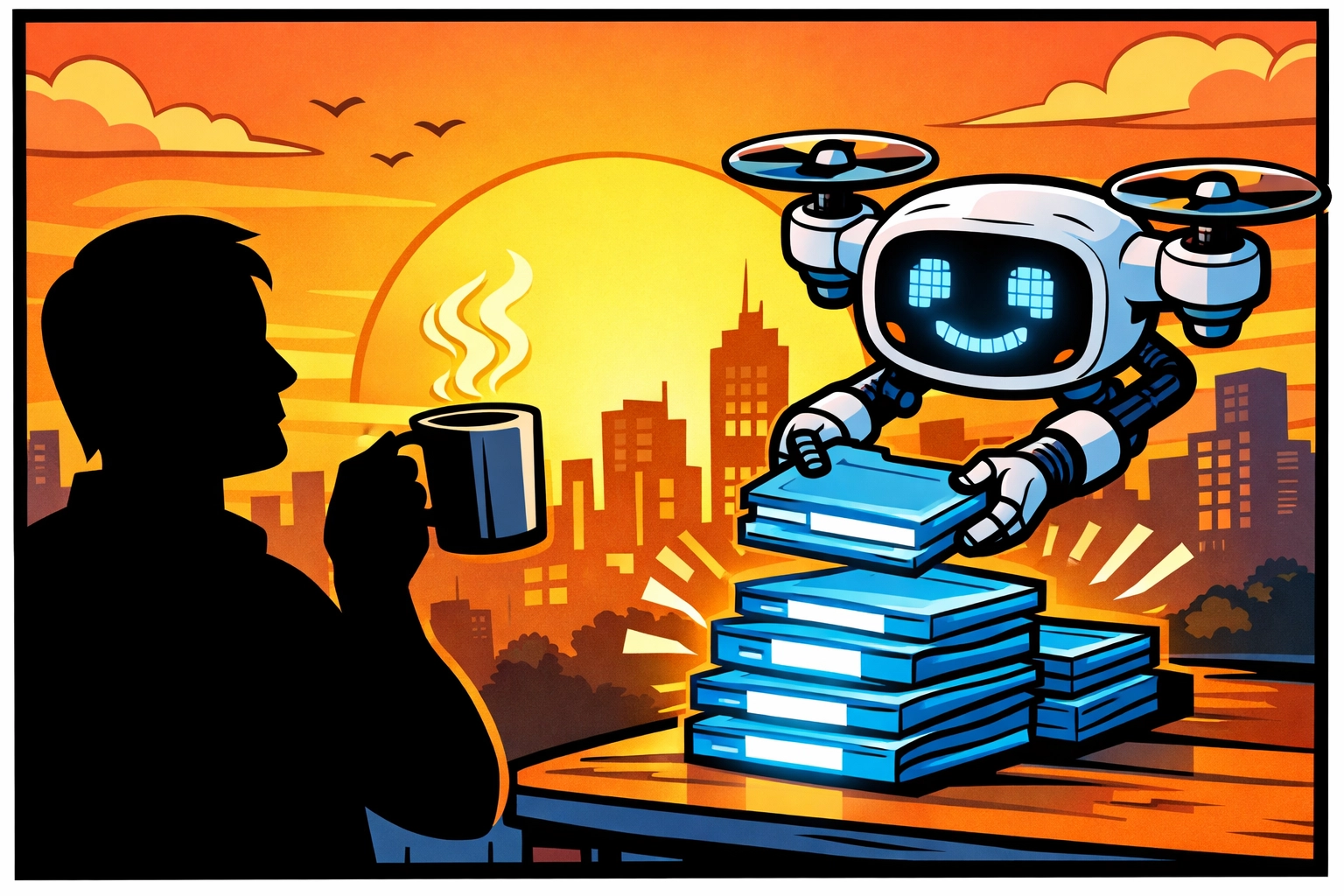
    AI virtual assistant organizing digital files to ensure a productive morning for business owners.

    EMPLOYEE OF THE MONTH. EVERY MONTH.

    Why are small businesses moving toward AI? Because humans aren't meant to be filing cabinets.

    When you use an ai virtual assistant for business, you aren't replacing yourself. You’re freeing yourself. You’re getting back the 2-3 hours a day usually lost to the "Admin Tax."

    Imagine what you could do with an extra 15 hours a week. You could scale. You could innovate. You could actually take a Saturday off without checking your phone every eleven minutes.

    At Marblism, we’re obsessed with this kind of efficiency. We believe your business should run like a Swiss watch, even if your brain feels like a chaotic junk drawer.

    If you’re ready to see how this looks in the real world, you need to check out what we’re doing here: https://marblism.link/scott-bowen.

    "BUT WILL MY CUSTOMERS HATE IT?"

    This is the #1 fear. "I don't want my customers talking to a toaster."

    Here’s the secret: Your customers don't care if it's a human or an AI. They care if their problem gets solved now.

    When you automate customer support with ai, you're providing 24/7 service that never gets tired, never has a "bad day," and never forgets to follow up. If the AI hits a wall it can't climb, it gracefully hands the conversation to you.

    It’s the best of both worlds. High tech, high touch.

    Multitasking AI avatar helping a small business owner scale and automate administrative tasks.

    FAQS FOR THE SKEPTICAL SMALL BUSINESS OWNER

    Is this going to take forever to set up?
    No. Most integrations take less than an hour. If you can follow a recipe for sourdough bread, you can do this.

    Is it expensive?
    Compared to hiring a full-time admin? It’s basically free. Compared to the cost of your own sanity? It’s the bargain of the century.

    Will I lose control of my business?
    You’ll actually have more control. Instead of being buried in the weeds, you’ll be looking at the map. You set the rules; the AI follows them.

    What if I’m not a "tech person"?
    That’s why we’re here. AI has reached the point where the tech is hidden under the hood. If you can send an email, you can manage an AI assistant.

    SCALING SHOULDN'T BE THIS EASY. BUT HERE WE ARE.

    You didn't start a business to become a professional email sorter. You started it because you have a vision, a product, or a service that the world needs.

    The "To-Do" list chaos is a symptom of success, but it’s also the thing that will stop you from reaching the next level if you don't automate it.

    Stop juggling. Stop drowning.

    The tools are ready. The AI is waiting. And the coffee is getting cold.

    Take the first step toward a quiet, organized, and automated business right now. You’ve earned the right to focus on what matters.

    See how Marblism can transform your daily chaos into a streamlined engine of growth.

    Click here to see the future of your business: https://marblism.link/scott-bowen

    The chaos stops when you decide it does.

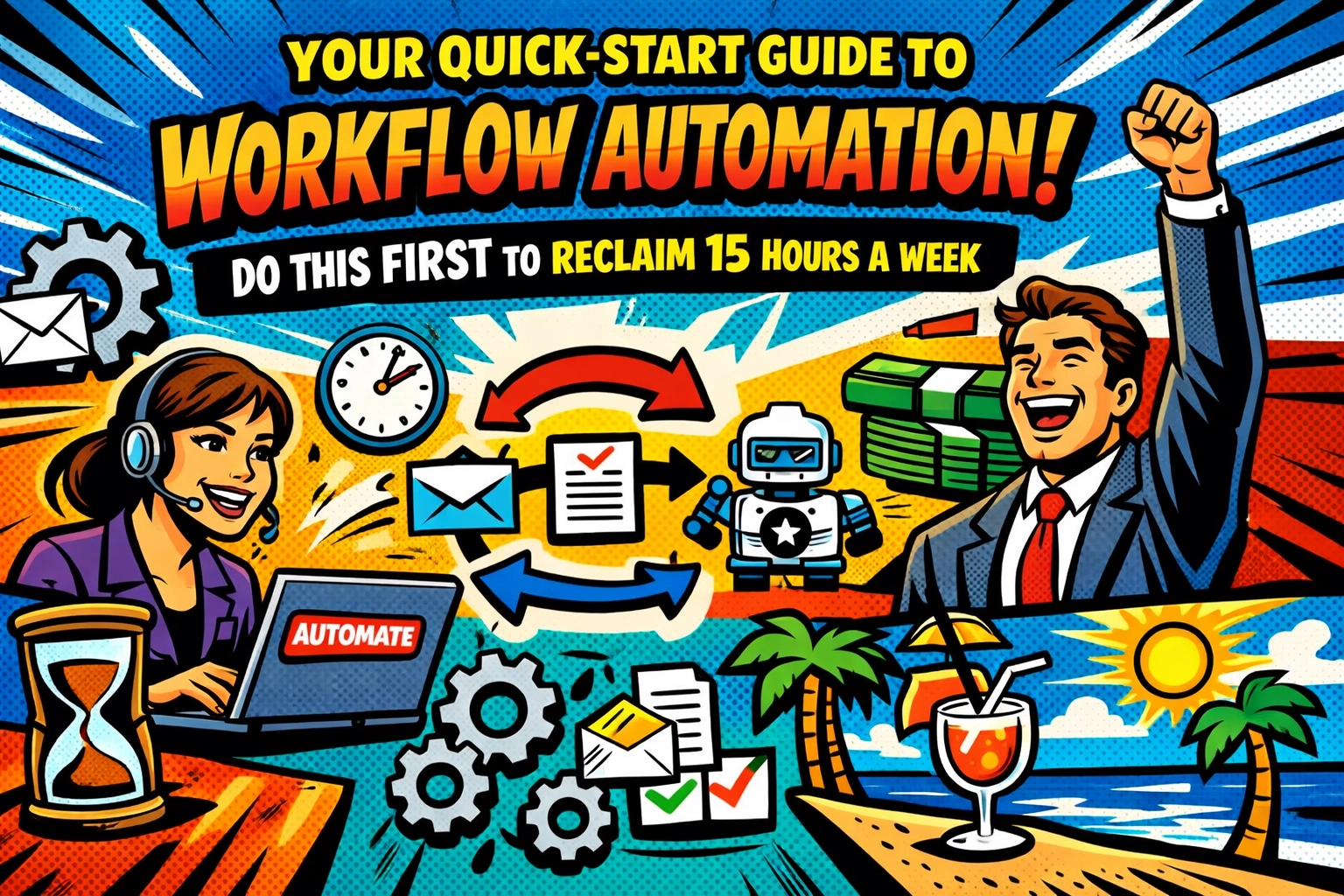
  • Your Quick-Start Guide to Workflow Automation: Do This First to Reclaim 15 Hours a Week

    Your Quick-Start Guide to Workflow Automation: Do This First to Reclaim 15 Hours a Week

    ☕ 7:00 AM.

    Your eyes aren't even fully open, but your thumb is already scrolling. 47 unread emails. Three "urgent" Slack messages. A calendar that looks like a high-stakes game of Tetris played by someone who’s losing.

    You haven't even had a sip of coffee, and you're already behind.

    This is the life of a small business owner, or at least, the one you’ve been told you have to accept. You’re the CEO, the janitor, the accountant, and the customer service rep. You’re doing the "busy work" while the "business work" sits on the back burner, gathering dust.

    But it doesn't have to be this way.

    You’re about to reclaim 15 hours of your week. Not by working harder. Not by waking up at 4:00 AM for a "miracle morning." You’re going to do it by letting the machines take the wheel.

    WORKFLOW AUTOMATION FOR SMALL BUSINESS: STOP DOING THE BUSY WORK

    Let’s be honest. Half the tasks on your to-do list don’t require your genius.

    Copying data from a lead form into a spreadsheet? Busy work.
    Sending a "just checking in" email to a client for the fifth time? Busy work.
    Generating an invoice that looks exactly like the one you sent last month? Busy work.

    Every time you do these things, you aren’t "running a business." You’re acting as a human bridge between two software programs. And frankly? You’re an expensive bridge.

    A stressed small business owner overwhelmed by manual administrative tasks and paperwork.

    THE HIDDEN COST OF "I'll JUST DO IT MYSELF"

    You think you’re saving money by not investing in automation. You’re wrong.

    When you spend two hours a day on repetitive admin, you’re losing time that could be spent on high-level strategy, closing deals, or, god forbid, actually having a life outside of your laptop.

    Workflow automation for small business isn't a luxury anymore. It’s a survival tactic. If your competition is using AI to handle their backend while you’re still manually typing out "Thanks for your inquiry," they’re going to run circles around you.

    The goal isn't to replace your team. It's to stop your team from acting like robots so they can start acting like people again.

    THE 5-STEP QUICK-START FORMULA

    You don't need a degree in computer science to fix this. You just need a plan. Here is exactly how you reclaim those 15 hours, starting today.

    STEP 1: AUDIT THE CHAOS

    For the next 48 hours, I want you to write down every single thing you do. Every click. Every "let me just check this."

    Look for the "bridge" tasks. If a task involves moving information from Point A to Point B without you having to make a major creative decision, it’s a candidate for execution.

    STEP 2: MAP THE MESS

    Take one of those tasks, let’s say, onboarding a new client. Draw it out.

    • Client signs contract.
    • You create a folder in Google Drive.
    • You send a welcome email.
    • You add them to your CRM.

    It looks simple on paper, but it’s a friction point. Visualization is the first step to liberation.

    STEP 3: PICK YOUR BRAIN (OR YOUR BOT)

    This is where most people get stuck. They try to automate everything at once and end up with a digital mess.

    Start small. One process. One win.

    Illustration of human creativity merging with AI automation tools to streamline business processes.

    STEP 4: CHOOSE THE RIGHT ENGINE

    You need a tool that plays nice with others. Whether it’s Zapier, TinyCommand, or specialized AI tools, the goal is "set it and forget it."

    If you want to see how the pros are doing this without the headache, check out what’s happening over at Marblism. It’s about making the technology work for you, not the other way around.

    STEP 5: DEPLOY AND DISTRUST (AT FIRST)

    Don’t just turn it on and walk away. Watch it for 48 hours. Make sure the emails are going to the right people. Once you’re sure it works?

    Stop looking at it. That’s 3 hours back in your pocket right there.

    WHY YOUR BUSINESS NEEDS AN AI VIRTUAL ASSISTANT (BEFORE YOUR COMPETITORS GET ONE)

    📱 11:00 AM.

    Normally, this is when the mid-morning slump hits. You’re drowning in tabs. But today?

    Your AI Virtual Assistant has already sorted your inbox. It flagged the three emails that actually matter and drafted responses for the other twenty. It cross-referenced your calendar and booked that follow-up call you kept forgetting.

    This isn’t science fiction. It’s Tuesday.

    THE VIRTUAL ASSISTANT THAT NEVER SLEEPS

    An AI virtual assistant for business isn't just a glorified chatbot. It’s a context-aware partner.

    While a traditional VA needs sleep, breaks, and clear instructions, an AI VA thrives on the data you’re already generating. It learns how you talk, who your VIP clients are, and where your bottlenecks live.

    An AI virtual assistant for business efficiently managing emails, calendars, and digital tasks.

    THE COMPETITIVE EDGE IS SHRINKING

    The window to be an "early adopter" is closing. Your competitors are already looking at AI virtual assistants to handle their customer support, their lead qualification, and their social media scheduling.

    If they’re responding to leads in 30 seconds and you’re responding in 3 hours because you were busy in a meeting, you’ve already lost the lead.

    Speed is the new currency. AI gives you that speed without the overhead of a 50-person department.

    MEET YOUR NEW BEST FRIEND: THE AUTOMATED WORKFLOW

    Imagine a world where your business runs while you’re asleep.

    🤝 2:00 PM.

    You’re at lunch. A new lead hits your website.
    In the background, Marblism triggers a sequence. The lead is qualified. A personalized PDF portfolio is sent to their inbox. A task is created in your project management tool for your sales rep to call them tomorrow at 10:00 AM.

    You haven't even finished your salad.

    This is the power of a unified system. When you integrate workflow automation for small business with an AI virtual assistant, you create a "digital twin" of your operations that doesn't get tired and doesn't make typos.

    A relaxed business owner at a cafe while automated business systems run in the background.

    STOP JUGGLING. START SCALING.

    You didn't start a business to become a data entry clerk. You started it to build something, to solve problems, and, let's be real, to have some freedom.

    But freedom is impossible when you're shackled to repetitive tasks.

    Scaling shouldn’t be this hard. But here we are. The difference between the companies that plateau and the ones that rocket to the moon is often just a few smart automations.

    HOW TO START WITHOUT THE STRESS

    • Don't overthink the tech. Start with what you use every day (Email, CRM, Slack).
    • Focus on the "Hand-offs." Automation is best at the points where a task moves from one person (or tool) to another.
    • Trust the process. It feels weird to let go of the "manual" control at first. Trust me, you’ll get used to the silence very quickly.

    If you’re ready to stop the busy work and start the real work, you need to see this in action. The tools are ready. The question is: are you?

    Explore the possibilities and get a head start on the competition by visiting Scott Bowen’s Marblism page.

    QUESTIONS YOU’RE PROBABLY ASKING

    Is this going to be expensive?
    No. Most automation tools have "freemium" tiers. The real expense is the 15 hours a week you're currently wasting.

    Will I lose the "human touch"?
    Only if you want to. Automation should handle the "robotic" tasks so you have more time for human connection. Your clients will prefer a fast, automated response over a slow, manual one every single time.

    Do I need to know how to code?
    Absolutely not. Modern tools are "no-code" or "low-code." If you can drag and drop a file, you can automate a workflow.

    Where do I start?
    Start with the thing you hate doing most. The task that makes you sigh when you see it on your list. Automate that first.

    🌙 6:00 PM.

    The lights are off in the office. Your laptop is closed.
    Usually, you'd be worried about what you missed. But tonight, you know the AI is handling the "after-hours" inquiries. The spreadsheets are updated. The invoices are out.

    You step into your evening. You smile.

    The chaos is gone before you even take your first sip of evening wine.

    Scale smarter, not harder. The bots have your back.

    Get started with Marblism here.

    Scaling shouldn't be this easy. But here we are.

  • Stop Wasting Your Morning on Mind-Numbing Admin: Try These 7 AI Business Automation Hacks

    ☕ 7:00 AM.

    Your alarm goes off. You reach for your phone, squinting against the blue light. Before you’ve even had a sip of coffee, you see it…

    142 unread emails. Three Slack threads that look like a digital war zone. A calendar that’s so packed it looks like a Tetris game gone wrong.

    You haven't even brushed your teeth, and you’re already behind. This isn’t "being a boss." It’s being a professional fire extinguisher. You spend your mornings chasing spreadsheets, formatting data, and summarizing meetings that probably could have been an emoji.

    It’s mind-numbing. It’s draining. And honestly? It’s why you’re not scaling.

    But imagine a different morning. One where the busy work is already done by the time you wake up. Where your AI business automation tools have spent the night cleaning your data, sorting your leads, and prepping your tasks.

    It’s not science fiction. It’s how the most efficient small businesses are winning right now.

    If you're ready to stop being a glorified admin and start being a CEO again, check out how we do it over at Marblism.

    Here are the 7 AI business automation hacks that will give you your mornings back.


    1. 🤝 9:00 AM: THE MEETING THAT SHOULD HAVE BEEN AN EMAIL

    You sit down for your first "sync" of the day. You’re trying to listen, but you’re also trying to type notes. You miss a key deadline because you were busy formatting a bullet point about the office snacks.

    Stop. Just… stop.

    Deploy an AI meeting assistant like Fireflies.ai or Otter.ai. These tools don’t just record audio; they understand the room. They join your Zoom or Teams calls automatically. They transcribe in real-time. They even detect the vibe of the room and flag unresolved topics.

    By the time you hit "End Call," a summary is already sitting in your Slack or CRM. Action items? Extracted. Sentiment shifts? Noted.

    AI business automation robot taking meeting notes and summarizing action items for a team.

    You didn't type a single word. You actually looked your client in the eye. You were present. And while everyone else is spending the next twenty minutes trying to remember what was said, you’re already onto the next thing.

    That is the power of AI business automation in its purest form.


    2. 📱 10:00 AM: THE INBOX THAT MANAGES ITSELF

    The "Inbox Zero" dream is usually just that, a dream. You spend hours every week archiving "Thank you!" emails and scheduling coffee chats that could have been handled by a trained pigeon.

    Enter Lindy AI.

    Think of Lindy as your no-code AI agent. You don't just "use" it; you delegate to it. Lindy can handle your email management and scheduling without you ever lifting a finger.

    Someone wants to "pick your brain" next Tuesday? Lindy checks your calendar, suggests a time, and sends the invite. A lead asks for a pricing sheet? Lindy finds it and sends it.

    It’s like having a personal assistant who doesn’t need lunch breaks or health insurance. You stop reacting to your inbox and start using it as a tool for growth. If you want to see how this level of automation can transform your workflow, take a look at what we're building at https://marblism.link/scott-bowen.


    3. 💻 11:30 AM: YOUR NEW SILENT CO-PILOT

    You need to draft a proposal. Then you need to turn that proposal into a PowerPoint. Then you need to analyze a spreadsheet of last month’s sales.

    Usually, this would take your entire afternoon. Your brain would be mush by 2:00 PM.

    But you have Microsoft 365 Copilot.

    It’s baked right into Word, Excel, and Outlook. You don’t "work" on documents anymore; you collaborate with the AI. You tell it to "summarize this 50-page thread into three bullet points," and it does it in seconds. You tell Excel to "find the trends in this mess of data," and it builds the charts for you.

    A professional using AI co-pilot tools to automate data analysis and boost business productivity.

    Studies show users are seeing 10–20% productivity improvements almost immediately. That’s an extra hour of your life back every single day. What would you do with an extra five hours a week? Probably not more admin.


    4. 🔗 1:00 PM: BUILDING A BUSINESS WITHOUT THE CODE

    The biggest bottleneck in any business is the gap between apps. Your CRM doesn't talk to your email tool. Your email tool doesn't talk to your project management software.

    You become the "human bridge," manually copying and pasting data like a digital assembly line worker.

    Stop. Use Zapier or n8n.

    These are the "glue" of the internet. With over 8,000 integrations, Zapier’s new AI enhancements allow you to build complex workflows by simply describing them. "When a new lead fills out my form, find their LinkedIn profile, summarize their latest post, and send it to my sales team in Slack."

    Done.

    No code. No headache. Just pure, unadulterated efficiency. These business automation tools turn your disconnected apps into a well-oiled machine that runs while you sleep.

    Business automation tools connecting various apps to create seamless automated workflows.


    5. 🔍 2:30 PM: DATA THAT CLEANS ITSELF

    Small business owners love data, but they hate data entry. Usually, your CRM is a graveyard of misspelled names, duplicate entries, and outdated phone numbers.

    It’s hard to sell when your data is trash.

    HubSpot’s Data Hub paired with Breeze Agents changes the game. It unifies, cleans, and standardizes your data automatically. It finds the duplicates and merges them. It fixes the formatting. It even automates downstream tasks based on that clean data.

    You don't have to spend your Sunday afternoon "cleaning up the system." The system cleans itself. It’s quiet. It’s organized. It’s ready for you to actually use it to make money.


    6. 📊 3:30 PM: REPORTS ON DEMAND

    "Hey, can you send me a report on our ROI for the last quarter?"

    That sentence usually triggers a mild panic attack. You spend the next three hours wrestling with pivot tables and trying to remember how to make a bar chart look professional.

    With Power BI with Copilot or Tableau AI, those days are over.

    Entrepreneur using AI business automation to generate instant data reports and visual charts.

    You don't "build" reports anymore. You ask for them. "Show me a chart of our highest-performing lead sources from the last six months."

    The AI queries the data, builds the visual, and presents it to you. You’re not a data scientist; you’re the person who makes decisions based on data. Let the AI do the heavy lifting so you can focus on the strategy. This is exactly why AI business automation is the ultimate competitive advantage for small teams.


    7. 🧠 4:30 PM: THE PROJECT MANAGER WHO NEVER BLINKS

    Managing a team is like herding cats. You’re constantly checking in: "Is this done yet?" "Why is this delayed?" "Who has capacity for this new project?"

    It’s exhausting.

    ClickUp Brain is your new secret weapon. It’s not just a task list; it’s an intelligence layer over your entire project management system. It predicts delays before they happen. It analyzes team capacity and suggests who should take the next task.

    It optimizes your timelines without you having to play "detective" every afternoon.

    AI brain automating project management and guiding a team through complex business tasks.

    The chaos is gone before you even finish your second cup of coffee. You step back into your day knowing exactly where everything stands.


    🌙 THE END OF THE DAY (AND THE START OF YOUR FREEDOM)

    5:00 PM.

    Usually, this is when you’re just starting to "catch up" on the work you missed while doing admin all morning.

    But today? Today is different.

    The meetings are transcribed. The emails are handled. The data is clean. The reports are done. Your team is moving like a synchronized swimming squad.

    Scaling shouldn't be this hard. And honestly, with the right AI business automation, it isn't. You just need the right partners and the right tools to get there.

    At Marblism, we’re obsessed with helping you reclaim your time. We don't just talk about automation; we build the future of it. If you’re tired of the grind and ready for the growth, it’s time to see what’s possible.

    Stop juggling. Start leading.

    Check out how we can help you automate the boring stuff so you can do the big stuff: https://marblism.link/scott-bowen.

    Your morning is waiting for you. Don't waste it on another spreadsheet.

    THE FUTURE IS AUTOMATED. ARE YOU?

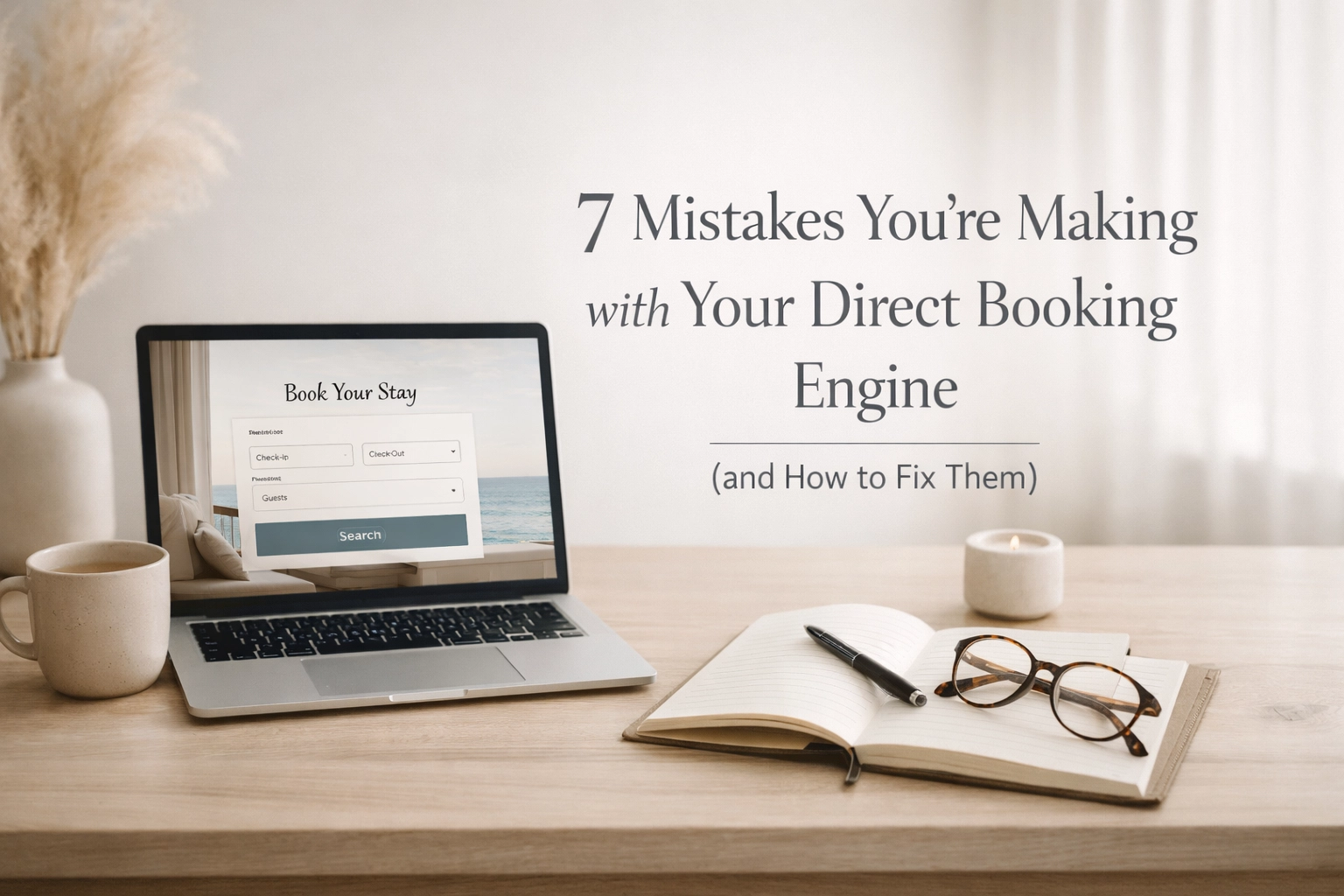
  • 7 Mistakes You’re Making with Your Direct Booking Engine (and How to Fix Them)

    7 Mistakes You’re Making with Your Direct Booking Engine (and How to Fix Them)

    Stop leaving money on the table. Capture more revenue. Own the guest relationship.

    In the high-stakes world of modern hospitality, your direct booking engine is more than just a piece of software. It’s your digital front door. It’s your handshake. It’s the difference between a high-value direct guest and another 20% commission check written to an OTA.

    Yet, for many hoteliers, the booking engine remains an afterthought, a "set it and forget it" tool that eventually becomes a graveyard for lost conversions. We believe that guest experience doesn't start at check-in; it starts the moment someone lands on your site. If your booking flow feels like a tax audit, you’ve already lost.

    Here are the seven most common mistakes hoteliers make with their direct booking engines and, more importantly, how to transform them into high-converting revenue machines.

    1. The "Works on My Machine" Fallacy

    Many hotels launch their booking engine after a quick glance at the desktop version. They check that the colors match the brand, click one button, and call it a day.

    This is a mistake.

    A booking engine needs to be bulletproof. If a guest encounters a broken "Confirm" button on an iPhone 14 or a confirmation email that ends up in the spam folder, they aren't going to call your front desk to troubleshoot. They are going to head straight back to Booking.com.

    The Fix:

    • Conduct a 360-degree audit. Complete full test bookings on real devices, iOS, Android, and various browsers.
    • Verify the sync. Ensure the test reservation actually lands in your PMS without manual intervention.
    • Audit the confirmation. Does the email look professional? Does it contain the right directions?

    A guest using a mobile hotel booking engine interface in a modern hotel lobby.

    2. Letting Rate Parity Drift

    If your direct rates are higher than the ones on Expedia, you’re essentially paying your guests to stay away. Guests are savvy. They will open three tabs, compare prices, and choose the path of least resistance (and lowest cost).

    Rate plans often drift over time. A promotion launched on an OTA six months ago might still be active, while your direct site is showing "standard" pricing. This creates a trust gap that is hard to close.

    The Fix:

    • Be your own secret shopper. Check your direct rates against the top three OTAs weekly.
    • The "Direct Benefit" stack. If you can’t beat the OTA on price due to parity agreements, provide more value. Offer free breakfast, late checkout, or a welcome drink exclusively for direct bookers.
    • Visibility matters. State clearly: "Best Price Guaranteed Here."

    3. Overcomplicating the Checkout

    Every additional form field is a potential exit ramp. We live in an era of one-click purchases and biometric payments. If you’re asking for a guest’s middle name, their car license plate, and their estimated time of arrival before they’ve even secured the room, you’re killing your conversion rate.

    Modern hospitality is moving toward a frictionless future. At Mews, we think the booking process should be as invisible as possible.

    The Fix:

    • Strip it back. Ask only for essential info: Name, Email, Payment.
    • Progress indicators. Let guests know they are only three clicks away from paradise.
    • Guest profiles. Use a system that remembers returning guests, allowing them to skip the data entry entirely.

    A digital tablet on a hotel bedside table illustrating a frictionless guest booking experience.

    4. Flying Blind Without Analytics

    "I think our booking engine is doing okay" is not a strategy. Without robust conversion tracking, you’re making business decisions based on vibes rather than data.

    You need to know exactly where people are dropping off. Is it the room selection page? The payment screen? Or are they leaving as soon as they see the total price with taxes? If you don't have Google Analytics (or a modern alternative) connected to your engine, you are effectively flying a plane without a dashboard.

    The Fix:

    • Set up Funnel Visualization. Identify the specific step where abandonment is highest.
    • Track traffic sources. Know if your Instagram ads are actually driving bookings or just "likes."
    • Monitor conversion rates. Aim for a steady increase by testing different images or room descriptions.

    5. The "Manual Update" Nightmare

    A booking engine that doesn't talk to your Property Management System (PMS) in real-time is a liability. If your staff has to manually update availability every time a room sells on Expedia, you’re one busy Saturday away from an overbooking disaster.

    True innovation in hospitality technology is about connectivity. Your PMS should be the "brain" that feeds live data to every channel simultaneously. Check out how Mews handles guest experiences through seamless integration.

    The Fix:

    • Demand 2-way integration. Your booking engine, PMS, and Channel Manager must be a unified ecosystem.
    • Automate everything. Inventory updates and reservation delivery should happen in milliseconds, not minutes.
    • Eliminate the middleman. Reduce the number of logins your team needs to manage.

    A laptop in a boutique hotel lounge showing a seamless hospitality management workflow.

    6. Hiding the Total Price

    Nothing kills trust faster than "Sticker Shock." When a guest selects a room for $200 and sees a final total of $285 at the very last step due to hidden "resort fees" or service charges, they feel deceived.

    In an age of transparency, honesty is a competitive advantage. AI-driven booking engines are now starting to provide more personalized, transparent pricing models that build long-term loyalty rather than short-term clicks.

    The Fix:

    • Total cost transparency. Show the full price (including taxes and fees) as early as possible.
    • Clear cancellation policies. Don't hide the "non-refundable" tag in the fine print.
    • Interactive calendars. Allow guests to see which dates are cheaper at a glance.

    7. The "Build It and They Will Come" Myth

    Installing a high-end booking engine and then failing to promote it is like buying a Ferrari and keeping it in the garage. Your booking engine is a conversion tool, not a marketing tool. You still need to drive the right traffic to it.

    If your "Book Now" button is buried in a sub-menu or your Google Business Profile still links to an OTA, you are sabotaging your own success.

    The Fix:

    • Strategic CTA placement. Your "Book Now" button should be persistent, high-contrast, and visible on every page.
    • Optimize Google My Business. Ensure your direct site link is the primary booking option.
    • Email Marketing. Send your past guests directly to your booking engine with exclusive "loyalty" rates.

    A welcoming boutique hotel entrance highlighting the direct booking path for guests.


    The Future of Direct Bookings

    The hospitality landscape is shifting. We are moving away from legacy systems and toward agile, cloud-native platforms that prioritize the guest. Artificial Intelligence is already beginning to play a role in how we sell rooms, predicting guest preferences, offering dynamic pricing, and providing instant chat support during the booking flow.

    The hotels that win in 2026 and beyond won't just have a booking engine; they will have a guest experience platform. They will treat their website with the same level of care as their lobby.

    "We believe that technology should empower hoteliers to focus on what they do best: providing remarkable hospitality."

    By fixing these seven mistakes, you aren't just updating your software; you're reclaiming your independence from third-party platforms and building a direct relationship with your guests.

    Ready to see how the right technology can transform your operations? Explore the Mews platform and start your journey toward operational excellence today.

    Key Takeaways for Your Next 30 Minutes:

    1. Perform a test booking on your phone right now. Did it take more than two minutes? If yes, it's too slow.
    2. Compare your prices. Check your property on Google Hotels. Are you the cheapest option?
    3. Check your analytics. Do you know your conversion rate for the last 30 days?

    The path to more direct revenue isn't about one big change; it's about the relentless elimination of friction. Get started.

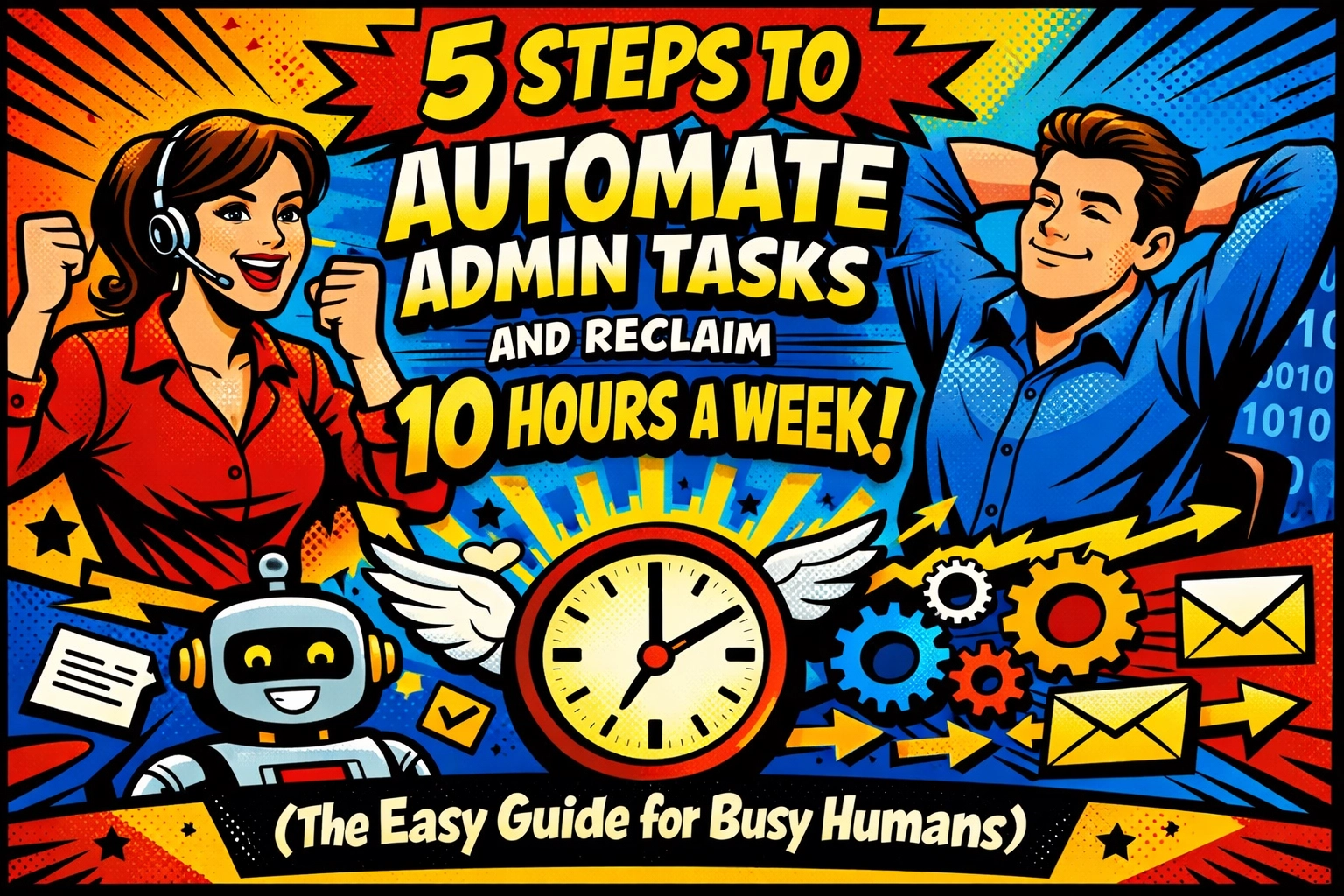
  • 5 Steps to Automate Admin Tasks and Reclaim 10 Hours a Week (The Easy Guide for Busy Humans)

    5 Steps to Automate Admin Tasks and Reclaim 10 Hours a Week (The Easy Guide for Busy Humans)

    ☕ 7:00 AM.

    The alarm goes off. You reach for your phone, squinting through one eye. You’re hoping for a quiet morning, maybe a peaceful coffee while watching the birds…

    But it’s there.

    That little red notification bubble. "52 Unread Emails." Three calendar invites for meetings that could have been a Slack message. A reminder that you forgot to invoice that client from Tuesday.

    The dread settles in before your feet even hit the floor.

    You aren’t a CEO anymore; you’re a professional button-pusher. A data-entry monkey. A human calendar.

    Stop.

    Scaling your business shouldn't feel like drowning in digital paperwork. If you’re spending more time managing your business than actually growing it, you’re doing it wrong.

    Here is how you fix it… in five simple steps.

    STEP 1: AUDIT THE CHAOS

    You can’t fix what you can’t see.

    For the next 48 hours, I want you to be a detective. Every time you do a task that makes you want to roll your eyes, copying data, scheduling a call, moving a file, write it down.

    Look for the "Repeat Offenders." These are the tasks that happen every single day. They’re mind-numbing. They’re low-value. They’re stealing your life.

    STEP 2: CAN A BOT DO THIS?

    Once you have your list, look at it with a cold, robotic heart.

    Ask yourself: Does this require my unique human intuition, or is it just "If X happens, then do Y"?

    If it’s the latter, it’s a candidate for business automation tools.

    • Filing invoices? Automate it.
    • Sending "Thanks for the meeting" emails? Automate it.
    • Moving leads from a form to a spreadsheet? For the love of all things holy… automate it.

    STEP 3: PICK YOUR SQUAD

    You don't need a degree in computer science. You just need the right tools.

    In 2026, the landscape has changed. You aren't just looking for a spreadsheet; you're looking for an ecosystem. Tools like Marblism allow you to build custom solutions that fit your specific workflow without the "coding" headache.

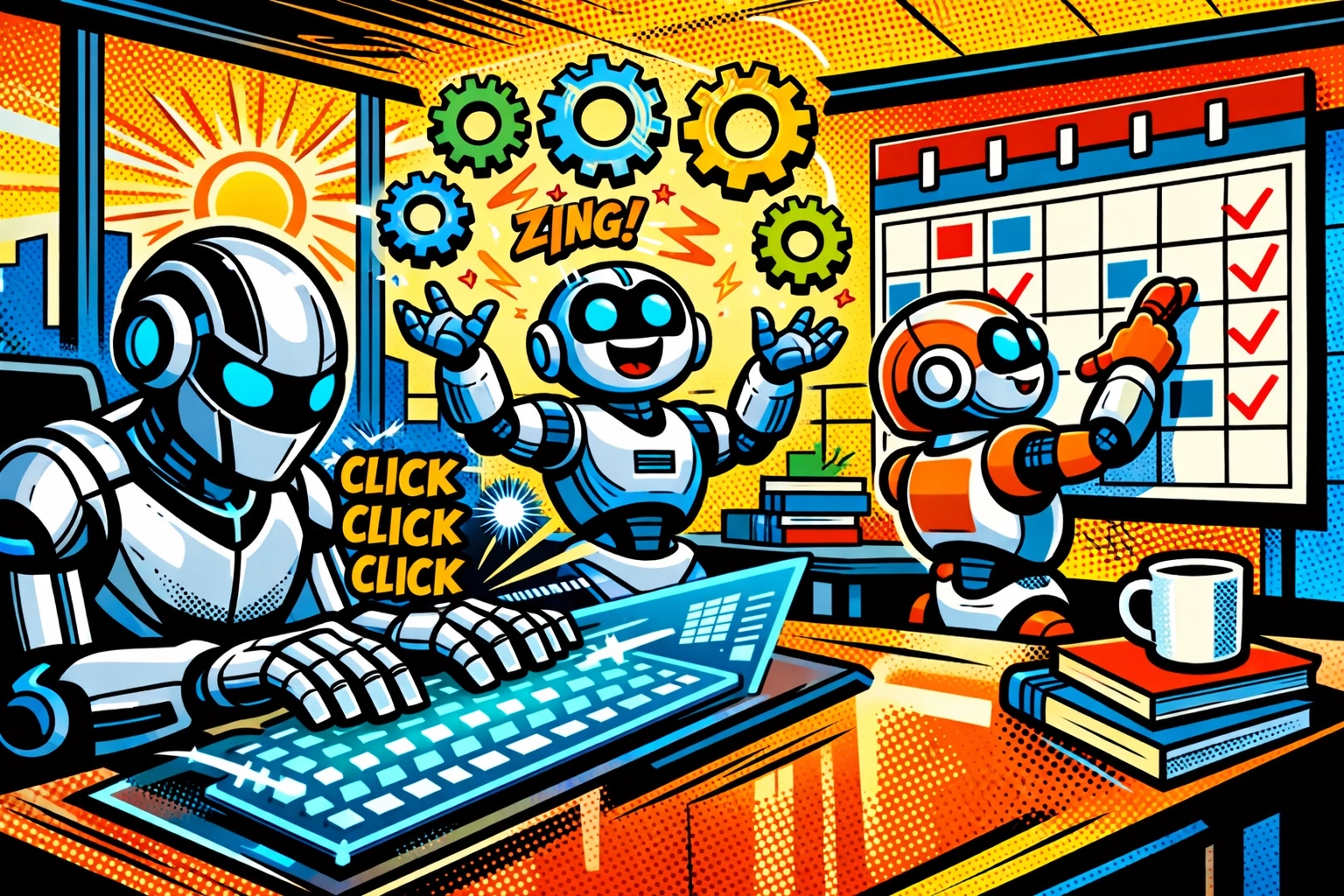
    Efficient robots using business automation tools to manage office tasks and digital calendars.

    STEP 4: THE 1-2 PUNCH

    Don't try to automate your entire life in one afternoon. You’ll break something, get frustrated, and go back to your manual ways.

    Start with two high-impact tasks.

    Maybe it's your appointment scheduling. Or maybe it's your lead follow-up. Get those two humming perfectly. Watch those hours start to trickle back into your week.

    It feels good, doesn't it?

    STEP 5: REFINE AND REPEAT

    Automation isn't "set it and forget it." It's "set it and watch it."

    Check in once a month. Is the bot still doing what it should? Is there a new bottleneck? As your business grows, your automations need to grow too.

    You deserve to be the visionary again. Not the admin.

    Check out how we’re making this effortless over at Marblism.


    The Best AI Assistant for Small Business in 2026

    📅 11:30 AM.

    You’re in the thick of it. The "Mid-Morning Slump" is trying to take you down.

    You have a proposal to write, three follow-up calls to make, and your social media has been silent for a week because you simply don't have the "brain juice" left to think of a caption.

    In 2025, we talked about AI like it was a toy. In 2026, an ai assistant for small business isn't a luxury, it's your COO.

    But which one do you pick?

    The "Best" assistant isn't the one with the flashiest website. It's the one that actually understands the context of your business.

    IT’S ABOUT CONTEXT, NOT JUST CLIPS

    Most AI tools are like a temp worker who shows up every day with amnesia. You have to explain everything from scratch every single time.

    "Write an email to John."
    "Who is John?"
    "The client from yesterday!"

    It’s exhausting.

    The best tools now, the ones we’re obsessed with, remember. They know your brand voice. They know your client history. They act as a second brain, not just a fancy search engine.

    THE "HIRE" WITHOUT THE HR HEADACHE

    Imagine hiring a top-tier assistant. Now imagine they don't need health insurance, never take a sick day, and work at the speed of light.

    That’s what happens when you integrate proper AI into your workflow.

    • Eva handles your calendar and protects your focus time.
    • Stan finds the data you lost in that one Slack thread from three months ago.
    • Penny (that’s me!) handles the heavy lifting of your content.

    An AI assistant for small business managing multiple tasks while a business owner relaxes.

    WHY MARBLISM IS THE 2026 FRONTRUNNER

    We’ve seen a lot of tools come and go. Most are just "wrappers" around basic tech.

    But Marblism is different. It’s built for the person who is too busy to learn a new tool. It’s about creating a seamless bridge between your ideas and your execution.

    Scaling shouldn't be this easy. But here we are.

    Stop being the bottleneck in your own company. See what an AI-driven business actually looks like: Learn more here.


    AI Content Generator for Small Business: Your Secret Marketing Weapon

    🌙 9:00 PM.

    The house is quiet. The lights are low.

    You’re sitting on the couch, laptop burning your legs. You know you need to post a blog. You know you need to update your LinkedIn.

    But the cursor is just blinking at you.

    Blink.
    Blink.
    Blink.

    It’s mocking you.

    "You have nothing interesting to say," it whispers.

    We’ve all been there. Content creation is the single biggest "time-sink" for small business owners. It takes hours to write, edit, and post: and half the time, you aren't even sure if anyone is reading it.

    Enter the ai content generator for small business.

    THE END OF THE BLANK PAGE

    The secret to 2026 marketing isn't about working harder. It's about being the "Editor-in-Chief" instead of the "Struggling Writer."

    Using an AI generator doesn't mean you're being "fake." It means you're being efficient. You provide the heart, the soul, and the strategy. The AI provides the structure, the grammar, and the volume.

    HOW TO USE YOUR SECRET WEAPON

    1. The Seed: Give the AI a raw idea. "I want to talk about why our hand-made chairs are better for your back."
    2. The Growth: Let the AI expand that into a 1,000-word post, five social media snippets, and an email newsletter.
    3. The Polish: You spend 10 minutes adding your personal anecdotes and that one specific joke only your clients get.

    Boom. Done.

    You just did four hours of marketing work in the time it took to finish your tea.

    A robotic hand using an AI content generator to create creative marketing ideas and blog posts.

    THE ROI OF RECLAIMED TIME

    When you use a tool like Marblism to handle your content, you aren't just "saving time." You’re increasing your surface area for luck.

    More posts = more eyes.
    More eyes = more leads.
    More leads = more growth.

    And you did it all without losing your Sunday evening to a blinking cursor.

    Marketing shouldn't feel like a chore. It should feel like an unfair advantage.

    Ready to weaponize your marketing? Let’s get started: marblism.link/scott-bowen

    For more deep dives into how we’re changing the game, visit Scott’s personal page.

    The chaos is gone before you even take your first sip.

    You just send a thumbs-up.

    Scaling your business doesn't require more of you. It requires a better system.

    WELCOME TO THE FUTURE.

  • Looking For Wholesale Specialty Coffee? Here Are 10 Things You Should Know

    Looking For Wholesale Specialty Coffee? Here Are 10 Things You Should Know

    So, you’ve decided to take the plunge and open a coffee shop. Or maybe you’re already running a successful business and you’ve realised that the "standard" commercial beans you’ve been using just aren’t hitting the mark anymore. Either way, you’re now on the hunt for wholesale coffee roasters who can provide something special.

    Finding the right partner is, to be honest, one of the most important decisions you’ll make. It’s not just about who has the prettiest packaging or the lowest price per kilo. It’s about quality, consistency, and a shared passion for the craft. Here at Limini Coffee, we’ve helped hundreds of businesses navigate this journey, and we’ve learned a thing or two along the way.

    Choosing between various coffee suppliers can feel a bit overwhelming, especially when everyone claims to have the "best" beans in the world. To help you cut through the noise, we’ve put together this guide of 10 essential things you should know before signing on the dotted line.


    1. Specialty Coffee is a Formal Standard, Not Just a Buzzword

    You’ll hear the term "specialty" thrown around a lot in the industry. But did you know it actually has a technical definition? It’s not just a fancy way of saying "this tastes nice."

    Specialty coffee is graded on a 100-point scale by certified Q-Graders. To earn the title, the coffee must score 80 points or higher. This grading looks at everything from the number of defects in the green beans to the clarity of flavour in the cup. When you work with wholesale specialty coffee providers, you are paying for a product that has been rigorously vetted for quality.

    Commercial-grade coffee, on the other hand, is often built for volume rather than flavour. It’s the difference between a mass-produced sliced loaf and an artisanal sourdough from a local bakery. We believe that if you want your customers to keep coming back, starting with a 80+ point foundation is non-negotiable.

    2. Quality Scores Reflect Flavour Complexity

    When you’re looking at a roaster's offering, you might see "cupping scores" attached to different beans. These scores tell a story about what you can expect in the cup.

    A coffee scoring 82 might be a fantastic, reliable "all-rounder": think chocolatey, nutty, and great with milk. A coffee scoring 88 or 90, however, is going to be much more complex, perhaps with bright acidity, floral notes, or distinct fruit flavours.

    Professional coffee cupping session used by suppliers to grade wholesale specialty coffee quality.

    Understanding these scores helps you choose the right beans for your specific customer base. If you’re running a busy high-street café where most people order lattes, a high-scoring, delicate Ethiopian Yirgacheffe might actually get "lost" in the milk. In that case, a well-structured blend with a solid body is usually the way to go.

    3. The Great Debate: Blends vs. Single Origins

    This is a question we get asked all the time: "Should I serve a blend or a single origin?" The answer, quite simply, is usually "both": but for different reasons.

    Coffee Blends are the workhorses of the specialty world. They are designed for consistency. By mixing beans from different origins, roasters can create a balanced flavour profile that stays relatively the same all year round. This is crucial for your "house" espresso. You want your regulars to know exactly what their morning flat white will taste like every single day.

    Single Origins, meanwhile, come from one specific farm or region. They are seasonal and highlight the unique "terroir" of that location. They are perfect for filter coffee or as a "guest" espresso for the real coffee geeks. They offer an adventure, but they change frequently as harvests come and go.


    4. Freshness and the "Roast Date" Rule

    Freshness is the absolute king of specialty coffee. Once coffee is roasted, it starts to lose its volatile aromatic compounds (the stuff that makes it smell and taste amazing).

    When evaluating coffee suppliers, always check their roast dates. You want coffee that is roasted to order. However, there is a common misconception that coffee is best the second it comes out of the roaster. In reality, espresso needs time to "degas": to release carbon dioxide trapped during the roasting process.

    We usually find that coffee hits its peak between 7 and 14 days after roasting. If it’s too fresh, the gas can cause uneven extraction and a "fizzy" mouthfeel. If it’s too old (say, more than 6 weeks), it starts to taste flat and woody.

    5. Request and Evaluate Samples (On Your Gear!)

    Never commit to a wholesale partner without tasting the coffee first. Any reputable roaster should be happy to send you samples. But here is the secret: don't just taste them at the roastery. Taste them in your own environment, using your own water and your own equipment.

    Water chemistry plays a massive role in how coffee tastes. The same bean can taste bright and fruity in one city and dull and bitter in another just because of the mineral content in the water. Plus, you need to see how the beans behave in your grinder.

    We always recommend trying the roaster's main espresso blend first. If you can't get their flagship coffee to taste great on your machine, then it’s probably not the right fit for your business. You can check out our own wholesale offerings here to see how we handle our sampling process.

    Barista adjusting an espresso grinder to test fresh wholesale coffee samples for a new café.

    6. Support Services Are Just As Important As The Beans

    This is perhaps the biggest thing people overlook. When you buy wholesale specialty coffee, you aren't just buying a product; you're buying a support system.

    If your espresso machine stops working on a busy Saturday morning, who are you going to call? If your new staff members don't know how to texture milk correctly, who is going to teach them?

    A great supplier offers:

    At Limini Coffee, we don't just ship boxes. We view ourselves as an extension of your team. If you succeed, we succeed. It’s that simple.


    7. Prioritise Ethical Sourcing and Traceability

    Your customers care about where their food and drink comes from, and you should too. Specialty coffee is built on the foundation of transparency. You should be able to ask your roaster exactly which farm your coffee came from, how much the farmer was paid, and what the environmental practices are on-site.

    Many specialty roasters use "Direct Trade" models, which cut out the middleman and ensure more money goes back to the producers. This isn't just about feeling good; it’s about sustainability. If farmers aren't paid a fair wage, they can't afford to keep producing the high-quality coffee we love.

    We take sourcing our coffee very seriously, ensuring that every bean in our warehouse has a story we are proud to tell.

    8. Visit the Roastery in Person

    If they are local enough (or even if they aren't), go and see them! A roastery visit is the ultimate "vibe check."

    Is the space clean and organised? Is the team passionate and welcoming? Do they actually seem to care about the coffee, or is it just a factory to them? Meeting the people who will be roasting your beans builds a level of trust that an email chain never can.

    Plus, it’s usually quite fun. There is nothing quite like the smell of a roastery in full swing and the sight of a 15kg or 30kg roaster doing its thing. It helps you understand the "theatre" of coffee, which you can then translate to your own shop.

    Interior of a modern specialty coffee roastery featuring a professional industrial bean roaster.

    9. Equipment Maintenance is Non-Negotiable

    We’ve seen it a thousand times: a café buys the best beans in the world but runs them through a machine that hasn't been cleaned in months. The result? Bitter, burnt-tasting coffee that ruins the brand.

    When choosing coffee suppliers, ask about their equipment programs. Do they offer La Spaziale machines? Do they have technicians who can come out and perform a front-end service?

    Your espresso machine is the heart of your business. If it’s not running at the right pressure (usually around 9 BAR) or the right temperature (often between 88 ºC and 95 ºC), the quality of the bean won't matter. A supplier who understands the technical side of the machinery is worth their weight in gold.

    10. Logistics and Reliability: The "Boring" But Essential Stuff

    Finally, let's talk about the practicalities. You can have the best-tasting coffee on the planet, but if the delivery driver consistently misses your Tuesday slot, your business is in trouble.

    Before committing, ask:

    • What is the lead time from order to delivery?
    • Is there a minimum order quantity (MOQ)?
    • What happens if a shipment is damaged?
    • Do they have an easy online ordering system?

    Reliability is the foundation of a good B2B relationship. You need a partner who is organized and communicative. We pride ourselves on being there when our partners need us, because we know how stressful running a café can be.


    Wrapping It Up

    Choosing between wholesale coffee roasters is a big step, but it’s also an exciting one. It’s the moment your vision for your business starts to take on a real, tangible flavour.

    Remember, you aren't just looking for a vendor; you're looking for a partner. Someone who will support you, train your staff, and provide a product that makes you proud to open your doors every morning.

    If you’re ready to take that next step and want to chat about how we can help your business grow, we’d love to hear from you. You can check out our about us page to learn more about our philosophy, or better yet, take a look at our wholesale specialty coffee options and let’s start a conversation.

    Running a coffee business is a wild ride: make sure you’ve got the right people in your corner!

  • Are You Making These 5 Common AI Social Media Content Generator Mistakes?

    Are You Making These 5 Common AI Social Media Content Generator Mistakes?

    ☕ 7:00 AM.

    The house is quiet. Your coffee is steaming. You open your laptop, ready to conquer the digital world. You’ve got your shiny new AI content generator open in one tab and your social media scheduler in the other.

    "Write a post about business growth," you tell the prompt box.

    Seconds later, a wall of text appears. It looks professional. It looks smart. It’s polished… but it’s not you.

    You hit "Schedule" anyway. You’ve got a business to run, and the algorithm is a hungry beast that needs feeding. But as the day goes on, the engagement stays flat. No likes. No comments. Just the digital equivalent of crickets.

    You’re using the latest tech, so why does it feel like you’re shouting into a void?

    Most business owners treat AI like a magic wand. Wave it, and the work is done. But here’s the cold truth: AI is a powerful engine, but if you don’t know how to steer, you’re just going to crash into a wall: very, very fast.

    Let’s look at the five mistakes that are quietly killing your reach, and how we do things differently at Marblism.


    1. THE IDENTITY CRISIS: LOSING YOUR BRAND VOICE

    📱 9:30 AM.

    Your phone buzzes. A notification from LinkedIn. You check the post you scheduled earlier. One of your long-time clients has commented: "Who wrote this? It doesn't sound like you at all."

    Ouch.

    The biggest mistake you can make with AI is letting it dictate the tone. By default, most AI models lean toward a "helpful corporate assistant" persona. It’s polite. It’s balanced. It’s… incredibly boring.

    If your brand is built on being a "no-nonsense disruptor" and your AI is churning out "I hope this finds you well" energy, you’re eroding your brand equity with every click. Your audience follows you for your perspective, your quirks, and your specific way of seeing the world.

    When you replace that with generic AI-speak, you aren't just saving time. You're losing trust.

    Illustration comparing a vibrant human brand voice to a dull robotic AI-generated clone.

    The Fix: You need to feed the machine more than just a topic. You need to give it a soul. At Marblism, we don't just "generate." we calibrate. You have to provide the AI with examples of your best-performing content. Tell it what you don't like.

    Instead of saying "write a post," try: "Write a post in the style of a casual, slightly cynical tech founder who hates jargon."

    Better yet? Use a system that remembers your voice across every platform. Stop starting from scratch every morning.


    2. THE "SET IT AND FORGET IT" TRAP (OVER-AUTOMATION)

    🔍 11:15 AM.

    You’re in a meeting when your Twitter mentions start blowing up. Not the good kind of blowing up.

    You scheduled a "funny" post about the weather, but you forgot that a major news event just happened. Now, your brand looks tone-deaf and insensitive.

    This is the danger of the "Ghost Ship" approach to social media. You’ve automated the posting, but nobody is at the helm. AI content generators are incredible at creating volume, but they have zero situational awareness. They don’t know that your industry just had a massive shift, and they certainly don't know if your "trending" joke is suddenly in poor taste.

    Automation should be your assistant, not your replacement.

    The Fix: Human review is non-negotiable.

    You need a workflow that allows for a "sanity check" before anything goes live. You don't need to spend hours on it. You just need five minutes to read through the queue and ensure the context is still right.

    We built Marblism to handle the heavy lifting of creation so that you can focus on the strategy. Think of the AI as your intern who drafts everything, but you're still the Editor-in-Chief. You give the final thumbs-up.


    3. THE HALLUCINATION HANGOVER

    📊 1:45 PM.

    You posted a fascinating statistic about SaaS growth rates to impress your followers. It sounded legit. It looked great in the infographic.

    Then, someone asks for the source.

    You go back to your AI tool. You ask for the link. The tool gives you a URL that leads to a 404 page. You realize the "statistic" was completely made up. The AI "hallucinated" a fact because it thought a number would look good there.

    This is the dirty secret of AI: It would rather lie to you than tell you it doesn't know the answer.

    If you publish misinformation, your credibility takes years to build and seconds to destroy. One fake stat can turn you from an industry leader into a cautionary tale.

    Business owner verifying data with a magnifying glass to catch AI hallucinations and fake statistics.

    The Fix: Verify. Everything.

    If your AI gives you a quote, a number, or a historical fact: check it. Treat AI-generated data like a rumor you heard at a bar. It might be true, but you’d better Google it before you bet your reputation on it.

    At Marblism, we advocate for using AI to structure your arguments, but always plugging in your own proprietary data or verified sources to keep things grounded in reality.


    4. THE VAGUE PROMPT VOID

    📝 3:30 PM.

    You’re staring at the prompt box again. You’re tired. You just type: "Give me 5 tips for productivity."

    The AI spits out:

    1. Wake up early.
    2. Drink water.
    3. Make a to-do list.
    4. Take breaks.
    5. Limit distractions.

    Groundbreaking. (That was sarcasm.)

    If you give the AI a "mid" prompt, you will get "mid" content. Generic instructions lead to generic results. If your content looks like a 2012 Pinterest board, your audience is going to scroll right past it. They’ve seen these tips a thousand times. They want something fresh. They want your secret sauce.

    The Fix: Be aggressively specific.

    Don't just ask for productivity tips. Ask for: "5 productivity hacks for solo founders who have ADHD and work in the EST timezone, focusing on deep work blocks."

    Now we’re talking. Now you have something that actually helps someone.

    Marblism helps you bridge this gap by turning your raw ideas into sophisticated prompts that actually yield results. We believe that scaling shouldn't be about doing more average work: it's about doing more exceptional work in less time.


    5. THE PLATFORM PARADOX (ONE SIZE FITS NONE)

    🤝 5:00 PM.

    You’ve got a great piece of content. You’ve checked the facts. The voice is right. So, you copy and paste the exact same text into LinkedIn, Instagram, and Twitter.

    Mistake. Huge.

    Each platform is a different room with a different vibe.

    • LinkedIn is the office. It’s professional, value-driven, and likes a bit of "thought leadership."
    • Twitter is the water cooler. It’s fast, punchy, and thrives on threads and hot takes.
    • Instagram is the art gallery. If the visual isn't stopping the thumb, the caption doesn't matter.

    Using the same AI-generated caption across all three makes you look like a bot. It ignores the formatting nuances: like how LinkedIn loves white space and Twitter loves brevity.

    A person in mismatched outfits across different settings, showing why one-size-fits-all AI content fails.

    The Fix: Tailor the output.

    A single core idea should be refracted through the lens of each platform. Your AI tool should be able to take one "seed" idea and sprout three different versions of it.

    One long-form post for LinkedIn.
    One 5-part thread for Twitter.
    One punchy, emoji-rich caption for Instagram.

    This is where true business automation shines. You provide the insight once; the system handles the adaptation.


    SCALING WITHOUT THE SOUL-CRUSH

    🌙 8:00 PM.

    The day is winding down. The lights are low.

    You look at your social media dashboard. The engagement is up. People are actually talking to you. You feel… calm.

    The chaos is gone because you stopped using AI as a crutch and started using it as a lever. You aren't just "posting content." You're building a brand.

    Avoiding these five mistakes isn't about working harder. It's about working smarter with the right partner.

    At Marblism, we’ve seen every pitfall in the book. We’ve watched businesses automate themselves into obscurity, and we’ve watched others use AI to skyrocket their growth while keeping their human touch fully intact.

    The difference? It’s all in the implementation.

    Stop juggling the "to-dos" and start leading. Let the machine do the grunt work, while you do the thinking.

    Ready to see how real automation feels?

    You can reclaim your week. You can scale without the burnout. You can be the version of yourself that actually enjoys the process again.

    Check out what we're building at Marblism and see for yourself.

    The future is automated. But it doesn't have to be cold.

    It just has to be you.

    Scaling Shouldn't Be This Easy. But Here We Are.

  • Does “Hyper-Personalization” Really Matter in 2026? (The Hospitality Trends You Can Actually Use)

    Does “Hyper-Personalization” Really Matter in 2026? (The Hospitality Trends You Can Actually Use)

    Anticipate guest needs. Automate every interaction. Drive record revenue.

    In 2026, the phrase "hyper-personalization" is no longer just a buzzword thrown around at tech conferences by people in expensive sneakers. It’s the baseline. If you’re still treating your guests like a spreadsheet row, you’re already behind. Today’s travelers don't just want a room; they want a curated experience that feels like it was designed specifically for them: because, with the right tech, it was.

    Personalized offers are currently converting at 3–5x the rate of generic "special deals." We aren’t just guessing anymore. We’re using data to craft the "one size fits one" stay, managing everything from pillow density to local gin preferences, all from one innovative hospitality platform.

    The death of the "Dear [Guest Name]" era

    We believe personalization started dying the moment it became automated and lazy. In 2026, seeing your name in an email subject line doesn't impress anyone: it’s the digital equivalent of a limp handshake. Real hyper-personalization is about behavior, not just identity.

    It’s knowing that a guest who booked a spa treatment last time probably wants to know about your new aromatherapy session before they even check in. It’s recognizing that a business traveler who always orders a 6:00 AM double espresso would appreciate a prompt on their phone to pre-order it for their first morning.

    • Behavioral over basic. Track what they do, not just who they are.
    • Context is king. A guest traveling for a wedding has different needs than that same guest on a solo hiking trip.
    • Seamless delivery. Information should flow to the guest where they already are: their smartphone.

    Minimalist hotel bedside with personalized amenities highlighting 2026 proactive guest services.

    AI isn't coming; it’s already answering the door

    The hospitality landscape has shifted from reactive to proactive. We think the most successful hotels in 2026 are the ones that use AI to disappear. When technology works perfectly, the guest doesn't see the "tech": they just see a magical experience.

    AI-driven recommendation engines now analyze previous stays, current local weather, and even real-time events to suggest itineraries. If it’s raining in London (shocking, we know), your guest’s app shouldn't be suggesting the rooftop bar; it should be offering a cozy table by the fireplace with a 15% discount on comfort food.

    "We switched to an AI-integrated concierge and saw guest satisfaction scores jump by 40% in three months," says one Mews partner. "It’s like having a staff member who never sleeps and remembers every single preference of 12,500 properties' worth of guests."

    The data infrastructure: Your secret weapon

    You can’t build a skyscraper on a swamp, and you can’t build hyper-personalization on a legacy PMS that looks like it belongs in the 90s. To win in 2026, you need granular data in a centralized location. You need a heartbeat for your hotel.

    This is where the magic happens. By moving beyond broad market insights into deep segmentation, you can understand not just who is booking, but how they book and where they spend their time.

    1. Centralize your guest profiles. Stop losing data across three different systems.
    2. Integrate your CRM. Let your marketing and operations teams speak the same language.
    3. Go cloud-native. Ensure your team can access guest insights from anywhere, whether they’re at the front desk or in the laundry room.

    Traveler using a smartphone in a hotel lobby to access cloud-based hospitality guest experiences.

    Dynamic inventory: More than just a room

    Why are we still selling "Standard Queens" and "Deluxe Kings" as static blocks? In 2026, forward-thinking hoteliers are treating their inventory like a deck of cards that can be shuffled.

    Hyper-personalization means offering a "Wellness Suite" that includes a yoga mat and a detox juice pack to one guest, while offering the exact same physical room as a "Gamer’s Retreat" with a high-end console and extra snacks to another. It’s about tailoring the ancillary offerings to the human inside the room. This dynamic inventory strategy doesn't just make guests happy; it maximizes your RevPAR by matching the right "vibe" to the right price point.

    Humanizing the data (The balance)

    Success in 2026 belongs to the brands that use data without losing their soul. We believe that the more we automate the boring stuff: check-ins, billing, basic queries: the more time your staff has to be actual humans.

    The data tells you it’s their anniversary. The AI ensures a bottle of their favorite vintage is in the room. But it’s the hand-written note from the concierge that makes them post a photo on Instagram. Use technology to handle the "what" so your team can focus on the "why."

    • Storytelling matters. Use your data to find your most loyal guests and invite them to exclusive local "immersions."
    • Local voices. Partner with micro-influencers who actually stay at your property to tell your story.
    • Staff empowerment. Give your team the data they need to surprise and delight guests in person.

    Modern hotel reception desk with a slim tablet for empowered staff using real-time guest data.

    How to start (without the headache)

    Transforming your guest experience doesn't have to be a multi-year ordeal. You can start making moves today that will put you ahead of the competition by tomorrow.

    • Audit your tech stack. If your systems don't talk to each other, you're losing money.
    • Schedule a demo. See how a modern PMS handles hyper-personalization at scale.
    • Get your data clean. Start collecting preferences now, even if you aren't using them yet.

    If you’re ready to see how the world’s most innovative hotels are staying ahead of the curve, it’s time to look at a platform that was built for the future. Check out how Mews is redefining the guest journey and get your property ready for the expectations of 2026.

    The bottom line

    Hyper-personalization isn't a trend; it's the evolution of hospitality. It’s about making every guest feel like your only guest. In a world where travelers have infinite choices, the only way to win is to be the brand that remembers they like extra pillows and a room far from the elevator.

    It sounds simple, but doing it at scale requires the right partner. Don't wait for 2027 to realize you're still living in 2019. The tools are here. The data is waiting. The guests are ready.

    Get started with a more intuitive, more powerful way to manage your hotel. Explore Mews today and get you earning revenue in no time.