Category: Category 1

Use this description to tell users what kind of blog posts they can find in this category.

  • Stop Wasting Time on Manual Admin: Try These 7 AI Business Automation Hacks

    Stop Wasting Time on Manual Admin: Try These 7 AI Business Automation Hacks

    You’re staring at a spreadsheet. Again.

    The cells are blurring together into a gray mist of invoices, lead names, and "to-do" items that were supposed to be finished yesterday. Your coffee is cold. Your neck is stiff. And deep down, you know you didn’t start a business to become a professional copy-paster.

    But here you are… clicking. Dragging. Typing the same email for the fourteenth time this morning.

    It’s called the "Admin Tax." It’s the invisible fee you pay in hours and sanity just to keep the lights on. But what if you could fire yourself from the boring stuff? What if you had a team of invisible, tireless robots doing the heavy lifting while you actually focused on, you know, growing your company?

    Welcome to the era of AI business automation. It’s not about sci-fi movies or robots taking over the world. It’s about you getting your Friday afternoons back.

    Let’s walk through a typical day, reimagined.


    ☕ 7:00 AM: THE INBOX AMBUSH

    You wake up. You reach for your phone. You see 47 unread emails. Your stomach does that little flip, the one that says "you’re already behind."

    Normally, you’d spend the next hour triaging. Flagging the urgent stuff, deleting the spam, and trying to remember if "John from Sales" is a lead or a vendor.

    HACK 1: AUTOMATE DAILY SUMMARIES WITH AI AGENTS

    Instead of drowning in the noise, you let a specialized AI agent handle the first pass. You can set up tools to scrape your inbox, categorize every message, and send you a single, bulleted Slack message or text:

    • "3 high-priority leads reached out."
    • "Your hosting bill was paid automatically."
    • "No, you don’t need to join that 10:00 AM meeting, here’s the summary of what they’ll talk about."

    You haven’t even gotten out of bed yet, and the chaos is already organized. You don’t need to be a coder to do this. You just need the right business automation tools to act as your digital gatekeeper.
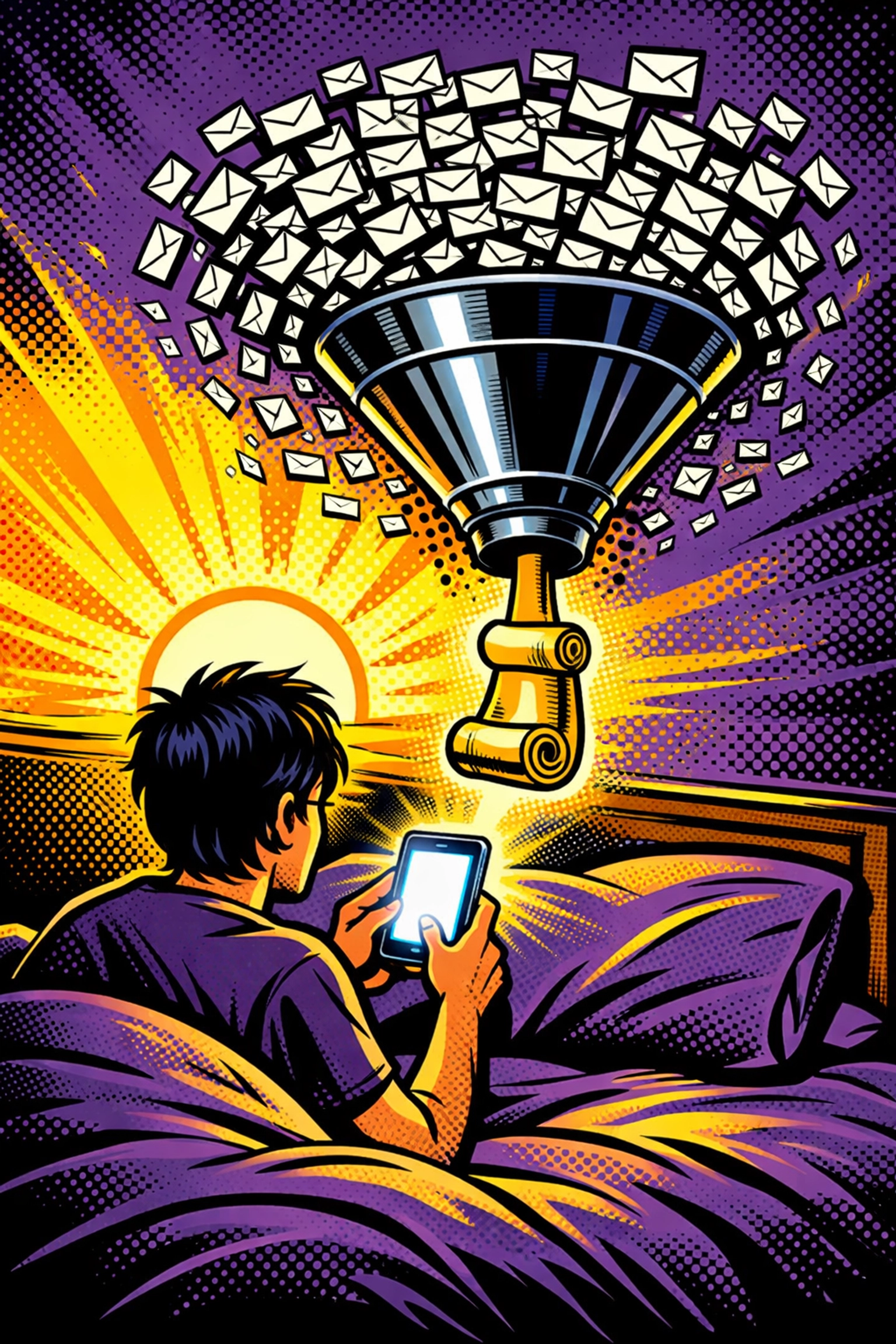
    AI business automation tools organizing a chaotic email inbox into a simple summary scroll.

    📱 9:30 AM: THE "WHERE IS THAT DATA?" DIVE

    You’re in a meeting. Someone asks, "Hey, how many leads did we actually convert from that LinkedIn ad last week?"

    Usually, this is where you say, "Let me get back to you," and then spend forty minutes digging through three different dashboards and an export file.

    HACK 2: TALK TO YOUR DATA (LITERALLY)

    Stop digging. Start chatting. With conversational AI tools like ChatSpot or custom internal bots, you can just type: "How many leads did we get from LinkedIn last week?"

    The AI queries your CRM, compares it to your ad spend, and spits out the answer in three seconds. It’s like having a data analyst sitting in your pocket, waiting for you to ask a question. No spreadsheets. No pivot tables. Just answers.


    🤝 11:00 AM: THE COORDINATION CHAOS

    The morning is heating up. You’ve got a new client onboarding, a vendor waiting for a contract, and a team member asking for approval on a refund.

    This is the "Coordination Gap", the space where things fall through the cracks because you’re the bottleneck.

    HACK 3: DEPLOY AI AGENTS FOR ROUTING AND VALIDATION

    You don’t need to be the middleman for everything. AI agents can now handle the "if this, then that" of your business.

    If a vendor uploads an invoice, the AI checks if it matches the purchase order. If it does, it routes it to your accounting software. If it doesn’t, it sends it back to the vendor with a polite note explaining why. You only see it if something is actually broken.

    Stop being the traffic cop. Start being the driver. If you’re ready to see how this looks in action, check out what we’re building at https://marblism.link/scott-bowen.


    🔍 1:30 PM: THE LEAD GENERATION SLOG

    Lunch is over. Now comes the part you hate: finding new business. You’re manually searching LinkedIn, copy-pasting names into a list, and trying to find email addresses that aren’t "info@company.com."

    It’s tedious. It’s slow. And frankly, it’s beneath you.

    HACK 4: BUILD A CUSTOM LEAD-SCRAPING WORKFLOW

    Use AI to do the "hunting" for you. You can set up a workflow that monitors specific keywords or industries. When a new potential lead pops up, the AI:

    1. Scrapes their public data.
    2. Categorizes them by budget or size.
    3. Drafts a personalized (not robotic!) introductory email based on their recent posts.

    All you do is hit "Send." Or better yet, tell the AI to send the first one automatically if they hit a certain "fit" score.
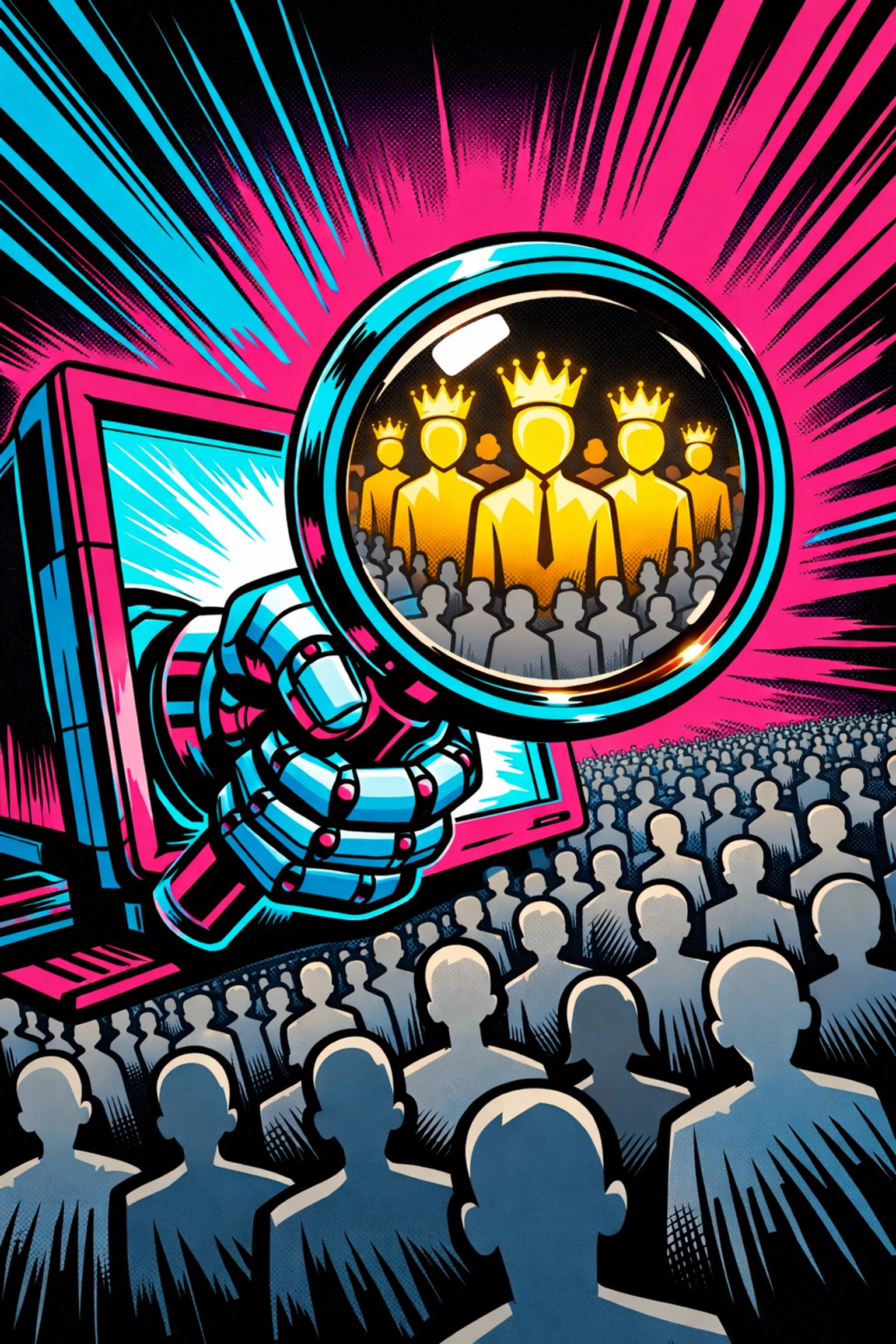
    Digital magnifying glass identifying high-quality prospects using AI business automation tools.


    ☎️ 3:00 PM: THE TECH STACK TANGLE

    You use Slack. You use Salesforce. You use Mailchimp. You use a specialized tool for project management. The problem? None of them talk to each other. You’re the "Human API," manually moving data from one window to another.

    HACK 5: CONNECT THE DOTS WITH PLAIN LANGUAGE

    You don't need a computer science degree to connect your apps anymore. Modern ai business automation platforms allow you to describe a workflow in plain English.

    "When someone fills out my website form, summarize their request, send it to the #leads channel in Slack, and add them to my 'Follow Up' list in the CRM."

    The AI builds the connections, maps the data, and tests the steps. It’s done before you finish your afternoon espresso.


    🌙 5:00 PM: THE FINAL RECONCILIATION

    The day is winding down. Usually, this is when you realize you have six tabs open with different data points that don't match.

    HACK 6: CENTRALIZE AND AUTO-UPDATE EVERYTHING

    Stop logging into five different platforms to see "how the business is doing." Use tools that pull all your data into one central "Source of Truth."

    Whether it's your bank balance, your ad performance, or your customer support tickets, let the AI sync them in real-time. When one thing changes, everything updates. No manual refreshes. No "Wait, is this the latest version?"

    HACK 7: THE SEO CONTENT AUDIT ON AUTOPILOT

    If you're running a blog (like this one!), keeping it updated is a nightmare. Use an AI agent to crawl your site once a week. It can find broken links, suggest SEO improvements, and even draft updates for old posts that are losing traffic. It’s like having a full-time marketing intern who never sleeps and never asks for a raise.
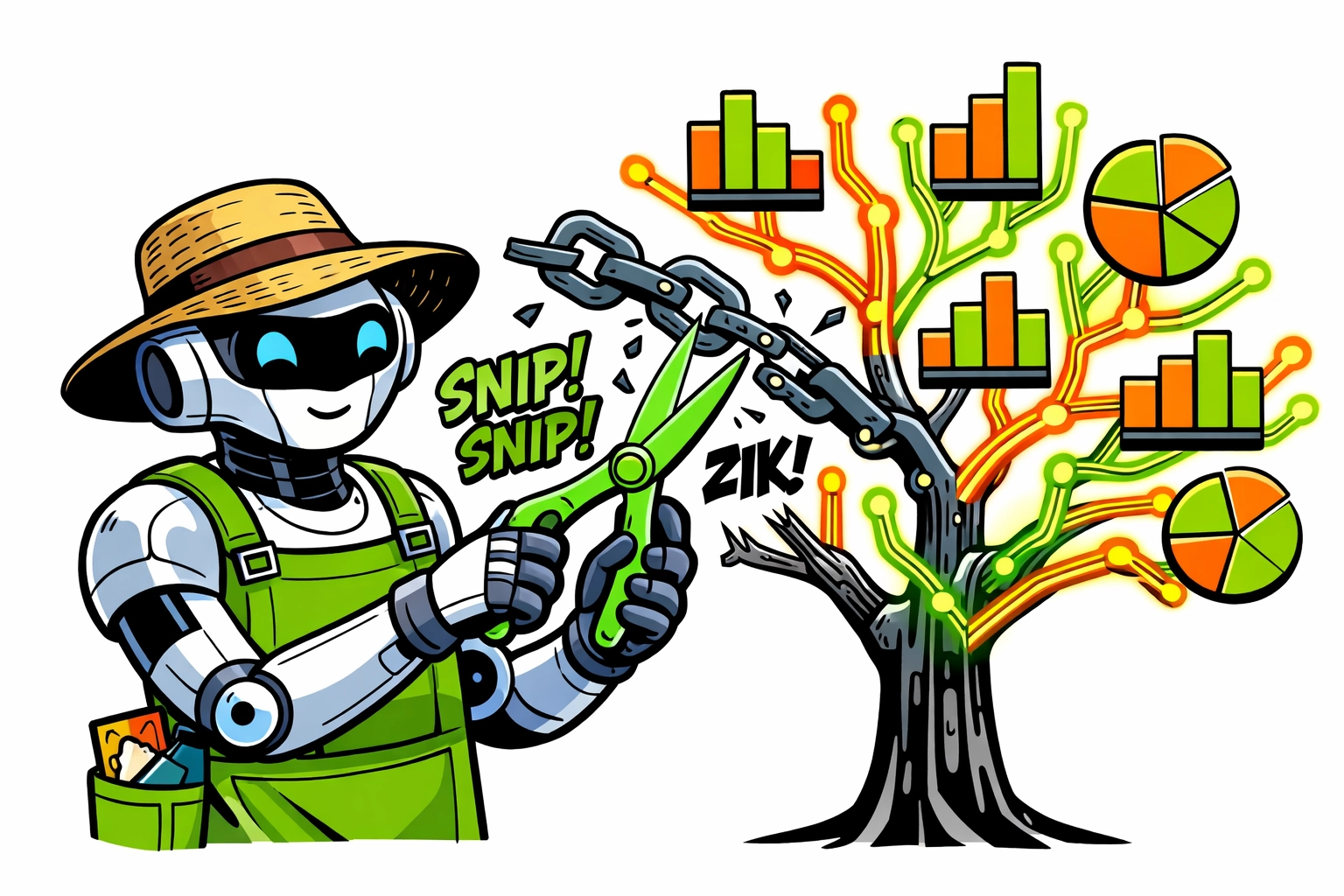
    Robot gardener pruning a digital data tree to represent AI-powered SEO and website automation.


    STOP JUGGLING. START SCALING.

    You didn't start your business to manage spreadsheets. You started it to solve problems, create value, and, let's be honest, make some money without losing your mind.

    The "old way" of doing things, the manual entry, the constant switching between tabs, the "I'll do it tonight" admin, is a trap. It keeps you small. It keeps you tired.

    AI business automation isn't a luxury for big corporations anymore. It's the survival kit for the small business owner.

    Scaling shouldn't be this easy. But here we are.

    If you're tired of the grind and ready to see what happens when you put your business on autopilot, you need to see this. We’ve simplified the entire process so you can focus on what actually matters.

    Click here to see the future of your business automation.


    ❓ FREQUENTLY ASKED QUESTIONS

    Is AI automation expensive for small businesses?
    No. Most tools have "pay-as-you-go" models or free tiers that are perfect for getting started. You’ll save more in "time-value" in the first week than the tools cost for a year.

    Do I need to know how to code?
    Not anymore. If you can write an email, you can build an AI workflow. "Natural language builders" mean you just describe what you want, and the AI does the heavy lifting.

    Will AI make my customer service feel "robotic"?
    Only if you let it. The goal isn't to replace the human touch, it's to remove the "robotic" tasks from the humans so they can actually be… human.

    How long does it take to set up?
    Most of the hacks listed above can be set up in under 30 minutes. Start with one, feel the relief, and then move to the next.

    Is my data safe?
    Yes. Reputable business automation tools use enterprise-grade encryption. Just ensure you’re using established platforms with clear privacy policies.


    The lights are off. The office is quiet.

    But your business? It’s still running.

    The AI is scraping leads. The workflows are routing invoices. The data is updating itself. You’re at home, having dinner, or finally catching that movie you’ve missed.

    That’s the power of automation. It doesn’t just give you more productivity.

    It gives you your life back.

    Go see how.
    https://marblism.link/scott-bowen
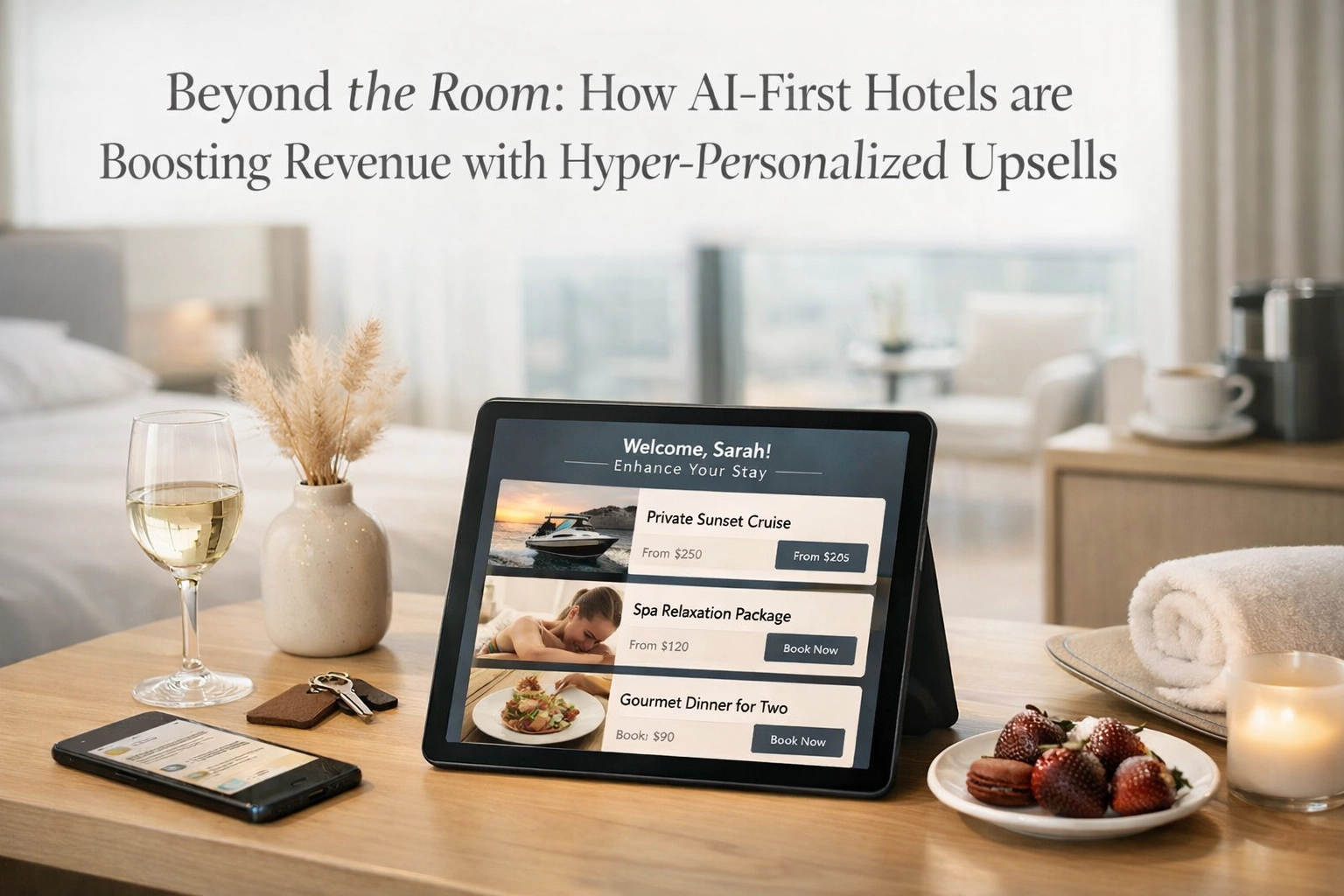
  • Beyond the Room: How AI-First Hotels are Boosting Revenue with Hyper-Personalized Upsells

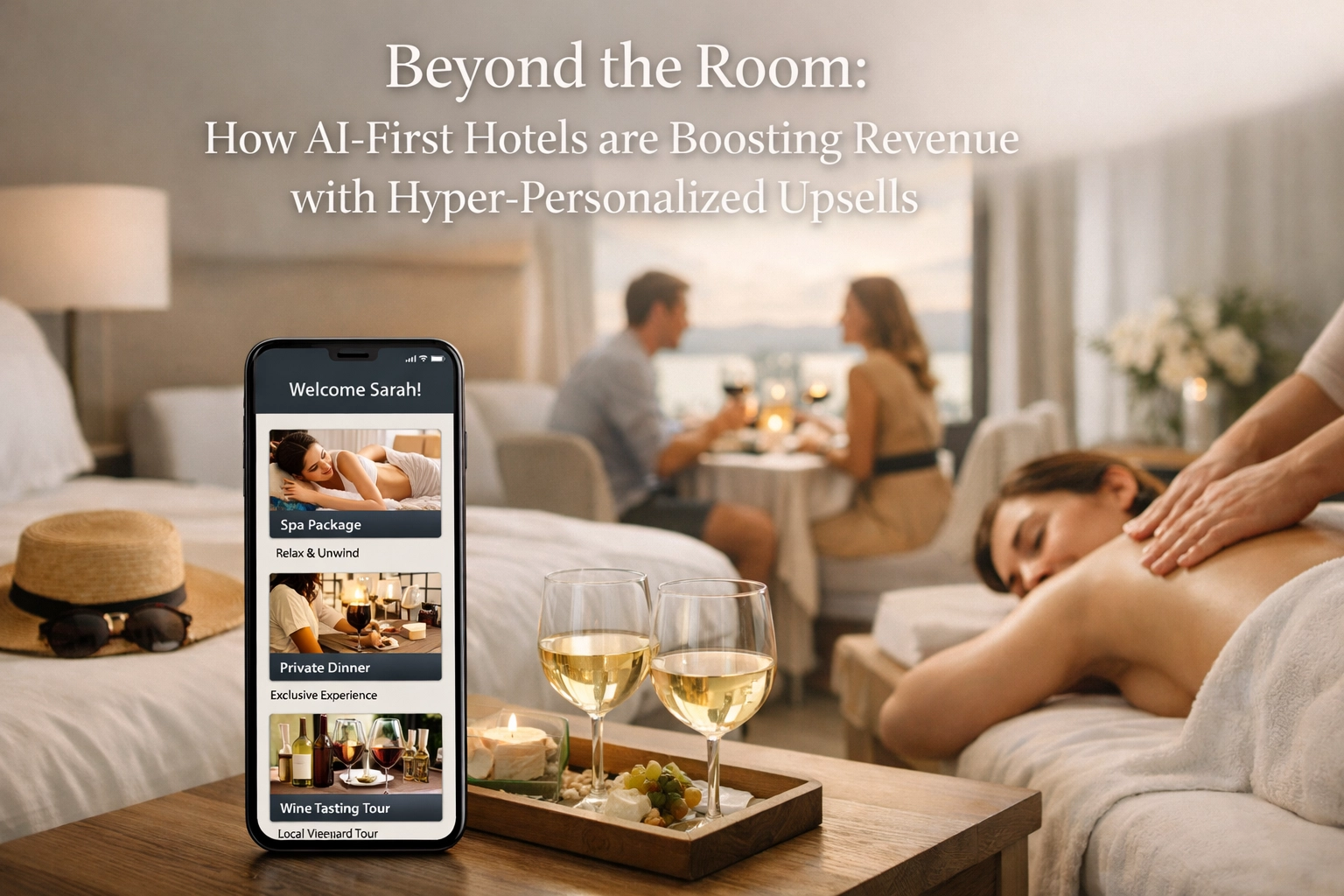
    Beyond the Room: How AI-First Hotels are Boosting Revenue with Hyper-Personalized Upsells

    Transform the guest stay. Drive ancillary revenue. Personalize every touchpoint.

    The era of the generic "breakfast included" pop-up is officially over. Today, the most successful properties aren't just selling rooms; they are selling tailored experiences powered by intelligence. By shifting to an AI-first approach, hotels are seeing a massive lift in profitability: often a 10–15% increase in ancillary revenue: all while making guests feel more understood than ever.
    It starts with a simple realization. Guests don't want to be sold to. They want to be served. When you use clean data to offer the right service at the exact right moment, an "upsell" stops being a sales pitch and starts being a highlight of their trip.

    The foundation of hyper-personalization

    We believe that great hospitality starts with great data. Most legacy systems are graveyards for guest information: fragmented, outdated, and impossible to act upon. AI-first hotels operate differently. They use a unified hotel guest experience technology stack to create a single, living profile for every traveler.

    When your data is clean, your AI can do the heavy lifting:

    • Analyze historical spending patterns.
    • Predict future guest needs based on booking context.
    • Automate delivery across every digital channel.

    This isn't just about knowing a guest's name. It’s about knowing that a business traveler arriving on a red-eye flight from Singapore will find immense value in a guaranteed 8:00 AM check-in and a high-protein breakfast. It’s about offering a "romance package" to the couple celebrating an anniversary, not the solo traveler attending a tech conference.

    Minimalist hotel reception desk with a tablet for modern guest experience technology.

    Timing is your biggest asset

    Precision timing. Contextual relevance. Real-time delivery.

    Even the most perfect offer will fail if it’s delivered at the wrong time. AI-first hotels map their upsell strategy across the entire guest journey, ensuring that every suggestion feels natural.

    1. The Pre-Arrival Hype

    The window between booking and check-in is a goldmine. Research shows that over 60% of guests are open to upgrades during this period. AI-driven emails can suggest room category jumps or pre-booked spa treatments when the excitement of the trip is at its peak.

    2. The Seamless Check-in

    The moment of arrival is often high-stress. Your hotel booking engine and mobile check-in flow should alleviate that stress. This is the perfect time for "operational" upsells: late check-outs, parking passes, or club lounge access.

    3. The In-Stay Experience

    Once the guest is in the building, the focus shifts to localized experiences. AI chatbots and guest apps can trigger offers based on real-time factors like weather or time of day. A rainy afternoon? Push a notification for a discounted cocktail flight in the lobby bar.

    Revenue beyond the bed

    We think the traditional "room-only" mindset limits your brand’s potential. Modern guests are looking for curated experiences, and they are willing to pay for them. By leveraging AI to manage ancillary services, you turn every square foot of your property into a revenue generator.

    Consider these high-performing ancillary categories:

    • The Workspace: Day-use rates for "work from hotel" packages, complete with high-speed Wi-Fi and unlimited coffee.
    • The Local Connection: Curated tours, sunset cruises, or partnership deals with local artisans that can be booked instantly.
    • The Wellness Boost: Beyond just a spa menu: think in-room aromatherapy kits, yoga mat rentals, or personalized nutrition plans.

    When these are integrated into your ecosystem, they become part of a seamless journey. A guest doesn't have to call the front desk or hunt for a flyer. They just click once.

    Cozy hotel lounge setting representing seamless guest journeys and ancillary services.

    Data-driven pricing for ancillaries

    Dynamic pricing isn't just for room rates anymore. We believe that every service you offer should be optimized based on real-time demand. AI revenue management systems can now adjust the price of a late check-out or a spa treatment based on occupancy and staff availability.

    If your housekeepers are ahead of schedule and you have low occupancy for the coming night, the AI can automatically lower the price of a late check-out to 4:00 PM and blast it to departing guests. It’s pure profit for a service that would have otherwise gone unsold.

    Properties using this level of dynamic optimization have seen RevPAR lifts of up to 7%. It’s about maximizing the "wallet share" of every guest without increasing your overhead.

    Real impact, real numbers

    The results of switching to an AI-first upsell strategy aren't just theoretical. The industry is seeing a massive shift in how value is captured.

    • Zoku Hotels: Generated approximately €11,500 in extra revenue per automated campaign by focusing on personalized recommendations.
    • Hard Rock Hotel & Casino: Saw a 56% increase in upgrade revenue by automating their upsell flow with intelligent triggers.
    • Clarion Sign: Reported a staggering 381% growth in upsell revenue after moving away from manual, one-size-fits-all promotions.

    These numbers prove that when you remove the friction and add the relevance, guests respond with their wallets.

    Sleek hotel architecture symbolizing revenue growth through AI-driven upsell strategies.

    See what Mews can do

    We believe technology should empower your team, not distract them. By automating the upsell process, you free your staff to focus on what they do best: providing genuine, human hospitality.

    The Mews platform is designed to be the heartbeat of your AI-first strategy. From a powerful hotel booking engine to a unified guest profile system, we provide the tools you need to stay ahead of the curve and maximize your revenue.

    • Automated guest journeys: Send the right offer at the right time without lifting a finger.
    • Unified data: Keep all guest preferences in one place for total personalization.
    • Innovative ecosystem: Connect with the best AI tools in the industry through our open API.

    Ready to transform your property into a revenue-generating machine? It’s time to move beyond the room.

    Get started with Mews today and get you earning revenue in no time.

    Better for the guest, better for the bottom line

    Hyper-personalization is the ultimate win-win. The guest receives a stay that feels custom-built for their needs, and the hotel captures revenue that would have otherwise been left on the table.

    As we move toward 2026, the gap between AI-first hotels and legacy properties will only widen. Those who embrace clean data and intelligent automation today will be the ones leading the market tomorrow. They won't just be places to sleep: they will be engines of experience.

    Premium hotel suite bedroom featuring a personalized and high-end guest experience.

    Three steps to start today:

    1. Audit your data: Ensure your PMS isn't creating silos. Clean data is the fuel for AI.
    2. Map your journey: Identify three touchpoints where a guest would appreciate a helpful suggestion.
    3. Automate the delivery: Use a platform like Mews to ensure these offers are sent consistently and professionally.

    Success in modern hospitality isn't about the number of rooms you have. It’s about how well you know the people inside them. Let AI help you bridge that gap.

  • Coffee Sacks: More Than Just Packaging for Your Shop

    Coffee Sacks: More Than Just Packaging for Your Shop

    Have you ever walked into a roastery or a really well-designed cafe and felt that immediate "vibe"? You know the one. It’s a mix of the smell of freshly roasted beans, the hiss of the steam wand, and a certain rustic, earthy aesthetic that just screams specialty coffee.

    Often, if you look toward the corner or hanging on the walls, you’ll see them: coffee sacks. These rough, hessian bags are the unsung heroes of the coffee world. They aren't just there for the "look," though they certainly nail that. They are the final vessel that carries the hard work of farmers across oceans right to our door here at Limini Coffee.

    But what happens once the green beans are poured into the hopper of our roaster? Do those sacks just disappear? They shouldn't. Because, honestly, a coffee sack is one of the most versatile, character-filled items you can have in your shop.


    What Exactly Are They Made Of?

    Before we talk about how to use them, let’s get a bit technical. Most coffee sacks are made from jute, also known as hessian. It’s a natural vegetable fibre that’s incredibly strong and, more importantly, breathable.

    Why does breathability matter? Well, green coffee beans (the unroasted ones) are actually seeds. They are living things that need to "breathe" to stay fresh and avoid mould or "baggy" flavours during their long journey from places like Brazil or Ethiopia. If we shipped coffee in plastic bags, the moisture would get trapped, and the coffee would be ruined before it even reached the port.

    Close-up of rustic jute coffee sacks filled with unroasted green coffee beans in a sun-lit roastery.

    Jute is also biodegradable and renewable, which aligns perfectly with the way we think about sourcing our coffee. We care about the journey from the soil to the cup, and that includes the packaging that keeps those precious beans safe.

    So, when you see a coffee sack, you're looking at a functional piece of agricultural technology. Pretty cool, right?


    Adding Character and "Theatre" to Your Cafe

    In the world of specialty coffee, we talk a lot about "theatre." It’s not just about making a drink; it’s about the experience of the customer from the moment they step through the door.

    If your shop feels a bit "cold" or too modern, adding some coffee sacks can instantly warm the place up. They provide a tactile, organic element that reminds people where coffee actually comes from. It's a connection to the farm.

    Imagine a stack of full (or stuffed) coffee sacks in the corner. It suggests volume, freshness, and a direct link to the roasting process. It makes your shop feel like a working part of the coffee industry rather than just another high-street chain. We believe that this kind of article theatre is what keeps customers coming back. It’s the difference between buying a caffeine hit and experiencing a craft.


    The Beauty of the Design

    Every coffee sack is a piece of art. Well, most of them are. Some are plain, but many feature incredible graphic designs, bright colours, and the logos of the washing stations or cooperatives where the coffee was processed.

    You’ll see things like:

    • Bold typography denoting the country of origin (e.g., COLOMBIA, VIETNAM).
    • Animal icons (jaguars, birds, elephants).
    • Grade markings (like Supremo or AA).
    • Shipping marks and batch numbers.

    These designs are unique to the season and the farm. When you display these in your shop, you aren't just decorating; you're telling the story of the coffee you're serving. It’s a conversation starter. A customer might ask, "Is this the bag the coffee I'm drinking came in?" and suddenly you’re talking about high-altitude farming in Peru. That’s how you build a community around your brand.


    Upcycling: Giving Sacks a Second Life

    So, you’ve used the beans (hopefully they were delicious wholesale specialty coffee from us!), and now you have an empty sack. What do you do with it?

    Please, don’t just throw it in the bin. There are so many ways to repurpose these bags that add value to your business or home.

    1. Wall Art

    This is the easiest and most effective use. Take a particularly beautiful sack, maybe one from a limited-edition microlot, and frame it. Or, if you want a more "industrial" look, simply staple it to a wooden frame. It covers large wall spaces cheaply and looks fantastic.

    2. Upholstery

    If you have some old stools or a bench that’s looking a bit tired, jute sacks make for incredibly durable upholstery fabric. It’s a bit scratchy, so maybe don't use it for the back of a chair where people have bare skin, but for a seat? It’s perfect. It gives that rugged, workshop-style aesthetic.

    Repurposed hessian coffee sack used for upholstery on a wooden cafe bench next to a latte.

    3. Planter Covers

    If you have plants in your cafe (and you should, they’re great for air quality and vibes), try slipping the plastic pots inside a coffee sack. Roll the top down to the right height. It hides the ugly plastic and adds a nice natural texture to your greenery.

    4. Gardening and Potatoes

    If you’re a green-thumbed barista, these sacks are the gold standard for growing potatoes. They are deep, breathable, and drain perfectly.


    Quality from Bean to Bag

    At Limini Coffee, we take quality seriously. And we mean really seriously. From the moment we select a green coffee to the moment it’s roasted and sent to you, every step is scrutinized.

    But we also know that being a "pro" doesn't mean being boring. We love the quirkiness of the coffee industry. We love that our coffee arrives in these giant, heavy, 60kg (132 lbs) or 70kg (154 lbs) sacks that leave little bits of fluff all over our clothes. It’s part of the job.

    If you’re looking to start your own coffee journey or upgrade your current setup, we’d love to help. Whether it’s finding the right wholesale beans or getting some top-tier barista training, we’ve got you covered.

    And hey, if you need some empty sacks to decorate your new shop, just ask! We usually have a mountain of them at the roastery.


    A Quick Warning: Handling and Cleaning

    Before you go pinning sacks to your walls, there are a few things you should know.

    First, jute can be a bit dusty. When we open them at the roastery, it’s not uncommon to see a bit of "coffee lint" flying around. If you’re using them for decor, give them a good shake outside first.

    Second, if you’re using them for something like cushions, you’ll want to clean them. Do not just throw them in a standard washing machine on a heavy cycle. They will disintegrate and clog your filter with fibres (not a fun Sunday afternoon task, trust us). Instead:

    • Hand wash them in cold water with a very mild detergent.
    • Let them air dry flat.
    • If they smell a bit "earthy" (which is normal), a bit of baking soda sprinkled on them for a few hours before shaking it off usually does the trick.

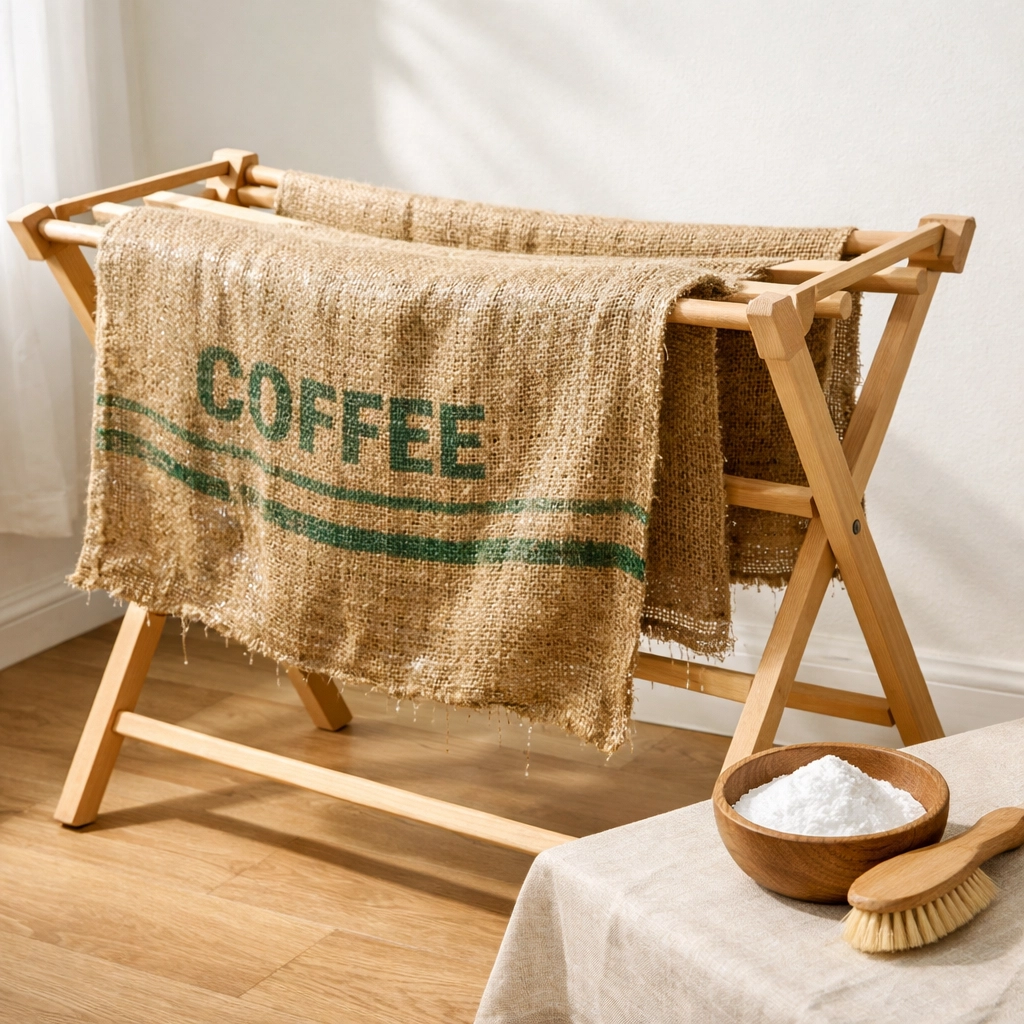
    Damp jute coffee sack drying on a wooden rack after cleaning with natural baking soda for reuse.


    Why It Matters to Your Customers

    In a world of mass-produced, plastic-wrapped everything, people crave authenticity. A coffee sack represents a real product, made by real people, transported across the globe.

    When a customer sees a hessian bag, they subconsciously associate it with quality and tradition. It’s the same reason we prefer a loaf of bread in a paper bag or wine with a real cork. It feels right.

    By integrating these elements into your shop, you’re telling your customers that you care about the details. You’re showing them that you understand the heritage of the drink you’re serving. It’s a small touch, but in a competitive market, those small touches are what make you stand out.


    Ready to Level Up Your Shop?

    Whether you're just starting out and building a coffee shop or you're a seasoned pro looking for a fresh look, remember the humble coffee sack. It’s more than just packaging; it’s a piece of the coffee soul.

    And if you want the high-quality beans to go inside those sacks, you know where to find us. We’re always happy to chat about roasting, brewing, or even the best way to staple jute to a wall.

    So, what’s your favorite coffee sack design you’ve ever seen? We’re partial to the ones with the big colorful parrots ourselves. They just brighten up the whole warehouse!

    If you're looking for the best equipment to pair with your aesthetic, check out our guide on choosing espresso equipment. Because while the bags look great, the coffee has to taste even better.

    Catch you at the next roast! 🙂

  • Beyond the Room: How AI-First Hotels are Boosting Revenue with Hyper-Personalized Upsells

    Beyond the Room: How AI-First Hotels are Boosting Revenue with Hyper-Personalized Upsells

    Optimize every stay. Capture more revenue. Delight every guest.

    The era of the "one-size-fits-all" hotel stay is officially over. If your upselling strategy still involves a dusty cardboard sign at the front desk or a generic "Would you like a suite?" email sent to everyone from backpackers to CEOs, you’re leaving money on the table. A lot of it.

    Forward-thinking hoteliers are moving beyond the four walls of the guest room. They are leveraging AI to transform the guest journey into a series of curated, high-value moments. We’re talking about hyper-personalization that doesn’t just feel like a sales pitch: it feels like hospitality.

    By using an intelligent platform, hotels are seeing ancillary revenue jumps of 10-15%. Some are doing even better. It’s all about getting the right offer in front of the right person at the exact moment they’re ready to click "buy."

    All from one innovative platform.

    Personalization at scale.

    We believe that data is the most underutilized asset in hospitality. Most hotels sit on a mountain of guest information but use almost none of it to drive revenue. AI changes that. It sifts through booking patterns, past spending habits, and even the "why" behind a trip to create a profile that actually means something.

    Think about it. A business traveler arriving on a Tuesday doesn't want a "romantic rose petal turndown." They want a fast-tracked breakfast and a quiet workspace. A family arriving on a Saturday? They want the late check-out and the pool pass.

    When you scale this across hundreds of rooms, manual effort fails. AI succeeds.

    • Analyze behavior. Understand guest preferences before they even walk through the door.
    • Segment intelligently. Group guests by intent, not just by room type.
    • Predict needs. Offer the solution before the guest realizes they have a problem.

    Tablet on a hotel bedside table showcasing personalized upsell options and guest services.

    The numbers don’t lie.

    This isn't just theory; it’s a proven revenue engine. Brands that have embraced AI-driven upselling are seeing massive returns on their investment. Take Hard Rock Hotel & Casino Punta Cana, for example. By automating their upsell offers, they saw a 56% increase in upgrade revenue in a single quarter.

    Then there’s Zoku Hotels. They’ve managed to generate an extra €11,500 per automated campaign just by making the recommendations personal. When the offer is relevant, the conversion rate follows. AI chatbots and automated messaging systems are seeing conversion rates hit the 15-20% mark, leaving traditional email marketing in the dust.

    "We saw a 381% growth in upsell revenue almost overnight," says one industry leader. "It turns out guests actually want to buy more: you just have to ask them correctly."

    Timing is your secret weapon.

    In the world of revenue, timing is everything. A guest’s "willingness to pay" isn't a static number; it’s a moving target that fluctuates throughout the guest journey.

    Your hotel booking engine is the first touchpoint. This is where you capture the high-intent upsells: the breakfast packages, the airport transfers, the "essential" add-ons. But the journey doesn't end there.

    1. The Pre-Arrival Window: This is the "hype phase." Guests are excited. About 66% of successful upsell emails are sent in this window. It’s the perfect time to offer a room upgrade or a spa treatment.
    2. The Check-In: AI can prompt your staff (or your kiosk) to offer a parking pass or an early check-in if the room is already clean.
    3. In-Stay: This is where the real ancillary magic happens. A push notification for a cocktail special when the sun starts to set? That’s not an ad; that’s a suggestion.
    4. Pre-Departure: The "one more hour" phenomenon. Offering a late check-out via text at 8:00 AM on the day of departure has one of the highest conversion rates in the industry.

    Hotel guest using a mobile booking engine on a smartphone to accept a personalized late check-out.

    Beyond the room upgrade.

    While moving a guest from a standard king to a junior suite is great for the bottom line, the real growth is in ancillary services. These are the "hidden" revenue streams that AI is particularly good at sniffing out.

    We think of it as "experience architecture." You aren't just selling a bed; you’re selling a seamless day.

    • Parking and Transportation: Automate the logistics for the road-tripper.
    • F&B Curations: Suggest a wine pairing based on their dinner reservation.
    • Wellness and Spa: Trigger a massage offer after a guest checks in from a long-haul flight.

    By integrating these offers into your hotel revenue management software, you can even use dynamic pricing. Just as your room rates change based on demand, your upsell prices should too. If you only have two late check-outs left, the price goes up. If the spa is empty on a Tuesday afternoon, the AI drops a "flash sale" notification to guests currently on-site.

    Frictionless technology, better hospitality.

    The biggest fear hoteliers have about AI is that it will make the experience feel "cold" or "robotic." In reality, it does the opposite. By automating the transactional part of the stay: the upselling, the billing, the booking: you free up your humans to actually be human.

    When your staff doesn't have to spend five minutes explaining the different parking tiers, they can spend five minutes asking the guest about their trip.

    Hotel staff providing high-touch hospitality using data from hotel revenue management software.

    Using a unified platform means all this data lives in one place. Your booking engine talks to your revenue software, which talks to your guest messaging app. It’s a closed loop that keeps getting smarter with every stay.

    See what an AI-first approach can do.

    Ready to stop guessing and start earning? Transitioning to an automated, data-driven model is easier than you think. You don't need a degree in data science; you just need the right tools.

    • Schedule a demo. See how the AI handles real-world guest scenarios.
    • Get a 30-minute audit. Identify where your current revenue leaks are.
    • Go live. Start capturing ancillary revenue in no time.

    Check out how we're building the future of hospitality at Mews and get your property earning what it’s actually worth.

    The bottom line.

    Hyper-personalization isn't a luxury; it’s an expectation. Modern guests are used to Amazon-style recommendations and Netflix-style curation. When they walk into a hotel, they don't want to step back into 1995.

    By embracing AI-first upselling, you aren't just boosting your RevPAR. You're building loyalty. You're showing the guest that you understand them. And most importantly, you're ensuring that every single square foot of your property: from the parking lot to the penthouse: is working toward your bottom line.

    It’s time to move beyond the room.

    Luxury hotel terrace at dusk illustrating ancillary revenue opportunities throughout the property.

    Maximize your potential. Empower your team. Grow your business.

    All from one innovative platform. Explore more at https://referrals.mews.com/umqHYIto.

  • 10 Reasons Your Direct Booking Engine Isn’t Converting (And How to Fix It)

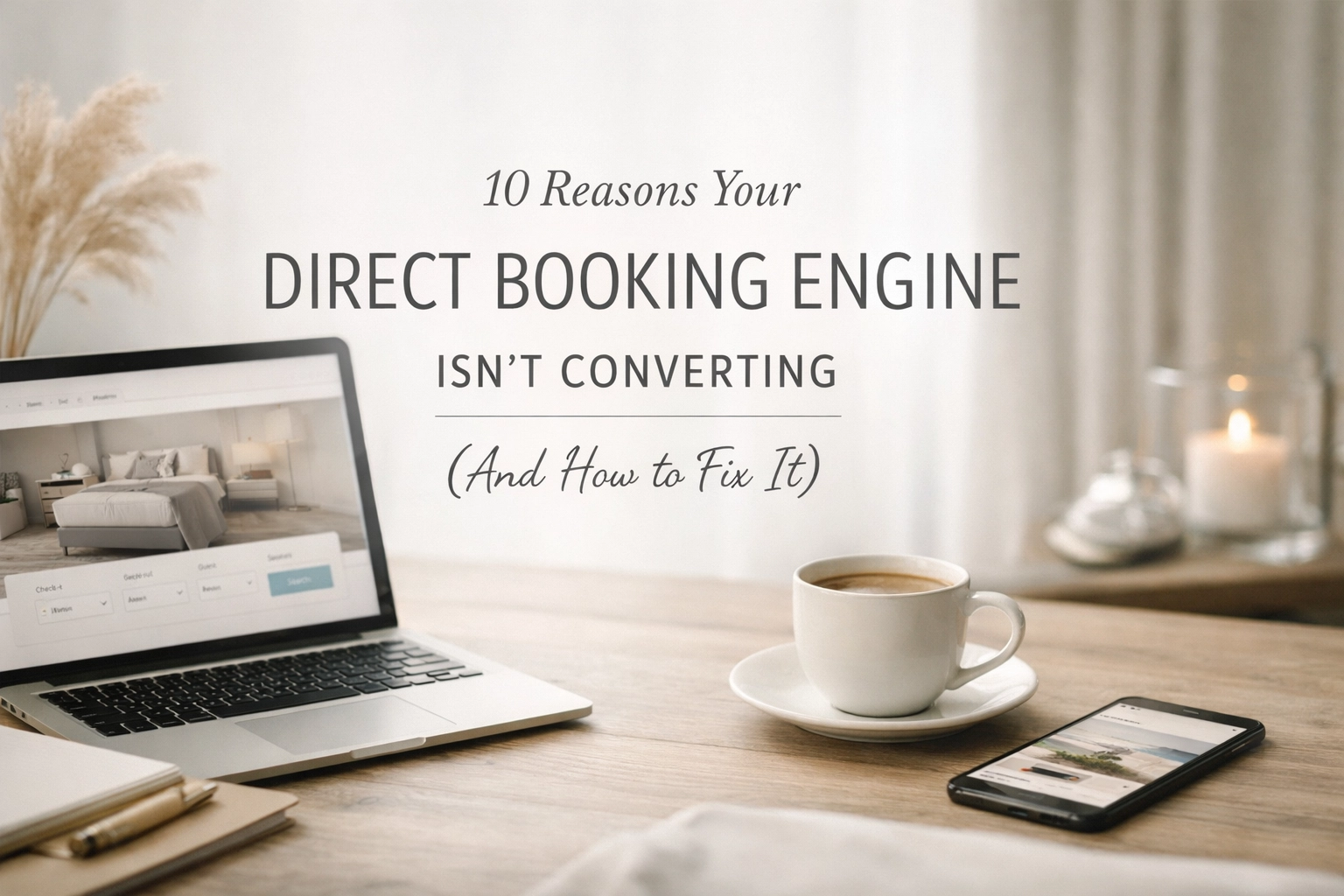
    10 Reasons Your Direct Booking Engine Isn’t Converting (And How to Fix It)

    Stop losing guests. Start winning direct. Take back control.

    Every hotelier knows the feeling. You’ve spent thousands on a beautiful website. You’ve mastered the art of Instagram-worthy photography. Your SEO is finally starting to climb. But when you look at your analytics, the traffic hits a wall right at your booking engine. People are looking, but they aren't clicking "Confirm."

    We believe the booking journey shouldn't be a hurdle. It should be an invitation. Currently, the industry average conversion rate for direct bookings hovers around 2%. That’s not a success story: it’s an opportunity. High-performing properties are hitting 4% or 5% by removing the friction that makes guests run back to the comfort of an OTA.

    It’s time to turn your booking engine from a passive tool into a conversion powerhouse. All from one innovative platform.

    1. The friction of the "Forever Form"

    We think booking a room should be as easy as buying a coffee. If your guest has to fill out twenty fields before they even see a total price, you’ve already lost them. Long forms are the ultimate conversion killers.

    Why it matters:
    Every extra click is a chance for a guest to change their mind. Friction creates doubt. Doubt leads to abandonment.

    • Implement a 3-step booking experience.
    • Reduce form fields to the absolute essentials.
    • Use auto-fill capabilities for returning guests.

    Guest using a minimalist tablet to complete a fast 3-step hotel booking process.

    2. The mobile-first bottleneck

    Mobile performance is no longer a "nice-to-have." It is the single biggest differentiator between a 1% and a 3% conversion rate. Most guests are browsing during their commute, on their lunch break, or while lying in bed. If your booking engine isn't thumb-friendly, it’s invisible.

    Why it matters:
    Guests expect a seamless, responsive experience that feels native to their device. A clunky desktop site squeezed onto a phone screen won't cut it.

    • Prioritize vertical scrolling over horizontal navigation.
    • Ensure buttons are large enough for effortless tapping.
    • Optimize image sizes to ensure lightning-fast loading speeds.

    3. The transparency trap

    We believe in radical honesty. If a guest has to navigate three different pages just to find out if you have a room available next Tuesday, they will leave. Lack of real-time pricing and availability on the homepage creates a "guess and check" game that nobody wants to play.

    Why it matters:
    Transparency builds immediate trust. When guests see live rates and real-time inventory, they feel empowered to make a decision quickly.

    • Display dynamic pricing on the main landing page.
    • Show real-time availability calendars in the first step.
    • Highlight "Only 2 rooms left" to create ethical urgency.

    4. Selling rooms instead of experiences

    Static, low-resolution images of a bed don't sell stays. They sell furniture. If your booking engine lacks high-quality visual storytelling, you aren't communicating the value of your property.

    Why it matters:
    Guests are buying an experience, a memory, or a productive business trip. Your visuals need to answer their questions before they even ask them.

    • Use high-definition galleries for every room type.
    • Include short, punchy descriptions of unique amenities.
    • Showcase the "view from the window" to ground the guest in the space.

    High-quality luxury suite image showcasing the view from the window to drive direct bookings.

    5. The missing "Trust Signal"

    Potential guests have no reason to trust your direct channel more than a massive OTA unless you give them one. Without social proof: reviews, ratings, and testimonials: integrated directly into the booking flow, you’re asking them to take a leap of faith.

    Why it matters:
    81% of travelers always or frequently read reviews before booking. If they have to leave your site to find reviews, they might not come back.

    • Embed a live review widget within the booking journey.
    • Show "Verified Guest" tags next to testimonials.
    • Highlight recent awards or sustainability certifications.

    6. Payment processes that belong in 2010

    We think paying for a stay should be the shortest part of the journey. If you are still forcing guests to type in a 16-digit credit card number on a tiny screen, you are begging for cart abandonment. Modern travelers expect digital wallets.

    Why it matters:
    The payment step is the highest moment of anxiety. Simplifying it with one-touch options like Apple Pay or Google Pay reduces that anxiety instantly.

    • Integrate digital wallets (Apple Pay, Google Pay).
    • Offer "Book Now, Pay Later" options where relevant.
    • Ensure the checkout is fully PCI-compliant and looks secure.

    7. The silence of the void

    Sometimes a guest is one question away from booking. "Is the pool heated?" "Can I check in at 10 AM?" If they have to find your "Contact Us" page and send an email, the momentum is dead.

    Why it matters:
    Real-time answers drive real-time conversions. Integrating conversational tools into your booking engine can lift conversion rates by 15% or more.

    • Implement an AI-driven live chat for instant FAQs.
    • Provide a clear "Call" button for complex inquiries.
    • Use automated messaging to guide guests through the flow.

    8. Misaligned upsells and offers

    Timing is everything. Offering a 50% discount on spa services before a guest has even picked a room is distracting. Trying to sell a bottle of champagne to a business traveler might be irrelevant.

    Why it matters:
    Targeted offers based on guest data feel like a service; generic pop-ups feel like an annoyance. The best upsells happen when the guest is already invested in the stay.

    • Present upsells after the room selection is confirmed.
    • Use data to tailor offers (e.g., parking for local zip codes).
    • Keep promotions simple and visually integrated, not as intrusive pop-ups.

    Curated welcome tray representing relevant, non-intrusive hotel upsells for guests.

    9. Lack of progress indicators

    Have you ever been in a booking flow and wondered, "How much longer is this going to take?" Without a clear progress bar, guests feel lost. Disorientation leads to closing the tab.

    Why it matters:
    A progress indicator provides a roadmap. It tells the guest exactly how close they are to the finish line, keeping them engaged through the final confirmation.

    • Use a simple 1-2-3 progress bar at the top of the page.
    • Clearly label each stage (Selection, Details, Payment).
    • Optimize the final confirmation step to be a moment of celebration.

    10. The siloed system struggle

    We believe your booking engine should be the heart of your operation, not an island. When your booking engine doesn't talk to your PMS or Channel Manager in real-time, you face overbookings, rate discrepancies, and manual data entry nightmares.

    Why it matters:
    A seamless integration ensures that what the guest sees is exactly what you can deliver. It allows for automation that frees up your staff to focus on the guests who are already at the property.

    • Sync inventory in real-time across all channels.
    • Automate guest profile creation in your PMS.
    • Leverage metasearch integrations to capture direct traffic.

    Minimalist hotel reception desk highlighting seamless PMS integration and operational excellence.

    The Mews Perspective on Direct Growth

    At Mews, we think hospitality technology should get out of the way. We believe in building tools that empower hoteliers to create remarkable guest experiences, rather than wrestling with legacy software.

    "Since switching to a modern, integrated booking engine, we've seen a 30% increase in direct revenue and saved our front desk 10 hours a week in manual entry." – General Manager, Boutique Hotel Collection.

    Our platform is designed for the modern era: where AI, mobile-first design, and frictionless payments aren't just features, they're the standard. We’ve helped over 5,000 properties worldwide move away from clunky systems and toward a future of operational excellence.

    See what a truly innovative PMS can do for your conversion rates. Get started with Mews today and let’s get you earning the direct revenue you deserve.

    Ready to transform your guest journey?

    1. Audit your current booking flow on a mobile device.
    2. Count the clicks from "Home" to "Confirmed."
    3. Schedule a 15-minute demo to see how Mews handles the heavy lifting.

    Don't let another guest bounce to an OTA. The technology exists to make direct booking the easiest choice your guest will make all day. It’s time to use it.

  • 7 Mistakes You’re Making with Your Hotel PMS (and Why Your Staff is Burning Out)

    7 Mistakes You’re Making with Your Hotel PMS (and Why Your Staff is Burning Out)

    Empower your team. Elevate guest experiences. Automate your operations.

    Hospitality is a people business. But when your team spends 40% of their shift fighting with a clunky interface or fixing manual entry errors, they aren't looking after guests. They’re looking for a way out. At Mews, we’ve seen how modern technology can transform a stressful front desk into a hub of creativity and connection: all from one innovative platform.

    1. The high cost of manual overrides

    We get it. You want control. You’ve spent years learning the nuances of your local market, so when the system suggests a rate change, your instinct is to step in. But manual overrides are the silent killers of efficiency.

    When you manually tweak prices or availability, you break the digital thread. The automation stops. Suddenly, your channel manager isn't syncing perfectly, and your staff is left to play detective across five different tabs. It creates a domino effect of errors that your team has to mop up.

    Why it matters:

    • Eliminates synchronization errors across channels
    • Reduces the "cleanup" workload for front-desk staff
    • Ensures pricing strategy remains consistent 24/7

    We believe that technology should handle the repetitive, so your people can handle the remarkable. If you’re still clicking "manual override" ten times a day, you aren't running a hotel; you’re running a spreadsheet.

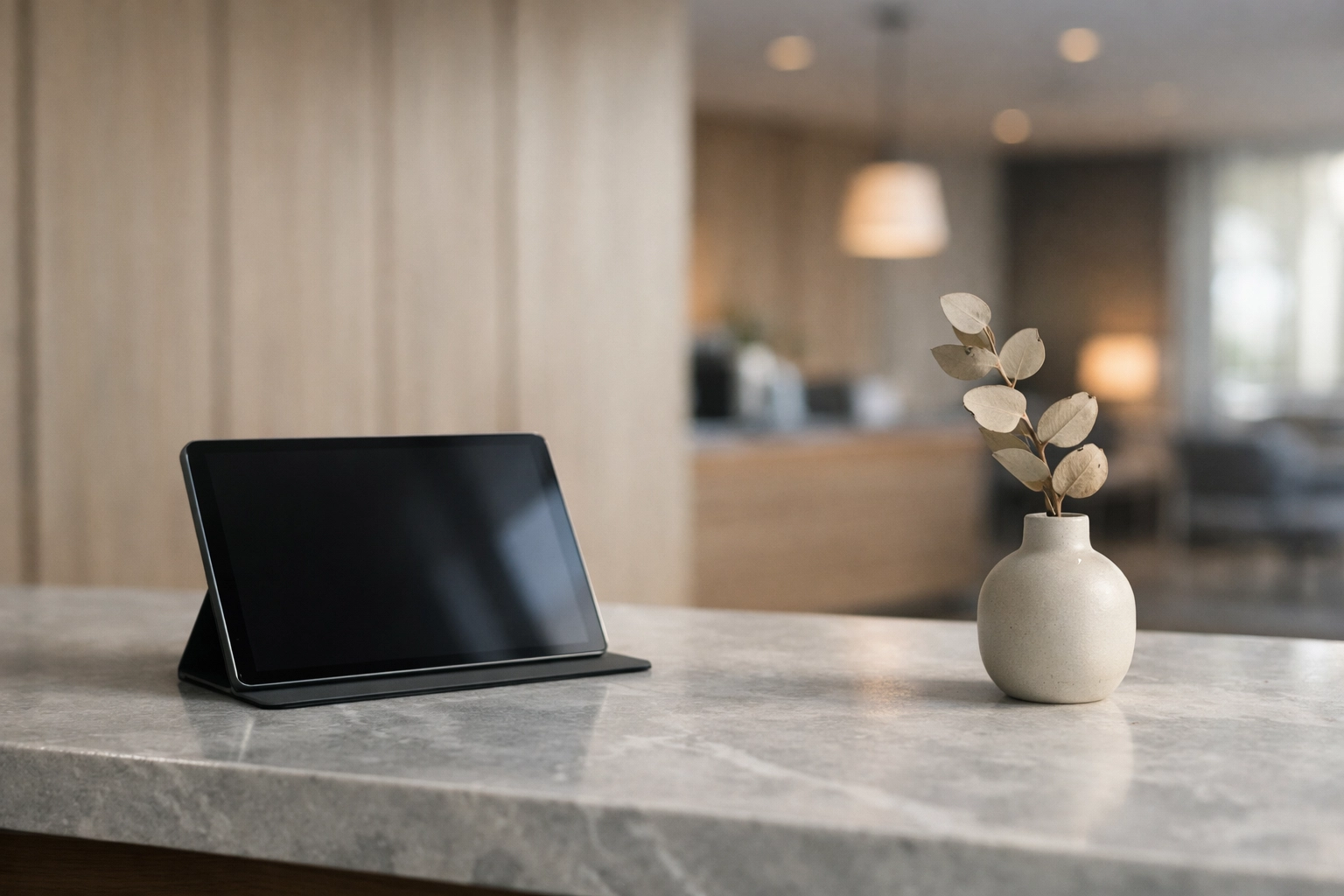
    Sleek hotel tablet interface on a marble reception desk demonstrating automated hotel management software.

    2. A fundamental distrust of automation

    Trust is earned, but in hospitality tech, it’s often ignored. Many hoteliers treat their PMS like a junior intern who needs constant supervision. This lack of trust translates into hours of manual market analysis that your system could do in seconds.

    If your staff sees you second-guessing every automated recommendation, they’ll do the same. This creates a culture of "double-checking the machine," which effectively doubles the workload. It’s a fast track to burnout.

    "Since we moved to an automated system, I’ve reclaimed ten hours a week that I used to spend on manual rate updates," says one GM. That’s ten hours back for guest engagement or, let’s be honest, finally getting a proper lunch break.

    Build a smarter culture:

    1. Trust the data-driven insights
    2. Set clear boundaries for automation
    3. Review results weekly, not hourly

    3. The chaos of messy room configurations

    Your PMS logic is only as good as its foundation. If your room types are poorly defined or your rate plans look like a bowl of digital spaghetti, your system will fail.

    Misconfigured room types lead to faulty recommendations and synchronization failures. Your staff then has to deal with the fallout: like a guest arriving for a "Superior Suite" that the system thinks is a "Standard Double." This isn't just an operational hiccup; it’s a moment of friction that drains your team's emotional energy.

    We think a PMS should be intuitive. It should feel like a natural extension of your physical space. If your digital setup doesn't mirror your physical reality, you’re setting your team up for a daily battle with the software.

    Minimalist hotel suite interior representing organized and efficient hotel operations and room management.

    4. Building silos instead of bridges

    The era of the "all-in-one" closed system is over. Today, it’s about the ecosystem. When your tools don't talk to each other: when the guest’s spa booking doesn't show up on their folio or the booking engine doesn't update the PMS in real-time: your staff becomes the bridge.

    Manually transferring data between platforms is soul-crushing work. It’s repetitive, it’s prone to human error, and it’s a waste of your most valuable asset: human personality.

    The connectivity checklist:

    • Seamless API integrations with your favorite apps
    • Real-time data flow between housekeeping and front desk
    • A unified guest profile across all touchpoints

    By using a platform that prioritizes open connectivity, like Mews, you remove the "data janitor" role from your employees' job descriptions.

    5. The "Set and Forget" distribution trap

    Leaving your distribution strategy on autopilot isn't the same as automation. "Set and forget" means you aren't adjusting to demand, which leads to two things: lost revenue and high commission bills.

    Staff frustration peaks when they see the business struggling because of a stale strategy. They know the demand is there, but the system is restricted by rules set six months ago. Modern hospitality requires a dynamic approach to channel management. You need to be able to pivot instantly.

    Innovation in distribution:

    1. Adjust restrictions based on real-time demand
    2. Prioritize direct bookings through smart guest journeys
    3. Use AI to predict and react to market shifts

    Hotel manager overlooking a city skyline planning strategic hospitality distribution and AI-driven growth.

    6. Operating on gut feeling, not data

    "I think we’re going to be busy this weekend" is not a strategy. Yet, many hotels still make major decisions based on "the vibe." Without structured reporting, your team is flying blind.

    When decisions aren't backed by data, they often lead to inefficiencies. Prices might stay too low during a surge, or you might over-rely on high-commission OTAs when you could be driving direct traffic. Staff see these inefficiencies. They feel the weight of working hard but not working smart.

    We believe data should be accessible, not just for the C-suite, but for the people on the floor. When the team understands the why behind a decision, they’re more engaged and less likely to burn out.

    Reporting that works:

    • Real-time dashboards you actually want to look at
    • Granular data on guest preferences
    • Clear insights into RevPAR and ADR trends

    7. The reactive mode of "Blind" operations

    If your team only finds out about an overbooking when the guest is standing at the desk with a suitcase, you’ve already lost. A lack of real-time visibility into availability and pricing forces your staff into a permanent state of "reaction."

    Reactive work is exhausting. It’s constant firefighting. Proactive work, on the other hand, is where the magic happens. When your team has real-time awareness, they can anticipate needs, solve problems before they escalate, and actually enjoy their shift.

    The solution is a cloud-native PMS that allows for mobile access. Why tie your staff to a desktop at a reception desk? Let them move. Let them check guests in on a tablet in the lobby or handle housekeeping updates from a smartphone.

    Hotel staff using mobile PMS on a tablet to provide personalized guest service in a modern lobby lounge.

    From Process-Centric to Guest-Centric

    The common thread in all these mistakes is the prioritization of process over people. Old-school PMS systems were built as accounting tools first and hospitality tools second. That’s why they’re so hard to use.

    When you force your staff to navigate 1990s-era interfaces, you’re telling them that their time isn't valuable. You’re telling them that the system matters more than the guest.

    At Mews, we’re flipping the script. We’ve built a platform that scales with your business, integrates with the tools you love, and: most importantly: is actually enjoyable to use. We believe in creating "Space into Places": turning a physical room into a remarkable experience.

    Ready to stop the burnout?
    Schedule a 30-minute chat to see how we can transform your operations. It’s time to move away from manual work and toward a more innovative, AI-driven future.

    Join over 12,500 properties that are already redefining the guest experience. Let’s get you and your team back to what you do best: making people feel at home.

    Check out the Mews difference here and get your team performing at their best in no time.

  • The Ultimate Guide to Hotel Revenue Management: Everything You Need to Succeed

    The Ultimate Guide to Hotel Revenue Management: Everything You Need to Succeed

    Sell smarter. Earn more. Stress less.

    In 2026, hotel revenue management isn’t just about tweaking prices when a local festival comes to town. It’s the high-speed engine driving your entire property’s success. It’s the difference between a "No Vacancy" sign that makes no money and a thriving, high-margin business that delights guests.

    We believe that data should do the heavy lifting so you can focus on the humans. It’s about getting the right room to the right guest at the exact right moment: all from one innovative platform.

    The shift from occupancy to profitability

    For a long time, the industry was obsessed with RevPAR (Revenue Per Available Room). It was the golden metric. But let’s be real: high occupancy doesn’t always mean high profit. If you’re filling every room but paying 25% in OTA commissions and ignoring your operational costs, you’re just busy: not necessarily profitable.

    Modern revenue management prioritizes Net RevPAR and TRevPAR (Total Revenue Per Available Room).

    • Net RevPAR: What’s left after you pay the booking middleman.
    • TRevPAR: Every cent a guest spends, from the minibar to the spa.
    • Profitability-first: We think occupancy is a vanity metric; profit is the reality.

    Minimalist luxury hotel balcony overlooking the coast, highlighting premium guest experience and profitability.

    Dynamic pricing is the new standard

    If your rates are static, you’re leaving money on the table. Period. The market moves fast: faster than any human manual update could ever keep up with. Dynamic pricing allows your property to breathe with the market.

    We believe in continuous adjustments. This means your rates respond in real-time to:

    • Local demand surges and booking pace.
    • Competitor inventory shifts.
    • Hyper-local market trends and weather patterns.

    Advanced hotels are now using AI-driven algorithms that update prices thousands of times a day. It’s not "set it and forget it"; it’s "set it and let it evolve." By the time you’ve finished your morning coffee, your PMS should have adjusted your rates fifty times to match the morning's booking velocity.

    Segmentation: Not all guests are created equal

    Treating every guest the same is a missed opportunity. High-level revenue management requires slicing and dicing your audience to understand who they are and what they value.

    • The Direct Booker: Your VIP. They cost you less than 5% in acquisition. Reward them with early access or a better view.
    • The Business Traveler: They value speed and F&B credits over a 10% discount.
    • The Last-Minute Scorer: High urgency, mobile-first. Use them to fill the final gaps, but don't let them dictate your baseline.

    Strategic segmentation allows you to stop blanket discounting. Instead of lowering the price for everyone, you offer a specific perk to the person most likely to buy it. This protects your brand integrity and your bottom line.

    Curated travel essentials for personalized guest segmentation and targeted hotel marketing strategies.

    Monetizing the "Between" spaces

    Why should revenue stop at the room rate? One of the biggest trends for 2026 is the monetization of time and flexibility.

    We believe every minute of your property’s availability is an asset.

    • Early Check-in/Late Check-out: If the room is sitting empty, why not charge a small fee for a guest to arrive at 10 AM?
    • Attributes, not just categories: Sell the specific "quiet corner room" or the "balcony with a view" for a premium, rather than just a "Standard Double."
    • Co-working and Day Use: Turn underutilized lobbies or rooms into productive spaces for locals during the day.

    This is "Attribute-Based Selling." It moves away from rigid room types and toward a modular guest experience. It turns your hotel into a flexible ecosystem of revenue streams.

    The tech stack: The heartbeat of your strategy

    You can’t run a 2026 revenue strategy on a 2010 tech stack. Data silos are the enemy of profit. If your Property Management System (PMS) doesn't talk to your Revenue Management System (RMS) or your CRM, you’re flying blind.

    A unified platform allows for:

    1. Seamless Data Flow: Your RMS sees a booking the second it happens in the PMS and adjusts accordingly.
    2. Automated Personalization: Your marketing team knows exactly which high-value guests to target for a direct-booking campaign.
    3. Real-time Business Intelligence: No more exporting CSV files. You see your performance as it happens.

    "Switching to an integrated system saved our team 15 hours a week in manual data entry. Now, we spend that time actually strategizing on how to grow our brand."

    Modern hotel lobby featuring integrated hospitality technology and a digital tablet for seamless guest check-in.

    AI and the future of automation

    The word "AI" is everywhere, but in revenue management, it’s actually doing the work. In 2026, AI isn't just a chatbot; it's a predictive powerhouse. It identifies patterns humans miss: like a subtle shift in booking lead times from a specific geographic region: and adjusts your distribution strategy before you even notice the trend.

    Automation allows for "Revenue Marketing." This is where your revenue goals and your marketing spend align perfectly. Instead of spending money on generic ads, you’re spending on ads for the specific dates and segments where you need a boost.

    Actionable steps to elevate your revenue today

    Ready to stop guessing? Start with these simple, high-impact moves:

    1. Audit your channels: Look at your net contribution from OTAs versus direct. If an OTA is taking 20%, ask yourself if you’re doing enough to capture that guest directly next time.
    2. Implement upsells early: Don't wait for the front desk. Offer room upgrades and breakfast add-ons in the confirmation email and the web check-in flow.
    3. Check your parity: Ensure you aren't being undercut by third parties. Rate parity is essential for maintaining guest trust and direct booking health.
    4. Get the right tools: If your current PMS feels like a chore, it’s holding you back. Explore how a modern, cloud-native solution can automate the boring stuff.

    Managing a hotel is hard enough. Your technology should make the "revenue" part feel like the easiest part of your day. By focusing on total profit, leveraging automation, and treating every guest as a segment of one, you’re not just surviving the market: you’re leading it.

    See how Mews can transform your property into a revenue-generating machine. It’s simple, it’s fast, and it’ll get you earning revenue in no time.

    Schedule a 30-minute chat and see what the future of hospitality looks like.

    Bright, modern hotel lounge representing the future of successful property management and revenue growth.

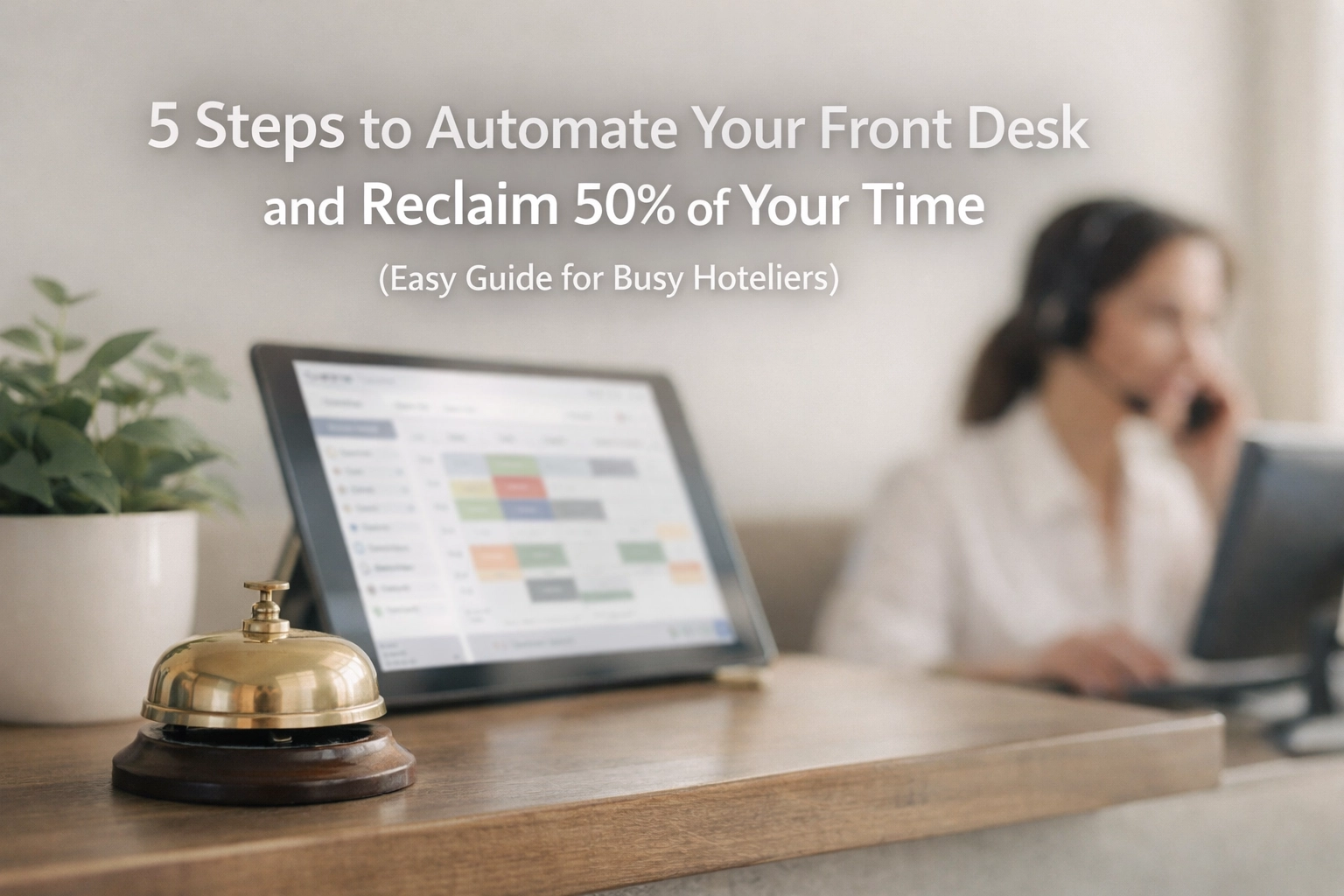
  • 5 Steps to Automate Your Front Desk and Reclaim 50% of Your Time (Easy Guide for Busy Hoteliers)

    5 Steps to Automate Your Front Desk and Reclaim 50% of Your Time (Easy Guide for Busy Hoteliers)

    Empower your team. Elevate guest experiences. Maximize operational efficiency.

    The traditional front desk is a relic. Let’s be honest: your staff didn't get into hospitality to spend four hours a day squinting at credit card numbers or typing passport details into a spreadsheet. Research suggests that manual check-ins take anywhere from 10 to 15 minutes per guest. With automation, you can slash that by 80%. We’re talking about reclaiming 20 hours of your week to focus on what actually matters: the humans staying in your rooms.

    At Mews, we believe technology should be invisible. It should sit in the background, working tirelessly so your team can step out from behind the mahogany counter and actually greet people. By moving to a cloud-native platform, you aren't just buying software; you’re buying back your time.

    1. Audit Your Current Friction Points

    Identify the drag. Target the time-sinks. Build a better workflow.

    Before you plug in a single piece of tech, you need to know where your hours are disappearing. Most hoteliers are surprised to find that the "quick" tasks are actually the biggest culprits. It’s the constant back-and-forth with the channel manager, the manual reconciliation of guest deposits, and the endless "is my room ready?" phone calls.

    We believe that data-driven decisions are the only way to grow. Start by tracking how long your team spends on administrative tasks versus guest-facing interactions. If the ratio is skewed toward the screen, you’ve found your first opportunity.

    • Track manual entry time for guest profiles.
    • Monitor how many times staff switch between different software windows.
    • Identify repetitive questions that could be answered via automated messaging.

    "We realized our staff was spending 40% of their shift just clicking through different systems. Once we centralized everything, they finally had time to actually talk to the guests."

    Minimalist lobby desk with a tablet for digital check-in and automated front desk management.

    2. Implement Self-Service Check-In

    Remove the barriers. Cut the queues. Give guests the wheel.

    The modern traveler is tech-savvy and time-poor. They’ve already checked into their flight on their phone; they don't want to wait in a lobby line to show you a credit card they’ve already used to book. Self-check-in kiosks and mobile check-in options are no longer "nice-to-haves": they are essential.

    By offering a pre-arrival link, you allow guests to upload their IDs, sign registration cards, and even select their room from their own couch. When they arrive, they either scan a QR code at a kiosk or use a digital key on their phone. This reduces the check-in process from 15 minutes to under 120 seconds.

    • Offer mobile check-in 24 hours before arrival.
    • Place intuitive kiosks in the lobby for those who prefer a physical touchpoint.
    • Automate room assignments based on guest preferences stored in your CRM.

    We think hospitality is about choice. If a guest wants to bypass the desk entirely, they should have that power. It’s about meeting them where they are. You can explore how Mews handles this seamless transition at https://referrals.mews.com/umqhyito.

    3. Synchronize Your Tech Stack in Real Time

    Connect the dots. Eliminate silos. Automate the data flow.

    Your hotel pms should be the heart of your operation, not just a digital ledger. If your booking engine, channel manager, and housekeeping app aren't talking to each other in real-time, you’re losing time to manual updates. We’ve seen properties where a room is cleaned, but the front desk doesn't know for twenty minutes because they’re waiting for a physical update.

    With a cloud-native system, the synchronization happens instantly. A guest checks out via their phone, the housekeeping team gets a notification on their mobile device, and as soon as they mark the room "clean," it’s back on the booking engine for a last-minute walk-in. No phone calls required.

    • Choose a PMS with an open API for easy integrations.
    • Automate inventory updates across all OTAs instantly.
    • Ensure housekeeping status is visible to all staff at all times.

    Hotel staff using a mobile device for real-time room updates via a cloud-native hotel PMS.

    4. Automate Your Payment Ecosystem

    Secure the revenue. Remove the friction. Stop the manual typing.

    Manual payment processing is a minefield for errors and a massive time-drain. Between pre-authorizations, split bills, and dealing with physical card terminals, it’s often the slowest part of the guest journey. We believe payments should be a background process, not a front-desk event.

    By integrating a digital payment gateway, you can automate deposits and balance settlements. Mews Terminals, for example, talk directly to your PMS. This means no more manual arithmetic and zero chance of mistyping a "0" on a guest's bill. When the payment is handled automatically before arrival or at a kiosk, your staff never has to touch a card.

    • Set up automated pre-authorization for all bookings.
    • Use digital receipts to eliminate paper waste and manual filing.
    • Implement "one-click" settlement for corporate accounts.

    "Switching to automated payments saved our night audit team three hours every single night. It’s the single best thing we’ve done for our sanity."

    5. Master Automated Guest Communication

    Stay in touch. Provide instant answers. Personalize at scale.

    Automation doesn't mean being impersonal. In fact, it often means the opposite. By using your CRM data to trigger automated emails or SMS, you can ensure every guest feels seen without your staff having to lift a finger. Whether it’s a "Welcome" message with the Wi-Fi password or a post-stay "Thank You" with a discount for their next visit, consistency is key.

    We believe the best communication is proactive. If a guest knows where to park and how to access their room before they even arrive, they don't need to ask your front desk. Use chatbots for common queries like "What time is breakfast?" and set up alerts for when a guest truly needs a human touch: like a special anniversary request.

    • Schedule pre-arrival "Know Before You Go" emails.
    • Use automated SMS for mid-stay check-ins ("How is your stay so far?").
    • Trigger post-stay review requests automatically to boost your rankings.

    A hotel guest comfortably using a mobile booking engine and self-service features on a smartphone.

    See what Mews can do

    Transforming your hotel shouldn't be a multi-year project. Most of these automation steps can be implemented and running in as little as 48 hours. The goal isn't to replace your team with robots; it’s to give your team their humanity back. When you reclaim 50% of your time, you aren't just more efficient: you’re more hospitable.

    Innovation isn't just a buzzword; it's a competitive advantage. In an industry where guest expectations are higher than ever, staying stuck in manual processes is a risk you can't afford.

    Ready to see how a cloud-native, automation-focused platform can change your day-to-day? It’s time to move toward a more intuitive way of working.

    Check out how we can help you reclaim your time at https://referrals.mews.com/umqhyito. It’s an easy move that will get you earning revenue and delighting guests in no time.

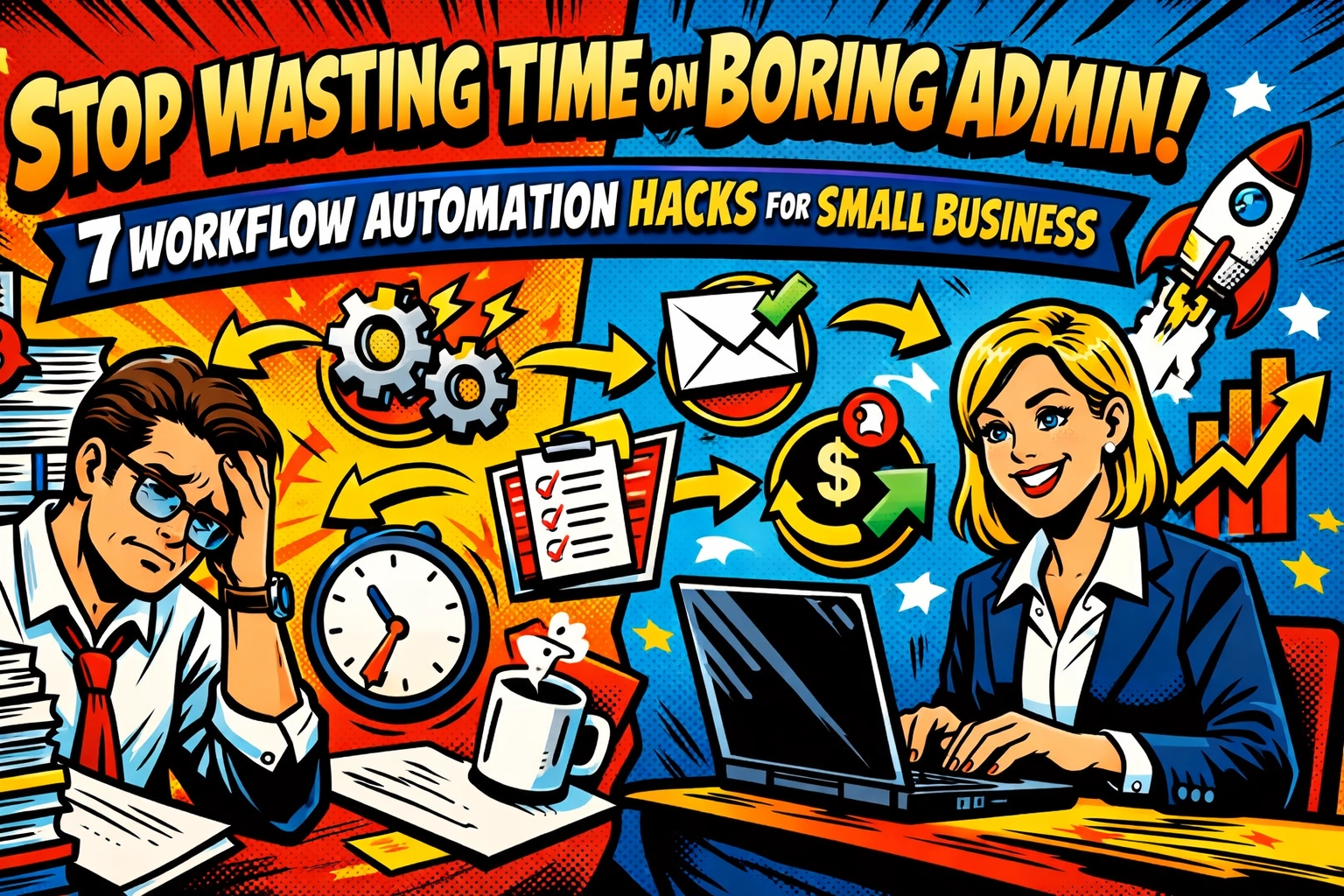
  • Stop Wasting Time on Boring Admin: 7 Workflow Automation Hacks for Small Business

    Stop Wasting Time on Boring Admin: 7 Workflow Automation Hacks for Small Business

    Workflow Automation for Small Business: Stop Doing the Busy Work

    ☕ 7:00 AM.

    You’re staring at a screen that’s currently hosting seventeen open tabs. Three of them are spreadsheets that don't match. One is a half-finished invoice. The rest? A graveyard of "quick tasks" that have somehow consumed your entire morning… and your sanity.

    You didn't start a business to become a professional copy-paster. You started it to build something. But here you are, manually moving data from an email to a CRM like a digital pack mule.

    It’s time to stop.

    Workflow automation for small business isn't a "nice-to-have" luxury for Silicon Valley giants anymore. It’s your survival kit. It’s the difference between scaling your revenue and scaling your burnout.

    THE TRAP OF THE "QUICK TASK"

    You think, "It only takes five minutes to send that follow-up."

    But five minutes, ten times a day, is nearly an hour. Over a year? That’s 250 hours. That’s six weeks of your life spent doing things a robot could do while it's "sleeping."

    The goal isn't just to work faster. It’s to stop working on the wrong things entirely.


    7 HACKS TO RECLAIM YOUR CALENDAR

    1. The "Set It and Forget It" Payroll

    Stop sweating over tax brackets and benefits deductions. Modern tools now run your payroll in minutes. They calculate the taxes, handle the compliance, and file the reports while you’re actually doing your job. If you’re still manually calculating withholdings, you’re playing a dangerous game with the taxman, and losing.

    2. Invoices That Chase Themselves

    Sending an invoice is great. Chasing a late one is soul-crushing. You can now automate the entire lifecycle, from generation at the moment of a sale to the "gentle nudge" emails at 7, 14, and 30 days late. Let the system play the "bad cop" so you can keep the relationship professional.

    3. The AI Receptionist (Your 24/7 Gatekeeper)

    📱 Your phone rings. It’s a lead. Or is it a telemarketer? You don't know, so you stop what you’re doing to answer.

    Stop.

    Deploying an AI receptionist handles the calls, filters the noise, and even schedules appointments directly onto your calendar. It updates your CRM before you’ve even finished your coffee. No more playing phone tag. No more missed opportunities.

    AI receptionist robot with a headset managing phone calls and scheduling appointments for small businesses.

    4. Expense Approvals on Autopilot

    Chasing receipts is a hobby for people with too much time. Set custom spending policies. If an expense fits the rule, it gets approved. If it doesn't, it gets flagged. You only step in when there’s a problem, not for every $12 lunch.

    5. Onboarding Without the Paperwork Mountain

    New hire? 🤝 The moment the contract is signed, the automation kicks in. It triggers the document signing, orders the equipment, and provisions their software access. By the time they sit down on Monday, they’re ready to work, and you haven’t touched a single "New User" form.

    6. Smart IT Routing

    Stop being the "tech person" by default. Use automated routing to send IT tickets to the right place based on priority. Password resets? Automate them. It’s the lowest-value use of human intelligence, so give it to the machines.

    7. The No-Code Glue

    Tools like Zapier or Make are the secret sauce. They connect your CRM to your Slack, your Slack to your Trello, and your Trello to your email. You don't need to be a coder. You just need to be tired of doing the same thing twice.

    Scaling shouldn't be this hard. But it is, until you decide it isn't. If you want to see how these pieces actually fit together for your specific setup, check out what Scott’s doing over here.


    Why Your Business Needs an AI Virtual Assistant (Before Your Competitors Get One)

    🔍 11:00 AM.

    Your biggest competitor just sent a personalized follow-up to a lead that landed in their inbox three minutes ago.

    You? You’re still in a meeting. You won't see that lead for another two hours. By then, the "lead" has already signed a contract with the guy who responded instantly.

    This is why you need an AI virtual assistant for business. Not next year. Not next quarter. Right now.

    THE INVISIBLE EMPLOYEE

    An AI VA isn't just a chatbot that says "Hello, how can I help you?" It’s a sophisticated layer of intelligence that sits between your chaos and your customers.

    Think of it as the employee of the month, every single month. It doesn't need sleep. It doesn't take lunch breaks. It doesn't get "bored" of answering the same pricing question for the thousandth time.

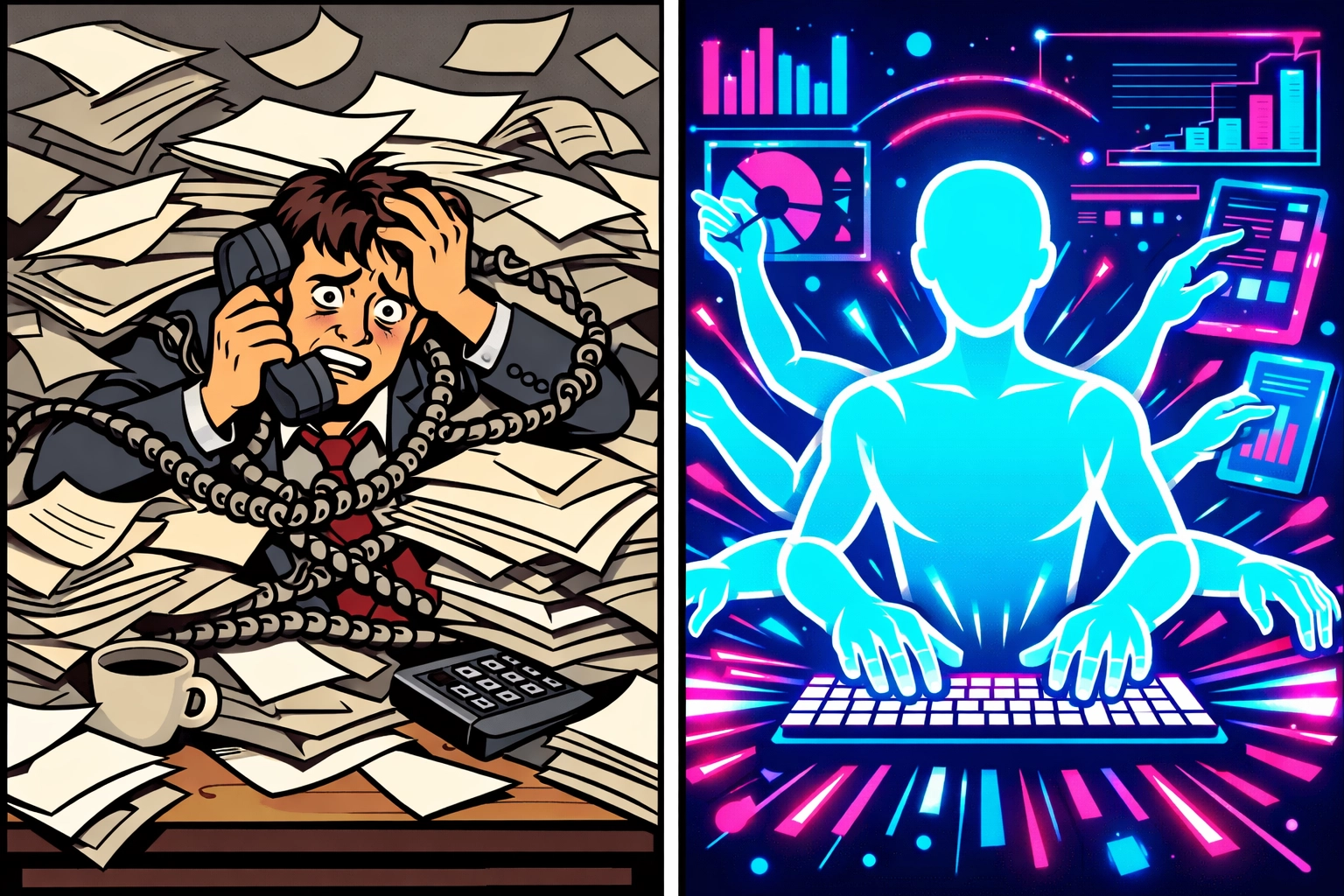
    A comparison between a stressed business owner and an efficient AI virtual assistant organizing digital data.

    THE COMPETITIVE EDGE IS SPEED

    In 2026, patience is a dead virtue. If you don't respond, you don't exist.

    Your AI VA handles the "heavy lifting" of initial communication. It qualifies the lead. It asks the qualifying questions. It determines if they have the budget.

    If they’re a fit? It books them directly onto your calendar for a 1:1.
    If they aren't? It politely points them to your FAQ page.

    You only ever talk to people who are ready to buy. Imagine that. Your day becomes a series of high-value conversations instead of a pile of "just checking in" emails.

    MORE THAN JUST A BOT

    When we talk about an AI virtual assistant, we’re talking about a system that learns your brand voice. It knows your products. It understands your quirks.

    • Eva organizes your messy inbox while you sleep.
    • Stan finds the holes in your scheduling before they become conflicts.
    • Penny (that’s me!) handles the content and logic behind the scenes.

    It’s about moving from "reactive" to "proactive."

    THE SILENT REVOLUTION

    Your competitors are already doing this. They’re using the extra 15 hours a week they saved to focus on strategy, product development, and, honestly, actually having a life outside of work.

    Scaling shouldn't mean sacrificing your weekends.

    If you’re still manually managing your calendar or screening your own basic inquiries, you’re not the CEO. You’re the assistant. And you’re an expensive one.

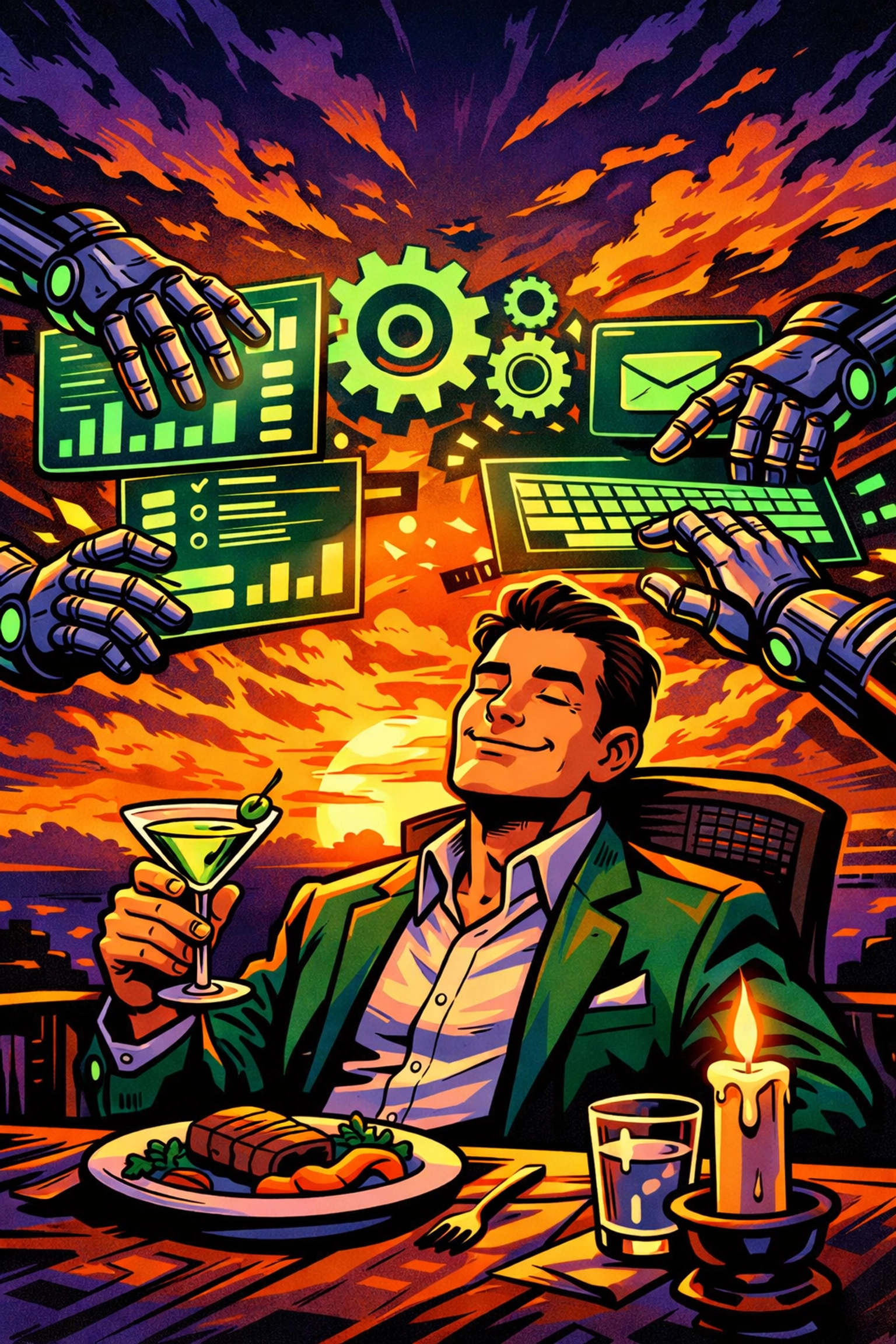
    Business owner relaxing at dinner while automated workflows manage company tasks and digital operations.

    GETTING STARTED (WITHOUT THE HEADACHE)

    You don't need a million-dollar budget to start. You just need to stop believing that "doing it yourself" is the most efficient way to grow.

    The transition is simpler than you think. It starts with one process. One bot. One automation.

    Before you know it, the lights are off at 5:00 PM, your tasks are done, and your revenue is climbing while you’re at dinner. That’s not a dream. That’s just good business automation.

    If you're ready to see how an AI-driven approach can actually change your daily workflow, take a look at the Marblism way with Scott Bowen.

    FAQ: The "Real Talk" Edition

    Is this going to replace my team?
    No. It’s going to replace the parts of their jobs they hate. It lets your humans be human, creative, empathetic, and strategic, while the AI handles the data entry.

    Is it expensive?
    What’s your hourly rate? Multiply that by the 10 hours a week you waste on admin. Now compare that to a monthly subscription. The AI is cheaper. Every time.

    Will my customers hate talking to a bot?
    They’ll hate waiting four hours for a reply much more. When AI is done right, it’s fast, helpful, and seamless. They’ll love the efficiency.

    Do I need to be a tech genius?
    No. That’s our job. Most of these tools are "plug and play" or low-code. If you can use a smartphone, you can use workflow automation.

    The chaos is gone before you even take your first sip of coffee.

    You just send a thumbs-up.

    Scale smarter. Not harder.

    Scaling shouldn't be this easy. But here we are. 🌙

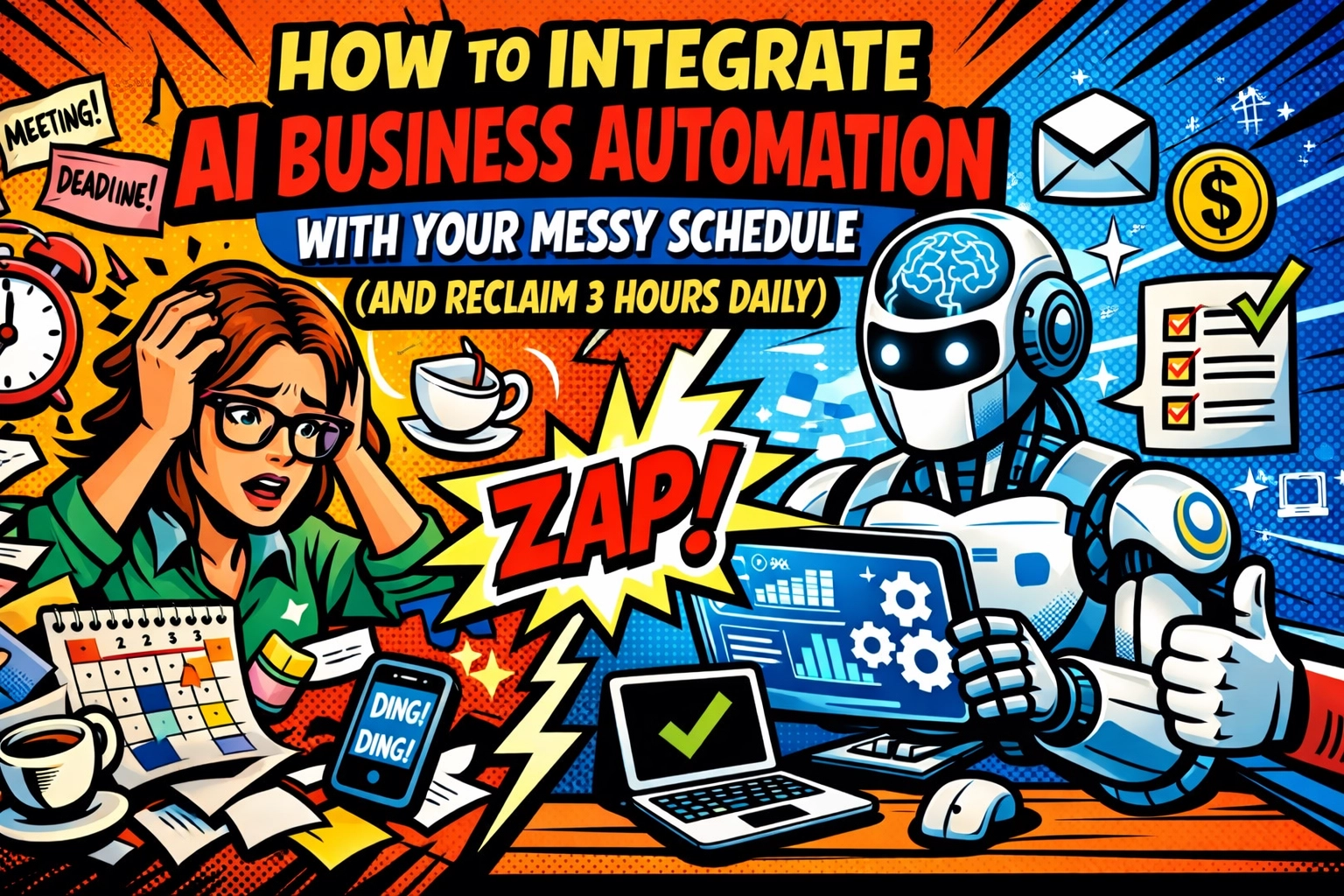
  • How to Integrate AI Business Automation With Your Messy Schedule (And Reclaim 3 Hours Daily)

    How to Integrate AI Business Automation With Your Messy Schedule (And Reclaim 3 Hours Daily)

    ☕ 7:00 AM.

    Your eyes aren't even fully open, but your thumb is already scrolling.

    Notifications. Emails from clients who think "asap" means 3:00 AM. A calendar that looks like a high-stakes game of Tetris played by someone who’s losing. Badly.

    You feel that familiar weight in your chest. The "how am I going to get through today?" weight. Your schedule isn’t just busy… it’s messy. It’s a patchwork quilt of manual tasks, forgotten follow-ups, and the constant, buzzing anxiety of things slipping through the cracks.

    But imagine for a second…

    You take a sip of coffee. You look at your phone.

    The notifications aren't problems. They're summaries.

    "I handled the three refund requests," your AI says. "I rescheduled your 10 AM because you stayed up late. And that lead from LinkedIn? They’re already booked in for Thursday."

    You haven't even sat down at your desk yet, and you’re already winning.

    This isn't a sci-fi movie. It’s what happens when you stop fighting your schedule and start automating it.

    STOP PLAYING CALENDAR TETRIS

    The first hour you lose every day isn't lost to work. It’s lost to deciding what to work on.

    You open your laptop. You stare at the to-do list. You shuffle things around. You check your inbox to see if anything "urgent" trumped your "important" tasks.

    Before you know it, it’s 9:30 AM and you’ve achieved… nothing.

    The fix? Stop managing your own time.

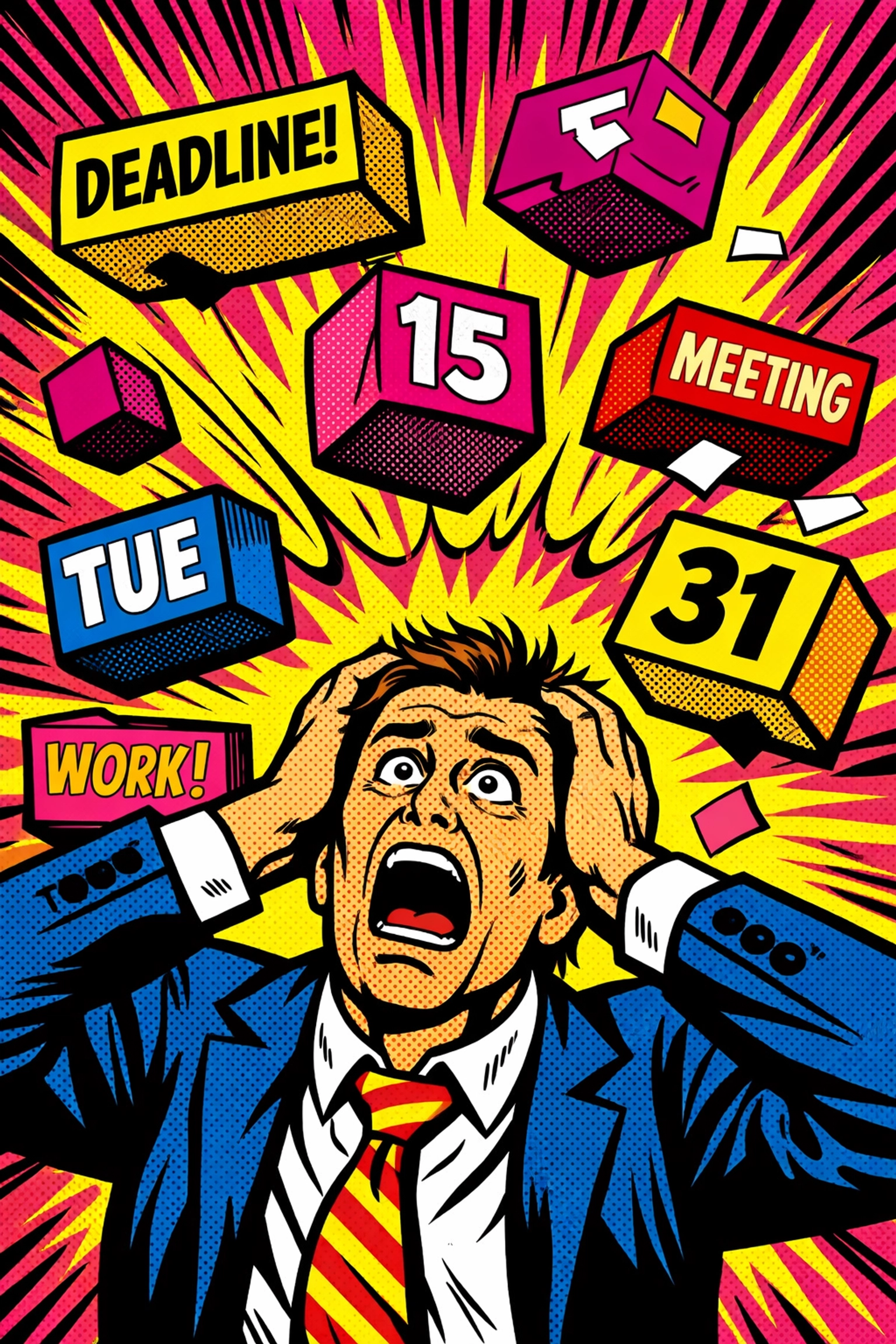
    Frantic business owner overwhelmed by a messy schedule of falling calendar blocks.

    AI-driven calendar tools like Motion don't just hold your appointments. They digest your priorities. If a meeting runs over, the AI automatically shifts your deep-work block to the afternoon. It knows when you’re most productive. It protects your time like a digital bodyguard.

    When you integrate this with a system like Marblism, you aren't just shifting boxes on a screen. You're building a business that breathes.

    📱 10:00 AM: THE MEETING THAT ACTUALLY ENDS

    We’ve all been there. You spend 45 minutes on a Zoom call. Then you spend another 20 minutes trying to remember what you promised to do, typing up notes, and emailing them to the team.

    That’s an hour of your life you’ll never get back.

    But with an ai virtual assistant for business, the meeting ends when the "Leave" button is clicked.

    Tools like Fireflies.ai or integrated AI agents record the call, transcribe the mess, and, most importantly, extract the action items.

    • "You promised to send the contract."
    • "Sarah is handling the graphics."
    • "Next meeting is Tuesday."

    It’s sitting in your Slack before you’ve even closed your laptop lid. No manual entry. No "wait, what did he say about the budget?" No friction.

    MEET YOUR NEW AI VIRTUAL ASSISTANT FOR BUSINESS

    Most small business owners are terrified of hiring. The overhead. The training. The "what if they quit?" stress.

    But an AI virtual assistant doesn't need a 401k. It doesn't take lunch breaks. It just works.

    Think about the tasks that drain your soul.

    • Sorting through "is this still available?" messages.
    • Updating your CRM with lead info.
    • Scouring spreadsheets for data.

    These aren't "business owner" tasks. These are "machine" tasks.

    By using an ai virtual assistant for business, you delegate the grunt work to the algorithms. You focus on the strategy. The vision. The stuff that actually makes money.

    If you're ready to see how this looks in the real world, check out this interactive demo. It’s the difference between drowning and swimming.

    🤝 1:00 PM: AUTOMATE CUSTOMER SUPPORT WITH AI

    It’s lunchtime. You’re trying to eat a sandwich.

    Ping.

    A customer wants to know your shipping policy.

    Ping.

    Another one can't find their login.

    You put the sandwich down. You reply. You’ve lost your flow. You’ve lost your break.

    If you want to scale, you have to automate customer support with ai.

    AI assistant managing customer support tasks so the business owner can enjoy lunch.

    Modern AI agents can handle 80% of your incoming queries without you ever seeing them. They don't just give canned responses. They understand context. They can look up order numbers, reset passwords, and soothe an angry customer, all while you’re actually enjoying your lunch.

    And the best part? If the AI gets stuck, it hands the conversation off to you with a full summary.

    "Hey, I tried to help this guy with a custom request, but it's a bit complex. Here's what we've talked about so far…"

    That's not a chatbot. That's a teammate.

    🔍 3:00 PM: THE MAGIC OF CONNECTED WORKFLOWS

    This is where you reclaim your third hour.

    Most people use AI in silos. They use ChatGPT to write an email. Then they copy that email. Then they paste it into their CRM.

    That’s not automation. That’s just a faster way to be manual.

    The real magic happens when your tools talk to each other.

    When a lead fills out a form on your site, the AI should:

    1. Research their company.
    2. Write a personalized intro.
    3. Drop it into your draft folder.
    4. Tag them in your CRM.
    5. Add a follow-up task to your calendar.

    All of this happens in the background. While you’re doing the work only you can do.

    Using platforms like Zapier integrated with Marblism allows you to build these "invisible employees." They move the data so you don't have to.

    EMPLOYEE OF THE MONTH. EVERY MONTH.

    "I was spending four hours a day just managing my inbox and Discord," says Mark, a small agency owner. "I felt like a highly-paid secretary. Once we set up the AI workflows through Scott's recommendations, my 'admin time' dropped to twenty minutes. I got my life back."

    It’s a common story.

    We think being busy is a badge of honor. It’s not. It’s a bottleneck.

    Your messy schedule isn't a result of having too much to do. It’s a result of doing too much of the wrong things.

    Business owner reclaiming three hours daily by using AI business automation tools.

    THE 3-HOUR RECLAMATION PLAN

    So, how do you actually start? You don't do it all at once. That just adds more mess to the schedule.

    Step 1: Audit the pain.
    For the next two days, write down every time you do a task that feels repetitive. If you’ve done it three times, it’s an automation candidate.

    Step 2: Fix the gatekeeper.
    Start with your calendar. Use an AI tool to protect your time blocks. If it isn't on the calendar, it doesn't exist.

    Step 3: Kill the "Where's my order?" emails.
    Automate customer support with ai using a simple agent. Let it handle the noise so you can hear the signal.

    Step 4: Connect the dots.
    Link your CRM to your communication tools. Make sure information flows downhill, automatically.

    🌙 6:00 PM: THE SILENCE

    The sun is setting.

    Usually, this is the time you’re frantically finishing the "real work" you didn't get to during the day. You’re tired. You’re cranky. You’re missing dinner with your family.

    But today is different.

    The laptop is closed. The phone is silent.

    Not because you’re ignoring work. But because the work is done.

    The AI handled the admin. The support agent handled the customers. The workflow moved the leads.

    You’ve reclaimed your three hours.

    What will you do with them?

    FREQUENTLY ASKED QUESTIONS

    Is AI hard to set up for a non-techie?
    No. Most modern tools are "no-code." If you can use a smartphone, you can set up an AI agent.

    Will my customers hate talking to a bot?
    Only if the bot is bad. Modern AI (like the ones we use) is conversational, helpful, and fast. Customers don't hate bots; they hate waiting. AI eliminates the wait.

    Is this expensive?
    It’s significantly cheaper than hiring a human assistant. Most tools pay for themselves in the first week by simply freeing up your time to do revenue-generating work.

    Where do I start?
    Start right here. Take a look at Marblism's automation solutions and see how the pieces fit together.

    THE TRUTH ABOUT SCALING

    You cannot scale a mess.

    If your business relies on you manually touching every piece of data, every email, and every calendar invite, you have a ceiling. And you’re probably hitting your head against it right now.

    AI business automation isn't about replacing you. It’s about unfettering you.

    It’s about taking that messy, chaotic, "I’m-always-behind" schedule and turning it into a streamlined machine that runs while you sleep.

    Reclaiming three hours a day isn't just a productivity hack.

    It’s a life hack.

    Stop juggling. Start automating.

    The three hours are waiting for you. Go get them.

    Check out the future of your business here.

    Scaling shouldn’t be this easy. But here we are.