Category: Category 1

Use this description to tell users what kind of blog posts they can find in this category.

  • Stop Leaving Money on the Table: How a Direct Booking Engine for Hotels Boosts Your Bottom Line

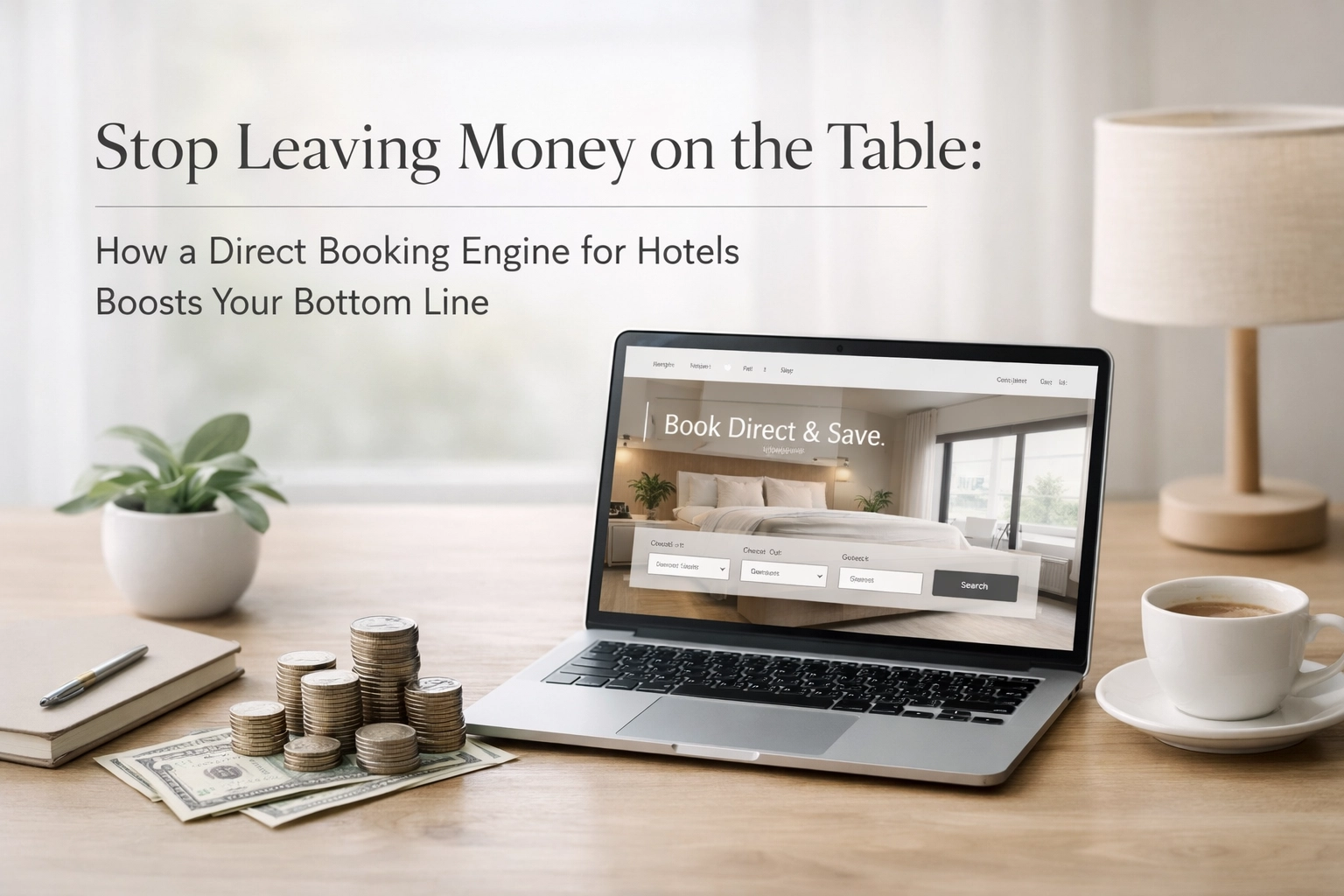
    Stop Leaving Money on the Table: How a Direct Booking Engine for Hotels Boosts Your Bottom Line

    Let's talk about something that keeps hoteliers up at night. Commission fees. Every time a guest books through an OTA, you're handing over 15-30% of your revenue. That adds up fast.

    Here's the thing: you don't have to accept this as the cost of doing business. A direct booking engine puts money back in your pocket: money that rightfully belongs there. We're talking about real savings, better guest relationships, and complete control over your pricing strategy.

    The Commission Drain Is Real

    Picture this. A guest books a $200 room through an OTA. You just paid $30-$60 in commission fees. Now multiply that by every booking you get through third-party platforms. That's thousands of dollars walking out the door every month.

    Direct bookings eliminate this expense entirely. You keep 100% of the revenue. No middleman. No commission splits. Just pure profit margins working in your favor.

    Hotel revenue stacks on reception desk showing direct booking profit without OTA commissions

    The math is simple. If you're getting 1,000 bookings per month at an average rate of $150, and even 30% of those are coming through OTAs at a 20% commission, you're losing $9,000 monthly. That's $108,000 annually that could be funding renovations, staff bonuses, or marketing initiatives that drive even more direct bookings.

    Unlock Revenue Through Strategic Upselling

    Commission savings are just the beginning. Direct booking engines open up revenue opportunities that OTAs can't match.

    When guests book directly, you control the entire experience. That means offering room upgrades. Late checkout options. Spa packages. Airport transfers. Breakfast bundles. All those extras that boost your average booking value.

    OTAs don't let you do this effectively. They own the customer relationship. You're stuck with whatever booking comes through, no opportunity to enhance it.

    With a direct booking engine, you can present personalized offers at the moment of booking. Research shows hotels that implement strategic upselling through their booking engines see a 15-25% increase in revenue per booking. That's money you're leaving on the table every single day without direct bookings.

    Take Control of Your Pricing Strategy

    Third-party platforms dictate the rules. Rate parity agreements. Commission structures. Limited promotional flexibility. You're playing by their rules, not yours.

    Direct booking engines flip this dynamic. You set the prices. You create exclusive deals for direct bookers. You run flash sales, package promotions, and loyalty discounts without navigating OTA restrictions.
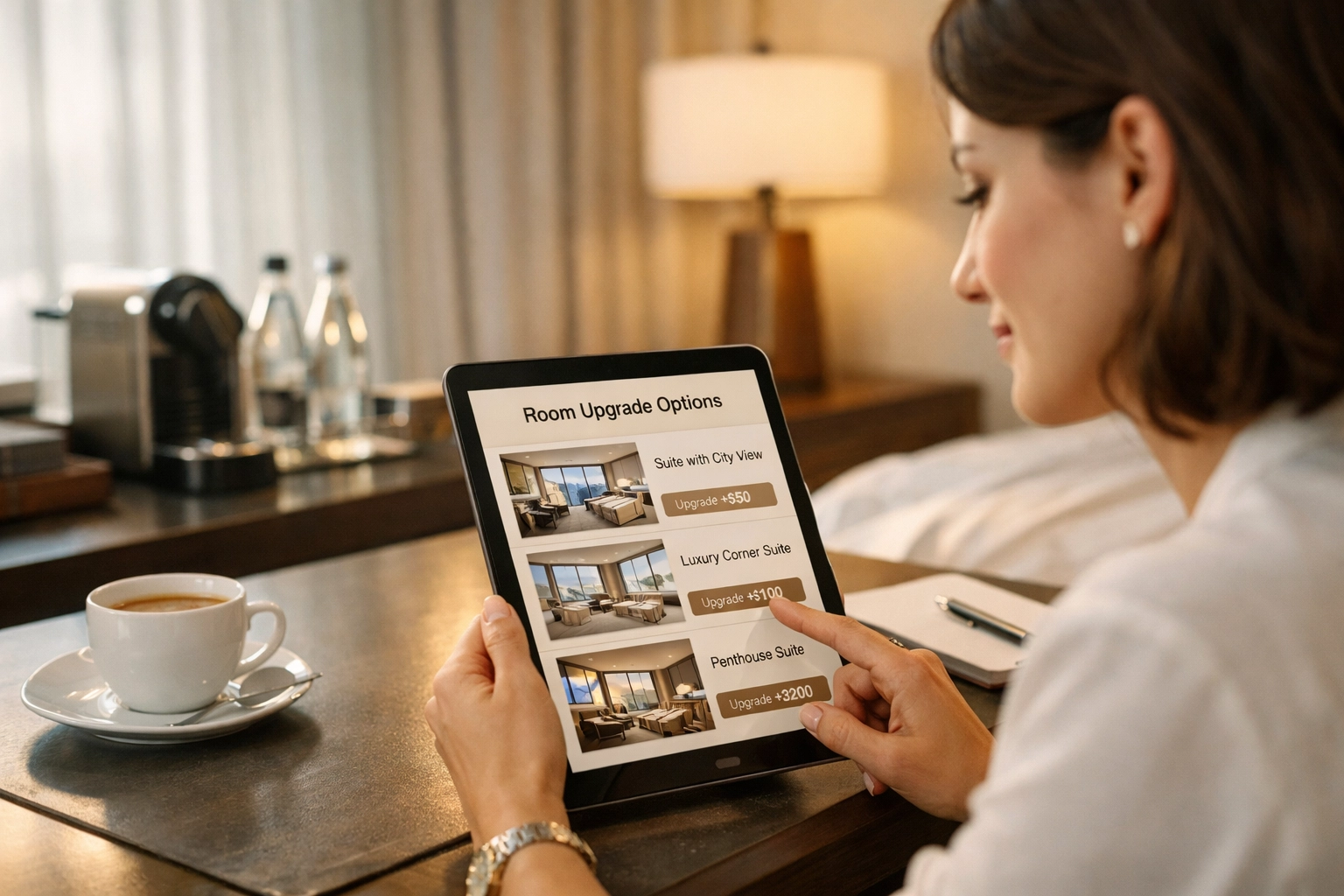
    Hotel guest reviewing room upgrade options on tablet for upselling opportunities

    Want to offer a 20% discount for bookings made 30 days in advance? Done. Need to fill rooms during a slow season with a special weekend package? Easy. Looking to reward returning guests with member-only rates? Absolutely.

    This pricing flexibility often results in higher average daily rates compared to OTA bookings. When you're not competing solely on price within an OTA marketplace, you can focus on value, experience, and the unique benefits of booking directly with your property.

    Streamline Operations and Reduce Risk

    Manual reservation management is a nightmare. Phone calls. Emails. Spreadsheets. Data entry errors. Overbooking disasters.

    Direct booking engines automate everything. Reservations flow directly into your property management system. Inventory updates in real-time. No double bookings. No manual data entry. Your front desk staff can focus on guest service instead of administrative tasks.

    The integration between booking engine and PMS means you're always working with accurate, current information. When a room sells, it's immediately marked as unavailable across all channels. This synchronization prevents costly overbooking situations and eliminates the awkward conversations with guests who arrive to find you don't have their room.

    The operational efficiency translates to labor savings too. Less time processing bookings means your team can handle more reservations without increasing headcount. One hotelier reported saving 10+ hours per week on reservation management after implementing an integrated booking engine.
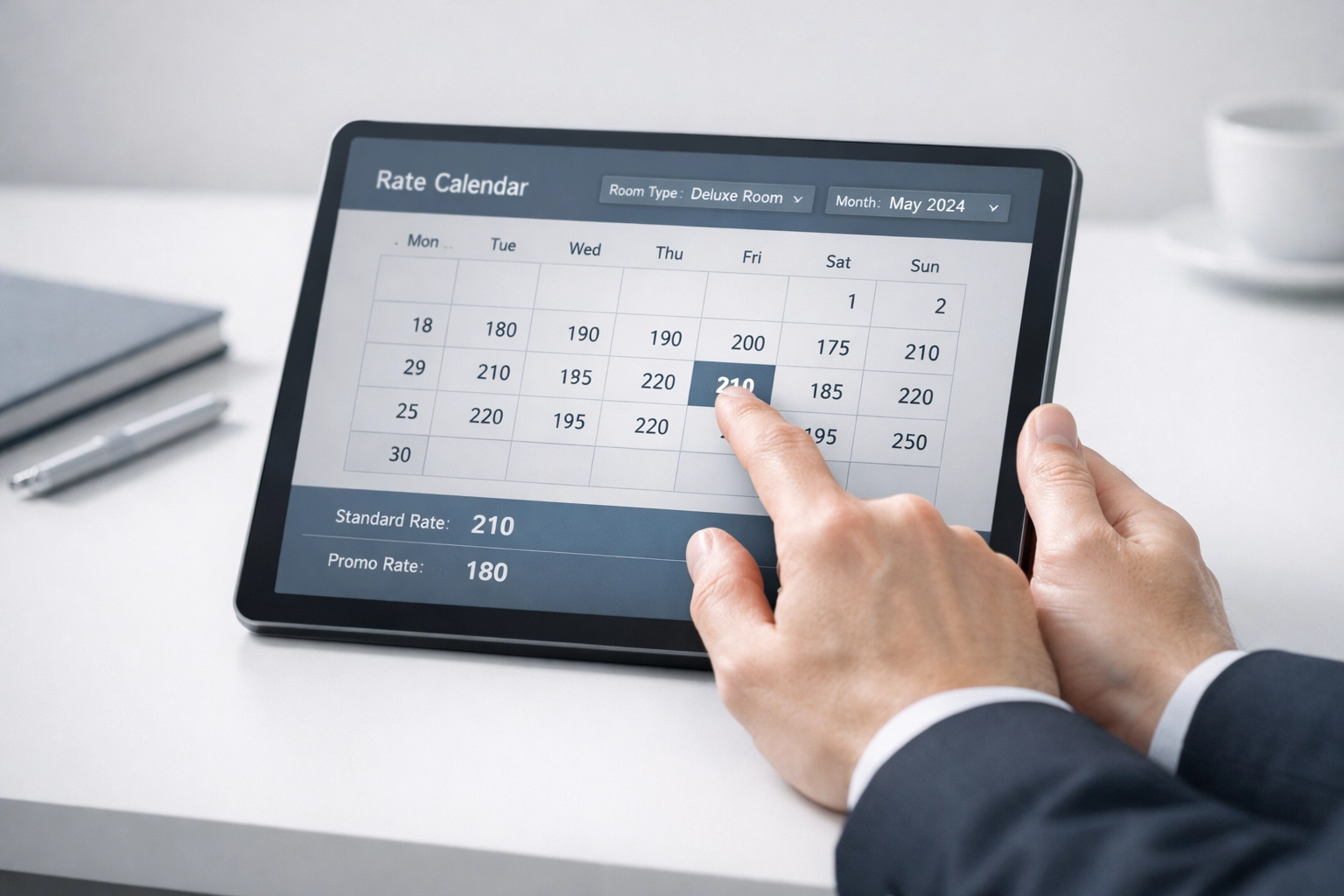
    Hotel manager adjusting pricing strategy and rates on digital booking engine dashboard

    Own Your Guest Data

    Here's what OTAs don't want you to know: guest data is gold. And when bookings come through third-party platforms, they own that gold, not you.

    You get minimal information. A name. Arrival date. Maybe a phone number. That's it. No email preferences. No travel history. No insights into what drives their booking decisions.

    Direct bookings change everything. You capture comprehensive guest profiles. Email addresses for marketing. Preferences for personalization. Booking patterns for forecasting. Feedback for service improvements.

    This data enables targeted marketing campaigns. Instead of generic promotions, you can send personalized offers based on past stays. Anniversary packages. Seasonal deals aligned with their travel timing. Exclusive perks for loyal guests.

    The lifetime value of a direct booking customer far exceeds the one-time transaction. You can nurture these relationships, encouraging repeat visits and building genuine brand loyalty. OTA customers are just that: OTA customers. Direct bookers are your customers.

    Build Long-Term Profitability

    The benefits compound over time. Every direct booking strengthens your brand. Every guest relationship you own increases the likelihood of repeat business. Every commission you save goes straight to your bottom line.

    Smart hoteliers view direct booking engines as investment, not expense. The ROI is clear. You're not just saving on commissions: you're building a sustainable business model that doesn't depend on third-party platforms.

    Modern hotel front desk with organized workspace and efficient booking system technology

    Consider the ripple effects. Direct bookers are more likely to become brand advocates. They recommend your property to friends. They leave positive reviews on your owned channels. They engage with your social media. This organic marketing is exponentially more valuable than OTA visibility.

    Plus, you're building equity in your brand. When guests think of accommodations in your area, you want them thinking of your property specifically: not scrolling through an endless OTA listing. Direct booking strategies, powered by an effective booking engine, make this possible.

    Start Retaining More Revenue Today

    The hospitality landscape is changing. Travelers are increasingly open to booking directly, especially when properties offer compelling reasons to do so. Better rates. Exclusive perks. Personalized service. Flexible policies.

    You need the technology to make this happen. A direct booking engine that's fast, intuitive, and fully integrated with your property management system. One that handles the technical complexity while presenting a seamless experience to your guests.

    That's where Mews comes in. The platform gives you everything you need to drive direct bookings and maximize revenue. Powerful booking engine. Seamless PMS integration. Automated operations. Guest data management. All working together to put more money in your pocket.

    Hotel guest profile notebook with personalized data for targeted marketing and loyalty

    Ready to stop losing revenue to commissions? Check out Mews and see how modern hospitality technology can transform your bottom line. Because every booking matters, and every dollar you keep is a dollar that can fuel your property's growth.

    The choice is clear. Keep paying hefty commissions and losing control over your guest relationships, or invest in a direct booking strategy that builds long-term profitability. Your bottom line will thank you.


  • 5 Steps How to Partner with Wholesale Coffee Roasters and Start Up a Coffee Shop (Easy Guide for Beginners)

    5 Steps How to Partner with Wholesale Coffee Roasters and Start Up a Coffee Shop (Easy Guide for Beginners)

    So, you’ve decided to open a coffee shop? That is brilliant. It’s a dream many of us have: the smell of freshly ground beans, the hiss of the steam wand, and the hum of a happy community in your very own space. But let’s be honest for a second: the leap from "I love coffee" to "I run a successful coffee business" is a big one.

    One of the most critical decisions you will ever make isn't actually the colour of your walls or the name on the door (though those are fun). It’s choosing your wholesale coffee roasters. Your roaster isn’t just a person who sends you boxes of beans; they are your mentor, your technical support, and your most important partner.

    At Limini Coffee, we’ve helped countless startups go from a blank floor plan to a bustling café. If you're ready to start your journey, you can find our wholesale partnership details here.

    Here is our five-step guide to finding the right partner and launching your dream.


    1. Research and Create Your "Dream Team" Needs List

    Before you even pick up the phone to call coffee suppliers, you need to know what you actually want. It is very easy to get swayed by a roaster who has a cool logo or a massive Instagram following, but will they be there when your espresso machine starts leaking at 8:00 AM on a Saturday?

    Ask yourself some hard questions:

    • Do I need help choosing equipment, or do I already have it?
    • Do I know how to dial in a grinder, or do I need someone to show me?
    • Am I looking for a "house blend" that everyone loves, or do I want rotating single-origin coffees that win awards?
    • Do I need help with the actual shop fitting and layout?

    We believe it is vital to work with someone who understands the B2B side of specialty coffee, not just the roasting side. You aren't just buying a product; you are buying a support system. If you are just starting out, we highly recommend looking for a partner that offers a comprehensive wholesale package.

    A coffee shop startup planning workspace with a notebook and flat white coffee for wholesale research.

    2. The "Vibe Check": Have the Initial Conversation

    Once you have a shortlist of potential wholesale coffee roasters, it’s time to reach out. This is where you find out if your business philosophies align.

    When you speak to us, or any roaster, be open about your concept. Are you a high-volume takeaway spot near a train station? Or a slow-paced brew bar in a quiet village? The needs for these two businesses are worlds apart. A good roaster will ask you about your expected volume and your target demographic.

    And don't be afraid to talk about the "boring" stuff. Ask about delivery schedules, minimum order quantities, and lead times. There is nothing worse than running out of beans on a Tuesday because your supplier only ships on Thursdays. We think transparency is the most important part of this initial stage. If a roaster is too busy to answer your basic questions now, they’ll definitely be too busy when you’re in a panic later.


    3. Sample the Goods (The Fun Part)

    You wouldn’t buy a car without driving it, right? So don't buy coffee without tasting it. Request samples, but don't just drink them at home in a French press if you plan on serving espresso.

    If possible, visit the roastery. This is where you can see the magic happen and participate in a "cupping" session. Cupping is the industry standard for evaluating coffee quality. It allows you to taste the nuances: is it chocolatey and nutty (great for milk drinks) or bright and acidic (lovely as a black coffee)?

    When you’re tasting, think about your customers. While we love a complex, fermented natural process coffee with notes of "funk," your average morning commuter might just want something smooth and reliable.

    Close-up of a specialty coffee cupping session at a roastery to select wholesale coffee beans.

    4. Evaluate the "Hidden" Support

    This is the step where most beginners trip up. They find a great coffee, they love the roaster, but they forget about the technical side. To run a great shop, you need more than just great beans; you need the right tools and the skills to use them.

    Equipment Guidance

    Choosing between a lever machine and an automatic can be daunting. We’ve spent a lot of time exploring the nuances of choosing espresso equipment, and your roaster should be able to guide you here. Do you want the theatre of a lever machine? Or the consistency of a La Spaziale?

    Barista Training

    You can buy the most expensive coffee in the world, but if your barista doesn't know how to tamp or how to steam milk correctly, it will taste terrible. Training is not a one-time thing; it's an ongoing process. Look for a roaster that offers comprehensive training.

    We’re talking about the science:

    • The 9 BAR Rule: Understanding that espresso needs exactly 9 BAR of pressure for that perfect extraction.
    • Milk Temperature: Aiming for that sweet spot around 140 °F / 60 ºC. Any hotter and you destroy the sweetness; any cooler and the customer complains.
    • Tamping: Consistency is key here. Understanding tamping is the difference between a watery mess and a syrupy delight.

    If you want a partner who takes training as seriously as you do, Limini Coffee is the way to go.


    5. Finalise Your Program and Launch

    The final step is getting the logistics in place. This includes choosing your "house" blend, setting up your ordering portal, and potentially creating your own private label if that’s your style.

    You’ll also want to look at the smaller details that make a big impact:

    • Menu Curation: What is the difference between a Flat White and a Latte in your shop? (Check out our guide on latte vs cappuccino if you're unsure).
    • Cup Selection: Believe it or not, the cups you choose change the perception of the coffee.
    • Water Quality: This is huge. Coffee is 98% water. If your water is hard, your coffee will taste flat and your machine will scale up. Your roaster should help you with filtration.

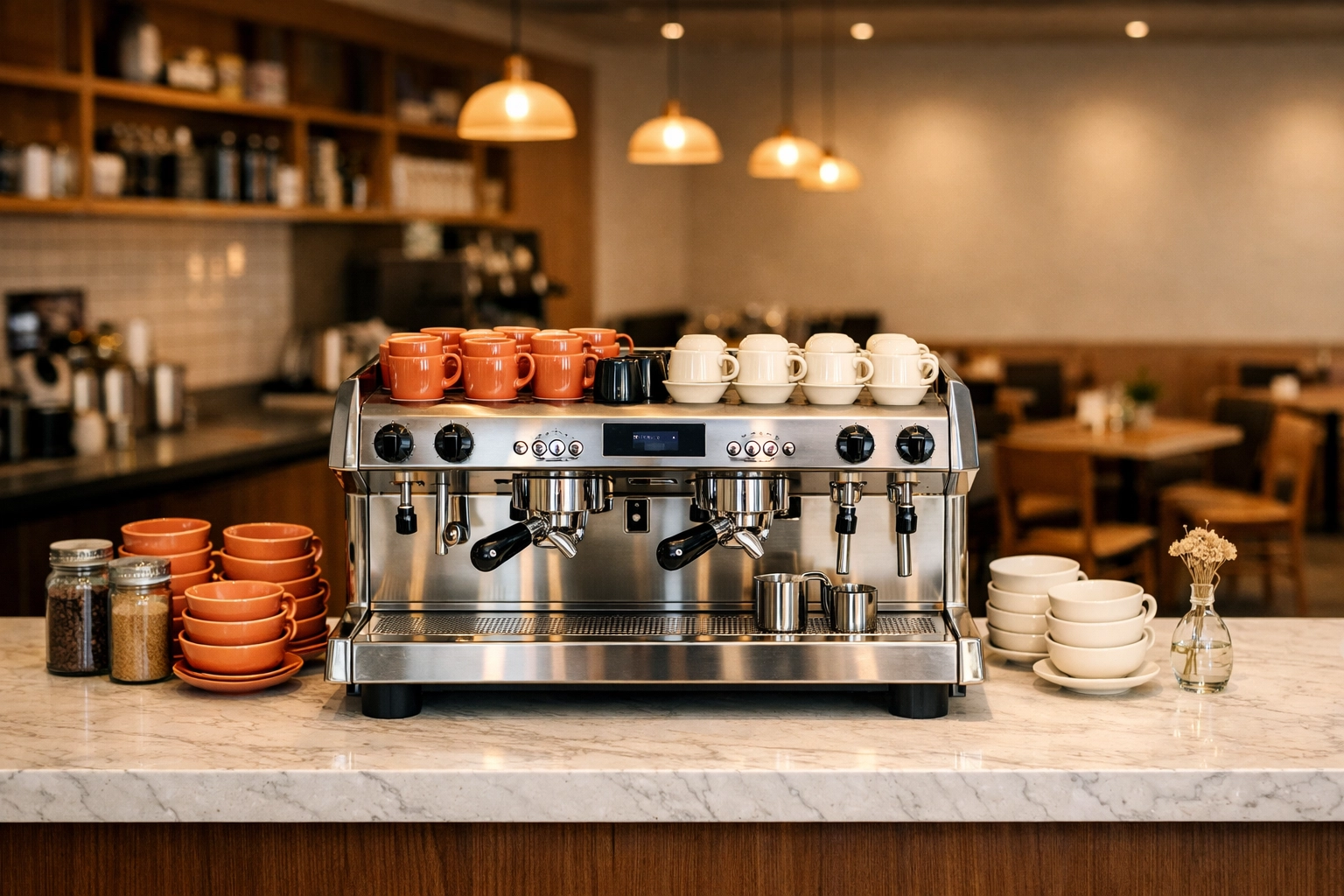
    A professional coffee bar setup with an espresso machine ready for a new café business opening.

    Why Direct Relationships Matter

    In the world of wholesale specialty coffee, you will see many "distributors." These are companies that buy from various roasters and sell to you. While this can seem convenient, we always recommend working directly with the roaster.

    Why? Because a roaster knows their product intimately. They know the farmer, the roast profile, and exactly how that coffee should behave in your machine. When you work with us, you get a direct line to the people who actually made the product. It’s a partnership built on shared goals: we want your shop to succeed because if you sell more coffee, we roast more coffee. It’s that simple.

    If you’re ready to take that first step and want to work with a team that is as passionate about your success as you are, come and have a chat with us at Limini Coffee.

    Summary Table: What to Look for in a Roaster

    Feature Why it matters
    Training Ensures your staff can actually deliver the quality you're paying for.
    Equipment Support Technical issues happen; you need a partner who can fix them.
    Sourcing Transparency Knowing where your coffee comes from is vital for modern consumers.
    Customization The ability to create a unique flavor profile for your brand.
    Consistency The coffee needs to taste the same on a Monday morning as it does on a Friday afternoon.

    Starting a coffee shop is a wild ride. There will be long days, burnt milk (at first!), and a lot of learning. But with the right wholesale coffee roasters by your side, you aren't doing it alone. You’re building a business on a foundation of expertise, quality, and a shared love for the perfect brew.

    Imagine your first customer walking in, the smell of your signature blend filling the air, and serving them a cup that you are genuinely proud of. That is what this is all about.

    Ready to start? Let's make it happen.

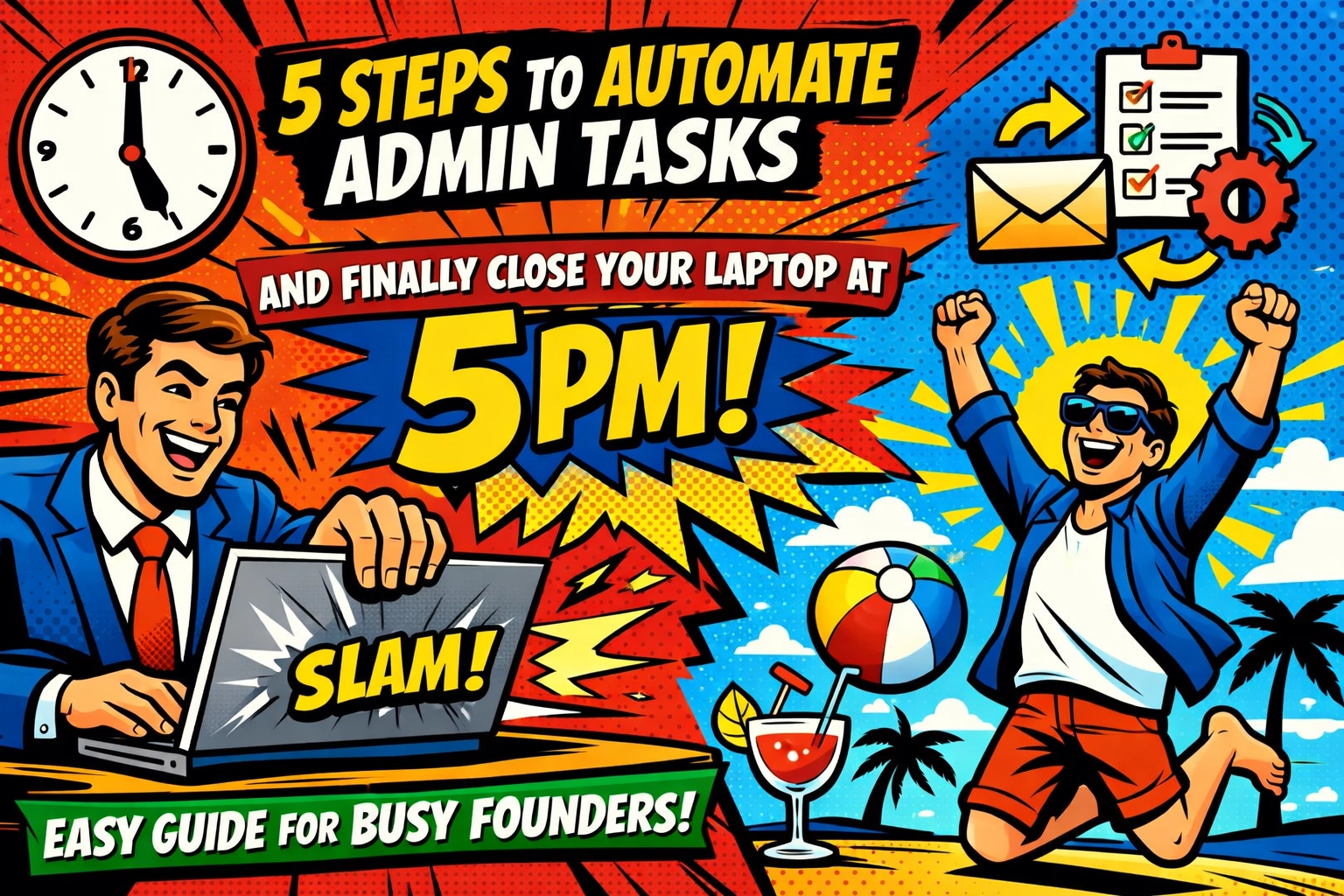
  • 5 Steps to Automate Admin Tasks and Finally Close Your Laptop at 5 PM (Easy Guide for Busy Founders)

    5 Steps to Automate Admin Tasks and Finally Close Your Laptop at 5 PM (Easy Guide for Busy Founders)

    ☕ 7:00 AM.

    Your eyes aren’t even fully open, but your thumb is already scrolling.

    Notifications. Slack pings. A "quick question" from a contractor. An invoice that didn't clear. You haven't even had caffeine yet, and you’re already behind.

    You started this business to build something great, right? Not to become a full-time professional email-responder and calendar-shuffler. But here you are, drowning in the digital equivalent of papercuts.

    It’s 2026. The "hustle harder" mantra is dead. It’s time to hustle smarter.

    If you want to stop feeling like a glorified secretary for your own company, you need to master business automation tools. You need a system that works while you sleep, so you can actually enjoy your life when you're awake.

    Let’s get you to that 5 PM laptop-shutting moment.


    AUTOMATE ADMIN TASKS: HOW TO SAVE 10+ HOURS EVERY WEEK

    The problem isn't that you don't have enough time. The problem is that your time is being stolen by "ghost tasks."

    You know the ones. The five minutes spent finding a Zoom link. The ten minutes spent formatting a report. The twenty minutes spent chasing a signature. Individually? They're nothing. Collectively? They are the reason you’re still working at 9 PM on a Tuesday.

    STEP 1: THE TIME AUDIT (STOP THE LEAK)

    You can't fix what you don't track. For the next three days, I want you to be brutally honest with yourself. Every time you switch tasks, write it down.

    Or, better yet, let an AI do it.

    Tools like Rize or Reclaim are the ai assistant for small business owners who hate spreadsheets. They sit in the background and whisper the truth: "Hey, you spent four hours in your inbox today. Was it worth it?"

    Probably not.

    Once you see the data, categorize it. Is it deep work? Or is it admin?

    A busy founder trying to save time leaking from a cracked clock, showing the need to automate admin tasks.

    STEP 2: PRIORITIZE THE REPETITIVE

    Look for the patterns. Anything you do more than twice a week is a candidate for execution.

    • Data entry? Automate it.
    • Invoice reminders? Automate them.
    • Meeting scheduling? If you’re still saying "Does Wednesday at 2 PM work for you?", you’re living in 2015.

    By offloading just these three things, you’ve already reclaimed your lunch break. But we’re going for the full 10+ hours. We’re going for freedom.

    If you want to see exactly how to bridge that gap, you should check out what Scott Bowen is doing with Marblism to streamline these exact workflows.


    THE BEST AI ASSISTANT FOR SMALL BUSINESS IN 2026

    📱 11:00 AM.

    The mid-morning rush. Usually, this is where your brain starts to fry.

    But imagine a different scenario. Your ai assistant for small business has already triaged your inbox. It’s flagged the high-priority clients, drafted responses for the FAQs, and filed the receipts from yesterday’s lunch into QuickBooks.

    You aren't managing a to-do list. You're approving a "done" list.

    STEP 3: CHOOSE YOUR DIGITAL CO-PILOT

    In 2026, an AI assistant isn't just a chatbot. It’s an ecosystem.

    You need a tool that talks to your other tools. If your CRM doesn't talk to your email, and your email doesn't talk to your project management software, you aren't automated, you're just tech-heavy.

    What a real AI assistant does for you:

    • The Gatekeeper: It filters out the noise. No more "Let's hop on a call" requests from people who just want to pick your brain for free.
    • The Researcher: Need a brief on a new lead? Your AI pulls their LinkedIn, their recent company news, and their possible pain points before you even open their email.
    • The Taskmaster: It reminds your team to update their status so you don't have to play "Manager Cop."

    The goal isn't to replace your human touch. It’s to remove the robotic tasks from your human life.

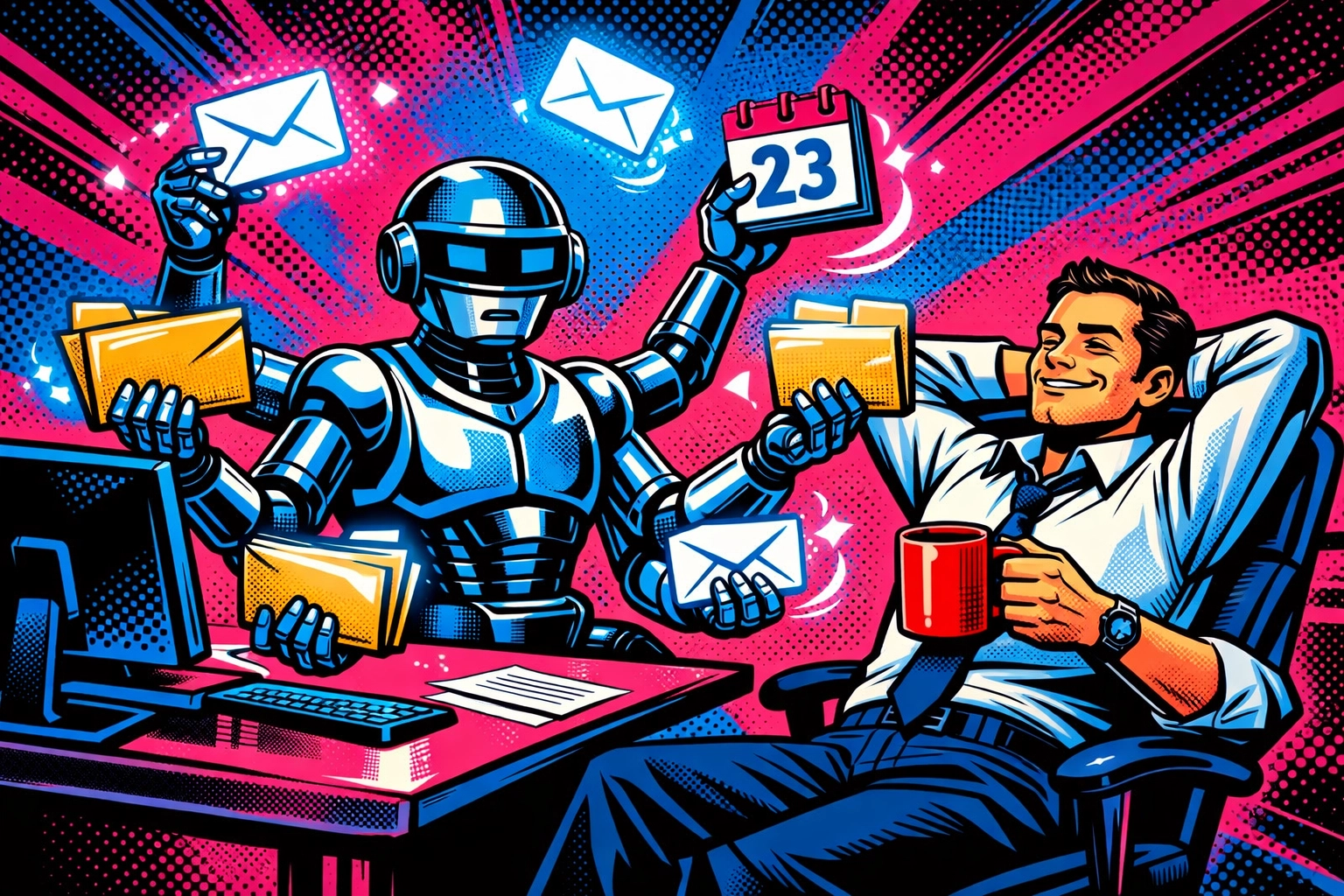
    An AI assistant for small business juggling digital tasks while the owner relaxes with coffee.


    AI CONTENT GENERATOR FOR SMALL BUSINESS: YOUR SECRET MARKETING WEAPON

    🔍 2:00 PM.

    The dreaded "content block."

    You know you need to post on LinkedIn. You know you need to send that newsletter. You know your blog needs an update. But your brain is mush, and the blinking cursor is mocking you.
    Marketing is usually the first thing to suffer when admin tasks pile up. But marketing is what brings in the money. You can't afford to skip it.

    Enter the ai content generator for small business.

    STEP 4: THE CONTENT ENGINE

    Stop writing from scratch. It’s a waste of your genius.

    An AI content generator isn't about being lazy; it's about being prolific. You provide the seed, a rough idea, a transcript of a voice note, or a link to a news article, and the AI builds the tree.

    • Social Media: Turn one long-form thought into ten punchy tweets and three LinkedIn posts.
    • Email Marketing: Generate subject lines that actually get opened.
    • SEO: Optimize your site while you’re making a sandwich.

    The secret? Don't just copy-paste. Use the AI to get 80% of the way there, then add your "human sauce" for the final 20%. That’s how you stay authentic without staying up until midnight writing.

    If you're wondering how to integrate this level of automation directly into your business structure, Marblism is the place to start.


    STEP 5: BUILD A CULTURE OF AUTOMATION

    🤝 4:00 PM.

    You’re almost there. The finish line is in sight.

    But automation only works if it's a team sport. If you're automated but your team is still stuck in "spreadsheet hell," you’ll eventually be pulled back down into the muck.

    Don't just automate your tasks. Automate the company.

    Encourage your team to find their own "quick wins." Give them the tools. Show them that AI isn't there to take their jobs, it's there to take the parts of their jobs they hate anyway.

    When everyone is using business automation tools, the entire company's velocity shifts. Suddenly, things that took a month take a week. Things that took a day take an hour.

    And you? You’re no longer the bottleneck.

    A successful team using business automation tools to create unstoppable momentum and efficiency.


    THE 5:00 PM REVELATION

    🌙 5:00 PM.

    Look at your desk.

    The laptop is still there, but the weight in your chest is gone. The "to-do" list is cleared. The "done" list is long.

    You didn't just work today. You built a machine that works for you.
    You close the lid. The click sounds like victory.

    Why this matters right now.

    The gap between the businesses that thrive and the ones that barely survive is widening. That gap is filled with automation. Every hour you spend on manual admin is an hour your competitor is spending on strategy, sales, or, heaven forbid, spending time with their family.

    You don't need more willpower. You need better systems.

    Start small. Pick one task today. Automate it. Then watch the dominoes fall.

    If you're ready to stop the grind and start the growth, let's get serious about your setup. Explore how to revolutionize your workflow at Marblism with Scott Bowen.


    FAQ: The "No-BS" Corner

    Q: Is AI going to make my business feel cold and robotic?
    A: Only if you let it. Use AI for the logic, keep the heart for yourself. It’s a tool, not a replacement for your personality.

    Q: Isn't all this software expensive?
    A: Is your time free? If you save 10 hours a week and you value your time at even $50/hour, that’s $2,000 a month in reclaimed value. The software pays for itself in week one.

    Q: I’m not a "tech person." Can I still do this?
    A: Yes. In 2026, if you can send a text message, you can use an ai assistant for small business. The tools are designed to talk to you like a human.

    Q: Where do I even start?
    A: Start by identifying the task you hate the most. The one that makes you sigh when you see it on your calendar. That’s your first target.

    Scaling shouldn’t be this hard. But here we are.

    Make the change. Close the laptop. Go home.

  • 7 Mistakes You’re Making with AI Business Automation (and How to Fix Them Before You Burn Out)

    ☕ 7:00 AM.

    You wake up, reach for your phone, and hope, just hope, that the "automated" systems you set up yesterday didn't self-destruct overnight. You were promised a beach, a laptop-free life, and a business that runs itself while you sleep.

    But instead? You’ve got 42 notifications from angry customers because your AI chatbot tried to offer a 90% discount on your most expensive service.

    Your inbox is a graveyard of "unsubscribed" notifications.

    And you? You’re more tired than you were before you "simplified" everything.

    AI business automation was supposed to be your ticket out of the grind. But right now, it feels like you’ve just hired a very fast, very confident intern who doesn't actually understand what you do.

    Let's fix that. Here are the 7 mistakes currently burning you out, and exactly how to pivot before your brand becomes a cautionary tale.


    1. THE "SET IT AND FORGET IT" DELUSION

    You thought you could just plug in an AI tool, connect it to your CRM, and walk away. You treated it like a slow cooker. Set the timer, come back in eight hours, and dinner is served.

    Except AI isn't a slow cooker. It’s more like a toddler with a flamethrower.

    When you automate customer interactions, support tickets, or high-stakes proposals without a human safety net, you’re essentially handing the keys of your "front door" to a machine that doesn't feel empathy. If a customer is frustrated, the AI doesn't care. It just follows the pattern.

    THE FIX: Use AI as your draft assistant, not your replacement. Let it gather data, summarize the problem, and prep the response. But for the love of your brand, keep a human in the loop for the final click. You provide the heart; the AI provides the speed.

    Check out how to balance this at https://marblism.link/scott-bowen.

    2. FEEDING THE BEAST JUNK DATA

    AI is only as smart as the spreadsheet you gave it.

    If your database is a mess of duplicate entries, outdated pricing from 2022, and inconsistent naming conventions, your AI is going to hallucinate. It looks at your messy data and sees "trends" that don't exist. Suddenly, it’s telling you to double your inventory for a product you stopped selling six months ago.

    THE FIX: Scrub your data. Before you unleash business automation tools, do a deep clean. Limit the AI’s memory to the last 24 months of relevant data and manually tag "black swan" events so the algorithm doesn't try to repeat a one-time fluke.

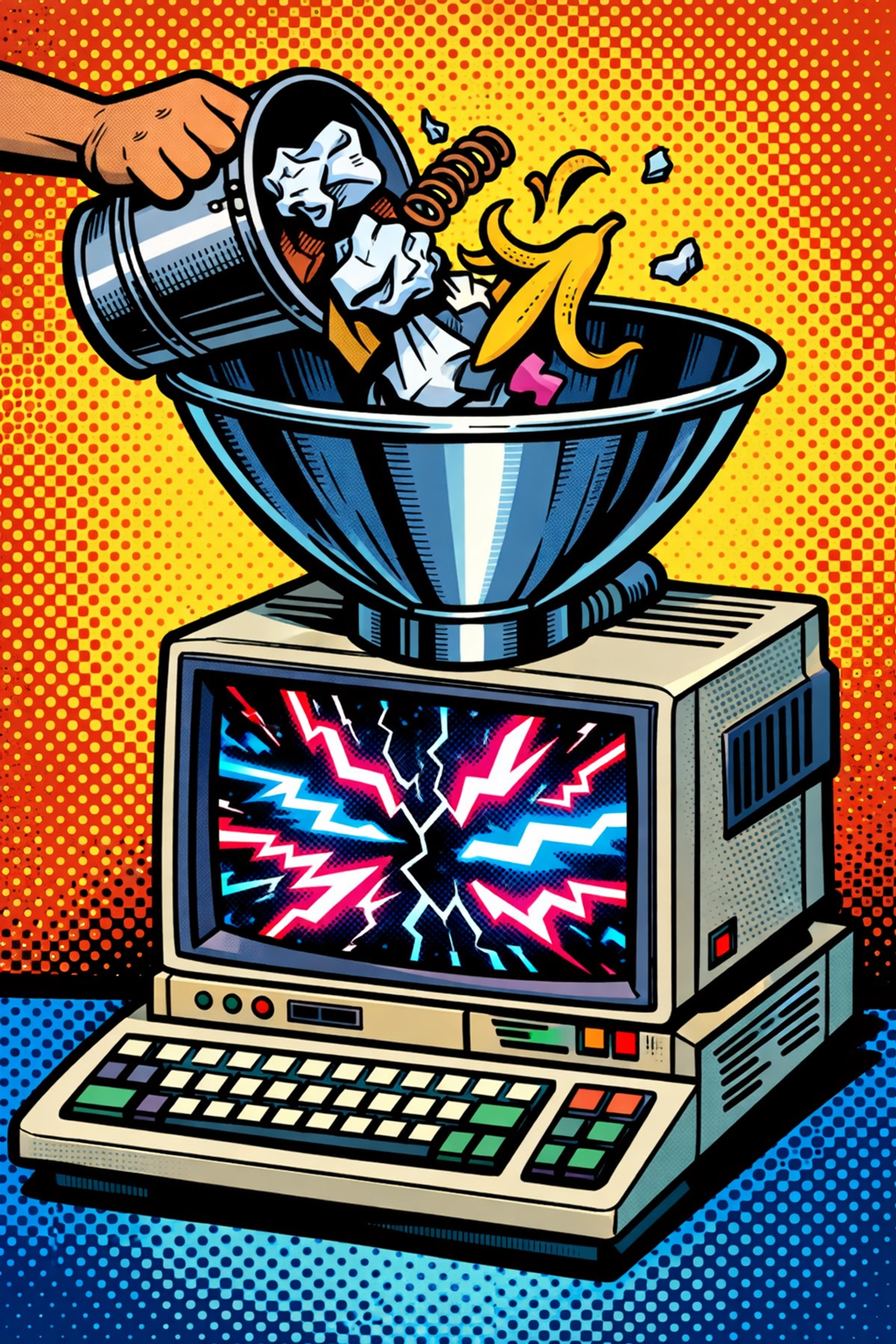
    A computer receiving trash through a funnel, illustrating the risk of poor data quality in business automation tools.

    3. THE "PUBLIC BLENDER" SECURITY RISK

    You’re in a rush. You have a 20-page client contract or a messy payroll sheet, and you need a summary now. So, you copy, paste, and hit "summarize" in a free, public AI tool.

    Congratulations. You just put your company’s "secret sauce" into a public blender.

    Most free AI platforms retain your data to train their future models. That means your private financials or client trade secrets could potentially pop up in someone else's prompt six months from now.

    THE FIX: Stop pasting sensitive info into consumer-facing tools. Use enterprise-grade AI business automation that comes with data security agreements. If it’s free, you (and your data) are the product.

    4. BLIND TRUST IN THE POLISHED OUTPUT

    AI sounds so… certain. It writes with the confidence of a Rhodes Scholar.

    But here’s the thing: AI doesn't actually "know" anything. It’s just predicting the next most likely word in a sequence. It can cite legal policies that don't exist, miscalculate your tax obligations, and invent "facts" about your own business history.

    If you let a "polished" AI response go out to a regulator or a high-value lead without checking the math, you’re playing Russian Roulette with your reputation.

    THE FIX: Verify. Always. Especially if it involves numbers, contracts, or compliance. AI drafts. You approve. Treat every AI output like a first draft from a very creative, but slightly high, freelancer.

    🤝 Stop guessing and start scaling. See how real automation works here: https://marblism.link/scott-bowen

    5. LOSING YOUR BRAND SOUL

    "In the ever-evolving landscape of today’s digital paradigm…"

    Stop right there. If your marketing looks like that, your customers already know you’ve checked out.

    AI marketing tools are great at generating volume, but they are notoriously bad at "vibe." They default to corporate-speak that sounds like a dry textbook. Your brand voice is why people buy from you and not a giant faceless corporation. When you automate the personality out of your business, you’re just competing on price. And that’s a race to the bottom.

    THE FIX: Define your brand voice parameters before you prompt. Tell the AI to "write like a casual expert who hates jargon." Then, go back in and add those specific "you-isms" that make your content feel human.

    Robot holding a human mask to represent humanizing AI content and maintaining an authentic brand voice.

    6. REINFORCING YOUR OWN BLIND SPOTS

    We all have biases. Maybe you’ve historically hired from one specific pool, or you’ve always priced higher for certain zip codes.

    If you feed that historical data into an AI, it won't "fix" the bias, it will amplify it. It sees the pattern and thinks, "Oh, this is how we do things here." Suddenly, your automated hiring or pricing strategy is discriminating against great talent or loyal customers, and you don’t even know it’s happening until you’re hit with a PR nightmare or a lawsuit.

    THE FIX: Audit the outcomes. Don't just look at the efficiency; look at the equity. If your AI business automation tools are producing weirdly skewed results, it’s time to diversify the training data.

    7. SHINY OBJECT SYNDROME (THE NO-STRATEGY TRAP)

    You bought the tool because you saw a TikTok about it. Or because a competitor is using it.

    But you didn't ask: "What specific problem am I solving?"

    Implementing tools without a strategy actually creates more work. Now you’re managing the tool, fixing the tool’s mistakes, and paying a monthly subscription for a "solution" that’s just a glorified digital paperweight. You’re burning out because you’re managing software, not a business.

    THE FIX: Map the workflow first. Draw it on a napkin. If you can’t explain the process to a human, don't try to automate it with a machine. Strategy first. Automation second.


    📱 11:00 AM.

    Your phone buzzes.

    But this time, it’s different.

    You’ve implemented a real system. Your leads are being qualified by a smart filter. Your data is clean. Your brand voice is intact.

    You look at the notification. It’s a confirmed booking from a high-ticket client who went through your entire automated funnel without a single hiccup.

    You smile. You take a sip of coffee. It’s actually still hot.

    The chaos is gone… because you stopped treating AI like a magic wand and started treating it like a precision tool.

    Scaling shouldn't be this hard. And honestly? It doesn't have to be.

    Stop juggling the "maybe" and the "what if." If you’re ready to stop the burnout and actually start building, you need to see how the pros do it.

    👉 Ready to automate without the headache?
    Check out Marblism with Scott Bowen here.


    FAQS FOR THE OVERWORKED OWNER

    Is AI going to replace my team?
    No. But a person using AI will replace a person who isn't. Think of it as giving your team superpowers, not a pink slip.

    Which tool should I start with?
    Start with the task you hate the most. If you hate manual data entry, start there. If you hate scheduling, start there. Don't try to boil the ocean.

    Is it expensive?
    It’s more expensive to stay manual. Between the lost hours and the human errors, "old school" is costing you a fortune.

    Can I trust the data?
    Only if you audit it. Trust, but verify: especially in the first 90 days of any new automation.

    How do I get started without losing my mind?
    Simple. You don't do it alone. You use a platform that’s built for business growth, not just tech experiments.

    Start your journey here: https://marblism.link/scott-bowen

    🌙 8:00 PM.

    The lights are off in the office. Your computer is closed.

    The business is still moving. The leads are still flowing. The AI is working; under your rules, your voice, and your strategy.

    You're not burnt out. You're just getting started.

    ONE CLICK TO CALM.

  • Agentic AI in the Back Office: Let Your PMS Manage Housekeeping While You Focus on Guests

    Agentic AI in the Back Office: Let Your PMS Manage Housekeeping While You Focus on Guests

    Automate the mundane. Reclaim your day. Master the guest experience.

    The era of the "active" back office has arrived. We aren't just talking about digital checklists or automated emails anymore: we’re talking about a world where your hotel management software thinks, reasons, and acts on your behalf.

    By integrating agentic AI into your daily operations, you can achieve a 70% reduction in manual workload. This isn't a futuristic dream; it’s the new standard for modern hospitality. You get more time to spend with your guests and a smoother operation that runs itself, all from one innovative platform.

    The end of the spreadsheet era.

    We believe property management shouldn't feel like a high-stakes game of Tetris. For decades, the back office has been the place where hospitality goes to hide: buried under cleaning schedules, maintenance logs, and endless vendor coordination.

    Traditional automation was a start. It followed simple "if-this-then-that" rules. But guest behavior isn't always that predictable. Agentic AI is different. It doesn't just follow a script; it understands the goal. It sees that a guest in Room 302 checked out early, realizes the next guest requested an early arrival, and automatically shifts your housekeeping team’s priority without you ever touching a keyboard.

    It’s the shift from software you use to software that works for you.

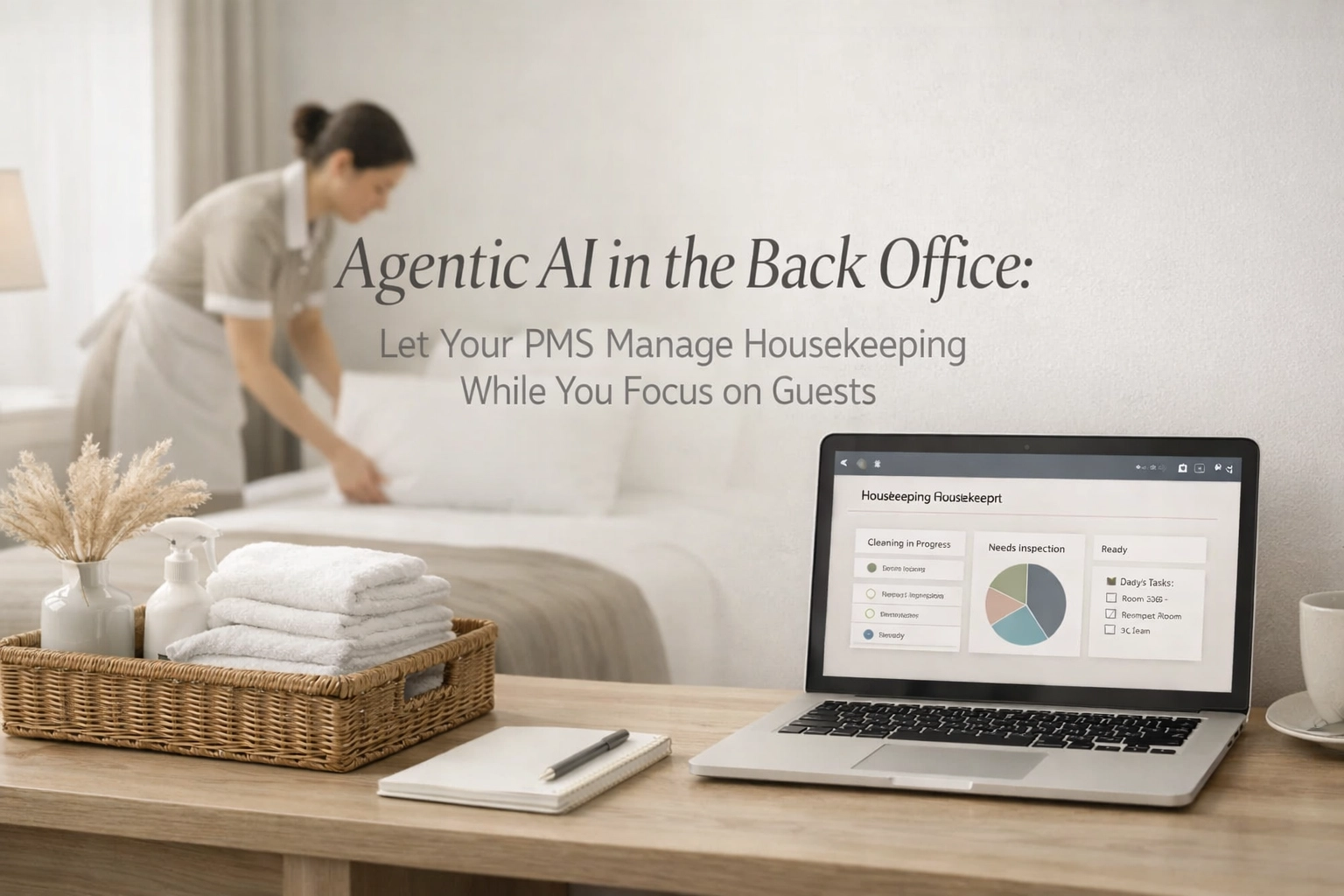
    Minimalist boutique hotel back office desk featuring laptop with hotel management software.

    Why Agentic AI is a game-changer.

    We think the best technology is the kind you don't have to manage. Agentic AI acts as an autonomous layer within your hotel management software, coordinating complex tasks that used to require a human's constant attention.

    • Autonomous Reasoning. It analyzes real-time booking data and operational shifts to make executive decisions on the fly.
    • Proactive Coordination. It manages workflows across departments, ensuring housekeeping and maintenance are always in sync.
    • Self-Correcting Loops. If a task is delayed or a status changes, the AI recalibrates the entire day's schedule instantly.

    Real numbers for real impact.

    This isn't just about making life easier (though it certainly does that); it's about the bottom line. When your back office is powered by agentic agents, the results are measurable:

    • 70% manual workload reduction. Stop spending hours every morning assigning rooms.
    • 85% workflow automation. From guest turnover to vendor invoicing.
    • 3x faster guest response times. Because your team isn't stuck in the basement filing paperwork.
    • 25% uplift in revenue per unit. Faster turnovers mean more early check-ins and late check-outs you can actually fulfill.

    Housekeeping on autopilot.

    Let’s talk about the heart of your operation: housekeeping. It’s the most labor-intensive part of the business and the one most prone to human error. Agentic AI transforms this from a chaotic scramble into a precise, self-managed dance.

    We believe your cleaning crew should spend their time cleaning, not checking a piece of paper to see where to go next. An AI-driven PMS coordinates cleaning schedules based on live occupancy. It knows which rooms are dirty, which are "stay-overs," and which need a deep clean for a VIP arrival.

    • Real-time reassignment. If a guest checks out at 8:00 AM instead of 11:00 AM, the AI agent updates the housekeeper's mobile app immediately.
    • Vendor communication. Need an external laundry service? The system can ping them automatically when the linen count hits a certain threshold.
    • Quality assurance. AI can even analyze photos of finished rooms to ensure standards are met before the room is marked "ready" in the system.

    "It’s like having a ghost manager who never sleeps and actually likes doing the schedule," says one of our partners. "I haven't looked at a cleaning roster in three months, and our guest satisfaction scores have never been higher."

    Housekeeping staff using a mobile app for automated room scheduling in hotel management software.

    Maintenance that predicts the future.

    Beyond the mop and bucket, agentic AI is taking over the heavy lifting of maintenance. We think a broken AC should be fixed before the guest even notices it’s getting warm.

    By connecting IoT devices to your hotel management software, AI agents can monitor the health of your property in real-time. If a sensor detects a leak or a failing motor, the agent doesn't just send an alert: it creates a work order, assigns it to the available technician, and checks the guest's schedule to find a 30-minute window for the repair.

    1. Identify. Detect the issue through sensor data or guest feedback.
    2. Route. Send the task to the right person with the right tools.
    3. Schedule. Find the perfect time that doesn't disrupt the guest.
    4. Approve. Manage vendor invoices and close the loop automatically.

    This level of operational excellence used to require a massive team. Now, it just requires the right tech stack.

    Focus on the guest, not the grind.

    The most valuable thing you have is your time. When you let agentic AI handle the back-office logistics, you get that time back. You can focus on the things that actually matter: the "judgment calls," the brand choices, and the human connections that turn a one-time visitor into a lifelong fan.

    We believe the future of hospitality is "high-tech, high-touch." The technology handles the data so the humans can handle the hospitality. It’s about removing the friction between you and your guests.

    Imagine a morning where you arrive at the property, and instead of troubleshooting a staffing shortage or a missed cleaning, you spend your time chatting with guests in the lobby or brainstorming a new local partnership. That’s the freedom an autonomous PMS provides.

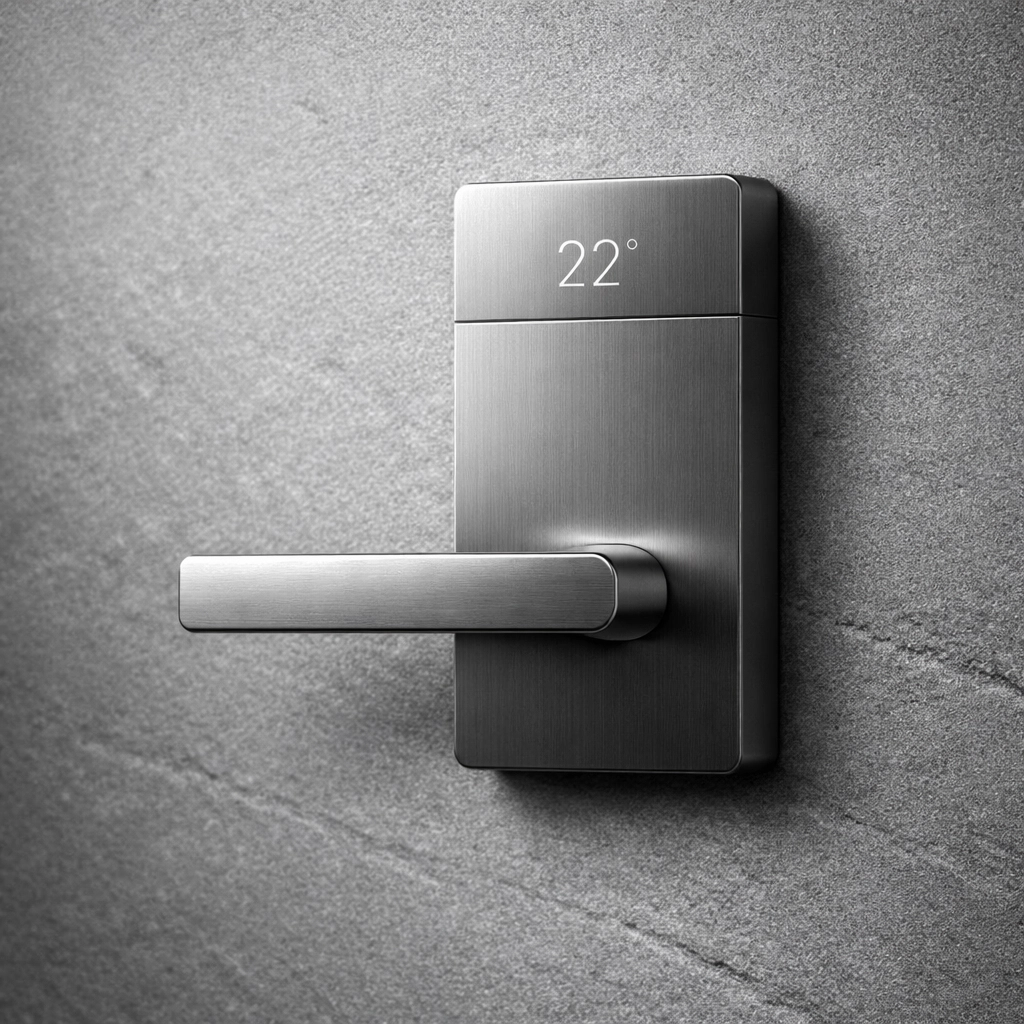
    Sleek hotel smart thermostat on stone wall showcasing IoT-integrated hotel management software.

    Making the transition is easy.

    You might think implementing this kind of intelligence requires a PhD and a year of downtime. It doesn't. Modern, innovative platforms are designed to be intuitive and easy to deploy.

    • Get a 30-minute demo. See how agentic agents can slot into your existing workflow.
    • Connect your tools. Sync your housekeeping and maintenance apps seamlessly.
    • Set your goals. Tell the AI what matters most: speed, cost, or quality: and let it run.

    Ready to see how the next generation of hotel management software can transform your property? You can explore the possibilities with Mews right here and start moving toward a more autonomous, profitable future.

    The bottom line.

    Hospitality is changing. The properties that win in 2026 and beyond will be the ones that embrace operational automation not just as a "nice-to-have," but as a core competitive advantage.

    By offloading the repetitive, data-heavy tasks of the back office to agentic AI, you aren't just saving money: you're elevating your entire brand. You’re becoming more responsive, more efficient, and ultimately, more human.

    Stop managing your software. Let your software manage your property. It’s time to get back to what you love: the art of the guest experience.

    Hotel staff interacting with a guest in a bright lobby, freed by automated hotel management software.


    Ready to reclaim your time? Check out the future of hospitality technology at Mews and get your property running on autopilot in no time.

  • Agentic AI in the Back Office: Let Your PMS Manage Housekeeping While You Focus on Guests

    Agentic AI in the Back Office: Let Your PMS Manage Housekeeping While You Focus on Guests

    Automate the mundane. Empower your team. Elevate the guest experience.

    The hospitality industry is shifting. We’re moving away from the era of "manual everything" and stepping into a world where your software doesn't just store data: it acts on it. At Mews, we’ve seen properties reduce manual workloads by 70% while increasing their response times to guest inquiries by 3x. This isn't just basic automation. This is Agentic AI.

    By integrating autonomous agents directly into your property management software, you’re not just buying a tool; you’re hiring a digital workforce. This workforce handles the heavy lifting in the back office: scheduling housekeeping, managing maintenance, and tweaking revenue: all from one innovative platform.

    What is Agentic AI? (And Why You Should Care)

    We believe technology should be invisible. It should work in the background, making life easier without requiring a PhD to operate. Traditional hotel management software relies on "if-this-then-that" rules. If a guest checks out, mark the room as dirty. That’s fine, but it’s limited.

    Agentic AI goes further. It doesn’t just follow a script; it pursues a goal. It analyzes real-time booking data, staff availability, and guest preferences to make decisions. It’s the difference between a toaster (which just toasts) and a chef (who decides when the toast is ready based on the whole meal).

    • Autonomous Decision Making. The AI evaluates the best course of action without needing a human to click "confirm."
    • Real-Time Adaptability. If a flight is delayed and a guest checks in late, the AI re-prioritizes the cleaning schedule instantly.
    • Goal-Oriented Workflows. You set the objective: like "maximize room readiness by 3 PM": and the agent figures out how to get there.

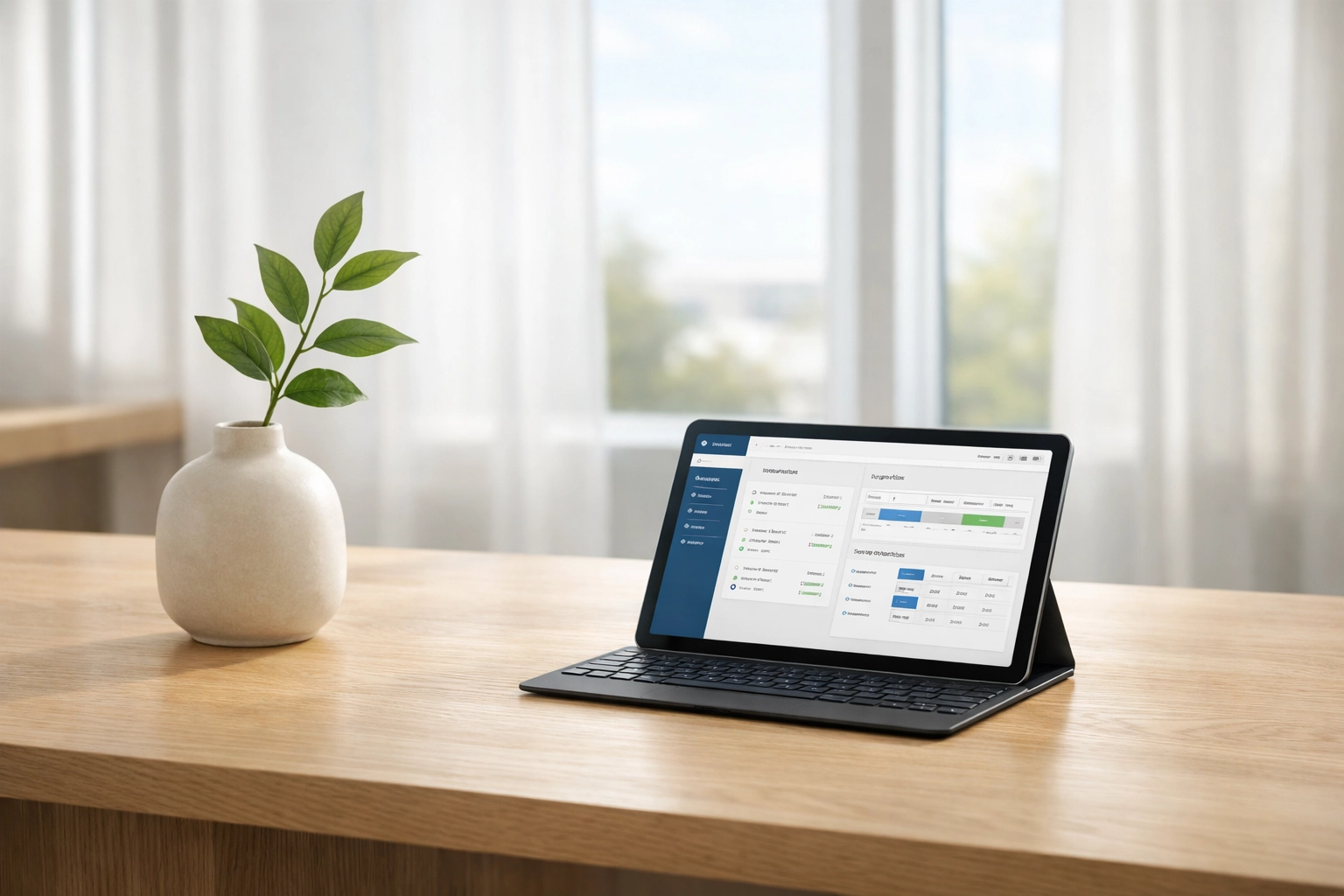
    Modern housekeeping software for hotels displayed on a tablet in a minimalist back-office.

    Revolutionizing Housekeeping Software for Hotels

    We think the morning "huddle" where managers scramble to assign rooms is a waste of talent. Your housekeeping leads are experts in quality and leadership; they shouldn't be human calculators trying to optimize floor routes.

    Using Agentic AI as your housekeeping software for hotels means the PMS becomes the conductor. A PropertyOps Agent looks at the day’s arrivals and departures. It sees that Room 302 is a VIP guest arriving early and that the housekeeper on the third floor is ahead of schedule. It automatically pushes a notification to the staff member's mobile device to prioritize that room.

    No clipboards. No radios. No confusion.

    • Dynamic Task Assignment. Tasks are routed to the right person at the right time based on their current location and workload.
    • Vendor Coordination. The system can communicate directly with external cleaning partners, updating job boards without manual intervention.
    • Instant Status Updates. The moment a room is marked "clean" on a mobile device, it’s live in the system for the front desk to see.

    "It used to take me two hours every morning just to get the teams out on the floor. Now, I grab a coffee, check the dashboard, and the AI has already assigned the first twenty rooms. I save at least 10 hours a week," says one of our partners.

    Beyond the Basics: Hotel Revenue Management Software

    Revenue management shouldn't be a reactive game. If you’re waiting until Monday morning to look at your weekend occupancy and adjust rates, you’ve already lost money.

    Modern hotel revenue management software powered by Agentic AI works 24/7. It doesn't get tired, and it doesn't take weekends off. It monitors market trends, competitor pricing, and your own inventory levels to make micro-adjustments to your rates in real-time.

    • Automated Pricing Adjustments. The AI senses a surge in local demand and bumps your ADR before you even finish your morning email.
    • Inventory Optimization. It automatically closes out certain channels or shifts room blocks to ensure you’re selling the most profitable units first.
    • 25% Uplift in Revenue. Properties using these autonomous strategies consistently see a significant boost in revenue per unit by capturing demand they would have otherwise missed.

    Learn how to get started with these tools at https://referrals.mews.com/umqHYIto.

    Luxury hotel interior details highlighting high-end service enabled by hotel revenue management software.

    Maintenance Workflows that Think Ahead

    Maintenance is often the "forgotten" back-office function: until a guest complains about a broken AC. Agentic AI shifts maintenance from reactive to proactive.

    When a guest mentions a leaky faucet via a guest journey app, the AI doesn't just log a ticket. It checks the maintenance team's schedule, verifies if the part is in stock (if integrated with inventory), and assigns the task. If it's a high-priority issue in a room scheduled for a check-in, it might even move the arriving guest to a different room automatically to avoid a bad review.

    • Preventative Scheduling. The AI tracks usage patterns and schedules deep cleans or filter changes before things break.
    • Seamless Communication. Maintenance staff receive clear instructions and can upload photos of completed repairs directly to the PMS.
    • Reduced Downtime. By optimizing the repair schedule, rooms are back in the "sellable" pool faster.

    The Power of Cloud-Native Architecture

    Why does Mews do this better? Because we are cloud-native. Older, legacy hotel management software is like a heavy anchor: it's hard to move and even harder to update. Mews is built for the internet era. Our architecture allows different AI "agents" to talk to each other and external apps through a robust API.

    We believe your PMS should be the heart of your tech stack, not just another silo. Because we're in the cloud, these AI agents have the processing power they need to analyze massive amounts of data in milliseconds.

    • Scalability without Staffing. Manage 10 properties or 1,000 with the same core back-office team.
    • Secure and Accessible. Your data is safe, and your agents are working whether you are in the office or on a beach.
    • Continuous Innovation. We push updates and new AI capabilities regularly, so your "digital employees" are always getting smarter.

    A minimalist hotel corridor representing the seamless efficiency of a cloud-native PMS and agentic AI.

    How to Get Started: The 30-Minute Transformation

    Transitioning to an agentic workflow sounds daunting, but it’s easier than you think. You don't have to flip a switch and let the robots take over everything on day one.

    1. Audit your current bottlenecks. Where is your team spending the most "clicking" time? Usually, it's housekeeping or manual rate updates.
    2. Set your parameters. Tell the AI your goals. (e.g., "Always prioritize Diamond members for early check-in.")
    3. Connect your team. Get your staff on mobile devices so they can receive real-time updates from the AI agents.
    4. Monitor and refine. Watch the dashboard. You’ll see the efficiency climb almost immediately.

    Focus on What Matters: Your Guests

    At the end of the day, guests don't book a hotel because they love your back-office efficiency. They book because of the experience. They want a warm welcome, a clean room, and a seamless stay.

    By letting Agentic AI handle the housekeeping assignments and the revenue math, you give your human staff their time back. Your front desk team can actually look a guest in the eye and have a conversation instead of staring at a screen trying to find a clean room. Your managers can focus on strategy and hospitality, not spreadsheets.

    We think the future of hospitality is a perfect blend of high-tech and high-touch. The tech handles the repeatable, data-heavy tasks, while the humans handle the emotional, high-judgment moments that turn a guest into a loyal fan.

    Ready to see what the future of hotel management software looks like?

    Get started today and see how Mews can transform your operations: https://referrals.mews.com/umqHYIto.

    Agentic AI isn't just a trend; it's the new standard for operational excellence. It's time to let your PMS do the work, so you can do the hosting. All from one innovative platform.

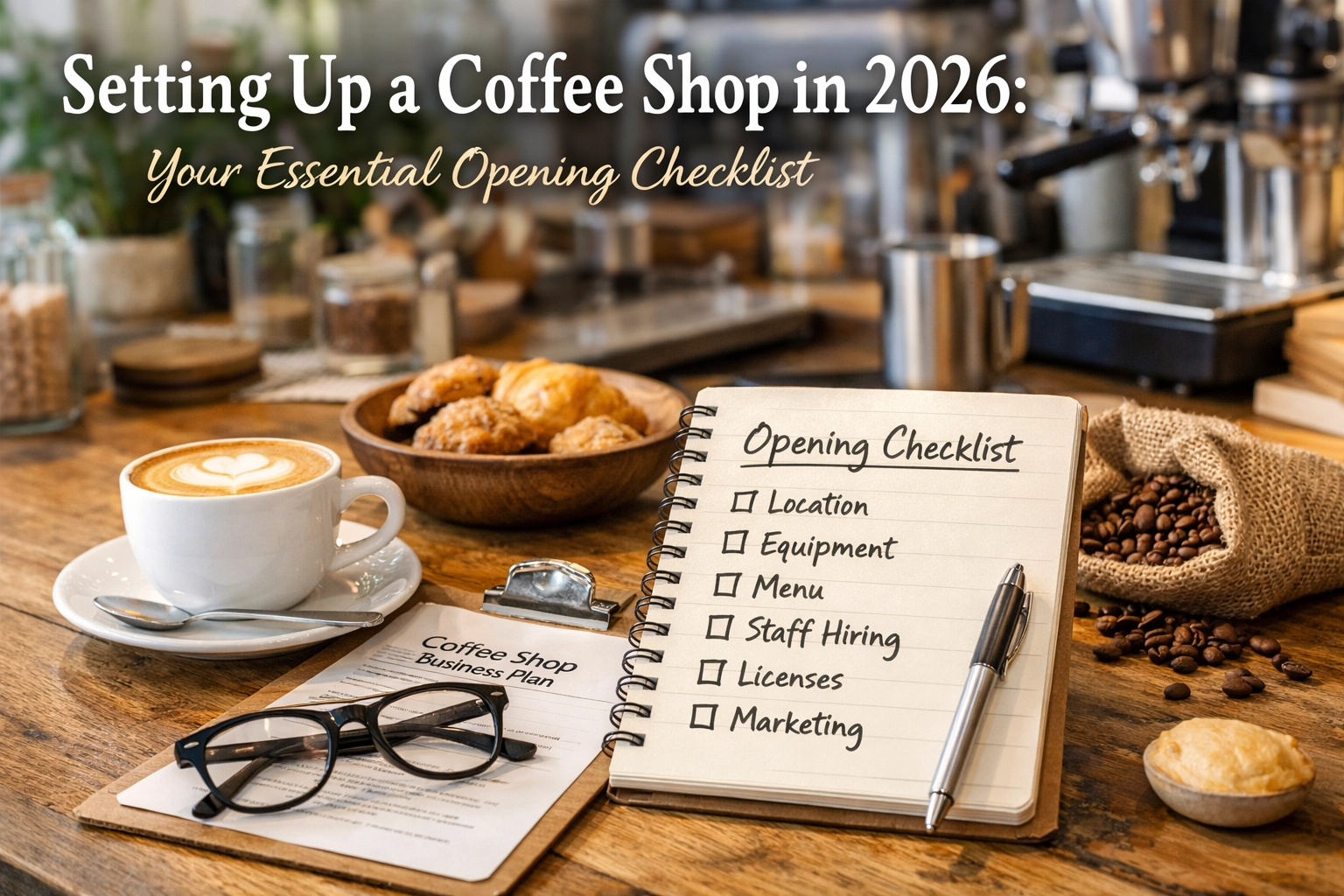
  • Setting Up a Coffee Shop in 2026: Your Essential Opening Checklist

    Setting Up a Coffee Shop in 2026: Your Essential Opening Checklist

    So, you’ve decided to take the plunge and start up a coffee shop in 2026. First of all, congratulations! You’re joining a wonderful, caffeinated community. But let’s be honest for a second, the landscape has changed. Gone are the days when you could just throw a mismatched sofa in a corner, buy a second-hand espresso machine, and hope for the best.

    Today’s customers are more educated, more eco-conscious, and they expect a level of quality that was once reserved for high-end boutiques. Setting up a coffee shop now requires a blend of old-school hospitality and new-school tech efficiency.

    We’ve put together this comprehensive checklist to help you navigate the chaos of your coffee shop set up. Whether you're a seasoned pro or a complete newcomer, this guide will keep you on track.


    Phase 1: The Blueprint and the "Why"

    Before you buy a single teaspoon, you need a plan. Why does your town need another coffee shop? What are you bringing to the table (literally)?

    • Define your target demographic: Are you catering to the "laptop-and-latte" remote workers, the 7:00 AM commuters, or the weekend brunch crowd?
    • The Business Plan: This isn't just for the bank; it’s for you. Include your concept, financial projections (be realistic!), and a growth timeline.
    • Legal Structure: Register your business. Whether you’re a sole trader or a limited company, get the paperwork sorted early.
    • The Brand Voice: How do you want to sound? We prefer a warm, welcoming tone, but maybe you want something more minimalist or edgy.

    Planning a coffee shop layout with a hand-drawn floor plan in a notebook and a fresh cup of coffee.

    Phase 2: Location and Layout Logic

    The "vibe" is important, but workflow is king. If your baristas are bumping into each other, your service will suffer, and your profits will follow suit.

    • Foot Traffic vs. Rent: High street locations are great for visibility but come with eye-watering rents. Sometimes a side street with a strong social media presence is the smarter move.
    • The "Flow" Test: Imagine the customer journey. They enter, they look at the menu, they order, they wait, they pick up. Does any of that cross over? You want a "U" or "L" shaped flow to keep things moving.
    • Shop Fitting: Don't neglect the "boring" stuff like plumbing and electrics. A commercial espresso machine needs a dedicated water line and often a 32-amp power supply. We have a great guide on building a coffee shop and shop fitting that dives deeper into this.

    Phase 3: The Shiny Stuff (Equipment)

    This is where the budget usually disappears. Choosing your espresso equipment is one of the biggest decisions you’ll make. In 2026, energy efficiency is no longer "nice to have", it’s essential for your margins.

    • The Espresso Machine: This is the heart of your business. Do you go for a traditional lever machine or an automatic? We often recommend La Spaziale machines because they are incredibly reliable and produce fantastic results.
    • The Grinder: Don't skimp here. A £10,000 machine is useless if the grinder is inconsistent. You need an "on-demand" grinder to keep the beans fresh.
    • Water Filtration: Essential. Not just for the taste of the coffee, but to protect your expensive equipment from scale build-up.
    • Milk Jugs and Tampers: You’ll need various sizes. Proper tamping technique (consistent pressure, around 30 lbs or 15kg) is what separates the pros from the amateurs.

    Professional espresso machine pouring a double shot of coffee, essential equipment for setting up a coffee shop.

    Phase 4: Sourcing Your Lifeblood (The Beans)

    You can have the best equipment in the world, but if the beans are stale or poorly roasted, the coffee will be… well, rubbish.

    • Find a Wholesale Partner: You don't just want a supplier; you want a partner. Look for roasters who offer wholesale specialty coffee and actually care about your success.
    • The "Fresh is Best" Rule: Coffee is a fresh product. We believe it hits its peak between 7 and 21 days after roasting.
    • The Menu Mix: You’ll likely want a "crowd-pleaser" house blend (think chocolatey, nutty notes) and perhaps a rotating single-origin for the enthusiasts.

    If you’re looking for a roaster that lives and breathes quality, check out what we do at Limini Coffee. We’re all about helping new shops get off the ground with the best possible start.


    Phase 5: Menu Design and the Science of Steam

    Your menu should be clear and concise. In 2026, "specialty" means more than just a flat white.

    • The Core Menu: Focus on the classics. Make sure your staff know the difference between a latte and a cappuccino (it's all about the milk texture!).
    • Alternative Milks: This is huge now. You need a dedicated "Barista" version of oat, soy, and almond milks. They behave differently under steam, so understanding milk chemistry is vital.
    • The Theatre: People buy with their eyes. Whether it’s latte art or the way you pour a filter coffee, adding a bit of theatre to your service increases the perceived value.
    • Pricing: Use a coffee brewing calculator to work out your exact cost per cup. Don't forget to account for waste!

    Barista pouring silky micro-foam milk to create tulip latte art, a key skill when you start up a coffee shop.

    Phase 6: Training and Standard Operating Procedures (SOPs)

    Consistency is the hardest part of running a coffee shop. Your coffee needs to taste the same at 8:00 AM as it does at 4:00 PM.

    • Barista Training: Don't just hire "cool" people; hire people who want to learn. Send them for professional barista training. It pays for itself in reduced waste and happy customers.
    • Dialing In: Teach your staff how to "dial in" the grinder every morning. This involves adjusting the grind size to hit that sweet spot, usually an extraction of 25-30 seconds for a double shot.
    • Maintenance: An espresso machine is a workhorse, but it needs love. Daily backflushing and cleaning the steam wands are non-negotiable. Check out our tips on looking after your espresso machine.

    Phase 7: The Final Countdown (Compliance and Launch)

    You’re almost there! Now for the red tape.

    • Health and Safety: You’ll need a Food Hygiene Rating. Keep your kitchen and bar area spotless from day one.
    • The Soft Opening: Invite friends, family, and local business owners for a "dry run." It’s better to find out your POS system crashes when you order three croissants during a rehearsal than on your grand opening.
    • Feedback Loops: Listen to your early customers. If everyone says the music is too loud, turn it down. Check out what others say about us to see how feedback builds a brand.

    Inviting interior of a cozy local cafe seen through the window, perfect for a successful coffee shop set up.

    2026 Trends to Keep in Mind

    To really stand out when setting up a coffee shop this year, keep an eye on these evolving trends:

    1. Sustainable Packaging: Compostable cups are the bare minimum. Look into circular economy cup schemes.
    2. Hyper-Local Sourcing: If you can get your cakes from the bakery two doors down, do it. Customers love a local story.
    3. Tech Integration: AI-driven inventory management can help you predict how many liters of oat milk you’ll need next Tuesday based on historical weather patterns. (Yes, really!)
    4. The "Third Space" Evolution: With more people working hybrid roles, provide high-quality Wi-Fi and plenty of power outlets, but maybe have a "no laptop" zone during busy lunch hours to keep table turnover high.

    Why Is This Important?

    The reason we focus so much on the technical details: like understanding crema or the exact wattage of a machine: is because the margin for error in the specialty coffee world is slim. But don't let that intimidate you!

    Starting a coffee shop is one of the most rewarding things you can do. You’re creating a hub for your community. It’s a place where first dates happen, business deals are closed, and friendships are forged over a hot cup of beans that you lovingly sourced and brewed.

    So, take a deep breath, grab your clipboard, and start ticking off those boxes. If you need a hand with the wholesale side of things or just want to chat through your equipment options, we’re always here to help.

    Welcome to the grind: the good kind! ☕️✨

    A sun-drenched corner of a thriving specialty coffee shop with artisan mugs and a fresh croissant on the table.

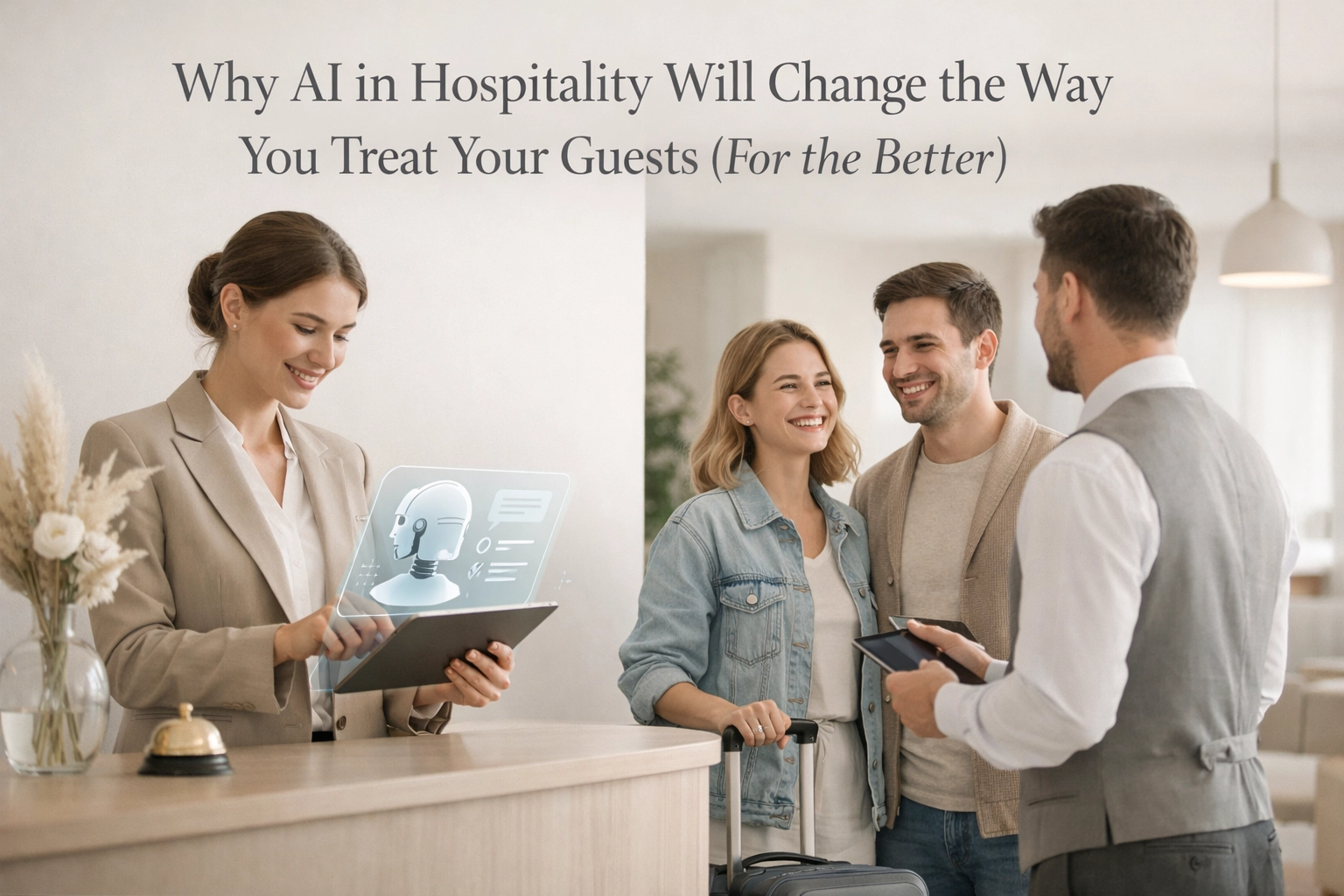
  • Why AI in Hospitality Will Change the Way You Treat Your Guests (For the Better)

    Why AI in Hospitality Will Change the Way You Treat Your Guests (For the Better)

    Transform guest stays. Elevate every touchpoint. Redefine hospitality standards.

    The future of hospitality isn't coming; it’s already checking in. We’re moving past the era of "standard service" into an age where your property understands what a guest needs before they even think to ask. At the heart of this shift is Artificial Intelligence, not as a cold, robotic replacement for human warmth, but as the powerful engine that makes that warmth possible.

    We believe that technology should serve people, not the other way around. By integrating AI into your operations, you’re not just optimizing a business; you’re liberating your staff to be the hosts they were always meant to be. This is how you scale the "boutique" feeling to hundreds of rooms, all from one innovative platform.

    Personalization isn't a perk. It's the product.

    In the old world, personalization meant remembering a guest's name at the front desk. In the new world, it means knowing they prefer a corner room on a high floor with an extra oat milk latte waiting at 8:00 AM.

    AI takes the massive piles of data your hotel generates, booking history, dietary preferences, feedback, and behavioral patterns, and turns them into actionable insights. It’s about pre-arrival customization that sets the vibe before they even step through the door.

    We think the guest journey should feel like a curated experience, not a transaction.

    • Gather guest preferences automatically during the booking flow.
    • Deploy smart room technology that adjusts lighting and temperature based on past stays.
    • Offer tailored local recommendations that actually match the guest’s interests.

    Minimalist hotel room featuring a tablet for personalized guest settings and smart technology.

    When your PMS knows that a guest is a fitness enthusiast, it doesn’t just send a generic welcome email. It sends a map of the best running trails nearby and a 10% discount on a post-workout smoothie. This level of hyper-personalization drives 20% higher guest satisfaction scores and keeps people coming back. It’s about making every guest feel like your only guest.

    Support that never sleeps (and never gets tired)

    Let’s be honest: your front desk team is tired of answering the same five questions about Wi-Fi passwords and breakfast hours. It’s a drain on their energy and a bottleneck for guests who actually need complex assistance.

    AI-powered virtual concierges and chatbots are the 24/7 heroes of the modern hotel. They handle the routine so your team can handle the remarkable. These aren’t the clunky bots of five years ago. Today’s AI understands context, sentiment, and dozens of languages, providing instant answers that feel human.

    • Resolve 80% of routine inquiries without human intervention.
    • Provide instant multi-lingual support for international travelers.
    • Handle room service orders and housekeeping requests in real-time.

    "Our AI concierge handles about 150 requests a day," says one Mews partner. "That’s 150 times my staff didn't have to pick up a phone, allowing them to spend more time chatting with guests in the lobby."

    See what a smart platform can do for your team. If you're ready to modernize, check out how we do things at Mews.

    From reactive fixes to anticipatory magic

    The hallmark of a five-star stay used to be how quickly a hotel fixed a problem. Now, the gold standard is that the problem never happened in the first place. AI has moved hospitality from reactive to anticipatory.

    Predictive service anticipation is the closest thing we have to mind reading. By analyzing data patterns, AI can flag that a guest is likely to want a late checkout before they even ask, or it can detect that an AC unit in Room 304 is showing signs of mechanical stress and needs a 10-minute tweak before the next guest arrives.

    Sleek hotel corridor with integrated AI sensors for predictive maintenance and guest comfort.

    We believe the best service is often invisible.

    1. Identify guests likely to extend their stay and offer availability proactively.
    2. Use IoT sensors to monitor room health and prevent maintenance disruptions.
    3. Anticipate peak lobby times to adjust staffing levels dynamically.

    This shift doesn't just improve the guest experience; it protects your bottom line. Preventing a bad review because of a broken heater is worth significantly more than the cost of the repair itself. It’s about being three steps ahead, always.

    Giving the "Human" back to Hospitality

    There is a common fear that AI will make hotels feel cold or impersonal. We believe the exact opposite is true.

    When you automate the administrative heavy lifting, the data entry, the billing reconciliations, the scheduling, you give your staff their time back. You give them the freedom to look up from their screens and actually engage with the person standing in front of them.

    Operational efficiency is the foundation of great service. AI optimizes housekeeping routes so rooms are ready faster. It manages energy consumption so you’re more sustainable (and profitable). It streamlines the back-of-house chaos into a silent, well-oiled machine.

    • Save up to 10 hours a week per manager on administrative tasks.
    • Reduce energy costs by 15% through smart climate control.
    • Empower staff with mobile tools that put guest data at their fingertips.

    Hospitality staff providing personalized service to a guest in a bright, modern hotel lobby.

    Imagine a world where your check-in process takes 30 seconds because the AI handled the identity verification and payment authorization before the guest arrived. The "check-in" then becomes a "welcome," complete with a glass of water and a genuine conversation. That is the power of AI.

    The Future is a Platform, Not a Tool

    To truly leverage AI, you can’t just bolt it onto an old system. You need a platform designed for the digital age. You need a PMS that thinks as fast as your guests do.

    At Mews, we aren't just building software; we're building the future of how people experience travel. We believe in open ecosystems, seamless integrations, and the relentless pursuit of "better." Whether you’re running a boutique hideaway or a global brand, AI is the key to unlocking your property's full potential.

    The transformation of your guest experience starts with a single step. It’s easy to get started, and the impact is immediate.

    1. Audit your current manual processes.
    2. Identify the repetitive tasks that drain your team.
    3. Get a demo of a modern, AI-integrated PMS.

    Guest completing a digital check-in using a mobile hospitality app on a modern hotel platform.

    Don't let your property get left in the analog past. The most successful hoteliers of the next decade will be those who embrace the synergy of human creativity and machine intelligence. It’s time to treat your guests to the stay they deserve: one that is personalized, proactive, and perfectly executed.

    Ready to see the future of hospitality in action? Explore what’s possible and get started with Mews today. We’ll get you earning revenue and delighting guests in no time.

    Why Wait for the Future?

    The technology to transform your property exists right now. It’s not about "if" AI will change hospitality, but "how" you will use it to lead the pack. By focusing on personalization, 24/7 support, and anticipatory service, you aren't just keeping up with trends: you’re setting them.

    We think the best hotels are the ones that feel like home, only better. AI is the secret ingredient that makes that feeling scalable.

    See what Mews can do for your guest journey. Visit our referral page to learn more about joining the most innovative community in hospitality tech. Let's build something remarkable together.

  • 10 Reasons Your Hotel Guest Experience Technology Isn’t Working (And How to Fix It)

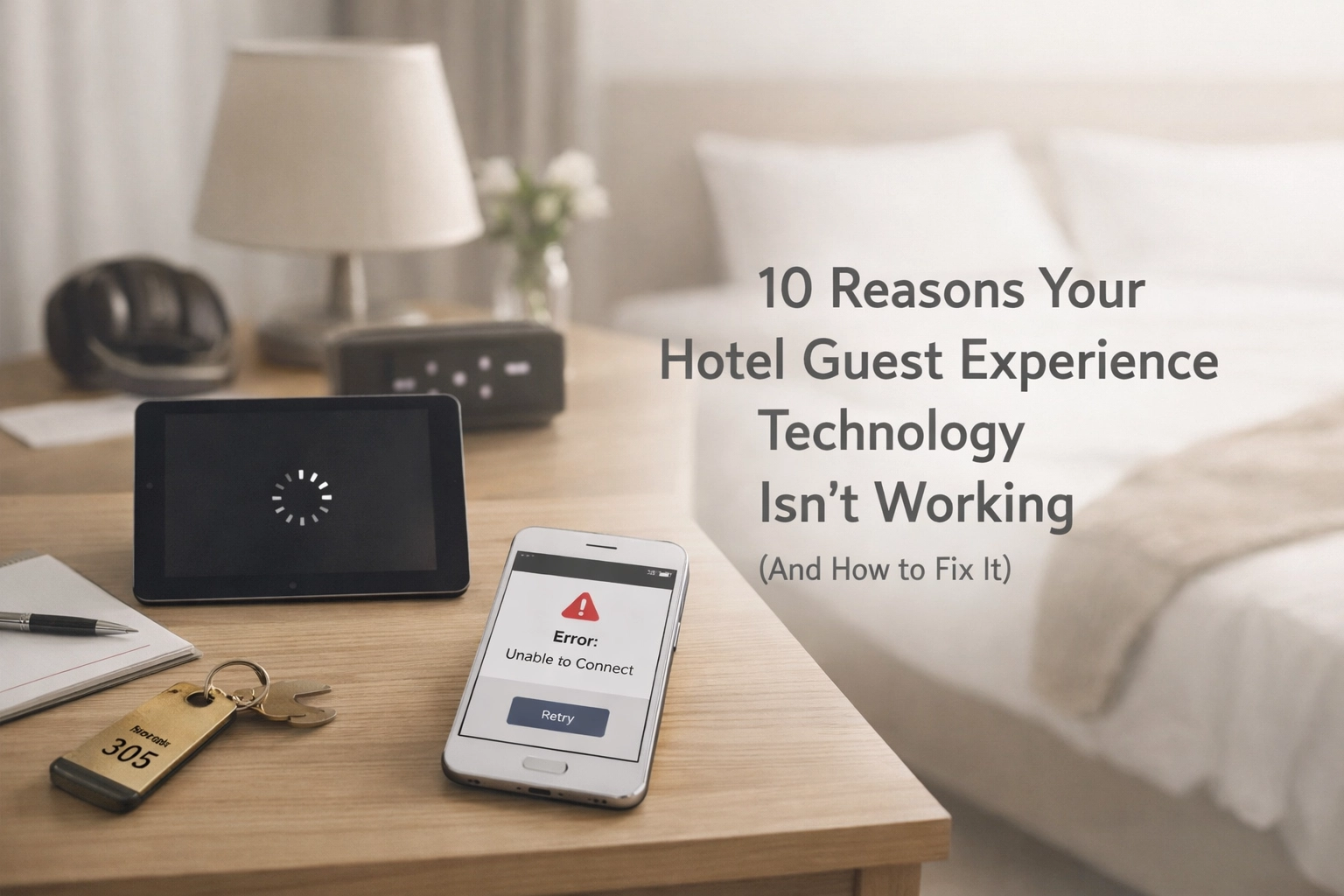
    10 Reasons Your Hotel Guest Experience Technology Isn’t Working (And How to Fix It)

    Elevate the journey. Empower your team. Delight every guest.

    The promise of hotel technology has always been simple: do more with less while making the guest feel like a VIP. But walk into any lobby today, and you’ll likely see a guest struggling with a QR code or a front desk agent apologizing because “the system is running slow.” It’s frustrating. It’s expensive. And honestly, it’s unnecessary.

    We believe technology should be the invisible engine of hospitality, not a hurdle for your guests to jump over. Currently, 72% of travelers are more likely to return to a hotel that offers a seamless tech experience: yet many properties are still tethered to legacy systems that feel like they belong in the era of dial-up.

    It’s time to move from "functional" to "phenomenal." Here is why your guest experience technology is stalling and exactly how to fix it: all from one innovative platform.

    1. The Connectivity Gap

    Wi-Fi isn't a "perk" anymore; it's a utility, like running water or electricity. Data shows that connectivity is the most frequent complaint in negative reviews. When the Wi-Fi drops, so does your guest satisfaction score.

    The Fix:
    Stop treating your network as an afterthought. Invest in high-density hardware that handles the modern traveler’s "four-device" lifestyle (laptop, phone, tablet, watch). If your PMS doesn't integrate with your Wi-Fi gateway to provide seamless, one-click login for returning guests, you’re missing a beat.

    2. The Training Trap

    You can have the most expensive, AI-driven guest platform in the world, but if your staff is scared to use it, it’s just digital paperweight. Too often, technology is "dumped" on frontline teams without the proper context or continuous education.

    The Fix:

    • Implement "Room Orientations" where staff walk guests through in-room tech.
    • Run weekly 15-minute "Feature Sprints" for staff to master one new tool.
    • Choose intuitive interfaces that require minimal onboarding.

    Hotel staff member using a tablet in a modern lobby to manage guest experience technology.

    3. The Integration Island

    This is the silent killer of guest satisfaction. When your PMS doesn't talk to your restaurant POS, and your POS doesn't talk to your housekeeping app, you end up with data silos. The guest has to give their name and credit card three different times. That’s not hospitality; that’s an interrogation.

    The Fix:
    Move to an open API architecture. At Mews, we believe in a "Best-of-Breed" ecosystem. You should be able to plug in your favorite tools and have them share data instantly. This allows for a single guest profile that follows the traveler from the bar to the spa to the checkout kiosk.

    "Switching to a connected ecosystem saved our front office 10 hours a week on manual data entry. Now, they actually have time to talk to guests." : Mark, Boutique Hotelier

    4. The Security Paradox

    As you collect more guest data to personalize the stay, you become a larger target for cyber threats. Many older systems lack the robust encryption required to handle modern payment methods or sensitive personal preferences safely.

    The Fix:
    Prioritize cloud-native security. Ensure your technology partners are PCI-DSS Level 1 compliant and offer end-to-end encryption. Security shouldn't be a feature; it should be the foundation.

    5. Over-Engineered User Interfaces

    If a guest needs a manual to turn off the lights or order a club sandwich, the technology has failed. Complex UIs lead to "choice paralysis" and frustration. We’ve seen guests give up on mobile check-in simply because the "Next" button was hidden behind a chatbot popup.

    The Fix:
    Simplify, then simplify again. Use "Natural Language" interfaces and recognizable icons. Test your guest-facing apps on people who don't work in tech. If your grandmother can't use it, it’s too complicated.

    Guest using a simple and intuitive mobile app on a smartphone in a luxury hotel suite.

    6. The Digital Key Dead-End

    Digital keys are the future, but only when they work 100% of the time. There is nothing more damaging to loyalty than a guest arriving at 2:00 AM after a 12-hour flight only to find their smartphone won't unlock their door.

    The Fix:
    Don’t just "set it and forget it." Implement a rigorous maintenance schedule for Bluetooth locks and ensure your app has a "fast-track" fallback. If the digital key fails, the system should automatically alert the front desk to meet the guest with a physical backup before they even have to ask.

    7. The "Robot" Problem

    Automation is great for efficiency, but it can’t replace empathy. Hotels that lean too heavily on bots and automated emails often lose the "soul" of their brand. Guests want speed, but they also want to feel seen.

    The Fix:
    Use automation to handle the "boring" stuff (billing, check-in, Wi-Fi codes) so your humans can handle the "magic" stuff (local recommendations, celebrating anniversaries).

    • Automate the routine.
    • Humanize the exceptions.
    • Personalize the data.

    8. The Legacy Anchor

    Still running on a server in a back room? That’s your anchor. Legacy hardware is slow, prone to crashing, and impossible to update with new features like AI-driven dynamic pricing or guest messaging.

    The Fix:
    Go cloud-native. A modern PMS allows you to manage your property from a smartphone while you’re walking the floor. It updates automatically, ensuring you always have the latest security patches and features without needing an IT team on-site.

    Hotel manager accessing cloud-based management software on a tablet in a modern corridor.

    9. The Billing Black Hole

    Errors in guest billing: like double-charging for a minibar or missing a pre-paid deposit: are the fastest way to lose trust. These errors usually happen because back-office systems aren't synced in real-time.

    The Fix:
    Automate your financial journey. Use integrated payment gateways that reconcile transactions instantly. When the guest looks at their "Live Bill" on their phone, it should be 100% accurate, down to the last cent.

    10. Smart Room Stumbles

    Smart bulbs and IoT thermostats are brilliant: until they lose connection. When the "Smart Home" features in a hotel room fail, the room becomes "Dumb" and unusable.

    The Fix:
    Ensure all smart room technology has a manual override. A guest should always be able to flip a physical switch if the voice command fails. Regularly audit your IoT health via your PMS dashboard to catch offline devices before the guest checks in.


    See what Mews can do

    The common thread in all these tech failures? Fragmentation. When your tools don't talk to each other, your guests feel the friction. We think hospitality is about flow: the effortless movement from booking to bed to breakfast.

    By centralizing your operations on a platform designed for the future, you eliminate the "glitches" and replace them with "moments." Whether it's through AI-powered guest insights or our industry-leading marketplace of integrations, we get you earning revenue and winning fans in no time.

    Ready to fix your guest experience?

    Schedule a 30-minute demo today and see how the right platform makes all the difference.

    The Bottom Line

    Technology should never be the headline of a guest’s stay; their experience should be. When you solve these ten friction points, you’re not just fixing "IT problems": you’re clearing the path for genuine hospitality.

    It’s time to stop troubleshooting and start hosting. After all, the best technology is the kind that lets you forget it’s even there.

    A tranquil boutique hotel lounge illustrating a seamless and frictionless guest experience.

  • The Direct Booking Revolution: How to Win the Guest Before They Even Arrive

    The Direct Booking Revolution: How to Win the Guest Before They Even Arrive

    Capture their interest. Convert with confidence. Maximize every stay.

    In the fast-moving landscape of 2026, your booking engine is no longer just a "Check Availability" button. It’s the digital heartbeat of your property. It’s the first handshake, the first promise of hospitality, and the most critical link in your revenue chain. Yet, many hotels are still tethered to legacy systems that feel like relics of the dial-up era: clunky, slow, and disconnected from the guest journey.

    We believe that booking a room should be as delightful as the stay itself. We think that direct bookings shouldn't feel like a lucky break, but a predictable outcome of a superior user experience. When you move beyond the basics, you transform your website from a digital brochure into a high-performance conversion machine: all from one innovative platform.

    Visibility is Not a Suggestion

    If a guest has to search for your booking button, you’ve already lost them. In an age of eight-second attention spans, visibility is your most valuable currency. Your "Book Now" CTA shouldn't just live on the homepage; it needs to be a persistent, guiding light across every single page of your site.

    Think about the user journey. A guest reads about your rooftop bar. They browse your spa treatments. They check out your local area guide. At every one of those touchpoints, the impulse to stay with you is peaking. Don't make them scroll back to the top or hunt through a hamburger menu to find the way in.

    • Use contrasting colors that pop against your brand palette.
    • Implement a sticky header that keeps the CTA in view at all times.
    • Ensure the language is action-oriented: "Secure Your Stay" or "Explore Our Rooms."

    By making the path to purchase effortless, you’re not just selling a room; you’re respecting the guest's time.

    Mobile-friendly hotel booking interface on a smartphone showing a clear direct booking button.

    The Frictionless Philosophy

    The quickest way to kill a conversion is to ask for too much, too soon. We’ve all been there: you’ve picked your room, you’re ready to pay, and suddenly you’re faced with a three-page form asking for your home address, your cat’s name, and your preferred pillow firmness before you’ve even entered a credit card.

    Modern booking engines: the kind we build at Mews: prioritize speed. We believe in capturing the essentials now and the details later. Name, email, and payment. That’s it. Everything else: from dietary requirements to arrival times: can be handled through a seamless online check-in process later.

    • Reduce the number of clicks from "Select Room" to "Confirmation."
    • Use "Guest Checkout" options to avoid forced account creation.
    • Leverage auto-fill capabilities for mobile users.

    "We saw a 22% jump in conversions just by cutting two fields from our checkout page," says one of the 12,500 properties using Mews to redefine their guest experience. It’s simple math: less friction equals more revenue.

    A Mobile-First Mindset is the Only Mindset

    By March 2026, mobile bookings haven't just overtaken desktop; they’ve dominated them. If your booking engine is just a "shrunken-down" version of your desktop site, you’re essentially leaving money on the table. A truly responsive engine adapts its entire logic for the thumb, not the mouse.

    A mobile-first experience means big buttons, vertical scrolling, and lightning-fast load times. It means integrating with digital wallets like Apple Pay and Google Pay so guests can book a room while they’re waiting for their morning latte. If a guest has to pinch-and-zoom to see your room rates, they’re going to bounce straight back to an OTA where the experience is optimized.

    • Optimize for "thumb-friendly" navigation.
    • Prioritize visual content over heavy text blocks.
    • Integrate one-tap payment solutions to eliminate card entry.

    Minimalist boutique hotel workspace with a smartphone optimized for frictionless direct bookings.

    Trust as Your Most Powerful Currency

    Why do guests book through OTAs? It’s rarely about the price: it’s about the perceived security. They know the OTA platform, they trust the "Verified" badges, and they feel safe putting their data there. To win that booking back, your direct engine needs to radiate that same level of confidence.

    Brand consistency is the first step toward building that trust. If your website is sleek and modern, but your booking engine looks like a generic third-party pop-up from 2005, the "trust gap" widens. The colors, fonts, and imagery must be a seamless extension of your brand. You aren't just selling a bed; you’re selling a professional, secure experience.

    • Display SSL certificates and secure payment badges prominently.
    • Show live social proof, like "3 people are looking at this room right now."
    • Use a "Best Price Guaranteed" widget to remove the need for price shopping.

    When you align your brand’s visual identity with a secure technical infrastructure, you reassure the guest that booking direct is the smartest: and safest: choice they can make.

    The Art of the Narrative Upsell

    Your booking engine shouldn't just be a transaction point; it should be a revenue-generating powerhouse. But there’s a fine line between a helpful suggestion and annoying "upselling." The key is relevance and timing.

    Instead of a generic list of add-ons, use the booking process to tell a story. If they’ve selected a suite, offer a bottle of chilled Champagne on arrival. If they’re booking a weekend stay, suggest a late check-out. High-quality imagery and evocative descriptions are your best friends here. Don't just list "Breakfast – £25." Describe "A locally sourced artisan breakfast served with panoramic city views."

    • Use high-resolution photos for every add-on.
    • Bundle services into attractive packages (e.g., "The Romantic Escape").
    • Offer tiered upgrades at the point of room selection.

    By presenting these options within the flow of the booking, you’re enhancing the guest’s future experience while simultaneously boosting your RevPAG (Revenue per Available Guest).

    Premium room service with champagne and chocolates illustrating personalized hotel upselling opportunities.

    AI: Your 24/7 Digital Concierge

    In 2026, AI isn't a futuristic concept: it’s the engine under the hood. At Mews, we see AI as the ultimate tool for personalization. Imagine a booking engine that recognizes a returning guest and automatically highlights their favorite room type or pre-fills their preferred spa treatment.

    AI can also handle the "what-ifs." If a guest is hesitating, an AI-powered chatbot can answer specific questions about pet policies or parking in real-time, right inside the booking flow. This removes the final barriers to conversion without requiring a single minute of your staff's time.

    • Use AI to dynamically adjust pricing based on real-time demand.
    • Personalize room recommendations based on previous guest behavior.
    • Deploy intelligent chatbots to handle common booking inquiries instantly.

    The goal is to make every guest feel like your only guest, providing a level of bespoke service that was once reserved only for luxury penthouses, all delivered automatically through your platform.

    Modern minimalist hotel reception where AI-driven technology supports high-touch guest service.

    Creating a Cohesive Ecosystem

    At the end of the day, your booking engine is only as good as the PMS it talks to. If your engine is disconnected from your operations, you’re dealing with manual entry, double bookings, and data silos. The true magic happens when your booking engine, PMS, and guest experience tools work in perfect harmony.

    This is the Mews philosophy. We believe in an ecosystem where data flows freely, where guest preferences are tracked from the first click to the final check-out, and where technology empowers your team to focus on what they do best: being hosts.

    • Sync inventory in real-time to avoid overbookings.
    • Capture guest data directly into your PMS for immediate personalization.
    • Automate confirmation emails and pre-stay communication.

    When your tech stack is unified, the guest feels the difference. It’s smoother, faster, and more professional. It’s the difference between a hotel that just provides a room and one that provides an unforgettable experience.

    The Path Forward

    Scoring more direct bookings isn't about one single "trick." It’s about a commitment to excellence across every digital touchpoint. It’s about being where your guests are, speaking their language, and removing every possible hurdle between them and your front door.

    The hospitality industry is evolving at breakneck speed. The properties that thrive in 2026 and beyond will be those that embrace innovation, prioritize the guest experience, and leverage the power of a unified platform to drive growth.

    Are you ready to see what the future of hospitality looks like? You can start transforming your property’s performance today. It’s time to move beyond the basic booking engine and join the revolution.

    Get started with a more intelligent way to manage your hotel and see how Mews can transform your guest experience. Our team is ready to help you unlock your property's full potential and get you earning more direct revenue in no time.