Category: Category 1

Use this description to tell users what kind of blog posts they can find in this category.

  • The Psychology of Self Check-In: Why Guests Love the Kiosk

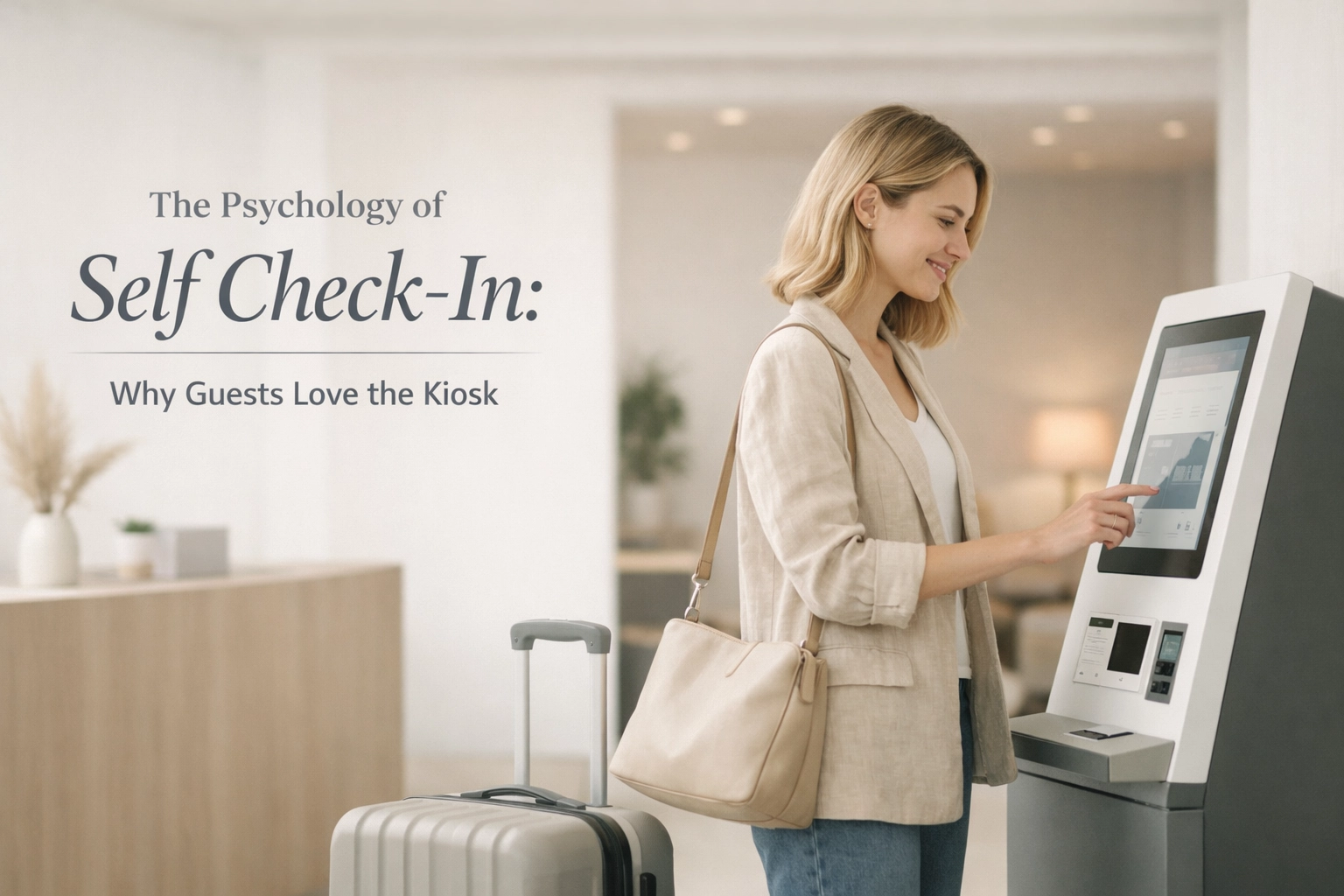
    The Psychology of Self Check-In: Why Guests Love the Kiosk

    Arrive. Tap. Relax.

    Modern travel is often a grueling marathon of queues, security checks, and middle seats. We believe the final hurdle shouldn’t be a velvet rope in your lobby. When guests walk through your doors, they aren't just looking for a room; they’re looking for the end of their journey.

    Data shows that even a five-minute wait at the front desk can slash guest satisfaction scores by 50%. It’s not just about the time: it’s about the psychology of the "wait." By removing the queue, you transform the arrival experience from a chore into a choice, all from one innovative platform.

    Explore how the right tech changes the guest mindset: Mews Hospitality Solutions.

    Control, Agency, and the Modern Traveler

    Travel is inherently unpredictable. Flights get delayed. Luggage goes missing. Traffic is a nightmare. By the time a guest reaches your lobby, their sense of agency is usually depleted.

    We believe hospitality is about giving that power back.

    The self-check-in kiosk acts as a psychological reset button. Instead of being a passive participant in a manual process: waiting for a staff member to type, scan, and click: the guest becomes the lead of their own story. They choose the pace. They choose the interaction level.

    • Autonomy over waiting. Guests manage their arrival on their own timeline.
    • Customization at the fingertips. Selecting room upgrades or late check-outs without the "sales" pressure.
    • Data security. Entering personal details privately rather than reciting them across a busy desk.
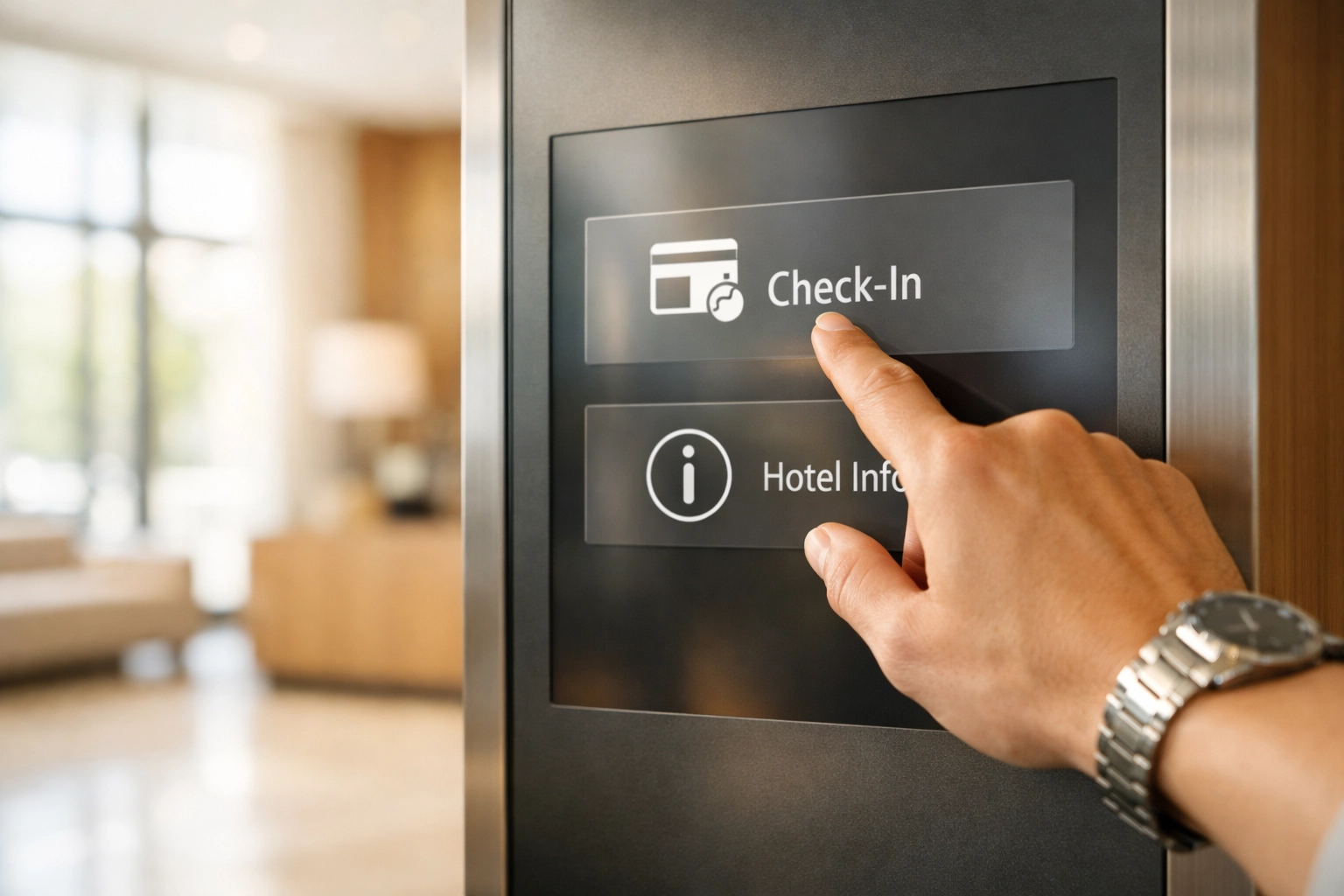
    A guest using a sleek self-check-in kiosk in a sun-drenched modern hotel lobby.

    The High Cost of the "Social Battery"

    We’ve all been there. You’ve been through three time zones, navigated a foreign subway system, and your "social battery" is in the red. The last thing you want is a chirpy, scripted conversation about the local weather.

    For many, the traditional front desk is a source of subtle social anxiety. There’s the pressure to be polite, the fear of misunderstanding instructions, and the general fatigue of "performing" for a stranger.

    Self-service kiosks provide a much-needed psychological buffer. They offer a "low-stakes" entry point. For neurodivergent travelers or those with social anxiety, the ability to bypass a crowded, loud lobby and interact with a clear, predictable interface is more than a convenience: it’s a relief.

    Frictionless Means Fearless

    Why does a screen feel faster than a human? It’s about transparency.

    When a guest stands at a desk, they can’t see what the receptionist is doing. They hear keyboard clicks and see furrowed brows. This creates a "black box" effect that breeds impatience. A kiosk, however, shows a progress bar.

    • Visual confirmation. Guests see their data being processed in real-time.
    • Immediate reassurance. Digital keys or printed cards are issued instantly.
    • Reduced cognitive load. Clear UI/UX replaces complex verbal instructions.

    "It’s about making the guest feel like they’re already home the second they step inside," says one Boutique Hotel Manager. "Since we moved check-in to the Mews Kiosk, the tension in the lobby has basically evaporated."
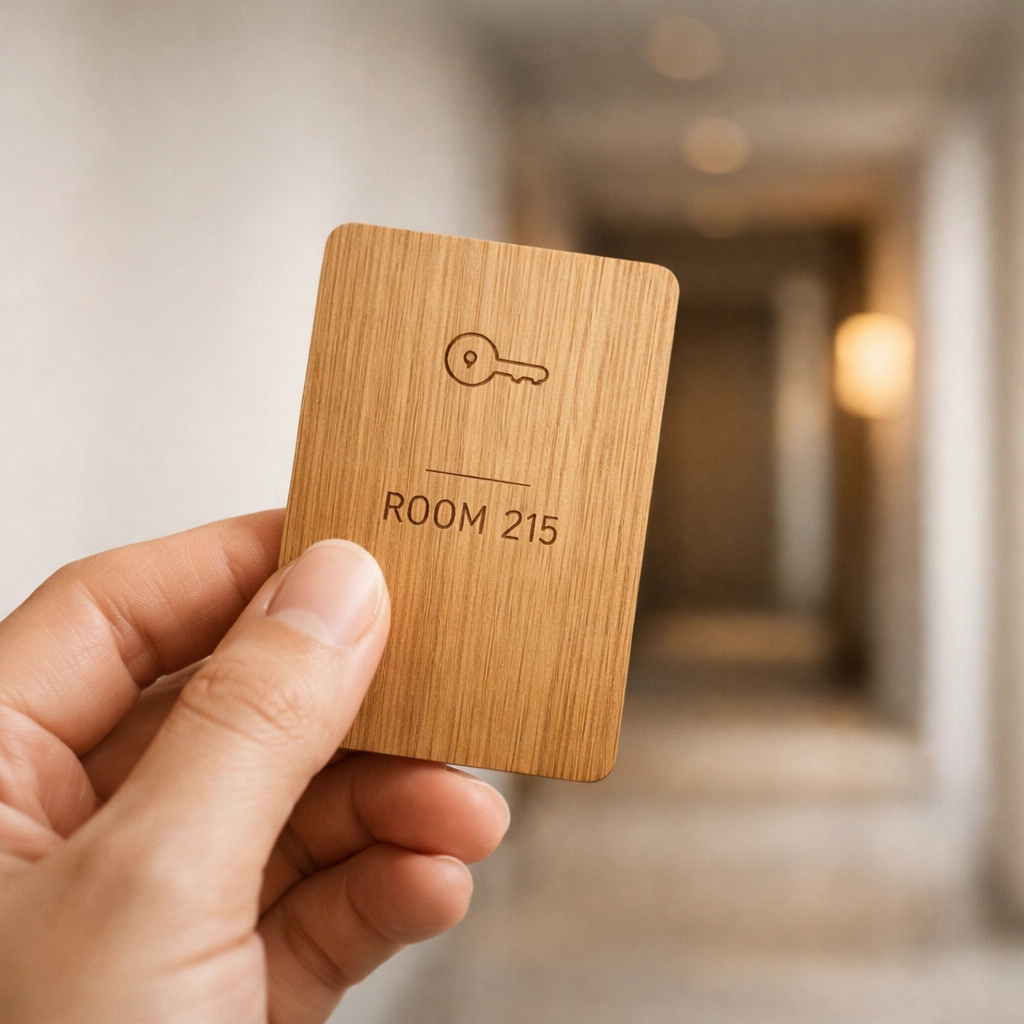
    Close-up of a guest holding a wooden room key card after a seamless self-check-in.

    Privacy as the New Luxury

    In the digital age, privacy is a premium. There is something inherently exposing about announcing your name and credit card details in a room full of strangers.

    We think privacy should be the default, not an upgrade.

    Self-check-in allows for a discreet arrival. It caters to the guest who wants to slip in unnoticed, the business traveler who needs to get straight to a call, and the family who needs to manage three crying toddlers without an audience. By using a hotel PMS that supports seamless kiosk integration, you're telling your guests: "We respect your space."

    12,500 Properties Moving Faster

    We aren't just talking about theory. Over 12,500 properties are already redefining the guest journey by focusing on what people actually want: speed and simplicity.

    The Mews Kiosk isn't just a piece of hardware; it’s an extension of your brand’s personality. It says you value your guest's time as much as they do. When the tech handles the paperwork, your staff is free to be more than data entry clerks: they become true hosts, focusing on the "high-touch" moments that actually build loyalty.
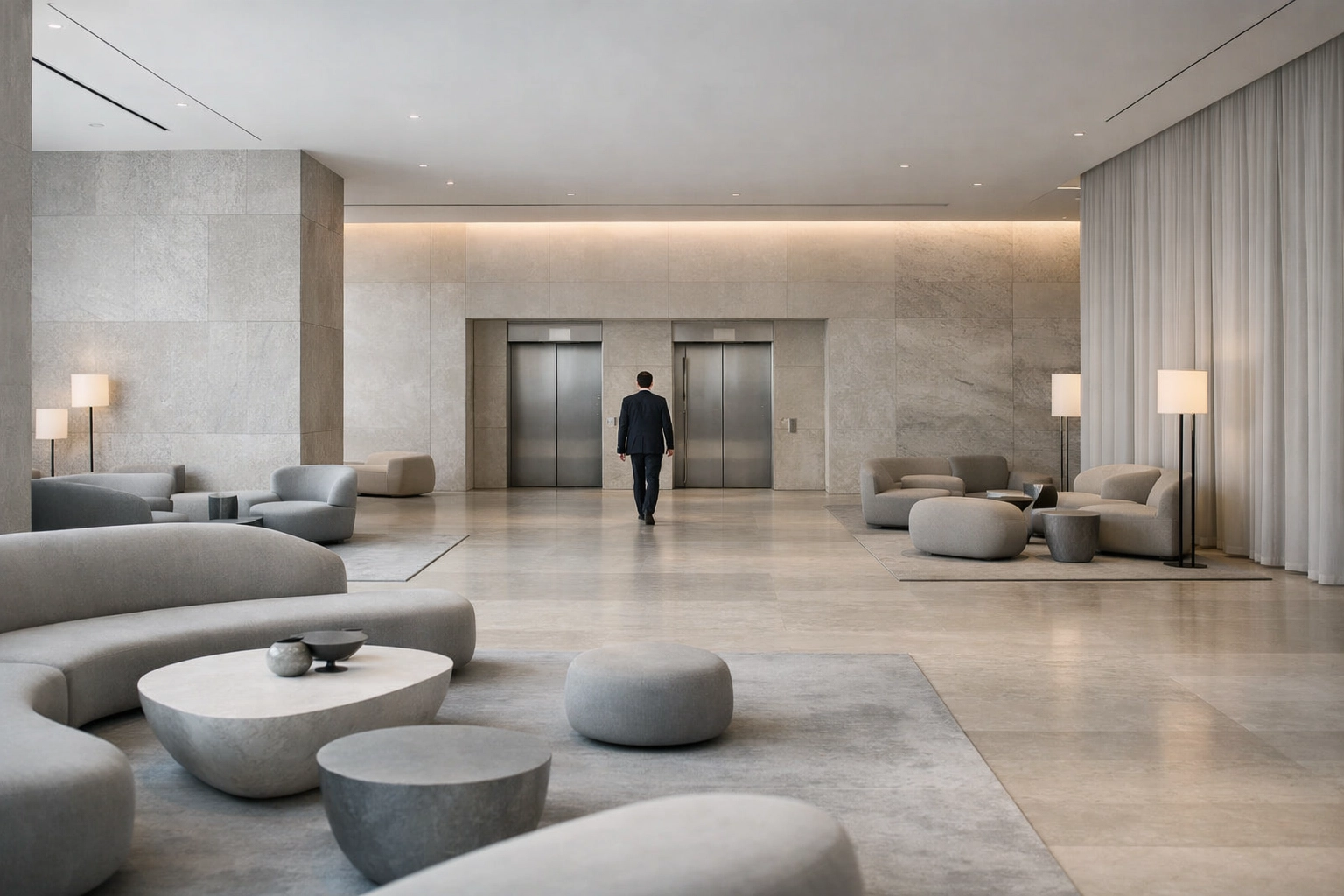
    Minimalist hotel lobby design highlighting a stress-free and private guest arrival experience.

    The Psychology of Information

    Uncertainty is a stress-trigger. When will my room be ready? Is my booking actually in the system? Did I get the king bed I asked for?

    A self-service ecosystem provides psychological reassurance through constant, clear communication. From the pre-arrival email that invites them to check in on their phone to the final "Success" screen on the kiosk, every touchpoint is designed to lower the guest's cortisol levels.

    • Pre-arrival peace of mind. 30% of guests check in before they even reach the city.
    • Real-time updates. Automated notifications when the room is "Clean and Ready."
    • Consistent experience. No matter who is on shift, the process remains perfect.

    Human Connection (Where It Matters)

    There is a common myth that technology replaces humans. We believe the opposite. Technology liberates humans.

    When you remove the transactional friction of the check-in, the interactions between staff and guests change. They become more organic. Instead of "Can I see your ID?", the conversation becomes "Would you like a glass of water?" or "Can I recommend a great local spot for dinner?"

    You’re not removing the human element; you’re removing the boring part of the human element.

    A hotel host engaging in personalized guest service in a lounge without a front desk.

    Ready to Flip the Script?

    The psychology is clear: guests crave autonomy, hate waiting, and value their privacy. The kiosk is the bridge between a stressful journey and a relaxing stay.

    See how Mews can transform your lobby into a space of calm: Discover the Mews Kiosk.

    Why it’s time to switch:

    1. Reduce Lobby Congestion. Keep the flow moving during peak hours.
    2. Increase Revenue. Automated prompts for upgrades see a 20% higher take-rate than human pitches.
    3. Happy Staff. Let your team focus on hospitality, not typing.

    Modern hospitality isn't about the desk. It’s about the guest. By embracing the psychology of self-service, you aren't just installing a screen: you're building a more empathetic, efficient, and enjoyable experience for everyone who walks through your doors.

    Ready to get started? It’s a 30-minute conversation that could save your team 10 hours a week.

    Check out the future of Hospitality Tech and get your property earning more revenue in no time.

  • Why Business Automation Tools Will Change the Way You Scale (Without the New Hires)

    You’re staring at your coffee. It’s cold. Again.

    It’s 10:00 AM and you’ve already spent two hours manually moving data from one spreadsheet to another, replying to "is this still available?" messages, and trying to figure out why your last invoice hasn't been paid.

    You want to grow. You want to scale. But the thought of hiring another person, the interviews, the payroll, the training, the management, makes you want to crawl back under the covers.

    But what if you didn't have to hire?

    What if you could double your output while actually working less?

    Welcome to the future. It’s automated. And it’s much quieter than you think.


    AUTOMATE ADMIN TASKS: HOW TO SAVE 10+ HOURS EVERY WEEK

    7:00 AM
    The day begins. Normally, this is when the panic sets in. You check your phone and see thirty new leads, five support tickets, and a reminder that you forgot to send out the weekly newsletter.

    But today… it’s different.

    You haven't even touched your keyboard, yet your business automation tools have already been at work for hours.

    While you were sleeping, a lead came in through your website. Instead of sitting in an unread inbox, an AI-powered system tagged it, categorized it by budget, and sent a personalized follow-up email. By the time you take your first sip of coffee, that lead has already booked a discovery call on your calendar.

    And the best part? You didn't lift a finger.

    STOP JUGGLING. START SCALING.

    Scaling a business used to mean one thing: more people. More people meant more overhead, more "human error," and more time spent managing personalities instead of products.

    Automation changes the math.

    When you use the right tools, you aren’t just "saving time." You are breaking the relationship between your hours and your income.

    • Data Entry? Done.
    • Invoicing? Automated.
    • Meeting Scheduling? Handled.

    You just saved ten hours this week. That’s an entire workday. What are you going to do with it? You could take a Friday off. Or, you could spend it on the high-level strategy that actually moves the needle.

    Entrepreneur relaxing while business automation tools handle repetitive admin tasks.

    If you're ready to see how these systems look in the wild, check out what Scott Bowen is doing over at https://marblism.link/scott-bowen. It’s not magic, it’s just better tech.


    THE BEST AI ASSISTANT FOR SMALL BUSINESS IN 2026

    📱 11:00 AM
    Your phone buzzes. It’s a notification from your AI assistant for small business.

    It’s not a "hey, don't forget your meeting" notification. It’s better. It’s a summary.

    "I’ve processed the morning's inquiries. Three were junk, I archived them. Two were high-priority, I’ve drafted responses for you to review. Also, your inventory was running low on the best-sellers, so I’ve prepared a purchase order for your approval."

    You smile.

    In 2026, an AI assistant isn't just a chatbot that tells you the weather. It’s a digital employee that understands your business logic. It knows your tone, your priorities, and your customers.

    EMPLOYEE OF THE MONTH. EVERY MONTH.

    The biggest hurdle for small businesses has always been "The Gap." You’re too big to do everything yourself, but too small to hire a full-time operations manager.

    That gap is where businesses go to die. Or, at the very least, where founders burn out.

    An AI assistant fills that gap for a fraction of the cost of a human hire. It doesn't need a lunch break. It doesn't get "Monday brain." It just executes.

    Why this matters right now:

    1. Consistency: It follows the process perfectly, every single time.
    2. Scalability: It can handle 10 tasks or 10,000 without breaking a sweat.
    3. Cost Control: You grow your capacity without growing your payroll.

    You aren't just buying software. You're buying your freedom back. You’re moving from "Chief Everything Officer" to an actual business owner.

    Human and AI assistant for small business high-fiving to celebrate efficient scaling.

    See how an AI-driven setup can transform your daily grind here: https://marblism.link/scott-bowen.


    AI CONTENT GENERATOR FOR SMALL BUSINESS: YOUR SECRET MARKETING WEAPON

    🤝 2:00 PM
    It’s time for marketing. This is usually the part of the day where you stare at a blank Google Doc and wonder why you ever started a business in the first place.

    You need a blog post. Three social media captions. A newsletter. And an ad copy refresh.

    Your brain is fried.

    But then you fire up your AI content generator for small business.

    You feed it a couple of bullet points about your new service. Five seconds later, you have a 1,000-word article that sounds… exactly like you. Not a robot. Not a generic template. You.

    THE DEATH OF THE BLINKING CURSOR

    Marketing is a volume game. To stay relevant, you have to be everywhere, all the time. But you’re a business owner, not a full-time content creator.

    This is where most small businesses fail. They post once a month, get no engagement, and give up.

    With an AI content generator, you aren't just writing; you're directing. You become the editor-in-chief of your brand rather than the struggling copywriter.

    How it changes the game:

    • Speed: Turn an idea into a campaign in minutes, not days.
    • Variety: One core idea can be transformed into ten different formats automatically.
    • Quality: Modern AI understands nuances, humor, and persuasive psychology.

    AI content generator for small business creating marketing ideas and social media posts.

    You just scheduled two weeks' worth of content in twenty minutes.

    You step back into your day. The chaos is gone. The "to-do" list is actually finished.

    It’s quiet. It's organized.

    And you didn't have to hire a single person to get here.

    SCALING SHOULDN'T BE THIS EASY. BUT HERE WE ARE.

    The old way of business, hiring your way out of problems, is slow, expensive, and risky.

    The new way? Use Marblism to build the systems that do the heavy lifting for you.

    Whether you need to save ten hours on admin, deploy a 24/7 assistant, or dominate your niche with high-velocity content, the tools are ready. The question is, are you?

    Stop working in your business and start building a machine that works for you.

    Get started with the future of automation right now: https://marblism.link/scott-bowen


    FAQ: YOU’VE GOT QUESTIONS. WE’VE GOT ANSWERS.

    Does this replace my team?
    No. It replaces the "grunt work" your team hates doing. It allows your people (and you) to focus on things that require human creativity and empathy.

    Is it hard to set up?
    It’s easier than training a new intern. Most business automation tools today are designed to be "plug and play."

    Will my customers know it’s AI?
    Only if you want them to. Modern AI assistants are incredibly sophisticated. They can maintain your specific brand voice and handle complex inquiries with a human touch.

    Is it expensive?
    Compared to the cost of a new salary, benefits, and office space? It’s practically free. It’s an investment that pays for itself in saved time within the first month.

    Where do I even start?
    Start small. Pick the one task you hate the most: the one that eats up your Monday mornings: and automate it. You’ll never look back.

    Rocket ship launching as a symbol of scaling a business fast with automation tools.

    🌙 6:00 PM
    The lights are off. Your laptop is closed. You’re heading home, and for the first time in months, you aren't thinking about work.

    Because you know the machine is running.

    And it's just getting started.

    EVERYTHING IS UNDER CONTROL.

    https://marblism.link/scott-bowen

  • The Ultimate Guide to Wholesale Specialty Coffee: Everything Your Business Needs to Succeed

    The Ultimate Guide to Wholesale Specialty Coffee: Everything Your Business Needs to Succeed

    So, you’re thinking about opening a café, or perhaps you’re looking to level up the brew in your existing business? That is a brilliant move. But here’s the thing: coffee isn't just a commodity you buy in bulk and shove into a hopper. In the world of specialty coffee, your roaster is more than just a vendor, they are essentially your most important business partner.

    Choosing from the sea of coffee suppliers out there can feel a bit like trying to dial in an espresso shot on a Monday morning before you’ve had your own caffeine fix. It’s overwhelming. You want the best beans, sure, but you also need reliability, training, and maybe a bit of hand-holding when the steam wand decides to act up.

    At Limini Coffee, we’ve spent years working with café startups and seasoned pros alike. We’ve seen what works and, quite honestly, what becomes a total nightmare. This guide is here to walk you through everything you need to know about wholesale specialty coffee so you can build a business that people actually want to visit.


    What Exactly is "Specialty" Coffee?

    Before we dive into the logistics, let's get our definitions straight. When we talk about "specialty coffee," we aren't just using a fancy marketing buzzword. It actually refers to coffee that has been graded 80 points or above on a 100-point scale by a certified Q Grader.

    Basically, this means the coffee is free of primary defects and has a distinct personality in the cup. It’s about quality, traceability, and ethics. When you partner with wholesale coffee roasters who focus on specialty grades, you are telling your customers that you care about the craft.

    You might be wondering, "Does my average customer really care about the SCA score?" Probably not. But they will notice that your flat white doesn't taste like burnt rubber. That’s the specialty difference. We believe that once a customer tastes a well-extracted, high-quality bean, they rarely go back to the supermarket stuff.


    Finding the Right Wholesale Partner

    Finding a roaster is a bit like dating. You need to make sure your values align before you sign on the dotted line. You’re looking for someone who doesn't just drop off bags of beans and vanish into the sunset.

    1. Quality and Consistency

    Consistency is the holy grail of wholesale. You need to know that the bag of beans you open on Tuesday tastes exactly like the one you opened two weeks ago. Ask potential suppliers about their quality control. Do they cup every roast? (We certainly do).

    2. Sourcing Ethics

    Where is the coffee coming from? Transparency is key in the specialty world. You want to know that the farmers are being paid a fair price, well above the "C-market" price. You can learn more about how we handle sourcing our coffee here. It’s not just about feeling good; it’s about ensuring a sustainable future for the entire industry.

    3. Support and Training

    This is where many businesses trip up. You can have the best beans in the world, but if your staff doesn't know how to tamp correctly or dial in the grinder, the coffee will be mediocre. A great wholesale partner should offer comprehensive barista training.

    Barista trainer teaching a student how to steam milk for specialty coffee on a professional machine.


    The Equipment Equation

    You wouldn't put budget tyres on a Ferrari, right? The same logic applies to coffee. To get the most out of wholesale specialty beans, you need the right kit.

    When you’re looking at coffee suppliers, check if they offer equipment packages or leasing. At Limini Coffee, we often help businesses navigate the maze of choosing espresso equipment.

    Essential Gear for Your Shop:

    • The Espresso Machine: Do you want a traditional lever machine or something automatic? (Check out the lever vs automatic debate for more).
    • The Grinder: Often more important than the machine itself. You need a commercial-grade burr grinder that can handle your volume without overheating.
    • Water Filtration: Coffee is 98% water. If your water is hard (looking at you, London), your coffee will taste flat and your machine will scale up and die a slow, painful death.

    Precision matters here. We’re talking about 9 BAR of pressure and temperatures held steady at exactly 92 ºC (197.6 °F). If your equipment can't hold those variables, your consistency will suffer.


    Single Origin vs. Blends: Which is Right for You?

    This is a question we get asked constantly. Should you go for a single origin or a blend?

    Blends are the backbone of most wholesale operations. By combining beans from different regions (say, a nutty Brazilian with a chocolatey Colombian), roasters can create a balanced, reliable flavor profile that works beautifully with milk. They are dependable and usually offer a more consistent price point throughout the year.

    Single Origins, on the other hand, are the rockstars. They come from one specific farm or cooperative and showcase the unique "terroir" of that place. They can be incredibly fruity, floral, or acidic.

    We think the best approach for most cafés is to have a solid house blend for your milk-based drinks (lattes, cappuccinos, etc.) and perhaps a rotating single origin for those customers who prefer black coffee or want to try something a bit more "out there."

    Freshly roasted specialty coffee beans and a carafe of single origin coffee in a light-filled roastery.


    Beyond the Beans: Business Support

    A wholesale relationship shouldn't end with a delivery. Starting a café is hard work, like, "forgetting what a weekend looks like" hard. You need a supplier who understands the business side of things.

    Café Layout and Shop Fitting

    The flow of your shop is vital. If your barista has to walk five steps to get to the fridge every time they need milk, you’re losing money and time. We actually offer advice on building a coffee shop and shop fitting because we want our partners to succeed. If you win, we win.

    Understanding the Menu

    Do you know the difference between a flat white and a latte? Does your staff? Having a clear understanding of your drink recipes is essential for customer satisfaction.

    Technical Support

    Machines break. It’s an annoying fact of life. When your machine goes down during a Saturday morning rush, you don't want a "we'll get back to you in 48 hours" response. Ask your roaster about their maintenance and repair services. Understanding how your machine works, like the workings of a La Spaziale, can save you a lot of stress in the long run.


    The Logistics: Pricing, Contracts, and MOQs

    Let's talk about the "boring" stuff that actually keeps the lights on.

    Minimum Order Quantities (MOQs): Some large wholesale coffee roasters will only talk to you if you’re ordering 50kg a week. Smaller specialty roasters are usually more flexible, but keep in mind that shipping costs can eat into your margins if you order too frequently in small amounts.

    Pricing Structures: Don't just look at the price per kilo. Look at the value. Does that price include training? Does it include emergency call-outs for your machine? Sometimes a "cheaper" bean ends up being more expensive when you have to pay for all the extras separately.

    Freshness: This is non-negotiable. Fresh-roasted coffee should ideally be used within 2 to 4 weeks of the roast date. If a supplier is offering you coffee roasted three months ago, run. Fast.

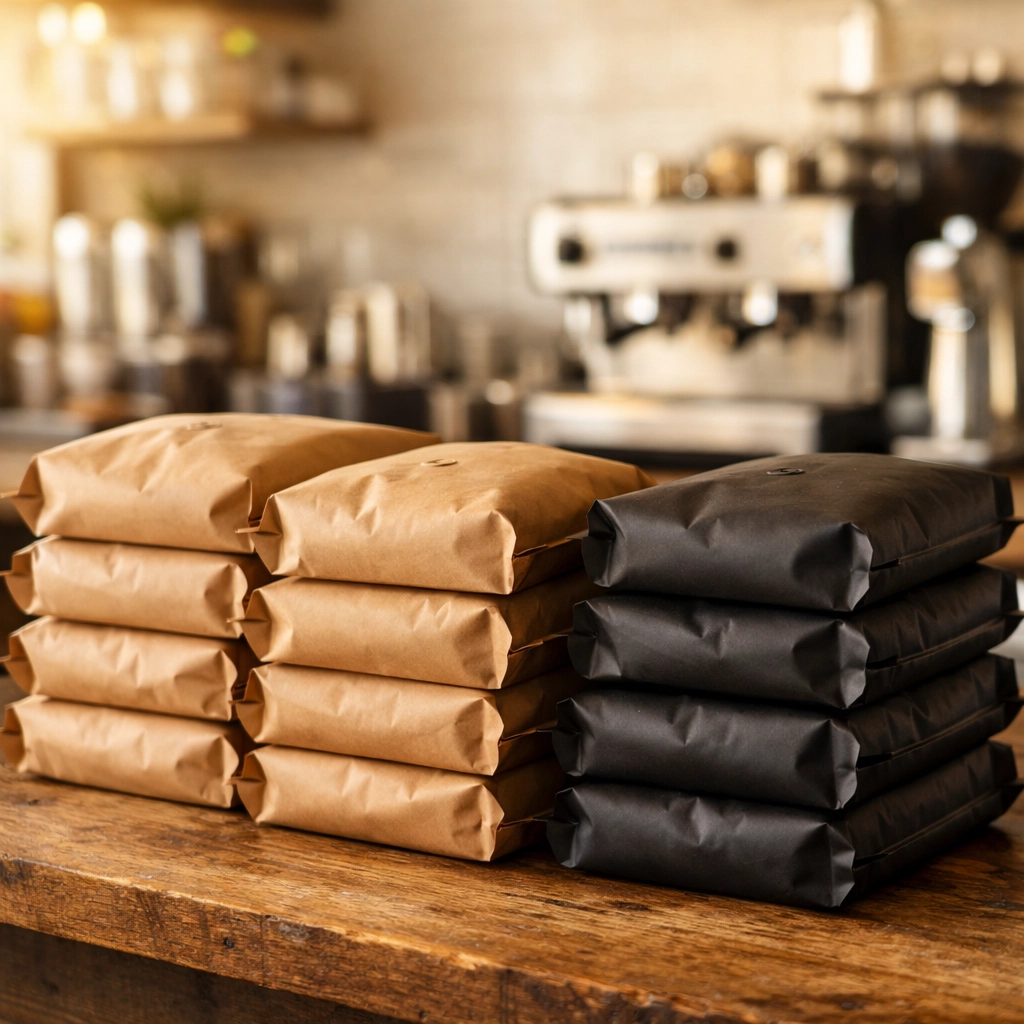
    Stacked bags of fresh wholesale coffee beans on a café counter, ready for professional coffee service.


    Creating a Brand Experience

    In a saturated market, your "vibe" matters. People don't just come for the caffeine; they come for the experience. This is what we call creating theatre in the café.

    Whether it's the latte art, the way you explain the notes of the coffee, or even the choice of cups, every detail counts. Your wholesale partner should be able to help you refine this.

    If you're looking to stand out, you might even consider "white labeling", where the roaster creates a custom blend just for your brand. It gives you an exclusive product that customers can't get anywhere else.


    Is Specialty Coffee Worth the Investment?

    To be honest, yes.

    The market is shifting. Customers are more educated than ever. They know what a good espresso looks like (and they definitely know what good crema looks like). By choosing to work with high-quality coffee suppliers, you are future-proofing your business.

    It’s about building a community of regulars who trust you. And that trust starts with the quality of the product in the cup.

    If you are ready to take the next step and want a partner who is as passionate about your success as you are, we’d love to chat. You can check out our wholesale offerings here or explore more about who we are at Limini Coffee.

    Starting a coffee business is a wild ride. It's caffeinated, exhausting, and incredibly rewarding. Just make sure you've got the right people in your corner.


    Frequently Asked Questions

    How much coffee should I order for a new café?
    It's always better to start lean. We usually recommend looking at your projected cup sales and calculating from there. A standard double shot uses about 18-20g of coffee. Use our coffee brewing calculator to help with the math!

    Do I need a contract?
    Some roasters require them, especially if they are providing equipment. Contracts can be great because they lock in pricing and service levels, but make sure you read the fine print regarding exclusivity.

    Can you help with milk?
    Actually, yes. Milk is just as important as the coffee for 80% of your drinks. We’ve even written a guide on understanding milk to help you get that perfect silky texture every time.

    What about training?
    We cannot stress this enough: training is vital. We offer a range of courses to make sure you and your staff are ready for the floor.

    At the end of the day, we’re all here for the same reason: we love great coffee. Let’s make sure your customers do too. Visit Limini Coffee today to see how we can help your business thrive.

  • Stop Wasting Time on Boring Admin: 7 AI Business Automation Hacks to Reclaim Your Morning

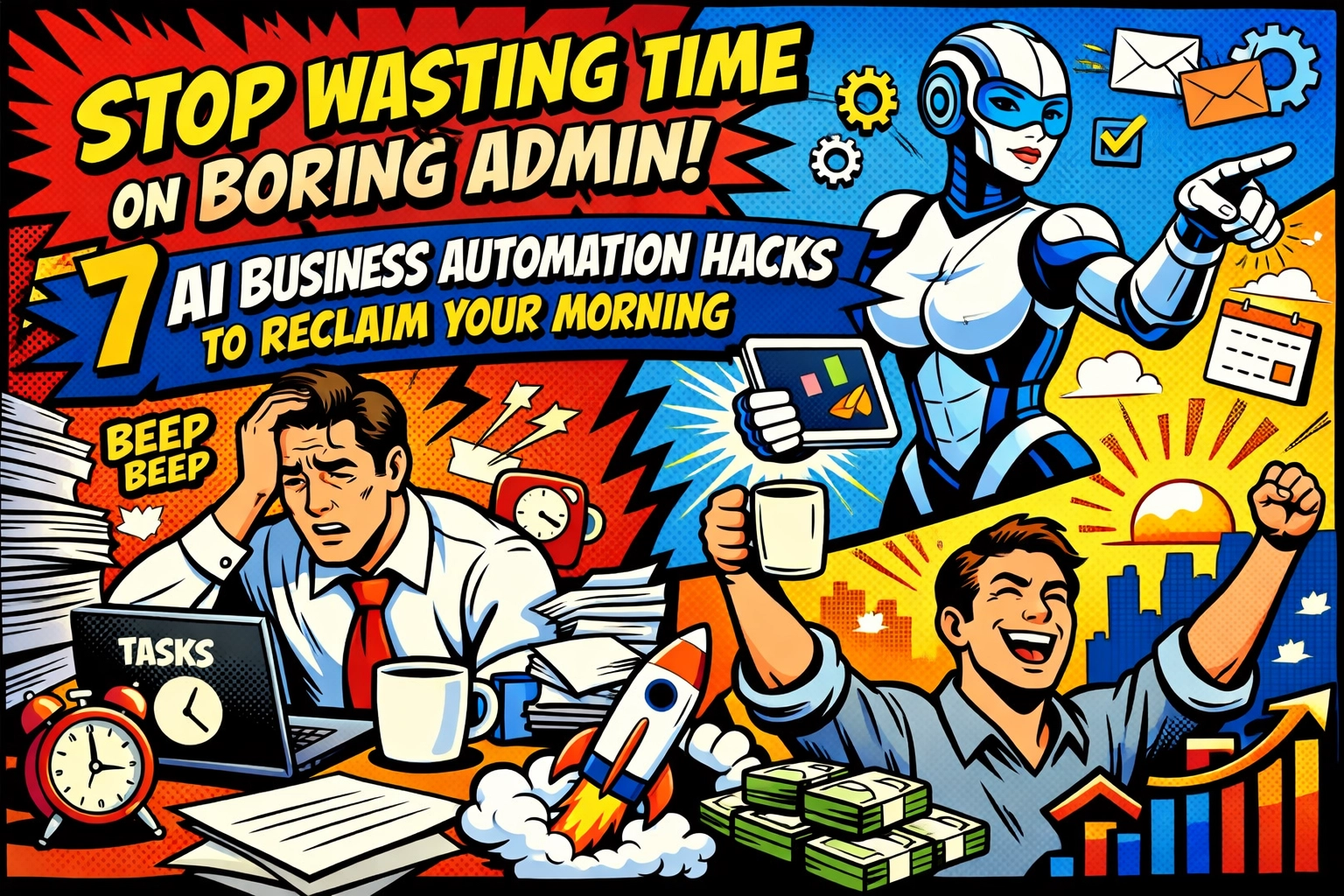
    Stop Wasting Time on Boring Admin: 7 AI Business Automation Hacks to Reclaim Your Morning

    ☕ 6:30 AM.

    The sun is barely up. You reach for your phone, a habit you swore you’d break, and there it is. The red notification bubbles. 42 unread emails. Three "urgent" Slack messages. A calendar that looks like a game of Tetris played by someone who hates you.

    You haven't even had a sip of coffee, and you’re already losing.

    This is the "Administrative Tax." It’s the price you pay for being a business owner in the digital age. You didn’t start your company to spend four hours a day moving data from one spreadsheet to another or arguing with a scheduling app. You started it to build something.

    But right now? You’re just an overqualified data entry clerk.

    It’s time to stop the bleeding. AI business automation isn't just for the tech giants with "Innovation Labs." It’s for you. Right now. In your kitchen, while the coffee brews.

    Here are 7 AI business automation hacks to help you kill the boring stuff and finally reclaim your morning.

    1. THE INBOX MONSTER IS DEAD

    ☕ 7:00 AM.

    Normally, this is where you drown. You start scrolling. You reply to a newsletter. You delete some spam. You realize an hour has passed and you’ve achieved… nothing.

    Stop it.

    Your first hack is AI-driven email prioritization. Modern AI business automation tools don’t just "filter" spam; they read your mail. They understand context. They know that an email from your biggest client about a contract is more important than a "Quick Question?" from a random LinkedIn connection.

    Imagine an inbox that sorts itself while you sleep. By the time you open your laptop, the junk is gone. The routine questions have drafts waiting for your approval. The critical stuff? That’s at the top.

    It’s not just about saving time. It’s about saving your cognitive energy for things that actually make money.

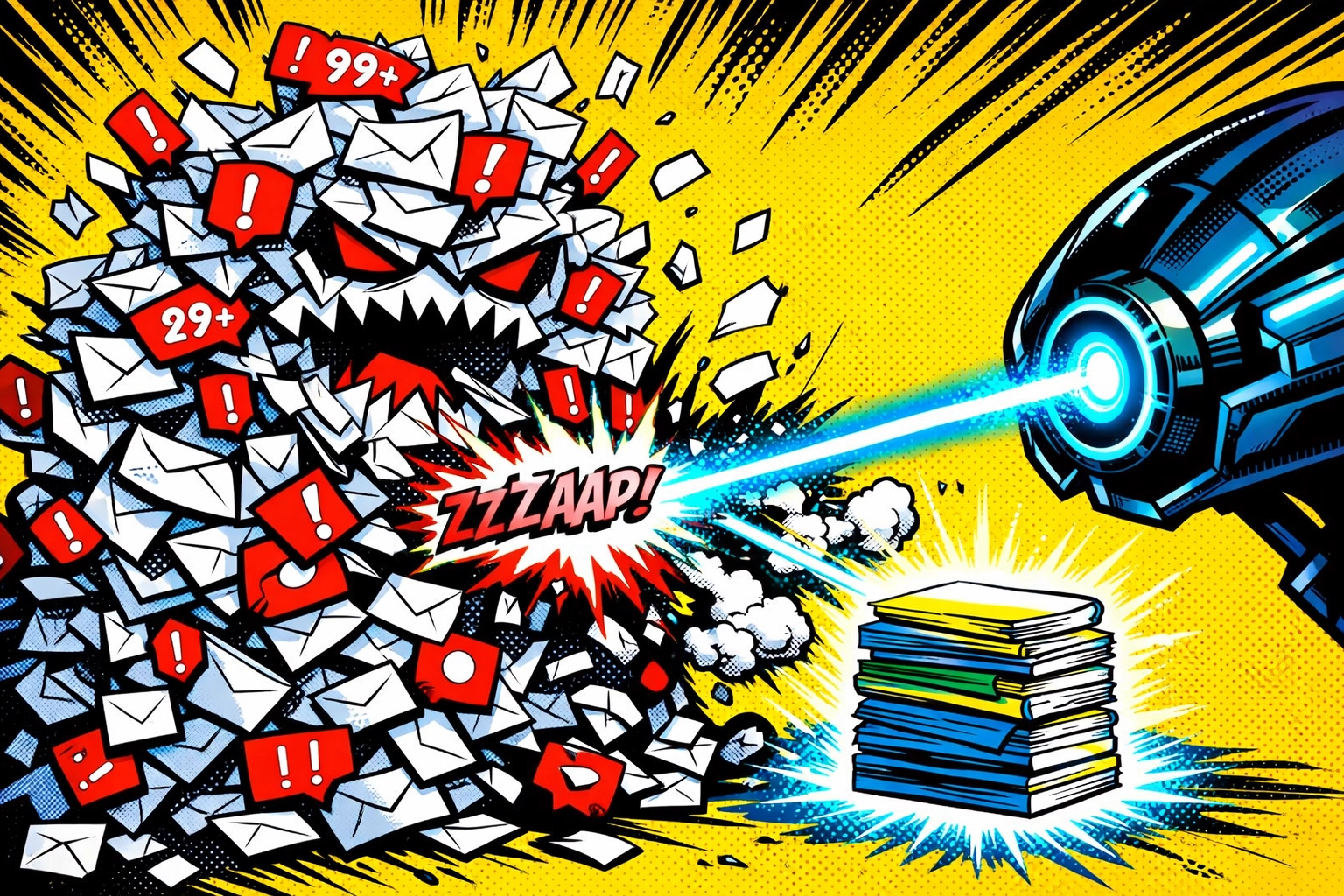
    AI business automation tool organizing a chaotic email inbox and notification bubbles.

    2. PLAY TETRIS WITH YOUR TIME (AND WIN)

    📅 8:30 AM.

    You’re looking at three overlapping meetings. You need to prep for a sales call, but your "Focus Block" was just eaten by a last-minute sync.

    This is where AI scheduling assistants come in. Tools like Reclaim or Clockwise don't just hold space; they move it. If a meeting gets rescheduled, the AI automatically shifts your tasks and habits to keep your day optimized.

    It syncs your personal calendar with your work calendar. It ensures you don't book a high-intensity strategy session right after a grueling three-hour board meeting. It creates "Focus Shields" that literally block people from stealing your time.

    The result? You stop reacting to your day and start owning it. You can see how this changes the game at https://marblism.link/scott-bowen.

    3. DATA ENTRY IS FOR ROBOTS. LITERALLY.

    📊 10:00 AM.

    You’re staring at a PDF invoice. You need to put those numbers into your accounting software. Then you need to update your CRM. Then you need to tell your team the lead is "closed-won."

    This is soul-sucking work. It’s also where human error lives.

    AI business automation tools can now "read" documents with nearly 100% accuracy. They extract the data, categorize it, and push it to the right software without you touching a single key.

    Whether it’s pulling leads from a LinkedIn search or updating monthly revenue reports, if you’re doing it manually more than twice a week… you’re wasting your life. Let the AI handle the spreadsheets. You handle the strategy.

    4. CUSTOMERS GET ANSWERS, NOT WAITING ROOMS

    ☎️ 11:30 AM.

    "Where is my order?"
    "How do I reset my password?"
    "Can I get a discount?"

    If you or your team are answering these questions manually every day, you’re stuck in the mud. AI-powered routing and IVR (Interactive Voice Response) systems have evolved. We’re not talking about those annoying "Press 1 for Sales" menus from the 90s.

    We’re talking about AI that understands intent. It categorizes the inquiry, checks your database, and often provides the answer before a human even needs to look at it. If it does need a human, it routes it to the specific person who can actually solve it.

    No more "Let me transfer you." No more manual triage. Just happy customers and a quiet support desk.

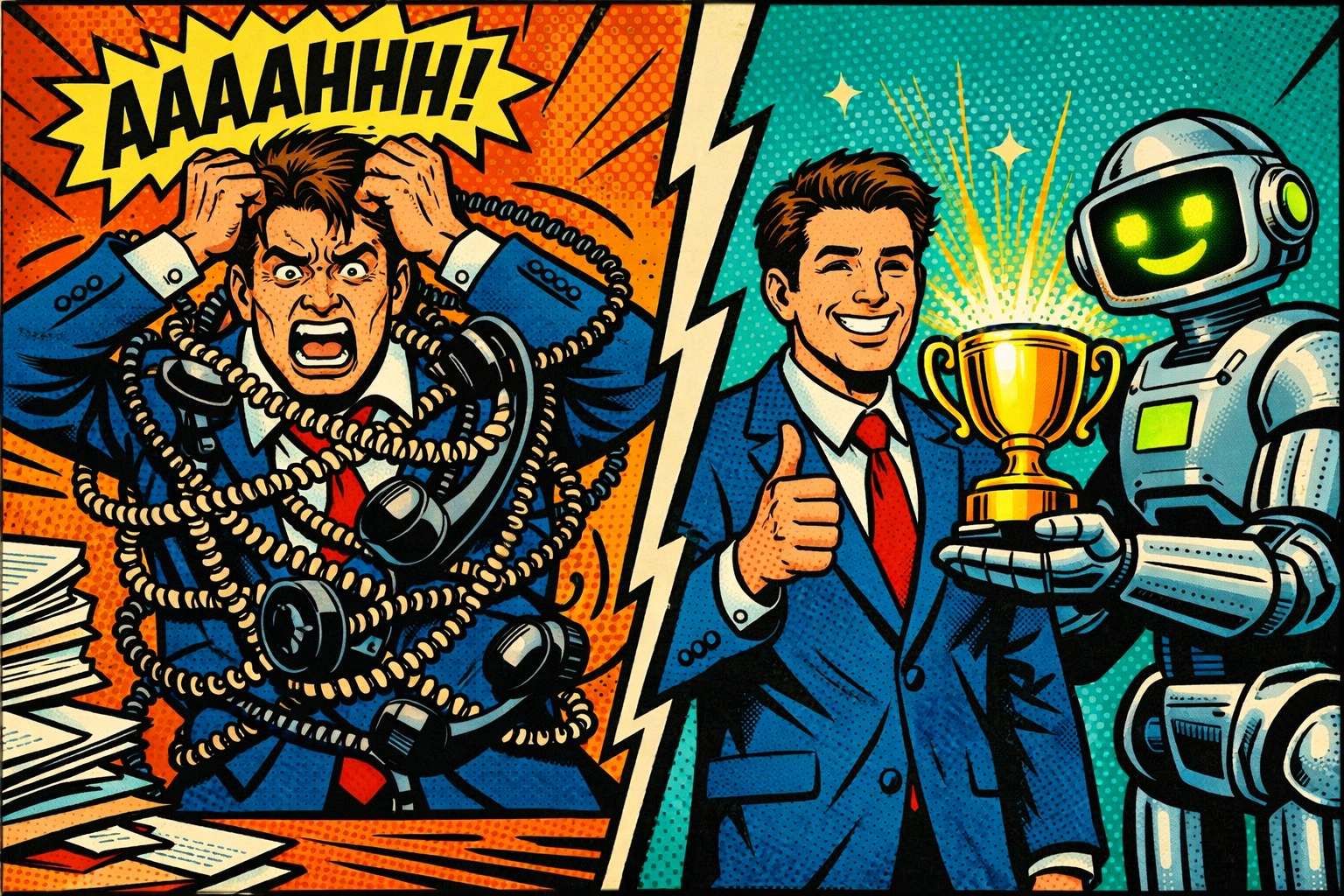
    AI automation tools turning customer service frustration into business success and rewards.

    5. PAPERWORK THAT PAYS ITSELF

    💸 1:00 PM.

    Lunch is over. Now comes the stack of administrative paperwork. Invoices, contracts, compliance forms, the "boring" side of growth.

    The hack? Automated Document Processing. AI can now take a multi-step workflow, like onboarding a new vendor, and handle it from start to finish. It sends the contract, waits for the signature, triggers the first payment, and files the W-9.

    It’s like having a dedicated operations manager who never sleeps, never complains, and never misses a signature.

    At Marblism, we see businesses shave 20+ hours a week off their workload just by automating these back-office cycles. It’s the difference between scaling and just working harder. See for yourself at https://marblism.link/scott-bowen.

    6. STOP GUESSING WHAT’S IMPORTANT

    🎯 2:30 PM.

    The afternoon slump hits. Your to-do list still has 14 items on it. Which one do you do first? Usually, we pick the easiest one just to feel like we’re winning.

    Wrong.

    AI task prioritization tools analyze your deadlines, your workload, and even your past performance to tell you exactly what to tackle next. Some tools even predict potential blockers. "Hey, you haven't heard back from the designer yet; you might want to nudge them before you start this task."

    It’s like having a GPS for your productivity. You don't have to think about the route. You just drive.

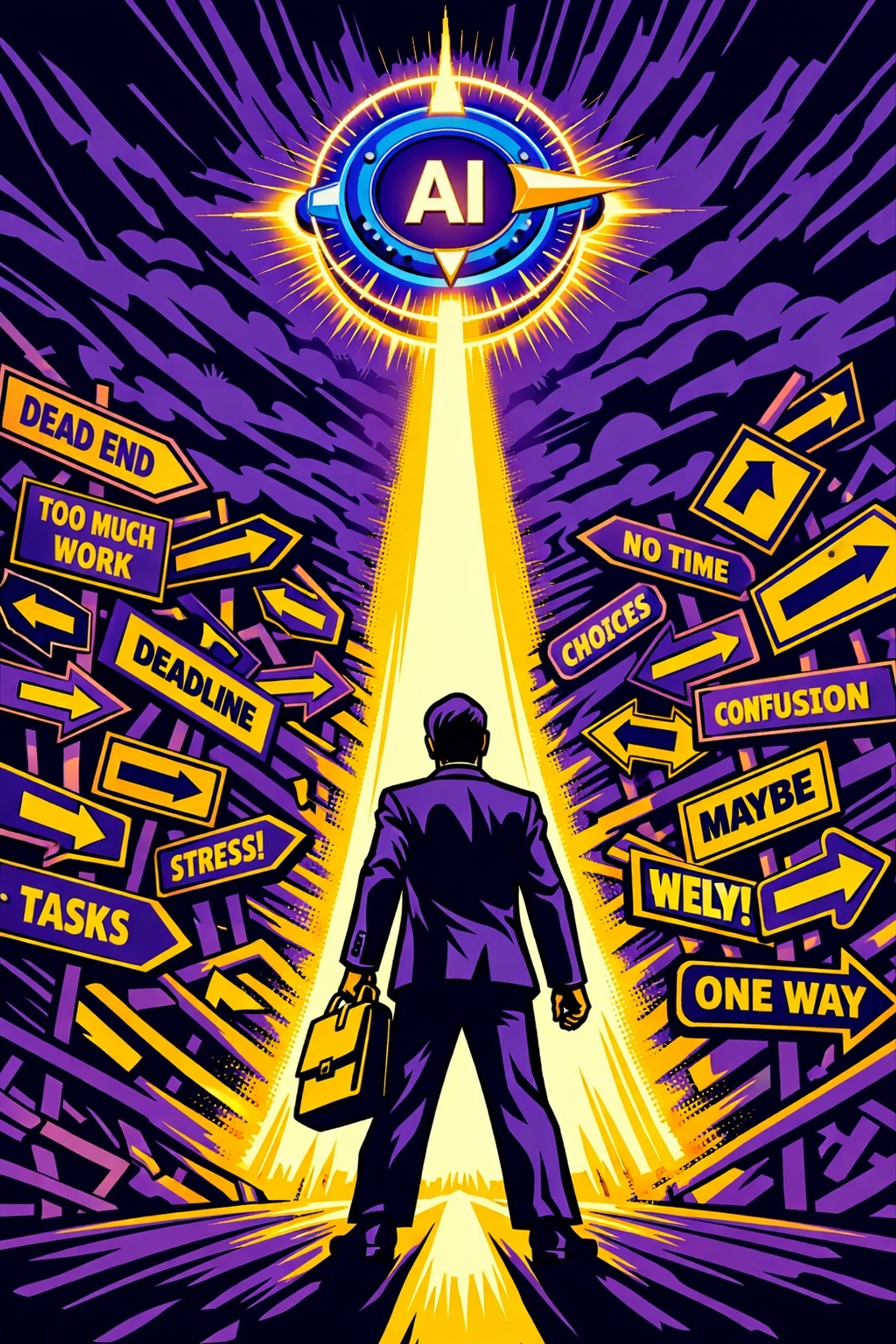
    AI task prioritization guiding a business owner through a maze of complex administrative tasks.

    7. THE ULTIMATE DELEGATION

    🌙 4:00 PM.

    Most business owners think delegation means hiring a human. But humans are expensive, they need training, and they get sick.

    The final hack is Strategic AI Agency. This isn't just one tool; it’s a mindset. It’s looking at every repetitive task and asking: "Can a machine do this?"

    Over 80% of enterprises are already doing this. If you aren't, you’re competing with one hand tied behind your back. When you automate the routine, you free your team to do the "high-value" work: the stuff that actually moves the needle, like building relationships and inventing new products.

    STOP JUGGLING. START BUILDING.

    You didn't build a business to be a slave to your admin panel. The chaos is a choice. You can keep waking up to the red bubbles and the Tetris calendar… or you can let AI handle the heavy lifting.

    Imagine a morning where you wake up and the work is already… done. The inbox is clean. The meetings are optimized. The data is filed.

    You just sip your coffee. And think.

    That’s the power of business automation tools. It’s not about "replacing" you; it’s about freeing you.

    READY TO RECLAIM YOUR TIME?
    Stop wasting your mornings on the boring stuff. Marblism is helping business owners like you build the automated future they deserve.

    Take 3 minutes to see how you can automate your growth here: https://marblism.link/scott-bowen


    FAQ: The "Boring Admin" Edition

    Q: Is AI business automation expensive?
    A: Compared to the cost of your time? No. Most tools pay for themselves within the first month by saving you 5-10 hours of manual labor.

    Q: Do I need to be a coder?
    A: Not anymore. Most modern business automation tools are "no-code." If you can use a smartphone, you can automate your business.

    Q: Will it take away the "human touch" of my business?
    A: Actually, it’s the opposite. By automating the boring stuff, you have more time to be human with your clients and your team.

    Q: Where do I even start?
    A: Start with your biggest pain point. Is it emails? Scheduling? Data entry? Pick one, automate it, and feel the relief. Then move to the next.

    Scaling Shouldn't Be This Easy. But Here We Are. ☕

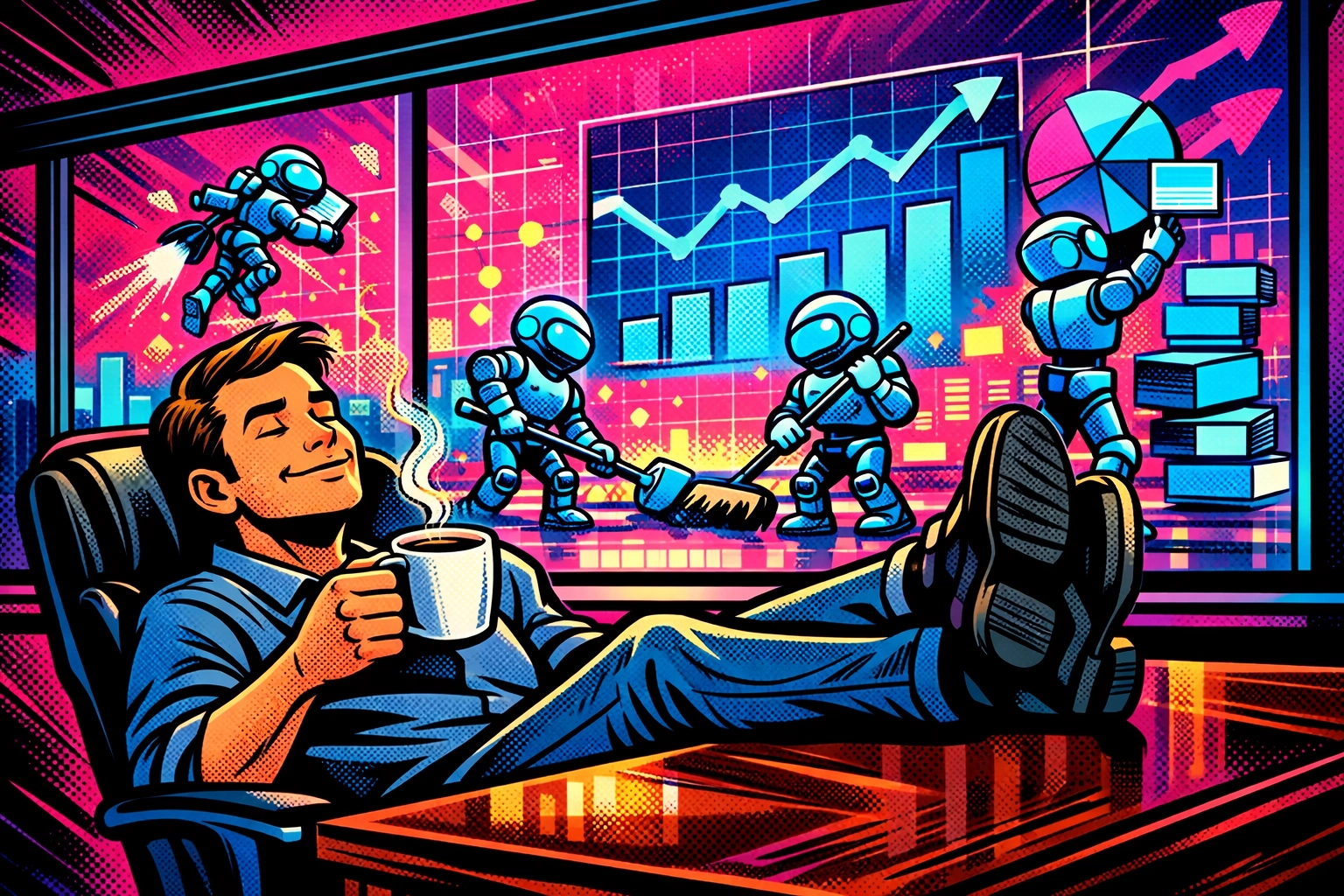
    Business owner relaxing while AI automation tools handle background data entry and admin tasks.

  • Predictive Hospitality: Using AI to Fix Guest Complaints Before They Even Happen

    Predictive Hospitality: Using AI to Fix Guest Complaints Before They Even Happen

    Anticipate every need. Resolve every glitch. Delight every guest.

    The traditional hospitality model is built on a lie. We’ve been taught that great service is about how fast you react when something goes wrong. A guest calls about a leaky faucet, and you send a plumber in five minutes. You’re a hero, right? Wrong. In the eyes of the guest, the faucet was still leaky, their floor was wet, and their nap was interrupted.

    The real magic isn't in the fix. It’s in the fact that the leak never happened in the first place.

    We believe the future of travel isn’t reactive. It’s predictive. It’s about using hotel guest experience technology to solve problems before they even reach the guest's consciousness. We’re moving from "I’m sorry for the inconvenience" to "You’ll never even know there was a problem."

    This is the era of predictive hospitality, powered by a single, intelligent platform.

    The end of the "I'm sorry" era

    Let’s be honest: nobody actually enjoys the song and dance of a guest complaint. The guest is annoyed, your front desk team is stressed, and your maintenance crew is constantly playing a high-stakes game of Whac-A-Mole. It’s exhausting. It’s also expensive.

    When you wait for a guest to complain, you’ve already lost. You’re playing defense. Predictive hospitality flips the script. By leveraging AI and data, you’re playing offense. You’re identifying patterns, spotting anomalies, and stepping in before the guest even picks up the phone.

    • Higher NPS scores. Because nothing beats a flawless stay.
    • Lower operational costs. Because preventive fixes are cheaper than emergency repairs.
    • Empowered staff. Because they’re finally out of the "complaint firehouse."

    A serene, minimalist hotel lobby reflecting predictive hospitality and seamless guest experiences.

    Hardware with a heartbeat: Predictive maintenance

    Imagine it’s mid-July. Your hotel is at 98% occupancy. In Room 402, the air conditioning compressor is starting to struggle. It’s drawing 15% more power than usual, and the output temperature is fluctuating by two degrees.

    A human won't notice. A guest won't notice: yet. But the AI does.

    By integrating IoT sensors with your management system, your building effectively starts talking to you. Instead of waiting for the guest in 402 to wake up sweating at 2:00 AM, the system flags the unit for a 10-minute filter change or a quick coolant top-up while the guest is out at breakfast.

    We think maintenance should be invisible.

    • Sensors monitor vitals 24/7.
    • AI predicts failure windows.
    • Work orders are generated automatically.

    "We used to spend half our shift running around with plungers and screwdrivers," says one Head of Maintenance. "Now, we fix things before they break. It’s saved us at least 15 hours of emergency labor every week."

    Reading the digital tea leaves

    Guest feedback is a goldmine, but most hotels are only scratching the surface. If you’re waiting for the end-of-stay survey to find out the Wi-Fi was spotty in the North Wing, you’re already too late. That guest is already writing a three-star review on TripAdvisor.

    AI doesn't just read feedback; it understands it. Modern hotel guest experience technology can scan thousands of data points: from mid-stay check-in chats to historical preference notes: to find the "quiet" complaints.

    If the AI notices that three guests in a row mentioned the "slow elevators" in their digital checkout, it doesn't wait for a fourth. It triggers an alert. It analyzes the peak times. It suggests a redistribution of the elevator logic. It fixes the vibe before the vibe gets ruined.

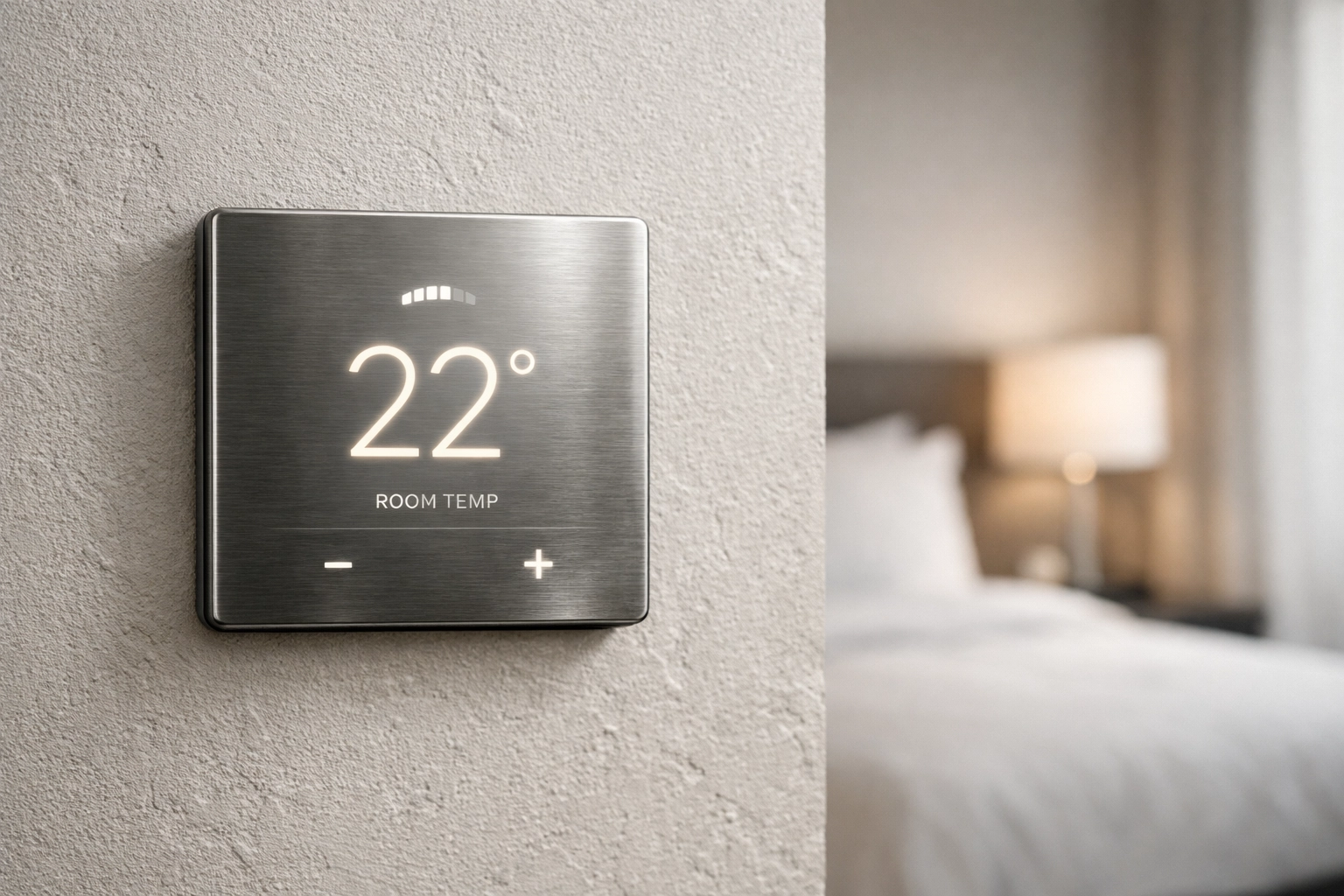
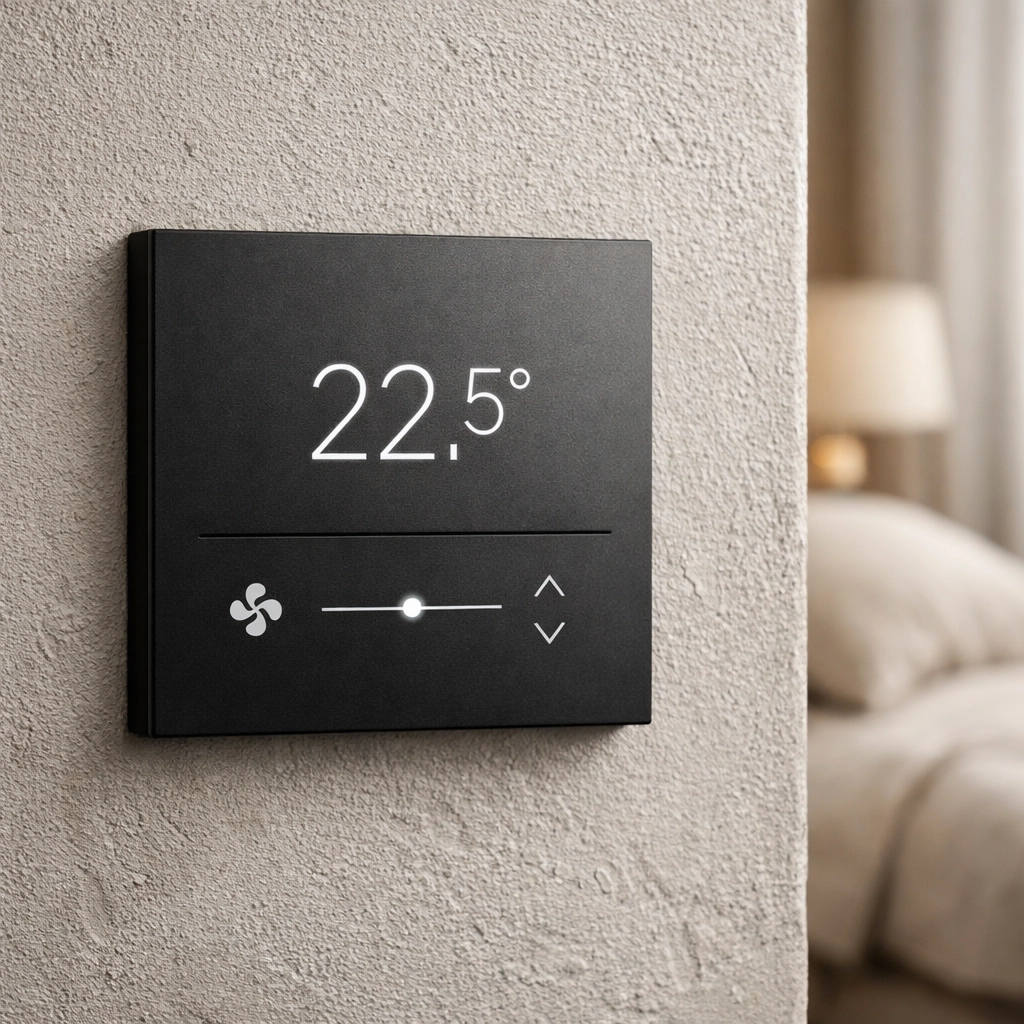
    A modern smart thermostat in a hotel room representing proactive hotel guest experience technology.

    The silent guest and the proactive win

    Every hotel has them: the "Silent Guests." They won't complain to your face. They’ll just never come back. They wanted an extra pillow, but didn't want to "bother" anyone. They found the room a bit chilly, but couldn't figure out the thermostat.

    Predictive AI bridges the gap between what a guest wants and what they’re willing to ask for. By analyzing profiles of similar travelers, the system can prompt your team to be proactive.

    1. Analyze historical data. Does this guest usually request a late checkout?
    2. Predict the need. Offer it via the app before they have to ask.
    3. Execute flawlessly. Deliver the extra towels or the firm pillow because the data suggested they’d want them.

    It feels like mind reading. To the guest, it just feels like the best service they’ve ever had. If you're ready to start providing that level of service, check out how Mews makes it happen.

    Data points that actually matter

    In the world of predictive hospitality, numbers are your best friend. But only the right numbers. We’re not talking about spreadsheets that take three days to compile. We’re talking about real-time insights that drive action.

    • 0.7 stars: The average increase in guest satisfaction scores within six months of implementing predictive feedback loops.
    • 30% reduction: The drop in "emergency" maintenance calls when using AI-driven sensor monitoring.
    • 2-3 days: How much faster issues are resolved when AI flags them versus manual reporting.

    We believe data shouldn't just be stored; it should be put to work. It’s about turning "What happened?" into "What’s about to happen?"

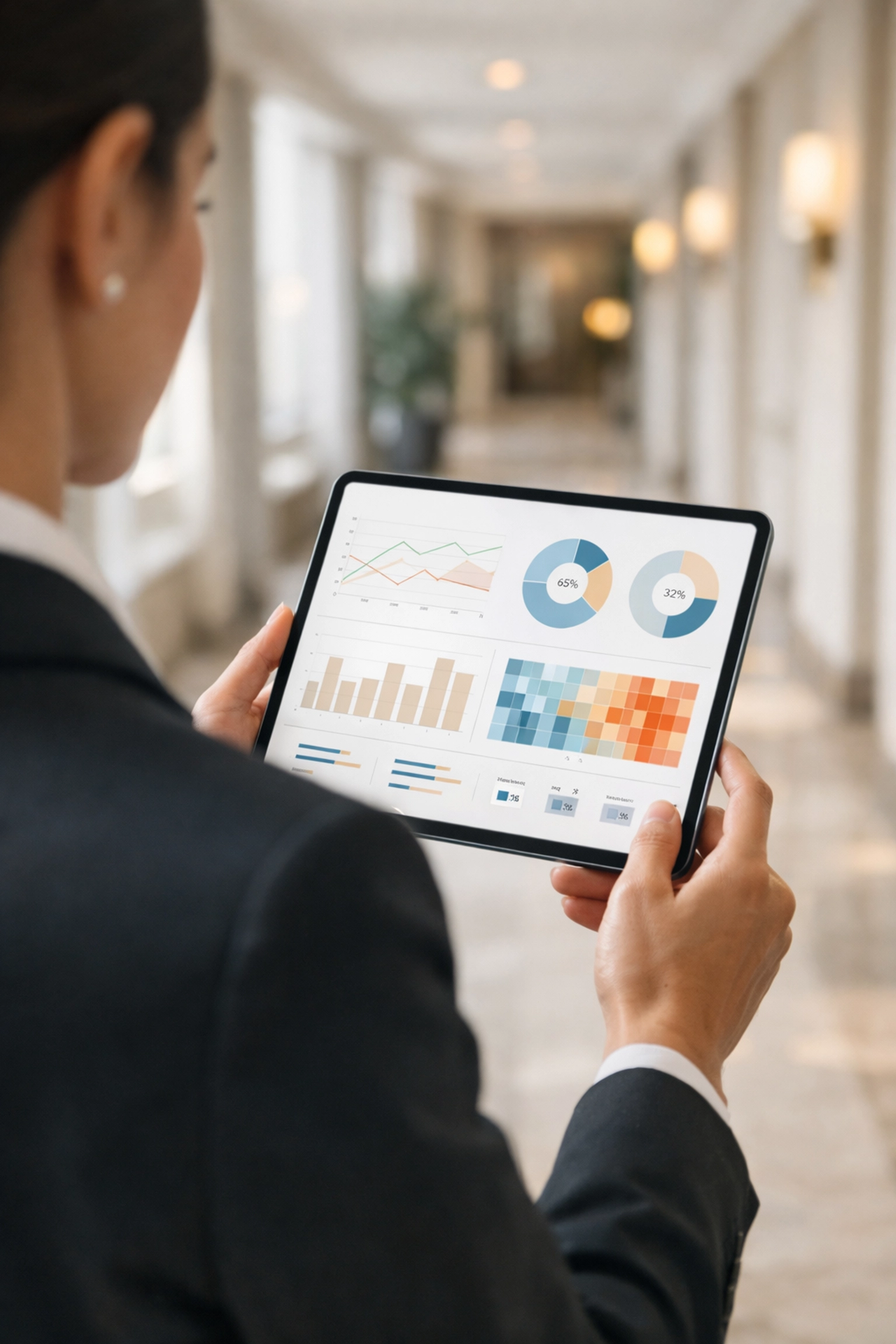
    Hotel staff using a data dashboard to proactively manage and improve the guest stay experience.

    Turning "Oops" into "Aha!"

    Even with the best AI, things will occasionally go sideways. That’s life. But predictive hospitality even changes how we handle the "oops" moments.

    When a system detects a service failure: say, a room wasn't ready by the promised check-in time: the AI doesn't just flag the delay. It can trigger a "recovery sequence." It might automatically send a voucher for a free drink to the guest's phone while they're still standing at the desk.

    It’s about shrinking the "misery gap." The time between a guest feeling a problem and the hotel solving it. When that gap hits zero, you’ve reached the holy grail of hospitality.

    "The AI picked up a sentiment shift in a guest's chat message before I even realized they were unhappy," notes a Front Office Manager. "I was able to send up a small gift before they even finished their sentence. They were floored."

    See what predictive power can do

    Getting started with this kind of technology isn't as daunting as it sounds. You don't need a degree in data science. You just need the right foundation.

    1. Consolidate your data. Get your PMS, your IoT sensors, and your guest feedback into one place.
    2. Listen to the machine. Trust the alerts that tell you a guest might be trending toward a negative experience.
    3. Automate the easy stuff. Let the AI handle the repetitive tasks so your team can focus on the human ones.

    Clean, minimalist hotel room amenities illustrating a friction-free guest experience.

    The human element (Enhanced by AI)

    There’s a common fear that AI makes hospitality "cold." We think it’s the exact opposite.

    By removing the friction of broken ACs, lost requests, and repetitive complaints, you’re giving your staff the most precious gift of all: time. Time to actually talk to guests. Time to make eye contact. Time to offer a local recommendation that isn't on a printed map.

    AI handles the predictable so your humans can be exceptional.

    The goal isn't to replace the smile at the front desk. The goal is to make sure that person isn't smiling through gritted teeth while five people complain about the Wi-Fi. It’s about creating an environment where excellence is the default setting.

    Join the revolution

    The shift to predictive hospitality is happening right now. The hotels that embrace it are seeing higher loyalty, better reviews, and significantly less stress. The ones that don't? They’re still waiting for the phone to ring so they can start apologizing.

    We believe you deserve better. Your guests definitely do.

    Ready to stop reacting and start predicting? It’s time to move your operations onto a platform designed for the future. Whether you're managing a boutique stay or a global chain, the tools to fix problems before they happen are at your fingertips.

    Get started with Mews today and see how the right hotel guest experience technology can get you earning revenue and rave reviews in no time.

    After all, the best guest complaint is the one that never had a reason to exist.

  • Predictive Hospitality: Using AI to Fix Guest Complaints Before They Even Happen

    Predictive Hospitality: Using AI to Fix Guest Complaints Before They Even Happen

    Anticipate needs. Automate solutions. Delight guests.

    The traditional hospitality model is built on the "apology tour." A guest calls down because the AC is rattling. You apologize, send maintenance, maybe offer a free drink, and hope they don't leave a scathing review on TripAdvisor. It’s reactive, stressful, and honestly, a bit outdated.

    We believe the future isn't about how well you apologize; it’s about making sure you never have to. By leveraging AI-driven predictive hospitality, smart hoteliers are identifying operational friction points before a guest even realizes something is wrong.

    Properties using predictive analytics see a 0.6 to 0.8 star rating improvement within just six months. They resolve issues 2-3 days faster than those stuck in the manual loop. It’s about moving from "What can I do for you?" to "We’ve already taken care of that for you."

    All from one innovative hospitality platform.

    The end of the "Check-in Surprise"

    We think the best service is the kind the guest never has to ask for. Predictive hospitality uses machine learning to analyze patterns that humans simply can’t see at scale. While a front desk manager might notice a couple of grumpy guests, AI identifies that eight people mentioned "slow elevators" in the last 48 hours and triggers a maintenance check before the motor actually fails.

    It’s about spotting the signal in the noise. By integrating your PMS with AI-driven feedback loops, you can:

    • Detect micro-trends: Identify recurring complaints across social media, live chat, and internal notes instantly.
    • Predict maintenance needs: Use IoT sensors to monitor room temperature fluctuations that signal a struggling HVAC unit.
    • Prevent service gaps: Forecast peak check-in rushes based on historical flight delay data and local traffic.

    Modern hotel lobby where staff uses AI in hospitality to proactively manage guest check-ins.

    Using past behavior to script the future

    Why ask a returning guest if they want a quiet room when your data already knows they’ve requested one three times in a row? Predictive hospitality takes guest history and turns it into an actionable blueprint.

    When your system is integrated with a platform like Mews, that data becomes your most valuable asset. If a guest’s profile shows a preference for a room far from the elevator or a specific ambient temperature, the system can automate those settings before they even land at the airport.

    "The AI flagged a room temperature drop in 402 before the guest even checked in," says one London-based GM. "We swapped the unit, and the guest had a perfect stay. They never knew they almost had a cold night."

    We believe in making the technology do the heavy lifting so your staff can focus on the human touch.

    Proactive maintenance: The "Invisible" fix

    Nothing kills a guest’s vibe faster than a "Broken" sign on the gym door or a lukewarm shower. Predictive systems don't wait for things to break. They analyze "dissatisfaction signals": those subtle hints in guest behavior or hardware performance: that precede a total failure.

    • Smart HVAC: Sensors detect when a unit is working 20% harder than usual to maintain a temperature.
    • Usage-based cleaning: AI tracks room occupancy and bathroom usage to alert housekeeping exactly when a refresh is needed, rather than following a rigid, inefficient schedule.
    • Water leak detection: Catch a drip in a wall before it becomes a flood that takes three rooms out of inventory.

    By fixing things before they fail, you aren't just saving the guest experience; you’re saving your bottom line. Emergency repairs are always more expensive than scheduled maintenance.

    Smart hotel room climate control interface demonstrating predictive hospitality for maintenance.

    Staffing for the "Invisible" rush

    We’ve all seen it: the lobby is empty, the staff is relaxed, and then: boom. Three tour buses arrive, and the front desk is underwater for two hours. Predictive hospitality isn't just about the guests; it's about your team.

    AI analyzes occupancy data, local event calendars, and even weather patterns to predict when your "rushes" will actually happen.

    • Optimize scheduling: Know exactly when you need four people at the desk versus two.
    • Reduce burnout: Prevent the "firefighting" mentality that leads to high staff turnover.
    • Better breakfast flow: Predict when the dining room will hit capacity so you can suggest "quiet times" to guests via a mobile app.

    It’s about being prepared, not just being present.

    Turning data into 5-star reviews

    The jump from a 4-star to a 5-star review often comes down to the absence of friction. When a guest feels like the hotel "just gets them," they don't just leave a review; they become an advocate.

    Statistics show that humans reviewing guest feedback manually miss about 70% of actionable insights. They’re too busy running the hotel to see the pattern in why Room 302 always gets a "just okay" rating. AI doesn't get tired. It processes every chat, every review, and every sensor log to give you a clear roadmap for improvement.

    Tranquil guest balcony setting showcasing the benefits of modern hotel guest experience technology.

    How to get started with Predictive Hospitality

    Transitioning to a proactive model doesn't happen overnight, but it is easier than you think when you have the right tech stack.

    1. Centralize your data. Use a cloud-native PMS like Mews to ensure all guest and operational data lives in one place.
    2. Connect your "ears." Integrate AI feedback tools that scan reviews and guest messaging for sentiment shifts.
    3. Deploy IoT sensors. Start with high-impact areas like HVAC and water systems to prevent the most common "hard" complaints.
    4. Empower your team. Give staff the authority to act on AI alerts without waiting for a manager's approval.

    We believe in the power of "No Complaints"

    The goal of predictive hospitality isn't to handle complaints better. It’s to eliminate them. When your building, your staff, and your software are all working in a predictive loop, the "apology tour" becomes a thing of the past.

    You stop being a firefighter and start being a host. You stop worrying about what might go wrong and start focusing on how to make things even better.

    Ready to see how the most innovative hotels are staying one step ahead? Explore how a modern PMS can transform your operations.

    Learn more about the Mews platform.

    The future of hospitality is invisible. It’s quiet. It’s seamless. And most importantly, it’s already happening. Don’t wait for the next complaint to decide it’s time to change. Predict it. Fix it. Move on.

    Modern hotel back-office workspace using predictive hospitality to improve operational efficiency.

    Summary of the Predictive Shift:

    • Reactive: Guest complains about a cold room → Maintenance fixes it → Guest gets a voucher.
    • Predictive: System detects HVAC efficiency drop → Maintenance fixes it while the guest is at dinner → Guest never knows there was an issue.

    Which hotel would you rather stay in? Which one would you rather run?

    The choice is yours, and the technology is here to help you make it. Start your journey toward predictive excellence today and get your property earning 5-star reviews in no time.

    Check out Mews for your property.

  • Coffee Dropshipping UK: The Simple Trick to Improve Your Brand Right Now

    Coffee Dropshipping UK: The Simple Trick to Improve Your Brand Right Now

    Have you ever sat in your favorite local spot, sipping a silky flat white, and thought: "I could do this"? Not just drinking the coffee, but actually owning the brand? Most people stop right there because the reality of starting a coffee business feels like climbing a mountain without any gear. You start thinking about the massive roasting machines, the warehouse space, the logistics of shipping, and the terrifying prospect of sitting on hundreds of kilos of beans that are slowly going stale.

    But what if we told you there’s a shortcut? A way to put your logo on premium, speciality-grade coffee without ever touching a burlap sack or getting a single speck of chaff on your shirt?

    Welcome to the world of coffee dropshipping UK. It is, quite frankly, the simplest trick in the book to elevate your brand presence right now. Whether you are an influencer, a lifestyle brand, or a tech company looking for the ultimate corporate gift, dropshipping allows you to offer a high-end product with zero inventory risk.


    What Exactly Is Coffee Dropshipping?

    So, let's break it down. Basically, coffee dropshipping is a retail fulfillment method where you don’t keep the products you sell in stock. Instead, when you sell a bag of coffee on your website, you purchase the item from a third party: in this case, us here at Limini Coffee: and we ship it directly to your customer.

    The "magic" happens in the middle. The customer thinks the coffee came straight from your headquarters because it’s your branding on the bag. They get the fresh aroma, the beautiful packaging, and the incredible taste, while you get the credit (and the profit).

    Premium coffee pouch and fresh mug on a rustic table showing successful coffee dropshipping in the UK.

    Why the UK Market is Exploding

    The UK coffee market is currently a bit of a beast. We’ve seen the broader UK dropshipping market hit a valuation of around £3.2 billion annually. With online shopping accounting for a huge chunk of retail spending, the demand for high-quality, specialty items delivered to your doorstep has never been higher.

    People are moving away from the "dust" found on supermarket shelves. They want transparency. They want to know the roast date. They want to know the origin. By utilizing coffee dropshipping UK services, you are tapping into a sophisticated audience that values quality over convenience: except with dropshipping, you give them both.


    The "Simple Trick": Quality Is Your Only Real Marketing

    You can have the most beautiful website in the world and a logo designed by a top-tier agency, but if the coffee tastes like burnt rubber, your brand is dead in the water.

    The "simple trick" to improving your brand isn't a secret social media hack or a fancy ad campaign. It’s quality. Specifically, it’s the quality of the roast and the freshness of the bean. This is where most dropshipping setups fail; they use mass-produced beans that have been sitting in a warehouse for months.

    At Limini Coffee, we roast daily. This is extremely important. When a coffee bean is roasted, it begins to degas (releasing CO2). Within a few weeks, those volatile aromatic compounds: the stuff that makes coffee smell like heaven: begin to dissipate. By shipping coffee that was roasted just 24 to 48 hours prior, you are providing an experience that your customers simply cannot get at a grocery store.

    The Science of the Sip

    When we talk about quality, we aren't just being poetic. We’re talking about chemistry. Speciality coffee is graded on a scale of 100, and anything over 80 points is considered "speciality." We focus on these high-scoring beans because they have fewer defects and more complex sugar structures.

    Imagine your customer brewing a cup. If the beans are fresh and the roast is precise, they’ll get a beautiful crema (that golden-brown froth on top of an espresso). They’ll notice the balance between acidity and sweetness. If you want to dive deep into what makes a perfect shot, you can read our guide on understanding crema, but the takeaway for your brand is simple: Great coffee makes people happy. Happy people come back.


    The Power of White Labeling

    The biggest hurdle for any brand is trust. How do you get someone to trust your new coffee line? You make it look like it’s been there forever.

    White labeling is the process where we produce the coffee, but you provide the branding. We handle the "heavy lifting": the sourcing, the roasting, the bagging: and you get a finished product that looks 100% yours.

    No Setup Fees? Yes, Please.

    One of the things we pride ourselves on at Limini Coffee is making this accessible. We don't believe in charging massive setup fees or monthly "membership" costs just to help you grow your brand. We want to be your partner, not just another bill on your spreadsheet.

    When you choose to work with us for coffee dropshipping UK, you get:

    • Custom Branding: Your labels on our premium bags.
    • Daily Roasting: Maximum freshness for every single order.
    • Fast Shipping: We know the UK market expects speed.
    • Speciality Quality: No commercial-grade "fillers" here.

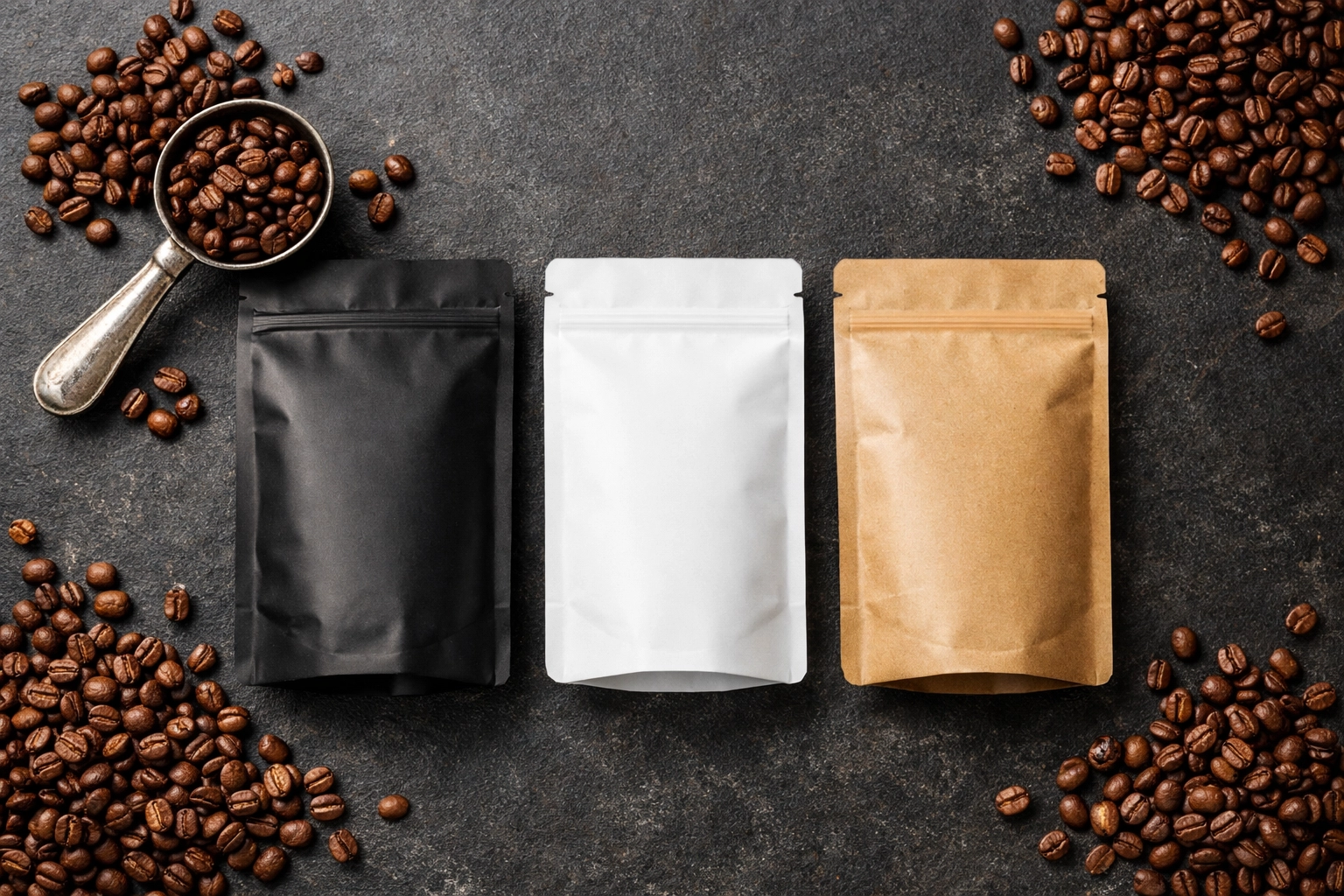
    Professional white label coffee packaging with fresh roasted beans for a coffee dropshipping UK business.


    Why This Works for Your Business Right Now

    You might be wondering, "Is this right for me?" The beauty of dropshipping is its versatility.

    1. For Existing E-commerce Stores: If you already sell kitchenware, lifestyle products, or even clothing, adding a "Signature Blend" is a natural extension. It increases your average order value (AOV) without requiring you to rent more warehouse space.
    2. For Influencers and Creators: You have the audience; now give them something tangible. Coffee is a high-frequency purchase. People buy it every month. It’s the ultimate recurring revenue stream.
    3. For Corporate Branding: Imagine sending out a bag of freshly roasted coffee to your clients with your company logo on it. It’s much more memorable than a plastic pen or a cheap notebook.

    Minimal Effort, Maximum Impact

    The reason we call this a "simple trick" is because of the effort-to-reward ratio. You spend a few hours designing a label and setting up the product on your site. After that, the system is largely automated. You focus on the marketing and the community building; we focus on the bean density, the roast profiles, and the Royal Mail collections.


    Common Mistakes to Avoid in Coffee Dropshipping

    We’ve seen a lot of people try to do this the wrong way. Don't be one of them.

    • Prioritizing Price over Quality: You can find cheap dropshipping suppliers, but the coffee is often bitter and old. This will destroy your brand reputation faster than a bad review.
    • Ignoring the "Freshness" Factor: If your supplier doesn't roast to order, don't use them. Period.
    • Complicated Shipping Costs: Keep it simple for your customers. In the UK, people expect straightforward shipping.

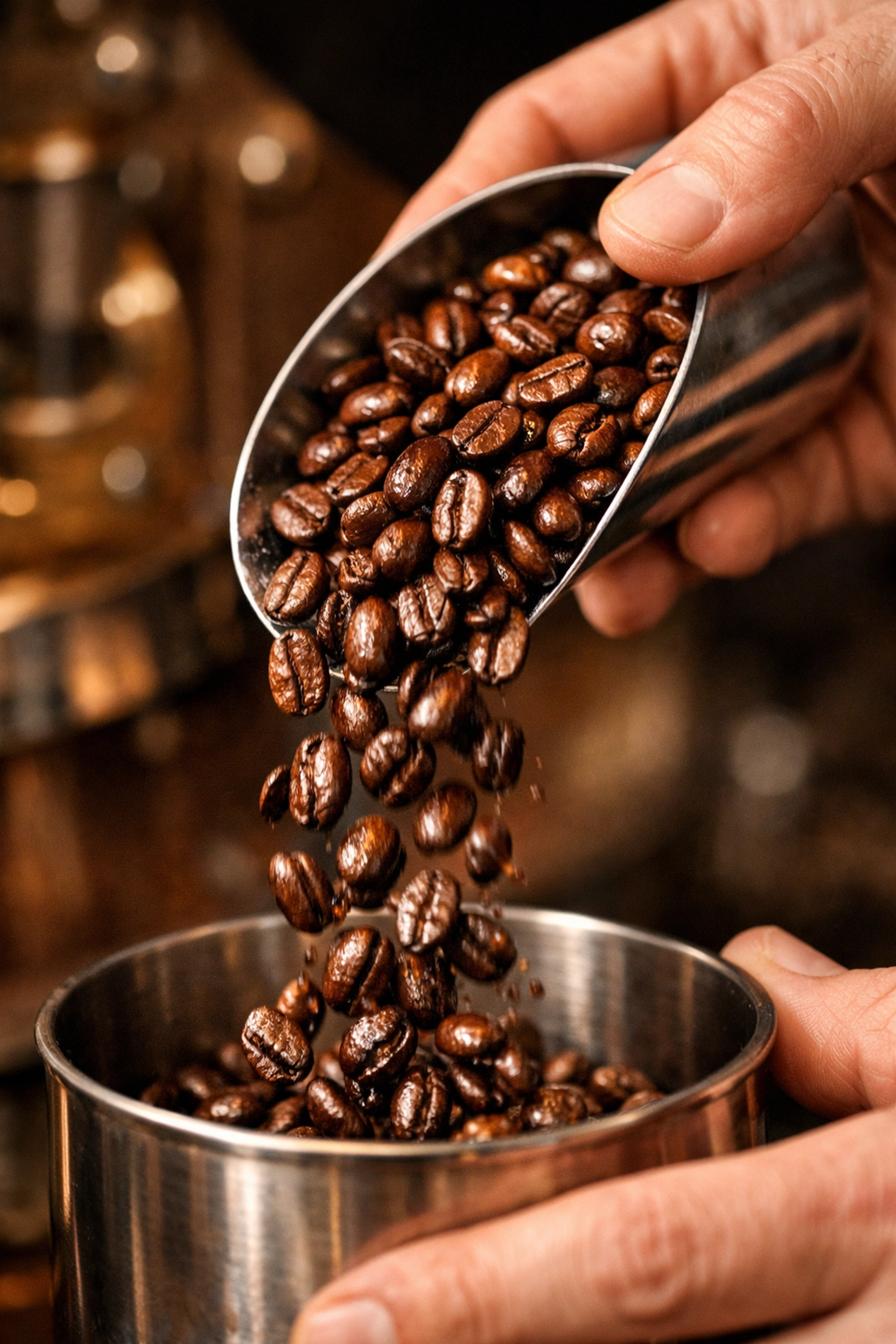
    Freshly roasted specialty coffee beans being poured by a barista at a professional UK coffee roastery.


    How to Get Started with Limini Coffee

    Ready to jump in? The process is actually quite painless. We’ve spent years refining our wholesale and dropshipping operations to ensure they are as smooth as a well-steamed latte.

    1. Choose Your Coffee: We have a range of incredible single origins and blends. Whether you want something chocolatey and bold or bright and fruity, we have the beans.
    2. Design Your Label: This is your chance to shine. Make it bold, make it minimalist, make it you.
    3. Connect Your Store: We work with you to ensure that when an order comes in, we get the notification and start roasting.
    4. Sit Back and Roam: (See what we did there?) Your brand grows while we do the work.

    If you’re curious about how we source our beans to ensure they meet these high standards, check out our page on sourcing our coffee. We believe in ethical, sustainable, and high-quality relationships: both with our farmers and with you.


    The Final Sip

    The UK coffee scene is more vibrant than it’s ever been. There is a massive opportunity for brands to step in and provide something special. You don't need a multi-million pound roastery to compete with the big names. You just need a partner who has one.

    By leveraging Limini Coffee’s dropshipping services, you’re not just selling a product; you’re selling a moment of daily luxury. You’re giving your customers a reason to start their day with your brand.

    So, what are you waiting for? The beans are ready. The roaster is hot. Let’s build something amazing together.

    If you want to learn more about the technical side of things, or perhaps you're thinking of opening a physical space down the line, we offer everything from barista training to equipment advice. But for right now, the simplest move you can make is to put your name on the best coffee in the UK.

    Fresh coffee bag next to a laptop on a sunny desk, representing a successful coffee dropshipping UK business.

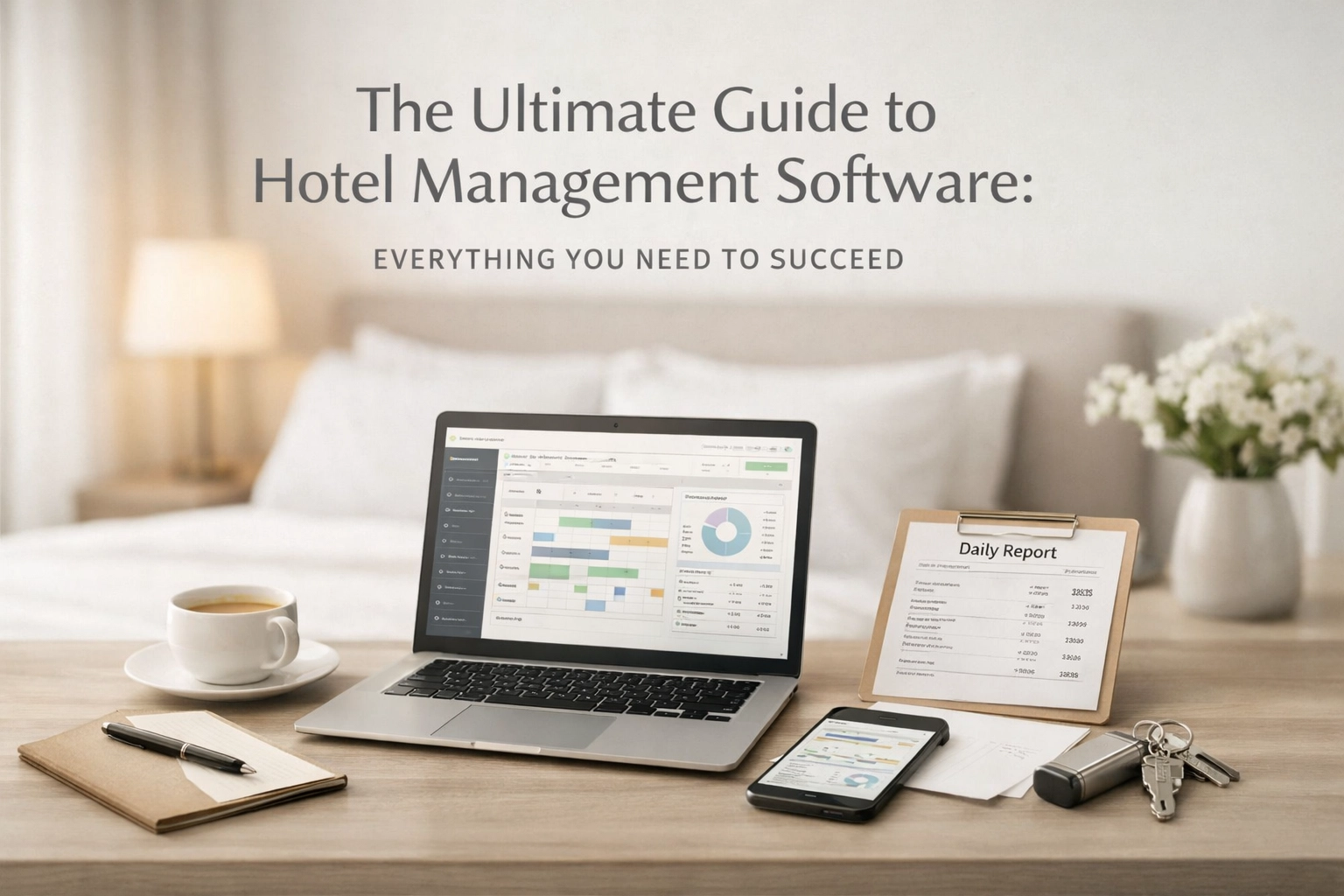
  • The Ultimate Guide to Hotel Management Software: Everything You Need to Succeed

    The Ultimate Guide to Hotel Management Software: Everything You Need to Succeed

    Transform operations. Boost revenue. Delight guests.

    In the modern hospitality landscape, your choice of technology isn't just a back-office decision: it’s the foundation of your entire guest experience. Over 5,000 properties have already realized that legacy systems are the anchors holding back their growth. The future belongs to those who automate the mundane to focus on the human, all from one innovative platform.

    The heart of your hotel.

    We believe a Property Management System (PMS) should be the brain of your operation, not just a digital ledger. It coordinates every moving part of your business, from the moment a guest searches for a room to the second they receive their automated checkout folio.

    Today’s software does more than track keys; it orchestrates a symphony of data. When your systems talk to each other, magic happens. Availability updates across every channel instantly. Housekeeping knows exactly which room to hit next. Guest preferences follow them from the bar to the spa.

    It’s about moving away from "clunky" and toward "seamless."

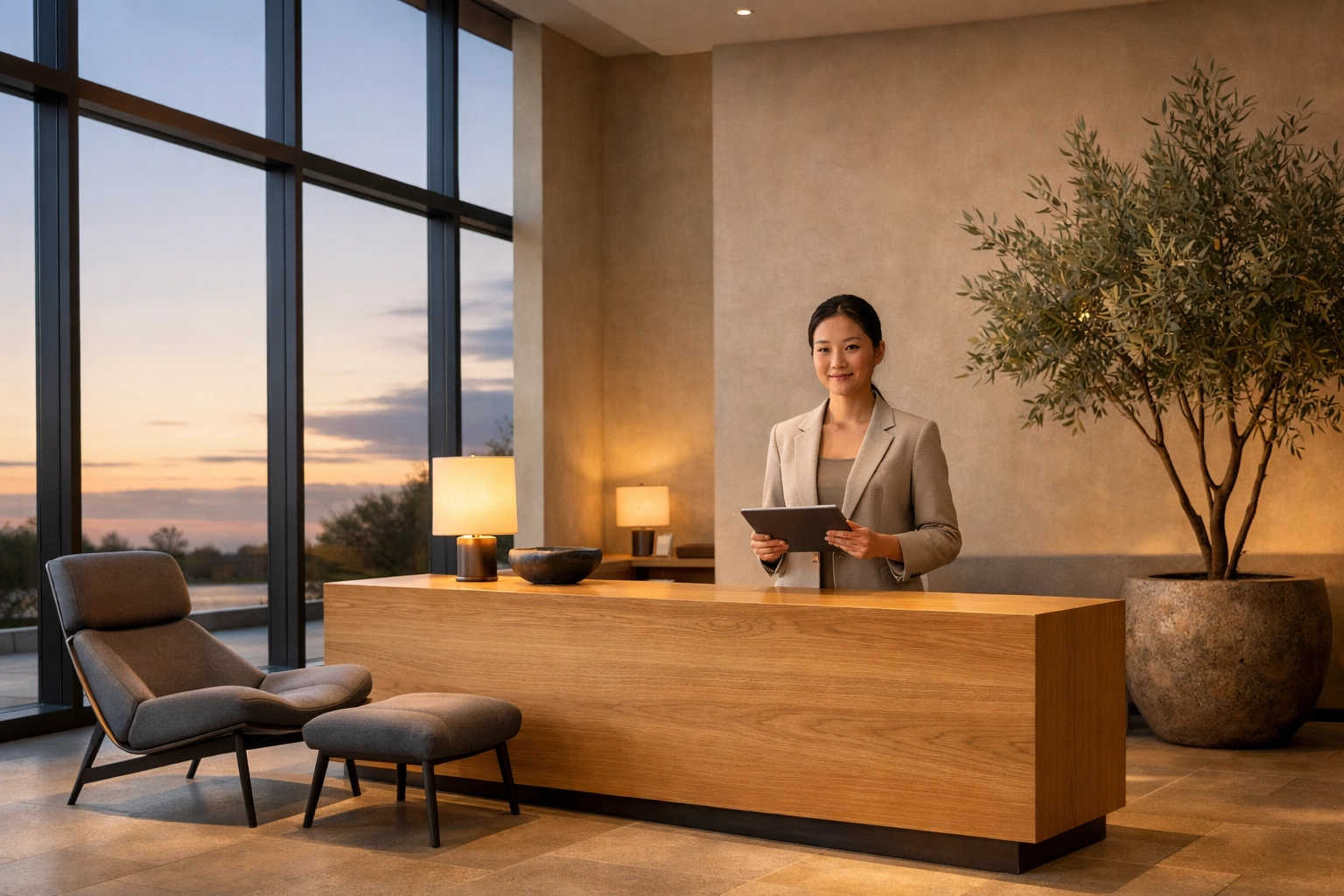
    Modern hotel reception desk with a tablet symbolizing seamless cloud property management software.

    Features that actually matter.

    Why settle for a digital version of a 1990s spreadsheet? Modern hotel management software focuses on outcomes, not just inputs. We think the best tools are the ones your staff actually enjoy using: the ones that get them out from behind a desk and into the lobby to greet guests.

    • Automated Check-in: Let guests skip the queue and go straight to their room.
    • Smart Space Management: Sell more than just beds; manage parking, meeting rooms, and co-working spaces.
    • Unified Payments: Process transactions securely without manual entry or "oops" moments.

    "Switching to a modern PMS gave our team back 10 hours a week in pure admin time. We finally have time to actually talk to our guests again." : Independent Boutique Hotelier

    Data-driven success.

    Numbers don't lie. Properties that embrace cloud-based automation see a significant uptick in efficiency and guest satisfaction scores.

    • 15% increase in average RevPAR through smart pricing integrations.
    • 20% reduction in front desk wait times with mobile check-in.
    • 100% real-time synchronization across all booking channels.

    By leveraging granular reporting, you can spot trends before they become problems. Whether it’s identifying your most profitable guest segment or optimizing your housekeeping schedule based on real-time occupancy, data is the fuel for operational excellence.

    Connect everything.

    The era of the "all-in-one" box that does everything poorly is over. The new standard is a core platform that plays well with others. We believe in the power of choice, which is why having an open API is non-negotiable for the modern hotelier.

    Imagine a world where your PMS, your POS, and your CRM are in a constant, productive three-way conversation. With over 800+ integrations available, you can build a tech stack that is as unique as your property.

    • Channel Management: Sync your rates and availability with OTAs effortlessly.
    • POS Integration: Ensure the double espresso at the bar ends up on the right room bill.
    • Guest Messaging: Connect via WhatsApp or SMS for instant, personal service.

    Smartphone and coffee in a hotel lounge representing integrated guest messaging and mobile POS.

    Scaling without the stress.

    Whether you’re running a cozy 10-room B&B or a sprawling multi-property group, your software should grow with you. Scalability isn't just a buzzword; it’s the difference between a smooth expansion and a technical nightmare.

    Multi-property management allows you to oversee your entire portfolio from a single login. Compare performance across locations, share guest profiles to ensure consistent service, and centralize your accounting. It’s about having a bird’s-eye view while maintaining boots-on-the-ground control.

    AI and the guest of 2026.

    Travelers are changing. They expect speed, personalization, and a touch of tech-forward flair. AI is no longer a sci-fi concept in hospitality: it’s a practical tool for daily excellence.

    From chatbots that handle 80% of routine guest inquiries to predictive analytics that forecast your occupancy three months out, AI is the silent partner every hotel needs. It’s not about replacing humans; it’s about giving humans the data they need to be more hospitable.

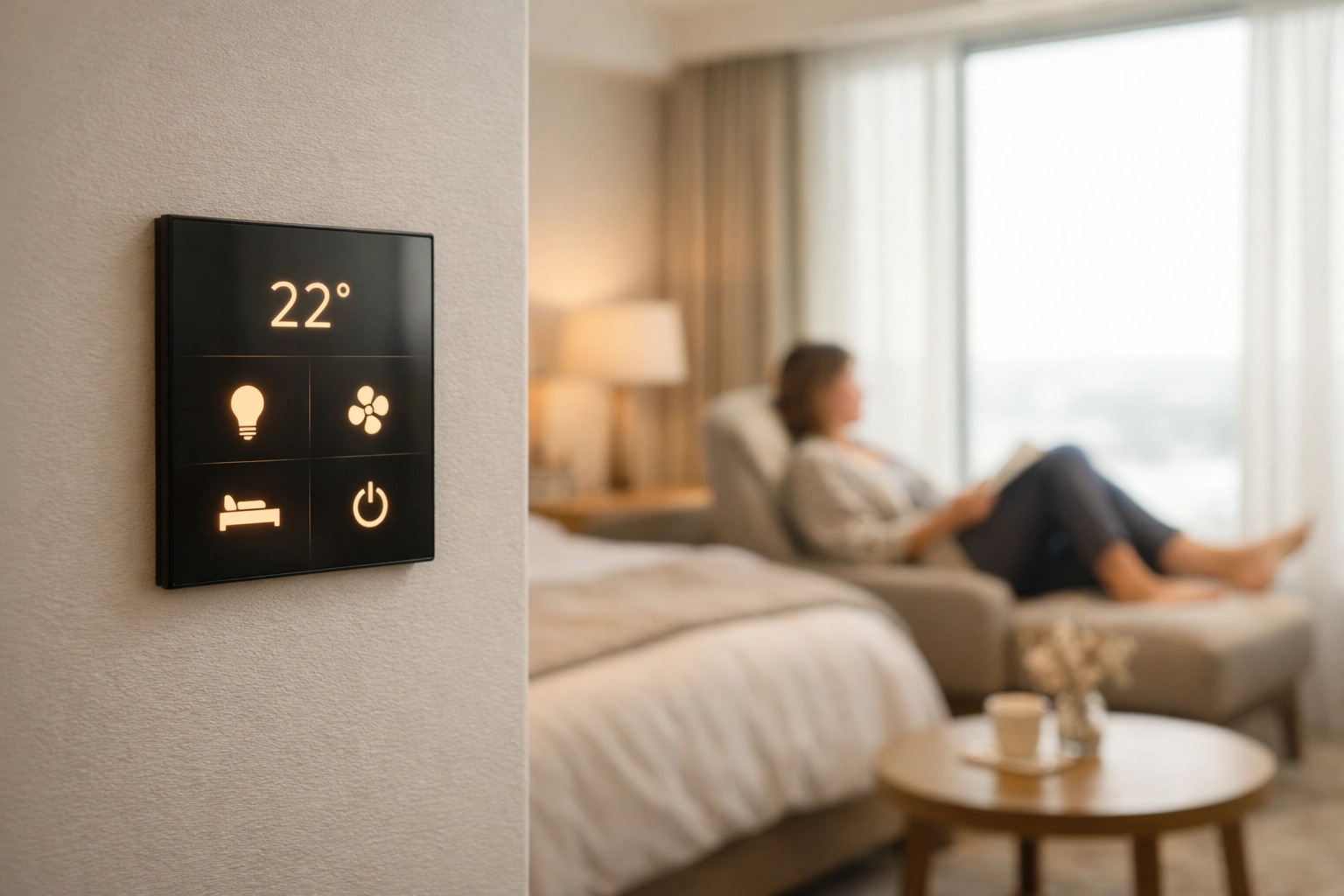
    Modern hotel suite with a digital control panel highlighting AI-powered guest experience technology.

    Choosing your path.

    Selecting the right software is a big move. While legacy giants like Oracle Hospitality OPERA offer deep complexity for massive chains, and tools like Little Hotelier cater to the smallest inns, Mews sits at the sweet spot of innovation and usability.

    With subscriptions starting at competitive rates like £155/month, high-tier technology is no longer reserved for the industry giants. You deserve a system that is:

    1. Cloud-native: Access your hotel from your phone, your laptop, or a beach in Bali.
    2. User-friendly: Train new staff in minutes, not weeks.
    3. Secure: Protect guest data with the highest levels of PCI and GDPR compliance.

    Get started today.

    The transition to a better way of working is easier than you think. Don't let old tech dictate your hotel’s potential. It’s time to empower your team, impress your guests, and take control of your revenue.

    Explore how the right platform can transform your property. Check out Mews and see the difference for yourself.

    It’s time to build the future of hospitality, one guest at a time. This is how you succeed in 2026 and beyond.

    Sleek boutique hotel exterior at dusk representing the future of hospitality management success.

  • Top 10 Hospitality Trends 2026 to Keep Your Hotel Ahead of the Curve

    Top 10 Hospitality Trends 2026 to Keep Your Hotel Ahead of the Curve

    Transform your operations. Delight your guests. Scale your brand.

    The hospitality landscape in 2026 isn't just evolving; it’s being rewritten. We’ve moved past the "digital transformation" buzzwords of the early 2020s and landed firmly in an era where technology is the silent partner in every guest interaction. Today, being "ahead of the curve" doesn’t mean having a pretty website: it means running a hyper-automated, data-obsessed, and deeply human operation.

    At Mews, we see over 12,500 properties worldwide pushing the boundaries of what a hotel can be. The winners in 2026 are those who trade manual checklists for AI agents and generic rooms for attribute-based experiences.

    Ready to see where the industry is headed? Let's dive in.

    1. The Rise of the Autonomous AI Agent

    The chatbot is dead. Long live the AI Agent. In 2026, we’ve moved beyond basic FAQ bots that get confused by a simple "Can I have more towels?" Modern AI agents are autonomous. They don't just talk; they do.

    We believe the best technology is the kind you don't have to manage. These agents handle complex booking modifications, trigger upsell opportunities based on real-time sentiment, and even monitor energy usage across your property.

    • Reduces manual administrative load by up to 70%.
    • Handles real-time revenue management shifts without human intervention.
    • Operates 24/7 across every digital touchpoint.

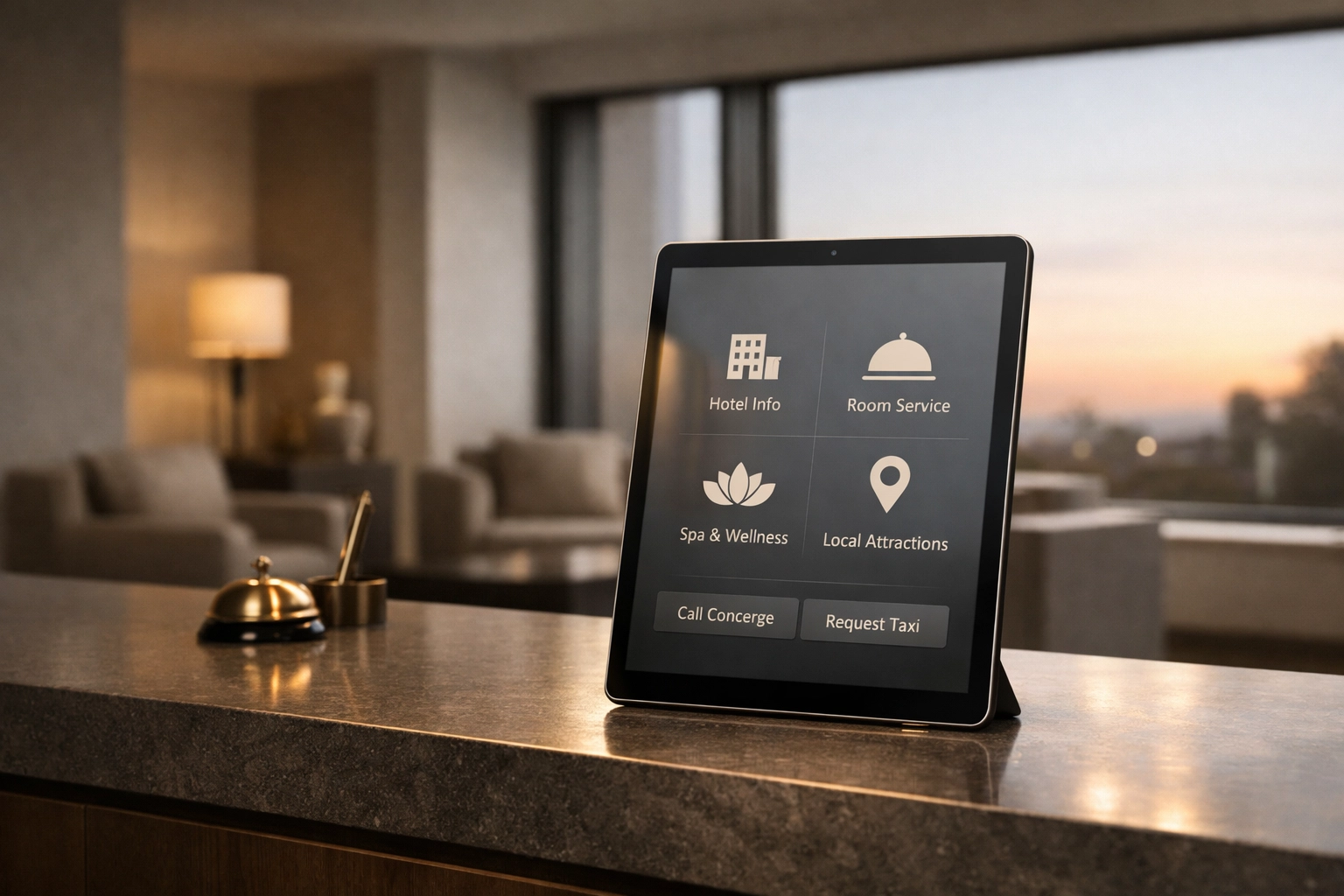
    Tablet on a hotel concierge desk demonstrating AI automation for guest services in a modern lobby.

    2. Hyper-Personalization as a Standard

    Generic "Welcome back" emails are the new junk mail. Hyper-personalization is the industry's defining trend this year. It’s about moving beyond broad market insights to deep, granular segmentation.

    You need to know not just who your guests are, but how they book and what makes them click "confirm." Are they booking because of your spa’s organic tea selection or your lightning-fast Wi-Fi?

    • Predictive dining recommendations based on past stay data.
    • Wellness promotions tailored to specific guest recovery goals.
    • Tailored pre-arrival offers that actually convert.

    3. Attribute-Based Selling (ABS)

    The traditional "Standard Room vs. Deluxe Room" model is crumbling. Guests in 2026 want to pay for exactly what they value. Attribute-based selling allows you to unbundle your inventory.

    Instead of selling a category, you’re selling features: a high floor, a balcony, a sunrise view, or an espresso machine. This approach increases perceived value and allows you to capture ancillary revenue that was previously hidden.

    • Higher guest satisfaction through "build-your-own" stay models.
    • Increased RevPAR by monetizing specific room features.
    • Clearer differentiation from competitors.

    4. Agentic Commerce: Booking via LLMs

    Search engines are becoming answer engines. More travelers are using Large Language Models (LLMs) like ChatGPT or Gemini to plan and book their entire trips. This is "Agentic Commerce."

    If your hotel's data isn't exposed to these AI systems, you don't exist in the search results of the future. The shift is from SEO to AIO (AI Optimization). Brands that integrate seamlessly with these agents will capture bookings directly through voice and chat interfaces.

    Traveler using a smartphone to book a stay through an AI travel agent in a luxury hotel suite.

    5. The Premiumization of Travel

    Luxury isn't about gold leaf anymore; it's about time, access, and exclusivity. In 2026, the premium sector is the primary growth engine of the hospitality industry.

    Luxury travelers now expect a holistic experience that combines high-tech convenience with "high-touch" service. Ultra-high-net-worth guests are seeking discreet, private accommodations and access to cultural moments that money can’t usually buy: think private concerts or after-hours museum tours.

    • Focus on wellness-centric room design.
    • Exclusive partnerships with local artisans.
    • Priority access to "niche" cultural events.

    6. Renewable Energy and Smart Monitoring

    Sustainability is no longer a PR play; it’s an operational necessity. With rising energy costs and stricter regulations, hotels are turning into mini-power plants.

    We’re seeing a massive uptick in properties implementing solar panels, wind turbines, and geothermal systems. But it's not just about generation: it's about conservation. Smart monitoring systems now detect a leak or an inefficient HVAC unit before your maintenance team even checks their email.

    • Significant reduction in long-term operational costs.
    • Appeal to the 80% of travelers who prefer eco-certified stays.
    • Real-time data visualization of carbon footprints.

    Modern hotel exterior with integrated solar panels and a vertical garden for sustainable energy management.

    7. The Era of the "Whycation"

    Intentionality is the theme of 2026. Travel has shifted toward the "Whycation": trips rooted in a specific purpose or cultural niche. Whether it's a "sleep retreat," a "creative sabbatical," or a "heritage tour," guests are aligning their trips with their personal values and hobbies.

    Hotels must design experiences that go beyond the four walls of the room. If you aren't facilitating a meaningful memory, you're just a bed.

    • Partner with local experts to lead niche workshops.
    • Curate "purpose-driven" stay packages.
    • Focus marketing on the feeling of the stay, not just the amenities.

    8. Community-Centric Hospitality

    The hotel of 2026 is a neighborhood hub. The lines between "tourist" and "local" are blurring. Leading hotels are partnering with local farmers, artisans, and small businesses to create an ecosystem that benefits everyone.

    This isn't just about sourcing local honey for breakfast. It’s about hosting community events, featuring local art in the lobby (available for purchase), and directing guests to under-the-radar local gems.

    • Stronger brand loyalty through authentic storytelling.
    • New revenue streams from local foot traffic (cafes, co-working).
    • Deeply integrated social responsibility.

    Handcrafted local ceramics displayed in a lobby to showcase community-centric hospitality and local art.

    9. Smart Water and Waste Management

    While energy gets the headlines, water is the quiet crisis. Smart hotels are leading the charge with greywater recycling and sensor-activated everything.

    In housekeeping, the trend is "chemical-free." Biodegradable products and high-efficiency laundry systems that use 50% less water are becoming the standard. Guests are no longer just "invited" to reuse towels; they are actively participating in the property's conservation goals through gamified apps and rewards.

    10. Operational Excellence via Integrated Tech

    Finally, none of these trends matter if your tech stack is a mess of disconnected legacy systems. Operational excellence in 2026 is about a unified platform.

    The most successful hotels have moved away from "all-in-one" systems that do everything poorly, toward "best-of-breed" ecosystems connected by a powerful PMS core. You need a system that talks to your AI agents, your smart thermostats, and your guest’s smartphone without skipping a beat.

    • Eliminate data silos for a single guest view.
    • Automate 90% of routine check-in/out tasks.
    • Scale your brand with a few clicks, not a few months.

    Minimalist hotel manager's workspace featuring a tablet with integrated hospitality management software.

    See what Mews can do

    The future of hospitality is already happening. It's faster, smarter, and more personal than ever before. To keep your hotel ahead of the curve, you need a partner that lives at the intersection of innovation and guest experience.

    We believe that by automating the mundane, we can humanize the hospitality experience. Let us help you get back to what matters: taking care of your guests.

    Ready to transform your property?
    Get started with Mews today.

    It only takes a 30-minute demo to see how our platform can save your team 10 hours a week and get you earning more revenue in no time. All from one innovative platform.
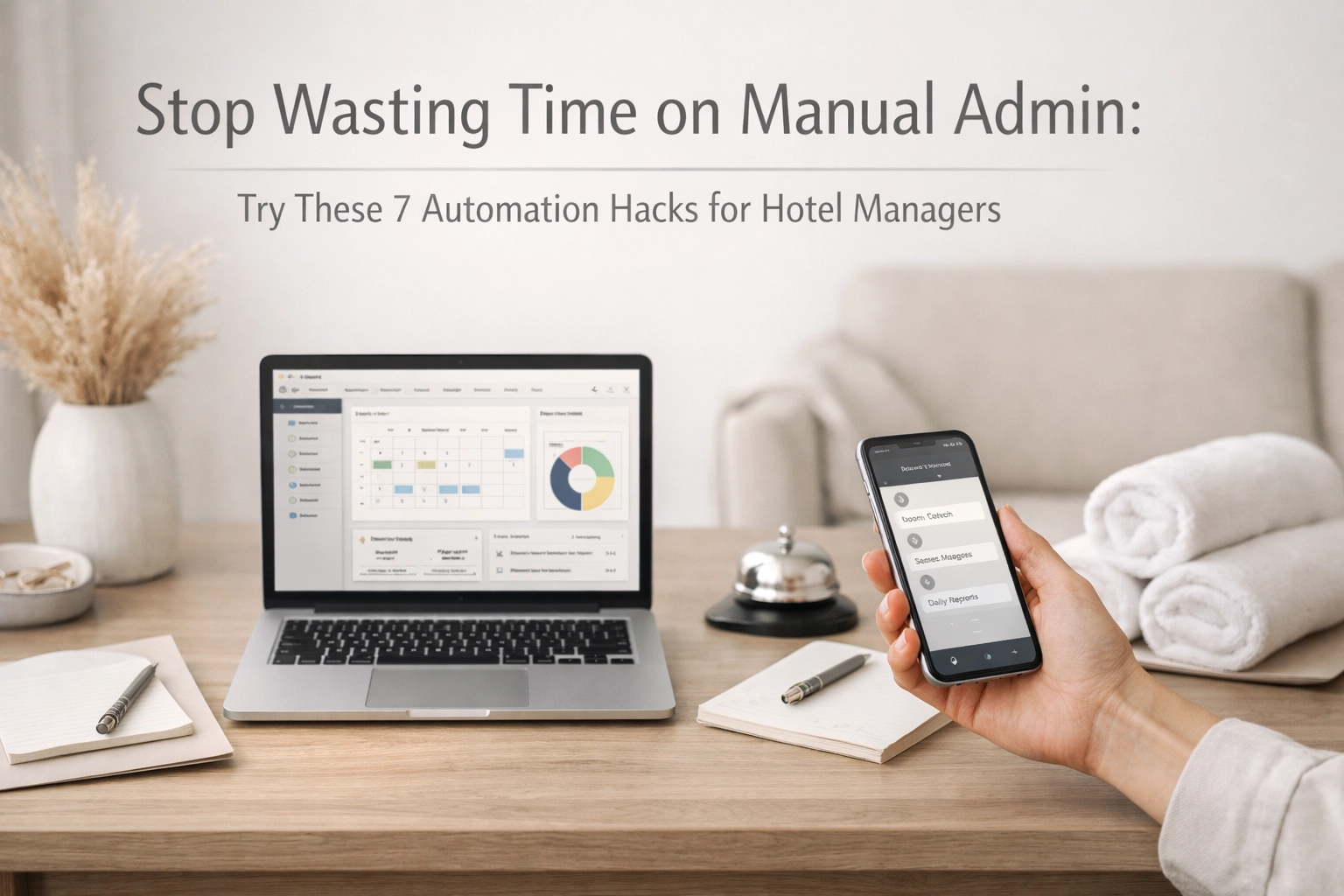
  • Stop Wasting Time on Manual Admin: Try These 7 Automation Hacks for Hotel Managers

    Stop Wasting Time on Manual Admin: Try These 7 Automation Hacks for Hotel Managers

    Free your staff. Delight your guests. Scale your brand.

    Hospitality was never meant to be about staring at a screen for eight hours a day. We believe that great service happens when people are present, not when they’re buried under a mountain of manual paperwork. Yet, the reality for many hotel managers involves a constant battle with spreadsheets, manual room assignments, and the dreaded "night audit" that takes half the night.

    It doesn’t have to be this way. Modern hotel management software has moved past simple record-keeping into the realm of true operational intelligence. By leveraging a cloud-native hotel PMS, properties are seeing a 30% increase in staff efficiency and a significant boost in guest satisfaction scores.

    We think the future of hospitality is invisible. It’s a world where the technology handles the "boring stuff" so your team can focus on the human stuff.

    Here are seven automation hacks that will transform your daily operations: all from one innovative platform.

    1. Stop the Manual OTA Dance with a Unified Channel Manager

    If your team is still logging into five different extranets to update room availability, you’re losing time (and money) to human error. Double bookings are the ultimate guest experience killer, and they almost always stem from manual lag.

    We believe your inventory should be a single source of truth.

    • Sync availability across 100+ OTAs instantly.
    • Update rates in real-time from your central dashboard.
    • Eliminate the "overbooking anxiety" that plagues your front desk team.

    A robust channel manager doesn't just push data; it ensures that whether a guest finds you on Booking.com, Expedia, or your own website, they see the exact same thing. This keeps your brand consistent and your staff sane.

    Minimalist hotel reception desk with a laptop showing efficient channel manager automation.

    2. Revolutionize the Arrival with Self-Check-In Kiosks

    Let’s be honest: nobody likes standing in a queue after a long flight. The traditional "front desk hurdle" is a legacy of the past. By introducing self-check-in kiosks and mobile check-in options, you give guests the freedom to choose their own arrival experience.

    We think the lobby should be a place for a welcome drink, not a paperwork marathon.

    • Let guests check in on their own devices before they even arrive.
    • Reduce front desk wait times to zero during peak hours.
    • Automatically issue digital keys or prompt for physical key pickup.

    When you automate the check-in process, your front office team stops being "transaction processors" and starts being true hosts. They can spend those first few minutes recommending a local bistro instead of asking for a passport scan for the thousandth time.
    3. Master the Art of Automated Guest Communication

    Sending manual confirmation emails is a waste of your team's talent. Automated guest communication sequences ensure that every guest feels cared for from the moment they book until long after they’ve checked out.

    "We used to spend hours every week just following up on arrivals. Now, the system handles it, and our guests actually arrive better prepared." : General Manager, Boutique Hotel Group.

    • Schedule pre-arrival emails with upsell opportunities (like late check-outs).
    • Trigger automated "how is your stay?" messages two hours after check-in.
    • Send personalized post-stay surveys to boost your CRM data.

    By using your CRM to segment these messages, you ensure the content is always relevant. A business traveler doesn't need to know about the kids' club, but they might appreciate a link to book a workspace.

    Guest in a hotel suite using a smartphone for seamless communication with a hotel CRM.

    4. Deploy Dynamic Pricing Rules with AI

    Manual rate loading is a relic of the 90s. If you’re waiting until Monday morning to adjust your weekend rates based on demand, you’ve already missed the window.

    We believe your booking engine should work as hard as your revenue manager.

    • Set rules to automatically increase rates as occupancy hits certain thresholds.
    • React instantly to market demand shifts without human intervention.
    • Maximize RevPAR by ensuring you never under-price a high-demand night.

    Integrating AI-powered revenue management tools directly into your hotel PMS means your pricing is always optimized. It’s like having a 24/7 revenue expert who never sleeps and never gets tired of analyzing spreadsheets.

    5. Automate Housekeeping with Smart Scheduling

    Communication between the front desk and housekeeping is often the biggest bottleneck in a hotel. Radios are noisy, and paper lists are outdated the second they’re printed.

    We think housekeeping should be a well-oiled machine, not a guessing game.
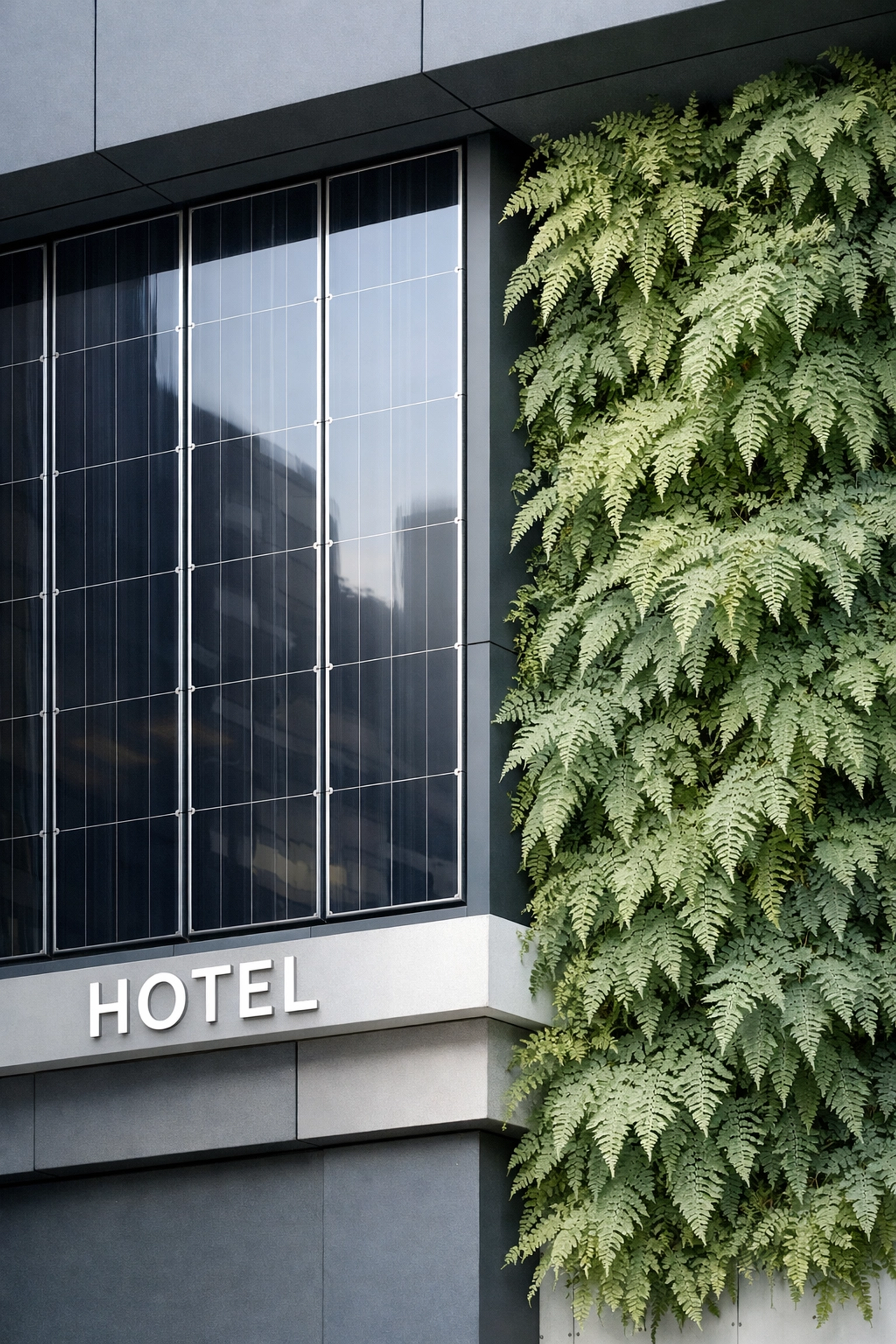
    • Update room status in real-time via a mobile app for cleaning staff.
    • Automatically prioritize rooms based on guest arrival times.
    • Trigger instant notifications when a room is ready for the next guest.

    When your housekeeping team can see exactly which rooms need attention on their mobile devices, they spend less time walking hallways and more time preparing perfect guest environments. It’s an easy win for operational excellence.

    Freshly prepared hotel bed highlighting efficient operations from housekeeping management software.
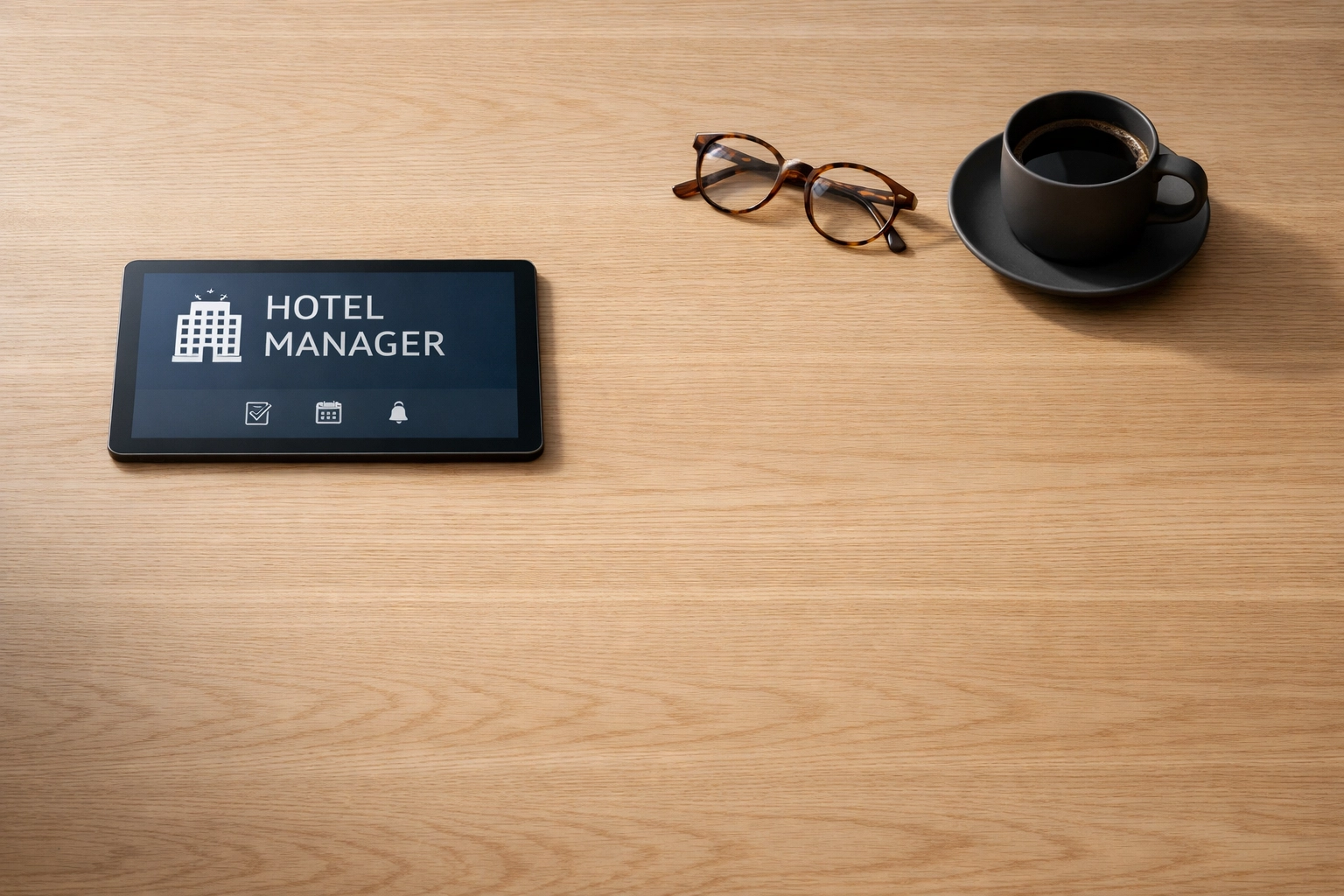
    6. Streamline Payments for an Invisible Checkout

    The checkout process should be as easy as getting out of an Uber. If your guest has to wait for a printed folio and manually swipe a card, the last memory of their stay is a chore.

    • Process deposits and final payments automatically via a secure payment gateway.
    • Send digital folios to the guest’s email the moment they check out.
    • Eliminate manual billing errors and the need for stressful reconciliation.

    A unified payment system doesn't just save time; it increases security. By automating the transaction within your hotel PMS, you reduce the risk of fraud and ensure that every penny is accounted for without the manual tallying at the end of the shift.

    7. Connect Your Entire Tech Stack via API

    The most powerful automation hack isn't a single feature: it's the ability to connect all your tools. A cloud-native platform with an open API allows your PMS to "talk" to your guest messaging apps, your smart locks, and your accounting software.

    We believe in a connected hospitality ecosystem.

    • Connect your booking engine directly to your CRM for seamless guest profiles.
    • Integrate smart room controls that adjust the temperature when a guest checks in.
    • Sync your financial data directly with your accounting software to save hours of data entry.

    When your systems work together, the data flows effortlessly. You stop being the "bridge" between disconnected tools and start being the conductor of a high-performing symphony.

    Smart hotel room control panel demonstrating seamless integration within a modern hotel PMS.

    The Mews Difference: Innovation by Design

    At Mews, we didn't just build a hotel PMS; we built a platform designed to rethink how hotels operate. We know that the administrative burden on hotel managers is real, and we’ve made it our mission to eliminate it.

    Our software is cloud-native, meaning you can manage your property from anywhere: whether you’re in the back office or on a beach. It’s intuitive, easy to use, and focused entirely on the guest journey. We don't just provide tools; we provide the freedom to be creative, to be hospitable, and to grow.

    See how 12,500+ properties are already using these hacks to stay ahead of the curve.

    Ready to see what a truly automated hotel looks like? Check out how we can help you transform your operations here: https://referrals.mews.com/umqhyito

    Simple Steps to Start Today:

    1. Audit your day: Identify the three manual tasks that annoy your team the most.
    2. Get a demo: See how a modern hotel PMS handles those specific tasks.
    3. Go live: Our 30-minute implementation calls make the transition feel effortless.

    Stop fighting with your software and start letting it work for you. The future of your hotel is waiting; and it involves a lot less admin.