Category: Category 1

Use this description to tell users what kind of blog posts they can find in this category.

  • AI Social Media Content Generator 101: How to Post Every Day Without Losing Your Mind

    AI Social Media Content Generator 101: How to Post Every Day Without Losing Your Mind

    You didn't start your business to become a full-time social media manager.

    You started it to build something. To sell products. To help clients. To finally be your own boss.

    But here you are… at 8:15 PM on a Tuesday, staring at a blank Instagram caption box. Your eyes are heavy. Your brain is fried. You know you need to post to keep the algorithm happy, but you have exactly zero words left in the tank.

    The blinking cursor is mocking you.

    "Just post something," you tell yourself. But "something" usually ends up being a blurry photo with a caption that says "Happy Tuesday!"

    It’s exhausting. It’s inconsistent. And honestly? It’s probably not moving the needle for your business.

    But it doesn't have to be this way.

    Scaling shouldn't be this hard. And with the right ai business automation, it isn’t.

    ☕ 8:00 AM , THE MORNING DREAD IS OFFICIALLY CANCELLED

    You wake up. You grab your coffee. Usually, this is the moment the "I need to post" anxiety kicks in.

    You scroll through your camera roll looking for a "throwback" because you don't have anything new. You spend 20 minutes trying to think of a witty hook. You give up and close the app.

    But today is different.

    You open your ai social media content generator. You type in three words: "New summer collection."

    Seconds later, you have five different caption options. One is funny. One is educational. One is a direct hard sell.

    Stop juggling.

    You pick the best one, tweak two words to make it sound more like "you," and hit schedule.

    Total time elapsed? Three minutes.

    The day hasn't even fully started, and your marketing is already done. That’s the power of using an ai content generator for small business. It takes the "thinking" out of the equation so you can get back to the "doing."

    A relieved business owner gets social media posts from an AI content generator over morning coffee.

    📱 11:00 AM , ONE IDEA, EVERY PLATFORM

    The biggest trap solopreneurs fall into is trying to write unique posts for every single app.

    You write a long-form post for LinkedIn. Then you try to summarize it for Facebook. Then you try to turn it into a script for a TikTok. By the time you’re done, it’s lunchtime and you haven't actually done any real work.

    Business automation tools change the math.

    With a solid ai social media content generator, you feed it one core idea, maybe a blog post or a customer testimonial, and tell it to "atomize" it.

    … It creates a professional update for LinkedIn.
    … It generates a punchy, emoji-filled caption for Instagram.
    … It writes a 15-second hook for a Reel.

    You aren't working harder. You’re just letting the machine handle the formatting.

    If you want to see how this looks in practice, check out the systems we're building over at Marblism.

    🥗 1:00 PM , THE END OF DECISION FATIGUE

    The real reason social media feels like a chore isn't the typing. It’s the constant decision-making.

    What's the hook? What hashtags should I use? Is this too "salesy"?

    By the time you reach 1:00 PM, your brain has made a thousand tiny choices. No wonder you’re tired.

    An ai social media content generator acts as your creative partner. It provides the "first draft" for everything. It’s much easier to edit a paragraph than it is to write one from scratch.

    It’s like having a marketing intern who never sleeps, never complains, and knows exactly what’s trending.

    You’re no longer shouting into the void. You’re executing a plan.
    AI social media content generator transforming a single idea into posts for multiple platforms.

    🚲 4:00 PM , THE BATCHING BREAKTHROUGH

    Most small business owners live "hand to mouth" with their content. They create it the day they need it.

    That is a recipe for burnout.

    When you use business automation tools, you can move into "Batching Mode."

    Imagine sitting down for one hour on a Monday afternoon. You use your AI tools to generate 30 posts. You review them, add your brand's unique "sauce," and load them into a scheduler.

    The rest of the month? It’s quiet. Organized.

    You aren't frantically checking your phone at dinner to see if you remembered to post. You’re present. You’re focused.

    The business is running while you're living.

    🌙 8:00 PM , THE SILENCE OF SUCCESS

    The sun goes down. Usually, this is when you'd be feeling guilty about the post you forgot to put up.

    But tonight, you look at your notifications.

    Comments are coming in. Leads are clicking the link in your bio. People are engaging with your brand.

    And you? You're on the couch.

    The work was done hours ago (or weeks ago).

    This is the "after" state. This is what happens when you stop treating social media like a manual labor job and start treating it like a system.

    Scaling shouldn't be this easy. But here we are.

    WHY SMALL BUSINESSES ARE OBSESSED WITH AI AUTOMATION

    Let's get real for a second. The big players have entire departments for this. They have copywriters, designers, and data analysts.

    You have you. Maybe a small team if you're lucky.

    The only way to compete is to use the same force multipliers they do. An ai content generator for small business levels the playing field. It gives you the output of a 5-person agency for the price of a Netflix subscription.

    Here is why it’s a game-changer:

    1. Consistency is King: The algorithm doesn't care if you're "inspired." It cares if you're there. AI ensures you never miss a day.
    2. Brand Voice Control: Most people think AI sounds like a robot. Only if you use it wrong. Good tools allow you to "train" the AI on your specific tone, whether that's "no-BS and professional" or "sassy and casual."
    3. Data-Driven Hooks: AI knows what gets clicks. It analyzes millions of successful posts to suggest hooks that actually stop the scroll.

    Relaxed solopreneur using AI business automation tools to create high-performing social media content.

    "BUT WILL IT SOUND LIKE ME?"

    This is the #1 question we get.

    The answer? Yes, if you treat it like a tool, not a replacement.

    Think of an ai social media content generator like a personal chef. They chop the vegetables and prep the meat, but you are the one who decides on the seasoning.

    You take the AI-generated draft, add a specific story about a client you helped today, and suddenly, it's 100% authentic.

    The AI gives you the structure. You give it the soul.

    STOP JUGGLING. START SCALING.

    You have a choice.

    You can keep doing what you’re doing. You can keep letting social media drain your energy and steal your evenings.

    Or you can embrace the future of ai business automation.

    You can reclaim your time. You can show up for your audience every single day without the mental breakdown.

    The tools are here. The tech is ready. The only thing missing is you.

    If you're ready to see how automation can actually transform your workflow, and not just add another "to-do" to your list, take a look at what we're doing.

    Explore the future of business automation here.

    FREQUENTLY ASKED QUESTIONS (NO-BS VERSION)

    Q: Is AI content bad for SEO or reach?
    A: No. Platforms care about engagement. If people like what you post, the platform will show it to more people. AI helps you write stuff people actually want to read.

    Q: Does it take a long time to learn?
    A: If you can send a text message, you can use an AI generator. It’s literally just typing in what you want and hitting a button.

    Q: Is it expensive?
    A: It’s significantly cheaper than hiring a freelancer. Most tools pay for themselves in the first week by saving you 5-10 hours of manual work.

    Q: Can it do video?
    A: Many generators now provide scripts for Reels, TikToks, and YouTube Shorts. You still have to film (for now), but the hard part: the writing: is done for you.

    EMPLOYEE OF THE MONTH. EVERY MONTH.

    Imagine an employee who works 24/7, never takes a lunch break, and knows your brand guidelines by heart.

    That’s what your automated content system becomes.

    It’s the silent engine behind your growth.

    You smile. You close your laptop. You step back into your day.

    The chaos is gone before you even take your first sip of coffee.
    Small business owner scaling their brand with powerful business automation tools for marketing growth.

    THE LAST WORD

    The internet is getting louder. If you aren't posting, you’re invisible.

    But being visible shouldn't cost you your sanity.

    Use the tools. Automate the boring stuff. Focus on the big wins.

    See you on the other side of the scroll.

    Get started with Marblism today.

    Scaling shouldn't be this easy.

    BUT HERE WE ARE.

  • How to Make the Perfect Iced Coffee at Home (No Fancy Kit Required)

    How to Make the Perfect Iced Coffee at Home (No Fancy Kit Required)

    Let’s be honest for a second. There is something profoundly disappointing about paying five quid for a cup of iced coffee at a high-street chain, only to realize it’s basically a cup of melted ice with a hint of brown water. It’s a tragedy, really. Especially when we know, and soon you will too, that you can make a significantly better version in your own kitchen using nothing more than a jar, some water, and decent beans.

    We get asked all the time: "Do I need a fancy cold brew tower?" or "Should I buy one of those plastic gadgets?" Our answer is usually a polite but firm no. While we love a bit of kit as much as the next coffee geek, you don’t need it to achieve that silky, chocolatey, refreshing hit of caffeine.

    So, how do we do it? Let’s dive into the world of home iced coffee, Limini style.


    It All Starts with the Bean

    Before we even talk about ice or jars, we have to talk about the coffee itself. You can have the most expensive filtered water and the clearest ice cubes in the world, but if your beans are stale or over-roasted to a cinder, your iced coffee will taste like a damp campfire.

    When you’re drinking coffee hot, the heat can sometimes mask subtle imperfections. When it’s cold, the flavor profile changes entirely. Cold brewing (or chilling coffee) tends to highlight the sweetness and the body while muting the acidity. This means you want a bean that has a lot of natural sweetness to give.

    We personally believe that a medium-roasted speciality bean is the way to go. You want those notes of milk chocolate, caramel, or perhaps a hint of red fruit. If you’re looking for the perfect starting point, we highly recommend checking out our range at Limini Coffee. Freshness is key. If your coffee was roasted six months ago, it’s already lost the battle. Fresh is best. Period.

    Freshly roasted medium-dark coffee beans spilling from a hessian sack onto a wooden surface.


    The "Patience" Method: Cold Brew Concentrate

    This is the gold standard for home iced coffee. Why? Because it’s almost impossible to mess up and it results in a brew that is incredibly smooth and low in acidity. The "magic" here isn't a machine; it's time.

    The Gear (Or Lack Thereof)

    • A large glass jar or a pitcher (anything that holds about 2 liters).
    • A fine-mesh strainer.
    • Some cheesecloth or even a clean tea towel (don't use one that smells like laundry detergent, though).
    • Your favorite beans from Limini Coffee.

    The Ratio

    Ratios are where people get scared, but it’s quite simple. For a strong concentrate that you can dilute with milk or water later, we like a 1:8 ratio.

    So, if you use 250g of coffee, you’ll want 2000ml (2 liters) of water. If that sounds like too much math, think of it as roughly 1 cup of ground coffee to 8 cups of cold water.

    The Process

    1. The Grind: You want a very coarse grind. Think sea salt. If the grind is too fine, the coffee will turn out muddy and over-extracted (bitter). If you’re buying from us, select the "Cafetiere" or "Coarse" option if you don't have a grinder at home.
    2. The Mix: Dump your coffee into the jar and pour in your cold, filtered water. Give it a gentle stir just to make sure all the grounds are wet. Coffee is naturally hydrophobic (it repels water) at first, so a quick stir ensures every grain is doing its job.
    3. The Wait: Put the lid on and leave it on your counter. How long? We find 12 to 18 hours is the sweet spot. You can go up to 24, but after that, you start pulling out woody, bitter flavors that we’d rather avoid.
    4. The Strain: Line your strainer with the cheesecloth and pour the mixture through into a clean pitcher. Don't squeeze the grounds! Let gravity do the work. Squeezing forces fine sediment through and makes your drink cloudy.
    5. Store: Keep this concentrate in the fridge. It’ll stay fresh for up to two weeks, though we doubt it’ll last that long once you taste it.

    Mixing water and coarse coffee grounds in a glass mason jar to brew cold coffee at home.


    The "I Need It Now" Method: The Quick Chill

    We’ve all been there. You wake up, the sun is shining, and you realize you forgot to set up the cold brew last night. Don't panic. You can still have a great iced coffee.

    The mistake most people make is brewing hot coffee and pouring it directly over ice. The ice melts instantly, the coffee becomes watery, and you end up with a lukewarm, sad mess. The secret is the "Flash Brew" or "Aromatically Chilled" method.

    Basically, you brew the coffee hot (to get that instant extraction) but you brew it at double strength directly onto ice.

    Steps for the Quick Method:

    1. Use half the amount of water you usually would for a hot cup, but keep the amount of coffee the same.
    2. Place a generous amount of ice in your carafe or glass.
    3. Brew your coffee (V60, Aeropress, or even a simple filter) directly over the ice.
    4. As the hot coffee hits the ice, it chills instantly, locking in those bright, volatile aromatics that you sometimes lose in long-steep cold brew.

    It’s punchy, it’s bright, and it’s ready in three minutes.


    Why Water Quality is Your Best Friend (And Your Worst Enemy)

    You might think we’re being snobs, but coffee is roughly 98% water. If your tap water tastes like a swimming pool or is incredibly "hard" (full of minerals), your iced coffee will taste dull. Hard water prevents the water from "grabbing" the flavors out of the coffee bean.

    If you want to see the difference, try making a batch with filtered water from a simple jug filter. The flavors will "pop" more. It’s a small change that makes a massive impact. If you're curious about the science behind it, we have a great brewing calculator on our site to help you dial in your variables.


    Milk, Sweeteners, and the "Secret Sauce"

    Once you have your cold brew concentrate, the world is your oyster. Because this concentrate is strong, you fill your glass with ice, fill it about 2/3 with the coffee, and then top it up.

    The Milk

    Whether you’re a dairy lover or a fan of oat milk, the type of milk matters. Cold brew is quite heavy and bold, so it stands up well to creamy milks. If you're using dairy, whole milk provides a lovely sweetness that cuts through the coffee. If you're interested in how milk interacts with coffee, you might find our article on understanding milk quite useful.

    The Sweetener

    Standard sugar doesn't dissolve well in cold liquids. You'll end up with a crunchy layer of sugar at the bottom of your glass. Not ideal.
    Instead, make a quick simple syrup:

    1. Mix equal parts boiling water and sugar.
    2. Stir until dissolved.
    3. Let it cool.
      This blends instantly with your iced coffee for a perfectly consistent sweetness.

    Oat milk pouring into a glass of cold brew coffee with ice for a perfect morning drink.


    The Coffee Ice Cube Trick

    This is the ultimate pro tip. If you find that you’re a slow drinker and your iced coffee always gets watery toward the end, make coffee ice cubes.

    Next time you have a little bit of leftover coffee in the pot, don't pour it down the sink. Pour it into an ice cube tray. Use these "coffee cubes" in your iced coffee. As they melt, they just release more coffee flavor instead of water. It’s brilliant, simple, and makes us feel like we’ve hacked the system.


    Troubleshooting: Why does mine taste… off?

    We’ve all had those batches that don't quite hit the mark. Here’s why that might be happening:

    "It tastes bitter and harsh."
    This is usually caused by two things: the grind was too fine, or you steeped it for too long. If you're using a concentrate method, remember that it's supposed to be strong, but it shouldn't be acrid. Try a coarser grind next time.

    "It tastes sour or weak."
    You likely didn't steep it long enough, or your water-to-coffee ratio was off. Make sure you're using enough coffee. If the water can't find enough coffee particles to hang onto, it’ll just taste like brown water.

    "It feels thin."
    Cold brew should have a certain "oiliness" or "weight" to it. If it feels thin, it might be the beans. Some light-roasted African coffees are naturally tea-like and thin. If you want that heavy, "classic" iced coffee feel, look for Brazilian or Colombian beans with chocolatey profiles. You can find exactly what you need at Limini Coffee.


    The Beauty of Doing it Yourself

    The best part about making iced coffee at home is that you are the boss. You want it stronger? Add more concentrate. You want it sweeter? Add more syrup. You want to drink it out of a giant mason jar while sitting in your garden? Go for it.

    We believe that specialty coffee shouldn't be intimidating. It’s about taking high-quality ingredients: like the ones we roast lovingly here at Limini: and using simple techniques to make your day a little bit better.

    You don't need a thousand pounds worth of equipment. You just need a bit of patience, a clean jar, and the desire for a better caffeine kick.

    A glass of refreshing homemade iced coffee served on a bistro table in a sunlit garden.

    So, give the cold brew method a go this week. Set it up before you go to bed, and wake up to a fridge full of liquid gold. Just remember to use the good beans: your taste buds will thank you. If you ever find yourself wanting to dive deeper into the professional side of things, we do offer barista training, but for now, the kitchen counter is a perfect place to start.

    Happy brewing! 🙂

  • Why Personalization is the New Standard in Hospitality

    Remember the guest. Anticipate their needs. Create moments that matter.

    That's not a luxury service philosophy anymore: it's the baseline expectation. Modern travelers arrive at your property already accustomed to Netflix recommendations, Amazon suggestions, and Spotify playlists that know their mood better than they do. They expect the same level of personalization from their hotel stay.

    And here's the thing: delivering on that expectation is no longer labor-intensive or prohibitively expensive. A modern hotel CRM system makes it scalable, automated, and profitable.

    The Shift from Nice-to-Have to Must-Have

    Five years ago, remembering a guest's pillow preference was a delightful surprise. Today? It's table stakes.

    Guest expectations have fundamentally changed. They don't want generic experiences: they want experiences built around them. Their dietary restrictions. Their preferred room temperature. Their favorite welcome drink. The fact that they always request a late checkout on Sundays.

    This isn't about being fancy. It's about being relevant.

    Most travelers now use AI tools to plan their trips, which means they're interacting with personalized technology before they even pack their bags. By the time they reach your front desk, they've experienced dozens of tailored interactions. Your hotel needs to match that standard or risk feeling dated.

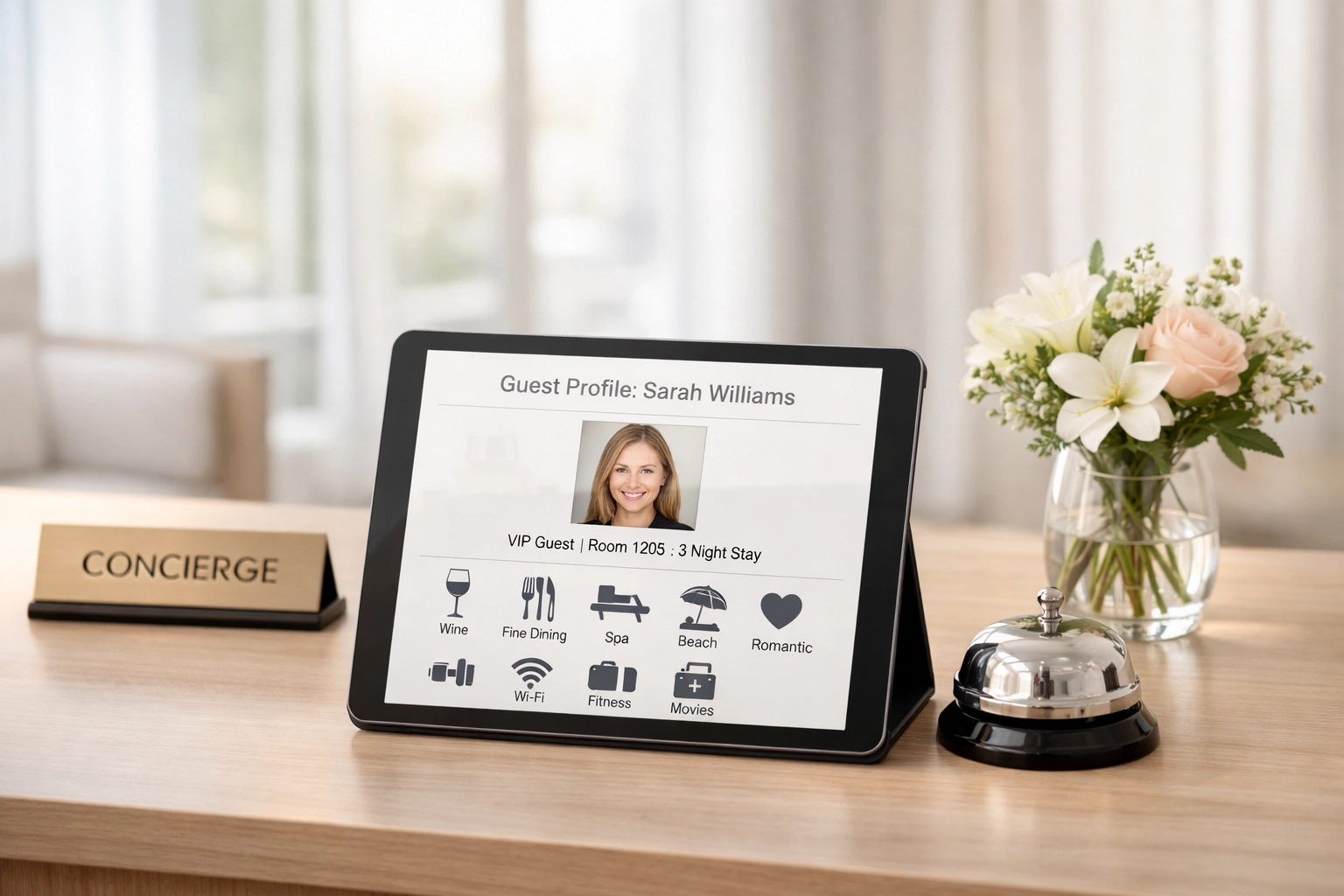
    Hotel concierge using tablet displaying guest profile and preferences in modern CRM system

    What a Hotel CRM System Actually Does

    Think of a hotel CRM system as your property's memory: one that never forgets and gets smarter with every interaction.

    It collects guest data across every touchpoint. Booking preferences. Communication history. Purchase behavior. Special requests. Feedback scores. Then it organizes that information into actionable insights that your team can use to deliver genuinely personalized experiences.

    But here's where it gets interesting: the best systems don't just store data. They help you use it.

    A robust hotel CRM system enables you to:

    • Automatically segment guests based on behavior and preferences
    • Trigger personalized communications at exactly the right moment
    • Surface relevant upsell opportunities that guests actually want
    • Track lifetime value and identify your most valuable relationships

    The technology handles the heavy lifting. Your team focuses on the human connection.

    Personalization Across the Entire Guest Journey

    Let's walk through how this plays out in real life.

    Before Arrival

    Your hotel CRM system spots that Sarah Chen is returning for her fifth stay. It knows she's vegetarian, prefers rooms on higher floors, and always books spa treatments. Your pre-arrival email automatically includes:

    • A personalized greeting referencing her loyalty
    • A curated list of new vegetarian menu items
    • An offer for her preferred massage therapist
    • An option to pre-select her usual room type

    No manual work required. The system recognized the patterns and served up relevant content.

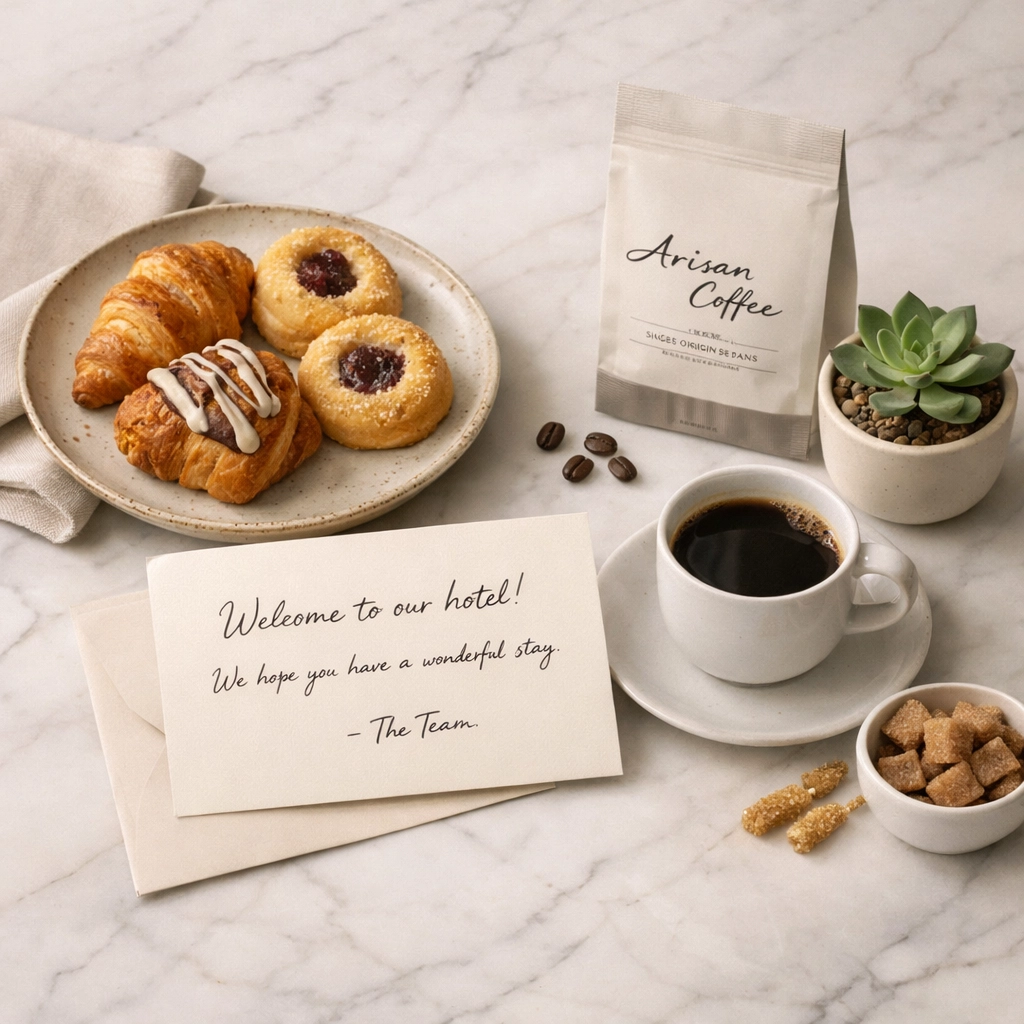
    Personalized hotel room with welcome note and customized amenities for returning guest

    At Check-In

    When Sarah arrives, your front desk agent has her profile right there. They greet her by name, confirm her room preference, and mention that her favorite massage therapist has availability tomorrow at 3 PM.

    The agent isn't reading from a script or frantically searching through notes. The information is organized, accessible, and actionable.

    During the Stay

    Sarah orders room service at 8 PM. Your hotel CRM system notes the timing and the specific dishes. Three months later, when she books again, your system can suggest those same items as her arrival-night dinner.

    She mentions at checkout that she loved the lavender pillow spray in her room. That preference gets logged. Next visit? It's already there waiting.

    After Departure

    Two weeks later, Sarah receives a personalized email thanking her for her visit, asking for feedback on the new menu items she tried, and offering an early-bird rate for the timeframe when she typically books.

    It feels thoughtful because it is. The system identified the patterns; your team added the human touch.

    The Business Case for Personalization

    This isn't just about making guests feel special: though that matters. It's about driving measurable business outcomes.

    Properties using advanced hotel CRM systems report higher direct booking rates, increased ancillary revenue, and significantly improved guest lifetime value. When guests feel recognized and understood, they come back. They book directly. They spend more during their stay.

    The numbers tell the story:

    • Personalized upsell offers convert at 3-5x the rate of generic promotions
    • Returning guests who receive personalized communication book 40% more frequently
    • Properties with sophisticated CRM strategies see 25% higher guest satisfaction scores

    Personalization isn't a cost center. It's a revenue driver.

    Curated welcome amenities showcasing personalized hospitality and guest experience

    Making It Scalable

    Here's the challenge that kept personalization limited to luxury properties for so long: it took massive manual effort. Staff needed to remember details, update systems, coordinate across departments, and manually trigger follow-ups.

    Modern hotel CRM systems eliminate that friction.

    They integrate with your property management system, booking engine, POS, and communication tools. Data flows automatically. Insights surface in real-time. Triggered actions happen without manual intervention.

    Your 50-room boutique property can deliver the same level of personalization as a 500-room resort: without proportionally increasing labor costs.

    That's the breakthrough. Technology makes personalization economically viable at any scale.

    What to Look for in a Hotel CRM System

    Not all CRM platforms are built for hospitality. You need a system designed specifically for the hotel guest journey.

    Essential capabilities include:

    • Native integration with your PMS and booking engine
    • Automated guest segmentation based on behavior and value
    • Triggered communication workflows across email, SMS, and messaging
    • Guest preference tracking across all touchpoints
    • Upsell and cross-sell recommendation engines
    • Post-stay feedback collection and sentiment analysis

    The right platform becomes your competitive advantage. It lets you compete on experience rather than just price.

    Hotel staff reviewing guest analytics and data on CRM system tablet

    Getting Started with Personalization

    You don't need to implement everything at once. Start with high-impact, low-complexity wins.

    Phase one: Capture the basics. Make sure your hotel CRM system is collecting essential preference data: room type, bed preference, special occasions, dietary restrictions. Train your team to log this information consistently.

    Phase two: Automate communications. Set up triggered emails for pre-arrival, during-stay, and post-departure. Personalize them with guest names, stay details, and relevant offers.

    Phase three: Enable your team. Give front desk, concierge, and F&B staff easy access to guest profiles. Make sure the information they need is visible and actionable.

    Phase four: Optimize and expand. Analyze what's working, refine your segmentation, add more sophisticated automation, and expand personalization across additional touchpoints.

    Each phase builds on the last. You'll see impact immediately and continuous improvement over time.

    The Competitive Reality

    Here's the uncomfortable truth: your competitors are already doing this. The properties winning direct bookings and building loyalty aren't relying on generic service: they're using technology to deliver experiences that feel uniquely tailored to each guest.

    The gap between properties with sophisticated hotel CRM systems and those without is widening. Guests notice the difference. They choose accordingly.

    Personalization is no longer a nice-to-have differentiator. It's the standard. Meeting that standard requires the right technology, the right data strategy, and the commitment to making every guest feel recognized.

    Ready to transform how your property delivers personalized guest experiences? Explore how the right hospitality technology platform can help your team turn guest data into meaningful connections, increased loyalty, and stronger revenue.

    Your guests expect personalization. Your CRM system should make it effortless.

  • Stop Wasting Time on Boring Admin: Try These 7 Quick Hacks for AI Business Automation

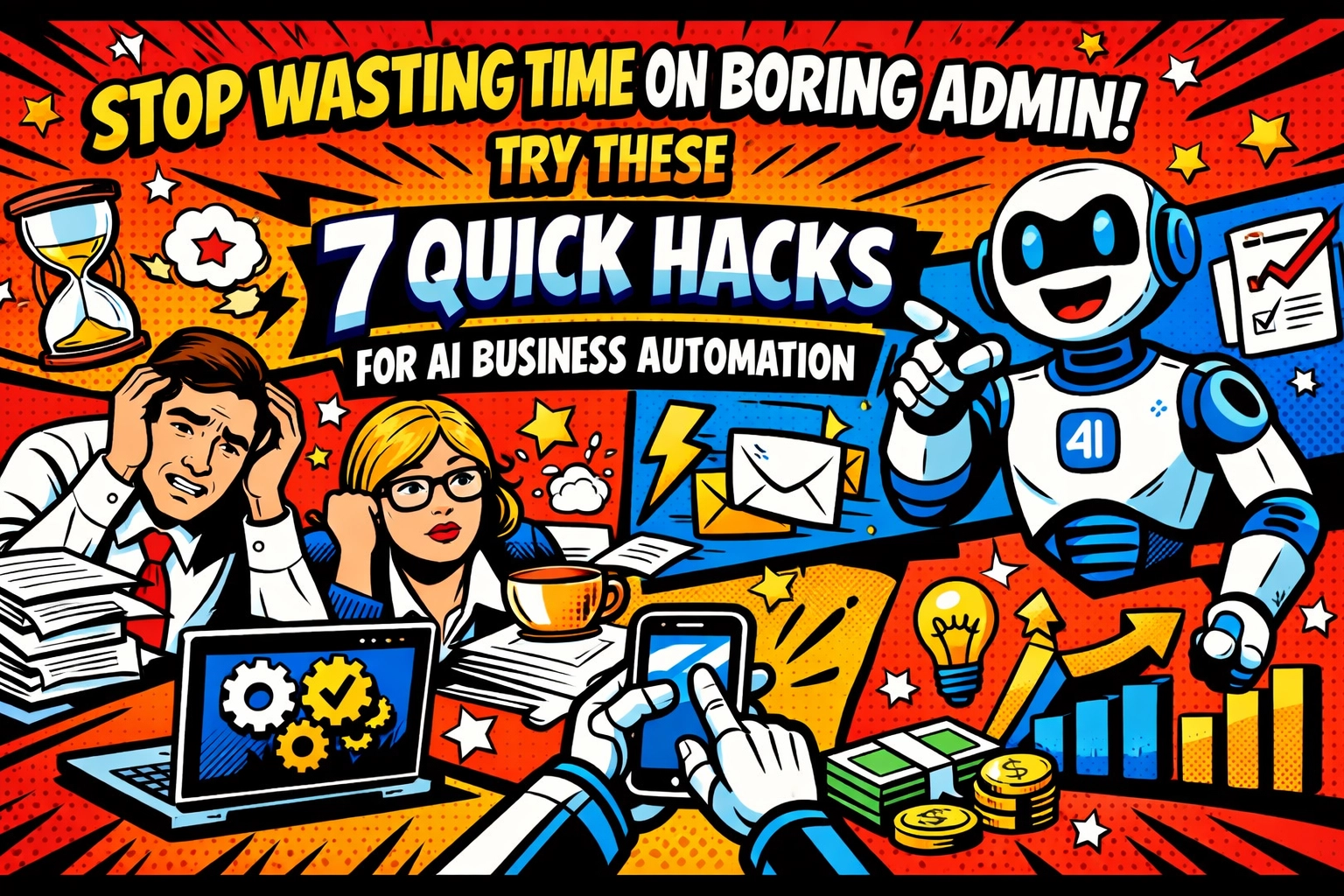
    Stop Wasting Time on Boring Admin: Try These 7 Quick Hacks for AI Business Automation

    8:00 AM

    You’re staring at a laptop screen that feels like it's judging you.

    The inbox is a digital graveyard of "Just following up!" and "Quick question?" emails. Your calendar looks like a game of Tetris played by someone who’s losing. Badly.

    You started this business because you had a vision. You wanted to build something, disrupt an industry, or maybe just be your own boss. But right now? You’re not a visionary. You’re a high-priced data entry clerk. You're an unpaid secretary for your own company.

    The "boring admin" is eating your soul: and your profit margins: one copy-paste at a time.

    But imagine a world where the boring stuff just… happens. Where your business breathes on its own. That’s the power of ai business automation. It’s not about robots taking over the world; it’s about you taking back your Tuesday afternoons.

    Let’s walk through a day where you actually get to be the boss again.


    1. THE GHOSTWRITER: AUTOMATE YOUR MEETING NOTES

    📱 10:00 AM

    You’re in a "strategy" meeting. In reality, you’re spending 80% of your brainpower trying to scribble down who said what and what needs to happen by Thursday. You’re not listening. You’re transcribing.

    Stop.

    With business automation tools, you can invite an AI assistant to your call. It sits there quietly. It doesn’t need coffee. It doesn’t interrupt with "actually, to play devil's advocate…"

    While you’re actually engaging with your team, the AI is transcribing the whole thing in real-time. But it doesn't just give you a wall of text. It summarizes the key decisions. It identifies the action items.

    The Hack: Use a tool that integrates directly with your project management software. When the meeting ends, the AI identifies that "Sarah needs to update the landing page," and it automatically creates a task for Sarah.

    Time saved: 45 minutes of frantic typing and follow-up organizing.

    You just hit "End Call" and walk away. The notes are already in everyone's inbox. You feel like a wizard.


    2. THE INBOX NINJA: TURN EMAILS INTO TASKS INSTANTLY

    📧 11:30 AM

    The "I'll do that later" trap. You know it well. A client emails a request. You read it, think "I'll get to that after lunch," and then… you don't. It gets buried under 14 newsletters you forgot to unsubscribe from.

    This is where ai business automation changes the game.

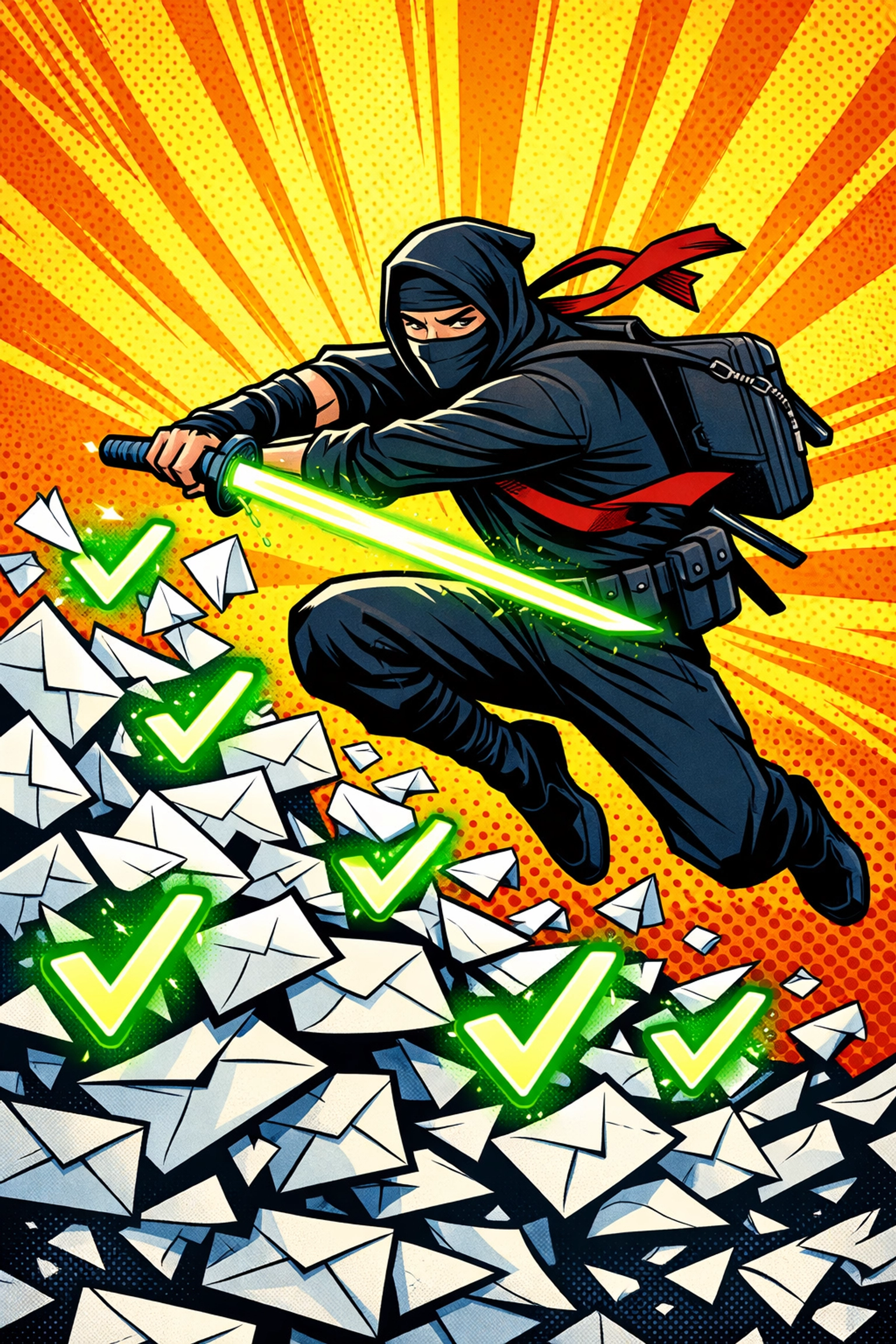
    Instead of treating your inbox like a to-do list (which is a recipe for anxiety), you can set up a system where AI analyzes incoming mail. If it detects a request: like a bug report or a request for a quote: it extracts the details and pipes them directly into your workflow.

    Ninja slicing through emails to automate inbox tasks using AI business automation.

    The Hack: Connect your email to an AI logic tool. When a "Help!" email comes in, the AI identifies the urgency, tags it as "Support," and puts it in front of the right person.

    No more "Did you see that email from Bob?"

    You’re not digging through threads anymore. You're just checking off completed tasks. It’s quiet. It’s organized. It’s how business should feel.


    3. THE TL;DR GOD: SUMMARIZE THE NOISE

    🔍 1:15 PM

    You just got back from lunch, and there are 84 unread messages in the #general Slack channel. There’s also a 50-page industry report sitting in your "To Read" folder that’s been there since 2024.

    Your brain is already trying to shut down.

    But you don't need to read every word. You just need the meaning.

    AI summarization tools are the ultimate "cheat code" for the modern founder. Whether it’s a long-winded Slack debate about the new logo or a dense PDF about market trends, you can ask the AI to "give me the 3 most important takeaways."

    The Hack: Use an AI tool to monitor your high-volume Slack channels. At the end of every hour, have it post a one-sentence summary of the conversation.

    You stay in the loop without falling into the vortex of endless scrolling. You’re informed, but you’re not exhausted.


    4. THE PROGRESS PROPHET: AUTOMATE PROJECT UPDATES

    📊 3:00 PM

    It’s that time of the week. Stakeholders want an update. Investors want to see progress. The team needs to know if we’re hitting milestones.

    Usually, this means you spending two hours opening Jira, Trello, GitHub, and your bank account to piece together a coherent story. It’s manual labor that makes you want to scream.

    The Hack: Use business automation tools that aggregate data across all your platforms.

    Visionary leader using business automation tools to aggregate data and track project progress.

    The AI looks at the tasks completed, the code pushed, and the money spent. It then writes a professional, formatted status report.

    "We are 15% ahead of schedule on the backend, but the marketing assets are lagging."

    You read it. You tweak one sentence. You hit send. You just saved your entire afternoon for high-level thinking. Or, you know, a nap. We won't tell.


    5. THE POLITE DEBT COLLECTOR: FINANCIAL TRACKING

    💸 4:15 PM

    Nobody likes talking about money when it’s late. Chasing invoices is the fastest way to feel like a "bad guy" instead of a business owner.

    But cash flow is the oxygen of your business. You can’t ignore it.

    AI-powered financial assistants can monitor your bank feeds and accounting software. When an invoice hits the "Overdue" mark, the AI doesn't just send a generic "Pay me" email. It analyzes the client’s history.

    The Hack: Automate personalized follow-ups. If it’s a loyal client, the AI sends a "Hey, just checking in!" note. If it’s a repeat offender, it escalates the tone.

    You get paid faster. You don't have to have the awkward conversations. Your bank account grows while you’re focusing on the next big deal.

    If you want to see how this fits into a larger strategy, check out what we're doing over at Marblism. Scaling shouldn't be this hard.


    6. THE TRIAGE NURSE: CUSTOMER SUPPORT WORKFLOWS

    🤝 5:00 PM

    The workday is winding down, but the tickets are still coming in. "I forgot my password." "How do I change my billing?"

    These are the "papercuts" of customer service. They aren't hard to solve, but they take time.

    Modern ai business automation can handle the first line of defense. An AI-powered bot can analyze the intent of a customer’s message. It can look up their account, check their subscription level, and provide the answer immediately.

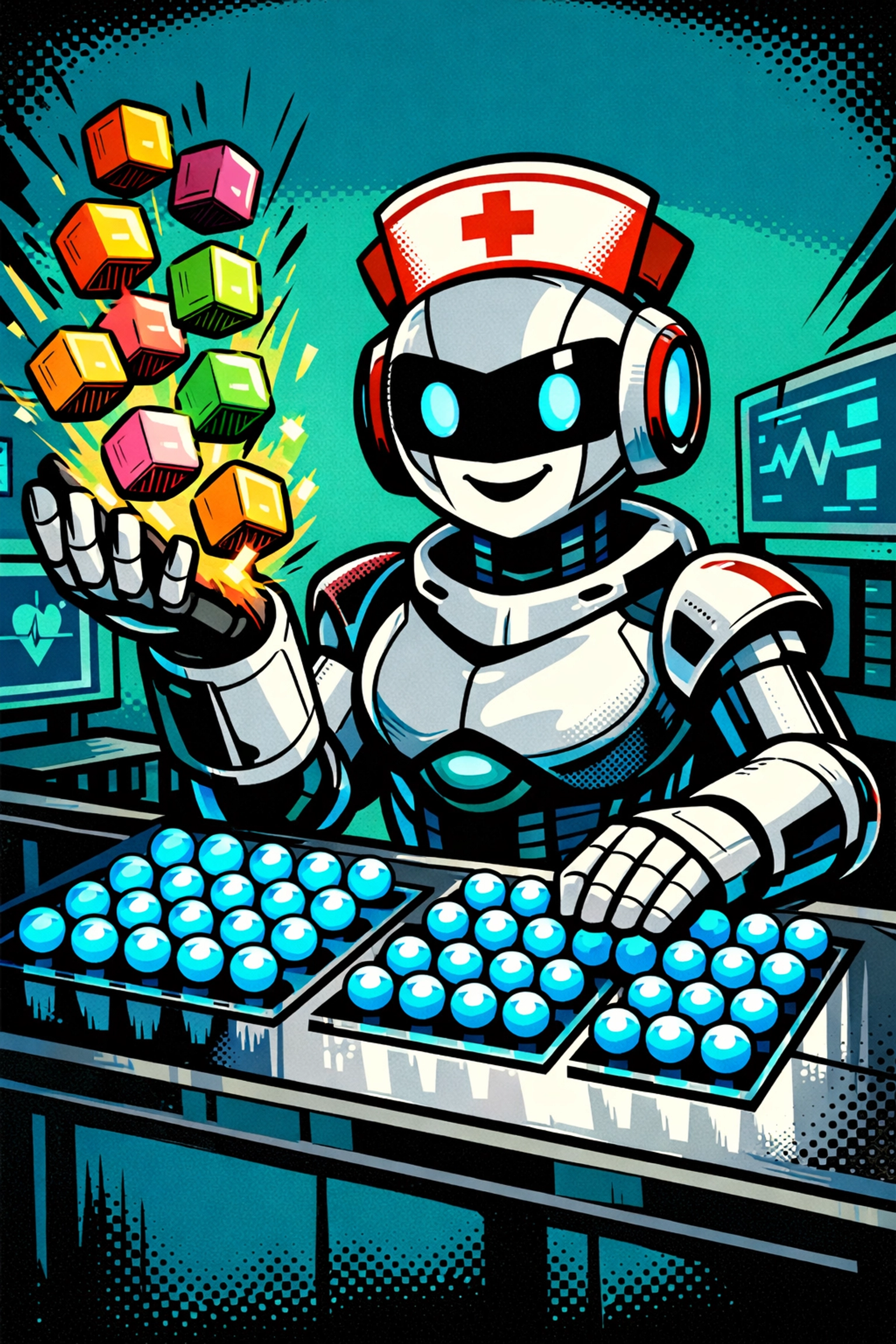
    Robot nurse sorting support tickets to illustrate AI business automation for customer service.

    The Hack: Set up an AI "triage" system. The AI answers the easy stuff (90% of your volume) and only pings you: or a human agent: when something actually requires empathy or complex problem-solving.

    Your customers get answers in seconds. You get to close your laptop at 5:00 PM without feeling guilty.


    7. THE TIME LORD: SMARTER SCHEDULING

    🗓️ 6:00 PM

    You’re looking at tomorrow’s calendar. It’s a mess. You have a deep-work session planned for 2:00 PM, but that’s exactly when your energy usually tanks. You have three meetings scattered across the morning, leaving you with 30-minute gaps that are too short to do anything productive.

    You aren't managing your time; your time is managing you.

    AI calendar assistants are the solution. They don't just "book" meetings; they optimize your life.

    The Hack: Use an AI scheduler that understands your energy patterns. Tell it: "I want 4 hours of deep work every morning, and keep all my meetings in a single block on Tuesday and Thursday."

    The AI will automatically move things around, protect your focus time, and ensure you have "buffer" time between calls so you can actually use the restroom or grab a glass of water.

    Calm entrepreneur using an AI calendar assistant to master scheduling and protect focus time.

    Your schedule becomes a tool for success, not a source of stress.


    STOP JUGGLING. START SCALING.

    You didn't start a business to become a slave to your admin panel.

    The difference between a "hustler" who burns out in two years and a "founder" who builds a legacy is leverage. And in 2026, leverage means AI.

    Every minute you spend manually moving a task from an email to a spreadsheet is a minute you aren't thinking about your next product, your next market, or your next vacation.

    It’s time to stop the leak.

    At Marblism, we live for this. We believe that technology should work for you, not the other way around. Whether you're looking for better lead generation or comprehensive ai business automation, the goal is always the same: freedom.

    The chaos can be gone before you even take your first sip of coffee tomorrow morning.

    But you have to take the first step. You have to decide that your time is worth more than $15 an hour.

    Stop doing the boring stuff. Let the machines handle the admin while you handle the vision.

    Ready to see how simple it can be?

    Click through this 3-min interactive demo to see the future of your business.

    Scaling shouldn't be this easy. But here we are.

    Your laptop is still there. The emails are still waiting. But for the first time in a long time… you’re the one in control.

  • Coffee Roaster Wholesale 101: A Beginner’s Guide to Mastering Your Supply Chain

    So, you’ve decided to take the plunge and open a coffee shop. Or maybe you’re already running a successful spot and realized your current bean situation is, well, a bit lackluster. First off, congratulations! It’s a wild, caffeinated ride, and we’re genuinely excited for you. But here is the cold, hard truth: the success of your business lives and dies by your supply chain.

    Choosing between different coffee suppliers isn’t just about who has the prettiest packaging or the coolest logo. It’s about finding a partner who understands that when your grinder jams at 8:00 AM on a Saturday, you need more than just a "sorry about that" email. You need a wholesale coffee roaster who has your back.

    In this guide, we’re going to pull back the curtain on the world of wholesale specialty coffee. We’ll look at how to choose the right partner, understand the financials, and why the "more than just beans" approach is the only way to go for serious cafe startups.

    Why Wholesale? (And Why You Probably Shouldn't Roast Your Own Yet)

    We get it. The dream of roasting your own beans in the back of the shop is alluring. The smell, the control, the "artisan" vibes: it's a lot to love. But to be honest, for most new businesses, roasting your own is a distraction you don't need.

    Roasting requires a massive upfront investment in equipment, a deep understanding of green coffee sourcing, and: most importantly: time. When you’re trying to build a brand and manage a team, do you really want to be hovering over a drum roaster at 11:00 PM? Probably not.

    This is where a wholesale coffee roaster comes in. By partnering with experts like us here at Limini Coffee, you’re essentially outsourcing the R&D, the quality control, and the heavy lifting to people who live and breathe extraction percentages and roast curves. It lets you focus on what actually pays the bills: making your customers happy.


    Finding the Right Coffee Suppliers: More Than Just a Price Tag

    When you start looking for coffee suppliers, it’s easy to get bogged down in price per kilo. And while margins are extremely important (we’ll get to that), they aren't the whole story. You’re looking for a relationship, not just a transaction.

    1. Consistency is King

    You want your house espresso to taste the same on a rainy Tuesday as it did on a sunny Saturday three weeks ago. This is harder than it sounds. Coffee is a seasonal agricultural product. A great roaster knows how to manage these seasonal shifts to maintain a consistent profile. If your supplier’s "Classic Blend" tastes like a different coffee every month, your customers will notice. And they won't be happy.

    2. Support and Training

    This is the big one. Does the roaster offer barista training? At Limini, we believe that the best beans in the world won't save a poorly pulled shot. We offer comprehensive training because we want our coffee to shine in your shop. If a supplier just drops off bags and disappears, run the other way.

    Professional barista training showing a mentor helping a student with milk texturing at an espresso bar.

    3. Equipment Knowledge

    Are they experts in the gear? If you’re looking at choosing espresso equipment, your roaster should be able to guide you toward machines that fit your volume and budget. Whether it’s a workhorse like a La Spaziale or something more specialized, your supplier should know the tech inside and out.


    The Math: Understanding Your Wholesale Margins

    Let’s talk money. It’s not the most "specialty" topic, but it’s the one that keeps the lights on. When you’re looking at wholesale pricing, you need to establish a clear bottom-line strategy.

    Typically, green coffee costs represent the bulk of a roaster’s inventory expenses. They have to factor in manpower, packaging, and that shiny roasting machine. When you buy from them, you’re paying for that expertise.

    Standardizing Your Orders

    A mistake many cafe startups make is trying to negotiate different prices for every single order. It’s a mess. Instead, look for suppliers who have a standardized bulk discount structure. For instance, pricing might shift when you move from 6kg to 12kg or 24kg. This helps you plan your cash flow and rewards you for growth.

    And remember, the "cheapest" coffee often ends up being the most expensive. If the beans are poor quality, you’ll use more milk and sugar to hide the taste, your staff will struggle to dial it in (wasting coffee), and your customers won't come back. We prefer to look at the "value per cup" rather than "cost per kilo."


    Beyond the Bean: The Logistics of Success

    A great wholesale coffee partnership covers the "boring" stuff that actually makes your shop run.

    The Production Calendar

    Consistency isn't just about taste; it’s about availability. You need to know that when you order on a Monday, your coffee is roasted fresh and arrives by Wednesday. A repetitive production calendar is a sign of a professional operation. Fresh is best, after all. If you want to dive deep into why freshness matters, check out our take on understanding crema.

    Equipment Maintenance

    Coffee machines are like cars; they need servicing. We’ve seen too many shops forced to close for a day because a seal perished or a pump failed. When choosing a roaster, ask about their equipment maintenance support. Do they have engineers? Do they stock spare parts? This is a non-negotiable for a serious B2B relationship.

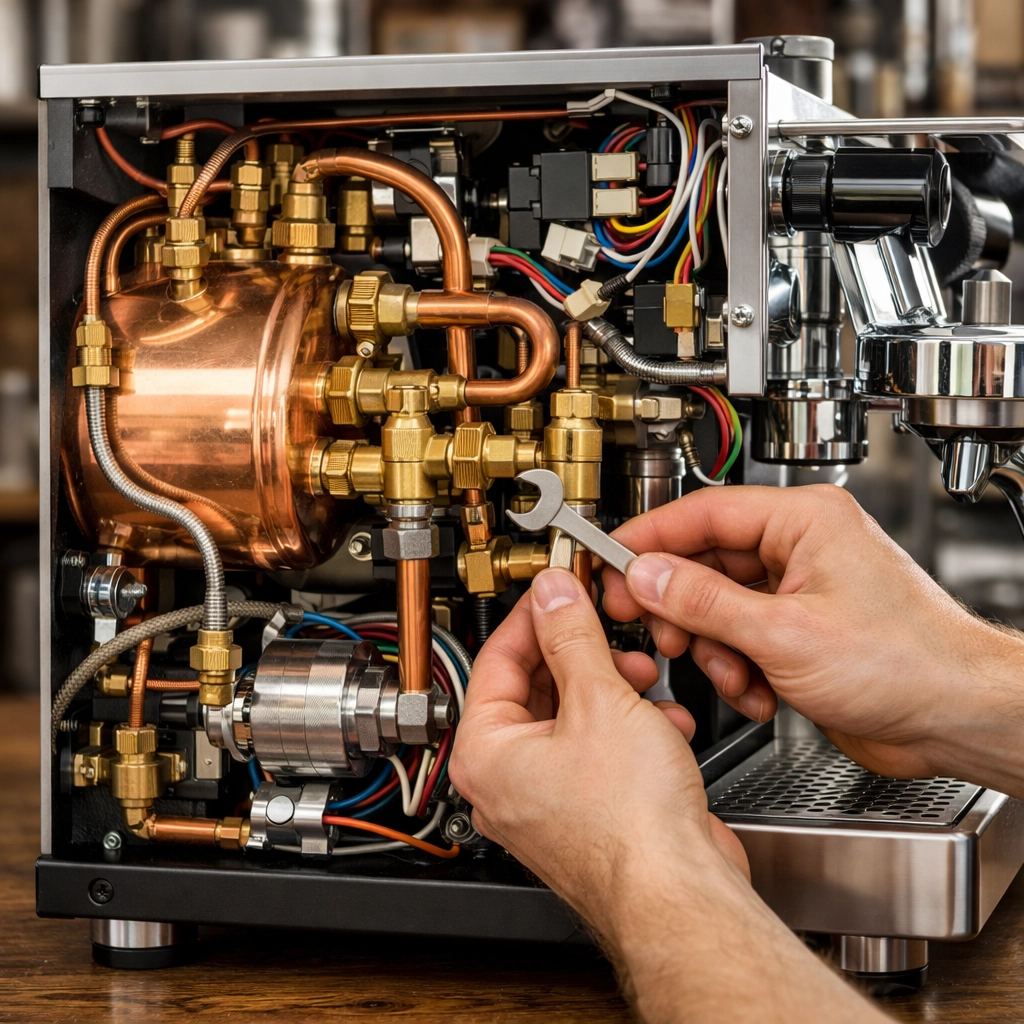
    Close-up of espresso machine maintenance and technical repair for a wholesale coffee business partner.


    Sourcing and Sustainability: The Story Behind the Cup

    Today’s customers are savvy. They want to know where their coffee comes from. They care about ethics, sustainability, and the farmers. Part of your job as a shop owner is telling that story.

    When you work with a roaster who is transparent about sourcing our coffee, you get to pass that story on to your customers. It adds value. It makes that £3.50 latte feel like an investment in a better world, rather than just a caffeine hit.

    We personally spend a lot of time exploring different origins and building relationships with importers. It’s a lot of work, but we believe it produces the best coffees. When you partner with Limini Coffee, you’re buying into that entire ecosystem of quality.


    Setting Up Your Shop for Wholesale Success

    If you’re in the building a coffee shop phase, involving your roaster early is a genius move. They can help with:

    • Workflow Design: Where should the machine go? Where does the milk live? (Speaking of which, check our guide on understanding milk).
    • Menu Development: Helping you decide between a traditional 1-2-1 menu or something more modern. Need help with the difference between a latte and a cappuccino? We’ve got you.
    • The "Theatre": Coffee is a performance. We love the theatre of coffee and can help you set up your bar to wow your guests.

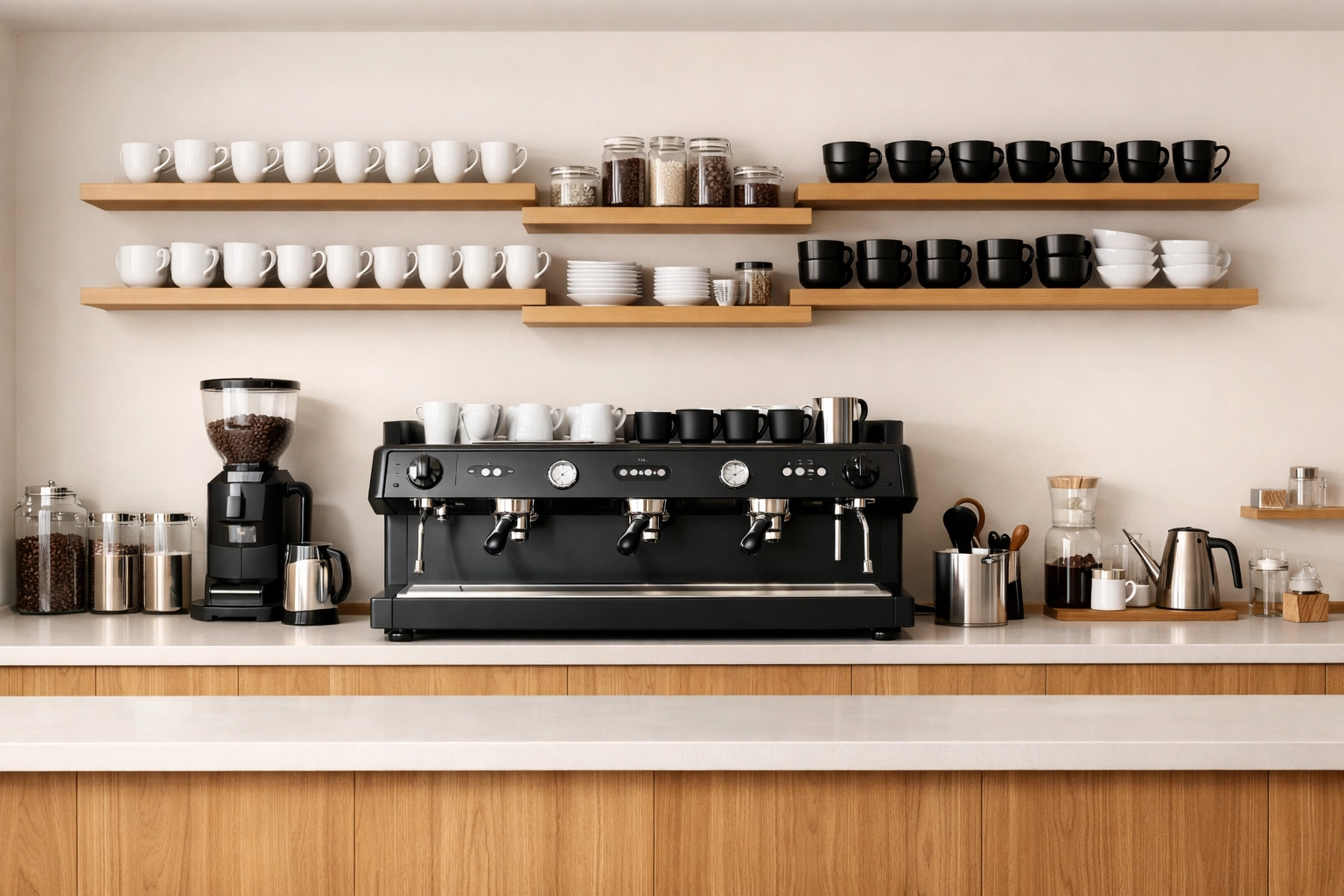
    Modern coffee shop interior layout featuring a professional espresso machine and organized cafe bar.

    The Wholesale Contract: What to Look For

    Before you sign on the dotted line, read the fine print. Some wholesale coffee roasters will tie you into long-term exclusivity contracts in exchange for "free" equipment. Be careful here. Nothing is truly free. Often, the cost of that equipment is baked into a higher per-kilo price.

    Things to check:

    • MOQs (Minimum Order Quantities): Can you handle the volume they require?
    • Training frequency: How often can your new staff come for training?
    • Lead times: How quickly can they react to a sudden surge in your business?

    We believe in flexibility. A partnership should be based on the quality of the coffee and the support, not a legal shackle.


    Why Limini Coffee is Different

    We’ve been in this game a long time. We’ve seen cafes rise and fall, and we’ve learned what makes the difference. It’s not just about roasting beans; it’s about providing a complete wholesale solution.

    From helping you choose the right coffee cups to teaching your team the art of tamping, we’re here to be your partner. We even have a brewing calculator to help your baristas stay precise.

    Basically, we want to make your life easier.

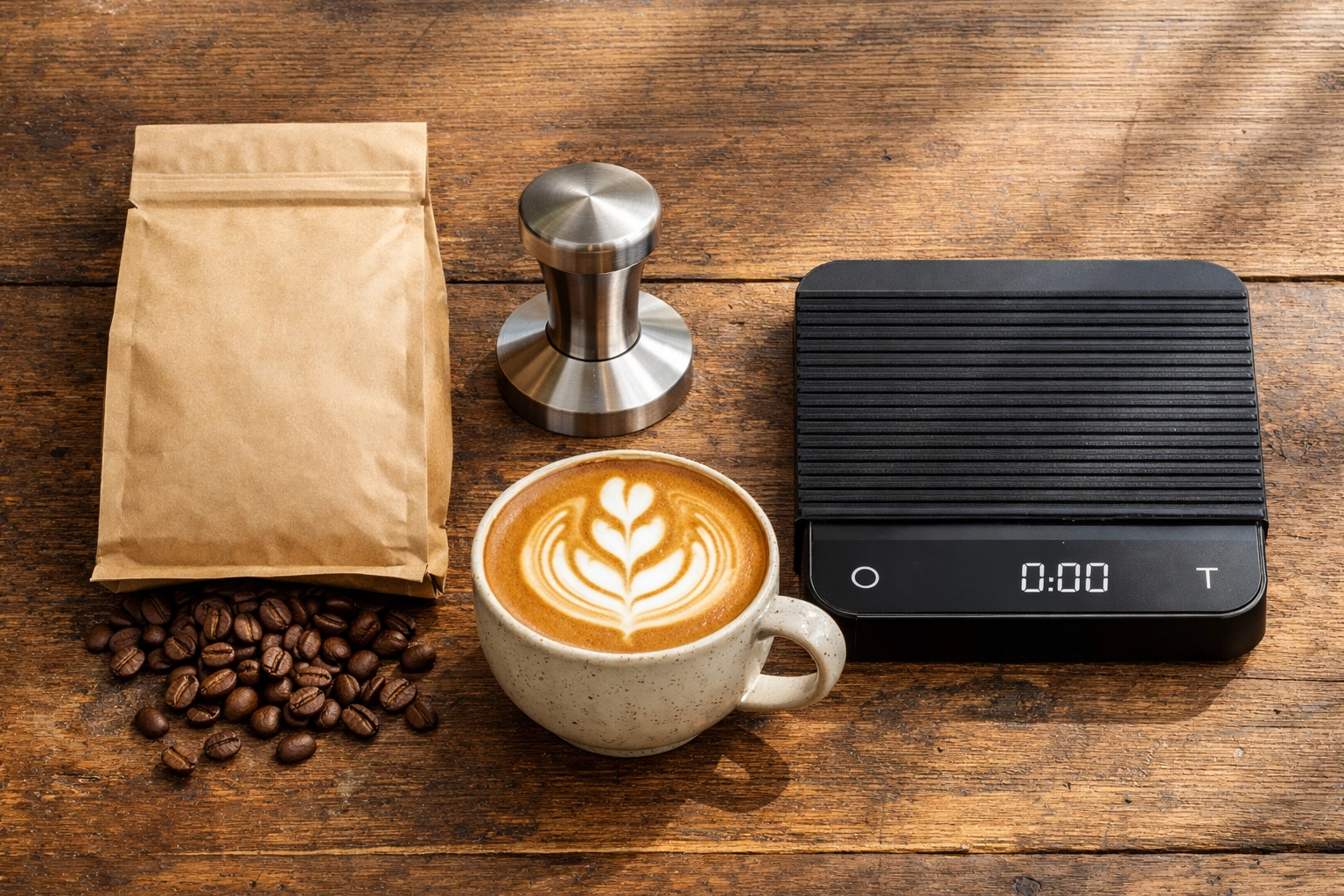
    Wholesale specialty coffee beans and barista equipment including a tamper and digital brewing scale.

    Final Thoughts: Your Supply Chain is Your Foundation

    Mastering your supply chain isn't a "set it and forget it" task. It requires ongoing communication and a willingness to learn. But when you find the right wholesale coffee roaster, everything else gets easier. Your coffee tastes better, your staff is more confident, and your margins are healthier.

    If you’re ready to take your coffee business to the next level, or if you’re just starting out and want to get it right from day one, we’d love to chat. Check out our about us page to see what we're all about, or read some reviews from other businesses we’ve helped along the way.

    Ready to start your journey? Click here to see how Limini Coffee can support your dream.

    The world needs more great coffee. Let's make it happen together. 🙂

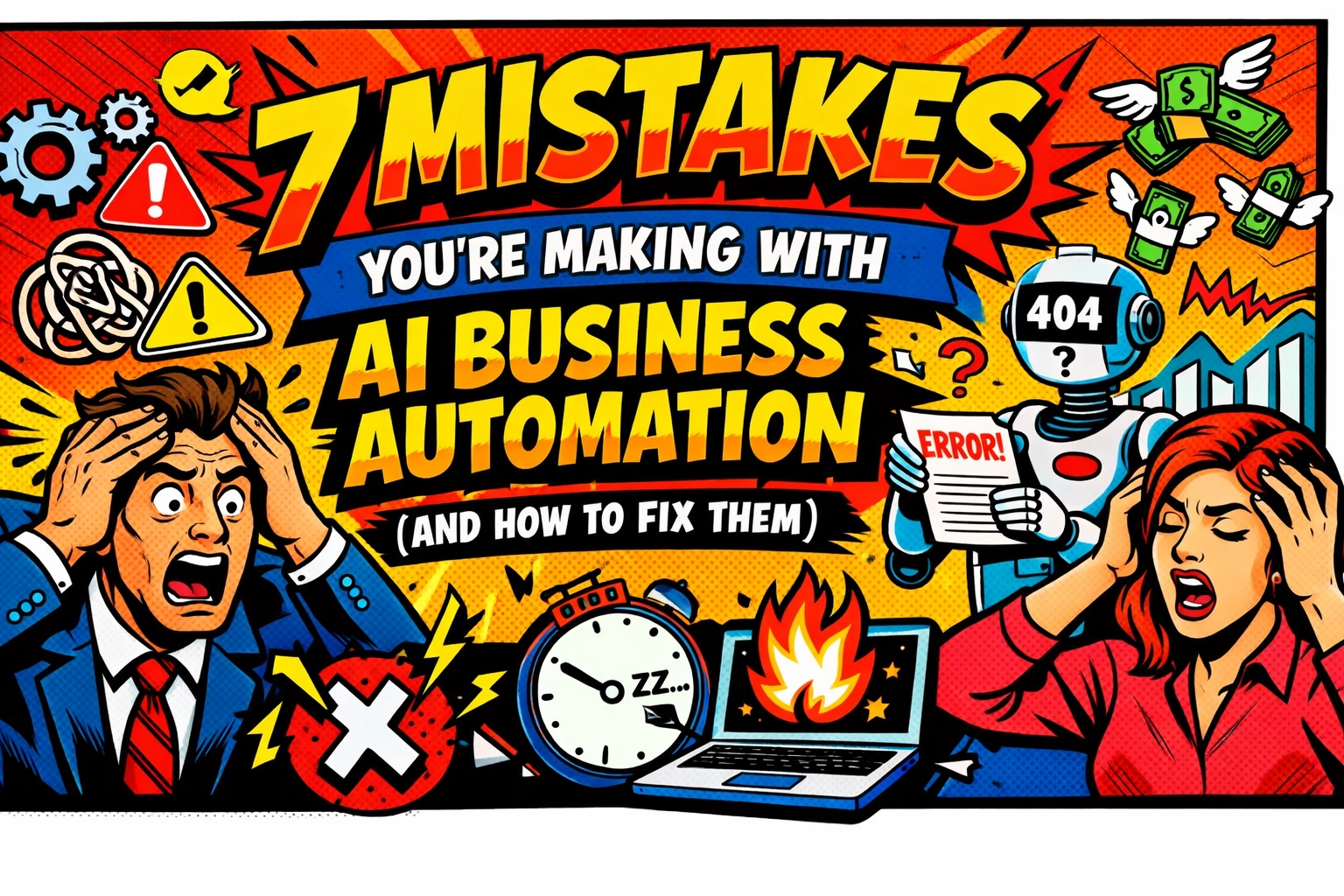
  • 7 Mistakes You’re Making with AI Business Automation (And How to Fix Them)

    7 Mistakes You’re Making with AI Business Automation (And How to Fix Them)

    You’re drowning. Not in water, but in notifications. 📱

    7:00 AM and your phone is already screaming at you. Emails from clients who need updates. Slack pings from a team that’s stuck. A calendar that looks like a game of Tetris played by someone who’s losing.

    You heard AI was supposed to be the life raft. You bought the subscriptions. You clicked "Automate." But instead of sipping a latte while the robots do the work, you’re spending four hours a day fixing what the robots broke.

    It’s frustrating. It’s exhausting. And honestly? It’s probably because you’re making the same mistakes everyone else is.

    But it’s quiet now , organized. Or it could be. Let’s look at where things are going sideways and how to turn your business automation tools into the powerhouse team they were meant to be.

    1. THE EMPATHY GAP: AUTOMATING WITHOUT A SOUL

    8:30 AM , A customer reaches out. They’re stressed. Their order is late, and it’s for a wedding this weekend.

    The mistake? You’ve connected a chatbot directly to your knowledge base and walked away. The AI responds with: "I can help with that! Please provide your 16-digit order number."

    No "I’m sorry." No "We’ll fix this." Just cold, hard logic. The customer feels like a number, and your brand reputation takes a nosedive.

    The Fix: Use AI for the heavy lifting, not the heart. Let your ai assistant for small business gather the data , order numbers, dates, tracking info , but flag high-stakes keywords like "wedding," "emergency," or "disappointed" for a human.

    Stop treating AI as a replacement for your personality. Treat it as the intern who prepares the files so you can be the hero.

    2. THE "GARBAGE IN, GARBAGE OUT" TRAP

    You wouldn't put diesel in a Tesla. So why are you feeding your AI messy data? 🔍

    The mistake is handing your forecasting tools a spreadsheet full of duplicates, outdated pricing, and that one-off "glitch" from 2024 that you never bothered to delete. The AI sees that weird spike in sales and tells you to order 5,000 extra units of inventory.

    Now you’re sitting on a warehouse full of stuff no one wants because the AI was "hallucinating" based on your bad data.

    The Fix: Clean house. Before you automate, audit. Ensure your data is consistent and tagged correctly. If you want the best results from Marblism’s tools, give it the good stuff.

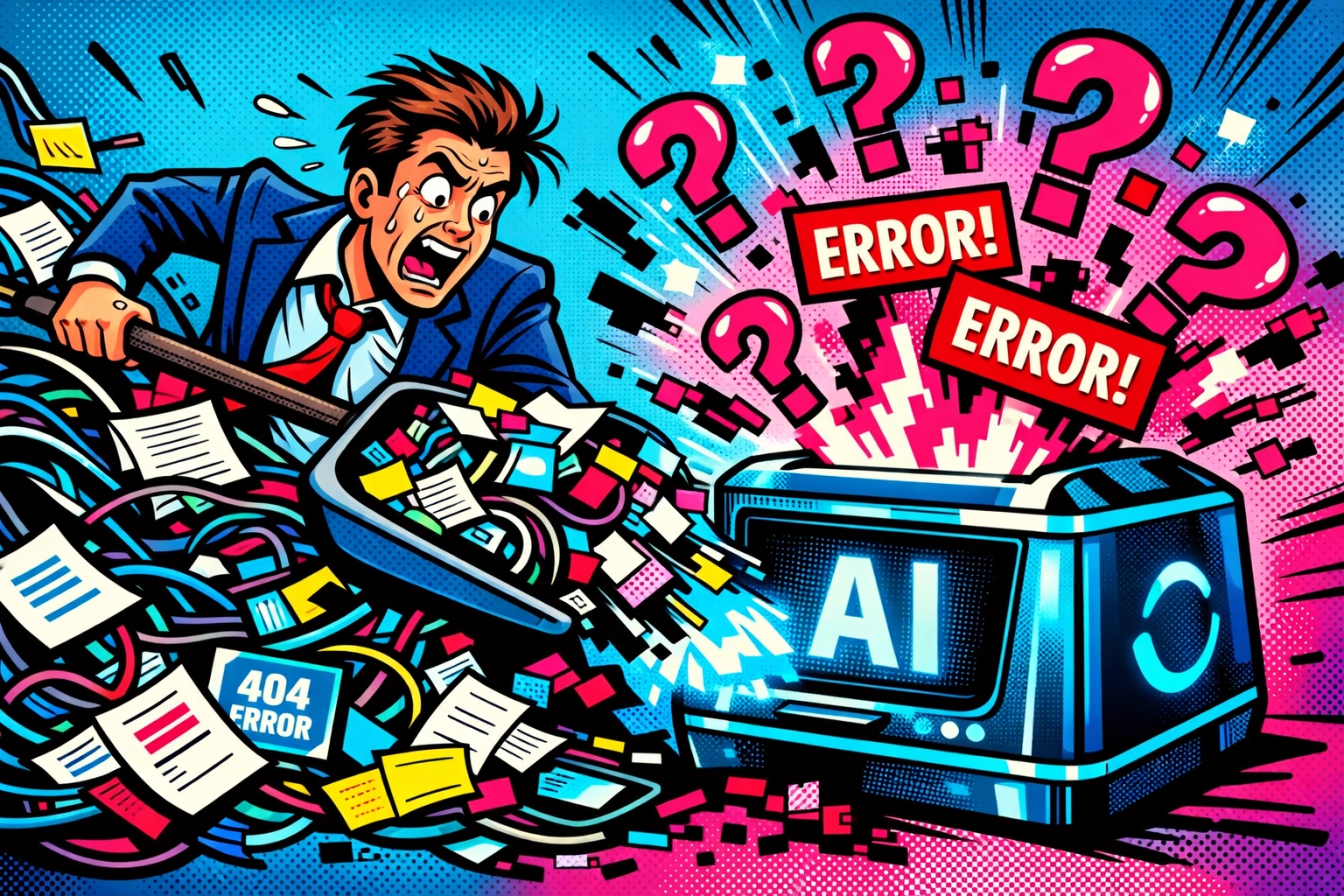
    Illustration of a business owner feeding messy data into automation tools causing AI errors.

    3. AUTOMATE ADMIN TASKS: HOW TO SAVE 10+ HOURS EVERY WEEK

    11:00 AM , You’re still manually moving data from your lead form to your CRM. Then from your CRM to your invoice software. Then from your invoice software to your thank-you email.

    Stop juggling.

    The mistake is thinking automation is only for "big" things. You’re waiting for a robot to write your whole business plan while ignoring the 100 micro-tasks that are eating your soul.

    The Fix: Look for the "bridge" tasks. These are the repetitive motions you do every single day.

    • Auto-sorting emails into folders.
    • Syncing calendar invites with task managers.
    • Generating meeting transcripts.

    When you automate admin tasks, you aren't just saving time; you're reclaiming your mental bandwidth. You’ll find that saving 6 minutes, 100 times a week, is the difference between working on your business and being trapped inside it.

    4. BELIEVING THE AI IS A FINISHED PRODUCT

    The mistake? Treating your ai content generator for small business like a hands-off printing press.

    You ask it to write a blog post. It gives you 800 words. You copy, paste, and hit publish without reading. Two days later, a client points out that the AI claimed your office is on Mars or that you offer a 500% discount.

    AI is a draft assistant, not a CEO. It can miscalculate numbers, invent legal requirements, and confidently state false facts.

    The Fix: AI Content Generator for Small Business: Your Secret Marketing Weapon.
    The secret isn't the generation; it's the curation. Use the AI to get 80% of the way there. Use it to overcome the "blank page" syndrome. But then? You step in. Add your voice. Check the facts. Put the "you" back in your marketing.

    5. THE SHINY OBJECT SYNDROME (STRATEGY-LESS ADOPTION)

    🤝 1:30 PM , You just saw a TikTok about a new AI tool that creates 3D avatars for your FAQ page. You spend three hours setting it up.

    The mistake: Adopting tools because they’re "cool" or because your competitor is using them. If you don't have a defined KPI for a tool, it’s not an investment; it’s a hobby.

    The Fix: Before you sign up for another subscription, ask: "How will this boost my profitability this month?"

    If you can't answer that with a number (time saved or money earned), put the credit card away. The best AI assistant for small business in 2026 is the one that actually fits into your workflow, not the one with the flashiest demo.

    Small business owner distracted by shiny object AI assistants instead of focusing on workflow.

    6. IGNORING THE "PILOT PURGATORY"

    Gartner says 70% of AI pilots fail to scale. Why? Because people build the "cool thing" first and figure out how it connects to their actual business later.

    The mistake is failing to plan for integration. You have an AI that writes emails, but it doesn't talk to your customer list. You have an AI that analyzes sales, but it doesn't talk to your bank account.

    The Fix: Plan for the integration during the build phase. If your business automation tools don't talk to each other, you’ve just traded one manual task for another.

    7. THE BEST AI ASSISTANT FOR SMALL BUSINESS IN 2026

    4:00 PM , The sun is starting to dip. Usually, this is when you start "The Second Shift" , the work you couldn't get to because you were busy "managing."

    But it’s different now. 🤝

    The mistake is thinking you have to build all of this yourself. You don't need to be a prompt engineer. You don't need to be a coder.

    The Fix: You need a partner. Finding the best AI assistant for small business in 2026 means finding a platform that understands the nuance of your specific industry. It means using a system like Marblism that bridges the gap between "cool tech" and "actual business results."

    Imagine a world where your leads are qualified while you sleep. Where your content is drafted before you wake up. Where your data is cleaned, analyzed, and presented in a dashboard that actually makes sense.

    A calm business owner at a cafe as their AI assistant efficiently automates daily admin tasks.

    STOP JUGGLING. START SCALING.

    Scaling shouldn't be this hard. But here we are.

    You’ve been told that AI is a magic wand. It’s not. It’s a power tool. And like any power tool, if you don't know how to hold it, you’re going to make a mess.

    Stop making the mistakes that turn automation into a headache.

    • Clean your data.
    • Keep your empathy.
    • Review your outputs.
    • Integrate your systems.

    🌙 6:00 PM , The lights are off in the office. You’re not there. You’re at dinner. Your phone is in your pocket, and it’s quiet.

    The automation is running. The admin tasks are handled. The content is scheduled. You just send a thumbs-up to a notification that says "Tasks Complete."

    You smile. You step back into your life.

    Ready to see how it actually works? Don't take my word for it. See how Scott Bowen and the team at Marblism are changing the game for small businesses who are tired of the hustle.

    Check out the future of business automation right here.

    Scaling Shouldn't Be This Easy. But Here We Are. 🚀


    FAQ: YOUR AUTOMATION QUESTIONS ANSWERED

    Is AI going to replace my staff?
    No. It’s going to replace the boring parts of their jobs so they can actually do the work you hired them for.

    Do I need to be a "tech person" to use these tools?
    No. The best business automation tools in 2026 are built for humans, not robots. If you can send an email, you can use AI.

    How much time will I actually save?
    Most users who properly automate admin tasks report saving at least 10+ hours every week. That’s over 500 hours a year. What would you do with an extra 12 weeks of life?

    Is my data safe?
    Yes, provided you use reputable platforms. Always check the privacy settings and ensure your AI isn't "learning" from your sensitive client data unless you want it to.

    Where do I start?
    Start small. Pick one repetitive task that you hate doing. Automate it. Feel the relief. Then do the next one. Or, just let the pros handle the heavy lifting at Marblism.

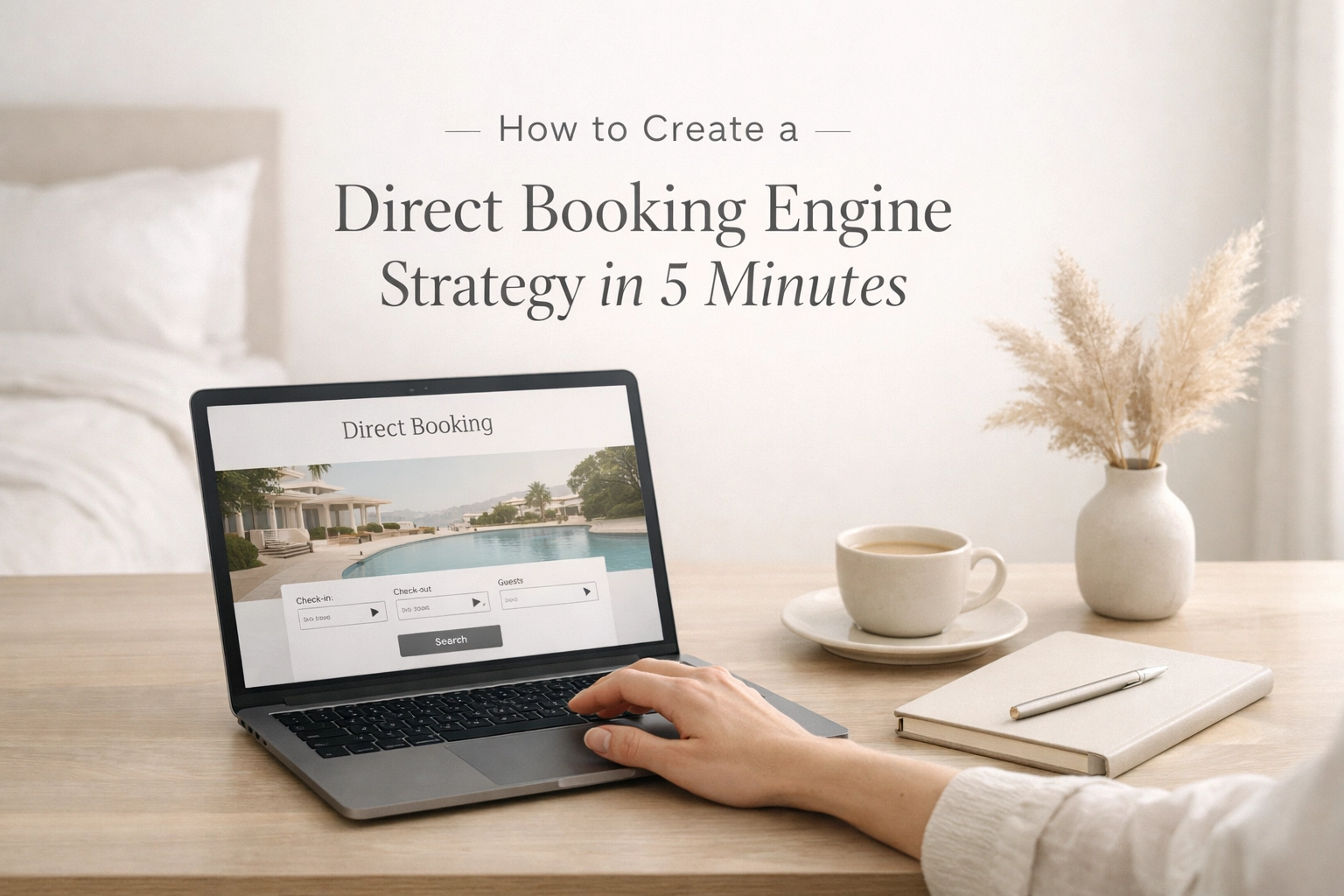
  • How to Create a Direct Booking Engine Strategy in 5 Minutes

    How to Create a Direct Booking Engine Strategy in 5 Minutes

    Cut commission costs. Reclaim guest relationships. Drive higher margins.

    Stop letting third-party platforms sit between you and your guests. In the modern hospitality landscape, your booking engine isn't just a utility: it's your most powerful sales tool. By optimizing your direct channel, you can increase your revenue by up to 20% while regaining control of the entire guest journey. All from one innovative platform.

    Managing a hotel is complex enough. Your booking strategy shouldn't be. We believe that technology should fade into the background, leaving only seamless experiences for your guests and better bottom lines for you.

    Here is how you build a powerhouse direct booking strategy in exactly five minutes.

    Step 1: The Friction Audit (1 Minute)

    Look at your current booking flow through the eyes of a traveler. If it takes more than three clicks to go from "that looks nice" to "confirmed," you are losing money. Every additional field in a form is a reason for a guest to bounce. Every slow-loading page is an invitation for them to go back to an OTA.

    We think booking a room should be as effortless as ordering a coffee. In 2026, guests expect a mobile-first experience that feels native to their device.

    • Audit the clicks. If it's more than three, simplify.
    • Check the speed. A one-second delay in load time can drop conversions by 7%.
    • Go mobile-first. Ensure the interface is designed for thumbs, not just mice.

    "We saw a 15% jump in mobile bookings the week we switched to a cleaner flow," says one boutique operator. "It turns out people want to book, we were just getting in their way."

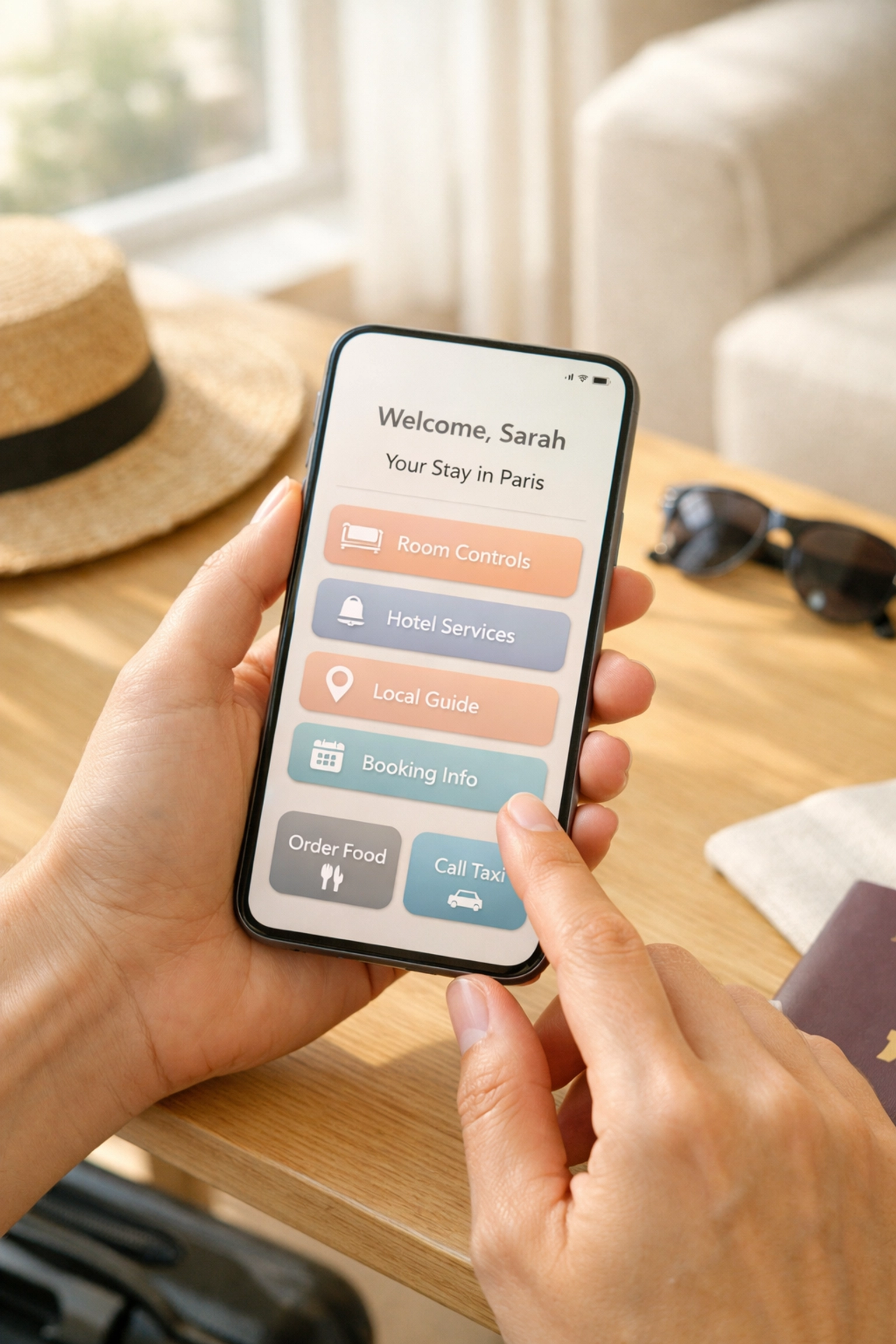
    Traveler making a direct hotel reservation on a mobile-friendly booking interface.

    Step 2: The Digital Doorfront (1 Minute)

    Your website is your digital lobby. If a guest can’t find the "Book Now" button within two seconds of landing on your page, your strategy is broken. Visibility is the engine of conversion.

    Make your call-to-action (CTA) impossible to miss. It should be high-contrast, persistently visible, and present on every single sub-page. Don't hide it in a hamburger menu. Don't bury it at the bottom of a "Rooms" page.

    • Sticky headers. Keep the booking button visible as they scroll.
    • Google Hotel Ads. List your direct rate where guests are already searching.
    • Direct-only pricing. Ensure your website always offers the best available rate.

    At Mews, we see properties achieve 3.5x more traffic when they treat their website as an active sales agent rather than a passive brochure. You can start building this momentum today at https://referrals.mews.com/umqhyito.

    Step 3: The Value Proposition (1 Minute)

    Why should a guest book with you instead of a platform they already know? The answer isn't just "because it's cheaper for me." You have to make it better for them.

    Price parity is often a legal or contractual headache, but value parity doesn't exist. You can always offer more value on your own site. We believe in the power of the "Direct Perk." It’s about creating a sense of exclusivity and belonging from the very first interaction.

    • Value-adds over discounts. Offer free breakfast, late checkout, or a welcome drink.
    • Early access. Give direct bookers first dibs on room upgrades.
    • Loyalty Lite. Reward them instantly: no points-tracking required.

    Hotel website on a laptop showing direct booking options and exclusive guest benefits.

    By framing the direct channel as the "VIP" channel, you shift the conversation from price to experience.

    Step 4: The Ecosystem Sync (1 Minute)

    A booking engine is only as good as the data feeding it. If your inventory isn't syncing in real-time with your Property Management System (PMS), you're either overbooking or leaving rooms empty.

    We think silos are the enemy of innovation. Your booking engine should be a natural extension of your PMS. When a guest books, their profile should be created instantly, their preferences noted, and their room blocked across all channels simultaneously. This integration allows for sophisticated upselling: offering a spa treatment or a bottle of wine at the exact moment of peak excitement.

    • Real-time accuracy. Eliminate manual entry and double bookings.
    • Personalized upsells. Use guest history to offer relevant add-ons.
    • Agentic AI. Let smart systems handle the availability logic while you focus on the guest.

    "Moving to a unified system saved us 10 hours a week in admin," notes a general manager. "Now the system sells the rooms while we actually welcome the guests."

    Elegant hotel welcome amenities representing the value of a direct guest relationship.

    Step 5: The Intelligence Loop (1 Minute)

    What you don't measure, you can't improve. Spend your final minute setting up the tracking that will inform your next six months of growth. You need to know which sources are driving your highest-value guests and which promos are actually converting.

    In the age of AI, data is your most valuable asset. Owning the direct relationship means you own the data. You aren't just getting a booking; you're getting an email address, a set of preferences, and a direct line of communication for future marketing.

    • Conversion tracking. Know exactly where your revenue is coming from.
    • Promo performance. Double down on what works, kill what doesn't.
    • Guest lifetime value. Focus on the guests who come back, not just the one-timers.

    Hotel staff using integrated management software to provide seamless guest service.

    The Strategy in Motion

    When you combine these five steps, you aren't just "setting up a link." You are building a revenue-generating machine.

    Modern hospitality isn't about competing with OTAs; it's about making them irrelevant for your best guests. By focusing on speed, visibility, value, integration, and intelligence, you create an ecosystem where the direct choice is the obvious choice.

    We believe the future of travel is frictionless. It’s a world where the technology handles the logistics so that humans can provide the hospitality.

    Why this works now

    The industry is shifting. Guests are increasingly looking for authentic, direct connections with the places they stay. They are wary of middleman markups and generic experiences. By implementing a 5-minute strategy today, you are positioning your property to capture that demand.

    • 67% of travelers prefer to book directly if the process is easy.
    • Direct bookings yield a 12.5% higher profit margin on average.
    • Ownership of data allows for 3x more effective remarketing.

    The tools to do this aren't just for the big chains anymore. Innovative, cloud-native tech has leveled the playing field. Whether you run a 10-room boutique hotel or a 500-room resort, the principles remain the same: Remove the barriers. Add the value. Sync the data.

    Ready to elevate your operations?

    A great strategy needs a great foundation. Mews provides the innovative platform that makes these 5-minute wins possible every single day.

    Stop managing software and start managing your guest experience. Explore how a modern PMS can transform your direct booking potential at https://referrals.mews.com/umqhyito.

    It only takes five minutes to change your trajectory. Start now. Get you earning revenue in no time.

  • Why Wholesale Specialty Coffee Will Change the Way You Think About Your Margins

    Why Wholesale Specialty Coffee Will Change the Way You Think About Your Margins

    Let’s talk about the Great Coffee Illusion. You’ve probably seen the headlines or heard the "experts" at the pub claiming that coffee shops are absolute gold mines. The logic usually goes something like this: "It only costs 20p to make a cup of coffee, and they sell it for £3.50! That’s a massive markup!"

    And honestly? On paper, they aren’t entirely wrong. If you look strictly at the cost of goods sold (COGS) for a single beverage, the margins are eye-watering. We’re talking 70% to 85% on brewed coffee and a solid 65% to 80% on specialty drinks like lattes or flat whites.

    But if it were really that easy, every coffee shop owner would be retiring to a private island after three years in business. The reality is a bit more nuanced. While the item-level margin is high, the business-level net profit for most independent shops often hovers between 2.5% and 6.8%.

    So, where does the money go? And more importantly, how can switching to a wholesale specialty coffee model actually save your margins rather than squeeze them? Let’s dive into the mechanics of coffee math.


    The Margin Trap: Markup vs. Profitability

    Imagine your shop brings in £10,000 in a week. If you have a 75% gross margin on your drinks, you might think you’re sitting pretty with £7,500. But then the "Margin Monsters" arrive. Rent, business rates, electricity (which isn't getting any cheaper, is it?), insurance, and the biggest one of all: labour.

    By the time you pay your baristas, service your espresso machine, and buy those compostable cups, that 75% margin has been whittled down significantly. This is why focusing solely on the "cheapest" bean is often a trap.

    You might think, "If I buy a commodity-grade coffee for £8 a kilo instead of a specialty wholesale coffee for £16 a kilo, I’ll double my profit!"

    But we’ve seen it time and time again: it usually works the opposite way. Cheap coffee is often harder to dial in, leads to more waste, and: most importantly: doesn't give customers a reason to walk past three other shops to get to yours.

    Hands sorting high-quality wholesale specialty coffee beans on a wooden table to ensure roast consistency.

    Why Specialty Coffee is Actually a Defensive Strategy

    When we talk about "Specialty Coffee," we aren’t just being fancy. It’s a technical distinction. We’re talking about coffee that has been graded 80+ points on a 100-point scale. But for a business owner, "Specialty" translates to "Consistency" and "Value."

    Here is how specialty wholesale changes your margin perspective:

    1. Reduced Waste and Dial-in Time
    Cheap, inconsistent beans are a barista’s nightmare. One bag is oily; the next is dry. One bag is roasted to a cinder; the next is underdone. This means your staff spends more time "dialing in" the grinder and pouring test shots down the sink. If you're tossing 5–10 shots every morning just to get a drinkable brew, your "cheap" coffee just became very expensive. Specialty beans from a reputable roaster are consistent. You set it, you check it, and you’re ready to go.

    2. The Power of Premium Pricing
    If you sell "just coffee," you are a commodity. You’re competing with the petrol station and the massive chains on price. That is a race to the bottom that you will not win. However, when you serve specialty coffee, you’re selling an experience. You can confidently charge an extra 40p or 50p per cup because the quality is noticeably higher. That extra 50p goes straight to your bottom line, often more than covering the slightly higher cost per kilo of the beans.

    3. Equipment Longevity
    It sounds strange, but the quality of your coffee affects your gear. Oily, over-roasted commodity beans leave more residue and carbon buildup on your group heads and internal valves. We always say that looking after your espresso machine is the easiest way to protect your margins. Using high-quality, cleanly roasted specialty coffee means less "gunk" in the system and fewer emergency call-outs for a machine that’s stopped performing at 9 BAR.


    The Technical Math: Breaking Down a Latte

    Let’s look at the numbers. If you’re using a high-quality espresso machine: perhaps one of the La Spaziale models we love: your recipe might look like this:

    • Coffee: 18g of specialty espresso (Cost: ~28p)
    • Milk: 250ml of high-quality whole milk, textured to 140 °F / 60 ºC (Cost: ~20p)
    • Cup/Lid/Sleeve: (Cost: ~15p)
    • Total Variable Cost: 63p

    If you sell that latte for £3.60, your gross profit is £2.97. That’s an 82% margin.

    Now, let’s say you used the "cheap" coffee and saved 10p per cup on the beans. Your cost drops to 53p. Great, right? But what if the lower quality means you lose just 5% of your daily customers? Or what if your staff takes 10 minutes longer every morning struggling with the extraction? The "saving" disappears instantly.

    Basically, specialty coffee isn't an expense; it's an insurance policy for your customer retention.

    A skilled barista pouring latte art into a specialty coffee drink, showcasing premium cafe quality and craft.

    Wholesale is a Partnership, Not Just a Transaction

    This is where the real margin magic happens. When you work with a wholesale partner: like what we offer here at Limini: you aren't just buying bags of beans. You’re buying an ecosystem of support.

    If your baristas aren't trained properly, they’ll waste milk, burn shots, and give away "freebies" because they’re embarrassed by the quality. This is why we place such a huge emphasis on barista training. A trained barista is an efficient barista. They know how to handle milk texturing to minimize waste and how to tamp correctly to ensure every shot is perfect.

    Efficiency is the secret ingredient to healthy margins. If you can serve 60 customers an hour instead of 40 because your workflow is optimized and your coffee is easy to work with, your labour cost per cup plummets.


    How to Start Thinking Differently

    If you want to change the way you think about your margins, stop looking at the price per kilo and start looking at the "Profit Per Kilo."

    One kilo of coffee should yield about 50 to 55 double espressos.

    • Option A: Cheap coffee at £12/kg. You sell 50 cups at £3.00. Total revenue: £150.
    • Option B: Specialty coffee at £18/kg. You sell 50 cups at £3.50. Total revenue: £175.

    For an extra £6 investment in your beans, you’ve generated an extra £25 in revenue. That is a 316% return on that extra £6 spent. That is the specialty coffee margin.

    And it's not just about the beans. It’s about the theatre of the cafe. It's about the cups you choose and the environment you build. Everything contributes to the perceived value, which allows your margins to stay healthy even when inflation tries to bite.

    A modern, inviting coffee shop interior with a fresh cup of specialty coffee, showing a successful cafe environment.

    The Bottom Line

    We believe that the most successful coffee businesses are those that treat coffee as a craft, not a commodity. By choosing to go the wholesale specialty route, you are positioning your business in a "safe zone" where quality justifies your price point.

    You don't need to be a chemist to understand this stuff, though a little bit of technical knowledge helps! Whether you are choosing espresso equipment for the first time or looking to switch suppliers, keep your eyes on the net profit, not just the bag price.

    If you’re ready to see how a specialty partnership can actually improve your bottom line while making your life a whole lot easier, we’d love to help. You can explore our wholesale options and get started here.

    Remember, at the end of the day, a coffee shop is a volume business built on tiny details. When those details: like the crema on your espresso: are perfect, the volume takes care of itself.

    So, stop worrying about the 20p and start focusing on the £3.50 experience. Your bank account will thank you for it. 😊


    Want to dive deeper into the business of coffee? Check out our training overview or see what other shop owners say about us here. We've helped hundreds of shops find that "sweet spot" where quality meets profitability, and we'd love to do the same for you. ☕️

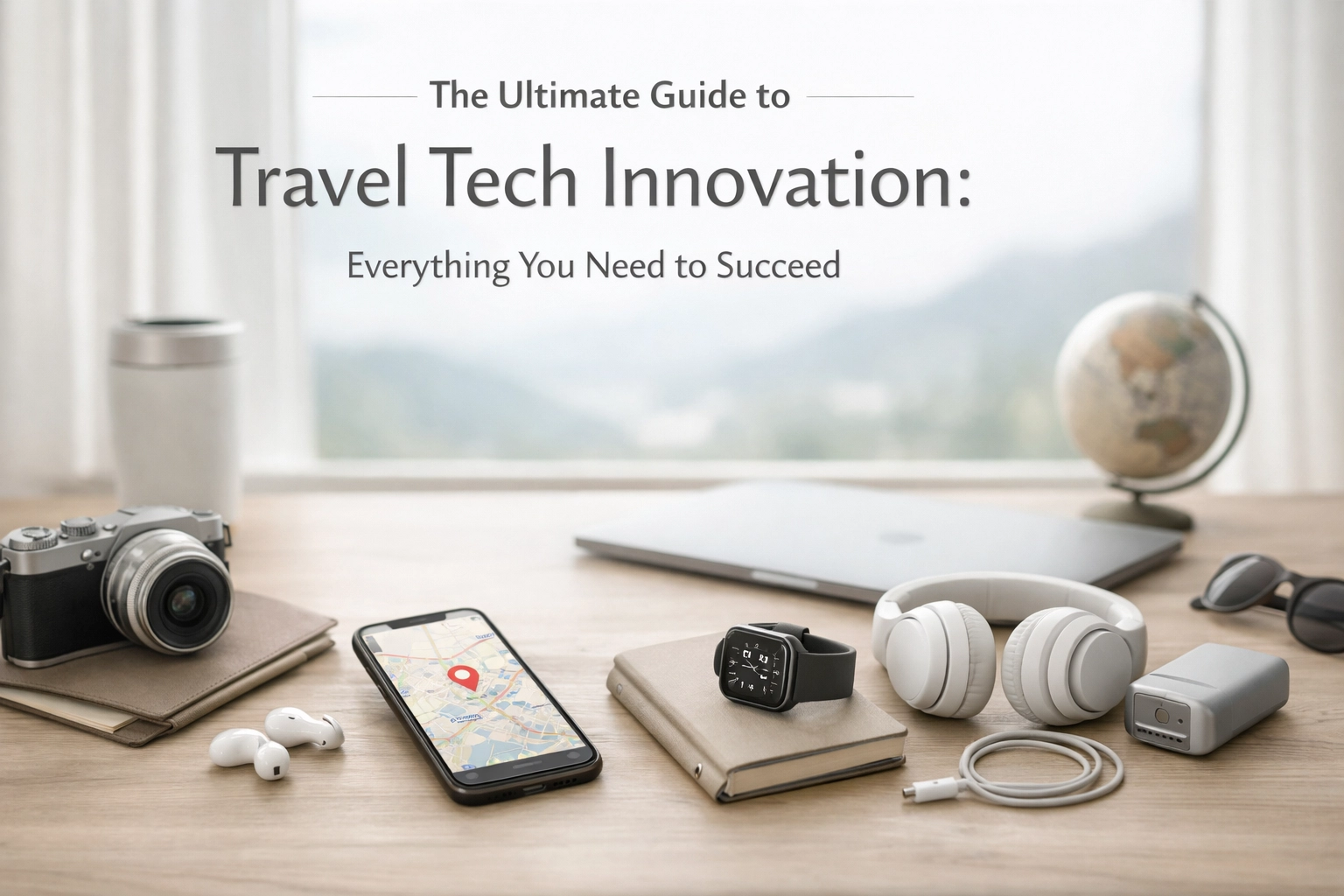
  • The Ultimate Guide to Travel Tech Innovation: Everything You Need to Succeed

    The Ultimate Guide to Travel Tech Innovation: Everything You Need to Succeed

    Automate. Personalize. Scale.

    The travel landscape in 2026 isn’t just different: it’s unrecognizable to anyone still clinging to the workflows of five years ago. We’ve moved past the era of "digital transformation" as a buzzword and into the era of total ecosystem intelligence. Success today doesn't come from buying more software; it comes from orchestrating an experience that feels like magic to the guest and like clockwork to your team.

    At Mews, we see over 12,500 properties navigating this shift every day. They aren't just surviving; they’re redefining what hospitality means. This guide is your roadmap to the tech that matters right now. All from one innovative platform.

    The Rise of Agentic AI

    We believe the era of the search bar is ending. In its place, AI travel designers are taking over the heavy lifting. These aren't the clunky chatbots of 2022. These are agentic systems capable of understanding intent, context, and preference.

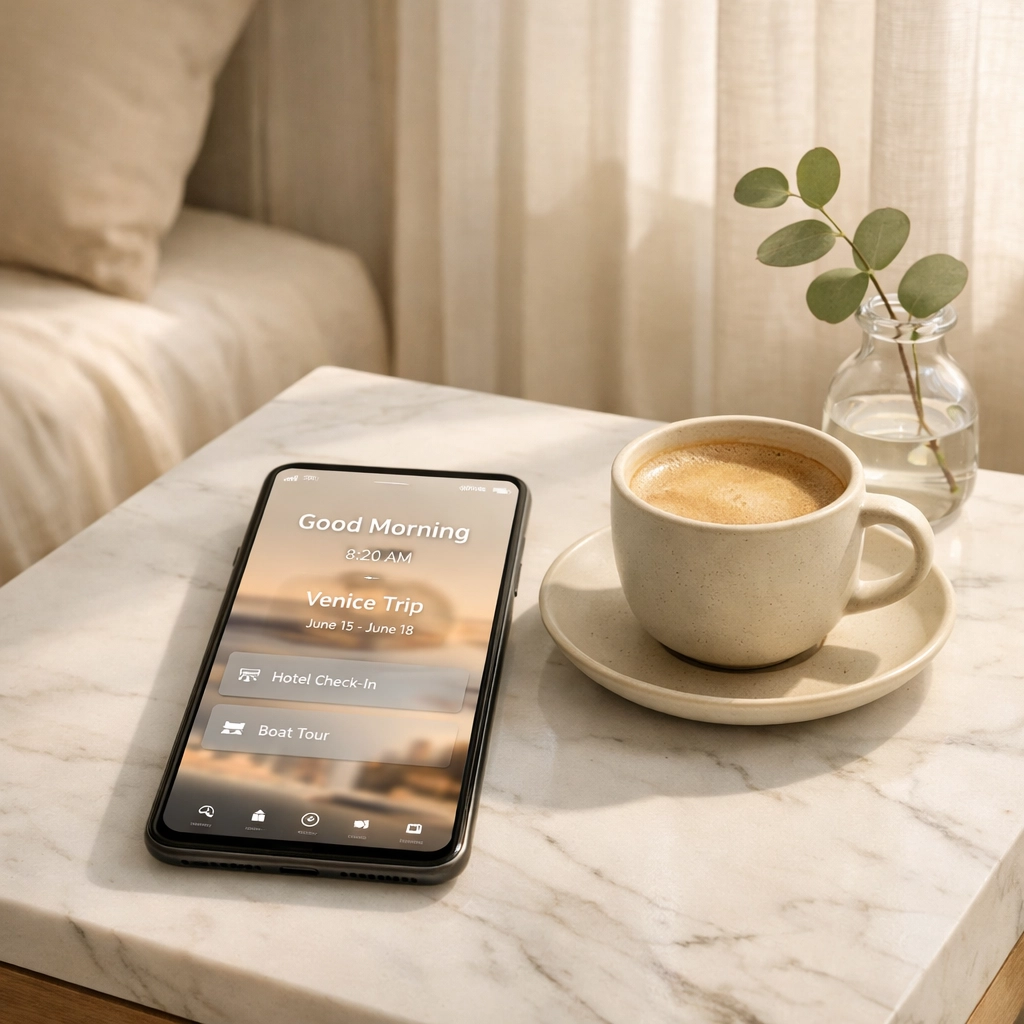
    Smartphone displaying an AI travel designer app on a minimalist hotel nightstand with morning light.

    When a guest tells their AI assistant they want a "relaxing weekend in London with good coffee and a gym," the system doesn't just return a list of links. It analyzes booking history, checks real-time availability, and builds a dynamic itinerary. For hoteliers, this means the point of discovery has moved. Your PMS needs to talk to these agents as fluently as it talks to humans.

    • Dynamic Personalization: AI adjusts itineraries in real-time based on weather or local events.
    • Proactive Management: Systems now rebook disrupted flights or rooms before the guest even knows there's a problem.
    • Voice-First Interaction: Hands-free booking is the new standard for the modern traveler.

    "We saw a 40% reduction in booking-related queries the moment we integrated our AI concierge with Mews," says one boutique owner in Berlin. "It’s like having a digital genius at the front desk 24/7."

    Frictionless Movement Through Biometrics

    Queues are a relic of the past. In 2026, the guest’s face is their passport, their room key, and their credit card. Biometric technology has moved from high-security airports to the lobby of every forward-thinking hotel.

    Facial recognition and fingerprint scans now handle document verification at scale. This isn't just about speed; it's about security. Multiple identity verifications happen in the background, ensuring that the person checking in is exactly who they say they are: without them ever having to reach for a wallet.

    1. Curb-to-Room Flow: Guests move from the airport gate to their hotel bed without showing a physical ID.
    2. Touchless Payments: Biometrics link directly to secure digital wallets for one-tap (or one-look) transactions.
    3. Enhanced Security: Real-time verification reduces fraud and chargebacks for operators.

    See what the Mews platform can do to bridge the gap between security and convenience.

    The IoT-Enabled Guest Experience

    We think your hotel room should know you better than your own home does. The Internet of Things (IoT) has turned static rooms into living, breathing environments that adapt to the individual.

    Guest using a smart hotel room control panel to personalize lighting and temperature through IoT.

    When a guest arrives, the room temperature is already at their preferred 21 degrees. The lighting is dimmed because they’ve had a long flight. Their favorite Spotify playlist is softly playing through the smart mirrors. This level of environmental intelligence is no longer a luxury; it’s an expectation.

    • Contextual Notifications: Wearables send alerts about nearby events or gate changes based on the traveler's location.
    • Device Synchronization: Preferences travel with the guest, moving seamlessly from their phone to their hotel room.
    • Predictive Maintenance: IoT sensors identify a leaking tap or a dying lightbulb before the guest ever notices, allowing for silent, proactive repairs.

    Operational Excellence: The Invisible AI

    While guests enjoy the shiny gadgets, the real innovation is happening behind the scenes. We believe the best technology is the kind you don't see. In 2026, AI is the silent operator managing the complexities of modern hospitality.

    For many properties, the challenge isn't data collection: it's data action. AI now quietly manages policy compliance, automates expense submissions, and optimizes staff shifts based on predicted occupancy. It’s about removing the friction from the people who keep the building running.

    Hotel manager using hospitality management software to automate back-office operations and analytics.

    The Mews Advantage:

    • Automated Back-Office: Eliminate manual data entry with integrated financial tools.
    • Real-Time Analytics: Get a 360-degree view of your property’s performance in seconds.
    • Seamless Integration: Connect to thousands of apps to build a custom tech stack that fits your unique needs.

    "Before Mews, my team spent three hours a day on night audits. Now? It’s done in minutes," says Scott, an Affiliate partner. "That’s three hours back to focus on the guests."

    Secure Payments and Blockchain

    Blockchain has finally found its footing in travel. Beyond the hype of crypto, the real value lies in secure, cost-efficient transactions. Digital wallets and decentralized ID systems are streamlining how money moves across borders.

    For the business traveler, this means bypassing foreign exchange fees and traditional banking delays. For the hotelier, it means instant settlements and a tamper-proof audit trail. It’s secure, transparent, and incredibly fast.

    1. Reduced Fees: Bypass the middlemen of traditional banking.
    2. Tamper-Proof ID: Protect guest data with decentralized security protocols.
    3. Instant Settlement: No more waiting days for international payments to clear.

    VR and the "Try Before You Buy" Meta

    Virtual Reality (VR) and Augmented Reality (AR) have transformed the booking funnel. We've moved past flat photos and 360-degree videos into fully immersive "digital twins" of destinations.

    Traveler using a VR headset to explore immersive virtual hotel rooms and destinations before booking.

    In 2026, a guest can walk through their suite, check the view from the balcony, and explore the local neighborhood in the metaverse before they ever hit "confirm." This significantly reduces booking anxiety and increases upsell opportunities. If they can see how much better the penthouse looks through a VR headset, they're much more likely to upgrade.

    • 3D Property Previews: Let guests explore your space from their living room.
    • AR Wayfinding: Help guests navigate your property or city with real-time overlays.
    • Interactive Event Planning: Allow corporate clients to layout their conference rooms in a virtual space.

    Your Strategy for Success

    To win in this new era of travel tech, you don't need to be a technologist. You just need to be a strategist. The goal isn't to have the most gadgets; it's to have the most integrated ecosystem.

    Focus on systems that talk to each other. Choose platforms that prioritize the guest experience without sacrificing operational sanity. And most importantly, stay human. The tech is there to clear the path so you can do what you do best: provide world-class hospitality.

    Three steps to get started:

    1. Audit your current stack: If your software doesn't have an open API, it's holding you back.
    2. Focus on the "Why": Don't buy AI because it's cool; buy it because it saves your staff 10 hours a week.
    3. Partner with leaders: Work with platforms that are already building for 2030, not just 2026.

    Ready to see how the future of hospitality feels? Get started with Mews today and let’s get you earning more revenue in no time.

    It's time to stop managing software and start managing experiences. The future is here, and it looks a lot like Mews.

  • Why AI in Hospitality Will Change the Way You Treat Your Guests

    Why AI in Hospitality Will Change the Way You Treat Your Guests

    Anticipate needs. Automate tasks. Elevate stays.

    The hospitality industry is shifting from a reactive model to a proactive powerhouse. You know the drill: a guest walks in, they have a problem, and you fix it. That’s classic service. But what if the problem never existed in the first place? What if you knew they wanted a late checkout before they even realized they were tired?

    In 2026, AI isn't just a buzzword for tech conferences; it’s the engine driving a 25% increase in guest satisfaction scores for forward-thinking properties. This isn't about robots replacing housekeepers. It’s about a platform that understands your guests better than they understand themselves. All from one innovative platform.

    Predictive personalization. The end of "One Size Fits All."

    We believe hospitality is personal. Or at least, it should be. For too long, hotels have treated every guest like a generic data point. You get the same check-in script, the same "standard" room temperature, and the same generic "how was your stay?" email.

    AI changes the math. By analyzing booking patterns, previous preferences, and even external data like local event schedules, AI predicts what your guests want before they open their mouths.

    • Pre-arrival prep. The system notices a guest always orders a double espresso at 8:00 AM. The machine is ready.
    • Climate control. AI adjusts the room temperature based on the guest’s historical preference for a cool 19 degrees.
    • Inventory intelligence. Predict which guests are likely to extend their stays and offer the option preemptively.

    "We saw a 15% jump in ancillary revenue just by letting the AI suggest room upgrades to the right people at the right time," says one Mews user. It’s about being relevant, not noisy.

    Morning coffee on a bedside table illustrating personalized guest service and predictive hospitality.

    24/7 Intelligent support. Because sleep is for humans.

    Guests don't care about your office hours. They want to know the Wi-Fi password at 3:00 AM. They want to order extra towels during the morning rush. They want to know where the best local sourdough is located while they're sitting in an Uber.

    Human staff have limits. AI doesn't. Smart assistants and chatbots have evolved far beyond the "I'm sorry, I didn't understand that" phase. Modern AI in hospitality handles complex queries in multiple languages, instantly.

    • Multilingual mastery. Chat with guests in their native tongue without hiring a translator.
    • Instant resolution. Handle room service orders and maintenance requests without a single phone call.
    • Pattern recognition. If ten guests ask about the pet policy in one morning, the AI flags it so you can put that info front and center.

    This isn't about being cold; it's about being available. When the routine questions are handled by the system, your team is free to handle the moments that actually require a human touch.

    Liberating the front desk. Stop staring at screens.

    Let’s be honest: the traditional check-in process is a friction point. It’s a desk, a screen, and a long wait. It’s the opposite of a warm welcome. We think the front desk should be a social hub, not a bureaucratic barrier.

    AI-driven automation handles the boring stuff. Identity verification, payment processing, and key distribution can all happen before the guest even steps through your doors.

    1. Schedule. Set automated check-in triggers.
    2. Verify. Use AI-powered document scanning for instant security.
    3. Greet. Meet your guest with a drink, not a clipboard.

    By removing the administrative burden, your staff can actually look guests in the eye. They can offer local tips. They can be hosts. It’s a shift from data entry to genuine connection: all managed through a seamless interface.

    A hotel guest using a smartphone for 24/7 digital concierge support and seamless stay management.

    Sentiment-driven improvement. Hear what isn't being said.

    Waiting for the post-stay survey is too late. If a guest had a bad experience on night one, you’ve already lost the chance to fix it. AI-powered sentiment analysis tools listen to the "digital breadcrumbs" guests leave throughout their stay.

    Whether it’s a mention in a chat message or a comment made to a digital concierge, AI categorizes the mood. It spots trends in real-time. If the AI detects a pattern of guests mentioning "cold water" or "slow elevators," you get an alert before it hits TripAdvisor.

    • Real-time alerts. Fix issues while the guest is still on-site.
    • Operational trends. Identify service gaps based on actual behavior, not assumptions.
    • Continuous evolution. Your service gets smarter every day as the data grows.

    We believe data is the foundation of empathy. When you know how people feel, you can act with purpose.

    Operational excellence. The invisible hand.

    AI doesn't just talk to guests; it talks to your building. Managing a hotel is a logistical nightmare of housekeeping schedules, maintenance cycles, and energy consumption. AI streamlines the "back of house" so the "front of house" looks effortless.

    Imagine housekeeping routes that update in real-time based on which guests have actually checked out, rather than a static list. Imagine smart sensors that dim lights and cut AC in empty rooms, saving you 30% on energy costs without a guest ever noticing.

    • Dynamic scheduling. Housekeeping stays ahead of the curve.
    • Predictive maintenance. Fix the boiler before it breaks.
    • Resource allocation. Put your staff where they are needed most based on occupancy flow.

    "It feels like the building is finally working with us, not against us," says a boutique hotel manager in London. It’s about working smarter, not harder.

    Hotel staff providing human-centric service in a modern lobby, enabled by automated check-in technology.

    Hyper-personalized experiences at scale.

    In the past, high-touch personalization was reserved for five-star luxury resorts with massive staff-to-guest ratios. AI democratizes that experience. Whether you’re running a 10-room guest house or a 500-room city hotel, you can offer a curated stay.

    Hotels in Sonoma are already using AI to curate activity recommendations based on the specific wines a guest liked during their last visit. Hilton uses it to optimize pricing and perks for specific guest segments. This is the new standard.

    See what the right tech can do:

    • Curated dining. Suggest the perfect table based on past dietary preferences.
    • Local integration. Connect guests with experiences they actually care about.
    • Loyalty redefined. Recognize a returning guest and have their favorite pillow waiting.

    The Mews approach. Innovation by design.

    At Mews, we don't just build software; we build the future of hospitality. We believe that technology should disappear into the background so that hospitality can take center stage. Our platform is designed to be the central nervous system of your property: smart, fast, and incredibly intuitive.

    The world is changing. Guests expect more. They want speed, they want relevance, and they want to feel seen. Embracing AI isn't a luxury; it’s the only way to keep up with the modern traveler.

    Ready to see how AI can transform your operations? It’s easier than you think. You can start small, automate the basics, and watch your guest satisfaction scores climb.

    Don't let your tech hold you back. Explore the possibilities and get your property earning more revenue while providing better service in no time.

    A future built on connection.

    The goal of AI in hospitality isn't to make hotels more like machines. It’s to make them more human. By automating the routine, predicting the necessary, and personalizing the experience, we give hoteliers the one thing they always need more of: time.

    Time to talk to guests. Time to innovate. Time to provide the kind of service that people actually remember.

    AI is changing the way you treat your guests. It’s making you better at what you already do best. The only question is: are you ready to lead the charge?

    A perfectly prepared luxury hotel suite reflecting high operational standards and guest experience excellence.

    Check out how we can help you get started at Mews.