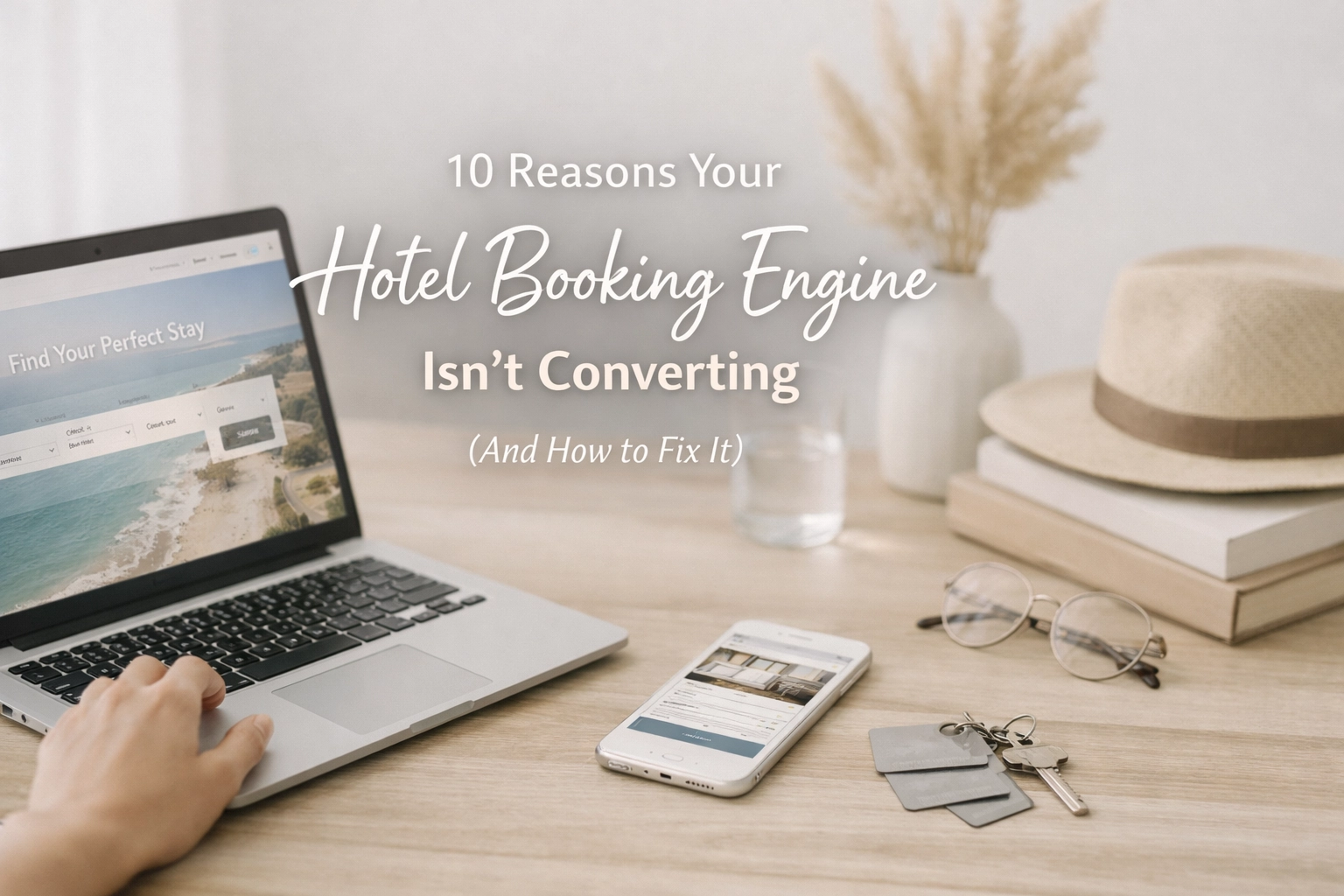
Convert faster. Drive revenue. Delight guests.
Your booking engine is the digital front door to your property. But all too often, that door is heavy, creaky, and locked from the inside. When a guest lands on your site, they are ready to buy. They have the intent. They have the credit card. Yet, the industry average conversion rate hovers around a measly 2%.
We believe booking a room should be as effortless as ordering a flat white. It’s about removing the friction that sits between a guest’s desire and their confirmation email. If your conversion rates are stalling, it’s rarely because your rooms aren't great, it’s because the journey to get there is broken.
Here is why your booking engine is underperforming and, more importantly, how to transform it into a high-octane revenue driver. All from one innovative platform.
1. The mobile bottleneck
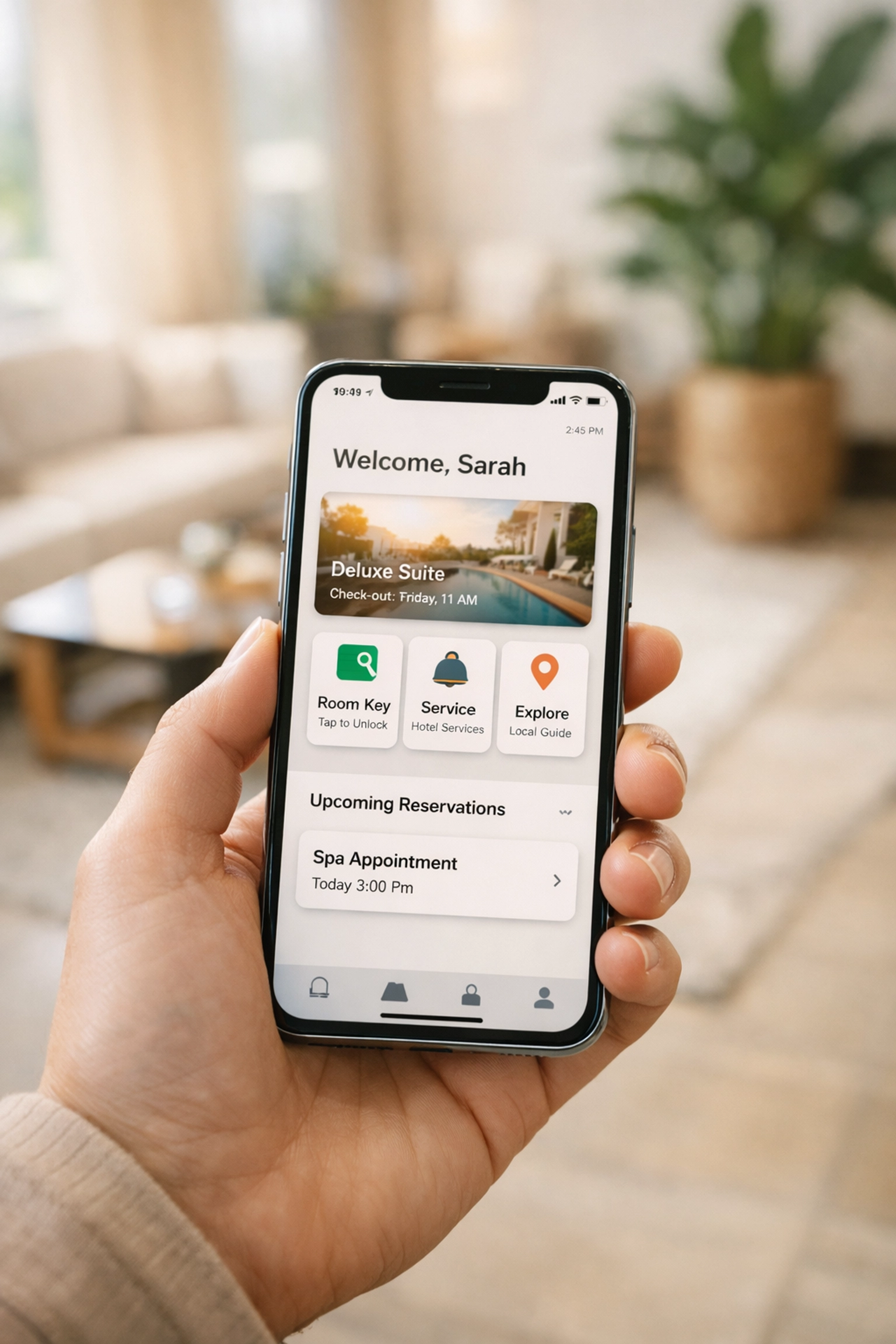
Nearly 70% of hotel bookings now occur on mobile devices. If your booking engine feels like a desktop site shrunk down by a shrink-ray, you’re losing half your audience before they even see a room type.
Guests are booking on trains, in meetings, and while waiting for coffee. They don’t want to pinch and zoom. They want thumb-optimized navigation and buttons they can actually hit.
The Fix:
- Implement a mobile-first design that prioritizes speed and ease.
- Use sticky "Book Now" CTAs that follow the user as they scroll.
- Ensure the calendar view is intuitive on a vertical screen.
2. Speed (or lack thereof)
In the digital age, a three-second delay is an eternity. Research shows that pages loading in under two seconds have the highest conversion rates. Every millisecond of lag is an invitation for a guest to click back to Google or head over to an OTA.
Slow load times signal a lack of technical sophistication. If your booking engine is sluggish, guests subconsciously wonder if your check-in process or Wi-Fi will be just as frustrating.
The Fix:
- Optimize image sizes without sacrificing quality.
- Minimize heavy scripts that bloat load times.
- Prioritize technical performance as a core guest experience feature.
3. The "Paradox of Choice" room display
We’ve all seen it: a list of twenty room types with names like "Deluxe Superior Garden View (East Wing) – Non-Smoking." By the time the guest finishes reading the options, they’ve forgotten why they wanted to stay with you in the first place.
Vague descriptions and overlapping categories create cognitive load. When guests are overwhelmed, they freeze. And frozen guests don't click "Confirm."
The Fix:
- Simplify your room categories into clear, distinct tiers.
- Use high-quality, professional photography for every single room type.
- Highlight three key amenities per room (e.g., King bed, Rainfall shower, City view).
4. Hidden pricing and "Sticker Shock"
Transparency is the foundation of trust. If a guest sees one price on your homepage and a significantly higher one, thanks to hidden fees or taxes, at the final checkout stage, they feel deceived.
Transparency isn't just about honesty; it's about confidence. Guests should see real-time, dynamic pricing that updates as they change their dates or guest count.
The Fix:
- Display the total price, including taxes and fees, from the very first step.
- Use dynamic pricing that syncs instantly with your PMS.
- Show price comparisons to OTAs to prove booking direct is the best deal.
5. Third-party redirects
Nothing kills a conversion faster than being "handed off." When a guest clicks "Book" and is suddenly redirected to a completely different URL with a different design, a different logo, and a different feel, their security alarm goes off.
We think the booking journey should be a seamless part of your brand, not a disconnected side-quest. You want to keep the guest in your ecosystem from discovery to departure.
The Fix:
- Integrate your booking engine directly into your website’s architecture.
- Maintain consistent branding, fonts, and colors throughout the flow.
- Use a modern PMS-integrated solution like Mews to keep the data flow internal and secure.

6. Too many hoops to jump through
Complexity is the enemy of conversion. If your booking process requires six pages of forms, account creation, and a blood sample, you’re making it too hard for people to give you money.
Every additional field in a form is a point of abandonment. We’ve seen properties ask for home addresses, car license plates, and "how did you hear about us" before the guest even enters their credit card. Save the data collection for the pre-arrival email.
The Fix:
- Enable "Express Checkout" for returning guests.
- Only ask for the essentials: Name, Email, and Payment.
- Use a single-page checkout flow to reduce click-fatigue.
7. A lack of social proof
In hospitality, trust is the primary currency. Guests want to know that people like them have stayed with you and loved it. If your booking engine is a vacuum of information, they’ll head to TripAdvisor to "verify" you, and you’ll likely lose them to an OTA ad on that page.
Subtle trust signals can increase conversions by 15–30%. It’s about providing reassurance at the exact moment of hesitation.
The Fix:
- Embed a review widget directly on the booking page.
- Display trust badges (SSL certificates, industry awards).
- Use "live" social proof, like "3 people are looking at this room right now."
8. No clear "Why Direct?" incentive
Why should I book with you instead of Expedia? If you can’t answer that question within three seconds of a guest landing on your booking engine, you’re losing the battle.
OTAs spend billions on UX to make booking easy. To win, you need to offer value that they can’t. This isn't just about the lowest price; it's about the best experience.
The Fix:
- Highlight direct-only perks like "Late Checkout Included" or "Free Welcome Drink."
- Offer flexible cancellation policies that are exclusive to direct bookings.
- Ensure your "Best Price Guarantee" is front and center.
9. Ignoring the power of AI and automation
We are entering the era of the "smart" booking engine. If your system is just a static grid of dates and prices, you’re missing out on the nuance of modern travel.
AI can help personalize the booking experience based on user behavior. If a guest is looking at a family suite, the engine should automatically suggest breakfast add-ons or local attraction tickets. It’s about moving from a transaction to a conversation.
The Fix:
- Use AI-driven upselling tools that offer relevant upgrades during the booking flow.
- Implement chatbots that can answer "Is the pool heated?" without the guest leaving the page.
- Automate your guest communication so the moment they book, they receive a personalized welcome.
10. The "Set It and Forget It" mentality
Optimization isn't a one-time task; it's a philosophy. The best hotels in the world are constantly A/B testing their booking engines. They test button colors, CTA text ("Book Now" vs. "Reserve Your Stay"), and image placement.
If you aren't measuring your funnel, you're flying blind. You need to know exactly where guests are dropping off. Is it the room selection page? The payment page? The data doesn't lie.
The Fix:
- Set up Google Analytics (GA4) ecommerce tracking to monitor your funnel.
- Run quarterly A/B tests on your primary call-to-action.
- Aim for a baseline conversion rate of 3%, then iterate until you hit 5% or more.
Innovation is the only way forward
The hospitality landscape is shifting. Guests expect more than just a bed; they expect a seamless, tech-forward experience that starts the moment they find your website.
At Mews, we believe in a world where technology works for the hotelier, not the other way around. By stripping away the legacy friction of old-school booking engines, you free up your team to do what they do best: provide incredible hospitality.
Your booking engine shouldn't be a hurdle. It should be the first "wow" moment of the guest journey.
"Moving to a modern, integrated booking engine saved our front desk 10 hours a week in manual entry and boosted our direct revenue by 22% in the first quarter." : A forward-thinking Mews customer.
Ready to see how a truly innovative PMS can transform your bottom line?
Schedule a 30-minute demo today and get you earning revenue in no time.