Category: Category 1

Use this description to tell users what kind of blog posts they can find in this category.

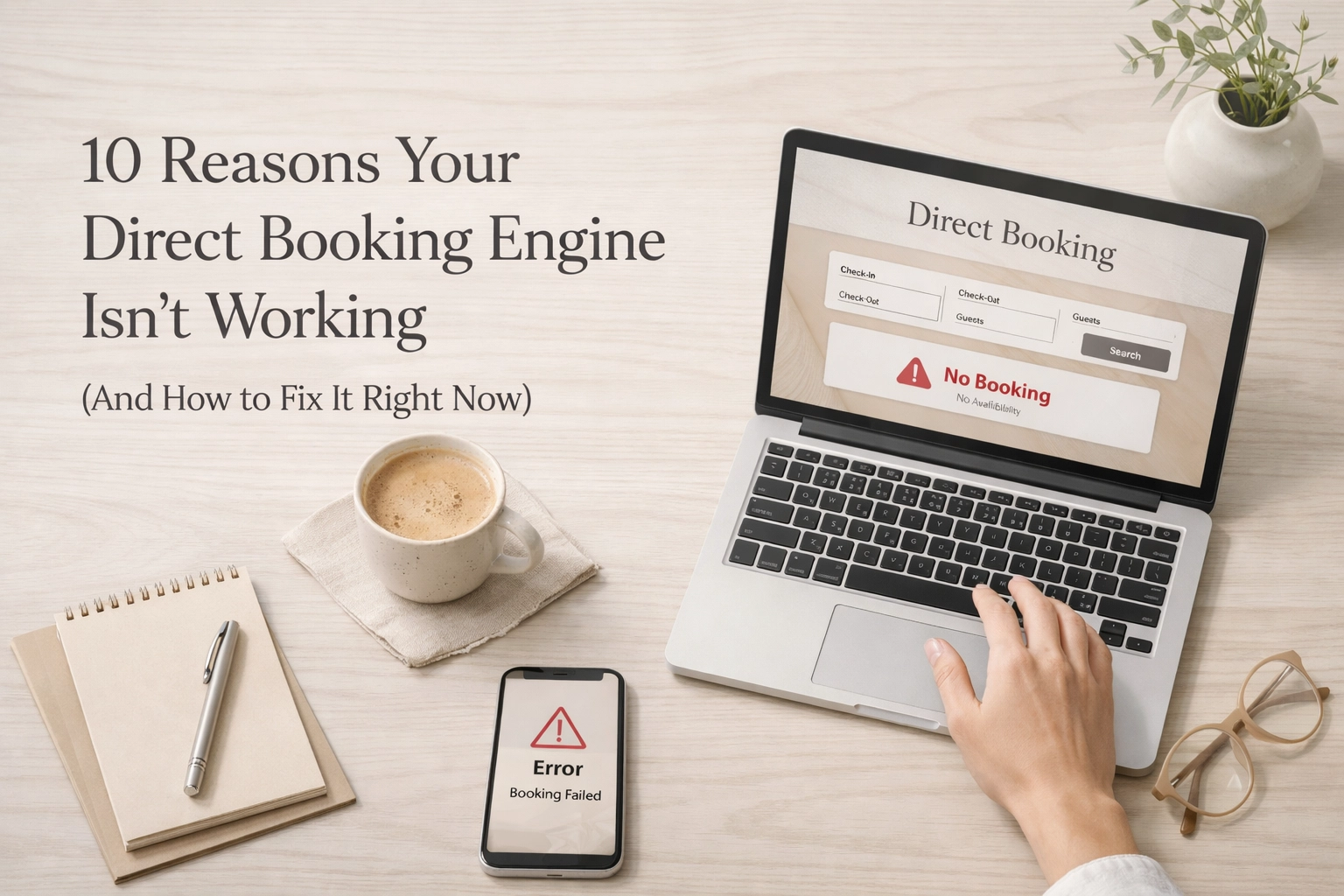
  • 10 Reasons Your Direct Booking Engine Isn’t Working (And How to Fix It Right Now)

    10 Reasons Your Direct Booking Engine Isn’t Working (And How to Fix It Right Now)

    Capture more guests. Build lasting loyalty. Own your margins.

    The dream of the direct booking is simple: guests find your site, fall in love with your brand, and click "Book" without an OTA taking a 15–20% cut. It sounds straightforward. But for most hoteliers, the reality is a leaky bucket. You’re driving traffic, but the conversions just aren't happening.

    We believe that your booking engine shouldn't just be a utility: it should be a high-performing sales machine. If yours is underperforming, it’s usually down to a few specific friction points that turn "almost guests" into "lost opportunities."

    Here is why your direct booking engine is stalling: and how to transform it into your most profitable channel, all from one innovative platform.

    1. The Three-Second Abandonment

    If your booking engine takes more than three seconds to load, you’ve already lost the guest. Modern travelers have zero patience for spinning wheels or lagging calendars.

    A slow website isn't just a technical glitch; it's a massive blow to your credibility. If your booking process feels clunky and outdated, guests assume your rooms and service will be too.

    The Fix:

    • Audit your scripts and heavy images.
    • Prioritize a mobile-first, lightweight architecture.
    • Ensure your booking engine is natively built for speed, not bolted on as an afterthought.

    2. The "Thumb-Friendly" Test

    Over 70% of travelers now research or book on mobile devices. If your booking engine requires a desktop to navigate effectively, you are essentially closing your doors to the modern traveler.

    Mobile users don’t want to pinch-and-zoom to see room types. They want big buttons, easy scrolls, and a layout that respects their time (and their thumbs).

    The Fix:

    • Test your booking journey on every screen size.
    • Eliminate unnecessary pop-ups that block the "Book Now" button on mobile.
    • Implement a booking engine designed specifically for the mobile guest experience.
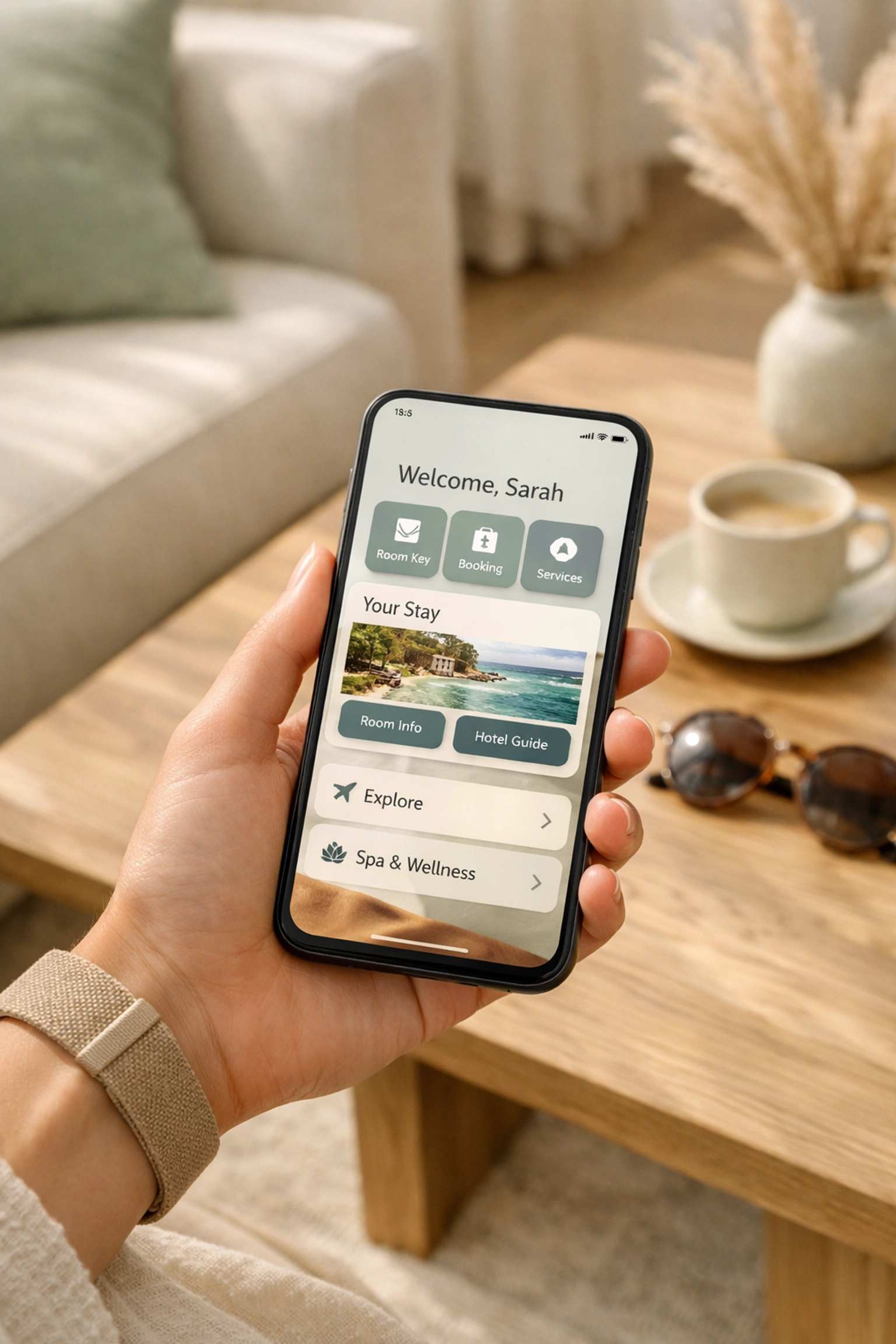
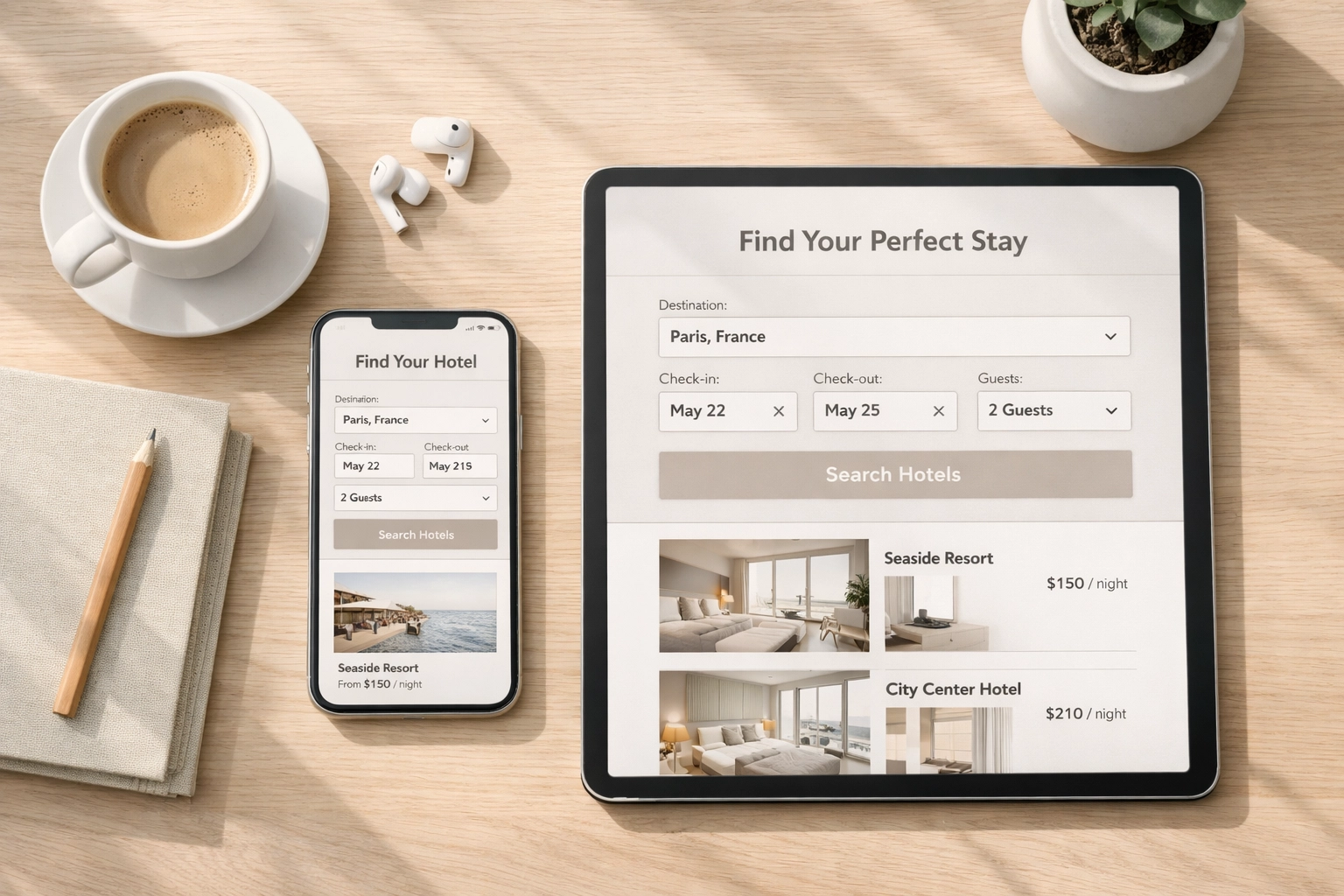
    Guest booking a hotel room on a smartphone in a minimalist lounge, highlighting mobile-friendly booking engines.

    3. The "Source of Truth" Disconnect

    There is nothing more frustrating for a guest: or more damaging to your reputation: than "ghost inventory." This happens when your booking engine isn't perfectly synced with your Property Management System (PMS).

    A guest sees a room, selects it, and then gets an error at checkout because the room was sold on an OTA three minutes ago. Or worse, you end up with an overbooking.

    The Fix:

    • Integrate your booking engine directly with a modern PMS like Mews.
    • Use a two-way real-time API sync to ensure availability is accurate to the millisecond.
    • Eliminate manual inventory updates forever.

    4. Form Fatigue and Mandatory Overload

    We believe that minimalism is the ultimate luxury. Yet, many hotels still ask for a guest’s life story before they can even see a price.

    Every extra field in your checkout form is a chance for the guest to change their mind. Do you really need their home address, fax number, and mother’s maiden name just to hold a room? Probably not.

    The Fix:

    • Reduce mandatory fields to the absolute essentials: Dates, Guests, Name, Email, Payment.
    • Use "progressive disclosure": don't show every option at once.
    • Make the process feel like a conversation, not an interrogation.

    5. The Late-Stage Price Shock

    Transparency builds trust. Price shock breaks it. If a guest selects a $200 room but sees a $280 total at the very last step due to hidden fees, taxes, or "resort charges," they feel deceived.

    This is the number one reason for cart abandonment in the hospitality industry.

    The Fix:

    • Display the total price (including taxes) as early as possible.
    • Provide a clear breakdown of what’s included.
    • Use price-matching widgets to show you are cheaper than the OTAs right now.

    6. The "Back" Button Paradox

    A great booking engine should feel like a slide, not a maze. If a guest clicks on a specific room type from your gallery and is then dropped into a generic search page where they have to re-enter their dates, they will likely hit the "back" button and go back to Google.

    The Fix:

    • Use deep links that take guests directly to specific offers or room types.
    • Ensure the "Book Now" button is persistent and visible on every page.
    • Keep the transition from your website to the booking engine seamless and branded.

    A seamless transition into a contemporary hotel suite, illustrating a smooth direct booking engine experience.

    7. Payments from the Stone Age

    In a world of Apple Pay, Google Pay, and "Buy Now, Pay Later," asking a guest to go find their physical credit card and type in a 16-digit number is a massive hurdle.

    If you aren't offering modern, one-click payment options, you are creating friction where there should be flow.

    The Fix:

    • Enable digital wallets (Apple Pay, Google Pay).
    • Offer local payment methods for international guests.
    • Ensure your payment gateway is fully integrated and secure.

    8. Missing the Upsell (The AI Opportunity)

    Your booking engine shouldn't just take orders; it should be your best salesperson. Most engines miss the chance to offer a room upgrade, a breakfast package, or a spa treatment during the booking flow.

    With the rise of AI in hospitality, your engine should be smart enough to know that a guest booking a suite for two might want a bottle of champagne on arrival.

    The Fix:

    • Introduce contextual add-ons based on the guest's selection.
    • Use AI-driven recommendations to personalize the booking journey.
    • Keep the add-ons simple: don't overwhelm the guest with fifty choices.

    "Switching to a modern, integrated booking engine saved our front desk 10 hours a week in manual data entry and increased our direct revenue by 22% in the first quarter."

    9. Lack of Recovery Strategies

    Sometimes life happens. A guest gets a phone call, their Wi-Fi drops, or they just get distracted. If they leave your booking engine, do you have a way to bring them back?

    Without abandonment recovery tools, you're leaving money on the table every single day.

    The Fix:

    • Implement automated cart recovery emails for guests who entered their email but didn't finish.
    • Use "Exit Intent" triggers to offer a small incentive to finish the booking.
    • Track where guests drop off in the funnel to fix specific friction points.

    10. Flying Blind (The Data Gap)

    If you don't know your conversion rate, you can't improve it. Many hoteliers have no idea where their guests are dropping off or which room photos are performing best.

    We think that data is the fuel for growth. Without an analytics dashboard that shows you the guest journey, you’re just guessing.

    The Fix:

    • Use a booking engine with a built-in analytics dashboard.
    • Set up Google Analytics 4 (GA4) tracking for every step of the funnel.
    • Run A/B tests on your call-to-action buttons and images.

    Luxury hotel room amenities like champagne and chocolates, showing personalized upselling in the booking journey.

    Elevate Your Guest Experience

    Your direct booking engine is the heartbeat of your digital presence. It’s where your brand promise meets the bottom line. By removing friction, embracing mobile-first design, and integrating directly with your PMS, you don't just get more bookings: you get better guests.

    At Mews, we believe in technology that empowers hoteliers to focus on what matters: the guest. Our booking engine is designed to be fast, intuitive, and high-converting, ensuring that your property is always at the forefront of hospitality innovation.

    Ready to see how a modern PMS can transform your direct booking strategy?

    Schedule a 30-minute demo with Mews today and get your direct revenue growing in no time.

    See what Mews can do

    • Automate the boring stuff: Free up your staff from manual data entry.
    • Delight your guests: Offer online check-in and personalized experiences.
    • Scale with ease: Manage one property or a hundred from a single cloud-based platform.

    Don't let another guest bounce to an OTA. It’s time to fix your engine and reclaim your margins. All from one innovative platform.
  • The Modern Hotelier’s Guide to Payments: Ditch the Card Machine

    Let's be honest: that clunky card machine at your front desk is a relic. It's slow. It's prone to errors. And it's quietly costing you money every single day.

    Modern hotels need modern payment systems. Embedded payments: think Mews Payments: eliminate manual card entry, reduce chargebacks by up to 40%, and free your staff from wrestling with outdated hardware. All from one seamless platform.

    Why Your Card Machine Is Holding You Back

    That traditional card terminal sitting on your desk? It's creating bottlenecks you don't even realize exist.

    Every manual card entry is a chance for errors. Typos happen. Cards get declined because a digit was misread. Guests stand waiting while your team fumbles with the machine. It's frustrating for everyone: and it's costing you time and revenue.

    Chargebacks love manual processing. When payment data isn't automatically synced with your property management system, disputes become nightmares. You're stuck piecing together paper receipts and memory to prove a charge was legitimate.

    And let's talk about those bulky machines. They take up valuable counter space. They require maintenance. They need software updates at the worst possible times. They're just… there.

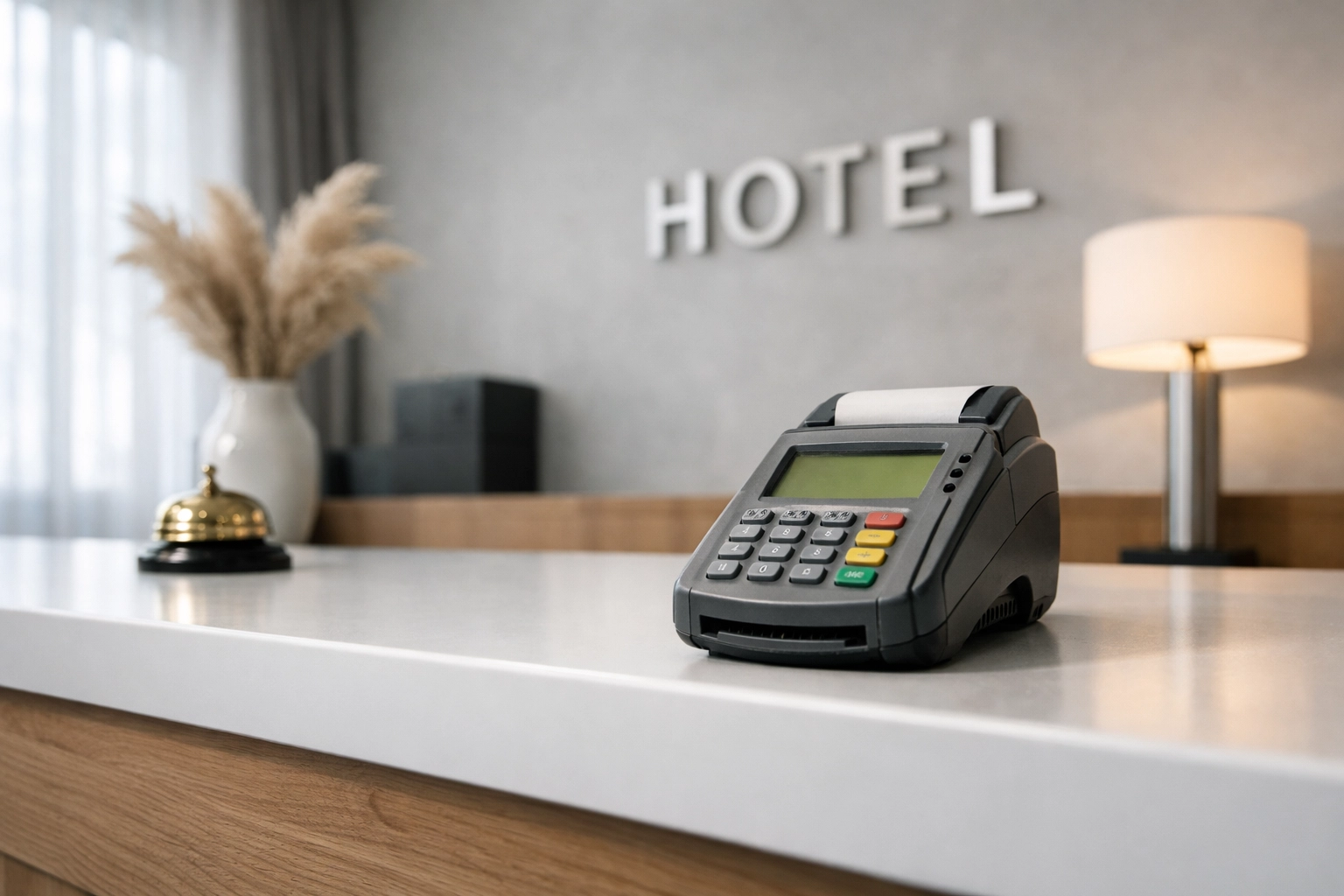
    Outdated card payment terminal on modern hotel front desk showing obsolete payment technology

    The Embedded Payment Revolution

    Embedded payments flip the entire model. Instead of bolting a separate payment system onto your operations, the payment processing lives inside your PMS.

    Here's what that actually means: When a guest books online, their payment details are securely tokenized and stored. At check-in, charges post automatically to their folio. No card swiping. No manual entry. No separate terminal.

    Mews Payments takes this further by supporting everything your guests actually want to use: digital wallets like Apple Pay and Google Pay, traditional credit cards, mobile payment links, and even regional methods like WeChat Pay for your international travelers.

    The result? Faster checkouts. Fewer errors. Way less stress.

    Three Ways Embedded Payments Save You Money

    1. Chargebacks Drop Dramatically

    Automated payment processing means every transaction is tracked, timestamped, and tied to a specific guest profile. When a chargeback comes in, you have complete documentation at your fingertips. Most disputes never make it past the first response because your records are airtight.

    Hotels using embedded payments report chargeback rates dropping by 40% or more. That's real money staying in your account.

    2. Staff Time Becomes Guest Time

    Your front desk team spends countless hours processing payments manually. Card entry. Receipt printing. End-of-day reconciliation. It all adds up.

    Embedded systems handle this automatically. Your staff can focus on what actually matters: creating memorable guest experiences instead of babysitting a card terminal.

    One property manager put it perfectly: "We got back 10 hours a week just from automated payment processing. That's time my team now spends helping guests, not fighting with machines."

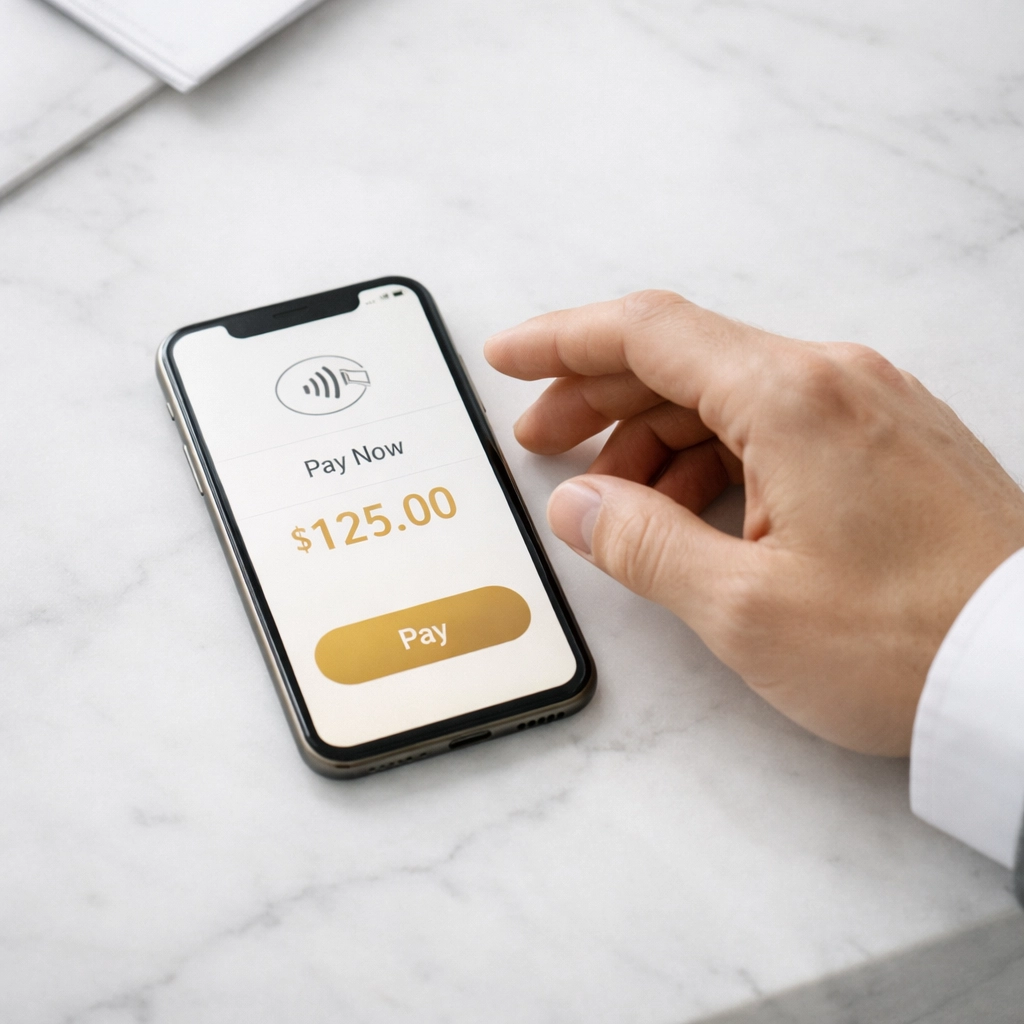
    Guest using smartphone for contactless mobile payment at hotel reception counter

    3. Hardware Costs Vanish

    Traditional card machines need replacing every few years. They break. They become obsolete. They require maintenance contracts and technical support.

    Cloud-based embedded payments run on devices you already own: your computer, tablet, or smartphone. No specialized hardware. No maintenance fees. No surprise replacements.

    How Embedded Payments Actually Work

    The magic happens behind the scenes, but it's worth understanding the basics.

    When a guest enters their payment information: whether at booking, check-in, or through a mobile link: the data gets tokenized. That means sensitive card details are replaced with a secure token that's useless to hackers but works perfectly for processing charges.

    Your PMS stores the token. When it's time to charge the guest: for room rate, minibar, spa services, whatever: your system sends the token to the payment processor. Money moves. The charge posts to the folio. The guest gets notified.

    All of this happens in seconds. No manual steps. No front desk involvement needed.

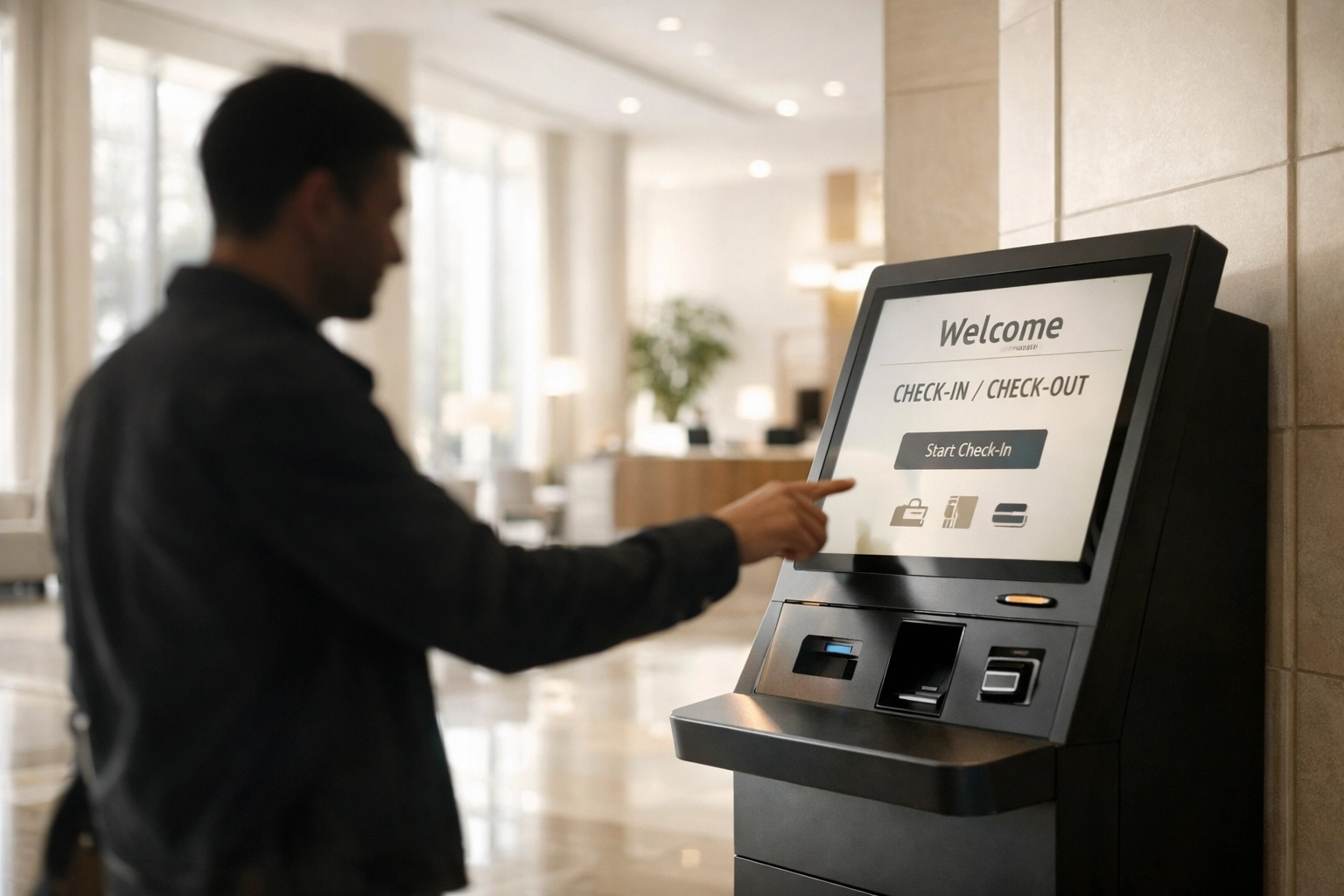
    For guests checking in at a kiosk, the experience is seamless. Tap their phone. Confirm the charges. Done. Keys are issued automatically, and they're on their way to their room.

    Hotel staff providing personalized guest service at modern reception desk

    Beyond Basic Card Processing

    Modern embedded payment systems do way more than just swipe cards.

    Mobile payment links let guests settle their bills from anywhere. Send an SMS or email before checkout. They click, pay, and you're done. Perfect for express checkouts or contactless experiences.

    Multi-currency support means international guests can pay in their preferred currency. No awkward exchange rate conversations. No surprise fees. Just transparent, easy transactions.

    Recurring billing handles extended stays or monthly rentals automatically. Set it up once. Charges process on schedule. No manual invoicing. No chasing payments.

    Fraud detection runs constantly in the background, flagging suspicious transactions before they become problems. Machine learning algorithms spot patterns humans miss, protecting both you and your guests.

    The Security Upgrade You Didn't Know You Needed

    PCI compliance is serious business. Traditional card machines require you to maintain security standards, conduct regular audits, and prove you're handling card data properly.

    Embedded payments shift that burden to the payment processor. Your system never touches actual card numbers: just tokens. That dramatically reduces your PCI scope and the associated headaches.

    Tokenization also protects against data breaches. Even if someone compromises your system, they can't use stolen tokens. The card data simply isn't there to steal.

    Biometric authentication through digital wallets adds another layer. Guests confirm payments with Face ID or fingerprint. It's faster than PIN entry and way more secure.

    Mobile phone displaying digital payment confirmation on hotel room desk

    Making the Switch

    Moving to embedded payments is easier than you think.

    If you're already using a modern PMS, payment integration takes hours, not weeks. Your payment processor connects directly to your system. Historical data migrates over. Training happens in a single session.

    For properties still using legacy systems, it's a great excuse to upgrade your entire tech stack. Platforms like Mews bundle payments with reservation management, housekeeping coordination, guest communication, and reporting.

    The ROI is immediate. One hotel group calculated they broke even on implementation costs within 90 days just from reduced chargebacks and staff time savings.

    The Guest Experience Angle

    Here's what often gets overlooked: embedded payments aren't just good for your operations. They create better guest experiences.

    Fast checkouts mean less time at the desk and more time enjoying your property. Contactless options appeal to hygiene-conscious travelers. Mobile payment links give guests control over when and how they pay.

    International travelers especially appreciate seamless currency handling and familiar payment methods. When a guest from China can pay with Alipay while someone from the UK uses Apple Pay, you're removing friction from the entire experience.

    And when disputes arise? Automated documentation means faster resolution. Guests aren't stuck waiting days for refunds or clarifications.

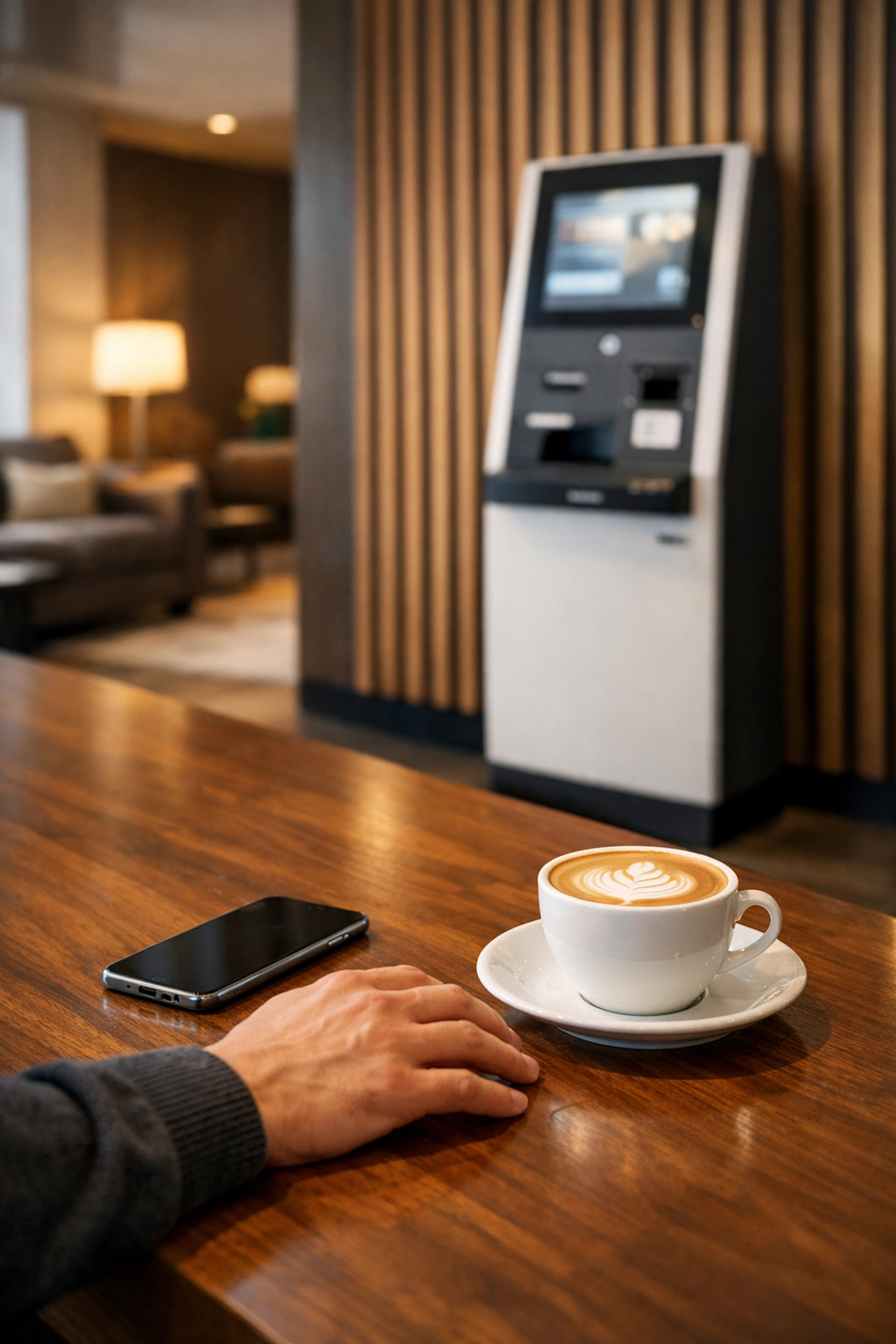
    Guest using self-service check-in kiosk in contemporary hotel lobby

    Your Next Move

    The hotels ditching card machines aren't waiting for the future. They're building it right now.

    Embedded payments eliminate manual work, reduce chargebacks, and create seamless guest experiences. All while cutting costs and improving security.

    Ready to see how it works in action? Book a demo and experience a modern payment system designed specifically for hospitality. It's a 30-minute session that could transform how your property handles transactions.

    Your guests are already using mobile payments everywhere else. It's time your hotel caught up.

  • Business Automation Tools 101: A Beginner’s Guide to Mastering Your Workflow

    Business Automation Tools 101: A Beginner’s Guide to Mastering Your Workflow

    You wake up. It’s 7:00 AM.

    Before you’ve even had a sip of coffee, your hand reaches for your phone. You see it. 47 unread emails. Three "urgent" Slack messages. A calendar that looks like a game of Tetris gone horribly wrong.

    Your heart sinks just a little.

    This isn't why you started your business. You wanted to build things, solve problems, and maybe, just maybe, have a life. Instead, you're a professional data-entry clerk who happens to own a company.

    But imagine a different morning.

    ☕ 7:00 AM. You wake up. Your phone is silent.

    Not because no one is emailing you, but because your business automation tools handled the noise while you slept. The invoices were sent. The leads were categorized. The "thank you" notes were dispatched.

    The chaos is gone before you even take your first sip.

    Welcome to the future. Let’s get those 10 hours of your life back.


    AUTOMATE ADMIN TASKS: HOW TO SAVE 10+ HOURS EVERY WEEK

    You’re drowning in "the small stuff."

    It’s the copy-pasting. The manual calendar invites. The chasing down of late payments. Individually, these tasks take five minutes. Collectively, they are a slow-motion car wreck for your productivity.

    Stop juggling.

    🔍 The Audit: Where Does Your Time Go?

    Before you can fix the leak, you have to find it. Spend two days, just two, tracking every repetitive thing you do.

    • "I sent the same onboarding email three times."
    • "I moved data from a spreadsheet to my CRM."
    • "I spent 20 minutes trying to find a time to meet with a client."

    If you do it more than twice a week, you shouldn't be doing it at all.

    Frustrated worker overwhelmed by repetitive manual tasks needing business automation tools.

    🛠️ Your First Automation Win

    Start small. Don't try to build a digital empire in an afternoon.

    The easiest win? The "Lead-to-Action" bridge. When someone fills out a form on your site, what happens? If the answer is "I get an email and then I manually reply," you're losing money.

    With tools like Zapier or Marblism, that form entry triggers an automatic reply, adds them to your CRM, and pokes you in Slack only if they meet specific criteria.

    It takes ten minutes to set up. It saves you an hour a week. Forever.

    🤝 Letting Your Tools Talk

    The magic happens when your apps start talking behind your back. Your CRM tells your invoice software to send a bill. Your invoice software tells your project management tool to create a new task once the bill is paid.

    You? You’re just watching the notifications roll in.

    Scaling shouldn't be this easy. But here we are. If you want to see how this looks in the real world, check out what Scott is doing over at https://marblism.link/scott-bowen.


    THE BEST AI ASSISTANT FOR SMALL BUSINESS IN 2026

    It’s 2026. The world is different.

    AI isn't just a chatbot that gives you weird recipes anymore. It’s the central nervous system of your business. If you’re still clicking "Send" on every individual email, you’re essentially using a typewriter in a world of telepathy.

    📱 Meet Your New "Second Brain"

    An AI assistant for small business in 2026 isn't a luxury. It’s a survival requirement.

    Think about "Stan." Stan is a solopreneur. He used to spend his afternoons searching through old emails to remember what a client asked for.

    Now? He has an AI assistant that listens to his meetings, summarizes the action items, and automatically updates the project timeline.

    Stan doesn't "remember" things anymore. His system does.

    A small business owner working alongside a digital AI assistant for small business.

    Why Marblism is the 2026 Standard

    Most tools do one thing. Marblism does the right thing.

    It’s not about having more features; it’s about having a partner that understands your workflow. It bridges the gap between "I have data" and "I have a finished product."

    • Context Awareness: It knows who your VIP clients are.
    • Predictive Scheduling: It suggests breaks before you burn out.
    • Seamless Integration: It lives where you work.

    The best part? It doesn't take lunch breaks. It doesn't ask for a raise. It just works.

    "I used to feel like I was chasing my business," says Sarah, a Marblism user. "Now, I feel like I'm leading it."

    Stop being the assistant. Be the CEO. https://marblism.link/scott-bowen


    AI CONTENT GENERATOR FOR SMALL BUSINESS: YOUR SECRET MARKETING WEAPON

    The cursor blinks.

    White screen. Empty head. You know you need to post on LinkedIn. You know you need a newsletter. But the creative tank is on "E."

    Marketing for small businesses usually falls into two categories:

    1. You do it yourself and hate every second of it.
    2. You pay an agency thousands of dollars you don't have.

    There is a third way.

    ☎️ The Death of the Blank Page

    An AI content generator for small business isn't about replacing your voice. It’s about amplifying it.

    You feed it a core idea, maybe a photo of a finished project or a quick voice note about a new service, and it builds the ecosystem.

    • A blog post.
    • Three social media captions.
    • An email blast.
    • A video script.

    All in the time it takes you to walk to the breakroom.

    Entrepreneur using an AI content generator for small business to launch marketing content.

    🔍 Quality Over Noise

    The mistake people make is using AI to create "fluff." Don't do that.

    The secret marketing weapon isn't more content; it’s better targeted content. Marblism helps you generate copy that actually sounds like you, just on your best day, after three espressos, with a team of editors behind you.

    🌙 11:00 PM. You’re winding down.

    You remember you forgot to write that promotional post for tomorrow. Usually, this would mean opening the laptop and losing an hour of sleep.

    Instead, you tap a few buttons on your phone. Marblism generates the post, selects the best image from your library, and schedules it.

    You smile. You put the phone down. You sleep.


    THE 30-DAY GAME PLAN

    You don't need to change everything today. In fact, please don't.

    Week 1: The Cleanse.
    Automate your calendar and your basic email replies. Stop the "When are you free?" dance.

    Week 2: The Brain.
    Set up your AI assistant for small business. Let it start organizing your notes and tasks.

    Week 3: The Megaphone.
    Plug in an AI content generator for small business. Plan your marketing for the next month in a single afternoon.

    Week 4: The Optimization.
    Look at your data. What’s working? What’s still annoying you? Refine it.

    Business owner using business automation tools to follow a 4-week workflow implementation plan.

    STOP GUESSING. START AUTOMATING.

    Business is hard. It’s supposed to be. But the "busy work" shouldn't be the hard part.

    The tools are here. The technology is ready. The only thing missing is your decision to stop doing it the hard way.

    You can keep manually moving data and staring at blank screens. Or, you can join the thousands of business owners who have already moved to 2026.

    The choice is yours. But the clock is ticking.

    Check out the full suite of what’s possible here: https://marblism.link/scott-bowen

    Scaling shouldn't be this easy. But here we are.


    FAQ: Everything You’re Too Afraid to Ask

    Is this going to replace my job?
    No. It’s going to replace the parts of your job you hate. You’ll have more time for the high-level strategy that actually makes you money.

    Is it expensive?
    Compared to the 10+ hours a week you're losing? It’s a bargain. Most tools have free tiers to get you started.

    Do I need to be a tech genius?
    If you can use a smartphone, you can use these tools. It’s all drag-and-drop, no-code magic.

    Will my customers know it’s AI?
    Not if you do it right. Use AI as a draft, then add your "human" touch at the end. It’s the 80/20 rule for the digital age.

    Where do I start?
    Right here: https://marblism.link/scott-bowen.

    Go get your time back. You’ve earned it.

  • Why the Right Coffee Roaster Wholesale Will Change the Way You Run Your Business

    Why the Right Coffee Roaster Wholesale Will Change the Way You Run Your Business

    So, you’re thinking about opening a café, or maybe you’re already knee-deep in espresso pucks and steam wands, wondering why your margins aren't quite where they should be. It’s a common spot to be in. To be honest, running a coffee business is about 10% latte art and 90% logistics, cleaning, and making sure your supply chain doesn’t fall apart on a busy Saturday morning.

    When you’re looking at coffee suppliers, it’s easy to treat it like a simple transaction. You give them money; they give you beans. But if that’s all you’re getting, you’re leaving so much on the table. Choosing the right wholesale coffee roasters is about finding a partner, someone who cares as much about your extraction times and your milk texture as you do.

    At Limini Coffee, we’ve spent years working with café startups and seasoned pros, and we’ve seen first-hand how the right wholesale relationship can transform a struggling shop into a local powerhouse. Let’s dive into why this choice is probably the most important one you’ll make for your business.


    The Financial Reality: It’s Not Just About the Price per Kilo

    Let’s talk money. We know that when you’re looking at a spreadsheet, the cost of goods is the first thing that jumps out. You might see a "commercial" roaster offering beans at a basement price and think, "Hey, that’ll save me £2 a kilo!"

    But here’s the thing… cheap coffee is often a false economy.

    When you work with a speciality coffee roaster wholesale partner, you aren't just buying beans; you’re buying consistency. Cheap, poorly roasted beans are notoriously difficult to dial in. Your baristas will waste more coffee trying to make it taste "okay" than they would if they were using high-quality speciality beans that behave predictably.

    By purchasing wholesale from the right supplier, you get access to bulk pricing that actually reflects the quality. This allows for much more predictable cash flow. Instead of worrying about volatile daily sales, you can plan your inventory based on anticipated demand. Those savings and that stability can then be reinvested into your business, maybe for better coffee cups or perhaps finally upgrading that grinder you’ve been complaining about.

    If you’re ready to see how a professional wholesale setup looks, have a look at our wholesale options here.


    Consistency is Your Best Marketing Tool

    Have you ever gone to a café, had an incredible flat white, and then gone back the next day only to receive something that tasted like hot, bitter charcoal? It’s disappointing, right? For a business, it’s a customer-killer.

    The right wholesale coffee roasters provide more than just a bag of beans; they provide a profile. Speciality coffee is all about traceability and origin. When we roast, we’re looking for the sweet spot of that specific bean. Whether it’s a chocolatey Brazilian or a zesty Ethiopian, we want that flavour to be there every single time you pull a shot.

    Close-up of a barista pouring latte art into a coffee cup with rich crema from speciality wholesale coffee beans.

    This consistency builds trust. When your customers know they can rely on you for that perfect 30ml shot with a beautiful, rich crema, they’ll keep coming back. Plus, being able to tell the story of the coffee, where it came from, who grew it, and how it was processed, adds a layer of "theatre" to the service. We actually think adding a bit of theatre to your coffee service is one of the best ways to justify a premium price point.


    Support That Goes Beyond the Bag

    This is where the "partner" aspect really kicks in. A good coffee supplier shouldn't disappear once the invoice is paid. In fact, that’s when the work really starts.

    When you partner with us at Limini, we don't just ship you coffee and wish you luck. We offer comprehensive support because we know that your success is literally our success. If your coffee tastes bad, people won't buy it, and you won't need more beans. It’s pretty simple, really.

    Barista Training

    You can have the best beans in the world and a £15,000 espresso machine, but if your barista doesn't know the difference between a latte and a cappuccino (and yes, there is a big difference!), the end result will be mediocre.

    We believe that barista training is non-negotiable. From mastering the art of tamping to understanding milk chemistry (getting that silky microfoam at exactly 140 °F / 60 ºC), your team needs to be experts. A wholesale partner should provide this knowledge as part of the package.

    Equipment Expertise

    Choosing the right gear is a minefield. Do you need a dual boiler? A heat exchanger? What about lever vs. automatic machines?

    We’ve spent a lot of time exploring various setups, and we often find ourselves recommending La Spaziale machines for their incredible temperature stability and unique steam systems. A roaster who also understands the technical side, the 9 BAR pressure requirements, the wattage needs (often 3000 watts+ for commercial units), and the inner workings of the equipment, is worth their weight in gold. They can help you with choosing espresso equipment that actually fits your volume and budget.

    Professional stainless steel espresso machine in a bright café, representing high-quality wholesale coffee equipment.


    Scaling Your Business Without the Growing Pains

    One of the biggest benefits of a solid wholesale partnership is scalability. When you’re starting out, you might just need a few kilos a week. But what happens when you decide to open a second location? Or when you want to start selling bags of beans to your customers for home use?

    A professional roaster has the infrastructure to grow with you. They can help with:

    • Inventory Management: Ensuring you never run out of beans during a bank holiday weekend.
    • Shop Fitting: Helping you design a workflow that actually works. We’ve seen many beautiful shops that are a nightmare to work in because the shop fitting didn't account for the barista's "dance."
    • Private Labeling: Helping you build your own brand by putting your logo on the bags.

    Unlike a café that is limited by the number of seats in the room, a wholesale-supported business can diversify revenue streams. You could be selling coffee to local offices, running an e-commerce store, or even hosting your own training sessions using your supplier’s curriculum.


    How to Choose Your Wholesale Coffee Partner

    So, how do you actually pick one? There are a lot of coffee suppliers out there, and they all have pretty websites. Here’s what we suggest you look for:

    1. Taste the Coffee: It sounds obvious, but you’d be surprised how many people sign a contract without doing a proper cupping. If you don't love the coffee, don't buy it.
    2. Check the Reviews: What are other café owners saying? Check out reviews to see if the roaster is reliable when the pressure is on.
    3. Visit the Roastery: Meet the people. See how they work. At Limini, we love it when people come to visit about us. It’s the best way to see if our "warm" brand tone is the real deal (spoiler: it is).
    4. Ask About Sourcing: Do they know their farmers? We take sourcing our coffee very seriously, ensuring ethics and quality go hand-in-hand.
    5. Technical Support: If your machine breaks on a Sunday morning, who are you going to call? A partner should have a plan for when things go wrong.

    Freshly roasted coffee beans in a cooling tray at a professional roastery, illustrating quality wholesale coffee supply.


    Why Limini Coffee is Different (According to Us, Anyway)

    We’re not just here to sell you beans. We’re here to help you build a coffee business that you’re proud of. Whether you’re using our coffee brewing calculator to perfect your recipes or attending our training overview sessions, we want to provide the tools you need to succeed.

    We believe that speciality coffee should be accessible, not elitist. We won't judge you if you don't know what "hydrophobic" means (basically, it means water-fearing: important for understanding how coffee oils and water interact!), but we will happily explain it to you over a brew.

    If you’re looking for a wholesale coffee partner that treats your business like their own, we’d love to have a chat. We’ve helped hundreds of people go from "I have a dream" to "I have a thriving café," and we’d love you to be next.

    The right roaster doesn't just change the coffee in your hopper; they change the way you sleep at night, knowing that the most important part of your business is in safe hands.

    If you're ready to take that next step, check out our wholesale page and let's get brewing. It's a big world of coffee out there, and it’s much better when you have the right team in your corner. 🙂

  • 7 Mistakes You’re Making with AI Business Automation (and How to Fix Them)

    7 Mistakes You’re Making with AI Business Automation (and How to Fix Them)

    8:00 AM.

    The coffee is still steaming, but your inbox is already screaming.

    You’ve heard the hype. "AI will save you 20 hours a week!" "Automate your lead gen while you sleep!" So, you plugged in a few tools, set up some triggers, and waited for the magic to happen.

    But instead of a beach in Bali, you’ve got a customer complaining that your chatbot just promised them a 90% discount, and your automated CRM just sent a "How’s it going?" email to a lead who unsubscribed three years ago.

    It’s quiet… but it’s the wrong kind of quiet. The kind that happens right before a system crash.

    AI business automation is the superpower of 2026, but most small business owners are flying the plane without checking the fuel gauge. You’re making mistakes. We all are. But these seven? They’re the ones that turn your "time-saver" into a full-time job.

    Let’s fix that.


    1. THE GHOST IN THE MACHINE: OVER-AUTOMATING WITHOUT A HUMAN SAFETY NET

    You thought you could automate your entire customer support wing. You set up the AI, gave it the "voice" of a helpful intern, and walked away.

    The Problem: AI is great at patterns. It’s terrible at empathy.

    When a high-stakes client reaches out with a nuanced problem, something involving a refund, a legal hiccup, or a delicate contract, the AI doesn't see "crisis." It sees "Data Point A needs Output B." It assuming the tool can handle everything independently.

    The Fix: Build a "Human-in-the-Loop" system. Use AI for the heavy lifting, gathering data, drafting the initial response, or summarizing the ticket. But for anything customer-facing or high-stakes? Set a checkpoint.

    Require a human to click "Send." AI is your assistant, not your replacement. If you want to see how to balance that perfectly, check out https://marblism.link/scott-bowen to see tools that actually play well with humans.

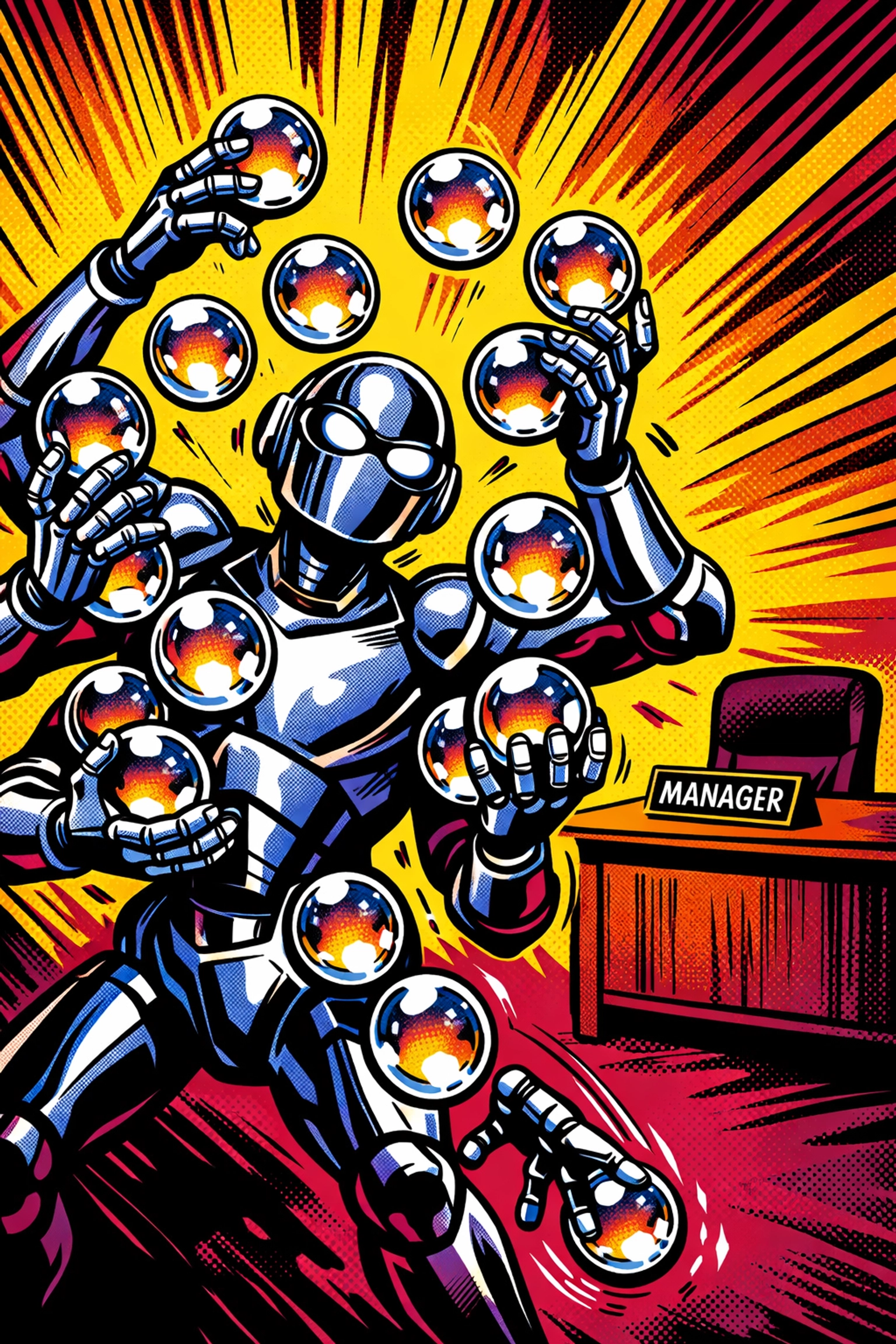
    A robot juggling tasks at an empty desk, showing the need for human review in AI business automation.


    2. FEEDING THE BEAST JUNK FOOD (AKA MESSY DATA)

    Your AI is only as smart as the spreadsheets you give it.

    The Problem: You’ve got six years of customer data. Some of it is in a Google Sheet, some is in a dusty CRM, and some is probably written on a napkin somewhere. This data has duplicates. It has outdated pricing. It has "John Smith" and "Jon Smith" as two different people.

    When you feed this messy, uncleaned data into AI forecasting tools, the AI gets confused. It sees a one-time fluke, like that huge sale you made during a solar eclipse, and thinks it’s a permanent trend. It produces distorted conclusions that make your strategy look like a fever dream.

    The Fix: Audit before you automate.

    • Clean it up: Delete the duplicates.
    • Set a window: Only let the AI look at the last 18–24 months.
    • Tag it: Manually tag weird events (like a pandemic or a massive one-off promotion) so the AI knows they aren't "normal."

    3. SHOUTING SECRETS IN A CROWDED ROOM

    11:30 AM. You’re trying to summarize a new client contract. You copy the whole thing, names, Social Security numbers, internal pricing, and all, and paste it into a free AI tool.

    The Problem: You just gave that data to the world.

    Many staff members don't realize that free AI platforms often retain data to "improve their models." You aren't just getting a summary; you're handing over your intellectual property and your clients' privacy.

    The Fix: Stop pasting sensitive info into public tools. Use vetted, secure business automation tools that offer data privacy guarantees. Review the terms of service. If the tool is "free," your data is usually the price of admission.


    4. THE "YES-MAN" SYNDROME: TRUSTING WITHOUT VERIFYING

    AI sounds confident. It doesn't use "maybe" or "I think." It gives you polished, professional-looking paragraphs that cite laws and policies with the authority of a Supreme Court justice.

    The Problem: AI is a world-class hallucinator. It predicts the next word, not the truth. It can confidently cite refund policies that don't exist or miscalculate a tax rate by 5%.

    If you trust AI output without verification, you’re betting your business on a machine that doesn't actually know what a "business" is.

    The Fix: Treat AI like a brilliant but slightly erratic intern. Fact-check everything.

    • Does that legal cite actually exist?
    • Is that math correct?
    • Did it actually pull the right pricing from the database?

    Verify before you implement. Every. Single. Time.

    Confused business owner watching a robot present false data, highlighting why to verify AI automation tools.


    5. THE "SHINY OBJECT" TRAP: AUTOMATION WITHOUT A MAP

    You bought the tool because you saw a TikTok about it. Or because your competitor is using it.

    The Problem: You’re automating things that don't need to be automated, while your actual bottlenecks are ignored. One startup automated their support and lost $100k because they didn't define what "success" looked like. They just wanted "AI."

    Without clear objectives, you spend more time fixing the automation than you would have spent doing the task manually.

    The Fix: Start with the pain.

    1. Identify the bottleneck: Where are you losing the most time?
    2. Set a metric: Do you want to reduce response time by 50%? Or increase lead conversion by 10%?
    3. Choose the tool: Pick the business automation tools that hit that specific goal.

    If you're looking for a roadmap that actually makes sense for your specific business, take a look at what we're doing over at Marblism. We focus on logic, not just buzzwords.


    6. THE CONTEXT COLLAPSE

    2:00 PM. Your AI-driven dashboard shows a 20% drop in sales. You panic. You start cutting costs.

    The Problem: The AI detected a pattern, but it didn't know your website was down for maintenance for six hours on Tuesday. Or that there was a national holiday.

    AI is great at correlations, but it struggles with context. It sees the "what" but rarely the "why." If you rely on AI to understand the nuances of your industry or the specific quirks of your customer base, you’re going to make decisions based on half-truths.

    The Fix: Use AI as a guide, not a pilot. Have an experienced human (you) review the insights. When the dashboard says something crazy, ask yourself: "What do I know that the machine doesn't?" Usually, the answer is "a lot."

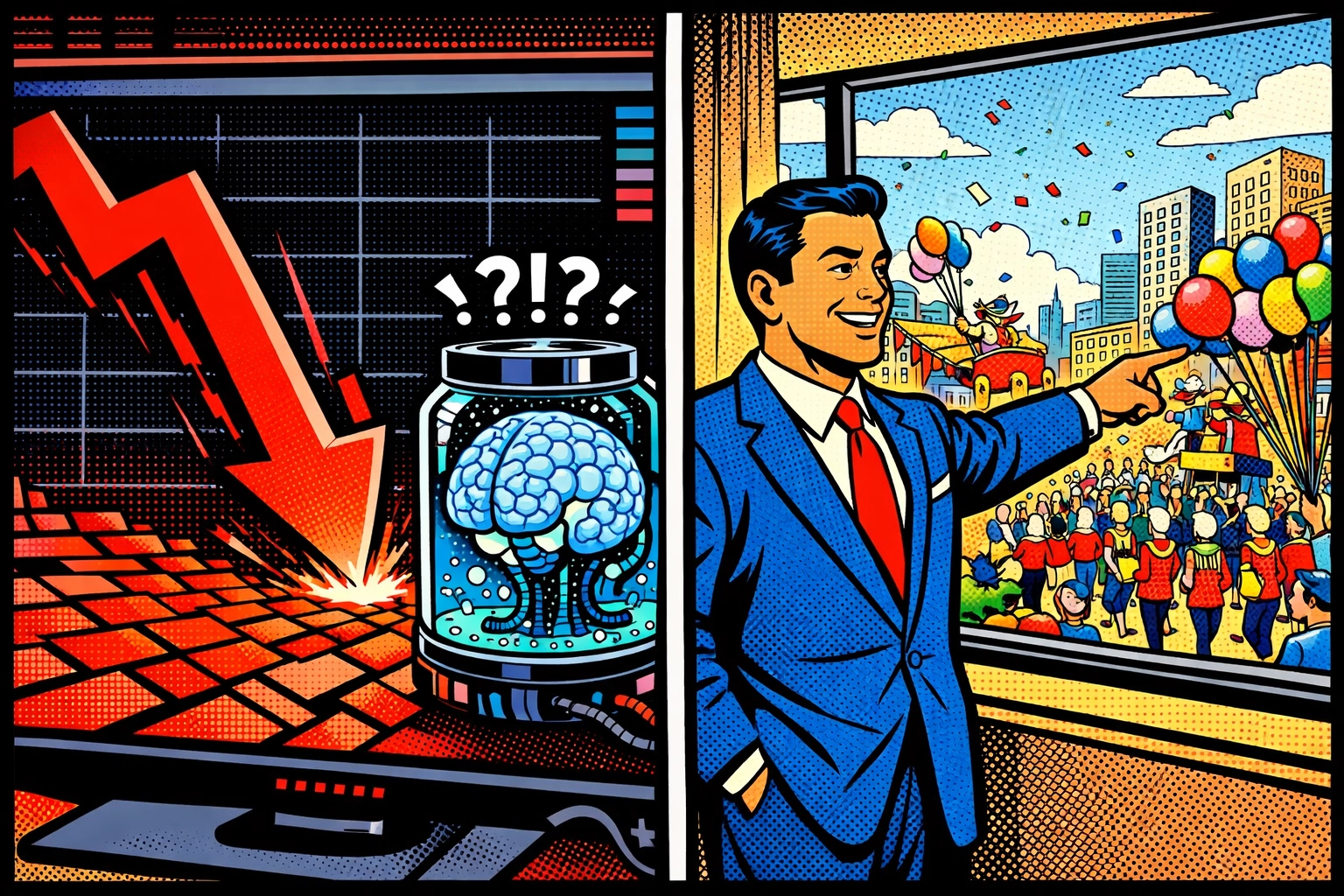
    A business owner seeing real-world context while an AI dashboard misses the story behind the data.


    7. ECHO CHAMBERS: ALLOWING BIAS IN THE CODE

    This one is sneaky. You don't think your business is biased, but your data might be.

    The Problem: If you use AI to screen job applicants or segment your "best" customers based on 10-year-old historical data, the AI will inherit the biases of the past. If you only hired one type of person in 2015, the AI will think that's the "ideal" candidate in 2026.

    This leads to missed opportunities, unfair practices, and, eventually, a PR nightmare.

    The Fix: Audit your models.

    • Review your training data for gaps.
    • Regularly check your AI’s "decisions" for fairness.
    • Ensure your automation isn't just reinforcing old mistakes at a faster speed.

    🌙 THE SUN SETS, THE SYSTEM STAYS ON

    6:00 PM. The lights are off in the office, but the servers are humming.

    Scaling shouldn’t be this hard. But here we are.

    AI business automation isn't about replacing your brain, it's about freeing it. When you avoid these seven mistakes, the chaos starts to fade. The "shiny objects" turn into actual assets. Your business starts to feel… organized.

    You aren't fighting the machine anymore. You're directing it.

    If you’re ready to stop guessing and start automating with purpose, you need a partner who understands the difference between a "feature" and a "solution." That’s where we come in.

    Stop juggling.

    Build a business that works while you’re winding down. Check out how Marblism can streamline your entire workflow without the headaches: https://marblism.link/scott-bowen.

    You just send a thumbs-up. We’ll handle the rest.


    FAQ: YOUR AI QUESTIONS, ANSWERED

    Q: Is AI actually safe for my small business data?
    A: Yes, but only if you use enterprise-grade tools with clear privacy policies. Avoid putting proprietary info into public "free" chat interfaces.

    Q: Do I need a developer to set up automation?
    A: Not necessarily. Many modern business automation tools are "low-code" or "no-code." However, having a strategic partner helps you avoid the "messy data" traps mentioned above.

    Q: How much time will I really save?
    A: If done right, users often see a 30-40% reduction in administrative tasks within the first month. The key is starting with one specific process rather than trying to automate everything at once.

    Q: Can AI replace my sales team?
    A: No. It can replace the drudgery of their job: like data entry and lead qualifying: so they can spend more time actually talking to people.

    Q: What if the AI makes a mistake?
    A: It will. That’s why the "Human-in-the-Loop" fix is mistake #1 for a reason. Always have a review process for anything high-stakes.


    Scaling is a choice. Make the right one.
    Explore Marblism Now

  • 25 Creative Coffee Sacks Ideas You’ve Never Thought Of

    25 Creative Coffee Sacks Ideas You’ve Never Thought Of

    We get through a staggering amount of coffee sacks here at Limini Coffee. Every time a shipment of green beans arrives from Brazil, Ethiopia, or Colombia, it comes wrapped in these beautiful, rugged, and incredibly textured jute bags. While the coffee inside is obviously the star of the show: and you can grab some of that freshly roasted goodness right here: it always feels like a bit of a crime to just toss the packaging aside.

    Jute (or burlap) is a fantastic material. It’s durable, breathable, and biodegradable. Plus, it has that rustic, industrial-chic vibe that fits perfectly in a modern home or a cosy café. So, what do you do with them once the beans are in the roaster?

    We’ve put our heads together to come up with 25 creative ways to upcycle those old coffee sacks. Whether you’re a DIY enthusiast or just looking for a fun weekend project, there’s something here for everyone.


    Home Decor & Soft Furnishings

    1. Rustic Cushion Covers
    This is probably the most popular use for old sacks, and for good reason. The bold typography and logos from the coffee farms look incredible on a sofa. Just remember, burlap can be a bit scratchy, so we recommend using the sack for the front and a softer cotton or linen for the back.

    2. An Upholstered Ottoman
    Got an old footstool that’s seen better days? Strip it back and wrap it in a clean coffee sack. It adds an instant industrial feel to your living room. It’s tough enough to handle feet being rested on it daily, though you might want to give it a good vacuum first!

    3. Framed Wall Art
    Some coffee sacks are genuine works of art. We’ve seen beautiful illustrations of birds, mountains, and intricate stamps. Simply cut out the best part of the design and pop it in a chunky wooden frame. It’s a cheap way to get a high-end look.

    4. A Statement Table Runner
    For a farmhouse-style dining table, nothing beats a jute runner. Cut a long strip, hem the edges (to prevent fraying, which burlap loves to do), and you’re done. It looks particularly great paired with white ceramic plates.

    5. Industrial Lampshades
    This one is a bit more "out there," but the way light filters through the loose weave of a coffee sack is stunning. You can wrap an existing wire lampshade frame in burlap for a warm, textured glow.

    Handcrafted lampshade made from a rustic jute coffee sack, creating a warm and textured glow.

    6. Draft Excluders
    Practical and stylish. Sew a long tube from the sack, fill it with sand or old fabric scraps, and place it at the base of a drafty door. It’s heavy, durable, and does the job perfectly.

    7. Cafe-Style Curtains
    If you have a small window in a pantry or a utility room, a simple "cafe curtain" made from a coffee sack adds privacy without blocking all the light. Use curtain clips to hang them for an effortless look.

    8. Heavy-Duty Storage Baskets
    By lining a coffee sack with a stiff interfacing or even just inserting a cardboard base, you can create upright baskets for toys, blankets, or even laundry. They look much better than plastic tubs!


    In the Garden

    9. Potato Grow Bags
    Because jute is breathable, it’s actually the perfect environment for growing potatoes. Fill the sack with soil, plant your tubers, and watch them thrive. When it’s time to harvest, the bag will likely be ready to compost anyway.

    10. Hanging Basket Liners
    Forget those expensive pre-cut liners. Cut a coffee sack to size and tuck it into your wire hanging baskets. It holds the soil in while allowing excellent drainage.

    11. Weed Suppressant Mats
    If you’re starting a new garden bed, lay down flattened coffee sacks before adding your mulch. They’ll block the weeds but allow water to reach the soil. Eventually, they’ll biodegrade and add organic matter back into the earth.

    12. Protective Winter Wrap
    Have some delicate plants that don’t like the frost? Wrap their pots or even their trunks in burlap sacks during the winter months. It’s like a little jumper for your garden.

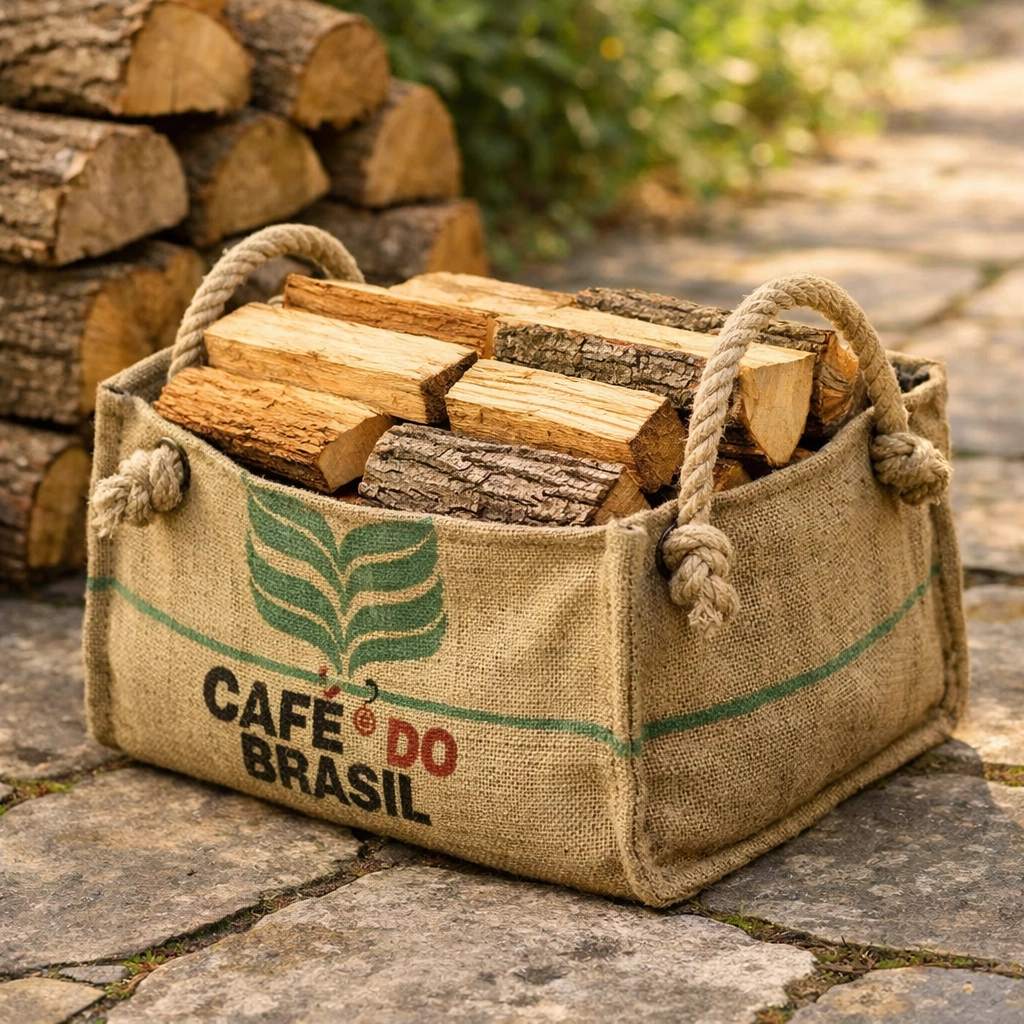
    13. Firewood Log Carrier
    Burlap is incredibly strong. You can fashion a simple log carrier by adding two sturdy handles to a thick strip of coffee sack. It makes bringing wood in for the fire much less of a mess.

    Heavy-duty firewood log carrier repurposed from a durable burlap coffee sack with rope handles.

    14. Composting "Blanket"
    If you have a compost bin, placing a damp coffee sack over the top helps retain heat and moisture, which speeds up the decomposition process. Plus, the worms love it.


    Lifestyle & Accessories

    15. The Ultimate Tote Bag
    This is a classic. A coffee sack tote bag is strong enough to carry your groceries, your laptop, or even your gym gear. We suggest lining these with a soft fabric so the jute doesn't snag your clothes. If you want to see what kind of coffee should go inside your bags, check out our latest roasts.

    16. Reusable Coffee Cup Cozy
    Stop using those cardboard sleeves at the coffee shop! A small scrap of coffee sack, a bit of elastic, and a button make a stylish, reusable cozy that protects your hands from the heat.

    17. Christmas Stockings
    For a "shabby chic" Christmas, sew some stockings out of old sacks. They look amazing hanging over a fireplace, especially when decorated with a bit of red ribbon or some holly.

    18. Wine Bottle Gift Bags
    Don’t buy those flimsy paper gift bags. A slim bag made from a coffee sack, tied with a bit of twine, makes a bottle of wine (or a bag of coffee!) feel like a much more thoughtful gift.

    19. A Barista Apron
    If you want to look the part while dialling in your espresso, a burlap apron is the way to go. You’ll definitely need to line this one, otherwise, it’ll be the itchiesthours of your life, but the aesthetic is unbeatable.

    20. Yoga Mat Carrier
    Roll up your mat and slide it into a custom-sewn coffee sack sleeve. It’s breathable (which is great for a post-hot-yoga mat) and looks much more unique than the standard nylon bags.


    For Pets & Fun

    21. A Durable Pet Bed
    If you have a dog that loves to dig or scratch at their bed, burlap is a great choice. Stuff a clean sack with old pillows or foam, sew it shut, and you’ve got a heavy-duty bed that can handle a bit of roughhousing.

    22. Cat Scratching Post
    Cats love the texture of jute. Wrap an old wooden post in a coffee sack and secure it tightly with non-toxic glue or staples. Your sofa will thank you.

    A DIY cat scratching post wrapped in a recycled coffee sack for an eco-friendly pet accessory.

    23. The Classic Sack Race
    Let’s not forget the simplest use of all! If you’re hosting a summer BBQ or a kid's birthday party, nothing beats an old-fashioned sack race. It’s harder than it looks, trust us.

    24. Party Bunting
    Cut the sacks into triangles, stencil some letters onto them (maybe "COFFEE" or "HAPPY BIRTHDAY"), and string them together with twine. It’s a great, sustainable decoration for any event.

    25. A Gardener’s Tool Roll
    Sew some pockets into a strip of coffee sack, and you have the perfect roll for your trowels, pruners, and seeds. It’s tough, it can get dirty, and it looks great hanging in the shed.


    A Few Tips Before You Start

    Before you go wild with the sewing machine, there are a few things we should mention about working with coffee sacks:

    • The Smell: Fresh sacks often smell like "green" coffee (which is quite earthy) or the jute itself. A good airing out or a gentle hand wash usually does the trick.
    • The Shedding: Jute sheds fibres like crazy when you cut it. We recommend working outside or in a garage if possible.
    • The Fraying: As soon as you cut burlap, it wants to fall apart. Use a zigzag stitch on your sewing machine or a bit of fabric glue on the edges to keep it together.

    At the end of the day, upcycling is all about having a bit of fun and being a little more sustainable. We love seeing our coffee go out to happy customers, but seeing the bags live a second life as a cushion or a potato patch is the icing on the cake.

    If you’ve enjoyed these ideas and want to try some of our speciality coffee for yourself, head over to our shop and see what’s currently in the roaster. Who knows? Your next bag might just become your next DIY project!

  • The Ultimate Guide to Boutique Hotel Management: Everything You Need to Succeed in 2026

    The Ultimate Guide to Boutique Hotel Management: Everything You Need to Succeed in 2026

    Define your vision. Design the experience. Deliver the unexpected.

    Managing a boutique hotel in 2026 isn't just about selling rooms; it’s about selling a feeling. The hospitality landscape has shifted from "standardized luxury" to "hyper-personalized authenticity." Guests no longer want a gold-plated lobby; they want a lobby that smells like local cedar, features art from the neighborhood, and knows their preferred espresso order before they even sit down.

    With the right strategy, boutique properties are currently outperforming the big chains. Properties using integrated, agile platforms are seeing a 35% increase in direct bookings and revenue. It’s about being smarter, not bigger: all from one innovative platform.

    The Soul of the Boutique: Brand and Design

    In the boutique world, your story is your strongest currency. If a guest walks into your hotel and feels like they could be in a Marriott in Des Moines or a Hilton in Hamburg, you’ve already lost.

    We believe that every design choice should tell a story. Whether your property is a converted 1920s post office or a minimalist eco-pod in the woods, the aesthetic must be intentional. In 2026, "Instagrammable" is the bare minimum; "meaningful" is the new goal.

    How to nail your identity:

    1. Source locally. Partner with neighborhood artisans for everything from the soap in the showers to the spirits in the mini-bar.
    2. Lean into the architecture. Don’t hide the "quirks" of your building. Those uneven floorboards or exposed bricks are the character guests are paying for.
    3. Be bold. Neutral beige is for airports. Boutique hotels should have a point of view.

    Boutique hotel guest room corner with a green velvet armchair and minimalist, locally-inspired interior design.

    Hyper-Personalization: The 2026 Guest Standard

    Data is the new concierge. In 2026, guests expect you to anticipate their needs without being creepy about it. This is where the intersection of AI and hospitality truly shines.

    Research shows that 89% of travelers say tailored service directly influences their brand loyalty. If your PMS (Property Management System) isn’t talking to your guest messaging app, you’re leaving money: and guest satisfaction: on the table.

    The three pillars of modern personalization:

    • Pre-arrival intelligence. Use data to know if they’re visiting for a quiet anniversary or a high-energy business trip.
    • Invisible tech. Digital check-in and smart room controls should work so seamlessly that the guest forgets the technology is even there.
    • Curated experiences. Stop offering generic city tours. Offer a "Secret Speakeasy Walk" or a "Morning Surf with a Local Pro."

    “Since we switched to a unified guest experience platform, our staff spends 10 hours less per week on paperwork and 10 hours more actually talking to guests,” says one boutique owner in London. That’s the transformation we’re talking about.

    The Tech Stack: Your Operational Engine

    If your back-office feels like a digital version of a messy desk, your guest experience will eventually feel messy too. Boutique management in 2026 requires a tech stack that is open, integrated, and cloud-native.

    Disconnected workflows are the silent killers of boutique hotels. We think the best technology is the kind that gets out of the way. When your booking engine, channel manager, and payment gateway live in harmony, you reclaim hundreds of hours annually.

    Why a modern PMS matters:

    • Real-time Housekeeping: Assign tasks and track room status on the fly. No more walkie-talkies or paper lists.
    • Automated Payments: Secure, instant, and frictionless.
    • Deep Analytics: Access 270+ pre-built reports to see exactly where your revenue is coming from.

    Hotels implementing these integrated systems see an average 20% increase in customer satisfaction. It turns out that when the front desk isn't staring at a glitchy screen, they can actually look the guest in the eye. You can see how Mews streamlines these operations to get you earning more revenue in no time.

    A sleek tablet on a marble concierge desk representing modern, integrated boutique hotel management software.

    Empowering Your Team: Culture-Driven Hiring

    You can have the most beautiful velvet sofa in the world, but if the person checking the guest in is miserable, the sofa doesn't matter. In a boutique environment, your staff are the brand.

    We believe in culture-driven hiring. You can teach someone how to use a PMS in 30 minutes, but you can’t teach them how to be genuinely curious about a guest’s day.

    Steps to build a 2026 dream team:

    1. Hire for empathy. Look for "hospitality DNA": people who get a kick out of making someone else’s day better.
    2. Give them autonomy. If a guest’s flight was delayed, empower your staff to send up a free glass of wine without asking for a manager’s permission.
    3. Use tech to prevent burnout. Automate the boring, repetitive tasks so your team can focus on the high-value human moments.

    Revenue Optimization: Beyond the Room Rate

    Boutique hotels often underperform because they rely on manual, "gut-feeling" pricing. In 2026, that’s a recipe for empty rooms.

    Smart boutique management uses revenue optimization tools that adjust rates dynamically based on real-time market trends. But it’s not just about the room. Think about "Total Revenue Per Available Room" (TRevPAR).

    Ways to boost TRevPAR:

    • Upsell meaningfully. Offer a late checkout or a breakfast add-on at the exact moment the guest is thinking about it.
    • Monetize your spaces. Can your lobby double as a co-working space for locals during the day?
    • Direct booking perks. Give guests a reason to book on your site: like a free welcome drink or a room upgrade: to avoid those hefty OTA commissions.

    Automation in revenue management saves roughly 4-6 hours of labor per property each week. That’s nearly an entire workday you get back.

    Multi-functional boutique hotel lobby with a workspace and coffee bar to optimize non-room revenue.

    Sustainability: Not a Trend, a Requirement

    In 2026, sustainability is no longer a "nice-to-have" section in your brochure. It’s a core operational requirement. Eco-conscious guests are actively filtering for hotels that take environmental responsibility seriously.

    But being green is also good for your bottom line. Energy-efficient systems, like motion-sensor lighting and smart thermostats, significantly reduce overhead costs.

    Green wins for boutique hotels:

    • Eliminate single-use plastics. High-end, refillable glass bottles are more "boutique" than plastic anyway.
    • Smart HVAC. Use integrated tech to turn down the heat or AC when the PMS shows the guest has checked out.
    • Local food loops. Source your kitchen ingredients from within a 50-mile radius to reduce your carbon footprint and support the community.

    The Future is Personal

    Boutique hotel management in 2026 is a balancing act. On one side, you have the need for radical efficiency and data-driven decisions. On the other, you have the human need for connection, storytelling, and "soul."

    The properties that will win are the ones that use technology to become more human, not less. By automating the mundane, you free up the space for the magic: the unexpected gift, the perfectly timed recommendation, the feeling of being truly seen.

    Success is about moving fast, staying agile, and keeping the guest at the center of every single decision.

    Ready to see what a modern, innovative platform can do for your property? It’s time to move away from legacy systems and into the future of hospitality.

    Schedule a 30-minute chat to see the platform in action.

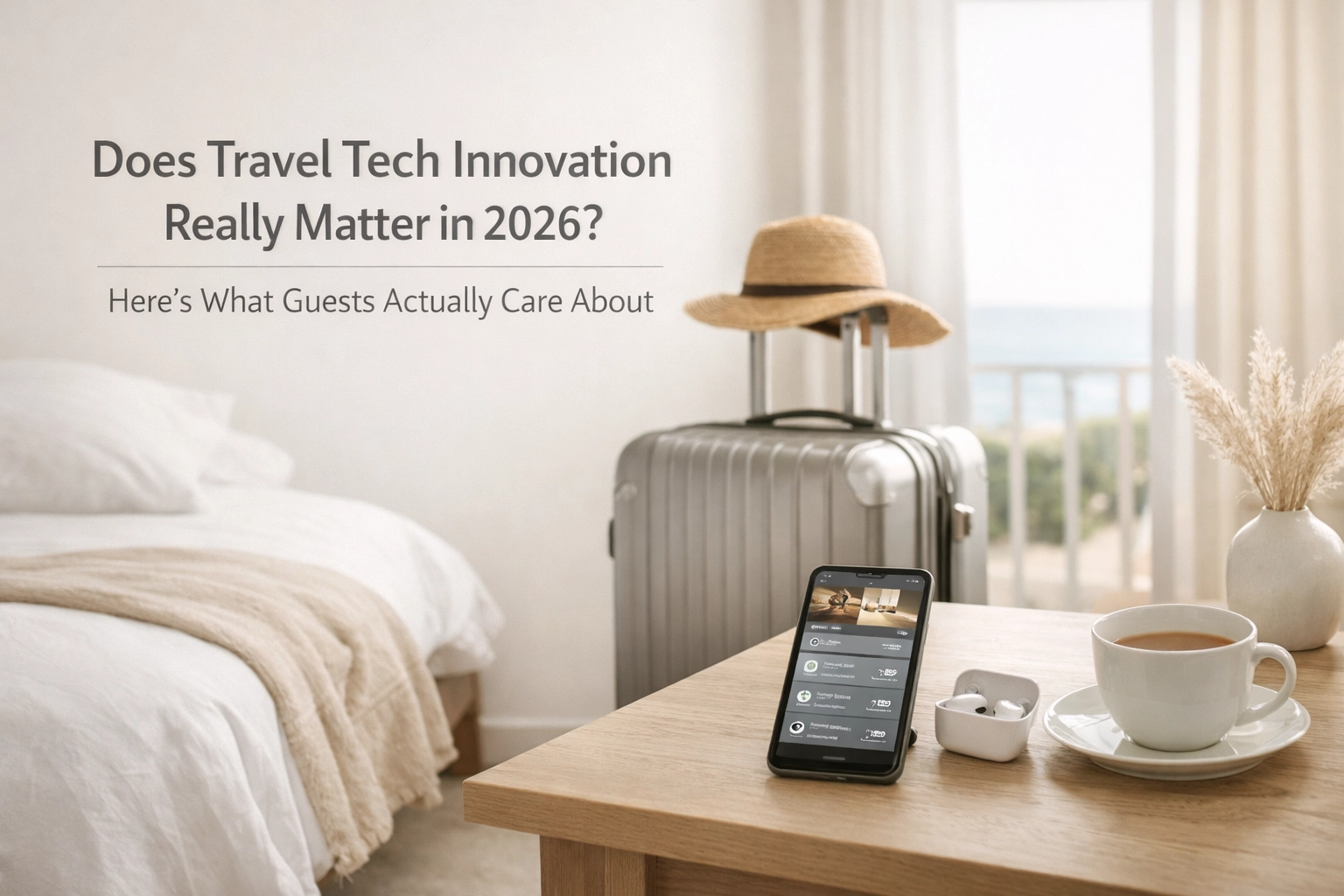
  • Does Travel Tech Innovation Really Matter in 2026? Here’s What Guests Actually Care About

    Does Travel Tech Innovation Really Matter in 2026? Here’s What Guests Actually Care About

    Stop chasing features. Start delivering outcomes. Build lasting loyalty.

    It’s Monday, March 9, 2026. If you walk into a hotel lobby today, you shouldn't see a line. You shouldn't see a guest fumbling with a printed confirmation email. And you definitely shouldn't see a receptionist hidden behind a massive monitor, typing furiously while ignoring the human being in front of them.

    For years, we talked about "digital transformation" as if it were a distant destination. Well, we’ve arrived. But as the dust settles on the mid-2020s tech boom, a spicy question remains: Does all this innovation actually matter to the person paying for the room? Or have we just spent a decade overcomplicating the simple act of hospitality?

    The short answer: Innovation matters more than ever. But not the kind you can see.

    In 2026, guests don't care about your tech stack. They care about how your tech stack makes them feel. They want the magic, not the machinery.

    The 2026 Reality Check: Adoption is No Longer Optional

    Remember back in 2022 when using AI to plan a trip felt like a sci-fi experiment? Those days are gone. By late 2025, nearly a quarter of all travelers were already using generative AI tools to build their itineraries. We’re not just talking about Gen Z or the Silicon Valley elite. Adoption has surged across every age group.

    Guests are now walking into your lobby (or, more likely, bypassing it) with an entirely new set of baseline expectations. They’ve spent the last two years using AI to check prices, hunt for hidden gems, and build 14-day itineraries in roughly six seconds.

    If your hotel’s primary "tech" is still a clunky PMS that requires a physical credit card swipe and a 10-minute manual check-in process, you aren't just old-school. You’re an obstacle.

    Relaxed traveler using a smartphone in a modern hotel lounge, showcasing a seamless guest experience.

    What Guests Actually Prioritize (Hint: It’s Not a Robot Butler)

    We’ve seen the headlines about robot concierges and VR room tours. They make for great PR, but they don't drive RevPAR. In 2026, guest satisfaction is built on four very specific pillars:

    1. Frictionless Outcomes

    Guests don't wake up wanting to use a "mobile check-in feature." They wake up wanting to be in their room. Innovation matters when it removes the "stuff" between the guest and their vacation. This means biometric sensors that recognize a guest and unlock their door automatically. It means payments that happen in the background without a single "terminal" in sight.

    2. Radical Personalization

    "Welcome back, Mr. Smith" is the bare minimum. In 2026, guests expect you to know that they prefer a room away from the elevator, a firm pillow, and a bottle of sparkling water waiting at 6:00 PM because that’s their routine. AI-powered platforms now anticipate these needs before the guest even says a word.

    3. Real-Time Everything

    We live in an era of instant gratification. If a guest messages your staff to ask for extra towels, they don't want a "we’ll get back to you" reply. They want a notification that the towels are already en route. They want dynamic pricing that reflects their loyalty and contextual recommendations that change based on the weather outside their window.

    4. Predictive Care

    The best service is the one the guest never had to ask for. Modern travel tech identifies problems before they impact the trip. If the AC in room 304 is showing a slight power fluctuation, the system should flag it for maintenance before the guest even notices the room is a degree too warm.

    The Invisible Tech Paradox

    We believe the best technology is invisible.

    When you look at the industry leaders today, they aren't bragging about their "smart rooms." They’re bragging about their guest satisfaction scores. Why? Because their technology handles the logistics, letting the humans focus on the hospitality.

    Guest using a digital key on a smartphone to unlock a smart hotel room door seamlessly.

    Think about the last time you had a truly great hotel stay. Was it great because the property had a high-end PMS? Probably not. It was great because the staff had the time to look you in the eye. It was great because your room was ready early. It was great because the "boring stuff" was handled.

    That’s what we do at Mews. We provide the engine that makes the "invisible" possible. We think the tech should be the silent partner that empowers your team to be more human.

    Operational Excellence: The Secret Sauce

    The real competitive advantage in 2026 isn't just having AI; it’s how deeply that AI is integrated into your daily workflows.

    If your staff is still manually reconciling guest folios or cross-referencing spreadsheets to see which rooms are clean, you’re losing. Operational excellence isn't just a buzzword; it’s the difference between a property that scales and one that stagnates.

    When you automate the repetitive, soul-crushing tasks, something beautiful happens. Your turnover rates drop. Your staff engagement goes up. And your guests feel the difference in the vibe of the property.

    • Automate the mundane. Let the software handle the billing, the identity verification, and the room assignments.
    • Empower the team. Give your staff mobile tools so they can manage the floor from anywhere, not just behind a desk.
    • Scale the experience. Use data to replicate "boutique-level" service across 500 rooms.

    If you’re ready to see how a modern, innovative platform can transform your operations, you can get started with Mews today and start earning more revenue while doing less manual work.

    Hotel staff using a mobile PMS on a tablet to provide personalized guest service in a modern lobby.

    The Human Element in a Digital World

    There’s a common fear that more tech means less soul. We believe the opposite is true.

    In 2026, the hotels that are winning are the ones using tech to buy back time for their people. When the "check-in" takes zero seconds, that receptionist can now be a local guide. They can offer a glass of water. They can ask how the flight was.

    Technology handles the logistics and personalization automatically, letting you focus on the experience itself.

    It’s about moving from a "transactional" relationship to a "transformational" one. A guest who feels seen, heard, and cared for is a guest who returns. A guest who has to wait 20 minutes to prove who they are is a guest who writes a scathing review on their way to the elevator.

    Why Mews is the Heart of the 2026 Hotel

    We don't just build software. We build the future of hospitality.

    With over 12,500 properties worldwide using our platform, we’ve seen firsthand how the right tech stack changes the game. Our goal is to make your property the smartest, most efficient version of itself.

    We believe in:

    • Open ecosystems. Your PMS should talk to everything else you use. No more silos.
    • Mobile-first design. If it doesn't work on a phone, it doesn't work in 2026.
    • User-centricity. Software shouldn't require a 40-hour training manual. It should be as intuitive as the apps your team uses at home.

    Minimalist hotel corridor architecture representing a fluid and innovative guest journey in 2026.

    Final Thoughts: The Path Forward

    Does travel tech innovation matter in 2026? Yes. But only if it serves the guest.

    The industry is moving toward a model where the "hotel" is just one part of a larger, seamless journey. The winners will be those who embrace AI integration not as a "cool feature," but as a fundamental shift in how they do business.

    Don't let your technology be the reason a guest chooses your competitor. Embrace the shift toward frictionless, personalized, and predictive hospitality.

    Simplify your logistics. Amplify your guest experience. Grow your revenue.

    All from one innovative platform.
    Ready to lead the pack? Explore what Mews can do for your property and let’s make 2026 your most successful year yet.

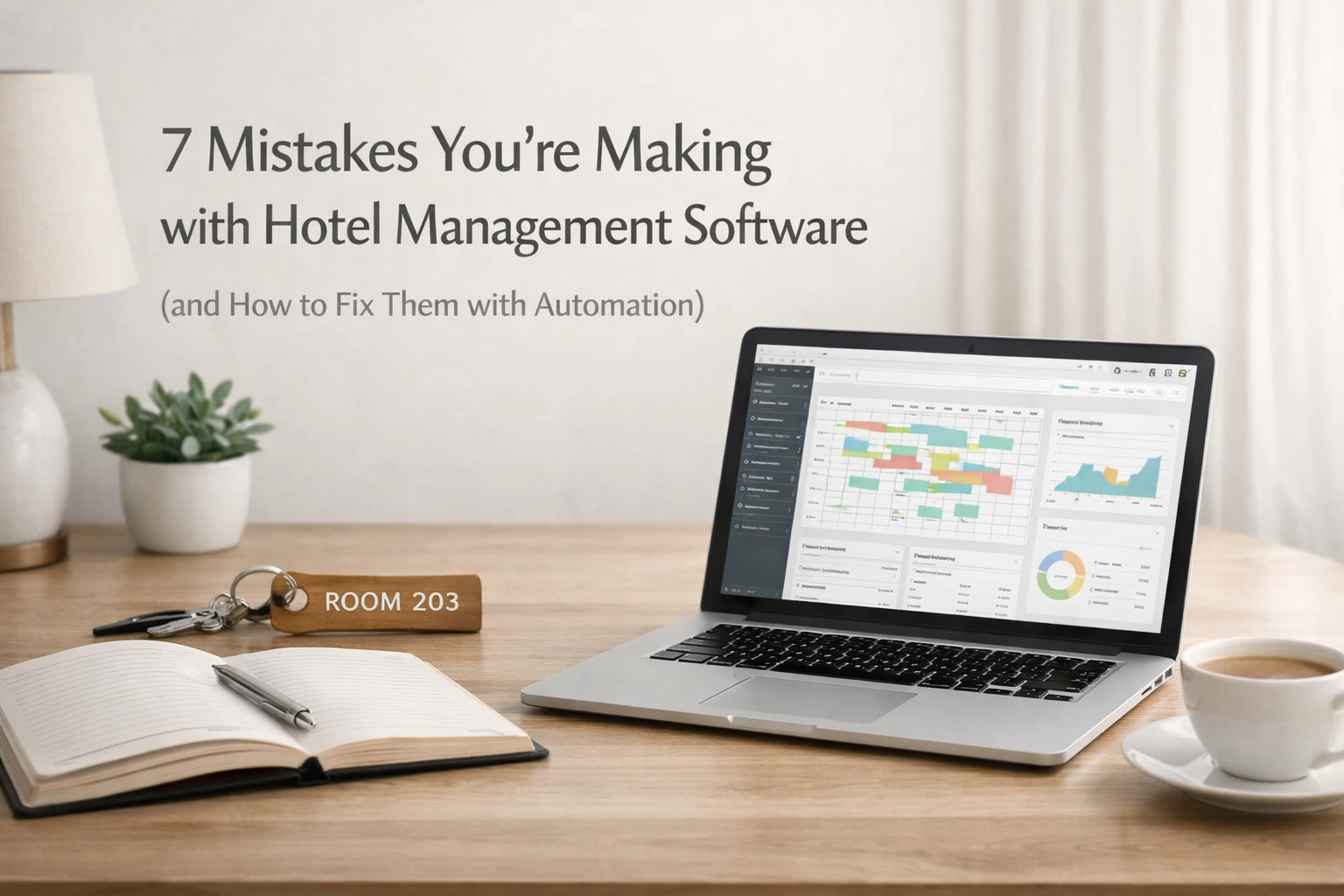
  • 7 Mistakes You’re Making with Hotel Management Software (and How to Fix Them with Automation)

    7 Mistakes You’re Making with Hotel Management Software (and How to Fix Them with Automation)

    Automate operations. Delight guests. Grow revenue.

    Running a modern hotel shouldn't feel like fighting a legacy system. Yet, many hoteliers find themselves bogged down by manual tasks that their software was supposed to solve. We see it often: brilliant properties held back by outdated processes. When your hotel PMS doesn’t talk to your booking engine, or your channel manager requires constant babysitting, you aren't just losing time: you’re losing money.

    The transition from "managing" to "innovating" happens when you embrace a cloud-native platform. Properties that switch to Mews see a 143% increase in direct booking value and save hours of manual work every single day. All from one intuitive platform.


    Modern hotel reception desk with a tablet highlighting efficient cloud-native hotel PMS automation.

    1. The Trap of Manual Overrides

    We believe in the power of the algorithm. Many independent hoteliers fall into the habit of manually overriding pricing and availability. It feels like control, but it's actually chaos. Every time you manually tweak a rate in your channel manager, you risk creating inconsistencies across your distribution network. These errors ripple outward, leading to rate parity issues and frustrated guests.

    Why it matters
    Manual overrides create a fragmented source of truth. If your system can't trust its own data, neither can you.

    The Fix: Automated Logic

    • Define your rules once.
    • Let the system apply them globally.
    • Trust the data to drive your strategy.

    "We used to spend three hours a day just checking rate consistency. Now, the automation handles it, and we focus on the guests in front of us."

    2. Leaving the Engine Half-Built

    Configuration isn't a "one and done" task. A common mistake is failing to fully personalize your software during onboarding. If you leave critical settings like competitor weights, minimum rates, or guest preferences in your CRM blank, your automation tools are essentially flying blind. You wouldn't drive a car with half an engine: don't run your hotel that way.

    Why it matters
    Incomplete data leads to inaccurate recommendations. Your revenue management depends on the quality of your setup.

    The Fix: Deep Configuration

    • Audit your settings quarterly.
    • Ensure your CRM captures guest DNA.
    • Map every possible revenue stream.

    3. Confusing Room Logic

    If your room types and rate plans are a mess of inconsistent naming conventions, your automation will stutter. When your hotel PMS sees "Deluxe King" and your booking engine sees "King Deluxe Room," the logic breaks. This leads to overselling specific room types while others sit empty.

    Why it matters
    Consistency is the language of automation. Without it, your software can't optimize your inventory effectively.

    The Fix: Standardized Mapping

    • Use clean, simple naming conventions.
    • Synchronize your PMS and booking engine perfectly.
    • Remove redundant rate codes that clutter the system.

    Minimalist hotel suite showing the order achieved through synchronized booking engine and PMS mapping.

    4. The "Frankenstein" Tech Stack

    Using separate, disconnected tools is the fastest way to burn out your team. When your CRM doesn't talk to your self-check-in kiosks, or your payment gateway is an island, your staff becomes the "glue" that holds the data together. Manual data entry is the enemy of hospitality. It’s time to move toward a unified ecosystem.

    Why it matters
    Disconnected systems create blind spots. You can’t provide a personalized experience if your guest data is trapped in three different silos.

    The Fix: Integrated Platforms

    • Prioritize API-first solutions.
    • Connect your booking engine directly to your PMS.
    • Automate the flow of guest data from booking to check-out.

    "Since we integrated our payments and PMS, our front desk errors have dropped to nearly zero. It's a game changer."

    5. "Set and Forget" Distribution

    Your channel manager is a powerful tool, but it isn't a magic wand. Many hotels activate their channels and then never look back. They fail to apply length-of-stay restrictions or adjust availability based on demand shifts. This results in high-commission channels eating your margins while your direct booking engine sits quiet.

    Why it matters
    Passive distribution is expensive. You need to actively steer your inventory to the most profitable channels.

    The Fix: Dynamic Distribution Rules

    • Set automated triggers for high-demand periods.
    • Incentivize direct bookings through your own engine.
    • Use your CRM to retarget past guests with exclusive offers.

    Modern hotel lobby featuring a self-check-in kiosk and a guest using mobile hospitality technology.

    6. Reacting Instead of Predicting

    If you’re waiting for a guest complaint to realize your pricing was off or a room was double-booked, you’re too late. Real-time visibility is the difference between a crisis and a smooth shift. Legacy systems often have a lag, meaning the data you see on your dashboard is already "old news."

    Why it matters
    In the digital age, minutes matter. A delay in closing a channel can lead to an overbooking disaster in seconds.

    The Fix: Real-Time Intelligence

    • Use cloud-native software for instant updates.
    • Monitor live dashboards for immediate insights.
    • Get notifications before issues become problems.

    7. Underestimating the Human Element

    The best automation in the world fails if your team doesn't know how to use it. We think technology should empower people, not replace them. When staff aren't trained on new features: like how to manage self-check-in kiosks or pull reports from the CRM: they revert to manual workarounds. This creates a cycle of inefficiency that costs you the ROI on your software investment.

    Why it matters
    Software is only as good as its adoption. An empowered team is your best asset.

    The Fix: Continuous Learning

    • Implement 30-minute weekly "feature spotlights."
    • Encourage staff to explore automation shortcuts.
    • Shift the focus from "admin" to "experience."

    Hotel employee using a tablet to enhance guest experience through modern hotel management software.

    The Path Forward: Automation as a Standard

    We believe that hospitality is about people. By removing the friction of manual tasks, you allow your team to do what they do best: care for guests. Mews was built to handle the heavy lifting, from automated billing to seamless integrations with the world's best hospitality tech.

    See how Mews can transform your property. Schedule a demo and get you earning more revenue in no time.

    Ready to stop managing and start growing? Check out how Mews can help here: https://referrals.mews.com/umqHYIto

    The Mews Impact by the Numbers:

    • 12,500+ properties powered globally.
    • 70% reduction in check-in times with self-check-in kiosks.
    • 24/7 cloud-native reliability.

    It’s time to leave the mistakes of the past behind. Embrace a platform designed for the future of hospitality. Easy to use. Automation-focused. Built for you.

    Guest on a hotel balcony overlooking a city skyline, representing the freedom of automated operations.

    Simple Steps to Start Today

    1. Audit your integrations. See where data is being entered twice.
    2. Review your room types. Clean up the naming across all channels.
    3. Automate one task. Start with automated guest emails or payment processing.

    The future of hotel management isn't just about software; it’s about freedom. Freedom from the front desk. Freedom from manual spreadsheets. Freedom to focus on the guest experience. That’s the Mews way.

    Explore the Mews platform today: https://referrals.mews.com/umqHYIto

  • Direct Bookings vs. OTAs: The Battle for Your Bottom Line

    Direct Bookings vs. OTAs: The Battle for Your Bottom Line

    Keep More Revenue. Build Better Relationships. Win the Long Game.

    Here's the thing about OTAs, they're expensive roommates you didn't really want but needed to fill the house. Sure, Booking.com and Expedia bring guests to your door. But they're taking 15% to 30% of every booking as their cut. That's not a commission. That's a chunk of your profit margin walking out the door.

    Direct bookings change the equation entirely. You keep 100% of the revenue. You own the guest relationship. You control the experience from search to checkout.

    The question isn't whether OTAs have value. They do. The question is: how do you shift the balance so you're not hemorrhaging profit to third-party platforms?

    The Real Cost of OTA Dependence

    Let's run the numbers. Say you've got a 100-room property with an average nightly rate of £150. If 60% of your bookings come through OTAs at a 20% commission rate, you're paying around £657,000 annually in commissions alone.

    That's money that could fund staff training. Upgrade your property. Invest in guest experience. Or, you know, actually improve your bottom line.

    Hotel reception desk displaying booking analytics showing reduced OTA commission costs

    But the financial hit isn't even the full story. When guests book through OTAs, you lose something more valuable than commission fees, you lose data. You don't own the email address. You can't build a direct relationship. You can't bring them back without going through the same expensive platform again.

    Every OTA booking is a one-time transaction. Every direct booking is the start of a relationship.

    Why Guests Book Direct (When You Make It Easy)

    Guests don't wake up dreaming of booking through Expedia. They use OTAs because it's convenient. They trust the platform. And honestly, they often don't know there's a better option.

    Here's what guests actually want:

    • Better rates (which you can offer when you're not paying 20% commissions)
    • Flexibility with cancellations and changes
    • A direct line to your team when something goes wrong
    • Rewards and recognition for loyalty

    The Mews Booking Engine delivers all of this. It's fast, mobile-optimized, and makes the booking process as smooth as any major OTA. But here's the difference, your guests get better rates, you get better margins, and everyone wins.

    We've seen properties reduce OTA dependency from 70% down to 40% within a year. That's a massive shift in profit retention.

    Building a Direct Booking Strategy That Actually Works

    You're not going to eliminate OTA bookings overnight. And honestly, you shouldn't try. What you want is balance, use OTAs for exposure and new guest acquisition, but convert those guests into direct bookers for future stays.

    Here's how properties are doing it successfully:

    1. Make your booking engine irresistible. If your website looks like it was built in 2012 and the booking flow requires seventeen clicks, guests will bounce to Booking.com. The Mews Booking Engine is clean, fast, and integrated directly into your property management system. No clunky third-party widgets. No redirects to different domains. Just a seamless experience that feels as polished as any OTA.
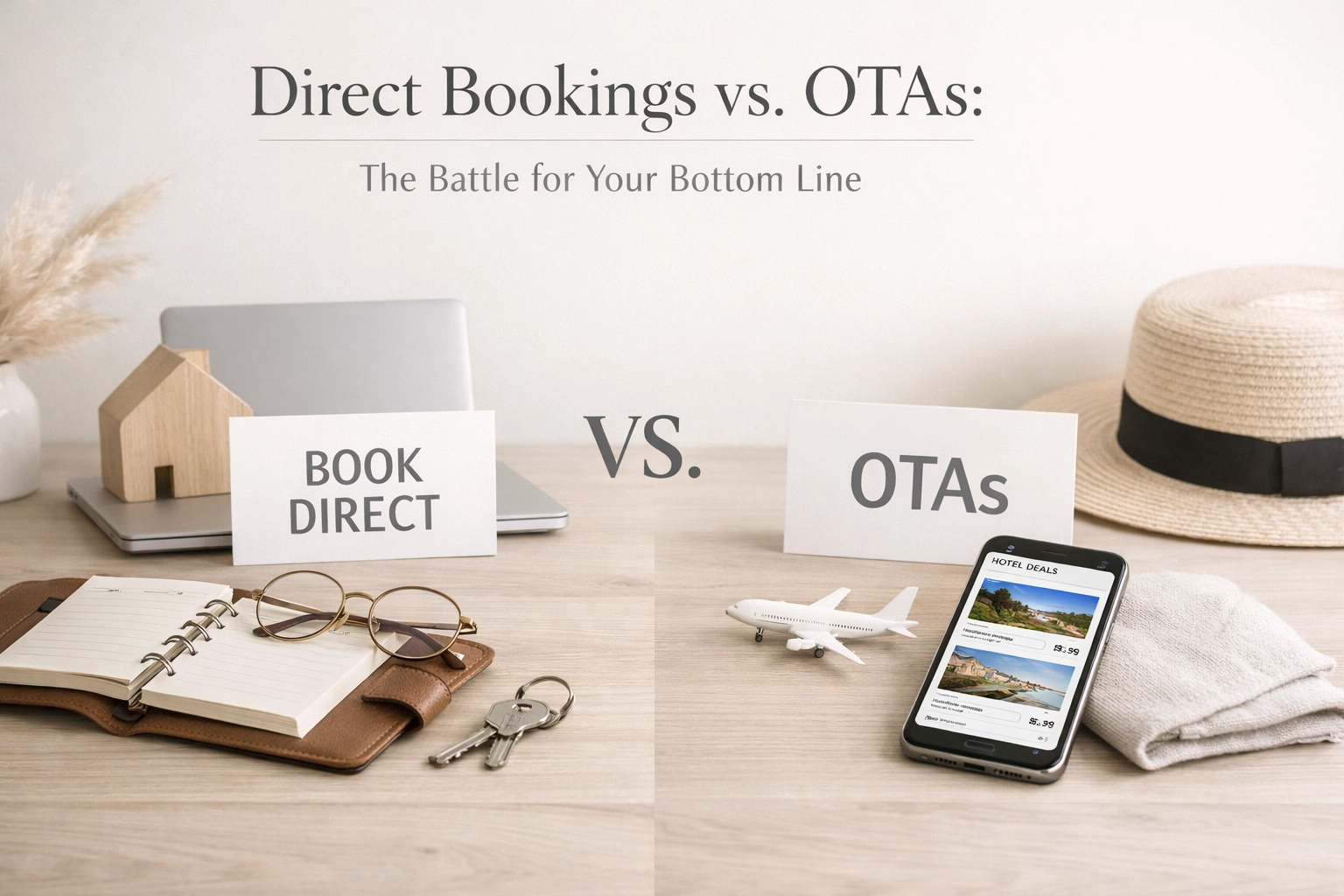
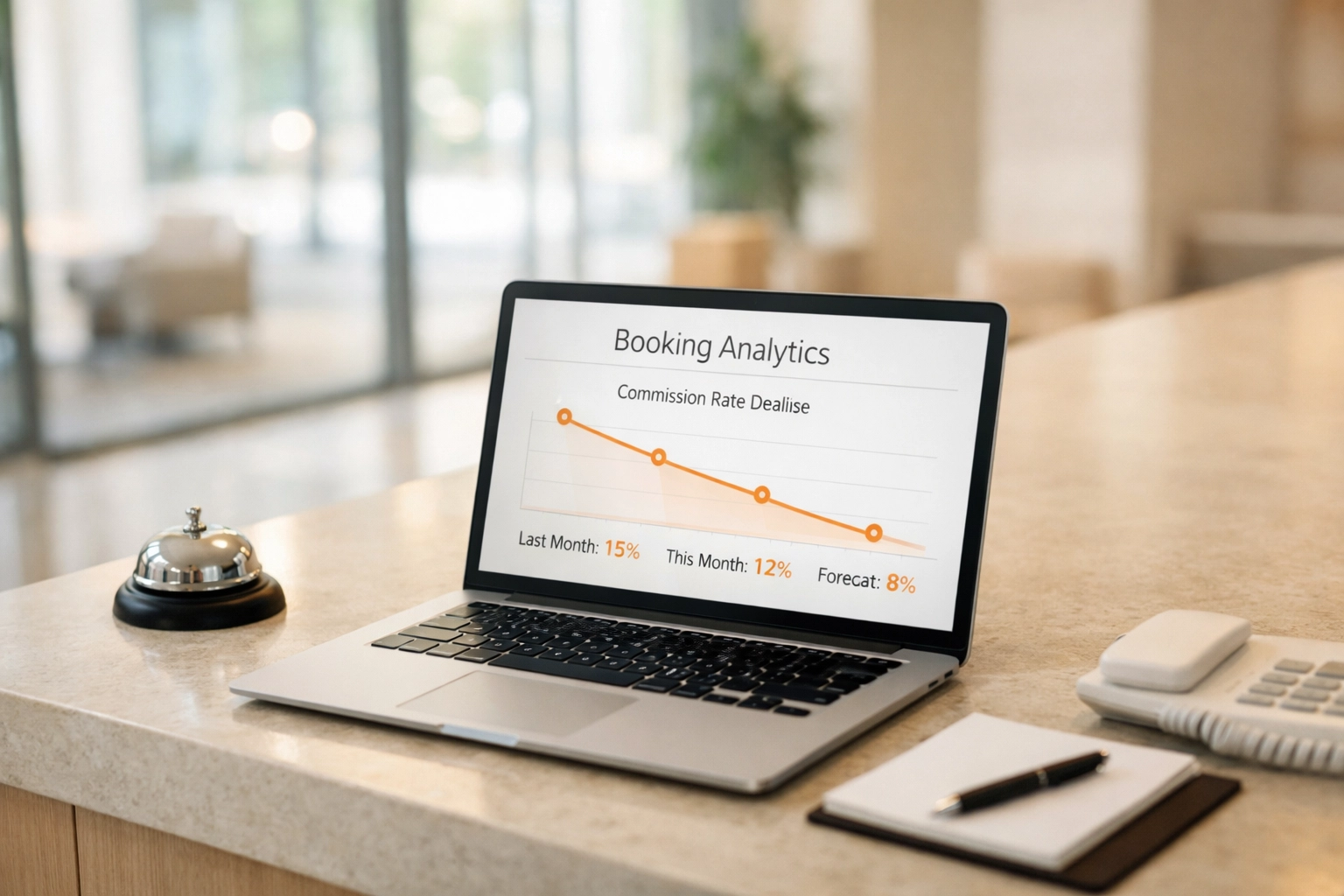
    2. Offer direct-only perks. Free breakfast. Late checkout. Room upgrades. Loyalty points. Whatever makes sense for your property. Give guests a reason to skip the OTA and book with you directly. You can afford to because you're not paying commission fees.

    Hotel revenue comparison: OTA commission fees versus reinvestment in property upgrades

    3. Capture guest data and nurture the relationship. Every direct booking gives you an email address and booking preferences. Use that data. Send personalized offers for return visits. Build loyalty programs. Create VIP tiers. Turn one-time guests into regulars.

    4. Retarget OTA bookers post-stay. Someone booked through Expedia? Fine. After checkout, invite them to sign up for your loyalty program. Offer them a discount code for their next direct booking. You paid the commission once, don't pay it again.

    5. Invest in your own visibility. Yes, OTAs have massive reach. But Google Hotel Ads, metasearch campaigns, and a strong SEO strategy can drive traffic directly to your site. The Mews ecosystem integrates with these channels so you can compete on visibility without paying OTA commission rates.

    The Technology That Makes It Possible

    A solid direct booking strategy needs solid technology. The Mews Booking Engine isn't just a pretty interface: it's built to convert.

    Speed matters. Pages load in under two seconds. That alone improves conversion rates by up to 30%.

    Mobile optimization matters. Over 60% of hotel searches happen on mobile devices. If your booking flow isn't mobile-first, you're losing bookings.

    Real-time availability matters. Nothing kills conversion faster than showing rooms that aren't actually available. Mews syncs inventory across all channels in real-time, so guests always see accurate availability.

    Mobile hotel booking engine interface on smartphone and tablet showing seamless booking

    Flexibility matters. Dynamic pricing. Package deals. Add-on services. Length-of-stay discounts. You can configure offers that make sense for your property and your guests without needing a developer every time you want to run a promotion.

    And because it's all integrated with your PMS, there's no double-entry. No manual syncing. No room for error. A booking comes through, and it's immediately reflected across your entire system.

    Real Impact on Real Properties

    Here's what the shift to direct bookings looks like in practice. A boutique hotel in Brighton was running 65% OTA bookings. Their average commission rate was 18%. After implementing Mews and focusing on their direct channel, they shifted to 45% OTA bookings within 18 months.

    The math: they went from paying £156,000 annually in commissions to £98,000. That's £58,000 back in their pocket. Every year. Without increasing occupancy or raising rates.

    A property group managing six hotels reduced their OTA dependency by offering exclusive packages only available through direct bookings. Weekend getaways with spa credits. Business traveler perks with flexible check-in. Family packages with kids-stay-free deals. They couldn't offer these through OTAs without eating into already-thin margins. Direct bookings made it profitable.

    OTAs Aren't the Enemy: Dependency Is

    Look, OTAs serve a purpose. They're great for discovery. They fill gaps in your calendar. They bring international travelers who would never find you otherwise.

    The problem is over-reliance. When 70% or 80% of your bookings come through third-party platforms, you've essentially outsourced your distribution: and your profit margins: to companies that don't care about your bottom line.

    Personalized hotel welcome amenities for direct booking guests on white bedding

    The goal is balance. Use OTAs for what they're good at: reach and exposure. But build your direct channel so you own the guest relationship and keep the profit.

    That's where technology like Mews makes the difference. It's not about choosing one or the other. It's about having the tools to compete effectively across all channels while prioritizing the one that actually benefits your business.

    Take Control of Your Revenue

    Every property is leaving money on the table by not optimizing their direct booking channel. Whether that's 5% or 25% of your revenue depends on how far behind your current setup is.

    The fix isn't complicated. It's a combination of better technology, smarter marketing, and a commitment to treating direct bookers like the VIPs they are.

    Ready to see what's possible when you shift the balance? Check out how Mews can help you build a direct booking engine that actually converts at https://referrals.mews.com/umqHYIto.

    Because at the end of the day, this isn't just about technology or commission rates. It's about taking control of your revenue, building real relationships with your guests, and keeping more of what you earn.

    That's a battle worth fighting.