Category: Category 1

Use this description to tell users what kind of blog posts they can find in this category.

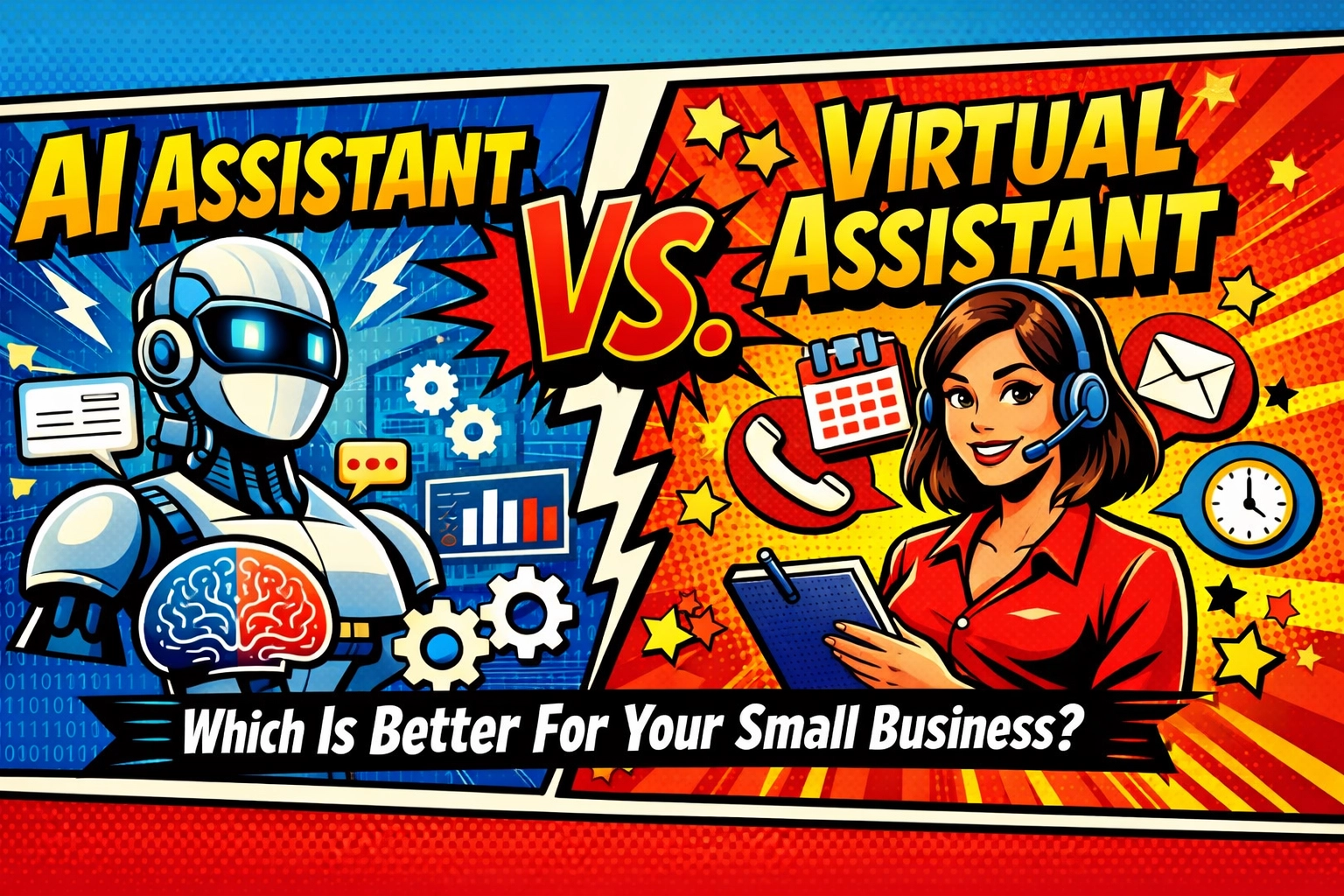
  • AI Assistant Vs. Virtual Assistant: Which Is Better For Your Small Business?

    AI Assistant Vs. Virtual Assistant: Which Is Better For Your Small Business?

    ☕ 6:00 AM.

    Your eyes fly open before the alarm even hits its stride. You don't reach for your water. You reach for your phone.

    The screen glows with the weight of a thousand tiny obligations. 42 unread emails. Three "urgent" Slack pings. A LinkedIn notification from a lead you forgot to follow up with three days ago.

    You haven't even brushed your teeth, and you’re already behind.

    You know you need help. You’ve known it for months. But the crossroads feels paralyzing. Do you hire a Virtual Assistant (VA), a real person who can think and feel, or do you lean into the future and "hire" an AI Assistant?

    It’s the classic small business showdown. Speed vs. Soul. Scaling vs. Salary.

    Let’s look at how your day changes depending on which door you open.

    A DAY IN THE LIFE: THE TALE OF TWO ASSISTANTS

    7:00 AM , The Morning Filter

    Without help, you’re wading through spam and "quick questions" for an hour.

    With a Virtual Assistant, your inbox is cleaner. They’ve flagged the bills and deleted the junk. But they started work at 9:00 AM in their timezone, so the stuff that came in overnight is still sitting there waiting for them to wake up.

    With an AI Assistant, the work happened while you were dreaming. It categorized every email, drafted three replies based on your past tone, and updated your CRM before the sun came up.

    It’s quiet… organized… ready.

    11:00 AM , The Lead Chase

    You just got a "Contact Us" ping from a high-value lead.

    Your VA sees it, but they’re currently in a Zoom meeting with another client or taking their scheduled lunch break. They’ll get to it in 45 minutes. By then, the lead has already clicked on your competitor’s site.

    Your AI Assistant responds in 1.4 seconds. It asks the lead three qualifying questions, books a meeting on your calendar, and sends them a PDF of your pricing.

    The lead is impressed. You haven't even finished your second coffee.
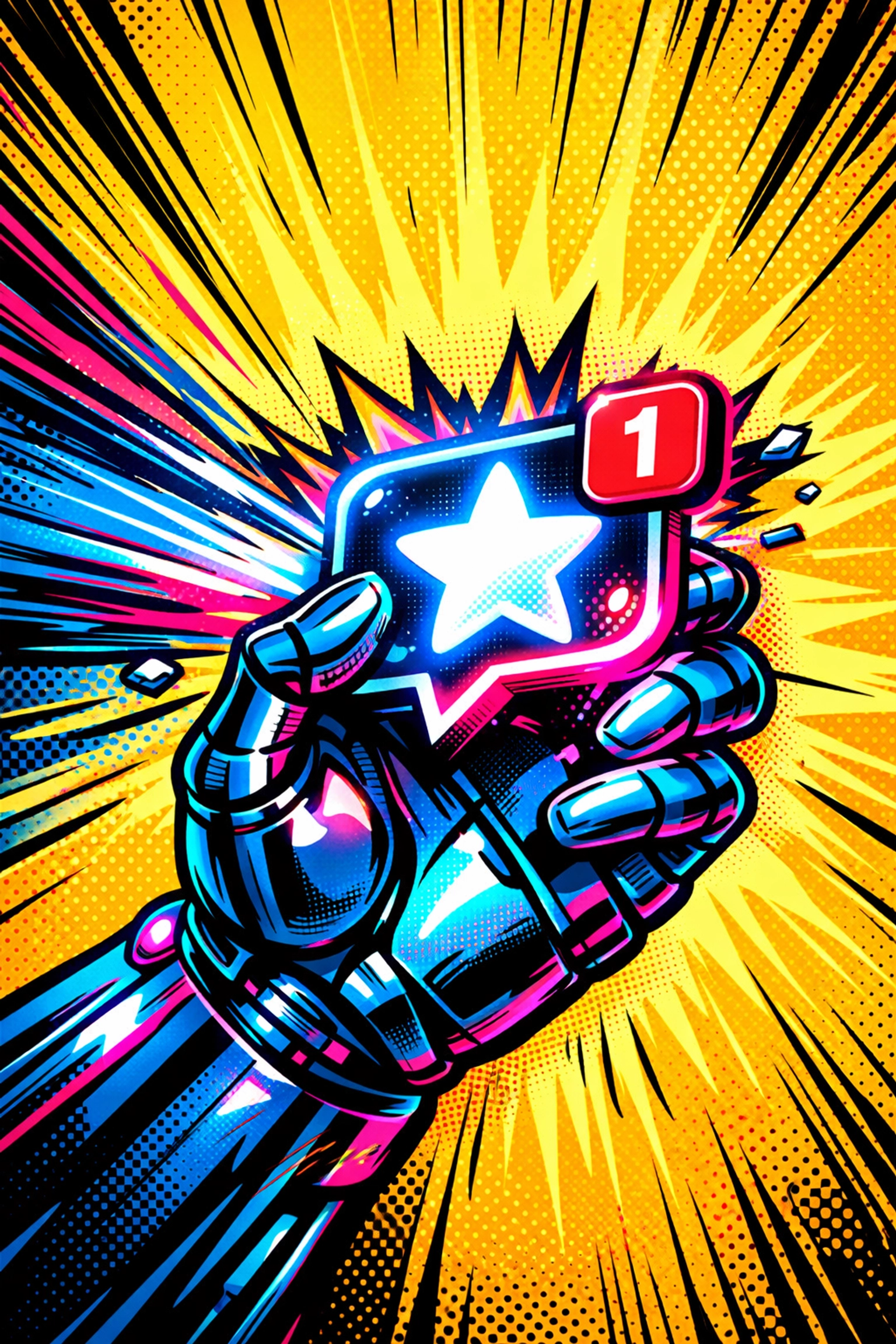
    Robotic hand catching an instant lead notification to show fast AI assistant response times.

    3:00 PM , The Creative Wall

    You need a social media post, a blog update, and a newsletter.

    Your VA is great at this. They have a "vibe." They understand your brand. But they’re tired. They’ve been working for six hours. The copy they write is good, but it takes them two hours to get it "just right."

    Your AI Assistant generates ten options in ten seconds. Are they all perfect? Maybe not. But three are "80% there." You spend five minutes tweaking, and you’re done for the week.

    10:00 PM , The Midnight Panic

    A customer has a problem with their login.

    Your VA is asleep. You’re trying to watch a movie. You end up pausing the film to reset a password manually because you can't stand the thought of an unhappy customer.

    Your AI Assistant handles the reset. It sends a friendly "No problem!" message and logs the ticket.

    You finish your movie.

    THE AI ASSISTANT: THE TIRELESS WORKHORSE 📱

    Let’s be real. AI doesn’t have "bad days." It doesn’t need to be motivated. It doesn’t care if you’re grumpy at 8:00 AM.

    Why it wins for you:

    • Scale: It can handle 1,000 tasks as easily as one.
    • Availability: 24/7/365. No holidays. No sick days.
    • Speed: Instant execution. No "let me get back to you on that."
    • Cost: This is the big one. While a VA might cost you $1,500 to $3,000 a month, a high-end AI setup usually runs between $50 and $200.

    AI is the king of the repetitive. If a task follows a rule, "If X happens, do Y", AI will do it better than any human ever could. It updates your spreadsheets, organizes your files, and follows up on unpaid invoices without ever feeling "awkward" about asking for money.

    THE VIRTUAL ASSISTANT: THE HUMAN ELEMENT 🤝

    There are things a machine just can’t do. Not yet, anyway.

    Why they win for you:

    • Judgment: A VA can look at a complex situation and say, "This feels wrong."
    • Empathy: When a client is crying because their shipment was lost, a VA can offer genuine comfort. AI can only offer a discount code.
    • Creativity: True "out of the box" thinking still belongs to us.
    • Accountability: You can look a VA in the eye (over Zoom) and say, "I really need you to nail this."

    Choose a human VA when your revenue depends on high-level relationships. If you’re a boutique consultancy where every client needs a hand-held experience, a VA is your best friend.

    THE COLD, HARD TRUTH: THE PRICE TAG 🔍

    Let's look at the numbers. Most small business owners are working 50+ hours a week. A lot of those hours are "invisible work", admin, scheduling, data entry.

    Factor AI Assistant Virtual Assistant
    Monthly Cost $30 – $200 $1,400 – $3,200
    Training Time Hours (Set & Forget) Weeks (Onboarding)
    Error Rate Zero (on rule-based tasks) Human (it happens)
    Decision Making Logic-based Intuition-based

    The ROI on AI is almost immediate. Because the setup cost is low and the monthly fee is basically a "Netflix for Business" subscription, you see returns within the first 30 days.

    With a VA, you’re investing in a person. It takes months to see a return because you have to spend your own time training them. If they quit? You start from zero.
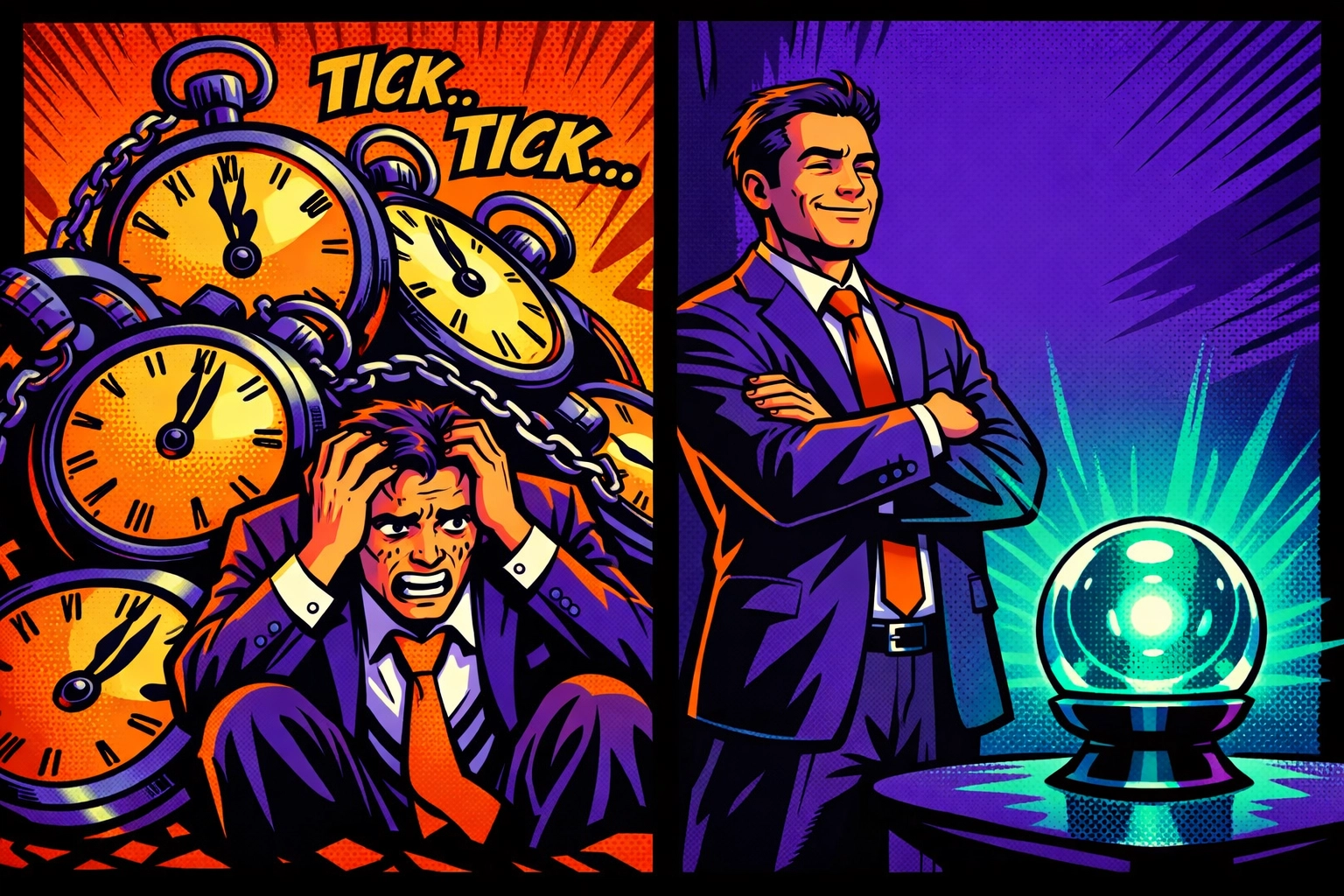
    Comparison showing a business owner gaining more time through small business AI automation.

    THE HYBRID ADVANTAGE: WHY CHOOSE?

    The smartest founders aren't choosing one over the other. They're building a hybrid team.

    Think of it like a restaurant.

    The AI is the kitchen equipment. It’s the oven that stays at exactly 400 degrees and the dishwasher that never stops. It handles the heavy lifting, the heat, and the volume.

    The VA is the Front of House. They greet the guests, handle the special requests, and make sure everyone feels "seen."

    Stop juggling.

    You shouldn't be the one manually moving data from a lead form into a spreadsheet. That’s a waste of your genius. You should be the one talking to the qualified lead that the AI already vetted for you.

    EMPLOYEE OF THE MONTH. EVERY MONTH.

    When you look at Marblism, you aren't just looking at "software." You're looking at an automated teammate.

    We built this because we saw too many entrepreneurs drowning in the "shallow end" of business. You're trying to swim, but the admin is pulling at your ankles.

    Marblism takes those ankles. It handles the lead generation, the social media scheduling, and the customer support flows so you can actually… breathe.

    It’s about moving from "I have to do everything" to "It’s being handled."

    Multitasking AI assistant efficiently managing admin, social media, and customer support tasks.

    STOP THE CHAOS BEFORE IT STARTS

    You’ve been telling yourself you’ll "get organized next month" for the last three years.

    Next month never comes. Only more emails.

    The gap between where you are and where you want to be is filled with tasks you shouldn't be doing. An AI Assistant doesn't just save you money; it saves your sanity. It gives you back your Sunday mornings. It lets you go to your kid's soccer game without checking your phone every four minutes.

    FAQ: YOUR QUESTIONS, UNFILTERED

    Is AI going to mess up and offend my customers?
    No. You set the rules. You approve the templates. AI only says what you’ve taught it to say. It’s actually more consistent than a tired human.

    Is it hard to set up?
    It used to be. Now? It’s basically plug-and-play. If you can use Facebook, you can use Marblism.

    Can I fire my VA and just use AI?
    Maybe. If your VA only does data entry and basic scheduling, yes: you’ll save thousands. If your VA is your right-hand strategist, keep them and give them AI tools to make them 10x faster.

    Will my customers know they’re talking to AI?
    Only if you want them to. Modern AI is so smooth it’s almost impossible to tell the difference in basic interactions.

    SCALING SHOULDN'T BE THIS HARD. BUT HERE WE ARE.

    The "hustle" is a lie if you're just hustling on chores.

    Real growth happens when you remove yourself from the machine. You are the architect, not the bricklayer.

    If you want to see how an AI-driven workflow actually looks in the wild: without the corporate fluff: you need to see it in action.

    Click through this 3-min interactive demo and see what your life could look like.

    The lights are off. The office is empty.

    But your AI is still working.

    And for the first time in years… you’re actually sleeping.

    DON'T WAIT FOR THE BURNOUT. AUTOMATE.
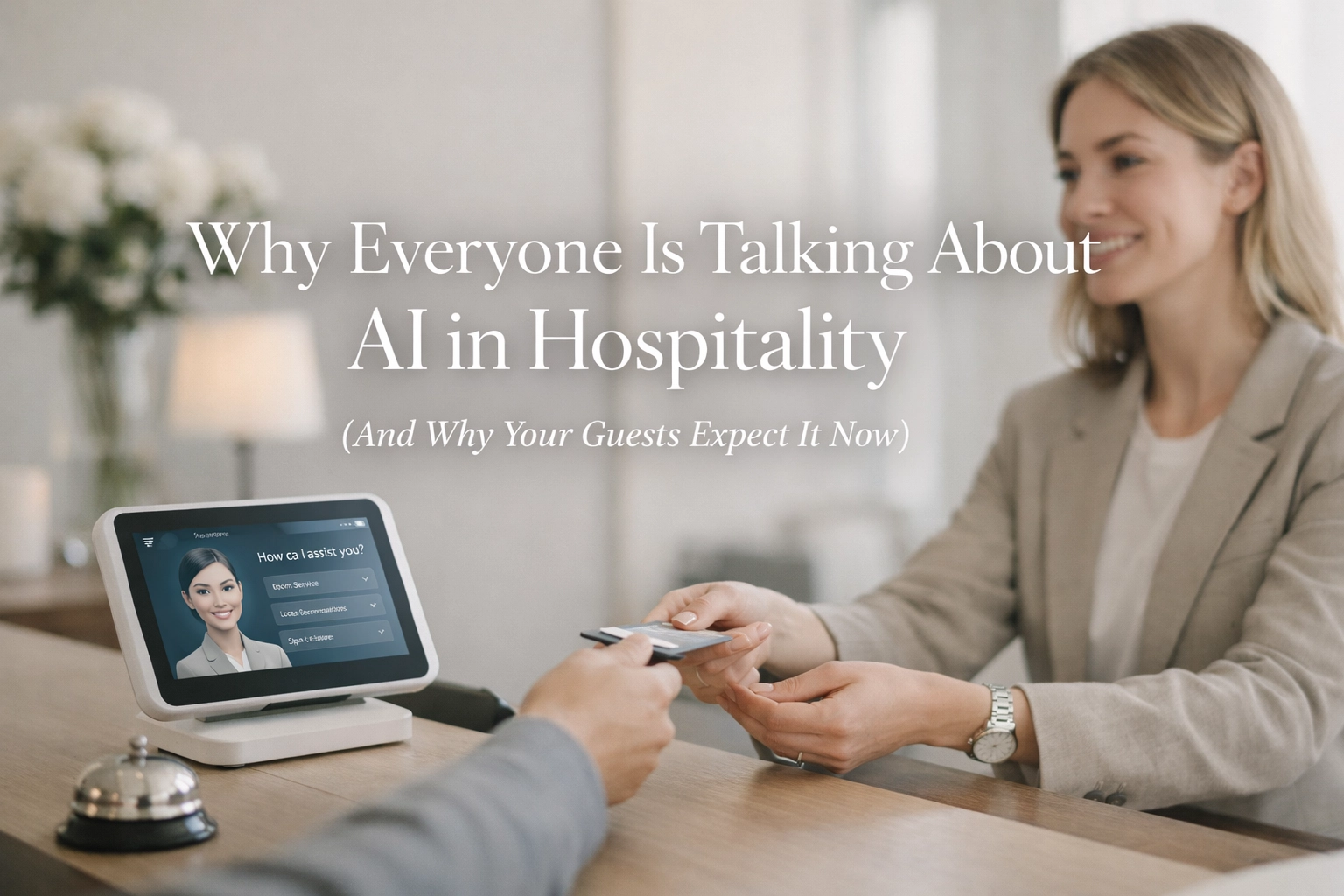
  • Why Everyone Is Talking About AI in Hospitality (And Why Your Guests Expect It Now)

    Why Everyone Is Talking About AI in Hospitality (And Why Your Guests Expect It Now)

    Find. Book. Experience. Transform.

    The guest journey has changed forever. If you’re still waiting for travelers to find you through a dozen blue links on a search engine, you’re already behind. In 2026, the conversation has shifted from "How do we rank on Google?" to "How do we talk to the AI?"

    At Mews, we believe hospitality is about human connection. We think technology should facilitate that connection, not hinder it. We know that AI is the bridge to a more personalized, efficient, and profitable future: all from one innovative platform.

    The Great Search Disruption

    The way people discover your hotel has undergone a seismic shift. Guests are no longer spending hours scrolling through OTA lists or clicking through page two of search results. Instead, they’re asking ChatGPT, Gemini, or their personal AI assistants: "Which is the best hotel in Mykonos for a couple seeking privacy, vegan breakfast options, and a sunset view pool?"

    This isn’t just a new way to search. It’s a collapse of discovery and decision-making into a single, curated moment.

    We believe that data is the new language of hospitality. If your hotel’s data isn't machine-readable and optimized for AI discovery, you are effectively becoming invisible. When an AI agent scans the web to fulfill a guest's specific request, it needs to understand your property as deeply as a human would: but at the speed of light.

    A guest uses a smartphone to discover a Mediterranean resort via AI-driven search.

    From Generative to Agentic: The AI That Does

    For a while, AI was mostly about writing better emails or generating pretty pictures. That was the "generative" phase. Today, we have entered the "agentic" phase.

    An AI agent doesn’t just tell a guest where to stay; it executes the action. Imagine a traveler giving a voice command: "Find me a room with an indoor pool in Oia for next weekend, under €800, and book it."

    The AI agent then:

    • Scans available inventory across multiple platforms.
    • Compares pricing and reviews based on the guest’s historical preferences.
    • Communicates with the hotel’s booking engine.
    • Completes the reservation autonomously.

    This is the new standard. Guests expect this level of frictionless interaction because they are already using these tools in every other part of their lives. If your Property Management System (PMS) isn't ready to talk back to these agents, you're leaving revenue on the table.

    Why Guests Expect It Now (The 24/7 Concierge)

    Modern travelers have zero patience for "we’ll get back to you in 24 hours." They live in a world of instant gratification.

    When hotels implement AI-driven messaging commerce, the results are undeniable. We’ve seen properties achieve:

    • 30% to 50% increases in conversion leads.
    • Significantly lower customer acquisition costs.
    • Higher guest satisfaction scores across the board.

    It’s not just about speed; it’s about relevance. AI concierges can handle the "What’s the Wi-Fi password?" or "Can I get extra towels?" queries instantly, freeing up your human staff to handle the complex, emotional, and high-value interactions that define true hospitality.

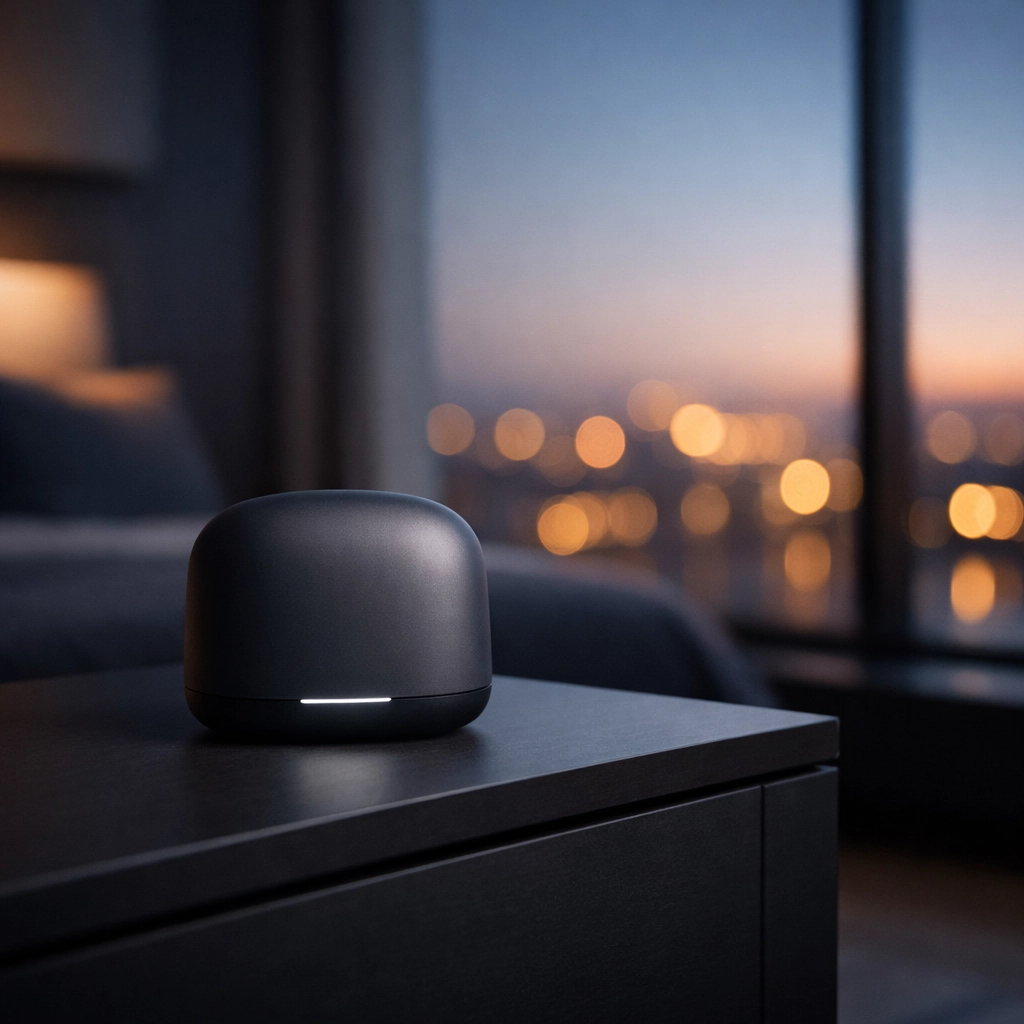
    An AI-integrated smart device in a luxury hotel suite providing personalized guest services.

    Predictive Personalization: The New Luxury

    True luxury isn't just about high-thread-count sheets anymore. It’s about being known. It’s about the hotel knowing what the guest wants before they even have to ask.

    We believe in anticipatory service. By leveraging AI to analyze booking patterns and guest profiles, hotels can offer:

    • Tailored itineraries based on past behavior (adventure vs. wellness).
    • Dynamic upselling that feels like a suggestion, not a sales pitch.
    • Personalized room settings (temperature, lighting, music) upon arrival.

    "Our guest satisfaction scores jumped by 20% once we started using AI to predict room preferences," says one Mews partner. "It’s like having a mind-reader on the team."

    Operational Excellence: Giving Time Back to Your Team

    Let’s talk about your staff. They’re tired. They’re bogged down by administrative tasks that a machine could do in seconds. AI in hospitality isn't about replacing people; it’s about empowering them.

    When you automate the mundane: check-ins, billing reconciliations, data entry: you give your team the most valuable resource: time. Time to smile. Time to solve a real problem. Time to make a guest feel special.

    We think an innovative PMS should be the heartbeat of your hotel. It should handle the complexity so you can focus on the humanity. Explore how we do it at https://referrals.mews.com/umqhyito.

    A relaxed hotel guest enjoys a latte on a terrace, showcasing seamless hospitality service.

    The Cost of Invisibility

    The competitive reality is stark. If your property lacks machine-readable data and AI visibility, you are fading from the consideration set of the algorithmically steered traveler.

    Think of AI as the new SEO. Just as you once optimized for keywords, you must now optimize for intent and context.

    1. Clean your data. Ensure your property details are structured and consistent.
    2. Integrate your systems. Your PMS, CRM, and booking engine must talk to each other.
    3. Adopt an AI-first mindset. Look for tools that don't just "add AI" as a feature but are built with AI at the core.

    See What Mews Can Do

    Ready to stop being invisible? The transition to an AI-driven guest experience doesn't have to be a mountain to climb. It starts with a foundation that is flexible, open, and forward-thinking.

    We believe the future of hospitality is bright, intelligent, and deeply personal. We’d love to help you get there.

    Get started with a smarter way to manage your property:

    1. Schedule a 30-minute discovery call.
    2. See a personalized demo of our AI integrations.
    3. Get your team onboarded and earning more revenue.

    Hotel staff and guest sharing a warm interaction in a modern lobby, highlighting human-centric hospitality.

    The Human Element in a Digital World

    At the end of the day, a guest stays at a hotel to feel something. They want to feel welcomed, safe, and inspired. AI is simply the most powerful tool we’ve ever had to ensure those feelings aren't interrupted by a long line at the front desk or a forgotten request for a hypoallergenic pillow.

    We’re not just building software; we’re building the future of how people travel. And in that future, AI isn’t the star of the show: the guest is.

    Don't let your property get left in the "blue link" era. Join the thousands of properties already transforming their guest experience with Mews.

    Check out the future of hospitality technology here: https://referrals.mews.com/umqhyito

    It's time to give your guests what they already expect. It’s time to move at the speed of AI.

  • The ROI of Modern Hotel Technology: More Than Just a Pretty Interface

    The ROI of Modern Hotel Technology: More Than Just a Pretty Interface

    Let's be honest: most hotel tech looks pretty slick these days. Clean dashboards. Smooth animations. Interfaces that make you feel like you're piloting a spaceship instead of checking in guests.

    But here's the thing: a beautiful interface doesn't pay the bills.

    What actually moves the needle? Hard numbers. Real revenue. Actual cost savings. The kind of ROI that makes your accountant smile and your investors nod approvingly.

    Modern hotel technology delivers returns that go way beyond aesthetics. We're talking measurable impacts on your bottom line: from automated upselling that happens while you sleep to predictive maintenance that saves you from expensive emergency repairs at 2 AM.

    Revenue That Grows While You Focus on Guests

    Hotel reception desk with digital pricing dashboard showing revenue management analytics

    Revenue management used to be a spreadsheet nightmare. Now? AI-powered systems adjust your room rates in real-time based on demand, competition, and market conditions. A convention gets announced across town, and your rates automatically adjust before you've even heard about it.

    The results speak for themselves. Hotels using dynamic pricing see their RevPAR climb as they capture opportunities that would've slipped through the cracks with manual pricing.

    But room rates are just the beginning. The real magic happens with automated upselling. AI chatbots can suggest spa upgrades, dining reservations, or room enhancements based on guest profiles and behavior. These aren't pushy sales tactics: they're personalized recommendations that enhance the guest experience while adding to your ancillary revenue.

    And here's where it gets interesting: strengthening your direct booking channels. By using AI for personalization and retargeting, you reduce reliance on OTAs and their hefty commissions. Every direct booking means more revenue stays with you instead of disappearing into commission fees.

    The Labor Savings Are Actually Massive

    Let's talk numbers. McKinsey reports that AI can automate 60% to 70% of data collection and processing tasks. Bain & Company found that employees using generative AI complete tasks 40% faster.

    But what does that mean in real terms?

    Picture this: a hotel using AI chatbots to handle 60–80% of common guest queries saves approximately $480,000 annually. That's 2,000 hours of staff time freed up: time your team can spend on high-value interactions that actually require a human touch.

    The annual cost of that chatbot? Around $30,000. That's a return that makes itself obvious pretty quickly.

    Hotel staff member providing personalized guest service at modern reception counter

    Your front desk staff stop playing phone tag. Your concierge focuses on creating memorable experiences instead of answering "What time is breakfast?" for the hundredth time. Your managers actually manage instead of drowning in administrative tasks.

    Advanced forecasting tools take this further. When your system can accurately predict occupancy levels, you can optimize staffing schedules, plan maintenance during low-occupancy periods, and forecast utilities with precision. No more overstaffing on slow days or scrambling to cover shifts during unexpected rushes.

    Predictive Maintenance: The Cost Savings You Didn't Know You Needed

    Here's a cost center most hotels overlook: maintenance.

    Traditional maintenance is reactive. Something breaks, you fix it. It's expensive, disruptive, and usually happens at the worst possible time.

    IoT sensors and AI-powered asset management flip this model entirely. Hotels using predictive maintenance platforms report 30% reductions in maintenance costs and 20% higher equipment uptime.

    Think about your HVAC system. Instead of waiting for it to die during a summer heatwave (taking your guest satisfaction scores with it), sensors detect anomalies weeks in advance. You schedule maintenance during a quiet period. The repair is cheaper. The disruption is minimal. Your guests stay comfortable.

    Hotel HVAC system with IoT sensors for predictive maintenance monitoring

    The same principle applies to elevators, plumbing, electrical systems: any critical infrastructure. Predictive maintenance extends equipment lifespan, improves energy efficiency, and prevents those nightmare scenarios where everything goes wrong at once.

    One hotel saved over $100,000 by using AI to optimize their procurement and supply chain: identifying better manufacturers and navigating tariff regulations. That's the kind of behind-the-scenes ROI that compounds over time.

    Your Guest Data Is a Gold Mine

    Every interaction generates data. Every booking. Every upgrade. Every complaint. Every compliment.

    Most hotels let this data sit idle. Modern systems turn it into actionable intelligence.

    You start understanding patterns. Which guest segments book spa services? Who upgrades to suites? What amenities drive repeat visits? When do guests typically book for holiday weekends?

    This intelligence transforms your marketing from spray-and-pray to surgical precision. You target the right guests with the right offers at the right time. Your marketing spend generates better returns because you're not wasting money on guests who'll never convert.

    Personalization becomes automatic. Returning guests get room preferences they mentioned six months ago. Business travelers see the services they actually use. Families get recommendations for kid-friendly activities.

    The result? Higher conversion rates on direct bookings. Better guest satisfaction scores. More positive reviews. And those reviews drive more bookings, creating a virtuous cycle.

    The Compounding Effect

    Here's what separates great tech investments from mediocre ones: compound returns.

    That revenue management system doesn't just boost your rates this month. It learns and improves, making better decisions over time. The data it collects informs your marketing strategy, which drives more direct bookings, which feeds more data back into the system.

    Your staff gets faster with the tools. Your processes get smoother. Your guests have better experiences, leave better reviews, and return more often.

    Revenue management technology impacts property valuation through sustained cash flow improvements. Better cash flow means more liquidity for reinvestment. Those reinvestments improve the guest experience, which drives more revenue, which creates more cash flow.

    This isn't about a one-time boost. It's about establishing a foundation for long-term growth.

    The Bottom Line

    Modern hotel technology delivers ROI through three channels: revenue expansion, operational efficiency, and strategic cost reduction.

    You boost revenue through dynamic pricing, automated upselling, and stronger direct booking channels. You slash labor costs through automation and better forecasting. You reduce maintenance expenses and improve asset performance through predictive technology.

    The interface matters: nobody wants to fight with clunky software. But the real value lives in the outcomes. The numbers on your P&L statement. The time your staff saves. The guests who become loyal advocates.

    Want to see what modern property management can do for your bottom line? Check out Mews and discover how the right platform transforms technology investment into measurable returns.

    Because at the end of the day, pretty interfaces are nice. But revenue growth and cost savings? Those are beautiful.

  • Workflow Automation for Small Business: Stop Doing the Busy Work

    Workflow Automation for Small Business: Stop Doing the Busy Work

    ☕ 7:00 AM.

    Your eyes aren’t even fully open, but your thumb is already scrolling. You’ve got fifteen unread emails from people asking for things you’ve already sent. Three new leads in your inbox are waiting for a "quick chat." And your CRM? It’s a graveyard of half-finished notes and "remind me later" tasks.

    You haven't even had your coffee yet.

    This is the "small business hustle." Or at least, that’s what the gurus call it. But let’s be real… it’s just busy work. It’s the repetitive, soul-crushing admin that keeps you from actually growing your company. You’re the CEO, the janitor, and the data-entry clerk all rolled into one.

    It’s exhausting. And frankly? It’s unnecessary.

    THE MANUAL GRIND IS KILLING YOUR MARGINS

    You started this business to build something, not to spend four hours a day copy-pasting customer names into spreadsheets. Every minute you spend on "the basics" is a minute you aren't spending on strategy.

    Imagine if your business just… worked.

    Without you poking it every five minutes.

    Workflow automation for small business isn't about replacing your team. It’s about giving them, and you, the freedom to do the work that actually matters. It’s the difference between scaling and just surviving.

    Workflow automation for small business saving an owner from drowning in paperwork and tasks.

    8:30 AM: THE LEAD THAT DIDN’T GET AWAY

    📱 Your phone buzzes.

    A new lead just hit your website. In the old days, that lead would sit there until you finished your morning meetings. By the time you called them back at 2:00 PM, they’d already moved on to your competitor.

    But not today.

    The moment they clicked "submit," your automation kicked in.

    • A personalized "Nice to meet you" email was sent.
    • Their info was piped directly into your CRM.
    • A Slack notification popped up on your screen.

    You didn't lift a finger. The lead feels seen. You look like a professional powerhouse.

    11:00 AM: THE DATA ENTRY THAT DISAPPEARED

    🔍 You’re looking at your dashboard.

    Usually, this is where you’d spend an hour manually reconciling invoices or updating project statuses. It’s the kind of work that makes your brain feel like it’s melting.

    Instead, you see that your apps are talking to each other. When a payment hits Stripe, the invoice in your accounting software marks itself as paid. The project manager gets a notification to start the onboarding process.

    The chaos is gone before you even take your first sip of your second coffee.

    STOP JUGGLING. START FLOWING.

    Small business owners often think automation is too expensive or too "techy." They think they need a full-time developer to make it happen.

    They’re wrong.

    Modern workflow automation is built for people who have better things to do than learn how to code. It’s about connecting the tools you already use, Gmail, Slack, Shopify, your CRM, into one seamless machine.

    • Lead Nurturing: Stop letting prospects fall through the cracks.
    • Customer Onboarding: Create a "wow" experience every single time.
    • Invoicing: Get paid faster without the "friendly reminder" emails.

    "I used to spend my entire Sunday night prepping for the week. Now, the system does it for me while I'm watching Netflix." : Mark, Small Business Owner

    3:00 PM: THE FOLLOW-UP THAT FEELS HUMAN

    🤝 You’re in a deep-work session.

    While you're focusing on a big proposal, your automation is handling the small stuff. It’s checking in on a client from last month to see how they’re liking the service. It’s sending a birthday discount to a loyal customer.

    It sounds like you. It acts like you. But it doesn’t take any of your time.

    You finish your proposal an hour early. You step back into your day, feeling… calm.

    SCALING SHOULDN'T BE THIS EASY. BUT HERE WE ARE.

    If you want to grow, you have to stop doing the $15-an-hour tasks. You are the engine of your business, not the oil. Automation is the oil. It keeps things running smoothly so you can focus on the direction you're headed.
    The "Busy Work" trap is a choice. You can keep grinding, or you can start building.

    Ready to see how Marblism can turn your manual mess into a streamlined machine?
    Stop the madness here: https://marblism.link/scott-bowen


    Why Your Business Needs an AI Virtual Assistant (Before Your Competitors Get One)

    🌙 11:00 PM.

    The lights are off. You’re finally in bed, drifting toward sleep. But somewhere out there, a potential customer is browsing your site. They have a question. They’re ready to buy, but they need one tiny bit of reassurance.

    In the old world, they’d send an email. You’d reply at 9:00 AM. They’d be long gone.

    But in the new world? Your AI Virtual Assistant is wide awake. It’s answering their question, qualifying them as a lead, and booking a meeting on your calendar for tomorrow morning.

    You wake up to money. They wake up happy.

    Your competitors? They’re still sleeping on this. And that is your biggest opportunity.

    THE UNFAIR ADVANTAGE

    AI virtual assistant for business is no longer a "nice-to-have." It’s the new baseline.

    Think about it. Your competitors are likely drowning in support tickets. They’re hiring more people just to keep up with the noise. They’re paying for office space, benefits, and coffee for teams that can only work 8 hours a day.

    You? You have a digital worker that:

    • Never sleeps.
    • Never asks for a raise.
    • Can handle 1,000 conversations at the exact same moment.
    • Knows your entire product catalog by heart.

    That’s not just a tool. That’s an unfair advantage.

    9:00 AM: THE INBOX THAT ISN'T ON FIRE

    ☕ The day begins.

    Usually, you’d open your laptop to a wall of fire. Complaints, "Where is my order?" requests, and basic questions you've answered a thousand times.

    But it’s quiet: organized.

    Your AI Virtual Assistant has already handled 80% of the inquiries. It’s resolved the easy stuff and flagged the two things that actually need your human touch. You spend thirty minutes on email instead of three hours.

    You just send a thumbs-up.

    Integration of an AI virtual assistant for business connecting modern tablets with traditional workflows.

    COST SAVINGS THAT ACTUALLY SCALE

    Let’s talk numbers, but keep it casual.

    Hiring a human to handle 24/7 support is expensive. You need at least three shifts. You need a manager. You need to train them every time something changes.

    An AI virtual assistant costs a fraction of a single human salary. And when your business grows 10x? You don’t need to hire 10x more assistants. You just keep the same one. It scales with you, instantly.

    Research shows that businesses using AI-powered assistants report massive time savings and cost reductions. But the real win? Customer satisfaction. People don't want to wait six hours for an email response. They want the answer now.

    MORE THAN JUST A CHATBOT

    Don't confuse a modern AI virtual assistant for business with those annoying "Press 1 for Sales" bots from 2015.

    We’re talking about Generative AI. It understands context. It has a personality. It integrates with your CRM, your calendar, and your Slack. It doesn't just "chat": it works.

    • In E-commerce: It acts as a personal shopper, suggesting the right size or product.
    • In Healthcare: It handles complex scheduling and patient intake.
    • In Sales: It qualifies leads so your reps only talk to people who are ready to buy.

    "We saw a 35% drop in overwhelmed agents within the first month. The AI takes the heat, so my team can focus on the big wins." : Jessica, Operations Manager

    EMPLOYEE OF THE MONTH. EVERY MONTH.

    The best part about an AI assistant? It gets smarter.

    Every interaction is a learning moment. It begins to understand your customers' quirks. It knows the common friction points before you do. It becomes a long-term asset that grows more valuable every single day.

    An AI virtual assistant for business organizing a chaotic desk and streamlining office operations.

    THE WINDOW IS CLOSING

    Right now, having an AI assistant makes you look like a tech-forward leader. It makes your business feel premium.

    In two years? It’ll be the bare minimum.

    If you wait until everyone else has one, you aren’t gaining an advantage: you’re just trying to catch up. The time to implement is while your competitors are still debating if "AI is just a fad."

    Spoiler: It isn’t.

    5:00 PM: WALKING AWAY ON TIME

    ⌚ You close your laptop.

    The day was productive. Not because you worked harder, but because you worked smarter. You weren't stuck in the weeds of "Where's my tracking number?" or "How do I reset my password?"

    Your AI is still at the office. It's taking care of the night shift. You step back into your life, knowing your business is in good hands.

    Scaling shouldn't feel like a death march. It should feel like a well-oiled machine.

    Ready to put your business on autopilot?
    Meet your new favorite "employee" here: https://marblism.link/scott-bowen

    The future is automated. Don't get left in the manual past.

  • Coffee & Comfort: Why the Perfect Mug Matters

    Coffee & Comfort: Why the Perfect Mug Matters

    Think about your morning coffee routine for a second. You stumble to the kitchen, brew your favorite beans, and then reach for… which mug? If you're anything like us, you probably have that one mug. The one that just feels right in your hands. The one that makes your coffee taste a bit better somehow. The one that, if someone else uses it, throws your entire day off balance.

    Turns out, you're not being precious. Science backs you up here.

    The mug you choose isn't just a vessel for your coffee: it's an active participant in your coffee experience. And we're not talking about aesthetics alone (though that matters too). The shape, material, weight, and even color of your mug genuinely affect how your coffee tastes, feels, and makes you feel.

    Let's dive into why that humble mug deserves more credit than we usually give it.

    Shape Matters More Than You Think

    Here's something most people don't realize: your mug's shape directly influences how you perceive your coffee's flavor.

    Wide-mouthed mugs let more aroma reach your nose as you drink. Since smell accounts for about 80% of what we perceive as taste, that extra aroma translates to a more flavorful cup. You're literally getting more out of your coffee with a wider opening.

    Three coffee mug shapes on wooden table showing wide, narrow, and round designs with fresh coffee

    On the flip side, taller and narrower mugs trap heat better and keep your coffee hot longer. The trade-off? Less aroma escapes, which means you might not get the full flavor experience. But if you're a slow sipper who hates lukewarm coffee, that might be worth it.

    Round mugs strike a nice balance between the two: decent aroma distribution without sacrificing too much heat retention. It's the Goldilocks option.

    The thickness of the rim plays a role too. A thinner rim changes how the coffee flows onto your palate compared to a chunky rim. It's subtle, but your mouth notices these things even when your brain doesn't consciously register them.

    Material: More Than Just Looks

    Walk into any kitchen, and you'll find mugs made from ceramic, glass, stainless steel, or even plastic. But not all materials are created equal when it comes to coffee.

    Ceramic mugs are the gold standard for coffee lovers, and there's good reason for that. Ceramic has a neutral flavor profile: it doesn't impart any weird tastes to your coffee. It retains heat beautifully, keeping your brew warm without making the outside too hot to handle. Plus, there's something satisfying about the weight and tactile feel of a good ceramic mug in your hands.

    Stoneware takes it a step further with even better heat retention than standard porcelain. If you're the type who nurses a single cup for ages, stoneware is your friend.

    Glass mugs look gorgeous, especially with layered drinks like lattes where you can see all those beautiful coffee and milk layers. But they don't hold heat as well as ceramic, and they can get uncomfortably hot to touch. Double-walled glass mugs solve both problems: they insulate your coffee between two layers of glass, keeping it hot while the outer surface stays cool.

    We won't spend much time on stainless steel or plastic here. They're practical for travel, sure, but at home? Ceramic wins every time for pure coffee enjoyment.

    Hands holding handmade ceramic coffee mug showcasing comfort and quality craftsmanship

    The Handle: Underrated and Under-Appreciated

    Let's talk about handles for a minute, because this is where comfort really comes into play.

    A good handle should be large enough to fit your fingers comfortably without forcing them together. It should be positioned at the right angle so the mug feels balanced when it's full. And it should have enough thickness that it doesn't dig into your fingers when you're holding a heavy cup of coffee.

    Small, dainty handles might look cute on your shelf, but they're often a nightmare to actually use, especially if you have larger hands or when you're holding a full, hot mug. Your fingers end up cramped, the mug feels awkward and unbalanced, and you're basically just waiting for disaster to strike.

    The curve of the handle, the way it joins the body of the mug, even the angle it sits at: all of these details turn drinking coffee from a functional act into something comfortable and intuitive. When your mug feels right in your hand, you can focus on enjoying your coffee instead of managing an awkward grip.

    The Emotional Connection: Why Personalization Matters

    Here's where things get a bit more psychological. The mug you choose adds emotional value to your daily routine, and that genuinely affects how much you enjoy your coffee.

    Think about it: do you enjoy your morning coffee more from a mug you love or from whatever random cup happens to be clean? The answer's obvious, right?

    Collection of personalized coffee mugs with unique colors and patterns on kitchen shelves

    Personalized mugs: whether they feature your initials, a meaningful quote, artwork that speaks to you, or even just a color and pattern you adore: create a sense of ownership and connection. They transform an ordinary moment into something that feels uniquely yours. It's the difference between drinking coffee and having your coffee ritual.

    We've noticed customers who invest in quality coffee beans from specialty roasters (like, say, us here at Limini Coffee) tend to also care about their mugs. Because once you're brewing something special, you want to experience it properly. The whole ritual matters.

    Color Psychology: More Than Just Pretty

    The color of your mug might seem purely aesthetic, but it actually influences your mood and perception of the coffee itself.

    Bright, cheerful colors like yellow or orange can make your morning feel more optimistic and energizing. Darker colors: deep blues, blacks, rich browns: can make your coffee seem more intense and sophisticated. White and neutral tones let the coffee be the star and tend to be associated with purity and quality (which is why most coffee shops use white cups for tasting).

    Some studies even suggest that mug color might affect how sweet or bitter you perceive your coffee to be, though the science there is still evolving. Either way, color definitely affects your emotional state, which in turn affects your enjoyment.

    Finding Your Perfect Mug

    So what makes the perfect mug? Honestly, it depends on you and how you drink your coffee.

    If you savor every sip slowly, prioritize heat retention: look for thicker ceramic or double-walled options. If you love the aroma experience, go for a wider mouth. If you need a solid, comfortable grip for your early morning zombie state, invest in a mug with a proper handle.

    Colorful coffee mugs arranged in circle showing different styles for choosing the perfect mug

    Consider your usual coffee volume too. If you're a single espresso drinker, a massive mug will just make your coffee look sad and lonely. If you brew a full cafetière for yourself, you need something with decent capacity.

    And don't discount the emotional factors. If a mug makes you smile when you use it, that's worth something real. Your morning coffee ritual should bring you joy, and the right mug is part of that.

    The Ritual of It All

    At the end of the day, coffee at home is about more than caffeine or even flavor. It's about ritual, comfort, and those small moments of pleasure that punctuate our days.

    Your mug is part of that ritual. It's the vessel that holds not just your coffee but your morning pause, your afternoon reset, or your evening wind-down. When you find the right one: the one that feels perfect in your hands, that keeps your coffee at the right temperature, that makes you smile when you reach for it: something clicks.

    We spend a lot of time talking about brewing methods, grind sizes, and bean origins (important stuff, obviously). But sometimes the smallest details make the biggest difference to your actual enjoyment. Your mug is one of those details.

    So next time someone gives you grief about being particular about your favorite mug, you can tell them it's not being fussy: it's being intentional about your coffee experience. And there's nothing wrong with that.

    Now if you'll excuse us, we need to go make another cup. In our favorite mug, naturally. ☕

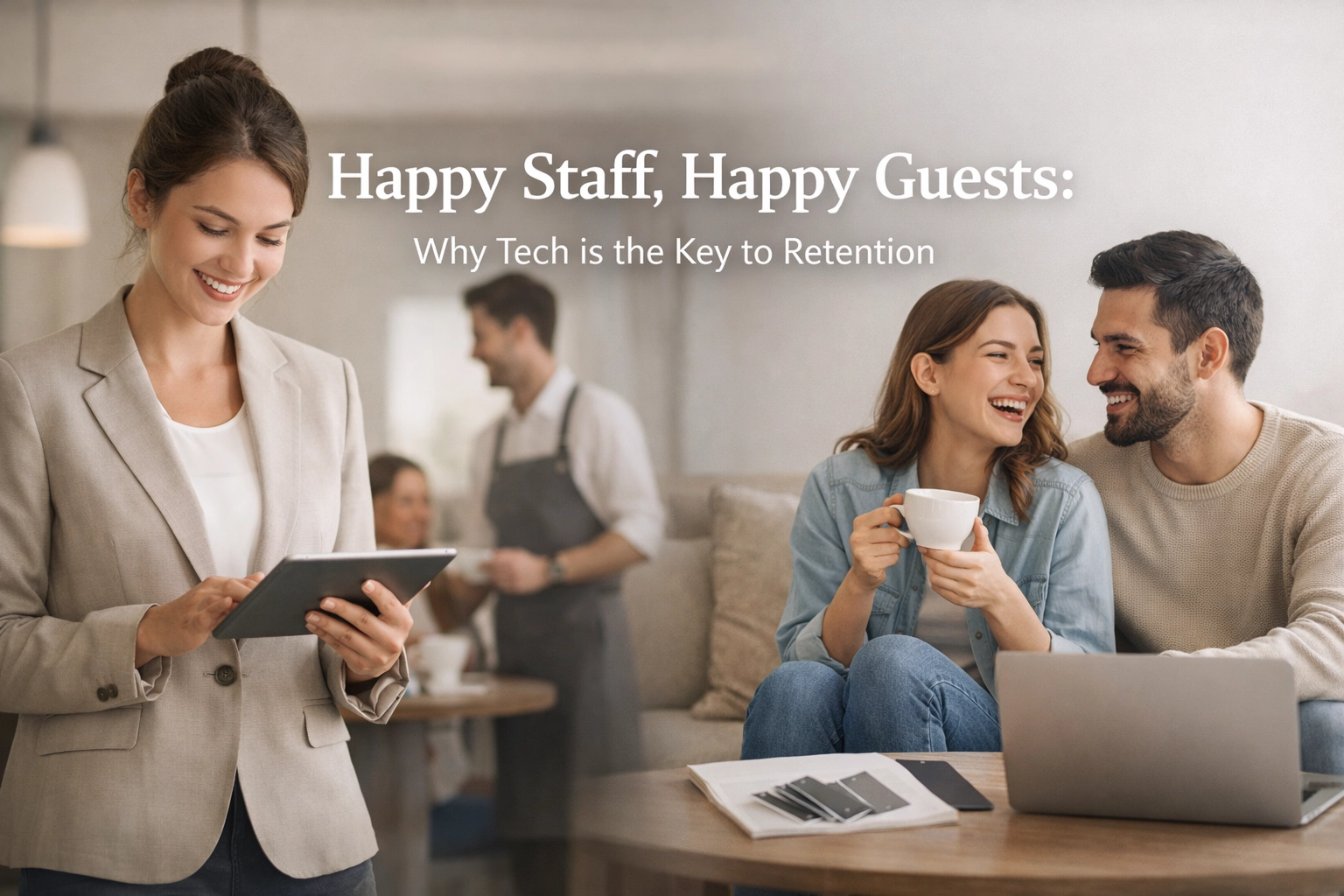
  • Happy Staff, Happy Guests: Why Tech is the Key to Retention

    Happy Staff, Happy Guests: Why Tech is the Key to Retention

    Your best employees are walking out the door. And they're taking your guest experience with them.

    The hospitality industry has always struggled with turnover, but lately it's reached crisis levels. Your front desk team is burned out from repetitive tasks. Your housekeeping staff is drowning in manual coordination. And your managers? They're spending more time on administrative work than actually managing people.

    Here's the thing: technology isn't just about efficiency anymore. It's become the key to keeping your best people around: and creating the kind of workplace where talented staff actually want to stay.

    The Real Cost of That "Help Wanted" Sign

    Let's talk numbers. Replacing a single frontline hospitality employee costs you 30% to 50% of their annual salary. Do the math on your current turnover rate. Not pretty, is it?

    But the financial hit is just the beginning. Every time someone leaves, you lose institutional knowledge. You lose the regular guest who loved chatting with Maria at check-in. You lose the efficiency that comes from a team that knows how to work together.

    And while you're training yet another new hire, your existing staff is picking up the slack: getting more burned out, and closer to becoming your next resignation letter.

    The cycle feeds itself. Until you break it.

    Hotel front desk team collaborating with modern technology to improve efficiency

    Why Your Best People Are Exhausted

    Walk a day in your front desk agent's shoes. They're juggling phone calls, managing walk-ins, processing check-ins, handling check-outs, answering the same questions fifty times, manually updating spreadsheets, coordinating with housekeeping, fixing booking errors, and somehow still trying to smile and create memorable guest experiences.

    It's not sustainable. And they know it.

    The problem isn't that hospitality work is hard: people expect that. The problem is that too much of their day is spent on mind-numbing, repetitive tasks that a computer should be handling. Tasks that don't require human judgment, creativity, or the interpersonal skills they were actually hired for.

    When your staff spends 70% of their time on administrative busywork, they're not just inefficient. They're miserable. And miserable employees don't stick around.

    The Automation Advantage

    Modern hotel management systems have evolved far beyond simple booking tools. They're designed to eliminate the friction points that make hospitality work frustrating.

    Contactless check-in means your front desk isn't a bottleneck every afternoon. Automated task management means housekeeping knows exactly which rooms need attention without playing phone tag. Integrated payment processing means no more manual reconciliation at the end of shift.

    These aren't just conveniences. They're retention tools.

    When you remove the frustrating, time-consuming tasks from your staff's day, something interesting happens. They remember why they chose hospitality in the first place. They have time for the interactions that make the job rewarding. They go home with energy left over for their actual lives.

    A platform like Mews handles the repetitive operational work automatically: from guest communications to task assignments to revenue management. Your staff focuses on hospitality. The system handles the hassle. Check out how Mews can transform your operations.

    Hotel employee working efficiently at modern reception desk with streamlined technology

    Making Work Actually Enjoyable

    Here's what happens when you implement intuitive, well-designed technology:

    Training time drops dramatically. Modern cloud-based systems are built for the smartphone generation. Your new hires aren't intimidated by clunky interfaces or cryptic command codes. They can get up to speed in days, not weeks. That early confidence matters: it sets the tone for their entire tenure.

    Mistakes become rare. Automated workflows mean fewer opportunities for human error. Your staff isn't constantly stressed about whether they forgot to update the room status or send the confirmation email. The system catches those details. They can breathe easier.

    Collaboration gets simpler. When everyone's working from the same real-time platform, communication actually works. Housekeeping sees the late checkout immediately. Front desk knows which rooms are ready. Maintenance gets notified about issues automatically. No more playing telephone across departments.

    The result? Your team feels competent instead of overwhelmed. Capable instead of frustrated. And people who feel good at their jobs tend to keep showing up.

    Recognition That Actually Resonates

    Technology also enables the kind of personalized employee recognition that was impossible to scale manually. You can track performance across multiple properties. Identify your top performers. Reward achievements with tangible benefits: from bonuses to development opportunities to promotions.

    Research shows that strong recognition programs can boost retention by up to 31%. But recognition only works when it's timely, specific, and meaningful. Cloud-based systems make that possible by giving you visibility into who's excelling and why.

    Learning and development platforms let you create career paths tailored to individual goals. Your ambitious front desk agent can start taking management courses. Your experienced housekeeper can cross-train into operations. Your staff sees a future, not just a job.

    When employees feel invested in, they invest back. It's that simple.

    Hotel staff member engaging with guest during check-in at modern reception desk

    The Guest Experience Connection

    Here's the beautiful part: everything that makes your staff happier also makes your guests happier.

    When your team isn't rushing through check-ins to get to the next administrative task, they can actually talk to guests. Ask about their trip. Recommend restaurants. Notice it's someone's anniversary and make it special.

    Those moments are what turn first-time visitors into regulars. And they're impossible when your staff is stressed and scattered.

    Experienced, retained employees provide consistency. Guests value seeing familiar faces who remember their preferences. Your long-term front desk agent knows Mrs. Henderson likes a room away from the elevator and always needs restaurant recommendations. That kind of service builds loyalty: but only if Mrs. Henderson keeps seeing the same knowledgeable staff member.

    Lower turnover also means higher service quality across the board. You're not constantly diluting your experienced team with trainees who are still learning. Every guest interaction is handled by someone who knows what they're doing.

    Technology frees your staff to be human. And in hospitality, that's the entire point.

    Building a Better Workplace

    The hotels that are winning the retention battle aren't necessarily paying dramatically higher wages. They're creating work environments where talented people want to be.

    That means:

    • Removing unnecessary friction from daily tasks
    • Giving staff the tools to do their jobs well
    • Creating opportunities for growth and recognition
    • Respecting their time by automating the automatable

    Modern property management systems deliver all of this. They're not just operational tools: they're workplace culture enhancers.

    When you invest in technology that makes your team's lives easier, you're sending a message: we value your time, we respect your expertise, and we want you to succeed. That message matters more than free snacks in the break room.

    Making the Shift

    The good news? You don't need to overhaul everything overnight. Start with the biggest pain points. What's causing the most frustration for your team right now? Manual night audit? Chaotic housekeeping coordination? Clunky check-in process?

    Pick one area and fix it properly. Let your team experience what it's like when technology actually helps instead of creating more work. Get their feedback. Build momentum.

    The best technology implementations happen when staff are involved in the process: when they see leadership genuinely trying to improve their day-to-day experience, not just chasing efficiency metrics.

    Your employees will notice. And they'll remember when they're deciding whether to stick around or take that offer from the property down the street.

    The Bottom Line

    Happy staff and happy guests aren't separate goals. They're two sides of the same coin. When you reduce burnout through smart automation, you create a workplace where people want to stay. And when your experienced, satisfied team delivers exceptional service, your guests keep coming back.

    The hospitality industry's retention crisis won't be solved by better job postings or signing bonuses. It'll be solved by making hospitality work more humane: by letting technology handle the tedious parts so your people can focus on what humans do best.

    Your competitors are figuring this out. The question is whether you'll lead the change or scramble to catch up.

    Ready to see how the right technology can transform your retention and your guest experience? Explore what Mews can do for your property. Your team: and your guests( will thank you.)

  • The Ultimate Guide to Hospitality Trends 2026: Everything You Need to Succeed

    The Ultimate Guide to Hospitality Trends 2026: Everything You Need to Succeed

    Optimize operations. Automate the mundane. Elevate the guest experience.

    The hospitality landscape of 2026 isn't just a slight iteration of the past: it’s a full-scale evolution. We’ve moved past the "digital transformation" buzzwords into an era where AI agents handle your bookings, luxury is being redefined by hyper-personalization, and operational excellence is the only way to protect your margins.

    At Mews, we believe that technology should invisible. It should work in the background so your team can do what they do best: actually talk to guests. Whether you’re running a boutique hideaway or a global brand, staying ahead means embracing the shift from "property management" to "experience orchestration."

    Everything you need to thrive in this new era is right here, all from one innovative platform.

    Agentic Commerce: When AI Does the Shopping

    Remember when a "chatbot" was just a buggy pop-up that couldn't answer basic questions? Those days are gone. In 2026, we’ve entered the age of Agentic Commerce.

    Your guests are no longer just scrolling through travel sites. They’re using autonomous AI agents: built on sophisticated Large Language Models (LLMs): to do the heavy lifting. A guest tells their personal AI, "Find me a sustainable hotel in London with a gym and a quiet workspace for under £300," and the AI does the comparison, checks the reviews, and initiates the booking.

    Why it matters for you

    • Conversational Interfaces: Traditional search boxes are being replaced by chat. If your website can't "talk" to these agents, you're invisible.
    • Visual Richness: AI agents need data. Properties that provide high-quality imagery and structured data about amenities will win the conversion race.
    • Brand Trust: As AI handles the logistics, the human touch becomes your biggest differentiator.

    Traveler booking a stay on a mobile device in a minimalist hotel suite, highlighting digital guest experiences.

    We think the future of booking is conversational. By exposing more detailed content to these AI systems, you aren't just selling a room; you're winning a spot in a curated digital ecosystem. Check out how we’re leading this charge at Mews.

    Operational Excellence: Smarter, Not Harder

    The "growth at all costs" era has been replaced by the "efficiency at all costs" era. With labor costs rising and talent harder to find, 2026 is about doing more with the team you already have.

    Operational excellence is no longer a goal: it’s a survival tactic. This means moving away from fragmented legacy systems and toward a unified cloud environment that treats data as your most valuable asset.

    The pillars of 2026 operations

    • Smart Staffing Models: Use AI-driven demand forecasting to ensure you aren't overstaffed on a Tuesday or drowning on a Saturday.
    • Contactless Everything: Mobile check-in isn't a luxury; it's the baseline. It saves your front desk hours of administrative repetitive work.
    • Real-Time Analytics: If you aren't making pricing decisions based on live data, you're leaving money on the table.

    "Switching to an automated PMS saved our team 15 hours of admin a week. Now, we actually know our guests' names before they walk through the door."

    Operating smarter means letting the software handle the keys, the invoices, and the reports. You focus on the hospitality.

    The Luxury Divide and the "Whycation"

    We’re seeing a fascinating split in the market. While mid-market properties face pressure, the luxury segment is absolutely booming. Wealth bifurcation is real, and high-net-worth travelers are looking for more than just a gold-plated faucet. They want "whycations": travel driven by deep personal values, wellness, and exclusive access.

    What luxury guests want now

    • Discreet Personalization: They don't want a "standard" experience. They want a private villa, a club floor, and a minibar stocked with their specific brand of kombucha.
    • Experiential Wellness: We’re talking bio-hacking suites, sound baths, and local cultural immersion that can’t be found on a tourist map.
    • Human-Centric Leadership: High-end guests expect staff to be empowered, knowledgeable, and present.

    Minimalist marble hotel reception desk with staff providing human-centric hospitality and guest service.

    Even if you aren't a five-star resort, you can learn from this. The "luxury" mindset is about making a guest feel seen. Using centralized data to remember a guest's preference for a quiet room isn't just a nice-to-have; it's how you build a loyal fan base in 2026.

    F&B: Beyond the Continental Breakfast

    Food and beverage is no longer just a "service" provided by hotels: it’s a primary revenue driver and a key part of the guest identity. In 2026, the trend is toward sustainable, tech-integrated, and hyper-local dining.

    Innovation on the plate

    • Pop-up Partnerships: Hosting local chefs or trending food brands to keep the lobby vibrant.
    • Tech-Driven Ordering: QR codes that actually work, linked directly to the guest’s folio for seamless checkout.
    • Sustainable Menus: Guests are checking your carbon footprint before they check the price of the steak.

    Bundling room and meal packages is a great way to preserve your Average Daily Rate (ADR) without engaging in a race to the bottom on price. If the food is good enough, people will stay for the room.

    Human-Centric Leadership in a Tech World

    With all this talk of AI and automation, you might think the human element is fading. It’s actually the opposite. In 2026, the most successful properties are the ones that prioritize their staff's well-being.

    When your team isn't bogged down by clunky software and manual data entry, they are happier. And happy staff stay longer, provide better service, and create the kind of atmosphere that makes guests come back.

    How to lead in 2026

    1. Invest in intuitive tools: Don't punish your team with 1990s-era software. Give them tools that look and feel like the apps they use in their personal lives.
    2. Empower decision-making: Use data to give your staff the confidence to resolve guest issues on the spot.
    3. Focus on culture: Technology is the skeleton; your team is the soul.

    Private luxury hotel wellness suite with a stone soaking tub, illustrating 2026 high-end hospitality trends.

    We believe that by removing the friction from the daily grind, we enable a more compassionate, connected version of hospitality. It’s a win-win-win for your team, your guests, and your bottom line.

    Strategic Priorities for a Resilient 2026

    The hospitality landscape rewards the adaptable. If you’re still waiting for things to "go back to normal," you’ve already lost. The new normal is fast, data-driven, and deeply personal.

    To build a resilient business this year, focus on:

    • Revenue Diversification: Look into digital nomad packages, extended stays, and wellness retreats to fill the gaps between seasonal peaks.
    • Standardized Processes: Make sure every property in your portfolio is running on the same "source of truth."
    • Guest Data Centralization: If your spa system doesn't talk to your PMS, you're missing the full picture of your guest's value.

    Hotel staff using mobile technology for operational excellence and guest data management in a modern lobby.

    Success in 2026 isn't about chasing every single shiny new object. It's about doing the fundamentals: consistency, adaptability, and smart technology use: exceptionally well.

    Get Ready for the Future

    The world is moving fast, but you don't have to navigate it alone. Whether you're looking to automate your check-in process or dive deep into AI-driven analytics, the right platform makes all the difference.

    Ready to see how Mews can transform your property? It’s time to move your hospitality business into the future.

    Schedule a 30-minute demo today and see what a truly innovative PMS can do for your peace of mind. Let’s get you earning more revenue and spending less time on the boring stuff( all from one intuitive platform.)

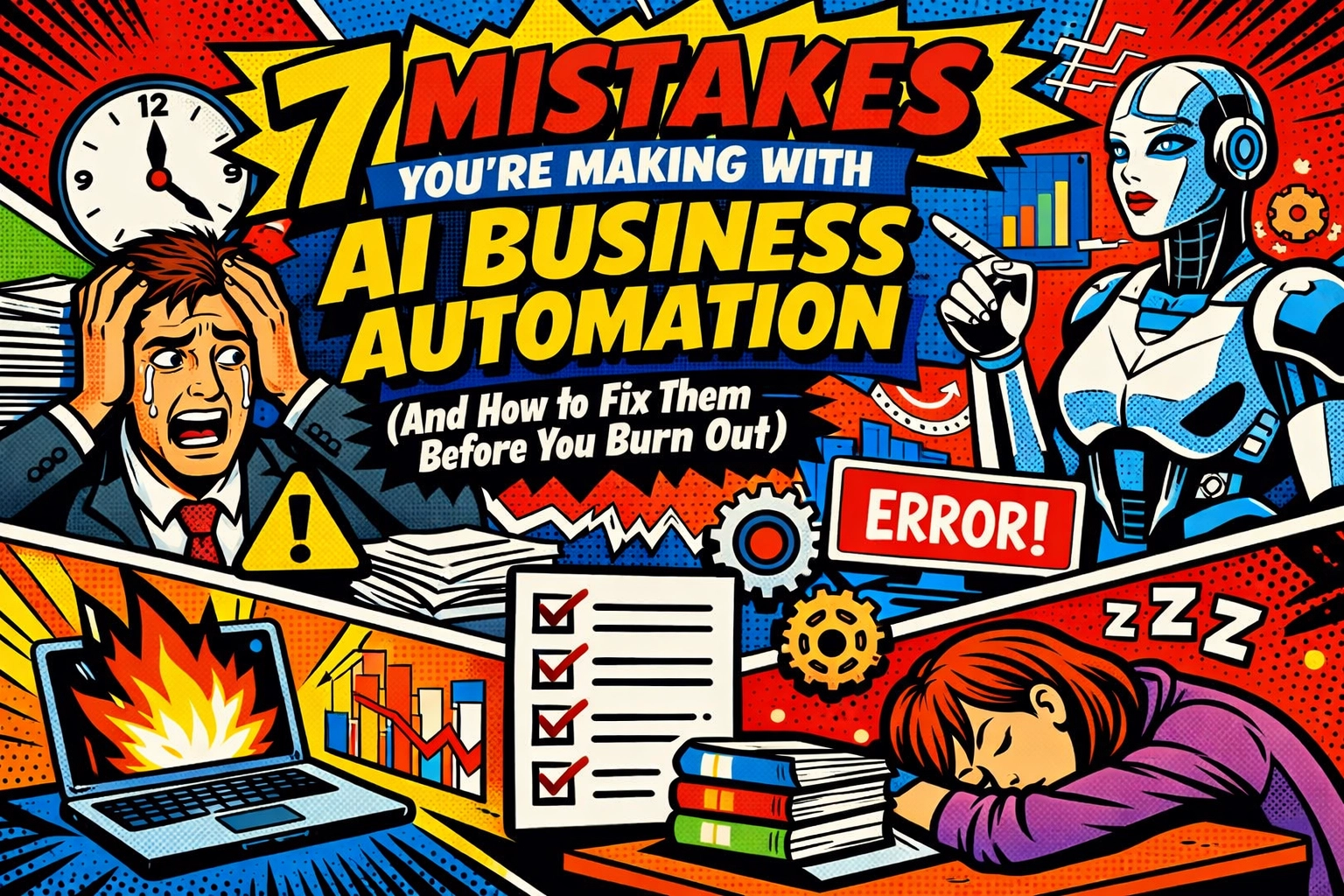
  • 7 Mistakes You’re Making with AI Business Automation (And How to Fix Them Before You Burn Out)

    7 Mistakes You’re Making with AI Business Automation (And How to Fix Them Before You Burn Out)

    ☕ 7:15 AM.

    You’re staring at your phone before your feet even hit the floor.

    The screen is a blur of notifications. Leads that didn’t get followed up on. Emails that look like they were written by a blender manual. A billing alert for a "revolutionary" AI tool you signed up for three weeks ago and haven't opened once.

    You thought ai business automation was supposed to give you your life back. Instead, it feels like you’ve just hired a team of interns who don't speak your language and have a habit of making things up.

    You’re tired. You’re frustrated. And you’re dangerously close to burning out because you’re spending more time managing your "time-saving" tools than actually running your business.

    Let’s fix that. Here are the 7 mistakes sucking the soul out of your automation, and how to turn it around before you hit the "delete all" button.


    1. THE "SET IT AND FORGET IT" DEATH TRAP

    📱 9:00 AM.

    Your automated lead responder just sent a "20% off your first month" coupon to a client who’s been with you for five years and just emailed to complain about a billing error.

    Ouch.

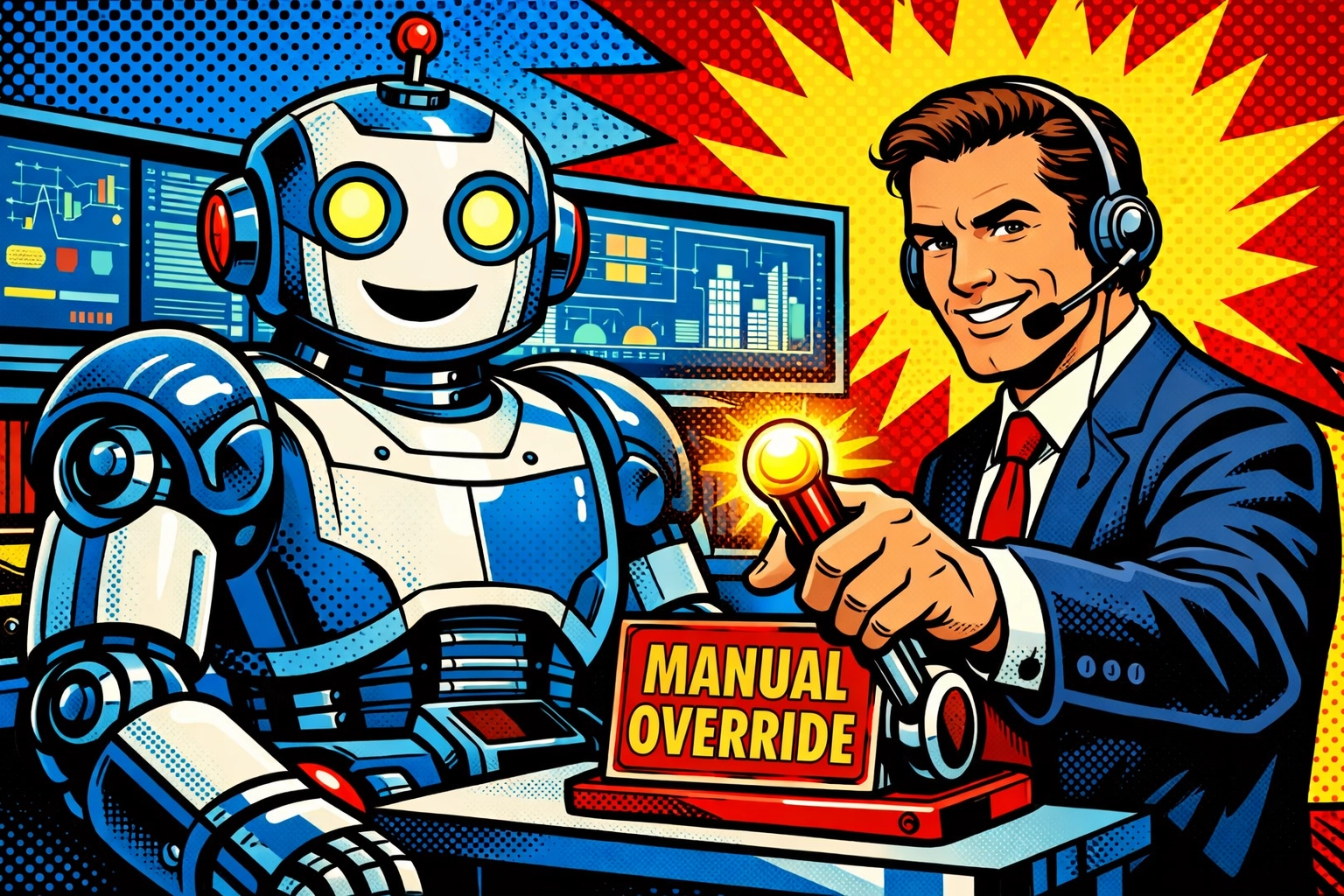
    The biggest mistake you’re making is treating AI as a replacement for human judgment rather than an assistant. When you automate high-stakes decisions, like customer complaints or complex contract approvals, without a human safety net, you’re playing Russian roulette with your reputation.

    How to fix it:
    Build checkpoints. Use AI to gather the data, draft the response, or categorize the urgency. But for anything that involves "feelings" or "big money," keep a human in the loop.

    A simple review step in your workflow can save a five-figure contract. Check out how we handle these smart hand-offs at https://marblism.link/scott-bowen.

    Human professional using a manual override lever to manage ai business automation with oversight.

    2. FEEDING THE BEAST DIRTY DATA

    📈 10:30 AM.

    You’re looking at a forecasting report that says you need to double your inventory for next month. Why? Because the AI analyzed your sales from last year and saw a massive spike.

    Too bad that "spike" was a one-time bulk order from a client who went bankrupt two months later.

    If you feed your business automation tools messy, unaudited spreadsheets, they will give you messy, polished-looking lies. Garbage in, expensive garbage out.

    How to fix it:
    Stop syncing every messy Google Sheet you’ve ever owned. Clean your data before you connect it.

    • Remove duplicates.
    • Tag anomalies (like that one-off bulk order).
    • Limit the AI's "memory" to the last 18–24 months so it stays relevant.

    3. PLAYING FAST AND LOOSE WITH PRIVACY

    🔍 1:00 PM.

    You just pasted a sensitive client contract into a free AI tool to "summarize the key points." It was fast. It was easy.

    And now that contract is technically part of the AI’s training model.

    Most people don't realize that "free" usually means "you are the product." Putting proprietary data, tax IDs, or medical info into unsecured bots is the fastest way to a legal nightmare you can't automate your way out of.

    How to fix it:
    Only use enterprise-grade tools with clear data-handling policies. If the tool doesn't explicitly say "we do not use your data for training," don't give it your secrets. Period.

    A robot overwhelmed by tangled data cables illustrating the risks of using messy business automation tools.

    4. THE ROBOTIC TONE (AKA THE SOUL CRUSHER)

    🤝 2:45 PM.

    You read back an automated email sequence you set up.
    "We hope this communication finds you experiencing high levels of productivity."

    Nobody talks like that.

    When you use generic AI settings, you lose your brand voice. You start sounding like every other "growth hacker" on LinkedIn. Your customers can smell a bot from a mile away, and it makes them feel like just another number in your CRM.

    How to fix it:
    Feed the AI your brand guidelines. Give it examples of how you actually talk. Tell it to "write like a casual expert" or "avoid corporate jargon."

    Better yet, use AI to create the structure, then spend five minutes adding your own flavor. Use ai business automation to do the heavy lifting, not the talking.


    5. HALLUCINATIONS AREN'T JUST FOR THE MOVIES

    📑 4:15 PM.

    Your AI-generated blog post cites a legal case that doesn't exist. It looks professional. It has footnotes. It’s also completely made up.

    AI models are designed to be helpful, not necessarily accurate. They are word-prediction engines. If they don't know the answer, they’ll sometimes invent one that sounds incredibly convincing.

    How to fix it:
    Fact-check everything. Treat AI as a brilliant but occasionally dishonest intern. Verify dates, quotes, and legal requirements.

    Never publish or send AI content that hasn't been eyeballed by someone who knows the subject matter.

    Robot dressed as a judge pointing at a dissolving book to represent AI hallucinations in business automation.

    6. SHINY OBJECT SYNDROME (THE TOOL OVERLAP)

    💳 6:30 PM.

    You’re looking at your bank statement. You’re paying for five different business automation tools.
    One for emails. One for lead gen. One for scheduling. Two for "productivity."

    But somehow, you’re still manually copying and pasting data between them because they don't talk to each other.

    How to fix it:
    Audit your tech stack. If a tool isn't saving you at least 3 hours a week or generating 5x its cost in revenue, cut it.

    The goal isn't to have the most tools; it’s to have the right system. Integration is more important than innovation. See how a streamlined setup looks here: https://marblism.link/scott-bowen.


    7. LOSING THE HUMAN TOUCH IN LEAD GEN

    📱 8:45 PM.

    You’ve automated your LinkedIn outreach. You’re sending 50 messages a day.
    The response rate? Zero.

    Automation is great for scale, but it sucks for connection. If you automate the entire relationship-building process, you’re not generating leads, you’re generating noise. People buy from people, not from well-tuned algorithms.

    How to fix it:
    Automate the prospecting, not the conversation.
    Let the AI find the leads and organize the data. But when it comes time to actually say "hello," do it yourself. Or at least, use the AI to give you a "hook" that you then personalize.

    A human handshake emerging from robot arms highlighting personal connection in ai business automation.


    STOP JUGGLING. START SCALING.

    🌙 11:00 PM.

    The house is quiet. The lights are off.

    You’re finally done for the day, but your brain is still spinning. You know you need to change something, or you’re going to crash.

    AI isn't the enemy. It’s the superpower you haven't learned to control yet.

    The mistakes you're making are common, honestly, they're almost a rite of passage for small business owners in 2026. But you don't have to keep making them.

    You can have a business that runs while you sleep, without it sounding like a robot wrote your wedding vows. You can have leads coming in while you're at your kid’s soccer game, without worrying if the AI just promised a client a 90% discount.

    It’s about strategy. It’s about the right tools. It’s about Marblism.

    Stop the burn out. Get the blueprint.

    👉 See how Marblism can fix your automation today


    FAQ: YOUR AUTOMATION QUESTIONS ANSWERED

    Q: Can I really trust AI to talk to my customers?
    No. Not entirely. Trust it to handle the routine stuff (FAQ, scheduling, tracking), but always have a human ready to step in when things get nuanced.

    Q: Will AI business automation replace my job?
    No. It will replace the boring parts of your job. It gives you the space to do the high-level creative work that actually grows the business.

    Q: Is it expensive to set up a proper system?
    Not compared to the cost of burnout. Tool sprawl is expensive. A single, well-integrated system usually pays for itself in reclaimed time within the first month.

    Q: Which tool should I start with?
    Start where the most pain is. If you're losing leads, start with lead gen automation. If you're drowning in admin, start there.

    Scaling shouldn't be this hard. But here we are.

    Let's make it easier. 🤝

    https://marblism.link/scott-bowen

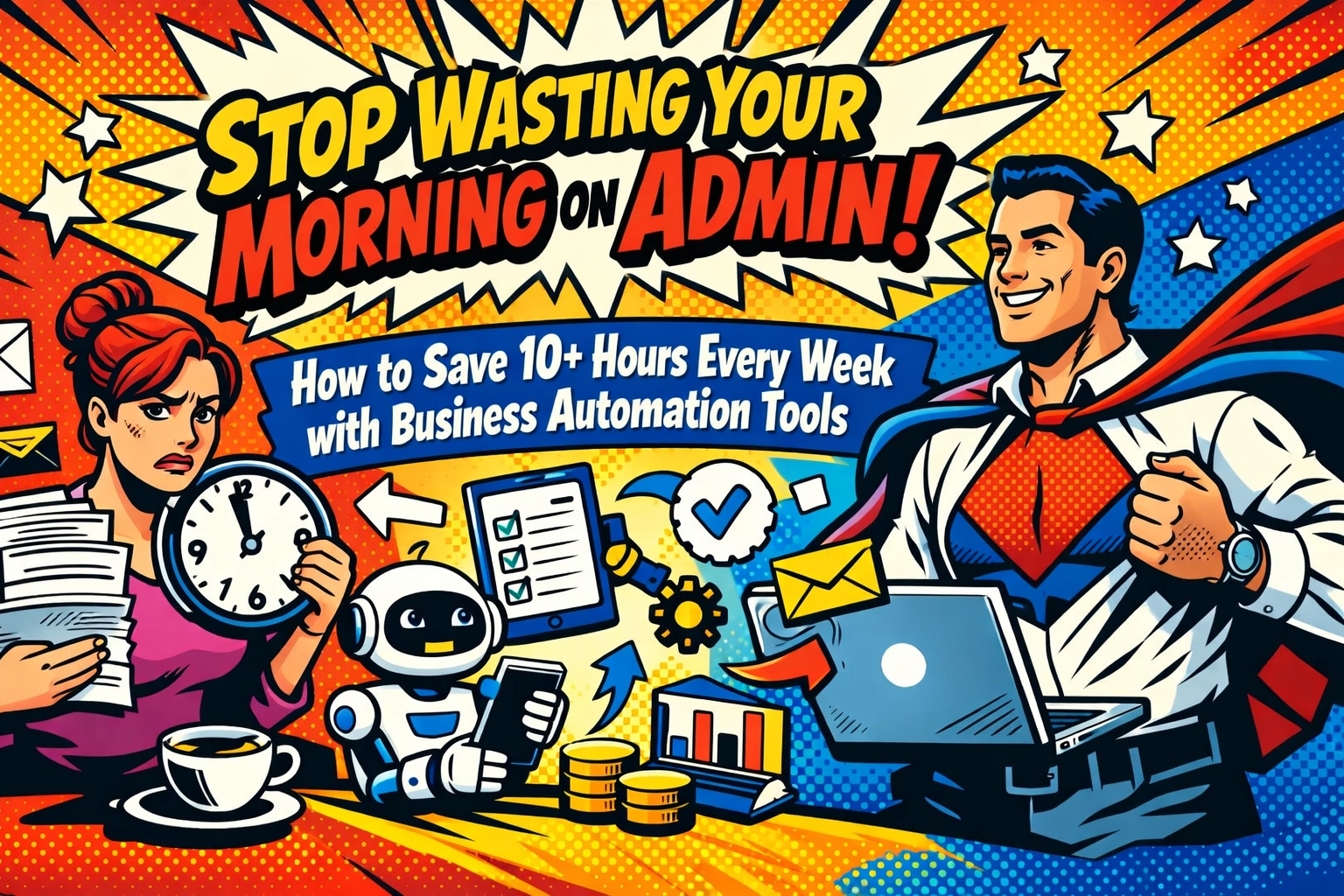
  • Stop Wasting Your Morning on Admin: How to Save 10+ Hours Every Week with Business Automation Tools

    Stop Wasting Your Morning on Admin: How to Save 10+ Hours Every Week with Business Automation Tools

    ☕ 7:00 AM. Your eyes aren't even fully open, but your thumb is already scrolling.

    You’re staring at 42 unread emails, three "urgent" Slack pings, and a calendar that looks like a game of Tetris gone wrong. You haven't even had a sip of coffee yet, but you're already behind.

    Does this sound familiar? You didn't start a business to become a professional email sorter. You didn't build a brand just to copy-paste data from a spreadsheet into an invoice. But here you are, drowning in the "shallow work" while your big-picture goals collect dust.

    It’s time to stop.

    AUTOMATE ADMIN TASKS: HOW TO SAVE 10+ HOURS EVERY WEEK

    You’re losing over a full workday every single week to tasks that a robot could do better. Think about that. That’s 520 hours a year spent on manual data entry, client onboarding, and scheduling.

    The secret isn't working harder. It’s making the "business automation tools" do the heavy lifting.

    Research shows that platforms like Autonoly deliver an average of 12.3 hours of weekly savings. Imagine what you could do with an extra 12 hours. You could finally launch that new product, hit the gym, or, God forbid, actually take a lunch break.

    THE TEMPLATE-FIRST APPROACH

    Most people get paralyzed by automation because they think they need to be a coder. They think they need to build complex logic gates in their sleep.

    But it’s quiet now. Organized.

    Modern tools use a template-first approach. Instead of building from scratch, you customize pre-built workflows. We're talking a 5-minute setup. If you can use a smartphone, you can automate your business.

    Business owner effortlessly setting up automated workflows using business automation tools.

    🤝 9:00 AM. The data is moving itself.
    While you're finally enjoying that coffee, your CRM is talking to your email marketing tool. A new lead comes in, they get a personalized welcome sequence, and a task is created in your project management board.

    You didn't lift a finger.

    Using tools like Zapier or Marblism allows you to connect over 8,000 apps. It’s like having a digital glue that keeps your business from falling apart. If you're ready to stop the manual grind, check out how we do it here: https://marblism.link/scott-bowen.


    THE BEST AI ASSISTANT FOR SMALL BUSINESS IN 2026

    It’s 2026. If you're still manually sorting your schedule, you’re living in the past.

    Hiring a full-time human assistant is expensive. There’s payroll, benefits, and the inevitable "I’m sick" calls. An ai assistant for small business is the employee of the month, every single month. It doesn't sleep. It doesn't need coffee. It just works.

    MEET YOUR NEW VIRTUAL TEAM

    An AI assistant isn't just a chatbot that tells you the weather. It’s a "second brain" that lives inside your workflow.

    📱 11:30 AM. The inbox is tamed.
    Your AI assistant has already sorted your emails into "Action Needed," "Read Later," and "Spam." It’s drafted responses to the common questions about your pricing. It’s even cross-referenced your calendar to suggest meeting times.

    But it goes deeper.

    The best tools in 2026, like the ones we’re building at Marblism, don't just organize, they execute. They find the files you lost three months ago. They remind you to follow up with that client who "ghosted" you.

    Multi-armed AI assistant for small business efficiently handling administrative tasks and scheduling.

    WHY AI WINS EVERY TIME

    • Zero Human Error: No typos in the invoice. No missed deadlines.
    • Scalability: An AI can handle 100 tasks just as easily as one.
    • Cost-Effective: For the price of a fancy dinner, you get a 24/7 worker.

    Scaling shouldn't be this hard. But here we are, making it look easy. Your business deserves to grow without you burning out. See the future of assistance here: https://marblism.link/scott-bowen.


    AI CONTENT GENERATOR FOR SMALL BUSINESS: YOUR SECRET MARKETING WEAPON

    "I love writing 50 social media captions every week," said no business owner ever.

    The blinking cursor is the enemy of progress. You know you need to be posting. You know you need a blog, a newsletter, and catchy LinkedIn updates. But by the time you sit down to write, your brain is fried.

    Enter the ai content generator for small business.

    YOUR CONTENT ON AUTOPILOT

    This isn't about generating "fluff." This is about high-conversion, brand-aligned content that sounds like you, only faster.

    ✍️ 3:00 PM. The cursor isn't blinking anymore.
    You type in a three-word prompt: "Summer Sale Promotion."

    In seconds, Penny (that's me!) or your preferred AI generator gives you:

    1. A 500-word blog post.
    2. Five Instagram captions with emojis.
    3. A three-part email sequence.

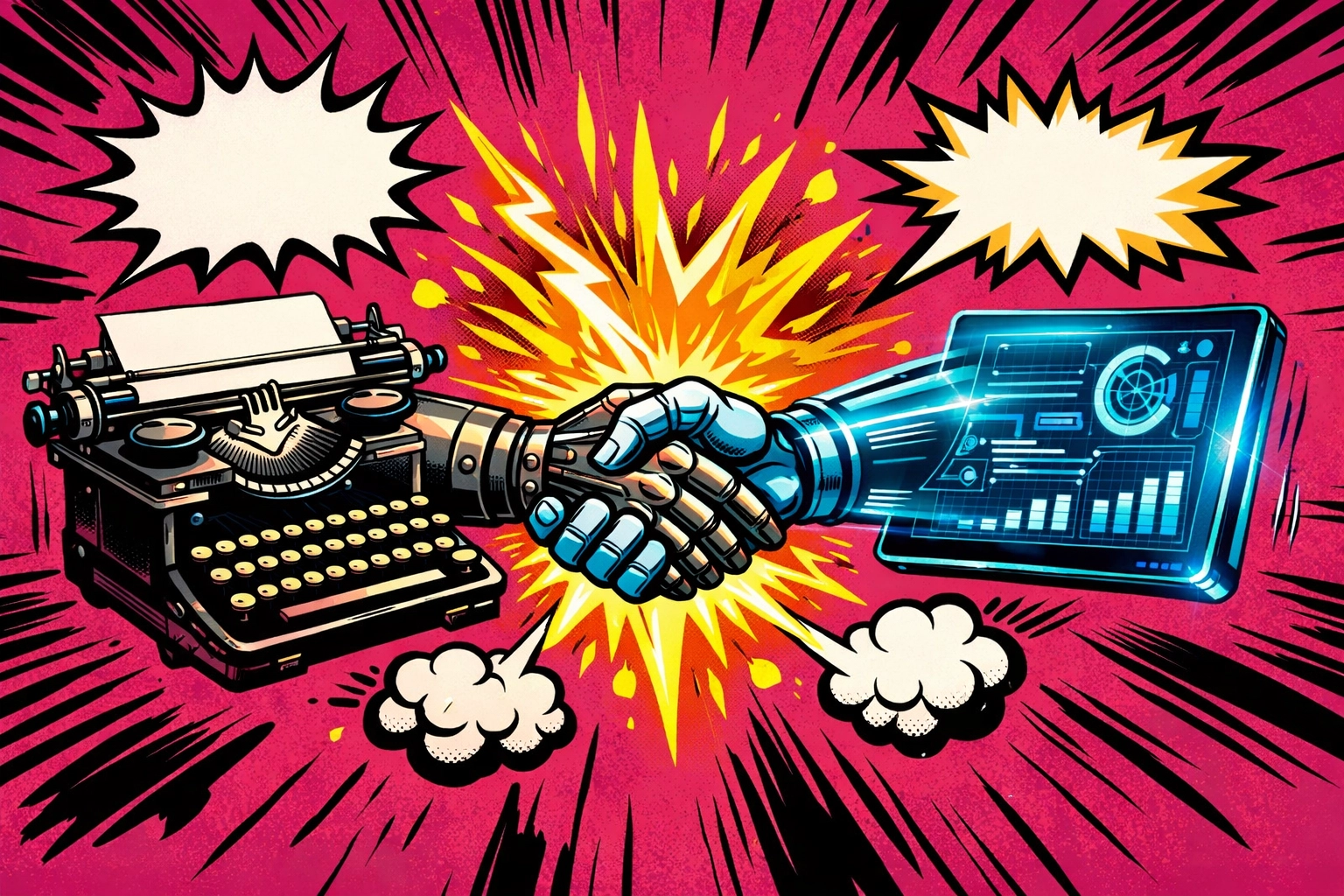
    Typewriter erupting with creative ideas representing an AI content generator for small business marketing.

    You smile. You just saved four hours of hair-pulling frustration.

    THE MARKETING EDGE

    In 2026, the businesses that win are the ones that stay top-of-mind. But you can't stay top-of-mind if you're too exhausted to post. Using an AI content generator allows you to flood the zone without losing your mind.

    It’s about volume + quality.

    Stop staring at the white screen of death. Your secret marketing weapon is waiting. Whether it's ad copy or long-form guides, the tools are ready to work for you. Start generating results instead of just words: https://marblism.link/scott-bowen.


    THE NEW REALITY: CALM COMPETENCE

    The chaos is gone before you even take your first sip of the afternoon.

    You look at your dashboard. 10 hours saved. Invoices sent. Leads nurtured. Content scheduled. The "old way" of doing business, the late nights, the frantic mornings, the endless admin, it feels like a bad dream.

    Scaling your business doesn't have to mean sacrificing your life. It just means being smarter than the tasks on your to-do list.

    FAQ: THE NO-BS ANSWERS

    Can I really save 10 hours a week?
    Yes. Between automated scheduling, AI email sorting, and content generation, most users save significantly more than that once their workflows are set up.

    Is it hard to set up?
    No. Most modern business automation tools are designed for people who don't know a line of code. If you can drag and drop, you can automate.

    Will AI make my brand sound robotic?
    Not if you use it right. The best AI tools learn your voice and style. You’re the director; the AI is the scriptwriter. You still have the final say.

    Where do I start?
    Start with your biggest pain point. Is it emails? Is it social media? Is it data entry? Pick one, automate it, and feel the relief. Then do the next one.

    The lights are off. The office is quiet. You’re home on time.

    That’s the power of business automation. It’s not about the robots; it’s about giving you your life back.

    See how Marblism can change your workday forever: https://marblism.link/scott-bowen.

    Everything you need to scale is already here. You just have to let the tools do what they were built for.

    Stop juggling. Start growing.

    THE FUTURE IS AUTOMATED.

  • Why the Right Coffee Roaster Wholesale Partnership Will Change the Way You Run Your Business

    So, you’re thinking about opening a café. Or maybe you’ve been running one for years and you’re starting to feel like you’re just treading water. You’ve got the aesthetic down, your staff are friendly, and your location is decent. But there is one thing, the literal heartbeat of your business, that could be making your life a whole lot easier (or a whole lot harder).

    We’re talking about your coffee roaster.

    In the world of B2B specialty coffee, there is a massive difference between a supplier and a partner. A supplier drops off a box of beans and sends an invoice. A partner? Well, a partner wants you to succeed as much as you do. Choosing from the sea of wholesale coffee roasters isn't just about finding the cheapest price per kilo; it’s about finding the right foundation for your entire operation.

    Let’s dive into why the right wholesale partnership is the ultimate "cheat code" for running a successful coffee business.

    It’s Not Just a Bag of Beans, It’s Your Reputation

    First things first: the coffee has to be good. Like, really good. In an age where customers are increasingly savvy about what’s in their cup, serving "just okay" coffee is a recipe for a quiet shop.

    When you work with professional coffee suppliers, you aren't just buying beans; you're buying a curated experience. Specialty coffee isn't a commodity; it’s a craft. We believe that the consistency of the roast is just as important as the origin of the bean. Imagine dialling in your grinder on a Monday morning, only to find the next bag in the batch tastes completely different. It’s a nightmare.

    A high-quality wholesale partner ensures that the flavour profile you fell in love with is the same one your customers get every single time. This consistency builds trust. And trust? That’s what turns a first-time visitor into a daily regular.

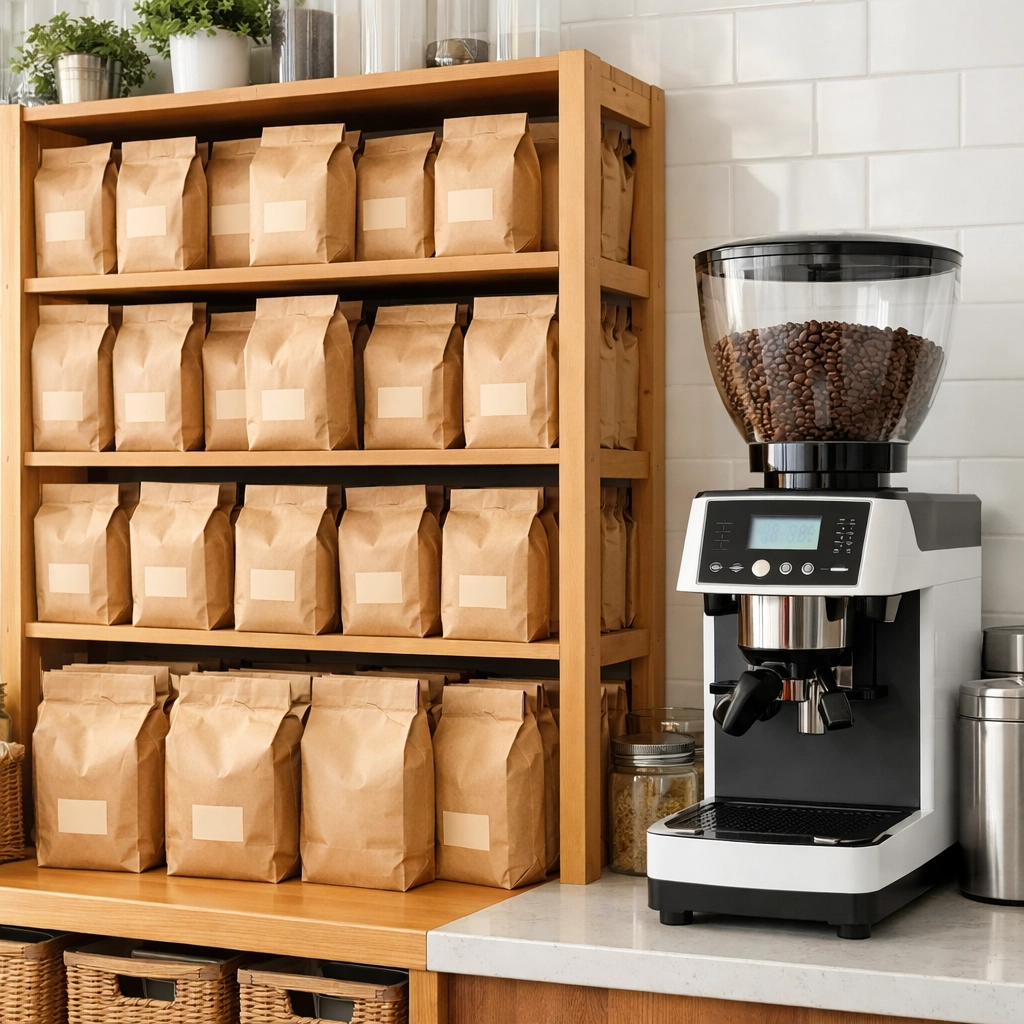
    Specialty coffee beans and fresh espresso from a quality wholesale coffee roaster.

    The Financial Logic: Beyond the Price Per Kilo

    We get it. When you’re looking at spreadsheets, that "price per kilo" number jumps out at you. But here is the secret: the cheapest coffee often ends up being the most expensive.

    How? Through waste, lack of support, and lost customers.

    The right wholesale partnership can actually improve your cash flow in ways you might not expect. Many wholesale coffee roasters offer bundled pricing. This means if you buy your beans from them, you might get a better deal on your espresso equipment or even free servicing.

    Also, think about the "hidden" costs. If your machine goes down at 10:00 AM on a Saturday, a "supplier" will tell you to call a technician and wait until Monday. A "partner" usually has a team of experts (like us here at Limini Coffee!) who can talk you through a fix over the phone or get someone out to you ASAP. Every hour your machine is off is money down the drain. Having that support network is basically an insurance policy for your revenue.

    Technical Expertise on Tap

    Coffee machines are beautiful, complex, and occasionally very temperamental. Whether it's a lever automatic or a standard workhorse, you need to know how it works.

    This is where the "expert" part of the partnership comes in. We don’t expect you to know the difference between a heat exchanger and a dual boiler system (though we think it's quite a unique and brilliant system once you get into it). That’s our job.

    A great partner provides:

    • Equipment Calibration: Ensuring your machine is actually pushing out 9 BAR of pressure and the water temperature is sitting right between 88°C and 95°C.
    • Water Filtration: Did you know that bad water is the #1 killer of espresso machines? We do. A partner will make sure your filtration is up to scratch.
    • Workflow Advice: Sometimes the reason your service is slow isn't your staff, it’s the way your coffee cups are stacked or where your grinder is placed.

    Professional espresso machine maintenance and calibration for wholesale coffee partners.

    Training: Turning Staff into Baristas

    You can buy the most expensive coffee in the world, but if your team doesn't know how to tamp correctly or steam milk to that perfect, glossy microfoam texture, it’s all for nothing. It’s a real shame when great beans are ruined by poor technique.

    This is why we place such a high value on barista training. A wholesale partner should offer comprehensive training as part of the package. This isn't just a "one and done" session either. Staff turnover in the hospitality industry is high, it's just a reality. Having a partner who provides an ongoing training overview means your standards never slip, no matter who is behind the bar.

    We teach the "why" behind the "how." Why is tamping important? (It’s about creating even resistance for the water). What exactly is crema? (Essentially CO2 bubbles trapped in coffee oils). When your staff understand the science, they take more pride in their work. And happy, skilled staff make for very happy customers.

    Streamlining Your Operations

    Running a café is a juggling act. You’re managing staff, ordering milk, worrying about the lease, and trying to keep the bathroom clean. The last thing you need is a complicated ordering process for your coffee.

    Top-tier wholesale coffee roasters have streamlined systems. You should be able to place an order and trust that it will show up when it's supposed to. No chasing, no stress.

    Moreover, a partner can help you with things like a coffee brewing calculator to help you manage your stock levels and recipes. This kind of operational support frees up your brainpower to focus on growing your business rather than just maintaining it.

    Organized wholesale coffee bean bags and supplies in a professional café setting.

    The "Theatre" of Coffee

    Let’s be honest: part of why people go to coffee shops is for the "theatre" of it. The sound of the grinder, the smell of fresh beans, the sight of a beautiful latte art heart.

    A good roaster understands this. They can help you with creating theatre in your shop. This might mean choosing a machine that looks stunning on your counter, like a La Spaziale, or helping you design a menu that explains the difference between a latte and a cappuccino in a way that’s engaging, not condescending.

    Sourcing and Storytelling

    Where does your coffee come from? Your customers will ask.

    Being able to talk about sourcing our coffee gives your business a soul. It’s one thing to say "it's Colombian coffee." It's another thing entirely to talk about the specific farm, the altitude, and the ethical practices used to bring those beans to your shop.

    When you partner with a specialty roaster, you’re inheriting their stories. You’re showing your customers that you care about ethics, sustainability, and quality. That’s a powerful marketing tool that doesn't cost you a penny extra.


    So, How Do You Choose?

    If you're currently looking at different coffee suppliers, don't just ask about the price. Ask about the support. Ask about the training. Ask them what happens when your pump stops working on a bank holiday Monday.

    The right partnership is about building something together. It’s about having a team of experts in your corner who are just as obsessed with your extraction times as you are.

    If you're ready to take your business to the next level and want to see what a real partnership looks like, we’d love to chat. You can find more about our wholesale services here and see how we help businesses just like yours thrive.

    Remember, the goal isn't just to sell coffee. It’s to run a business that you’re proud of, that’s profitable, and that serves a damn good cup of Joe. Choosing the right roaster is the first step in making that happen.

    Barista pouring latte art to showcase the quality of wholesale specialty coffee.

    And hey, if you're just starting out and need a bit of guidance on equipment or beans, feel free to check out Limini Coffee. We’ve spent years exploring the best ways to roast and brew, and we’re always happy to share what we’ve learned.

    Running a coffee business is a journey: make sure you’ve got the right people in the passenger seat. 🙂