Category: Category 1

Use this description to tell users what kind of blog posts they can find in this category.

  • The Ultimate Guide to Wholesale Coffee Roasters: Everything You Need to Succeed

    So, you’re thinking about jumping into the world of professional coffee? Whether you are sketching out a business plan for a brand-new café or you are looking to level up your current establishment, one decision stands taller than all the rest: choosing your wholesale coffee roaster.

    It’s a big deal. Honestly, it’s probably the most significant partnership you’ll form in your business life. Your roaster isn't just a person who sends you brown beans once a week; they are your consultant, your technician, your trainer, and your biggest cheerleader. At Limini Coffee, we’ve spent years perfecting this relationship because we know that when you succeed, we succeed.

    If you're ready to start that journey, you can check out our wholesale coffee options here to see how we do things differently.


    Why the "Wholesale" Label Matters

    When people hear "wholesale," they often think of massive warehouses and palettes of generic product. In the specialty coffee world, it’s the exact opposite. Wholesale specialty coffee is about precision, freshness, and relationship-driven business.

    Choosing a wholesale supplier means you are looking for consistency. You need the coffee you serve on a Tuesday morning to taste exactly like the coffee you served on Saturday afternoon. A dedicated wholesale coffee roaster provides the infrastructure to make that happen.

    But it’s not just about the beans. A true partner helps with everything from the initial shop fit-out to the technical specs of your espresso machine.
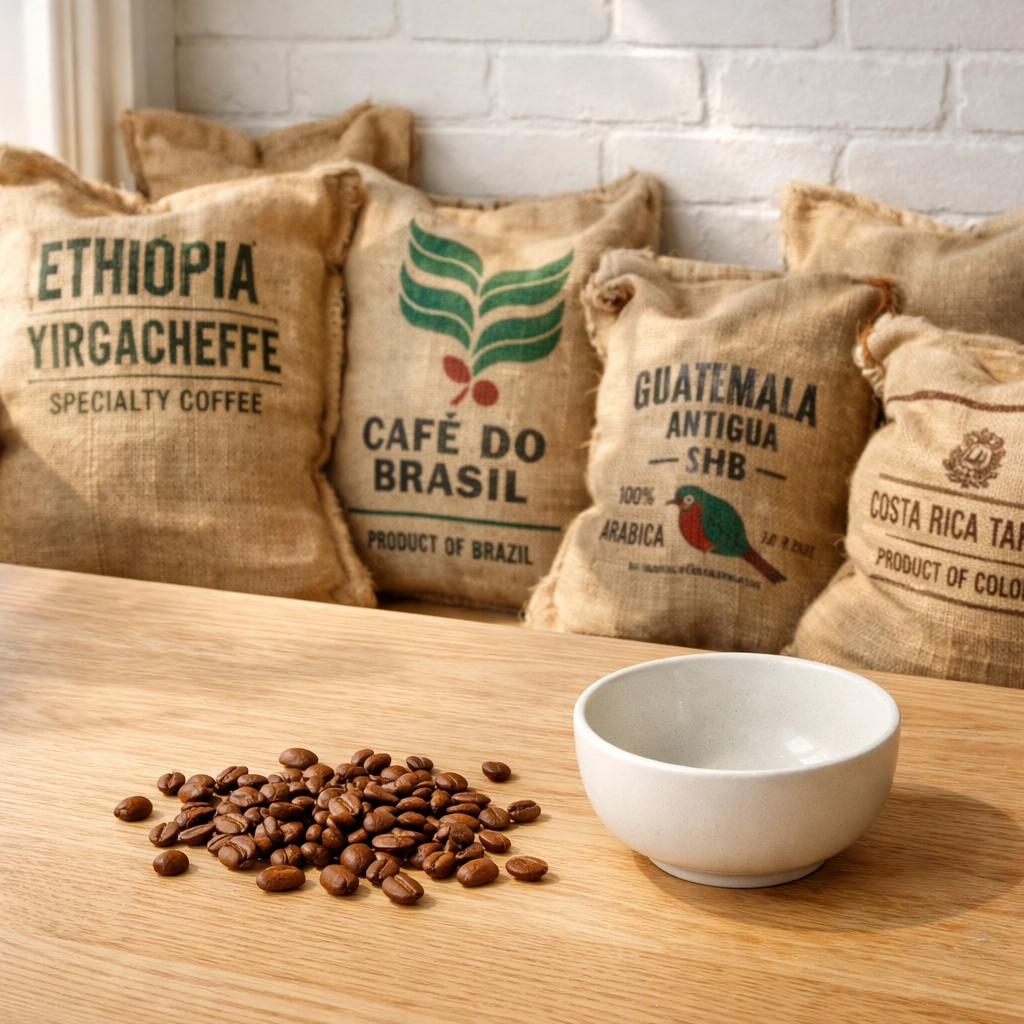
    Premium specialty coffee beans from a wholesale coffee roaster on a rustic wooden table with burlap sacks.

    More Than Just Beans: The Support System

    Imagine this: It’s 8:00 AM on a Monday, you have a queue out the door, and your espresso machine decides to stop building pressure. Who do you call? If you’ve just bought beans from a supermarket or a tiny micro-roaster with no support staff, you’re in trouble.

    A full-service wholesale partner provides:

    • Equipment Advice: Knowing whether you need a two-group or three-group machine is vital. We often help clients with choosing espresso equipment that actually fits their volume.
    • Technical Training: You can have the best beans in the world, but if your team doesn't know how to tamp or dial in the grind, the coffee will be mediocre.
    • Business Consultation: From building a coffee shop to workflow design, we’ve seen what works and what doesn't.

    And let’s be real, having that safety net is priceless. If you want to see the kind of support we offer at Limini Coffee, take a look at our wholesale and dropshipping services.


    The Technical Essentials: Understanding the Gear

    So, let's talk shop. You can't run a professional coffee business on home-grade gear. You need equipment that can handle the heat, literally.

    When we talk about professional espresso machines, we’re looking at serious specs. We’re talking about machines that can maintain a steady 9 BAR of pressure and hold a consistent temperature (usually between 88 ºC to 95 ºC / 190 ºF to 203 ºF).

    We are massive fans of La Spaziale machines. Why? Because they use a unique steam heat exchange system that is incredibly stable. Whether you are looking at how a La Spaziale works or exploring the internal makings, the consistency is what wins us over every time.

    Lever vs. Automatic

    This is a classic debate. Do you want the "theatre" of a lever machine, or the precision and ease of an automatic?

    • Automatic: Great for high-volume shops where consistency across different baristas is key.
    • Lever: Beautiful to watch and offers a unique pressure profile, but requires a more skilled hand.

    You can read more about the theatre of coffee here or compare lever vs. automatic machines to see which fits your brand’s vibe.

    Professional espresso equipment featuring a chrome group head and portafilter for a specialty café.


    Training: The Secret to Longevity

    We believe that a coffee shop is only as good as its worst barista. It sounds harsh, but it’s true. You are selling an experience, and that experience relies on technical skill.

    One of the biggest mistakes café startups make is neglecting training. They spend £10,000 on a machine and £0 on learning how to use it. This is why we include barista training as a core part of our wholesale offering.

    What should your team know?

    1. The Science of Milk: Understanding proteins and fats to create that perfect micro-foam (around 140 °F / 60 ºC is the sweet spot). We have a deep dive into understanding milk here.
    2. Dosing and Tamping: It’s not just about pushing hard; it’s about level distribution. Check out our guide on tamping.
    3. The Menu: Knowing the difference between a flat white, a latte, and a cappuccino isn't as simple as it sounds. We break down the different drinks here.

    Investing in an overview of training early on prevents expensive mistakes and ensures your customers keep coming back.


    Sourcing and Quality Control

    Where does your coffee actually come from? In the B2B world, your customers are becoming more educated. They want to know about the origin, the process, and the ethics behind the cup.

    At Limini Coffee, we take sourcing our coffee very seriously. We look for coffees that aren't just high-scoring on the SCAA scale, but also sustainable for the farmers.

    And then there’s the roast. Freshness is everything. Coffee is a seasonal fruit, and it should be treated as such. When you work with a specialty roaster, you're getting beans that were roasted days (not months) ago. This ensures you get that beautiful crema that signifies a fresh, well-extracted shot.

    Skilled barista pouring milk into espresso with perfect crema, showcasing professional barista training.


    Managing the Numbers

    Let's talk about the boring-but-essential stuff: the margins. To succeed in the wholesale coffee world, you need to know your costs down to the penny.

    We recommend using tools like a coffee brewing calculator to figure out exactly how much coffee you’re using per shot and what your wastage looks like. Even small things, like the cups you choose, can impact your bottom line and the customer's perception of value.

    When you’re looking at suppliers, don’t just look at the price per kilo. Look at the "total cost of ownership."

    • Does the roaster offer free delivery?
    • Is technical support included?
    • Do they provide point-of-sale materials?

    A slightly more expensive bean from a roaster who provides exceptional support will almost always save you more money in the long run than "cheap" beans from a supplier who vanishes once the invoice is paid.


    Building a Partnership That Lasts

    Starting a coffee business is a marathon, not a sprint. You want a roaster who is going to be there for you in year five, not just month one.

    We pride ourselves on being that partner. We love hearing about our clients' successes, and we’re always here to help troubleshoot the failures. If you're looking for a team that's as passionate about your café as you are, we’d love to chat.

    You can learn more about us and our philosophy, or if you're ready to take the plunge, head over to Limini Coffee and let's get started.

    Artisanal display of coffee cherries, unroasted green beans, and freshly roasted coffee from a supplier.

    Final Thoughts for the Road

    So, what’s the takeaway?

    1. Don't settle for a supplier; find a partner.
    2. Invest in your gear and your people.
    3. Focus on consistency above all else.

    The world of specialty coffee is vibrant, challenging, and incredibly rewarding. With the right wholesale coffee roaster by your side, you aren't just opening a shop: you're building a community. And honestly? That's the best part of the job.

    If you have questions about layouts, machines, or just want to talk about beans, reach out to us. We’ve been doing this for a long time, and we’d love to share what we’ve learned.

    Ready to level up? Start your wholesale journey with Limini Coffee today.

  • Does Content Still Rank? How to Use an AI Content Generator for Small Business in 2026

    Does Content Still Rank? How to Use an AI Content Generator for Small Business in 2026

    You’re staring at a blinking cursor.

    It’s 2026. The internet is louder than a crowded bar on a Friday night, and you’re wondering if anyone is even listening.

    You’ve heard the rumors. "SEO is dead." "AI killed the blog post." "Nobody clicks on links anymore."

    But then you look at your competitors. They’re still ranking. They’re still showing up in those fancy AI search summaries. They’re still getting the clicks while you’re stuck wondering if you should just delete your "News" section and give up.

    Here’s the cold, hard truth: Content still ranks. In fact, it’s more important than ever.

    But the way you create it? That has to change. You can’t write like it’s 2019. You can’t even write like it’s 2024.

    You need an ai content generator for small business that actually understands the world we’re living in today. You need Marblism.

    7:15 AM: THE MORNING PANIC

    You wake up, grab your phone, and check your analytics.

    Flatline.

    Your latest post, the one you spent six hours sweating over last Tuesday, is sitting on page four. It might as well be buried in a digital cemetery.

    You feel that familiar pang of "content guilt." You know you need to publish more. You know consistency is the secret sauce. But you also have a business to run. You have customers to call, fires to put out, and a life to live.

    The struggle is real. You want to rank, but you don't want to become a full-time ghostwriter for your own brand.

    Stressed small business owner checking a tablet showing flat search engine ranking graphs.

    📱 9:30 AM: THE DISCOVERY

    You’re scrolling through a forum, looking for answers, when you see a mention of Marblism.

    Specifically, how it’s being used as the go-to ai content generator for small business owners who are actually winning in 2026.

    You learn that in today’s world, quantity isn't the king anymore. Quality is the emperor. But here’s the kicker: "Quality" in 2026 doesn't mean "I wrote this by hand for ten hours." It means "This content provides original value and satisfies the AI search bots."

    You realize you’ve been doing it all wrong. You’ve been trying to beat the machines by being a machine.

    But with Marblism… you don't have to.

    🔍 11:00 AM: THE NEW STRATEGY

    You decide to give it a shot.

    You open up Marblism and realize it’s not just a "text box that spits out junk." It’s an ecosystem.

    The strategy in 2026 is all about "Zero-Visit Visibility." You know those little boxes at the top of Google that answer the question before you even click? That’s where you want to be.

    To get there, you need content that is structured perfectly. You need data. You need original insights.

    You feed your unique business perspective into Marblism. You tell it about that one weird customer interaction that taught you everything about your niche. You give it your "secret sauce" tips.

    And then? You let the AI handle the formatting, the SEO metadata, and the heavy lifting.

    You aren't just generating content. You're scaling your expertise.

    An AI content generator for small business turning ideas into high-quality, optimized blog posts.

    🤝 1:45 PM: THE HUMAN TOUCH

    One of the biggest mistakes people make with an ai content generator for small business is thinking they can just "set it and forget it."

    Google’s 2026 algorithms are smarter than that. They can smell a 100% robotic post from a mile away. They’re looking for Experience, Expertise, Authoritativeness, and Trustworthiness.

    You spend fifteen minutes, not five hours, tweaking the draft Marblism gave you.

    You add a personal joke. You swap a generic example for a real-life testimonial from a client named Sarah.

    The result? A post that reads like a human, ranks like a pro, and took less time than your lunch break.

    Check it out for yourself at https://marblism.link/scott-bowen.

    ☎️ 3:20 PM: THE RESULTS START TRICKLING IN

    You’re back at your "real" job. You’re talking to a lead.

    "Yeah, I actually found you through that article you posted about small business automation," they say.

    Your heart skips a beat. It worked.

    The AI search engines picked up your post because it was high-quality and hit all the right technical notes. The human read it because it felt authentic.

    You didn't have to choose between "fast" and "good."

    Successful small business owner taking a sales call after content marketing improves search rankings.

    🌙 6:00 PM: THE PEACE OF MIND

    The sun is setting. Usually, this is the time you’d be opening your laptop to "try and get a head start" on tomorrow’s blog post.

    But it’s quiet. Organized.

    Your content calendar for the next two weeks is already mapped out in Marblism. The posts are drafted. The SEO is dialed in.

    You just send a thumbs-up to your dashboard and close your laptop.

    The chaos is gone before you even take your first sip of your evening drink.

    STOP JUGGLING. START RANKING.

    You don't need to be a professional writer to dominate your niche in 2026. You just need to be a smart business owner.

    Content still ranks, but only if you have a system that keeps up with the speed of AI. Marblism is that system.

    It’s the bridge between "I don't have time for this" and "Why is our traffic exploding?"

    REAL PEOPLE, REAL RESULTS

    "I used to spend my entire Sunday writing three blog posts for the week. Now? Marblism does 90% of the work in ten minutes. My rankings are up, and my stress is down." , Mark, HVAC Owner

    "The quality is what shocked me. It doesn't sound like a robot. It sounds like me, but on a really good day." , Samantha, Boutique Consultant

    "If you're a small business and you aren't using this, you're basically giving your traffic away to your competitors." , Dave, E-commerce Founder

    Small business owner enjoying free time after using AI to automate their content calendar and SEO.

    FREQUENTLY ASKED QUESTIONS

    Does Google penalize AI content in 2026?
    No. Google cares about value. If your content is helpful and original, it ranks. Marblism ensures your AI-assisted content stays on the right side of the rules.

    Is it hard to set up?
    No. If you can send an email, you can use Marblism. It’s designed for busy people, not tech wizards.

    How is this different from a basic chatbot?
    A chatbot gives you a generic answer. Marblism is a dedicated ai content generator for small business that integrates with your brand voice, handles SEO technicals, and maps out a long-term strategy.

    Do I still need to edit the posts?
    Yes. We recommend a "Human-in-the-loop" approach. Give it 10-15 minutes of your personality to make it truly shine. Marblism does the 2 hours of grunt work so you can do the 10 minutes of magic.

    WHAT’S YOUR MOVE?

    The gap between the businesses that use AI and the ones that fear it is growing every day.

    Don't be the person still trying to out-write an algorithm by hand.

    Use the tools. Save your time. Rank your business.

    Go to https://marblism.link/scott-bowen and see how easy it is to reclaim your schedule.

    Scaling Shouldn't Be This Easy. But Here We Are.

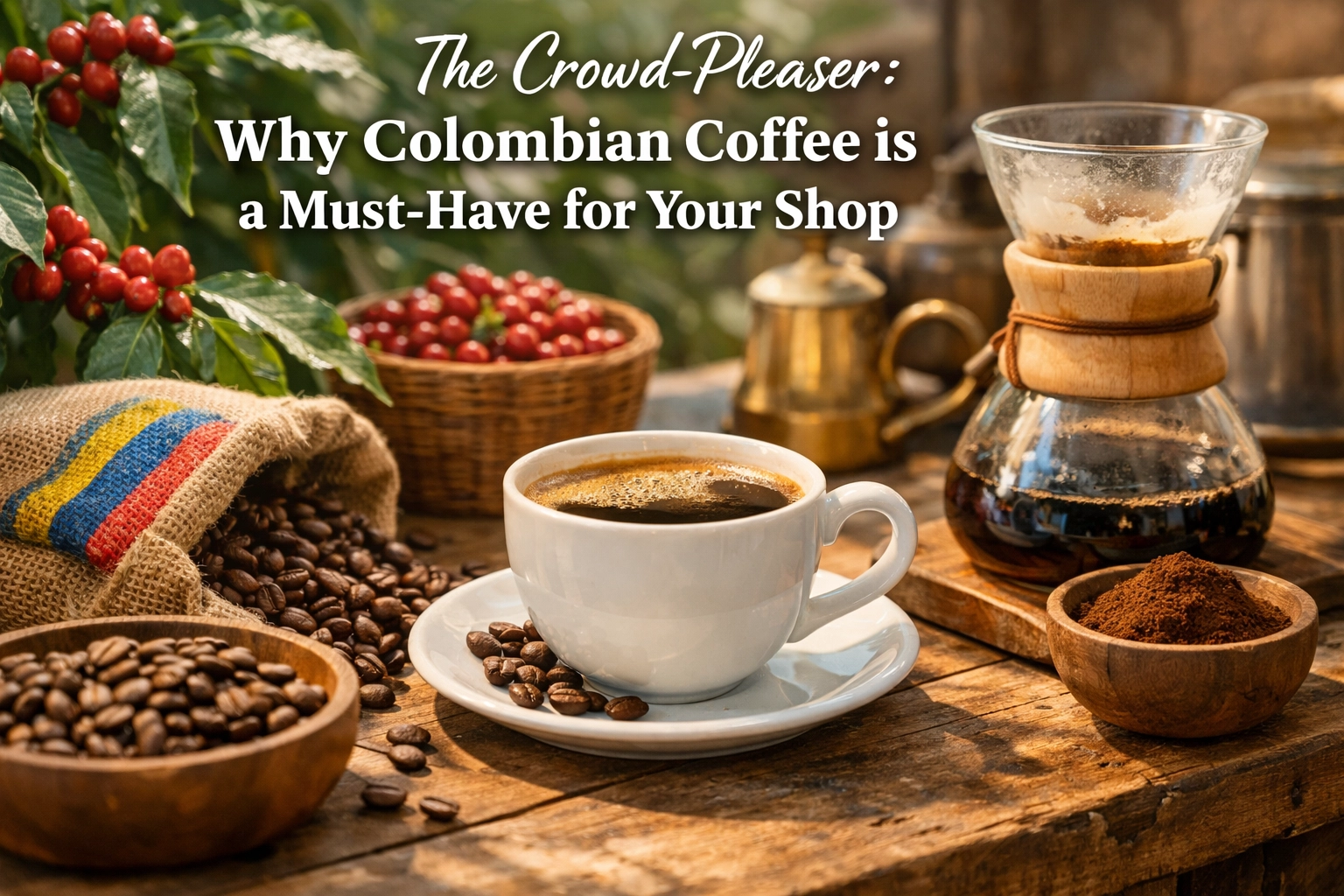
  • The Crowd-Pleaser: Why Colombian Coffee is a Must-Have for Your Shop

    The Crowd-Pleaser: Why Colombian Coffee is a Must-Have for Your Shop

    Let's talk about the coffee that basically never lets you down.

    If you're running a coffee shop and haven't got Colombian on your menu, you're leaving money on the table. And we don't say that lightly. Colombian coffee has this remarkable ability to make both your specialty enthusiasts and your "just need caffeine" crowd happy at the same time. It's the Swiss Army knife of the coffee world.

    Why Colombian Coffee Just Works

    Here's the thing about Colombian beans: they're approachable without being boring.

    Unlike some origins that can be polarizing, think heavy, smoky Indonesian coffees or aggressively fruity naturals, Colombian sits in this sweet spot where almost everyone takes a sip and goes, "Yeah, that's nice." And in the wholesale specialty coffee game, that kind of universal appeal is gold.

    The reason? Colombia's coffee-growing regions sit at ideal elevations with perfect volcanic soil and consistent rainfall. This creates beans with a naturally balanced profile, bright acidity, medium body, and complex flavours that don't overwhelm. You get chocolate, caramel, and nutty notes dancing with citrus and berry undertones. It's layered but not challenging.

    Fresh roasted Colombian coffee beans spilling from burlap sack showing medium roast quality

    The Business Case for Stocking Colombian

    Look, we get it. As coffee suppliers, we've heard every concern about inventory management and SKU rationalization. But Colombian coffee earns its place on your menu for some very practical reasons.

    Consistency is king. Nearly all Colombian coffee is washed processed, which preserves the origin character beautifully and gives you cleaner, more predictable flavours batch after batch. Your customers come back knowing what they're getting. That reliability builds trust, and trust builds repeat business.

    Menu versatility without the complexity. A quality Colombian works brilliantly across your entire menu. Espresso? Absolutely. Filter? Perfect. Milk-based drinks? It holds its own without disappearing. You're essentially covering multiple customer preferences with one origin.

    Margins that make sense. Colombian offers excellent quality at a price point that allows healthy margins. It's premium enough to command respect but accessible enough that customers don't balk at the price.

    Regional Diversity: The Secret Weapon

    Here's where it gets interesting for those of you thinking about menu development.

    Colombia isn't just one flavour. Different regions produce distinctly different profiles, which means you can offer variety without juggling beans from multiple countries.

    Antioquia brings chocolatey, nutty characteristics, basically your reliable, crowd-pleasing workhorse.

    Nariño, up at high elevations near Ecuador, delivers brighter, fruitier notes with vibrant berry and tropical fruit characteristics. This is your "surprise and delight" offering for customers ready to explore.

    Huila sits somewhere in the middle with balanced sweetness and wine-like acidity.

    The beauty? You can rotate through regions seasonally, keeping your menu fresh and giving your regulars something new to try, all while maintaining that "Colombian" through-line customers recognize and trust.

    Three café preparations of Colombian coffee: espresso, filter, and latte on wooden counter

    What Makes a Quality Colombian (and How to Spot It)

    Not all Colombian coffee is created equal, and as wholesale buyers, you need to know what separates the good from the exceptional.

    Look for micro-lot or single-estate coffees when possible. These give you traceability and typically higher quality control than generic "Colombian Supremo" offerings. You get a story to tell customers, which matters increasingly in the specialty market.

    Processing matters. While washed is standard, some Colombian producers are experimenting with honey and natural processing. These can add interesting flavour dimensions, just make sure they align with your menu strategy.

    Freshness is non-negotiable. Colombian coffee, like any quality coffee, shows best within a few months of roasting. We work with coffee suppliers who prioritize quick turnaround because stale coffee, even if it's from Colombia's finest farms, won't impress anyone.

    Altitude also tells you something. Generally, the higher the elevation (look for 1,700+ meters), the denser and more complex the bean. These high-grown coffees often justify premium pricing.

    Training Your Team on Colombian

    Your staff are your best salespeople, so give them the knowledge to sell Colombian confidently.

    The key talking points? Balance, approachability, and versatility. Train them to describe Colombian as the "gateway" for customers new to specialty coffee, but also highlight the complexity that keeps experienced drinkers coming back.

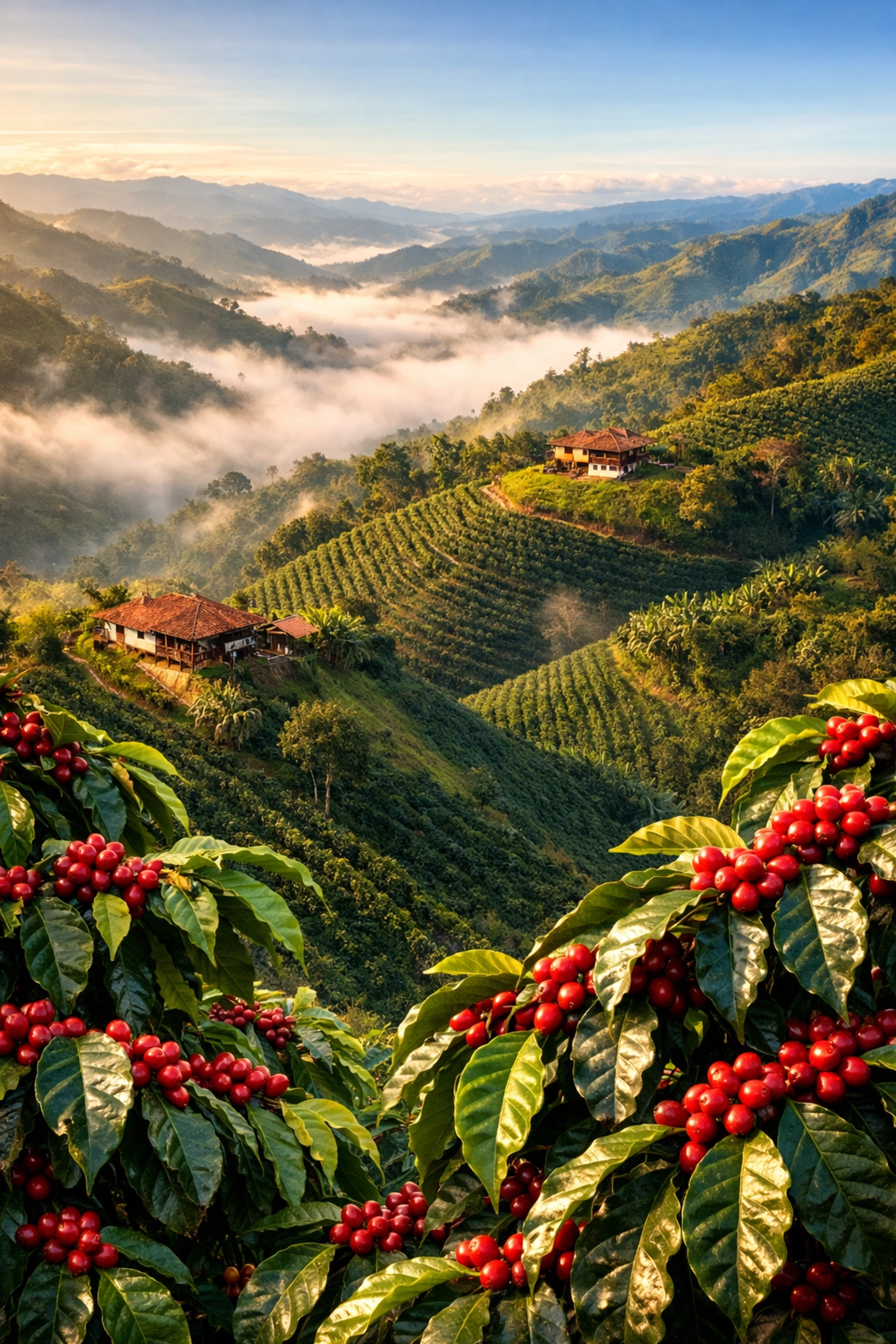
    Colombian coffee farms on misty mountain slopes at high altitude growing regions

    We recommend taste-training sessions where your baristas can compare Colombian with, say, a brighter Ethiopian or heavier Brazilian. The contrast helps them articulate what makes Colombian special. And when they can explain why a customer might love it, conversion rates go up.

    Limini Coffee offers barista training support for wholesale partners, which includes origin education. It's worth taking advantage of these resources.

    How Colombian Fits Your Seasonal Menu Strategy

    Smart wholesale buyers think seasonally, and Colombian fits beautifully year-round with some strategic tweaking.

    Summer: Play up the brighter, fruitier Nariño profiles. Serve them as iced filter or cold brew where those citrus and berry notes shine.

    Autumn/Winter: Shift to the richer Antioquia offerings with chocolate and caramel notes. These work brilliantly in milk drinks when customers are craving warmth and comfort.

    This seasonal rotation keeps your menu dynamic without requiring massive operational changes. You're still Colombian, still consistent, but offering subtle variety that engaged customers notice and appreciate.

    The Wholesale Partnership Advantage

    Here's something we believe strongly: your relationship with your coffee supplier matters as much as the beans themselves.

    When you're stocking Colombian (or any origin), you need a wholesale partner who understands the café business and provides consistent support. That means reliable delivery schedules, quality consistency, transparent pricing, and someone you can actually reach when you need guidance.

    We've built our wholesale program around these principles because we've seen too many café owners struggle with suppliers who disappear after the sale. Colombian coffee might be naturally consistent, but your supply chain needs to be too.

    Making Colombian Work for Your Shop

    So, practically speaking, how do you integrate Colombian into your lineup?

    Start with one solid Colombian as your "house" option. Choose a medium roast with broad appeal: something that works across espresso and filter. This becomes your reliable daily driver.

    Consider adding a second, more distinctive Colombian as a rotating single-origin filter option. This gives your specialty enthusiasts something to explore while maintaining origin familiarity.

    Price it strategically. Colombian should sit in your mid-premium tier: not your cheapest offering, but accessible enough to encourage trial. The quality justifies premium pricing, but you're not pushing into exotic origin territory.

    Tell the story. Colombian coffee has name recognition, but most customers don't know much beyond "Colombian is good." Educate them about regions, processing, and farming practices. The more they understand, the more they value what they're drinking.

    The Bottom Line

    Colombian coffee has earned its reputation as a café staple for good reason. It delivers quality, consistency, and versatility that makes both your operations and your customers' experiences better.

    Whether you're opening your first café or managing multiple locations, Colombian should be part of your core offering. It's the kind of reliable, high-quality coffee that keeps customers coming back while giving you the margins and flexibility to build a sustainable business.

    If you're looking to source quality Colombian beans with proper wholesale support, we'd love to chat about what we can offer. Because the right Colombian coffee, backed by the right partnership, can genuinely transform your café's offering.

  • The Crowd-Pleaser: Why Colombian Coffee is a Must-Have for Your Shop

    The Crowd-Pleaser: Why Colombian Coffee is a Must-Have for Your Shop

    If you're running a coffee shop and you don't have a solid Colombian in your lineup, we need to have a chat. Seriously.

    Look, we get it. The specialty coffee world is buzzing with exotic microlots from obscure regions, experimental processing methods, and flavour profiles that sound like they were written by a wine sommelier having a fever dream. And that's great – we love a good Kenyan or a funky natural Ethiopian as much as anyone.

    But here's the thing: while you're wowing 10% of your customers with that ultra-light roasted Geisha, what are you serving to everyone else?

    That's where Colombian coffee comes in. It's not boring. It's not basic. It's your reliable, day-in-day-out workhorse that keeps customers coming back because it just works.

    Barista pulling espresso shots at specialty coffee shop counter

    The Universal Appeal You Actually Need

    Colombian coffee has achieved something remarkable in the coffee world – it's managed to be both high quality and universally appealing at the same time. That balanced, mild flavour profile with bright acidity and subtle sweetness? It's basically designed to please the masses without compromising on quality.

    Think about your customer base for a moment. You've got the coffee geeks who want to discuss terroir. You've got the office workers who just need their morning fuel. You've got the casual weekend crowd who want something "nice" but aren't entirely sure what that means. Colombian coffee serves all of them without breaking a sweat.

    We see this constantly with our wholesale customers – Colombian consistently becomes their best-seller, not because it's flashy, but because it's genuinely good and broadly accessible. It's the coffee that doesn't alienate anyone.

    The Flavour Versatility Nobody Talks About

    Here's where Colombian really earns its keep in your lineup: it's incredibly versatile across roast profiles.

    Want to offer a brighter, fruitier option? Roast it light and you'll get vibrant notes of orange, berries, and stone fruit. Need something more comforting and familiar? Take it to medium or medium-dark and you'll develop beautiful caramel, chocolate, and nutty characteristics.

    This means you can essentially stock one origin and offer multiple flavour experiences depending on how you approach it. From a business perspective, that's efficiency gold. You're not juggling ten different origins to satisfy different taste preferences – you're working with one reliable source and letting the roast do the talking.

    Colombian coffee shown in three roast levels from light to dark

    The Quality Standards That Back It Up

    Let's talk about why Colombian coffee maintains its reputation. It's not just marketing (though they've done a brilliant job of that with Juan Valdez and his donkey, haven't they?).

    Colombian coffee is 100% Arabica. Full stop. They don't mess about with Robusta blends to cut costs. The country has strict quality standards, and the traditional methods – selective hand-harvesting, washed processing, optimal altitude cultivation between 1,200 and 2,100 meters – all contribute to consistency you can actually rely on.

    When you're buying Colombian coffee from us at Limini Coffee, you're getting beans that have been through rigorous quality control both at origin and again when we source them. That consistency is what allows you to dial in your espresso machine once and know it's going to perform reliably day after day.

    Your baristas will thank you for this. Nothing tanks morale faster than trying to wrestle with inconsistent coffee that requires constant adjustments.

    The Health Angle Your Customers Care About

    Whether we like it or not, today's customers are increasingly health-conscious. And Colombian coffee gives you a genuine story to tell.

    The high-altitude growing conditions produce beans with significantly higher levels of chlorogenic acid and complex flavor compounds. These aren't just marketing buzzwords – they're genuine antioxidants that customers are actively seeking out.

    Colombian coffee has been linked to cardiovascular benefits, cognitive enhancement, and even reduced disease risk in various studies. Now, we're not saying you should start making medical claims on your menu board (please don't), but when customers ask about the health benefits of coffee, you can confidently talk about the quality of your Colombian beans.

    And if you're stocking organic Colombian? Even better. You've eliminated the pesticide concern that worries health-conscious customers.

    Aerial view of Colombian coffee farms cascading down lush mountain slopes

    The Economic Story That Sells Itself

    Here's a bonus that comes with Colombian coffee: it has cultural cachet. Coffee isn't just an agricultural product in Colombia – it's woven into the national identity. The Coffee Cultural Landscape is literally a UNESCO World Heritage site.

    This gives you narrative value. Customers connect with stories, and Colombian coffee comes with built-in storytelling opportunities. You can talk about the small-scale farmers, the mountain landscapes, the traditional methods passed down through generations.

    This isn't just feel-good fluff – it's genuine origin storytelling that helps justify premium pricing. People will happily pay more for coffee when they understand the quality and care that goes into producing it.

    How to Position It on Your Menu

    Right, so you're convinced you need Colombian in your lineup (you should be). How do you actually use it?

    As Your House Espresso: This is the most common approach, and for good reason. Colombian's balanced profile works beautifully in milk-based drinks without getting lost, but also stands up well as a straight espresso. It's your reliable crowd-pleaser that performs consistently in everything from flat whites to lattes.

    As Your Filter/Pour Over Option: If you're roasting it lighter or offering multiple brew methods, Colombian makes an excellent filter coffee. Those bright, fruity notes really shine in a V60 or Chemex, giving you a clean, approachable cup that doesn't intimidate customers who are new to specialty coffee.

    As Your Decaf Option: Colombian beans take to decaffeination particularly well. The Swiss Water Process or CO2 method applied to quality Colombian beans results in a decaf that actually tastes like proper coffee, not sad brown water.

    What We Recommend

    At Limini Coffee, we work directly with importers who maintain strong relationships with Colombian producers. We're particularly focused on consistency and quality – because we know that's what matters to you when you're serving hundreds of cups a day.

    We recommend Colombian as a foundational coffee for any shop, particularly if you're just starting out or refining your lineup. It gives you a solid base to work from while you experiment with more adventurous offerings.

    And honestly? Even if you're a well-established shop with a dozen different origins on rotation, you'd be mad not to have a Colombian option available. It's the coffee that saves you when everything else is confusing your customers.

    If you're interested in exploring our Colombian offerings for your wholesale needs, get in touch. We're always happy to send samples and help you find the right roast profile for your customer base.

    The Bottom Line

    Colombian coffee isn't flashy. It's not going to win you any "most adventurous coffee menu" awards. But you know what it will do? It'll keep your customers happy, your baristas sane, and your business profitable.

    In a world where everyone's chasing the next exotic origin or experimental process, there's something to be said for having a reliable, high-quality crowd-pleaser that just works. Colombian coffee is that workhorse.

    Your coffee menu needs stars and it needs workhorses. Colombian is both. That's why it's a must-have.

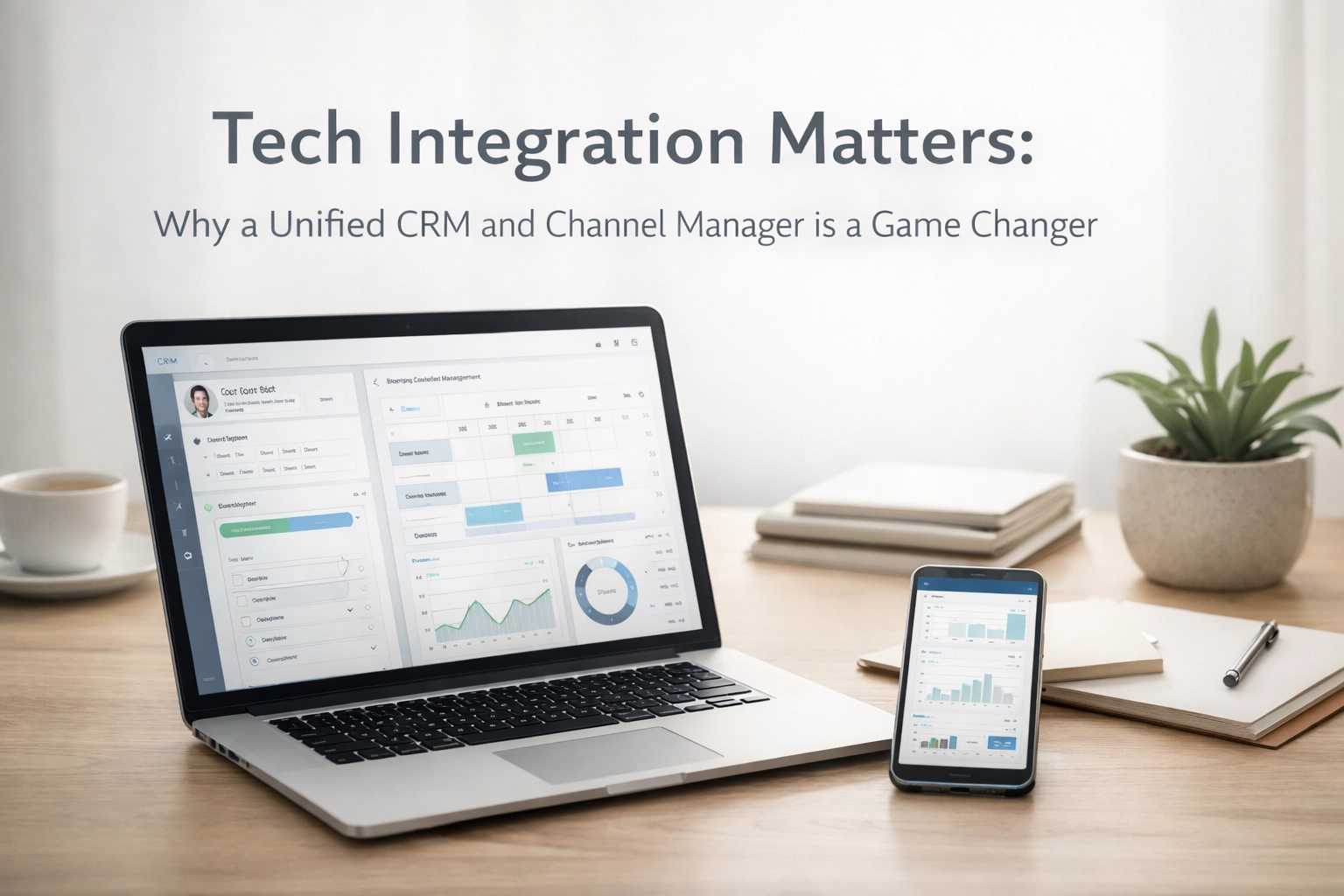
  • Tech Integration Matters: Why a Unified CRM and Channel Manager is a Game Changer

    Tech Integration Matters: Why a Unified CRM and Channel Manager is a Game Changer

    Move faster. Sell smarter. Delight guests.
    30% fewer manual touches and 15 minutes saved per reservation is the kind of shift teams feel in week one, not quarter four.
    When your CRM and channel manager run as one, you stop juggling tools and start running the entire guest journey, all from one cloud-native platform.

    The integration problem nobody has time for

    Your day doesn’t fall apart because your people aren’t good. It falls apart because your systems don’t talk.

    One tab for the channel manager. One for your hotel PMS. Another for the booking engine. Then a CRM (or a spreadsheet pretending to be one). Suddenly, “quick” tasks turn into copy-paste marathons:

    • Rate updates become a scavenger hunt
    • Guest preferences live in someone’s inbox
    • Campaigns go out without real context
    • Teams argue about which data is “right”

    And while you’re doing that, your guests are doing what guests do, booking where it’s easiest, messaging on whatever channel they prefer, and expecting you to remember them.

    Unified CRM + channel manager. What changes?

    You don’t need more software. You need fewer gaps.

    A unified CRM and channel manager setup gives you a single source of truth, guest data, booking data, channel performance, and messaging context connected end-to-end. No silos. No duplicate records. No “hang on, I’ll check another system.”

    Here’s what it unlocks in real operational terms:

    1) One guest profile. Every channel. Every time.

    We believe guest experience starts with memory, real memory, not “I think I’ve seen that name before.”

    With unified data, your team sees:

    • Past stays and preferences
    • Communication history (no repeats)
    • Source channel and booking behavior

    So when someone books via an OTA, extends via email, and asks a question via chat, your staff isn’t starting from zero each time.

    “We stopped asking guests to repeat themselves. It sounds small, but it saved us about 10 hours a week and the vibe at the desk got way calmer.”

    2) Rate, inventory, and guest value stop competing

    When your channel manager runs in its own bubble, it’s great at distribution, but blind to relationship value.

    A unified approach connects:

    • Revenue decisions (rates, restrictions, availability)
    • Guest context (repeat guest, corporate, long-stay)
    • Conversion levers (direct booking offers, upgrades)

    So you’re not just “selling nights.” You’re building smarter demand, especially when your booking engine and CRM can react to real guest signals.

    3) Automation becomes safe (because the data is clean)

    Automation is only as good as the data feeding it. When CRM and channels are disconnected, automation turns into awkward moments, wrong name, wrong offer, wrong timing.

    Unified systems reduce those risks because:

    • Profiles are consistent
    • Segments are accurate
    • Triggers fire on real events (not guesses)

    That’s how you get automation that feels personal, not robotic.

    The silent killer: data fragmentation

    Let’s be blunt. Fragmented data drains money quietly.

    When guest and booking data live in separate systems, you get:

    • Duplicates (“John Smith” x 4)
    • Missing context (preference notes vanish)
    • Conflicting numbers (occupancy doesn’t match pickup)

    And then the work begins: reconciling spreadsheets, updating notes twice, double-checking availability, cleaning lists for campaigns.

    A unified CRM + channel manager setup eliminates the “which system is correct?” question. There’s one answer. Every time.

    Modern hotel lobby featuring a tablet running integrated CRM and channel manager software.

    Omnichannel isn’t a buzzword, your guests already live there

    Guests don’t care which tool you use. They care that you answer quickly and consistently.

    They’ll:

    • Book on an OTA at 11pm
    • Message you on Instagram the next morning
    • Call at lunch
    • Ask for late checkout at check-in

    If those touchpoints don’t connect, the guest experience feels disjointed. Like your hotel is run by four different teams who never met.

    Unified CRM + channel manager integration supports an omnichannel experience because the conversation has continuity, same context, same preferences, same person.

    And yes, that directly impacts reviews.

    Where this hits hardest: your daily workflow

    This is where integration pays off: in the unglamorous stuff.

    Less rekeying. Fewer errors. Faster training.

    We think the best tech disappears into the workday. It shouldn’t require a “systems translator” on every shift.

    When systems unify, you cut:

    • Manual data entry
    • Channel-by-channel updates
    • “Can you send me that guest info?” pings

    That makes onboarding easier too. New team members learn one workflow, not a patchwork.

    Cleaner handoffs between teams

    Front office, revenue, and marketing tend to operate like separate planets. Integration pulls them into the same orbit.

    • Revenue sees channel pickup alongside guest value
    • Marketing segments using real booking behavior
    • Front office gets preferences without digging

    No extra meetings. No extra admin. Just clarity.

    How it connects to the hotel PMS, booking engine, and self-check-in kiosks

    Integration isn’t just about CRM + channel manager. It’s about what those two unlock across your stack.

    Hotel PMS: operations finally match distribution

    Your hotel PMS is where the stay actually happens: arrival, room assignment, payments, extensions, upgrades. When it’s connected to channel and CRM data, you get a live operational picture that’s also commercially smart.

    Think:

    • Fewer overbooking headaches
    • More confident room moves
    • Upsells based on real guest history

    Booking engine: direct conversion with real personalization

    Your booking engine should do more than take reservations. With CRM context, it can support smarter direct offers: based on stay patterns, preferences, and loyalty signals.

    Not complicated. Just practical:

    • Repeat guest? Show a room type they liked last time
    • Long-stay pattern? Offer a better weekly rate
    • Corporate guest? Highlight flexible invoicing

    Self-check-in kiosks: speed without losing the “human”

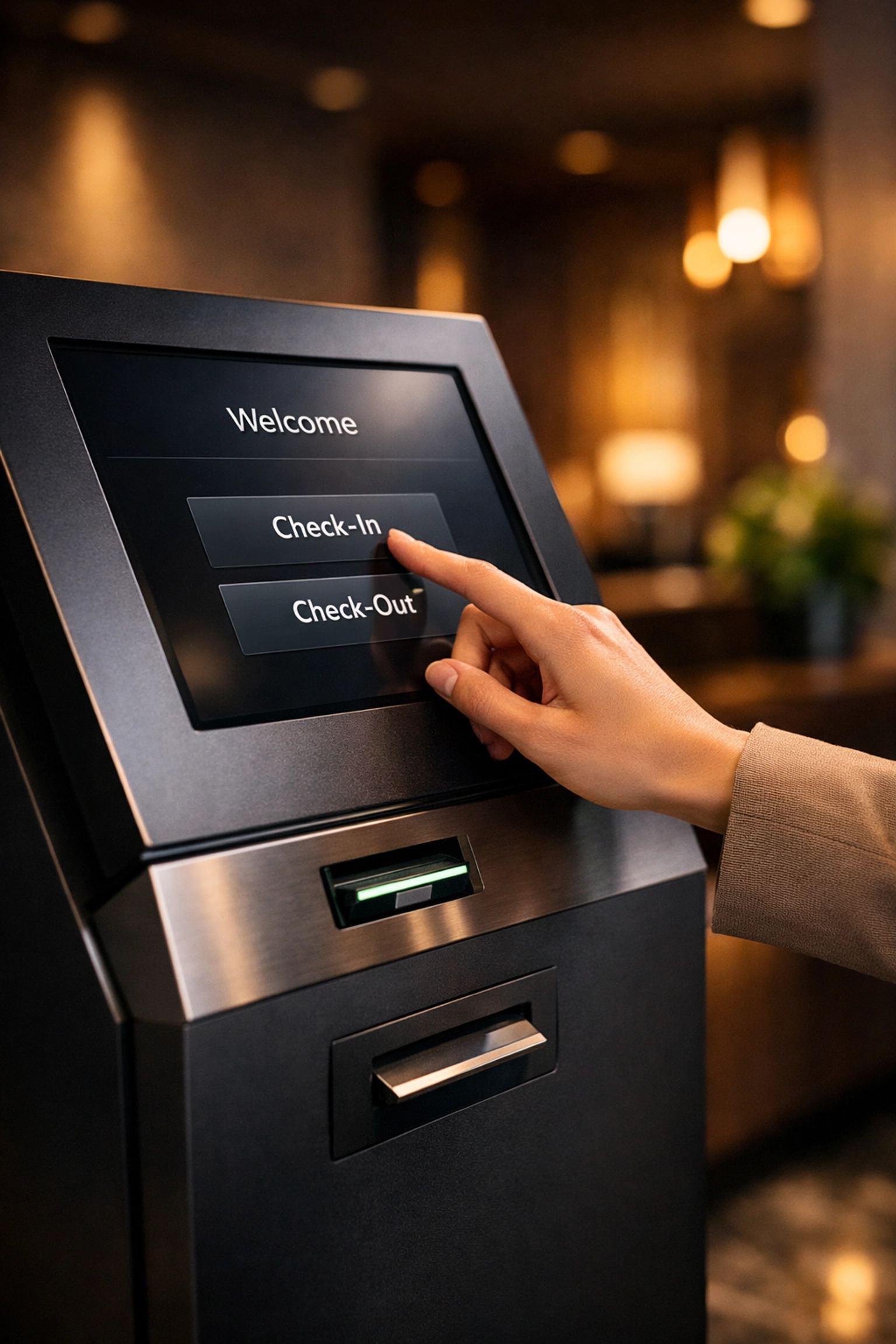
    Self-check-in kiosks win when they’re connected to clean, unified guest profiles. Otherwise, they become a fancy queue.

    When kiosk workflows tie into your PMS + CRM data:

    • Guests verify details once
    • IDs and payments flow cleanly
    • Staff step in only when it matters

    You get the best of both worlds: fast arrival and a more focused welcome.

    A guest in a suite using a smartphone, showing personalized service from a connected hotel PMS.

    The real win: personalization at scale

    Personalization sounds expensive: like you need more staff or more time.

    You don’t. You need connected data.

    When your CRM and channel manager work together, you can run simple personalization that actually lands:

    • Pre-arrival messages that match booking source and stay type
    • Upgrade offers timed to real availability
    • Post-stay outreach based on what the guest used (spa, breakfast, parking)

    It’s not “Dear Valued Guest.” It’s “Hey Sam: parking is reserved, and late checkout is ready.”

    “We used to send one generic pre-arrival email. Now it’s segmented, automated, and we’re seeing 12% more paid upgrades without extra work.”

    A quick reality check: what “unified” should mean

    Not every integration is real integration. Some are just data dumps.

    A unified setup should mean:

    1. Real-time sync, not nightly exports
    2. Shared guest profiles, not separate records
    3. Workflow automation, not just reporting

    If your team still has to copy info from one place to another, it’s not unified. It’s just connected “on paper.”

    What to look for in a unified platform

    You’re busy. So here’s the shortlist.

    1) Cloud-native foundation

    We believe cloud-native matters because hospitality doesn’t sit still: rates move, demand spikes, and teams work from everywhere.

    Cloud-native systems deliver:

    • Faster updates
    • Better reliability
    • Less IT overhead

    2) Easy to use (for real humans)

    A platform can be powerful and still be a pain. Don’t accept that tradeoff.

    Easy-to-use means:

    • Fewer clicks
    • Clear workflows
    • Minimal training time

    3) Automation-first, not automation-as-an-add-on

    Automation shouldn’t be a premium feature you’re afraid to touch.

    Look for:

    • Simple triggers
    • Clear approvals
    • Reporting that proves it’s working

    That’s how teams trust automation: and keep using it.

    30-minute action plan: map your gaps fast

    Want to know if unified CRM + channel manager integration will move the needle for you? Run this quick audit.

    1. List every place guest data lives (PMS, CRM, inbox, OTA extranets).
    2. Track one reservation from booking to checkout: write down every manual touch.
    3. Count channel updates needed for a single promo (rates, restrictions, content).
    4. Identify repeats (duplicate profiles, double notes, double entry).
    5. Pick one workflow to automate this month (pre-arrival, upgrades, review requests).

    If you find more than 20 manual touches in that reservation journey, integration isn’t a “nice to have.” It’s a revenue and sanity issue.

    Close-up of a guest using a self-check-in kiosk for automated and efficient hotel arrivals.

    Where Mews fits in

    Mews is built for hotels that want to move fast: without building a fragile tech tower.

    We’re cloud-native, easy to use, and automation-focused by design. That means less busywork, cleaner guest journeys, and a setup your team won’t fight.

    If you want to explore how a modern platform approach can simplify your stack and help you scale, grab the link here: https://referrals.mews.com/umqHYIto

    The takeaway you can use today

    Unified CRM + channel manager isn’t a “tech project.” It’s an operating model.

    • One source of truth
    • One connected guest journey
    • One workflow your team can actually run

    And when it’s done right: tied into your hotel PMS, booking engine, and self-check-in kiosks: you stop spending time managing systems and start spending time running the hotel.

  • 7 Mistakes You’re Making with Your Home Coffee Brewing (and How to Fix Them)

    7 Mistakes You’re Making with Your Home Coffee Brewing (and How to Fix Them)

    Ever made a coffee at home that should have been amazing… but it came out thin, bitter, sour, or just weirdly “meh”? You’re not broken. Your kit isn’t cursed. It’s usually one (or two) small habits that quietly wreck extraction (the process of dissolving the good stuff from coffee into your cup).

    So let’s fix it.

    Below are the 7 mistakes we see most often with home brewers, plus practical, repeatable adjustments you can make today. And yes, we’ll keep it real: most “coffee problems” are measurement, water, grind, freshness, or cleanliness. Boring? Slightly. Life-changing? Absolutely.


    1) You’re eyeballing dose and water… and wondering why it’s inconsistent

    Do you scoop “about two tablespoons” and call it a day? Totally normal. Also the fastest route to randomness.

    The problem
    Coffee is sensitive to ratio. If your coffee dose changes by even a few grams, extraction changes, sometimes a lot. Volume measures (scoops, “cups”, heaped spoonfuls) are wildly inconsistent because:

    • beans differ in density (light roast vs dark roast)
    • grind size changes volume dramatically
    • scoops aren’t standard (and our “heaped” is never the same twice)

    The fix
    Use a scale. Not a fancy lab scale, just a basic 0.1 g digital kitchen scale.

    Starter ratios we use all the time (by weight):

    Brew method Coffee Water Ratio Time target
    V60 / pour-over 18 g 300 g 1:16.7 2:30–3:30
    AeroPress 15 g 225 g 1:15 1:30–2:30
    French press 30 g 500 g 1:16.7 4:00 + plunge
    Drip machine 60 g 1,000 g 1:16.7 machine-dependent

    Want to nerd out (in a helpful way)? We’ve got a handy calculator to speed this up: https://www.liminicoffee.co.uk/coffee_brewing_calculator
    And if you’re grabbing fresh beans while you’re at it, our main shop link is here (affiliate): https://www.liminicoffee.co.uk/?af=1471531379787

    Quick takeaway: pick one ratio, weigh it for a week, then adjust one variable at a time. That’s how you get consistent fast.


    2) Your water is the wrong temperature… and your coffee tastes “sharp” or “burnt”

    Do you boil the kettle and instantly pour? Or wait ages and end up with lukewarm water? Both can be a problem.

    The problem
    Brew temperature controls how quickly compounds dissolve. Too hot and you pull more bitter, harsh flavours (and you can “scorch” delicate aromatics). Too cool and you under-extract, hello sour, thin, watery cups.

    The fix
    Aim for 195–205 °F (90–96 °C) for most filter methods.

    Simple guide we use:

    • Light roasts: 203–205 °F / 95–96 °C (they’re denser, need more energy)
    • Medium: 199–203 °F / 93–95 °C
    • Darker roasts: 195–199 °F / 90–93 °C (less heat, fewer bitter edges)

    No temperature-controlled kettle? Do this:

    • Boil kettle.
    • Wait 30–60 seconds (varies by kettle and room temp).
    • Brew.

    Espresso people… yes, you’re in this too. If your machine has PID (a temperature controller, basically cruise control for brew temp), use it. If not, your “temperature surfing” routine matters more than you think.

    Quick takeaway: if your coffee is sour and thin, go hotter (or finer). If it’s bitter and drying, go cooler (or coarser).


    3) Your beans aren’t fresh… and you’re chasing flavour that isn’t there

    Be honest: how long have your beans been open?

    The problem
    Coffee stales. It’s not a vibe thing; it’s chemistry. Aromatics evaporate, oils oxidise, and your cup loses sweetness and complexity. Pre-ground coffee stales even faster because you’ve massively increased surface area.

    So you end up doing gymnastics with grind size and technique… trying to “fix” what’s basically old coffee.

    The fix

    • Buy fresh roasted beans.
    • Store them properly.
    • Grind right before brewing.

    Freshness windows (real-life useful):

    • Filter: best from ~5 to 30 days off roast (some coffees shine longer)
    • Espresso: often best from ~7 to 35 days off roast (needs a little rest for CO₂ to calm down)

    Storage tips we actually follow:

    • Keep beans in the original bag with a one-way valve, sealed tight.
    • Store in a cool, dry cupboard.
    • Avoid the fridge (condensation + odours = sadness).
    • Freeze only if you’re portioning carefully (advanced, but great when done right).

    If you want a straightforward path: grab a couple of fresh single origins and taste them side-by-side. That’s where home brewing gets properly addictive. Start here (affiliate): https://www.liminicoffee.co.uk/?af=1471531379787

    Quick takeaway: if your coffee tastes flat no matter what you do, it’s often just stale beans. Fresh is best. Annoyingly true.


    4) You’re ignoring water quality… but water is basically the whole drink

    Your coffee is mostly water. So if your water tastes off, your coffee will too.

    The problem
    Hard water (too many minerals) can mute flavour and cause scale build-up. Very soft or heavily filtered water can extract poorly and make coffee taste hollow. Chlorine? That’ll bulldoze aroma.

    The fix
    Use water that’s clean and balanced.

    Easy options:

    • A basic carbon filter jug (removes chlorine/odours)
    • Filtered tap + regular descaling for machines
    • Bottled water that tastes neutral (not super mineral-heavy)

    Coffee-water targets (for the curious):

    • Total hardness often suggested around 50–175 ppm
    • You’re aiming for pleasant taste first: numbers second

    And yep, espresso machines are extra sensitive here. Scale affects heating efficiency and can mess with pressure and flow. Not dramatic… until it is.

    Quick takeaway: if your coffee is strangely dull, “chalky”, or inconsistent day-to-day, your water could be the hidden culprit.


    5) Your grind size is wrong… and extraction goes off the rails

    Ever had a coffee that tasted both bitter and weak? That can happen when grind is wrong and uneven.

    The problem
    Grind size controls flow rate and contact time:

    • Too coarse → water runs through too fast → under-extracted (sour, watery)
    • Too fine → chokes or over-steeps → over-extracted (bitter, astringent)

    And the bigger issue: blade grinders make a mix of boulders and dust. That gives you a confusing cup: some grounds over-extract, some under-extract… and you’re stuck with “why does it taste like that?”

    The fix

    • Match grind to the brew method.
    • Use a burr grinder for consistent particle size.

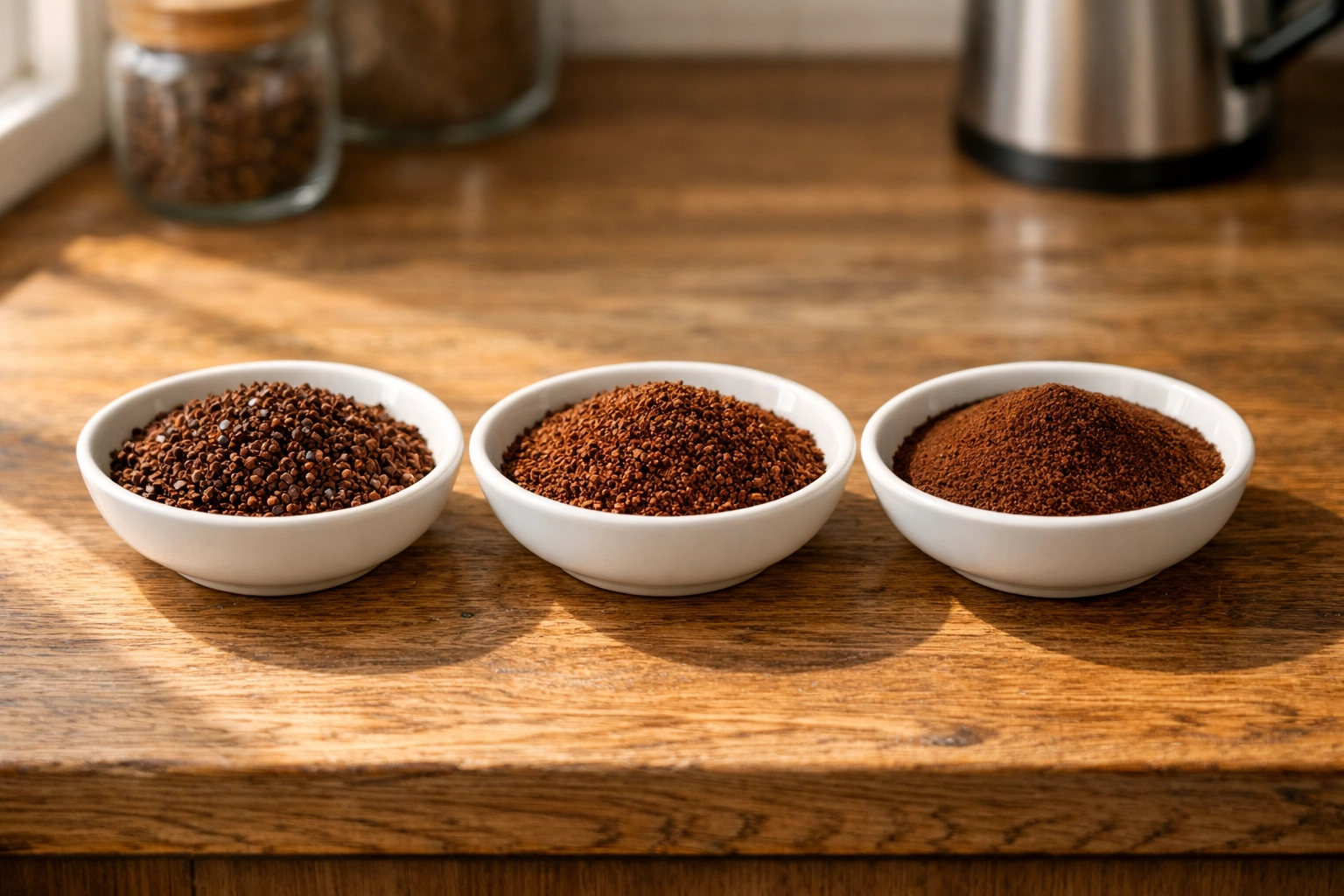
    Grind size cheat sheet (visual):

    • French press: coarse (kosher salt vibes)
    • Drip machine: medium (granulated sugar)
    • Pour-over (V60): medium-fine (a touch finer than drip)
    • AeroPress: medium-fine to fine (depends on recipe)
    • Espresso: fine (powdery, but not clumpy: unless your grinder is struggling)

    Comparing different coffee grind sizes from coarse to fine in ceramic dishes on a kitchen counter.

    Micro-adjustment rule we live by: change grind size in small steps, then keep everything else the same (dose, ratio, temp). Your palate will learn fast.

    Quick takeaway: if you only upgrade one thing in your setup, we’d usually pick the grinder. It’s the steering wheel, not the paint job.


    6) You’re not cleaning your gear… and old coffee oils are haunting every brew

    This one hurts because it’s so common. And because the fix is genuinely easy.

    The problem
    Coffee oils and fine particles build up on:

    • grinder burrs and chute
    • filter baskets and screens (espresso)
    • carafes, V60s, AeroPress seals
    • milk steam wands (if you’re doing milk drinks)

    Those oils go rancid. So even if you buy great beans and nail the recipe, your cup can taste stale, smoky, or just “off”.

    The fix
    Create a cleaning rhythm that you can actually stick to.

    Simple cleaning schedule:

    • After each brew: quick rinse anything coffee touches
    • Weekly: wash with mild detergent (especially carafes and lids)
    • Monthly: deeper clean (espresso backflush if applicable; check manufacturer guidance)
    • Every 1–3 months: descale machines depending on water hardness and usage

    Espresso folks: puck screens, shower screens, and baskets collect gunk fast. And grinders? The “seasoning” myth goes too far sometimes. A clean grinder is a flavour upgrade.

    If you’re running more advanced home espresso and want to go deeper, we’ve got helpful guides on equipment selection here: https://www.liminicoffee.co.uk/choosing_espresso_equipment
    And if you’re browsing beans and gear in one go (affiliate): https://www.liminicoffee.co.uk/?af=1471531379787

    Quick takeaway: if every coffee has the same weird aftertaste, it might not be the beans. It might be last month’s oils.


    7) You’re pouring into a cold cup… and killing aroma (and heat) instantly

    Have you ever brewed a beautiful coffee, then two minutes later it’s already lukewarm? That’s often the cup, not the coffee.

    The problem
    A cold ceramic cup acts like a heat sponge. Your brew temperature drops quickly, and as coffee cools, the perception of sweetness and aroma changes. It’s not that cooler coffee is “bad”… it’s that you didn’t choose it. It happened to you.

    The fix
    Pre-heat your cup or server:

    • Fill it with hot water while you brew.
    • Discard the water.
    • Pour your coffee.

    Also consider thicker-walled mugs for better heat retention. Thin glass looks great on Instagram, though it can be a cruel mistress.

    Pouring hot water into a ceramic mug to preheat it for a better home coffee brewing experience.

    Quick takeaway: preheating is a 10-second habit that makes your coffee taste better for longer. Easy win.


    A quick “diagnosis” map… because sometimes you just want the answer

    So what’s your coffee telling you?

    What you taste Likely cause Fix (try in this order)
    Sour, sharp, thin Under-extraction Grind finer → hotter water → longer brew time
    Bitter, drying, harsh Over-extraction Grind coarser → cooler water → shorter brew time
    Flat, papery, dull Stale coffee or bad water Fresher beans → better water → clean gear
    Weak but also bitter Uneven grind / channeling Burr grinder → better distribution (espresso) → adjust grind
    Great at first, then meh Temperature drop Preheat cup → insulated server

    And if you want to explore coffees that make these tweaks feel worth it (because they do), we’d point you to fresh roasted options here (affiliate): https://www.liminicoffee.co.uk/?af=1471531379787


    The “do this this week” plan (no overthinking)

    If you want the fastest improvement with the least effort, do these in order:

    1. Buy/borrow a scale and lock in a ratio (start at 1:16.7)
    2. Use fresh beans and grind just before brewing
    3. Dial in grind size (one change at a time)
    4. Get water into the 90–96 °C / 195–205 °F zone
    5. Clean the stuff you’re embarrassed to clean
    6. Preheat your cup

    That’s it. Not glamorous. Extremely effective.

    If you’re experimenting with new origins and want to keep notes like a proper coffee nerd (we approve), you can also check reviews and community opinions here: https://www.liminicoffee.co.uk/reviews
    And when you’re ready to restock, here’s the main Limini Coffee link again (affiliate): https://www.liminicoffee.co.uk/?af=1471531379787

  • The Ultimate Guide to AI Business Automation: How to Grow Without Hiring a Soul

    The Ultimate Guide to AI Business Automation: How to Grow Without Hiring a Soul

    ☕ 6:45 AM. Your eyes aren't even fully open, but your brain is already running a marathon.

    You reach for your phone. 42 new emails. Two "urgent" Slack messages from your VA who’s in a different time zone. A customer support ticket from a guy who’s upset his tracking number isn't working at 3 AM.

    You haven't even had coffee yet, and you’re already behind.

    This is the "Success Trap." Your business is growing, which is what you wanted, right? But now, that growth is eating your life. You think the answer is hiring. You think you need a fleet of assistants, a customer service manager, and maybe a therapist.

    But hiring is a nightmare. It’s payroll, it’s training, it’s "I’m sick today" texts, and it’s the constant fear that they’ll quit the moment you finally get them up to speed.

    There’s a better way. A way where you scale to six, seven, or eight figures without adding a single human to your payroll.

    Welcome to the world of AI business automation.

    STOP JUGGLING. START SYSTEMIZING.

    You’re currently doing $20/hour tasks while trying to build a $1,000/hour business.

    Every time you copy data from a spreadsheet to your CRM, or manually reply to a "Where is my order?" email, you’re losing money. You aren't a business owner; you’re a high-priced data entry clerk.

    The secret to scaling is identifying the "3R" tasks:

    • Repetitive: You do it every day or week.
    • Rule-based: It follows a logic (If X happens, do Y).
    • Resource-heavy: It takes up hours of your precious time.

    If a task hits all three, it shouldn't be on your plate. In fact, it shouldn't be on any human's plate.

    Stressed entrepreneur juggling paperwork before using an ai virtual assistant for business.

    ☕ 8:00 AM: THE INBOX THAT MANAGES ITSELF

    The morning dread of the "Inbox Zero" chase? It’s over.

    While you were sleeping, an ai virtual assistant for business was already at work. It didn't just "receive" your emails; it understood them. It tagged the leads, archived the newsletters, and drafted replies to the FAQs.

    You open your laptop, and instead of a mountain of noise, you see three high-priority items that actually require your brain. The rest? Handled.

    This isn't just a filter. It’s a workflow. When a potential client emails asking for a quote, the AI checks your calendar, sends them a booking link, and adds their details to your CRM.

    You didn't lift a finger. You just see a new meeting on your calendar.

    📱 11:30 AM: CUSTOMER SUPPORT WITHOUT THE DRAMA

    It’s mid-day. Usually, this is when the support tickets start piling up.

    In the old world, you’d be toggling between Shopify, Zendesk, and your email, trying to soothe an angry customer. Now? You automate customer support with ai.

    Imagine a customer, let’s call him Dave, is annoyed. He wants to know why his package is delayed. Instead of waiting 24 hours for a human to wake up, he chats with your AI agent.

    The AI doesn't just give a canned response. It pulls Dave's order data, checks the real-time shipping status, explains the delay (there was a storm in Memphis), and offers him a 10% discount code for his next order as a peace offering.

    Dave is happy. He got an answer in 30 seconds. You’re happy. You didn't even know Dave existed.

    And the best part? The AI never gets tired, never gets "hangry," and never gives Dave an attitude.

    🤝 2:00 PM: THE SALES ASSISTANT THAT NEVER SLEEPS

    You’re at lunch. Maybe you’re actually enjoying a meal without staring at your notifications.

    Back at the digital office, your AI lead-gen engine is humming. It’s identifying prospects on LinkedIn, checking if they fit your ideal customer profile, and sending personalized outreach that sounds… well, like you.

    When they reply, the AI qualifies them.
    "Are you looking to spend at least $2k a month?"
    "Yes."
    "Great, here is Scott's calendar."

    By the time you get back to your desk, you have two qualified leads ready to talk. If you want to see how this looks in action for your specific niche, check out what Marblism is doing here. It’s basically like having a sales team that works for free.

    An AI virtual assistant for business shaking hands with a customer through a computer screen.

    🌙 9:00 PM: THE FREEDOM OF A FRICTIONLESS BUSINESS

    The sun is down. Usually, this is when you’d be doing "admin catch-up."

    But today, the admin is already done. Your invoices were generated and sent. Your social media posts were scheduled. Your data was synced across all your platforms.

    The chaos is gone before you even take your first sip of evening wine.

    You realize you’ve done more today than you used to do in a week. And you did it with less stress. This is what growth feels like when you stop hiring souls and start hiring systems.

    YOUR 30-DAY BLUEPRINT TO RECLAIMING YOUR LIFE

    You don't need to automate everything at once. That’s a recipe for a digital meltdown. Follow this path instead:

    Week 1: The Audit
    Stop working for a second. Every time you do a task, ask: "Is this a 3R task?" List them out. Find the one that takes you 5+ hours a week. That’s your first target.

    Week 2: Pick Your Tools
    You don't need a developer. You need platforms that talk to each other. Start looking at how an ai virtual assistant for business can plug into your existing stack. Use tools like Zapier or Make to connect the dots.

    Week 3: The Pilot
    Build your first automation. Maybe it's just auto-sorting support tickets or syncing your sales data. Test it. Watch it fail, fix the logic, and test it again.

    Week 4: Deployment & Scaling
    Turn it on. Watch the hours go back into your calendar. Now, take those 5 hours you saved and use them to find the next automation target.

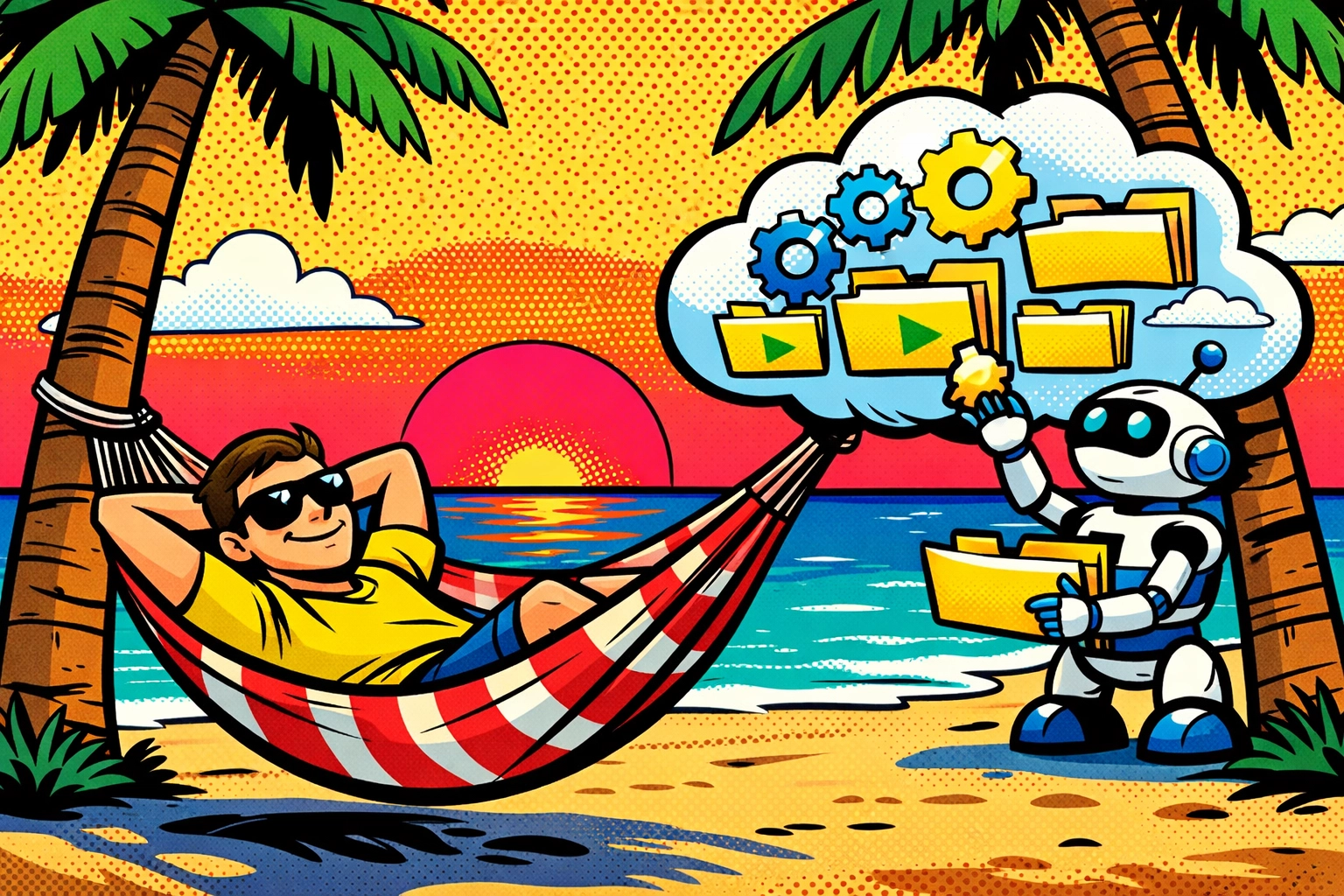
    Entrepreneur in a hammock while robots automate customer support with AI in the background.

    WHY MARBLISM? BECAUSE YOU HAVE BETTER THINGS TO DO.

    Look, you can spend the next six months watching YouTube tutorials and trying to stitch together a Frankenstein's monster of apps. Or, you can use a system designed to handle the heavy lifting for you.

    Marblism isn't just another SaaS tool. It’s the engine that lets you build and scale without the overhead. If you're serious about growing without hiring a soul, you need to see how this works.

    Click here to see the Marblism roadmap for your business.

    FAQS: STUFF YOU’RE PROBABLY WONDERING

    Q: Isn't AI support "robotic" and annoying for customers?
    A: Only if it’s bad AI. Modern tools use Natural Language Processing. They sound human, they have empathy, and most importantly, they have the correct data. Customers prefer a fast, correct bot over a slow, confused human every single time.

    Q: Is this going to replace my current team?
    A: It replaces the boring parts of their jobs. If you have a team, let them do the creative, high-level strategy while the AI handles the data entry. You’ll have a happier, more productive team.

    Q: Do I need to be a "tech person" to set this up?
    A: No. If you can use a smartphone, you can use these tools. Most are drag-and-drop. And for the stuff that isn't, there are shortcuts like this.

    SCALING SHOULDN'T BE THIS EASY. BUT HERE WE ARE.

    The old way of business said you needed a big office and a big payroll to be a "big" company.

    The new way says you need a laptop, a clear head, and the right AI stack.

    You can keep trading your sleep for growth. You can keep hoping that the next hire will be the "magic pill" that fixes everything. Or, you can build a business that runs itself.

    The choice is yours. But the robots are already waiting to start their shift.

    One last thing: don't wait until you're burnt out to start. The best time to automate was yesterday. The second best time is right now.

    Ready to automate? Let's get started.

    …Go ahead. Take your life back.

  • How to Set Up Workflow Automation for Small Business in 5 Minutes (No-Code, No Headaches)

    Workflow Automation for Small Business: Stop Doing the Busy Work

    ☕ 7:00 AM.

    You haven’t even finished your first cup of coffee, and it’s already happening. Your phone buzzes. An invoice needs approval. A lead just emailed. A calendar invite is clashing with your lunch break.

    You’re not running a business… you’re running a marathon of clicks.

    It’s the "busy work." The soul-crushing, repetitive tasks that make you feel like a high-paid data entry clerk instead of a founder. You know there’s a better way, but who has time to learn how to code?

    Actually, you don’t need to code. You just need five minutes.

    THE TRUTH ABOUT "BUSY"

    Most small business owners wear "busy" like a badge of honor. But let’s be real… being busy isn’t the same as being productive. If you’re manually copying data from an email into a spreadsheet, you’re losing.

    You’re losing time. You’re losing focus. And eventually, you’re losing money.

    Workflow automation used to be for the tech giants with six-figure IT budgets. Now? It’s for you. It’s for the shop owner, the consultant, and the agency founder who just wants to go home at 5:00 PM for once.

    ⌚ 9:30 AM: THE AUTOMATED ONBOARDING

    Imagine this. A new client signs your contract.

    In the old world: You see the notification. You manually create a folder in Google Drive. You email them a "Welcome" PDF. You ping your team in Slack to let them know.

    In the Marblism world: The contract is signed… and that's it.

    The automation sees the signature. It creates the folder. It sends the email. It notifies the team. All while you’re actually talking to a real human being or, better yet, taking a walk.

    Relaxed business owner in a park while workflow automation for small business organizes digital files automatically.

    HOW TO START (WITHOUT THE HEADACHE)

    You don’t need to automate your entire life on day one. Start small. Pick the one task that makes you want to throw your laptop out the window.

    1. Identify the Trigger: What starts the mess? (e.g., "A new form is submitted on my site").
    2. Define the Action: What needs to happen? (e.g., "Send them a scheduling link").
    3. Connect the Dots: Use a no-code tool to bridge the gap.

    If you’re looking for the fast track to getting this set up without the learning curve, check out what Scott’s doing here. It’s basically a cheat code for business owners.

    📱 1:00 PM: INVOICING ON AUTOPILOT

    It’s midday. You should be thinking about growth. Instead, you’re chasing payments.

    Why?

    Automation can handle the "hey, you owe me money" dance. When a project hits "Done" in your task manager, your invoicing software should automatically fire off the bill. If it isn't paid in 3 days? A polite reminder goes out.

    No awkward phone calls. No manual tracking. Just money hitting your account while you sleep.

    STOP JUGGLING. START LEADING.

    Scaling shouldn't be this hard. But here we are, still doing things by hand because "that's how we've always done it."

    The secret to growth isn't working more hours. It’s making the hours you do work actually count. When you remove the friction of administrative "busy work," you find the creative energy that started your business in the first place.

    It takes five minutes to set up. It saves you five years of burnout.


    Why Your Business Needs an AI Virtual Assistant (Before Your Competitors Get One)

    🌙 2:00 AM.

    Your website is live. A potential customer lands on your landing page. They have a question about your pricing. They want to know if you can handle their specific niche.

    You are fast asleep.

    Your competitor? They have an AI Virtual Assistant. Their assistant answers the question, qualifies the lead, and books a discovery call for tomorrow morning.

    By the time you wake up and check your inbox, that customer is already in your competitor’s CRM.

    The gap is widening.

    THE SILENT HIREE

    An AI Virtual Assistant isn’t just a chatbot that says "Hello, how can I help you?" It’s a sophisticated layer of your business that learns, adapts, and executes.

    Think of it as the employee of the month. Every month. It doesn't take sick days. It doesn't get "burned out" by repetitive questions. It just works.

    …And it’s quiet. Organized. Efficient.

    🤝 10:00 AM: THE PERFECT HANDOFF

    You sit down at your desk. You don’t have 40 unread messages from confused prospects.

    Instead, you have a curated list of "Ready-to-Buy" leads. Your AI assistant has already filtered out the tire-kickers. It’s provided the basic info. It’s even noted that one lead specifically asked about your "Premium" package.

    You’re not "checking" email anymore. You’re "closing" deals.

    An AI virtual assistant for business helps a professional at a desk by delivering high-quality, qualified leads.

    WHY NOW?

    Your competitors are looking at the same tools you are. The "early adopter" window is closing.

    Right now, having an AI Virtual Assistant gives you a massive professional edge. It makes your small operation look like a Fortune 500 company. It provides instant gratification to a generation of customers who refuse to wait more than 30 seconds for an answer.

    But soon? It won’t be an "edge." It will be the requirement for entry.

    If you want to see how this looks in practice without spending months in development, Scott Bowen has the blueprint right here.

    🔍 3:00 PM: DATA WITHOUT THE DIGGING

    "How many leads came from LinkedIn last week?"
    "What's the average time it takes to close a ticket?"

    Usually, these questions require a spreadsheet and a headache. With an AI assistant integrated into your workflow, you just ask.

    "Hey, give me the stats."

    And it does. In seconds. It’s like having a Chief Operating Officer in your pocket, but without the corporate salary.

    THE COST OF WAITING

    The biggest cost in business isn't what you spend: it's what you miss.

    Every minute you spend on tasks an AI could handle is a minute you aren't spent innovating. Your AI Virtual Assistant is waiting. It’s ready to take the load off your shoulders so you can finally focus on the "big picture" stuff you keep putting off.

    The lights are off in your office, but your business is still running.

    That’s the power of automation. That’s the power of Marblism.

    YOUR NEXT MOVE

    Don't wait for the "perfect time" to automate. It doesn't exist.

    You can keep doing it the hard way, or you can join the group of founders who have realized that their time is too valuable for data entry.

    Start here: Marblism & Scott Bowen.

    The chaos is gone before you even take your first sip of coffee.

    You just send a thumbs-up.

    Scaling Shouldn't Be This Easy. But Here We Are.

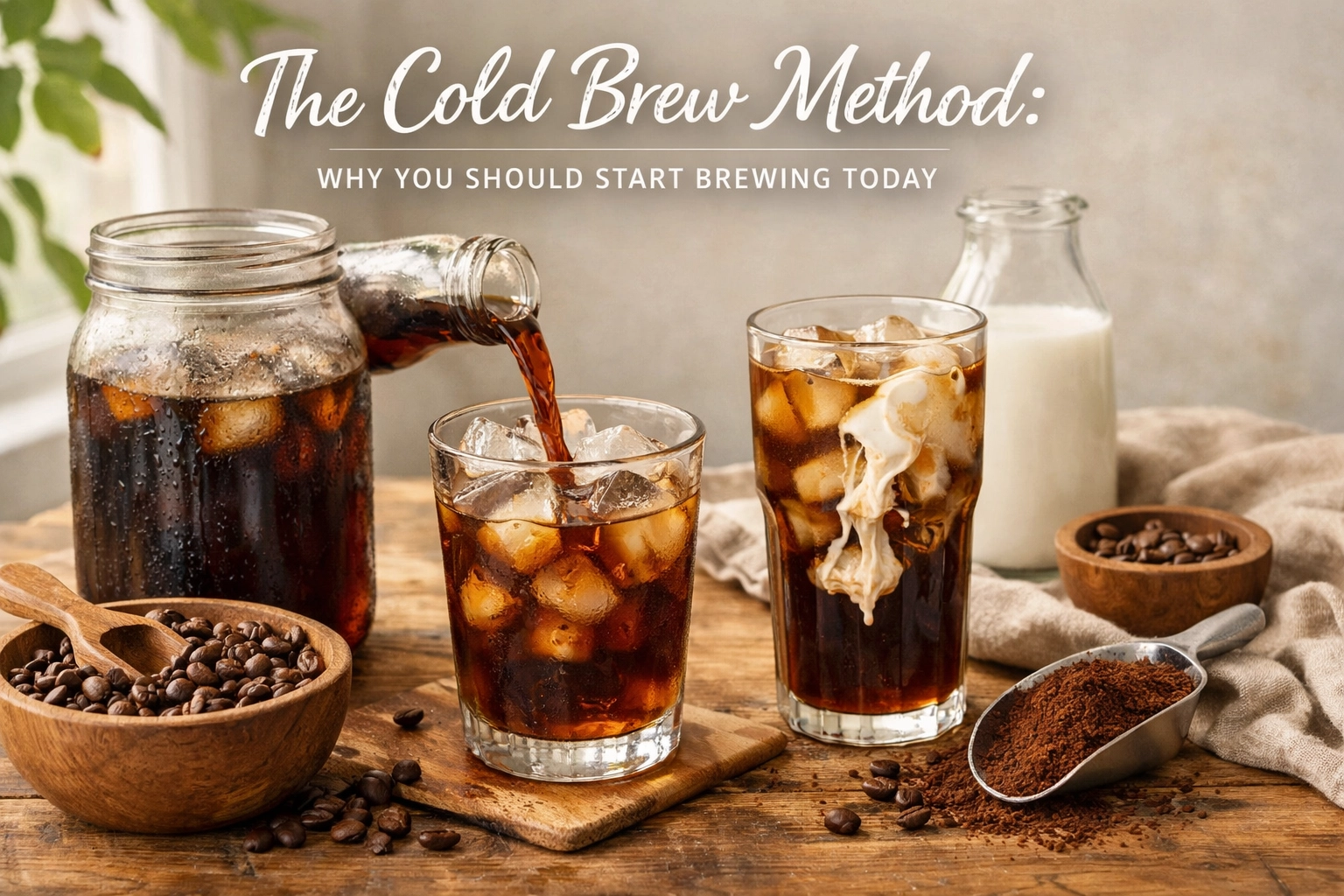
  • The Cold Brew Method: Why You Should Start Brewing Today

    The Cold Brew Method: Why You Should Start Brewing Today

    Let's talk about cold brew. Not iced coffee (that's completely different), but proper cold brew, the smooth, naturally sweet, ridiculously easy method that's about to change your summer coffee game. And honestly? Your spring, autumn, and possibly winter game too.

    If you've been put off by the mystique around cold brew or think it requires fancy equipment, we're here to tell you: it doesn't. You probably have everything you need sitting in your kitchen right now. A jar. Some coffee. Water. That's genuinely it.

    So why should you start brewing cold brew today? Let's dive in.

    What Makes Cold Brew Different?

    Cold brew isn't just coffee that's gone cold. The method is fundamentally different from your standard hot brewing techniques.

    Instead of rushing hot water through ground coffee in a matter of minutes, cold brew takes its sweet time, literally. You steep coarse coffee grounds in cold or room temperature water for 12 to 24 hours. This slow extraction process is what creates cold brew's distinctive character.

    The cold water pulls out different compounds from the coffee beans compared to hot water. This means you're getting a completely different flavour profile, acidity level, and overall drinking experience. Think of it as the difference between a quick chat and a long, meaningful conversation. Both have their place, but they're not the same thing.

    Cold brew coffee in mason jar with ice cubes and coffee grounds on marble countertop

    Why Cold Brew Is Worth Your Time

    It's remarkably gentle on your stomach. Cold brew is approximately 67% less acidic than hot brewed coffee. That's not a small difference, that's transformative if you've ever experienced the jittery, upset stomach feeling from regular coffee. The cold water extraction minimizes the release of acidic compounds, which means you can enjoy your coffee without the reflux or digestive discomfort that some people experience with hot coffee.

    Cold brew also contains crude polysaccharides that actually boost digestive immunity and reduce gut irritation. So you're not just avoiding the bad stuff, you're getting some genuinely beneficial compounds.

    The flavour is naturally sweeter and smoother. This is what converts most people. The extended steeping time allows the natural sugars in the coffee beans to dissolve more thoroughly. You end up with a beverage that highlights chocolate notes, caramel sweetness, or floral undertones depending on your beans, without needing to add sugar or cream.

    We're not saying you can't add milk or sweetener if that's your preference. But you genuinely might not need to. The smoothness speaks for itself.

    You're getting more caffeine. Due to the longer brewing process and higher coffee-to-water ratio, cold brew packs a serious caffeine punch. A 16-ounce serving can contain around 200 mg of caffeine, more than your standard drip coffee. The energy boost is sustained and smooth rather than the sometimes jittery kick from hot coffee.

    If you're caffeine-sensitive, this is worth noting. You can always dilute your cold brew concentrate with more water or milk to adjust the strength.

    It keeps for ages. Once you've made a batch of cold brew concentrate, it stays fresh in the refrigerator for up to two weeks. This is brilliant for busy mornings or lazy weekends. Make it once, enjoy it all week. No daily brewing routine required (though we still love our morning rituals).

    The health benefits are impressive. Cold brew contains higher levels of antioxidants and chlorogenic acid. Studies suggest it can boost your metabolism by up to 11%, improve mood, reduce depression risk, and lower the risk of heart disease and type 2 diabetes. Not bad for something that tastes this good.

    How to Make Cold Brew at Home

    Right, let's get practical. Here's the simple method that works every single time.

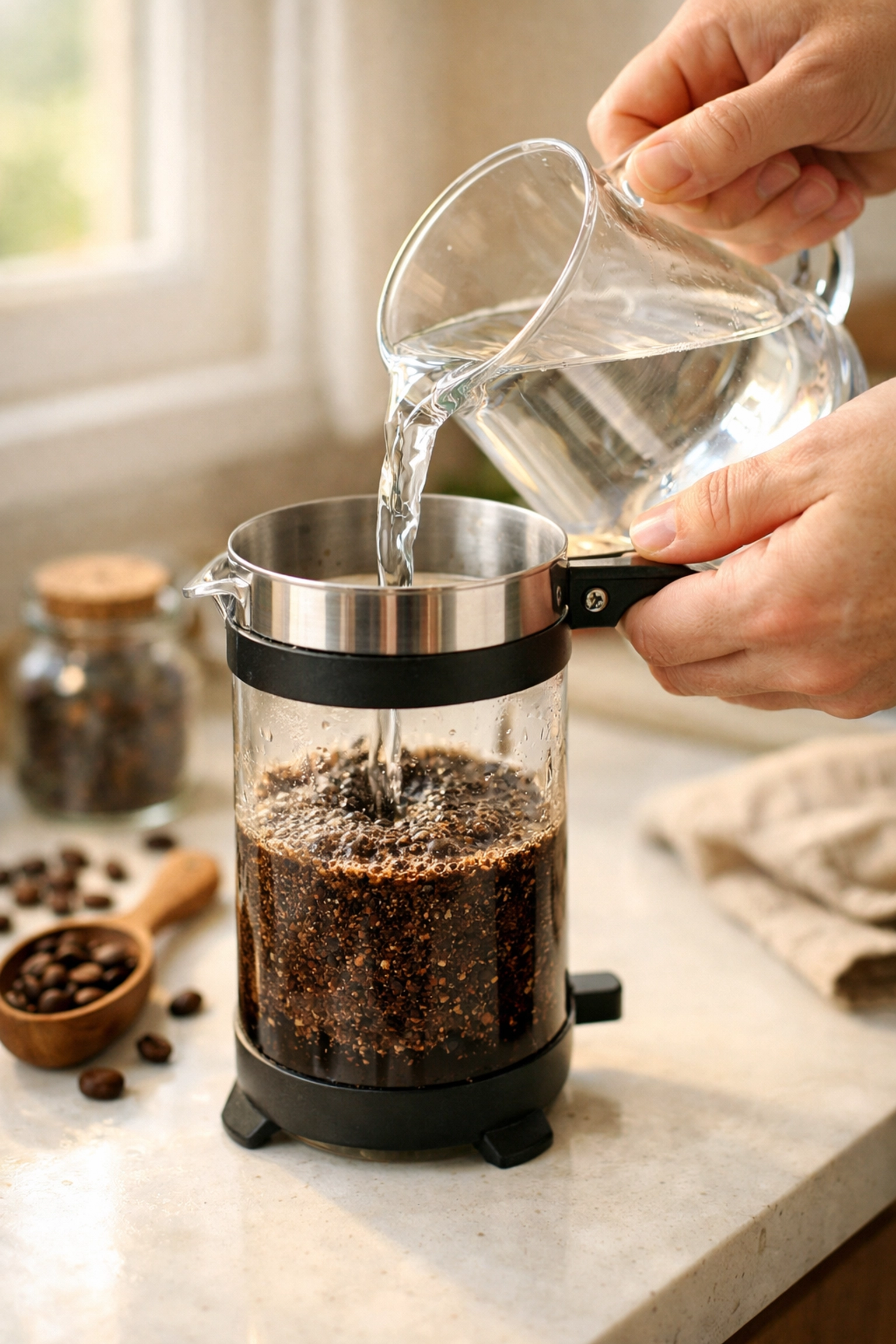
    Pouring cold water into French press with coffee grounds to make cold brew at home

    What you'll need:

    • 1 cup (100g) coarse ground coffee
    • 4 cups (1 litre) cold or room temperature water
    • A large jar, French press, or any container with a lid
    • A fine-mesh strainer or cheesecloth
    • Patience (the hardest ingredient)

    The method:

    Step 1: Grind your coffee coarsely. Think sea salt texture, not sand. If you're buying pre-ground, make sure it's specifically coarse ground. Too fine and you'll end up with bitter, over-extracted sludge.

    Step 2: Combine your coffee grounds and water in your container. Stir gently to make sure all the grounds are saturated. No dry pockets hiding at the bottom.

    Step 3: Cover and let it steep. Room temperature for 12-16 hours works perfectly. If you're steeping in the fridge, go for 18-24 hours since the colder temperature slows extraction. We usually start ours before bed and strain it the next morning.

    Step 4: Strain thoroughly. If you're using a French press, simply press down the plunger. If you're using a jar, pour the mixture through a fine-mesh strainer lined with cheesecloth or a coffee filter. You want to remove all the grounds: nobody enjoys a gritty coffee experience.

    Step 5: What you have now is cold brew concentrate. Store it in the fridge in a sealed container.

    Step 6: To serve, dilute your concentrate with equal parts water, milk, or your preferred liquid. Pour over ice. Enjoy the fact that you've just made genuinely excellent coffee with minimal effort.

    The Best Beans for Cold Brew

    This is where bean selection becomes crucial. Cold brew's extended steeping time will amplify whatever characteristics your coffee has: both good and bad.

    We recommend medium roasts for cold brew. They offer the perfect balance of sweetness and complexity without the sometimes harsh edge of light roasts or the potentially bitter notes from dark roasts. Medium roasts from Central and South America work beautifully: think chocolatey, nutty, caramel notes that shine through the cold brew process.

    Single-origin coffees are brilliant if you want to explore distinct flavour profiles. But honestly? A good quality medium roast blend does the job wonderfully.

    If you're looking for beans specifically suited to cold brew, check out Limini Coffee's range. Our medium roasts are developed with versatility in mind, which means they excel in cold brew applications while still performing beautifully in your espresso machine or pour-over setup.

    Medium roast coffee beans and cold brew concentrate glass on wooden surface

    Tips for Cold Brew Success

    Start with fresh beans. This applies to all coffee brewing, but it's especially important for cold brew where you're extracting over many hours. Fresh beans mean vibrant flavours. Stale beans mean flat, boring coffee.

    Experiment with steep time. The 12-24 hour range gives you room to adjust. Prefer brighter, lighter-bodied cold brew? Steep for 12 hours. Want something bolder and more intense? Go for 20-24 hours. Keep notes on what you prefer.

    Try different dilution ratios. The standard 1:1 concentrate-to-water ratio is just a starting point. Some people love a 2:1 ratio for a stronger brew. Others prefer 1:2 for something more delicate. There's no wrong answer: just what tastes good to you.

    Consider your water. If your tap water tastes off, your cold brew will too. Filtered water makes a noticeable difference, especially in a brewing method where water is literally half the equation.

    Get creative with add-ins. While steeping, try adding a cinnamon stick, vanilla bean, or a few cardamom pods to the grounds. The long steeping time infuses these flavours beautifully. Just remember: a little goes a long way.

    Beyond Basic Cold Brew

    Once you've mastered the standard method, the variations are endless.

    Make cold brew ice cubes so your iced coffee doesn't get watered down as they melt. Blend cold brew concentrate with ice and a banana for a surprisingly good coffee smoothie. Use it as a base for coffee cocktails (an espresso martini made with cold brew? Brilliant). Mix it with tonic water for a refreshing coffee tonic.

    Cold brew concentrate also works wonderfully in baking. Replace some of the liquid in chocolate cake recipes with cold brew for depth of flavour. Use it in your morning oatmeal. Freeze it into popsicles for a grown-up summer treat.

    Time to Start Brewing

    The beautiful thing about cold brew is that it rewards planning but forgives imperfection. You don't need to hover over it with a timer. You don't need to worry about water temperature or pour technique. You just need to combine coffee and water, wait, and strain.

    It's coffee brewing at its most forgiving and, paradoxically, most rewarding.

    So tonight before bed, measure out your coffee, add your water, give it a stir, and forget about it. Tomorrow morning, you'll have smooth, delicious, ready-to-drink coffee waiting for you. No kettle required.

    Grab your beans from Limini Coffee, find a jar, and join the cold brew revolution. Your mornings (and your stomach) will thank you.

  • Why a Truly Cloud-Native Hotel PMS Will Change the Way You Run Your Property

    Why a Truly Cloud-Native Hotel PMS Will Change the Way You Run Your Property

    Transform your operations. Elevate your guest experience. Modernize your property.

    The traditional hotel tech stack is a relic. It’s a series of disconnected boxes, expensive servers, and clunky interfaces that tether your team to a desk. We believe hospitality should be about people, not managing cables or manual data entry. By switching to a truly cloud-native platform, properties see a 30% increase in operational efficiency within the first six months. It’s about moving faster, thinking bigger, and delivering better, all from one innovative platform.

    Break free from the front desk

    Traditional systems keep your staff trapped behind a counter. A cloud-native hotel PMS changes the geography of your lobby. It turns your property into a mobile workspace where every team member has the power of the platform in their pocket.

    We believe the front desk shouldn't be a barrier between you and your guests.

    • Access your dashboard from any device, anywhere in the world.
    • Empower staff to check guests in while walking to their rooms.
    • Monitor real-time occupancy and revenue on your morning commute.

    Hotel staff using a mobile hotel PMS on a tablet to check in a guest in a modern lobby.

    Automation that breathes for you

    Manual night audits and paper-based housekeeping lists are productivity killers. A modern hotel PMS doesn't just store data; it acts on it. When you automate the repetitive, you unlock your team's creative potential. Mews focuses on stripping away the "boring bits" of hotel management so you can focus on the "human bits."

    • Automated payment processing reduces administrative errors by 95%.
    • Housekeeping updates sync instantly between the app and the back office.
    • Smart scheduling ensures your team is always where they need to be.

    "I used to spend ten hours a week just reconciling credit card payments," says one boutique hotel manager. "Now, it's all handled automatically. I actually have time to talk to my guests again."

    One ecosystem. Zero friction.

    Your tech shouldn't work in silos. A cloud-native PMS acts as the central nervous system for your entire property. It connects your booking engine, your channel manager, and your CRM into a single, flowing stream of data. This isn't just about convenience; it's about having a single source of truth for your business.

    We think integrations should be "plug and play," not "pay and pray."

    1. Connect your favorite apps through an open API.
    2. Sync inventory across all OTAs instantly via the channel manager.
    3. Personalize guest stays using data pulled directly from your CRM.

    A minimalist workspace showing a laptop used to manage hotel channel manager and CRM integrations.

    Guest-centric technology

    The modern traveler expects autonomy. They want to check in on the train, choose their own room, and bypass the queue when they arrive. Self-check-in kiosks and mobile check-in aren't just "nice to haves" anymore; they are the standard.

    By utilizing self-check-in kiosks, hotels can reduce wait times by up to 40%. This doesn't replace service; it enhances it. When the administrative task is handled by the guest at their convenience, your staff can provide a warmer, more personalized welcome.

    • Offer digital keys directly to the guest's smartphone.
    • Enable upsells and room upgrades during the mobile check-in flow.
    • Provide instant messaging for guest requests through the platform.

    Scaling without the growing pains

    Expanding your brand shouldn't mean doubling your IT budget. Cloud-native architecture allows you to scale effortlessly. Whether you are adding ten rooms or ten new properties, the infrastructure grows with you. No new servers. No manual software installs. Just a few clicks to bring a new location online.

    We believe growth should be exciting, not exhausting.

    • Deploy new properties in days, not months.
    • Centralize management for multi-property portfolios.
    • Update your entire brand’s pricing strategy from a single screen.

    Modern boutique hotel exterior representing scalable multi-property management with cloud-native software.

    Serious security, simplified

    Data breaches are the nightmare of any hotelier. On-premises servers are vulnerable to physical damage, theft, and outdated security patches. A cloud-native PMS shifts the burden of security to the experts. Mews handles the encryption, the backups, and the compliance, so you don't have to.

    • PCI DSS Level 1 compliance comes standard.
    • Continuous, automatic data backups across multiple global regions.
    • Instant security updates applied without any downtime.

    The cost of maintaining an on-site server often exceeds the subscription cost of a cloud platform. When you factor in electricity, IT support, and hardware replacement cycles, the cloud isn't just better, it's cheaper.

    Revenue management on autopilot

    A booking engine should do more than just take reservations; it should maximize your yield. When your PMS and booking engine are perfectly synced, you can implement dynamic pricing that responds to market demand in real-time.

    We think every room should be sold at the optimal price, every single night.

    • Adjust rates automatically based on occupancy triggers.
    • Offer personalized packages that increase average guest spend.
    • Reduce commission costs by driving more direct bookings through an intuitive interface.

    "We saw a 15% jump in direct revenue after switching to a mobile-optimized booking engine," shares a resort owner. "It just makes it easy for the guest to say yes."

    Luxury hotel guest room detail illustrating the premium guest experience driven by a smart booking engine.

    Future-proof your hospitality

    The industry is changing faster than ever. Trends like "workations," extended stays, and hybrid spaces require a flexible system. A cloud-native PMS is built for the future of hospitality. It’s designed to be agile, allowing you to pivot your business model without being held back by your software.

    If you are still using a system that looks like it belongs in the 90s, you are leaving money on the table. You are also likely losing talent. Modern staff want to work with modern tools. An intuitive, easy-to-use interface reduces training time and increases employee satisfaction.

    • Reduce staff training time from weeks to hours.
    • Attract tech-savvy talent who value efficient workflows.
    • Keep your property at the cutting edge with weekly feature releases.

    Ready to see the difference?

    Moving to the cloud is the single most impactful decision you can make for your property this year. It’s about more than just software; it’s about a new way of working.

    Schedule a demo and see how Mews can transform your daily operations. Our team can get you up and running with a modern, automation-focused platform in no time.

    Get started today and see what a truly cloud-native PMS can do for your bottom line.

    Learn more and revolutionize your property at https://referrals.mews.com/umqHYIto.

    An open door to a modern hotel suite symbolizing a transition to a cloud-native hotel PMS and automation.

    Let's wrap it up

    The era of the "legacy PMS" is over. The future belongs to those who embrace automation, value guest autonomy, and utilize data to drive decisions. A cloud-native system like Mews doesn't just manage your hotel; it empowers it. It frees your team from the desk, secures your guest data, and provides the tools you need to grow your brand in a digital-first world.

    Don't let outdated technology hold your property back. The shift to the cloud is easy, the benefits are immediate, and the potential is limitless.

    Everything you need to run a modern hotel. All from one innovative platform.

    Start your journey here: https://referrals.mews.com/umqHYIto.