Category: Category 1

Use this description to tell users what kind of blog posts they can find in this category.

  • Stop Wasting Time on Manual Data Entry: Try These 7 Hotel Management Software Hacks

    Automate your operations. Scale your business. Reclaim your time.

    If you are still spending hours every week manually typing guest names into a spreadsheet or cross-referencing paper invoices with your bank statement, you are losing money. It is that simple. Modern hospitality isn’t about who has the best filing cabinet; it’s about who has the smartest tech stack.

    At Mews, we’ve seen properties reduce manual administrative tasks by over 70% in their first year. We don’t just build software; we build ecosystems that allow you to focus on the person standing in front of you rather than the screen sitting between you.

    Everything you need to run a high-performing property should live in one intelligent, cloud-native platform.

    1. Connect Your Back-Office Ecosystem

    We believe your accounting shouldn't feel like a second job. Most hoteliers spend way too much time acting as human bridges between their PMS and their accounting software.

    Manual data entry in the back office is a silent killer of productivity. When you manually upload line-item invoice data, you aren't just wasting time: you're inviting human error. A single typo can lead to hours of reconciliation headaches at the end of the month.

    By using a modern hotel pms, you can integrate directly with platforms like QuickBooks, Xero, or Restaurant 365. This creates an automated flow of financial data that is error-free and instantaneous.

    • Sync your revenue and payments automatically.
    • Eliminate manual line-item entry.
    • Reduce month-end closing time by days.

    A minimalist workstation with a laptop showing an automated hotel PMS dashboard for syncing financial data.

    2. Put Your Channel Manager on Autopilot

    Managing inventory shouldn't feel like a game of Whac-A-Mole. If you are logging into Booking.com, then Expedia, then Airbnb to update your rates, you are doing it wrong.

    A cloud-native channel manager acts as your single source of truth. When a room sells on one platform, it should instantly disappear from the others. No manual updates. No frantic phone calls to apologize for an overbooking.

    We think technology should do the heavy lifting so you can do the hosting.

    • Update rates across all OTAs simultaneously.
    • Prevent overbookings through real-time inventory sync.
    • Maximize RevPAR with dynamic pricing rules.

    See how much time you can save by switching to an automated system at https://referrals.mews.com/umqhyito.

    3. Revolutionize Invoicing and Payments

    Paper invoices belong in a museum, not on your front desk.

    The traditional way of handling payments: swiping cards, printing receipts, and filing paper copies: is incredibly slow. Automated payment processing allows you to collect deposits, authorize cards, and settle folios without ever touching a physical terminal.

    When your payment gateway is integrated directly into your booking engine and PMS, the data flows seamlessly. This means your guest's credit card information is securely stored and handled according to PCI compliance standards without your staff ever having to write down a single digit.

    • Automate deposit collection at the time of booking.
    • Process payments securely without manual card entry.
    • Generate and email invoices with a single click.

    "We used to spend 10 hours a week just chasing payments and filing invoices. Now, it happens while we sleep." : Front Office Manager, Boutique Hotel Group.

    4. Let the Guests Handle the Data Entry

    Why are your staff typing in guest addresses and passport numbers? The guest already knows this information. They can provide it much faster than your receptionist can type it.

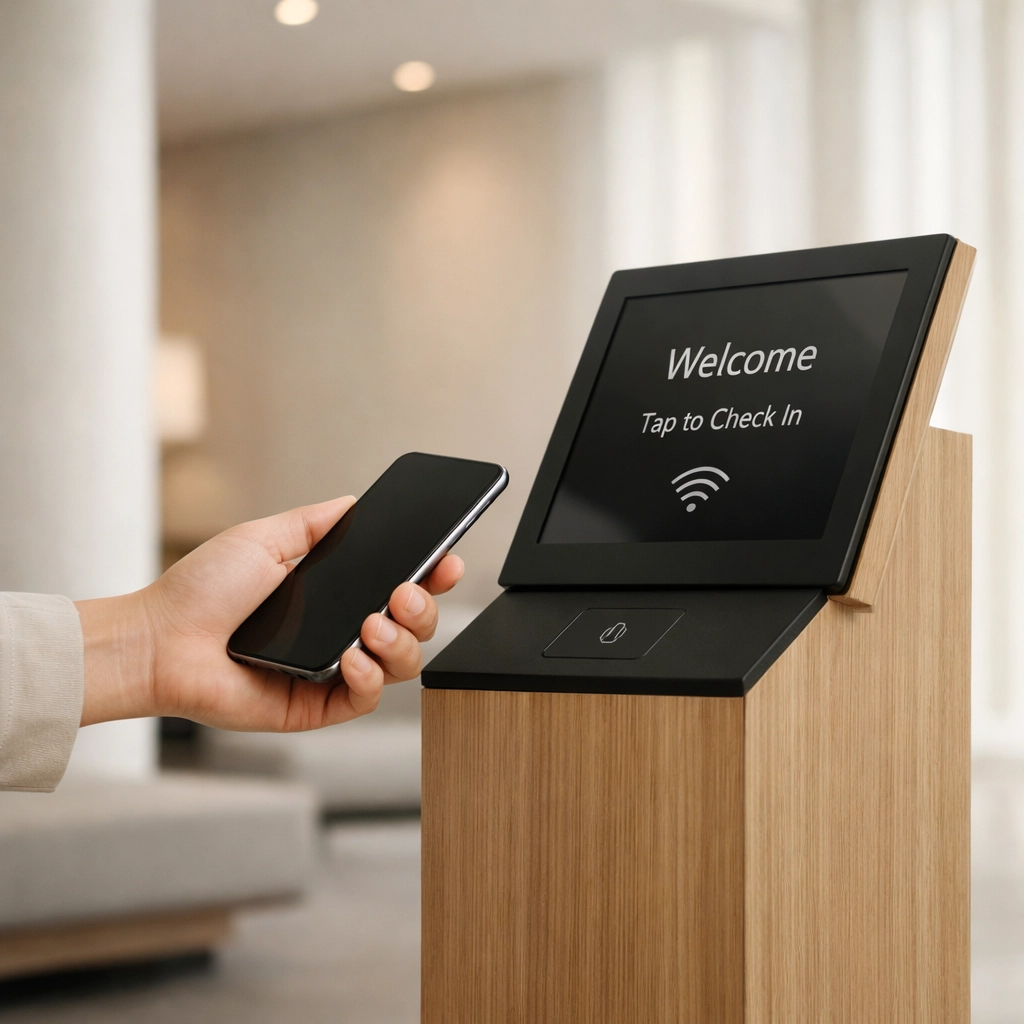
    By implementing self-check-in kiosks or mobile check-in options, you shift the "data entry" part of the arrival process to the guest. This doesn't just save your staff time; it improves the guest experience. Nobody wants to stand in a queue after a long flight just to watch a receptionist type into a computer.

    Mews focuses on making these touchpoints intuitive and fast. When guests check themselves in, they feel empowered, and your staff is free to offer a warm welcome or a glass of water instead of a clipboard.

    1. Send a pre-arrival email with a check-in link.
    2. Enable guests to scan their own IDs.
    3. Let them create their own room keys at a kiosk.
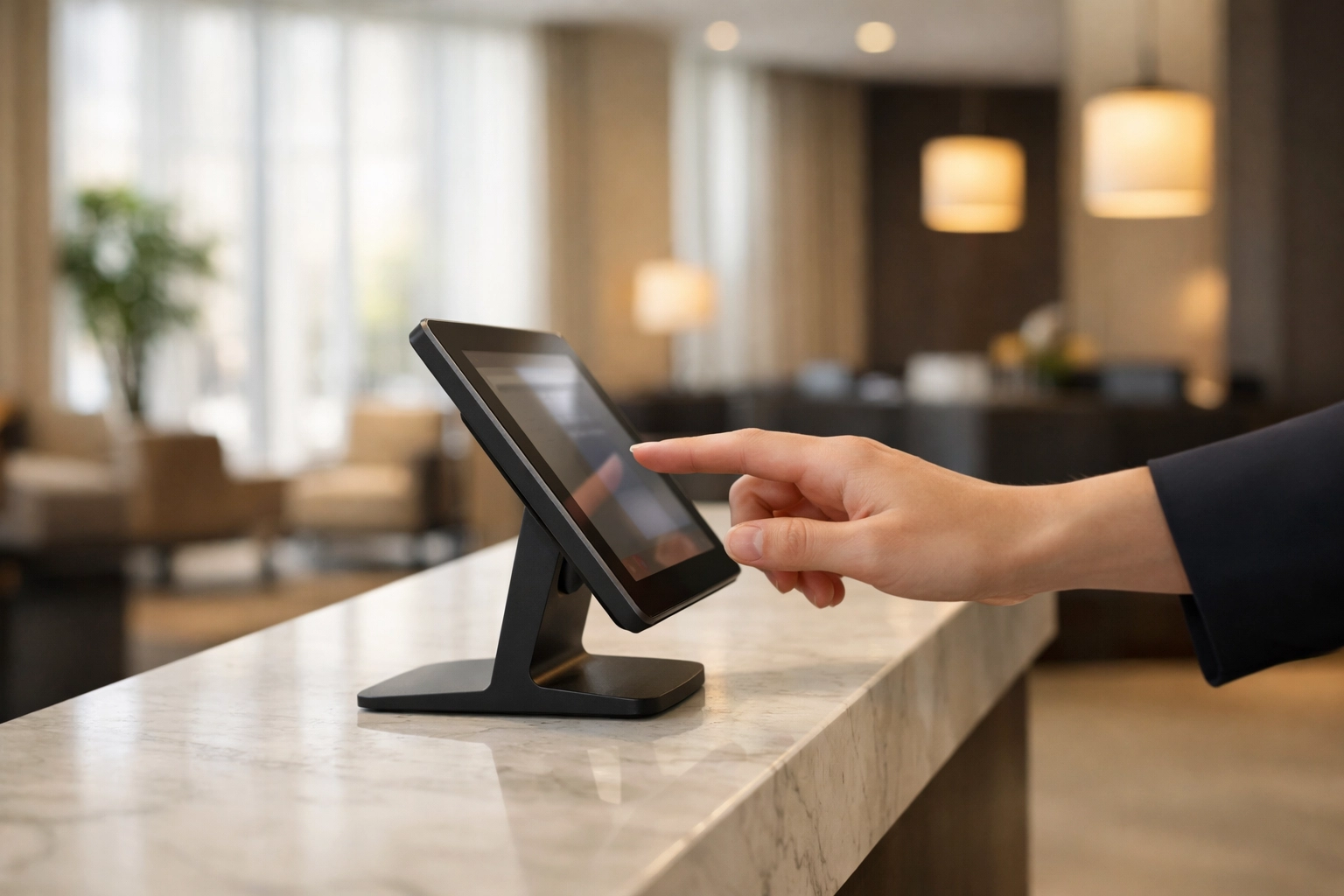
    A modern hotel self-check-in kiosk on a marble counter providing a seamless guest arrival experience.

    5. Digitize Your Housekeeping Workflow

    If your housekeeping manager is still walking around with a clipboard and a radio, your operations are stuck in the past.

    Manual status reporting is slow. A guest checks out, the front desk calls housekeeping, the supervisor checks the room, and then calls the front desk back to say it’s clean. That’s five minutes of work for a thirty-second update.

    With real-time task tracking, your housekeeping team receives instant notifications on their mobile devices. As soon as a guest checks out via the app or a kiosk, the room status updates to "dirty" on the housekeeper's phone. Once they finish the room, they tap a button, and the front desk sees it’s "clean" immediately.

    • Eliminate paper cleaning lists.
    • Track cleaning times for better efficiency.
    • Improve guest satisfaction with faster room turnovers.

    6. Automate Your Night Audit

    The "Night Audit" used to be a dreaded, hours-long process involving stacks of paper and manual reconciliations. In a modern, cloud-native system, the night audit shouldn't be something you "do": it should be something that happens automatically.

    We believe the night audit should be a non-event.

    By automating the indexing of reports, bank reconciliations, and OTA booking reconciliations, you eliminate the need for manual printing and filing. This not only saves paper but ensures that your financial records are always compliant and audit-ready.

    • Automate end-of-day reporting.
    • Reconcile OTA commissions without spreadsheets.
    • Access real-time financial data 24/7.

    A quiet, sophisticated hotel lounge at night representing efficient automated night audit reporting.

    7. Streamline Guest Communication with CRM

    Generic communication is boring. Manual communication is exhausting.

    A modern CRM (Customer Relationship Management) integrated into your PMS allows you to automate the entire guest journey. From the moment they book to the moment they receive their post-stay survey, every touchpoint should be automated and personalized.

    You don't need to manually email every guest to ask for their arrival time. Set up a rule. You don't need to manually send a "thank you" note. Let the system do it. This ensures consistency and frees up your marketing team to focus on strategy rather than execution.

    • Schedule pre-arrival emails based on guest segments.
    • Automate post-stay feedback requests.
    • Use guest data to personalize future offers without manual research.

    Why Mews?

    We think hospitality technology should be as easy to use as the apps on your smartphone. We are cloud-native, which means you can access your data from anywhere: whether you're at the front desk or at a beach in Bali.

    Automation isn't about replacing people; it's about giving people their jobs back. It's about letting your team be the hospitable, creative, and welcoming humans they were hired to be.

    Ready to stop typing and start hosting?

    Our platform is designed to handle the boring stuff so you can focus on the guest experience. If you’re tired of manual work and ready for a smarter way to manage your property, check out how Mews can transform your operations.

    Learn more about Mews and automate your property today.

    The Numbers Speak for Themselves

    • 80% Reduction in manual data entry errors.
    • 40% Increase in housekeeping efficiency.
    • 15 mins Saved per guest check-in.

    See what a truly innovative platform can do for your hotel. It’s time to move beyond the manual and embrace the future of hospitality.

    It’s easy. It’s automated. It’s Mews.

    A hotel professional using mobile hotel management software to streamline operations and guest service.

    3 Steps to Get Started with Automation

    1. Audit your day. Write down every time you have to type the same information twice.
    2. Identify the silo. Find which of your current tools aren't talking to each other.
    3. Schedule a demo. See how a unified platform eliminates those gaps in 30 minutes.

    Join the 12,500+ properties that have already ditched the manual grind. Your staff will thank you, and your guests will notice the difference.

    Start your journey here: https://referrals.mews.com/umqhyito

  • 7 Mistakes You’re Making with Business Automation Tools (and How to Fix Them Today)
    ☕ 7:00 AM.

    You reach for your phone before you even reach for your coffee. You’re expecting a clean slate. A morning where your ai business automation has handled the heavy lifting while you slept.

    But instead…

    Your inbox is a graveyard of "failed zap" notifications. Your CRM has three duplicate entries for the same lead. And that "automated" welcome email? It just sent a "Hey [FIRST_NAME]" to your biggest prospect.

    The silence of your house is suddenly very loud.

    You bought these business automation tools to buy back your time. To scale without the stress. To finally stop being the bottleneck in your own company. But right now? You’re just a glorified babysitter for a bunch of software that isn't talking to each other.

    It’s not the tools. It’s how you’re using them.

    Let’s look at the seven fatal mistakes you’re making, and how we’re going to fix them before your second cup of coffee gets cold.

    1. THE "SHINY OBJECT" SPRINT (WITHOUT A MAP)

    📱 9:00 AM.

    You see a TikTok about a new AI tool. It looks magical. You sign up, put in your credit card, and spend three hours trying to "integrate" it into a workflow you haven't even written down yet.

    You’re building a house by buying the curtains first.

    Most small business owners treat automation like a buffet, they grab a little of everything and hope it makes a meal. But without a clear implementation plan, you're just adding noise. You’re automating friction.

    The Fix: Stop. Put the mouse down. Take a piece of paper and map out your biggest bottleneck. Is it lead follow-up? Is it invoicing? Pick one high-impact area. If you can’t draw the process on a napkin, you can’t automate it with AI.

    Check out how we simplify this mapping at https://marblism.link/scott-bowen.

    2. AUTOMATING A BROKEN TRASH FIRE

    🤝 10:30 AM.

    There’s an old saying in the dev world: Garbage In, Garbage Out.

    If your manual process for onboarding a client is a chaotic mess of spreadsheets and "I'll remember to do that later" notes, automating it will only make the mess happen faster. You aren't fixing the problem; you're just scaling the disaster.

    You can't sprinkle ai business automation on a broken process and expect it to turn into gold.

    The Fix: Simplify before you amplify. Strip the process down to its bare essentials. If a human can't do it perfectly 10 times in a row, an AI shouldn't be touching it yet. Clean the data, fix the steps, then hit the "on" switch.

    Robot standing by a burning trash can to show the risk of automating broken business processes.

    3. THE "BLACK BOX" DISCONNECT

    🔍 11:45 AM.

    You hired a freelancer or used a template to set up a complex "Business-in-a-Box" automation. It works… for a week. Then it breaks. And you have no idea why because you don't actually understand how it works.

    This is the "Black Box" problem.

    When you lack domain knowledge of the processes being automated, you become a prisoner to your own tools. If you don't know the "why" behind the logic, you can't pivot when the market changes or your business evolves.

    The Fix: You don’t need to be a coder, but you do need to be the architect. Ensure every automation you deploy is documented. You should know the goal, the trigger, and the KPI. If a tool feels like magic you don't understand, it's a liability, not an asset.

    4. GHOSTING YOUR OWN FEEDBACK LOOPS

    ☎️ 1:00 PM.

    You set up your business automation tools and walked away. You assumed "set it and forget it" was a literal instruction.

    But business isn't static. APIs change. Software updates break integrations. Customers start asking questions your AI isn't trained to answer.

    If you aren't listening to the real-time feedback from your systems, you're flying a plane with the windows painted black. You won't know you've crashed until you smell the smoke.

    The Fix: Set up an "Automation Health Check" once a week. Spend 15 minutes looking at the logs. Are things failing? Are customers confused? Use these loops to refine the AI's "brain" constantly.

    5. THE "INVISIBLE" HOLE IN YOUR WALLET

    💰 2:30 PM.

    You’re paying $49/month for this, $99/month for that, and $200 for a seat on a platform you only use once a quarter.

    Do you know your ROI?

    Most business owners don't. They see "automation" as a cost of doing business rather than an investment that needs to pay rent. If an automation costs you $500 a month in tool fees and management but only saves you two hours of $50/hour work… you’re losing money.

    The Fix: Do the math.
    (Time Saved x Your Hourly Rate) – (Tool Cost + Setup Time) = Your Real ROI.
    If the number is negative, kill the tool. If you want to see how to actually get a positive return, https://marblism.link/scott-bowen is where the smart money is.

    Money flying out of a hole in a wallet, depicting poor ROI from expensive business automation tools.

    6. BUILDING A FRANKENSTEIN STACK

    🛠️ 4:00 PM.

    You have one tool for email, one for lead gen, one for project management, and a dozen "bridge" tools trying to keep them from exploding.

    It’s too complex.

    Overly complex tools lead to "integration fatigue." You spend more time making the tools talk to each other than you do actually talking to your customers. When your stack is a Frankenstein monster of incompatible parts, it’s only a matter of time before it turns on its creator.

    The Fix: Aim for "Seamless." Choose tools that play nice together natively. Look for all-in-one solutions where possible, or platforms designed specifically for ai business automation that prioritize connectivity. Less is almost always more.

    7. THE "SET IT AND FORGET IT" FALLACY

    🌙 6:00 PM.

    The lights are off in the office. You’re headed home. But wait, did you test that new lead sequence?

    "It'll be fine," you think.

    Narrator: It was not fine.

    Insufficient testing is the #1 reason automation fails. You launch a sequence to 5,000 people without testing it on 5. You don't have a support plan for when the server goes down at 2:00 AM on a Saturday. You’ve built a bridge but didn't check if it could hold a truck.

    The Fix: Never launch to "Live" without a "Beta" test. Send the emails to yourself. Trigger the zap with a fake lead. Ensure you have a support system, either a vendor or a dedicated team member, who knows what to do when the "magic" stops working.

    A breaking machine with gears flying off, representing failed business automation without testing.

    MEET THE TEAM THAT DOESN'T SLEEP

    The truth is, you didn't start your business to become a systems engineer. You started it to provide value, make money, and enjoy your life.

    But you’re currently stuck in the gears.

    Imagine a different 7:00 AM.

    ☕ You wake up.
    📱 You check your phone.
    🤝 Two new high-ticket leads have already been vetted by your AI.
    📋 Their initial discovery calls are booked.
    ✅ Your invoices were sent and tracked.

    And you haven't even finished your coffee.

    This isn't a dream. It's what happens when you stop making these seven mistakes and start using business automation tools the way they were intended.

    At Marblism, we don't just give you tools; we give you a strategy. We take the "black box" and turn it into a glass window. We turn the Frankenstein stack into a streamlined engine.

    Stop struggling with the "how" and start focusing on the "why."

    Scalability shouldn't be this hard. But here we are, making it look easy.

    If you’re ready to stop babysitting your software and start leading your company, it’s time to change the game. We’ve helped countless business owners turn their chaotic manual processes into sleek, AI-driven machines that generate leads while they sleep.

    Ready to see what your business looks like when it actually runs itself?

    Click through this 3-min interactive demo and see the difference for yourself:
    https://marblism.link/scott-bowen

    YOUR AUTOMATION QUESTIONS, ANSWERED

    Q: Is AI automation too expensive for a small business?
    No. In fact, doing things manually is what’s costing you. Between lost leads and your own wasted time, the "manual tax" is much higher than the cost of the right tools.

    Q: Will I lose the "human touch" with my clients?
    Only if you do it wrong. Good automation handles the repetitive stuff so you have more time for the high-value human interactions.

    Q: Do I need to know how to code?
    Absolutely not. Modern business automation tools are designed for people who run businesses, not people who write scripts. We handle the heavy lifting.

    Q: How long does it take to see results?
    If you fix Mistake #1 (The Plan), you can see a return on your time within the first 48 hours.

    The chaos is gone before you even take your first sip.

    Your phone buzzes.
    It’s a notification for a new sale.
    You just send a thumbs-up.
    The day begins.

    STOP JUGGLING. START GROWING.

    https://marblism.link/scott-bowen

  • The Ultimate Guide to Wholesale Specialty Coffee: Everything You Need to Succeed

    The Ultimate Guide to Wholesale Specialty Coffee: Everything You Need to Succeed

    So, you’re thinking about diving into the world of specialty coffee? Brilliant choice. Whether you are a budding entrepreneur planning a café startup or an established business looking to upgrade your bean game, navigating the world of wholesale specialty coffee can feel a bit like trying to dial in a perfect espresso shot on a Monday morning, exciting, but a little daunting.

    At Limini Coffee, we live and breathe this stuff. We know that choosing the right partner isn't just about finding someone who sells beans in big bags. It’s about finding a team that understands your vision and provides the support you need to actually make money while serving something incredible.

    What Exactly Is Wholesale Specialty Coffee?

    Before we get into the nitty-gritty of logistics, let’s clear one thing up. What makes coffee "specialty"?

    Basically, specialty coffee is a grade of coffee that scores 80 points or above on a 100-point scale by the Specialty Coffee Association (SCA). But for us, it’s more than just a number. It’s about the journey. It’s about knowing the farm, the processing method, and ensuring the roasting process brings out the very best in those beans.

    When you look for wholesale coffee roasters, you aren't just looking for a product; you are looking for a philosophy. Standard commercial coffee is often roasted to hide defects. Specialty coffee is roasted to celebrate the origin. And that is the beauty of coffee 🙂


    Finding Your Perfect Partner: How to Choose Coffee Suppliers

    Choosing from the sea of coffee suppliers out there is probably the most important decision you’ll make for your business. It’s a marriage, really. You want someone reliable, supportive, and, frankly, someone who makes a damn good cup of coffee.

    So, what should you look for?

    1. Consistency is King

    You can have the most incredible Ethiopian Yirgacheffe one week, but if the next batch tastes like burnt toast, your customers will notice. We believe consistency is the backbone of any successful café.

    2. Beyond the Bean: Support and Training

    A great roaster doesn't just drop off boxes and disappear. Do they offer coffee barista training? Do they understand how to maintain a machine? If your grinder goes down on a busy Saturday, you need a partner who has your back.

    3. Transparent Sourcing

    Where does the coffee come from? We take sourcing our coffee very seriously. Understanding the ethics and the "why" behind the beans helps you tell a story to your customers. And people love a good story.

    If you’re looking for a partner who ticks all these boxes, we’d love for you to join the family. You can check out our wholesale specialty coffee options here to see how we can help your business grow.

    Professional coffee roaster and café owner evaluating wholesale specialty coffee beans in a roastery.

    The Equipment: The Tools of the Trade

    You can buy the best beans in the world, but if you’re running them through a dusty, poorly calibrated machine, you’re doing the coffee (and your profit margins) a disservice.

    When starting out, choosing the right espresso equipment is vital. We often see startups trying to save money here by buying used gear from auction sites. Not something we would recommend. Why? Because coffee machines are complex beasts. They need precision.

    The Magic Numbers

    For a perfect extraction, you’re generally looking for:

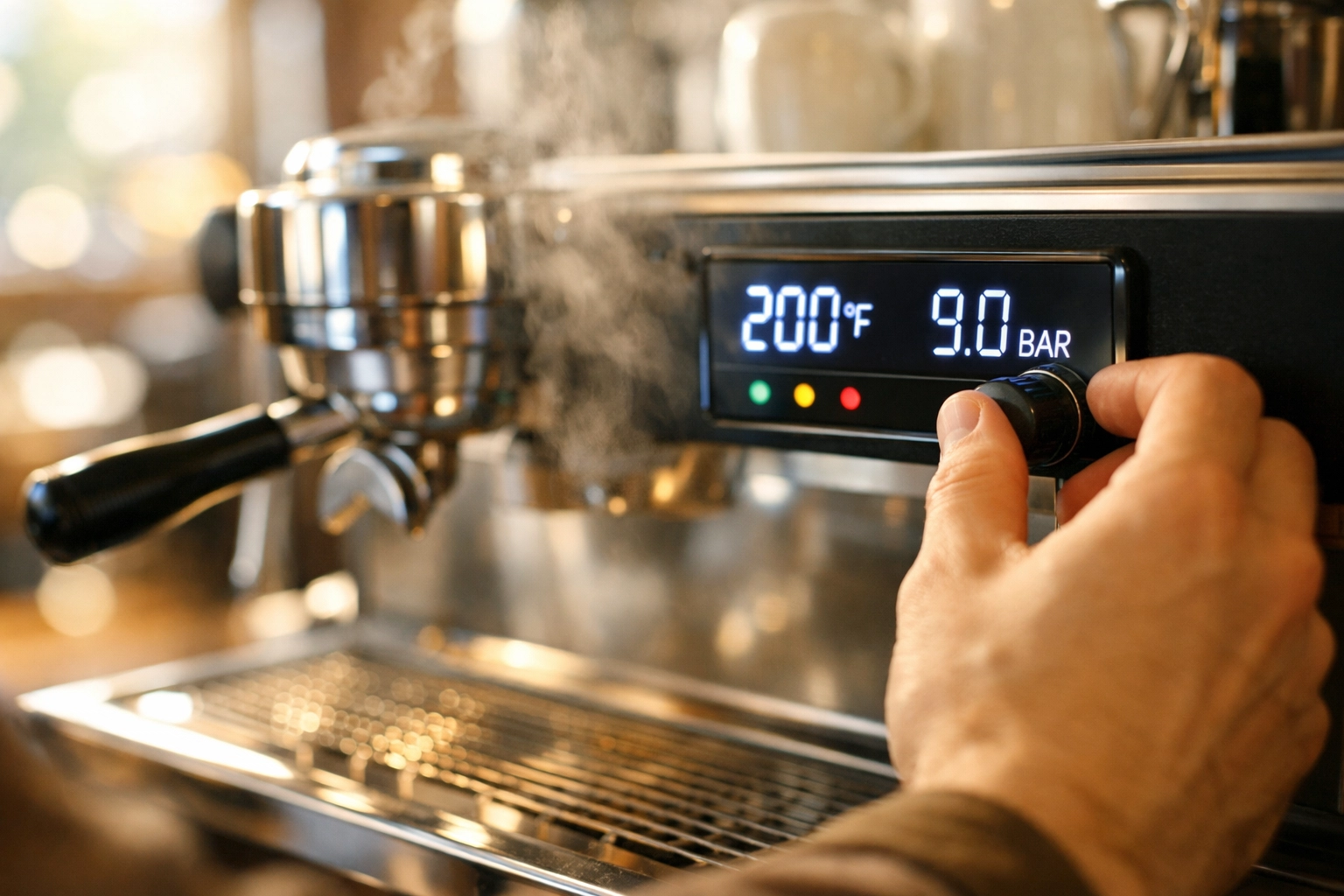
    • Pressure: 9 BAR.
    • Temperature: Usually between 88 °C to 95 °C (190 °F to 203 °F), depending on the roast.
    • Milk Temperature: For that silky texture, you want to hit around 140 °F / 60 ºC. Anything over 150 °F / 65 ºC and you’re starting to scald the proteins, which is just a real shame.

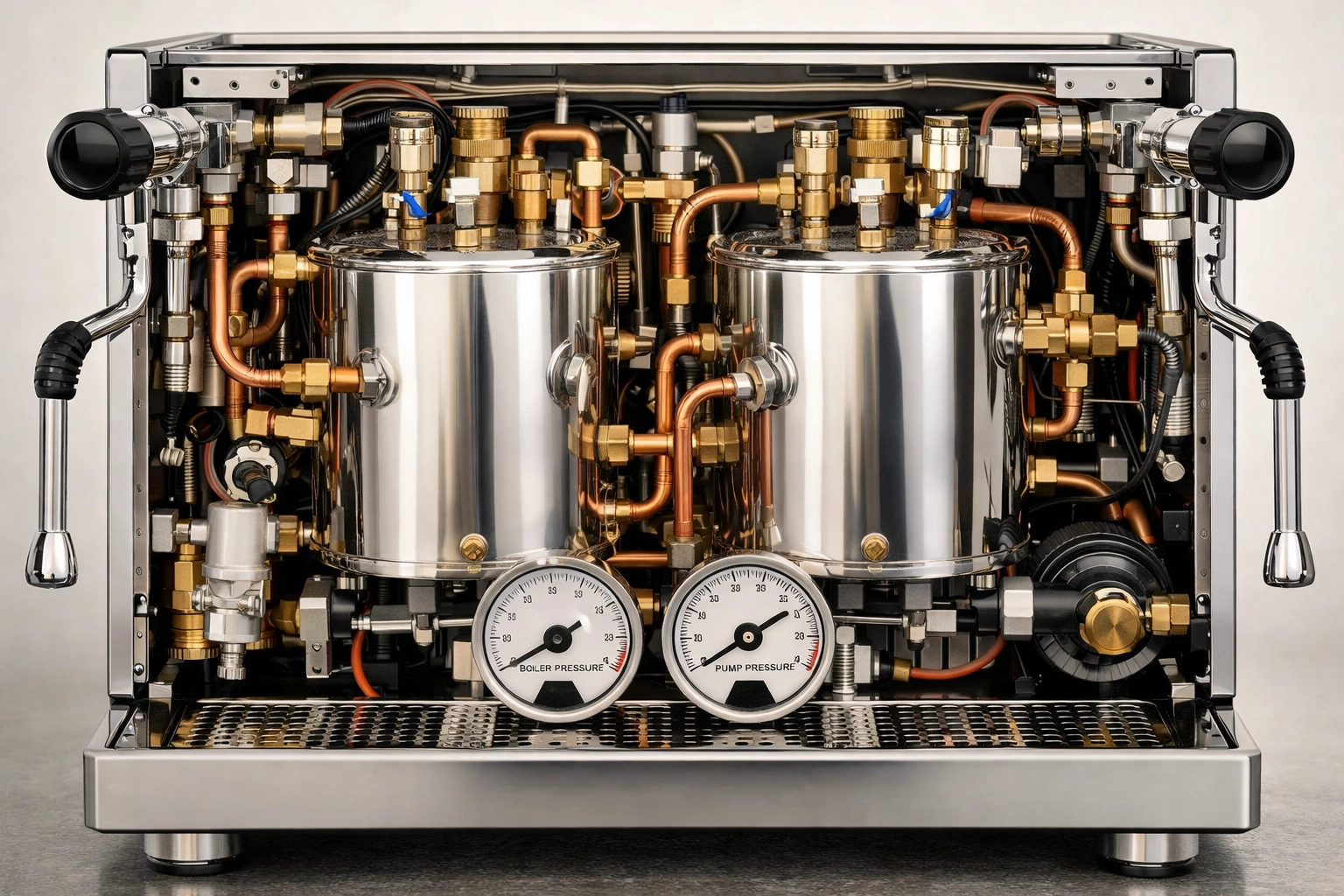
    We are huge fans of the La Spaziale machines. They are incredibly reliable and produce a consistent shot every single time. If you want to nerd out on the technical side, have a look at the La Spaziale workings to see why we love them so much.


    Building Your Business: The B2B Strategy

    If you are a café startup, the "wholesale" part of your business plan needs to be robust. You aren't just a shop; you are a service provider.

    Target Your Audience

    Who are you selling to?

    • The Morning Commuter: Needs speed and a consistent latte.
    • The Coffee Geek: Wants to know the altitude the beans were grown at.
    • The Local Business: Might want a bulk supply for their office.

    Understanding your target customers helps you decide which roast profiles to stock. A dark, chocolatey blend is usually a crowd-pleaser for milk-based drinks, while a light, acidic single origin is great for those who drink their coffee black.

    Pricing and Margins

    This is where many businesses trip up. You need to master your coffee cost. This includes the beans, the milk, the cup, and the overheads. Don’t be afraid to price yourself as a premium product. If you’re using specialty beans and trained baristas, you aren't competing with the local petrol station's 99p brew.

    Interior of a modern specialty coffee shop showing premium drinks and a clean, inviting seating area.

    The Secret Ingredient: Training and Theatre

    Imagine a customer walks into your shop. The smell of fresh roasting (or brewing) hits them. The barista is confident, the milk is being textured into a glossy, silky microfoam, and the latte art is on point. That’s not just a drink; that’s theatre.

    We believe that education is the most powerful tool you have. That’s why we offer a comprehensive training overview for all our partners. If your staff understands the difference between a flat white and a latte (yes, there is a big difference!), they can upsell and provide a better experience.

    And let’s talk about milk for a second. It makes up about 80% of your most popular drinks. If you don't understand milk, you can't make a great cappuccino. It’s about the science: hydrophobic and hydrophilic proteins working together to create that "polishing" effect we love.


    Marketing Your Wholesale Coffee

    Once you’ve got the beans, the machine, and the skills, you need to tell the world.

    1. Social Media: People eat (and drink) with their eyes. High-quality photos of your pours and your space are essential.
    2. Reviews: Word of mouth is gold in the specialty world. Encourage your customers to leave feedback. You can see what people say about us on our reviews page to see why reputation matters.
    3. Wholesale Branding: If you are supplying other businesses, make sure your packaging looks the part. Clean, professional, and informative.

    Why Choose Limini Coffee?

    We aren't just another name on a list of wholesale coffee roasters. We are a small, dedicated team that cares about your success as much as our own. We’ve spent years exploring the best way to roast, brew, and serve coffee, and we want to share that knowledge with you.

    From building a coffee shop to mastering the art of tamping, we provide a holistic approach to coffee. We don’t just want to sell you coffee; we want to help you build a thriving business.

    So, if you’re ready to take the next step and want to work with a team that’s as passionate as you are, we’d love to chat. Whether you need a new machine, some world-class beans, or just some friendly advice, you can find everything you need at Limini Coffee.

    Skilled barista pouring heart-shaped latte art, demonstrating the quality and theatre of specialty coffee.

    Final Thoughts

    Success in the wholesale specialty coffee world doesn't happen by accident. It’s a combination of quality sourcing, the right equipment, continuous training, and a whole lot of heart.

    Remember, the goal isn't just to serve a cup of coffee. The goal is to create an experience that keeps people coming back. Fresh is always best. Quality is always worth it. And a great partner makes all the difference.

    If you have questions about starting your journey or want to see how we can support your existing business, don't hesitate to reach out. We’re here to help you every step of the way. Let's make some great coffee together!


    Ready to upgrade your coffee game? Visit our wholesale page today and let's get started.

  • The Small Business Owner’s Guide to AI Business Automation in 2026

    The Small Business Owner’s Guide to AI Business Automation in 2026

    You're drowning in emails.

    Your calendar is a game of Tetris you're losing. Customer support tickets are piling up faster than you can answer them. Lead follow-ups? Those are buried somewhere in your "urgent" folder from three weeks ago.

    And here's the kicker , you're working harder than ever, but your revenue? It's flatlined.

    You can't hire fast enough. You can't clone yourself. And you definitely can't keep juggling 47 browser tabs while pretending you've got this under control.

    But what if you didn't have to?

    🚀 Welcome to 2026: The Year Small Businesses Fight Back

    Here's the truth nobody's telling you: AI automation isn't a luxury anymore. It's your competitive advantage.

    While your competitors are still hiring their way out of chaos (and burning cash doing it), you could be scaling like a Fortune 500 company , without the Fortune 500 headcount.

    AI business automation in 2026 isn't about replacing humans. It's about replacing the soul-crushing, admin-heavy tasks that keep you stuck in "reactive mode" instead of building your actual business.

    Think about it. What if your inbox managed itself? What if leads qualified themselves? What if customer support ran 24/7 without you lifting a finger?

    That's not science fiction. That's Tuesday for the businesses that figured this out six months ago.

    Overwhelmed small business owner surrounded by emails, calendars, and support tickets

    The 5 Automations That'll Save Your Sanity (And 20+ Hours a Week)

    Let's get tactical. These are the five highest-ROI automations you should implement first , ranked by how much time they'll give you back.

    1. Email Triage & Response (Saves 5-10 Hours/Week)

    Your AI reads every incoming email. It categorizes by urgency. It drafts responses for the common questions. It flags the urgent stuff and lets the rest organize itself.

    You wake up to an inbox that's already been handled. Not ignored , handled.

    2. Meeting Prep & Follow-Up (Saves 3-5 Hours/Week)

    Before your 2 PM call, your AI has already researched the attendees, pulled relevant context, and prepped your talking points.

    After the meeting? It sends summaries and tracks action items. You just show up and close deals.

    3. Customer Support First Response (Instant Instead of Hours)

    AI handles tier-1 support questions the second they come in. Order status? Answered. FAQ? Handled. Password reset? Done.

    Your customers get instant responses. You only see the tickets that actually need a human.

    4. Lead Qualification & CRM Updates (No More Manual Data Entry)

    Leads come in. AI scores them, updates your CRM, and triggers the right follow-up sequence based on their behavior.

    You spend time talking to hot leads : not data entry.

    5. Invoice Processing & Data Entry (Because Life's Too Short)

    Documents come in. AI extracts the data, categorizes it, and files it where it belongs.

    No more hunting for receipts or manually entering invoice details at 11 PM.

    AI assistant organizing emails, calendars, and customer support tasks efficiently

    How to Get Your First Automation Running in Under an Hour

    Here's the framework that actually works. No PhD required.

    Step 1: Pick ONE automation to start.

    Don't try to automate your entire business on day one. That's how you end up overwhelmed and back to manual processes by Friday.

    Choose the task that eats the most time and start there. For most small business owners, that's email or customer support.

    Step 2: Define what success looks like.

    How much time are you spending on this task right now? How many errors happen? What does "good" look like?

    Track it. Because in 30 days, you're going to want proof that this was worth it.

    Step 3: Choose a no-code platform.

    You don't need to hire a developer. Most AI automation platforms have drag-and-drop builders that let you design workflows visually.

    Look for platforms with pre-built templates you can customize. Free trials are your friend : use them to validate fit before committing.

    Step 4: Connect your tools.

    Most platforms integrate with Gmail, Slack, your CRM, and thousands of other business apps through simple one-click connections.

    This literally takes two minutes.

    Step 5: Describe what you want in plain English.

    No flowcharts. No coding. Just tell the AI what you need : like you're briefing a new assistant.

    "When an email comes in asking about pricing, send them our pricing page and log it in the CRM."

    Test it with real data. Tweak until it works. Launch it.

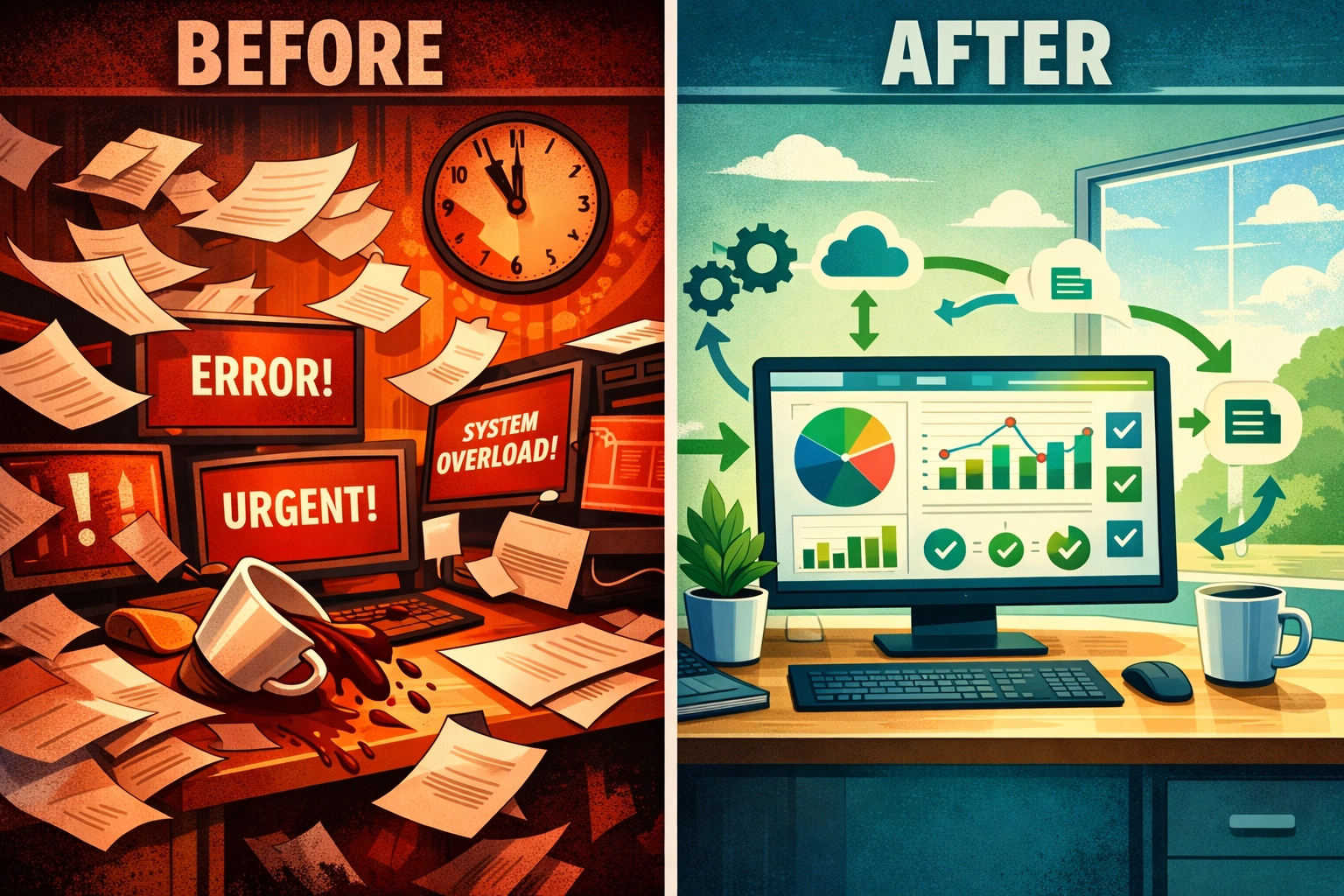
    Before and after AI business automation: chaos versus organized workflow

    The Biggest Mistakes You'll Make (And How to Avoid Them)

    Mistake #1: Trying to automate everything at once.

    Start small. Validate. Iterate. Don't build a Rube Goldberg machine when a simple workflow will do.

    Mistake #2: Removing humans entirely.

    AI should assist, not replace critical thinking. Use human-in-the-loop features for anything that requires judgment or approval.

    Mistake #3: Ignoring the data.

    Track KPIs from day one : processing time, accuracy, adoption rate, error rate. If you don't measure it, you can't improve it.

    Mistake #4: Skipping the parallel testing phase.

    Run your automation alongside your manual process for the first week. Catch issues before they become disasters.

    What This Actually Looks Like in Real Life

    Let's paint a picture.

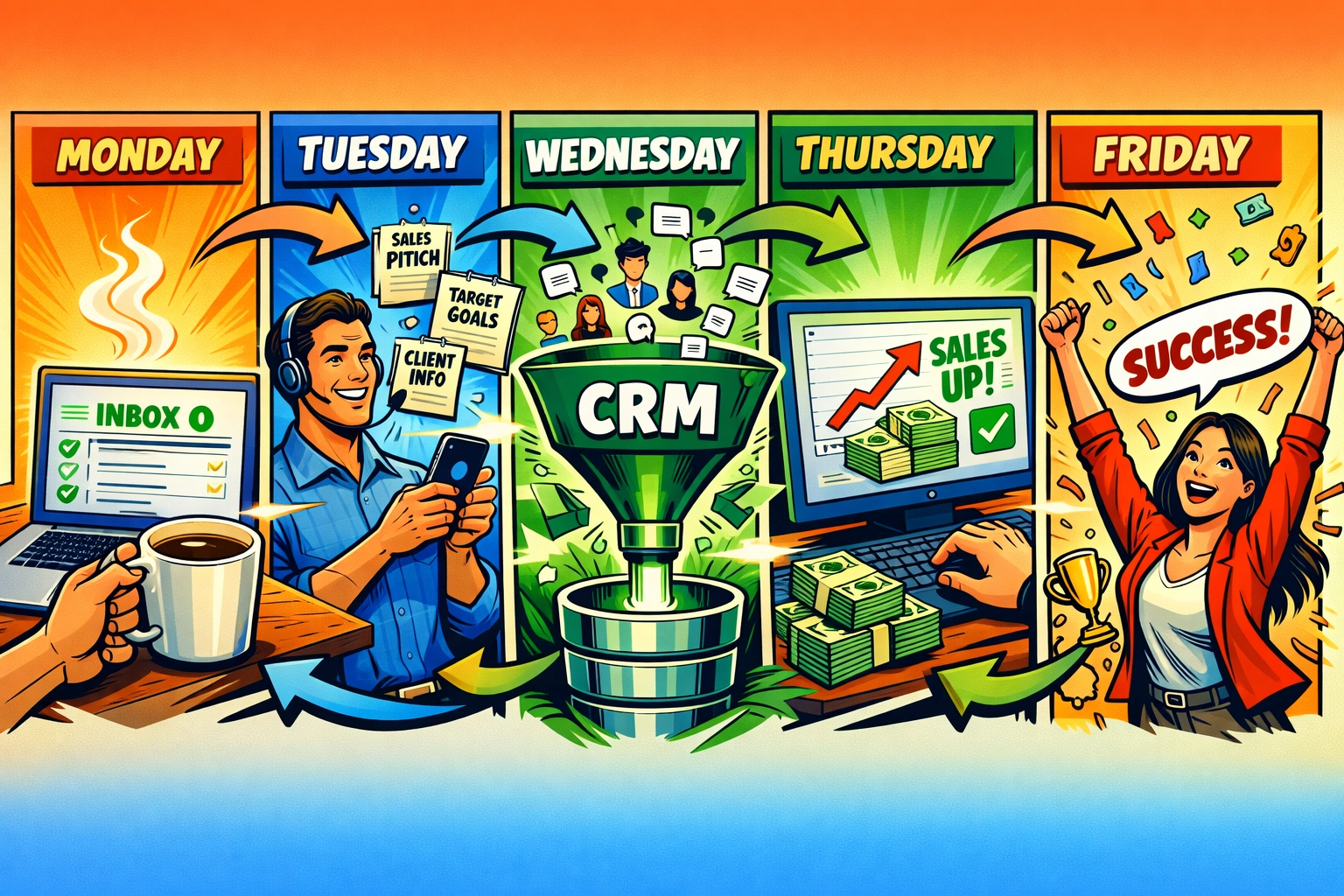
    Monday, 7:00 AM: You open your inbox. Your AI has already triaged 87 emails overnight. 64 are answered. 12 are flagged as "needs your input." 11 are filed for later.

    You start your day focused : not reactive.

    📞 Tuesday, 2:00 PM: You're on a sales call. Your AI prepped the talking points, researched the prospect's company, and flagged three pain points they mentioned on their website.

    You sound like you've been following them for months. The call closes in 20 minutes.

    🤝 Wednesday, 11:00 AM: A lead fills out your contact form. Your AI scores them, updates your CRM, and triggers a personalized follow-up sequence : all while you're in a meeting.

    By the time you check your dashboard, the lead's already booked a demo.

    🔍 Thursday, 9:00 AM: A customer support ticket comes in. Your AI handles it instantly, checks the order status, and sends tracking info.

    The customer leaves a 5-star review 10 minutes later. You never saw the ticket.

    That's not a fantasy. That's what AI business automation looks like when you stop juggling and start delegating to systems that don't sleep.

    Small business owner relaxing while AI assistants handle daily business tasks

    Your Next Move

    Look : you didn't start a business to spend 60 hours a week answering emails and updating spreadsheets.

    You started it to build something meaningful. To scale. To have freedom.

    AI automation in 2026 isn't about replacing you. It's about giving you back the time to do what only you can do : close deals, build relationships, and grow your vision.

    The businesses that figured this out six months ago? They're scaling faster, working less, and sleeping better than their competitors who are still "planning to automate next quarter."

    You can keep juggling. Or you can let AI catch the balls while you focus on what actually moves the needle.

    Ready to see what this looks like for your business? Check out how other small business owners are using AI to scale without the chaos: https://marblism.link/scott-bowen

    Week-long timeline showing automated business success from Monday to Friday

    The Bottom Line

    AI business automation isn't coming. It's here.

    And the small businesses winning in 2026 aren't the ones with the biggest teams or the deepest pockets. They're the ones who figured out how to scale smart : not just hard.

    You can either spend the next six months doing what you did the last six months… or you can automate the chaos, reclaim your time, and finally build the business you actually want.

    The choice is yours. But if you're still reading this, I think you already know which direction you're heading.

  • The Ultimate Guide to Choosing the Right Espresso Machine for Your Business

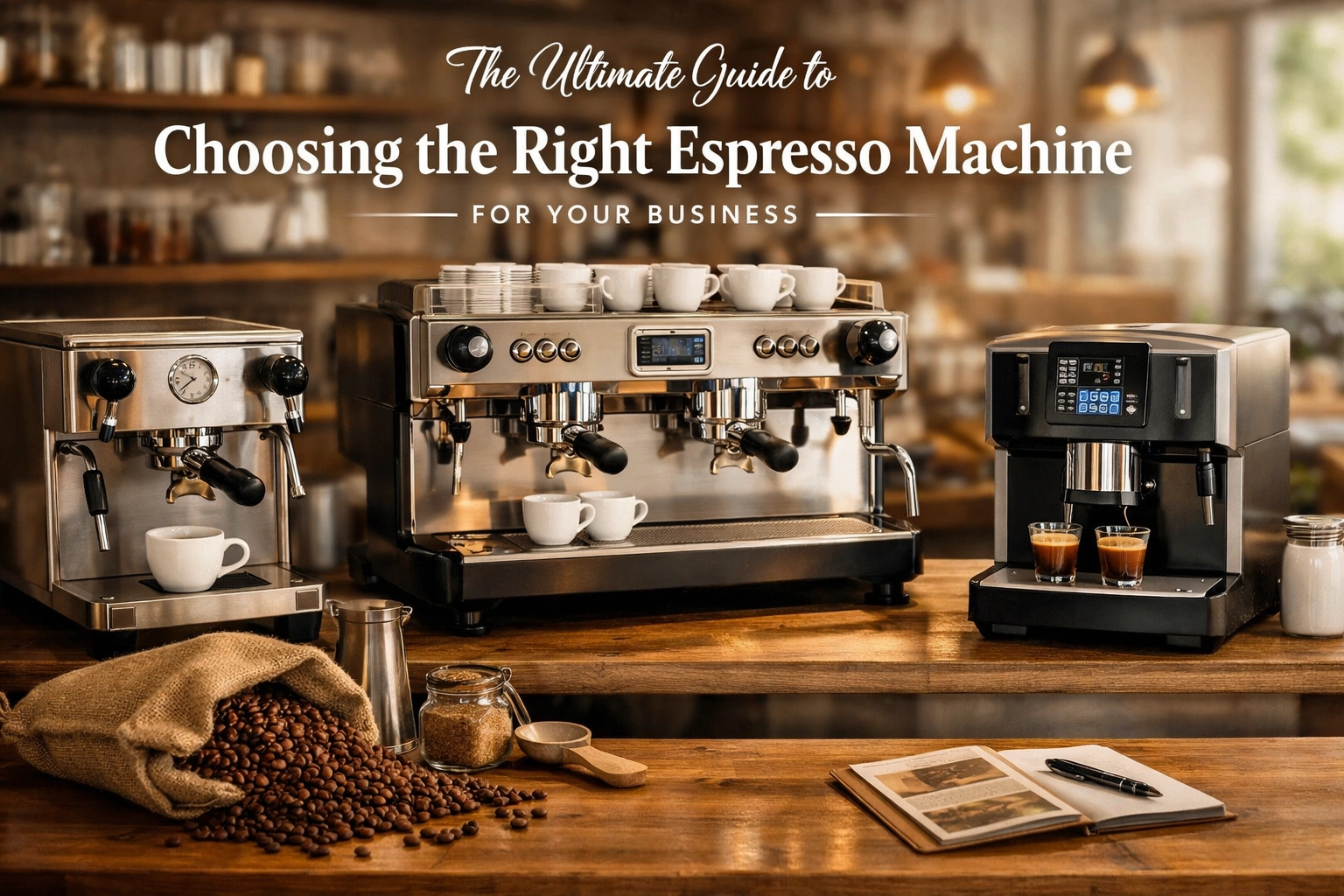
    The Ultimate Guide to Choosing the Right Espresso Machine for Your Business

    Buying an espresso machine is one of the biggest investments you'll make when starting or upgrading your coffee business. We're talking anywhere from a few thousand pounds to well over twenty grand for a top-tier multi-group setup. It's not just about the upfront cost either: your machine choice affects everything from your workflow efficiency to the quality consistency your customers experience.

    So how do you navigate the overwhelming number of options out there? Let's break down exactly what you need to consider to find the perfect match for your business.

    Understanding Machine Types

    The first decision you'll face is what level of automation suits your operation and barista skill level.

    Manual/Lever Machines offer maximum control over every aspect of extraction. They're beautiful, tactile, and give skilled baristas the ability to fine-tune each shot by manipulating pressure throughout the pull. The downside? They require serious training and aren't ideal for high-volume environments where consistency and speed matter most.

    Semi-Automatic Machines are the sweet spot for specialty coffee shops with trained baristas. You control when to start and stop the extraction, which means you can adjust on the fly based on what you're seeing in the cup. This is what most independent cafes run, and for good reason.

    Automatic (Volumetric) Machines take the guesswork out of shot timing. You programme the exact volume for a single, double, or lungo, and the machine stops automatically. These are brilliant for busy environments where you need consistent results without requiring every team member to be an extraction expert.

    Barista operating manual lever espresso machine in coffee shop

    Super-Automatic Machines do everything: grinding, tamping, extracting, and even steaming milk. They're ideal for hotels, offices, or high-volume venues where coffee quality matters but you don't have dedicated baristas. The trade-off is less flexibility and a different flavor profile compared to traditional espresso.

    Matching Your Machine to Your Business Type

    Your business model should drive your equipment choice, not the other way around.

    If you're running a small café or bakery where coffee complements food offerings, you'll want something compact with quick heat-up times and straightforward operation. Reliability matters more than bleeding-edge features here.

    A high-volume specialty coffee bar needs the big guns: dual boiler systems, multiple groupheads, and volumetric controls that let you maintain quality during the morning rush. You'll also want a machine that gives your baristas enough control to showcase different coffees properly.

    Restaurants and hotels often benefit from super-automatic setups with self-cleaning functions and automated milk systems. Your staff can produce decent drinks without extensive training, and maintenance becomes far simpler.

    For mobile operations or pop-ups, look at tank-fed machines with lower power requirements. You need portability and flexibility, so a massive plumbed-in three-group beast just won't work.

    Boiler Systems: The Heart of Performance

    The boiler configuration affects everything: temperature stability, recovery time, and your ability to brew and steam simultaneously.

    Heat Exchanger Machines use a large steam boiler with a separate tube running through it to heat brew water. They're cost-effective and powerful, making them popular in traditional Italian cafes. The challenge is maintaining consistent brew temperature, especially with light-roast specialty coffee. You might need to do a "cooling flush" before pulling shots to get the temperature just right.

    Dual Boiler Machines are the standard for specialty coffee. Two separate boilers mean one is dedicated purely to brewing while the other handles steam. This gives you incredible temperature stability and the ability to pull shots and steam milk simultaneously without any compromise.

    Dual boiler espresso machine showing separate brewing and steam boiler components

    For specialty roasters and third-wave shops showcasing delicate, light-roast coffees, dual boilers are basically non-negotiable. The precise temperature control makes a massive difference in extraction quality.

    Grouphead Configuration

    How many groupheads do you actually need?

    Single Group Machines work well for lower-volume locations, as a secondary machine for decaf or single-origin espresso, or in restaurants where coffee isn't the primary focus. They're also significantly more affordable and take up less counter space.

    Two-Group Machines are the workhorse of the industry. This configuration handles steady morning rushes with one or two baristas comfortably. It's the most common setup in independent coffee shops for good reason: it offers the right balance of capacity and footprint.

    Three-Group and Beyond are for serious high-volume operations. If you're consistently pulling shots across multiple groupheads simultaneously during rush periods, you need this. Otherwise, you're paying for capacity you don't use and taking up valuable counter real estate.

    Key Features Worth Considering

    Beyond the basics, several features can significantly impact your daily operation:

    PID Temperature Control is like cruise control for your brew temperature. It maintains incredibly precise temperature settings, which is crucial for consistency. For specialty coffee focused on showcasing origin characteristics, this isn't optional: it's essential.

    Volumetric Controls let you programme shot volumes with precision. Press a button, and you get exactly 36g out every single time. This consistency is invaluable during busy periods when your attention is split between multiple tasks.

    Pre-Infusion gently saturates the coffee puck before applying full pressure. This helps with even extraction and can significantly improve shot quality, particularly with lighter roasts that benefit from a more gradual extraction.

    Barista adjusting PID temperature controller on commercial espresso machine

    Independent Boilers Per Group (found on high-end machines) give each grouphead its own temperature control. This means you can have one group set at 93°C for your main espresso blend and another at 96°C for a light-roast Ethiopian single origin.

    Ease of Maintenance might not seem exciting, but it matters enormously over time. Can you easily access components for cleaning and repairs? Are parts readily available? Downtime costs you money, so factor this into your decision.

    Top Recommendations by Category

    For high-end specialty shops, the La Marzocco Strada MP remains the industry benchmark. Individual boilers per group, manual paddle control over pressure, and periscope pressure gauges give you complete control over extraction. It's what you'll find in World Barista Championship competitions for good reason.

    The Nuova Simonelli Appia Life offers excellent value for small to medium cafes. It's compact, reliable, and features dual steam wands with volumetric controls. The heat-up time is impressively quick, and maintenance is straightforward.

    For those wanting super-automatic reliability with decent quality, the Franke A-series machines are worth exploring. They're workhorses in hotel and corporate environments, delivering consistent results with minimal intervention.

    If budget is tight but you still want dual boilers and volumetric control, the Rancilio Classe 5 USB offers impressive features at a more accessible price point. It's a solid workhorse that punches above its weight.

    Beyond the Machine: Training and Support Matter

    Here's something that often gets overlooked: the machine is only as good as the person operating it.

    At Limini Coffee, we don't just roast exceptional beans; we also supply top-tier equipment and provide comprehensive training to help you get the most from your investment. Whether you're installing your first machine or upgrading to a multi-group setup, proper barista training makes an enormous difference to your output quality and efficiency.

    We work with coffee shops to match equipment to their specific needs, space constraints, and skill levels. We've seen too many businesses buy the wrong machine (usually overbuying based on aspirational volume rather than realistic needs) and struggle with the complexity or running costs. You can explore our full range of commercial espresso equipment and speak with our team about what makes sense for your operation.

    Our training programmes cover everything from basic espresso extraction to advanced workflow optimization. Many shops find that proper training delivers as much improvement as upgrading equipment.

    Making Your Decision

    Start by honestly assessing your volume, skill level, and growth projections. Are you serving 50 drinks a day or 500? Do you have trained baristas or a rotating staff with minimal coffee experience?

    Consider your space constraints and power requirements. A three-group machine might seem ideal until you realize your electrical setup can't support it without costly upgrades.

    Think about ongoing costs: maintenance, repairs, and energy consumption all add up over time. Sometimes a slightly more expensive machine with better reliability and lower running costs makes more financial sense.

    And remember, your machine should complement your coffee, not compensate for it. Great equipment amplifies great beans but can't rescue poor-quality coffee.

    If you're ready to explore equipment options or need guidance on choosing the right setup for your business, check out our equipment range and wholesale offerings. We're here to help you make the right choice for your business, backed by ongoing support and training to ensure you're getting the absolute most from your investment.

  • How to Choose the Best Hotel Management Software (Compared)

    How to Choose the Best Hotel Management Software (Compared)

    Automate your operations. Elevate your guest experience. Grow your revenue.

    Choosing a hotel management system shouldn't feel like a chore. It should feel like a massive upgrade to your daily life. With over 12,500 properties worldwide moving toward modern, cloud-native solutions, the right tech stack is no longer a luxury: it’s the heartbeat of your business. You deserve a system that works as hard as you do, all from one innovative platform.

    Why your choice matters now

    The hospitality landscape has shifted. Guests don't want to stand in line at a mahogany desk while a receptionist types into a flickering screen from 1995. They want speed. They want personalization. They want to check in on their phone while they're in the Uber from the airport.

    If your current software feels like an anchor, it’s time to find a sail. We believe that technology should fade into the background so that hospitality can take center stage. When you choose the right hotel PMS, you aren't just buying software; you’re buying back your time.

    • 80% reduction in check-in times.
    • 15% increase in RevPAR through automated upselling.
    • 10 hours a week saved for front desk managers.

    The core components of a modern tech stack

    A great hotel management system is more than just a digital calendar. It’s an ecosystem. To run a profitable, modern property, you need several moving parts to work in perfect harmony.

    1. The Hotel PMS (The Brain)

    The Property Management System is the center of your universe. It handles your guest profiles, room assignments, and billing. But "legacy" systems are often stuck on local servers. We think your brain should be in the cloud. Cloud-native systems like Mews allow you to run your hotel from a tablet, a laptop, or your phone: anywhere with an internet connection.

    2. The Booking Engine (The Storefront)

    Your website needs to do more than look pretty; it needs to convert. A high-performing booking engine should be mobile-first and lightning-fast.

    • Integrated payment processing.
    • Real-time availability.
    • Simple, three-click guest journey.

    3. The Channel Manager (The Megaphone)

    You can’t be everywhere at once, but your inventory should be. A channel manager connects your PMS to OTAs like Booking.com, Expedia, and Airbnb. When a room sells on one, it closes on all. This eliminates the nightmare of overbookings and ensures your rates are always optimized.

    Modern tablet running cloud-native hotel PMS software on a luxury marble concierge desk.

    Automation is the new gold standard

    We believe the era of manual data entry is over. If your staff is spending their shift copying credit card numbers from an email into a terminal, you’re losing money. Automation isn't about replacing people; it’s about freeing them to be hospitable.

    Self-check-in kiosks are a perfect example. By placing a kiosk in your lobby, you give guests the choice to skip the queue. It’s faster for them and easier for you. Combine this with a robust CRM to send automated, personalized emails before, during, and after their stay, and you’ve created a guest journey that feels premium without the manual labor.

    "Switching to an automated system saved our team 15 hours of admin a week. Now we actually have time to talk to our guests." : Independent Hotel Owner

    Comparing the top contenders

    Not all software is created equal. Depending on your size and your goals, some platforms will fit better than others. Here is how the market currently shakes out:

    Feature Mews Legacy Systems (e.g., Opera) Entry-Level (e.g., Cloudbeds)
    Deployment Cloud-native Often on-premise Cloud-based
    API Access Open and free Limited / Expensive Moderate
    User Interface Modern / Intuitive Complex / Text-heavy Simple
    Automation High (Built-in) Low (Manual) Moderate

    Mews: The Innovative Leader

    Mews is designed for the modern hotelier who prizes flexibility. Because it is cloud-native and features an open API, you can plug in any of the 1,000+ integrations available. It's built for those who want to automate everything from payments to housekeeping.
    USP: Unmatched automation and ease of use.

    Oracle Hospitality OPERA: The Enterprise Giant

    Standardized for large chains, Opera is powerful but can feel like a labyrinth. It requires extensive staff training and often involves high setup costs. It’s great for 500-room corporate hotels that need rigid processes, but it lacks the "human" touch of modern interfaces.

    Cloudbeds: The All-in-One for SMBs

    A solid choice for smaller properties or B&Bs. It combines the PMS, channel manager, and booking engine into one package. While it's easy to set up, it can sometimes lack the deep customization and advanced automation features that growing brands need.

    Guest using a smartphone near a minimalist self-check-in kiosk in a contemporary hotel lobby.

    How to choose: A 3-step framework

    Don't get blinded by a long list of features you'll never use. Follow this simple process to find your match.

    1. Audit your current pain points.
      Ask your front desk team what they hate doing most. Is it manual night audits? Dealing with OTA errors? Chasing payments? Your new software should solve these specific problems first.

    2. Demand an open API.
      The world changes fast. Today you might need a smart lock integration; tomorrow you might want an AI-driven revenue manager. If your PMS is a "closed shop," you'll be stuck in the past. Always choose a system that plays well with others.

    3. Test the mobile experience.
      If the software doesn't work perfectly on a smartphone, walk away. Your guests live on their phones, and your staff shouldn't be chained to a desk.

    The guest experience transformation

    We think about the guest journey in "moments."

    • The Dream: They book directly on your site because it was easier than Expedia.
    • The Arrival: They check in on their phone while walking through your doors.
    • The Stay: They use a web app to order an extra pillow or a late-night snack.
    • The Departure: They settle their bill automatically and receive a digital receipt.

    This isn't the future: it's what guests expect right now. Systems that utilize self-check-in kiosks and integrated CRM tools make these moments seamless.

    Minimalist hotel office workspace with a laptop representing a clear hotel management software choice.

    Let’s talk about ROI

    Better software isn't a cost; it's a revenue generator. When you move to a system focused on automation, your overhead drops. When your booking engine is optimized for conversion, your direct bookings rise. When your staff isn't stressed by a clunky interface, your guest reviews improve.

    "We saw a 20% jump in direct bookings within three months of switching. The platform just makes sense."

    Ready to see how the most innovative hotels are running their business? You can explore the possibilities and get started with Mews here.

    Final thoughts

    Choosing the best hotel management software is about deciding what kind of business you want to be. Do you want to be the hotel that's always "fixing the computer," or the hotel that's always delighting the guest?

    The choice is yours. Look for a partner that values innovation as much as you do. Look for a system that’s cloud-native, easy to use, and obsessed with automation. Your guests will thank you, and your bottom line will too.

    Schedule a demo. Get a feel for the interface. See how it handles your toughest operational challenge. You'll know the right one when it feels like the weight has been lifted off your shoulders.

    Guest enjoying a luxury hotel suite while using a mobile guest experience app for seamless service.

    Start your journey toward a more automated, guest-centric future today.
    Experience the Mews difference and get your property earning more revenue in no time.

  • How to Choose the Best Brewing Gear for Your Kitchen (Compared)

    So, you’ve decided to upgrade your morning ritual. Maybe you’re tired of the "burnt bean" taste from your old pod machine, or perhaps you’ve visited a specialty shop and realized that coffee can actually taste like blueberries or dark chocolate rather than just… brown water. Whatever brought you here, we’re glad you made it.

    Choosing the right brewing gear for your kitchen can feel like navigating a minefield of shiny chrome, confusing acronyms, and wildly different price tags. Do you need a machine with a PID (Proportional Integral Derivative) controller, or will a simple kettle and a plastic cone do the trick? Honestly, there isn't a one-size-fits-all answer. The "best" gear is the one that fits your counter space, your budget, and most importantly, how much effort you’re willing to put in before you’ve had your first caffeine hit of the day.

    At Limini Coffee, we live and breathe this stuff. We want you to have the best possible experience at home, which always starts with freshly roasted coffee beans. But even the best beans need the right tools to shine. Let’s dive into the world of home brewing equipment and see what fits your kitchen best.


    The Great Divide: Espresso vs. Filter

    Before you spend a penny, you need to decide which "camp" you fall into. Are you an espresso purist who dreams of thick, syrupy shots and silky lattes? Or do you prefer a long, clean cup of filter coffee that lets the subtle notes of a single-origin bean sing?

    The Espresso Setup (The "Mini Coffee Shop")

    If you want to recreate the cafe experience, you're looking at an espresso machine. This is the heavy lifting of the coffee world. We’re talking about 9 BAR of pressure pushing hot water through a tightly packed "puck" of finely ground coffee.

    A professional chrome espresso machine brewing a fresh shot into a ceramic cup on a kitchen counter.

    When choosing an espresso machine, space is often the biggest hurdle. Some machines, like the La Spaziale range, are incredible pieces of engineering but they do require a bit of "breathing room" on your counter. You also need to consider the learning curve. Espresso is a craft. You’ll need to learn about tamping and how to dial in your grind.

    Pros:

    • Makes authentic lattes, cappuccinos, and flat whites.
    • The ritual is incredibly rewarding.
    • Produces that beautiful crema we all love.

    Cons:

    • Expensive initial investment.
    • Requires a high-quality burr grinder (non-negotiable!).
    • Takes up more kitchen real estate.

    The Filter Approach (The "Zen" Method)

    Filter coffee (or "pour-over") is all about gravity. It’s a slower process that results in a lighter-bodied cup. If you love tasting the difference between a fruity Ethiopian and a nutty Brazilian, this is for you. Gear like the Hario V60, Chemex, or Aeropress are compact, affordable, and easy to clean.


    Automation vs. Manual Control

    How much do you want to do yourself? Some of us love the "theatre" of brewing (we’ve even written about the theatre of coffee before), while others just want to press a button and walk away.

    Fully Automatic Machines

    These are the "cruise control" of coffee. They grind, tamp, and brew at the touch of a button. Modern versions even come with apps and WiFi connectivity, much like the high-end home brewing systems used for beer.

    The drawback being… you lose control. If the coffee tastes a bit sour or bitter, you have limited ways to fix it compared to a manual setup.

    Manual & Lever Machines

    On the other end of the spectrum, you have lever machines. These require you to manually pull a lever to create the pressure needed for the shot. It’s tactile, it’s beautiful, and it gives you total control over the flow of the water. We think they’re brilliant for those who want to "feel" the extraction, though they aren't the best choice if you're in a rush to get the kids to school.


    Key Factors to Compare

    To help you decide, let's look at the same factors we use when evaluating any kitchen equipment: size, cooling/heating, and batch size.

    Feature Manual Pour-Over Home Espresso Machine Bean-to-Cup (Auto)
    Space Needed Minimal (fits in a drawer) Substantial (needs a "station") Moderate to Large
    Setup Time 2-5 minutes 15-20 minutes (warm-up) 1-2 minutes
    Skill Level Moderate (technique matters) High (the "barista" path) Low (press a button)
    Cost £20 – £50 £500 – £2,000+ £300 – £1,000

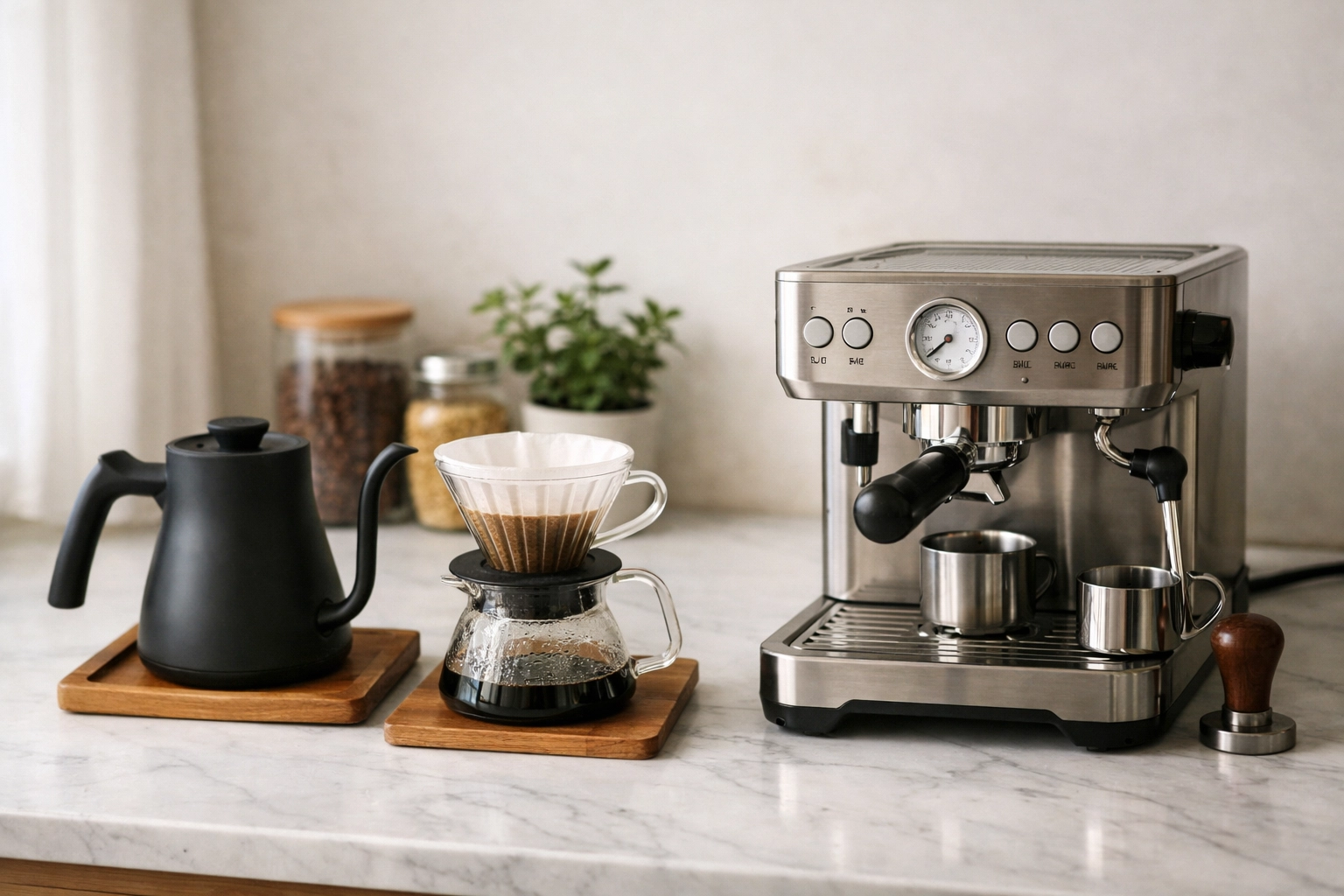
    Comparison of home coffee brewing gear including a pour-over dripper and a compact espresso machine.

    1. Size and Space

    In a kitchen, every inch of counter space is prime real estate. If you’re living in a compact flat, a massive dual-boiler espresso machine might be overkill. However, if you have a dedicated "coffee nook," something like a La Spaziale can be a stunning centerpiece. Remember to account for the grinder too! You can't have great espresso without a great grinder.

    2. Heating Requirements

    Stability is everything in coffee. You want your water to be at a precise temperature, usually between 88 °C and 95 °C (190 °F to 203 °F). Cheaper machines often "temperature surf," meaning the heat fluctuates wildly. High-end gear uses PIDs to keep the temperature rock-steady. If you’re serious about taste, don't skimp on temperature stability.

    3. Batch Size

    Are you brewing for one, or are you the designated barista for a family of four? A single-cup V60 is perfect for a solo morning, but if you’re hosting brunch, you might want a larger Chemex or a machine that can steam milk quickly. Speaking of milk, understanding the science of milk is just as important as the coffee itself if you’re making milk-based drinks.


    The Non-Negotiable: The Grinder

    We’ll say it once and we’ll say it a thousand times: the grinder is more important than the brewer.

    If you use pre-ground coffee, it begins to oxidize the moment the bag is opened. By the time it reaches your kitchen, it’s already lost those volatile aromatics that make specialty coffee special. We always recommend buying whole beans from a reputable roaster and grinding them seconds before you brew.

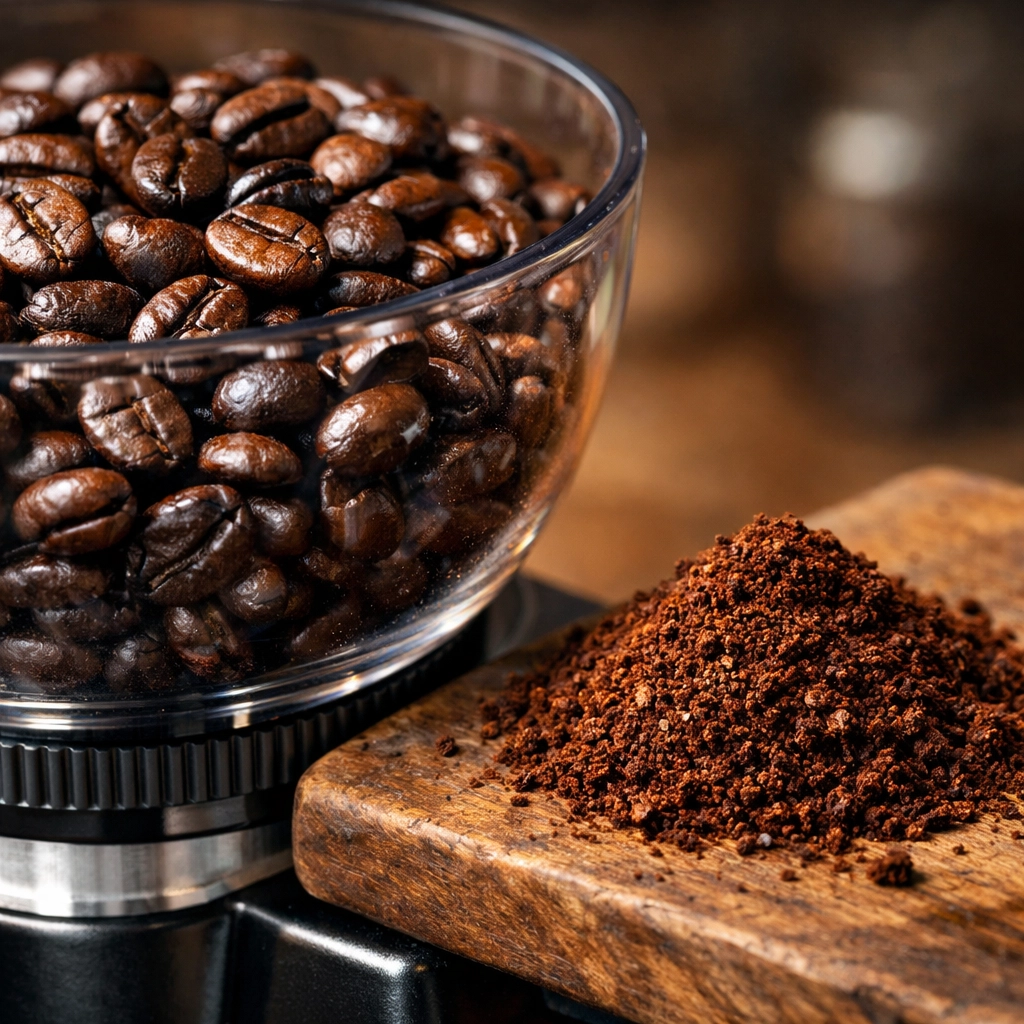
    High-quality burr grinder hopper filled with fresh roasted specialty coffee beans.

    For espresso, you need a "stepless" burr grinder that allows for tiny adjustments. For filter coffee, a high-quality hand grinder or a dedicated filter electric grinder works wonders. It’s the single best investment you can make for your kitchen.


    Let’s Talk Beans (The Real Secret)

    You could have a £5,000 setup, but if you’re using oily, stale supermarket beans, the coffee will taste like… well, oily, stale supermarket beans.

    At Limini Coffee, we focus on sourcing our coffee ethically and roasting it to bring out its natural character. Whether you prefer a chocolatey blend for your latte or a zesty single-origin for your V60, the quality of the bean is the foundation of everything.

    If you're unsure where to start, we highly recommend checking out the Limini Coffee bean selection. Freshness is the "secret sauce" that makes home brewing better than any high-street chain.


    Practical Advice: Making the Choice

    So, which one should you choose?

    • Choose the Manual Pour-Over if: You have a small kitchen, a smaller budget, and you enjoy the ritual of a slow, mindful brew. It's the most "honest" way to taste a bean.
    • Choose a High-End Espresso Machine if: You love the craft of being a barista, you have the counter space, and you want the absolute best milk-based drinks possible. (Don't forget to look at our guide on choosing espresso equipment).
    • Choose an Aeropress if: You travel a lot or want something indestructible and fast that still tastes incredible.

    A finished latte with heart latte art and a carafe of fresh filter coffee on a sunny breakfast bar.

    A Quick Note on Maintenance

    Don't forget that coffee gear needs love. Scales, oils, and milk residue build up fast. Whatever you buy, make sure you’re comfortable cleaning it. A clean machine is a happy machine, and a happy machine makes delicious coffee.


    Summary: Your Kitchen, Your Coffee

    At the end of the day, your kitchen should be a place of joy, not frustration. Don't feel pressured to buy the most expensive gear on day one. Start with a great grinder and some fresh Limini Coffee beans, and go from there.

    Coffee is a journey. You might start with a simple French Press and end up with a plumbed-in espresso machine three years later. That’s the beauty of it!

    If you ever feel stuck or want to level up your skills, we offer barista training that can help you get the most out of whatever gear you choose. Whether you're a home enthusiast or looking to start a wholesale partnership, we're here to help you brew better.

    Happy brewing! 🙂

  • The Proven “Afternoon Automation” Framework: Clear Your Inbox, Follow Up Leads, and Stop Working Late

    The Proven “Afternoon Automation” Framework: Clear Your Inbox, Follow Up Leads, and Stop Working Late

    It’s 3:14 PM.

    You’ve been staring at the same email for twenty minutes. Your coffee is cold, again, and that "quick" task you started at 9:00 AM has somehow mutated into a day-long saga. Your inbox currently looks like a digital game of Tetris where you’re losing. Badly.

    You look at the clock. Then at the 47 unread messages. Then back at the clock.

    This is the moment where most small business owners resign themselves to another "late one." You tell yourself you’ll just power through until 8:00 PM. You’ll grab a sad desk salad, ignore your family, and finally clear the deck.

    But here’s the truth… you don’t have a productivity problem. You have an automation problem.

    You're trying to do the work of three people with the brainpower of someone who hasn't seen sunlight in eight hours. It’s time to stop the madness. It’s time to implement the Afternoon Automation Framework and actually start enjoying your evenings again.

    And honestly? It starts with letting go.

    THE 3:00 PM WALL IS REAL (AND IT’S COSTING YOU)

    ☕ Your morning was full of hope.

    You had a list. You had energy. You might have even had a green smoothie. But then "life" happened. A customer had a minor crisis. A lead asked a question you’ve answered a thousand times. A technical glitch ate two hours of your life.

    By the time the afternoon rolls around, your "deep work" brain has left the building. You’re left with "reactive" brain. This is where you make mistakes. This is where you spend forty minutes drafting a two-sentence email because you’re worried about the tone.

    This is exactly where an ai virtual assistant for business steps in to save your sanity.

    Instead of pushing through the brain fog, you need a system that takes the heavy lifting off your plate the moment your energy starts to dip. You need a framework that clears the clutter while you’re still finishing your second (or fourth) cup of coffee.

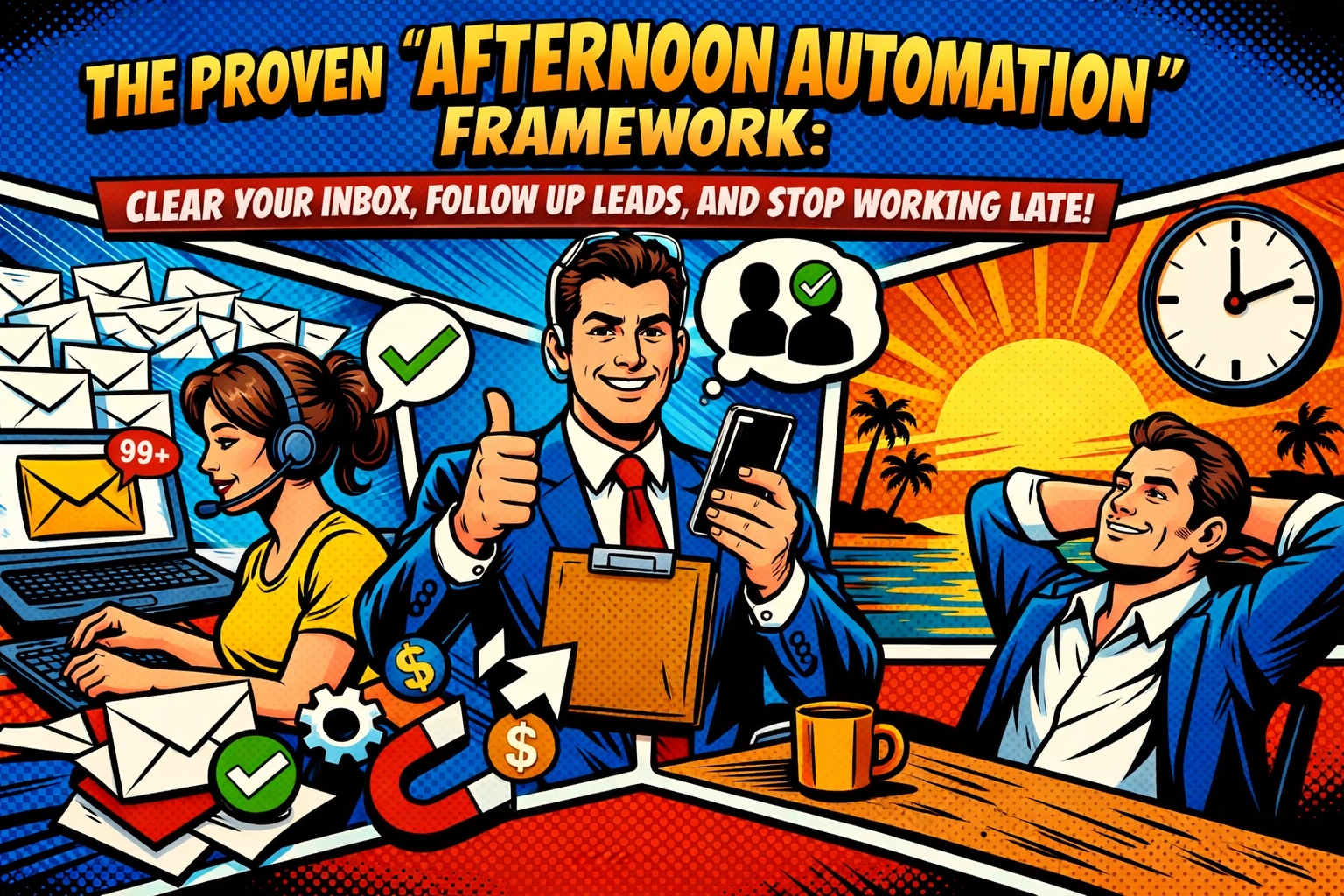
    Business owner overwhelmed by email inbox overload and a looming deadline clock.

    PHASE 1: THE INBOX TRIAGE (3:00 PM – 3:15 PM)

    Stop checking your email every five minutes. Seriously.

    The first step of the framework is the 15-minute Triage. This isn't about answering emails; it’s about organizing them so your AI can do the heavy lifting.

    Imagine opening your inbox and seeing that 80% of the noise has already been handled. No more "What are your hours?" or "Can I get a refund policy link?"

    When you automate customer support with ai, your inbox becomes a place of high-level strategy rather than a digital junk drawer. Your AI assistant scans the incoming chaos, tags the urgent leads, drafts responses for the common FAQs, and files the "thanks!" emails where they belong, the trash.

    …But it’s quiet. Organized.

    You spend fifteen minutes looking at what’s left. You realize the "47 unread" are actually just three things that require your actual human brain.

    The rest? Already handled.

    If you want to see how this looks in the real world, check out how we’re doing it at https://marblism.link/scott-bowen. It’s not magic; it’s just better tech.

    PHASE 2: THE LEAD RESURRECTOR (3:15 PM – 3:45 PM)

    How many leads are sitting in your "I'll get back to them later" pile?

    Probably more than you’d like to admit. Following up is the most important part of your business, yet it’s the first thing to get dropped when things get busy.

    In the Afternoon Automation Framework, 3:15 PM is when your AI goes on the offensive.

    🤝 While you’re taking a breather, your ai virtual assistant for business is reaching out to the people who messaged you four hours ago. It’s not sending a generic "We received your message" bot-reply. It’s sending a tailored, conversational response that actually moves the needle.

    "Hey Sarah, I saw you were asking about the premium package. Here’s a quick breakdown of how that helps with X, Y, and Z…"

    You didn’t type that. You didn’t even think about Sarah. But Sarah feels taken care of.

    The goal here is simple: Automate customer support with ai so that no lead ever feels ignored. By the time you check back in at 4:00 PM, half of those leads have already booked a call or moved to the next stage of your funnel.

    Scaling shouldn’t be this hard. But here we are, making it easy.

    AI virtual assistant robot heroically organizing emails and automating lead follow-up.

    PHASE 3: THE ADMIN GHOST (3:45 PM – 4:15 PM)

    Admin work is the silent killer of dreams.

    Invoices, scheduling, data entry, updating the CRM… it’s the "busy work" that makes you feel productive while your bank account stays the same.

    The Admin Ghost phase is where you let the AI take over the repetitive manual tasks. Instead of manually moving data from an email to a spreadsheet, you set up a trigger.

    📱 Your phone buzzes.

    It’s a notification that your AI just processed three invoices and updated your calendar for tomorrow. You didn't touch a single key.

    When you have an ai virtual assistant for business, you aren't just "outsourcing" tasks; you're "deleting" them from your conscious mind. You’re freeing up that 4:00 PM window: the one where you usually start feeling the "late night" dread: to actually finish your day on a high note.

    STOP JUGGLING. START DELEGATING.

    The biggest lie small business owners tell themselves is: "Only I can do this."

    Spoiler alert: You’re wrong.

    Sure, only you can provide the vision. Only you can close the big deals. But answering "Where is my order?" or "Can we move our meeting to 4 PM?" does not require your genius-level intellect.

    By refusing to automate customer support with ai, you are essentially paying yourself $5 an hour to be a secretary. Is that why you started this business? To be an overqualified admin?

    Probably not.

    The Afternoon Automation Framework is about reclaiming your status as the CEO. It’s about building a team that doesn't need a lunch break, doesn't get "afternoon brain fog," and works for you 24/7.

    Smartphone with glowing gears representing seamless business automation and admin efficiency.

    THE "CLEAN BREAK" (5:00 PM)

    🌙 The lights are off.

    It’s 5:00 PM. Your inbox is at zero (or at least, the important stuff is done). Your leads have been nurtured. Your admin work is finished.

    You don’t feel that nagging "I forgot something" anxiety in the back of your throat. You walk away from your desk and you don't look back until tomorrow morning.

    That is the power of a proper framework.

    When you implement the right tools: like the ones we’re building at Marblism: your business stops being a weight around your neck and starts being the engine it was meant to be.

    If you’re tired of the 8 PM grinds and the constant inbox anxiety, it’s time to see what an ai virtual assistant for business can actually do for you.

    Don’t just take my word for it. See it in action here: https://marblism.link/scott-bowen.

    FAQ: BUT WILL IT SOUND LIKE A ROBOT?

    Q: Won't my customers know it's an AI?
    A: Not if you do it right. Modern AI doesn't talk like a 1980s sci-fi movie. It talks like you. It learns your tone, your quirks, and your specific business knowledge. Most of the time, they won't just think it's you: they'll think you're the fastest, most attentive version of you.

    Q: Is this hard to set up?
    A: If you can write an email, you can set this up. We’ve designed everything to be "human-first." No coding degrees required.

    Q: Can I afford it?
    A: Can you afford to keep working until 9 PM every night? The cost of AI is a fraction of a human hire and significantly less than the cost of your own burnout.

    Q: What if the AI makes a mistake?
    A: You set the guardrails. You decide what it can handle and what needs your "Human Eyes Only" stamp. You stay in control. Always.

    Robotic hand holding a trophy symbolizing success when you automate customer support with AI.

    EMPLOYEE OF THE MONTH. EVERY MONTH.

    The reality is, the world is moving fast. Your competitors are already looking for ways to automate customer support with ai. They’re already clearing their afternoons and spending more time on strategy (or on the golf course, let’s be real).

    You can either keep manual-tasking your way to exhaustion, or you can join the automation revolution.

    The framework is here. The tools are ready. All that’s missing is you.

    Go ahead. Take the first step toward a 5:00 PM finish line. Your future self (and your family) will thank you.

    Check out how we make the magic happen: https://marblism.link/scott-bowen.

    Scaling shouldn’t be a sacrifice.

    Make it an automation.

    See you on the other side of 5:00 PM.

  • The Weekend Brew: Exploring Different Origin Flavours

    The Weekend Brew: Exploring Different Origin Flavours

    There's something special about weekend mornings and coffee. No rush, no commute looming, just you, your favourite brewing method, and the chance to actually taste what you're drinking.

    This is the perfect time to slow down and explore something a bit different. While your weekday blend gets you through the morning chaos brilliantly, weekends are made for experimentation. And one of the most rewarding ways to shake things up? Diving into single-origin coffees from different parts of the world.

    Let's talk about how different origins create completely unique flavours, and why your Saturday morning brew could taste like blueberries, chocolate, or even jasmine depending on where the beans were grown.

    What Is Coffee Terroir, Anyway?

    Ethiopian, Brazilian, and Colombian coffee beans showcasing different origin roasts

    You've probably heard wine folks bang on about terroir – that fancy French word that basically means "a sense of place." Well, coffee has it too, and it's just as fascinating.

    Terroir refers to all the environmental factors that influence how coffee tastes: the altitude it's grown at, the soil composition, rainfall patterns, temperature, and even the surrounding vegetation. A coffee plant growing on a volcanic mountainside in Ethiopia will produce cherries with completely different characteristics than one grown in the lowlands of Brazil.

    This means that before we even get to roasting or brewing, the coffee's flavour profile has already been shaped by its origin. Pretty cool, right?

    And here's the thing – once you start paying attention to these differences, coffee becomes infinitely more interesting. You're not just drinking caffeine; you're tasting the hillsides of Yirgacheffe or the forests of Colombia.

    Ethiopia: Where It All Began

    Let's start where coffee itself started – Ethiopia. This is the birthplace of Arabica coffee, where wild coffee plants still grow in the forests. Ethiopian coffees are often described as the most complex and aromatic in the world, and there's a good reason for that.

    Ethiopian beans, particularly those processed naturally (where the cherry dries around the bean), tend to explode with fruit-forward and floral notes. We're talking blueberry, strawberry, jasmine, bergamot – flavours that can honestly surprise you if you're used to more traditional "coffee" tastes.

    Take a coffee from Yirgacheffe or Sidamo, for example. These regions produce beans with incredible brightness and clarity. You might get stone fruit sweetness, tea-like body, and a floral aroma that fills the room as soon as you grind the beans. It's delicate but intensely flavourful.

    Natural processed Ethiopian coffees can be quite jammy and wine-like, with a heavier body and pronounced berry notes. Washed Ethiopian coffees tend to be cleaner, with more tea-like qualities and pronounced citrus or floral characteristics.

    The beauty of Ethiopian coffee is its diversity. Different regions, different processing methods, different microclimates – they all create distinct cups. It's worth trying several to find what speaks to you.

    Brazil: Chocolatey Comfort

    Brazilian coffee beans with dark chocolate and almonds showing chocolatey flavor notes

    Now let's head across the Atlantic to Brazil, the world's largest coffee producer. If Ethiopian coffee is the excitable, floral friend, Brazilian coffee is the dependable, comforting one.

    Brazilian coffees are typically grown at lower altitudes than their African or Central American counterparts, and they're often processed using the natural or pulped natural method. The result? Think chocolate, nuts, caramel, and gentle sweetness.

    These beans have a heavier body and lower acidity compared to Ethiopian coffees. That makes them incredibly approachable – smooth, sweet, and satisfying without being challenging. They're fantastic for espresso (which is why you'll find Brazilian beans in so many blends), but they're equally brilliant in a French press or pour-over.

    A good Brazilian coffee will give you notes of dark chocolate, roasted almonds, maybe some brown sugar sweetness. It's comforting and rich without being heavy. Perfect for those weekend mornings when you want something that feels like a warm hug in a mug.

    The Santos region and Cerrado are particularly well-regarded. Brazilian coffee doesn't get as much hype as some other origins, which is honestly a shame because when it's good, it's exceptionally good.

    Colombia: Balanced Brilliance

    Colombia sits somewhere between the fruit-bomb excitement of Ethiopia and the chocolatey comfort of Brazil. Colombian coffees are known for their balance, clean cup profile, and bright acidity.

    The geography of Colombia is perfect for coffee – high altitude, volcanic soil, and ideal rainfall. Most Colombian coffee is wet-processed (washed), which creates that clean, bright cup that the country is famous for.

    You can expect medium body, pleasant acidity (think apple or citrus), and flavours that range from caramel and nuts to red fruits and subtle florals. Colombian coffee is rarely the most dramatic in the lineup, but it's consistently excellent. There's a reason it's one of the most recognised origins worldwide.

    Regions like Huila, Nariño, and Antioquia each bring something slightly different to the table. Higher altitude coffees from Nariño tend to have more complexity and brightness, while Huila might give you more body and chocolate notes.

    Colombian coffee is brilliant for those who want something interesting but not challenging – it's got character without being polarising.

    How to Actually Taste the Difference

    Home coffee tasting setup with three cups for comparing single-origin coffees

    Here's where it gets practical. Knowing about these origins is one thing, but actually tasting the differences? That's where the fun begins.

    This weekend, we'd suggest trying a mini "cupping session" at home. Don't worry – it's way less intimidating than it sounds. Basically, you're just brewing coffees side-by-side so you can compare them directly.

    Here's the simple version:

    Grab two or three single-origin coffees from different regions. Brew them using the same method (pour-over works great for this), with the same ratio and water temperature. This way, the only variable is the coffee itself.

    Smell them first. The aroma can tell you a lot. Does one smell fruity and bright? Does another remind you of baking chocolate?

    Then taste them, ideally letting them cool a bit. Coffee reveals different flavours at different temperatures. Start by noticing the obvious stuff – is it sweet? Bitter? Acidic? Then dig deeper – what kind of sweetness? What does it remind you of?

    You don't need to be fancy about it. Just pay attention. Notice what you like and what you don't. Coffee tasting is completely subjective – there's no right or wrong answer, only what tastes good to you.

    Weekend Brewing: Give Yourself Time

    One of the best things about weekend coffee brewing is that you actually have time to do it properly. During the week, you might be rushing through your routine. But Saturday morning? That's your time.

    Try a brewing method you don't normally use. If you're usually an espresso person, make a pour-over. If you're a French press devotee, try an AeroPress. Different methods highlight different aspects of the coffee, and single-origins especially benefit from this exploration.

    Weigh your coffee and water. Use good water (filtered if possible). Grind right before brewing. These things make a genuine difference, and they're easier to do when you're not checking the clock every thirty seconds.

    And here's a thought – make it a ritual. Put on some music, maybe make breakfast, and genuinely enjoy the process. Coffee can be functional fuel, but it can also be an experience. Weekends are for experiences.

    Explore Limini's Single-Origin Collection

    Hands holding coffee mug with single-origin coffee beans on kitchen counter

    Ready to start your origin exploration? We've got you covered.

    At Limini Coffee, we source exceptional single-origin coffees that genuinely showcase what makes each region special. Whether you're drawn to the bright, fruity complexity of East African coffees or the comforting chocolate notes of South American beans, there's something in our collection that'll resonate with you.

    Our single-origin selection changes with the seasons and harvests, which means there's always something new to discover. We work directly with producers who share our commitment to quality and sustainability, so you're not just getting great coffee – you're supporting better practices in coffee-growing regions.

    You can explore the full range of single-origins at Limini Coffee, and honestly, we'd recommend trying at least two or three different origins to really appreciate the differences.

    Start with what sounds appealing to you. If you love fruity, complex flavours, an Ethiopian coffee is calling your name. If you prefer something smooth and chocolatey, Brazilian beans are your friend. Looking for that sweet spot in between? Colombian coffee delivers every time.

    Make This Weekend Count

    This Saturday morning, why not try something different? Pick up a bag of single-origin coffee you've never tried before, brew it with care, and actually taste what's in your cup.

    You might discover that you're absolutely wild about natural processed Ethiopian coffees. Or that Brazilian beans are exactly what you've been missing. Or that Colombian coffee is the perfect everyday drinker you didn't know you needed.

    The beauty of coffee is that there's always more to explore. Different origins, different processing methods, different roast levels – the combinations are endless. And weekends are the perfect time to dive in.

    So slow down, brew up, and taste something new. Your weekend coffee deserves to be more than just functional. Make it an adventure.

    Browse the single-origin collection and find your next favourite coffee. Trust us – your Saturday morning will thank you.

  • Lead Generation on Steroids: How AI Finds Your Next Big Client Before Your Competition Does

    Lead Generation on Steroids: How AI Finds Your Next Big Client Before Your Competition Does

    You just lost a client to your competitor.

    Not because your product wasn't better. Not because your price wasn't right. You lost because someone else got there first. They reached out 20 minutes after the prospect visited their pricing page. You reached out three days later… after manually sorting through a spreadsheet of "warm leads" that turned out to be ice cold.

    By then? The deal was already done.

    Here's the truth: in today's market, speed isn't just an advantage. It's everything. And if you're still hunting for leads the old way : manual research, static lists, cold outreach to people who've never heard of you : you're already behind.

    THE LEAD GENERATION PROBLEM NOBODY TALKS ABOUT

    📊 Most businesses don't have a lead generation problem. They have a lead quality problem.

    You're drowning in contacts that go nowhere. Your CRM is bloated with names that sounded promising six months ago but haven't responded to your last eleven emails. You spend hours crafting outreach messages to people who were never going to buy in the first place.

    Meanwhile, your actual dream clients : the ones actively searching for solutions right now : are slipping through the cracks while you chase dead ends.

    Traditional lead generation methods rely on guesswork. You target based on industry, company size, job title… and hope something sticks. You buy lists from databases that are 40% outdated. You send the same templated message to 500 people and pray for a 2% response rate.

    It's exhausting. It's inefficient. And it's costing you real revenue.

    HOW AI FINDS YOUR NEXT CLIENT BEFORE THEY EVEN KNOW THEY NEED YOU

    AI lead generation dashboard displaying real-time data analysis and prospect targeting

    This is where an ai lead generation tool changes everything.

    AI doesn't guess. It predicts. It analyzes thousands of data points : website visits, keyword searches, content downloads, social media engagement, firmographics, past buyer behavior : and identifies exactly who's in the market right now.

    Predictive Lead Scoring: The Crystal Ball You Didn't Know You Needed

    Forget static scoring models where every "VP of Marketing" gets the same points. AI-powered predictive scoring constantly evolves based on what's actually converting.

    It looks at historical patterns. Which companies became your best customers? What did they do before they bought? Did they visit your pricing page three times? Download a specific whitepaper? Engage with certain content topics?

    The AI learns. Then it finds other prospects exhibiting those exact same behaviors : and flags them before they fill out a single form.

    You're not reacting anymore. You're anticipating.

    Real-Time Intent Detection: Catching Prospects at the Perfect Moment

    🎯 Imagine knowing the exact second someone starts researching solutions like yours.

    That's intent data activation. AI monitors digital signals across the web : search patterns, third-party review sites, competitor page visits, content consumption : to detect early purchase intent.

    Someone just spent 12 minutes on a comparison blog about tools in your category. Another prospect downloaded three case studies about problems you solve. A third person visited your pricing page but didn't convert.

    Traditional methods? You'd never know. AI? It captures these signals in real-time and triggers immediate, personalized outreach while the prospect is still actively researching.

    The average response time matters more than you think. Companies that respond within five minutes are 100 times more likely to convert than those who wait an hour. AI ensures you're always first in line.

    THE COMPETITIVE EDGE YOU CAN'T AFFORD TO IGNORE

    Manual lead prospecting versus AI-powered automation comparison showing efficiency gains

    Here's what happens when your competition is still manually prospecting and you're running on AI.

    You're awake 24/7. An ai assistant for small business never sleeps. A prospect fills out a form at 11 PM on Saturday? They get an instant, personalized response. Your competitor running manual outreach? They'll follow up Monday morning… after the prospect has already moved on.

    Conversational AI chatbots engage visitors the moment they land on your site. They qualify leads, answer questions, and book meetings : all while you're offline. Every inquiry is captured. Nothing falls through the cracks.

    Your targeting is surgical. No more spray-and-pray campaigns. AI identifies prospects based on real buying signals, not vague demographic checkboxes. It knows who's ready to buy now versus who's just browsing.

    The result? You spend your time talking to people who actually want to hear from you. Your close rates skyrocket because you're only pursuing high-fit opportunities.

    Personalization at impossible scale. You can't manually craft 100 personalized emails per day. AI can.

    It generates unique first-touch messages based on each prospect's industry, recent activity, pain points, and company data. LinkedIn outreach that references their specific challenges. Follow-up emails that adapt based on previous interactions. Call talking points customized for each conversation.

    Every touchpoint feels like you did hours of research : because the AI did.

    WHAT THIS LOOKS LIKE IN REAL LIFE

    Let me paint you a picture.

    8:47 AM
    Your AI assistant has already analyzed overnight activity. Seventeen new prospects visited your website. Five showed high purchase intent based on their behavior. Three match your ideal customer profile perfectly.

    You get a notification: "High-priority lead detected : CEO of 50-person SaaS company spent 8 minutes on pricing page, downloaded ROI calculator."

    The AI has already sent a personalized email referencing their specific use case. By the time you sit down with your coffee, they've replied asking for a demo.

    2:15 PM 📱
    A prospect who went cold three months ago just returned to your site. Traditional methods? You'd never notice. Your AI flags it immediately and triggers a re-engagement sequence with content specifically addressing the objection that stalled them last time.

    They respond within the hour.

    6:30 PM 🌙
    The office is closed. Your team is offline. But your AI is just getting started.

    A prospect in a different timezone submits a contact form. Within 90 seconds, they receive a personalized video message addressing their specific industry challenges, a tailored resource, and calendar link to book a meeting.

    By morning, the demo is scheduled.

    Your competition is still sorting through spreadsheets.

    24/7 AI lead generation working around the clock to capture business opportunities

    THE NUMBERS DON'T LIE

    Companies using AI lead generation report up to 50% more leads and 47% higher conversion rates compared to traditional methods.

    But it's not just about quantity. It's about precision.

    When you're targeting the right people at the right time with the right message, everything changes. Your sales cycle shortens. Your cost per acquisition drops. Your team stops wasting time on leads that were never going to close.

    You're not working harder. You're working smarter : because the AI handles the heavy lifting while you focus on closing deals.

    YOUR COMPETITION IS ALREADY DOING THIS

    Here's the uncomfortable truth: while you've been reading this, your competitors have been deploying AI to steal prospects right out from under you.

    They're reaching leads faster. They're personalizing at scale. They're converting at rates you're struggling to match with manual processes.

    The gap is widening every day.

    But here's the good news : you can close it today.

    STOP LETTING PERFECT LEADS SLIP AWAY

    Rising graph showing increased lead conversion rates with AI automation

    You don't need a massive sales team. You don't need expensive consultants. You need an ai assistant for small business that works as hard as you do : without burning out, missing signals, or letting opportunities go cold.

    Marblism's AI doesn't just find leads. It finds the right leads. The ones actively looking for solutions. The ones ready to buy. The ones your competition hasn't reached yet.

    Want to see how AI can transform your lead generation? Check out Marblism here and discover how businesses are filling their pipelines with high-quality prospects while their competitors scramble to keep up.

    Because in the race to win your next big client, second place means nothing.

    Your move. 🚀