Category: Category 1

Use this description to tell users what kind of blog posts they can find in this category.

  • Stop Wasting Time on Manual Admin: Try These 7 Hotel Management Hacks

    Stop Wasting Time on Manual Admin: Try These 7 Hotel Management Hacks

    Save time. Surprise guests. Scale faster.

    You didn’t get into hospitality to stare at a spreadsheet for six hours a day. Yet, for most hoteliers, manual admin is the "silent killer" of growth. It eats your time, drains your staff, and: worst of all: it keeps you away from your guests. We believe technology should be the engine, not the obstacle.

    The modern hotelier needs more than just a digital version of a paper guestbook. You need an ecosystem that thinks ahead. A platform that automates the mundane so you can focus on the remarkable. By moving to a cloud-native platform like Mews, you aren't just changing software; you’re changing how your business breathes.

    Here are seven hacks to kill manual admin and get your life back, all from one innovative platform.

    1. Ditch the desk for self-service

    Check-in shouldn’t involve a queue. We think the front desk should be a place for a warm welcome, not a data entry station. When guests arrive after a long flight, the last thing they want is to wait ten minutes while a receptionist types in their passport details.

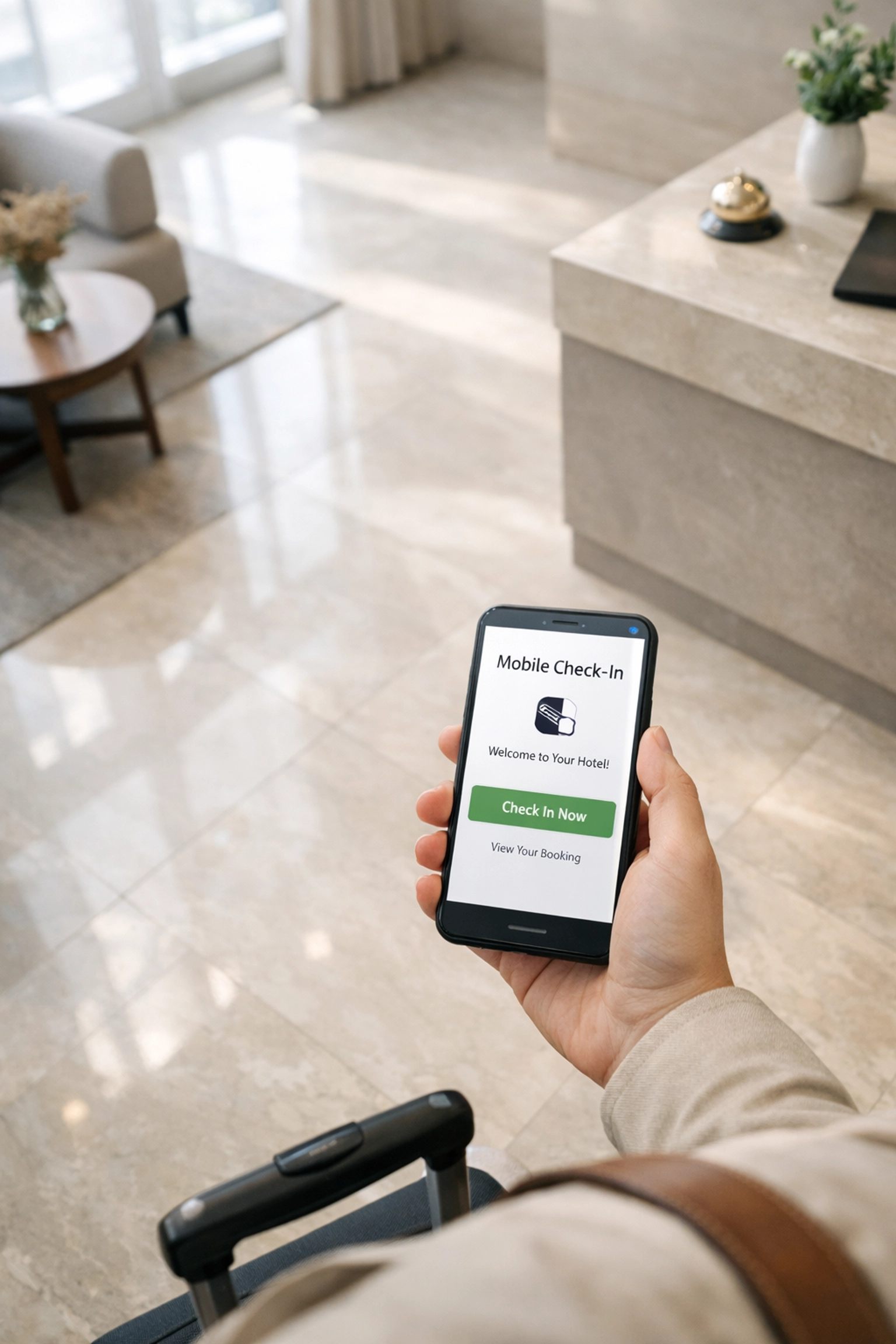
    • Guests check in on the train via mobile.
    • Self-check-in kiosks handle the heavy lifting in the lobby.
    • Digital keys are sent straight to the guest's phone.

    By implementing self-check-in kiosks, you remove the bottleneck. Your staff can finally step out from behind the desk and actually host. It’s a better experience for the guest and a massive relief for your team.
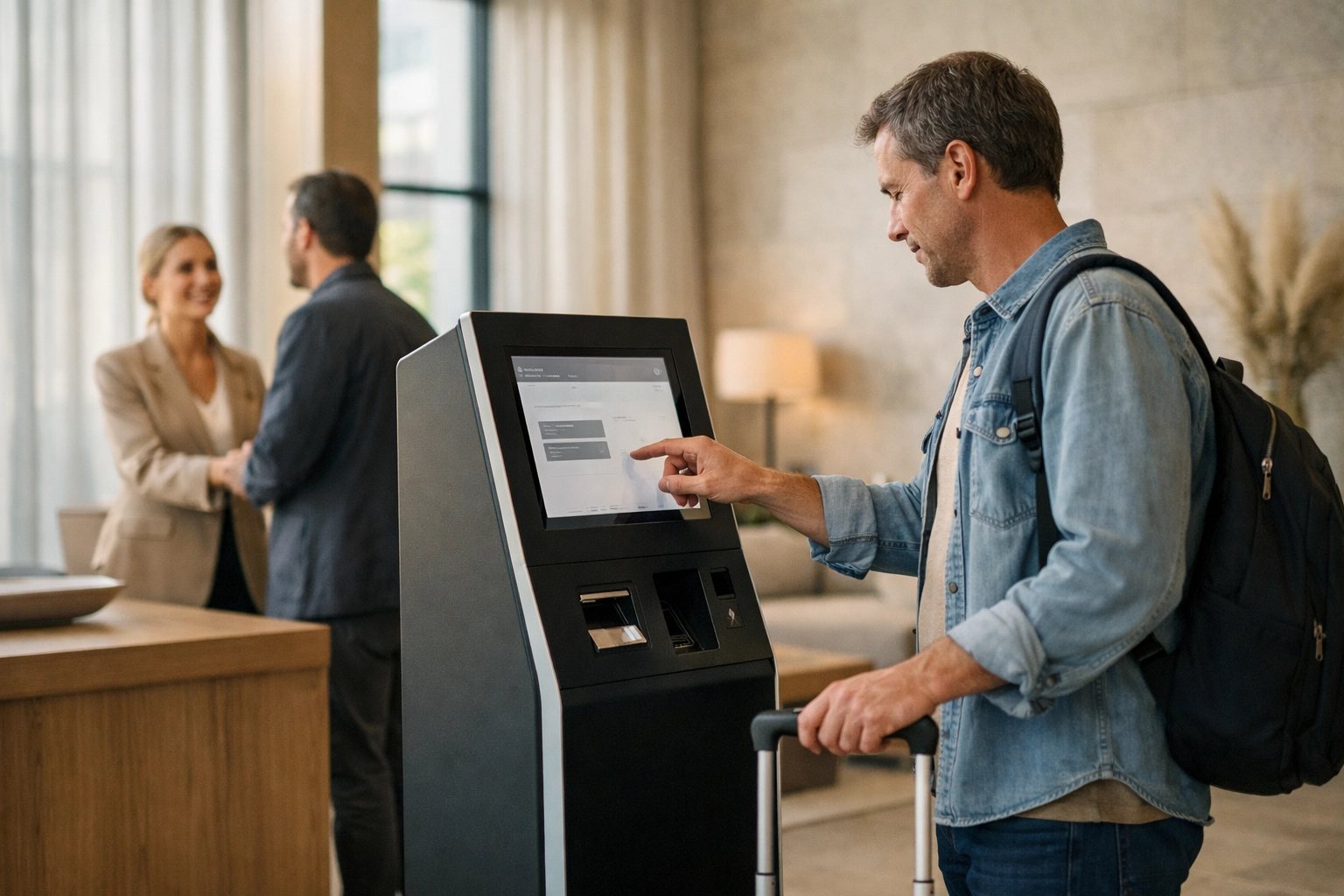
    Guest using a sleek self-check-in kiosk in a modern hotel lobby, improving efficiency and guest experience.

    2. Connect housekeeping to the cloud

    The gap between "clean" and "sold" is where revenue goes to die. In a traditional setup, a housekeeper finishes a room, calls the supervisor, who then calls the front desk, who then updates the system. That’s ten minutes of wasted time per room.

    We believe in real-time visibility. With a mobile-first hotel PMS, your housekeeping team updates room status on their own devices the second they finish.

    • 15% increase in room turnaround speed.
    • Instant notification for front desk teams.
    • Zero "is it ready yet?" phone calls.

    When your housekeeping is integrated, you can offer early check-ins with confidence, turning a logistical headache into a guest delight.

    3. Automate your revenue strategy

    Smart pricing shouldn't sleep. If you’re still manually adjusting rates on your booking engine every time a local concert is announced, you’re leaving money on the table.

    Modern hotel management is about dynamic, AI-driven pricing. We think your system should analyze the market while you sleep.

    • Analyze competitor rates automatically.
    • Adjust prices across 100+ OTAs instantly.
    • Maximize RevPAR without a calculator.

    A robust channel manager ensures that whether a guest finds you on Booking.com, Expedia, or your own site, they see the most optimized price. You can see how this works by checking out the Mews platform here.

    4. Let the CRM do the talking

    Automate the conversation. Most guest inquiries are repetitive: "What time is breakfast?" "Do you have Wi-Fi?" "Can I have an extra towel?"

    Handling these manually is a poor use of human talent. An integrated CRM and automated messaging system can handle 80% of these interactions.

    • Automated pre-arrival emails with check-in links.
    • Post-stay feedback requests sent at the perfect moment.
    • Instant AI-powered answers to common FAQs.

    This isn't about being impersonal; it’s about being efficient. By automating the routine, you free up your team to handle the guest interactions that actually require a human touch.

    A hotel guest using a smartphone for automated messaging and easy communication through a mobile-friendly CRM.

    5. Kill the paper trail in payments

    Stop chasing paper. Manual credit card entry is a relic of the past. It’s slow, it’s prone to human error, and it’s a security nightmare. We believe payments should be invisible and seamless.

    When you use automated charge capture, the system does the work for you.

    • 100% accuracy in billing.
    • Zero manual data entry for night audits.
    • Instant digital receipts sent to the guest’s inbox.

    Integrated payment terminals mean that when a guest buys a drink at the bar, it’s instantly added to their profile in the hotel pms. No manual reconciliation, no lost chits, no stress.

    6. Maintenance on autopilot

    Fix things before guests notice. A broken AC unit can result in a refunded night and a one-star review. The old way of handling maintenance: sticky notes and walkie-talkies: is broken.

    We believe in proactive maintenance. Enable your team to report issues via their mobile devices the moment they see them.

    • Work orders created and assigned instantly.
    • Track repair times and recurring issues.
    • Prevent guest complaints before they happen.

    It’s about moving from "reactive" to "proactive." When your maintenance flow is automated, your property stays in peak condition with half the effort.
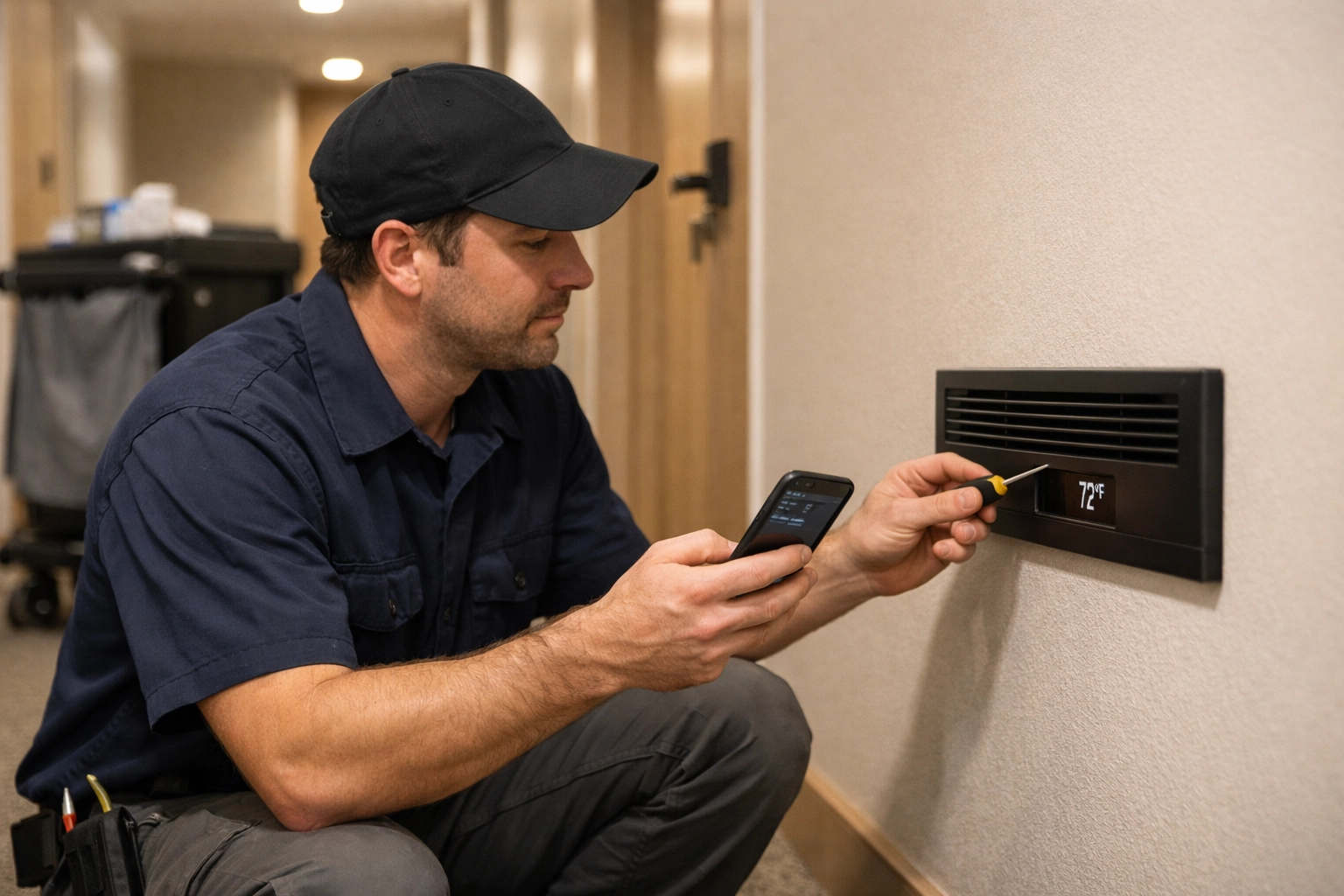
    Hotel maintenance technician using a smartphone to manage automated work orders in a modern guest corridor.

    7. Master your distribution

    One dashboard to rule them all. Managing multiple OTAs shouldn't feel like a full-time job. If you’re manually updating availability on five different sites, you’re one click away from an overbooking disaster.

    A cloud-native channel manager synchronizes everything in real-time.

    • Sync availability across all platforms instantly.
    • Manage rates and restrictions from one screen.
    • Eliminate the risk of overbookings.

    This level of automation gives you the freedom to experiment with new channels without the administrative burden. You can find more about these automation tools at this link.

    The numbers don't lie

    We believe in results you can measure. Transitioning to an automation-focused platform isn't just a "nice to have": it’s a competitive necessity in 2026.

    • 10 hours a week saved per staff member on average.
    • 20% increase in direct bookings through an optimized booking engine.
    • 95% guest satisfaction rates for digital check-in.

    "We used to spend hours every day just moving data from one system to another. With Mews, that’s gone. It just works." – Boutique Hotel Manager, London.

    See what Mews can do

    Ready to stop the manual madness? The hospitality industry is changing, and the winners are those who embrace automation to focus on what really matters: the guest.

    Mews is designed for the modern hotelier who values innovation, ease of use, and a cloud-native approach. It’s not just about managing a property; it’s about reimagining what a property can be.

    • Schedule a 30-minute demo.
    • Get your team trained in days, not weeks.
    • Get you earning more revenue in no time.

    Take the first step toward a more automated, more profitable, and more enjoyable way to run your hotel. Visit the Mews referral page to learn more.

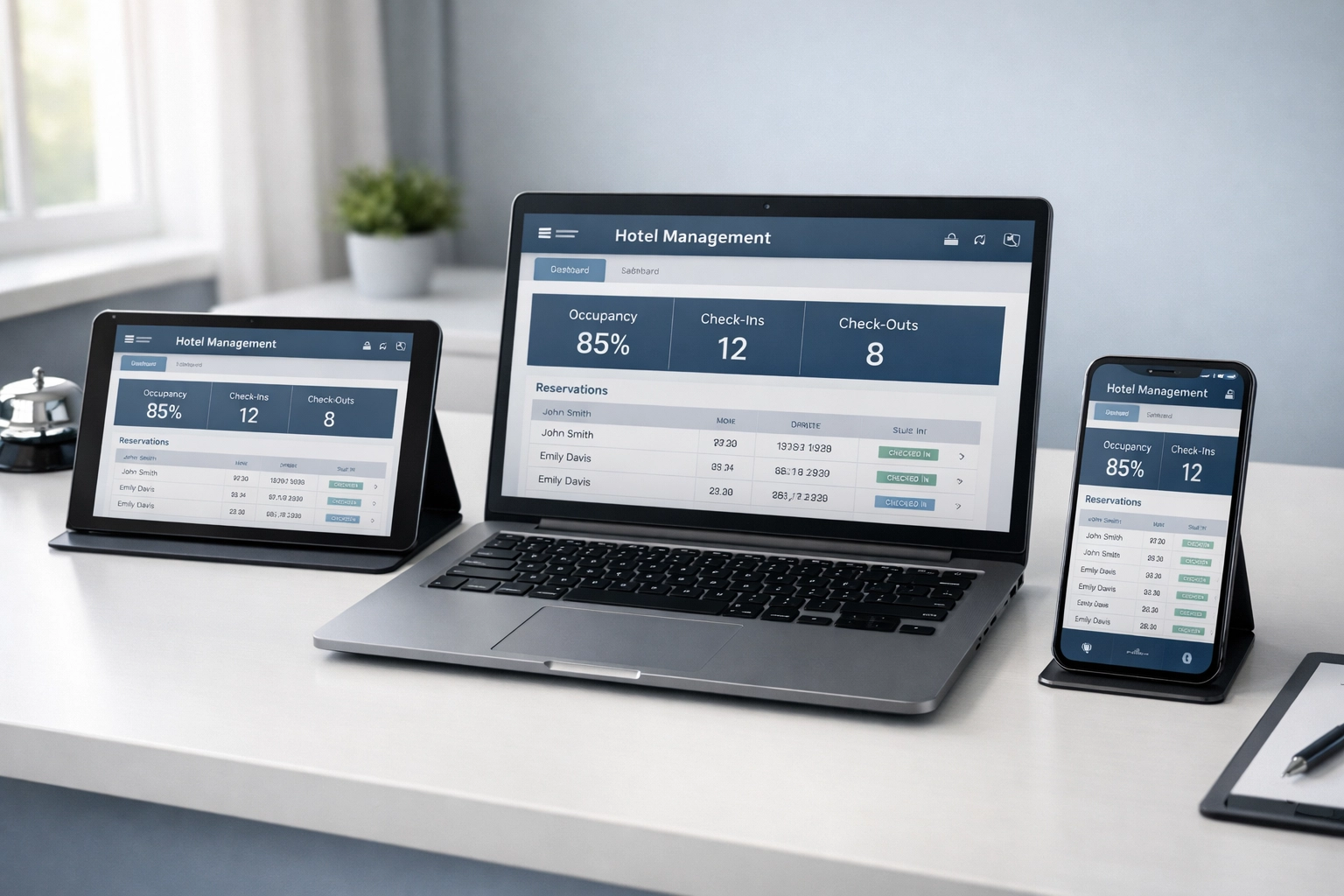
    Hotel manager using cloud-based management software on a laptop to automate daily administrative tasks.

    Stop managing, start hosting

    We think you deserve better than a day full of admin. By implementing these seven hacks, you aren't just saving time; you’re reinvesting in your brand’s future. The technology exists to make your life easier: it’s time to use it.

    • Automate the check-in.
    • Sync your housekeeping.
    • Let the AI handle the pricing.

    The tools are ready. Are you? Reach out to us and let’s get you started on the path to total hospitality automation.

    Hotel staff member engaging with guests in a lounge, highlighting the freedom gained through hospitality automation.
  • How to Automate Admin Tasks in 5 Minutes (Without Hiring Anyone)

    How to Automate Admin Tasks in 5 Minutes (Without Hiring Anyone)

    You're drowning in email replies. Calendar invites. Follow-ups. Data entry. The small stuff that eats your day alive.

    And you've thought about hiring someone. Maybe a VA. Maybe an assistant. But that means onboarding… training… managing… more admin work to solve your admin work problem.

    What if you could automate the boring stuff in the time it takes to make coffee?

    The 5-Minute Rule

    Here's the truth: You don't need to hire anyone. You don't need to learn to code. You definitely don't need to spend weeks setting up some complicated system.

    You just need five minutes and the right approach.

    Most business owners think automation is this massive, expensive project. It's not. The best automations are small, targeted, and stupidly simple to set up.

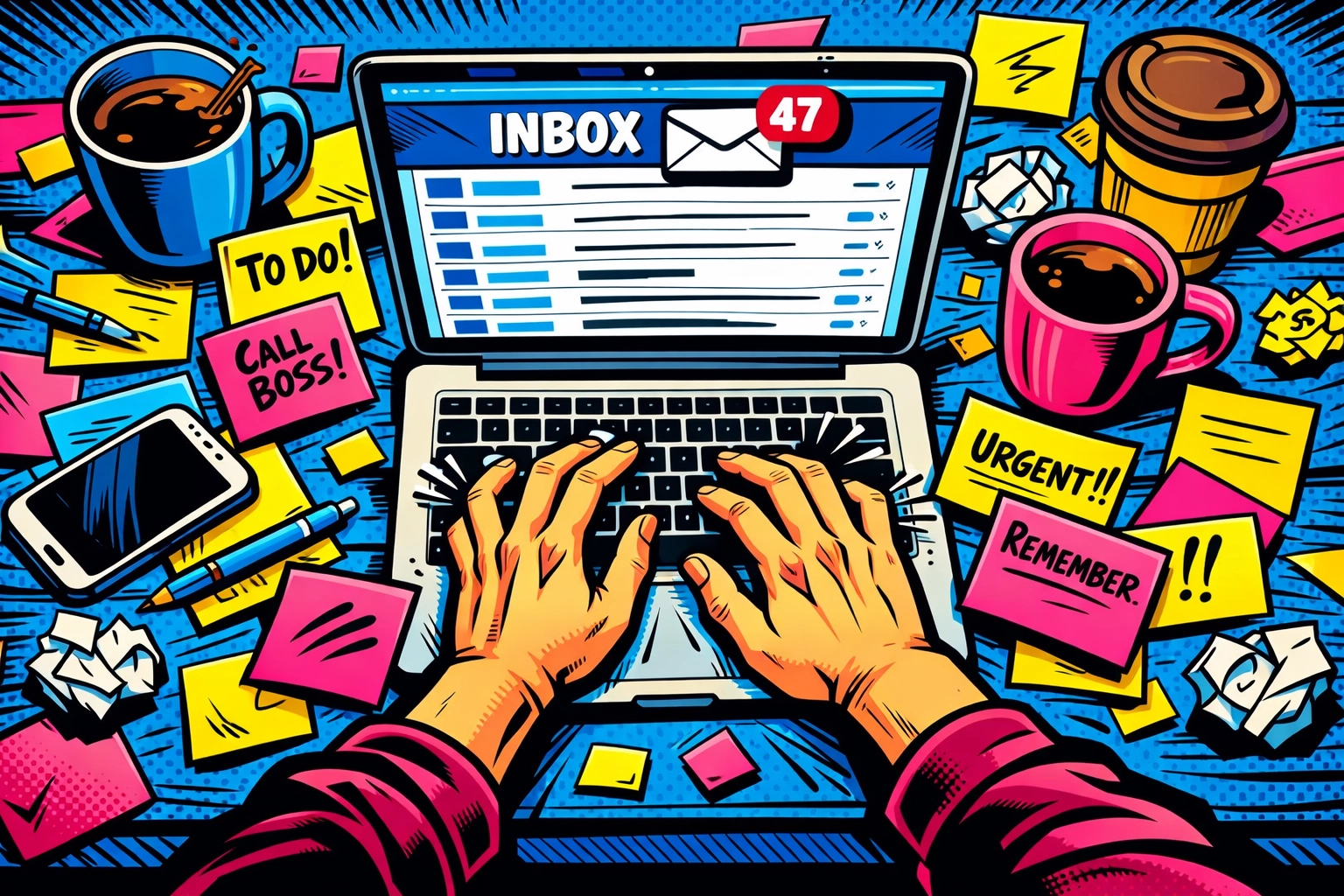
    Overwhelmed business owner with cluttered desk and overflowing email inbox full of admin tasks

    Let's walk through your actual day and fix the time-wasters one by one.

    ☕ 7:00 AM : Your Inbox Is Already a Disaster

    You open your email. 47 new messages overnight. At least 15 are questions you've answered a hundred times before.

    "What's your pricing?" "Can we reschedule?" "Do you offer X service?"

    The 5-minute fix: Email templates.

    Gmail and Outlook both have built-in template features. Right now, literally right now: open your email and create 3 templates:

    1. Your pricing/services overview
    2. Your meeting reschedule response
    3. Your FAQ answer

    Next time someone asks? One click. Done. You just saved yourself 2-3 hours per week typing the same thing over and over.

    But here's where it gets interesting. An AI virtual assistant for business can read your incoming emails, understand what people are asking, and send the right template automatically. No clicking required.

    While you're still on your first coffee, 12 inquiries have been handled. The chaos is gone before you even take your first sip.

    📱 9:30 AM : The Scheduling Nightmare

    Someone wants a meeting. You suggest Tuesday at 2. They counter with Wednesday at 3. You're already booked. They try Thursday morning. Your calendar's a mess.

    Six emails later, you finally lock down a 30-minute call.

    The 5-minute fix: Automated scheduling.

    Tools like Calendly or Google Calendar's appointment slots let people book time directly. You set your availability once. They pick a slot. Done.

    Setup takes about 4 minutes. You'll never play calendar ping-pong again.

    Before and after: manual calendar scheduling chaos versus AI virtual assistant automating meetings

    But imagine this: An AI that actually manages your calendar for you. Someone emails asking for a meeting. Your ai virtual assistant reads it, checks your calendar, suggests three available slots, and books it when they reply. Zero input from you.

    You just got 5+ hours back per week. The hours you used to spend coordinating instead of actually working.

    🔄 11:00 AM : The Data Entry Death March

    You're copying information from emails into your CRM. Then from your CRM into a spreadsheet. Then from that spreadsheet into another tool.

    It's mind-numbing. It's error-prone. It's the definition of soul-crushing busywork.

    The 5-minute fix: Simple automation connections.

    Zapier connects over 7,000 apps. You can set up a "Zap" that says: "When I get an email with an attachment, save it to Google Drive and create a task in my project management tool."

    No coding. Most basic automations take 2-3 minutes to configure.

    Microsoft's Power Automate does the same thing if you're already in the Microsoft ecosystem. It's free with most Microsoft 365 subscriptions.

    But here's what changes the game completely: When your AI team can handle this stuff proactively. New customer inquiry comes in? It's automatically logged. Contact details extracted. Follow-up tasks created. Meeting notes summarized and filed.

    You're not even thinking about it anymore. It just… happens.

    📊 2:00 PM : The Research Rabbit Hole

    You need to find information for a client. Maybe competitor pricing. Maybe industry data. Maybe you're just trying to remember what you discussed in that meeting three weeks ago.

    Two hours later, you're still hunting through emails and documents.

    The 5-minute fix: Smart organization and search.

    Here's a quick win: If you use Trello, Asana, or Monday.com, they all have built-in automation features. Trello's Butler, for example, lets you create rules like "When a card moves to Done, archive it and send me a summary."

    Takes 5 minutes to set up. Your project management tool now cleans up after itself.

    Business owner trapped in endless cycle of repetitive data entry and manual admin work

    But the real power move? An AI that actually knows your business. It remembers every conversation, every document, every decision. You ask, "What did Sarah say about the pricing change?" and it tells you. Instantly. With the exact quote and when it happened.

    No more digging. No more "I know I saw that somewhere." Just answers.

    ☎️ 4:00 PM : Customer Support Is Eating Your Afternoon

    Your phone buzzes. Customer question. Then another. Then three more.

    They're all good questions. Important questions. But they're also pulling you away from the work that actually grows your business.

    The 5-minute fix: Automate customer support with ai.

    This is where small business owners used to have to choose: Provide amazing support and work 80-hour weeks, or scale back and lose customers.

    Not anymore.

    Modern AI can handle customer support inquiries instantly. Real conversations, real solutions, 24/7. Your customers get help immediately instead of waiting hours (or days) for you to respond.

    You can check out how this works : it's honestly wild how much you can automate.

    The beauty is it learns your business. Your tone. Your policies. Your customers can't tell they're not talking to you… except you're somehow available at 11 PM on a Sunday.

    🌙 6:00 PM : The Follow-Up You'll Forget

    Meeting ended. You told yourself you'd send that follow-up email. You'll do it tomorrow morning.

    Except tomorrow you have 47 new emails and a customer emergency. That follow-up? It's been three weeks now.

    The 5-minute fix: Task automation that actually works.

    Set up a simple rule: "When a meeting ends, create a follow-up task for tomorrow morning with template copy ready to go."

    Or better yet: Have an AI that attends your meetings (virtually), takes notes, and sends the follow-up automatically. With action items. With the next steps. With the specific things discussed.

    Your clients think you're incredibly organized. You just stopped trying to remember everything.

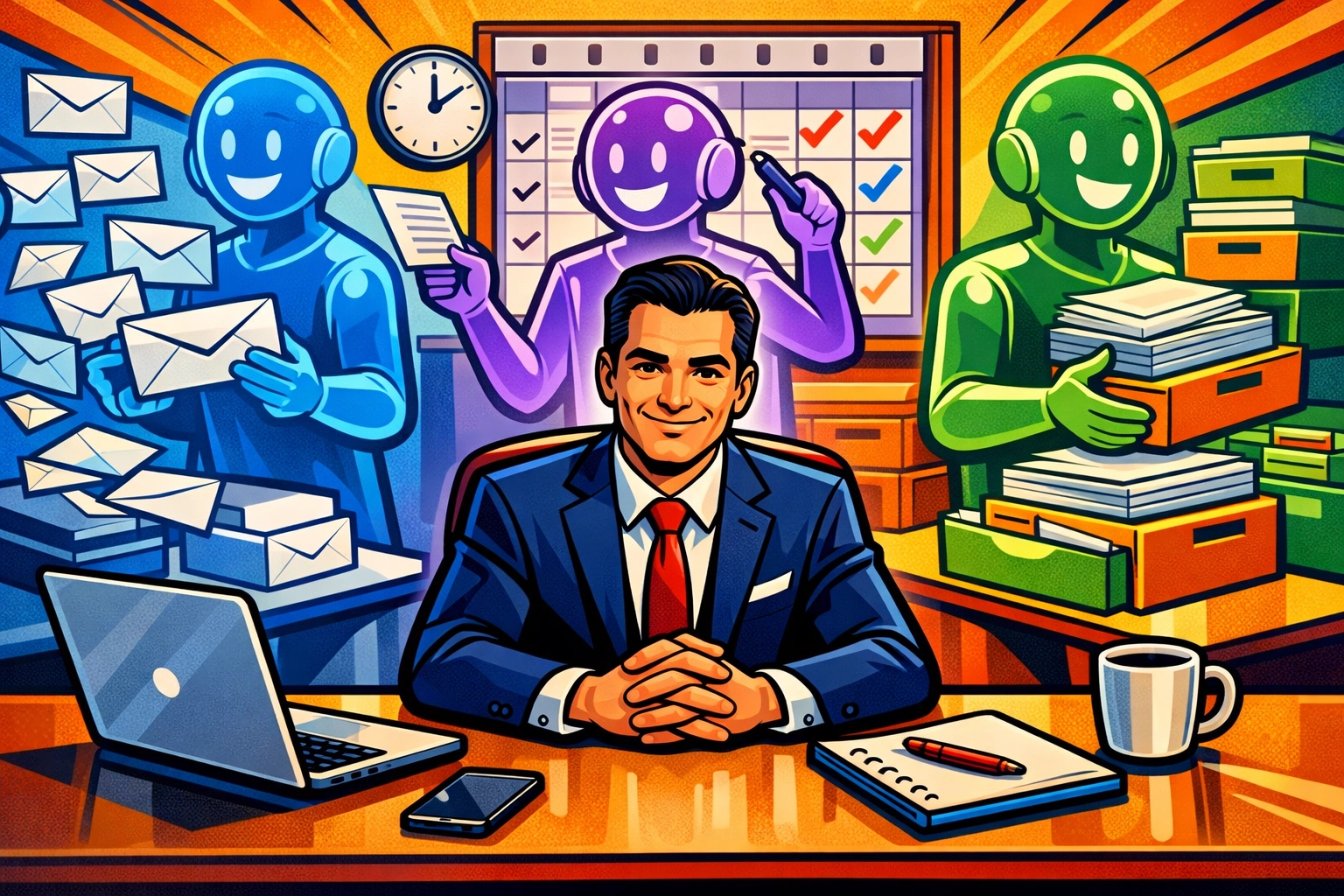
    AI virtual assistants automate business admin tasks while owner works efficiently at organized desk

    Stop Juggling. Start Automating.

    Here's what most people get wrong about automation: They think it has to be all or nothing. A massive overhaul. Months of setup.

    Start with one thing. The most annoying five minutes of your day. Automate that.

    Tomorrow, automate another five minutes.

    By next week, you've reclaimed hours. By next month, you're wondering how you ever ran your business without this.

    The tools are already here. Email templates take two minutes. Scheduling automation takes four. Zapier connections take three. You're literally five minutes away from getting your time back.

    And if you want to go deeper : if you want an actual ai virtual assistant for business that handles emails, schedules meetings, answers customers, and does research while you sleep : that's possible too. And it's easier to set up than you think.

    The Real Question

    You're not going to hire someone this week. You know that. The job posting, the interviews, the training… it's too much.

    But five minutes? You've got five minutes.

    So what's the one admin task that's annoying you right now? The thing you did twice already today and will do three more times before you go home?

    Automate that. Today. Right now.

    Everything else can wait. But that one thing? That's your starting point.

    And once you see how easy it is… you'll wonder why you waited so long.

    The business owners who figure this out don't work harder. They just stopped doing the stuff that machines should be doing anyway.

    YOUR MOVE.

  • Your Quick-Start Guide to Specialty Coffee at Home: Do This First

    So you've decided to dive into specialty coffee at home. Brilliant choice. But here's the thing, walk into any coffee forum or subreddit, and you'll be hit with a wall of conflicting advice about what you "absolutely need" versus what's "totally overrated." Equipment reviews that contradict each other. Brewing methods that all claim to be "the best."

    Let's cut through that noise.

    We're going to focus on what actually matters when you're starting out. Not the £500 espresso setup. Not the exotic brewing devices that look impressive on a shelf. We're talking about the fundamentals that will genuinely transform your daily cup, the things that make the biggest difference to your brew quality right from day one.

    Start Here: The Grinder (Yes, Really)

    If you're going to invest in one thing first, make it a burr grinder. Not a blade grinder. Not pre-ground coffee from the supermarket shelf. A proper burr grinder.

    Why? Because coffee starts losing its aroma and flavor within minutes, literally minutes: of being ground. Those lovely volatile compounds that make specialty coffee worth drinking? They're escaping the moment you break open those beans. Pre-ground coffee has been sitting around for days or weeks. You're essentially brewing stale coffee before you even start.

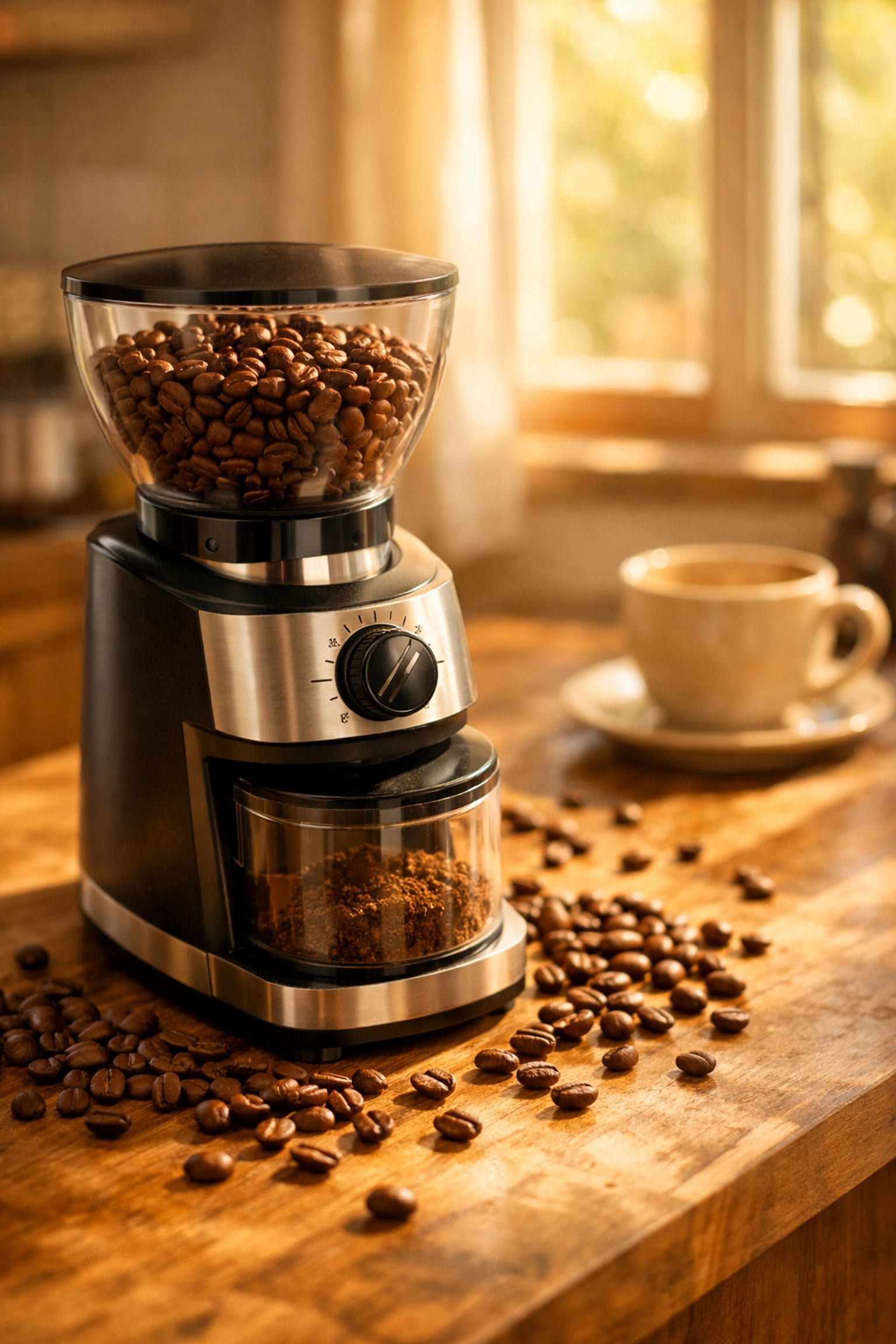
    Burr grinder filled with whole coffee beans on kitchen counter for specialty coffee brewing at home

    A burr grinder gives you consistent particle size, which means even extraction. Blade grinders just bash beans into randomly sized chunks: some dust, some boulders, nothing uniform. The result? Simultaneously over-extracted and under-extracted coffee. Bitter and sour at the same time. Not ideal.

    For beginners, something like the Hario Mini Mill does the job without breaking the bank. It's manual, so you'll get a bit of an arm workout, but it produces decent, consistent grounds. If you want to invest a bit more upfront, the Baratza Encore is considered the gold standard entry-level grinder: electric, reliable, and produces excellent results.

    Fresh Beans Are Non-Negotiable

    Here's where we need to talk about coffee quality. Your shiny new grinder won't perform miracles on stale supermarket beans that were roasted six months ago and sitting in a warehouse.

    Specialty coffee is about freshness and quality sourcing. At Limini Coffee, we roast in small batches precisely because freshness matters. You want beans roasted within the past few weeks, ideally consumed within a month of the roast date. Look for roasters who date their bags and can tell you exactly where the coffee came from.

    Single-origin beans are a great starting point. They let you taste the characteristics of a specific region: whether that's the bright, fruity notes of an Ethiopian Yirgacheffe or the chocolate-and-nut profile of a Brazilian. Starting with single origins helps you develop your palate and figure out what you actually enjoy, rather than guessing at what's hiding in a blend.

    Pick Your Brewing Method (Just One to Start)

    The beautiful thing about specialty coffee at home is you don't need every brewing device under the sun. Pick one method that fits your lifestyle and get good at it. You can always expand later.

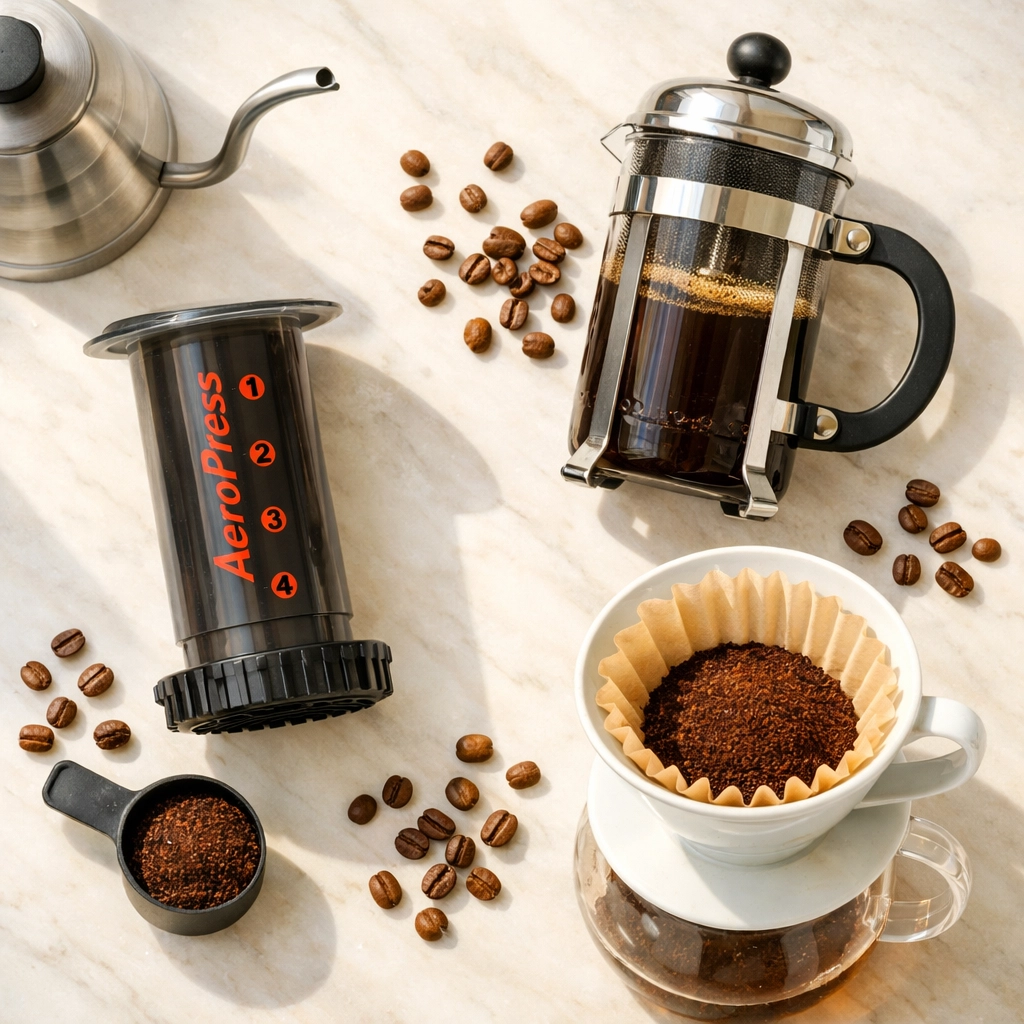
    AeroPress: Compact, fast, nearly impossible to mess up. Brew time is about 1-2 minutes, and it's incredibly forgiving while you're learning. Travel-friendly too. Great choice if you want something versatile and low-pressure.

    French Press: Similarly forgiving and beginner-friendly. Immersion brewing (where the grounds sit in the water) is more forgiving than percolation methods. You'll get a fuller-bodied cup with more oils present. Just remember to use a coarse grind.

    Home coffee brewing equipment including AeroPress, French press, and pour-over dripper with fresh beans

    Pour Over (V60 or Chemex): Offers excellent control and clarity in the cup. There's a slight learning curve here: you'll want a gooseneck kettle for precision pouring. But the results are worth it if you enjoy the ritual of making coffee. Brew time is around 3-4 minutes.

    Drip Coffee Machine: If hands-off convenience is your priority, a quality drip machine delivers consistent results without the fuss. Look for one with SCAA certification: that means it hits proper brewing temperatures.

    We'd suggest starting with whichever method appeals to you most. There's no "wrong" choice here. The best brewer is the one you'll actually use every morning.

    Add Precision: Scale and Kettle

    Once you've got your grinder and chosen your brewer, the next upgrade is a digital scale. This might seem overly fussy at first, but consistency is what separates a good cup from a "why doesn't this taste like yesterday's brew?" cup.

    Coffee brewing is fundamentally a ratio game. Most specialty coffee recipes hover around 1:15 to 1:17 coffee-to-water ratio: meaning 1 gram of coffee for every 15-17 grams of water. Without a scale, you're just guessing. With a scale, you can replicate your best brews and troubleshoot your worst ones.

    You don't need anything fancy. A basic digital scale that measures to 0.1g and has a timer function will do everything you need. We're talking £15-25, not a major investment.

    As for kettles: a standard electric kettle works fine to start. If you go the pour-over route, though, upgrading to a gooseneck kettle transforms your control. The narrow spout lets you pour precisely and at a controlled rate, which matters enormously for even extraction. Variable temperature control is a nice bonus but not essential at first.

    Pouring water from gooseneck kettle into pour-over coffee dripper on digital scale for precise brewing

    Your Actual Starting Kit

    Let's bring this together. Here's what we'd recommend for someone starting their specialty coffee journey:

    Essential tier:

    • Burr grinder (manual or electric based on budget)
    • One brewing device that matches your lifestyle
    • Digital scale
    • Kettle (gooseneck if doing pour-over)
    • Fresh, quality beans from a specialty roaster

    Nice-to-have additions:

    • Proper storage container for beans (airtight, opaque)
    • A timer (though your phone works fine)
    • A notebook for tracking recipes and results

    Notice what's not on there? Expensive espresso machines. Milk frothers. Twelve different brewing devices. Fancy coffee subscription boxes with mystery beans. Temperature-controlled mugs. None of that matters yet.

    Master the fundamentals first. Learn to pull out the flavors in your coffee through proper grinding, accurate ratios, and good technique. Everything else is embellishment.

    The First Thing You Should Actually Do

    Buy fresh beans and a burr grinder. Seriously. If you're reading this and you don't have a grinder yet, that's your starting point. You can use a French press you already own, a cheap V60 cone, or even a simple drip maker: but you need freshly ground coffee.

    Then dial in your ratio using a scale. Start with 1:16 (e.g., 15g coffee to 240g water) and adjust from there based on taste. Too weak? Use more coffee. Too strong or bitter? Use less coffee or adjust your grind coarser.

    Keep notes for the first few weeks. It sounds tedious, but it's the fastest way to learn what works. Write down the coffee, grind setting, ratio, water temperature, and how it tasted. When you nail a brew, you'll know exactly how to repeat it.

    Ready to Begin?

    The specialty coffee world can feel intimidating from the outside: all that gear, all that jargon, all those strong opinions about the "right" way to brew. But here's the truth: it starts simple.

    Grind fresh. Measure accurately. Brew with intention. That's it.

    Everything we've covered here: the grinder, the fresh beans, the scale, the chosen brewing method: these aren't gatekeeping requirements. They're tools that let you taste what specialty coffee actually offers. The bright acidity of a Kenyan. The stone fruit sweetness of a Colombian. The floral complexity of an Ethiopian natural process.

    If you're ready to get started with quality beans roasted fresh, check out what we're currently offering at Limini Coffee. We source carefully and roast in small batches, so you're getting coffee at its best.

    Welcome to specialty coffee. Your mornings are about to get significantly better.

  • Marblism: The Secret Weapon for Solopreneurs Ready to Scale

    Marblism: The Secret Weapon for Solopreneurs Ready to Scale

    You're running the whole show.

    Sales. Marketing. Customer service. Admin work. Social media. Content. And somewhere in that chaos, you're supposed to actually… deliver the thing you're selling.

    You know you need to scale. But hiring? That's $50K+ per employee, plus benefits, plus training, plus hoping they don't ghost you in three months.

    So you stay stuck. Doing everything yourself. Watching competitors pull ahead while you're drowning in your inbox at 11 PM.

    There's another way.

    MEET YOUR NEW AI TEAM

    Forget another app promising to "streamline your workflow." Marblism gives you something better: six specialized ai assistants for small business that actually do the work.

    Not tools you have to learn. Not automation you have to build. Actual team members who clock in, handle their jobs, and get better every single day.

    Six specialized AI assistants for small business handling sales, marketing, and operations

    Eva – Your Executive Assistant

    She lives in your inbox. Filtering the noise. Prioritizing what matters. Managing your calendar. Taking meeting notes while you focus on the conversation.

    You stop drowning in email. Eva handles it.

    Sonny – Your Social Media Manager

    He's creating posts for LinkedIn, Facebook, and Instagram. Up to three times a day. Every single day. Scheduled. Consistent. On-brand.

    You stop staring at blank text boxes wondering what to post. Sonny handles it.

    Penny – Your SEO Content Writer

    She's the ai content generator for small business you've been looking for. Writing optimized blog posts. Improving your search rankings. Bringing organic traffic to your site while you sleep.

    You stop feeling guilty about your abandoned blog. Penny handles it.

    Stan – Your Sales Prospector

    He's got access to 700+ million contacts. Finding leads that match your ideal customer. Sending personalized outreach. Booking meetings on your calendar automatically.

    You stop cold-calling into the void. Stan handles it.

    Rachel – Your AI Phone Assistant

    She answers every call. Transfers inquiries. Schedules meetings. Sends you transcripts and summaries of every conversation.

    You stop missing important calls because you were in the middle of something. Rachel handles it.

    Linda – Your Contract Handler

    She manages all your legal documents and contracts. Organized. Accessible. No more digging through files at midnight before a deadline.

    You stop stressing about paperwork. Linda handles it.

    Six employees. One subscription. No interviews. No onboarding nightmares. No drama.

    A DAY IN YOUR NEW LIFE

    7:00 AM

    Your phone buzzes. But it's not chaos: it's Eva with a clean summary. The 87 emails that came in overnight? She's handled 82 of them. The five that need you? Prioritized. Organized. Ready.

    The chaos is gone before you even take your first sip.

    9:30 AM

    You're in a client meeting. Rachel just answered three calls, scheduled two follow-ups, and sent you quick summaries. You didn't miss a thing. You didn't get interrupted once.

    You're fully present. Impressive. Professional.

    Solopreneur transformation from overwhelmed to organized with AI business automation

    11:15 AM

    Sonny just posted to LinkedIn. Thoughtful content about your industry. Tagged properly. Timed perfectly for engagement.

    You didn't write it. You didn't schedule it. But your brand is active, visible, and growing its reach.

    2:00 PM

    Stan sends you a notification. "Booked two meetings for Thursday." You glance at the leads. Perfect fit. He found them, reached out, personalized the pitch, and locked them in.

    You just send a thumbs-up.

    4:30 PM

    A potential client asks, "Do you have any content about [specific topic]?" You remember Penny wrote something last week. You pull it up. It's thorough. SEO-optimized. Exactly what they need.

    You look prepared. You look established. You close the deal.

    7:00 PM

    You're winding down. Checking your dashboard one last time. Linda organized all your contracts. Eva prepped tomorrow's agenda. Sonny scheduled posts for the next three days.

    Your business is running. Growing. Scaling.

    And you're home before dinner gets cold.

    THE RESULTS SPEAK LOUDER THAN WE DO

    "Stan booked two B2B meetings in just a couple of weeks. On autopilot. I didn't touch anything."
    : Michael, Consulting Firm Owner

    "My AI team saved me 200+ hours in less than a month. I finally had time to work ON my business instead of IN it."
    : Sarah, E-commerce Entrepreneur

    This isn't theory. It's what's happening right now for over 20,000 businesses using Marblism.

    AI dashboard managing business tasks, meetings, and workflows on a clean desk

    WHY THIS ACTUALLY WORKS (WHEN OTHER TOOLS DIDN'T)

    No Coding Required

    You don't need to be technical. You don't need to watch 17 tutorial videos. You pick your AI employees. Connect your tools (Gmail, LinkedIn, Instagram, Facebook, and 30+ others). They start working.

    That's it.

    They Work 24/7

    Stan's finding leads at 3 AM. Penny's writing content while you're at your kid's soccer game. Rachel answers calls on Saturday.

    Your business doesn't sleep anymore. But you can.

    They Get Smarter

    Every task they complete teaches them more about your business. Your preferences. Your voice. Your ideal customers.

    They're not just working: they're learning.

    Affordable Enough to Start Today

    Six specialized AI employees for $24-$29 per month. That's less than one lunch meeting with a potential hire who might not work out.

    You're not betting the farm. You're making a smart play.

    SCALING SHOULDN'T BE THIS EASY. BUT HERE WE ARE.

    Here's what you need to understand: the solopreneurs who are winning right now? They're not working harder. They're not hustling more hours. They're not superhuman.

    They just stopped trying to do everything themselves.

    They built a team. An AI team that doesn't call in sick, doesn't need vacation days, doesn't require health insurance, and works around the clock making their business better.

    You can keep doing it all yourself. Keep spinning plates. Keep hoping you'll eventually have enough revenue to justify that first hire.

    Or you can do what the smart money is doing.

    Build your team today. Watch what happens when you're not the bottleneck anymore. See how fast you can grow when every part of your business has someone dedicated to making it better.

    Business professionals celebrating growth and scaling success with AI automation

    YOUR NEXT MOVE

    You've read this far because something resonated. Because you're tired of being the only one holding everything together. Because you know there's a better way.

    There is.

    Over 20,000 businesses already found it. Live chat support and guided onboarding are included, so you're never alone figuring this out.

    See how Marblism works for yourself. No pressure. No hard sell. Just a clear look at what your business could become when you're not doing everything alone.

    Your competitors are already building their AI teams.

    The question isn't whether to scale.

    It's whether you'll do it before or after they leave you behind.

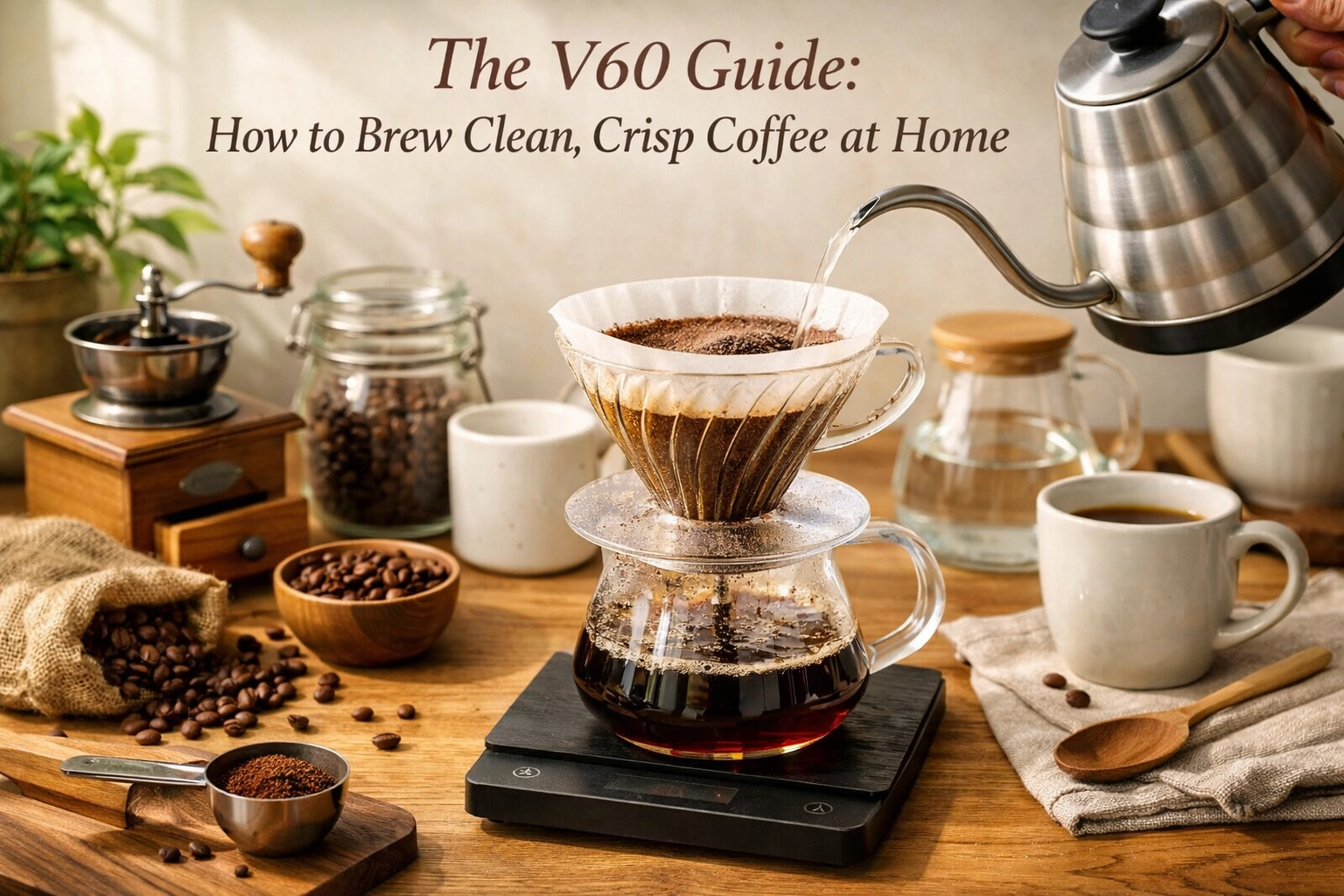
  • The V60 Guide: How to Brew Clean, Crisp Coffee at Home

    The V60 Guide: How to Brew Clean, Crisp Coffee at Home

    If you've ever wondered how coffee shops get that incredibly clean, bright cup of coffee that tastes like pure liquid sunshine, chances are they're using a Hario V60. This unassuming little plastic (or ceramic, or glass) cone has become the darling of the specialty coffee world, and for good reason.

    The V60 is brilliant at one thing in particular: clarity. While other brewing methods might give you body or richness, the V60 strips away all the noise and lets you taste the coffee in its purest form. That Ethiopian coffee with the blueberry notes? You'll actually taste those blueberries. That Colombian with the bright citrus acidity? It'll shine through like a spotlight.

    So let's get you brewing like a pro at home.

    Why Coffee Nerds Love the V60

    The secret to the V60's magic is in its design. Those spiral ridges on the inside aren't just for looks: they allow air to escape during brewing, which helps with even extraction. The large single hole at the bottom gives you complete control over flow rate. And that 60-degree angle? That's where the name comes from, and it's the sweet spot for water and coffee interaction.

    What this all means is that you have total control over your brew. Pour fast, pour slow, use different water temperatures, adjust your grind: every variable affects the final cup. It's a playground for experimentation, but don't worry, we're going to give you a foolproof recipe to start with.

    The V60 produces what we call a "clean" cup. The paper filter removes oils and fine particles, leaving you with crisp, tea-like clarity that showcases the coffee's inherent characteristics. This is why light roasts and single origins absolutely sing in a V60.

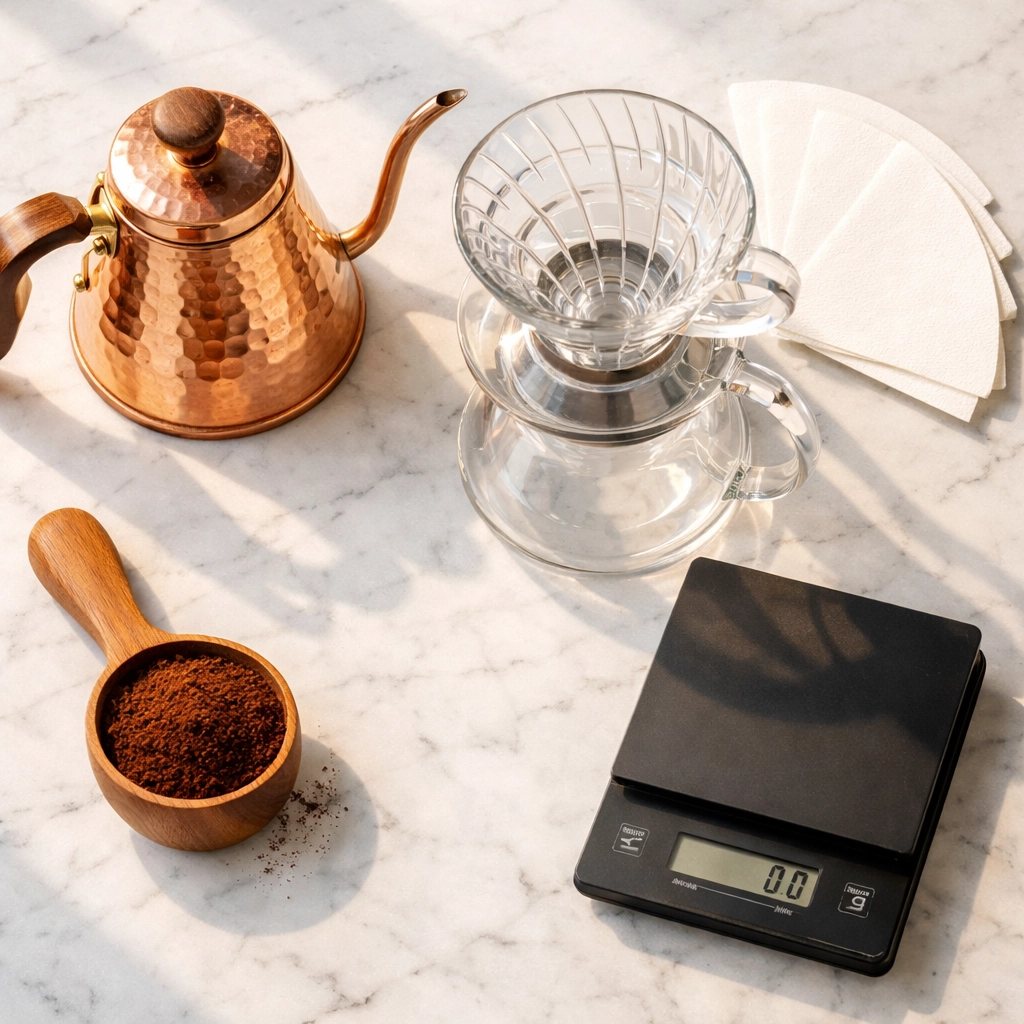
    Essential V60 coffee brewing equipment including dripper, gooseneck kettle, scale, and filters

    What You'll Need

    Let's talk equipment. You don't need to break the bank here, but a few key pieces will make your life much easier:

    The V60 dripper itself – Plastic is cheap and works brilliantly. Ceramic looks prettier and retains heat better. We like the plastic version for beginners because it's forgiving and inexpensive.

    V60 paper filters – Buy the ones that match your dripper size. The white ones are fine; the brown "natural" ones don't make a noticeable difference to be honest.

    A scale – This is non-negotiable. Measuring coffee by volume is a recipe for inconsistency. You need to weigh both your coffee and your water.

    A burr grinder – Pre-ground won't cut it here. Fresh is best, always. The V60 is particularly sensitive to grind size, so having control over this is crucial.

    A gooseneck kettle – Can you brew without one? Sure. Will your results be dramatically better with one? Absolutely. The precision pouring is what makes the V60 work.

    A timer – Your phone works fine.

    Great coffee – And this is where we come in. The V60 absolutely loves our single origin coffees. Light to medium roasts work beautifully because the clean brewing method lets those delicate flavor notes shine through. Browse our selection at our shop and pick something that sounds exciting to you.

    The Recipe (Your New Morning Ritual)

    Let's start with a solid baseline recipe. Once you've nailed this, you can start tweaking to your taste.

    Coffee: 20 grams
    Water: 320 grams (that's about 320ml)
    Ratio: 1:16 (coffee to water)
    Grind: Medium-fine (think table salt or slightly finer)
    Water temperature: 94-96°C (201-205°F)
    Total brew time: 3:00-3:30 minutes

    Pouring water into V60 dripper during bloom phase for perfect pour-over coffee extraction

    Step-by-Step: Let's Brew

    Step 1: Prep Your Filter (0:00)

    Fold the paper filter along its crimped edge and place it in the V60. Now here's something many beginners skip: rinse the filter with hot water. This does two things: it removes any papery taste, and it preheats your brewer and vessel. Dump that rinse water before you start brewing.

    Step 2: Add Your Coffee (0:00)

    Weigh out 20 grams of freshly ground coffee and pour it into the filter. Give the V60 a gentle shake to level the bed: you want an even surface for consistent extraction. Some people like to make a small indentation in the center with their finger or a spoon, which can help with even water distribution.

    Step 3: The Bloom (0:00-0:45)

    Start your timer. Pour about 40-50 grams of water (roughly double the weight of your coffee) in a slow, spiral motion, making sure to saturate all the grounds. You'll see the coffee bubble and expand: that's CO2 escaping. This is called the bloom, and it's essential for even extraction.

    Wait for 30-45 seconds. This pause lets the gases escape so that water can actually extract flavor compounds rather than just bouncing off the grounds.

    Step 4: The First Pour (0:45-1:45)

    Now start pouring in slow, concentric circles about the size of a 50p coin. Start from the center and work your way out, but stay away from the edges: you don't want water running straight down the sides without touching coffee.

    Pour until you reach about 200 grams total on your scale. Keep your pour steady and consistent. This isn't a race.

    Finished cup of V60 pour-over coffee with brewing notes and equipment on wooden table

    Step 5: The Second Pour (1:45-2:30)

    Once the water level drops and you can see the coffee bed again (usually around 1:45), continue with your second pour using the same circular motion. Pour up to 320 grams total.

    Step 6: The Drawdown (2:30-3:30)

    Stop pouring and let gravity do its thing. You can give the V60 a very gentle swirl to flatten the bed if you like. The coffee should finish dripping between 3:00-3:30 minutes total. If it's much faster, your grind is too coarse. Much slower? Too fine.

    Remove the V60, give your coffee a quick stir, and taste your handiwork.

    Troubleshooting Your Brew

    Tastes sour or weak? You're under-extracting. Try grinding finer, using hotter water, or pouring more slowly.

    Tastes bitter or astringent? You're over-extracting. Grind coarser, use slightly cooler water, or pour a bit faster.

    Brew time too fast (under 2:30)? Grind finer.

    Brew time too slow (over 4:00)? Grind coarser.

    Weak or watery? Increase your coffee dose or decrease your water.

    The beauty of the V60 is that small adjustments make noticeable differences. Don't be afraid to experiment.

    Which Limini Coffees Work Best?

    Here's where it gets fun. The V60's clean, crisp profile makes it absolutely perfect for coffees where you want to taste everything the bean has to offer.

    Light roasts are the V60's best friend. These coffees are roasted to preserve the coffee's origin characteristics: the fruitiness, the floral notes, the bright acidity. When you brew these in a V60, it's like turning up the volume on all those delicate flavors.

    Single origins from Africa (particularly Ethiopia and Kenya) are spectacular in a V60. Think blueberry, jasmine, bergamot, and citrus notes that absolutely pop. Central and South American coffees bring chocolate, nuts, and stone fruit that come through with beautiful clarity.

    Head over to our shop and look for those single origin offerings. Pick something you've never tried before. The V60 will show you exactly what makes that coffee special.

    Medium roasts work brilliantly too if you prefer a bit more body and sweetness alongside that clarity. Just maybe skip the dark roasts here: the V60's clean profile can sometimes make darker roasts taste a bit thin or sharp.

    Final Thoughts

    The V60 might look simple, but it rewards attention to detail. The good news? It's also incredibly forgiving once you get the basics down. You don't need to be a champion barista to brew excellent coffee at home.

    Start with the recipe we've given you, use fresh beans from Limini Coffee, and dial it in to your taste. Take notes on what you like and what you don't. Adjust your grind, your pour rate, your water temperature. That's the real joy of the V60: it's a journey, not a destination.

    Now go make yourself the best cup of coffee you've had all week.

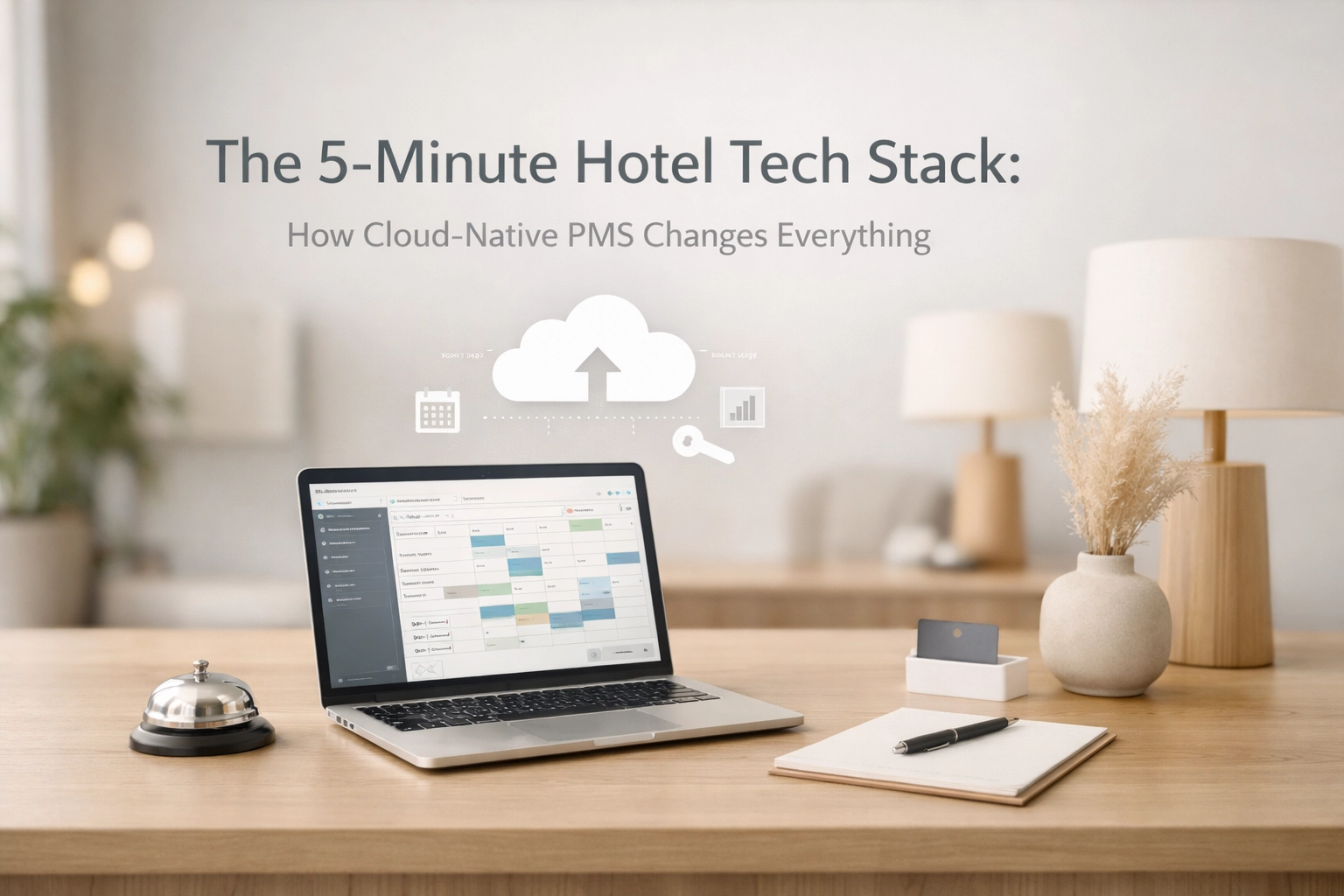
  • The 5-Minute Hotel Tech Stack: How Cloud-Native PMS Changes Everything

    The 5-Minute Hotel Tech Stack: How Cloud-Native PMS Changes Everything

    Here's what used to take hotels weeks, or even months, to set up: A unified tech stack that actually works together. Now? Five minutes.

    Okay, maybe that's a slight exaggeration. But the difference between legacy hotel management systems and cloud-native PMS platforms is genuinely that dramatic. Hotels implementing modern PMS systems experience a 63.5% increase in overall efficiency. That's not incremental improvement. That's transformation.

    The Old Way vs. The New Way

    Remember when your hotel tech stack looked like a messy Jenga tower? One system for reservations. Another for your channel manager. A separate booking engine. Some janky integration for your point-of-sale. And don't even get us started on the CRM that lived in a completely different universe.

    Every. Single. System. Required manual data entry, reconciliation, and prayers that nothing broke overnight.

    Cloud-native PMS platforms flip this entire model. Instead of cobbling together disconnected tools, you get a unified platform where data flows automatically between systems. Your channel manager talks to your booking engine. Your CRM knows what housekeeping is doing. Your self-check-in kiosks sync with your room inventory in real-time.

    Cloud-native hotel PMS displayed across connected devices showing synchronized data in real-time

    What "Cloud-Native" Actually Means (And Why It Matters)

    Cloud-native isn't just "software that lives on the internet." It's a fundamentally different architecture designed from the ground up for modern hospitality operations.

    Here's what changes:

    No Hardware Installation: Your entire hotel PMS runs from any internet-connected device. Staff can access critical information from tablets, phones, or laptops. No servers to maintain. No IT headaches when something crashes at 2 AM.

    Automatic Updates: Everyone gets the latest features simultaneously. No waiting for IT to schedule an update window. No version conflicts between properties.

    Real-Time Everything: When a reservation comes through your booking engine, it instantly updates across your channel manager, housekeeping app, and front desk system. No lag. No manual refreshes. No wondering if you just double-booked a room.

    We believe hotels shouldn't waste time managing technology. They should be managing guest experiences.

    The Real Tech Stack Transformation

    Cloud-native PMS systems consolidate what previously required multiple standalone solutions. A unified PMS/CRS setup eliminates data silos and creates a single source of truth for your entire operation.

    Integration That Actually Works

    Modern platforms connect seamlessly with:

    • Accounting software and payroll systems
    • Point-of-sale systems across restaurants and bars
    • Payment processors for automated reconciliation
    • Online travel agencies through APIs
    • Self-check-in kiosks for contactless arrivals

    The difference? These integrations are native, not bolted-on afterthoughts. Data doesn't just transfer between systems: it lives in a shared ecosystem.

    Comparison of cluttered legacy hotel desk versus streamlined cloud-native PMS setup at front desk

    Operational Efficiency That's Measurable

    Hotels don't just feel more efficient with cloud-native PMS. The numbers prove it. Staff spend less time behind the counter because they can manage reservations, process payments, and coordinate housekeeping from anywhere. Mobile accessibility means your team isn't chained to a desktop.

    Automated workflows handle the repetitive stuff:

    • Reservation confirmations and modifications
    • Billing and invoicing
    • Housekeeping task assignments
    • Rate optimization based on demand

    This frees your team to focus on what actually matters: creating memorable guest experiences.

    The Guest Experience Revolution

    Here's where cloud-native PMS really shines. Guests don't care about your back-office systems. But they absolutely notice when those systems enable better service.

    Personalization at Scale

    Integrated CRM functionality means you know your guests before they arrive. Previous preferences. Special requests. Birthday celebrations. High-value customers get recognized instantly, not after someone frantically searches through old emails.

    The system tracks guest history automatically. Did they request extra pillows last time? That information's already flagged for housekeeping. Do they prefer a specific room type? Your booking engine remembers.

    Contactless Everything

    Modern guests expect self-service options. Self-check-in kiosks connected to your cloud-native PMS let guests skip the front desk entirely. Mobile check-in through your booking engine. Digital room keys. In-room service ordering through tablets or QR codes.

    This isn't about replacing human interaction: it's about giving guests choices and giving your staff bandwidth to provide genuine hospitality.

    Hotel guest using mobile check-in on smartphone in modern hotel lobby for contactless arrival

    Why "Cloud" Isn't Enough Anymore

    Every PMS vendor claims to be "cloud-based" now. But cloud adoption alone isn't the differentiator. The real value lies in three things: interoperability, scalability, and resilience.

    Interoperability: Can your hotel PMS actually talk to your other systems? Not through clunky exports and imports, but through real-time APIs that sync data automatically.

    Scalability: Can you add properties without rebuilding your entire tech infrastructure? Can you handle seasonal demand spikes without performance degradation.

    Resilience: When something goes wrong (and it will), does your system gracefully handle errors? Can staff still check in guests if the internet hiccups?

    Cloud-native platforms built specifically for hospitality: like Mews: handle all three by design.

    The Mews Difference

    We've built our entire platform around a simple idea: hotel technology should work for you, not the other way around.

    Cloud-native from day one: Not a legacy system awkwardly migrated to the cloud. Purpose-built for modern hospitality operations.

    Automation-focused: Your team shouldn't waste time on repetitive tasks. Our platform automates everything from rate adjustments to housekeeping workflows.

    Actually easy to use: Staff can learn the system in minutes, not weeks. The interface makes sense. The workflows feel natural.

    Mews powers over 5,000 properties worldwide. They chose us because setting up a complete hotel tech stack: channel manager, booking engine, CRM, payment processing, and more: takes hours, not months.

    Hotel staff member using tablet to manage operations while walking through property corridor

    What This Means for Your Property

    Think about how your team currently spends their time. How many hours go toward manual data entry? Reconciling discrepancies between systems? Hunting for guest information scattered across platforms?

    A cloud-native PMS collapses all that wasted effort. One platform. One source of truth. Real-time data flowing automatically between every system you use.

    The setup is genuinely simple:

    • Cloud-based implementation without hardware installation
    • Often operational within hours, not days
    • Staff training measured in hours, not weeks
    • Scalability across multiple properties without additional infrastructure

    Hotels implementing proper cloud-native PMS systems don't just get a new software platform. They get operational freedom. The ability to manage properties remotely. The flexibility to add integrations without IT projects. The confidence that their tech stack won't collapse during peak season.

    Your Next Step

    If you're still managing a hotel tech stack held together with hope and spreadsheets, it's time for a change.

    See what a truly cloud-native hotel PMS can do. Check out Mews and discover how a unified platform transforms everything from your channel manager to your self-check-in kiosks. The system handles the complexity. You focus on hospitality.

    The five-minute tech stack isn't science fiction. It's happening right now at properties that decided their team deserved better than legacy systems.
    Your move.

  • Setting Up a Coffee Shop? Here’s Everything Your Wholesale Specialty Coffee Partner Should Provide

    Setting Up a Coffee Shop? Here’s Everything Your Wholesale Specialty Coffee Partner Should Provide

    So you're opening a coffee shop. Exciting times ahead. But here's the thing: choosing the right wholesale specialty coffee partner is probably the most critical decision you'll make beyond your lease agreement. And yet, most café owners approach it like they're just buying beans.

    They're not just buying beans. You're choosing a business partner.

    The difference between a basic bean supplier and a comprehensive wholesale coffee partner can literally make or break your business in the first year. We've seen it happen. The café with exceptional coffee but no barista training struggles. The one with a great machine but inconsistent bean supply frustrates customers. The shop that has both but no ongoing support? They plateau fast.

    Let's talk about what you should actually expect: and demand: from your wholesale specialty coffee roaster.

    Exceptional Beans With Actual Transparency

    First things first: the coffee itself needs to be genuinely specialty grade. And we mean actually specialty, not just marketed as such.

    Your supplier should be working exclusively with beans graded 80 points and above on the Specialty Coffee Association scale. This isn't negotiable if you're positioning yourself as a quality-focused café. Ask for cupping scores. Request reports from certified Q Graders. These shouldn't be difficult to provide: any serious roaster has this documentation readily available.

    But here's where it gets interesting. Quality scores are just the starting point.

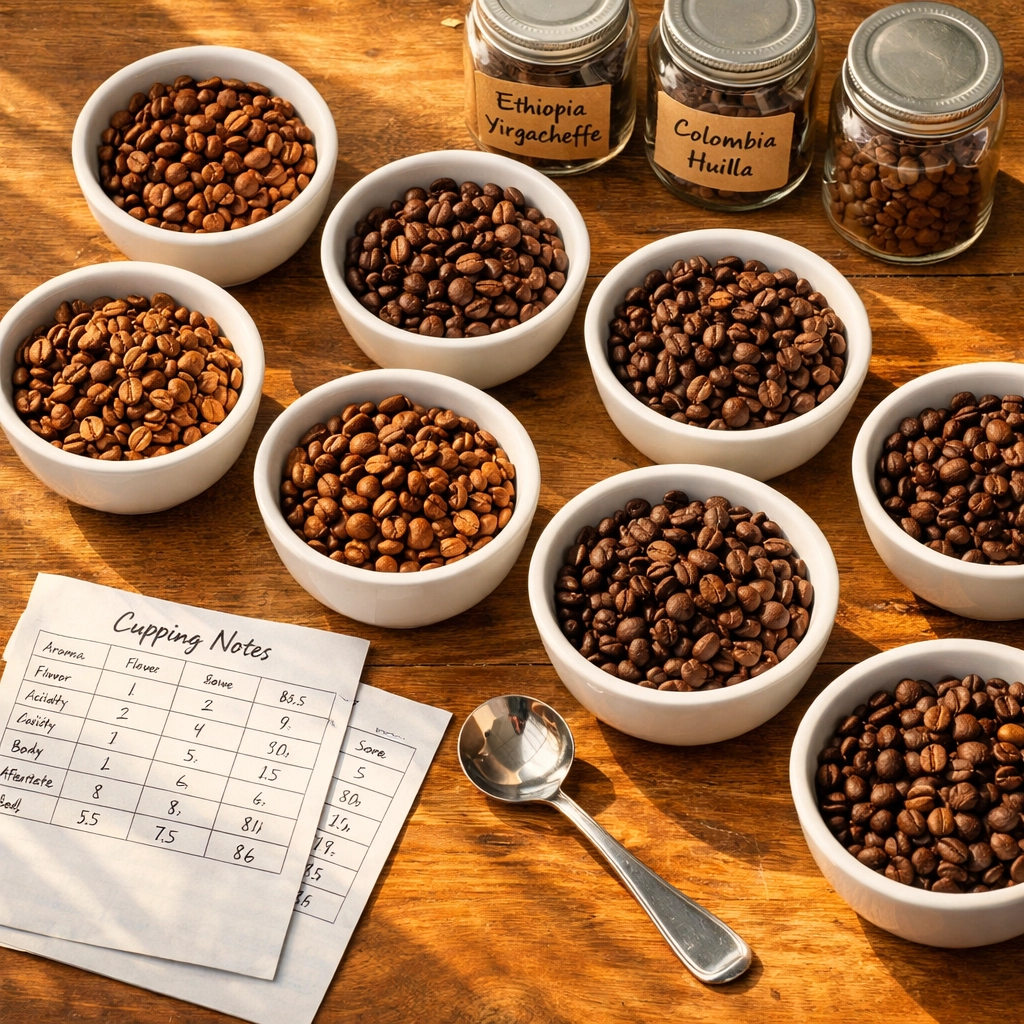
    Specialty coffee cupping table with quality score sheets and origin-labeled beans for wholesale evaluation

    Direct Trade Relationships Matter

    The best wholesale partners have direct relationships with coffee farmers and cooperatives. This isn't just feel-good marketing: it directly impacts your coffee quality and consistency. When roasters work directly with producers, they get first pick of the harvest, can provide feedback on processing methods, and ensure fair compensation that incentivizes quality.

    You should be able to trace your coffee back to specific farms or cooperatives. Ask about:

    • Origin (country, region, specific farm if available)
    • Varietal (the actual coffee plant variety)
    • Elevation (higher generally means denser, more complex beans)
    • Processing method (washed, natural, honey, anaerobic, etc.)
    • Harvest dates
    • Handling and transport methods

    If your supplier can't answer these questions, you're dealing with someone who's buying from importers without much involvement in the supply chain. Not necessarily terrible, but you're missing the quality control and story that customers increasingly care about.

    Fair Trade and Direct Trade certifications should be verifiable through public databases. Don't just take claims at face value: verify them. The coffee industry has enough greenwashing as it is.

    Equipment Support (Because Most Suppliers Skip This Part)

    Here's something most coffee suppliers won't tell you: they're happy to sell you beans but leave you to figure out equipment on your own. This is backwards.

    Your wholesale partner should either supply equipment directly or have strong relationships with quality equipment providers. At Limini Coffee, for example, we work closely with equipment manufacturers because we know that even exceptional beans can't perform on inadequate machines.

    You need guidance on:

    • Espresso machine selection based on your volume and concept
    • Grinder specifications (arguably more important than the machine itself)
    • Water filtration systems
    • Maintenance schedules and support

    Some roasters operate as genuine solution providers: offering a complete package that combines beans, equipment, and expertise. This one-stop-shop approach makes your life significantly easier, especially if this is your first café.

    And honestly? It should include ongoing technical support. Machines break down. You'll have questions. A good partner doesn't disappear after the sale.

    Professional barista trainer teaching espresso extraction techniques to new coffee shop owner

    Training Is Non-Negotiable (Here's Why)

    Ready for a sobering statistic? Over 95% of new coffee shop owners don't have skilled baristas on staff when they open.

    Think about that. You're investing tens of thousands: possibly hundreds of thousands: into a business where the product quality depends entirely on barista skill, and you're starting with zero expertise.

    Your wholesale coffee partner needs to bridge this gap. The best ones offer:

    • Comprehensive barista training for you and your staff
    • Equipment operation and maintenance training
    • Espresso extraction theory and troubleshooting
    • Milk steaming and latte art fundamentals
    • Menu development guidance

    We offer barista training programmes specifically because we've seen too many cafés struggle with this. You can have the best beans and equipment in the world, but if your barista doesn't know how to dial in espresso or properly steam milk, you're serving mediocre coffee.

    Some progressive roasters even provide remote support: video consultations, troubleshooting assistance, ongoing education as your business grows. This shouldn't feel like an upsell. It should be part of the partnership.

    Consistency and Logistics That Actually Work

    Exceptional coffee today and nothing next week doesn't build a business. Your supplier needs robust logistics and inventory management.

    Confirm these details before committing:

    • Minimum order quantities – Can you meet them without overstocking?
    • Order frequency flexibility – Weekly? Bi-weekly? Can you adjust seasonally?
    • Delivery reliability – Do they deliver directly or use couriers? What's their on-time record?
    • Stock availability – How do they handle seasonal coffees running out? Do they notify you proactively?
    • Communication standards – Who's your point of contact? How quickly do they respond?

    Ask about their quality assurance protocols. How do they ensure every batch maintains consistency? What happens if you receive a bag that doesn't meet standards?

    The supplier should be willing to send samples before you commit to full orders. And frankly, they should actively encourage this. If someone is reluctant to send samples, that tells you something.

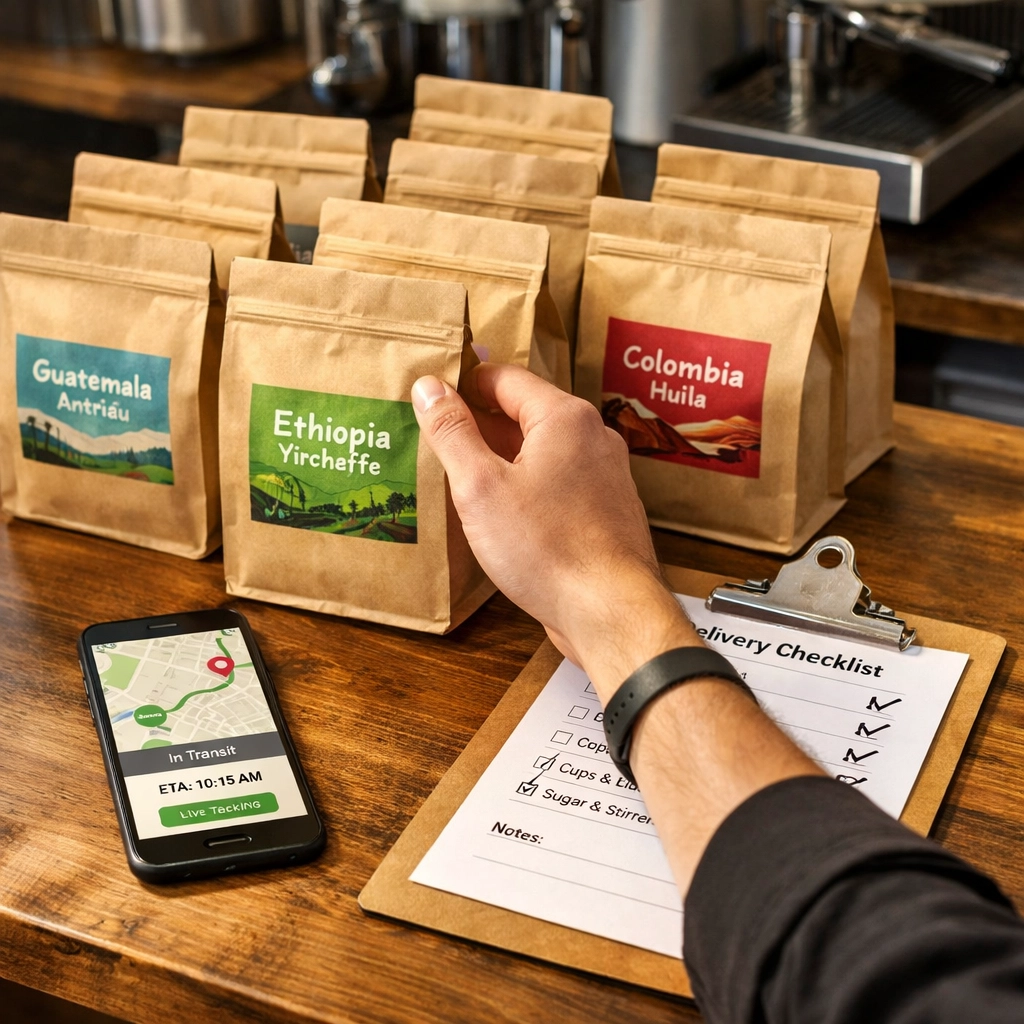
    Wholesale specialty coffee delivery with labeled bean bags and tracking documentation on cafe counter

    Single Origins, Blends, and Flexibility

    Your menu will likely need both single origin options and blends: different coffees for different drinks and customer preferences.

    A comprehensive wholesale partner should offer:

    • Signature espresso blends designed for milk-based drinks
    • Single origin espressos for purists and black coffee enthusiasts
    • Filter coffee options with varied flavor profiles
    • Seasonal rotations to keep your menu interesting
    • Custom blend development as your business matures

    Some roasters are blend-focused, others champion single origins exclusively. The best partners understand that you need variety and will work with you to develop a menu that makes sense for your concept and customer base.

    Beyond the Basics: Menu Development and Marketing Support

    The truly exceptional wholesale partners go further. They help you understand coffee as a business, not just a product.

    This might include:

    • Menu development consultation (which drinks work with which beans)
    • Pricing guidance based on your local market
    • Marketing materials and educational resources for your customers
    • Staff training on how to talk about coffee (origin stories, flavor notes, brewing methods)
    • Seasonal promotion ideas

    Some suppliers provide branded materials, POS resources, or even support with your café's overall coffee narrative. If you're creating a coffee-forward brand, this collaborative approach is invaluable.

    At Limini Coffee, we see ourselves as partners in our wholesale clients' success: not just bean sellers. That means being available for menu planning discussions, answering customer questions about our sourcing, and staying involved as the business evolves.

    Custom Packaging and Branding Options

    If you're planning to retail coffee beans in your shop, your supplier should accommodate custom labeling and packaging. This includes:

    • Your café branding on retail bags
    • Flexibility in bag sizes and types
    • Valve bags for optimal freshness
    • Design support or templates

    Not every new café needs this immediately, but it's worth confirming the supplier can support it when you're ready. Retailing beans can become a meaningful revenue stream: and it extends your brand into customers' homes.

    The Real Cost of Cheap Coffee

    Here's the uncomfortable truth: the cheapest wholesale coffee is almost never the best business decision.
    When you're comparing suppliers based solely on per-kilo pricing, you're ignoring training costs, equipment support, consistency issues, and ultimately customer satisfaction. A supplier charging £2 more per kilo but including comprehensive training, equipment guidance, and ongoing support is actually the better deal.


    Your customers can taste the difference between commodity-grade and specialty-grade coffee. And in 2026, with speciality coffee literacy higher than ever, they absolutely notice. Cutting costs on your core product is cutting costs on your entire brand promise.

    Questions to Ask Potential Suppliers

    Before you commit, have real conversations with potential partners. Ask:

    • What's your minimum coffee grade standard?
    • Can I see cupping scores and Q Grader reports?
    • How do you source your coffee? Direct trade? Importers?
    • What training do you provide, and is it ongoing?
    • Do you offer equipment support or supply equipment directly?
    • What are your delivery schedules and minimum orders?
    • How do you handle quality issues or inconsistencies?
    • Can you provide references from current wholesale clients?
    • What happens if I need help troubleshooting during service?

    The suppliers who genuinely want to partner with you will answer these enthusiastically. The ones who seem annoyed by questions? Keep looking.

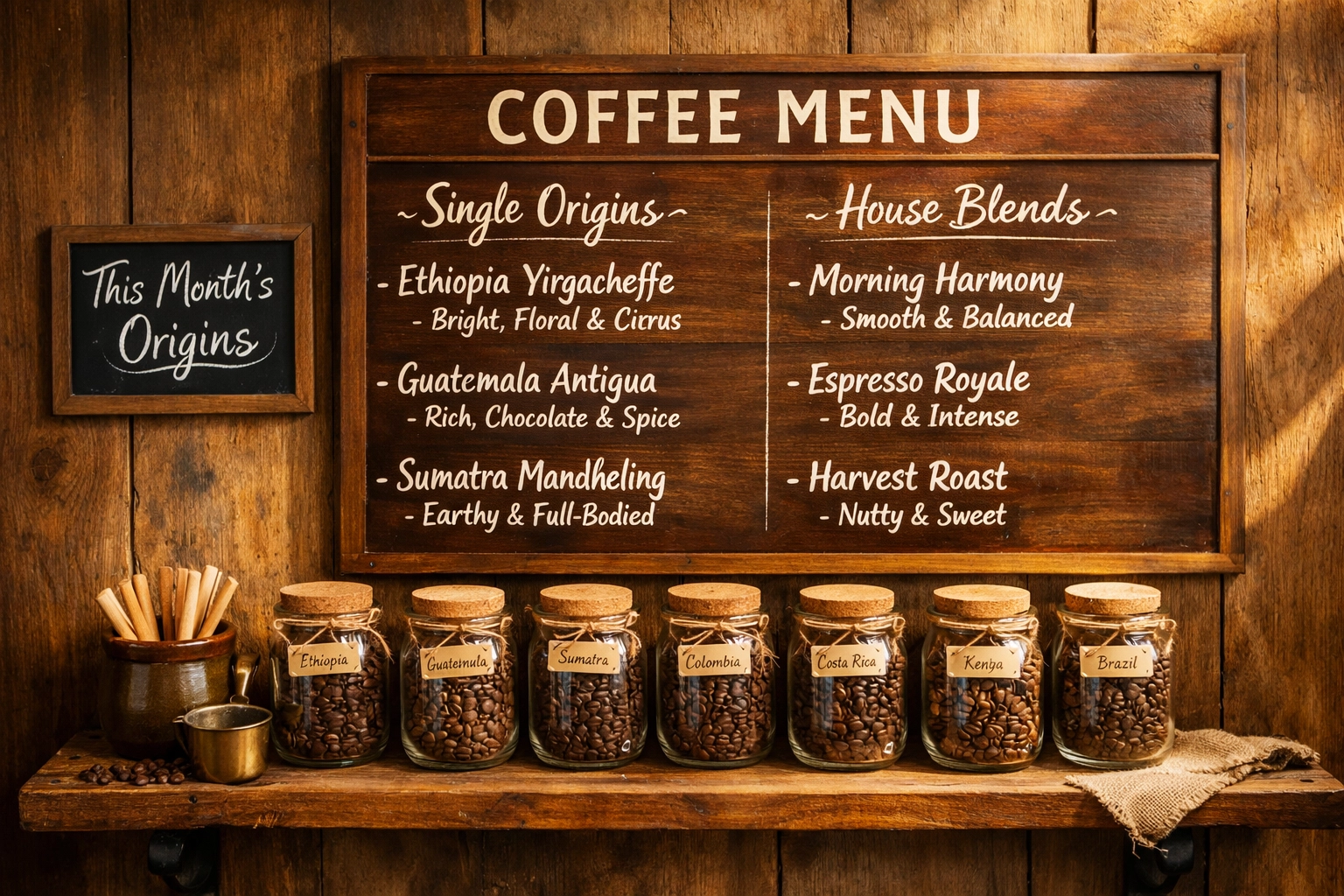
    Coffee shop menu display featuring single origin beans and blends in jars with origin descriptions

    It's a Partnership, Not a Transaction

    Opening a coffee shop is challenging enough without choosing a wholesale partner who sees you as just another account number. The right supplier becomes an extension of your team: invested in your success because your success is their success.

    Look for roasters who understand hospitality, who've worked in or with cafés extensively, and who see wholesale as relationship-building rather than volume-selling. The best partnerships evolve: your second year needs will differ from your first, and your supplier should grow with you.

    If you're exploring wholesale options for a new or existing café, we'd love to talk. We've built our wholesale programme specifically around comprehensive support: because we know exceptional coffee requires more than just exceptional beans.

    Your coffee is your product, your brand, and your customer experience. Choose your partner accordingly.

  • Stop Wasting 10 Hours Weekly on Admin: 7 Business Automation Tools That Actually Work

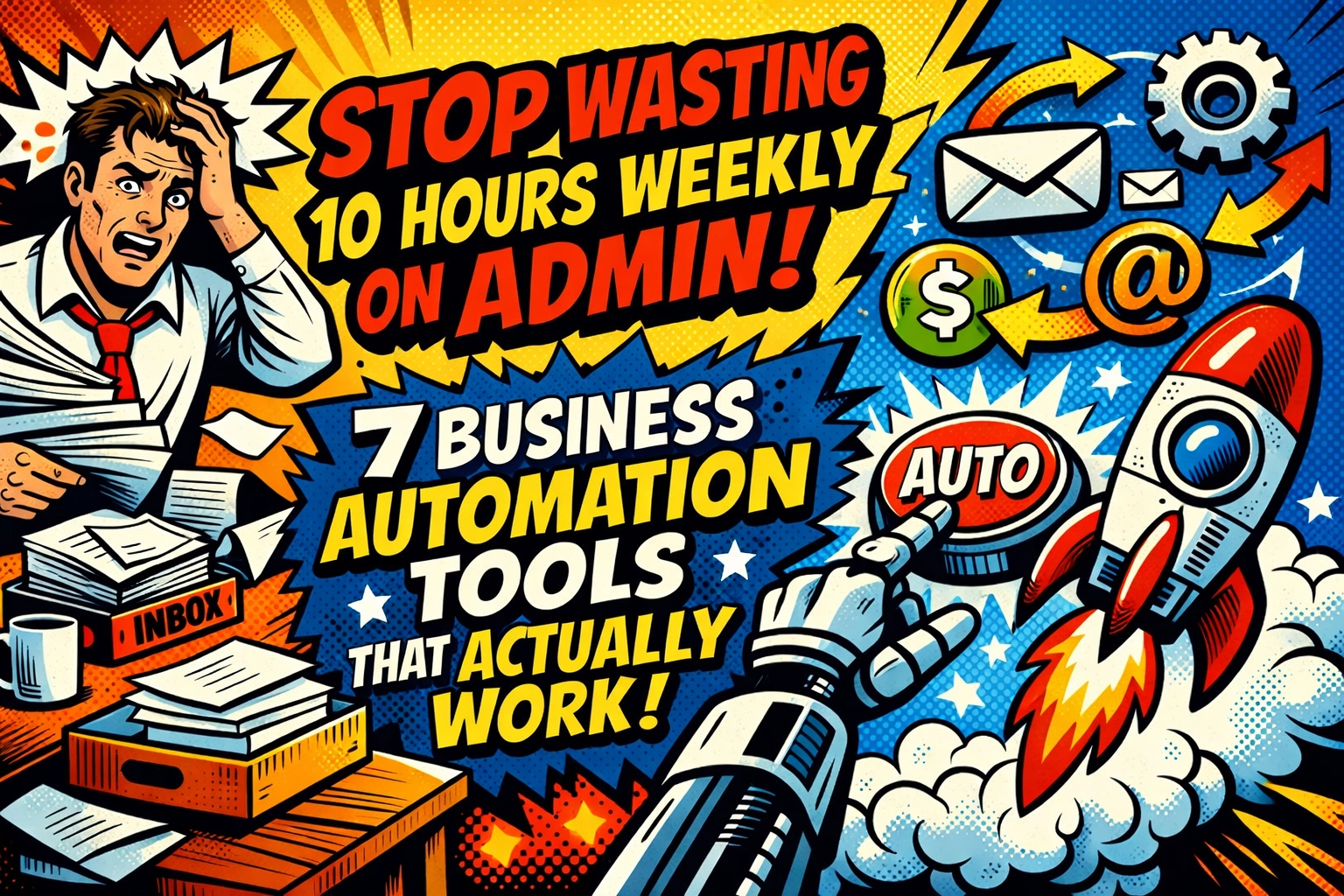
    Stop Wasting 10 Hours Weekly on Admin: 7 Business Automation Tools That Actually Work

    You know the drill.

    Monday morning. Coffee in hand. You open your laptop with big plans, that marketing campaign won't launch itself, those client proposals need attention, and you've been meaning to work ON your business instead of just IN it.

    Then you see your inbox. 127 unread emails.

    Your Slack has 43 notifications. Three people need invoices. Someone's asking about that contract you sent two weeks ago. Your CRM looks like a digital graveyard of half-entered leads. And somehow, it's already 11 AM and you haven't done a single thing that actually moves your business forward.

    Welcome to the admin trap. It's stealing 10+ hours from your week. Every. Single. Week.

    But here's the thing, you don't have to live like this anymore. Business automation tools have evolved from clunky, expensive enterprise software to accessible, actually-useful platforms that work for real businesses. Not just Fortune 500 companies with IT departments the size of small nations.

    Let's talk about seven ai business automation tools that'll give you those 10 hours back. And no, you don't need to be a tech genius to use them.

    1. Zapier: For When You Just Want Things to Talk to Each Other

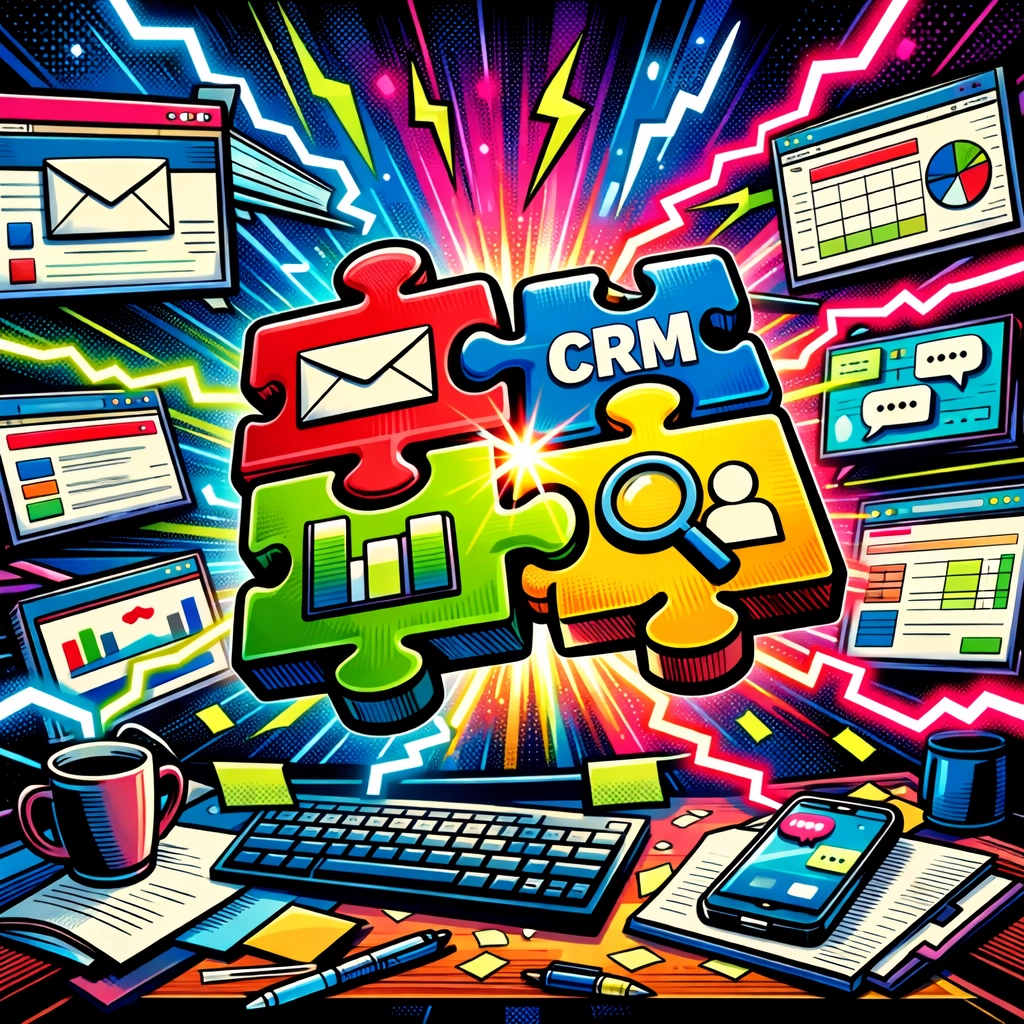
    Business apps connecting automatically through automation tools like puzzle pieces

    You're not technical. You don't code. You shouldn't have to.

    That's why Zapier exists. It connects your apps together with simple "if this, then that" logic. When someone fills out your website form, automatically add them to your email list AND create a task in your project management tool AND send you a Slack notification.

    No coding. Just point, click, and watch the magic happen.

    With over 8,000 integrations, Zapier speaks basically every business app's language. Your CRM finally talks to your email tool. Your payment processor can trigger customer onboarding sequences. That Google Sheet you've been manually updating? Yeah, Zapier can handle that too.

    The best part? You can set up most automations in under 10 minutes. The time you save in week one pays for the subscription for the entire year.

    Best for: Small to mid-sized teams who want automation yesterday, not next quarter after the IT review.

    2. Microsoft Power Automate: If You're Already Living in Microsoft World

    Here's the reality: if your business runs on Microsoft 365 (Outlook, Teams, SharePoint, Excel), you're already paying for automation tools and just… not using them.

    Power Automate is built right into your Microsoft ecosystem. Email arrives with an attachment? Automatically save it to SharePoint and notify the team in Teams. Form submitted? Create a task in Planner and send approval requests to the right people.

    The genius of Power Automate is that it doesn't make you learn a completely new platform. If you know how to use Microsoft apps, you already understand the basics.

    Plus, when was the last time you wanted to switch AWAY from Microsoft tools? Probably never. So you might as well make them work harder for you.

    Best for: Teams already invested in the Microsoft ecosystem who want automation that feels native, not bolted on.

    3. UiPath: When Your Legacy Systems Are Stuck in 2003

    Robotic automation working with legacy business systems and old computers

    Let's be honest. Some of your business runs on software that looks like it was designed when flip phones were cool. No API. No integrations. No way to connect it to anything modern.

    Except… UiPath doesn't care.

    It uses computer vision and AI to interact with your old software the same way a human would: clicking buttons, filling forms, copying data. Your ancient accounting system? UiPath can read it. That proprietary industry software with zero modern features? UiPath speaks its language.

    This is what people mean by "robotic process automation" (RPA). Virtual robots that handle the soul-crushing repetitive stuff while you do literally anything else.

    Companies deploy UiPath bots that run attended (with human supervision) or unattended (completely autonomous). The bots work nights, weekends, and holidays without complaining about work-life balance.

    Best for: Businesses dealing with legacy systems that would cost six figures to replace or modernize.

    4. Automation Anywhere: For High-Volume Transactional Hell

    Processing hundreds of orders daily? Entering data from invoices? Reconciling transactions across multiple systems?

    Your administrative assistant is drowning. Or you're the administrative assistant and YOU'RE drowning.

    Automation Anywhere specializes in high-volume, repetitive transactional work. It connects natively with SAP, Oracle, and Salesforce: the big enterprise systems where manual work goes to multiply like rabbits.

    The beautiful thing? The interface is actually intuitive. Your team can build bots without needing a computer science degree. And it's cloud-native, meaning you're not managing servers or infrastructure.

    One mid-sized company reported cutting invoice processing time from 3 hours to 15 minutes. Same accuracy. Zero manual entry. That's 2 hours and 45 minutes back in your day. Every. Single. Day.

    Best for: Teams drowning in high-volume transactional work who need business automation tools that scale with demand.

    5. n8n: For When You Actually Care About Data Privacy

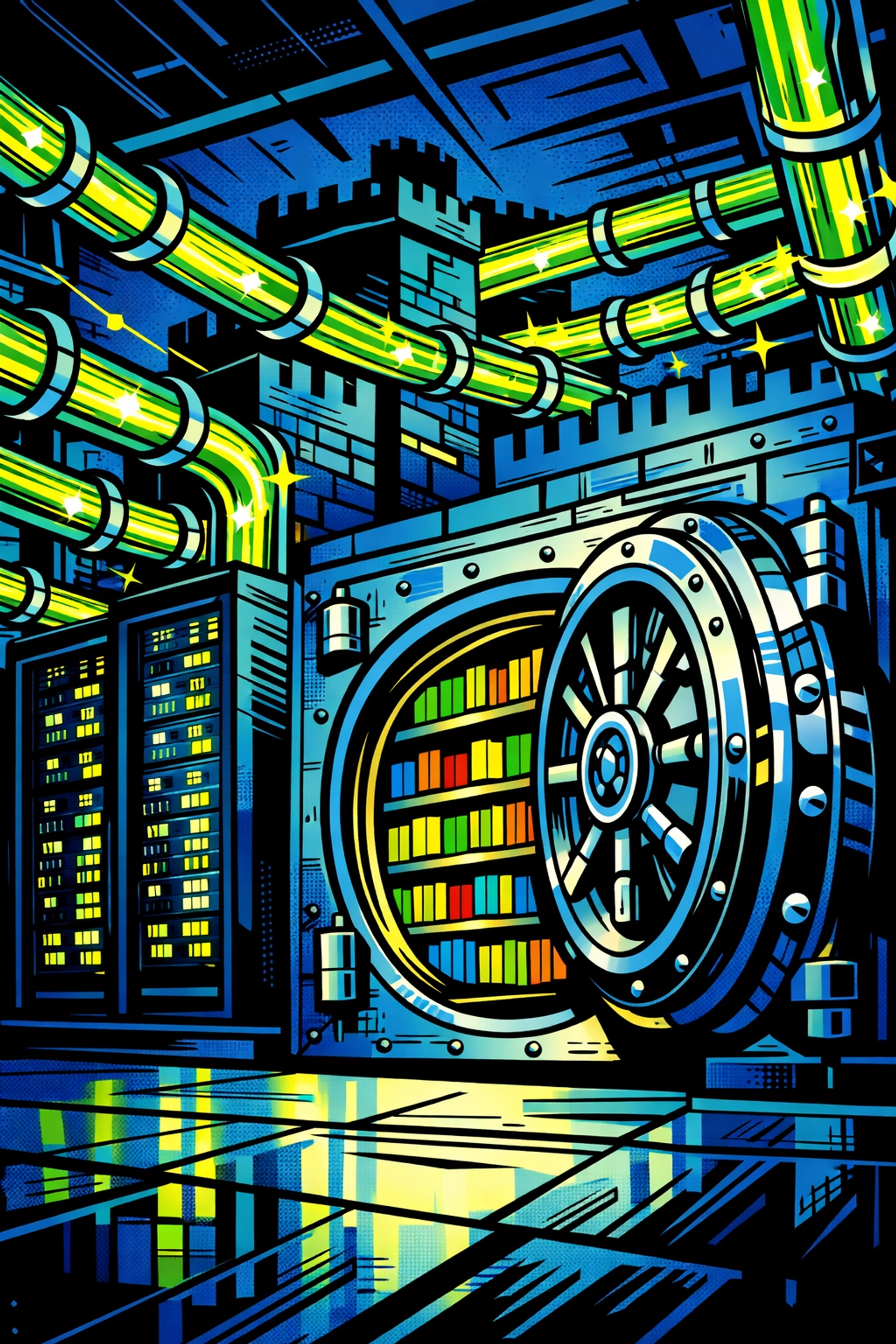
    Secure data storage and privacy protection in self-hosted business automation platform

    Most automation platforms want you to send your data through their servers. For some businesses: healthcare, finance, legal: that's a non-starter.

    n8n is self-hosted. You control where your data lives. You decide what connects to what. You own the entire infrastructure.

    It's like Zapier, but running on YOUR servers, following YOUR data sovereignty requirements, and customizable to YOUR exact specifications.

    The visual workflow builder makes it approachable even if you're not deeply technical. Drag and drop nodes, connect them together, and build complex automation logic using flowchart-style diagrams. There's even a template marketplace for common scenarios.

    Best for: Organizations with strict data sovereignty requirements or unique infrastructure needs that off-the-shelf cloud solutions can't accommodate.

    6. Pega Platform: When Your Workflow Spans Half the Company

    Some processes aren't simple. They touch multiple departments, require approvals from various stakeholders, and involve complex decision trees that change based on hundreds of variables.

    That's where Pega Platform shines.

    It's not just automation: it's business process management combined with AI and machine learning. You're not just automating tasks; you're redesigning entire operational workflows from the ground up.

    Customer onboarding that touches sales, legal, finance, and operations? Pega handles it. Complex approval chains that route based on deal size, region, and risk factors? Built in.

    This isn't for automating your email notifications. This is for when you look at a process map and realize it looks like a bowl of spaghetti that nobody can explain anymore.

    Best for: Larger organizations tackling complex, multi-department workflows that have evolved into operational monsters.

    7. Kissflow: The Goldilocks Option for Mid-Sized Teams

    Not too simple. Not too complex. Just right.

    Kissflow lives in that sweet spot between "basic automation" and "enterprise complexity." It's designed specifically for business users: not IT departments: to digitize and automate processes without drowning in technical requirements.

    Your HR team can automate employee onboarding. Your finance team can build approval workflows. Your operations team can digitize that paper-based process everyone hates. All without submitting tickets to IT and waiting three months for implementation.

    Mid-sized teams especially love Kissflow because it delivers enterprise-grade features through an interface that doesn't require a training course to understand.

    Best for: Mid-sized organizations that need serious automation capability but don't have dedicated IT resources for implementation and maintenance.

    The Real Question: Where Do You Start?

    Here's the truth most automation articles won't tell you: picking the "right" tool matters way less than actually starting.

    The business owners getting 10 hours back every week? They're not necessarily using the perfect ai business automation stack. They just stopped overthinking and started automating.

    Start with the task that makes you want to throw your laptop out the window. The one you do every single week that adds zero value but takes forever.

    Automate that first.

    Then move to the next one.

    Then the next one.

    Before you know it, you'll look up from your work at 3 PM and realize you haven't done any admin all day. Because it's all just… handled.

    If you're looking for a platform that combines the best of AI automation with actual business automation tools that scale with you, check out what we're building at Marblism. We're helping businesses turn those 10 wasted hours into 10 hours of actual growth.

    Because your time is too valuable to spend it copying data between spreadsheets.

    Every single week. For the rest of your life.

    Unless you stop. Right now. And automate it.

  • The Secret to Better Staff Retention: Why Professional Barista Training Matters

    The Secret to Better Staff Retention: Why Professional Barista Training Matters

    If you've been running a cafe for more than five minutes, you already know the problem. You hire someone promising, spend weeks getting them up to speed, watch them finally start to gel with the team, and then they hand in their notice. Two weeks later, you're back to square one, scanning CVs at midnight and wondering if you should just work every shift yourself.

    The hospitality industry has always had a turnover problem, but it's gotten worse. Staff retention feels like trying to hold water in your hands. And every time someone leaves, it costs you, not just in recruitment fees and training time, but in team morale, service quality, and your own sanity.

    But here's what most cafe owners don't realize: the solution isn't offering another 50p per hour or installing a fancier espresso machine. The answer is professional barista training. Proper, structured, meaningful training that turns your staff into skilled professionals rather than just people who show up for shifts.

    The Real Cost of Getting It Wrong

    Let's talk numbers for a second, because they're pretty sobering.

    When a barista leaves, you're not just losing a body behind the counter. You're losing all the time and money you invested in them, the equipment training, the menu knowledge, the relationships they built with regulars. Industry research shows that replacing a staff member costs somewhere between 50-200% of their annual salary when you factor in recruitment, training, and lost productivity.

    And it's not just money. Every time someone leaves, your remaining team picks up the slack. They get tired. They get frustrated. And then they start looking elsewhere too. It's a vicious cycle.

    The turnover rate in hospitality averages around 73% annually, nearly double what you see in other industries. That means if you have a team of six, you're likely replacing four of them every year. Exhausting, isn't it?

    Barista team collaborating during professional coffee training session at specialty cafe

    Why Training Actually Works (The Data Is Compelling)

    So why does professional barista training make such a massive difference to retention? It's not just about teaching someone how to pull a decent shot, though that's part of it. It's about what training represents to your staff.

    Companies that invest in certified barista training see 47% better retention rates compared to those who don't. That's not a marginal improvement, that's transformative. And the benefits cascade from there: 38% higher job satisfaction, 42% fewer sick days, and 31% better collaboration between team members.

    These aren't fluffy feel-good metrics. They translate directly into a better-run cafe with happier customers and a healthier bottom line.

    Here's what happens when you properly train your team: they stop seeing themselves as "just a barista" and start seeing themselves as skilled professionals. They develop confidence. They take pride in their craft. They feel invested in by their employer, which makes them far more likely to invest back.

    And crucially, they're better at their jobs. Confident baristas handle the morning rush without falling apart. They can troubleshoot when the grinder starts acting up. They create drinks that keep customers coming back. When your staff are skilled and confident, everything else gets easier.

    What Your Team Actually Wants

    This isn't guesswork, 68% of Gen Z and Millennial employees (who make up most of your potential staff) consider comprehensive coffee programs an important workplace benefit. And 72% specifically want barista skill development opportunities through their employer.

    Think about that for a moment. Nearly three-quarters of your potential team actively want training. They're not asking for bean bags in the break room or unlimited holiday. They want to learn. They want to get better at what they do. They want development opportunities that turn a job into a career.

    Professional training aligned with Specialty Coffee Association standards gives them exactly that. It's not just about your cafe, it's about credentials they can take anywhere, skills that make them more employable, knowledge that transforms how they think about coffee. When you provide that, you're not just filling a rota. You're changing someone's career trajectory.

    Professional barista demonstrating advanced latte art technique during training

    The Ripple Effects You Don't Expect

    Better retention is the obvious benefit, but it's not the only one. When you invest in training, you create ripple effects throughout your business that are honestly quite remarkable.

    First, your service quality improves dramatically. Trained baristas make better coffee, that's obvious, but they also handle customers better, work more efficiently, and can train new starters themselves. This means you're not constantly firefighting quality issues or dealing with customer complaints about inconsistent drinks.

    Second, your workplace culture transforms. Teams with access to proper training show 200% higher productivity during collaborative sessions. That's because learning coffee craft together develops communication patterns and mutual respect that carry over into how your team works day-to-day. Suddenly, your staff actually enjoy working together. Novel concept, right?

    Third, you build career progression paths within your cafe. Someone doesn't just stay a barista, they progress from basic brewing through latte art, cupping techniques, and maybe even coffee sourcing and sustainability education. This keeps engagement high over the long term, because there's always something new to learn.

    And finally, you attract better candidates. When word gets out that you actually invest in your team, you'll find that recruitment becomes easier. People want to work for employers who take training seriously.

    What Good Training Actually Looks Like

    Not all training is created equal. Showing someone how to use the espresso machine on their first day doesn't count as professional development.

    Good training is structured, comprehensive, and ongoing. It covers extraction theory, milk technique, equipment maintenance, customer service, and workflow efficiency. It gives your team a deep understanding of why they're doing what they're doing, not just how to press buttons.

    It should be hands-on and practical, but also give them the theory behind the craft. Why does grind size affect extraction? What's actually happening when milk steams? How do different origins taste different, and why does that matter?

    This is where partnering with the right coffee roaster makes all the difference. At Limini Coffee, we provide comprehensive barista training and ongoing support as a core benefit for our wholesale partners. We're not just selling you beans: we're helping you build a team that knows how to showcase those beans properly.

    Our training covers everything from dialling in espresso to advanced latte art, equipment troubleshooting to seasonal menu development. And because we're working with you long-term, we're there when questions come up or when you bring new team members on board.

    Making It Happen

    If you're reading this thinking "this all sounds great, but I don't have time to organize training": we get it. You're already stretched thin. That's exactly why partnering with a roaster who provides training as part of the package is so valuable.

    The return on investment is clear: 34% ROI through reduced recruitment costs alone, plus all the other benefits we've talked about: better service, happier staff, stronger culture, and customers who keep coming back because their coffee is consistently excellent.

    You can explore our training options and see how we support our cafe partners at Limini Coffee. Whether you're just starting out or you've been running your cafe for years, investing in your team's development is one of the smartest business decisions you can make.

    Your staff want to learn. Your customers want better coffee. Your business needs stability. Professional barista training delivers all three. The question isn't whether you can afford to invest in training( it's whether you can afford not to.)

  • From Chaos to Calm: Streamlining Your Small Business Workflow with AI

    From Chaos to Calm: Streamlining Your Small Business Workflow with AI

    You know the feeling.

    It's Monday morning. You've got seventeen browser tabs open. Three different spreadsheets are tracking… something. Your inbox hit 247 unread emails over the weekend. Someone's waiting on a quote. Another client needs an invoice. Your inventory spreadsheet hasn't been updated since Thursday.

    And you haven't even finished your coffee yet.

    This is the reality for most small business owners. Not because you're disorganized: but because you're wearing every single hat. Sales manager. Customer service rep. Bookkeeper. Operations coordinator. Marketing director.

    The chaos isn't your fault. It's just… a lot.

    THE SPREADSHEET TRAP 📊

    Let's talk about those spreadsheets for a second.

    You started with one. Maybe two. Simple tracking systems that made sense when you were just getting started. Customer list here. Inventory counts there. A basic sales pipeline in another tab.

    Then your business grew. (Congrats, by the way.)

    Now you've got spreadsheets for everything. And they all talk to each other… never. You're manually copying data between them. Updating the same customer information in four different places. Trying to remember which version is the "real" one.

    Chaotic small business desk with multiple spreadsheets and disorganized workflow

    Someone asks a simple question: "How many units do we have left?"

    You need to check three spreadsheets, cross-reference two emails, and make an educated guess. Twenty minutes later, you have an answer. Maybe.

    This is where most small businesses live. In that weird space between "too small for enterprise software" and "too busy to keep doing everything manually."

    But here's what changed in 2026…

    WHEN AI ACTUALLY MAKES SENSE

    Forget the hype. Forget the buzzwords. Here's what workflow automation for small business actually means in practice:

    Your systems start talking to each other. Without you playing telephone operator.

    A customer places an order. Your inventory updates automatically. Your accounting software logs the transaction. Your fulfillment system gets notified. Your CRM records the interaction. Your follow-up email sends itself in three days.

    You did… nothing. It just happened.

    That's not magic: it's business automation tools working the way they're supposed to. In the background. Quietly. While you focus on the stuff that actually needs your brain.

    WHERE THE CHAOS LIVES (AND HOW AI FIXES IT)

    Customer Service That Doesn't Drain You ☕

    Your customer has a question at 9 PM. You're not working at 9 PM. (You shouldn't be, anyway.)

    Traditional approach: They wait until tomorrow. Maybe they get frustrated and bounce to a competitor. Maybe they forget why they were asking.

    AI approach: A smart chatbot answers their basic question instantly. If it's complex, it routes them to you with full context already collected. When you check in the morning, the simple stuff is handled. The complicated stuff is organized and waiting.

    According to HubSpot, 75% of marketers are already using AI to cut manual work. Not because it's trendy: because it actually frees up time.

    Your small team feels bigger. Your response time drops from hours to minutes. And nobody's burning out answering "What's your return policy?" for the hundredth time.

    Before and after business automation: chaos versus streamlined workflow

    Sales Follow-Up That Actually Happens 🤝

    You know you should follow up with that lead. You meant to. You wrote it down somewhere…

    Here's the thing about sales workflows: they're repetitive, time-sensitive, and easy to forget when you're juggling twelve other priorities.

    AI doesn't forget.

    Someone downloads your pricing guide: the system automatically schedules a follow-up email for two days later. They click the link in that email: your CRM scores them as a hot lead and puts them at the top of your list. They book a call: calendar invites go out automatically, with all the prep info they need.

    You're not chasing leads anymore. The system's bringing them to you, qualified and ready.

    Admin Tasks That Just… Handle Themselves 📋

    Data entry. Scheduling. Inventory checks. Order status updates. Low stock alerts.

    These tasks take minutes individually. But they happen fifty times a day. That's hours you're not spending on strategy, growth, or anything that actually moves the needle.

    AI handles the routine stuff while you're doing literally anything else. It books meetings. Sends reminders. Tracks shipments. Notices when your bestselling item is running low and flags it before you have to turn customers away.

    The mental load drops. The errors disappear. (Because AI applies consistent logic: no Friday afternoon brain fog, no "I thought I already did that.")

    AI chatbot providing 24/7 customer service for small business automation

    Financial Operations Without the Headache 💰

    Your bookkeeper wants receipts organized. Your accountant wants expense categories consistent. You want to know if you're actually making money this month.

    AI processes invoices automatically. Categorizes expenses based on patterns it learns. Forecasts your cash flow by analyzing your spending trends and upcoming commitments.

    You get accurate numbers without spending your evening sorting receipts. Your financial reports actually help you make decisions instead of just… existing.

    THE REAL IMPACT (NOT THE MARKETING FLUFF)

    Speed matters. When a process that took an hour happens in seconds, you don't just save 59 minutes. You create momentum. Projects move faster. Customers get answers quicker. Opportunities don't slip through the cracks while you're stuck doing data entry.

    Accuracy matters more. Humans make mistakes when they're tired. When they're distracted. When they're doing the same task for the forty-seventh time that week. AI doesn't. It applies the same logic consistently, every single time.

    That ripple effect is real. Faster execution means faster delivery. Better accuracy means fewer customer complaints. Less manual work means your team has bandwidth for the creative, strategic stuff that actually grows your business.

    MAKING THE SWITCH (WITHOUT THE HEADACHE)

    You don't need to blow up your entire operation.

    The platforms built for small businesses in 2026 are actually designed for small businesses. They connect your existing tools: projects, sales, inventory, customer data: into one system where tasks trigger automatically.

    Customer makes a purchase → Inventory updates → Accounting logs it → Follow-up email schedules itself.

    No coding. No IT department. No six-month implementation timeline.

    Automated workflow transformation from scattered tasks to streamlined digital process

    Many business automation tools offer free tiers or affordable monthly pricing that scales as you grow. You're not committing to enterprise-level investment. You're testing what works, keeping what helps, and building from there.

    FROM SCATTERED TO STREAMLINED

    Remember those seventeen browser tabs from Monday morning?

    Here's Tuesday with workflow automation for small business actually working:

    You open your dashboard. Orders from overnight are already processed. Inventory's updated. Customer questions were handled or prioritized. Your sales pipeline shows exactly who needs attention today. Your admin tasks are queued with reminders.

    The chaos is sorted before you finish your coffee.

    You're not doing less work. You're doing different work. The kind that actually requires your expertise, your creativity, your decision-making.

    The repetitive stuff? That's handled.

    YOUR MOVE

    The gap between "running a business" and "drowning in busy work" doesn't have to be this wide.

    You can keep juggling spreadsheets, copying data, and hoping nothing falls through the cracks. Or you can let AI handle the routine while you focus on growth.

    Want to see what automated workflows actually look like for your business? Check out Marblism here.

    The chaos isn't a badge of honor. It's just chaos.

    And there's a calmer way to run things.