You've probably heard both terms thrown around when shopping for a hotel property management system. Cloud-native. Cloud-based. They sound pretty similar, right?
Here's the thing: they're not.
And the difference? It actually matters for your bottom line, your team's sanity, and your guests' experience. Let's break down what these terms really mean, and why choosing the wrong one could leave you stuck with yesterday's technology dressed up in today's buzzwords.
What "Cloud-Based" Really Means
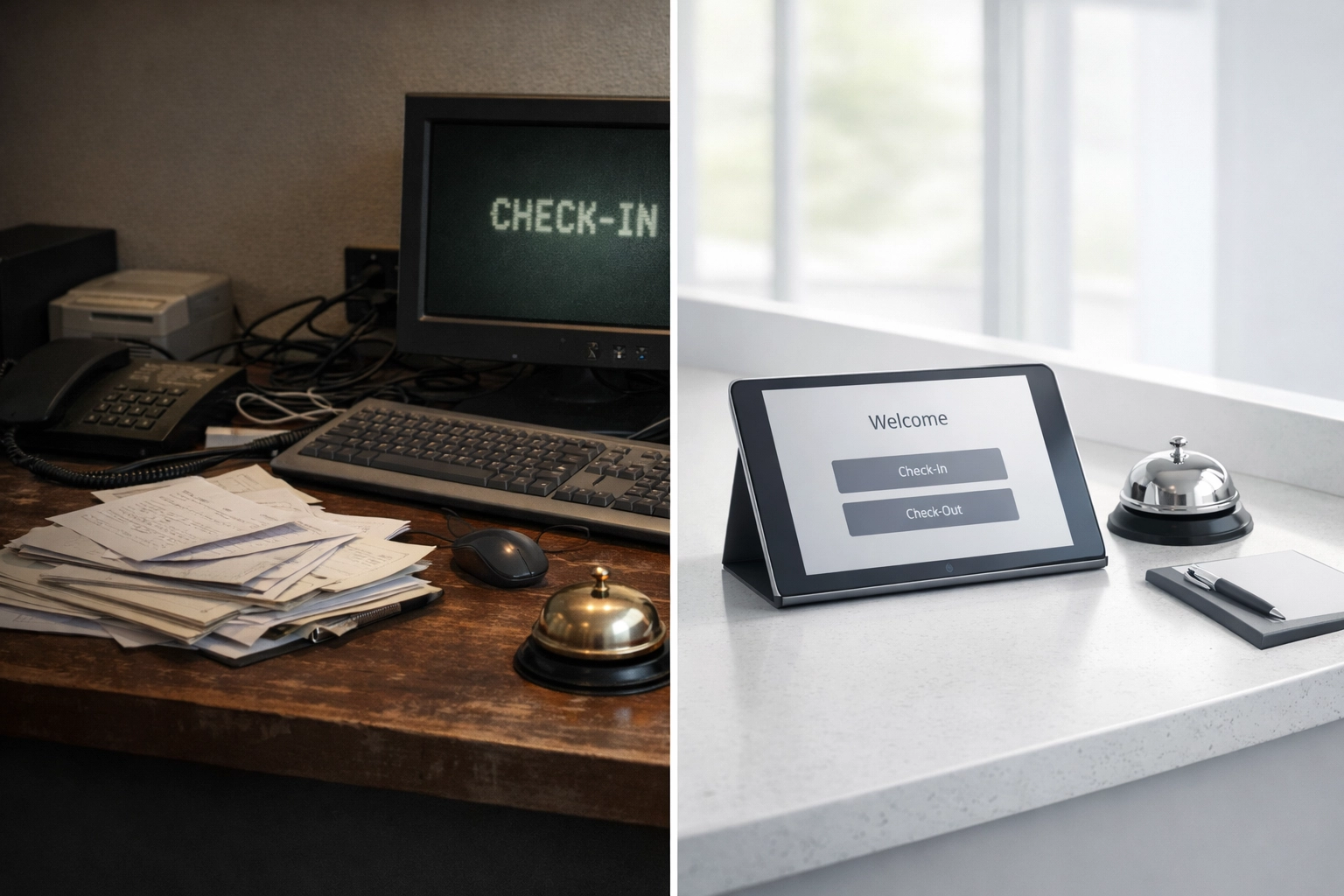
Cloud-based sounds modern. But here's what it often means in practice: someone took old software, built for servers sitting in your back office, and moved it online.
That's it.
The underlying architecture? Still designed for a world where updates happened once a year and integrations required custom coding. These systems were retrofitted for the cloud rather than built for it. Think of it like putting a fresh coat of paint on an old car and calling it new.
Sure, you can access it from a browser now. That's better than nothing. But you're still dealing with the limitations of software that wasn't designed with cloud advantages in mind.
What "Cloud-Native" Actually Means
Cloud-native is different from the ground up.
These systems were architected specifically for the cloud. They leverage modern cloud infrastructure: microservices, APIs, continuous deployment. They're designed to update seamlessly, integrate effortlessly, and scale without breaking a sweat.
A truly cloud-native hotel PMS doesn't just live in the cloud. It thrives there. It takes advantage of everything the cloud offers: instant updates pushed to all users simultaneously, real-time data synchronization across properties, and native integrations that actually work.
No retrofitting. No compromises. Just software built right for how hotels operate today.
The Real Differences That Matter
Let's get specific about what separates cloud-native from cloud-based hotel property management systems.
Updates and maintenance. With cloud-based systems, updates can still be clunky. You might need scheduled downtime. Some features roll out to certain users first. It's messy.
Cloud-native systems? Updates happen automatically, instantly, for everyone. No downtime. No waiting. You wake up to new features and improvements without lifting a finger. Your team is always working with the latest version: no exceptions.
Integration capabilities. This is where the gap gets massive. Cloud-based systems often require middleware, custom integrations, or manual workarounds to connect with your revenue management system, channel manager, or CRM.
Cloud-native platforms are built with integrations at their core. Modern cloud-native solutions offer access to over 1,000 marketplace integrations with real-time data sharing. Your PMS, RMS, and CRM talk to each other seamlessly. No data silos. No manual exports and imports. Just information flowing where it needs to go.

Performance and reliability. Cloud-based systems can struggle under heavy loads because they weren't designed for the cloud's distributed architecture. Peak check-in times? That's when things slow down.
Cloud-native systems distribute workloads automatically. They scale up when you need it and scale down when you don't. Your front desk doesn't slow to a crawl during a busy Friday afternoon.
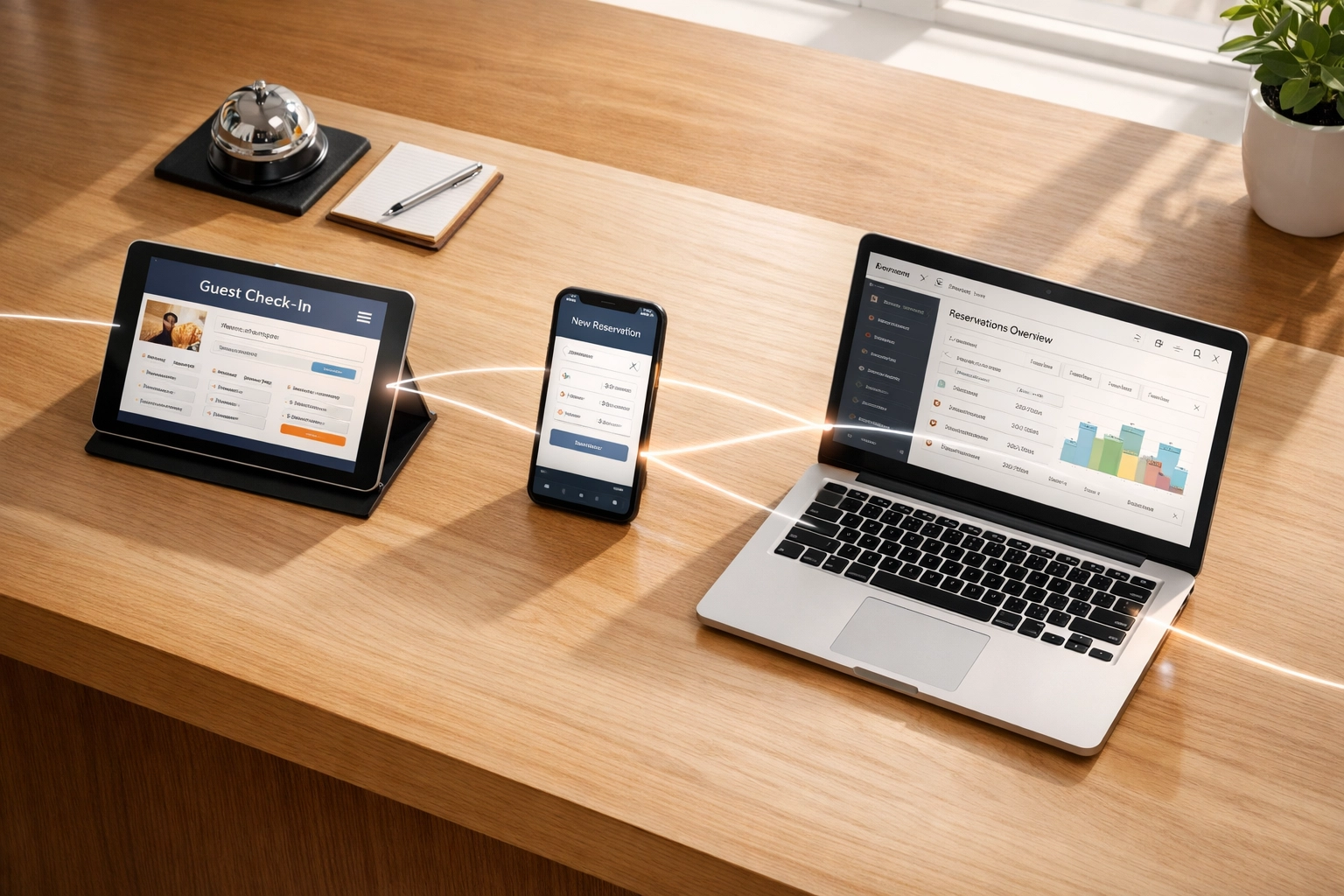
Accessibility. Both types let you log in from anywhere: that's table stakes now. But cloud-native systems take it further with truly mobile-first design. Your team can manage operations from tablets, phones, or laptops with the same intuitive interface and full functionality.
Why This Matters for Your Hotel
You're not buying a hotel property management system for fun. You're trying to run a business more efficiently.
Cloud-native architecture means your staff spends less time fighting with software and more time taking care of guests. Updates that improve functionality don't require training sessions: they just appear, intuitive and ready to use.
Integrations that actually work mean you're not manually entering the same data into three different systems. Your revenue manager sees real-time occupancy. Your marketing platform knows exactly who stayed and when. Your housekeeping team gets instant updates when rooms are vacated.
And here's the thing about scalability: whether you're managing one boutique property or expanding to multiple locations, cloud-native systems grow with you. No major overhauls. No switching platforms when you add your third or thirtieth property.

The Hidden Costs of "Just Cloud-Based"
Going with a cloud-based system might seem fine at first. The price looks similar. The feature list checks most boxes.
But the hidden costs add up fast.
Custom integration fees. IT support to keep everything talking to each other. Time wasted on manual workarounds. Staff frustration with clunky interfaces. Downtime during updates or: worse: system crashes that you can't fix yourself because the architecture is outdated.
Cloud-native systems eliminate most of these headaches from day one. Lower total cost of ownership isn't just about the subscription price: it's about what you're not spending on everything else.
What to Look for in a True Cloud-Native Hotel PMS
Not every system claiming to be "cloud-native" actually is. Here's what to ask:
When was the platform originally built? If it launched before 2010, it's probably cloud-based at best. Cloud-native systems are relatively new because the technology enabling them is relatively new.
How do updates work? If there's any mention of "update windows" or "version numbers," that's a red flag. True cloud-native means continuous deployment: updates just happen.
What does the integration marketplace look like? A couple dozen integrations? That's old school. Modern cloud-native platforms offer hundreds or thousands of pre-built connections.
Can you access full functionality on mobile? Not just "view reservations" but actually manage your property from a phone or tablet. Cloud-native systems are designed mobile-first.
The Mews Difference
Let's talk about what a truly cloud-native hotel property management system looks like in practice.
Mews was built cloud-native from day one. No legacy code. No retrofitting. Just modern architecture designed for how hotels actually operate.
The platform puts automation at the heart of operations. Tasks that used to eat up your front desk's time: like assigning rooms, processing payments, or managing housekeeping schedules: happen automatically. Your team focuses on guests, not paperwork.
The interface is genuinely intuitive. Not "intuitive once you've been through three training sessions" but actually easy to use from day one. Whether your staff is tech-savvy or not, they're productive immediately.
Integration? Over 1,000 partners in the marketplace. Your channel manager, booking engine, POS, door locks, reputation management: everything connects seamlessly with real-time data flow.
And here's the best part: it's accessible from anywhere. Your manager can approve a late check-in from their phone while having dinner. Your front desk can check someone in from a tablet in the lobby. Your owner can review performance reports from a laptop in another country.
That's what cloud-native looks like when it's done right.
Making the Switch
If you're currently using an older cloud-based system (or worse, an on-premise setup), switching to cloud-native might feel daunting.
It's not.
Modern cloud-native platforms like Mews handle migration smoothly. Your data transfers securely. Your team gets up to speed fast because the interface makes sense. And because everything is cloud-native, you're not tied to specific hardware or complicated IT requirements.
Most properties are fully operational within days, not weeks.

The Bottom Line
Cloud-based and cloud-native aren't just marketing terms: they represent fundamentally different approaches to hotel technology.
Cloud-based means old software moved online. Cloud-native means modern software built for the cloud from scratch.
One gives you basic online access. The other gives you automatic updates, seamless integrations, mobile-first design, and an interface your team will actually enjoy using.
For hotels serious about efficiency, guest experience, and staying competitive in 2026 and beyond, cloud-native isn't optional anymore. It's essential.
Ready to see what a truly cloud-native hotel PMS can do for your property? Check out Mews and discover how automation and intuitive design can transform your operations.
The future of hospitality runs on cloud-native technology. The question is whether you'll be part of that future: or still working with yesterday's solutions.
Leave a Reply