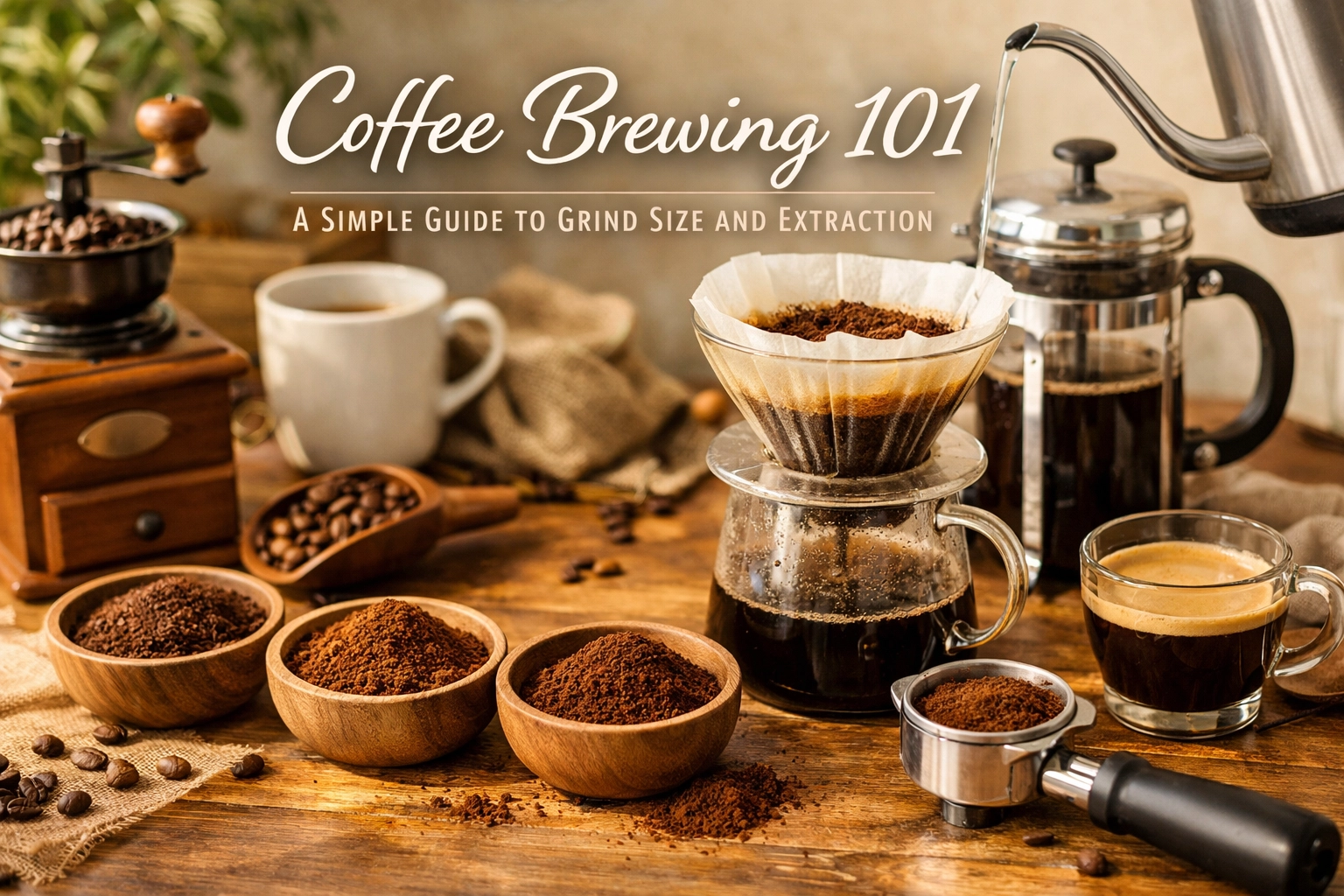
You've got great beans. You've got clean water. You've even got a decent brewing setup at home. So why does your coffee sometimes taste sour and weak, or bitter and harsh?
The answer, more often than not, comes down to one thing: grind size.
It's the single most important variable in coffee brewing that home enthusiasts overlook. And once you understand how it works, everything else starts to click into place.
Why Grind Size Matters More Than You Think
Here's the thing about coffee extraction: it's all about surface area and time.
When you grind coffee, you're breaking down those beans into smaller pieces, dramatically increasing the surface area that water can interact with. The finer you grind, the more surface area you expose. The more surface area exposed, the faster water extracts flavors, oils, and compounds from the coffee.
This means grind size directly controls how quickly your coffee extracts.
Grind too coarse for your brewing method? Water rushes through too quickly, under-extracting your coffee and leaving you with sour, weak, tea-like flavors. Grind too fine? Water moves through too slowly, over-extracting and pulling out harsh, bitter compounds that make you wince.
The goal is finding that sweet spot where water flows through at just the right speed for your particular brewing method.
The Extraction Timeline: What's Actually Happening
When hot water hits coffee grounds, extraction happens in stages.
First come the acids and lighter, brighter flavors – these extract quickly and easily. Then come the sugars and body – the sweetness and mouthfeel that make coffee delicious. Finally, if water hangs around too long, you start pulling out bitter tannins and astringent compounds.
Good coffee brewing is about getting stages one and two without too much of stage three.
And grind size is your primary tool for controlling that timeline.
Matching Grind Size to Your Brewing Method
Different brewing methods require different grind sizes because they expose coffee to water for vastly different amounts of time.
French Press / Immersion Methods: Coarse Grind
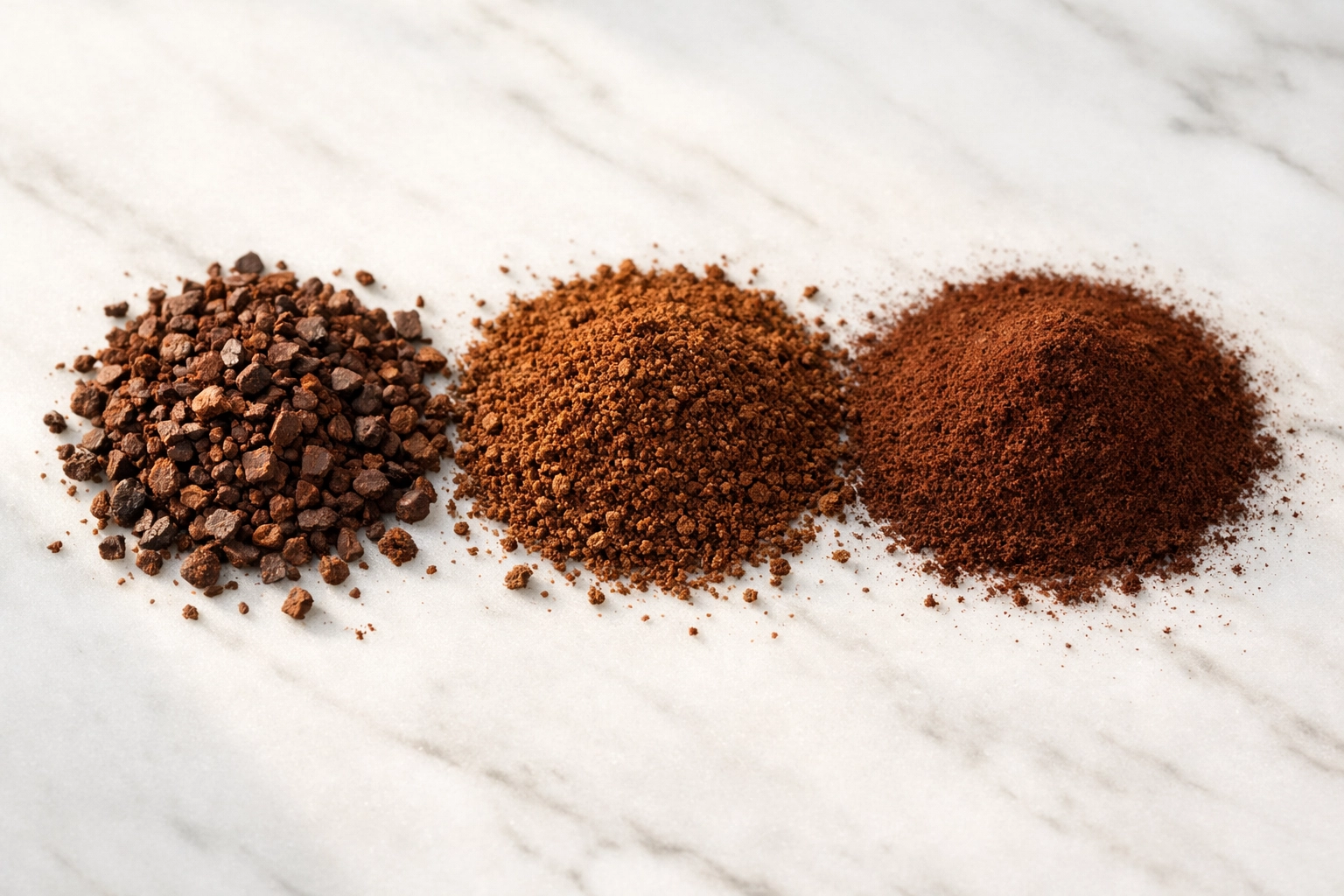
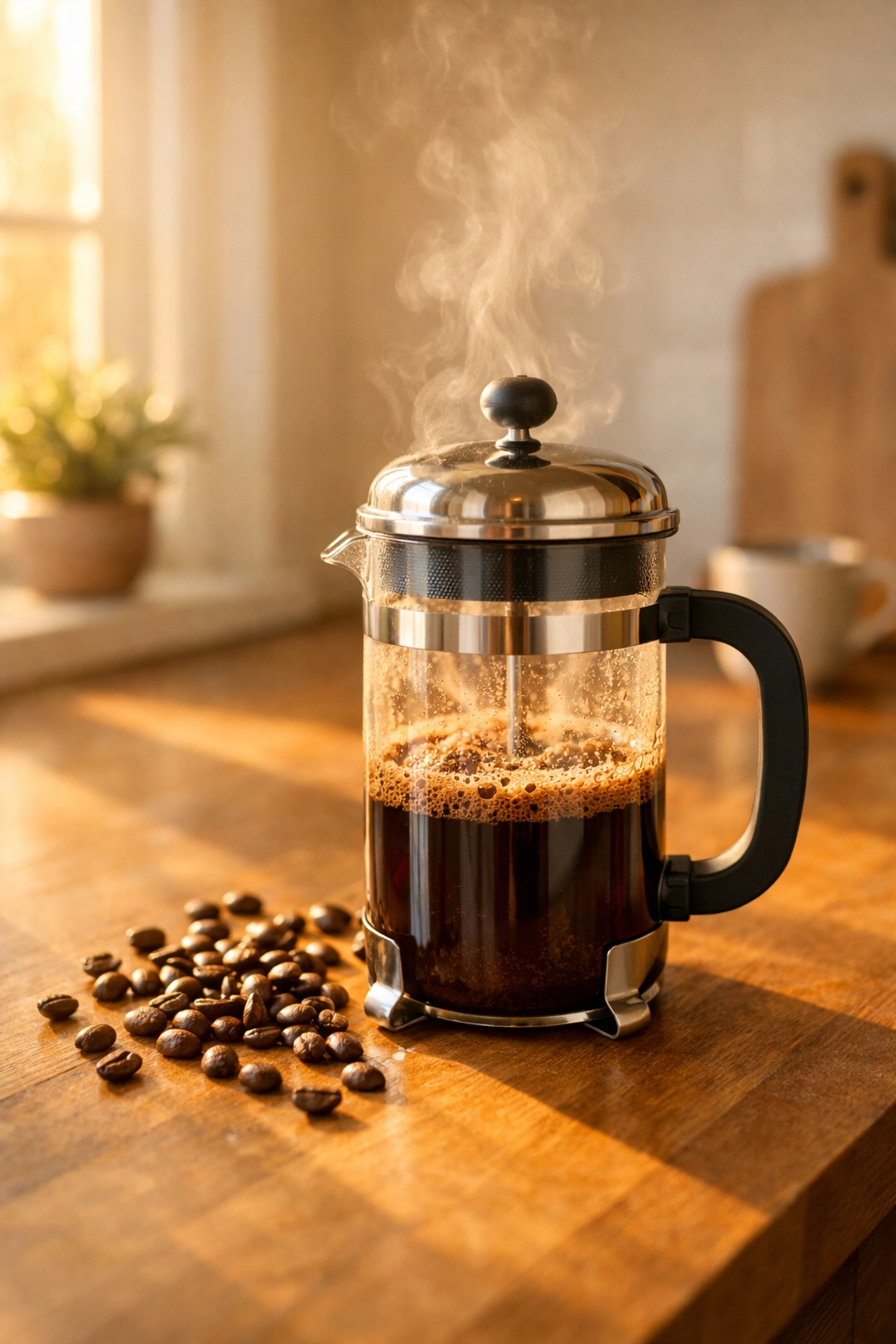
French press coffee sits in water for 4 minutes or more. That's a long contact time. So you need a coarse grind – think the texture of kosher salt or cracked peppercorns.
This coarse grind slows down extraction, preventing over-extraction during that extended steep time. It also makes pressing down the plunger easier and keeps sediment out of your cup (mostly).
Pour-Over / Drip Machine: Medium Grind
Pour-over and auto-drip methods typically take 3-4 minutes for water to pass through the grounds. That's medium contact time, so you want medium grind.
This is roughly the texture of sand, or what you'd find in pre-ground supermarket coffee (though we wouldn't recommend using pre-ground if you can avoid it). The grind should feel slightly gritty between your fingers but not powdery.
Espresso: Fine Grind
Espresso extraction happens fast – we're talking 25-30 seconds. Water is forced through tightly packed coffee under 9 BAR of pressure.
You need a fine grind, almost powder-like, to create enough resistance for proper extraction in that short window. Too coarse and your espresso will gush through in 10 seconds, tasting sour and thin. Too fine and it'll barely drip, tasting ashy and over-extracted.
Espresso grind adjustment is its own art form, honestly. Tiny changes make massive differences.
The Grinder Question: Burr vs. Blade
Here's where we need to talk about your grinder, because grind size alone isn't enough.
Consistency matters just as much as size.
A blade grinder – the kind with spinning blades that chop beans – produces wildly inconsistent particle sizes. You get some powder, some chunks, and everything in between. This means some coffee over-extracts while other bits under-extract, and you end up with muddled, confusing flavors.
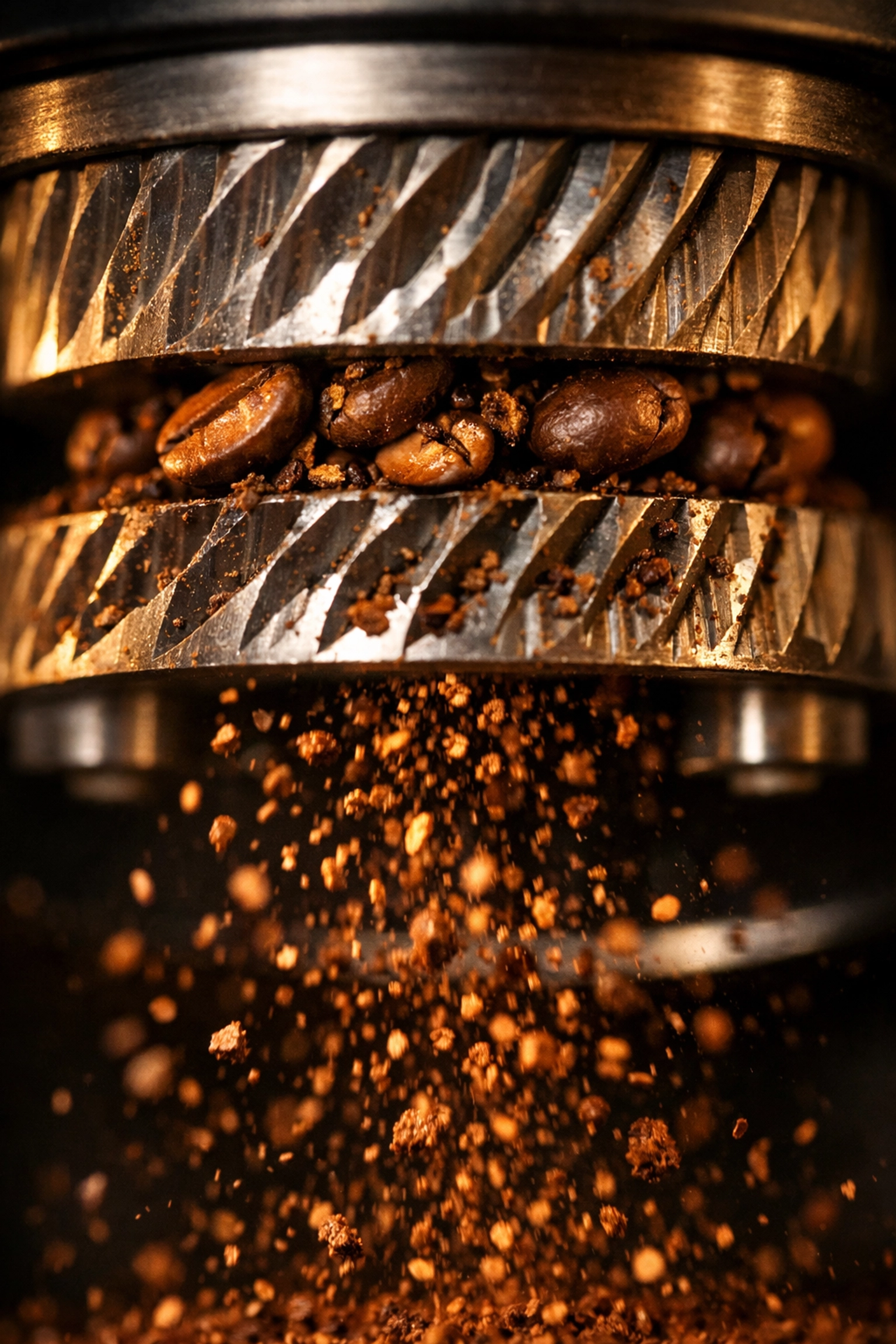
A burr grinder crushes beans between two surfaces, producing uniform particle size. Every piece of coffee is roughly the same dimension, so they all extract at the same rate. This gives you clarity and balance in the cup.
We believe burr grinders are essential for anyone serious about their home brewing. The difference is immediately noticeable.
Beyond Grind Size: The Other Critical Variables
Grind size is king, but it doesn't rule alone. You need to dial in these other factors too.
Water Temperature: 90-96°C (195-205°F)
Too hot and you'll over-extract, pulling out bitter compounds regardless of grind size. Too cool and extraction stalls, leaving you with sour, underdeveloped coffee.
Most brewing methods work best in that 90-96°C range. If you're boiling water in a kettle, let it sit for 30 seconds after boiling before pouring.
Brew Ratio: Starting Point
We recommend starting with a 1:16 ratio by weight – that's 1 gram of coffee for every 16 grams of water. So for a 250ml cup, you'd use roughly 15-16 grams of coffee.
If you don't have a scale (though you really should get one), that's approximately 2 tablespoons of coffee per 6 oz of water.
This gives you a balanced baseline. From there, adjust to taste. Like it stronger? Go 1:15. Prefer it lighter? Try 1:17.
The Bloom: Don't Skip This Step
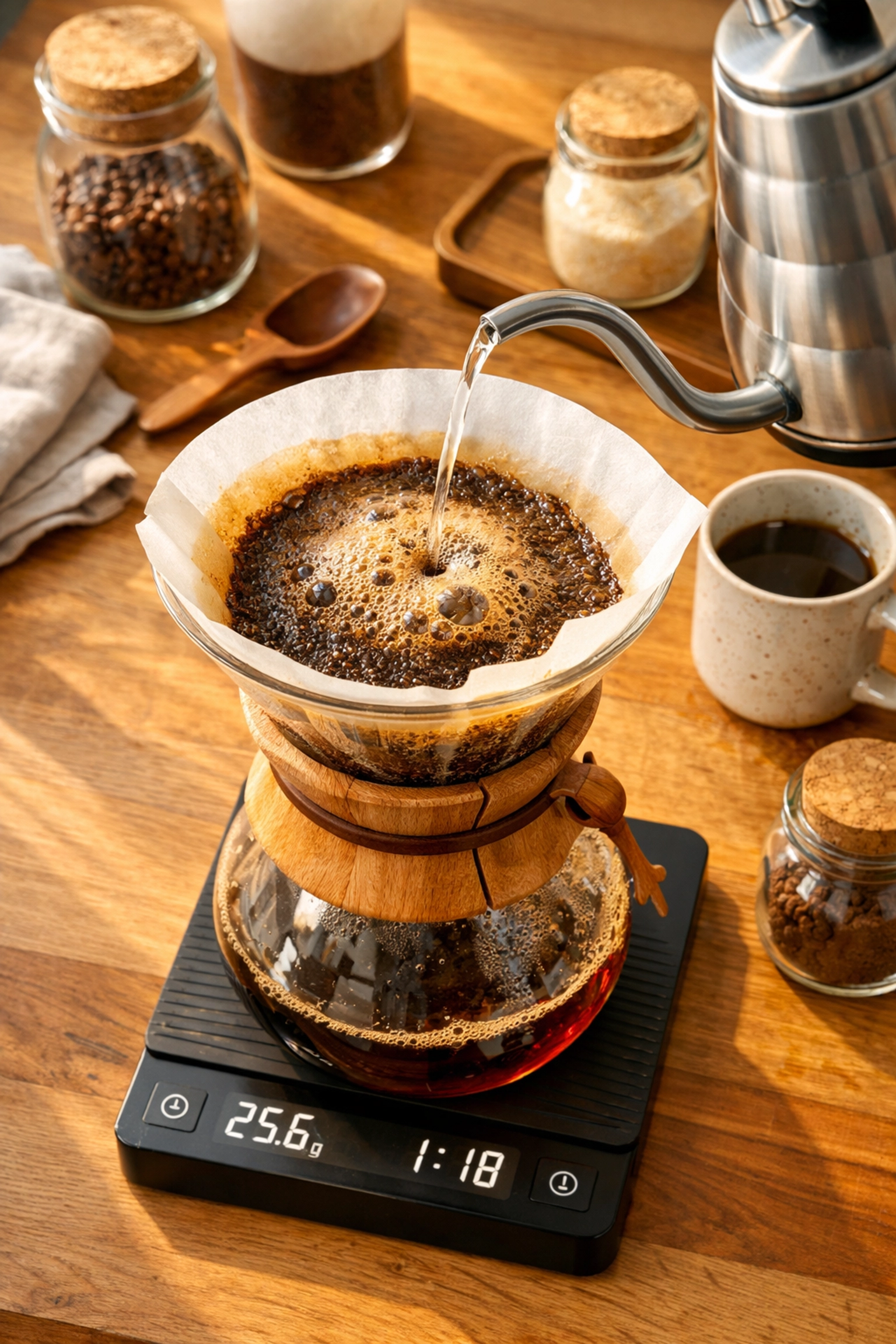
For pour-over and French press methods, always bloom your coffee.
Pour just enough hot water to saturate the grounds – usually about twice the weight of your coffee dose. So for 15 grams of coffee, pour 30 grams of water. Let it sit for 30 seconds.
This releases trapped CO2 gas that can block water from extracting evenly.
You'll see the grounds bubble and expand. That's the CO2 escaping. Once it subsides, continue with your brew. This one simple step dramatically improves flavor clarity.
Grind Fresh, Brew Fresh
Coffee starts losing flavor the moment you grind it. Those aromatic compounds that make coffee smell amazing? They're volatile and dissipate quickly once exposed to air.
Grind immediately before brewing. Always.
And if you're ordering coffee online, make sure it's freshly roasted. We roast to order at Limini Coffee specifically because freshness makes that much difference. Coffee is best consumed within 2-4 weeks of roasting, and grinding fresh from whole beans preserves those flavors right up until they hit your cup.
Troubleshooting Common Grind Size Issues
My Coffee Tastes Sour and Weak
This is under-extraction. Your grind is likely too coarse for your brewing method, or your water temperature is too low, or you're not brewing long enough.
Solution: Grind finer. Increase water temperature. Or extend brew time.
My Coffee Tastes Bitter and Harsh
This is over-extraction. Your grind is probably too fine, or water temperature is too high, or you're brewing too long.
Solution: Grind coarser. Lower water temperature slightly. Or reduce brew time.
My Coffee Tastes Flat or Muddy
This often means inconsistent grind size. You're getting simultaneous under-extraction and over-extraction from different-sized particles.
Solution: Upgrade to a burr grinder. Seriously, this will solve it.
Practical Tips for Home Brewers
Start with a baseline and adjust from there. Pick a grind size appropriate for your method, use the 1:16 ratio, brew at 93°C, and taste. Then change one variable at a time until you hit that sweet spot.
Keep notes. It sounds tedious, but jotting down your grind setting, ratio, and how it tasted helps you dial in faster and replicate success.
Clean your grinder regularly. Old coffee oils turn rancid and affect flavor. A quick brush-out every few days keeps things fresh.
Taste mindfully. Pay attention to whether coffee tastes sour, bitter, balanced, sweet, or flat. Your palate is the ultimate feedback tool.
The Beauty of Dialing In
Here's what we love about understanding grind size and extraction: it transforms coffee brewing from guesswork into a craft you control.
You're not at the mercy of random results anymore. You can taste your coffee, identify what's off, and know exactly which dial to turn. Too sour? Grind finer. Too bitter? Grind coarser. It becomes intuitive.
And once you've got the fundamentals down, you can start exploring more advanced techniques – adjusting variables to highlight specific flavor notes, experimenting with different origins, or pushing extraction boundaries intentionally.
That is the beauty of coffee. There's always another layer to discover.
But it all starts here, with understanding how those little grounds interact with water. Master this, and everything else follows naturally.
Leave a Reply