So, you’ve decided to take the plunge. You’re setting up a coffee shop. It’s an exciting, terrifying, and caffeinated journey, isn’t it? You’ve probably spent hours browsing Pinterest for the perfect sage-green tiles or reclaimed wood counters. But here is the thing: a beautiful shop that doesn’t function is just a very expensive art gallery that happens to smell like roasted beans.
We’ve seen it happen too many times. A shop opens, looks stunning, but the baristas are constantly bumping into each other, and the queue for the till blocks the door, making new customers turn around and walk away. That is a real shame, and honestly, it’s completely avoidable with a bit of forward planning.
At Limini Coffee, we believe that the layout is the heartbeat of your business. It dictates how fast you can serve, how much money you make during a morning rush, and: most importantly: how your customers feel when they’re in your space.
The Golden Ratio: Allocating Your Space
When you first walk into an empty shell of a building, it’s tempting to think you have all the room in the world. You don’t. In fact, space is your most precious commodity.
A common mistake we see when people are planning their coffee shop set up is giving too much room to the seating and not enough to the "engine room": the bar. We generally recommend a 60/40 split. That is, 60% of your space for the customers (seating, queueing, bathrooms) and 40% for the production area (the bar, the kitchen, and storage).
Why so much for the bar? Because that is where the magic happens. If your baristas are cramped, they’ll be slow. If they’re slow, your customers wait. If your customers wait too long, they don't come back. Simple, really.
The Decompression Zone
Have you ever walked into a shop and immediately felt overwhelmed because the counter was right in your face? That is what we want to avoid.
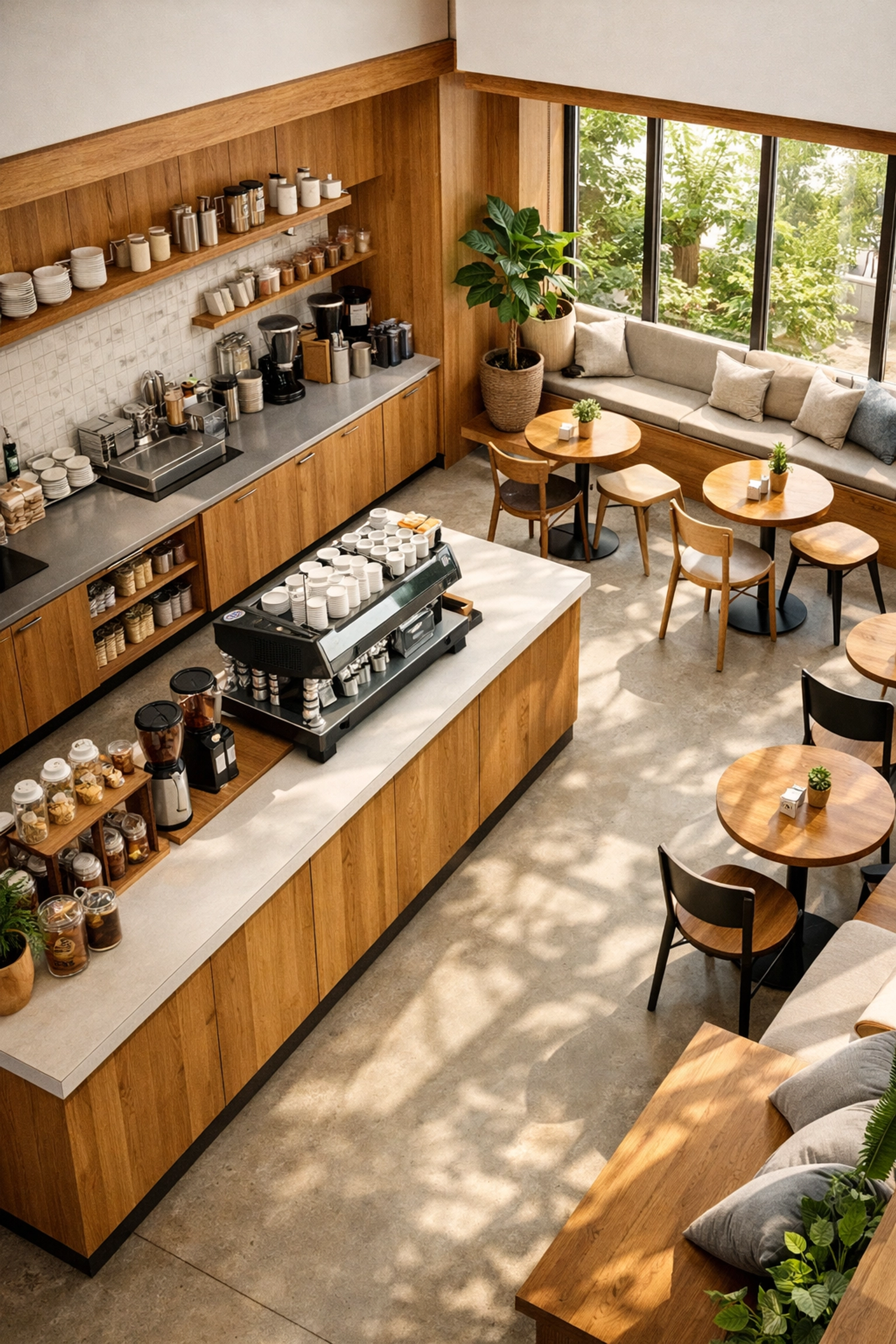
The first five feet inside your door should be what we call the "decompression zone." This is a clear, open space that allows a customer to step inside, get out of the rain (this is the UK, after all), and orient themselves. They need a moment to look at the menu, see where the queue starts, and decide what they want. If you jam a table or a display rack right at the entrance, you’re creating a bottleneck before the experience has even begun.
The Barista’s Dance: Designing for Workflow
This is where we get technical. A barista’s job is a series of repetitive movements. If they have to take three steps to get to the fridge and another four steps to get to the bins, those seconds add up. Over a hundred coffees, that’s a lot of wasted time and a very tired barista.
We like to think of the bar layout in terms of "stations." Ideally, your barista shouldn't have to move their feet much at all.
- The Grinding Station: Right next to the espresso machine.
- The Extraction Station: The espresso machine itself. We often recommend looking at the La Spaziale range because they are workhorses designed for high-volume efficiency.
- The Milk Station: To the side of the machine, with a dedicated steam wand and easy access to the fridge.
- The Finishing Station: Where lids, sugars, and stirrers live.
Everything should flow in one direction: from the till, to the grinder, to the machine, to the pickup point. No back-and-forthing. It’s a linear progression. If you’re curious about the gear that fits into this workflow, you might find our guide on choosing espresso equipment quite handy.
The "Theatre" of Coffee
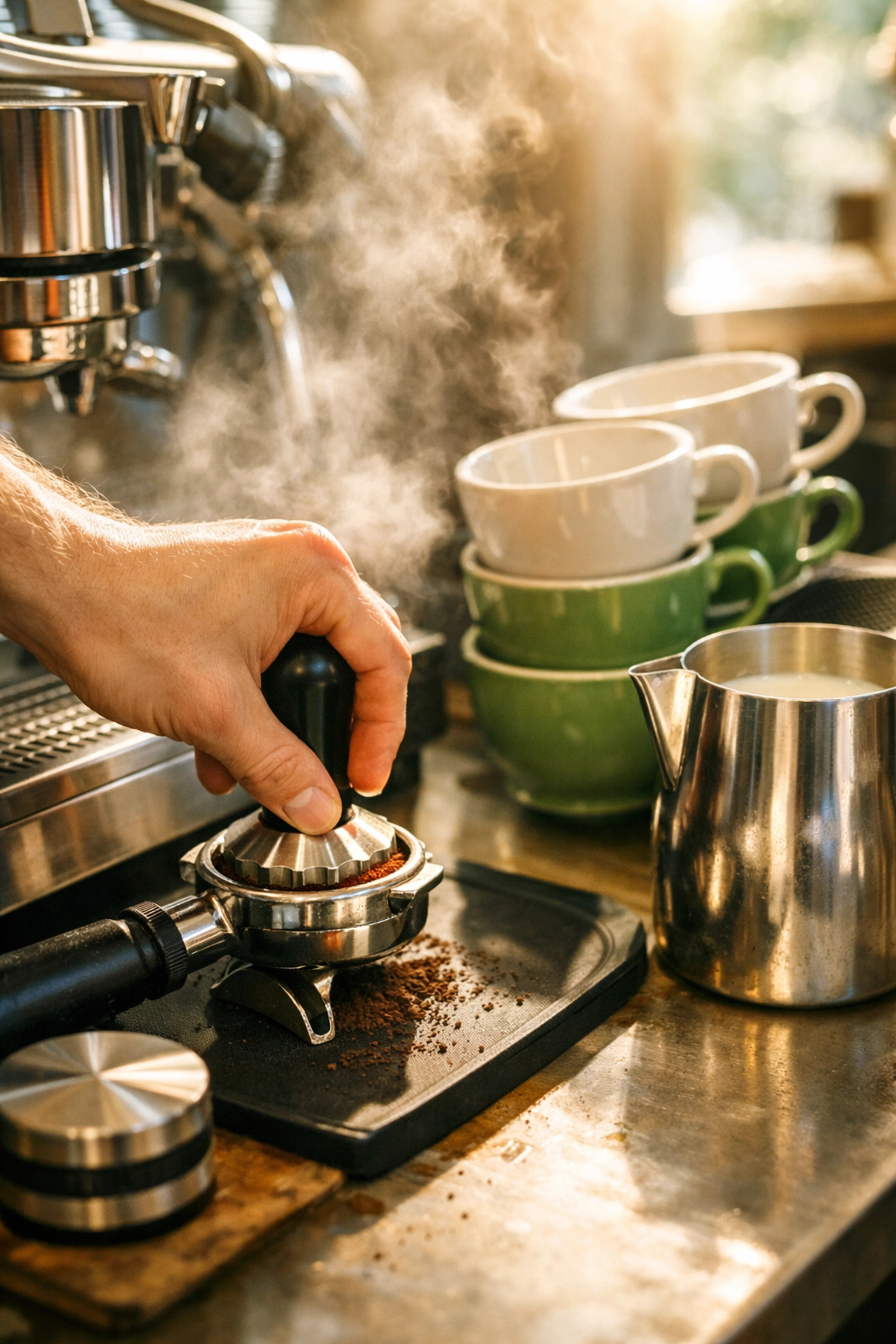
We believe that coffee is a performance. People don't just come for the caffeine; they come for the ritual. When you’re setting up a coffee shop, position your espresso machine so the customers can see what’s happening.
Don't hide your barista behind a high wall of monitors or grinders. Let the customer see the tamping, the silky milk being poured, and the beautiful crema on their espresso. This is what we call theatre in the coffee shop. It builds value. If a customer sees the effort and skill going into their flat white, they are much happier to pay a premium price for it.
Managing the Flow: The Queue and the Pickup
The queue is a double-edged sword. A queue out the door looks great for business: it shows you’re popular: but if it’s poorly managed, it’s a nightmare.
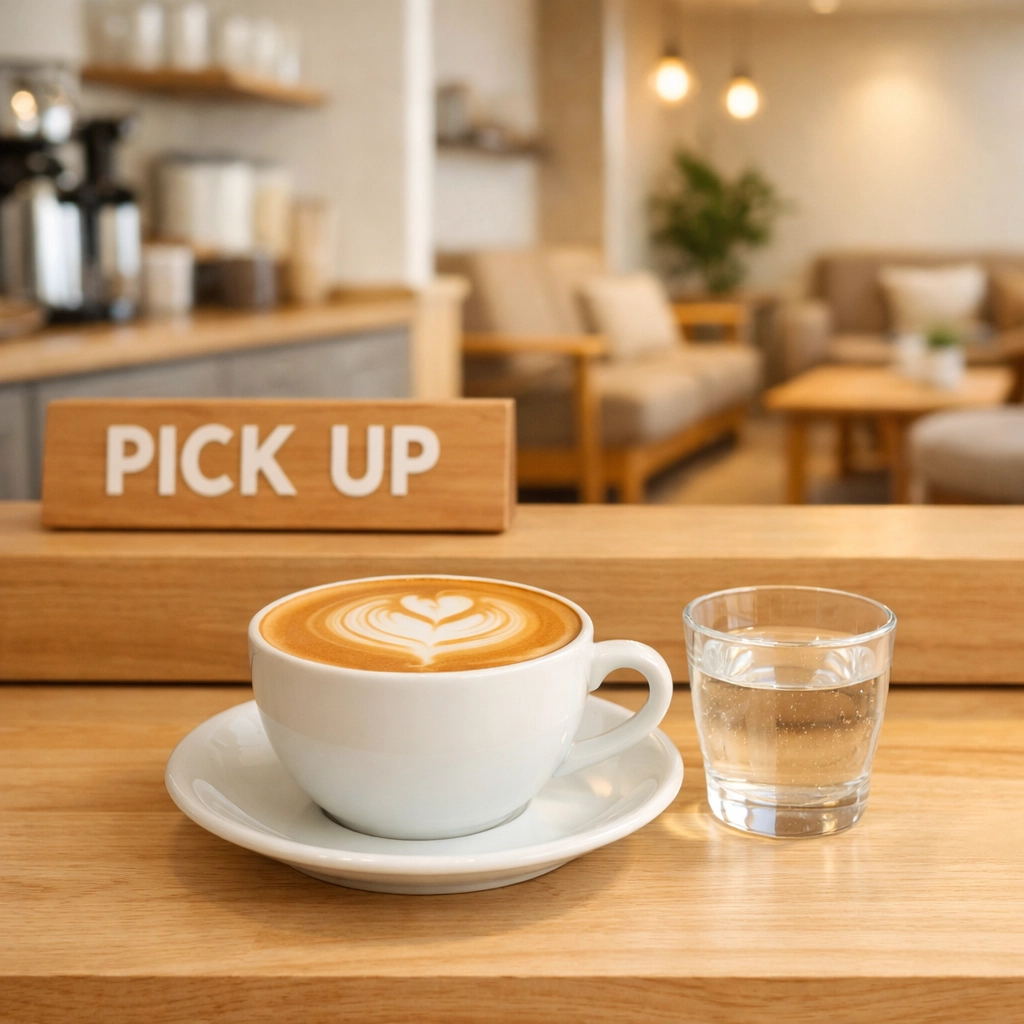
You need a designated "holding area" for people who have already ordered and are waiting for their drinks. This should be separate from the queue of people waiting to pay. If they get mixed up, your baristas will get confused about who gets what, and your customers will get cranky.
Pro tip: Position your condiment stand (where the napkins and sugar live) away from the pickup point. This encourages people to move away from the bar once they have their drink, clearing space for the next person.
Seating Tetris: Catering to Everyone
Not all customers are created equal. You have the "grab-and-go" crowd, the "work-from-homers" with their laptops, and the "social butterflies" meeting for a catch-up. Your seating needs to reflect this variety.
- Small tables for two: These are your best friends. They are flexible. You can push them together for a group of four or keep them separate.
- Window bars: Perfect for solo drinkers. It gives them something to look at and uses space that might otherwise be dead air.
- Lounge seating: Great for the "vibe," but use it sparingly. It takes up a lot of floor space and people tend to linger there for hours over a single cup.
Also, think about the coffee cups you're using. If you use massive, chunky mugs, your tables will feel smaller. It’s all connected!
The Unsexy Stuff: Plumbing, Power, and Pests
Let’s talk about the things that don't make it onto the mood board: the plumbing.
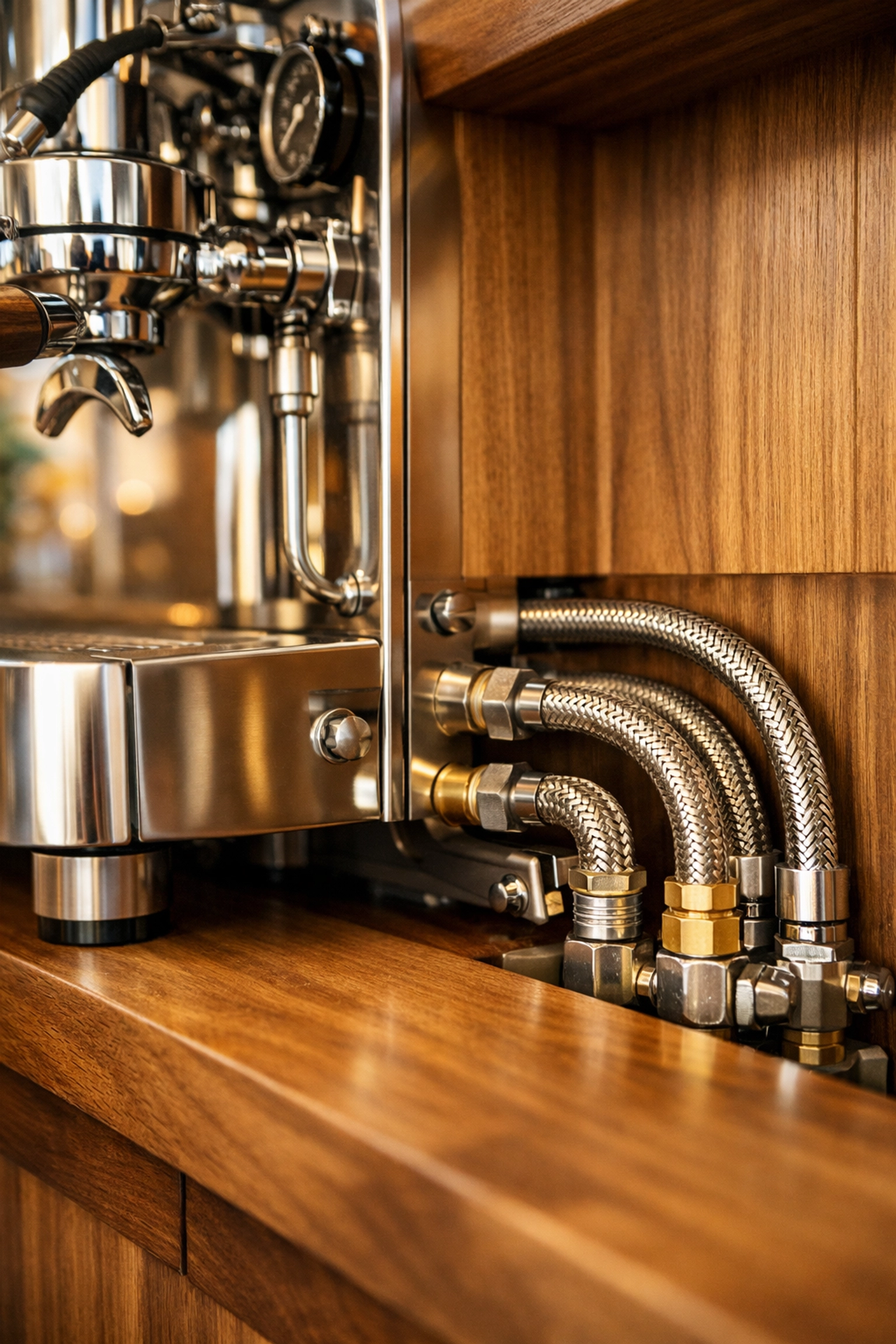
When you’re designing your layout, you are slave to your pipes. Moving water and waste lines is expensive. Extremely expensive. If possible, try to design your bar around the existing plumbing.
You’ll need:
- A dedicated water line for the espresso machine (with a proper filtration system: don't skip this, your machine will thank you).
- A waste pipe with a decent fall. Coffee grounds and milk residue are the sworn enemies of plumbing.
- Ample power. A commercial espresso machine can pull 3000 watts easily. You need dedicated circuits so you don't trip the breakers every time you turn on the toaster.
We cover a lot of this in our barista training sessions, as understanding your equipment is just as important as knowing how to froth milk.
Lighting and Mood
Warmth. That’s the keyword for Limini. We want your shop to feel like a hug.
Avoid harsh, clinical fluorescent lighting. It makes your coffee look grey and your customers look tired. Use a mix of ambient lighting (overall glow), task lighting (bright lights over the bar so baristas can see what they're doing), and accent lighting (to highlight that cool mural or your retail shelf).
Remember, people eat (and drink) with their eyes first. If the space feels inviting, the coffee will actually taste better to them. It’s a psychological trick, but it works every time.
Accessibility: Coffee is for Everyone
This isn't just a legal requirement; it’s the right thing to do. Ensure your pathways are at least 36 inches (about 91cm) wide so wheelchair users and parents with prams can navigate the space easily.
Ensure a section of your counter is at a lower height (no higher than 36 inches) for accessibility. It makes your shop inclusive and welcoming to the whole community. Plus, it gives you a bit more space to interact with your customers on a personal level.
Test, Tweak, and Repeat
The best layout on paper might still have issues in practice. Before you bolt everything to the floor, try "chalking" the layout on the ground. Walk through the process. Pretend to take an order, pretend to make the coffee, pretend to be a customer waiting.
Does it feel natural? Is there a weird pinch point near the bathroom? Fix it now, while it only costs the price of some chalk.
If you're feeling a bit overwhelmed by the technicalities of setting up a coffee shop, don't worry. We’ve helped hundreds of people through this process. Whether you need help sourcing the right coffee or you want to chat about wholesale partnerships, we’re here to help.
Final Thoughts
Designing your coffee shop layout is about finding the balance between efficiency and soul. You want a space that runs like a Swiss watch but feels like a cozy living room. Focus on the workflow first, ensure your baristas have the tools they need: like a machine running at a steady 9 BAR and water at a crisp 92 ºC: and the customer experience will naturally follow.
So, take a breath, grab a sketchbook, and start mapping out your dream. If you need a hand, you know where we are. We'd love to be part of your journey. 🙂
Leave a Reply