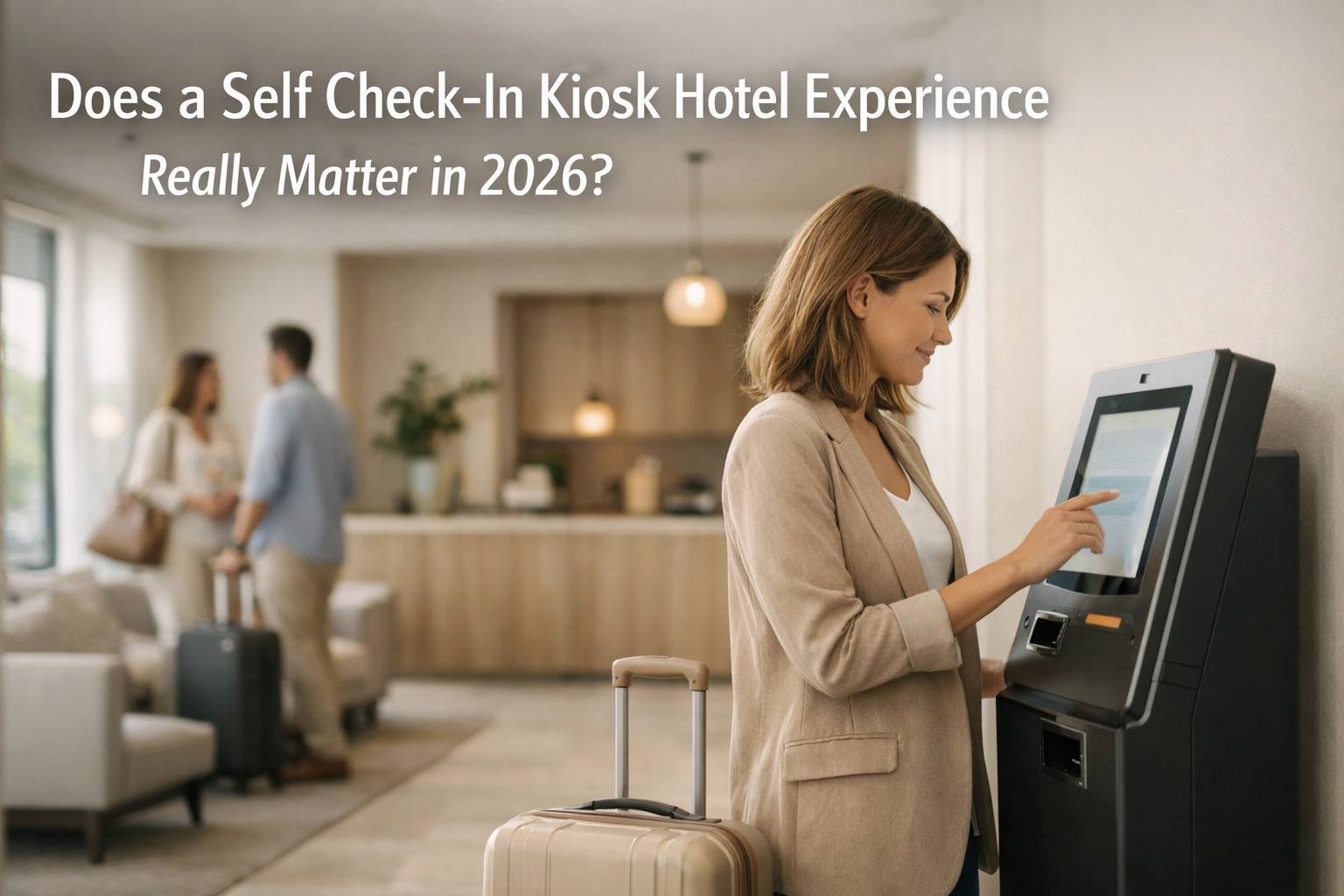
Skip the line. Save the time. Transform the stay.
In 2026, the traditional front desk isn’t just an architectural choice, it’s often a bottleneck. If your guests are still standing in a beige lobby, clutching a passport and waiting for a staff member to type their name into a legacy system, you’re already behind. Modern hospitality isn’t about the hand-off of a physical key; it’s about the hand-off of control.
Guest autonomy is no longer a "nice-to-have" feature for tech-forward boutiques. It’s the baseline. Whether you’re running a 200-room city hub or a remote eco-lodge, the question isn’t whether you need a self-check-in kiosk. The question is how much revenue you’re losing by not having one.
Ready to see how the best in the business are doing it? Explore the Mews platform here.
The death of the queue (and why nobody is mourning)
Let’s be real: nobody travels across time zones because they’re excited to stand in a queue. By the time a guest reaches your lobby, they’ve likely navigated airport security, ride-share apps, and digital boarding passes. They are already in a "self-service" mindset. Forcing them into a manual, human-led check-in process feels like a step backward in time.
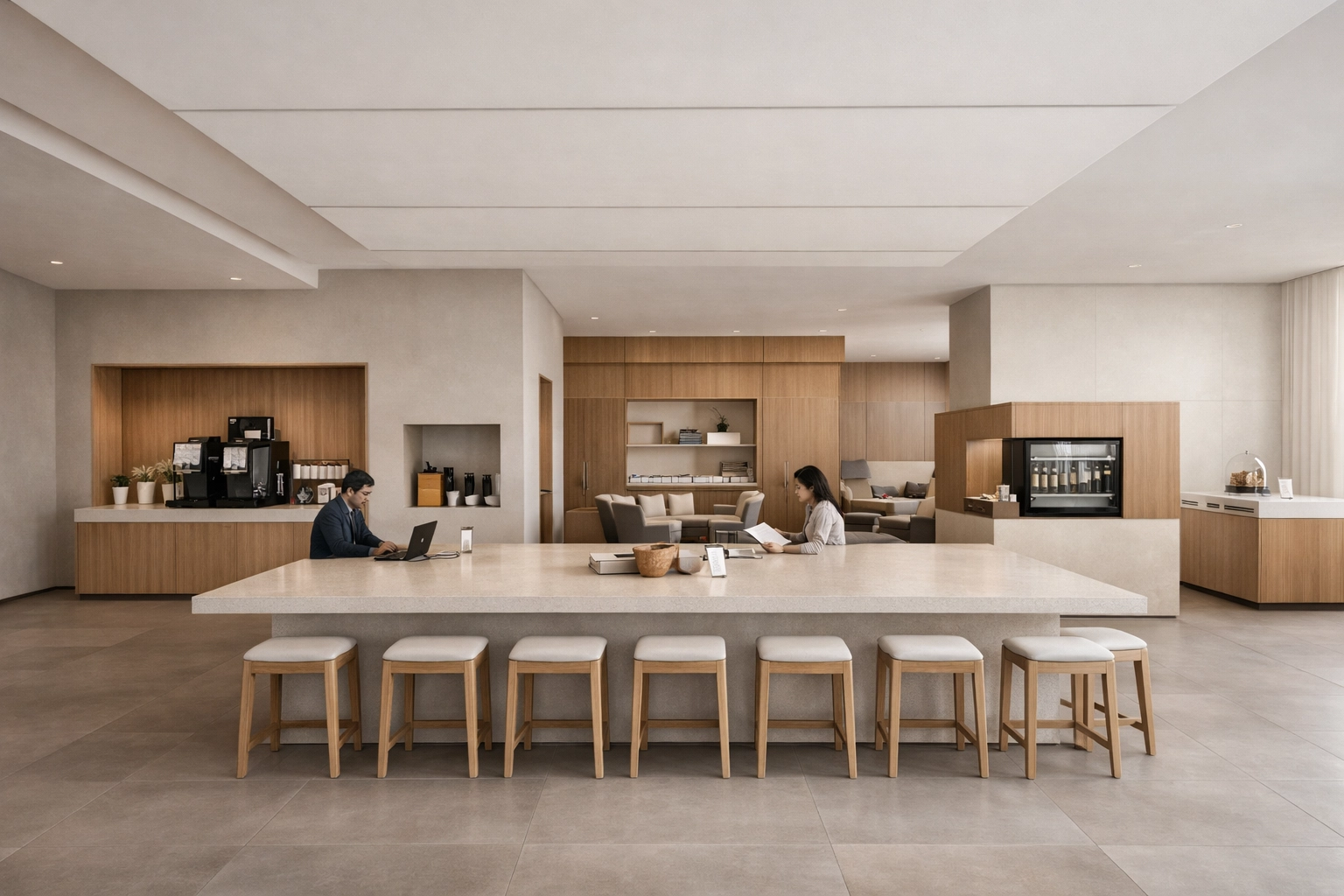
We believe the lobby should be a place for a welcome drink, a comfortable chair, or a quick orientation, not a place to wait for data entry.
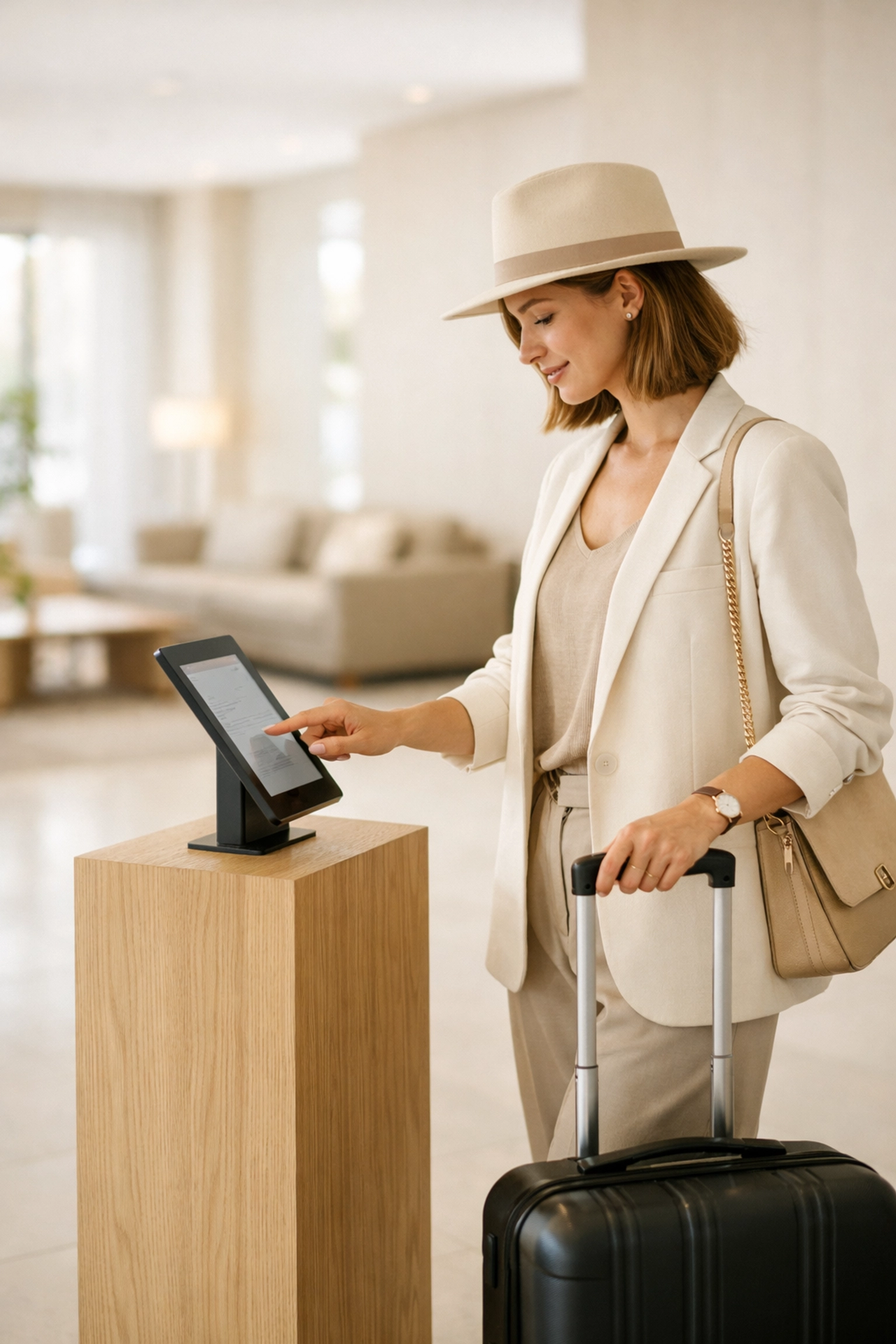
In 2026, the data is staggering. Over 70% of travelers actively prefer self-service options. When you look at Gen Z and Millennials, that number jumps to 80%. These guests don't see a kiosk as "impersonal." They see it as efficient. They see it as respect for their time.
When you remove the friction of the arrival, you change the entire vibe of the stay. You aren't "ghosting" your guests; you're giving them the freedom to start their vacation on their own terms, all from one innovative platform.
The revenue engine you didn’t know you had
Here is a secret the big chains have known for a while: kiosks are better at upselling than humans are.
It’s not because your front desk team isn't great. It’s because humans get tired, they feel awkward asking for the fifth time that day if someone wants a breakfast voucher, or they simply forget. A kiosk never gets "upsell fatigue." It presents the penthouse upgrade, the late check-out, or the spa package with the same enthusiasm at 3:00 AM as it does at 3:00 PM.
The financial impact is hard to ignore:
- 70% more upsell revenue per check-in compared to traditional desks.
- 3x higher likelihood of guests purchasing additional services during a digital check-in.
- 12-month ROI on hardware through labor savings and ancillary sales.
"Since we moved to Mews kiosks, our late check-out sales have doubled. The system just makes it easy for the guest to say yes without feeling pressured." : Operations Manager, London.
We think every interaction should be an opportunity. By moving the "boring" parts of the check-in to a screen, you're actually opening up more space for high-value revenue generation.
Solving the labor puzzle
The hospitality labor market in 2026 remains… challenging, to put it lightly. Finding staff who are both tech-savvy and hospitality-minded is a tall order. When you use self-check-in kiosks, you aren't replacing your people: you’re liberating them.
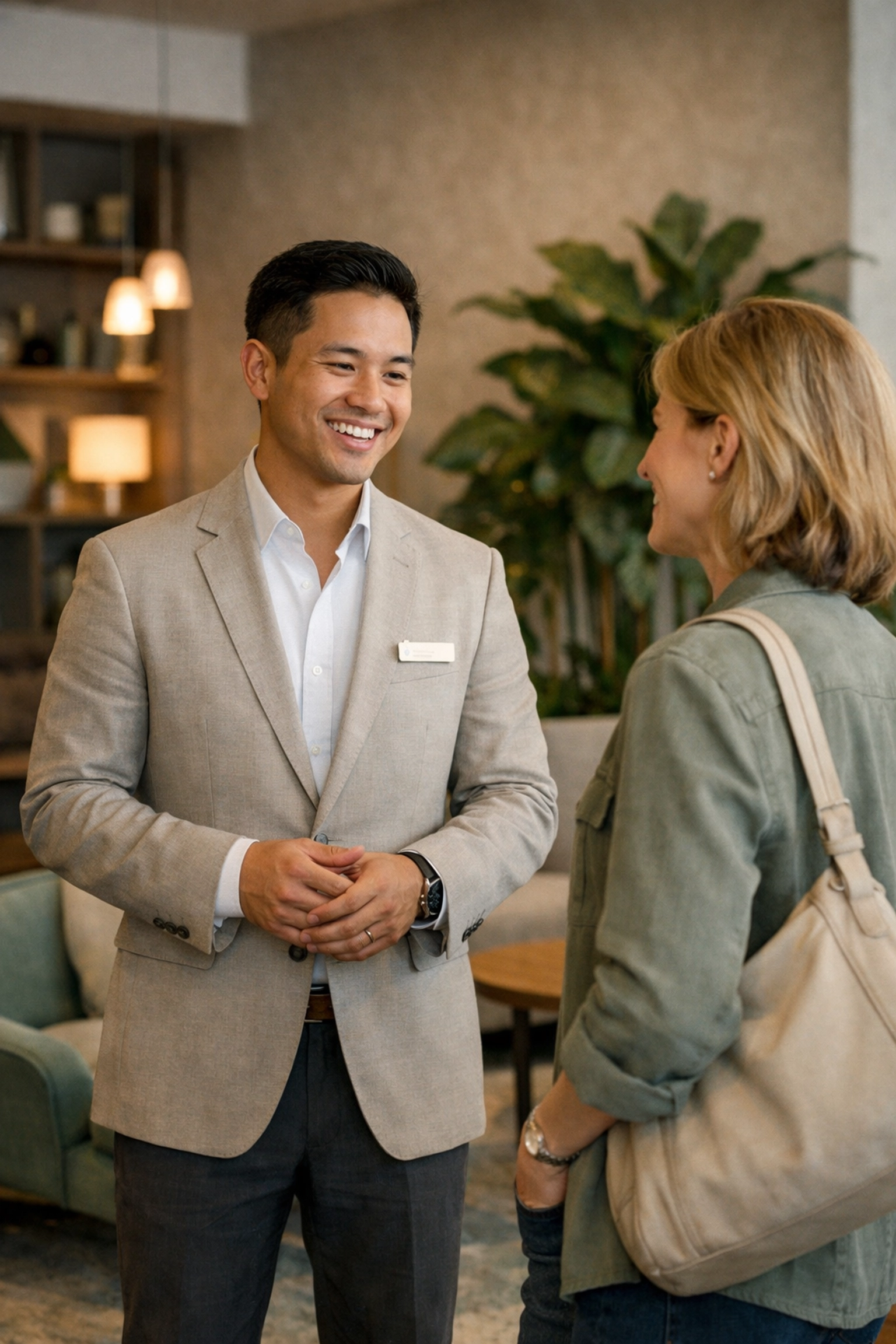
Instead of three people standing behind a desk doing data entry, you have one "Guest Experience Host" roaming the lobby. They aren't staring at a screen; they’re looking the guest in the eye. They’re offering a glass of water. They’re recommending the best local pasta spot.
What a kiosk handles for you:
- Identity verification and document scanning.
- Secure payment processing and pre-authorization.
- Physical key card encoding or digital key delivery.
This allows your team to focus on the things AI and kiosks can’t do: empathy, problem-solving, and genuine human connection. It turns a "clerk" into a "concierge."
The rise of the "Invisible Hotel"
We are seeing a massive shift toward the "Invisible Hotel" model. These are properties that operate with zero on-site staff, or a very minimal "skeleton" crew. This isn't just for budget hostels anymore. Luxury apartments and high-end boutique stays are adopting this to provide a sense of total privacy and exclusivity.
A kiosk is the heartbeat of this model. It’s the reliable, 24/7 point of contact that ensures the guest is never truly "stranded," even if there isn't a human in sight. It integrates with your CRM, your locks, and your payment gateway: all from one smart platform.
If you’re looking to scale your property portfolio without scaling your headcount, this is the blueprint. Check out how Mews enables this level of automation.
Technology that feels invisible
In the early days, hotel kiosks were clunky, ugly boxes that looked like they belonged in a 90s bank lobby. In 2026, the tech has matured. We’re talking about sleek, AI-enabled interfaces that feel as intuitive as an iPad.
Modern systems now support:
- Biometric Authentication: Face scanning for instant ID verification.
- Multilingual Support: Instant translation for international guests.
- Real-Time Inventory: If a room is ready 10 minutes early, the kiosk knows.
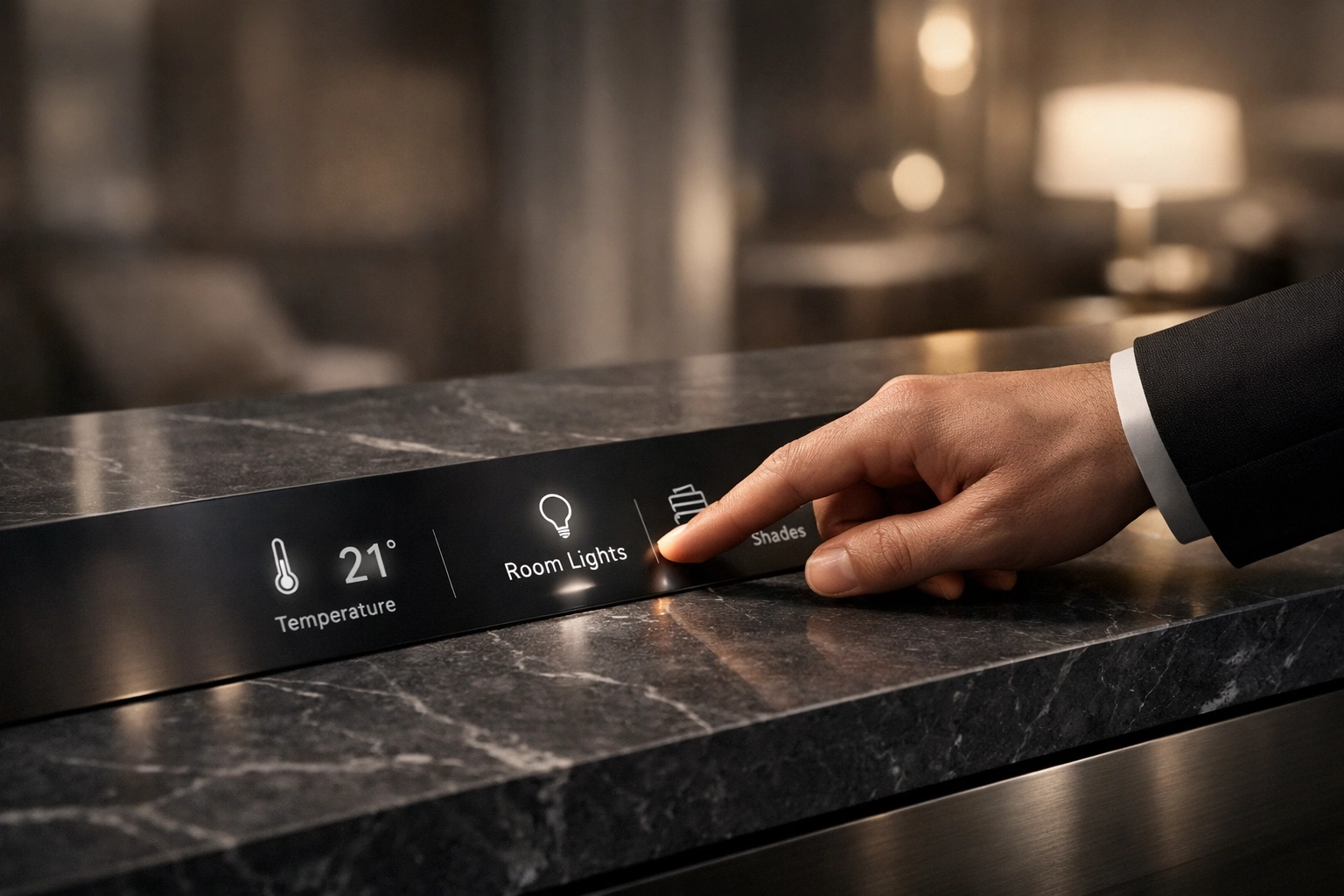
When the tech works this well, it becomes invisible. The guest doesn't think, "I am using a kiosk." They think, "I am in my room." That is the ultimate goal of hospitality technology.
Total Guest Value: The new North Star
We’ve moved past ADR (Average Daily Rate) as the only metric that matters. In 2026, savvy hoteliers are looking at Total Guest Value (TGV). This measures everything a guest spends across your entire ecosystem: parking, coworking spaces, the bar, the spa, and the room.
A self-check-in kiosk is the first touchpoint in capturing this data. By getting guests into your "digital ecosystem" the moment they arrive, you can track their preferences and send personalized offers to their phones throughout their stay.
- Better data.
- Higher engagement.
- Increased TGV.
It’s a win-win-win.
Is the front desk actually dead?
Not quite. But it has changed forever.
The front desk is no longer a barrier between the guest and their room. It is now an optional service point for those who want a chat, rather than a mandatory stop for those who need a key. By providing a kiosk option, you are giving your guests the gift of choice.
You’re saying, "We’re here if you need us, but we won't stand in your way if you don't."
How to get started (It’s easier than you think)
Transitioning to a kiosk-first or kiosk-hybrid model doesn't require a six-month overhaul. With a cloud-native platform like Mews, you can be up and running faster than you’d expect.
The 30-minute plan:
- Audit your current flow: Where are the lines forming?
- Choose your hardware: Tablet-based, free-standing, or mobile-first?
- Connect your PMS: Ensure your data flows seamlessly in real-time.
Don't let another season of "lobby loitering" hurt your guest satisfaction scores. The future of check-in is fast, it’s digital, and it’s already here.
The most innovative hotels in the world are already making the switch. They are saving on labor, crushing their upsell targets, and: most importantly: giving their guests exactly what they want: a frictionless start to their journey.
Ready to join them? Get started with Mews today and see the difference for yourself.
It’s time to stop managing keys and start managing experiences. All from one powerful, innovative platform.
Leave a Reply