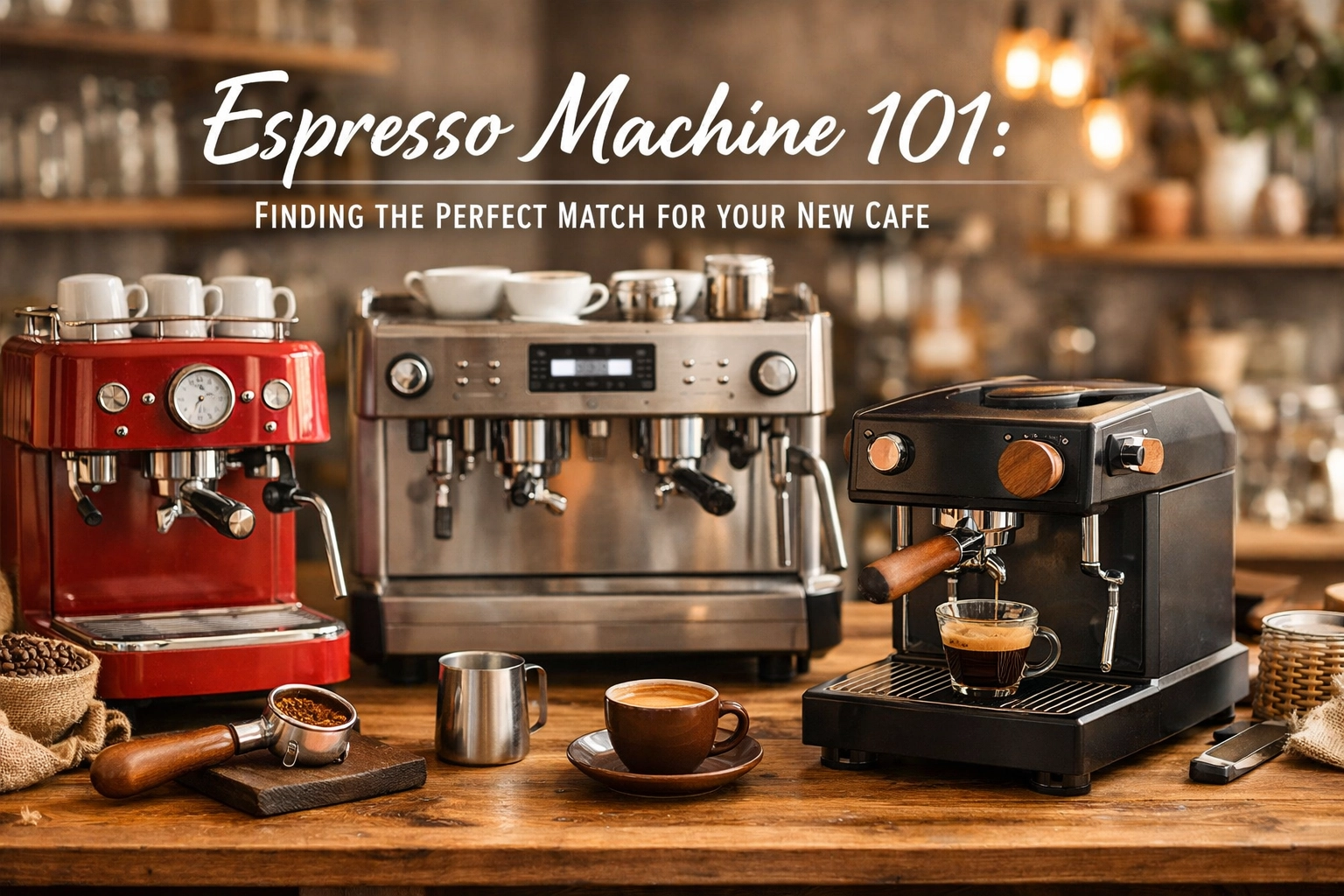
So, you’re doing it. You’re finally opening that cafe you’ve been dreaming about for years. The floor plan is sketched out, the name is finalized, and you’ve probably spent way too many hours scrolling through Pinterest looking at reclaimed wood counters. But then you hit the big question: which espresso machine do you actually need?
It’s easy to get overwhelmed. You start looking at shiny chrome boxes and suddenly people are throwing terms like "Dual Boiler," "PID," and "Heat Exchanger" at you like you’re supposed to know what they mean. Don't worry, we’ve been there. At Limini Coffee, we've helped countless people with their coffee shop set up, and we can tell you right now: the "best" machine isn't the most expensive one: it’s the one that fits your specific business like a well-loved pair of boots.
Let’s break down the world of espresso machines so you can choose your partner in caffeine with confidence.
The Heart of the Machine: Understanding Boilers
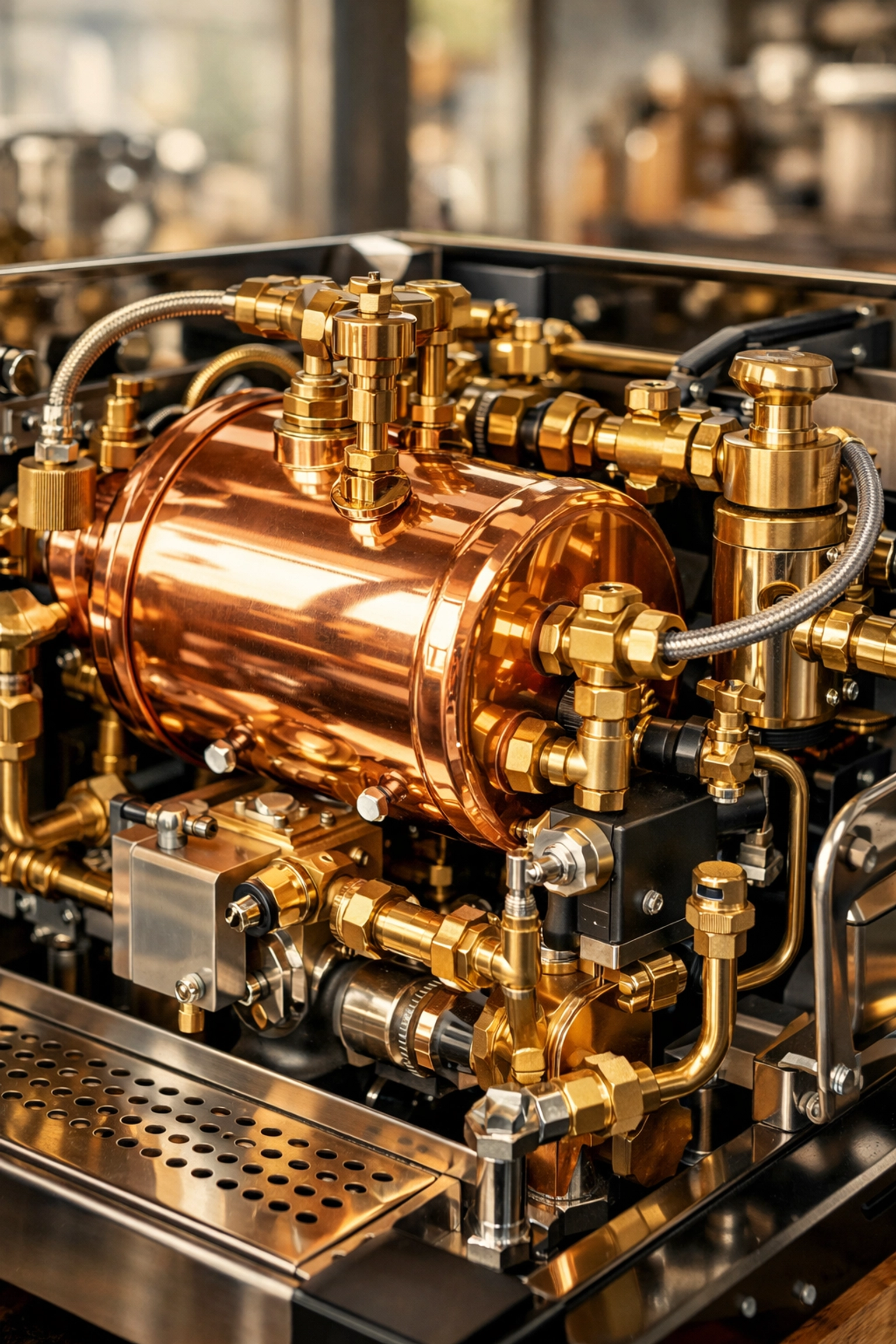
Before you look at the buttons and the steam wands, you need to look at what’s happening under the hood. The boiler system is essentially the engine of your espresso machine. It dictates how much coffee you can make and how well you can steam milk at the same time.
1. Single Boiler Machines
Usually, these are for home use. A single boiler has to switch between brewing temperature (around 93 ºC / 200 ºF) and steaming temperature (around 125 ºC / 257 ºF).
Our take? Not something we would recommend for a commercial environment. The wait time between pulling a shot and steaming milk will kill your workflow faster than a broken grinder.
2. Heat Exchanger (HX) Machines
This is where things get interesting for small cafes or mobile coffee vans. A Heat Exchanger machine has one large boiler kept at steaming temperature. A tube (the heat exchanger) runs through that boiler, heating the brew water as it travels to the group head.
- The Pro: You can brew and steam at the same time. They are generally more affordable and compact.
- The Con: Temperature stability can be a bit finicky. If the machine sits idle for too long, the water in the exchanger gets too hot, requiring a "cooling flush" before your next shot.
3. Dual Boiler Machines
The gold standard for high-volume shops. As the name suggests, you have two separate boilers: one for coffee and one for steam.
- The Pro: Incredible temperature stability. You can pull shot after shot while steaming giant pitchers of milk without the machine breaking a sweat.
- The Con: They are larger, heavier, and definitely a bigger investment.
Matching the Machine to Your Volume
One of the biggest mistakes we see in a new coffee shop set up is buying a machine that is either way too small for the rush or a massive three-group beast for a quiet bookshop.
The Low-Volume Setup (Mobile Vans, Small Delis)
If you expect to serve maybe 50–100 coffees a day, you don’t need a three-group machine that takes up half your counter space. A solid 1-group or a compact 2-group machine is your best friend here. Look for something like the La Spaziale S1 Vivaldi or a high-end "prosumer" dual boiler. These machines often run on a standard 13-amp plug, which is a lifesaver for mobile setups.
The Standard Cafe (High Street, Steady Flow)
For most independent cafes, a 2-group machine is the "Goldilocks" choice. It allows two baristas to work side-by-side during a sudden rush, but it doesn't require a specialized plumbing overhaul or a 30-amp power supply (usually).
The High-Volume Powerhouse (Commuter Hubs, Busy Roasteries)
If you have a queue out the door every morning at 8:00 AM, you need a 3-group machine. Why? Not just for the extra group head, but for the boiler capacity. When you’re steaming milk for back-to-back lattes, you need a massive amount of steam pressure. A 3-group machine usually has a 10-15 liter boiler, ensuring your steam never goes "wet" or weak.
Features: What’s Essential and What’s Just "Shiny"?
When you start talking to coffee suppliers, they will throw a lot of acronyms at you. Let’s decode the ones that actually matter for your bottom line.
PID (Proportional-Integral-Derivative)
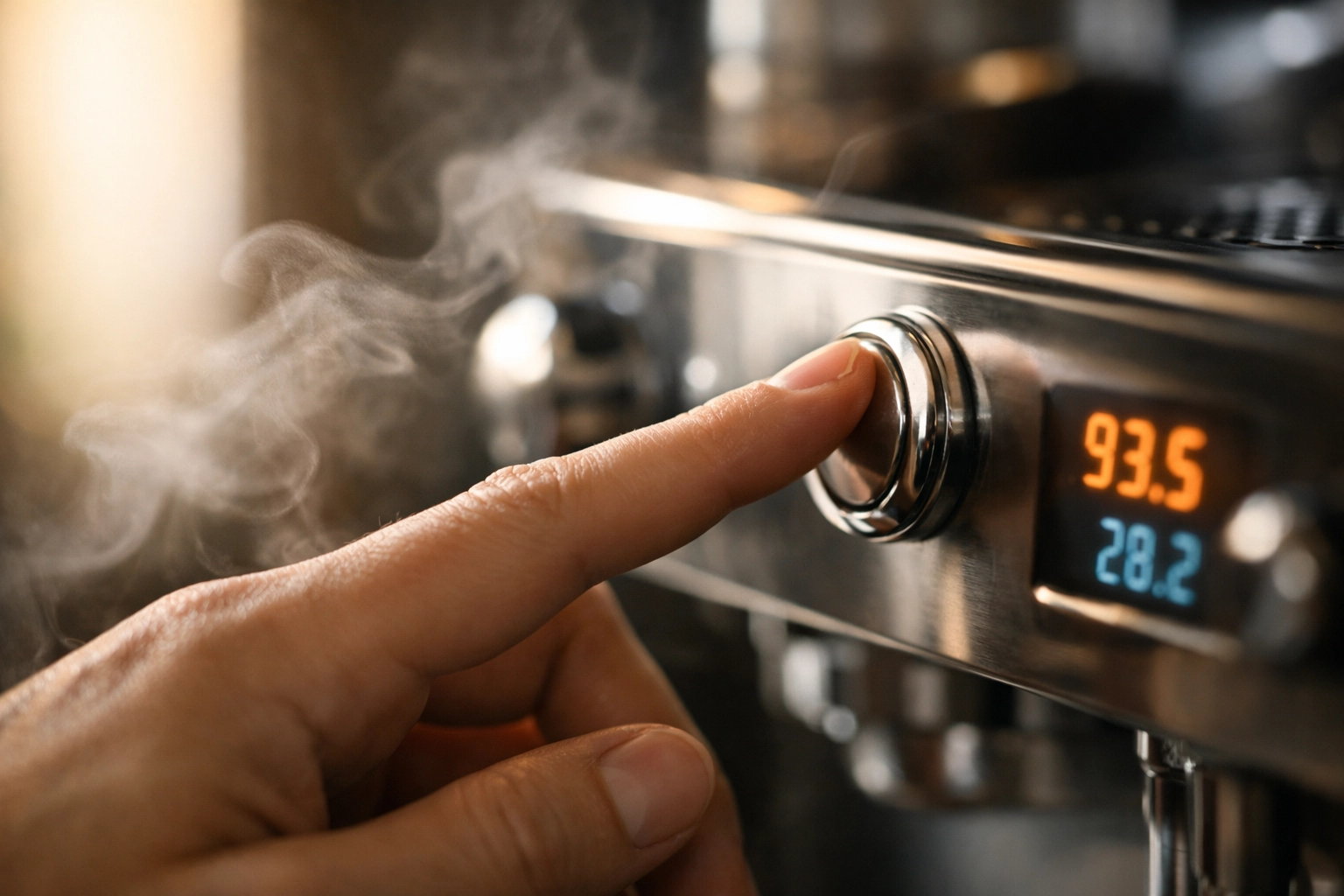
Think of a PID as the cruise control for your espresso machine. Traditional thermostats let the temperature swing up and down in a range. A PID uses an algorithm to keep the water at exactly 93 ºC / 200 ºF (or whatever you set it to).
Why it matters: Consistency. If your water temperature fluctuates by even 2 degrees, your coffee will taste different every time. We believe a PID is a non-negotiable for a specialty cafe.
Volumetrics vs. Manual
- Manual (or Semi-Auto): The barista starts and stops the shot with a lever or a button. It looks cool: very "theatre": but it requires 100% of the barista’s attention.
- Volumetrics: You program the machine to deliver a specific volume of water (say, 36g of espresso). The barista pushes a button and can then start steaming milk while the machine handles the shot.
Our take: For a commercial environment, go volumetric. It allows your staff to multitask and ensures the 100th coffee of the day tastes just as good as the first.
Tall Cup vs. Standard
This sounds like a small detail, but it’s a logistics game-changer. Tall cup machines have more clearance under the group head. If you plan on doing a lot of takeaway coffee in 12oz or 16oz cups, get a tall cup machine. If you don't, you'll have to pull shots into small pitchers and then pour them into the cups, which wastes time and kills that beautiful crema (the golden-brown foam on top of the espresso).
Beyond the Machine: The Support System
Buying the machine is only half the battle. To actually make great coffee, you need a supporting cast.
The Grinder is Just as Important
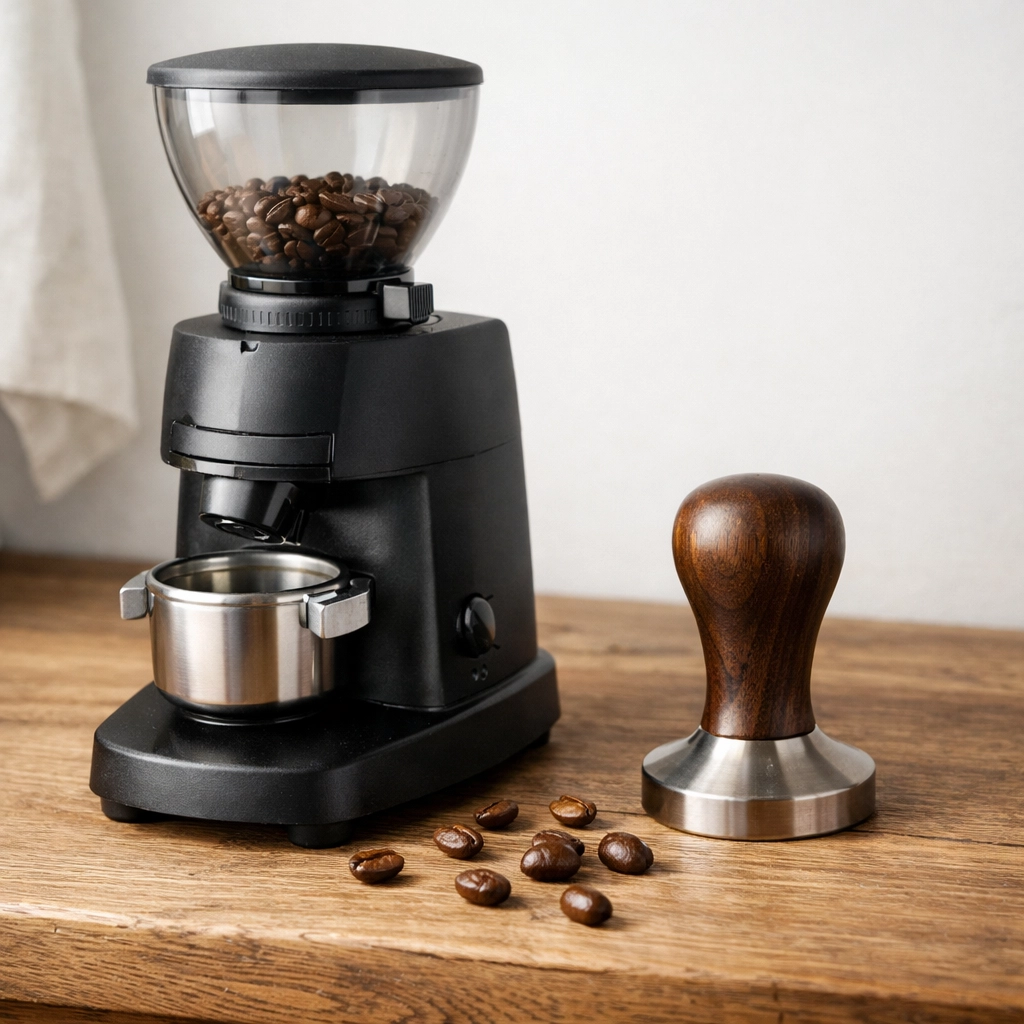
We’ll say it loud for the people in the back: Do not spend £10,000 on a machine and £200 on a grinder. The grinder dictates the particle size of your coffee, which directly affects extraction. If your grind is uneven, your espresso will be sour and bitter at the same time. Imagine trying to run a Ferrari on cheap, dirty fuel. It just won’t work.
Water Filtration
This is the "boring" part that will save you thousands of pounds. Coffee is 98% water. If your water is too hard (lots of minerals), it will scale up your boiler and heating elements until they snap. If it's too soft, the coffee will taste flat. Always ask your coffee suppliers for a water test before you install your machine.
Training
Even the best machine in the world can't fix bad technique. If your baristas don't know how to tamp correctly or how to texture milk to a silky microfoam (around 140 °F / 60 ºC), the machine is just an expensive paperweight. We highly recommend investing in barista training before you open your doors.
Finding the Right Partner
Choosing an espresso machine isn't just a transaction; it's the start of a relationship. When you’re looking at coffee suppliers, don't just look at the price tag of the equipment. Ask them:
- Do you offer emergency breakdown cover?
- Do you carry spare parts in stock?
- Can you help me dial in the recipes when I get my first bag of beans?
At Limini Coffee, we don't just ship you a box and wish you luck. We want to be part of your journey. We’ve spent years exploring different brands: from the classic Italian workhorses like La Spaziale to modern innovators: and we only recommend what we know works in the real world. We’ve seen which machines hold up during a Saturday morning rush and which ones end up needing a technician every two weeks. (Spoiler: We prefer the former!)
A Final Thought…
Opening a cafe is a wild, exhausting, and incredibly rewarding adventure. Your espresso machine is going to be your most hardworking employee. It’s the first thing you’ll turn on in the morning and the last thing you’ll clean at night.
Take your time. Do your research. And remember, you don't have to do this alone. If you're feeling stuck on which machine fits your coffee shop set up, just give us a shout. We love talking shop, and we’d be more than happy to help you find that perfect match.
Now, go grab a coffee: you’ve got a cafe to build! ☕️
Leave a Reply