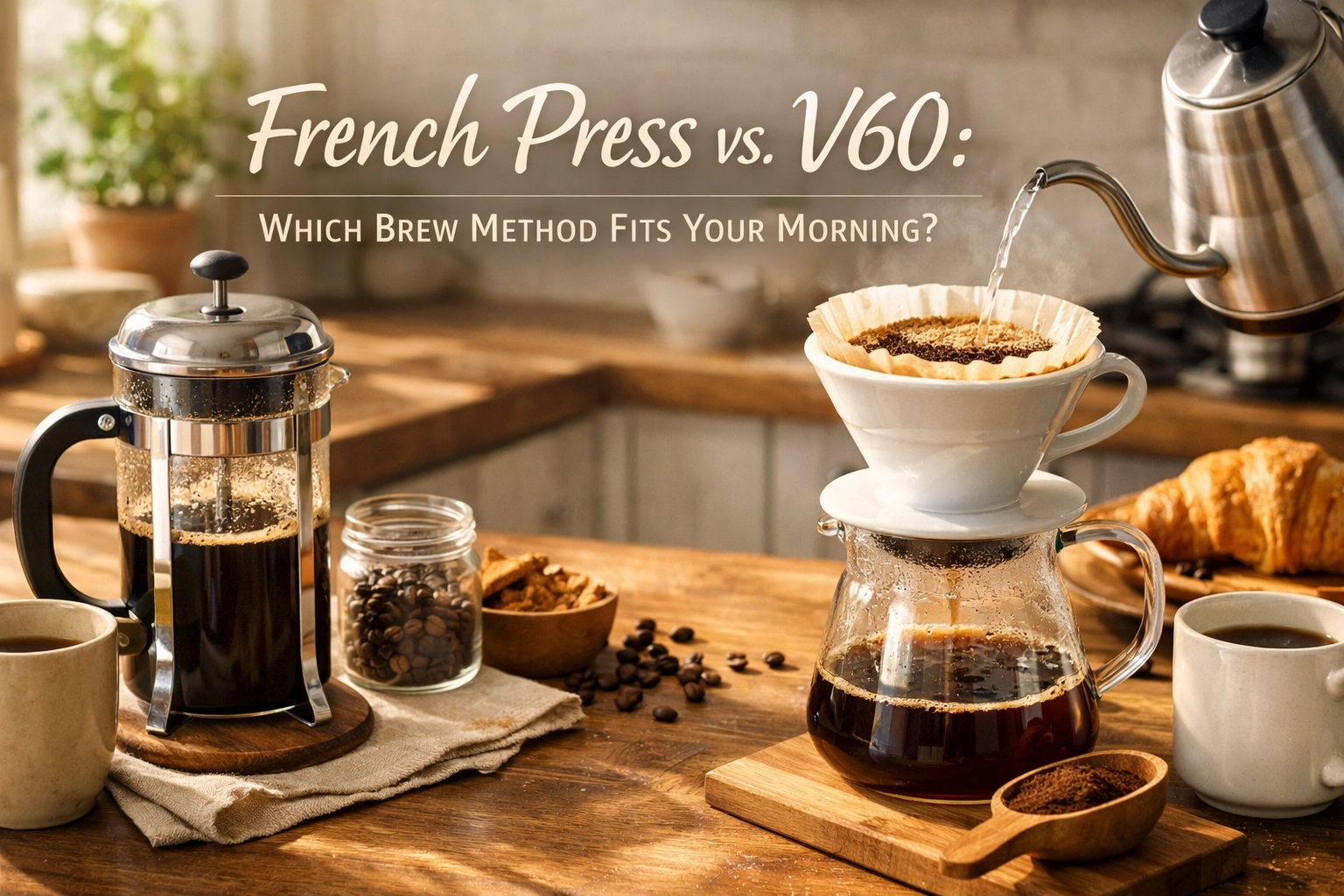
Let's be honest: your brewing method shapes your entire coffee experience. And if you've been eyeing both a French Press and a V60, wondering which one deserves precious counter space, you're asking exactly the right question.
We've spent countless mornings with both brewers, and here's what we've learned: these two methods couldn't be more different. It's not about which one is "better": it's about which one fits your morning routine, your flavor preferences, and how you actually drink coffee.
So let's break down the real differences, the practical considerations, and help you figure out which brewer will become your daily companion.
Two Completely Different Philosophies
Think of it this way: the French Press is like a bath, the V60 is like a shower.
The French Press uses immersion brewing. You add coarse coffee grounds, pour in hot water, let everything steep together for about 4 minutes, then press down a metal screen to separate the grounds from your coffee. The grounds are literally bathing in water the entire time, extracting continuously.
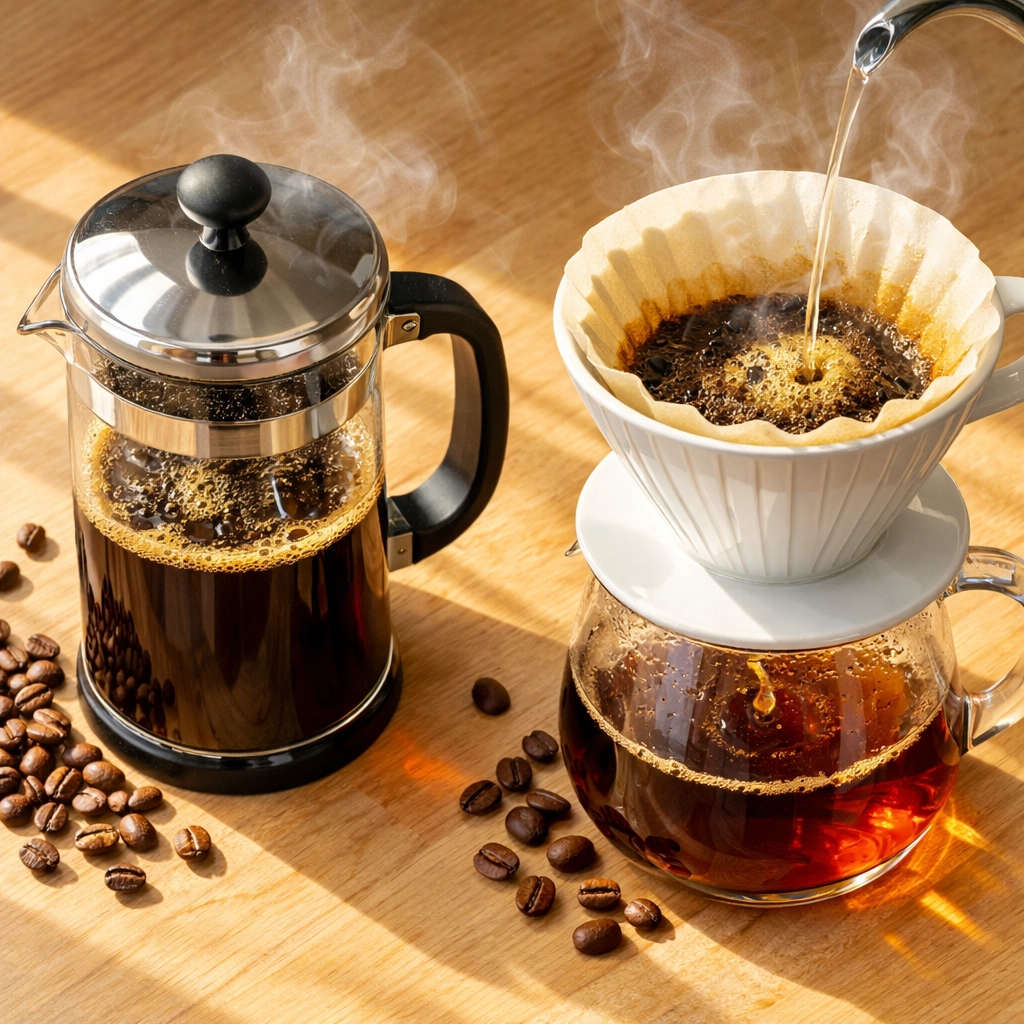
The V60, on the other hand, is a pour-over brewer. Water flows through medium-fine grounds in a cone-shaped filter, extracting as it travels downward, then drips into your cup below. The contact time is much shorter: just 2 to 3 minutes total: and you're actively involved in the pouring process.
This fundamental difference in how water interacts with coffee creates dramatically different results in your cup.
The French Press: Bold, Rich, Unapologetic
When you brew with a French Press, you're getting coffee in its most full-bodied form.
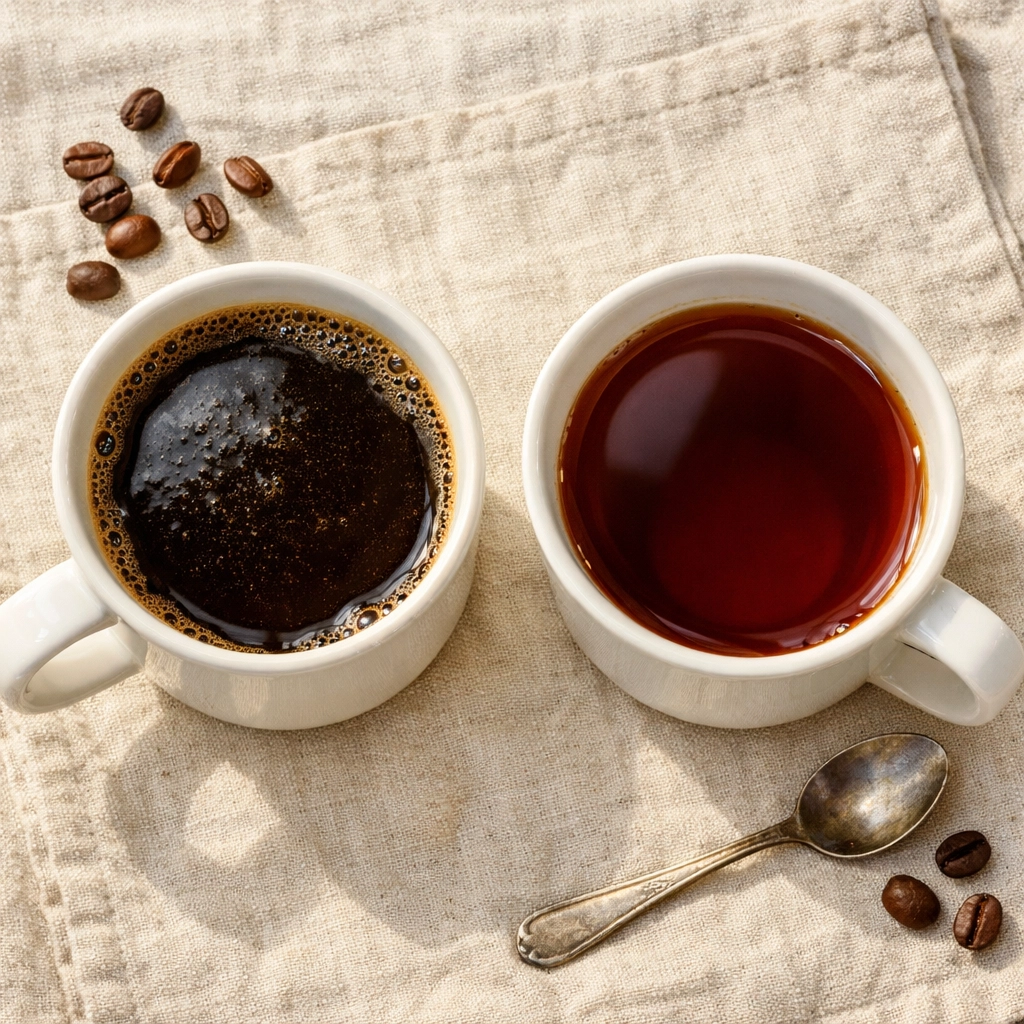
Because the metal mesh screen can't trap coffee oils the way paper filters do, all those oils end up in your cup. This gives French Press coffee that characteristic heavy mouthfeel: almost thick, definitely textured. You'll notice it coating your tongue in a way that filter coffee simply doesn't.
The prolonged steeping time extracts deeply from the grounds, which means you get bold, intense flavors. The coffee tends to have more weight, more richness, and frankly, more oomph. If you enjoy your coffee with milk, this heavier body stands up beautifully without getting lost.
The grind for French Press is coarse: think sea salt or breadcrumbs. This is actually quite forgiving. Even if your grinder isn't perfectly consistent, you'll still get decent results. We recommend a brewing ratio of about 1:15 (coffee to water), so for a standard 750ml French Press, you're looking at roughly 50 grams of coffee.
One thing to know: you will get sediment in your cup. Some people love this rustic, unfiltered character. Others find it off-putting. There's no right answer: it's purely personal preference.
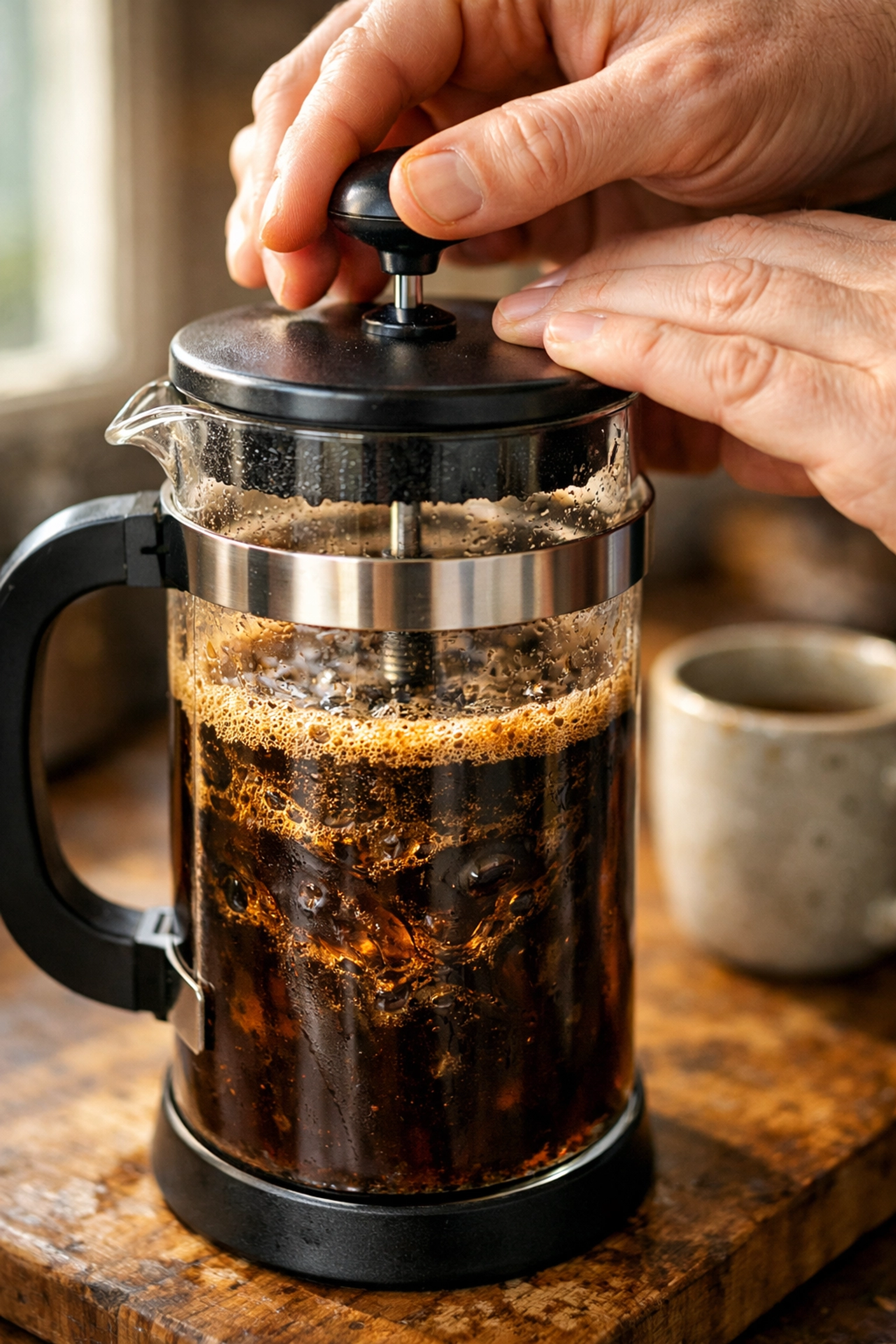
Cleanup involves unscrewing the plunger, dumping the grounds (compost them if you can), rinsing the carafe, and washing the screen. Not difficult, but definitely more involved than tossing a paper filter.
The V60: Clean, Bright, Delicate
The V60 produces coffee that feels like the complete opposite of French Press.
Because water flows through the grounds rather than steeping with them, and because the paper filter traps oils and fine particles, you get an extraordinarily clean cup. We're talking bright, nuanced, delicate: like drinking liquid clarity.
This brewing method is brilliant for showcasing the inherent characteristics of high-quality beans. Those fruity notes in an Ethiopian coffee? The chocolate undertones in a Colombian? The V60 lets them shine without any muddiness or heaviness. When you're brewing exceptional beans from Limini Coffee, this clarity is exactly what you want.
The grind here is medium-fine to fine: think granulated sugar. This is more critical than with French Press. Too coarse and water flows through too quickly, under-extracting. Too fine and you'll clog the filter, over-extracting bitter compounds.
Your pouring technique actually matters with a V60. You'll typically start with a bloom (pouring just enough water to saturate the grounds, usually about twice the weight of your coffee), wait 30 seconds, then continue pouring in slow, steady spirals. The entire process takes 2 to 3 minutes.
This does require more attention than French Press. You can't just walk away. But many people find this ritual meditative: a moment of focused calm before the day begins.
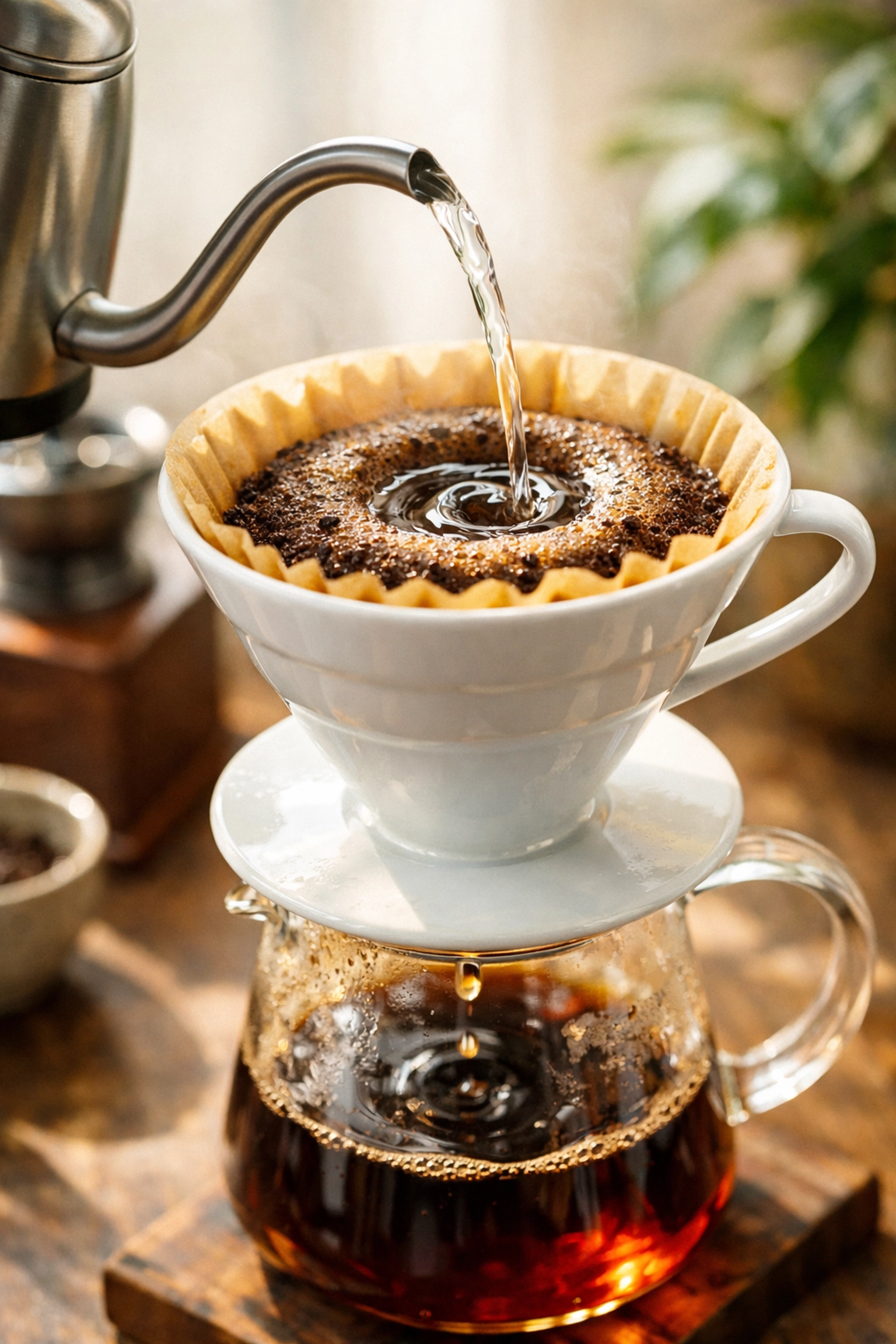
Cleanup is genuinely effortless. Lift the filter with the spent grounds, toss it in compost or bin, rinse the brewer. Done in 20 seconds.
The Flavor Question
So what does each method actually taste like?
French Press delivers bold, full-bodied, rich coffee. Expect deeper, heavier notes: chocolate, nuts, caramel, earth. The texture is substantial. There's weight to each sip. Some describe it as "chewy." This method emphasizes body and depth over clarity.
V60 produces light, clean, bright coffee. You'll taste more acidity (the pleasant, fruity kind), more floral notes, more delicate sweetness. The texture is almost tea-like in its lightness. This method emphasizes clarity and complexity over body.
If you add milk to your coffee, French Press handles it better. The heavier body doesn't disappear under milk: it creates a genuinely creamy drink. V60's delicate flavors can get overwhelmed by even a splash of milk.
Practical Morning Considerations
Brewing for one or many?
The V60 excels at single servings: typically 150ml to 400ml. You can brew larger batches, but the method really shines when you're making just one cup. The French Press, however, is brilliant for larger quantities. Got a 1-litre press? You can easily brew for yourself and a partner, or make enough to fill a thermos for the morning.
How rushed is your morning?
Despite the V60's shorter brew time, both methods require similar total effort when you factor in grinding, weighing, heating water, and waiting. The real difference is attention. French Press lets you walk away after pressing the plunger. V60 demands your presence for the entire pour.
If you're stumbling around half-awake at 6am, French Press is more forgiving. Miss your target brew time by 30 seconds? You'll probably be fine. Mess up your V60 pour? You might end up with a weak or bitter cup.
How particular are you about coffee?
V60 rewards precision and experimentation. Changing your grind by one notch on your grinder can noticeably alter the cup. Adjusting your pouring speed creates different results. If you're the type who enjoys tinkering and optimizing, you'll love this control.
French Press is more of a "set it and forget it" brewer. Once you've got your basic ratio and timing down, it's remarkably consistent. Less room for experimentation means less room for error.
So Which One Fits Your Morning?
Choose the French Press if:
- You want bold, rich, full-bodied coffee without fussing over technique
- You brew for multiple people or like having extra for later
- You prefer coffee with milk
- You want minimal decision-making on busy mornings
- You appreciate texture and weight in your cup
- You're comfortable with a bit of sediment
Choose the V60 if:
- You want the cleanest possible cup that showcases coffee's natural flavors
- You typically brew just for yourself
- You value incredibly easy cleanup
- You enjoy the ritual and precision of manual brewing
- You drink coffee black and want to taste every nuance
- You're working with exceptional specialty beans that deserve to be showcased
Or, Honestly, Get Both
Here's a slightly controversial take: these brewers aren't really competitors. They serve different purposes.
We find ourselves reaching for the French Press on lazy weekend mornings when we're making coffee for the household, or when we're craving something rich and comforting. The V60 comes out on busy weekday mornings when it's just one cup, and especially when we've got a particularly exciting single-origin that we want to experience in its purest form.
Both are relatively inexpensive investments. A decent French Press runs £15-30, a V60 setup (brewer plus filters) is £20-40. If you're serious about coffee at home, owning both gives you flexibility to match your brewer to your mood, your company, and your beans.
Getting Started
Whichever direction you choose, start with quality beans. Both methods are honest brewers: they'll reveal everything about your coffee, good and bad. Stale supermarket grounds won't magically taste better in a fancy brewer.
We roast our beans fresh to order and ship quickly, so you're always working with coffee at its peak flavor. Whether you're highlighting delicate notes with a V60 or building rich body with a French Press, starting with properly sourced, freshly roasted beans makes all the difference. Check out what we've got roasting this week and experiment with both methods using the same coffee: you'll be amazed how different they taste.
The beauty of home brewing is making coffee exactly how you want it, when you want it. French Press or V60, you're already ahead of the game by taking control of your morning cup.
Now get brewing.
Leave a Reply