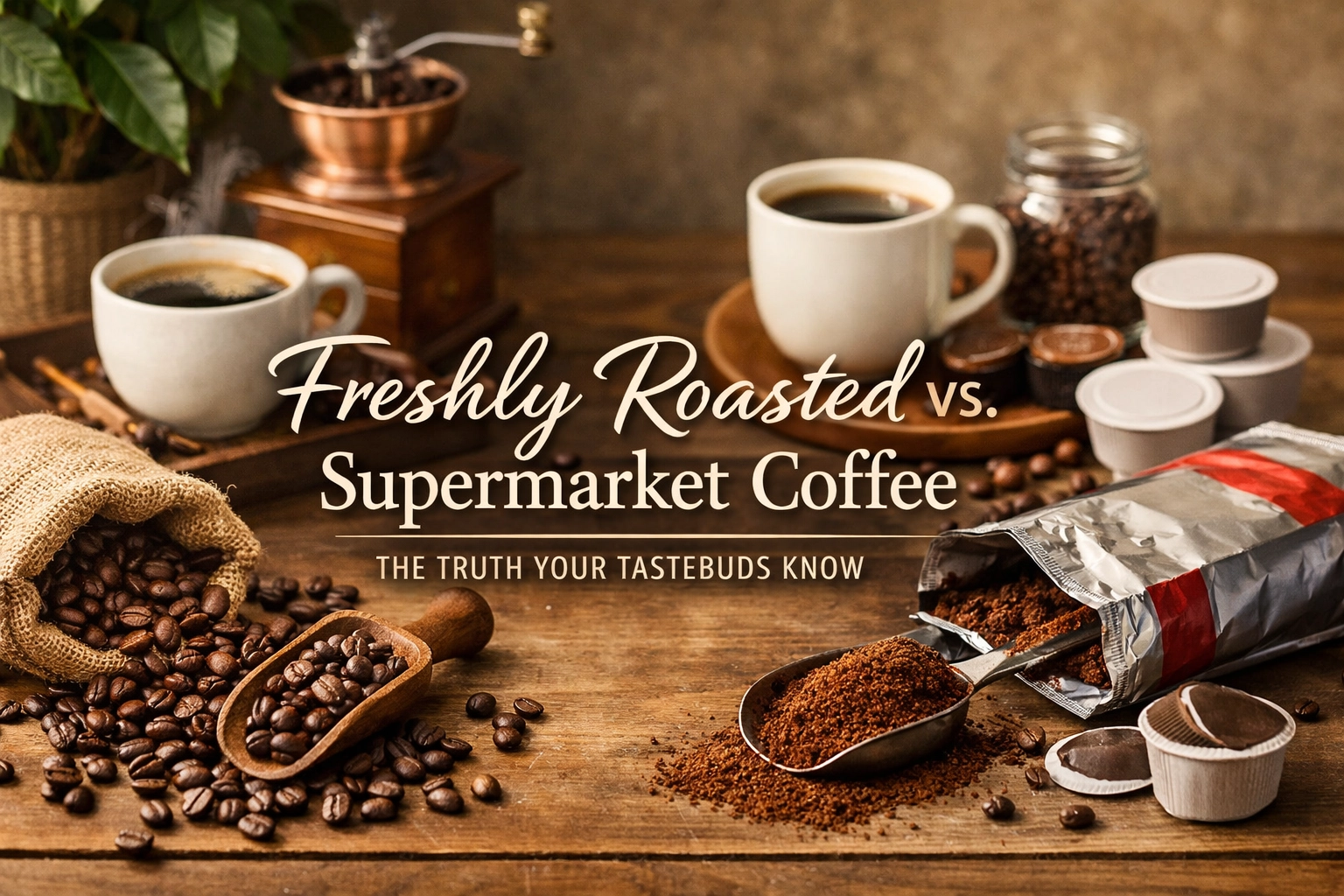
You've probably walked past the coffee aisle in your local supermarket dozens of times. Rows of vacuum-sealed bags, gleaming under fluorescent lights, promising café-quality coffee at home. And honestly? They look perfectly fine.
But here's the thing your tastebuds already know, even if your brain hasn't caught up yet: there's a world of difference between those shelf-stable bags and freshly roasted specialty coffee. We're talking about a difference so significant that once you experience it, going back feels like watching your favorite film on a tiny, blurry screen when you've experienced IMAX.
So what's really happening here? Let's dig into the science, the flavor, and the truth about what you're actually drinking.
The Freshness Timeline: It's All About Time
Coffee is a fresh product. Not in the way that milk goes off after a week, but in a more subtle, flavor-destroying way.
When coffee is roasted, hundreds of volatile compounds are created, these are the aromatics and flavor notes that make specialty coffee so exciting. The problem? These compounds are fragile. They start breaking down almost immediately after roasting, and this process accelerates dramatically once the beans are ground.
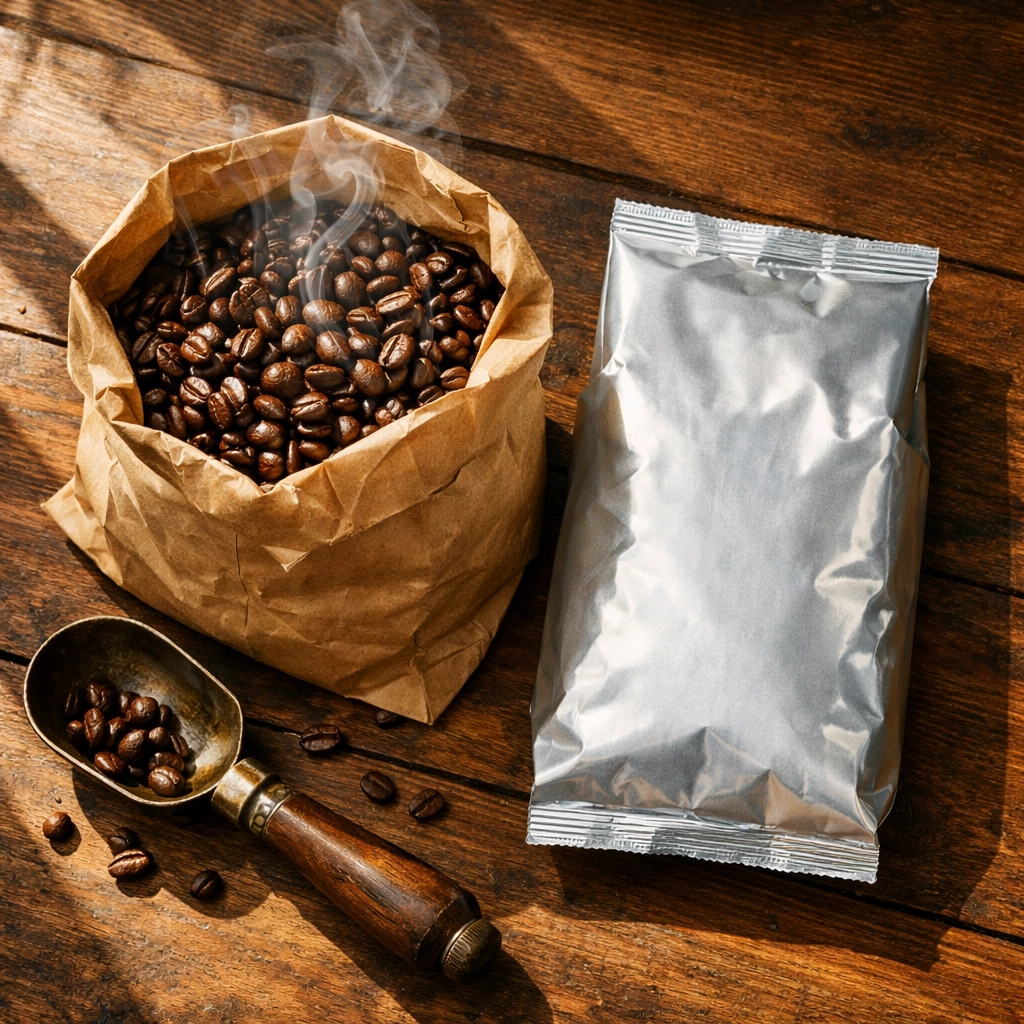
Freshly roasted coffee from a specialty roaster like Limini Coffee is typically shipped within days of roasting. We're talking 2-5 days, max. The beans reach you when they're still developing their peak flavor, usually around 4-7 days post-roast, and they'll maintain excellent quality for up to six weeks if you store them properly (airtight container, cool and dark place, away from moisture).
Supermarket coffee? That's been sitting in a warehouse, then on a truck, then in a distribution center, then on a shelf for… well, months. Sometimes many months.
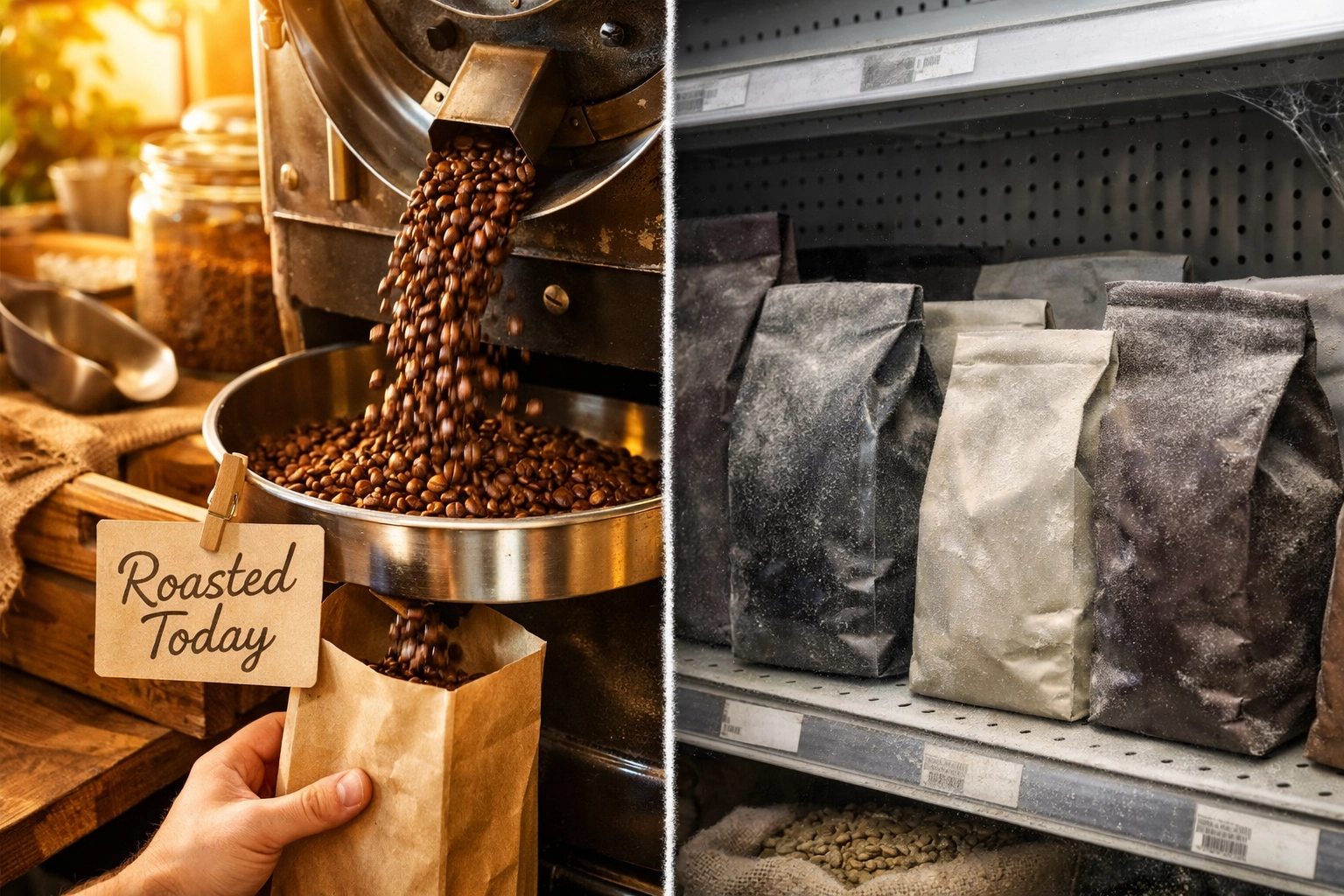
By the time you crack open that bag, those volatile compounds have already said their goodbyes. The natural oils have oxidized. The complex acids have degraded. What you're left with is a shadow of what coffee can actually be.
Coffee is best consumed within 2-3 weeks of roasting. After that point, you start losing those delicate flavor notes, the bright acidity, the fruity undertones, the caramel sweetness. Pre-packaged supermarket coffee often shows noticeable decline after just 2-4 weeks, and you're buying it months after that.
Flavor Complexity: Multi-Dimensional vs. One-Note
Let's talk about what you actually taste.
When you brew freshly roasted specialty coffee, you're experiencing something genuinely dynamic. Depending on the origin, you might taste fruity notes, like blueberry or citrus in Ethiopian coffees, or chocolatey, nutty tones in beans from Central America. You might pick up floral aromatics, caramel sweetness, even herbal undertones.
This isn't marketing nonsense. These flavors exist because the volatile compounds, esters, aldehydes, ketones, are still intact. Fresh beans capture the characteristics of their origin, their processing method, their terroir. It's the same reason wine from different regions tastes different.
Supermarket coffee, on the other hand, tends to taste… flat. One-dimensional. Predominantly bitter, with maybe a generic "coffee" flavor. There's no complexity, no development across the cup, no surprise notes that make you pause and think "oh, that's interesting."
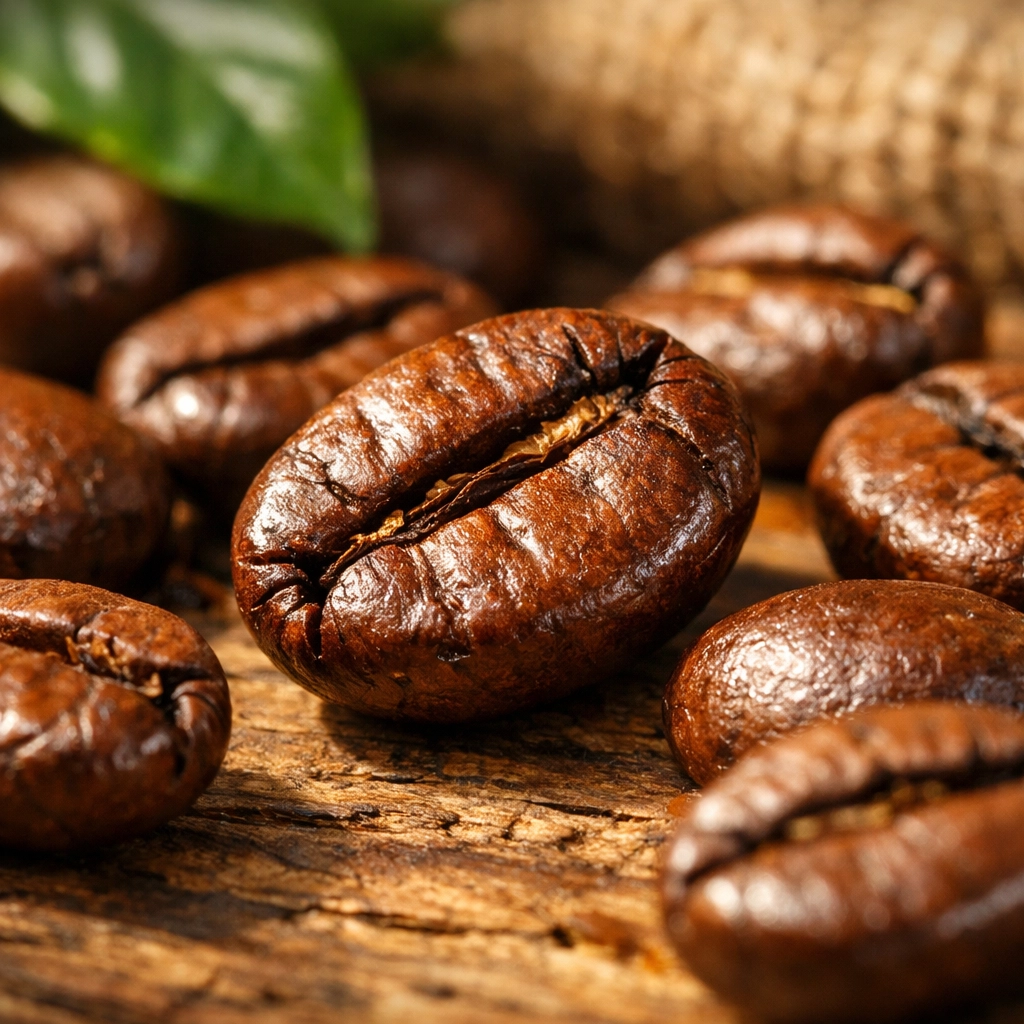
Why? Because those nuanced flavors are the first to disappear during storage. What's left is the base bitterness and roast character. And here's the kicker: mass-market roasters know this. So they often over-roast their beans, pushing them into dark, French roast territory, to mask the inconsistencies and staleness. Dark roasting creates uniformity, sure, but it also obliterates origin characteristics.
We think coffee should taste like something other than burnt bitterness. You should be able to identify whether you're drinking a washed Ethiopian Yirgacheffe or a natural-processed Brazilian. That's the beauty of specialty coffee.
Aroma: The Canary in the Coal Mine
Before you even taste coffee, you smell it. And your nose knows the truth immediately.
Open a bag of freshly roasted beans and you're hit with a robust, complex bouquet. Depending on the roast, you might smell floral notes, nutty sweetness, even spicy aromatics. The scent is intense, immediate, alive.
Open a bag of supermarket coffee and… not much happens. Maybe a faint, generic coffee smell. A bit flat. Sometimes even slightly cardboard-like (that's the packaging talking).
This is because aroma compounds are even more volatile than flavor compounds. They're the first casualties of time. That weak aroma isn't just disappointing, it's telling you exactly what the coffee will taste like. Or rather, won't taste like.
Extraction Performance: Why Fresh Beans Brew Better
Here's something that often gets overlooked: fresh beans don't just taste better, they actually perform better during brewing.
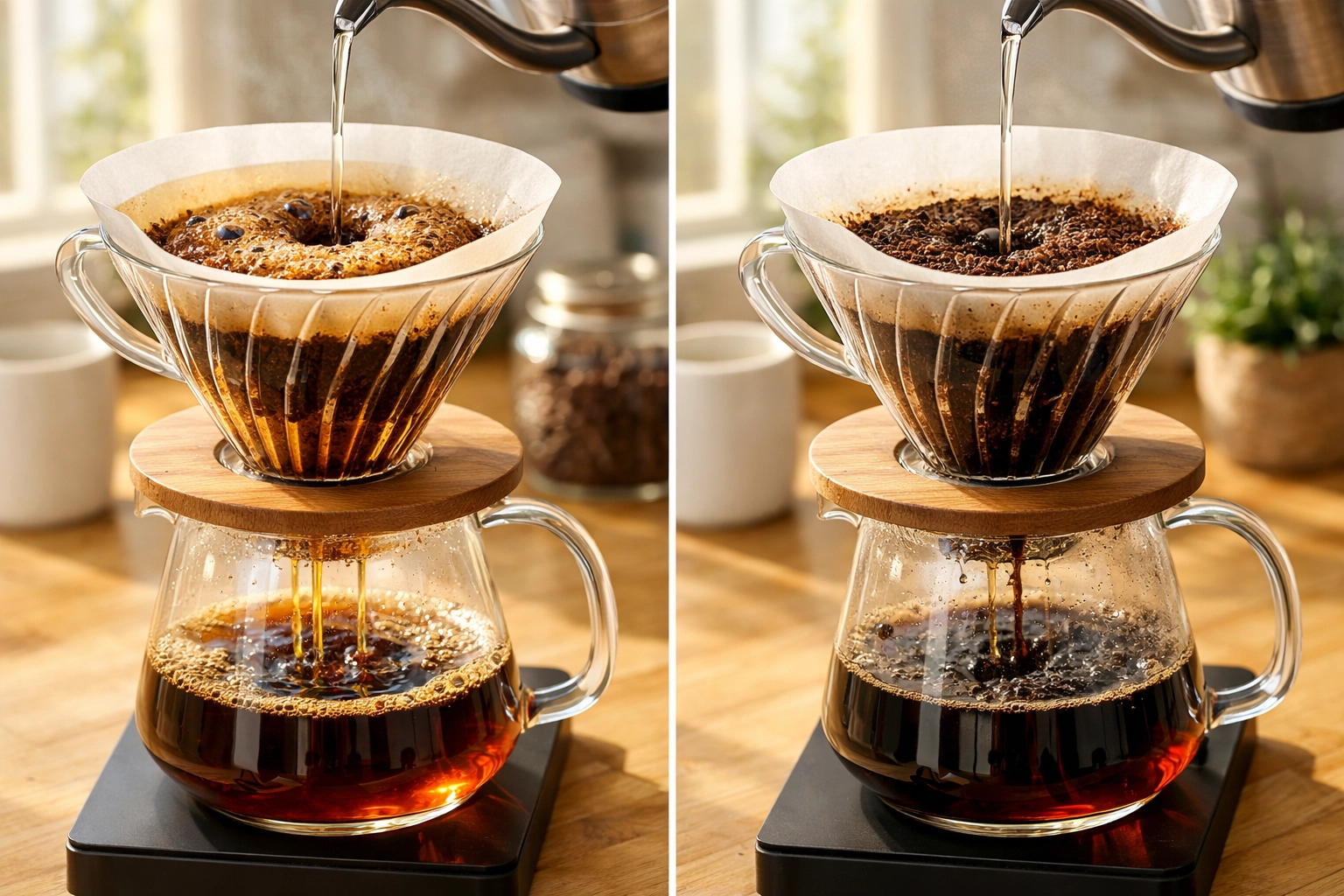
Fresh coffee retains natural moisture and oils. This means when you grind it, you get a consistent particle distribution, not too fine, not too coarse, with structural integrity. When water flows through that coffee bed (whether you're making pour-over, espresso, or French press), it extracts evenly.
Stale beans? They've dried out. They've lost those protective oils. When you grind them, they turn almost sandy, crumbly, inconsistent. During extraction, water finds channels and shortcuts, creating uneven flow. Some grounds get over-extracted (hello, bitterness), while others barely get touched (weak, sour notes).
This is especially noticeable with espresso. Fresh beans produce that gorgeous golden crema: the velvety foam that sits atop a proper espresso shot. Stale beans struggle to produce any crema at all, and what little they manage is thin, bubbly, and disappears within seconds.
It's not just about skill at that point. You can have the best espresso machine, the perfect grinder, impeccable technique: but if your beans are months old, you're fighting an uphill battle.
The Pre-Ground Problem
Most supermarket coffee comes pre-ground. And this is where things get particularly grim.
Coffee starts losing volatile compounds immediately after roasting, but grinding accelerates this process exponentially. Within minutes of grinding, you lose a significant percentage of aromatic compounds. Within hours, even more. After days or weeks in a bag on a shelf?
We're not exaggerating when we say pre-ground coffee is essentially coffee-flavored dust by the time you brew it. The convenience isn't worth the catastrophic flavor loss.
Plus, pre-ground coffee readily absorbs odors from its environment. Cardboard packaging, warehouse smells, whatever else is on that supermarket shelf: it all seeps in.
Fresh whole beans, ground immediately before brewing? That's where the magic happens.
Why Supermarket Coffee Exists (And Why We Don't Blame It)
To be fair, supermarket coffee serves a purpose. It's convenient, affordable, and available everywhere. For someone who just needs caffeine and doesn't particularly care about flavor complexity, it does the job.
The problem is that many coffee drinkers don't realize there's an alternative. They've been drinking stale, over-roasted, pre-ground coffee for so long that they think that's just what coffee tastes like. Bitter. Burnt. One-note.
And that's just a real shame, honestly.
Specialty roasters like us focus on sourcing exceptional beans, roasting them to highlight their unique characteristics, and getting them to you while they're still fresh. It costs a bit more, sure: but the difference in quality is so significant that it's not even the same category of product.
The Limini Coffee Difference
When you order from Limini Coffee, you're getting beans roasted specifically for your order. We don't roast massive batches weeks in advance and let them sit in a warehouse. We roast, we pack, we ship: usually within days.
That means when you open your bag, those beans are at their absolute peak. You're tasting the coffee as it's meant to be tasted: complex, nuanced, vibrant. You're getting the fruity brightness of an Ethiopian natural, or the chocolatey smoothness of a Colombian washed, or the bold body of an Indonesian.
You're getting coffee that actually tastes like something.
We source our beans carefully, working directly with importers who share our commitment to quality and sustainability. You can read more about our sourcing philosophy if you're interested in where your coffee comes from: it makes a difference.
What You Can Do Today
If you're still buying coffee from the supermarket, we'd encourage you to try something different. Just once. Order a bag of freshly roasted specialty coffee: from us or any reputable roaster: and brew it within a week of receiving it.
Grind it fresh. Use good water. Follow a simple recipe (our coffee brewing calculator can help if you want to get precise).
Then taste it. Really taste it. Notice the aroma, the flavor development, the finish.
Then, if you're curious, go back and brew a cup of your usual supermarket coffee. Same method, same care. Compare them side by side.
Your tastebuds will tell you everything you need to know.
The Bottom Line
Freshly roasted specialty coffee isn't just "better" than supermarket coffee: it's fundamentally different. It's what coffee is supposed to taste like when those delicate volatile compounds are intact, when the origin characteristics shine through, when the roaster's skill is given something exceptional to work with.
Supermarket coffee has its place. But if you love coffee: if you want to experience what it can really be: fresh is the only way forward.
We believe specialty coffee should be accessible to everyone who wants to explore it. That's why we roast fresh, ship fast, and stand behind every bag we send out. Because life's too short for stale coffee.
Ready to taste the difference? Check out our current selection at Limini Coffee and discover what fresh really means.
Your morning cup deserves better. And so do you.
Leave a Reply