
Ever looked at that bag of shiny brown beans on your counter and wondered how on earth they got there? Most of us just want the caffeine to hit our bloodstream so we can face the Monday morning Zoom calls, but there is a massive, intricate journey that happens before that bean even sees a grinder.
At Limini Coffee, we live and breathe this stuff. We think it’s pretty magical. To the average person, coffee is just a drink. To us, it’s a botanical miracle that passes through dozens of hands before it reaches yours.
So, let’s take a stroll through the life of a coffee bean. From a tropical shrub to your favourite mug, here is the simple (but not too simple) guide to how coffee is processed.
It Starts with a Cherry
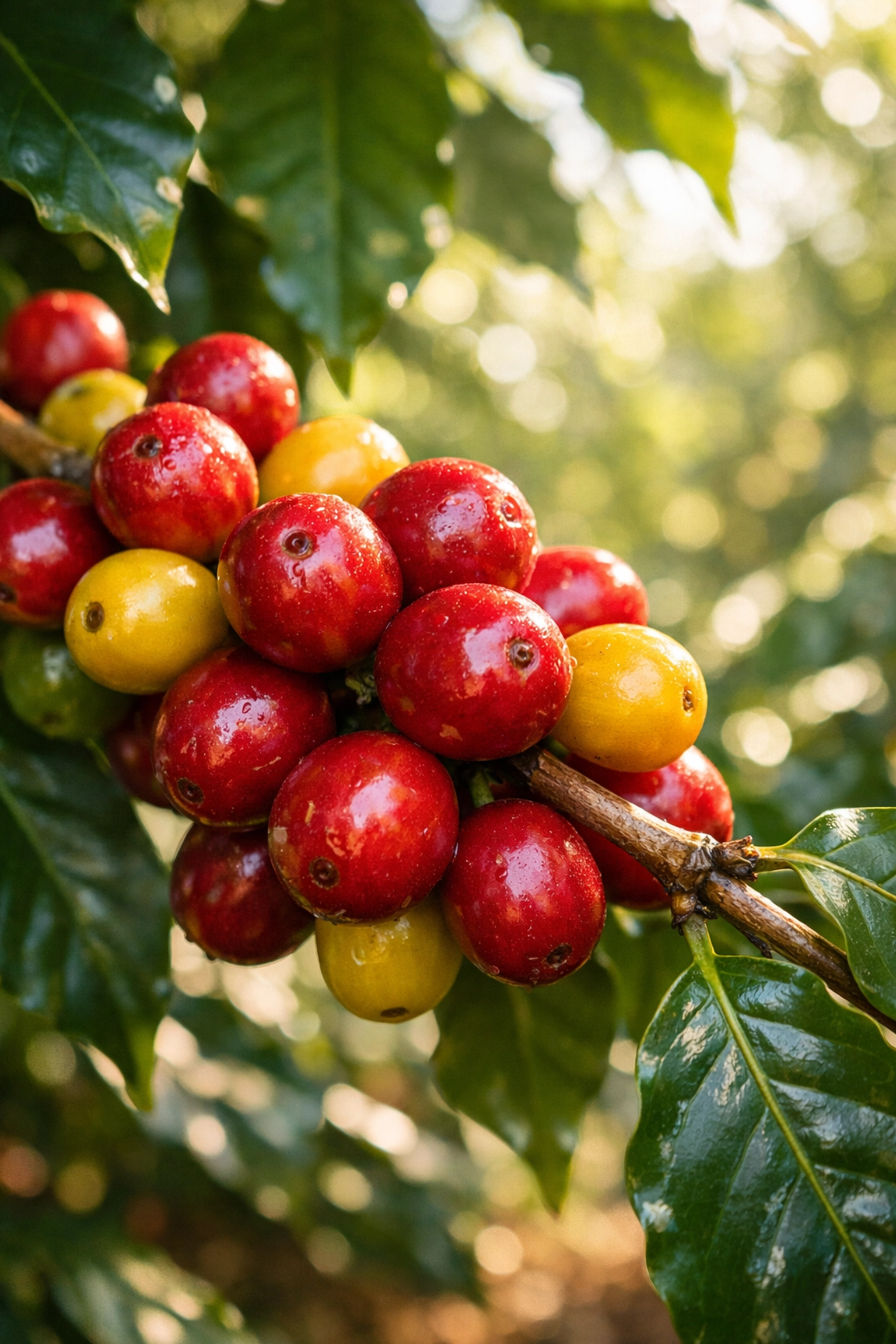
First things first: coffee doesn’t grow as a bean. It’s a seed inside a fruit.
Imagine a small, bright red (or sometimes yellow) cherry growing on a lush green bush. That’s your coffee. Inside that fruit, there are usually two seeds sitting face-to-face. These are what we eventually roast and grind.
But you can’t just pluck a cherry and toss it in a roaster. That would be a disaster. The fruit, or the "pulp" and "mucilage" (the sticky, sugary layer), needs to be removed. How a farmer chooses to remove that fruit is what we call processing, and it has a massive impact on how your morning brew tastes.
The Big Three: Processing Methods
This is where the magic (and the science) happens. There are three main ways to get that seed out of the fruit. Each one results in a completely different flavour profile. If you’ve ever noticed that some coffees taste like chocolate and nuts while others taste like blueberries or citrus, processing is usually the reason why.
1. The Natural Process (The "Dry" Way)
This is the oldest method in the book. It’s common in places where water is scarce, like parts of Ethiopia or Brazil.
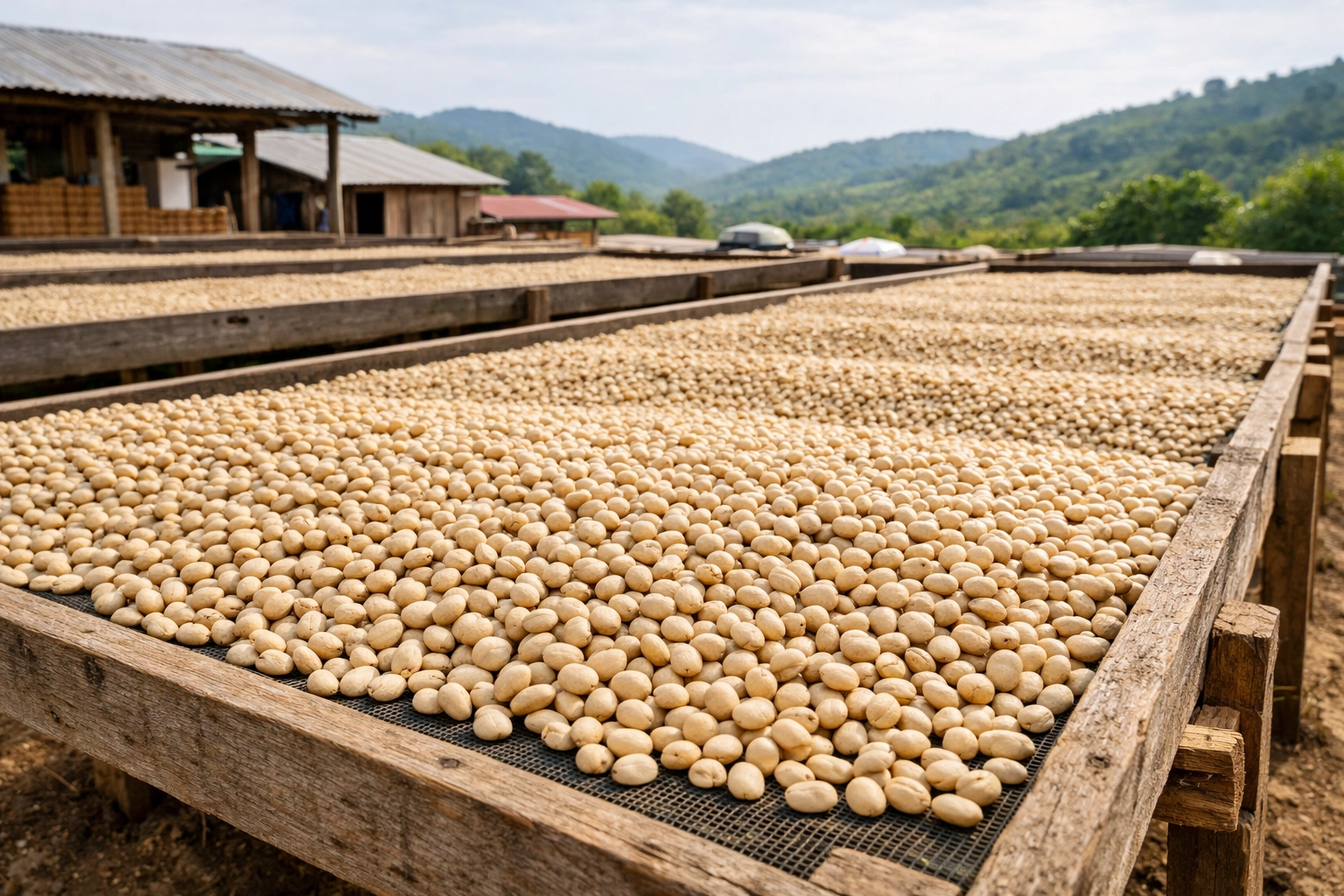
In the natural process, the entire cherry is picked and then spread out on huge "drying beds" in the sun. They look like big raised tables. The cherries sit there for weeks, being turned regularly so they don't grow mould. As they dry, the fruit shrivels up like a raisin, and the sugars from the fruit ferment and soak into the bean.
What does it taste like?
Natural process coffees are usually heavy-bodied, incredibly sweet, and bursting with wild, fruity notes. Think strawberry, tropical fruit, or even wine. It’s a bit "love it or hate it," but we absolutely love it.
2. The Washed Process (The "Wet" Way)
The washed process is all about clarity. Instead of letting the fruit dry on the bean, the fruit is stripped off almost immediately using a machine called a depulper.
The beans are then put into fermentation tanks filled with water for anywhere from 12 to 48 hours. This breaks down the remaining sticky mucilage. After that, they get a good scrub (the "wash") and are laid out to dry.
What does it taste like?
Washed coffees are clean. That’s the best word for them. They tend to have higher acidity (the good kind, like a crisp apple) and very distinct, bright flavours. If you want to taste the "origin" of the bean without the fruitiness of the processing getting in the way, go for a washed coffee. You can find some of our favourite washed specialty coffees right here.
3. The Honey Process (The Middle Ground)
Don't worry, there isn't actually any honey involved. It’s called "honey" because the beans get very sticky during the process.
In this method, the skin of the cherry is removed, but some of the sticky mucilage is left on the bean while it dries. Depending on how much "goo" is left on, you get Yellow, Red, or Black honey processed coffee.
What does it taste like?
It’s the best of both worlds. You get the clarity of a washed coffee but with a syrupy sweetness and creamy body that reminds people of, you guessed it, honey.
Milling and Grading: The Final Polish
Once the beans are dried, they are still wearing a protective "parchment" skin. They look a bit like little peanuts at this stage. They are sent to a dry mill where the parchment is whacked off (lovingly, of course) and the "green" coffee beans are revealed.
But we aren't done yet. We only want the best.
The beans are graded by size and weight. Machines and eagle-eyed workers look for defects, beans that are chipped, insect-bitten, or sour. In the world of specialty coffee, we have very high standards. Only the top-tier beans make the cut. We take our sourcing very seriously because we know that you can’t roast great coffee out of bad beans. It’s just not possible.
The Roaster: Where the Flavour Wakes Up
Now we have green coffee beans. If you tried to brew these, they’d taste like grass and beans. Not great.
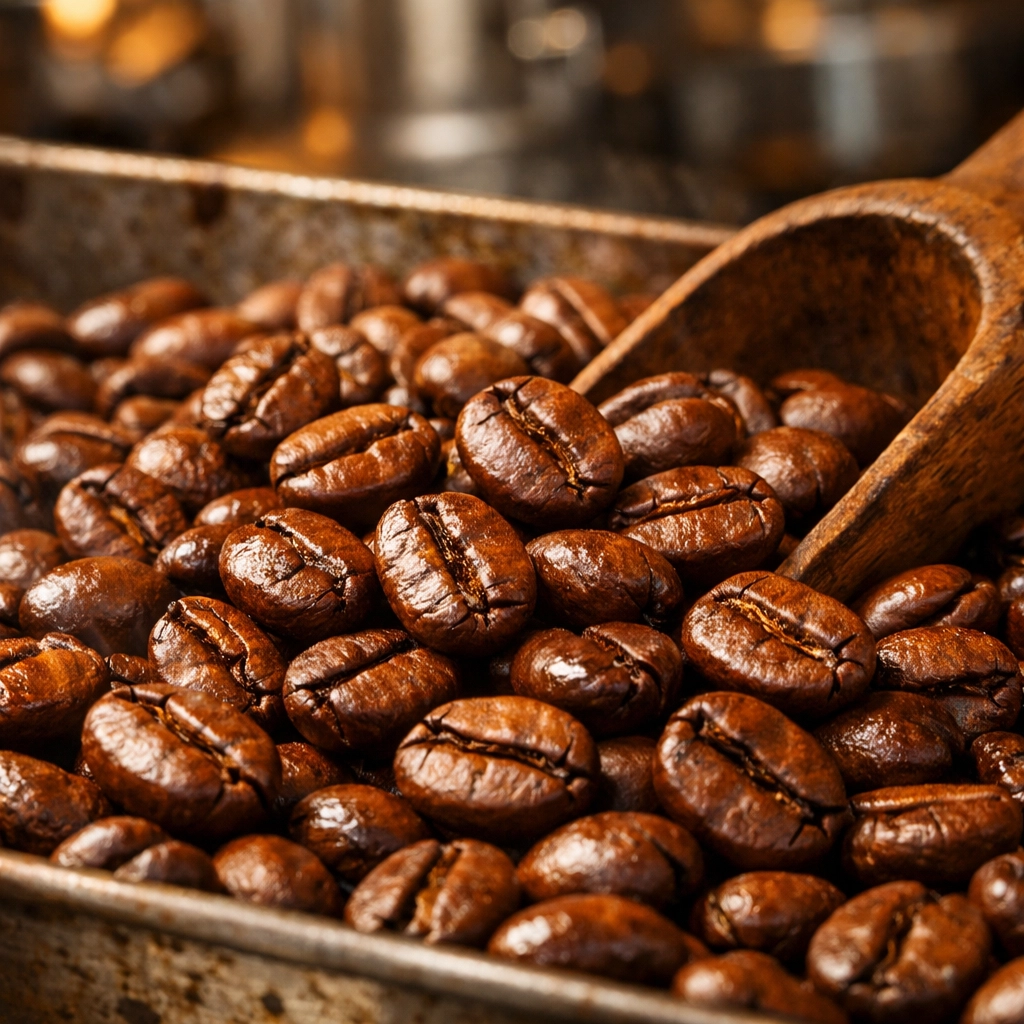
Roasting is the bridge between the farm and your kitchen. We heat the beans in large rotating drums to temperatures usually between 180 °C and 220 °C (about 350 °F to 430 °F).
During these 10–15 minutes, a lot of chemistry happens:
- The Maillard Reaction: This is the same thing that happens when you sear a steak or toast bread. It creates those deep, complex savoury and sweet flavours.
- Caramelization: The sugars in the bean break down and turn into those lovely caramel and chocolate notes we crave.
- The First Crack: The bean literally pops like popcorn as the moisture turns to steam. This is usually where "light roasts" end.
We spend a lot of time perfecting our roast profiles. Too short, and the coffee is sour and grassy. Too long, and it tastes like an ash tray. Finding that "sweet spot" is what makes us professional roasters.
Grinding and Brewing: The Finish Line
The beans are roasted, bagged, and sent to you. But the journey isn't over until the water hits the grounds.
You might think the hard work is done, but the way you grind and brew at home is the final piece of the puzzle. If you use a coarse grind for espresso, it’ll taste like sour water. If you use a fine grind for a French Press, it’ll be a bitter mess.
Why is this important? Because you are the final "processor."
We always recommend grinding fresh if you can. As soon as you break that bean open, the oils and aromas start to evaporate. If you’re looking to level up your home setup, we have plenty of advice on choosing the right equipment.
And if you’re worried about getting the measurements right, our coffee brewing calculator is a lifesaver for making sure your ratios are spot on.
Why Does All This Matter?
So, why did we just spend 1,200 words talking about fruit guts and drying beds?
Because when you understand the effort that goes into every single bean, the coffee tastes better. Honestly. When you realize that a farmer in Colombia hand-picked those cherries, a processor spent weeks turning them in the sun, and we spent hours dialling in the roast, you start to appreciate that morning cup a little more.
It’s not just a commodity. It’s a craft.
Whether you're a casual drinker or a hardcore home barista, knowing the difference between a natural and a washed coffee helps you find what you actually like. It stops you from wasting money on beans that don't suit your palate.
Ready to taste the difference?
Now that you’re a processing pro, why not put your taste buds to the test? Whether you want the fruity punch of a natural or the clean snap of a washed coffee, we’ve got you covered.
Pop over to the Limini Coffee shop and grab a bag of the fresh stuff. We roast to order, so you’re getting the absolute peak of that "bean to cup" journey.
And hey, if you really want to dive deep, come see us for some barista training. We love talking shop and helping people make better coffee at home.
Fresh is best. Always. 🙂
Leave a Reply