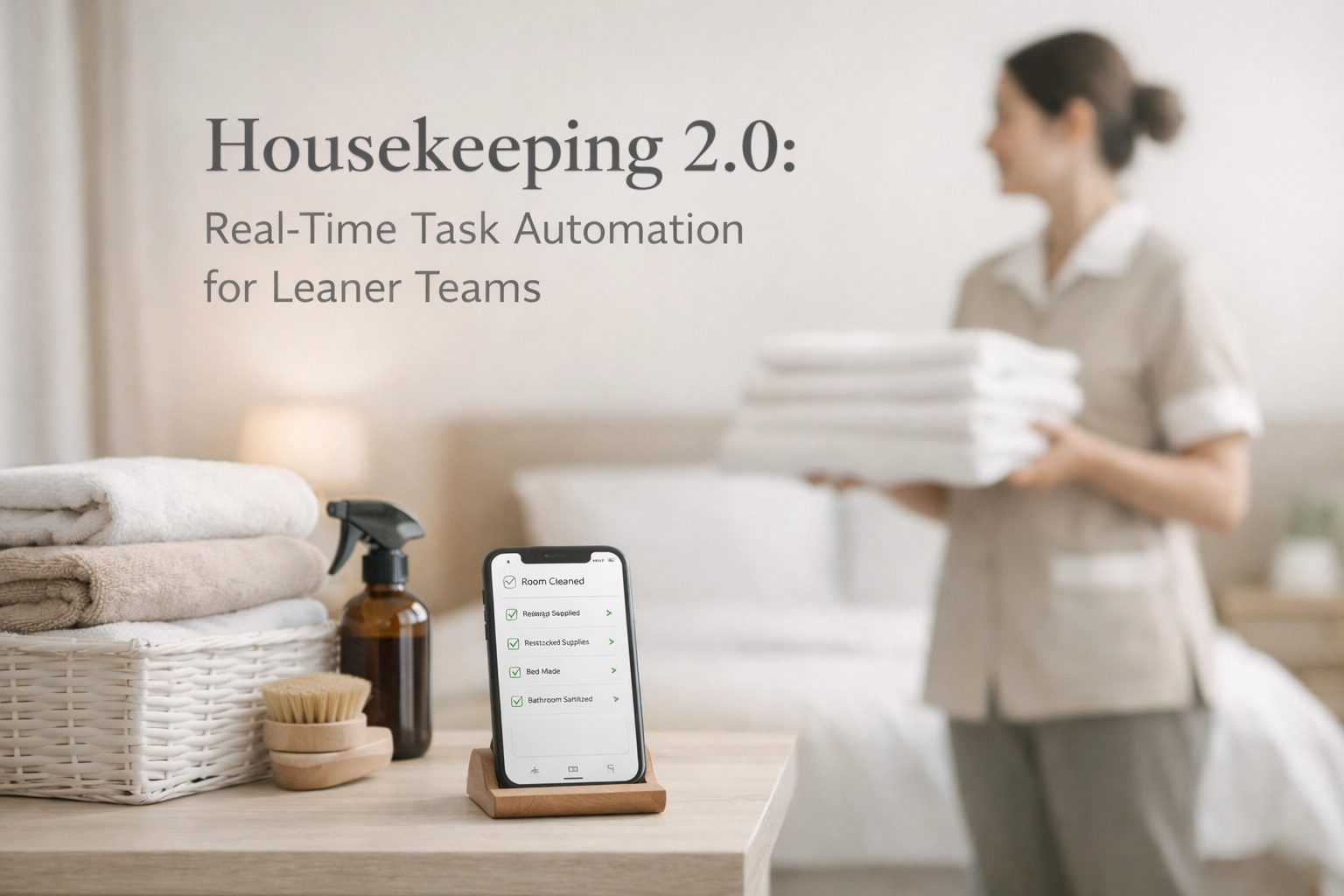
Clean faster. Coordinate better. Scale smarter.
The back-of-house has long been the invisible engine of the hotel industry, often operating on stacks of paper, frantic radio calls, and manual spreadsheets. But the landscape of 2026 demands a different approach. We believe the clipboard is a relic of a slower era. Today, operational excellence isn't just about how well your team cleans; it’s about how intelligently they are deployed.
Modern hotel management software has transformed housekeeping from a reactive chore into a proactive, data-driven department. In an era where labor markets are tight and guest expectations are at an all-time high, the ability to run a lean, high-performing team is the ultimate competitive advantage. This is Housekeeping 2.0: a world where real-time task automation does the heavy lifting, allowing your staff to focus on what they do best: creating exceptional guest experiences.
The end of the manual paper trail
We think the traditional morning briefing: where supervisors spend an hour hand-assigning rooms: is a drain on your most valuable resource: time. When you automate the administrative burden, you reclaim hours of productivity every single day.
In a legacy environment, a housekeeper finishes a room and has to find a phone or walk back to the office to report it clean. Then, a supervisor has to physically verify it before the front desk even knows the room is ready. It’s a chain of delays. With modern housekeeping software for hotels, that chain is broken.
- Instant Updates: The second a guest checks out at the kiosk or on their phone, the system triggers a priority cleaning task.
- Dynamic Sequencing: Tasks aren't just listed; they are ranked by urgency, proximity, and guest ETA.
- Zero Latency: As soon as a housekeeper marks a room "Clean" on their mobile device, the room status updates across the entire PMS instantly.
By removing the "middleman" from the communication flow, properties are seeing a massive reduction in the time rooms sit vacant but "dirty" in the system. It’s about squeezing every bit of efficiency out of your inventory.
Intelligent assignment for lean teams
The goal isn't to work your staff harder; it’s to help them work smarter. We’ve seen that housekeeping automation can reduce administrative tasks by up to 70%. When the software understands the layout of your hotel, the current occupancy, and the specific skills of your team, it can distribute work in ways a human brain simply can't process in real-time.
Intelligent task assignment considers the "why" behind the clean. Is it a stay-over? A deep-clean departure? A VIP arrival?
- Occupancy-Based Scheduling: The system looks at your booking data to predict laundry loads and staffing needs days in advance.
- Proximity Routing: No more housekeepers crossing paths in the hallway to get to their next room. The software groups tasks by floor and wing to minimize transit time.
- Productivity Tracking: Managers can see exactly how long specific room types take to clean, allowing for fairer workload distribution and better-informed staffing decisions.
This level of precision allows hotels to operate with leaner teams without burning out their employees. It’s a shift from "we need ten people today" to "we need 42 hours of labor, strategically distributed."
The silent concierge: Real-time mobile execution
We believe that a housekeeper with a smartphone is more effective than a housekeeper with a walkie-talkie. A mobile-first approach provides the frontline team with everything they need to be autonomous.
When a staff member logs into their mobile dashboard, they see their personalized digital task sheet. It’s not just a list of room numbers; it’s a detailed guide. They can see guest notes: perhaps the guest in 402 requested extra feather pillows or prefers a 2:00 PM turndown.
"Since we switched to automated mobile assignments, my team feels more empowered. They don't have to wait for me to tell them where to go next: the app handles it, and I can focus on quality control instead of traffic direction."
: Executive Housekeeper, 150-room Boutique Property
This digital connection also bridges the gap between housekeeping and maintenance. If a housekeeper spots a leaky faucet, they don't need to write it down or call it in. They snap a photo, tag it in the app, and a maintenance ticket is automatically generated and assigned. It’s seamless. It’s fast. It’s Housekeeping 2.0.
Visibility without micromanagement
One of the biggest pain points for hotel managers is the "black hole" of the midday shift. Where is the team? Which rooms are half-finished? When can we start checking people in?
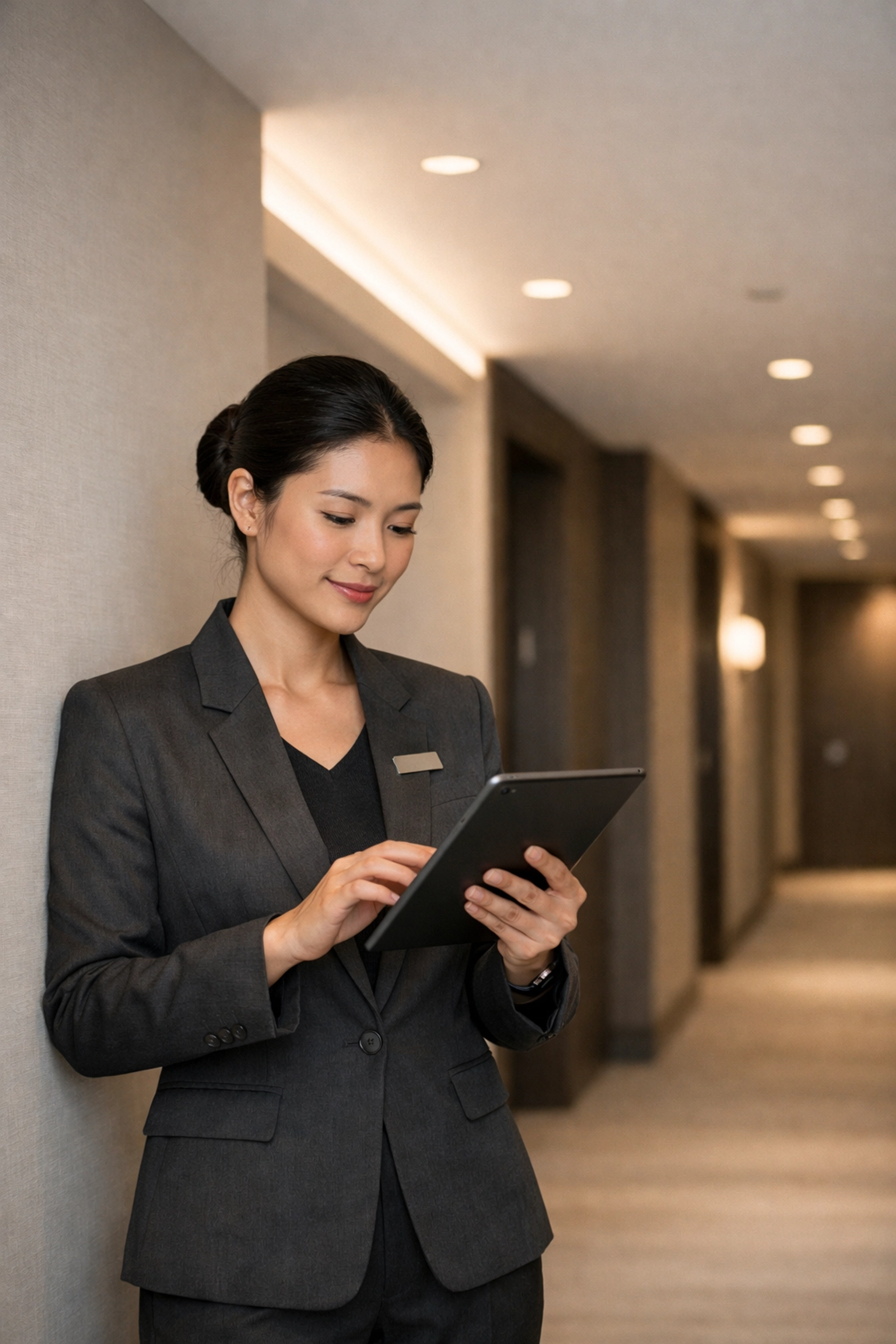
With a centralized digital platform, that "black hole" disappears. Managers gain a bird’s-eye view of the entire property’s status through live dashboards. You can see the progress of every floor in real-time. If one wing is lagging behind due to a particularly messy departure, you can reassign staff with a single click to ensure you hit your check-in targets.
This isn't about watching over a staff member’s shoulder; it’s about having the data to support them. If the data shows that 30% of your rooms are taking longer than average to clean, you might realize you’re understaffed or that your cleaning supplies need an upgrade. It’s about turning operational "gut feelings" into hard facts.
The Guest Experience: Beyond the "Clean" sign
At the heart of every technological shift at Mews is the guest. While housekeeping automation happens behind the scenes, the guest is the primary beneficiary.
Think about the traditional check-in experience. A guest arrives at 1:00 PM, tired from a flight, only to be told, "Your room isn't ready yet. Check back at 3:00 PM." In a Housekeeping 2.0 environment, the front desk can see that a room of that type is currently being cleaned and is 80% finished. They can offer the guest a coffee, knowing the room will be ready in exactly twelve minutes.
- Early Check-In Revenue: By accelerating room turnover, you can confidently sell early check-in as an ancillary service.
- Consistency: Automated checklists ensure that every room meets the brand standard, every single time.
- Personalization: When housekeeping knows a guest's preferences via the hotel management software, they can set the room up perfectly before the guest even touches the door handle.
We believe that true luxury in 2026 is defined by friction-less service. A spotless room that is ready exactly when the guest needs it: that is the goal.
Sustainable stays and the future of labor
The benefits of automation also extend to your property's footprint and your bottom line. By optimizing routes and tasks, you reduce the energy consumed by keeping lights and HVAC on in empty rooms during the cleaning process. Furthermore, real-time data allows for more accurate inventory management of linens and cleaning chemicals, reducing waste.
But perhaps the most significant impact is on your team’s culture. The hospitality industry has long struggled with high turnover in housekeeping roles. By removing the chaos and providing clear, digital instructions, you reduce the stress of the job. You’re giving your team the tools they need to succeed, which leads to higher job satisfaction and lower turnover.
Setting up for success
Transitioning to Housekeeping 2.0 doesn't happen overnight, but it is easier than you might think. It starts with choosing a hotel management software that treats housekeeping as a core component, not an afterthought. You need an API-first ecosystem that allows your PMS, your housekeeping app, and your guest messaging platform to speak the same language.
- Audit your current flow: Where are the bottlenecks? Is it communication? Is it scheduling?
- Empower the frontline: Provide tablets or smartphones to your team and invest in 30 minutes of training.
- Trust the data: Let the automation handle the assignments for a week and watch the productivity metrics climb.
The hotels that thrive in the coming years will be the ones that embrace operational excellence through technology. They will be the ones that can do more with a leaner, happier team. They will be the ones that never have to tell a guest, "Your room isn't ready yet."
Ready to see how Housekeeping 2.0 can transform your property? We’ve helped thousands of hotels move from manual chaos to automated clarity.
Explore the Mews platform and see what real-time automation can do for you.
Leave a Reply