You've heard the promises before. "Automate everything!" "Go paperless overnight!" "Transform your operations!"
Here's the truth: you can start automating your hotel in about 5 minutes. But that doesn't mean flipping a switch and walking away. It means choosing the right cloud-native hotel PMS, one that's actually designed for automation from the ground up.
Let's talk about what that really looks like.
What Cloud-Native Actually Means (And Why It Matters)
Cloud-native isn't just software that lives in the cloud. It's an entirely different architecture.
Traditional hotel management systems were built for on-premise servers. They're clunky. They require IT teams. They break when you need them most. Cloud-native platforms like Mews are built specifically for the cloud, meaning they're designed to be fast, flexible, and ridiculously easy to use.
Here's what that gives you:
Instant access from anywhere. Desktop. Mobile. Tablet. Your staff can check someone in from the lobby or the pool bar. No VPN required.
Automatic updates. No downtime. No maintenance windows. You wake up to new features without lifting a finger.
Zero IT headaches. No servers to manage. No security patches to install. No expensive infrastructure investments. Just a subscription and you're operational.
That's the foundation. Now let's talk about the automation magic that sits on top.
The 5-Minute Setup (Seriously)
When we say 5 minutes, here's what we mean: you can start automating key operations almost immediately after choosing a modern hotel PMS.
Step 1: Connect your booking engine. Direct bookings flow straight into your system: no manual entry, no duplicate records.
Step 2: Sync your channel manager. Rates and availability update automatically across OTAs. No more double bookings or rate parity nightmares.
Step 3: Activate automated emails. Confirmation. Pre-arrival. Check-out. Review requests. All triggered based on guest journey touchpoints.
Step 4: Enable self-check-in kiosks. Guests bypass the front desk entirely if they want. Your team handles the humans who need attention.
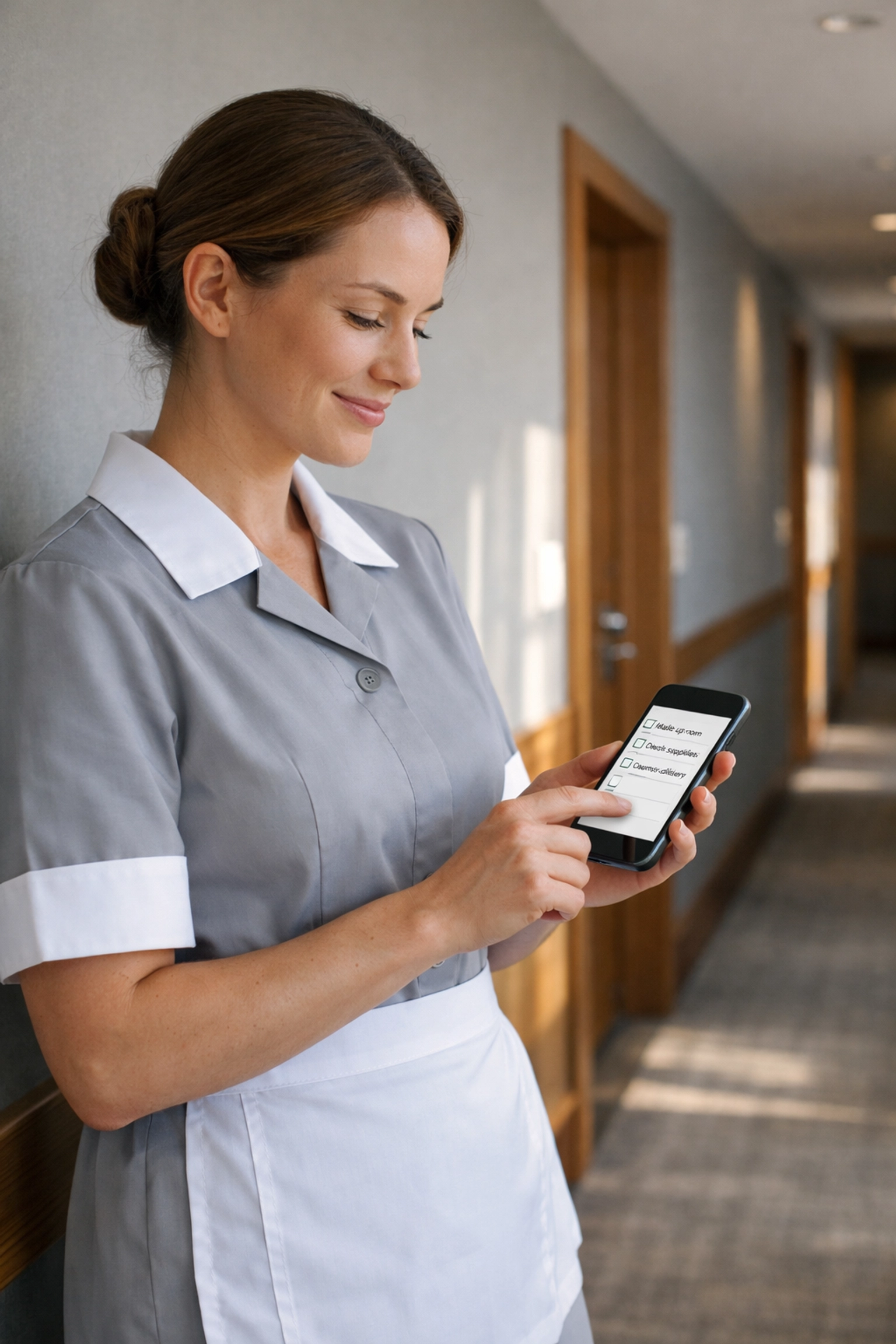
Step 5: Turn on housekeeping automation. Room status updates in real-time. Staff get assignments on their phones. No more walkie-talkies or paper lists.
Does it take longer to customize everything perfectly? Sure. But the core automation framework? That's live in minutes.
What Gets Automated (And What It Means For Your Team)
Let's break down the heavy hitters: the operations that eat up hours every single day.
Reservations and Channel Management
Your booking engine talks to your channel manager. Your channel manager talks to your PMS. Rates update everywhere, instantly. You adjust pricing once, and it flows to Booking.com, Expedia, your website: everywhere.
No more logging into six different platforms to update availability. No more panic when someone books the same room twice because your rate wasn't synced.
Guest Communication and CRM
Automated emails go out at the right moments. But here's where it gets interesting: your CRM tracks every interaction. Guest preferences. Past stays. Special requests. All in one place.
Your team sees this data instantly. They know Mrs. Johnson hates feather pillows before she even arrives. That's not magic. That's automation meeting smart data management.
Housekeeping and Maintenance
Housekeepers update room status from their phones. Front desk sees it live. No radio calls. No guessing. A guest checks out at 10:47 AM? Housekeeping knows by 10:48.
Maintenance issues get flagged immediately. A broken shower in room 302 doesn't slip through the cracks because someone forgot to write it down.
Revenue Management
Dynamic pricing isn't just for airlines anymore. Cloud-native revenue management tools analyze demand, competitor rates, and your historical data: then adjust pricing automatically.
You set the parameters. The system optimizes. You make more money without constantly monitoring 12 different dashboards.
Payment Processing and Billing
Payments happen automatically. Pre-authorizations. Charges for room service. Final checkout. All without manual credit card terminals or paper receipts (unless someone really wants one).
Your POS system at the restaurant? It talks to your hotel PMS. That cocktail at the bar shows up on the guest's room bill without anyone typing anything.
The Real Benefits (Beyond "It's Faster")
Let's get specific. Properties using modern, automated systems see measurable improvements:
85% reduction in manual data entry. Your team stops being data processors and starts being hospitality professionals.
40% faster check-in times. Guests don't wait. Your front desk doesn't feel like a bottleneck during peak arrivals.
30% increase in direct bookings. When your booking engine is seamlessly connected, guests actually use it. Fewer OTA commissions. More profit per booking.
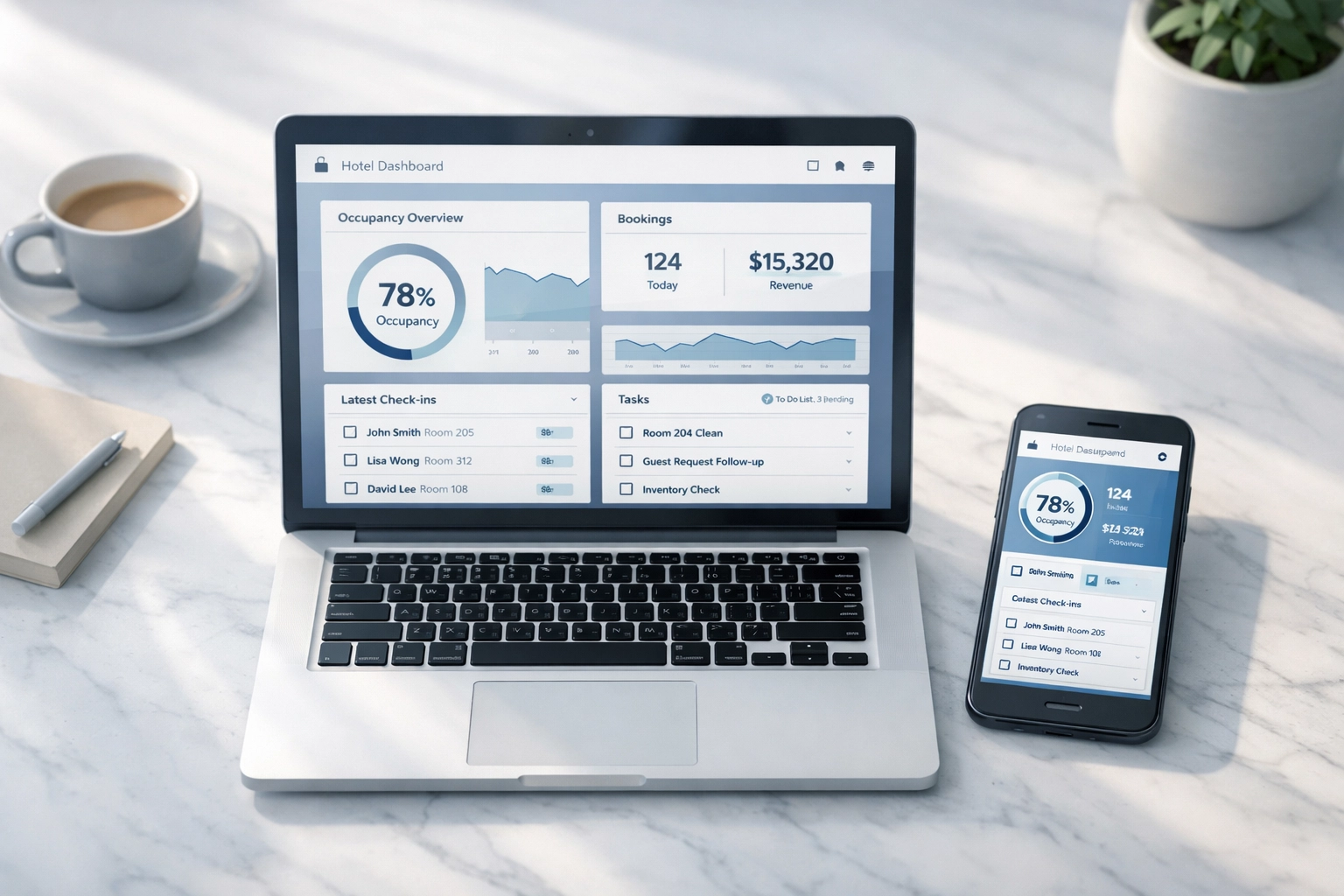
Real-time reporting. No more end-of-month surprises. You see revenue, occupancy, and performance data as it happens.

One hotel manager told us: "I used to spend 10 hours a week just reconciling bookings and fixing errors. Now I spend that time training my team and talking to guests."
That's the point. Automation doesn't replace people. It frees them to do the work that actually matters: the human stuff that makes hotels special.
What About Implementation?
Here's where most hotel tech fails. You buy the system. Then you spend six months trying to get it working. Training sessions. Migration headaches. Consultants charging by the hour.
Cloud-native platforms flip that script. Because everything's already integrated, because there's no on-premise installation, because the interface is actually intuitive: implementation happens in days, not months.
You'll spend time configuring preferences and customizing workflows. But you're operational fast. You're seeing benefits almost immediately. Not "eventually, once we figure this out."
The Mews Difference
We believe hotel technology should work for you: not the other way around. That's why Mews is built cloud-native from day one.
Everything connects. Booking engine. Channel manager. CRM. Self-check-in kiosks. Payment processing. It's one platform, not 17 different tools held together with duct tape and hope.
And automation? It's baked into every feature. You don't need to be a tech wizard to make it work. You just need to want your operations to run smoother.
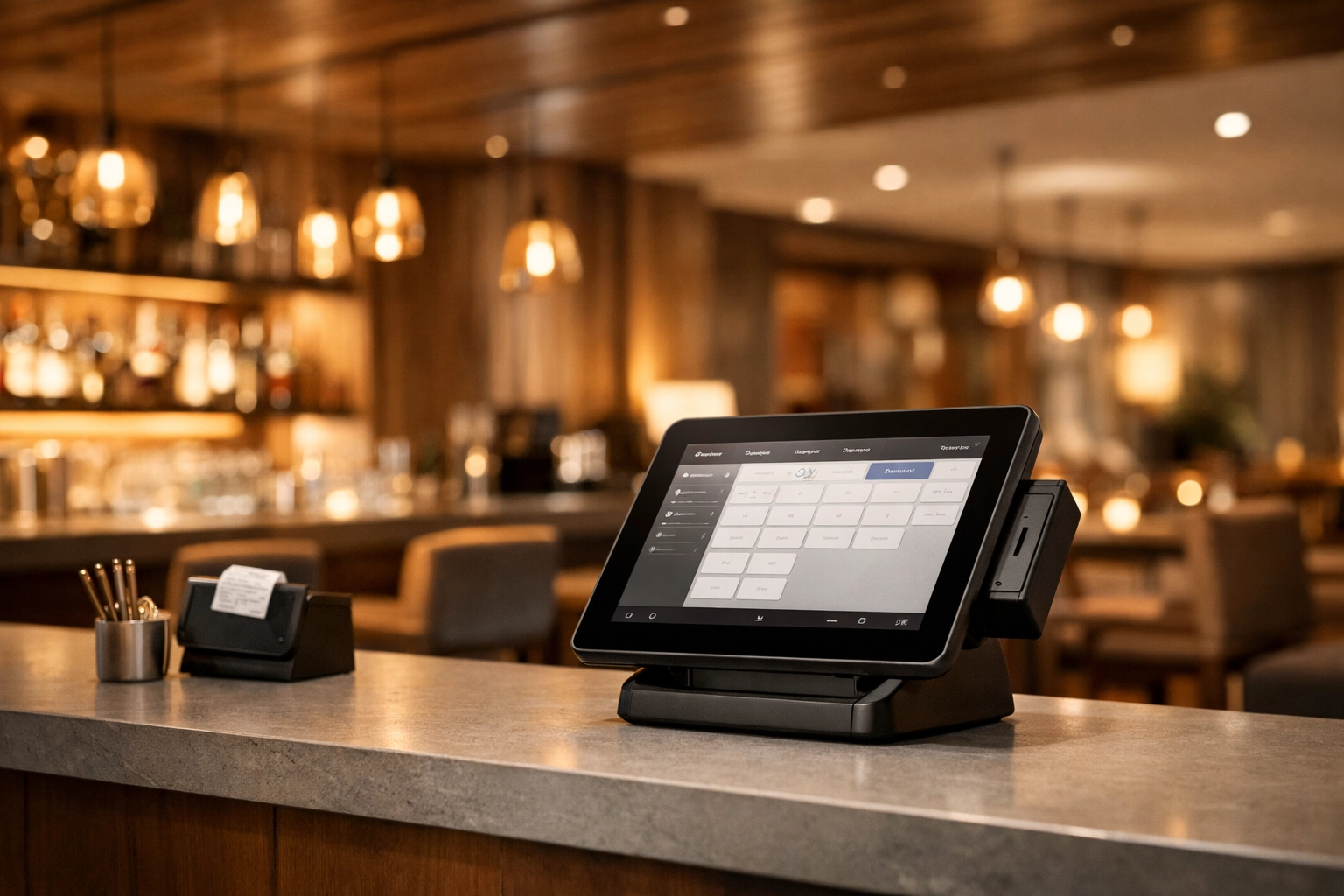
Over 5,000 properties use Mews to automate operations, reduce manual work, and actually focus on guests. From boutique hotels to large chains. From London to Sydney. They're all running leaner, faster, and smarter.
Getting Started Is The Hard Part (Except It's Not)
Most hotels put off upgrading their tech because it feels overwhelming. "We'll do it next year." "After the busy season." "When we have more time."
But here's the thing: staying with outdated systems costs you every single day. Lost bookings. Wasted staff hours. Guest frustration. That adds up way faster than any implementation timeline.
With a cloud-native hotel PMS, you can literally start seeing benefits within days. Connect your existing tools. Turn on automation. Train your team on an interface that actually makes sense.
Is it perfect on day one? No. But it's better than what you're doing now: and it gets better every week as you fine-tune it.
Start Automating Today
Five minutes might sound like marketing hype. But when you choose the right platform, that's genuinely how fast you can start seeing automation kick in.
Check out Mews and see what modern hotel operations actually look like. Cloud-native. Automated. Built for hospitality professionals who want to spend less time on admin and more time on what actually matters.
Your operations won't transform overnight. But they'll transform. And that transformation starts with one decision: choosing a platform that's designed for automation, not retrofitted with it.
The magic isn't in the software. It's in what the software lets your team do.
Leave a Reply