You need help.
Not just any help , you need someone to handle customer emails. Someone to chase down leads. Someone to write that blog post you've been putting off for three weeks. Someone to schedule meetings without the seventeen-email back-and-forth.
You pull up LinkedIn. Start browsing profiles. Calculate salaries in your head. £35k for a junior? £50k for someone decent? Plus benefits. Plus onboarding time. Plus the risk they'll quit in six months.
The math doesn't work. But the work still needs doing.
Here's the thing nobody tells you: you don't need to hire anyone.
WHAT IF YOUR "TEAM" COULD START MONDAY?
Forget job postings. Forget interviews. Forget three-month probation periods where you're not even sure if this is working.
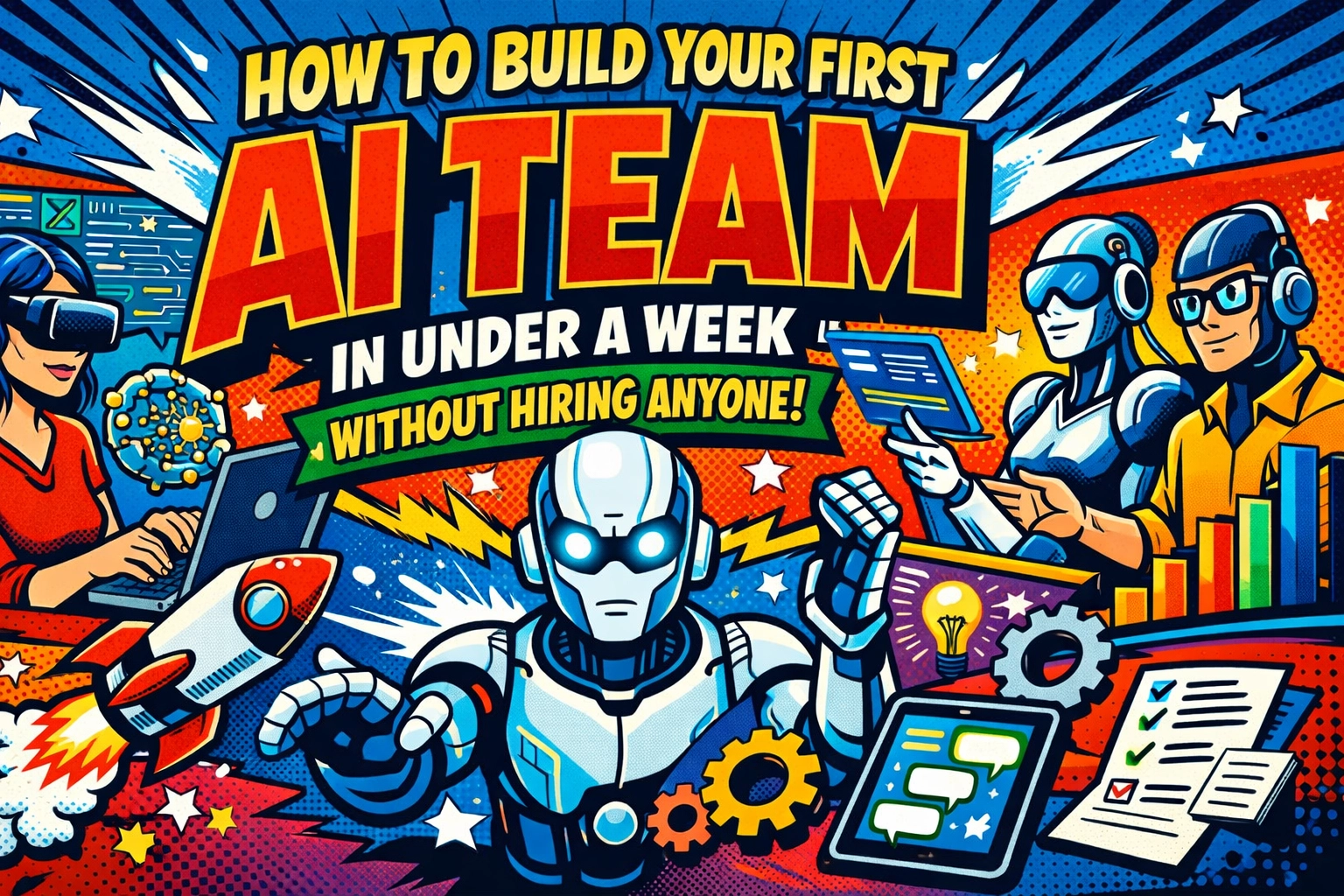
What if you could build a full team , customer support, sales development, content creation, admin coordination , in under a week? No HR paperwork. No desk space. No awkward small talk by the coffee machine.
That's not a hypothetical. That's ai business automation working the way it should.

MONDAY: MEET YOUR NEW HIRES
☕ 7:00 AM
You open your laptop. Instead of 87 unread emails screaming for attention, you see this:
"Good morning! I've already handled 12 customer queries overnight. Two need your personal attention , here are the summaries. The rest are resolved. Also, your calendar's cleared for deep work until 11."
That's Eva. Your AI assistant for small business operations. She's been working while you slept.
You scan the summaries. Both handled perfectly. You send quick approvals.
The usual morning email panic? Gone.
TUESDAY: YOUR SALES TEAM SHOWS UP
📱 9:30 AM
Your phone pings. "Found 8 new qualified leads based on your ideal customer profile. All contacted. Three replied already , I've moved them to 'warm' and suggested next steps."
Stan's been busy. Your AI sales development rep doesn't sleep, doesn't take lunch breaks, and definitely doesn't forget to follow up.
You click through. The outreach messages sound… good. Natural. Not like a robot wrote them. Each one's personalized based on the prospect's recent activity.
One prospect replied: "Finally, someone who actually understands what we do. When can we chat?"
You just schedule the call. Stan did everything else.

WEDNESDAY: CONTENT THAT DOESN'T SOUND LIKE AI VOMIT
✍️ 2:00 PM
You've been putting off that blog post. Again. But your website needs content. Google needs content. Your potential customers need to find you somehow.
"I've drafted three blog post options based on your recent customer conversations," Penny says. "They're written in your voice. Want to review?"
You open the first one. It's… actually good? Not the generic, buzzword-stuffed garbage that screams "AI-generated." This reads like you wrote it. Because Penny learned your style.
You make two minor edits. Hit publish.
That's 45 minutes of work instead of four hours. And you didn't have to hire a content writer at £300 per post.
THURSDAY: THE ADMIN WORK HANDLES ITSELF
📅 4:30 PM
Someone wants a meeting. Usually this means:
- "When are you free?"
- "How about Tuesday?"
- "Actually Wednesday works better for me"
- "Morning or afternoon?"
- Seven more emails
- A meeting scheduled for three weeks from now
Not today.
"Meeting with Sarah booked for Friday 10 AM. I've sent her the calendar invite and prep materials. You're already briefed on her company."
That's Alex. Your AI admin coordinator. He handles scheduling, sends meeting prep, even writes follow-up emails based on your meeting notes.
You didn't lift a finger.
FRIDAY: YOUR TEAM'S ALREADY RUNNING
🌙 6:00 PM
You close your laptop. Check your metrics for the week.
- 67 customer queries handled (only 4 needed your direct input)
- 23 qualified leads contacted
- 2 blog posts published
- 11 meetings scheduled and prepped
- Zero new hires made
Your "team" cost less than one junior employee's salary. And they started Monday.

THIS ISN'T SCIENCE FICTION. IT'S MARBLISM.
Here's what actually happened: you didn't build individual AI tools that each do one thing. You didn't juggle five different platforms. You didn't become a prompt engineering expert.
You got business automation tools that work together. Like an actual team.
Eva, Stan, Penny, and Alex aren't separate products you had to stitch together with duct tape and API keys. They're built to collaborate. When a customer email needs a sales follow-up, Eva hands it to Stan. When Stan closes a lead, Penny writes the case study. When Alex schedules a meeting, everyone gets briefed.
That's the difference between "AI tools" and an AI team.
Most businesses try to automate with:
- One chatbot for customer service
- One tool for email marketing
- One thing for social media
- One platform for… something else
Then they spend half their time moving information between all of them. That's not automation. That's just digital busywork.
Marblism is different. Your AI team shares context. They pass information seamlessly. They actually work together.
Which means you stop being the middleman in your own business.
WHAT THIS ACTUALLY LOOKS LIKE
You're not replacing humans with robots. You're replacing the work you shouldn't be doing anyway.
The repetitive stuff. The admin tasks. The "I could train someone to do this in 20 minutes" work. The things that keep you busy but don't move the business forward.
Your AI assistant for small business handles that layer. Completely.
So you can do the work only you can do. Strategy. Relationships. The decisions that actually matter.
Sarah, who runs a small consultancy, put it this way: "I went from drowning in admin to actually consulting again. It's like I hired three people but I didn't have to train anyone or worry about them calling in sick."
THE WEEK-ONE SETUP
Monday morning, you connect Marblism to your existing tools. Your email. Your CRM. Your calendar. Your website.
No coding. No technical setup. You just… connect things.
Then you tell your AI team what you need. In plain English. The same way you'd explain it to a new hire.
"Handle customer support emails. Escalate anything urgent. Sound friendly but professional."
"Find potential customers in [your industry]. Reach out with personalized messages. Track responses."
"Write blog posts about [your topics]. Match my writing style. Post twice a week."
That's it. You're not programming. You're managing.
By Tuesday, your team's working. By Friday, you've forgotten what it was like to do all this yourself.
THE MATH THAT ACTUALLY MAKES SENSE
One junior employee: £35,000+ per year
One Marblism AI team: A fraction of that
But here's the real math:
- Hours you save per week: 20-30
- Revenue you can generate with those hours: Actually meaningful
- Stress of managing human teams: Zero
- Ability to scale without hiring headaches: Unlimited
This isn't about replacing people. It's about not needing to hire for roles that shouldn't exist in the first place.
Small businesses fail because they can't afford the team they need. Or they hire too fast and burn through cash. Or they stay small and the founder burns out doing everything.
AI business automation solves that. Not with promises. With actual work done.
START BUILDING YOUR TEAM
You don't need a week. You could start today.
Connect your tools. Brief your team. Watch them work.
No job postings. No interviews. No "we'll get back to you in three months when you're fully trained."
Just a team that shows up, does the work, and gets better the more they learn about your business.
See exactly how it works at https://marblism.link/scott-bowen. Your AI team's waiting.
The question isn't whether you can build this team in a week.
It's whether you can afford another week without them.
Leave a Reply