So, you’ve decided to upgrade your morning ritual. Maybe you’re tired of the "burnt bean" taste from your old pod machine, or perhaps you’ve visited a specialty shop and realized that coffee can actually taste like blueberries or dark chocolate rather than just… brown water. Whatever brought you here, we’re glad you made it.
Choosing the right brewing gear for your kitchen can feel like navigating a minefield of shiny chrome, confusing acronyms, and wildly different price tags. Do you need a machine with a PID (Proportional Integral Derivative) controller, or will a simple kettle and a plastic cone do the trick? Honestly, there isn't a one-size-fits-all answer. The "best" gear is the one that fits your counter space, your budget, and most importantly, how much effort you’re willing to put in before you’ve had your first caffeine hit of the day.
At Limini Coffee, we live and breathe this stuff. We want you to have the best possible experience at home, which always starts with freshly roasted coffee beans. But even the best beans need the right tools to shine. Let’s dive into the world of home brewing equipment and see what fits your kitchen best.
The Great Divide: Espresso vs. Filter
Before you spend a penny, you need to decide which "camp" you fall into. Are you an espresso purist who dreams of thick, syrupy shots and silky lattes? Or do you prefer a long, clean cup of filter coffee that lets the subtle notes of a single-origin bean sing?
The Espresso Setup (The "Mini Coffee Shop")
If you want to recreate the cafe experience, you're looking at an espresso machine. This is the heavy lifting of the coffee world. We’re talking about 9 BAR of pressure pushing hot water through a tightly packed "puck" of finely ground coffee.
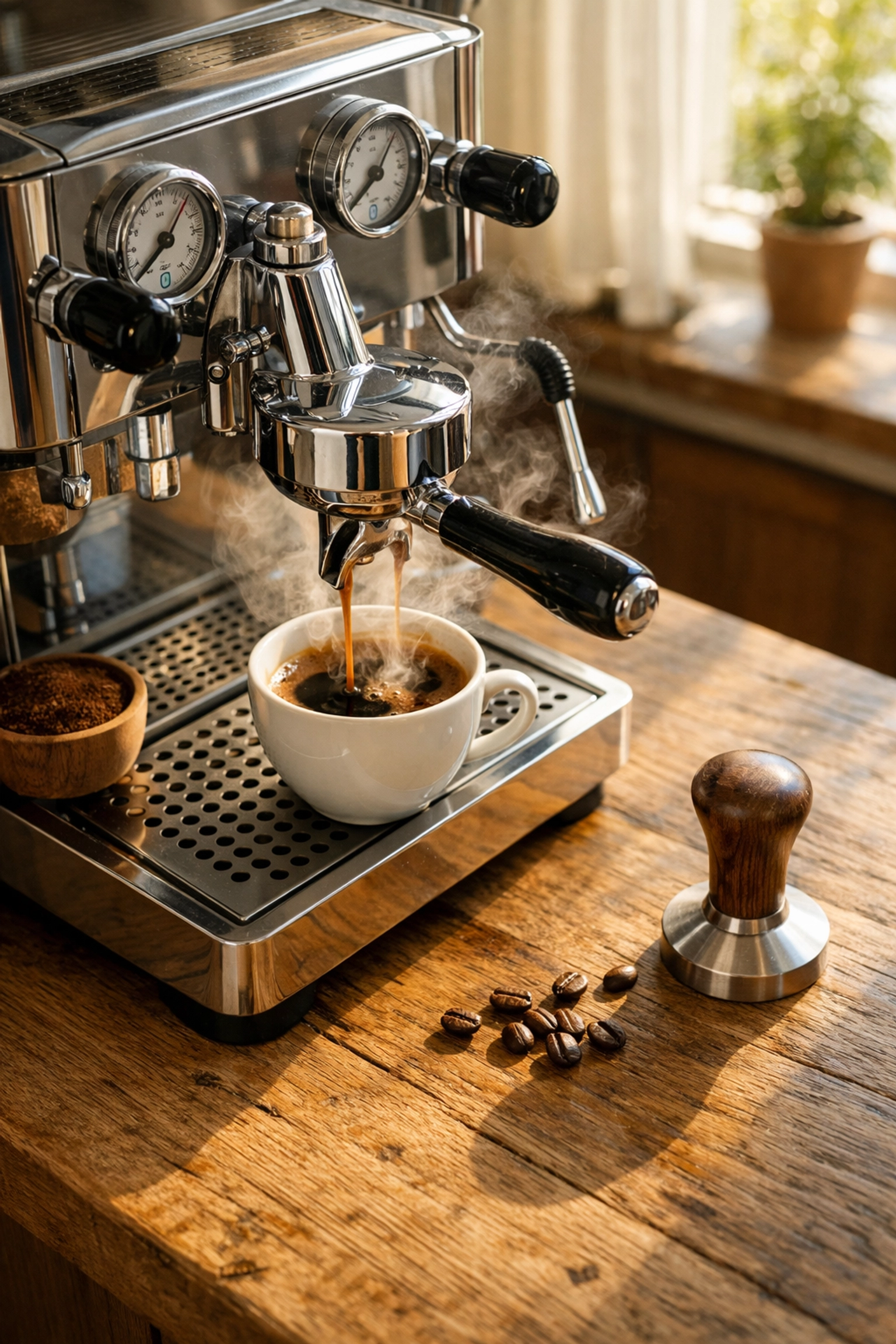
When choosing an espresso machine, space is often the biggest hurdle. Some machines, like the La Spaziale range, are incredible pieces of engineering but they do require a bit of "breathing room" on your counter. You also need to consider the learning curve. Espresso is a craft. You’ll need to learn about tamping and how to dial in your grind.
Pros:
- Makes authentic lattes, cappuccinos, and flat whites.
- The ritual is incredibly rewarding.
- Produces that beautiful crema we all love.
Cons:
- Expensive initial investment.
- Requires a high-quality burr grinder (non-negotiable!).
- Takes up more kitchen real estate.
The Filter Approach (The "Zen" Method)
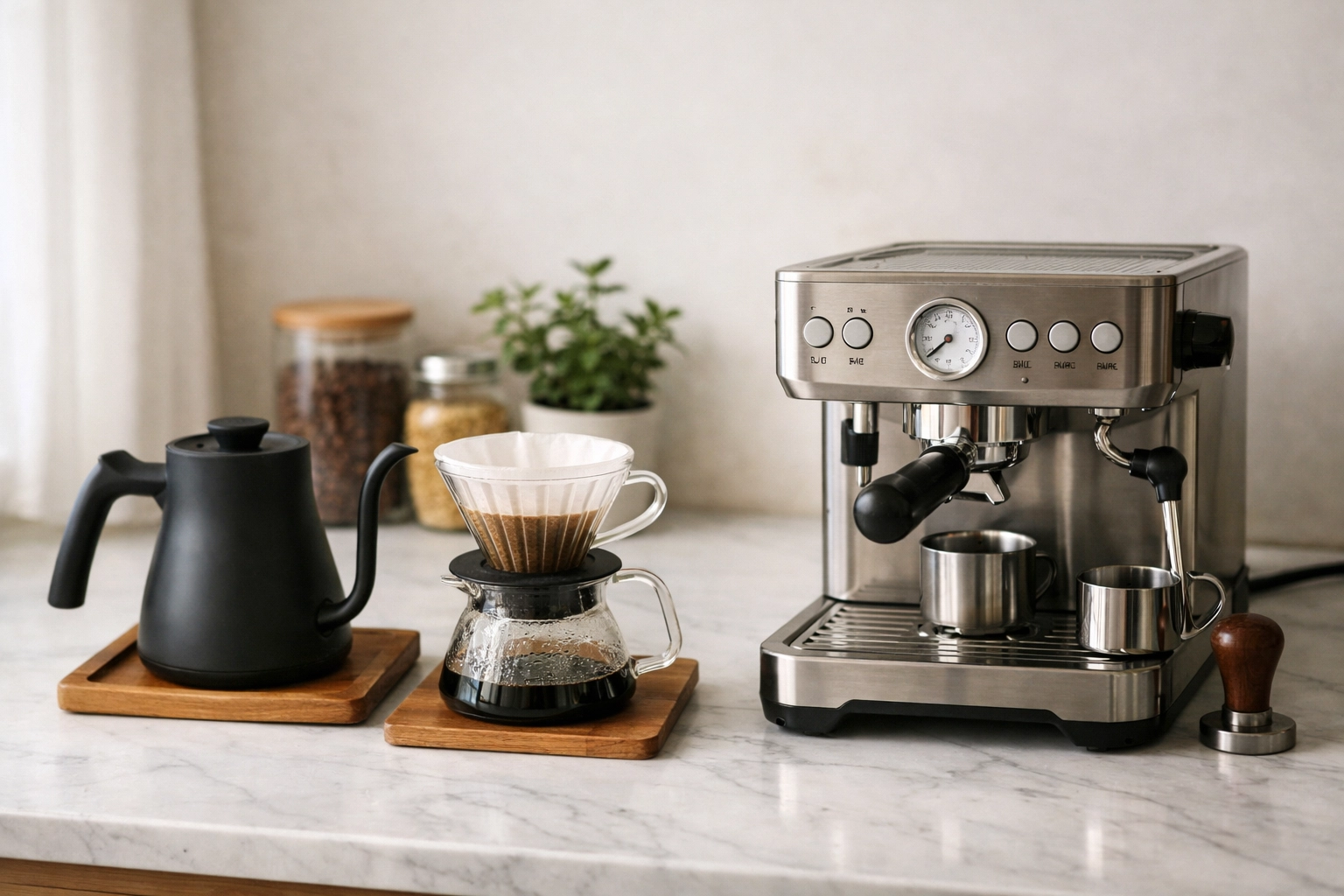
Filter coffee (or "pour-over") is all about gravity. It’s a slower process that results in a lighter-bodied cup. If you love tasting the difference between a fruity Ethiopian and a nutty Brazilian, this is for you. Gear like the Hario V60, Chemex, or Aeropress are compact, affordable, and easy to clean.
Automation vs. Manual Control
How much do you want to do yourself? Some of us love the "theatre" of brewing (we’ve even written about the theatre of coffee before), while others just want to press a button and walk away.
Fully Automatic Machines
These are the "cruise control" of coffee. They grind, tamp, and brew at the touch of a button. Modern versions even come with apps and WiFi connectivity, much like the high-end home brewing systems used for beer.
The drawback being… you lose control. If the coffee tastes a bit sour or bitter, you have limited ways to fix it compared to a manual setup.
Manual & Lever Machines
On the other end of the spectrum, you have lever machines. These require you to manually pull a lever to create the pressure needed for the shot. It’s tactile, it’s beautiful, and it gives you total control over the flow of the water. We think they’re brilliant for those who want to "feel" the extraction, though they aren't the best choice if you're in a rush to get the kids to school.
Key Factors to Compare
To help you decide, let's look at the same factors we use when evaluating any kitchen equipment: size, cooling/heating, and batch size.
| Feature | Manual Pour-Over | Home Espresso Machine | Bean-to-Cup (Auto) |
|---|---|---|---|
| Space Needed | Minimal (fits in a drawer) | Substantial (needs a "station") | Moderate to Large |
| Setup Time | 2-5 minutes | 15-20 minutes (warm-up) | 1-2 minutes |
| Skill Level | Moderate (technique matters) | High (the "barista" path) | Low (press a button) |
| Cost | £20 – £50 | £500 – £2,000+ | £300 – £1,000 |
1. Size and Space
In a kitchen, every inch of counter space is prime real estate. If you’re living in a compact flat, a massive dual-boiler espresso machine might be overkill. However, if you have a dedicated "coffee nook," something like a La Spaziale can be a stunning centerpiece. Remember to account for the grinder too! You can't have great espresso without a great grinder.
2. Heating Requirements
Stability is everything in coffee. You want your water to be at a precise temperature, usually between 88 °C and 95 °C (190 °F to 203 °F). Cheaper machines often "temperature surf," meaning the heat fluctuates wildly. High-end gear uses PIDs to keep the temperature rock-steady. If you’re serious about taste, don't skimp on temperature stability.
3. Batch Size
Are you brewing for one, or are you the designated barista for a family of four? A single-cup V60 is perfect for a solo morning, but if you’re hosting brunch, you might want a larger Chemex or a machine that can steam milk quickly. Speaking of milk, understanding the science of milk is just as important as the coffee itself if you’re making milk-based drinks.
The Non-Negotiable: The Grinder
We’ll say it once and we’ll say it a thousand times: the grinder is more important than the brewer.
If you use pre-ground coffee, it begins to oxidize the moment the bag is opened. By the time it reaches your kitchen, it’s already lost those volatile aromatics that make specialty coffee special. We always recommend buying whole beans from a reputable roaster and grinding them seconds before you brew.
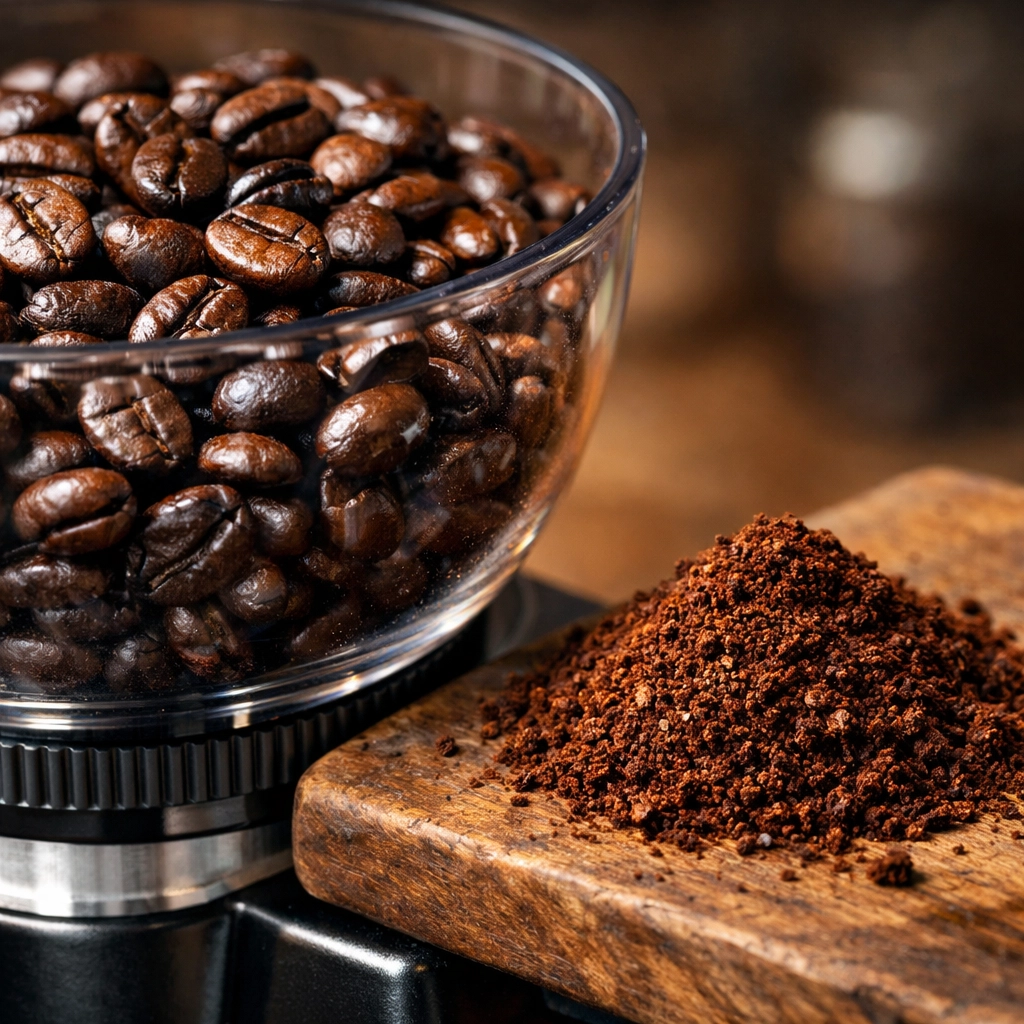
For espresso, you need a "stepless" burr grinder that allows for tiny adjustments. For filter coffee, a high-quality hand grinder or a dedicated filter electric grinder works wonders. It’s the single best investment you can make for your kitchen.
Let’s Talk Beans (The Real Secret)
You could have a £5,000 setup, but if you’re using oily, stale supermarket beans, the coffee will taste like… well, oily, stale supermarket beans.
At Limini Coffee, we focus on sourcing our coffee ethically and roasting it to bring out its natural character. Whether you prefer a chocolatey blend for your latte or a zesty single-origin for your V60, the quality of the bean is the foundation of everything.
If you're unsure where to start, we highly recommend checking out the Limini Coffee bean selection. Freshness is the "secret sauce" that makes home brewing better than any high-street chain.
Practical Advice: Making the Choice
So, which one should you choose?
- Choose the Manual Pour-Over if: You have a small kitchen, a smaller budget, and you enjoy the ritual of a slow, mindful brew. It's the most "honest" way to taste a bean.
- Choose a High-End Espresso Machine if: You love the craft of being a barista, you have the counter space, and you want the absolute best milk-based drinks possible. (Don't forget to look at our guide on choosing espresso equipment).
- Choose an Aeropress if: You travel a lot or want something indestructible and fast that still tastes incredible.
A Quick Note on Maintenance
Don't forget that coffee gear needs love. Scales, oils, and milk residue build up fast. Whatever you buy, make sure you’re comfortable cleaning it. A clean machine is a happy machine, and a happy machine makes delicious coffee.
Summary: Your Kitchen, Your Coffee
At the end of the day, your kitchen should be a place of joy, not frustration. Don't feel pressured to buy the most expensive gear on day one. Start with a great grinder and some fresh Limini Coffee beans, and go from there.
Coffee is a journey. You might start with a simple French Press and end up with a plumbed-in espresso machine three years later. That’s the beauty of it!
If you ever feel stuck or want to level up your skills, we offer barista training that can help you get the most out of whatever gear you choose. Whether you're a home enthusiast or looking to start a wholesale partnership, we're here to help you brew better.
Happy brewing! 🙂
Leave a Reply