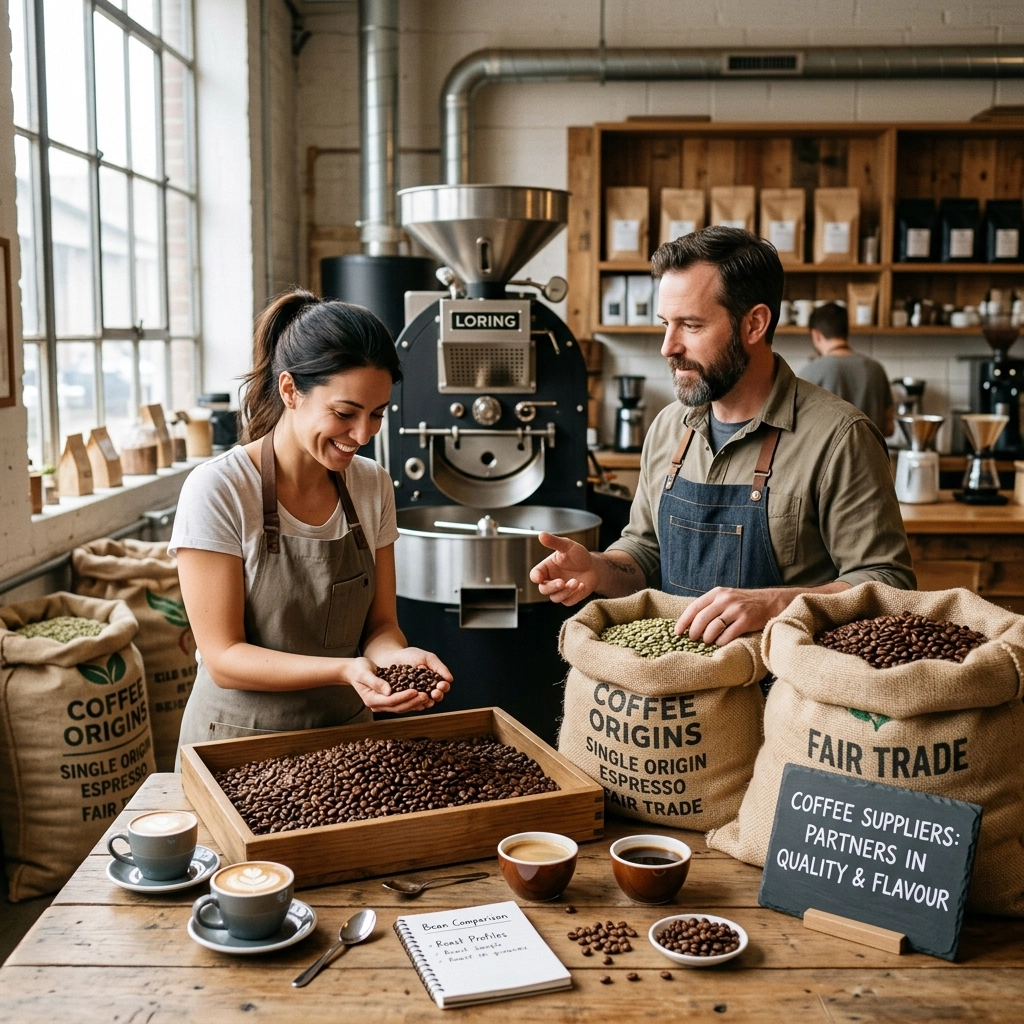
So, you’re opening a coffee shop. Or maybe you’re already running one and you’ve realised that your current beans just aren’t hitting the mark anymore. Either way, you’re standing at a bit of a crossroads. Choosing a coffee supplier is arguably the most important decision you’ll make for your business: aside from maybe picking the right location.
It isn't just about finding someone who sells roasted beans. It’s about finding a partner. Because when your grinder decides to stop working at 8:00 AM on a Saturday, or when your new barista can’t seem to get the milk texture right, you don’t need a "vendor." You need a team.
In this guide, we’re going to break down how to choose the best coffee suppliers for your shop, what to look for, and how different types of wholesale coffee roasters compare.
Quality: More Than Just a Buzzword
When we talk about quality in the world of specialty coffee, we isn't just being snobbish. There’s actually a science to it. Coffee is graded on a 100-point scale by the Specialty Coffee Association (SCA). Anything above 80 is considered "specialty."
At Limini Coffee, we believe that if you’re going to compete with the big chains, your quality has to be noticeably better. Not just slightly better: head-and-shoulders better. You want your customers to take that first sip and immediately understand why they’re paying for a craft experience.
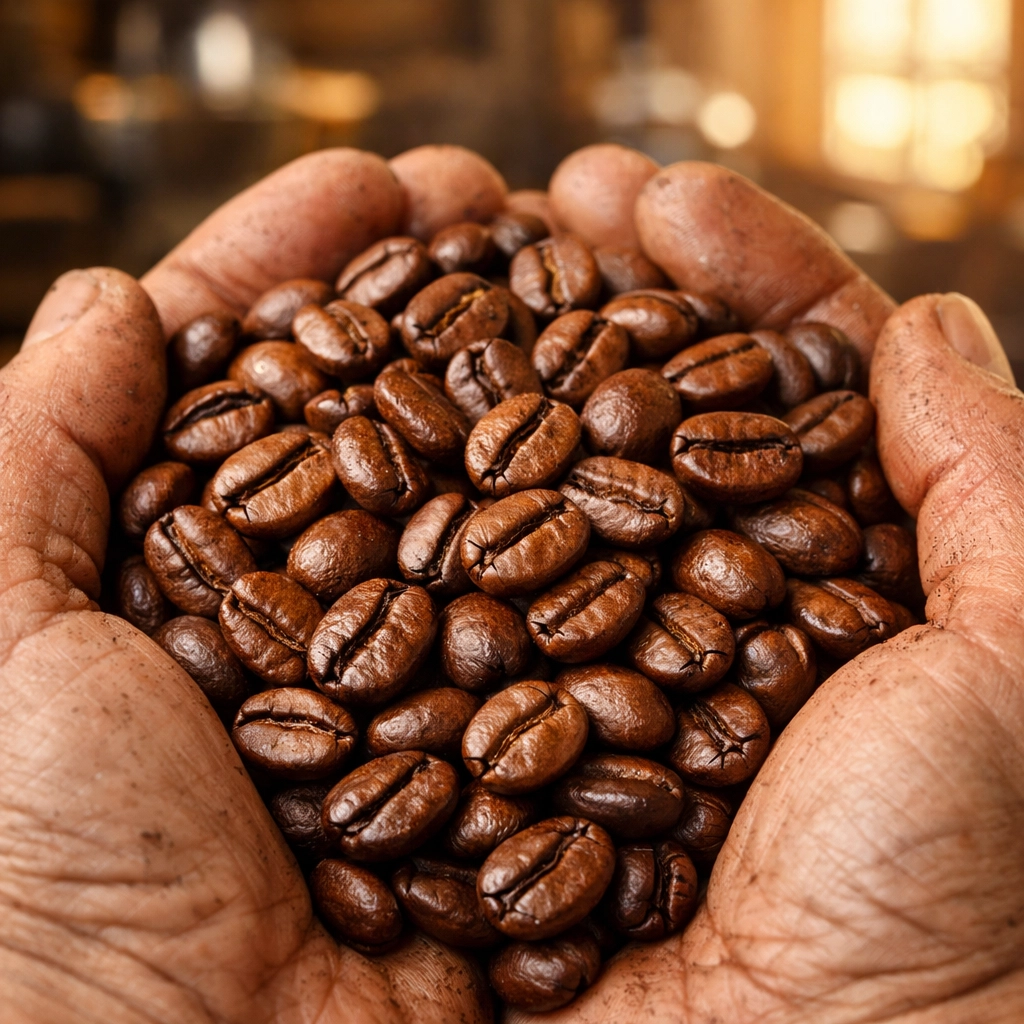
When evaluating a supplier, ask about their sourcing. Where do the beans come from? Are they fresh? Coffee is a seasonal fruit, after all. If a supplier is selling the same "Brazilian blend" in April that they were selling last October without any variation, that’s a red flag. Freshness is paramount. We recommend looking for roasters who roast to order. This ensures the beans haven't been sitting in a warehouse losing their volatile aromatics for months.
Consistency: The "Saturday Morning" Test
Imagine a customer visits your shop on a quiet Tuesday. They love the coffee. They come back on a bustling Saturday morning, but this time, the coffee tastes sour or bitter. They won’t blame the bean; they’ll blame you.
Consistency is the hardest part of the coffee business. You need a supplier who can deliver the same flavor profile week after week, month after month.
How do you check for this?
- Ask about their roasting process: Do they use automated profiles to ensure every batch is the same?
- Request samples: Don’t just try one bag. Ask for samples over the course of a month to see if the profile shifts.
- Check their QC (Quality Control): Do they cup every batch they roast?
We take consistency incredibly seriously here. If the roast isn't perfect, it doesn't leave the building. It’s that simple. If you're looking for that kind of reliability, you can check out our wholesale options here.
Beyond the Bean: Support and Training
This is where the "partner" aspect comes in. A lot of wholesale coffee roasters will drop off a pallet of coffee and disappear. That doesn't help you build a successful business.
Starting a café is a massive undertaking. You need to know about building a coffee shop and shop fitting, and you need to ensure your staff are actually skilled.
Barista Training
Even the best beans in the world will taste like battery acid if they’re extracted poorly. We believe that training is the most undervalued part of the wholesale relationship. Does your supplier offer training? Is it included in the price of the coffee?
At Limini, we provide extensive barista training because we know that our success is tied to yours. If your baristas can’t dial in the espresso or understand the importance of tamping, our coffee won’t taste its best, and your customers won’t come back.
Equipment Advice
Buying an espresso machine is a minefield. You’ve got heat exchangers, dual boilers, PIDs, and saturated groups. It’s a lot. A good supplier will help you navigate choosing espresso equipment that fits your volume and budget.
We often recommend La Spaziale machines because they are workhorses. They’re reliable, easy to service, and produce incredible results. If a supplier tries to push a machine on you without asking about your expected daily cup count, walk away.
Pricing: Cost Per Cup vs. Cost Per Kilo
One of the biggest mistakes new café owners make is focusing solely on the price per kilo of coffee. It sounds logical, right? Lower cost = higher profit.
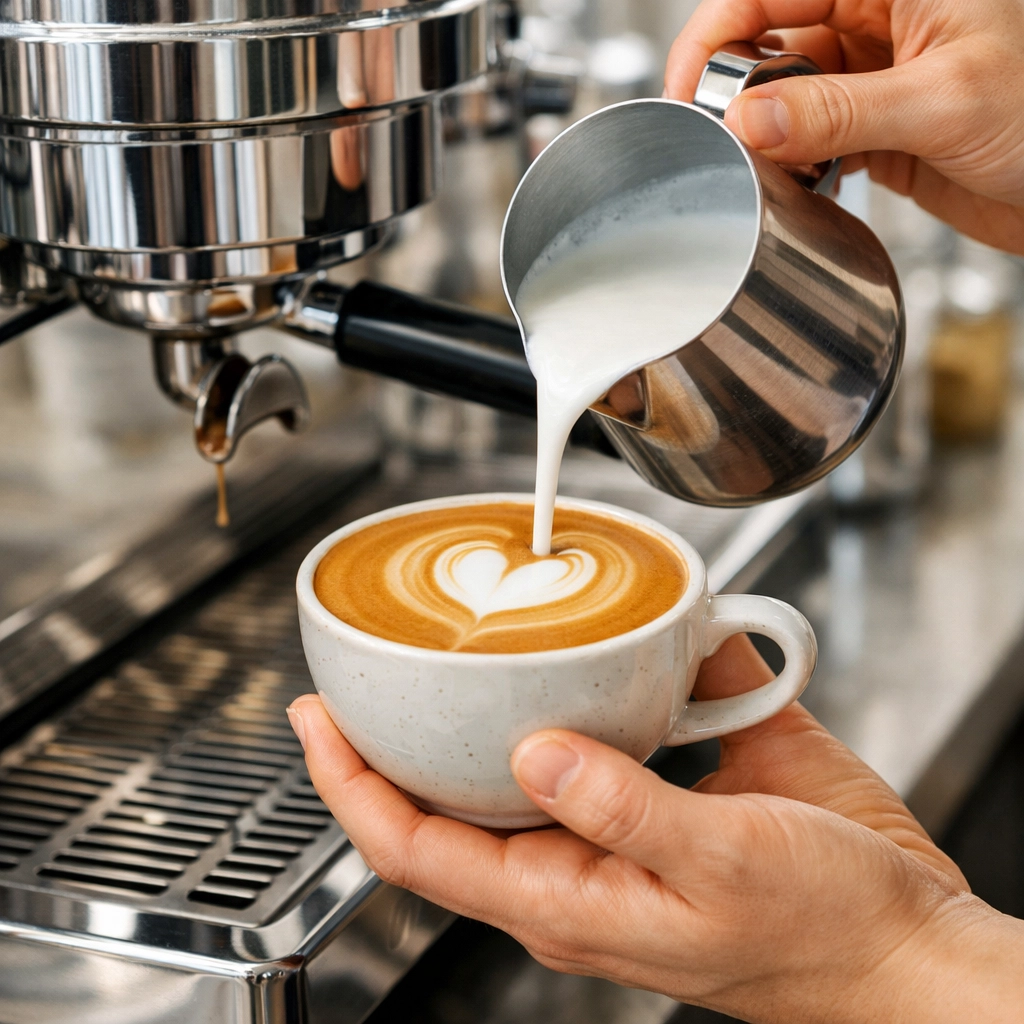
The problem is, the coffee itself is usually the smallest cost in a cup of latte. When you factor in milk, the cup, the lid, electricity, rent, and wages, the difference between a £15/kg coffee and a £20/kg coffee is often just a few pence per cup.
Let’s do the math:
- A standard double shot uses about 18g of coffee.
- From 1kg (1,000g), you get roughly 55 servings.
- If the coffee costs £18/kg, the cost per serving is ~32p.
- If the coffee costs £22/kg, the cost per serving is ~40p.
Is an extra 8p per cup worth it for a significantly better product that builds customer loyalty? We think so. To help you visualize your margins, you can use our coffee brewing calculator.
Comparing Types of Suppliers
Not all coffee suppliers are created equal. Here is a quick comparison of what you’ll find in the market:
| Feature | Large Commercial Roasters | Local "Craft" Roasters | Specialty Wholesale Partners (Limini) |
|---|---|---|---|
| Price | Very Low | High | Competitive / Value-driven |
| Quality | Low/Average | High (usually) | Very High & Consistent |
| Training | Minimal or online only | Often extra cost | Included & Ongoing |
| Equipment Support | Third-party only | Limited | Expert & Internal |
| Freshness | Can be months old | Very fresh | Roasted to order |
Large Commercial Roasters
These guys are built for volume. You’ll get a low price, but you’ll also get dark-roasted, oily beans that have been sitting in a warehouse. They might give you a "free" machine, but you’ll be locked into a contract that forces you to buy a high volume of mediocre coffee. Not something we would recommend if you want to be known for quality.
Local Craft Roasters
These are often small operations. The coffee is usually great, but the reliability can be a struggle. If their one roaster breaks down, or they go on holiday, your supply might vanish. They also often lack the infrastructure to provide 24/7 equipment support or comprehensive training programs.
Specialty Wholesale Partners
This is the "sweet spot." You get the high-quality, ethically sourced beans of a craft roaster, but with the professional infrastructure of a larger business. We fall into this category. We focus on sourcing our coffee responsibly and providing the kind of support that actually helps you sleep at night.
Reliability and Logistics
Can the supplier get the coffee to you when you need it?
- Lead Times: If you run out of coffee on Wednesday, can you get a delivery by Thursday?
- Minimum Orders: Are they going to force you to buy 50kg at a time, which will just go stale on your shelf?
- Emergency Support: If your machine blows a seal, do they have engineers who can come out and fix it?
We’ve seen too many shops fail because they couldn't get their equipment fixed in time for a busy weekend. When you choose a supplier, ask for reviews from their other wholesale clients. Find out what happens when things go wrong: that’s when you see a supplier’s true colors.
Ethical Sourcing: Why it Matters
In 2026, customers care about where their food comes from. They want to know that the farmers were paid a fair wage.
Ethical sourcing isn't just a "nice to have"; it’s a business strategy. Coffee that is sourced ethically is almost always of higher quality because the farmers are incentivized to take better care of the crops. We believe in transparency and working closely with the origins we source from. This creates a sustainable loop that benefits everyone from the picker in Ethiopia to the customer in your shop.
Final Checklist for Choosing Your Supplier
Before you sign any contracts, go through this list:
- Taste the coffee: Do you actually like it? Does it make a great crema?
- Visit the roastery: See how they work. Is it clean? Are they passionate?
- Check the training: Will they teach your staff about milk chemistry and the theatre of coffee?
- Audit the equipment: Are they suggesting machines that are fit for purpose?
- Review the hidden costs: Are there delivery fees? Surcharges for small orders?
Choosing the right wholesale coffee roaster is about finding a balance between great beans and great business support. We’d love to show you how we do things differently here. If you’re ready to start your coffee journey with a partner who actually cares about your success, get in touch with us at Limini Coffee.
We’ve helped hundreds of shops get off the ground, and we’d love for yours to be next. Whether you need a brewing guide for lattes and cappuccinos or a full shop-fitting consultation, we're here to help.
Remember, the coffee is the soul of your shop. Don't settle for "good enough" when you can have something truly special. Let's make some great coffee together. 🙂
Leave a Reply