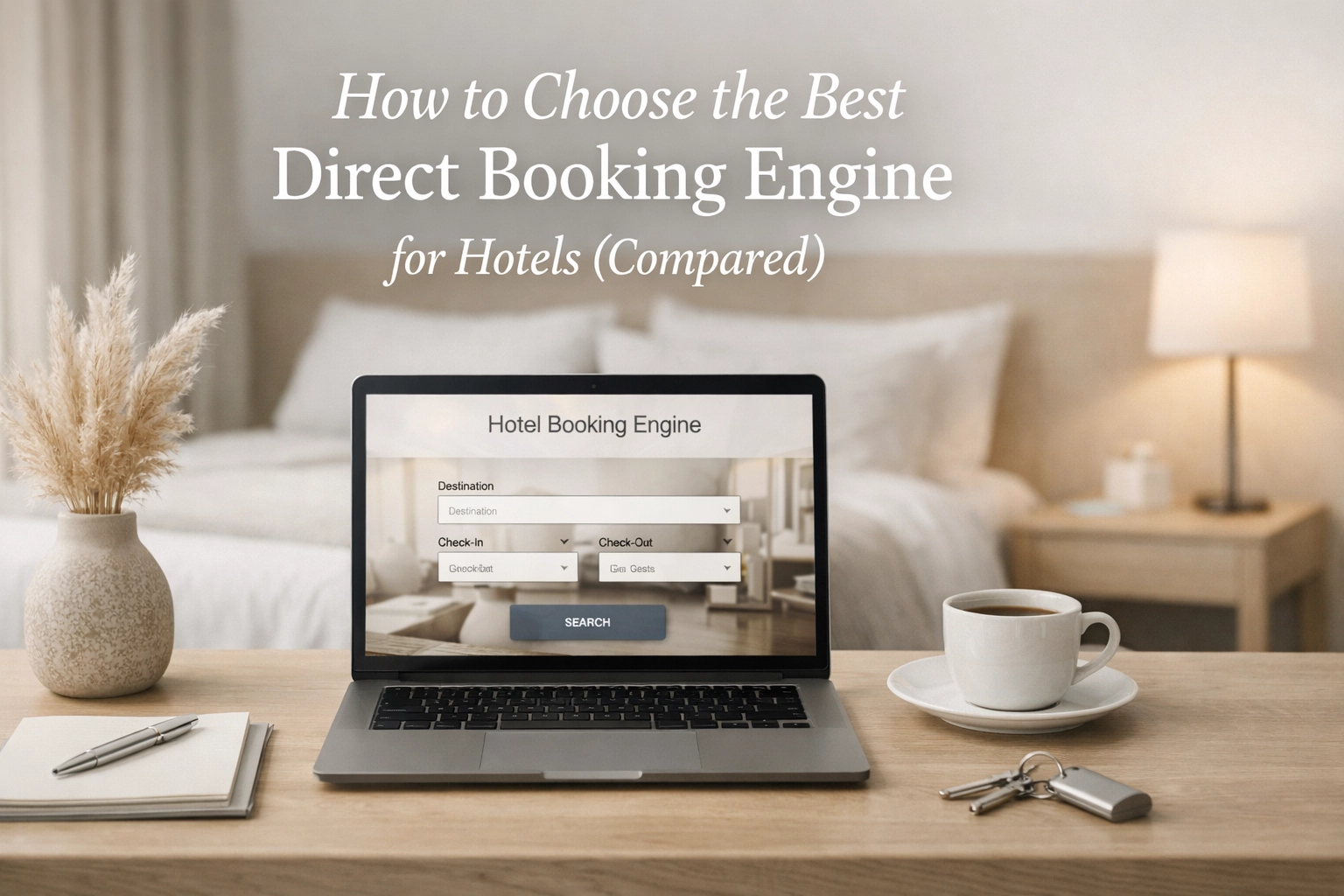
Own your traffic. Grow your margins. Build your brand.
Choosing a booking engine isn’t just about adding a "Book Now" button to your website. It’s about designing a digital front door that welcomes guests and convinces them to stay. In an era where OTAs can take a 20% bite out of your revenue, your direct booking engine is your most profitable employee. It works 24/7, speaks every language, and keeps the commissions in your pocket. All from one intuitive guest experience platform.
Why direct bookings are the ultimate flex
We believe that every guest who books directly is a victory for your brand. It’s not just about the money (though the money is great). It’s about the data, the relationship, and the freedom to curate the entire stay from the first click.
Industry data shows that top-tier booking engines can deliver an average 63x return on investment. That’s not a typo. When you move a guest from a third-party site to your own, you aren't just saving on commission; you’re increasing the lifetime value of that customer. You get their email. You get their preferences. You get the chance to upsell them that rooftop yoga session before they even pack their bags.

The non-negotiables: What to look for
Don't settle for "good enough." The modern traveler has zero patience for clunky interfaces or hidden fees. If your booking flow feels like a tax audit, they’re heading back to Expedia.
Here is what actually matters.
Mobile-first or bust.
Over 60% of travel searches happen on a phone. If your booking engine requires pinching and zooming, you’re losing money every single minute. A modern engine should feel like an app, fast, thumb-friendly, and sleek.
Frictionless payment flows.
Nobody wants to dig for their credit card while sitting on a train. Your engine needs to support Apple Pay, Google Pay, and localized payment methods. Speed is the ultimate currency.
Real-time synchronization.
There is nothing more stressful than a double booking. Your engine must talk to your PMS and channel manager in real-time. Speed. Accuracy. Reliability.
"We saw a 15% jump in direct revenue within the first month of switching. The guest just finds it easier to say yes."
Comparing the heavy hitters
The market is crowded, but a few names consistently rise to the top. Depending on your property size and your appetite for innovation, your "perfect match" might vary.
Mews: The Innovation Leader
We don't just process bookings; we design experiences. Mews is built for the modern court of hospitality: those who want to move fast and stay ahead of the curve. It’s highly customizable, deeply integrated with AI, and focuses on the entire guest journey rather than just the transaction.
- Best for: Boutique hotels, multi-property groups, and forward-thinking brands.
- Key strength: Ecosystem connectivity and smart upselling.
- Why it wins: It turns your booking engine into a revenue-generating machine.
Check out how Mews can transform your tech stack here: https://referrals.mews.com/umqHYIto
SiteMinder: The Distribution King
SiteMinder is a powerhouse when it comes to reach. They connect to over 450 OTAs, making them a solid choice if your primary goal is massive international visibility.
- Best for: Medium to large hotels with high volume.
- Key strength: Global distribution and channel management.
- Why it wins: It’s a reliable workhorse for global visibility.
Cloudbeds: The All-in-One
For smaller, independent properties that don't want to manage five different logins, Cloudbeds offers a simplified approach.
- Best for: Small inns, B&Bs, and hostels.
- Key strength: Simplicity and integrated PMS functionality.
- Why it wins: It’s an easy, commission-free entry point for smaller teams.

Features that actually move the needle
We think most booking engines focus on the wrong things. It’s not about how many fields you can add to a form; it’s about how many you can take away.
1. Smart Upselling.
Don't just sell a room. Sell an experience. Whether it's a late checkout, a bottle of champagne on arrival, or a breakfast add-on, your booking engine should prompt these naturally during the checkout process. This is how you drive incremental revenue without lifting a finger.
2. Multi-Currency and Multi-Language.
If you want international guests, you have to speak their language, literally and financially. A booking engine that automatically adjusts based on the user's location builds immediate trust.
3. Advanced Analytics.
If you can't measure it, you can't improve it. You need to know exactly where your guests are dropping off. Is it the room selection page? The payment screen? Data tells the story that your gut feeling can’t.
The role of AI in your booking flow
The future of hospitality isn't just digital; it's intelligent. We are moving toward a world where your booking engine knows what a guest wants before they do.
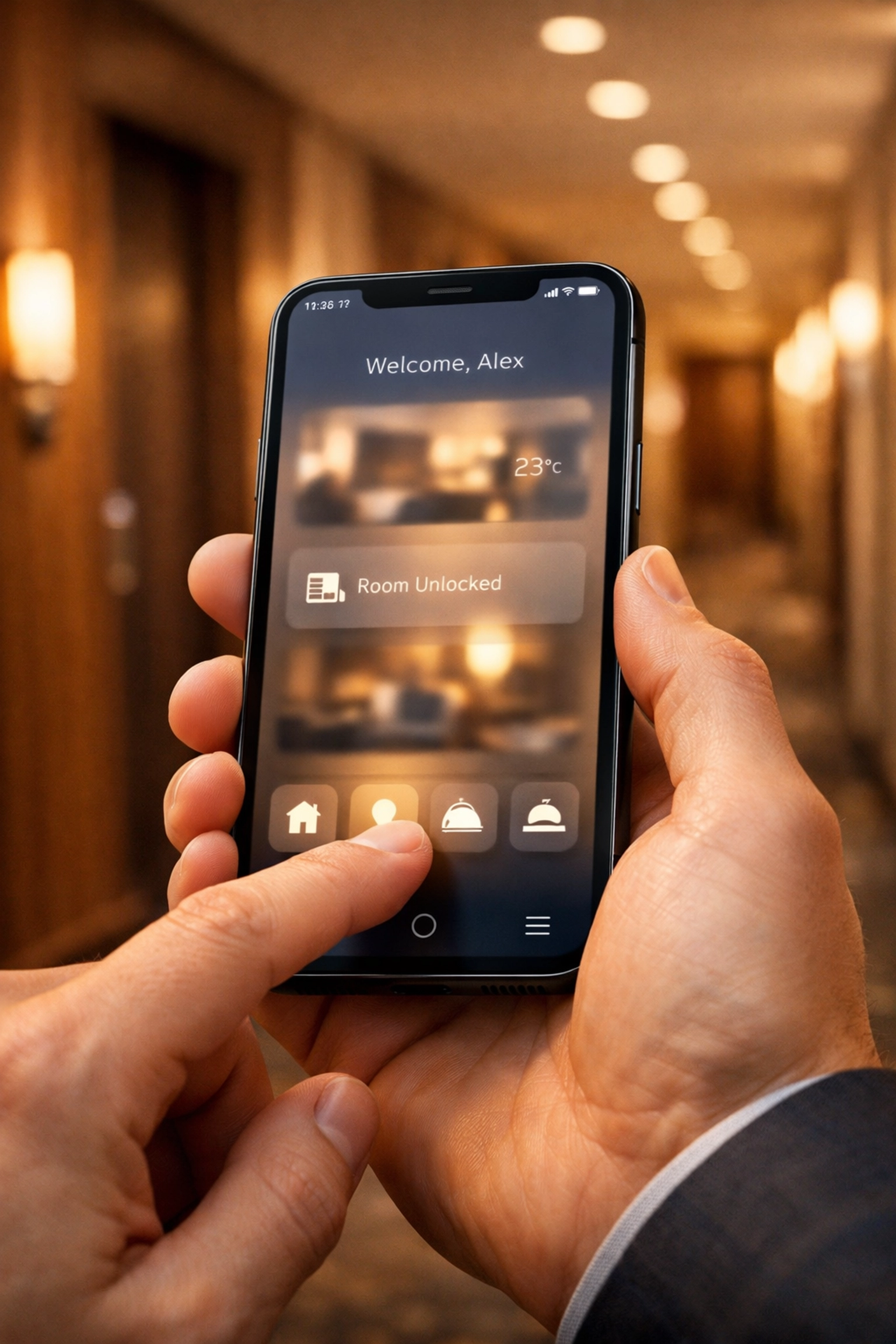
Imagine a booking engine that recognizes a returning guest and automatically suggests their favorite room type or a specific dietary package. AI can help optimize pricing in real-time based on demand, weather, or even local events. It’s about moving from a reactive "take an order" mindset to a proactive "concierge" mindset. All from one intelligent platform.
Pricing models: What’s the catch?
Pricing in the hospitality tech world can be a bit of a maze. Usually, you’ll encounter three main models:
- Flat Monthly Fee: You pay a set price regardless of how many bookings you take. This is great for high-volume hotels because it makes costs predictable.
- Commission-Based: You pay a small percentage (usually 2-5%) of each direct booking. This is low-risk for smaller properties but can get expensive as you grow.
- Per-Booking Fee: A flat dollar amount per transaction.
Be wary of hidden costs. Some "free" booking engines make their money by charging for essential integrations or basic support. Always look at the total cost of ownership over a 12-month period.
Implementation: Get it right the first time
Switching your booking engine shouldn't feel like open-heart surgery. It should be a 30-minute exercise in setting yourself up for success.
- Audit your current flow. Go through the booking process on your own phone. If you get frustrated, your guests definitely will.
- Request a tailored demo. Don't just watch a video. Ask the provider to show you how the engine handles your specific room types and packages.
- Check the integrations. Make sure the engine plays nice with your current PMS, CRM, and payment gateway.
- Go live and iterate. Your booking engine is a living thing. Use analytics to tweak your photos, descriptions, and offers every month.

The bottom line
The best direct booking engine is the one that disappears. It should be so seamless, so fast, and so intuitive that the guest doesn't even realize they’ve left your "marketing" site and entered a "transaction" site.
We believe hospitality is about removing barriers. Whether you’re running a 10-room boutique in London or a 500-room resort in the Maldives, your technology should empower you to spend less time behind a screen and more time with your guests.
Ready to see how the right tech can change your business? Explore the Mews ecosystem and start reclaiming your revenue: https://referrals.mews.com/umqHYIto
Stop letting OTAs tell your story. Start owning the journey. All from one remarkable platform.
Leave a Reply