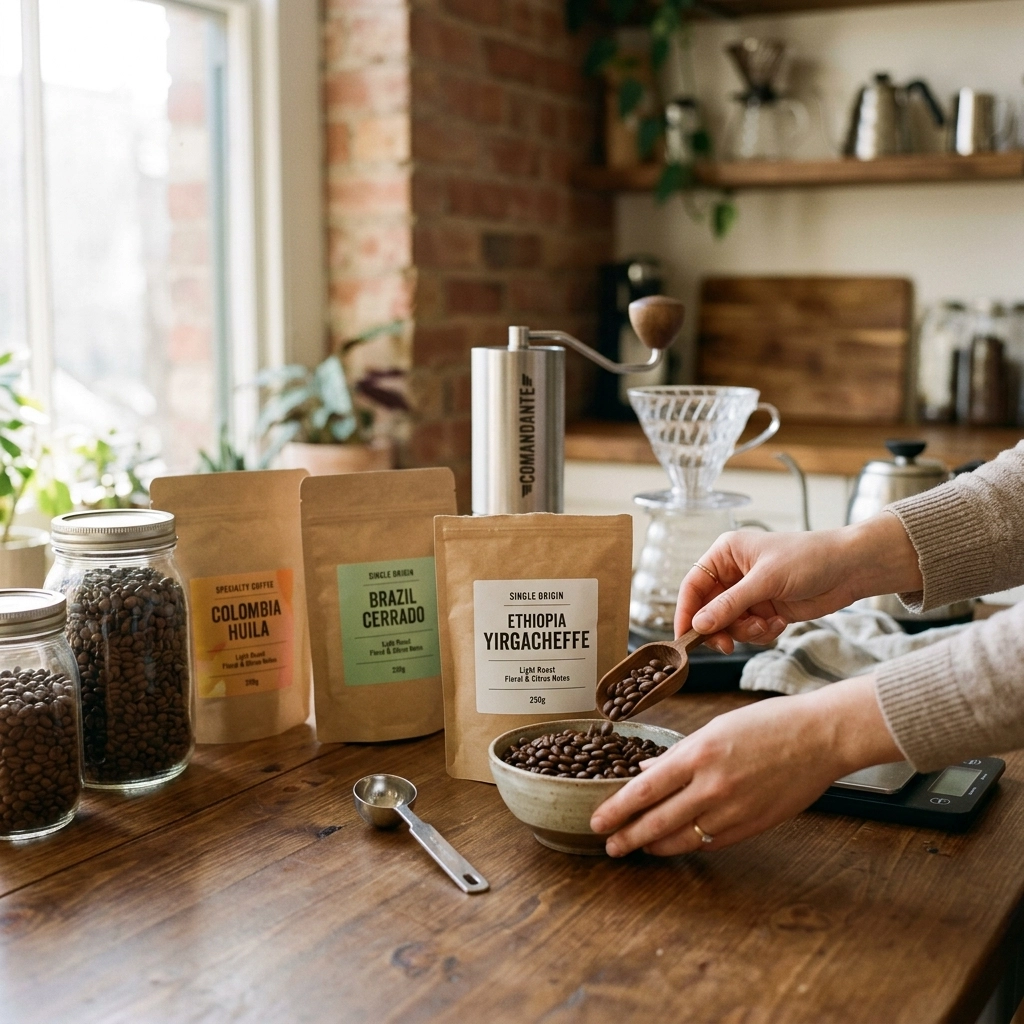
So, you’ve finally done it. You’ve invested in a decent grinder, your kettle has a neck like a swan, and your kitchen counter is starting to look like a high-end laboratory. But then you go to buy some beans and, wham, you’re faced with a wall of bags covered in words like "washed," "altitude," "stone fruit notes," and "anaerobic fermentation."
It’s enough to make you want to go back to the instant stuff. (Not really, we know you’re better than that).
Choosing the best speciality coffee beans isn't just about picking the prettiest bag. It’s about understanding how the bean's journey, from the soil in Ethiopia to our roaster here at Limini Coffee, affects what ends up in your cup. Whether you are a pour-over enthusiast or an espresso purist, we’re here to help you navigate the jargon.
If you're ready to skip the lecture and just want the good stuff, you can always browse our fresh roasted range here to see what we’ve been busy roasting lately.
What Makes it "Speciality" Anyway?
Before we dive into the "how," let’s talk about the "what." In the coffee world, we don't just throw the word "speciality" around because it sounds fancy. It’s a technical grade. To be classified as speciality, coffee must score 80 points or higher on a 100-point scale by a certified Q Grader.
This means the beans are free from primary defects and have a distinct personality. Think of it like wine; you’ve got your table wine for a Tuesday night, and then you’ve got your single-vineyard vintage. Speciality coffee is the latter. At Limini Coffee, we focus on these high-scoring lots because, quite frankly, life is too short for mediocre caffeine.
1. The Roast Level: Finding Your Sweet Spot
The roast level is arguably the biggest factor in how your coffee will taste. While you can brew any roast any way you like (there are no coffee police, we promise), some roasts definitely play better with certain methods.
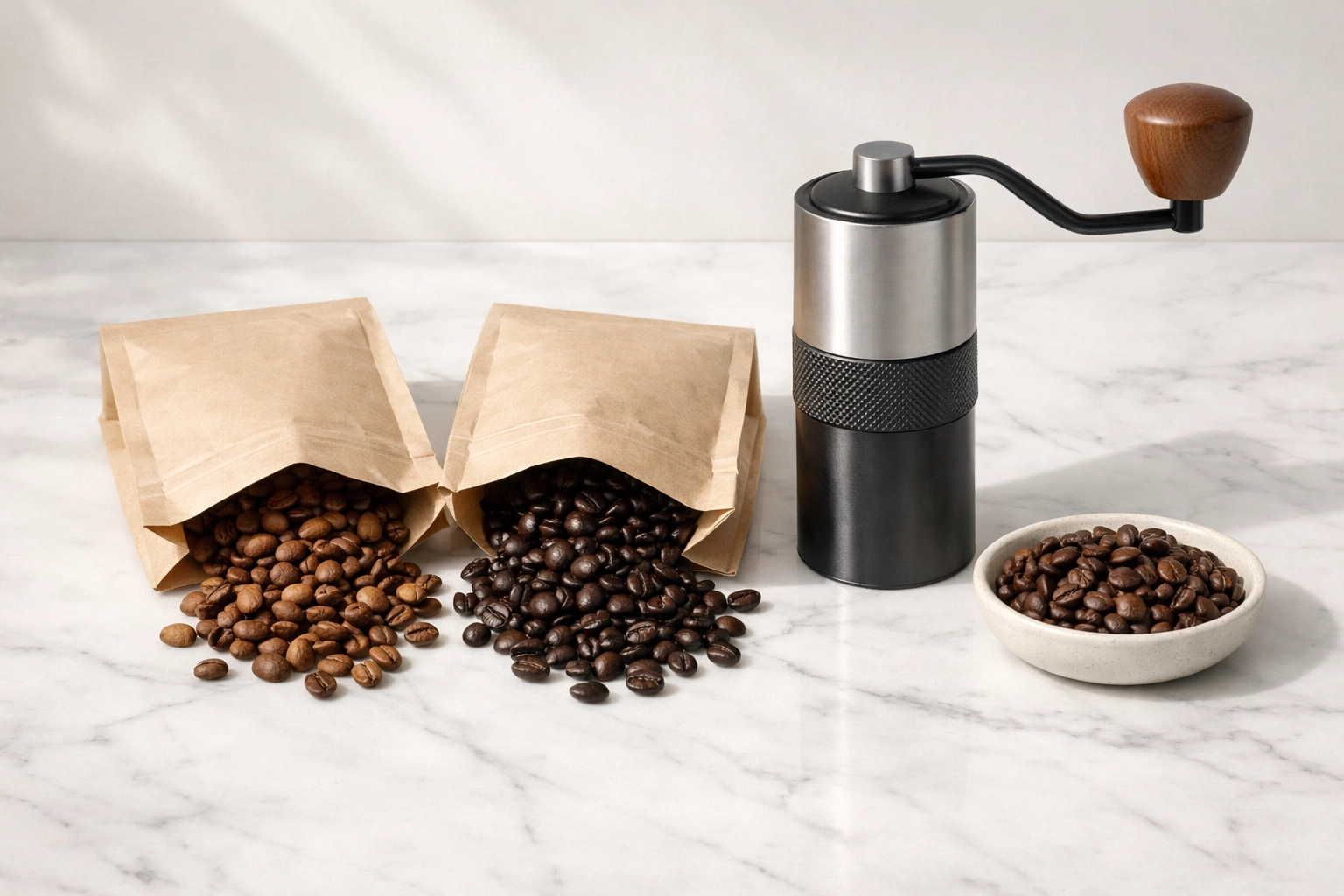
Light Roast: The Terroir Express
Light roasts are roasted for a shorter time and to lower temperatures (usually around 196 °C to 205 °C / 385 °F to 401 °F). These beans are often denser and more acidic.
- Flavor Profile: Think citrus, floral, tea-like, and bright.
- Best For: V60, Chemex, and Aeropress.
- The Challenge: They can be tricky to extract. If your light roast tastes like sour grass, you might need to grind finer or increase your water temperature to around 95 °C / 203 °F.
Medium Roast: The Balanced All-Rounder
This is our "Goldilocks" zone. We find that most home brewers thrive here.
- Flavor Profile: Milk chocolate, toasted nuts, and caramel sweetness. It’s smooth, balanced, and very forgiving.
- Best For: Drip brewers, French Press, and "modern" espresso.
- Why we love it: It retains the origin characteristics of the bean without being overly acidic.
Dark Roast: The Bold Classic
Contrary to popular belief, dark roast shouldn't taste like an ash tray. A well-executed dark roast (taking the beans to around 225 °C / 437 °F) brings out deep oils and a heavy body.
- Flavor Profile: Dark chocolate, molasses, and a smoky finish.
- Best For: Traditional Espresso and Moka Pot.
- The Catch: If you see "shiny" or oily beans, they are likely very dark. This oil can go rancid faster, so drink these quickly!
2. Single Origin vs. Blends: Which One Are You?
We get asked this a lot. Should you go for that bag from a single farm in Costa Rica, or a carefully crafted blend?
Single Origin coffee comes from one specific region, farm, or even a specific "lot" on a farm. These are for the explorers. If you want to taste exactly what the soil and climate of Huehuetenango, Guatemala, do to a coffee cherry, this is for you. They are seasonal and unique. Once they’re gone, they’re gone.
Blends, on the other hand, are the result of a roaster’s craft. We take different beans and combine them to create a specific flavor profile that stays consistent year-round. Our espresso blends are designed to cut through milk perfectly. If you’re looking for that reliable, "perfect every morning" cup, a blend is your best friend.
You can check out our current Single Origin reviews and Blends here to see which fits your morning vibe.
3. Matching the Bean to Your Brewing Gear
The equipment on your counter should dictate the beans you buy. While you can put a delicate Ethiopian Yirgacheffe through an espresso machine, it’s going to be a wild, acidic ride that might not be what you want at 7:00 AM.
For the Espresso Enthusiast
Espresso extraction happens under high pressure (usually 9 BAR). This amplifies everything: the sweetness, the bitterness, and the acidity.
- Our Recommendation: Look for beans described as having "low acidity" or "heavy body." Brazilian and Indonesian beans are fantastic here.
- Pro Tip: Freshness is vital for understanding crema. If your beans are more than six weeks old, your crema will be thin and dissipate quickly.
For the Pour-Over Perfectionist (V60/Chemex)
You are looking for clarity. You want to taste those individual flavor notes.
- Our Recommendation: Go for "Washed" processed beans from Africa (Ethiopia, Kenya) or Central America. These tend to have a "cleaner" mouthfeel that suits paper filters.
For the Cold Brew Fan
Cold water extraction takes a long time (12–24 hours) and doesn't pull out the same acids that hot water does.
- Our Recommendation: Medium-dark roasts. Because cold brew is often served over ice or with milk, you want a bean that has a lot of natural sugars and chocolatey depth.
4. Understanding the "Process" (Washed vs. Natural)
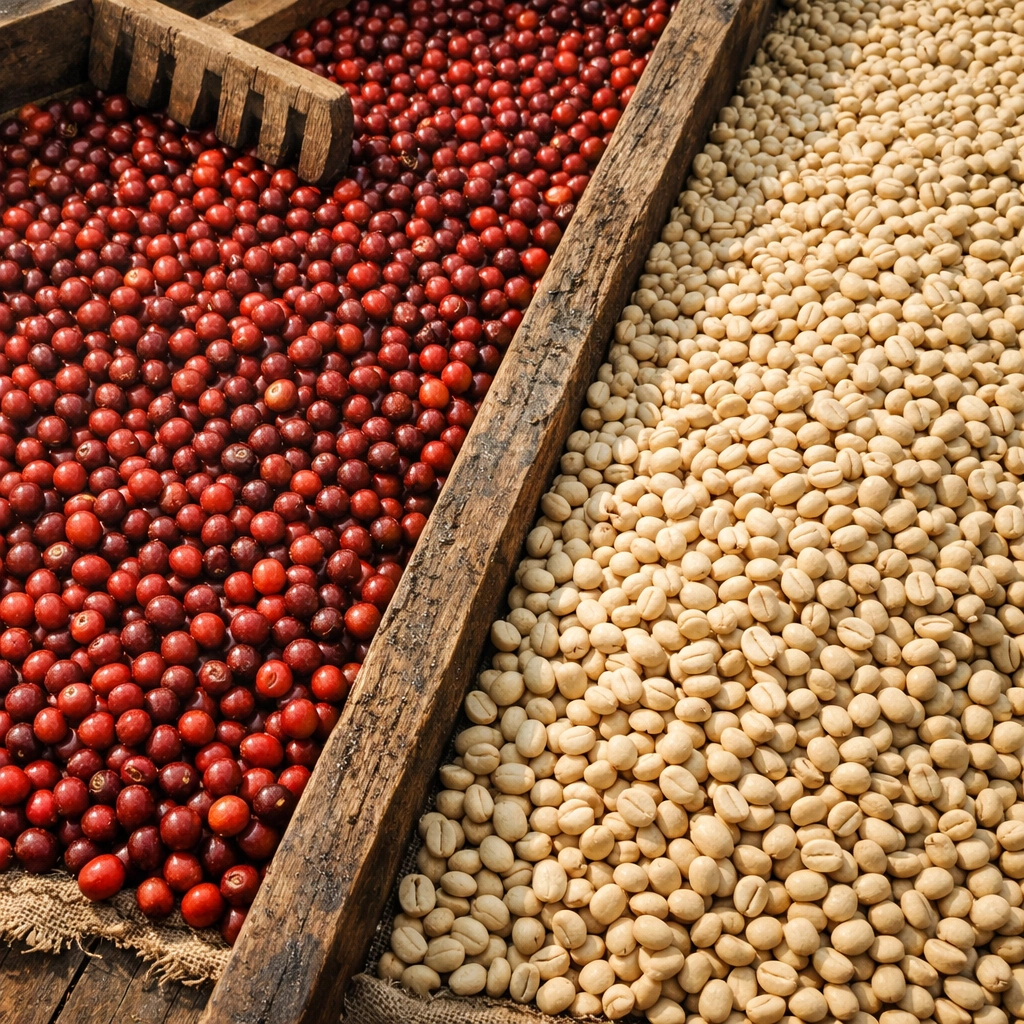
If you look closely at a bag of speciality coffee, it will usually mention the "process." This refers to how the coffee seed was removed from the fruit. It’s not just a technicality; it changes the flavor profile entirely.
- Washed Process: The fruit is stripped off before the beans are dried. This leads to a "clean" cup with bright acidity and distinct notes. If you like "crisp" coffee, go washed.
- Natural Process: The fruit is left on the bean while it dries in the sun. This allows the sugars to ferment slightly and soak into the seed. The result? Funky, fruity, and heavy-bodied coffee. Natural coffees often taste like blueberries or tropical fruits.
5. The Golden Rule: Freshness is King
You can buy the most expensive, award-winning beans in the world, but if they were roasted six months ago, they will taste like cardboard.
Coffee is a fresh produce item. Once it’s roasted, it starts to degas (releasing CO2). For the first 3 to 5 days, it’s actually too fresh: the gas creates bubbles that interfere with water contact. The "sweet spot" for most speciality coffee is between 7 and 21 days post-roast.
At Limini, we roast to order. This means when you buy through this link, you’re getting beans that are at their absolute peak of flavor.
A Quick Troubleshooting Guide for Home Brewers
Sometimes you buy great beans, but the brew just isn't "singing." Here is a quick reference for when things go wrong:
| If your coffee tastes… | It usually means… | Try this… |
|---|---|---|
| Sour / Sharp / Salty | Under-extracted | Grind finer or use hotter water. |
| Bitter / Dry / Ashy | Over-extracted | Grind coarser or lower the water temp. |
| Weak / Thin / Papery | Under-dosed | Use more coffee (Check our brewing calculator). |
| Boring / Flat / Dull | Stale beans | Check the roast date! |
Why Sourcing Matters
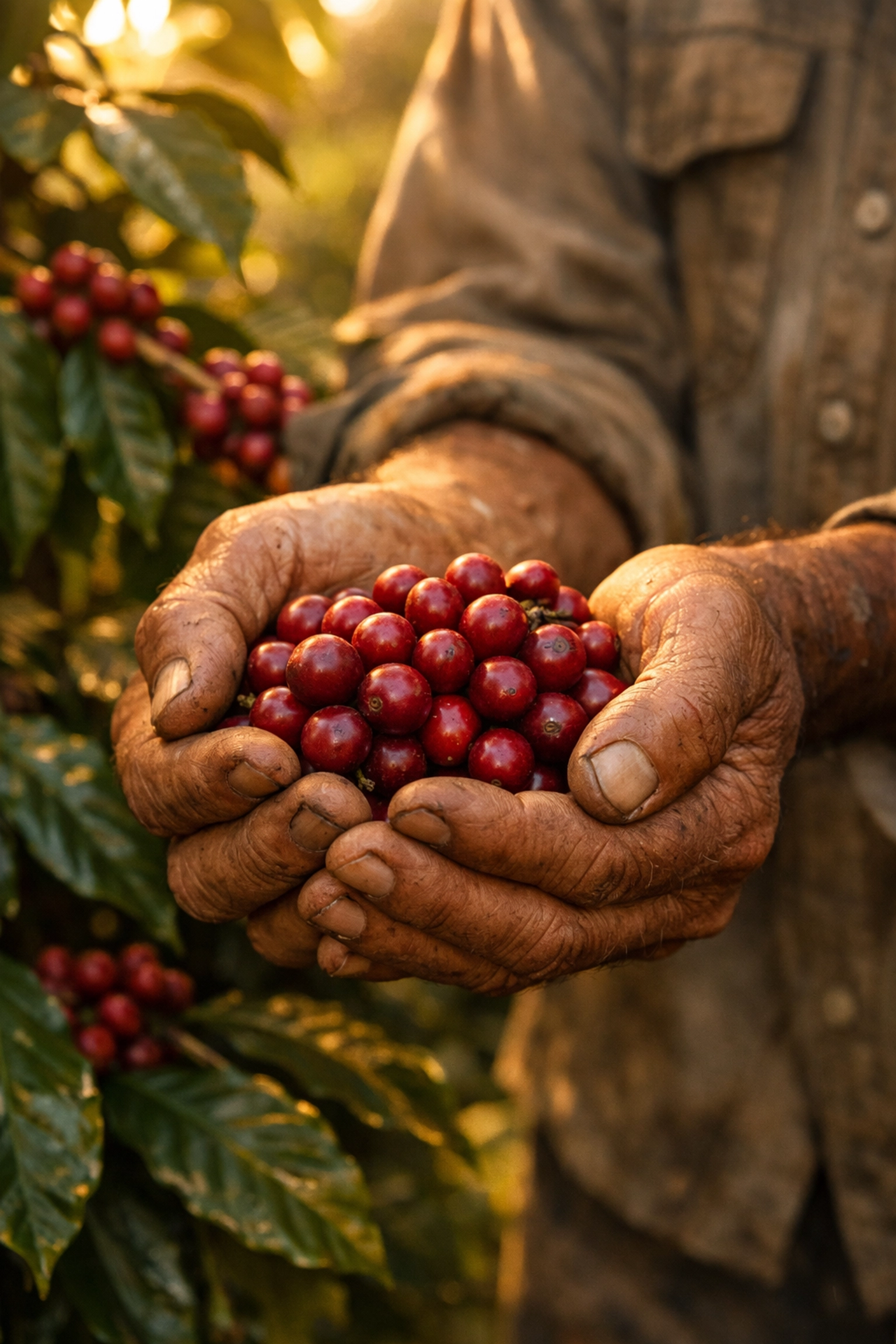
We believe that great coffee shouldn't come at the cost of the people growing it. When you choose speciality coffee, you’re often supporting a more transparent supply chain. We spend a lot of time sourcing our coffee to ensure that the farmers are paid well above the fair-trade minimums. This isn't just about ethics; it's about sustainability. If farmers can't make a living, they won't grow the high-quality beans we love.
Final Thoughts: Trust Your Palate
At the end of the day, the "best" coffee is the one you enjoy drinking. Don't feel pressured to like a fermented natural Ethiopian light roast just because a barista told you it was "complex." If you like a rich, chocolatey blend that reminds you of a comforting hug, then that is the best coffee for you.
We encourage you to experiment. Buy a small bag of something outside your comfort zone every now and then. Maybe try a single origin from a region you’ve never heard of. You might just find your new favorite morning ritual.
If you’re feeling overwhelmed, we’ve got your back. Whether you need barista training to level up your skills or just a fresh bag of beans, we’re here to help.
Ready to start your next brewing adventure? Grab your next bag of Limini Coffee here and let's get brewing.
Happy caffeinating!
Leave a Reply